Categories
How to Shoot Better at 25 Yards
What Made the German Luger the Most Famous Pistol in Modern Warfare
By Blaine Taylor
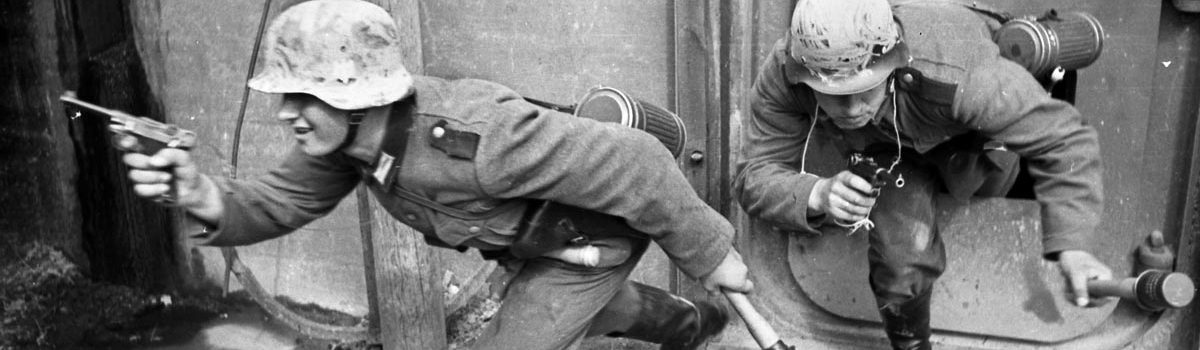
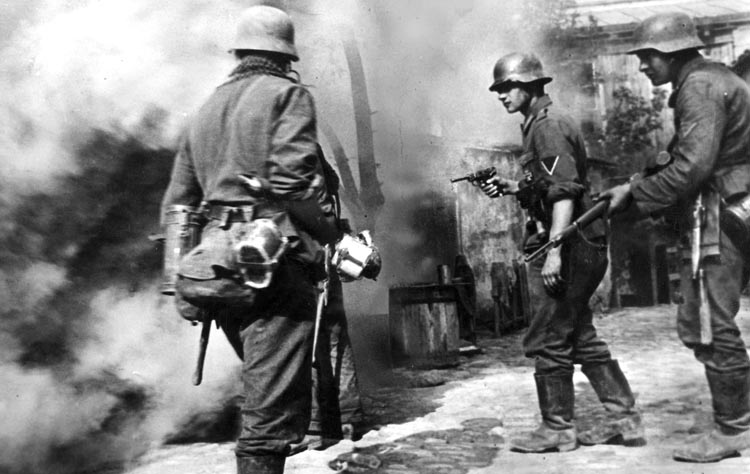
The German Luger is, most likely, the most famous pistol in modern warfare. Almost every World War II movie ever made featuring German armed forces seems to show it as an integral part of its action sequences.
It also played a prominent role in World War I and was carried by the armed forces of many nations. Switzerland’s army used it from 1900 into the 1970s, while the Soviet Army had 8,000 captured Nazi weapons in stock, which were never used. Invented by German arms designer Georg Luger, it was manufactured in at least 10 variants.
Officially described as “a toggle-locked, recoil-operated, semi-automatic pistol,” the Luger was developed to improve upon the Borchardt automatic pistol and was originally known as the Parabellum automatic pistol, Borchardt Luger system manufactured by Deutsche Waffen und Munitionsfabriken (DWM) in its initial production unit, the Model 1900 Parabellum.
Besides DWM, later models were manufactured by W+ F Bern, Simson, Mauser, Vickers, Imperial Erfurt Arsenals, and Heinrich Krieghoff. The Swiss Army the first to adopt it as its official sidearm in May 1900. Had German Kaiser Wilhelm II actually invaded Switzerland as he once playfully threatened, his troops would have been fired upon by weapons of their own making.
The Luger’s Ingenious Design
Modified in 1908 as the 9/9mm Parabellum, the Luger became noted as the weapon for which the 9x19mm Parabellum cartridge was introduced. It is estimated that more than three million Lugers were built during their long service run. Various sub-machine guns had seen valuable and effective trench warfare service during the Great War, with experimentation done as well via pistol conversions into fully automatic hand-held sidearms, among them the P08, in which the Luger displayed a substantial rate of fire.
The Luger was 8.74 inches long, with a barrel length of 4.7 inches (3.9 inches in the short version and 7.9 inches in its artillery version); a weight of one pound, 15 ounces; a rate of fire of 116 rounds per minute in its semiautomatic modality; and a muzzle velocity of 1,148 to 1,312 feet per second in its 9mm short-barrel configuration. With its iron sights, the trusty Luger had an effective firing range of 56 yards in its short-barrel edition, boasting a feed system of an eight-round, detachable box magazine plus a 32-round magazine if needed.
The Story of Georg Johann Luger
Born in Austria at Steinach am Brenner on March 6, 1849, Georg Johann Luger was the son of a surgeon who later moved the family to Italy, where he taught at the Austrian-dominated Padua University, with his son learning to speak Italian as well as German. Following graduation from university preparatory school, young Georg next studied at the Vienna Commercial Academy, later known as the Vienna Business School.
After graduation, Georg Luger enlisted in the autumn of 1867 as a reserve officer cadet in Kaiser Franz Josef’s Imperial 78th Infantry Regiment. He was promoted to officer cadet corporal on June 1, 1868, and then ensign the following October. His surprisingly good pistol marksmanship soon made him an instructor at the elite Austro-Hungarian Military Firearms School at the dual monarchy’s Camp Bruckneudorf, where his intense interest in automatic pistol-loading systems began.
Later establishing himself in a comfortable living as a civilian accountant, Luger wed Elisabeth Josefa Dufek in 1873. The couple had three sons by 1884. The eldest became a civil engineer, joining his father in martial weaponry development, while the second son was killed in 1915 while fighting as an reservist captain against the Imperial Russian Army on the Galician Front during the Great War.
Georg Luger’s business career was aided when he became a manager of Vienna’s top-flight Jockey Club, enabling him to make many important future contacts. One of these was famed gunmaker Ferdinand von Mannlicher, whom he met in 1875. The two were soon working jointly on designs for new rifle magazines. This experience was later credited with helping Luger’s native design abilities to emerge.
Hired in 1891 by the Berlin firm of Ludwig Loewe & Cie, Luger became a consulting engineer as well, and three years later he demonstrated a Hugo Borchardt firearm built by DWM for the U.S. Army. Criticism of the gun led Luger to improve the handgun, from which was born the Parabellum Luger that proved such a financial boon to both him and DWM.
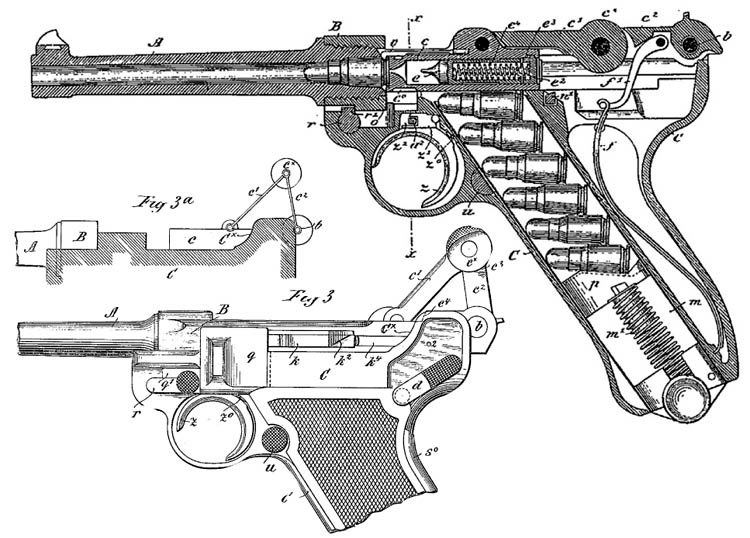
Mechanically and operationally, the famed pistol features a toggle-lock action that employs a locking jointed arm rather than the slide action of many other semiautomatic pistols. After a round is fired, both the barrel and its toggle assembly move backward in recoil, with both locking together.
The toggle hits the built-in cam in the Luger’s frame, making the knee joint hinge, with the toggle and assembly then unlocking. Striking the frame, the pistol’s barrel halts its movement to the rear, while the toggle keeps moving, bending the knee joint, extracting the fired casing from the chamber and ejecting it. Following this action, the toggle and breech jointly come forward via tension by spring, with the next round fed from the magazine to the empty chamber. The entire operation is completed in a fraction of a second.
The Luger works well with cartridges of higher pressure. Those of lower pressure may cause the pistol to malfunction, as not enough recoil occurs for the action to be completed, causing breech blockage by not clearing the magazine’s top-most cartridge or jamming on its base.
Due to both German- and Swiss-made Lugers being manufactured with the era’s highest quality materials and the manufacturers use of precision tolerances with tough, minute standardization, the Luger was world renowned for its durability. Indeed, its design mandated the manual fitting of some parts for proper functioning. Assembling a pistol using another weapon’s side plate at times stopped its sear—the catch that holds the hammer of the gun’s lock in the cocked or partially cocked position—from operating properly, causing the weapon to malfunction.
Fixing the Luger’s rigidly positioned barrel to the barrel extension and front sight carriage provided its famous, superb accuracy. It has generally been reputed to be one of the most accurate of auto-loading pistols, making it preferred over any other revolver or pistol of its time.
This led to the Model 1900 and Swiss Lugers being designated as the selected firearm for officers, non-coms, and even cavalry of Germany, the United States, and Switzerland. Its first reported combat service was against Chinese irregular forces during the 1900 Boxer Rebellion at the imperial capital of Peking.
The U.S. Army’s Board of Ordnance bought 1,000 Model 1900 Parabellums with 4.75-inch barrels after initial test firing at its Springfield, Illinois, armory on April 16, 1901. These were duly marked with both iconic American Eagle stamps over their chambers and with the customary American ordnance bomb proofs, then provided to all Army cavalry troops for more rugged field trials.
What remained from that initial batch was issued to light artillery troops and officers at the U.S. Military Academy at West Point. More purchases came in 1902, and additional test firing took place in 1904, leading to numerous other nations buying the weapon. Large quantities of commercial models were exported until World War I.
Over time, the so-called Borchardt-Luger nomenclature evolved into the more popular and simpler Luger in its international marketing and advertising. As with the later American-made Thompson sub-machine guns, lawmen and outlaws alike soon made the Luger a deadly weapon of choice.
The neutral Swiss Army adopted the Model 1900 as its standard sidearm on April 4, 1901, giving way in 1906 to a variation of the earlier model. This 1906 variant was made and assembled in Bern, Switzerland, in 1918.
In 1929, the Swiss improved their version with better sights, a better trigger, and a tougher toggle link. This model endured into the 1960s, despite the introduction of a new military sidearm in 1948.
In 1904, the Imperial German Navy brought into service the Pistole 1904 Parabellum 9mm sidearm, also known as the Marine Model 1904. Its name was shortened by U.S. seamen to the Navy Luger, and it was improved in 1906 with the addition of a coiled mainspring.
That same year, Georg Luger introduced the New Model, which substituted the former flat, laminated mainspring with an updated and more reliably designed coil. Lugers were thereafter all designated New Models, with their older brethren brought up to the novel specifications as well. A carbine version with a rifle-like stock was introduced along with an artillery version that featured both a removable stock and a 32-round Trommelmagazine 08, popularly known as the snail drum magazine.
More American pistol trials followed in 1907, after which both Luger and DWM refused the Army’s request to manufacture 200 Lugers firing .45-caliber ammunition to compare with both Colt and Savage pistols. As a result, the German firm deserted the competition.
More than a Million German Lugers in Combat in World War I
After further German modifications for the Imperial German Army in 1908, the now famous Luger served throughout World War I, with more than a million seeing combat. (Read more about the Great War and the events that shaped the twentieth century inside Military Heritage magazine.)
In addition, the artillery Luger 08 was authorized by Kaiser Wilhelm II on July 2, 1913, its stock making it a substitute carbine in combat.
Prior to the installation of fixed, mounted machine guns in German fighters, pilots fought the enemy with Lugers in aerial combat. As machine guns replaced them in the air, so too did MP18 sub-machine guns in ground combat, with postwar exportation of the now globally famous Lugers continuing into the 1930s.
During the interwar period, many knockoff Lugers were manufactured for U.S. import by Abercrombie & Fitch, A.F. Stoeger, Inc., and the Pacific Arms Co., reportedly with AFS successfully registering the name Luger in North America by 1929.
Allegedly, these AFS models became the first to have the name Luger stamped on the receiver’s side. The following year, the Mauser firm acquired the manufacturing rights from DWM, six years after the death of the pistol’s original designer, Georg Luger.
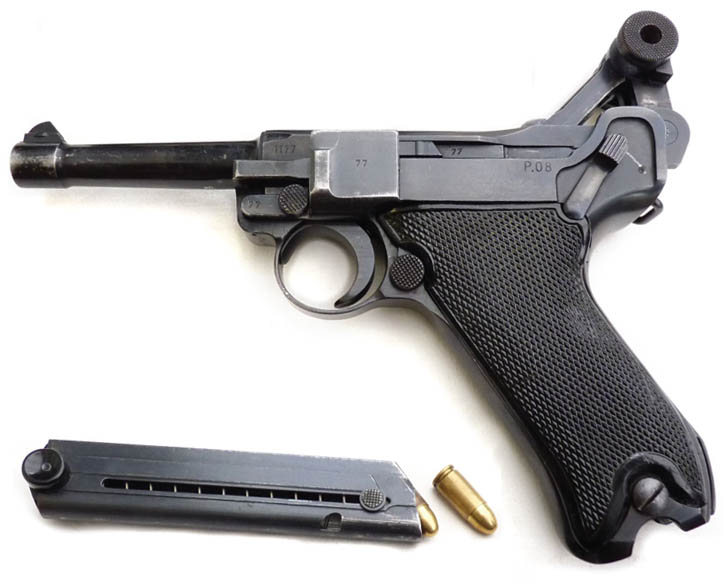
By 1941, Mauser had begun “salting blue” the entire weapon and installing cheaper black Bakelite handgrip panels to reduce both cost and production time. As a postwar marketing gimmick, one American arms merchant dubbed them “Black Widow Lugers.”
World War II and Beyond
During the Nazi era, the regular army and Adolf Hitler’s elite Waffen SS used the renowned Luger until their defeat in 1945. Mauser continued wartime production in Nazi Germany into December 1943. A Luftwaffe version by Heinrich Krieghoff and Son was augmented staring in 1935. That firm’s second-bid contract of 15,000 units ended production in 1944, but the regular army had already received its final 1,000 pistols in November 1943.
Ironically, the German Army refused to accept any more Luger units before war’s end, with the last 4,000 assembled in December 1944 being sold as the renamed Model 943 to neutral but right-wing Portugal. Thus, the war’s end on May 8, 1945, resulted in the Oberndorf, Germany, factory boasting a large excess of parts stocks.
Just like the British Army restarted the captured Volkswagen factory to produce its German occupation army’s staff cars, so also the French empowered Mauser to furnish their infantry and military police with needed sidearms during 1945-1946. The French then relocated German production personnel to metropolitan France, where an estimated 4,000 French Lugers were manufactured.
As late as 1970 the National Police were armed with these captive Lugers. Both Soviet Army MPs and East German People’s Police followed suit on their own side of the Berlin Wall.
Bootleg “Lugers” turned up in the postwar United States as well. In 1986, Mauser Luger production at Oberndorf finally ceased four decades after World War II, with units assembled from stock parts on hand still appearing into the 1990s.
The Luger continued to be highly valued as a sidearm even as late as the Vietnam War, with the Vietnamese producing their own knockoffs to arm the Viet Cong and “other irregular forces.”
Legends die hard, it seems.
Blaine Taylor wore an American-made .45-caliber Colt Model 1911 pistol as his personal MP sidearm while under enemy fire during the Vietnam War in 1967. He later also test-fired the Beretta 92 SBF at the Connecticut State Police Range after the Beretta’s replacement of the Model 1911.

The general staff of the Czechoslovak Army set out principles for that nation’s postwar small-arms development on Aug. 1, 1946, when it issued requirements for a new self-loading rifle. These included accurate point shooting at ranges up to 1000 meters, a magazine capacity of five to 10 rounds and a maximum weight of 8.9 lbs. Further, the new rifle was to be as effective as the existing Model 24 Mauser rifle for use by snipers and for firing at low-flying aircraft.
The Military Technical Institute responded to these instructions by pointing out the need for an “effort to replace the repeating guns by reliable automatic rifles (like the American Army).”
It also noted the well-known inaccuracy of contemporary full-power rifles in automatic fire and recommended an intermediate-power cartridge, as used by the Germans in the recent war, be specified for any new infantry rifle. On Dec. 24, 1946, the chief of the general staff agreed that rifles using intermediate-power cartridges should be part of the test program.

The vz.52 is distinguished from the later vz.52/57 by its more squared-off magazine box.
Experimentation with intermediate-power cartridges, that is, those ranking in power between pistol rounds like the 9 mm Parabellum and bolt-action rifle ammunition like the .303 British or 7.92×57 mm Mauser, had continued under German control through most of the war at Zbrojovka Brno.
Both 7 mm and 7.92 mm rounds were tried under the designation “Rapid.” In 1946, the desired caliber was specified as 7.5 mm, and several cartridge variants were developed in that size by Prof. dipl. Ing. Farlik.

A considerable number of these were produced the next year with the code number Z 47; as development progressed, this was changed to Z 49. Both Zbrojovka Brno and the Czech Munitions Factory (CZ) of Strakonice presented prototypes, both in gas-operated and recoil operated systems. The most successful was a CZ product developed by J. Kratochvil: the CZ 493.

Though Czechoslovakia had traditionally looked to the West, particularly to France, Soviet influence was, by the end of 1947, making itself felt throughout Czech industry and life. In arms development, this manifested itself in the change of desired caliber from 7.5 mm to the Soviet standard 7.62 mm. Curiously, the case length of the Model 49 cartridge, 45 mm, was retained.

The bayonet is hinged at the fore-end.
The new 7.62×45 mm round was designated the Z 50. After extensive testing, the CZ 493 was chosen as the most promising candidate for development. The Military Technical Institute asked for several changes. A folding knife bayonet was to be substituted for the original’s spike. Several detail changes were ordered for the trigger and breechblock, and the buttplate was adapted for a cleaning kit in the fashion of the Soviet SKS45.
By March 1951, a prototype with the desired changes was being field-tested under the designation CZ 502. The two mechanized regiments involved found the rifle’s accuracy and reliability satisfactory, and its size and shape convenient for use. It was found fully the equal of the Model 24 bolt-action in firing up to 650 meters and almost as good at ranges up to 800 meters. It was not, however, satisfactory for sniper use.

Remove the receiver cover by pushing forward with the thumb and lifting it up and out of its guides. Keep control of the cover to prevent the spring from flying loose.
A few detail changes were made to this prototype, being the substitution of a lighter alloy bayonet and the deletion of the gas regulator. The resulting rifle was designated Model 52 and taken into Czech Army service on March 20, 1952. At the same time, the Z 50 cartridge and a light machine gun were adopted with the same model number. The Model 52 has two features that make it unusual in the ranks of military self-loaders.

Pull the bolt handle rearward into its disassembly slot and then a bit to the right to remove.
The gas piston surrounds the barrel instead of occupying a separate gas tube as in the case of the AK-47 or FN FAL. On firing, gas escapes from a pair of ports near the barrel’s midpoint and presses rearward on the piston. The piston in turn presses on a half-tube that fits over the top of the barrel. The half-tube’s other end bears on a spring-loaded actuator whose two arms pass through holes in the front of the receiver under the rear sight.

Press in on the clips at the rear of the handguard and lift it up to remove. It is a curiously designed combination of wood and sheet steel.
Those arms, in turn, contact the front face of the bolt carrier. On firing, gas presses the piston, half-tube and actuator rearward, imparting energy to the bolt carrier. That part continues rearward, and cam tracks in its interior pick up lugs on the sides of the breech block. The breechblock is unusual in that it locks by a pair of lugs at its front, rather than at the rear in the manner of most tilting breechblocks.

With the trigger group and handguard removed, the barreled action is free to be lifted away from the stock for cleaning or maintenance.
The lugs fit into recesses in the receiver floor, a method that shortens the stress path and, many argue, improves accuracy. On the other hand, the lateral arrangement of the lugs requires a bottom-mounted extractor and a locking bar in the carrier to retain the cartridge during initial extraction. The ejector is a plunger that protrudes through the bolt face when its rear strikes a projection in the receiver. Spent cases are thrown over the firer’s left shoulder.

Remove the half-tube operating sleeve by dislodging it from the piston and actuator and lifting it off the barrel.
After ejection, the bolt assembly returns forward, with the cam surfaces inside the carrier pressing the breechblock down into battery. The gas system parts have by this time returned forward by the actuator spring. The magazine is a 10-round double-column box whose follower lifts a breech catch into position after the last round is fired. It can be removed for single loading or can be loaded while mounted in the fashion of the SKS-45.
The trigger group is copied almost without change from the U.S. M1 rifle. The trigger-guard-mounted safety and trigger removal by pivoting the guard bow will be familiar to any user of the M1 or M14. The stock is conventional in shape, and most were made of walnut, though some were manufactured from birch and stained a yellow shade. The center piece of the handguard also is wood, while the handguard nearest the muzzle is of stamped steel.

The trigger assembly was frankly copied from the U.S. M1 rifle.
The right side of the fore-end is contoured for the swinging bayonet, which is held in its fixed position by a catch on the fore-end. The post front sight fits into a dovetail in its base and can be driven left or right for windage adjustment. The rear sight is adjustable for elevation from 100 to 1000 meters in increments of 100 meters.
The Model 52 was supplied with a sling, canvas and leather pouch for two magazines, a blank firing device and a cleaning kit that incorporated a three-piece cleaning rod, oil can, brush, gas system cleaner and a muzzle protector, all to be stored in the butt trap. To disassemble the Model 52, first check to ensure the rifle is empty, then remove the magazine. Then move the receiver cover forward out of its guides until the front tips up.

The vz.52 and 52/57 use a tilting-block locking system but with lugs at the front rather than the rear.
Pull the cover straight up and out of the receiver, then ease it to the rear, releasing pressure on the return spring, which then can be removed along with its plunger. Pull back on the operating handle, then pull to the right, moving the bolt assembly into the disassembly slot in the receiver. The bolt assembly then can be lifted out of the receiver.Remove the breechblock from the carrier by pushing it to the rear, then pulling the front down and removing it.

Next, press in the handguard retaining clips and tip up the rear of the handguard assembly, which then is free to be removed to the rear. The trigger group is removed M1 fashion by pulling rearward on the back of the guard bow and then swinging it forward. To separate the action and stock, use a bullet point to press the plunger found on the right side of the fore-end tip under the bayonet (there is a hole in the bayonet for access).

The barrel band is freed by this to slide forward, allowing stock removal. No further disassembly normally should be required, and reassembly is in reverse order. Because the Model 52 was made by the conventional forging and milling methods of the time, has a wooden stock and a permanently attached bayonet, it is rather heavy for the cartridge used at 9.2 lbs.
While this is a disadvantage in carrying, it makes the Model 52 accurate and easy to fire. The extra weight of the folding bayonet also makes the rifle somewhat muzzle-heavy, with a good effect on offhand accuracy. The Model 52 cartridge, light machine gun and rifle had relatively short careers in the Czech Army. As early as 1954, even before the Warsaw Pact was signed in May 1955, the East Bloc nations began discussions aimed at standardizing arms on the Soviet pattern.

While certain national preferences were taken into account in small arms design, ammunition standardization on the Model 1943 cartridge was agreed upon. Therefore, the Model 52 rifle and light machine gun were redesigned for the 7.62×39 mm cartridge, with the resulting rifle designated Model 52/57. The new version can readily be distinguished from its predecessor by the sloping bottom of its magazine, required by the more tapered shape of the Russian cartridge.
The rear sight was changed, with a maximum elevation of 900 meters, and a new cleaning kit was issued. Even the Model 52/57 had a brief career in Czech service, being displaced by the far more advanced Model 58 rifle, a gun that resembles the AK-47, but whose locking system resembles that of the Walther P.38 pistol. The Model 52 and 52/57 rifles have been widely made available to Communist and neutralist nations like Cuba, Egypt and Syria (many were captured in Grenada).

In their home country, they are now used only by ceremonial troops, in the same way the SKS-45 is used by the guards at Lenin’s tomb in Moscow. The Models 52 and 52/57 were well made and effective arms, but were obsolescent at the time of their introduction, a time when more modern arms like the AK-47 and FN FAL were moving from the drawing boards into the hands of troops.
Editor’s Note:
In the United States, vz. 52s have appeared occasionally among surplus retailers, most notably coming through Century Arms International in the mid-1990s. Royal Tiger Imports has imported the most recent batch of vz. 52s, which were discovered in storage in Ethiopia. You can read about the discovery here.

There are many iconic handguns in the collective consciousness of gun enthusiasts. There are fewer, but still several iconic handguns in global culture. These latter icons tend to be associated with a larger-than-life appearance on the silver screen. But even amongst the most iconic and awe-inspiring handguns ever to make viewers’ eyes widen and chins drop – there is one that sits at the very top. The .44 Auto Mag.

The Dirty Harry movies from the 1970s and early 1980s are required annual viewing for anyone who calls himself a handgun enthusiast. The title character, immortalized by Clint Eastwood is famous for the icon status of the S&W Model 29, .44 Magnum revolver. In fact, that gun is quite possibly deserving of equal top-billing in the film credits. But in 1983’s “Sudden Impact” a new character was introduced that instantly became the “it” gun that everyone had to have. Introduced early in the film as having been a gift to Detective Callahan (Eastwood), it is called upon at the film’s climax shootout scene after Harry’s beloved six-shooter takes a dip in the Pacific. In 1983, guns didn’t look like this. It was ultra-modern and high tech, yet a big-bore powerhouse that could, according to Dirty Harry – “remove the fingerprints” of the perpetrator shot with it. Like every red-blooded male in every theatre seat everywhere in 1983 – I was mesmerized by the gun. Problem was… there were none to be had. The 44 Auto Mag had made its introduction to the market over a decade before the film was made, and after selling roughly 3,000 pistols the company went under and production stopped. In addition to that – those guns that did exist did not have the long 8 1/2″ barrel seen on the big screen – that was a custom piece made for the movie. The resale market for the original Auto Mags skyrocketed. If you could find someone willing to sell one, you were going to pay up for it.

The Auto Mag company, much like a cat, lived many lives and the guns were manufactured in a number of variations and several calibers with roll marks and serial prefixes changing each time. But those original 3,000 Pasadena pistols will forever be the “real” Auto Mag and sit at the top of the collector’s wish list. I am proud to own two of those guns.

Fast forward to the modern era, just a few years ago – when the rumors began to vibrate around the industry that the Auto Mag was going to be re-made. Being an Auto Mag enthusiast, I began a crusade to learn more. This put me in touch with Patrick Henry, who purchased the name, trademark, rights, and all existing assets of the Auto Mag company, and who was on a mission to resurrect this legendary gun and restore it to its original glory – while using modern manufacturing capabilities to improve both the process and the gun. The objective was to remain completely loyal to the original pistol and make true Auto Mags, not replicas – while allowing the technology now available to make them better wherever possible.

Looking through the lens of today, the specifications of the .44 Auto Mag Pistol (AMP) cartridge might not raise many eyebrows – but circa 1970 this was virtually an unheard-of challenge. Semi-autos had not yet reached the mainstream lexicon of handguns, and most of those were either of a Browning design or a derivative thereof, and none approached the firepower of the .44 magnum. This was a new beast altogether – with a locking bolt like the AR-15, but no gas system – and two recoil springs and guide rods to control the timing save the gun and shooter from undue wear and tear. As often happens in innovation and business, the first to market is not always the successful product, or even the best designed – but in its short-lived glory, the Auto Mag inspired not only an industry, but a generation of enthusiasts. The silhouette of the Auto Mag is incredibly distinctive, and to this beholder’s eye, it remains as alluring today as it was 50 years ago.

It is not lost on this writer, nor should it be on the reader, just how big an undertaking Auto Mag Ltd., led by Patrick Henry has been. “If I’d known five years ago how long it would take, and how many millions it would cost, I probably wouldn’t have done it.”, was the sentiment that Patrick expressed during one of our conversations, “but”, he continued, “once you get half-pregnant, you just have to go with it”. Fortunately for us, Patrick is a gun-maker and not an obstetrician. But, if you sit down and talk with Mr. Henry, you will soon realize that he is a passionate enthusiast of the .44 Auto Mag, whose dream is to not just re-make this iconic pistol but to make it what it always should have been. That dream is shared by many lovers of the Auto Mag, because pre-orders for pistols that were still just a glimmer in Patrick’s eye started rolling in from day one.


The new Auto Mag can be ordered in several configurations, starting with the Founder’s Edition, which was a limited run offered to early pre-order customers. The Classic Edition is the version that was sent to me for testing and review, with the optional 8 ½” barrel. The high polished finish is also an option – and is a very labor-intensive process which makes the stainless-steel shine like drag pipes on a new Harley. There are options to choose from when it comes to the grips also – my preference being the beautiful wood stocks, but there are also very nice G10 grips available – both options are made by Hogue. And wonderful news for owners of original Auto Mags – grips, magazines, and other critical internal parts can all be purchased from Auto Mag, Ltd. And because this is “the real thing” and not a tribute gun or reproduction, the parts are nearly all compatible.

So, who exactly is the .44 Auto Mag for? There can be no doubt that the Auto Mag has always been, and continues to be, a boutique gun. Arguably one of the most elite boutique guns ever made, and certainly coveted by collectors. I think the market for this gun is diverse and eclectic, ranging from the man who is regretting he never bought that one he saw 30 years ago… to the young enthusiast who has a keen eye and appreciation for the extraordinary… to the trophy collector who simply wants one because he wants one. And don’t leave out the recoil-junkie – that guy that loves big bore thundersticks and always draws a crowd at the range. In a recent conversation with my friends on Handgun Radio, we were discussing the Auto Mag in contrast to similarly priced high-end 1911s with which we are all familiar. I asked, “but tell me… which of those guns is a .44 Auto Mag?”. And there, I believe, is the answer. The Auto Mag is for the person who wants an Auto Mag. The 44 Auto Mag is the DeLorean of handguns.

But what about shooting the Auto Mag? After all, this is a gun review – and in gun reviews we talk about shooting and performance. As a legacy .44 Auto Mag owner, I am familiar with firing this handgun and so I had expectations and questions as I headed to the range with the brand-spanking-new version. The first thing you’ll likely notice is the size and weight of the gun. As tested, this pistol weighs 4 lbs. and is 14-1/8” in overall length. The grip portion of the frame is large and hand-filling, even for those with large hands. And yet, despite those dimensions, it is remarkably ergonomic and comfortable to grip – this was my thought the first time I held an Auto Mag. And as for the weight – you’ll be glad of it when you touch off that first round.

The sights on the Auto Mag were always of high quality. The front sight is a permanent machined fixture that ramps up from the vented rib that runs atop the barrel. It is serrated for reduced glare, but otherwise unadorned. Auto Mag Ltd. has not modernized this by adding any visibility enhancements – which this enthusiast appreciates. The blade of the new front sight looked a bit thinner to me in back-to-back shooting, so I measured them and found that the front blade is 0.010” thinner and the rear notch is also 0.015” wider on the new gun versus the old. That twenty-five-thousandths is enough to notice. The rear sight is of similar design to the original, but changes have been made to the mount to accommodate the modern Kensight. It is fully adjustable and is a flat black with anti-glare serrations. In an era before video games and sights that light up and flash and holler “he went that way”, these were top of the line – and suit this gun just fine. The front sight looks identical to the original Pasadena gun, but is in fact a more modern sight that could be replaced if needed. A look at the muzzle end of both guns also demonstrates one of the opportunities that Auto Mag Ltd. has taken to improve the gun in a subtle way. The old gun looks much like someone trimmed the end of the barrel with a band saw and knocked off the burrs before shipping it out. The new Auto Mag has a nicely rounded and crowned tip, offering the same head-on look but in a more refined way.

As far as accuracy goes, I have to admit that because I have owned original Auto Mags for years, I already had a hunch that it would “put ‘em where you point it”, and indeed it does. Unfortunately, there is not a variety of .44 AMP ammo from which to select a sample for testing – and this writer is aware of only one company making commercial ammunition – SBR. So, I reversified the logic of the standard test and used one load from two different guns – the new Auto Mag, and a 50-year-old original. “Age before Beauty”, as they say – so the little old lady from Pasadena was up first and put five shots into a very respectable group from a rest at 20 yards. Up next, the shiny new gun made an even tighter group. Given the addition of more than 2” of barrel, I was not surprised. I found the sights on the new Auto Mag to be a bit nicer and I felt it was easier to hold finer aim with the new gun.

Recoil is what you might expect from the .44 Auto Mag, and if you’re not sure what that even means – let me put it this way – it kicks like a mule. Don’t watch “Sudden Impact” and get the idea that the recoil you see Clint Eastwood experience with movie blanks is how it will be for you. I was given some good advice years ago that the Auto Mag likes loads just hot enough to reliably cycle the action. This was in reference to the old guns of course, but I suspect the same advice might be prudent today. While I have no doubt that this new gun is built stronger and could handle the occasional hunting load – for the long-term well being of gun and shooter, I would stick to a 240-grain bullet moving at about 1250 fps, and not much more. Even so, when fired with one hand the Auto Mag will unleash a sharp recoil energy that will soon have you back in a two-handed grip. That said, this 4 lb. mass of stainless steel does do a good job of smoothing out the otherwise hellish .44 magnum rimless cartridge.


Range work with the Auto Mag was not without some challenges and a few malfunctions. Intermittent feeding stoppages became less random and seemed to have a common source. Once I examined and eliminated a magazine that seemed to be the culprit – it was smooth sailing for the remainder of the day. Loose tolerances of today’s polymer-framed guns have greatly reduced the likelihood of this problem, but 1911 lovers will tell you that the first place you look to resolve many common errors is the magazine. The magazines for the Auto Mag are made of stainless steel with polymer followers. They are capable of holding 7 rounds. When loaded full, the spring is nearly at full compression – those last couple rounds go in tight. I found myself sticking to five most of the time, it made it easier on my thumbs, and helped me ration my ammo better. And while I’m giving advice, another very important discovery people make when they handle an Auto Mag for the first time is just how hard it is to pull that bolt back. And with the length of travel, the largeness of the grip frame, and difficulty fighting the strong springs – working a thumb into place to push up the bolt-stop is a feat for orangutans. It can be done – but you don’t want to be on candid camera when you try it. Solution – insert an empty magazine and seat it properly, then pull back on the cocking ears while pushing forward on the grip frame. You’ll thank me.

JUST MY OPINION
It is important to evaluate the Auto Mag in the proper context, as a historically significant gun that had a very limited original production, achieved notoriety – even iconic status, and is now being manufactured anew with full respect to the original design. To try and judge the gun by either the standards of a newly designed firearm or by the vintage classification of a relic, is to miss the point – in this writer’s opinion. It would be a similar discussion if someone were to re-make the broom handle Mauser in strict accordance to the original design, with all of its inherent positive and negative qualities – but as a newly manufactured functioning handgun. And because I am a collector of the Auto Mag and know a bit about the gun and its history, I had expectations based on that philosophy.

First and foremost – high marks indeed for remaining faithful to the original design of the gun, and avoiding the temptation to modernize the look or even improve on the cast-frame cosmetics. The patina of the Auto Mag is perfectly true to the original gun. The polish on the upper is optional – and while I am not usually one for the BBQ gun bling, I have to say that having seen it like this – that’s how I would want it. The only downside is that the cocking ‘ears’ also have the high polish which makes them very difficult to grasp. The Auto Mag is a son of a *** to cock under the best circumstances and that didn’t help. But I would suffer the difficulty during the occasional range trip to have it look the way it does. Besides, it is really the rear sight that prevents one from getting a manly grip on the bolt cocking piece without ripping out hunks of flesh. A perfect example of a design that could have been better in 1970, but if it were changed now, it would change the gun.

The bottom line on the new .44 Auto Mag is that it is almost exactly what I had hoped it would be – the next best thing to a time machine and access to Dirty Harry’s nightstand drawer. This gun is for people who want a .44 Auto Mag. The great news is that it truly is art you can shoot. It’s a stronger gun than the original. It cycles better. Its accuracy and power make it an interesting option for the handgun hunter (I happen to know that several hogs have already been taken with it). More than fifty years since its introduction to the market – the Auto Mag is now ready for the range as well as the display case.

Again, I am not an expert on the Auto Mag, but I have been fortunate to have learned from many over the years whom I consider to be experts. I’d like to thank Patrick Henry, Jeffrey Kelley, Brian Maynard, and Bruce Stark for their contributions to my knowledge.
Watch the full video review of this gun, with lots of shooting, here:
I will leave you with a quote that I really like about the original Auto Mag, from Bruce Stark’s book, “Auto Mag, The Pasadena Days – The Years 1966-1972” – “The scope of the efforts and the accomplishments that took place in such a very short amount of time are staggering. For an inexperienced company to design and manufacture a completely new semi-automatic handgun, made of exotic metals to shoot non-existent ammo to be sold to a non-existent market seems ill-advised to say the least. The end result was the most beautiful handgun ever to be made. The Auto Mag is an American classic.” Stark’s book is a must-have for all Auto Mag enthusiasts and is still available. In fact, you can even get a signed copy at a cost of just $45. If interested, contact Stark at littlekitty16@roadrunner.com.
If you are interested in the history of the Auto Mag company and Harry Sanford, I highly recommend a video on the YouTube channel of Jeffrey Kelley – do a search for that.
Learn more about the new Auto Mag pistols and company, here: Auto Mag Ltd.

*
Categories
Bismuth 12 Ga. Slug by E.M.Smith
Bismuth 12 Ga. Slug
For those who do not know, California has banned the use of Lead in ammunition used for hunting. Why? Supposedly to reduce toxicity in birds eating lead lumps and shot. In reality, more likely IMHO is that the goal was to make it harder to get any ammo to shoot and raise prices.
The result has been a lot of use of Bismuth in shot as the weight is about the same as lead and it is non-toxic. Also it isn’t that expensive. For hunting rounds in rifles, the use of solid copper and related alloys has been common.
Copper is much harder than lead, so many of those hunting rounds now penetrate more soft body armor than the prior rounds. (Note: NO soft body armor is “bullet proof”, each is only rated to stop certain classes of rounds. There is no “bullet proof vest”. There is no “cop killer bullet”, only a necessary energy and hardness to penetrate any given level of vest.)
But what happens with a Bismuth slug?
Well, the Taofledermause folks tested it. Results are fascinating to say the least. Due to increased brittleness, the slug tends to disintegrate on hard targets. BUT it also tends to make a few larger chunks in the process on softer targets. As a result, it penetrated a Level 3 soft body armor test panel that will stop a Foster Slug of lead.
In a block of ballistic gel, it was an amazing effect. Shedding some fragments that stopped in a few inches, while some large chunks traveled the whole length, and the rest formed an expanding cone of destruction in between.
I would not want to be on the wrong end of one of those slugs.
Now, this was an alloy of mostly Bismuth, a bit of Antimony, and some tin (12%) so as to stop the tendency of Bismuth to expand on cooling. That let them use a regular lead casting mold to get a proper sized bullet / slug. I have no idea how much of this peculiar performance comes from that particular alloy, but it will matter to some degree.
Bismuth  - 87.25%
Antimony -  0.75%
Tin      - 12%
An interesting result, to say the least. Attempting to make it a pain to go shooting your shotgun resulting in a spectacular increase in lethality. Leftists – Accidentally increasing lethality for 53 years… (Banning “Saturday Night Specials” moved uninformed shoots / buyers up caliber and up quality into more lethal guns and calibers…)
I’m no longer concerned about the effectiveness of Bismuth in shotgun rounds 😉
Categories
Some Eye Candy for my Great Readers NFSW

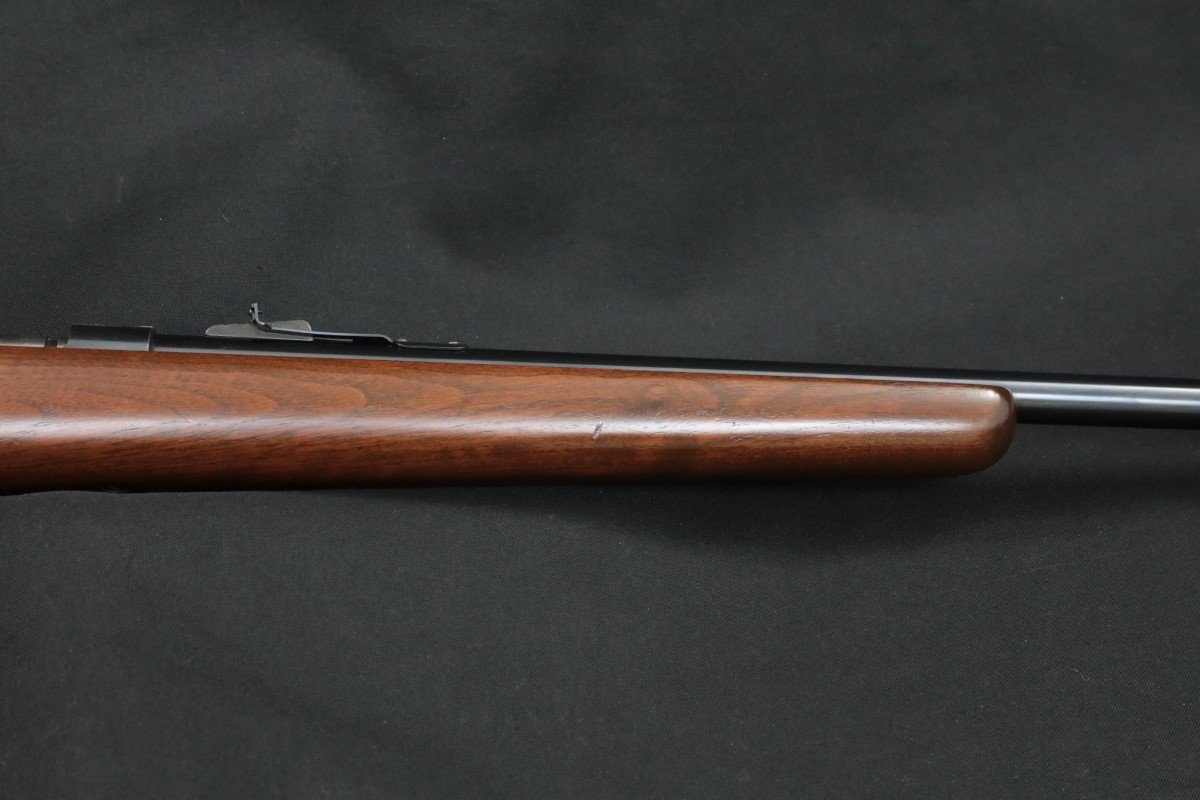


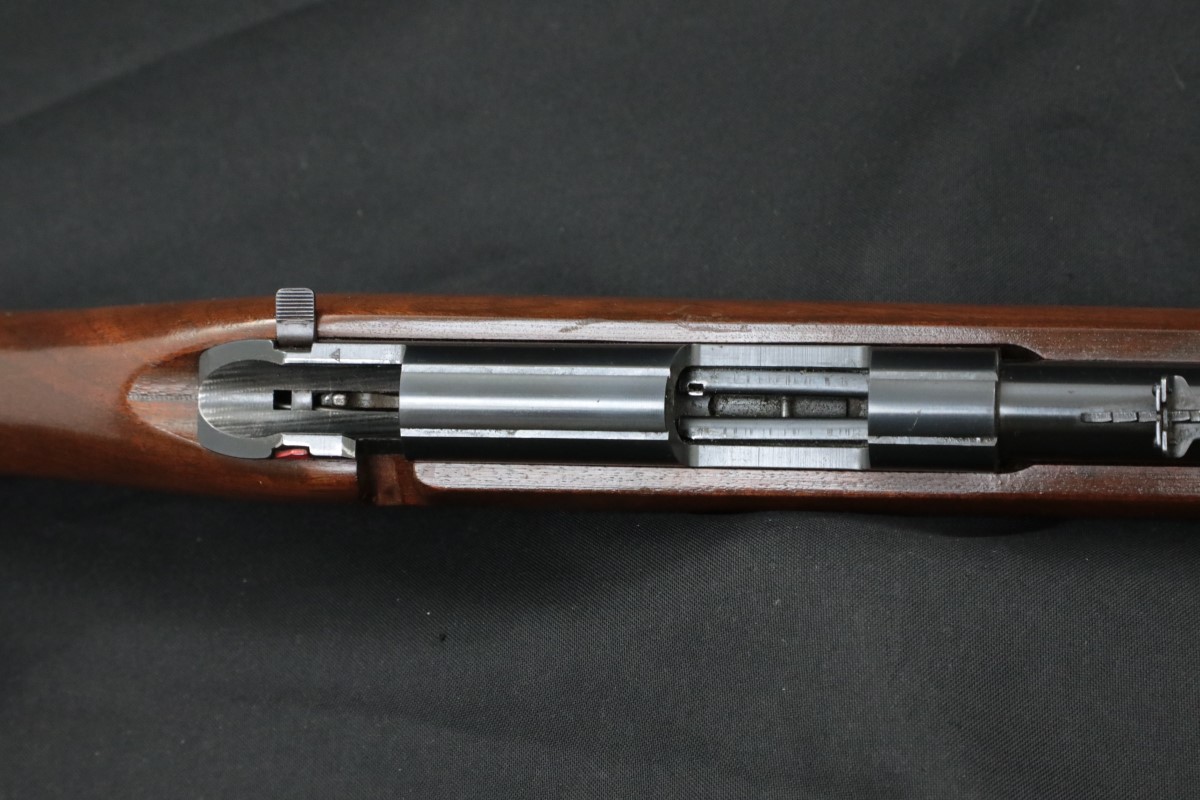


Now this is what I call one classy looking rifle to these tired old eyes! Especially with the octagon barrel. Grumpy


