Categories
Burgess Folding Shotgun
The Nice guys at Lock Stock and barrel Investment had one of these up for Auction. So they very kindly let me handle it. Now it was not one of the folding models. But I was still very impressed by it. So if you get a chance you might want to keep an eye open at their Website. Grumpy
Here is the address – https://www.gunbroker.com/All/search?IncludeSellers=423027

While I started my love affair with the handgun (in the form of a GI .45 Colt auto), I was always open-minded about the revolver. In match shooting, the Marine Corps used revolvers for the center-fire stages, so I developed some familiarity with the S&W K-38 and Colt OMM. A little later, I got into the law enforcin’ business and it was all revolver.
With my agency, Colts were permitted but S&Ws were issued. With a few exceptions, we carried medium-frame .38s from S&W—10s, 15s or 19s. A few guys liked the better shooting qualities of a heavier gun and opted for 27s or 28s I packed a 5” Model 27 for a couple of months and liked it very much.
But when I shot it side by side with my 19 and saw little difference with our issued ammunition, I went back to the lighter K frame. Most police officers preferred a revolver that was light enough to ride their hip virtually unnoticed for long shifts and I am no exception.
Eventually, I retired from law enforcement—it happened at the time when S&W and Ruger introduced the best police revolvers ever made. They were the Smith L frames and Ruger GP-100s. Since we are going to look at my second favorite revolver, we have to first eliminate my first, which is none of the ones I have already mentioned.
In the early stages of my revolver-carrying deputy-sheriff days, I realized that carrying an off-duty gun was a good idea. It should be small and light enough to always be there. Like many other officers, I went for the same brand of gun as my on-duty revolver—Smith & Wesson. This company’s small, five-shot J-frame revolvers have been made since the 1950s and the very best of that sized gun is the internal hammer, double-action-only Centennial.
The J-frames in general and the DAO Centennials in particular are probably the company’s current best-selling revolvers. I have had one in my pocket for just about 40 years. The current choice, a .357 Mag. Model 340 PD, is lying on the back corner of my desk as this is written. It is unquestionably a gun that I have carried most and fired least, but it is still my all-time favorite revolver.
So what is my second choice in revolvers? Although the wheelgun’s popularity is clearly declining, there are many fine makes and models from which to choose. Colt no longer makes gems like the Python and Cobra, but Smith & Wesson, Ruger and Taurus all have guns in small, medium and large sizes.
Modern technology has now made it to the revolver and polymer guns are available in all three makes. But for my purposes, revolvers for personal use no longer need to be weight and size compromises, because I no longer need them for daily carry. Since I no longer go afield with a revolver for game, I really don’t have much need for the big Magnums. Don’t get me wrong—I have lots of all sizes of revolvers on hand for historical reference and ammo evaluation, but they’re stored in the vault.
I am quite happily married to a lady who has small use for the many automatics that so demand a handgunner’s attention these days. Nan is perfectly happy with the traditional revolver from Smith & Wesson and handles all of them well. We both like to have revolvers in several locations around the house, so it boils down to which guns we choose. They are home- and personal-defense guns that we don’t carry, so size and weight are not really important.
The big Magnums are generally excessive in recoil and muzzle blast. I strongly believe that defensive handgun calibers should produce large holes on target and the heavier bullet available in a given caliber is almost always better than the lighter one. Modest velocities (which equate to lower recoil) are entirely acceptable in this setting. In this line of reasoning, it would seem that the .44 Spl. is our gun of choice. The big 240-gr. bullets that are used in this century-old caliber look pretty good.
But I believe that another caliber would be a much better choice. Believe it or not, I like the .45 ACP cartridge for this application. For one thing, the ammunition has a proven record of performance over many years of use—literally a century of service. It is also made in great variety by many different companies.
As far as guns are concerned, Smith & Wesson made its first .45 ACP revolvers when the Army didn’t have enough autos in World War I. They made a great many Model 25s (1955 Targets) and a much smaller number of Model 26s (1950 Target Models). Both guns have target sights, but in modern times, they’ve offered several kinds of Model 22s, which have fixed sights. There have also been Nightguards and Governors.
If you want to look, there are many S&W .45 ACP wheelguns to be had. I own a Model 26, cut back to four inches after rescue from oblivion. As a mate to it, I have a Model 625 Mountain Gun. With these two, I have done both the 250 and 350 pistol courses at Gunsite. At least two more custom guns are in the works.
As you might gather, I have many reasons why the S&W .45 ACP wheelgun is my second favorite revolver. And, should you see this as product prejudice, I have a couple of Colt New Service .45s and continue to look for a Shooting Master.

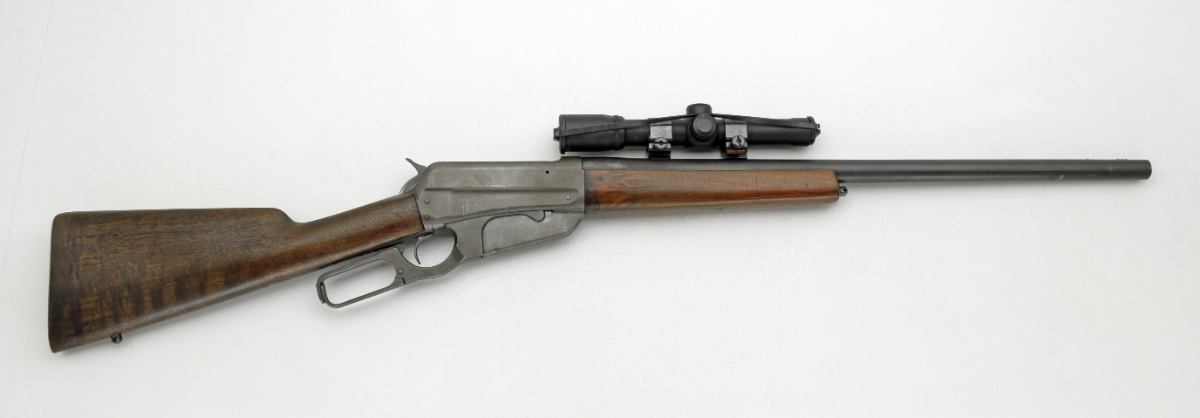


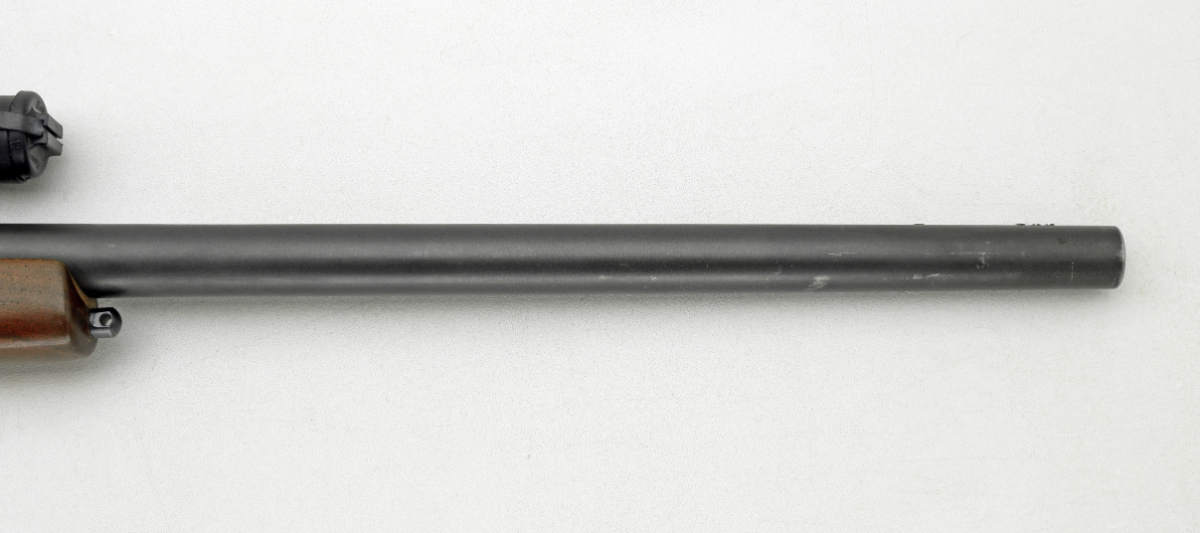


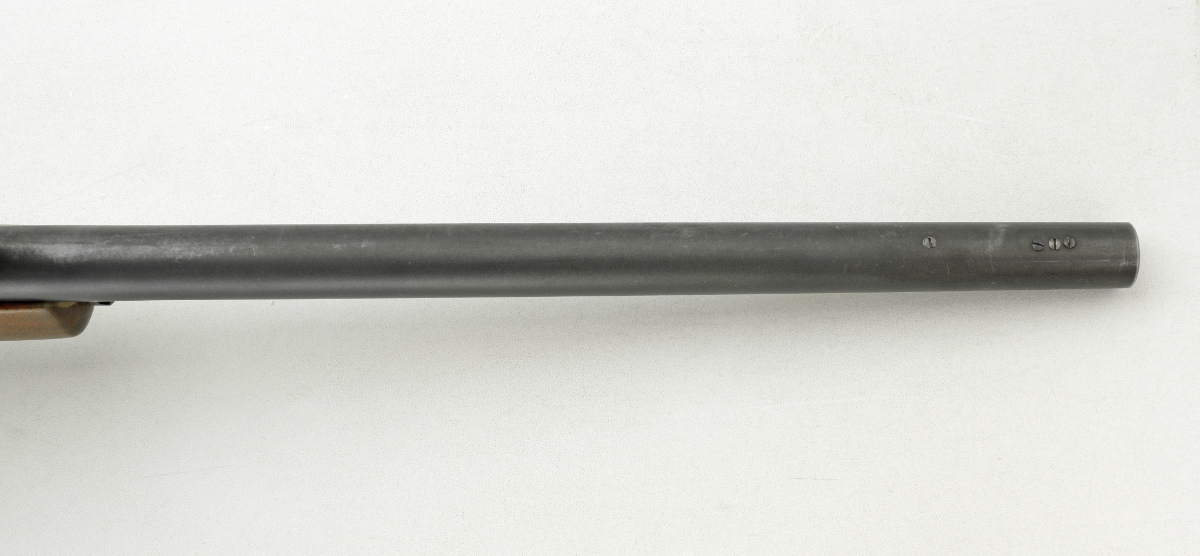


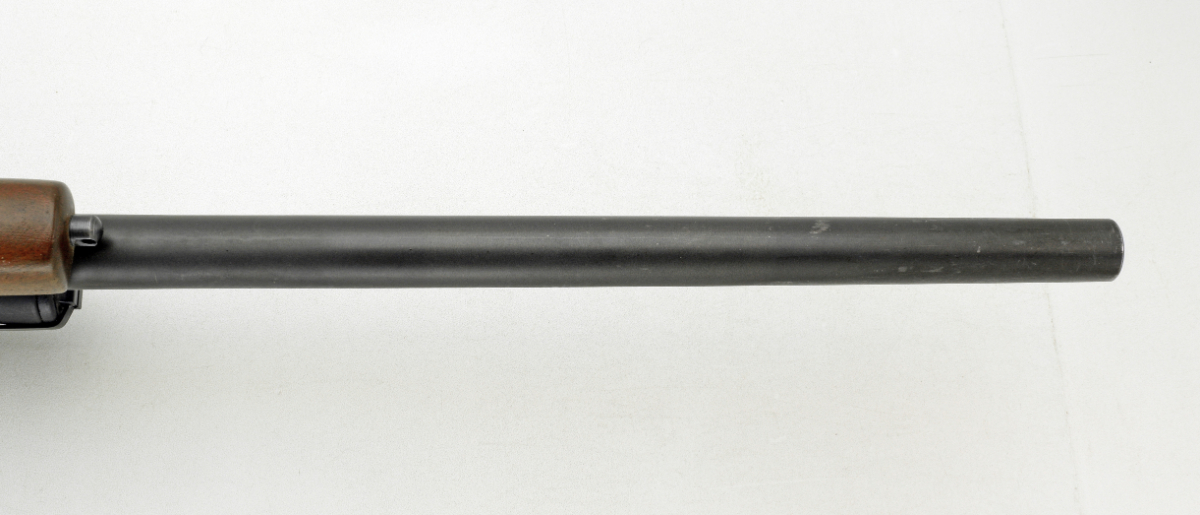
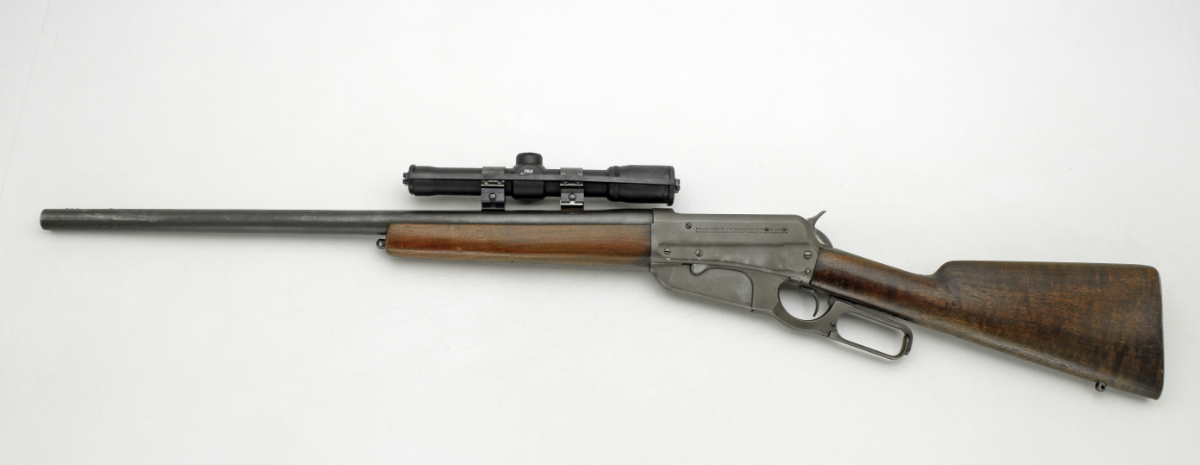


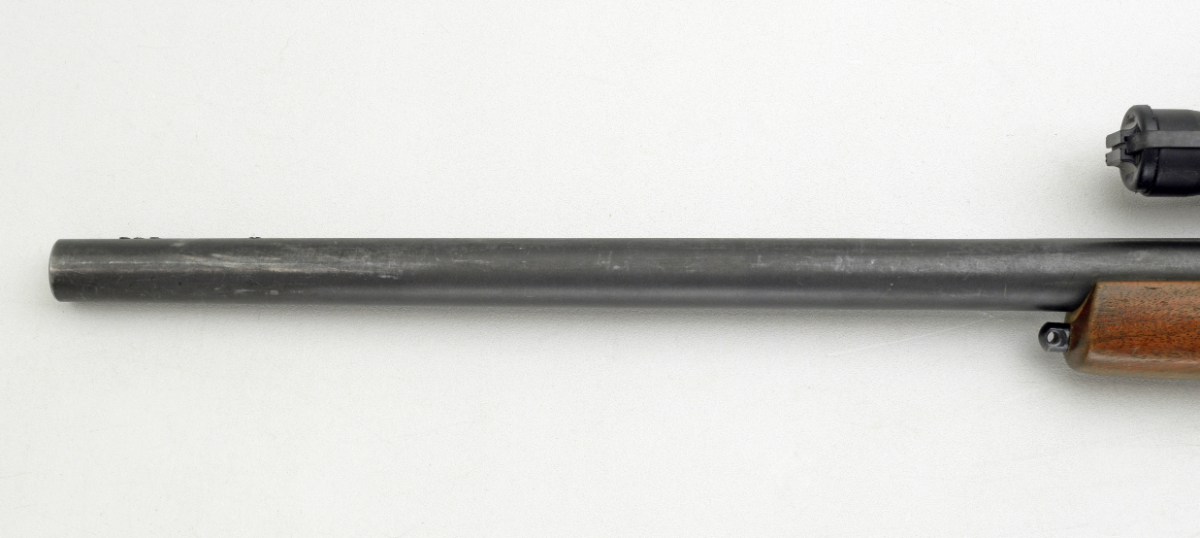


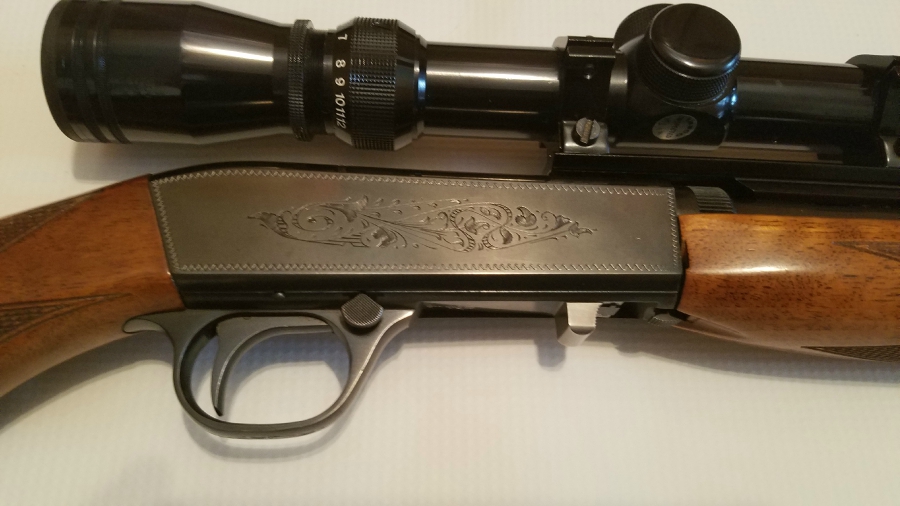
I just get sick at what some “Gunsmiths” do to what was a classic firearm. Now I understand that there are times in a mans life. When he has to bend a bit to survive and take care of family & friends.
But I hope that I never get into a situation that would be as bad as this that would make me do such a thing. Grumpy
by Jonathan Miltimore
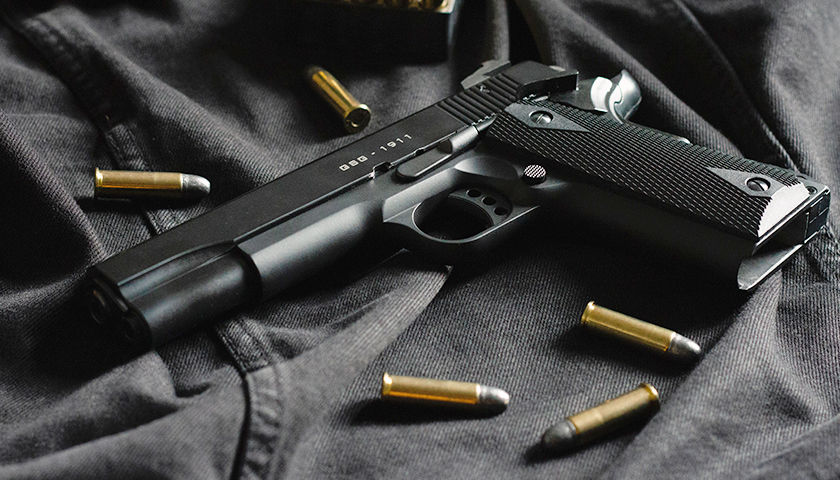
Shortly before Christmas in 2018, a woman named Darlene voluntarily turned in a 9mm pistol to the Baltimore Police Department. It was just one of about 500 firearms the department collected that day as part of the city’s gun buyback program, which paid citizens somewhere between $25 and $500 in exchange for their firearms and high-capacity magazines.
Darlene, however, had a confession. She was turning in her 9mm, she told a local news reporter, so she could “upgrade to a better weapon.”
Like what? the reporter asked.
“I don’t know,” Darlene said. “I haven’t quite decided.”
Do Gun Buybacks Work?
Supporters of gun buybacks, such as Baltimore’s mayor and police chief, say the program is an effective way to reduce violent crime.
“Our point here is, there are guns on the streets of our city,” said then Baltimore Mayor Catherine Pugh. “We are signaling folks out there, we don’t care if it’s grandpa’s gun or your gun, we want it.”
Darlene’s story, however, was used as ammunition by skeptics of gun buybacks to show the programs are ineffective and a waste of taxpayer resources. Skeptics of gun buybacks have long argued that stacks of rifles, pistols, and gun magazines “look impressive when they’re displayed at news conferences,” but argue they do little to reduce gun violence.
“Researchers who have evaluated gun control strategies say buybacks—despite their popularity—are among the least effective ways to reduce gun violence,” USA Today reported back in 2013.
A newly released academic study reinforces the claim that gun buybacks don’t reduce gun violence.
‘No Evidence’ Gun Buybacks Reduce Gun Crime
Last week the National Bureau of Economic Research published a paper titled “Have US Gun Buyback Programs Misfired?”
The paper, which was authored by economists at the University of California, Santa Barbara, San Diego State University, and Montana State University, differed from previous studies in that it didn’t study a single city’s Gun Buyback Program (GBP), but an array of them.
Researchers said they identified 339 GBPs across 277 cities, examining public records to determine the number of firearms sold in each. They concluded the data is clear: gun buybacks do not reduce gun crime.
“Using data from the National Incident Based Reporting System, we find no evidence that GBPs reduce gun crime,” the researchers said. “Using data from the National Vital Statistics System, we also find no evidence that GBPs reduce suicides or homicides where a firearm was involved.”
The NBER paper dovetails with other studies that focused specifically on Seattle, Buffalo, and Milwaukee, which found buyback programs were ineffective but popular with the public.
“I think the evidence still suggests that if the goal is to prevent intentional homicide, the gun buybacks are not likely to achieve that objective,” Michael S. Scott, director of the Center for Problem-Oriented Policing and a clinical professor at Arizona State University, told The Democrat and Chronicle in 2016.
The Cost of Gun Buybacks
Some may argue that there is little harm in gun buybacks even if they don’t work, since they are voluntary. Yet this ignores the fact that gun buybacks are quite costly.
The first ever US gun buyback occurred in Baltimore in 1974. Citizens were paid $50 ($259 in 2019 dollars) for any firearms they turned in, researchers said, and the city collected some 13,500 firearms. The cost? Some $660,000.
This is just one city. Costs are substantially larger at the national level. Australia’s massive 1996 gun buyback program, for example, collected 640,000 firearms, costing taxpayers some $230 million. A buyback on that scale in the US would involve the collection of about 78.6 million firearms, researchers said. The cost would likely be tens of billions of dollars.
In the US, however, gun buybacks tend to occur at the local level. Nevertheless, costs can run surprisingly high, since there is little incentive to control spending. The lack of spending oversight has at times manifested itself in comical ways.
In 2019, for example, YouTuber Royal Nonesuch was able to make $300 by selling several “pipe guns” he made out of scrap—he described them as “the crappiest guns” he ever made— to the state of Missouri. Officials at the event didn’t seem to care or even notice, evidenced by the fact that the individual who paid Nonesuch never bothered to inspect the firearms.
Economist Daniel Mitchell offered an anecdote that is perhaps even more amusing. During Baltimore’s 2018 gun buyback, Mitchell noticed the city was offering people $25 for every “high-capacity” magazine they turned in.
The problem?
A quick online search revealed that some magazines could be purchased for between $11-$13. This meant a clever entrepreneur could have purchased a car full of magazines and turned them into the city to make a quick, hefty profit at the expense of taxpayers (and to the benefit of gun manufacturers).
Buybacks: Great Politics, Bad Policy
If a preponderance of evidence shows gun buybacks are ineffective and costly, it invites an important question: why are they so popular with local governments?
The answer can be found in public choice theory, an economic concept pioneered by Nobel Prize-winning economist James Buchanan that essentially says government officials make decisions based on self-interest just like everyone else.
Gun buybacks may not be good policy, but it turns out they are great politics—especially in cities plagued by gun violence.
For starters, an abundance of research tends to agree that buybacks are relatively popular with the public. The policies have the appearance of being “voluntary” (except, of course, for the wealth that was taxed to make the purchase), and are easier to pass and less controversial than gun control laws. This allows politicians and bureaucrats to show they are “doing something” to reduce gun violence in cities. Meanwhile, the only real costs of gun buybacks—tax revenues essentially wasted—are widely dispersed, which, as F.A. Hayek once pointed out, makes them “difficult to see.”
The economist Milton Friedman famously stated that “One of the great mistakes is to judge policies and programs by their intentions rather than their results.” But people often do judge policies by their intentions (or their appearances)—which is no doubt why Friedman so often made this point.
The popularity of gun buybacks is yet another instance in the government arena of good intentions overshadowing dismal results.
– – –
Jonathan Miltimore is the Managing Editor of FEE.org. His writing/reporting has been the subject of articles in TIME magazine, The Wall Street Journal, CNN, Forbes, Fox News, and the Star Tribune.
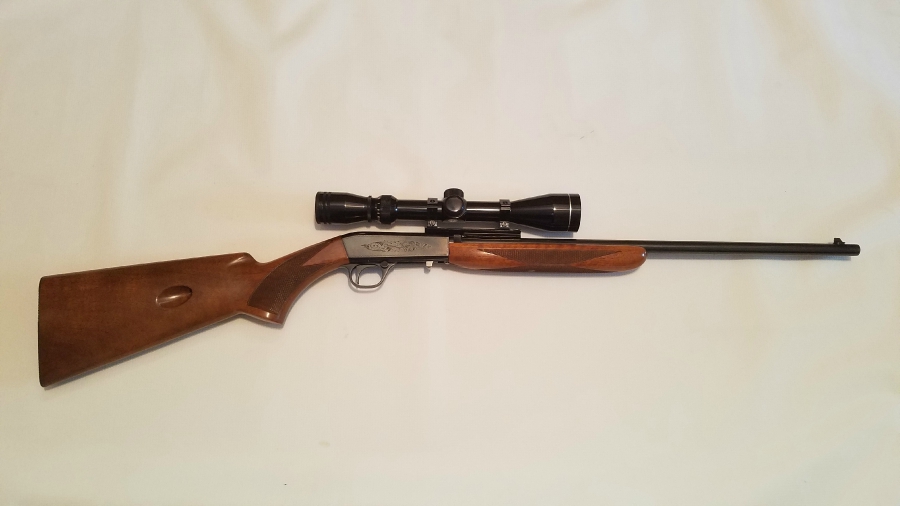
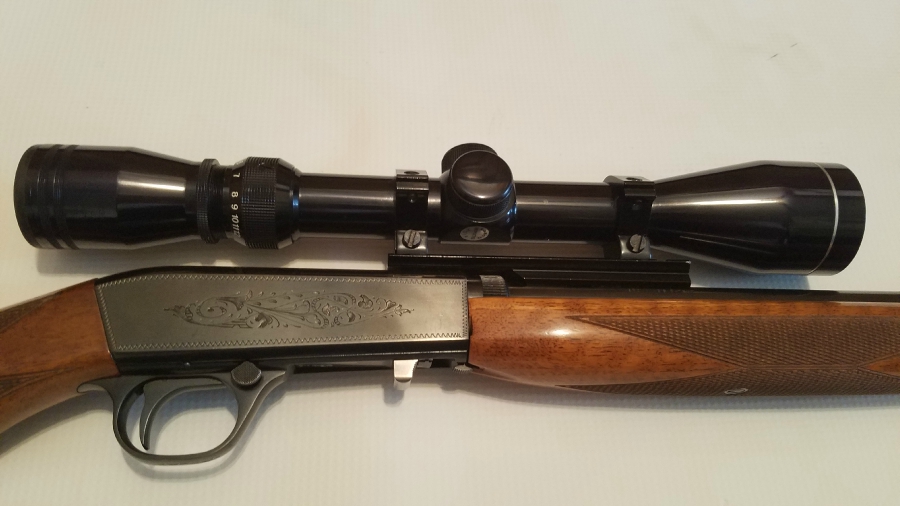
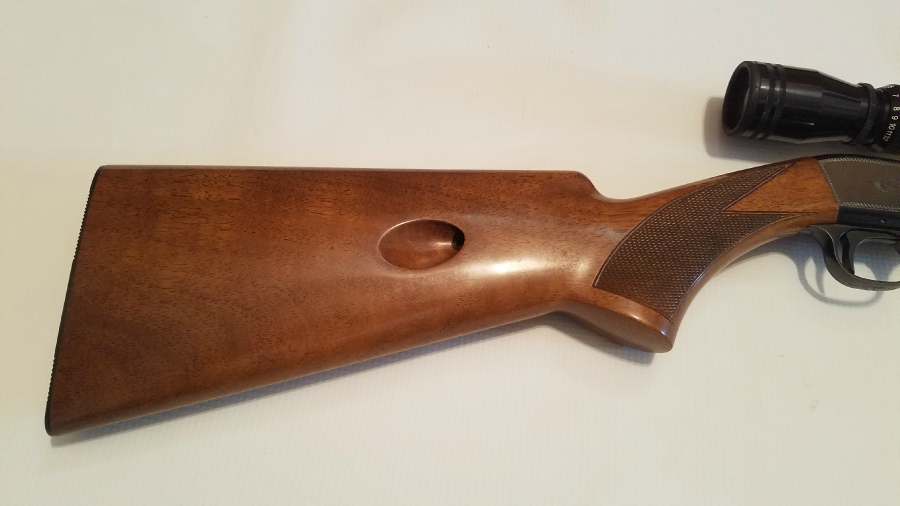
My Grandfather Morris had one of these and he just loved it! Grumpy

The building was busy that afternoon. A hastily erected structure of corrugated sheet metal with concrete floors, it was a veritable Hilton Hotel compared to the thatched-roof shacks and occasional Quonset nearby. Alongside a very busy airfield made of those interlocking steel plates, the building offered limited shelter for Americans going about their business. The business was that of an airline passenger terminal in wartime Vietnam, specifically Da Nang, I Corps—and everybody had a gun.
Armies of various ideologies had been scrapping for decades in Vietnam before America got into it. In 1965, when I first saw the battered building that was the Da Nang air terminal, the detritus of other armies and earlier wars was much in evidence. I passed through there several times and often saw personal firearms of many types. Lots of different rifles, many varieties of handguns (including a puzzling variety of Smith & Wesson revolvers) and even a few shotguns were all present.
Somehow though, the submachine gun seemed to be the odds-on favorite for the varied personnel who waited for their flight to places unspecified and used the makeshift benches at this Terry-and-the-Pirates facility. Since regular soldiers and other personnel from a host of countries had done their thing in the green hills of Vietnam, the variety of submachine guns (SMGs) was not surprising. There were a lot of British STEN guns of various models present, even one with an early suppressor.
The reliable, if somewhat bulky, German Schmeisser was pretty ordinary, as was that superb French MAT 49. Most of those had been converted to the .30 Mauser cartridge in NVA armories, but I also saw them in the original 9 mm. Australian soldiers had their Austens.
Several models of Italian Berettas in both World War II and later models might be seen. American M3 grease guns? Sure, a common gun. But, the grand-old Thompson of many variants, to include a commercial 1928 with twin pistol grips and the iconic drum magazine?
Submachine guns have fallen from favor in this 21st century world of battle rifles, but they were all the rage in the 1960s. As a guy who looked at, handled, fired, disassembled and studied all kinds of infantry small arms, this part of my Vietnam experience was interesting.
It got quite so one day when I was passing through Da Nang and saw a guy in civilian clothes carrying a unique SMG suspended from a braided-leather strap. I could clearly see the gun was a Danish Madsen M50 9 mm. The gun’s owner was not disposed to converse about his gun or any other topic, so I never got the full story of how a Danish SMG made its way to this exotic locale. That story, I never knew. But, as a longtime reader of W.H.B. Smith’s “Small Arms of the World,” I knew exactly what the gun was.
Many countries of the post-World War II period experimented with new designs in small arms. This was particularly true of all-metal SMGs. Denmark’s Madsen was first offered for police/military users in 1946. Their basic design was improved several times over the years, but the 1950 version was probably the most-widely distributed. In limited numbers, the gun sold in South and Central America. A strict, slam-fire blowback, the M50 fired from an open bolt and had no provision for selective fire.
Unlike several contemporary SMGs that used heavy steel tubing for the basic receiver shape, the M50 worked around a pair of matching so-called “clamshell” halves. Hinged at the back end, the matching left and right halves provide a track for the reciprocating bolt and a seat for the trigger mechanism. A loading device came with each gun, housed in the rear pistol grip.
To strip for cleaning, the shooter removed the magazine and unloaded the gun. He then unscrewed and removed a knurled nut at the base of the barrel. The clamshell halves now open like a book and the barrel, bolt, recoil spring and guide lift out.
It’s really simple—you can pull the gun apart for field maintenance in less than a minute. A buttstock, made of heavy steel tubing covered with stitched-on leather, folds forward along the right side of the receiver. I had never handled or fired one of the elusive Madsen M50s, so all of this was purely academic.
Then, under circumstances I cannot relate, but during my tour of Vietnam, I made a trade that gave me—you guessed it—a Madsen M50 in used, but sound mechanical condition. After a few days of handling and stripping, etc., I was impressed with this unique mechanism. I was also intrigued by the fact that my new gun bore no markings as to maker or other identifying characteristics—no serial number. My best efforts to scrounge some 9 mm ammunition were not productive. Nine millimeter was not in the USMC supply system, and I had changed jobs that didn’t have me traveling all that much.
Then, I stumbled on an extremely small quantity of old French-made 9 mm, some 19 rounds in a deteriorating cloth tobacco sack. I immediately found an open spot somewhere along Route One (yeah, the Street Without Joy) and loaded her up. I got off a short burst and…disaster. Instead of the characteristic crack, I got a louder boom. Looking down at the gun, I saw the right side of the receiver bulged slightly outward. After much forensics, I figured out what happened.
For some reason, the preceding shot created a complete case-head separation. The rear portion was torn completely free, leaving the front portion lodged in the chamber. The next shot was blocked from completely fitting into the chamber and fired out of battery. Although we tried to fix it, the gun never fired again.
Many years later, my pal the late Chuck Karwan told me that other Madsens in the hands of his Special Forces buddies did exactly the same thing and the gun had a poor reputation among them. It was traced to a small batch of improperly finished barrels with rough chambers.
That’s a shame, because the gun worked well with a good chamber. Madsens were used in movies, showing up in the first two “Godfather” films and numerous TV shows. Before I left Vietnam, I destroyed mine, albeit reluctantly, as it was a machine gun and I was not allowed to bring that back in any condition. Besides, a gun that doesn’t shoot just isn’t proper fightin’ iron.
Categories
Heating а Tent with a Log Torch