GIs used ingenuity – and initiative – to turn field rations into field “cuisine” during the Vietnam War.
In every war, soldiers have griped about their food; American GIs serving during the Vietnam War were no exception. Yet even at the remote terminus of an extended logistics chain reaching halfway around the world, the U.S. Army in Vietnam generally performed very well in getting the right field rations to its troops fighting “at the sharp end.”
Depending on the tactical situation, fresh food cooked in unit kitchens – Type A Rations – could sometimes be sent forward to feed field units. (See “Vietnam War-era U.S. Army Rations,” p. 23.) This “hot chow,” transported by jeep, truck or helicopter, was served from three-compartment, insulated, mermite containers that each kept about five gallons of food hot (or cold) for extended periods. But for most GIs serving in the bush, “Meal, Combat, Individual” (MCI) field rations – still universally known by their World War II predecessor’s designation, “C rations” – were the order of the day … every day.
During the 1968 Tet Offensive, I was a 2d lieutenant infantry platoon leader in 505th Airborne Regiment. It was very cold and wet – especially at night – that February in I Corps (at the northernmost combat zone in South Vietnam), and the fighting seemed always to take place under heavy rain or in dense, gray overcast. In our rucksacks, we each carried several olive-drab colored cans of C ration meals. C rations weighed a lot and weren’t inspired cuisine, but we were grateful to have them.
C rations arrived in very strong, reinforced-cardboard, wire banded cases. There were 12 boxed meals to each case, with varied main menu items (M units) in each box’s largest can. These ranged from the popular “Spaghetti With Meatballs in Tomato Sauce” to the dreaded “Chopped Ham and Eggs,” a mysterious concoction apparently intended as a breakfast unit. Along with each main M unit meal came smaller cans (designated B-1, B-2 and B-3, and D-1, D-2 and D- 3) of supplementary foods such as cheese, crackers, peaches, fruit cocktail, peanut butter, chocolate and pound cake. Finally, an accessory pack contained salt, sugar, instant coffee, nondairy creamer, toilet paper, matches and (in that era) cigarettes. Given the unpopularity of some main menu items, to be perfectly objective about who received what meal, we turned the case upside down and chose the main meals without seeing the labels. Everyone hoped not to pick the awful ham and eggs concoction, nicknamed “the Joker.”
In the field, improvising on the otherwise monotonous C ration menu became GIs’ daily game. On operations, my radiotelephone operator was a wizard at creating something very similar to the café mocha sold at today’s Starbucks by combining several coffee, sugar and nondairy creamer packets and then shaving two discs of the foil-wrapped milk chocolate into the brew. He mixed it all together and heated it in an empty B-2 can. The top of the can was opened most of the way around, bent back, and the sharp-edged sides folded under to form a convenient handle.
Though thousands of American GIs were constantly in the field in Vietnam over a period of 10 years, the Army never developed a small, folding metal stove or simple frame for heating C ration cans with heat tablets. Although the Germans had issued one during World War II that later was widely adopted worldwide (as the Esbit stove), for U.S. troops in Vietnam it was, “Sorry ’bout that, GI!” So we heated our C’s on small, expediently built stoves made from empty B-1 cans. The cans were topless with holes punched around the bottom to provide air flow. Once fashioned, these jury-rigged “stoves” were kept for constant use.
We ignored the Army-issued Hexamine heating tablets as being too weak. Instead, our fuel of choice was a small chunk of C-4 plastic explosive, torn from one of the brown-wrapped demolition blocks we carried. Safely stable unless it had a detonator in it, adequately ventilated C-4 burned with an intense, blue-white flame, making an ideal cooking fuel. Use of C-4 for cooking was so prevalent that we once received official notification from Division Headquarters to knock off using it for that purpose – the engineers were running out of C-4 for demolition use.
On my second Vietnam tour in 1969-70, I was a captain and infantry company commander in 1st Cavalry Division (Airmobile), operating against North Vietnamese Army (NVA) regulars in III Corps war zone (in central South Vietnam along the Cambodian border). In summer 1969, we received a number of very clever C ration cookbooks from the famed McIlhenny Company in Louisiana, makers of Tabasco hot pepper sauce.
The company sent thousands of small bottles of their famous sauce, packaged in green watertight containers, each containing a copy of The Charlie Ration Cookbook: Or No Food is Too Good for the Man Up Front and a few small, fold-out can openers we called “P- 38s.” This was a stroke of marketing genius by McIlhenny. Nearly a half million men were in Vietnam then, and many GIs were first introduced to Tabasco sauce by this clever effort. The cookbook was illustrated by Fred Rhoades, who inked the famous Beetle Bailey comic strip. It suggested several ways the different C rations could be combined – with a few dashes of Tabasco sauce, of course – to create meals such as “Foxhole Dinner for Two,” “Ceasefire Casserole” and “Patrol Chicken Soup.” We all tried a few recipes; we all survived.
We were still being fed C rations at the beginning of my second Vietnam tour, but within a few months we were issued a completely new type of field ration. Although in that era the only “freeze-dried” product we knew was instant coffee, the new ration was a freeze-dried, dehydrated main meal vacuum-packed in a lightweight plastic bag. It seemed like science fiction – one simply added water to reconstitute the food (hot or cold water, but the food sure tasted better hot). These were known as Long Range Patrol Rations (LRP), which the troops immediately pronounced “lurps.”
They featured eight main meals, in cluding “Chicken With Rice,” “Spaghetti With Meat Sauce,” “Pork With Scalloped Potatoes,” “Chili Con Carne” and “Beef Stew.” They also included a cereal or fruitcake bar, two foil-wrapped milk chocolate discs, and some pieces of candy. They had the same accessories as C rations but were a lot tastier, and the main meal seemed of larger volume. Later, I discovered that an LRP ration actually provided about 1,200 fewer calories than the equivalent C ration. Perhaps they freezedried out the calories!
While the LRP was definitely lighter than the C ration (11 ounces vs. 32.7 ounces), its drawback was the amount of water needed – 1.5 pints for each LRP meal. Yet in Vietnam’s hot and humid climate, we normally carried a lot of water anyway. In my company, we each typically carried two or three one-quart canteens plus a two-quart plastic canteen. We were also issued a five-quart canteen that hung off the back of the rucksack (similar to today’s camelback canteens, but without the over-the-shoulder drinking tube). A quart of water weighs two pounds, so we each carried 10-20 pounds of water alone, before adding equipment, weapons, grenades and ammunition to our loads.
One benefit of the new LRP ration was a “tactical plus” – its lack of metal cans. The Viet Cong were very skilled at scavenging, turning retrieved C ration cans into mines and booby-traps. While not large, a B-2 can filled with explosives and packed with nails, stones, metal scrap and bits of wire could kill and maim as well as a fragmentation grenade.
After the war, companies (among them, Mountain House) that had developed the Army’s freeze-dried LRP rations began marketing these lightweight meals for civilian campers and backpackers. Today, if one purchases a freeze-dried “Chicken With Rice” backpacking meal at a camping supply store, it is the direct descendant of the LRP forebear issued to GIs in Vietnam.
Ingenuity in turning field rations into field cuisine was not restricted to individual GI “gourmets.” Occasionally, all troops in an especially fortunate combat unit benefitted from a truly inspired battalion mess sergeant. In 1st Battalion, 5th Cavalry, ours was a big, cheerful noncommissioned officer from Louisiana, known to the troops as “Mess Daddy.” Although the Army had a strictly prescribed official “feeding plan,” Mess Daddy could create some ingenious improvisational gourmet touches. For example, when an enormous wild boar wandered into a rifle company’s defensive perimeter one night, tripped a flare and was promptly shot, the hapless animal’s carcass was airlifted to the battalion firebase the next morning. Later that afternoon, the company received mermite containers filled with Mess Daddy’s “Special Louisiana Wild Boar Gumbo,” with rice, herbs and spicy vegetables. At veterans’ reunions, the troops still talk about that memorable meal … and perpetuate the persistent rumor that one of the diners enjoying Mess Daddy’s gumbo chomped down on an undetected M-60 machine-gun round.
Also very important in turning field rations into field cuisine was ingenuity in obtaining food in both variety and quantity – however that could be accomplished. Our battalion supply (S-4) section had a highly developed ability to “scrounge,” a polite term for “acquiring by any means possible.” And since 1st Cavalry Division had several hundred helicopters assigned, our S-4 section’s “scrounging range” was extensive. Typically, our battalion S-4 would drive his jeep with trailer up the ramp into a CH-47 Chinook helicopter and fly off on a “marketing mission” to various rear echelon units that always seemed to be well stocked with ration “goodies” the field troops rarely received. With his jeep and trailer loaded with captured Viet Cong and NVA gear and weapons that an aggressive combat unit like ours had in excess after our frequent engagements with the enemy, our S-4 had plenty of valuable “trading goods.” He exchanged these sought-after combat souvenirs with the rear echelon types for what our field troops really wanted – boxes of frozen steaks, extra cases of LRP rations, fresh fruit and vegetables, and a wide array of condiments. Thanks to our resourceful S-4, we always had “something extra” to provide as rations for the troops in the field, and the troops greatly appreciated it.
Our battalion was also famous for flying freshly made ice cream out to our rifle companies in the field. The rumor circulating then was that our S-4 had scrounged a complete, pallet-mounted, diesel-driven ice cream-making plant from some other unit that had “less than adequate” local security. Morale spiked; no one questioned the source.
Phil Gioia graduated from Virginia Military Institute in 1967 with an Army commission in the infantry. He served with 82d Airborne Division and 1st Cavalry Division (Airmobile) in Vietnam. He lives in California.
“ACG” thanks Luther Hanson of the U.S. Army Quartermaster Museum for providing information for the “Crescent Symbol” sidebar.
———————————————————————————-Happy Birthday US Army – 246 years and still going! Grumpy


Now that is what I call some really great looking wood! Grumpy
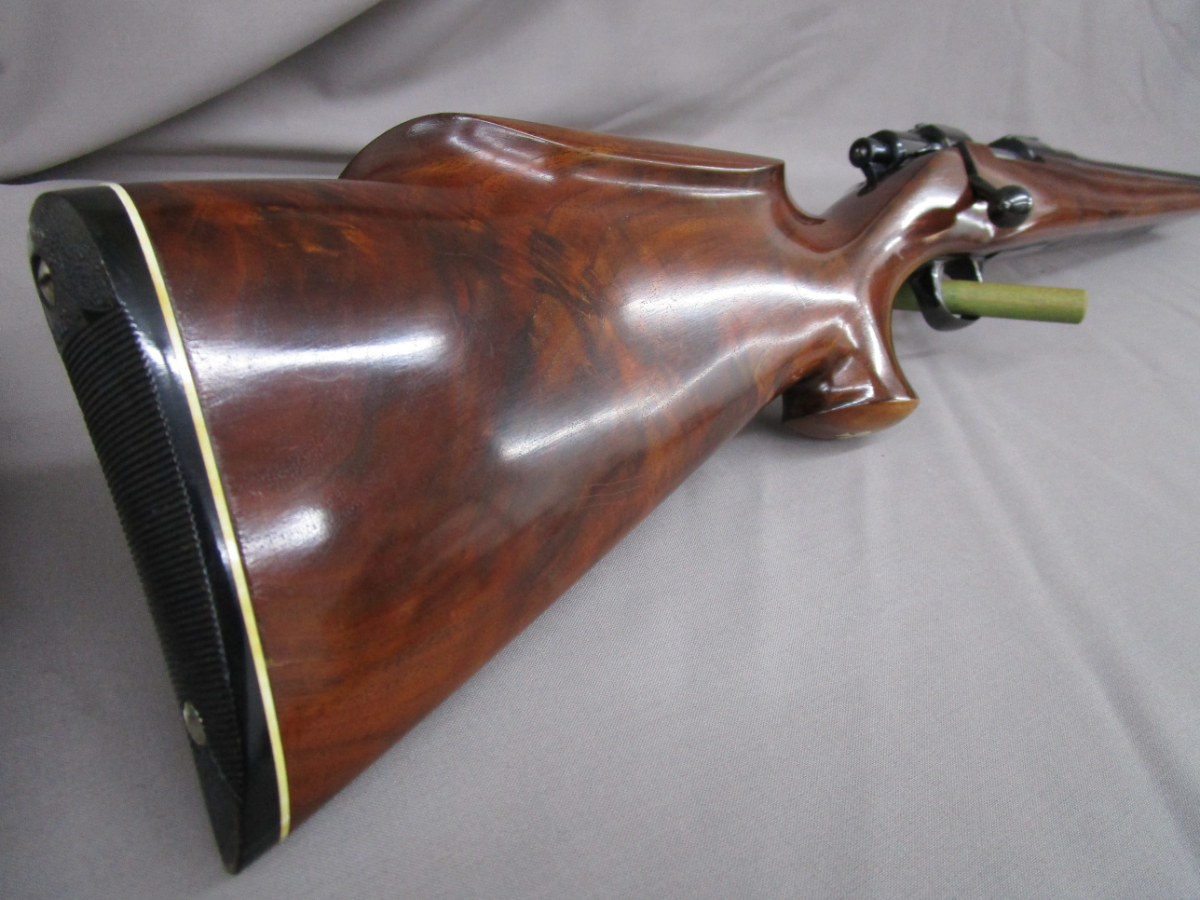

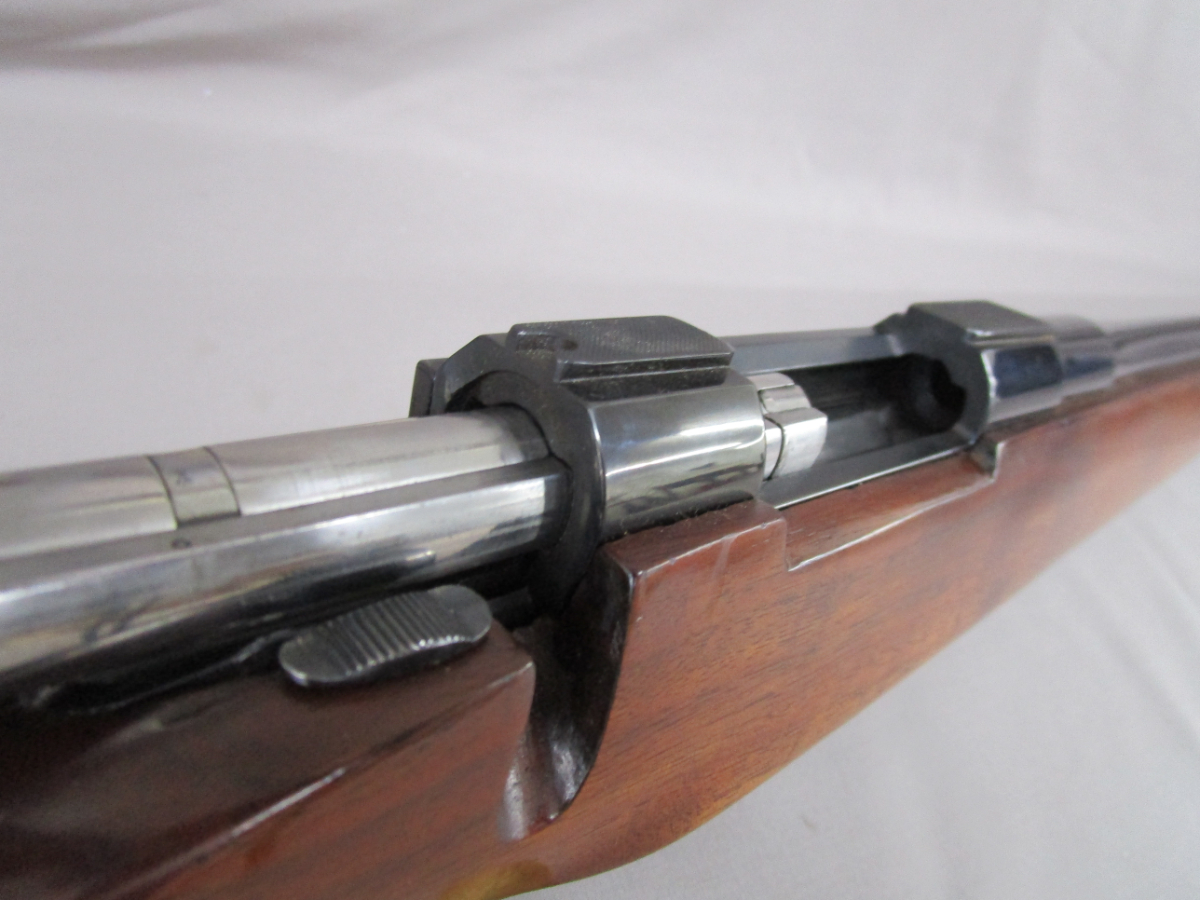



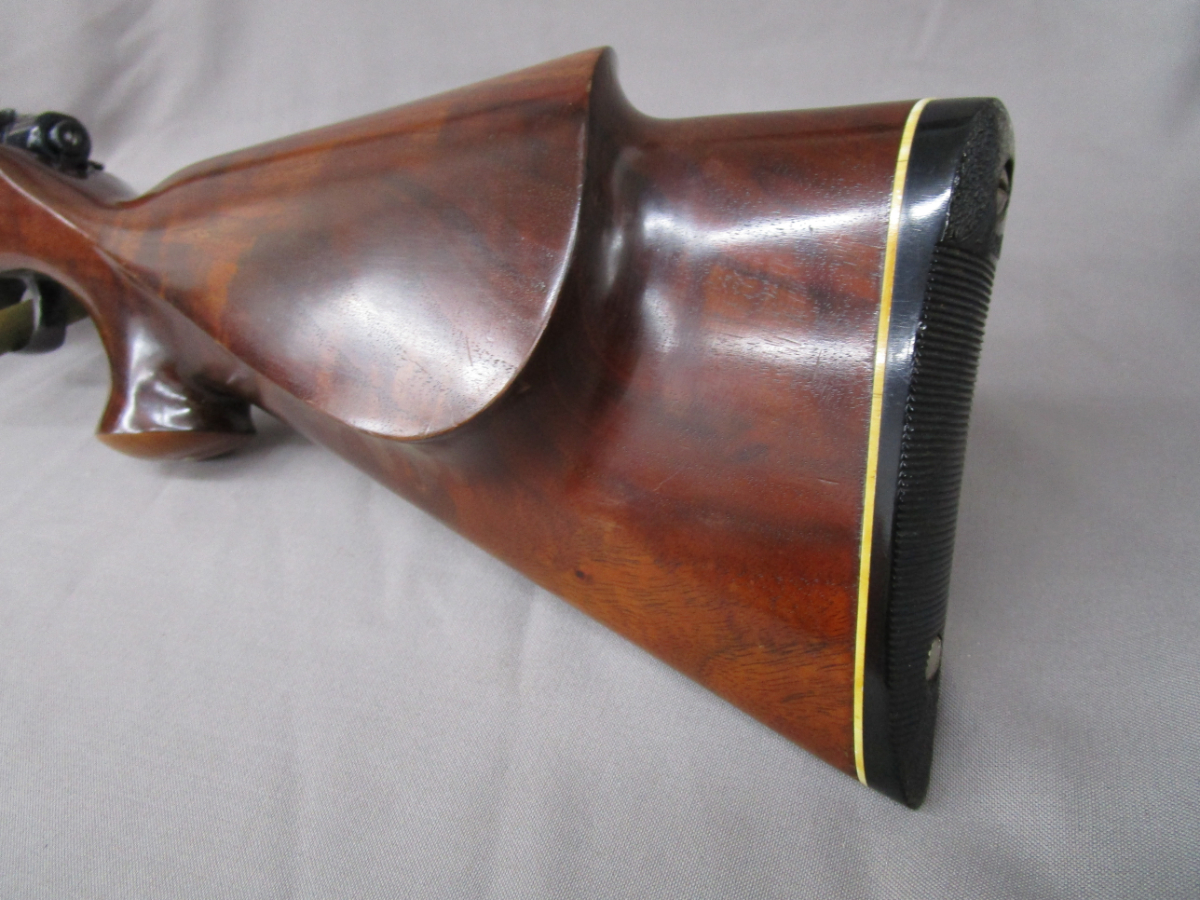
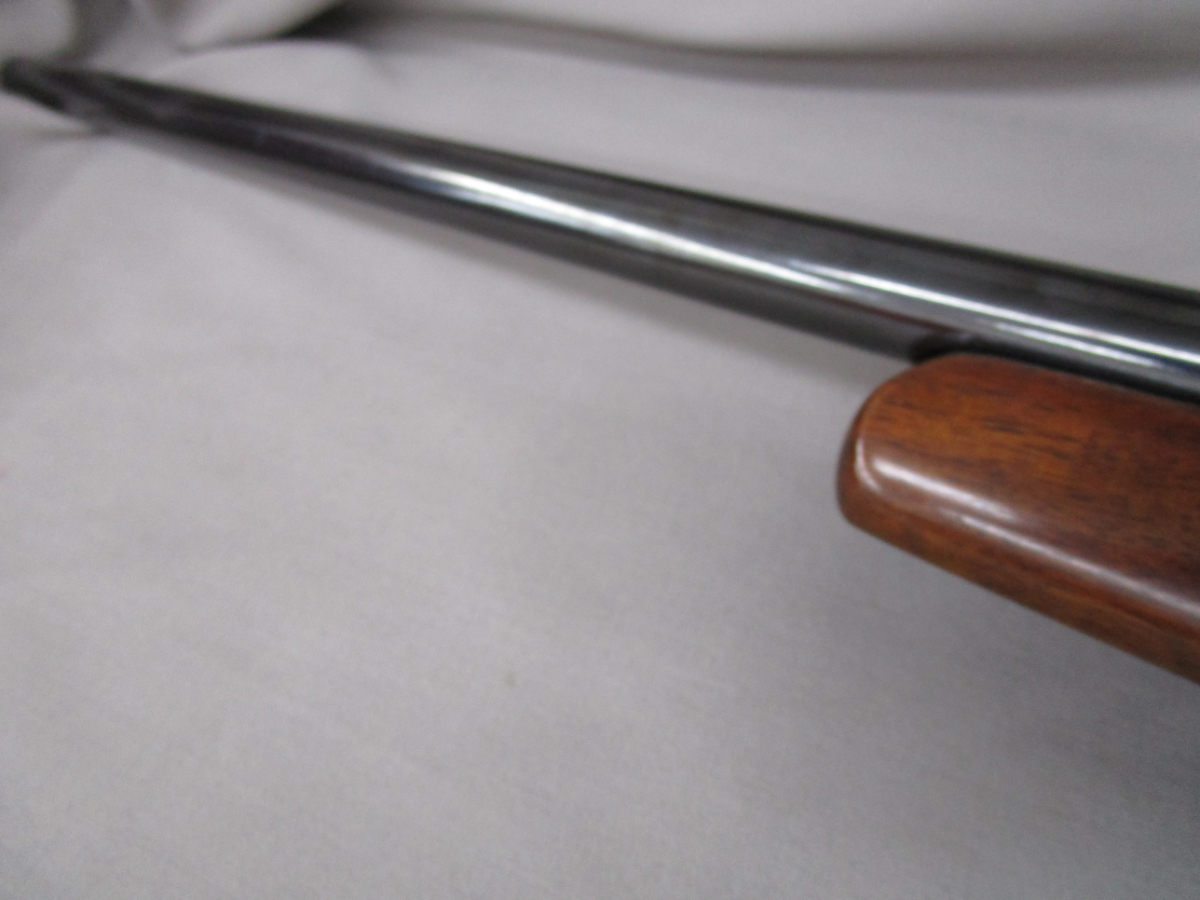
Find yourself a good Gunsmith that does Checkering. Throw on a good recoil pad and a Timney Trigger and you could really go to town with this rifle!

A federal judge in California just handed down one of the strongest pro-gun rulings in history, and in response, Democrats and the media are doing their best to miss the point and mislead the public.
Judge Roger T. Benitez, who has issued several pro-gun rulings in recent years, penned a scathing critique of California’s “assault weapons” ban and argued that it directly contradicts both the Second Amendment and the Supreme Court’s Heller decision.
“In the end, the Bill of Rights is not a list of suggestions or guidelines for social balancing,” Benitez writes. “The Bill of Rights prevents the tyranny of the majority from taking away the rights of a minority. When a state nibbles on Constitutional rights, who protects the minorities? The federal courts. The Second Amendment protects any law-abiding citizen’s right to choose to be armed to defend himself, his family, and his home.”
Second Amendment advocacy organizations praised the ruling as air-tight and well-informed.
“In his 94-page ruling, Judge Benitez has shredded California gun control laws regarding modern semi-automatic rifles,” said Second Amendment Foundation founder and Executive Vice President Alan M. Gottlieb. “It is clear the judge did his homework on this ruling, and we are delighted with the outcome.”
SEE ALSO: Gun-Friendly California Judge Scores Another 2A Case, Everytown Livid
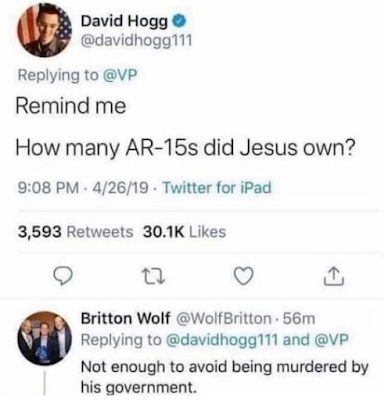
Democrats in California and their allies in the national media have latched on to a phrase in Benitez’s opening paragraph to try to discredit the ruling. “Like the Swiss Army Knife, the popular AR-15 rifle is a perfect combination of home defense weapon and homeland defense equipment,” Benitez begins. Anti-gun advocates have implied that Benitez intended to compare the deadliness of AR-platform rifles to Swiss Army knives.
“There is no sound basis in law, fact, or common sense for equating assault rifles with Swiss Army knives — especially on Gun Violence Awareness Day and after the recent shootings in our own California communities,” California State Attorney General Rob Bonta said in a statement.
“I can assure you — if a Swiss Army knife was used at Pulse, we would have had a birthday party for my best friend last week,” Brandon Wolf, who survived the Pulse Nightclub attack in Florida attack, wrote on Twitter. “Not a vigil.”
Kris Brown, president of the Brady Campaign to Prevent Gun Violence, also misread Benitez’s comment.
“I have two daughters, and they read dystopian fiction, like the ‘Hunger Games,’ and it was kind of like that,” she told the LA Times. “It can’t be real. Nobody, ever, who is a thinking human being with a heartbeat, could possibly liken a Swiss Army knife to an AR-15.”
Of course, Benitez is not comparing the deadliness of the AR-15 with a Swiss Army knife. His point, as he explains in the very next sentence, is that the AR-15 is the do-it-all rifle. As he argues throughout his ruling, such rifles are precisely what the Constitution’s Framers wanted to protect under the Second Amendment and what the Supreme Court described as enjoying strong protections in its Heller decision.
SEE ALSO: Standard-Capacity Magazines are Flooding California Following Landmark Ruling Striking Down Ban
“As applied to [California’s “assault weapons” ban], the Heller test asks: is a modern rifle commonly owned by law-abiding citizens for a lawful purpose? For the AR-15 type rifle the answer is ‘yes,’” Benitez writes. “The overwhelming majority of citizens who own and keep the popular AR-15 rifle and its many variants do so for lawful purposes, including self-defense at home. Under Heller, that is all that is needed.”
Benitez also goes after California’s ban on standard-capacity magazines. He highlights a true story of a pregnant woman who used an AR-15 to defender her daughter and husband from multiple intruders.
It does not require much imagination to guess what would have happened next if the wife and mother did not have the firearm, or if she had emptied the AR-15’s magazine before the attackers had fled. The quiet click would be sickening and probably with tragic results. The State contends that one does not ‘need’ more than ten rounds. That is easy to say. Perhaps one should imagine the terror that would have gripped this wife and mother, from the sound of a ‘click,’ out of ammunition, helplessly watching her husband being murdered, her daughter being raped or murdered, and the enraged men coming for her.
Benitez concludes by calling California’s “assault weapon” ban a “failed experiment.” The legislation has done nothing to prevent mass shootings or attacks on law enforcement officers, but it has profoundly impacted the constitutional rights of millions of Americans who have been denied access to protected firearms.
“There is only one policy enshrined in the Bill of Rights. Guns and ammunition in the hands of criminals, tyrants and terrorists are dangerous; guns in the hands of law-abiding responsible citizens are better,” he writes. “To give full life to the core right of self-defense, every law-abiding responsible individual citizen has a constitutionally protected right to keep and bear firearms commonly owned and kept for lawful purposes.”
Unfortunately, nothing will change immediately about California’s gun laws. Judge Benitez put a 30-day stay on his ruling to allow the state to appeal, which Attorney General Rob Bonta plans to do. When that happens, the case will have to wind its way to the California appeals court. From there, it could end up in the U.S. Supreme Court.
Check out the full opinion below.



Human beings only have two ways to deal with one another: reason and force.
If you want me to do something for you, you have a choice of either convincing me via argument, or force me to do your bidding under threat of force. Every human interaction falls into one of those two categories, without exception.
Reason or force, that’s it. In a truly moral and civilized society, people exclusively interact through persuasion. Force has no place as a valid method of social interaction and the only thing that removes force from the menu is the personal firearm, as paradoxical as it may sound to some.
When I carry a gun, you cannot deal with me by force. You have to use reason and try to persuade me, because I have a way to negate your threat or employment of force.
The gun is the only personal weapon that puts a 100-pound woman on equal footing with a 220-pound mugger, a 75-year old retiree on equal footing with a 19-year old gang banger, and a single guy on equal footing with a car load of drunken guys with baseball bats.
The gun removes the disparity in physical strength, size, or numbers between a potential attacker and a defender.
There are plenty of people who consider the gun as the source of bad force equations. These are the people who think that we’d be more civilized if all guns were removed from society, because a firearm makes it easier for an armed mugger to do his job. That, of course, is only true if the mugger’s potential victims are mostly disarmed either by choice or by legislative fiat–it has no validity when most of a mugger’s potential marks are armed.
People who argue for the banning of arms ask for automatic rule by the young, the strong, and the many, and that’s the exact opposite of a civilized society. A mugger, even an armed one, can only make a successful living in a society where the state has granted him a force monopoly.
Then there’s the argument that the gun makes confrontations lethal that otherwise would only result in injury. This argument is fallacious in several ways. Without guns involved, confrontations are won by the physically superior party inflicting overwhelming injury on the loser.
People who think that fists, bats, sticks, or stones don’t constitute lethal force, watch too much TV, where people take beatings and come out of it with a bloody lip at worst. The fact that the gun makes lethal force easier works solely in favor of the weaker defender, not the stronger attacker. If both are armed, the field is level.
The gun is the only weapon that’s as lethal in the hands of an octogenarian as it is in the hands of a weight lifter. It simply wouldn’t work as well as a force equalizer if it wasn’t both lethal and easily employable.
When I carry a gun, I don’t do so because I am looking for a fight, but because I’m looking to be left alone. The gun at my side means that I cannot be forced, only persuaded. I don’t carry it because I’m afraid, but because it enables me to be unafraid. It doesn’t limit the actions of those who would interact with me through reason, only the actions of those who would do so by force. It removes force from the equation… and that’s why carrying a gun is a civilized act.
By Maj. L. Caudill,
USMC (Ret.)
So, the greatest civilization is one where all citizens are equally armed and can only be persuaded, never forced.
.jpg_thumbnail0.jpg)
.jpg_thumbnail0.jpg)
.jpg_thumbnail0.jpg)
.jpg_thumbnail0.jpg)
.jpg_thumbnail0.jpg)
.jpg_thumbnail0.jpg)