Everyone knows the name “Mauser” and the bolt action rifles associated with it. Here are 10 facts you may not have known were associated with the Mauser story:
One: There Were Two Mausers – Paul And Wilhelm
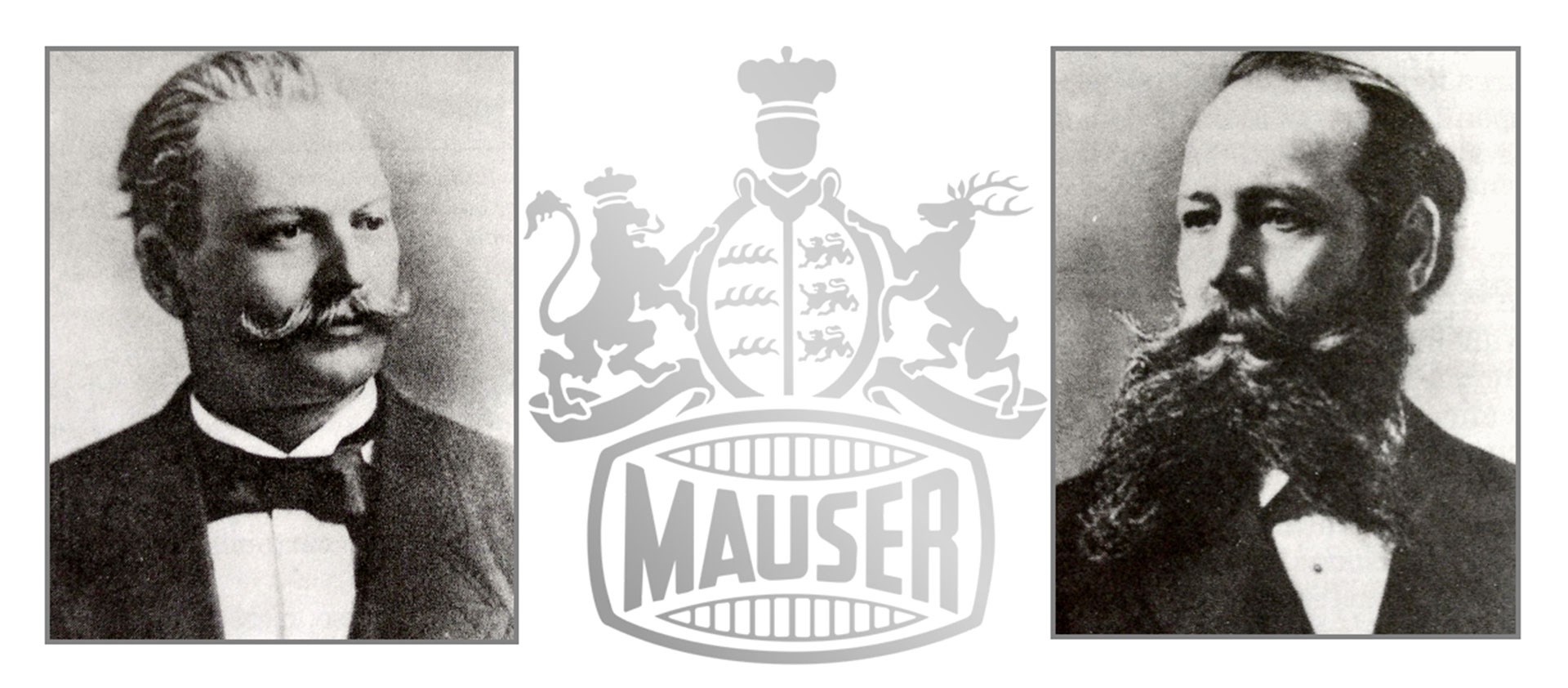 Brothers Wilhelm Mauser (right) and Paul Mauser (left).
The Mauser firm was the work of brothers Peter Paul (known simply as “Paul” ) and Wilhelm Mauser. Following military service, the Mauser brothers’ father Franz became a gunsmith at the royal armory at Oberndorf, a small town on the Neckar River in Germany. The younger brother Paul would develop an interest in artillery through his own military service, which eventually led to small arms design. Wilhelm served as business manager for the company.
Wilhelm died in 1882 at the age of 47. Paul remained the technical director of the company through its major developments and would live to the age of 76 in 1914.
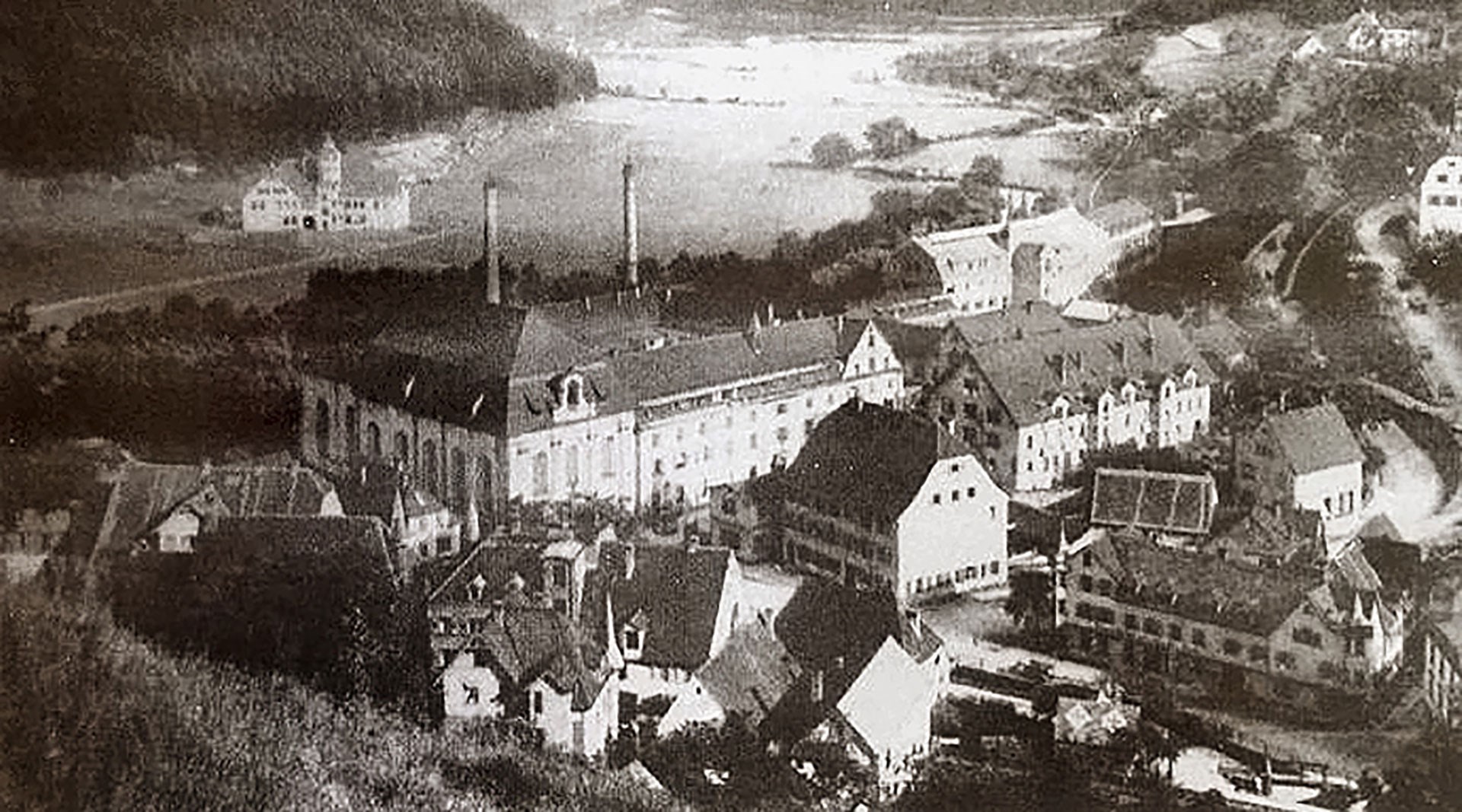 The Mauser factory in Oberndorf am Neckar in 1910.
While many of Mauser’s innovations were patented in the name of Paul Mauser, throughout the article that follows, when we say “Mauser” we’re referring to the company, in general.
Two: Mauser Didn’t Invent The Bolt Action
While Mauser is responsible for many of the design elements that we see in modern turn-bolt actions, they did not invent the system. The first firearm to use a rotating bolt to open and close the breech was the Dreyse Needle Gun, which used a paper-cased black powder cartridge that was internally primed so that a needle-like firing pin had to pierce the case to reach it. Developed in the 1820s by Johann Nicolaus von Dreyse, the design was perfected in 1836 and adopted by the Prussians in 1841. Dreyse’s system gave a massive rate-of-fire advantage over contemporary muzzleloading muskets.
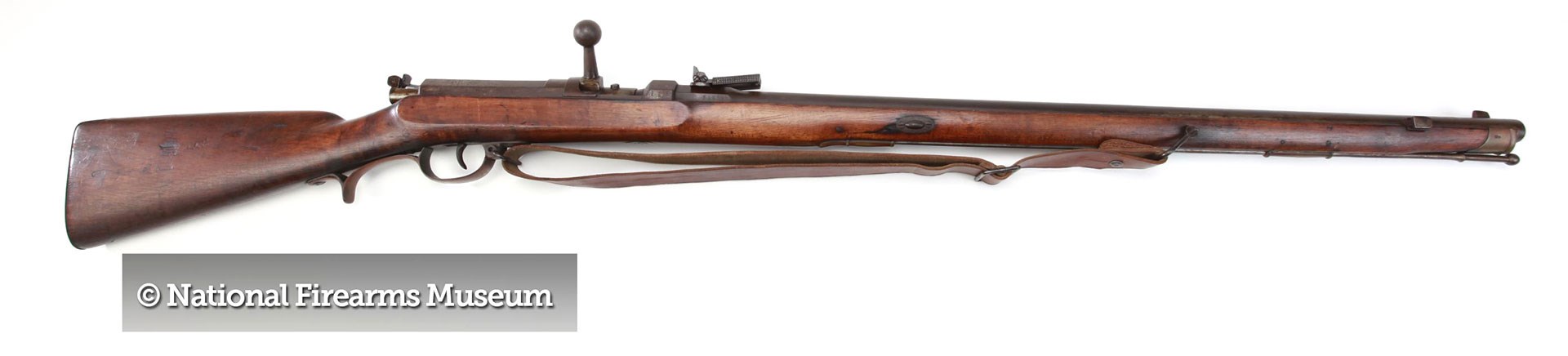 A Model 1860 Dreyse Needle Gun with its bolt handle visible.
As modern, breechloading firearms were developed, several would use the Needle Gun’s turn-bolt system. Two bolt-action firearms, the Palmer and the Greene (the first bolt action used by the U.S. military), were issued during the Civil War.
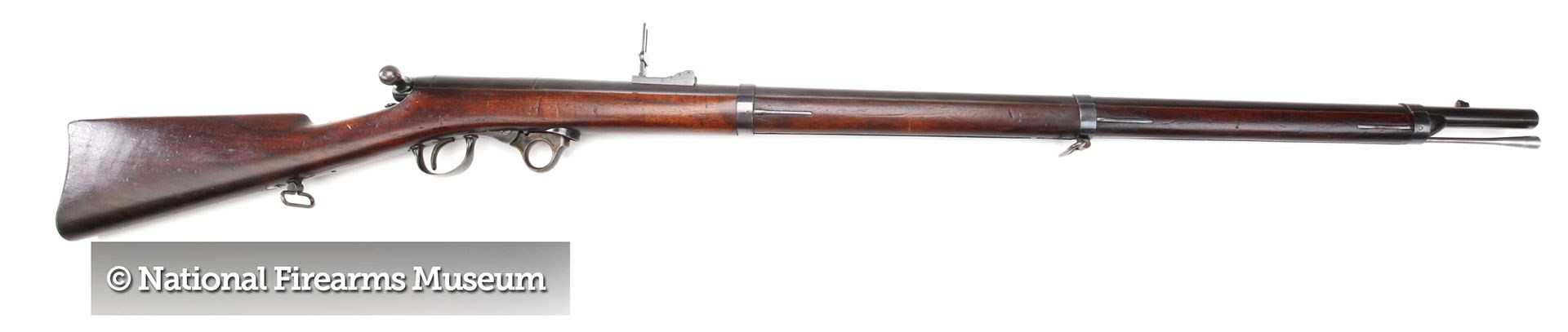 The Greene breechloading bolt-action rifle from the Civil War era.
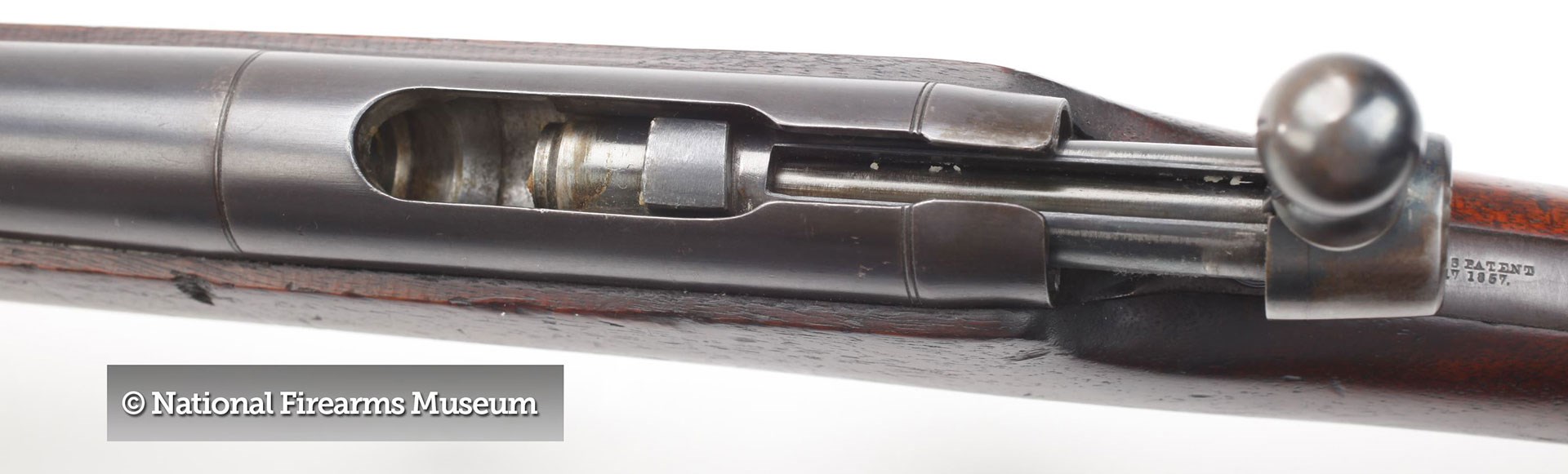 The action of the Greene, showing its turning bolt mechanism and locking lugs.
Mauser’s earliest design was an improvement of the Needle Gun that could be used as a way to convert muzzleloading muskets to breechloaders using a turn-bolt system, a mechanism that the company would eventually become synonymous with.
Three: Mauser Had An Early Connection To America
The Mauser brothers came from a large family and an older brother, Franz, went to the U.S. and would eventually work for the Remington arms company.
Samuel Norris, who was Remington’s agent in Europe, would be influential in the infant Mauser company. Norris was impressed with Mauser’s early design and became convinced it could be used to convert needle guns, like the French Chassepot, to fire metallic cartridges. Norris partnered with Mauser and provided financial backing, moving the Mauser brothers to Liege, Belgium.
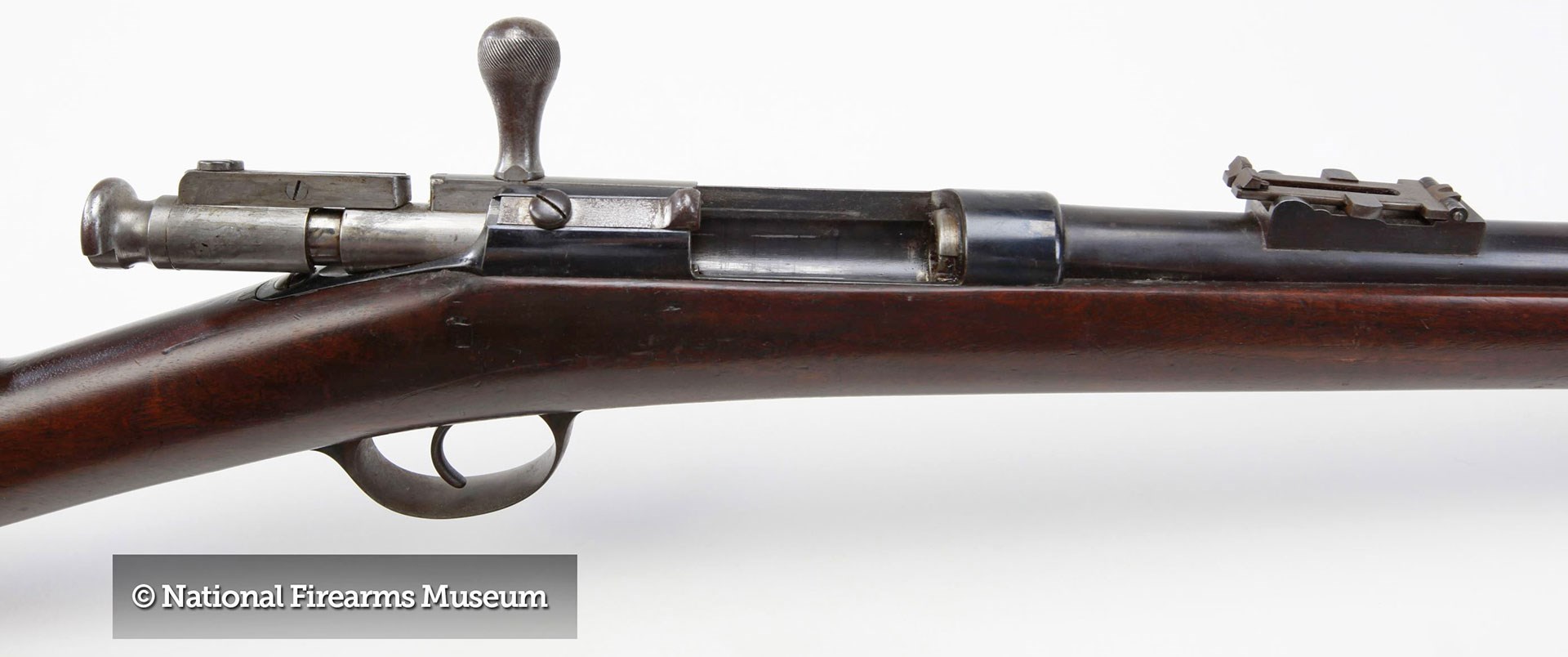 The action of the Interim Model 1869/70, a prototype that would lead to the first successful Mauser, the M1871.
The partnership crumbled when it failed to interest any governments and the Mauser brothers returned to Oberndorf where they continued to develop a design that would eventually become their first successful firearm, the 1871 Mauser.
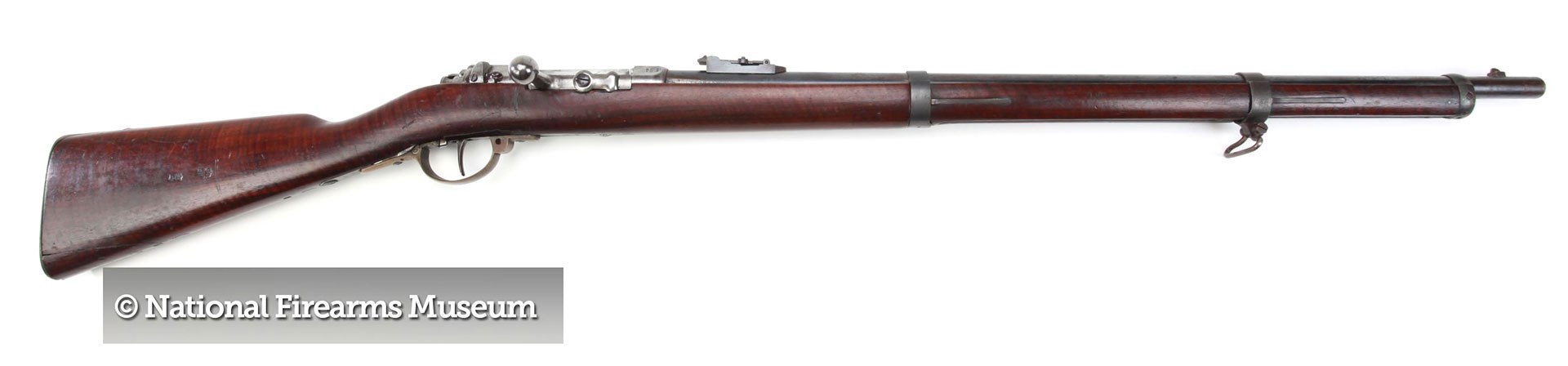 Mauser’s first successful model, the 1871, was a single-shot that fired a blackpowder cartridge.
Four: Mauser Took Out An Early Patent Of Its Designs In The U.S.
As a result of the partnership with Norris, Mauser would apply for its first patent in the United States. Granted on June 2, 1868, Patent No. 78,603 for “Improvements in Breech Loading Firearms” was taken out in the name of “S. Norris & W. & P. Mauser.” The patent would cover features like the rifle’s cock-on-opening bolt system and the interface between the sear and firing pin.
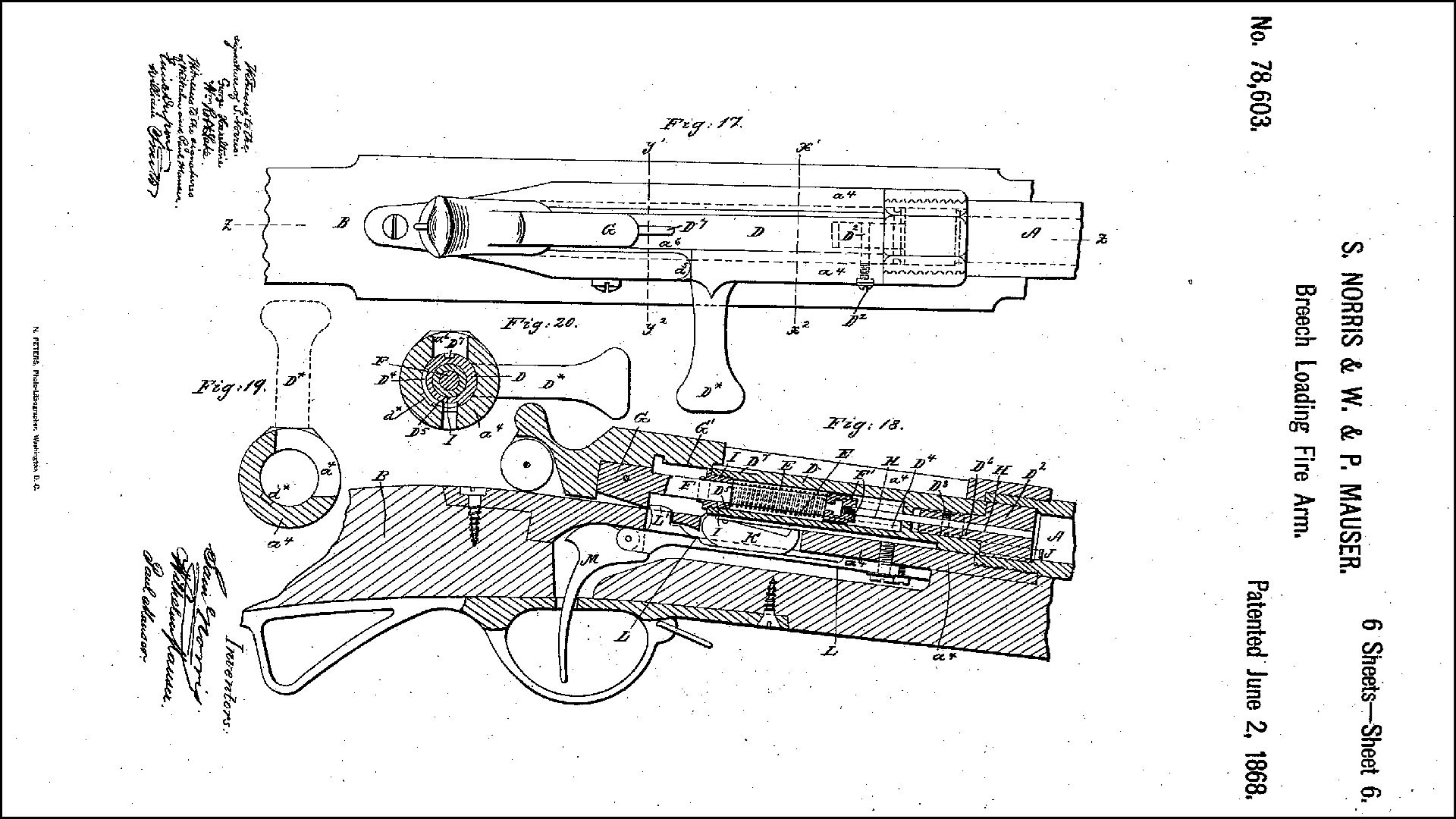 Mauser’s first U.S. patent for “Improvements in Breech Loading Firearms.”
It was the first of many patents that Mauser would take out in the U.S., covering everything from ammunition to scope mounting.
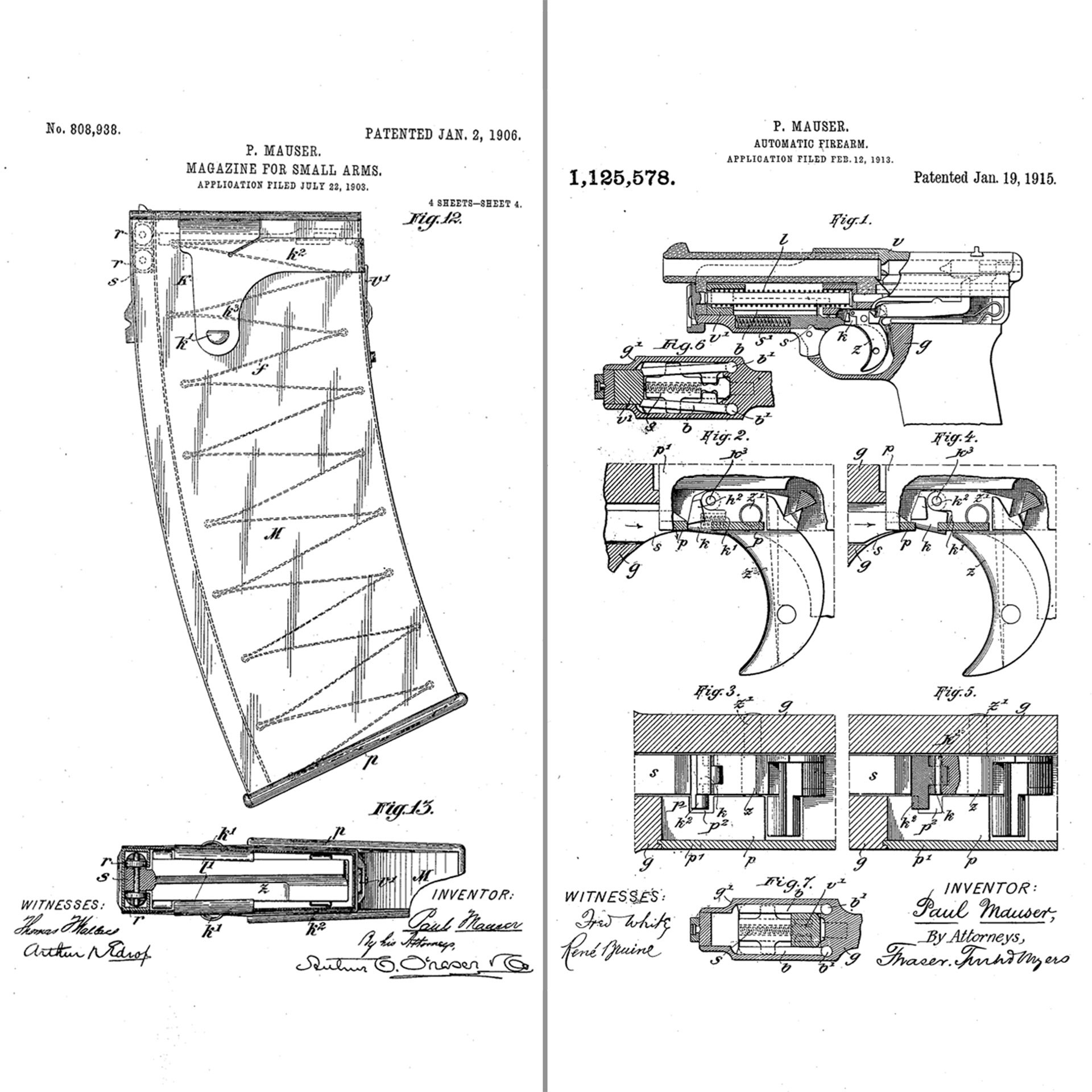 A 1915 Mauser patent for semi-automatic pistol design (right) and a 1906 Mauser patent for a rifle magazine (left).
The patent model for the Mauser-Norris rifle is in the collection of the Smithsonian Institute, but not currently on public display. Another Mauser-Norris prototype is in the collection of the National Firearms Museum at the NRA headquarters, as are many of the firearms whose images appear in this article.
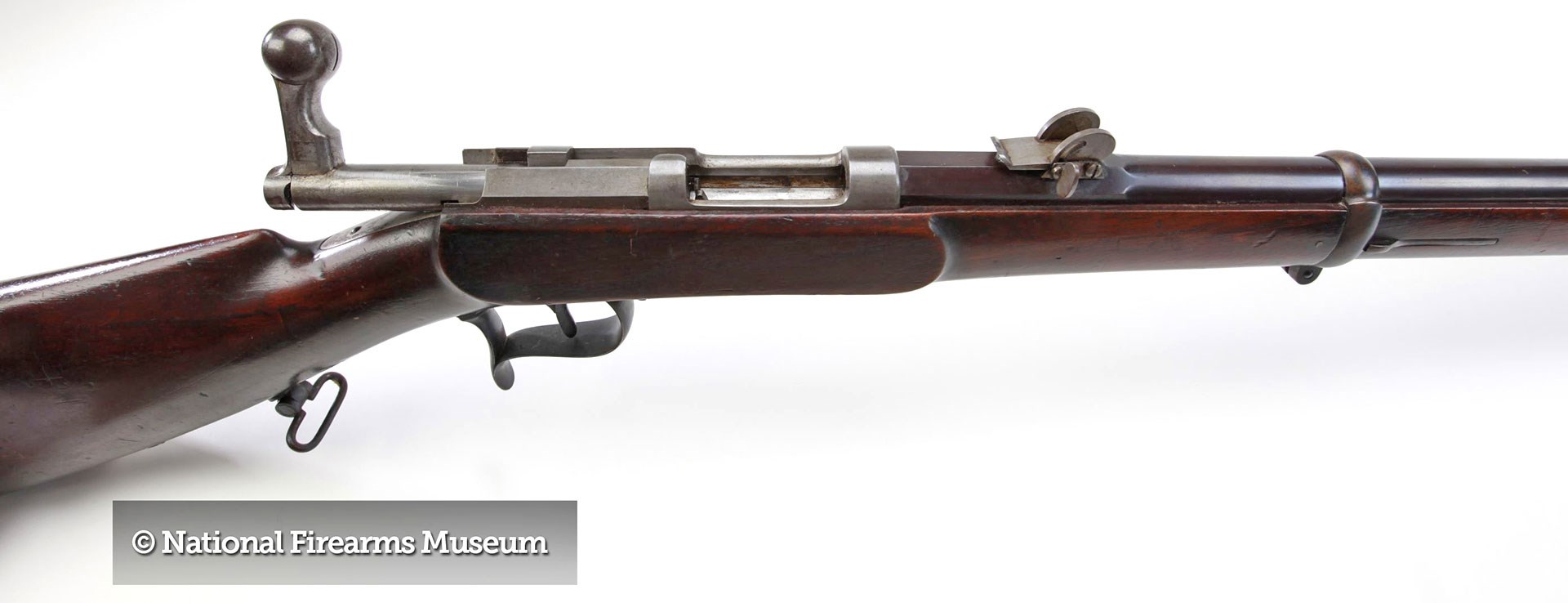 An early Mauser-Norris prototype, showing the action opened.
Five: The 1888 Commission Rifle Is NOT A Mauser (But It’s Important To Mauser History Anyway)
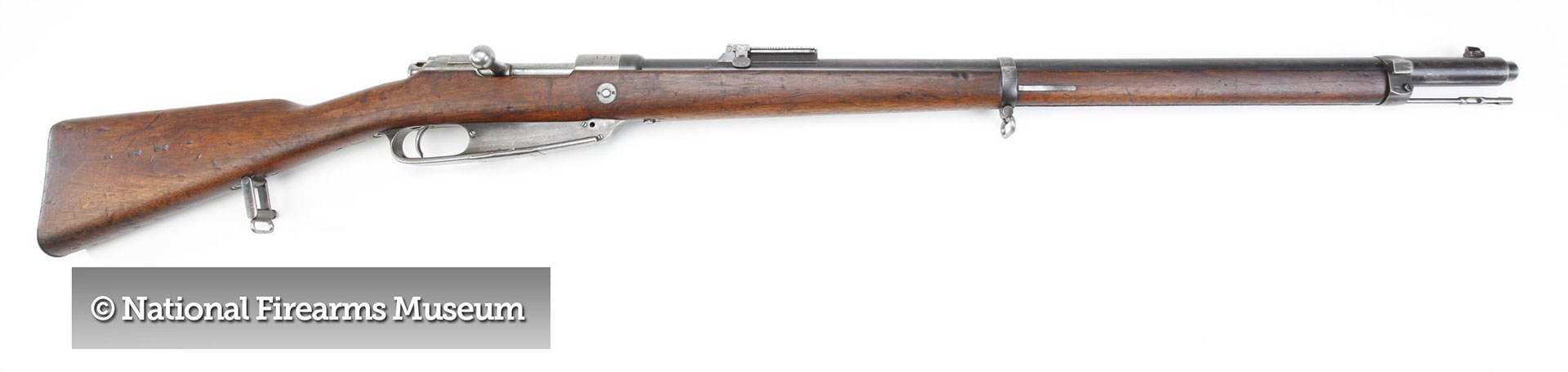 A Model 1888 Commission rifle made at the Amberg arsenal.
While the German 1888 Commission rifle is often referred to as a “Mauser,” it’s not. As the name implies, in response to the French adopting the revolutionary 1886 Lebel with its modern, high-velocity smokeless cartridge, the Germans formed a military commission to develop a new rifle to replace the black powder cartridge-firing Mauser 71/84. The result was a design that combined innovations of both Paul Mauser and Ferdinand Mannlicher. The rifles used a Mauser-type firing mechanism and safety combined with a Mannlicher magazine that utilized an en-bloc clip. The rifle also introduced the 8 mm cartridge that would eventually become the 7.92×57 mm or “8 mm Mauser” that would be the German service cartridge through the end of World War II.
While the 1888 Commission Rifle was a successful design that soldiered on through World War I, it was quickly outclassed in the rapidly changing world of late 19th-century infantry rifles. Mauser immediately began developing what would become their own groundbreaking design, the Model 1889, that would eventually evolve into the classic 1898 Mauser.
On Mannlicher’s side the ‘88 Commission would lead to the Romanian and Dutch service rifles, Mannlicher-Schoenauer hunting and military rifles and inspire other military rifles, like the Italian Carcano series.
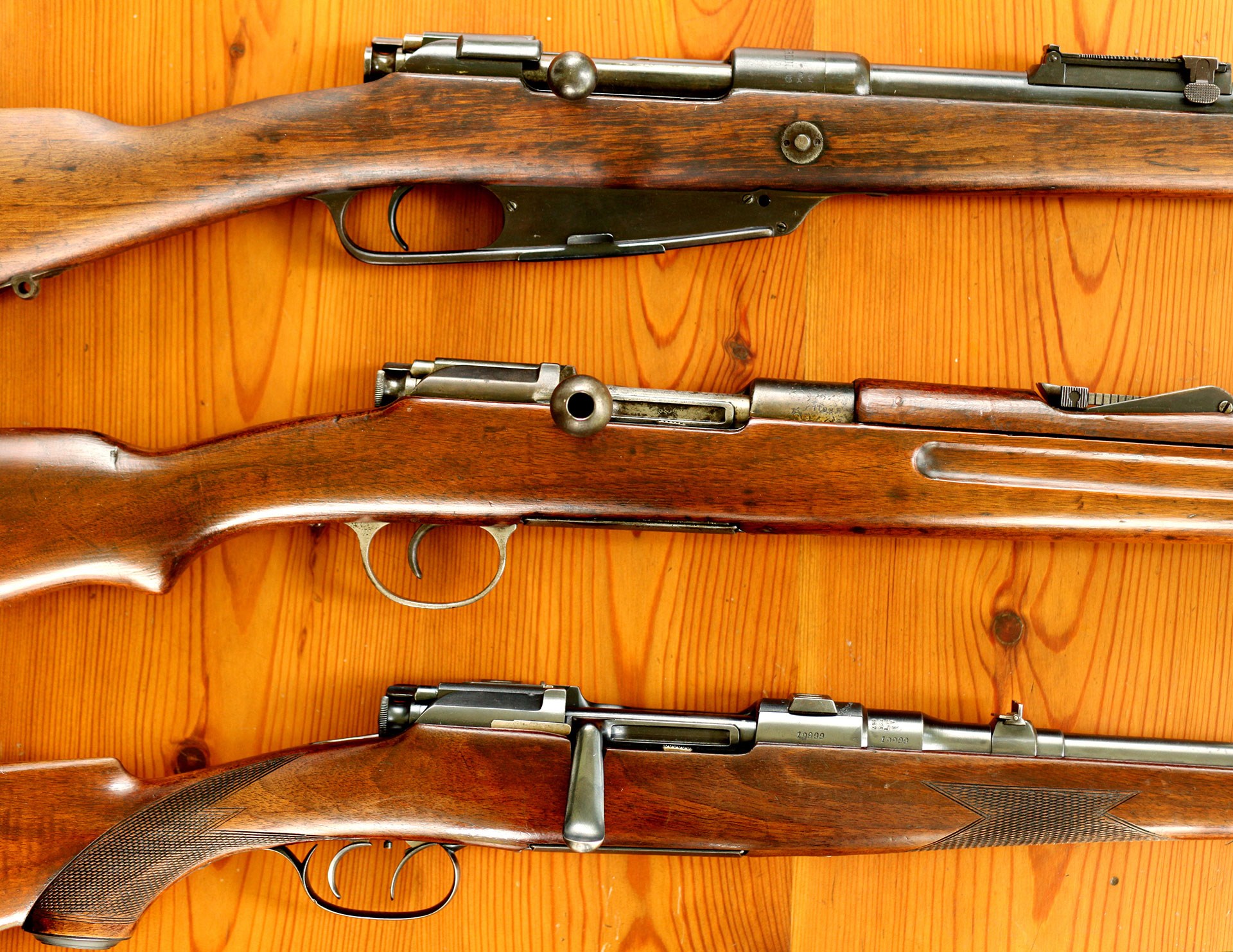 A Model 1888 Commission rifle action (top) compared to a 1903/14 Greek Mannlicher (center) and a 1903 Mannlicher Schoenauer sporting rifle (bottom).
Six: The First Mauser Handgun Was Not A Semi-Automatic…Or A Revolver
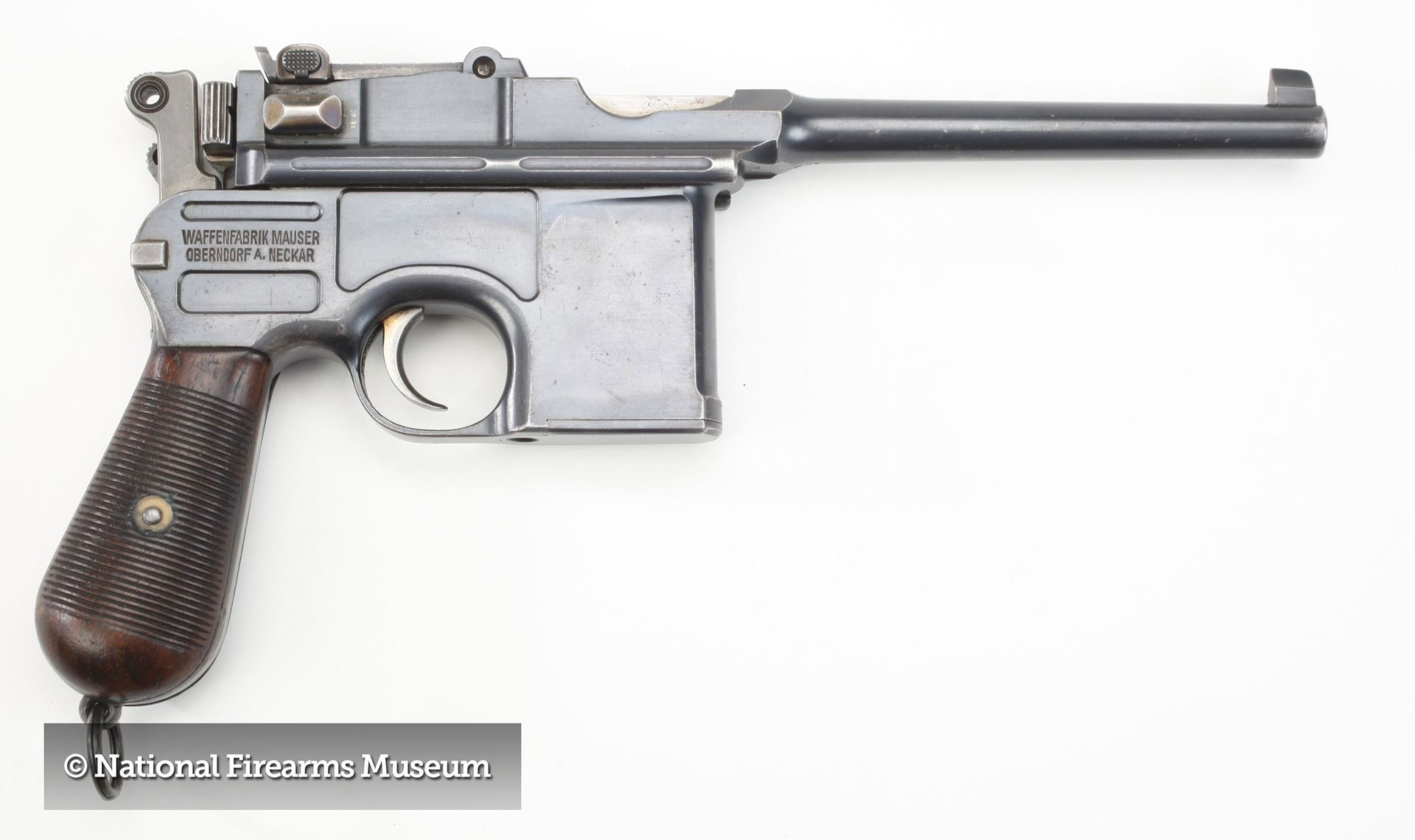 A Mauser Model 1896 “Broomhandle” semi-automatic pistol.
While it may be the best known handgun associated with the Mauser name, the semi-automatic C96 “Broomhandle” pistol was not Mauser’s first handgun design.
In 1878, Mauser developed a revolver for an upcoming German military handgun trial. The M78 was a single-action revolver, the first generation of which had a solid frame with a separate ejector rod, as was common in European revolvers of the time. The second generation M78 had a break-open action with a hinge at the top of the frame that was made in both single-action and double-action forms.
The M78 got its “Zig-Zag” nickname from its method of cylinder rotation. A lug attached to the hammer mechanism engaged the angled grooves on the cylinder to rotate and lock it when the hammer was cocked or the trigger was pulled.
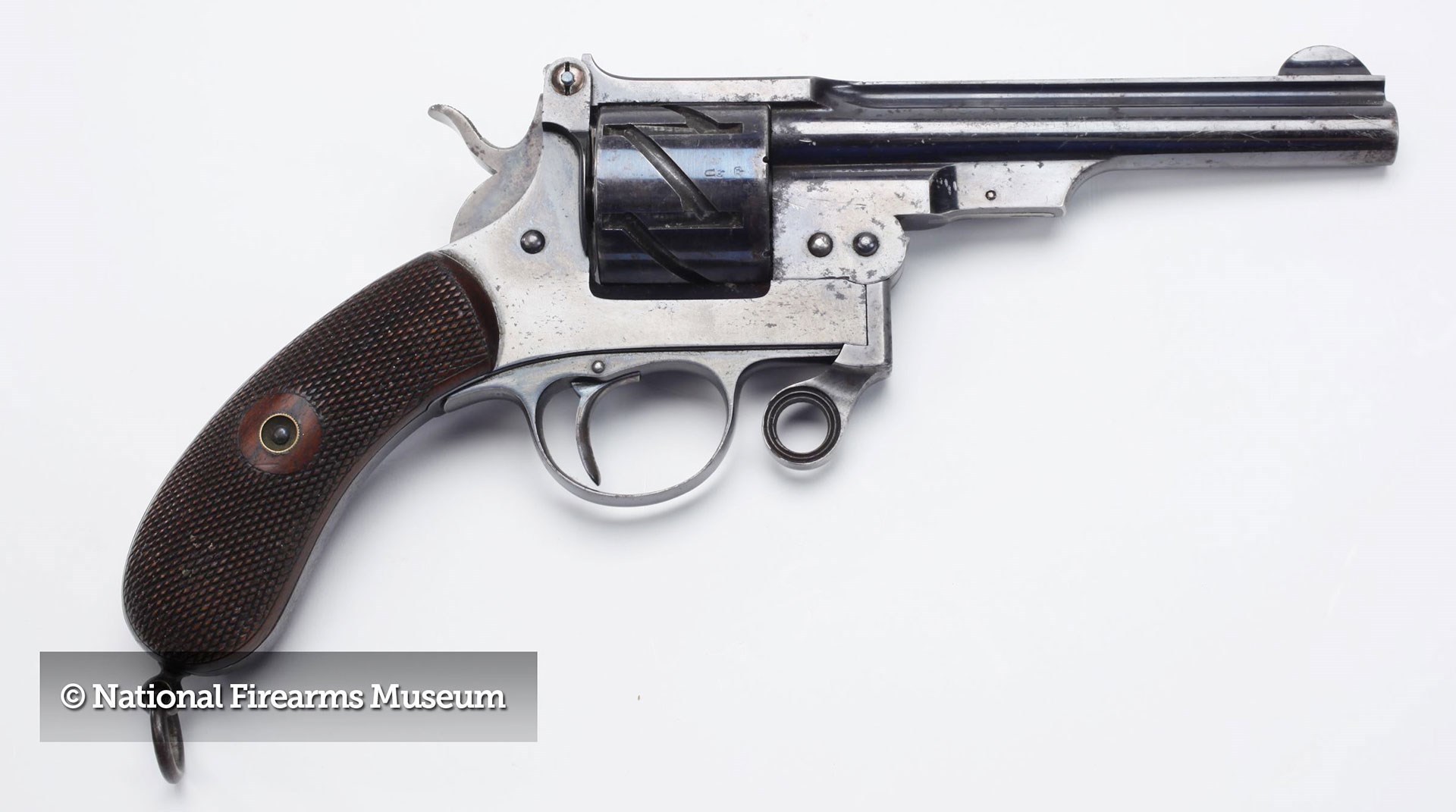 The Mauser Model 1878 “Zig-Zag” revolver.
While the winner of the trials was the 1879 Reichsrevolver, the Zig-Zag would continue in production in various calibers for the civilian market until the Broomhandle was introduced.
But the Zig-Zag was also not the first Mauser handgun. In 1877, Mauser designed a single-shot pistol that used a falling block mechanism. A thumb-actuated latch dropped the breech, ejecting the spent case and allowing for another cartridge to be loaded. Pulling the trigger cocked and fired an internal striker. As a single-shot handgun was outdated by the late 1870s (though other European manufacturers were still designing and building them at the same time as Mauser), only about 100 of these C77 pistols were produced before Mauser moved on to a revolver design and ultimately, semi-automatic handguns.
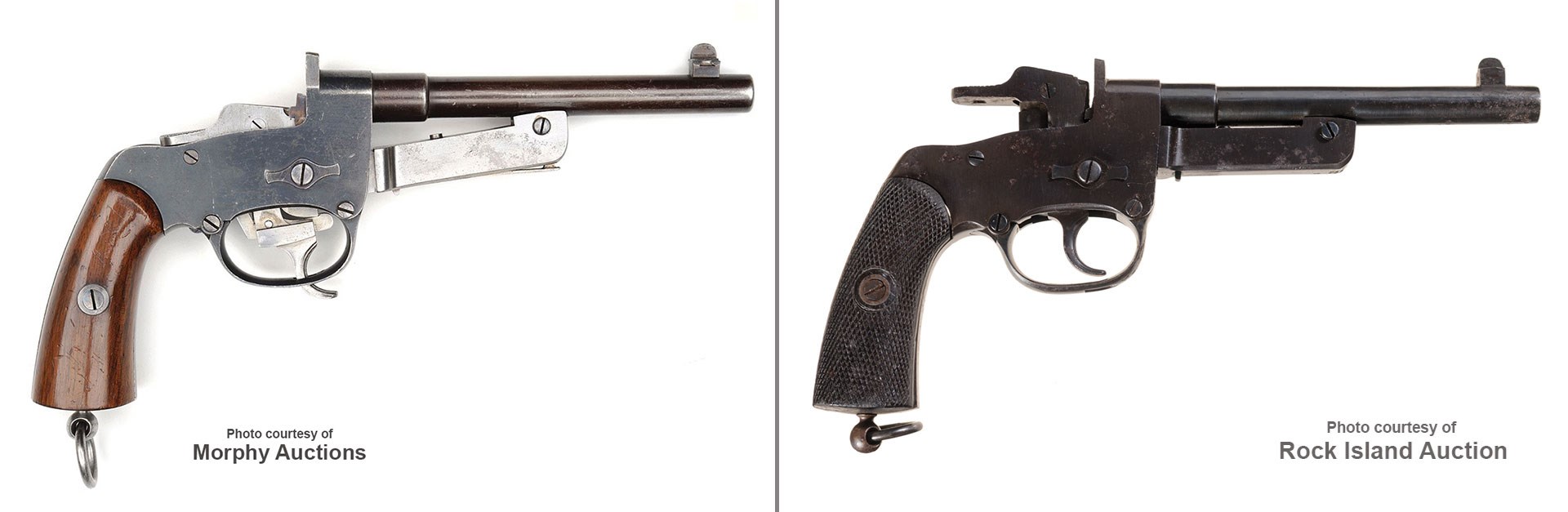 A Mauser C77 single-shot pistol with the action closed (right) and opened for loading (left).
Seven: Mauser Perfected The Clip-Loading System
While we all know that a “clip” is different than a “magazine,” Mauser was responsible for innovations in both areas.
In the late 19th century, there were several competing magazine designs for military rifles. Some, like Mauser’s own 71/84, used a tubular magazine under the barrel, James Paris Lee had invented a detachable (for cleaning) box magazine and Ferdinand Mannlicher had developed a system where a clip of cartridges was inserted into a fixed box magazine and stayed there as the cartridges were expended.
The main advantage of the Mannlicher design was how rapidly a full clip of cartridges could be loaded. But the Mannlicher system also had its disadvantages. Without the clip, the rifle wouldn’t function, and the Mannlicher design couldn’t be “topped up” after a few cartridges had been fired (problems familiar to anyone who has used the en-bloc clip of the M1 Garand). Finally, the bottom of a Mannlicher magazine had to be open to allow the empty clip to fall from the rifle after the last round was fired, allowing for dirt and dust to enter the rifle’s mechanism.
Though they were not involved with the design of the ‘88 Commission rifle, Mauser quickly responded to it with a modern, smokeless cartridge-firing rifle of their own. They developed a rifle for a Belgian trial that would define many of the features of turn bolt firearms that carry on to this day. What would eventually become the Belgian Model 1889 Mauser was a major break from Mauser’s earlier designs. Among its features was a built-in, single-column box magazine that extended below the action in front of the trigger guard.
Mauser sought to retain the advantages of the speed of the Mannlicher clip loading system and eliminate its drawbacks. To this end, the company designed a flat metal clip that held the cartridges by their rims. The clip was inserted into a groove on the receiver bridge, and then the cartridges were “stripped” from the clip into the magazine with the thumb. Pushing the bolt forward to load the first cartridge ejected the clip from the action. The feed lips were built into the magazine box, so single cartridges could be loaded at any time during the firing process.
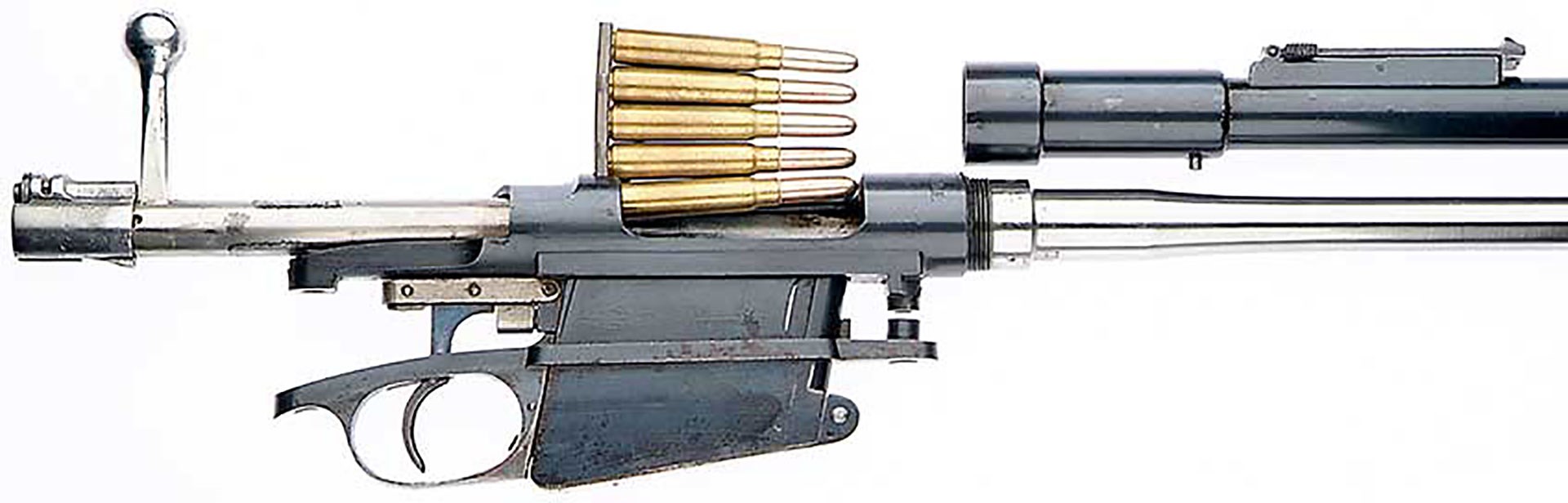 A Belgian Model 1889 Mauser action with the barrel jacket removed, showing a stripper clip, or charger, of cartridges inserted into the action.
With the stripper clip loading system came several other innovations to the Mauser rifle design. The locking lugs were moved to the front of the bolt, allowing the bolt handle to be moved behind the rear receiver bridge. This placed the bolt handle closer to the firing hand for quicker manipulation. It also meant that the rear receiver bridge didn’t have to be split to allow the bolt handle to pass through, a design element that would eventually become important for the mounting of telescopic sights.
The success of designs like the 1889 meant that the “stripper clip” form of loading and the box magazine would go on to become the dominate design for all non-Mannlicher military bolt action rifles, from the 1903 Springfield to the Schmidt-Rubin straight pulls.
Eight: Mauser Was Influential In The Creation of FN
When Belgium adopted a Mauser design in 1889, they wanted to produce their new rifle in-country. In response, a conglomerate of the nation’s gunmakers formed
Fabrique Nationale d’Armes de Guerre or as it was more simply known “FN.” In the early days, 50 percent of FN stock was owned by Ludwig Loewe & Co., a German corporation that also owned Mauser.
Along with 275,000 Model 1889s, FN would also manufacture other models of Mauser. When the Versailles Treaty prohibited Mauser from exporting military weapons, FN became one of the leading producers of Mauser-type rifles, mainly of the 1898 design.
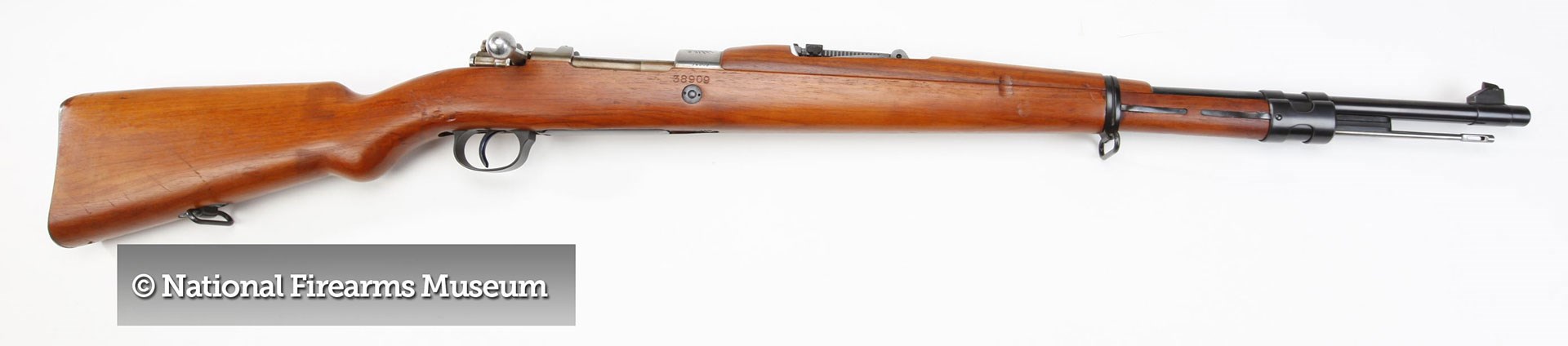 A Venezuelan contract Model 1924/30 rifle made by Fabrique Nationale.
FN also supplied actions to British sporting rifle manufacturers and made large numbers of ‘98 Mauser rifles and actions for the American market, which were sold through companies like Browning, Colt, Harrington & Richardson, High Standard and Weatherby.
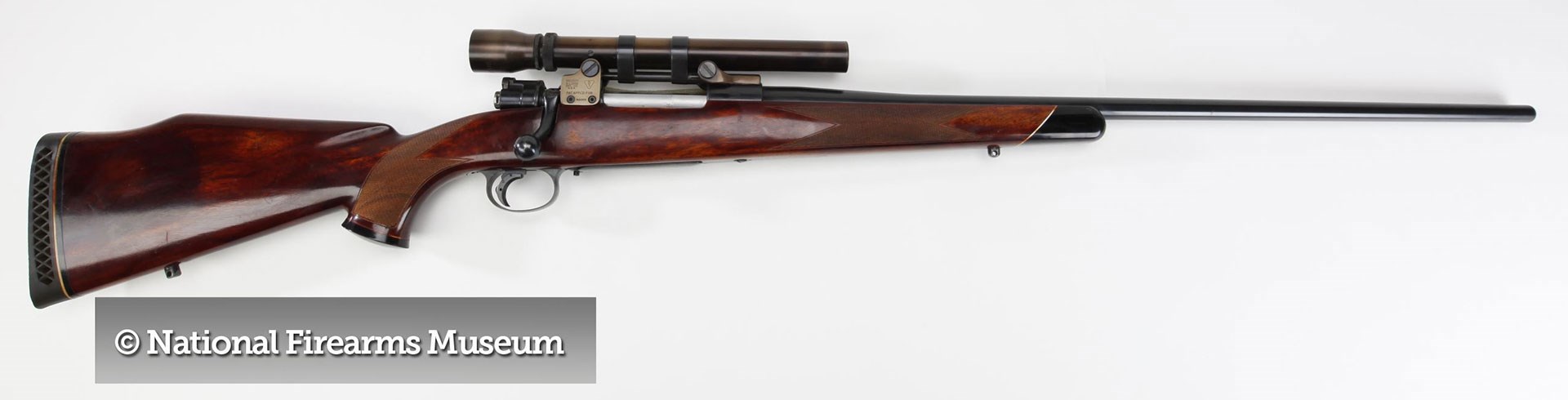 An early Weatherby sporting rifle made on an FN Mauser 98 action.
FN’s other famous association would be John Browning, with the company responsible for taking on and developing many of his designs, such as the Hi Power pistol. FN lives on today as FN Herstal and FN America, with FN products, like the M240 and M249 in service with the U.S. military, along with firearms for the civilian and law enforcement markets, like the 509 handgun.
Nine: Mauser Didn’t Invent The 8 mm Mauser…But They Did Design Two Other Important Cartridges
Though the most famous cartridge associated with Mauser is the 8×57 mm, it was not, in fact, designed by the company, but was developed by the same team that came up with the ‘88 Commission Rifle.
While Mauser designed a plethora of propriety cartridges, two in particular are notable. Their first smokeless powder, high-velocity round was the 7.65×53 mm, as introduced in the 1889 Belgian Mauser. It went on to be one of the most widely-used military cartridges of the early 20th century. In Europe, along with the Belgians, Spain and Turkey used the cartridges in their Mauser rifles. The 7.65×53 mm Mauser was extremely popular in South American countries and would go on to be chambered in many machine guns, from the Maxim to the ZB-30, along with more modern rifles, like the semi-automatic FN-49.
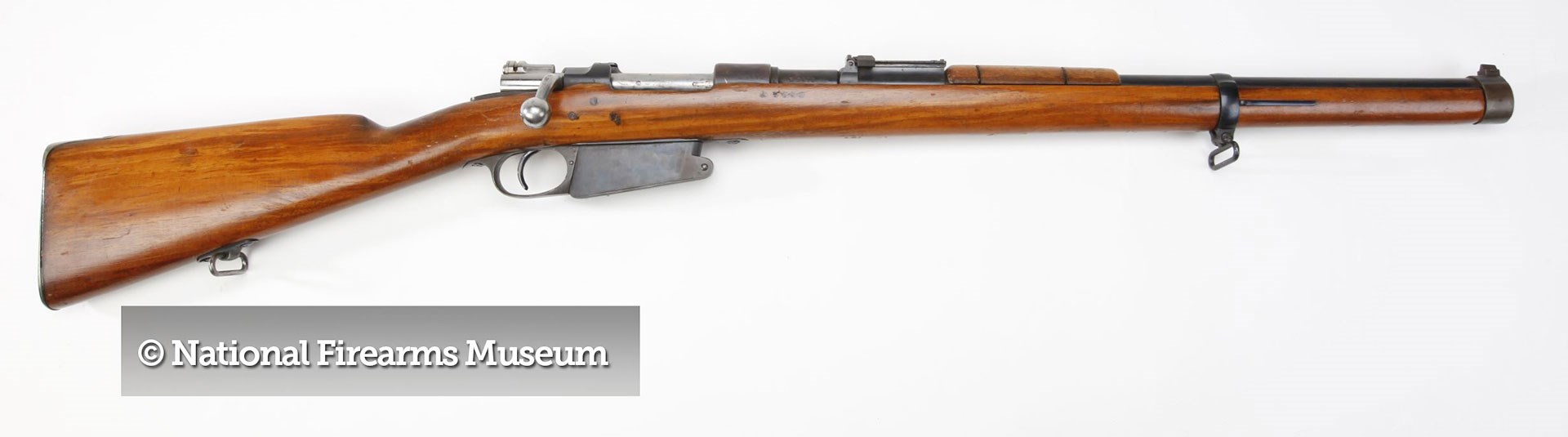 An Argentinean contract Model 1891 Mauser carbine in 7.65×53 mm.
In 1892, Mauser introduced the 7×57 mm cartridge along with an improved rifle that featured an internal, staggered-column magazine and non-rotating extractor that all subsequent Mausers would use. The 7×57 mm would also become a popular military cartridge in Spain, Mexico and South America and was used in firearms designs from the Remington Rolling Block to the Mondragón semi-automatic rifle.
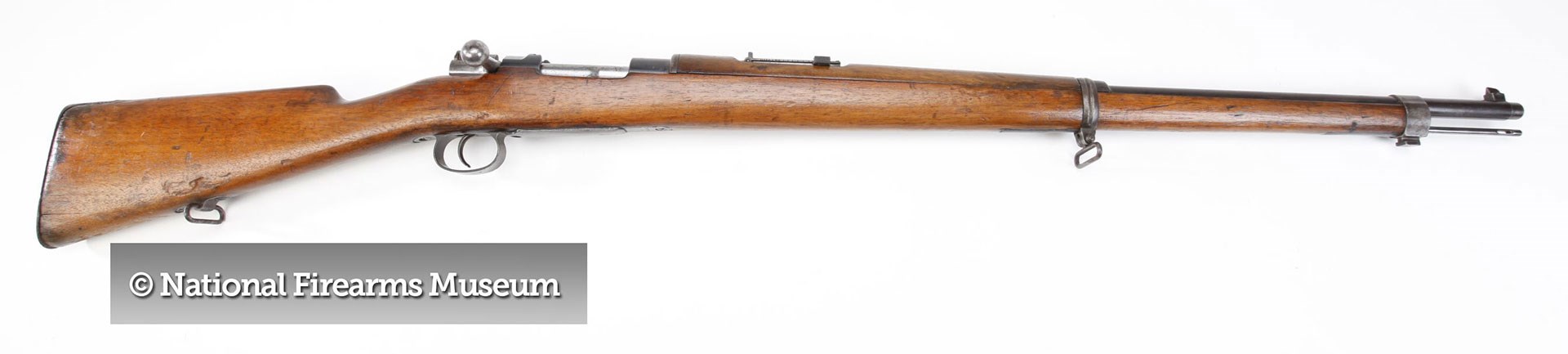 A Spanish contract Model 1893 Mauser chambered in 7×57 mm cartridge, which featured a staggered-column, flush box magazine for the first time in a Mauser design.
The 7×57 mm Mauser was nearly as popular in the sporting world as it was in military circles. Besides being prevalent on the European continent (it was one of the most popular chamberings for factory Mauser sporters), it hopped the Channel and made great inroads with British sporting rifle makers. The Rigby firm was one of the earliest to adopt the Mauser action and the 7 mm cartridge, which it re-christened the “.275 Rigby.” Though an excellent cartridge for thin-skinned, medium-sized game, some British hunters pushed their luck. The 7×57 mm was W.D.M. “Karamojo” Bell’s favorite cartridge for elephants, and Jim Corbett used the round to dispatch several of the famous man-eating tigers he went after.
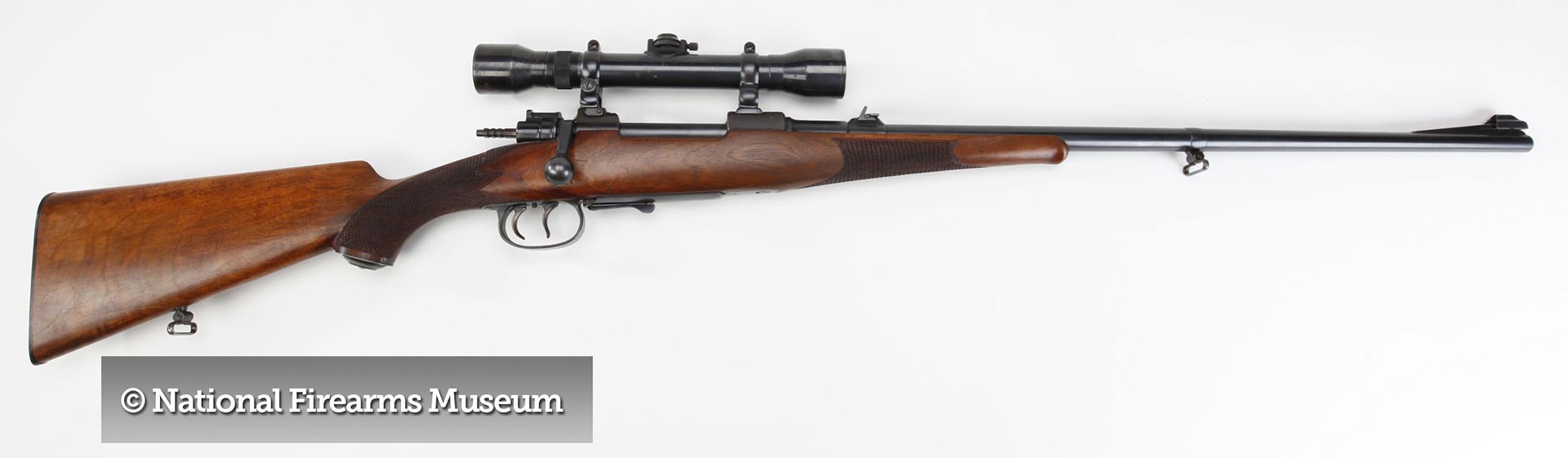 The 7×57 mm was an extremely popular hunting cartridge, especially in rifles like this Mauser factory-made Model B.
The 7×57 mm also made its way to the U.S. and by the 1930s, Remington and Winchester were chambering their bolt action rifles in the cartridge. Though, by the 1960s, most American manufacturers had discontinued 7×57 mm as a standard chambering, they continued to occasionally do special runs in the caliber, in rifles like the the Remington Model 700 and Ruger 77. The 7×57 mm case would also serve as the basis for an equally popular American cartridge, the .257 Roberts.
Ten: Handguns Were An Important Part Of Mauser’s Business
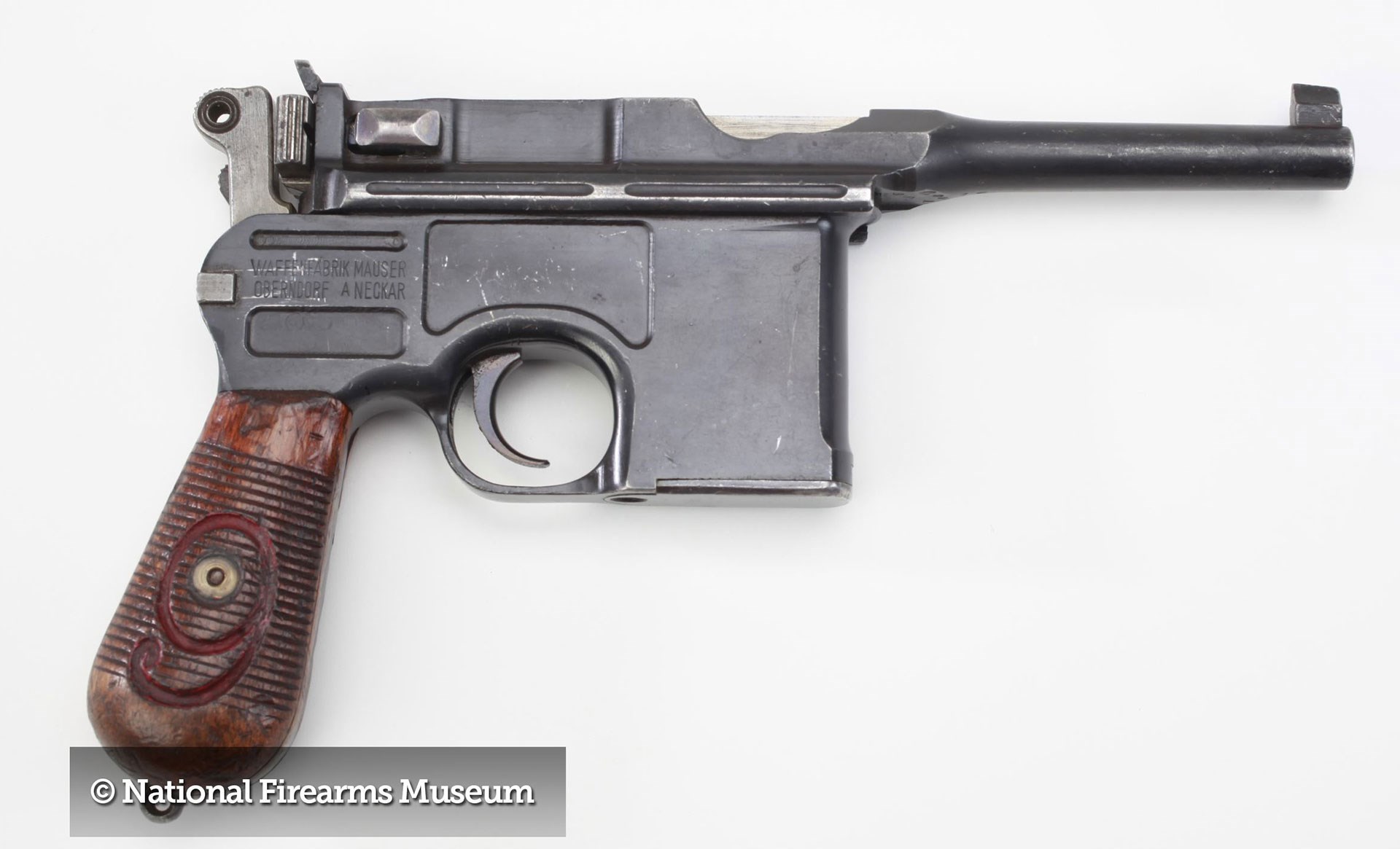 A “Red 9” Mauser C96 pistol chambered in 9 mm Parabellum.
Though the Mauser name is synonymous with rifles, handguns were also an important part of its business. Their first semi-automatic, and most well-known, handgun was the C96 pistol. Though never officially adopted by the German Army, 150,000 “Broomhandle” pistols would be purchased by them to supplement the P08 “Luger” in World War I. By the time production ended in 1937, more than a million C96 handguns had been produced by Mauser, along with countless copies made in other parts of the world.
After the war, Mauser delved into the pocket pistol market, making a variety of designs in .25 and .32 ACP. To compete with more modern designs, like the Walther PPK, Mauser introduced the HSc in 1940, with a double-action trigger and clean external lines. Many of Mauser’s pocket pistols would serve the German military and police.
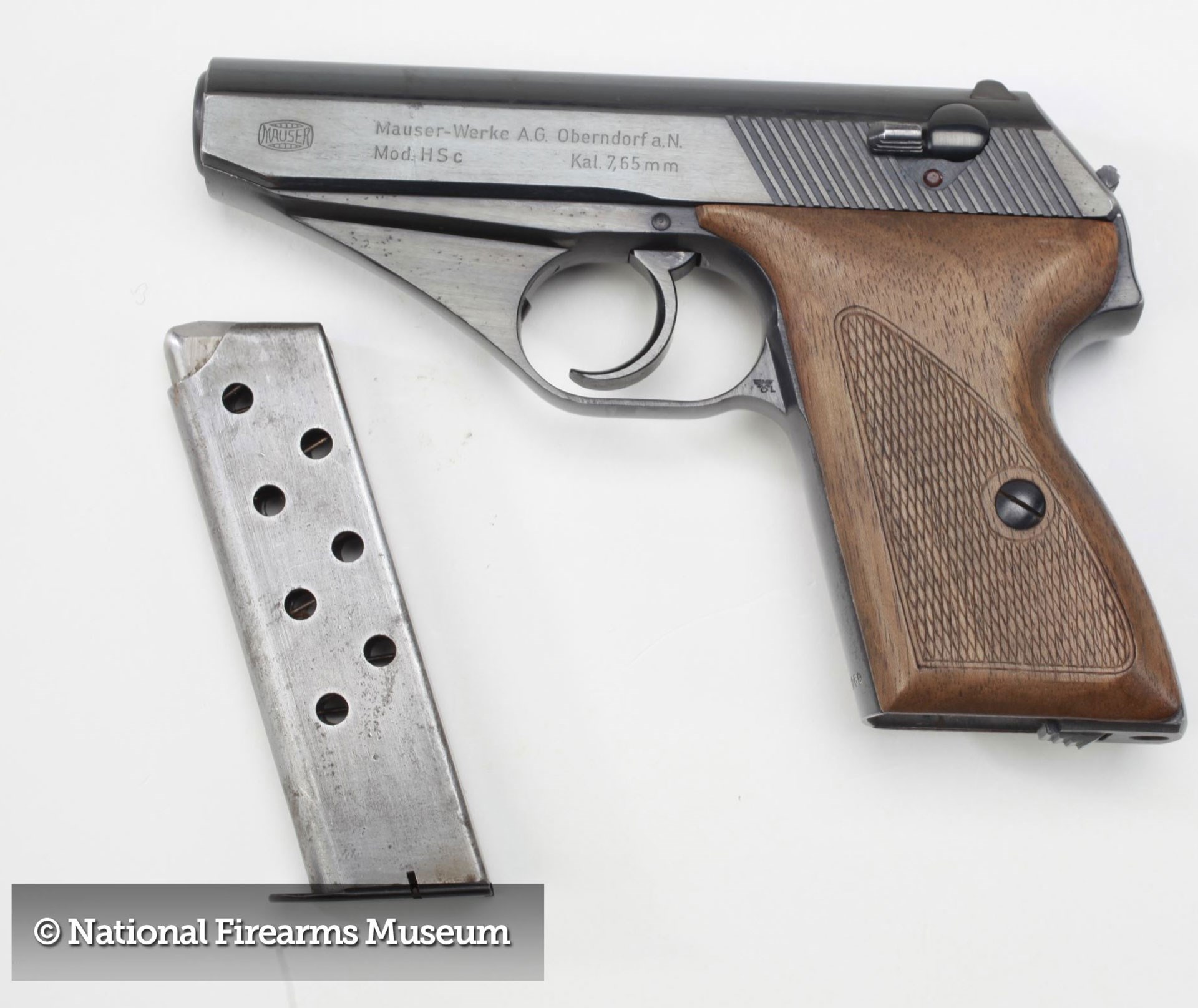 A Mauser HSc pistol in .32 Auto that was made for a German military contract and captured by an American G.I.
Though they failed to secure adoption of one of their full-size designs, Mauser made many 9 mm Parabellum handguns for the German military. In 1930, they were contracted to make P08 Lugers and would continue to do so until 1943. Mauser would be the second largest producer of the Walther P38, during World War II.
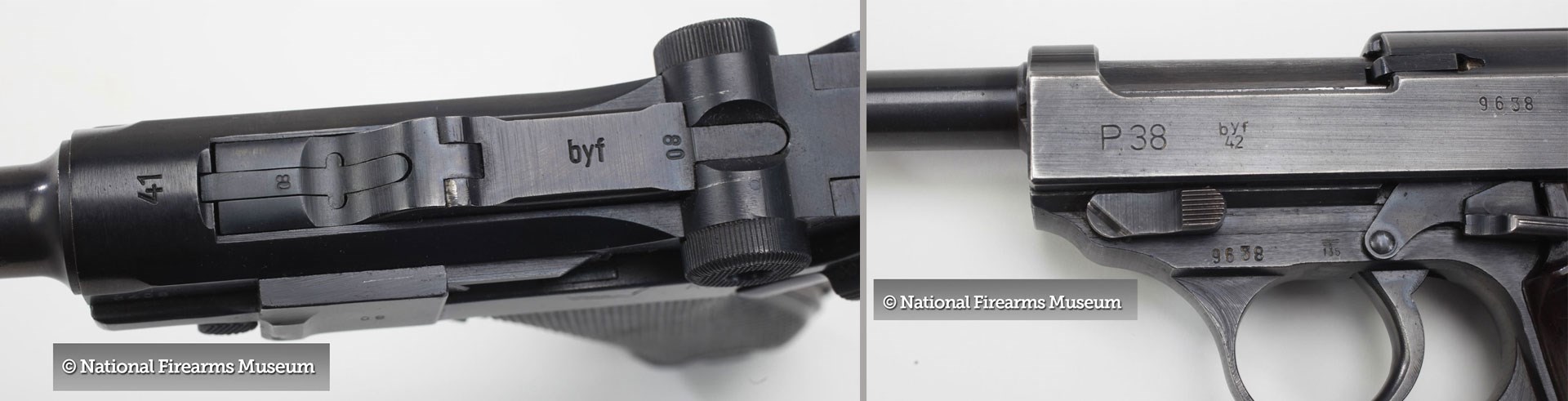 The “BYF” markings on this P08 Luger (left) and P38 (right) indicate they were manufactured at the Mauser factory during World War II.
After Mauser was reorganized following the war, they re-started Luger production in 1969 and continued making the pistols until 1986. The latest handguns marketed by Mauser were High Power clones they sold between 1992 and 1996, which were made for them by FEG of Hungary.
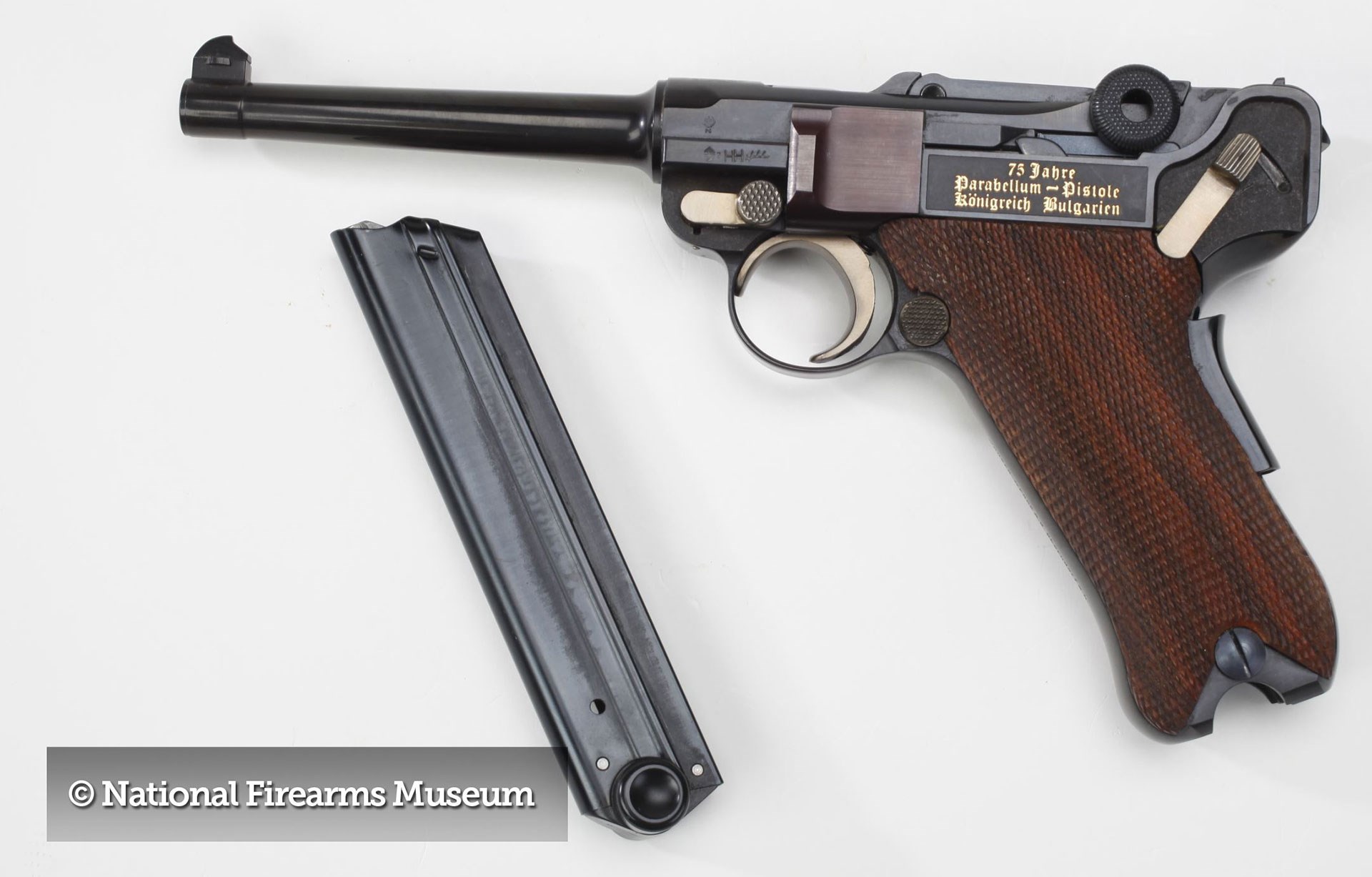 A post-World War II P08 Luger manufactured for Interarms by Mauser.