





Categories
SAR 9 Compact
Categories
2nd Marine Division on Guadalcanal
Categories
Have a nice evening Dear Readers! NSFW

Photo by Forrest MacCormack
Early on a Sunday morning in June, a tractor-trailer backed into the rear parking lot of the Navy Arms warehouse north of Martinsburg, W.V. Inside the truck’s shipping container were four huge wooden crates containing a long-forgotten batch of British No. 4 Lee-Enfield rifles with a unique history. Two green, military-style chests, each brimming with plastic-wrapped bolts, accompanied the wooden containers. Inside the warehouse sat cardboard boxes filled with newly made No. 4 rifle magazines, waiting for their recipients to be offloaded. Valmore Forgett, III, president and CEO of Navy Arms, had shepherded these guns from their storage spot in France to this final point on a long journey that first started on C-47s, B-24s and B-17s flying over war-torn France.
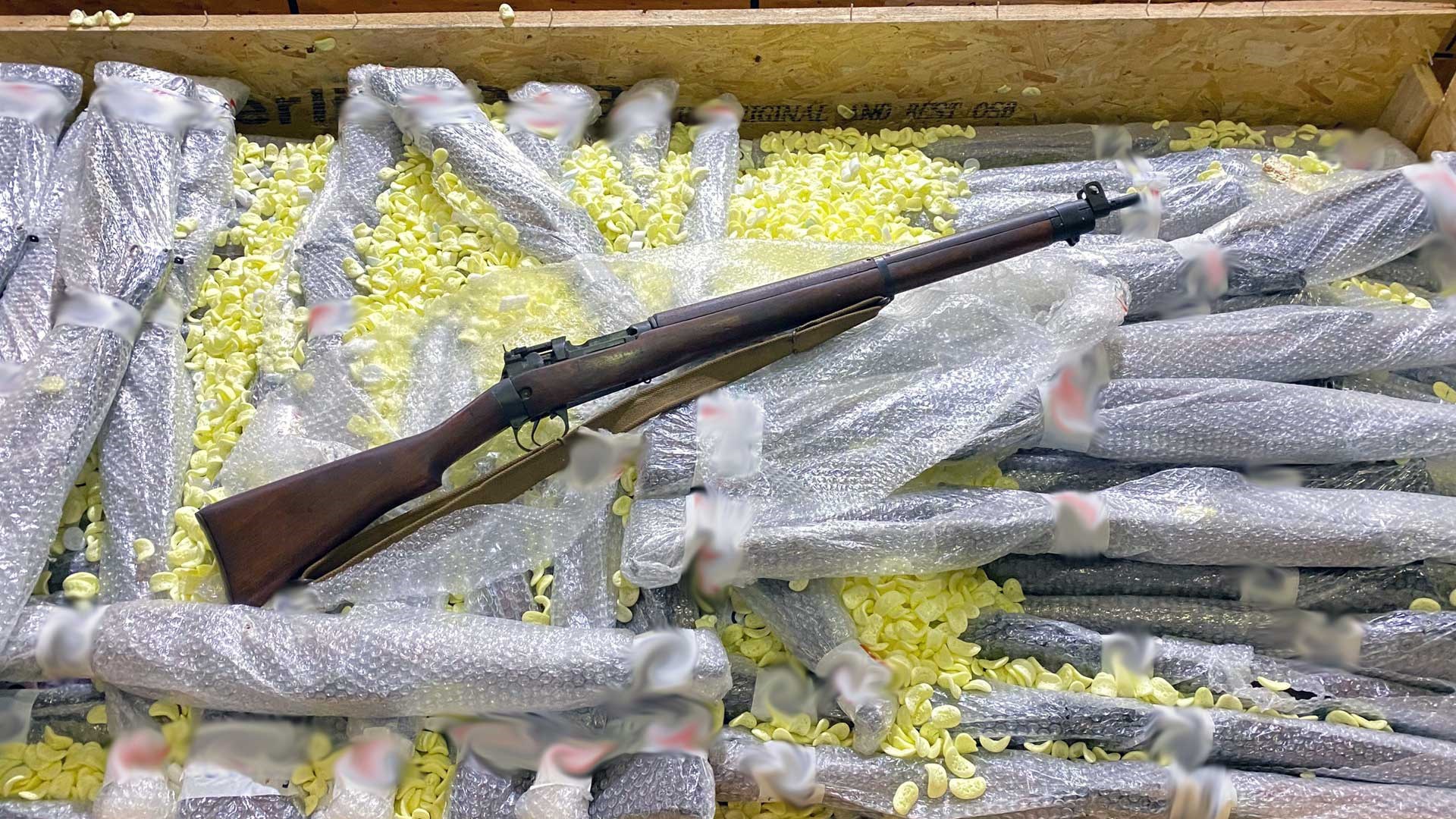
The first rifle is pulled out of its wrap and sits atop the other wrapped No. 4 rifles in one of the shipping containers. Certain identifying information has been obscured at the request of Navy Arms.
In the months leading up to D-Day, 50,000 canisters of arms and supplies were air-dropped across the country, providing sorely needed equipment to the French resistance as part of what was termed Operation Carpetbagger. A joint mission between the British Special Operations Executive and the American OSS, Carpetbagger’s aim was to provide all manner of arms, ammunition and supplies to resistance fighters behind enemy lines in the runup to D-Day and beyond. Following the Normandy landings, these airdrops continued into southern France to support Operation Dragoon, the Allied invasion of southern France on Aug. 15, 1944. Among these supplies were canisters containing British No. 4 rifles and .303 British ammunition, giving partisans cutting-edge arms that would allow them to engage German troops confidently. While their usage is not as well-documented as those rifles in the hands of British soldiers, the No. 4 nonetheless played an important role behind enemy lines in the battle to reclaim France. Following World War II, No. 4 rifles remaining in French hands were gathered up by the French government, which had no use for British arms, and placed into storage. There they remained for more than 70 years, until Forgett started the long, arduous process of getting the rifles from their longtime storage location in France to his company’s warehouse in West Virginia.
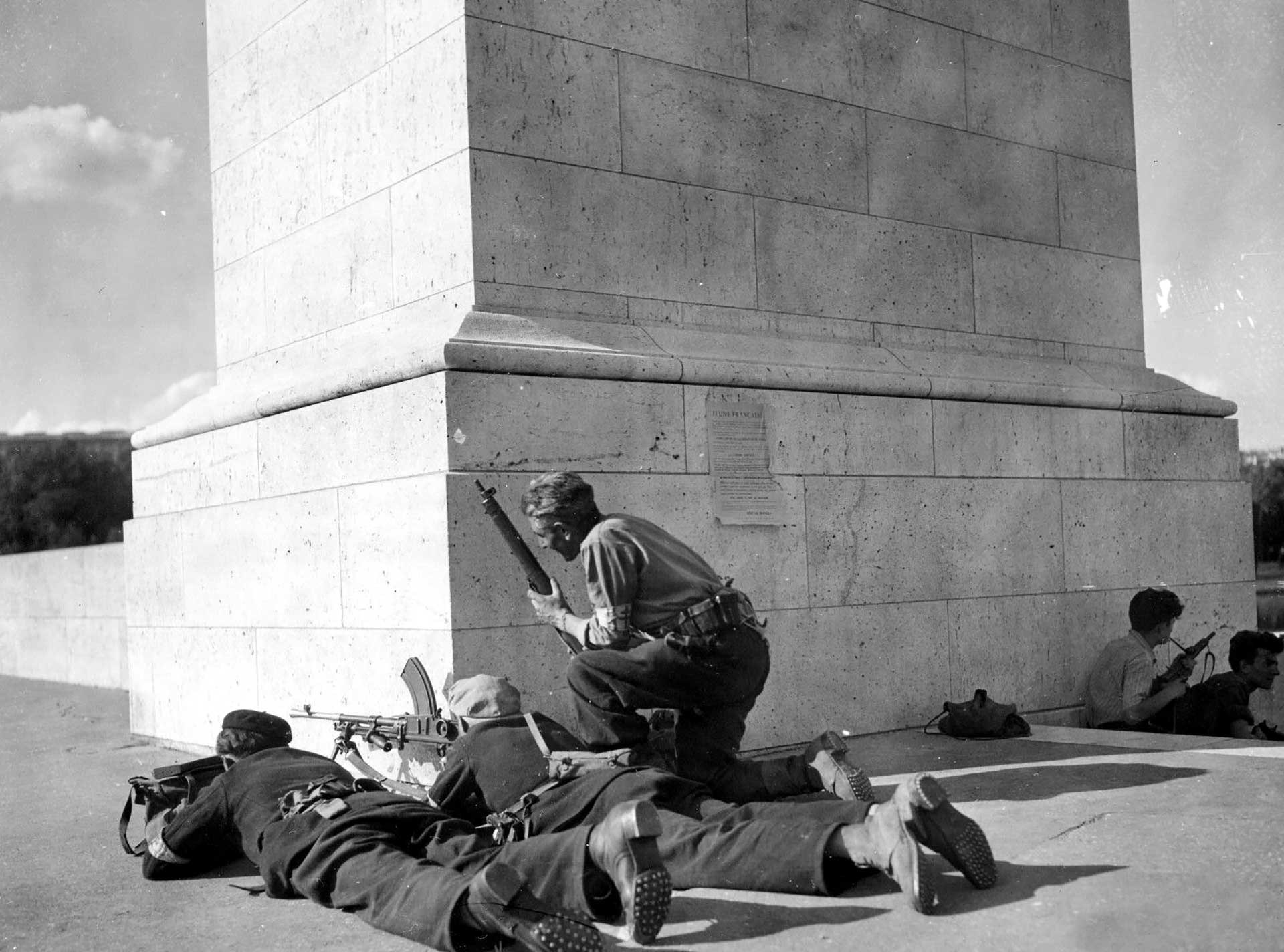
A French resistance fighter is shown armed with a No. 4 Enfield rifle. Image courtesy of Tom Laemlein.
As the crates were forklifted out of the shipping container, eager hands pried nails and loosened screws securing the plywood lids in place. Finally, the crate cover slid off, revealing a sea of bubble-wrapped rifles filling each box to the brim. It took the team at Navy Arms about a week just to unpack the carefully cocooned guns, while Val’s sons unwrapped each individual bolt from its plastic packaging, recorded its serial number and matched it to its rifle, wherever possible. After a brief wipe-down, quick swab of the bore and import-marking, the rifles were moved to a rack, where they awaited their moment under the camera lights. Each rifle is photographed and sold individually, so consumers will know the exact rifle they’re buying. There’s no “hand-select” option here or luck of the draw. What they see is what they get. And they’re getting some great finds with a fascinating history.
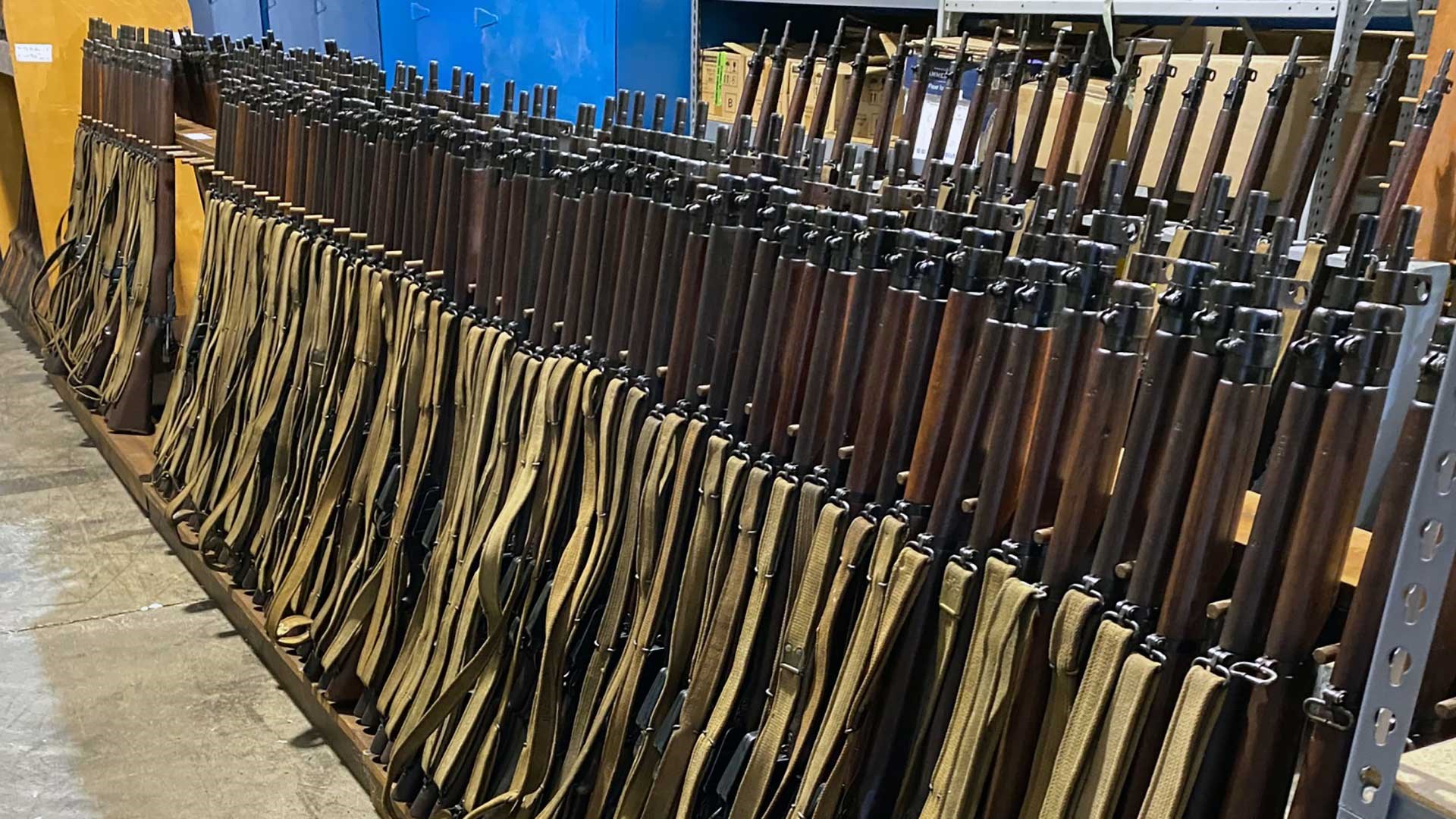
There’s no way to know definitively where each of these individual rifles served and in whose hands they were carried. If the old adage were true and these guns could talk, it’s likely that many of them would have a gripping tale to tell, but there’s little to glean from wood and steel. As far as we know, the French government never bought Lee-Enfield rifles directly from the British government. No rifles were given to the French following World War II, as they had no need for British arms. The only Lee-Enfields in French government possession were these scant few guns gathered up after the fighting was done, and most of the rifles that needed to be gathered up were those in the hands of resistance fighters who had done their job in hampering the German war machine.
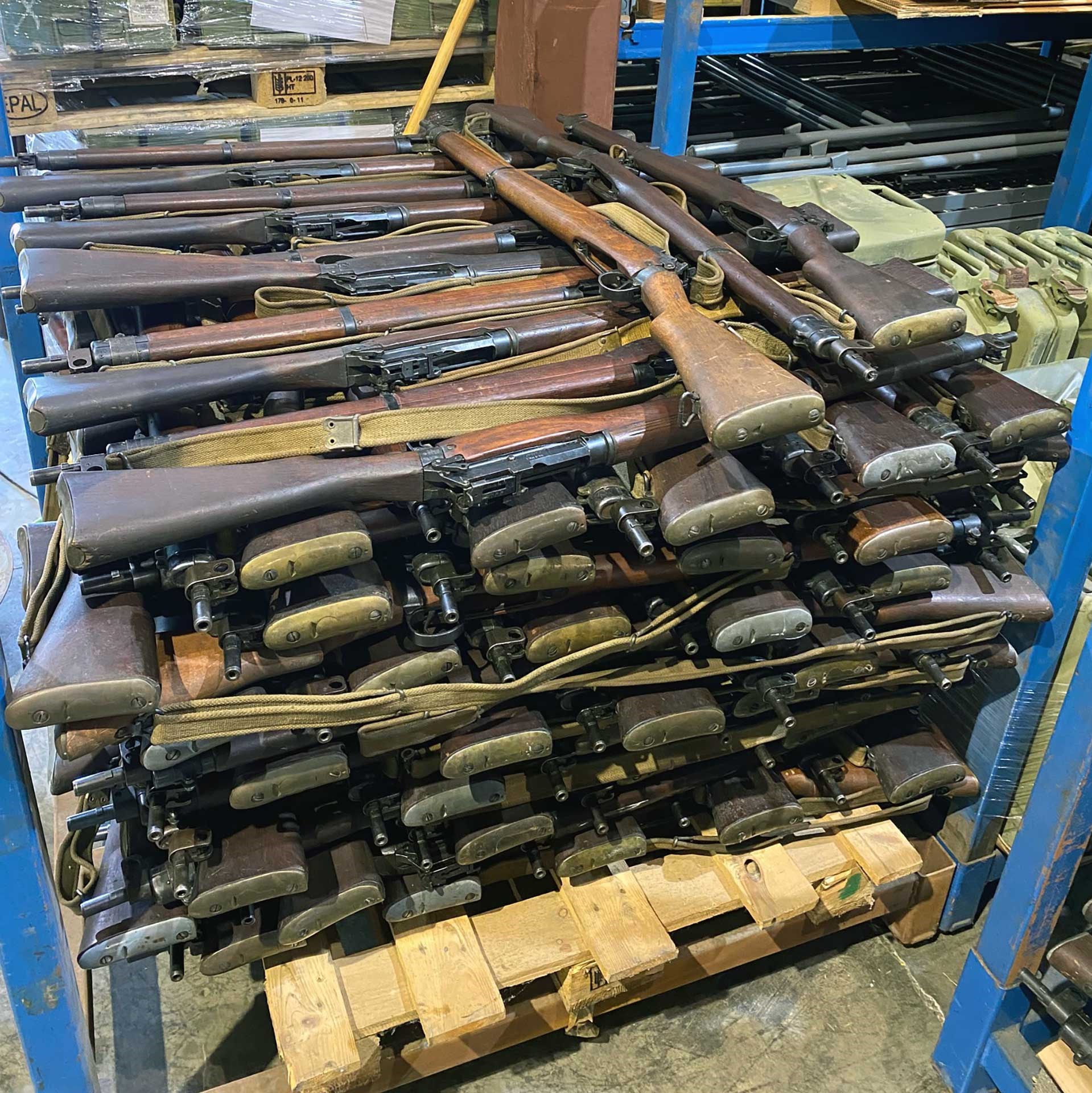
After the French finished gathering up the guns, bolts and magazines were separated from the rifles themselves and stored separately. There was no overhaul, no refurbishing. The guns range in condition from showing moderate wear to nearly factory-new and have all the crisp markings applied to the wood and metal at arms factories during the war. The French did apply their own serial number to these guns for inventory purposes, each of which begins with the enigmatic “PP” prefix. Since these are the only Lee-Enfields that remained in French military inventory following World War II, they are the only such guns marked in this way, making them unique collectors’ items for British rifle enthusiasts.
The No. 4
The British military adopted the “Rifle No. 4, Mk I,” as its official service rifle in 1941. The road to the No. 4 started far earlier than the ’40s, though, with origins stretching even back before World War I. While the Short, Magazine Lee-Enfield (SMLE) was an improvement over its longer predecessor, the Magazine Lee-Enfield, and represented a bridging between infantry and cavalry service arms, it was still very much an echo of the Victorian era. By 1913, the British had elected to move on from the SMLE, having adopted the Pattern 1913 in the smaller-bore .276 Enfield.
The onset of World War I made replacing the SMLE unfeasible, and by the end of the war, it was clear that some version of the Lee-Enfield was here to stay, as well as the .303 British cartridge. Refinements came in the form of the No. 1, Mk V of the 1920s, and early experimental variants of the No. 4 emerged in the 1930s. Unlike earlier models that shared the snub-nose profile of the metal nose cap, the No. 4’s barrel protruded from the end of the fore-end and featured dual lugs to accommodate the new No. 4 Bayonet, which replaced the earlier Pattern 1907 sword bayonet.
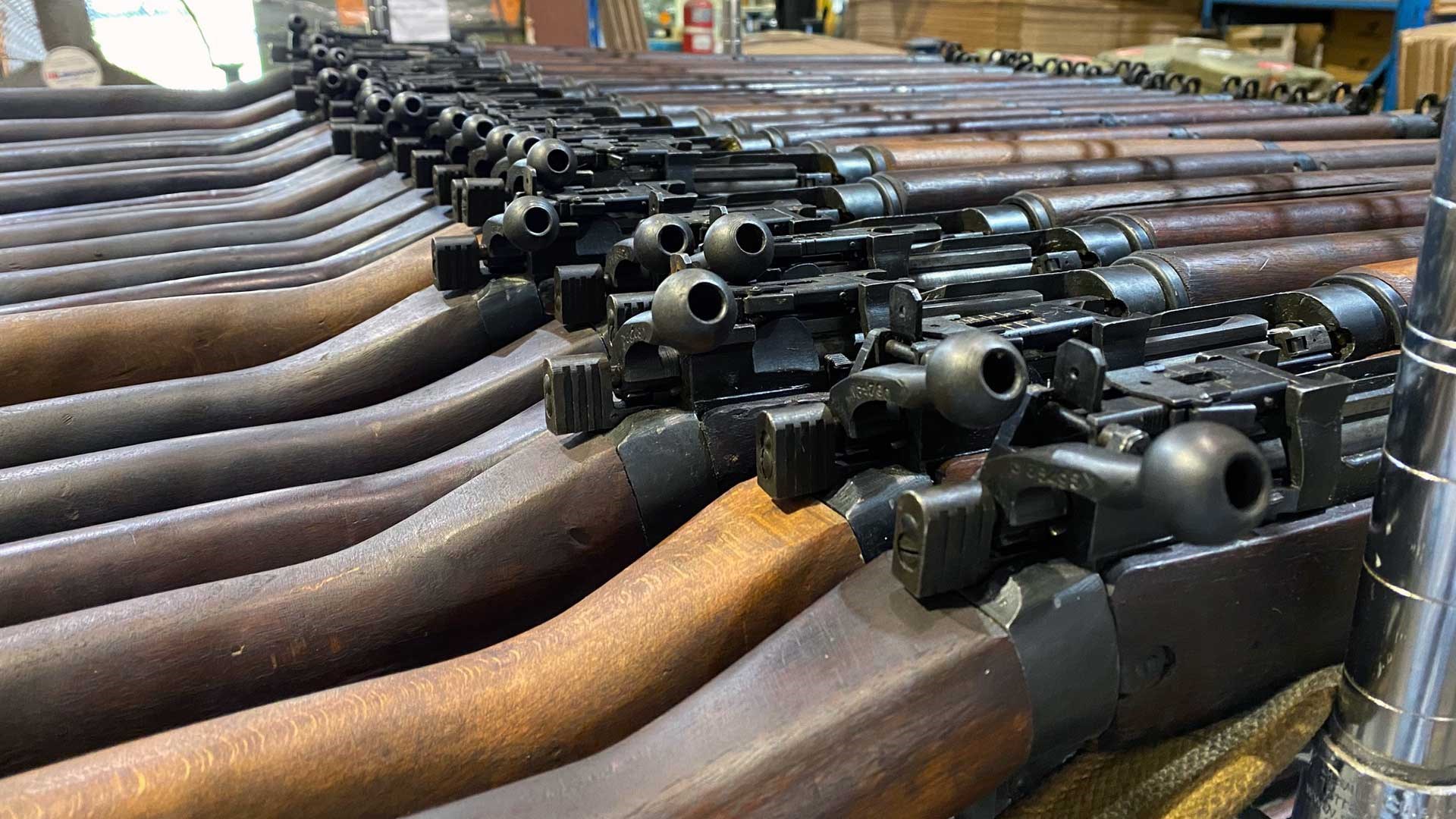
Rifles sorted for cleaning at the Navy Arms warehouse in West Virginia.
Throughout the design, elements were simplified and streamlined to ease manufacturing, including the receiver, which was similar to the redesigned action developed for the No. 1, Mk VI starting in 1926. The No. 4 lacked the magazine cut-off of its predecessors, and it featured a receiver-mounted, aperture-style rear sight, a design that saw its first iterations with the Mk V in 1922. The Mk I rear sight featured a 300-yard battle sight with a wide rear aperture for quickly engaging targets in combat and a flip-up, ladder-style sight with a fine aperture that was adjustable from 200 yards to 1,300 yards in 100-yard increments. As the war progressed, further simplifications sped up manufacturing, with the finely machined, micrometer-like Mk I rear sight replaced by simple two-position apertures and, later, stamped adjustable sights.
Evaluation & Testing
As a British rifle enthusiast, this new cache was an opportunity to grab my own example. It’s one of the cleanest No. 4 rifles I’ve ever had the opportunity to own, having functionally no marring on the wood or the metal. The bore is pristine, as is the bolt. Certainly, this particular rifle hasn’t seen any kind of significant combat use and could possibly be one of the air-dropped No. 4s squirreled away by partisan fighters as they prepared for the fight to re-take France. Of course, we’re in the realm of conjecture as to where such a gun was used and by whom, so let’s take a closer look at what is here.
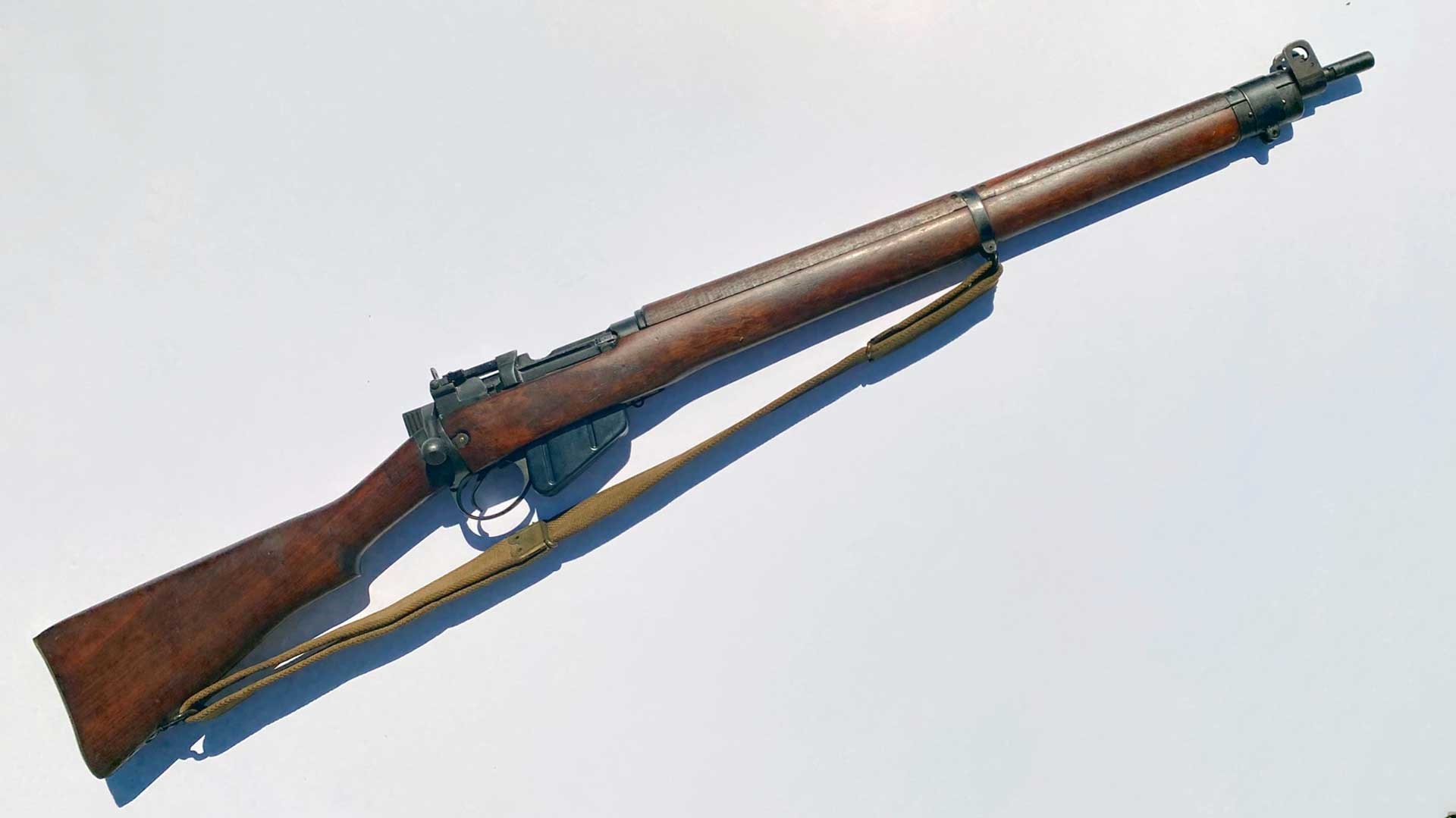
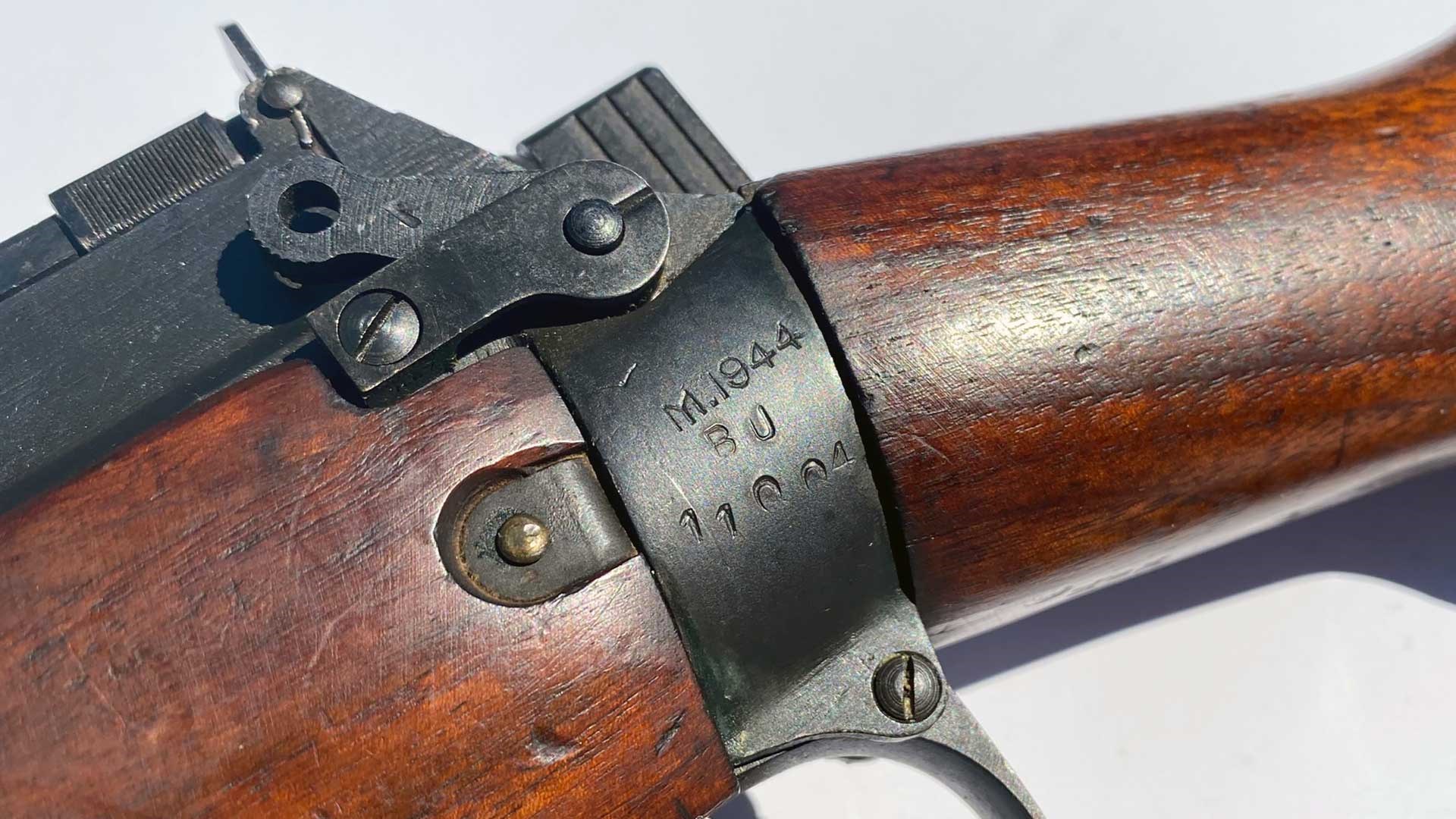
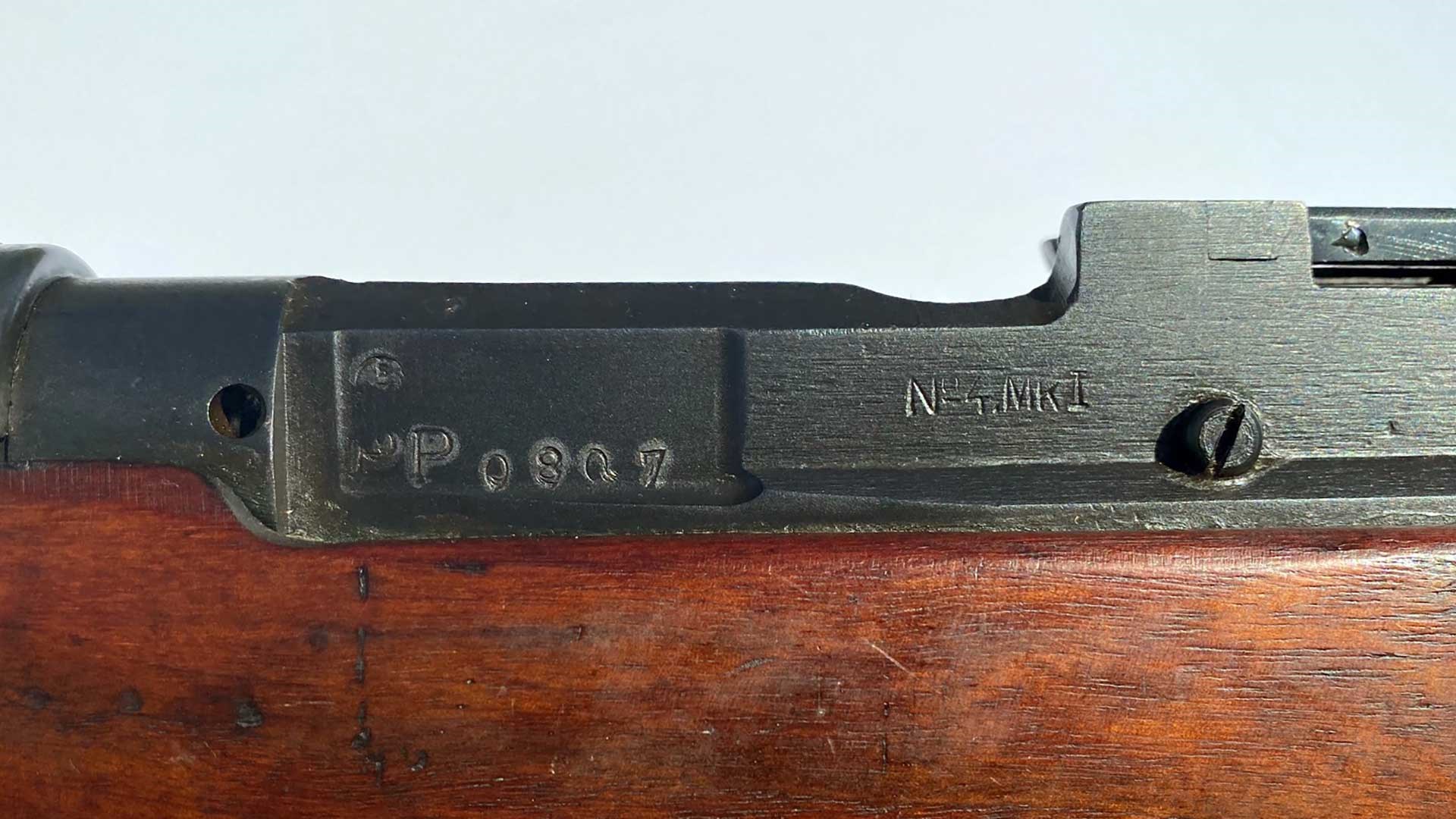
This particular example was produced by the Royal Ordnance Factory at Maltby, located in south Yorkshire. Opened in the 1930s, ROF Maltby was one of a number of British arms factories constructed in areas of the country considered less vulnerable to aerial attack. The left side of the butt socket is marked “M.1944,” denoting the year of manufacture, and the “BU” serial-number prefix, as well as the fact that the serial number starts with “1,” are other clues to its Maltby manufacture. The left side of the receiver is marked “No 4. Mk I,” and correctly for the Mk I variant of the No. 4 rifle, it retains the spring-loaded bolt catch located at the rear of the receiver raceway. Topping the receiver is a stamped Mk III rear sight, typical of No. 4s built toward the end of World War II. Also found on the left-forward portion of the receiver, unique to these particular No. 4 rifles, is the French inventory number. Each of these numbers begin with a “PP” prefix, and a four-digit number, in this case, 0807. To date, no further details regarding the purpose or meaning of this serialization has been uncovered.
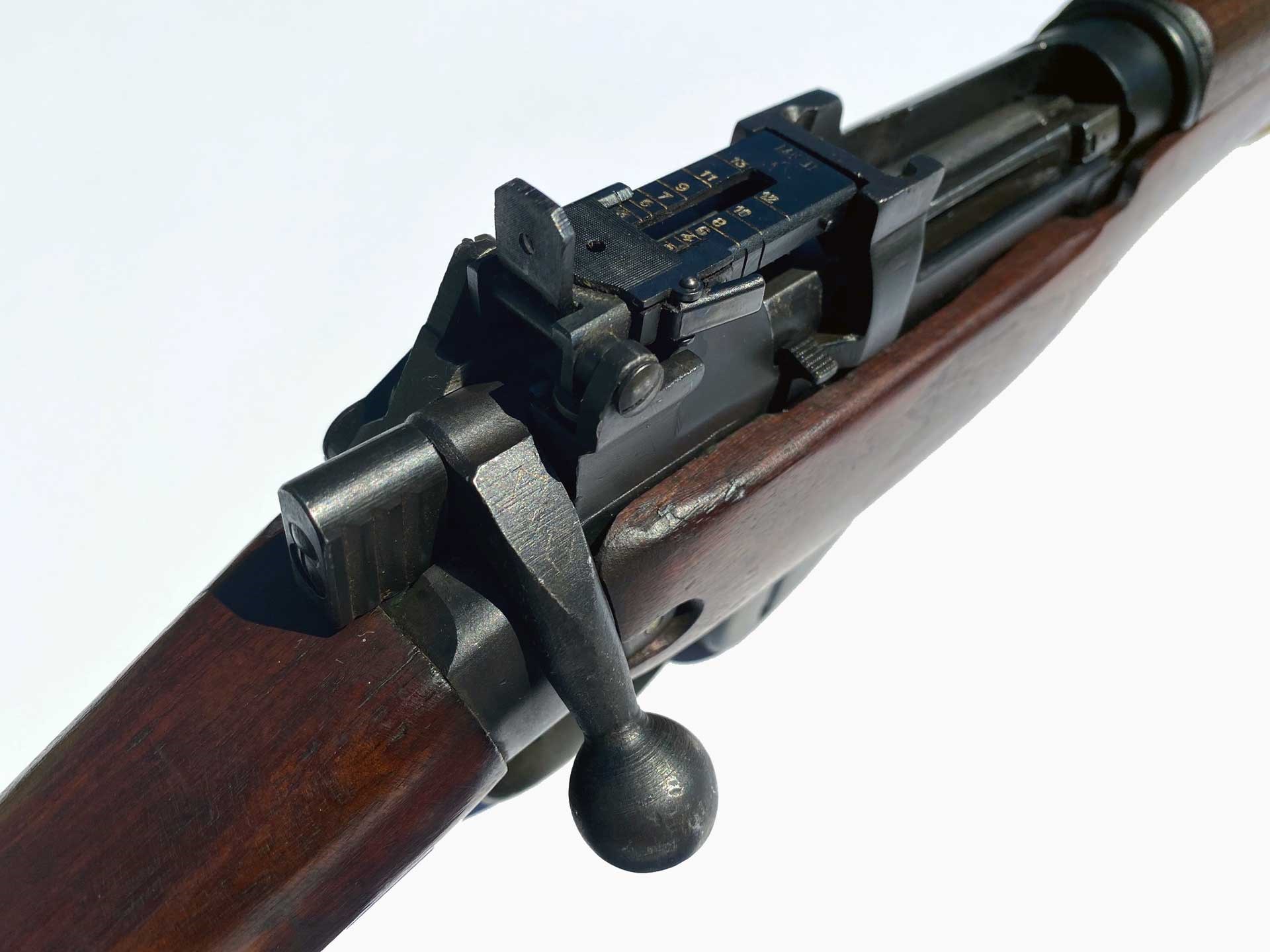
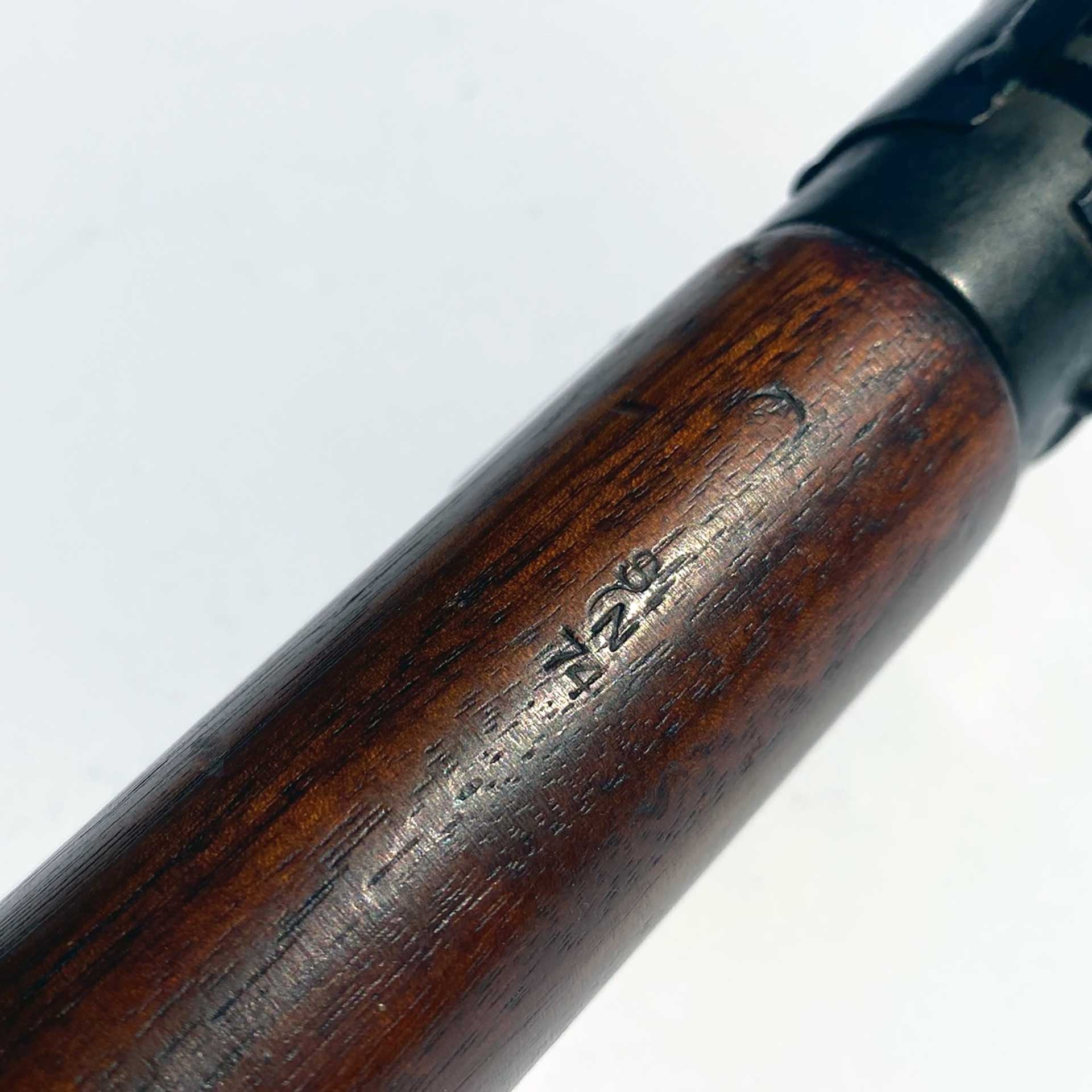
Otherwise, typical British proofmarks are found on the upper flat of the receiver, as well as crossed-flag proofs on the bolt head and top of the bolt handle. On the underside of the stock wrist and fore-end, there are sharp, clear manufacturer’s and inspection marks. Aside from providing valuable information regarding the origins of these components, the sharpness of these particular stamps highlights the fact that the gun’s walnut stock has never been sanded and refinished, as was the case with so many other No. 4 rifles that underwent refurbishing after the war. Aside from a few dents and scratches typically associated with long-term storage, this No. 4 is essentially factory-new, and many of the guns available in the Navy Arms batch of guns are in similar condition. One of the nice bonuses is the inclusion of what is an original sling, very likely the same sling installed on the gun during World War II. Most of the guns in the Navy Arms cache include original slings. While this particular sling seems to have had its markings worn away, many of the slings are 1944-dated and bear original markings.
While the Navy Arms team was able to track down the original bolts for these No. 4 rifles, a disappointment was the inability to find the original magazines, which are difficult to find in any condition, let alone a condition similar to the guns. Prior to receiving the rifles, Forgett contracted with a European manufacturer to provide reproduction magazines correct to the guns. The magazines feature the correct rib stamps for a No. 4 rifle and are treated with a blued finish that approximates the finish found on most No. 4s in this batch. On this particular example, one has to look very closely to see that the finishes aren’t quite congruous.
Of course, the opportunity to shoot what is essentially a factory-new No. 4 rifle is one I couldn’t let slip by, so part of this experience was heading to the range. Fortunately, I’ve squirreled away enough various .303 British loads to run a few different options through the gun and get a sense of its capabilities.
Firing at 50 yards on an indoor range, the best result was achieved with 1983-dated, German-made MEN .303 British, widely considered to be one of the best surplus loads on the market, though its availability is scant these days. The rifle held a 2.09” five-shot group with this load, which squares with the roughly 4-m.o.a. capability generally ascribed to No. 4 rifles using military loads. The worst group was produced by some circa-1960s Iraqi-produced Mk VII ball, likely exacerbated by the slight hangfires experienced with the old ammo. The Iraqi ball produced a 3.74” group. Modern loads measured between the two, with Hornady’s 150-grain InterLock producing a 2.23” five-shot group and Prvi Partizan’s 180-grain Soft Point load producing a 2.74” group.
When firing the rifle itself, a couple of points came up. First was the less-than-ideal performance of the reproduction magazine, which is not entirely surprising. Many reproduction magazines struggle on the reliability front when it comes to the Lee-Enfield platform, thereby requiring a bit of fine-tuning on the part of the end user. In this particular instance, the rear rib of the magazine was just a hair too long to reliably engage the rifle’s magazine catch, so it required a bit of filing to achieve the correct dimension. Additionally, the rifle had issues feeding the two soft-point loads out of the magazine, leading me to shoot the InterLock load from Hornady one round at a time. The two military-surplus ball loads fed more reliably, but both required extra force on the bolt to push the rounds out of the magazine and into the chamber. After a few magazines of ammo, I could feel it slickening up, so it’s possible that more time spent with the gun might smooth out any remaining issues on that front. All in all, it’s a minor blemish on an otherwise remarkable platform.
As it stands, Navy Arms is offering the guns through Old Western Scrounger at prices ranging from $900 for run-of-the-mill guns with some wear up to $3,500 for a remarkable pair of consecutively serial-numbered No. 4s. While these prices are more than we’ve seen for No. 4s recently, given the condition and unique history behind this limited batch of rifles, the premium is understandable. The likely ties to the French resistance notwithstanding, it’s important to recognize these guns for what they represent not only from a military history perspective but also a firearms history perspective. The golden era of military surplus is long behind us, and discoveries of these forgotten caches of guns are rarer, and the guns themselves are fewer in number each time.
Today, the collecting world is filled with World War II guns that have circulated in private hands for decades. Thanks to this latest discovery, the team at Navy Arms now offers a chance for military history enthusiasts to have a genuine, World War II-era British military rifle that has sat, untouched, since the end of the war. The odds that another opportunity like this will come up are vanishingly low, and for those who are passionate about military history and arms, it is a priceless opportunity to reach into the past and hold something that, until now, had previously only been in the hands of those fighting for their freedom from tyranny. You can find your own example by visiting ows-ammo.com.

by John R. Lott Jr.
With crime such an important issue, Americans depend on the FBI for accurate data. The crime data for 2021 is a mess, with almost 40% of law enforcement agencies around the country not submitting any data to the FBI. In California, 93% didn’t report crime data. In New York, 87% didn’t. Cities are embarrassed by the soaring crime rates, and even when they have collected the data they aren’t transmitting those numbers to the FBI.
But many more data errors are the direct responsibility of the FBI. Up until January of last year, I worked in the U.S. Department of Justice as the senior advisor for research and statistics, and part of my job was to evaluate the FBI’s active shooting reports. I found that they were missing lots of cases and had misidentified others. Unfortunately, the FBI was unwilling to fix any of these errors. Since leaving that job, I have found many more missed cases, updating the list this month.
Nor was that the first time I pointed out such errors to the FBI, and I published a list of them in a criminology publication in 2015.
These news reports relied on a series of FBI reports on active shootings put together by researchers at Texas State University.
The FBI reports that armed citizens stopped only 11 of the 252 active shooter incidents that it identified for the period 2014-2021. The FBI defines active shooter incidents as those in which an individual actively kills or attempts to kill people in a populated, public area. But it does not include shootings that are deemed related to other criminal activity, such as robbery or fighting over drug turf. Active shootings may involve just one shot being fired at just one target, even if the target isn’t hit.
To compile its list, the FBI hired academics at the Advanced Law Enforcement Rapid Response Training Center at Texas State University. Police departments don’t collect data, so the researchers had to find news stories about these incidents.
My organization, the Crime Prevention Research Center, also undertook a search for news stories. The CPRC discovered a total of 360 active shooter incidents from 2014 to 2021, and it found that an armed citizen stopped 124 of these. I also found that the FBI had misidentified five cases, usually because the person who stopped the attack was incorrectly identified as a security guard. We found these cases on a tiny budget of just a few thousand dollars. Though we found that armed citizens had stopped 11 times more cases than the FBI reports, I make no claim that we have identified all of them. It is quite possible that the news media itself never covers many such incidents.
But no one needs to take my word for it that the FBI missed many cases. All of the news stories that my team collected are listed on the CPRC website.
While the FBI claims that just 4.4% of active shootings were stopped by law-abiding citizens carrying guns, the percentage that I found was 34%. I am more confident that we have identified a higher percentage of recent cases, and the percentage in 2021 was even higher – 49%.
The FBI doesn’t differentiate between law-abiding citizens stopping attacks where guns are banned and where they are allowed, but you can’t really expect law-abiding citizens to stop attacks where it is illegal to carry guns. In places where law-abiding citizens are allowed to carry firearms, the percentage of active shootings stopped is above 50% for the whole period. And, again, we are more confident that we have more of the cases in recent years. The figure hits 58% in 2021.
In order to follow the FBI’s definition, I also had to exclude 24 cases because a law-abiding person with a gun stopped the attacker before he was able to get off a shot.
But there is a more basic problem in the reliance on news coverage to determine whether an active shooting was stopped by an armed civilian. The news media has a clear bias to cover cases where bad things happen over cases where bad things are prevented. The old adage is: “If it bleeds, it leads.” Killings are usually more newsworthy than woundings, and woundings more notable than confrontations defused simply by someone brandishing a gun.
As an example, I examined news stories of defensive gun use data from Jan. 1 to Aug. 10 of this year, and found 774 defensive gun uses, fully 85% involving people shot: 43% resulting in death and 42% in wounding. Less than 4% of cases involved no shots fired. But survey data indicate that in 95% of cases when people use guns defensively, they merely show the gun to make the criminal back off. Such defensive gun uses rarely make the news.
The problem is that the FBI numbers are used by academics who do research and by the media. To see how the FBI reports alter news coverage, see the July 17 Greenwood Mall shooting near Indianapolis, where a young man, Elisjsha Dicken, used his legally carried gun to stop what clearly would have been a horrible mass public shooting. The news coverage immediately relied on the FBI and Texas State University reports to tell people Dicken’s heroism was very unusual.
“Making Dicken’s heroism perhaps even more remarkable is the fact cases of an armed bystander attacking an active shooter are rare,” CNN noted two days after the attack. “The Greenwood incident is unique, however, because it became one of the rare instances of an armed civilian successfully intervening to end a mass shooting,” claimed the Washington Post the day after the attack. But what is really rare is the news coverage of these attacks. Few know that there were at least six other similar likely mass public shootings that armed civilians stopped in the first nine months of this year.
It is hard to ignore how all of this feeds into the gun control debate. Nor can one forget about the charges of political bias leveled by whistleblowers in the FBI.
The FBI is systematically missing defensive gun uses. And it has failed to fix these errors, even when I have pointed them out. Considering how often the media cites the FBI as an authoritative source, this institution needs to do better.
– – –
John R. Lott Jr. is a contributor to RealClearInvestigations, focusing on voting and gun rights. His articles have appeared in publications such as the Wall Street Journal, New York Times, Los Angeles Times, New York Post, USA Today, and Chicago Tribune. Lott is an economist who has held research and/or teaching positions at the University of Chicago, Yale University, Stanford, UCLA, Wharton, and Rice.
Photo “FBI Building” by Ken Lund. CC BY-SA 2.0.