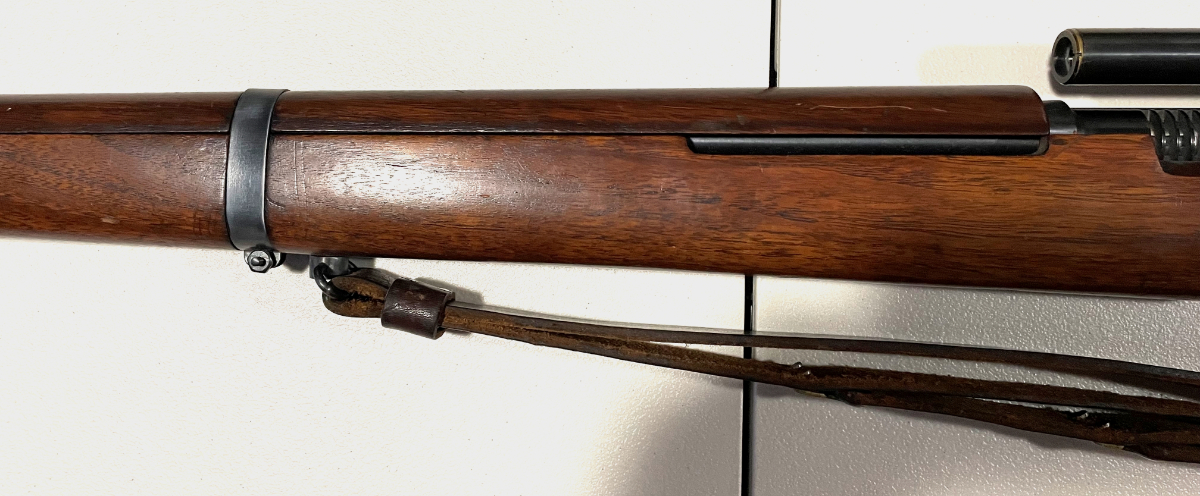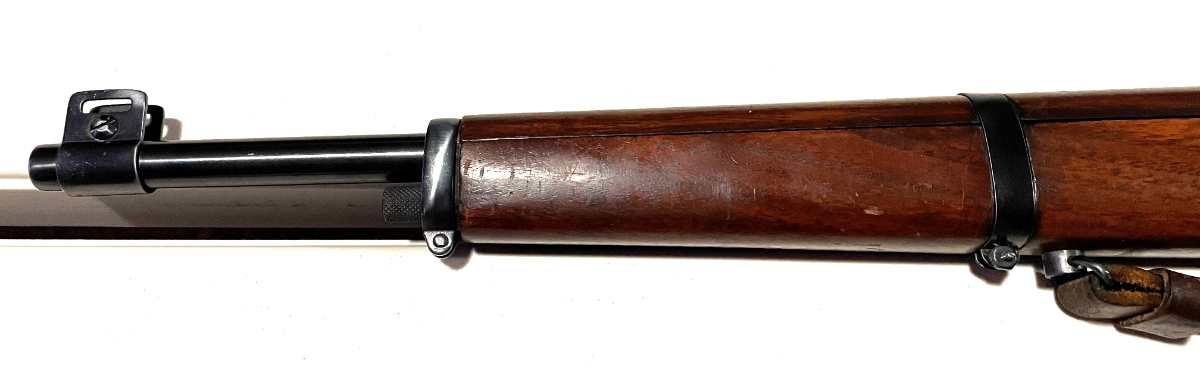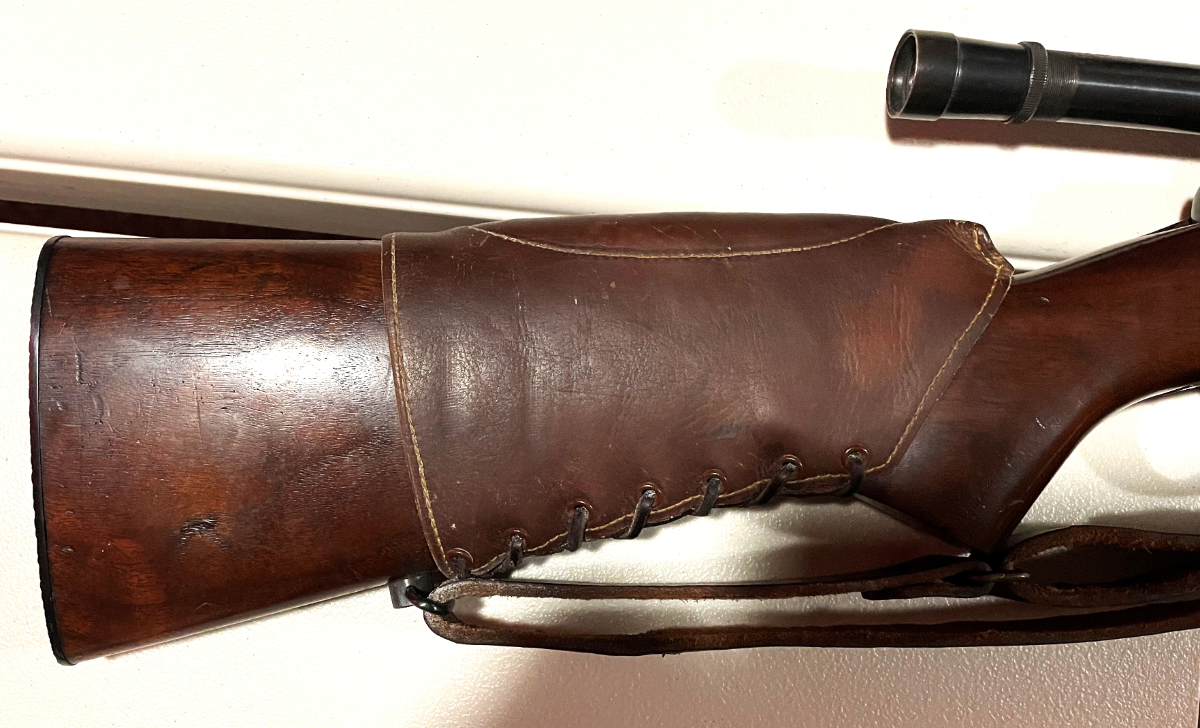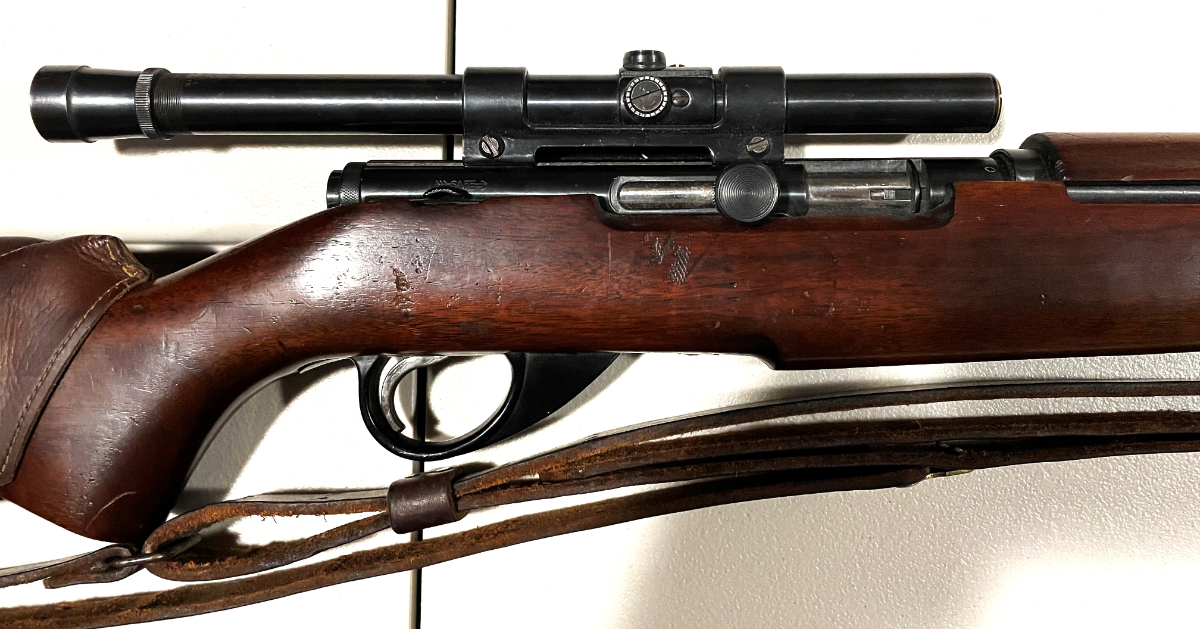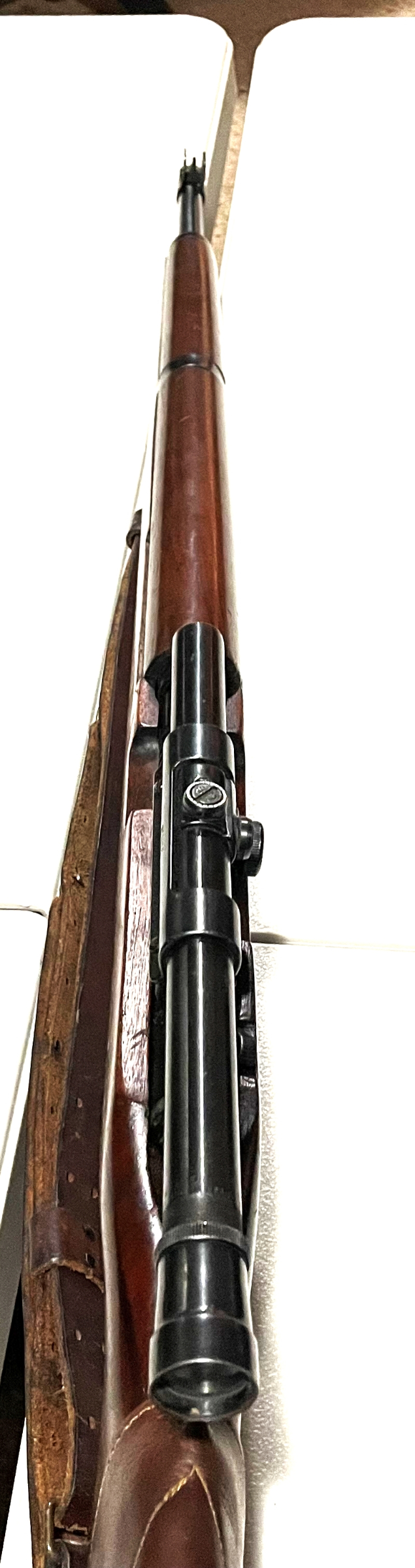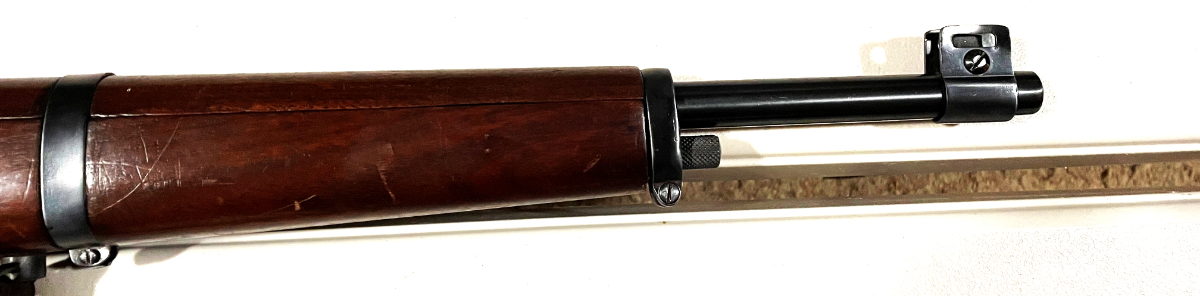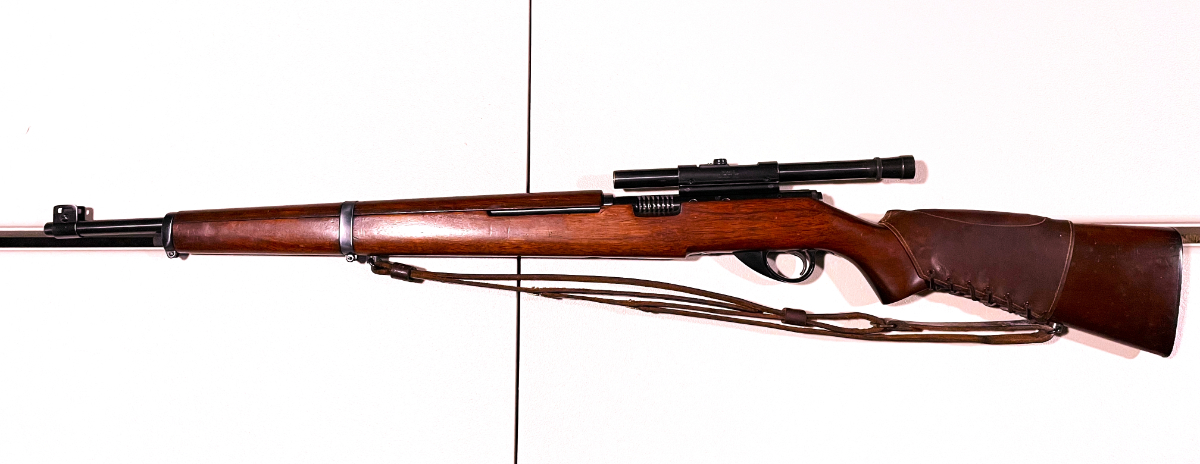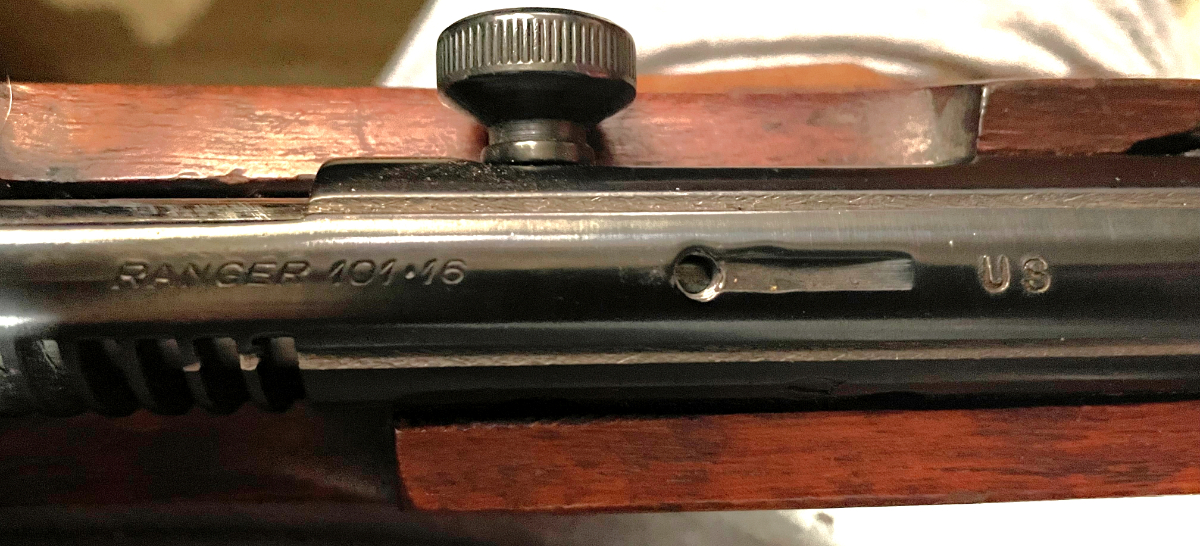
Huh! Grumpy
This was originally a souvenir for the Guys that survived the War. Grumpy
How True!

Have a Cav Day!
Word spread quickly that a battalion of Americans had been massacred in the Ia Drang Valley, but reporters were told there was no ambush.
Forty-five years ago this fall, in November of 1965, a lone, understrength battalion of the 1st Cavalry Division (Airmobile) ventured where no force—not the French, not the South Vietnamese army, not the newly arrived American combat troops—had ever gone: Deep into an enemy sanctuary in the forested jungles of a plateau in the Central Highlands where the Drang River flowed into Cambodia and, ultimately, into the Mekong River that returned to Vietnam far to the south.
What happened there, in the Ia Drang Valley, 17 miles from the nearest red-dirt road at Plei Me and 37 miles from the provincial capital of Pleiku, sounded alarm bells in the Johnson White House and the Pentagon as they tallied the American losses—a stunning butcher’s bill of 234 men killed and more than 250 wounded in just four days and nights, November 14-17, in two adjacent clearings dubbed Landing Zones X-ray and Albany. Another 71 Americans had been killed in earlier, smaller skirmishes that led up to the Ia Drang battles.
To that point, some 1,100 Americans in total had died in the United States’ slow-growing but ever-deepening involvement in South Vietnam, most of them by twos and threes in a war where Americans were advisers to the South Vietnamese battalions fighting Viet Cong guerrillas. Now the North Vietnamese Army had arrived off the Ho Chi Minh Trail and had made itself felt. In just over one month, 305 American dead had been added to the toll from the Ia Drang fight alone. November 1965 was the deadliest month yet for the Americans, with 545 killed.
The North Vietnamese regulars, young men who had been drafted into the military much as the young American men had been, had paid a much higher price to test the newcomers to an old fight: an estimated 3,561 of them had been killed, and thousands more wounded, in the 34-day Ia Drang campaign.
What happened when the American cavalrymen and the People’s Army of Vietnam (PAVN) collided head-on in the Ia Drang had military and civilian leaders in Washington, Saigon and Hanoi scrambling to assess what it meant, and what had been learned.
Both sides understood that the war had changed suddenly and dramatically in those few days. At higher levels, both sides claimed victory in the Ia Drang, although those who fought and bled and watched good soldiers die all around them were loath to use so grand a word for something so tragic and terrible that would people their nightmares for a long time, or a lifetime.
The big battles began when then–Lt. Col. Hal Moore, a 43-year-old West Point graduate out of Bardstown, Ky., was given orders to airlift his 450-man 1st Battalion, 7th Cavalry Regiment, into the valley on a search-and-destroy mission. He did a cautious aerial reconnaissance by helicopter and selected a football field–sized clearing at the base of the Chu Pong Massif, a 2,401-foot-high piece of ground that stretched to the Cambodian border and beyond for several miles. The sketchy American intelligence Moore was provided said the area was home base for possibly a regiment of the enemy. In fact, there were three North Vietnamese Army regiments within an easy walk of that clearing, or the equivalent of a division of very good light infantry soldiers.
Two of those enemy regiments had already been busy since arriving in the Central Highlands. In mid-October, the 32nd Regiment had surrounded and laid siege to the American Special Forces camp at Plei Me. Although they could have easily crushed the defenders—a 12-man American A-Team and 100 Montagnard mercenary tribesmen—the enemy dangled them as bait, hoping to lure a relief force of the Army of the Republic of Vietnam (ARVN) out of Pleiku and into an ambush laid by their brothers of the 33rd Regiment.
It was an old guerrilla ploy that usually worked, but not here, not now. The ARVN II Corps commander knew if he lost the relief force, Pleiku would be left defenseless. He pressed the Americans to provide continuous artillery and air cover as the column moved toward Plei Me. The 1st Cavalry’s big Chinook helicopters lifted batteries of 105mm howitzers, leap-frogging along within range of the dirt road that led to Plei Me. When the ambush was sprung, the American artillery wreaked havoc on the North Vietnamese plan and the 33rd Regiment. Both enemy regiments withdrew toward the Ia Drang with a brigade of Air Cav troopers dogging their footsteps.
Both sides understood that the war had changed suddenly and dramatically in those few days….Both sides claimed victory.
Then–Lt. Col. Hoang Phuong, a historian who had spent two months walking south, charged with writing the “Lessons Learned” report on the coming battles, said that it was during this phase that the retreating PAVN troops began learning what airmobility was all about. The UH-1B Huey helicopters buzzed around the rugged area like so many bees, landing American troops among the North Vietnamese, forcing them to split up into ever-smaller groups like coveys of quail pressed hard by the hunters.
A new PAVN regiment, the 66th, was just arriving in the Ia Drang in early November when its troops walked into perhaps the most audacious ambush of the Vietnam War. On November 3, divisional headquarters ordered Lt. Col. John B. Stockton and his 1st Squadron, 9th Cavalry, battalion of scouts to focus attention on a particular trail alongside the Ia Drang River close to the Cambodian border. Stockton sent one of his companies of “Blues,” or infantry, under command of Captain Charles S. Knowlen, to a clearing near that site. He took along a platoon of mortars that belonged to Captain Ted Danielsen’s Alpha Company, 1st Battalion, 8th Cavalry, which had been sent with Stockton as possible reinforcements if needed.
Knowlen sent out three platoon-sized ambush patrols. One of those platoons set up near the trail and began hearing the noise of a large group moving toward it on the trail. The enemy column—men of the newly arriving 8th Battalion of the 66th Regiment—stopped 120 yards short of the ambush and took a break. Then they resumed the march. The platoon of Americans held their breath and their fire until they heard the louder clanking noise of the enemy’s heavy weapons company moving into the kill zone. The Americans blew their claymore mines and emptied a magazine each from their M-16 rifles into the confused North Vietnamese and then took off, running like hell straight back to the patrol base. A very angry PAVN battalion was right behind them.
Knowlen and his men beat back three waves of attacking North Vietnamese, but the company commander feared the next attack would overrun his position. Knowlen radioed Stockton at his temporary base at Duc Co Special Forces Camp and begged for reinforcements as fast as possible. Stockton radioed his higher-up, Brig. Gen. Richard Knowles at Camp Holloway/Pleiku, requesting permission to send in the rest of Danielsen’s company. Knowles denied Stockton permission, and the legendary 9th Cavalry commander squawked, squealed, whistled, dropped the radio handset and waved Danielsen’s men aboard the choppers and away to save the day.
They were about to make history, conducting the first nighttime heli-borne infantry assault into a very hot landing zone. They arrived in the nick of time as the next PAVN assault began. Danielsen’s men joined the line, and Stockton’s helicopter crews got out of their birds and joined the battle with their M-60 machine guns and the pilots’ pistols.
Knowles was furious at Stockton for disobeying his orders. Stockton just shrugged. If he had obeyed Knowles, more than 100 of his men would not have survived that night in the Ia Drang. Stockton, an Army brat who had grown up in horse cavalry posts all across the West, had resurrected black cavalry Stetson hats for his men and smuggled the 9th Cav’s mascot Maggie the mule aboard ship and 8,000 miles to Vietnam in defiance of another of Dick Knowles’ orders. But for his actions this night of November 3, John B. Stockton would be relieved of duty and sent to work a desk job in Saigon.

One out of four members of the 7th Cavalry were killed or wounded in the Ia Drang Valley. (Photo: Joseph L. Galloway)
All of this was merely prelude, setting the stage for the savage mid-November battles at LZs X-ray and Albany.
When Hal Moore took the first lift of 16 Hueys—all that he was given for this maneuver—into the landing zone he had chosen in the Ia Drang, he was painfully aware that he was on the ground with only 90 men, and that they would be there alone for half an hour or longer while the choppers returned to Plei Me Camp, picked up waiting troops and made the return flight. It was a 34-mile roundtrip. The luck was with Moore. The clearing was silent for now. Then his men took a prisoner, a North Vietnamese private who was quaking so hard he could barely speak. When he finally did say something, it sent chills through the Americans listening to the translator: “He say there two regiments on that mountain. They want very much to kill Americans but have not been able to find any.”
Within an hour of landing and the second airlift of troops just arriving, the battle at X-ray was joined. It would last for three days and two nights before the North Vietnamese would vanish into the tangle of brush and elephant grass, leaving a large circle of their dead scattered around the American position. The smell of rotting corpses hung heavy over X-ray, and with the arrival on foot of the 2nd Battalion, 7th Cavalry, under its new commander Lt. Col. Robert McDade, on the morning of November 16, there were now three Cavalry battalions crammed into that clearing. General Knowles wanted to bring in the first-ever B-52 strike in tactical support of ground troops, and X-ray was inside the 3×5 kilometer box that was “danger close” to the rain of bombs that would fall on the near slopes of Chu Pong.
The 3rd Brigade commander, Colonel Tim Brown, gave orders: Moore’s battalion, plus Bravo Company of 2-7 Cavalry, which had reinforced Moore and fought alongside the 1st Battalion troopers, would be pulled out by helicopters and lifted to Camp Holloway on November 16. On the morning of November 17, Lt. Col. Bob Tully’s 2nd Battalion, 5th Cavalry, would march out of X-ray, headed northeast directly toward LZ Columbus, where a battery of 105mm howitzers was positioned. Bob McDade’s 2-7 Battalion plus one company of 1st Battalion, 5th Cavalry, would follow Tully part of the way, then break off west and northwest toward another clearing closer to the river dubbed LZ Albany.
As McDade’s battalion neared the Albany clearing, it was halted, strung out along 550 yards of narrow trail hemmed in by much thicker triple canopy jungle. The Recon Platoon had captured two North Vietnamese soldiers. A third had escaped. McDade and his command group went forward so the battalion commander could personally put questions to the prisoners through the interpreter. He also ordered all four company commanders to come forward to receive instructions on how he wanted them deployed around the perimeter of Albany. They all arrived with their radio operators, and all but the commander of the attached Alpha Company of 1-5 Cav, Captain George Forest, brought their first sergeants with them.
The enemy commander, Lt. Col. Nguyen Hu An, had kept one of the battalions of the 66th Regiment in reserve, and unbeknownst to the Americans that battalion was taking a lunch break just off the trail. The North Vietnamese swiftly deployed along the left side of the column and prepared to attack. The weary Americans, who had had little or no sleep for the last three days and nights, had slumped to the ground where they had stopped. Some ate; some smoked; some fell asleep right there. Suddenly, enemy mortars exploded among the Americans signaling the PAVN attack, and they charged through the tall grass and cut through the thin line of Cavalry troops strung out along the trail.
PAVN machine gunners climbed atop the big termite mounds—some 6 feet tall and as big around as a small automobile—and opened up. Snipers were up in the trees. The fighting quickly disintegrated into hand-to-hand combat, and men were dying all around. In the next six hours, McDade’s battalion would lose 155 men killed and 120 wounded. An artillery liaison officer in a Huey overhead wanted desperately to call fire missions in support, but was helpless. All he could see was smoke rising through the jungle canopy. At the head of the column, McDade had no idea where most of his men were and was near-incoherent on the radio. The Americans trapped in the kill zone were on their own. Later artillery and napalm airstrikes were called in, but they often fell on enemies and friends alike. All through that endless night, the PAVN troops combed through the elephant grass searching for their own wounded, and finishing off any wounded Americans they came across. Both sides had lost interest in taking prisoners. There were no Americans captured and only four North Vietnamese prisoners taken—all at X-ray and none at Albany. When the ambush was sprung at Albany, an intelligence sergeant shot and killed the two North Vietnamese prisoners with a .45-caliber pistol.
An Associated Press photographer, Rick Merron, and a Vietnamese TV network cameraman, Vo Nguyen, had finagled a ride on a helicopter going into Albany on the morning of November 18. After a short stay, Merron grabbed another chopper going back to Camp Holloway, and the word spread quickly that a battalion of Americans had been massacred in the valley.
LBJ ordered McNamara to Saigon to find out what happened at Ia Drang, and what it meant.
General Knowles called a news conference late on the 18th in a tent at Holloway. He told the dozens of reporters who had assembled that there was no ambush of the Americans at Albany. It was, he said, “a meeting engagement.” Casualties were light to moderate, he added. I had just returned from Albany myself, and I stood and told the general, “That’s bullshit, sir, and you know it!” The news conference dissolved in a chorus of angry shouting.
In Washington, President Lyndon B. Johnson sent an urgent message to Defense Secretary Robert S. McNamara, who was in Europe, ordering him to come home via Saigon and find out what had happened at Ia Drang, and what it meant. McNamara met with Ambassador Henry Cabot Lodge in Saigon and then flew to the 1st Cavalry Division base camp at An Khe, where he was briefed by the Cav commander, Maj. Gen. Harry W.O. Kinnard, and by Colonel Moore.
On the flight across the Pacific, McNamara wrote a top-secret memo to President Johnson dated November 30. See the Memo. McNamara told LBJ that the enemy had not only met but exceeded our escalation. We have come to a decision point and it seems we have only two choices: Either we arrange whatever diplomatic cover we can find and get out of Vietnam, or we give General William C. Westmoreland the 200,000 additional U.S. troops he is asking for, in which case by early 1967 we will have 500,000 Americans on the ground and they will be dying at the rate of 1,000 a month (the top Pentagon bean counter was wrong about that; American combat deaths would top out at over 3,000 a month in 1968). McNamara added that all this would achieve was a military stalemate at a much higher level of violence.
On December 15, 1965, LBJ’s council of “wise old men,” which in addition to McNamara included the likes of Clark Clifford, Abe Fortas, Averell Harriman, George Ball and Dean Acheson, was assembled at the White House to decide the path ahead in Vietnam. As the president walked into the room, he was holding McNamara’s November 30 memo in his hand. Shaking it at the defense secretary, he said, “You mean to tell me no matter what I do I can’t win in Vietnam?” McNamara nodded yes. The wise men talked for two days without seriously considering McNamara’s “Option 1”—getting out of Vietnam—and ultimately voted unanimously in favor of further escalation of the war.

Resupply and medevac at LZ X-ray during the Battle of Ia Drang Valley on November 16, 1965. (Photo: Joseph L. Galloway)
Back in Saigon, General Westmoreland and MACV G-3, Deputy Chief of Staff for Operations General William DePuy, were studying the statistics of the Ia Drang battles. What they saw was a ratio of 12 North Vietnamese killed for each American. They decided that these results justified a strategy of attrition: They would bleed the enemy to death over the long haul. One of Westmoreland’s brighter young aides later would write, “a strategy of attrition is proof that you have no strategy at all.” In any event, the strategy was an utter failure. In no year of that long war did the North Vietnamese war death toll even come close to equaling the natural birth rate increase of the population. In other words, every year reaching out far into the future there were more babies born in the north than NVA we were killing in the south, so each year a new crop of draftees arrived as replacements for the dead.
Seven hundred miles north in Hanoi, President Ho Chi Minh and his lieutenants likewise carefully studied the results of the Ia Drang campaign. They were confident they would eventually win the war. Their peasant soldiers had withstood the high-tech firestorm thrown at them by a superpower and had at least fought the Americans to a draw, and to them a draw against so powerful an enemy was a victory. In time the same patience and perseverance that had ground down the French colonial military would likewise grind down the Americans.
Senior General Vo Nguyen Giap studied the battles and correctly identified the helicopter as the biggest innovation, biggest threat and biggest change in warfare that the Americans brought to the battlefield. Giap would later say: “We thought that the Americans must have a strategy. We did. We had a strategy of people’s war. You had tactics, and it takes very decisive tactics to win a strategic victory….If we could defeat your tactics—your helicopters—then we could defeat your strategy. Our goal was to win the war.”
The PAVN commander directing the fight at X-ray, Lt. Col. Nguyen Hu An, revealed to us in Hanoi in 1991 that they had figured out one other way to neutralize the American artillery and air power. It was called “Hug Them by the Belt Buckle”—or get in so close to the U.S. troops that the firepower could not be used, for fear of killing and wounding their own. Then, said An, the fight would be man-to-man and much better odds.
For the Americans, Ia Drang proved the concept of airmobile infantry warfare. Some had feared that the helicopters were too flimsy and fragile to fly into the hottest of landing zones. They were not. All 16 Hueys dedicated to lifting and supporting Colonel Moore’s besieged force in X-ray were shot full of holes, but only two were unable to fly out on their own. The rest brought in ammunition, grenades, water and medical supplies, and took out the American wounded in scores of sorties. Without them, the battles of the Ia Drang could never have taken place. The Huey was on its way to becoming the most familiar icon of the war.
General Giap also learned one very important lesson. When 1st Cav commander General Kinnard asked for permission to pursue the withdrawing North Vietnamese troops across the border into their sanctuaries inside Cambodia, cables flew between Saigon and Washington. The answer from LBJ’s White House was that absolutely no hot pursuit across the borders would be authorized. With that, the United States ceded the strategic initiative for much of the rest of the war to General Giap. From that point forward, Giap would decide where and when the battles would be fought, and when they would end. And they would always end with the withdrawal of his forces across a nearby border to sanctuaries where they could rest, reinforce and refit for the next battle.
Another political decision flowing out of the Johnson White House—limiting the tour of duty in Vietnam to 12 months (13 months for Marines)—would soon begin to bite hard. The first units arriving in Vietnam in 1965 had trained together for many months before they were ordered to war. They knew each other and their capabilities. They had built cohesion as a unit, a team, and that is a powerful force multiplier. But their tour was up in the summer of 1966, and all of them got up and went home, taking all they had learned in the hardest of schools with them. They were replaced by new draftees, who flowed in as individual replacements and who knew no one around them, and nothing of their outfit’s history and esprit. The North Vietnamese soldier’s term of service was radically different—he would serve until victory or death. One of those soldiers wrote of marching south in 1965 with a battalion of some 400 men. When the war ended in 1975, that man and five others were all that were left alive of the 400.
General Giap knew all along that his country and his army would prevail against the Americans just as they had outlasted and worn down their French enemy. The battles of Ia Drang in November 1965, although costly to him in raw numbers of men, reinforced his confidence. And, while by any standards the American performance there was heroic and tactical airmobility was proven, the cost of such “victories” was clearly unsustainable, even then. Even in the eyes of the war’s chief architect.
In the late 1940s, Giap wrote this uncannily accurate prediction of the course of the Viet Minh war against the French:
“The enemy will pass slowly from the offensive to the defensive. The blitzkrieg will transform itself into a war of long duration. Thus, the enemy will be caught in a dilemma: He has to drag out the war in order to win it and does not possess, on the other hand, the psychological and political means to fight a long-drawn-out war.”
Precisely.
Joseph Galloway had four tours in Vietnam during his 22 years as a foreign and war correspondent. The only civilian decorated for valor by the U.S. Army for actions in combat during the Vietnam War, Galloway received the Bronze Star medal with V Device for rescuing wounded soldiers while under fire in the Ia Drang Valley, in November 1965.
This article originally published in 2010 on Historynet.com

The Smith & Wesson Model 648 .22 WMR Revolver works well as a small-game-hunting tool and camp/trail gun, but it’s also great for casual target shooting and plinking.
The .22 Winchester Magnum Rimfire (WMR), a.k.a. .22 Magnum, is one of my favorite cartridges. Growing up and living my whole life in Illinois, where I have been limited to hunting with rimfires, shotguns, and muzzleloaders (except for coyotes that can be hunted with centerfire rifles), I’ve hunted a lot of small game and varmints with the .22 Magnum. It’s an accurate cartridge, and as more than one old-timer has stated, its ballistics out of a 6.0-inch-barreled handgun are equal to or better than .22 LR ballistics out of a 24-inch-barreled rifle. I’ve lost track of the number of .22 Magnum guns I’ve owned and tested over the years, but two of my favorites were a vintage S&W Model 48 double-action revolver and a Winchester Model 9422 XTR lever-action rifle. However, I think the brand-new S&W Model 648 may have taken over the top slot on my favorites list. I’ll get to why, but first, let’s take a look at the cartridge.
The .22 WMR
Although the .22 Magnum once was our smallest magnum cartridge, that’s not the case today. Introduced in 1959 by Winchester, the .22 WMR can propel a 40-grain bullet at a velocity of nearly 2,000 fps out of a rifle. Modern loadings with lighter-weight, polymer-tipped bullets boast velocities of 2,200 fps. It is an incredibly potent small-game round.
In 6.0-inch-barreled handguns, the .22 WMR churns up velocities running from 1,000 to 1,500 fps depending on the loading. Compared to .22 LR velocities from rifles with barrel lengths running from 18 to 24 inches obtained by shooting subsonic, match, and hunting ammo and chronographing them 12 feet from the guns’ muzzles (actual velocities ranged from 980 fps to 1,340 fps depending on the loading), the .22 WMR is anywhere from 20 fps on the low end to 160 fps on the high end faster. That’s out of a 6.0-inch-barreled handgun. Depending on the specific data, the .22 WMR out of a 6.0-inch handgun barrel produces from 110 ft-lbs to 170 ft-lbs of muzzle energy. That’s definitely enough for shooting small game at typical handgun-hunting distances.
The New Model 648
The original S&W Model 648 revolver was produced from 1989 until 1996 and again from 2003 until 2005, but before it, S&W produced the Model 48 from 1959 until 1986 (it was reintroduced in S&W’s Classics line in 2010). Both the Model 48 and Model 648 were K-Frames, and both originally featured six-shot cylinders. As I stated previously, both were chambered for the .22 Magnum, but an optional .22 LR cylinder was available for the Model 48. The Model 48 was a blued chrome-moly steel revolver (a very few nickel-plated Model 48s were produced, and they command a premium among collectors), and the Model 648 was a stainless-steel revolver. Both models come with fully adjustable rear sights.
Originally, the Model 48 was offered with 4.0-, 6.0-, and 8.38-inch barrels, while the Model 648 came with only a 6.0-inch, full-lug barrel. The Model 48 had checkered walnut grips, and the Model 648 had smooth Goncalo Alves combat-style grips with finger grooves. (Goncalo Alves is a type of nicely figured wood.) In 1994 S&W changed the Model 648 to black Hogue rubber grips with finger grooves. I owned a vintage 6.0-inch-barreled Model 48 in the late 1980s, and twice I have owned original Model 648s. All were excellent guns, but I have to admit, when I heard that S&W was going to reintroduce the Model 648 with an eight-shot cylinder, I knew I had to have one.
Like the original, the new eight-shot Model 648 revolver is offered with a 6.0-inch full-lug barrel, an adjustable rear sight, and a black Patridge front sight. The Patridge sight is a relatively thick, rectangular, flat-topped post named for its inventor, E.E. Patridge, an American champion revolver shooter during the late19th century. Paired with the square-notch rear sight, the Patridge sight is preferred for target shooting because the vertical alignment is very precise. The Model 648’s front sight is pinned into the barrel. The grips are textured black synthetic with finger grooves and the S&W logo molded into both sides. The grip screw has a Torx head.
The full-lug barrel gives the revolver a substantial heft. It weighs 46.2 ounces. That probably seems heavy to a lot of readers in this day and age of lightweight carry guns. But I don’t mind the weight. Serious shooters know that if you can handle the weight, a heavier handgun is easier to hold steady. Also, the 6.0-inch barrel gives the Model 648 a sight radius of 7.25 inches. Generally, the longer the sight radius, the less effect any slight sight-alignment error will have on a target downrange.
The Model 648 uses the K/L/N-Frame rounded grip frame that all S&W revolvers currently use. And the synthetic grips are slim and textured. They wrap around the entire grip frame, and the grip circumference is 5.0 inches directly across from the trigger guard.
The revolver’s cylinder is fluted, and the chambers are countersunk. The cylinder measures 1.45 inches in diameter and 1.62 inches in length, and it rotates counterclockwise.
The revolver utilizes Smith & Wesson’s keyed locking system, which is an internal lock that’s activated by the key slot located just above the cylinder release latch on the left side of the revolver. When engaged, it prevents the hammer from being cocked and the trigger from being squeezed. The cylinder release is the newer style.
Eight Is Enough
For my shooting tests of the new eight-shot Model 648, I fired eight loads, and I installed a Wiegand scope mount, which I purchased from Brownells. For the accuracy evaluation, I used my favorite handgun scope. The scope is an old, special-edition Burris 1X with very fine crosshairs and a 7.75-minute black dot reticle proportioned to cover slightly more than the X-ring at 25 yards and the 10-ring at 50 yards of a Bullseye target. That scope was designed by my old boss, Gil Hebard, and produced under a special agreement. Gil was a champion Bullseye competition shooter, and he designed the scope for target shooting. We sold a lot of them back when Bullseye competition was at its height in popularity. I never competed in Bullseye matches, but I’ve done plenty of informal target shooting with this scope.
During my second session with the new Model 648 (a morning of squirrel hunting on my rural property), I used a Weaver 2X handgun scope with a plex reticle. I prefer this type of reticle for small-game hunting because the black dot and fine crosshairs of the Burris Bullseye scope sometimes can be difficult to see against the head and body of a dark-colored “tree-top whitetail” (a.k.a. fox squirrel) if the lighting conditions in the timber are less than ideal. Of course, any number of red-dot optics work great for small-game hunting, too, but in my opinion, the full-lugged, 6.0-inch-barreled Model 648 screams for a full-size handgun scope.
The Wiegand scope mount is easy to install by virtue of the drilled-and-tapped topstrap of the Model 648. The revolver’s factory rear sight has to be removed, but that’s an easy task, and the scope mount installs in just minutes. Three screws hold it securely to the gun’s frame.
I also used an old set of Herrett custom-made wood grips that fit my hand perfectly. Again, these grips were originally designed for target shooting, but I like them so much, I almost always use them on my favorite S&W K-Frame revolvers. They have a palmswell, a palmrest, and a thumbrest that conform to the shape and size of my right hand. I was smart enough to buy two sets back when I worked for Gil, but I probably should have purchased even more. As they say, hindsight is 20/20.
As for the accuracy and velocity results of shooting the eight loads in the eight-shot Model 648, I was pleased that the gun’s overall average accuracy at 25 yards was 1.89 inches. The most accurate load was the Winchester 40-grain JHP ammo, and its five, five-shot groups averaged 0.75 inch. The second most accurate loading was the CCI Maxi Mag +V 30-grain TNT ammo, and its five, five-shot groups averaged 1.50 inches.
One of my favorite .22 Magnum loadings has always been Federal’s 50-grain JHP. Its SKU is 757. A few decades ago Federal called it Classic, and today it is part of the company’s Game-Shok line. Unfortunately, it didn’t shoot as well in the new Model 648 as I had expected. It was in the middle of the pack in terms of accuracy, averaging 2.33 inches at 25 yards. I don’t consider that to be quite accurate enough for head shots on squirrels. Granted, I only fired five, five-shot groups with it, so I plan on doing some more practice with it in hopes that the average will improve. It may have some potential because its single best five-shot group measured 1.12 inches, and afterall, it usually doesn’t take five shots to drop a squirrel. But the Winchester ammo also had higher energy, so I’ll likely keep hunting with it.
Lately, it seems like revolvers of all makes have been surging in popularity. I’m pleased to see that because I’ve always loved revolvers, both double action and single action. The eight-shot .22 Magnum Model 648 is sort of a specialized revolver and may not be for everyone. I see it primarily as a small-game-hunting tool and camp/trail gun, but it’s also great for casual target shooting and plinking. I’m thinking of it as a .22 Magnum masterpiece.
Smith & Wesson Model 648 .22 WMR Revolver Specs
Manufacturer: Smith & Wesson; smith-wesson.com
Type: Double-action/single-action revolver
Caliber: .22 Winchester Magnum Rimfire
Cylinder Capacity: 8 rounds
Barrel: 6.0 in.
Overall Length: 11.1 in.
Width: 1.45 in.
Height: 5.5 in.
Weight, Empty: 46.2 oz.
Grips: Synthetic
Finish: Polished stainless steel
Sights: Fully adjustable rear, Patridge front
Trigger: 13.5-lb. DA pull, 4.0-lb. SA pull (as tested)
Safety: Key-activated internal locking system
MSRP: $749

|
|||