.gif)
.gif)
.gif)
.gif)
.gif)
.gif)
.gif)
.gif)

The U.S. Army has selected the Griffin II as its first new tank since the Cold War.
But will the new platform give the Army a lightweight but heavily armed vehicle that can support the infantry? Or like the history of light tanks suggests, it will be a liability on the battlefield? That depends on how you view the future of tanks – and the weapons that destroy them.
At the least, America buying a new tank is notable. The backbone of the Army’s armored fleet – the M1 Abrams – dates back to the late 1970s. Although much upgraded since then, it is essentially the same vehicle that was designed to take on waves of Soviet tanks pouring through the Fulda Gap.
The Army awarded a $1.1-billion contract to General Dynamics Land Systems (GDLS) for the new vehicle. GDLS’s Griffin II design weighs 40 tons – about half the weight of a 70-ton M1A2 Abrams – and has a four-person crew. It has a 105-millimeter cannon, rather than the 120-millimeter gun found in Western main battle tanks like the M-1, Germany’s Leopard 2, and Israel’s Merkava 4.
The new tank borrows much from the M1A2, including its fire control system and a turret that resembles that of the Abrams.
The new tank is part of the Army’s Mobile Protected Firepower (MPF) program, which aims to develop a tank to bolster Infantry Brigade Combat Teams and allow for better destruction of enemy tanks and bunkers. The two contenders for the award were GDLS and its Griffin II – whose chassis is based on the Austro-Spanish ASCOD armored vehicle — and BAE, whose design traced back to the 1980s-proposed M8 Buford.
“GDLS offered a new, lightweight chassis with a high-performance power pack and an advanced suspension, combined with a turret featuring the latest version of the fire control system found in the Abrams main battle tank,” noted Defense News.
The Army plans to buy 504 light tanks by 2035, as part of a program that may eventually total $17 billion in procurement and sustainment costs, according to Army officials.
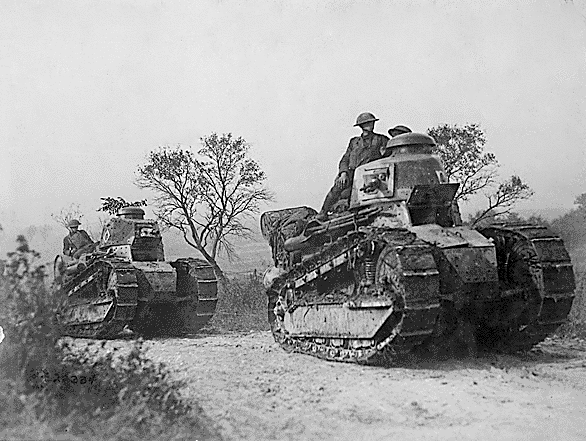
Tanks should support infantry. In fact, that’s why the tank was invented back in the First World War, as a means to destroy the machine guns and barbed wire that had decimated infantry attacking across No Man’s Land. But tanks, like battleships, are compromises between three requirements: firepower, protection, and mobility. You can favor one or perhaps two of those factors, but only at the cost of the third.
And the Army’s MPF light tank sacrifices protection, given that it weighs only 40 tons. Even if it mounts an Active Protection System to shoot down incoming anti-tank rockets, the tank would seem likely to have protection closer to an infantry fighting vehicle like the M2 Bradley than a main battle tank like the Abrams.
Then there is the troubled history of the light tank concept. The major powers all used light tanks in World War II. The tanks included the U.S. M3 and M5 Stuart, the German Panzerkampfwagen I, and the Soviet T-70. They had smaller cannons and lighter armor, but they were cheaper to build than medium and heavy tanks.
The problem was that in combat, they often faced heavier enemy tanks. During the disastrous Battle of Kasserine Pass in February 1943, the M5 found itself outmatched by heavier, better-armed, and better-armored German PzKpfw III and IV tanks and anti-tank guns. General Patton “issued a directive that light tanks were only to be used for reconnaissance and flank security in view of their weakness in dealing with current German tanks and anti-tank guns,” notes author Steven Zaloga in his book on the Stuart tank. Against heavy German Tiger and Panther tanks, the results could be imagined.
Related: Could the Panther tank once again be seen in Europe?
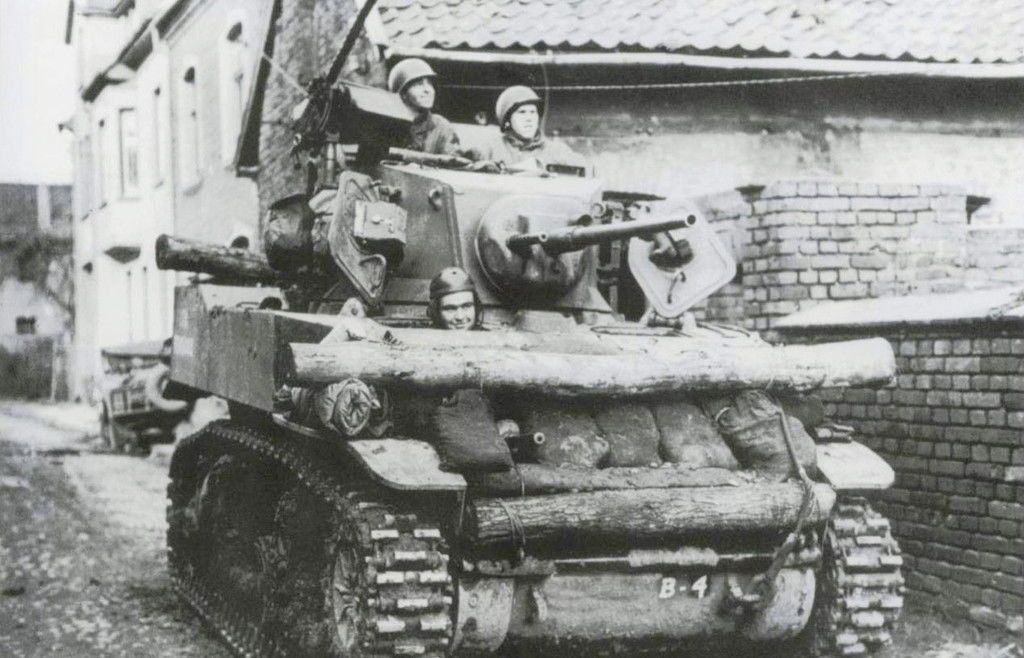
By 1944, the U.S. Army had concluded that the “poor armor protection of the M5A1 resulted in a higher rate of crew casualties than in medium tanks, with a medium tank crew having about a one-in-five chance of becoming a casualty when their tank was knocked out, compared to a one-in-three chance in light tanks,” according to Zaloga.
The Stuart was eventually replaced by the somewhat more successful M24 Chaffee, some of which were air-dropped to the doomed French garrison at Dien Bien Phu. After World War II came the infamous M551 Sheridan, an air-droppable light tank built out of aluminum and armed with a powerful 152-millimeter cannon that could fire Shillelagh infrared-guided anti-tank missile. Deployed to Vietnam in 1969, the recoil of the gun was so hard that it knocked out the vehicle’s electronics.
This doesn’t mean that the new Griffin II light tank will be unsuccessful. But U.S. tanks already face a variety of deadly threats, including new Chinese and Russian tanks such as Russia’s T-14 Armata, as well as anti-tank missiles, long-range artillery, and missile-armed drones that have proved devastating in the Russia-Ukraine war.
Some experts are already writing obituaries for the tank. That’s premature because there is no substitute for a vehicle that combines firepower, protection, and mobility. Yet, it does suggest that the modern battlefield is a heavy burden for a light tank.

Americans celebrate something truly astonishing every year. The Fourth of July marks one of the most amazing events not just in our history but in the history of the world. Today marks a public declaration in which some of the greatest men of the age pledged their lives, their fortunes and their sacred honor to the idea of a nation where liberty reigned. The men who wrote it, signed it, issued it and fought for it backed up their stance through force of arms against one of the greatest military powers of the age. Without the guns they issued, the guns they themselves carried and the guns brought to bear by their allies, their dreams would never have been realized. These are the arms with which we earned our independence.
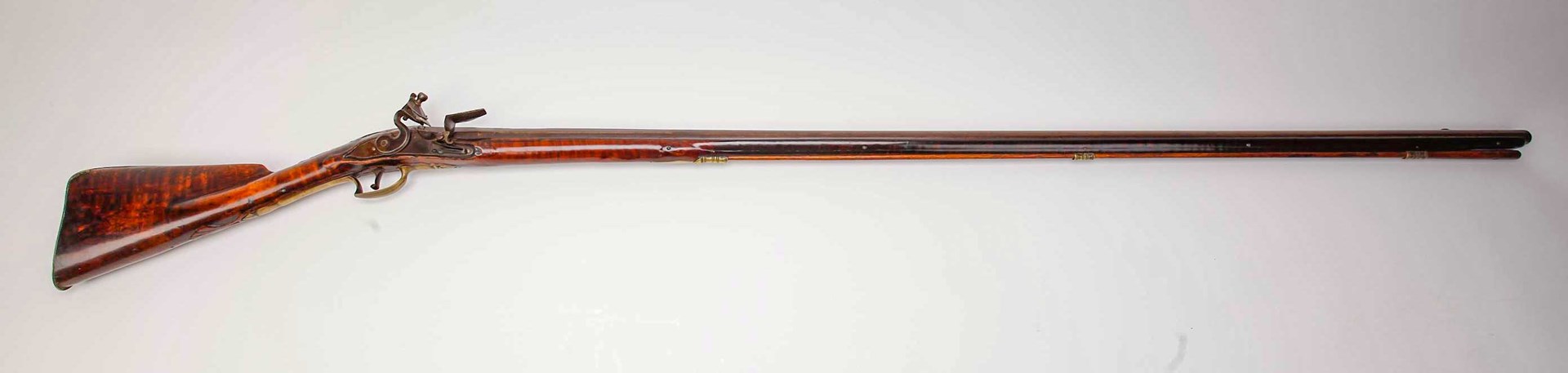
This Dutch/English flintlock fowler is typical of the kind of firearms militiamen used at the start of the American Revolution. Image courtesy of the NRA National Firearms Museum.
A Colonial Fowler At Lexington
On the brisk, clear morning of April 19, 1775, a group of Lexington militiamen under the command of Capt. John Parker left Buckman Tavern and gathered on their village green to face an advance guard of British regulars under the command of Maj. John Pitcairn. Despite being styled as “minutemen,” the group of men under Parker’s command was more of a town militia than a quick-reaction force. As six companies of British light infantry marched into the square, neither the officers nor the men on either side fathomed how the encounter would end. There’s no clear answer as to who fired the first shot, but it was fired, followed by snapping shots of musketry from the militia and ragged volleys fired from the King’s undisciplined troops.
Unlike the British infantry, who had a standardized small arm, the Americans who stood on the Lexington village green had a smattering of irregular guns. Common among them was the archetypal flintlock fowler. These long, smoothbore guns were the workhorse arms of the colonial settler. Loaded with shot, it could readily take game birds and waterfowl. Loaded with buckshot or a round ball, it could be called upon to take game at short distances. Despite the bloodshed, the Revolution would still take months to gain steam. The Declaration of Independence was still more than 14 months away, and as the war developed, standardized arms would start to show up in the ranks of American troops. However, the simple colonial fowler is the gun we used at the start of our fight for independence. Today, the smoothbore flintlock that Capt. Parker carried with him on the green that fateful morning now hangs in the Massachusetts State House.
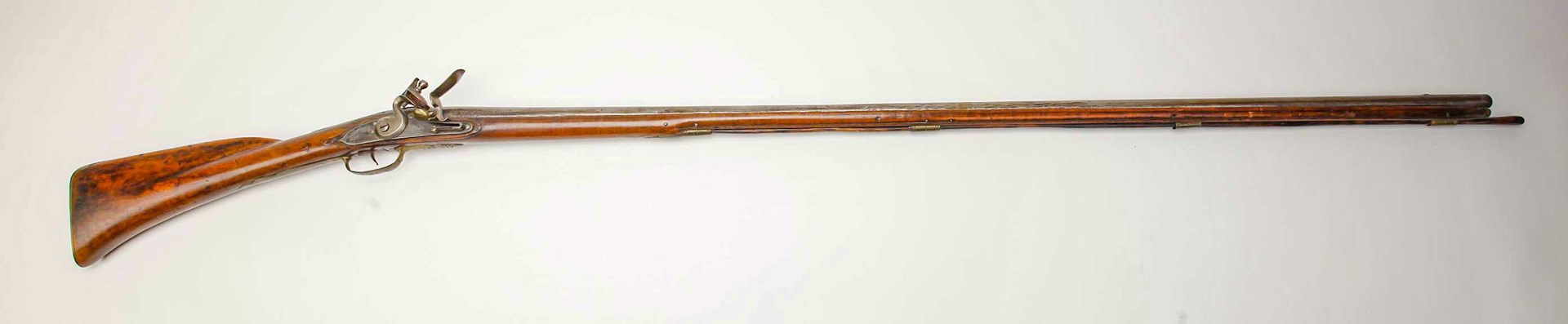
An example of a circa-1770s American longrifle. Image courtesy of the NRA National Firearms Museum.
An American Longrifle At Saratoga
The smoothbore fowler wasn’t the only privately owned arm that played a pivotal role in the American Revolution. Next to the flintlock fowler, the American longrifle was a unique tool in the colonial arsenal, and it was used to great effect during the war. Eighteenth-century warfare primarily employed the smoothbore flintlock musket in conjunction with the bayonet. Because of their smooth bores, muskets were cheaper and easier to manufacture. Combined with that, contemporary military doctrine in Europe prioritized speed of loading in order to fire massed volleys more quickly. The slow loading time of a rifle, combined with the training necessary to skillfully shoot such an arm, made it unfeasible for use in traditional pitched battles common up to the American Revolution. American marksmen, though, showed British troops exactly how well-trained and equipped shots could make a difference on the battlefield.
“The enemy had with their army great numbers of marksmen, armed with rifle-barrel pieces; these, during an engagement, hovered upon the flanks in small detachments, and were very expert in securing themselves, and in shifting their ground. In this action many placed themselves in high trees in the rear of their own line, and there was seldom a minute’s interval of smoke, in any part of our line without officers being taken off by a single shot,” wrote John Burgoyne after the Battle of Saratoga. One of these crack shots was Timothy Murphy, one of 500 handpicked riflemen who accompanied Daniel Morgan to upstate New York, where they would fight in the Battle of Saratoga. At one point during the fight, Murphy was directed to take out British Gen. Simon Fraser, who sat mounted on a horse 300 yards away. It took Murphy three shots, but he brought Fraser down and contributed to the American victory at Saratoga.
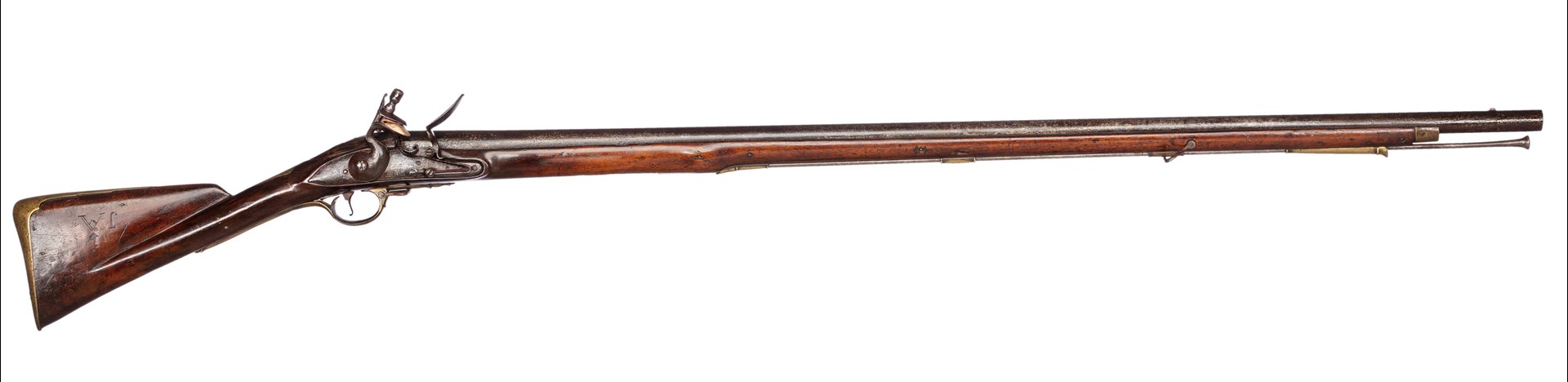
Image courtesy of the Institute of Military Technology.
The Brown Bess In British & American Ranks
At the outbreak of conflict in 1775, the British army was equipped with semi-standard Land Pattern muskets, better known by the soldier’s nickname, the “Brown Bess.” True standardization in the age before interchangeable parts was nearly impossible to obtain, but for the purposes of military logistics and drill, the Land Pattern muskets came close enough to the mark. Starting in the 1720s, the British military establishment codified a pattern of musket that would evolve for more than 100 years, starting with the Long Land Pattern and continuing into the Short Land Pattern by the start of the American Revolution.
Despite its British origins, the Brown Bess was not exclusively employed by legions of lobsterbacks as they wrestled American armies for control of the colonies. At the beginnings of the conflict, colonial Committees of Safety contracted with gunmakers to supply their burgeoning militias with domestically produced arms, not because the colonists lacked personal arms but because standardized arms were necessary for logistics. Many of these Committee of Safety muskets were patterned after the Bess. True, too, is the fact that many former British muskets that served the Crown were turned against it during the Revolution. One particular example of a 1756 Long Land Pattern musket in the Institute of Military Technology displays the kind of arms deployed for and against independence. While it’s impossible to know who carried this particular Bess or where they fought, it’s just one of thousands of Brown Bess muskets that appeared on both sides of the battlefield.
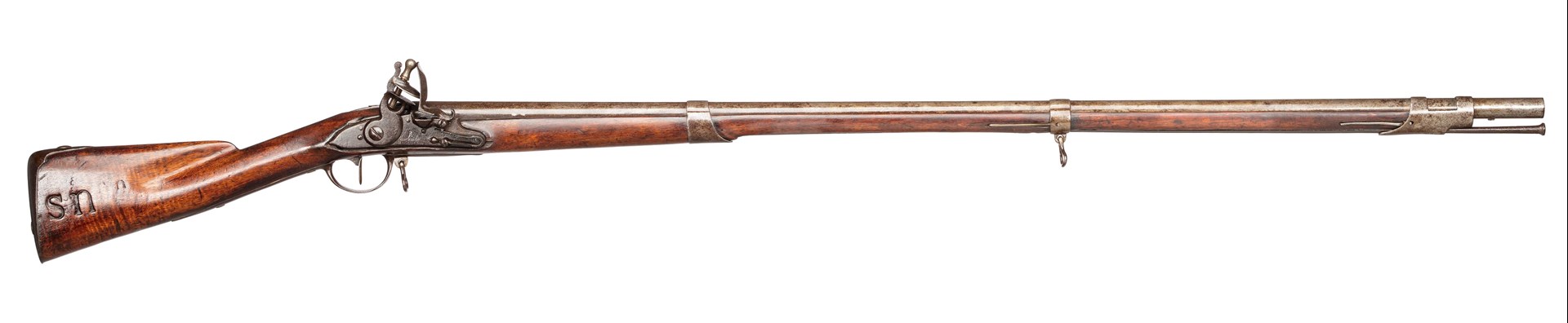
Image courtesy of the Institute of Military Technology.
A U.S.-Marked Charleville From Virginia
Despite the worthiness of the U.S. cause, the fledgling United States was not going to win a protracted war with the largest military power on Earth without some outside help. Following the American victory at Saratoga in 1777, King Louis XVI began the talks that led to a formalized Franco-American alliance and enabled French support to flow to the colonies. Much of this support came in the guise of arms and ammunition, notably in the form of Charleville muskets from French state arsenals. Like the Brown Bess, development of the Charleville spanned much of the 18th century and saw service into the 19th century. Continental army troops began fighting with .69-cal. Model 1763 and 1766 Charleville muskets, and many remained in U.S. service for decades after the American Revolution, featuring stamps such as “U.S. or “U.STATES” embossed into their locks, stocks and barrels.
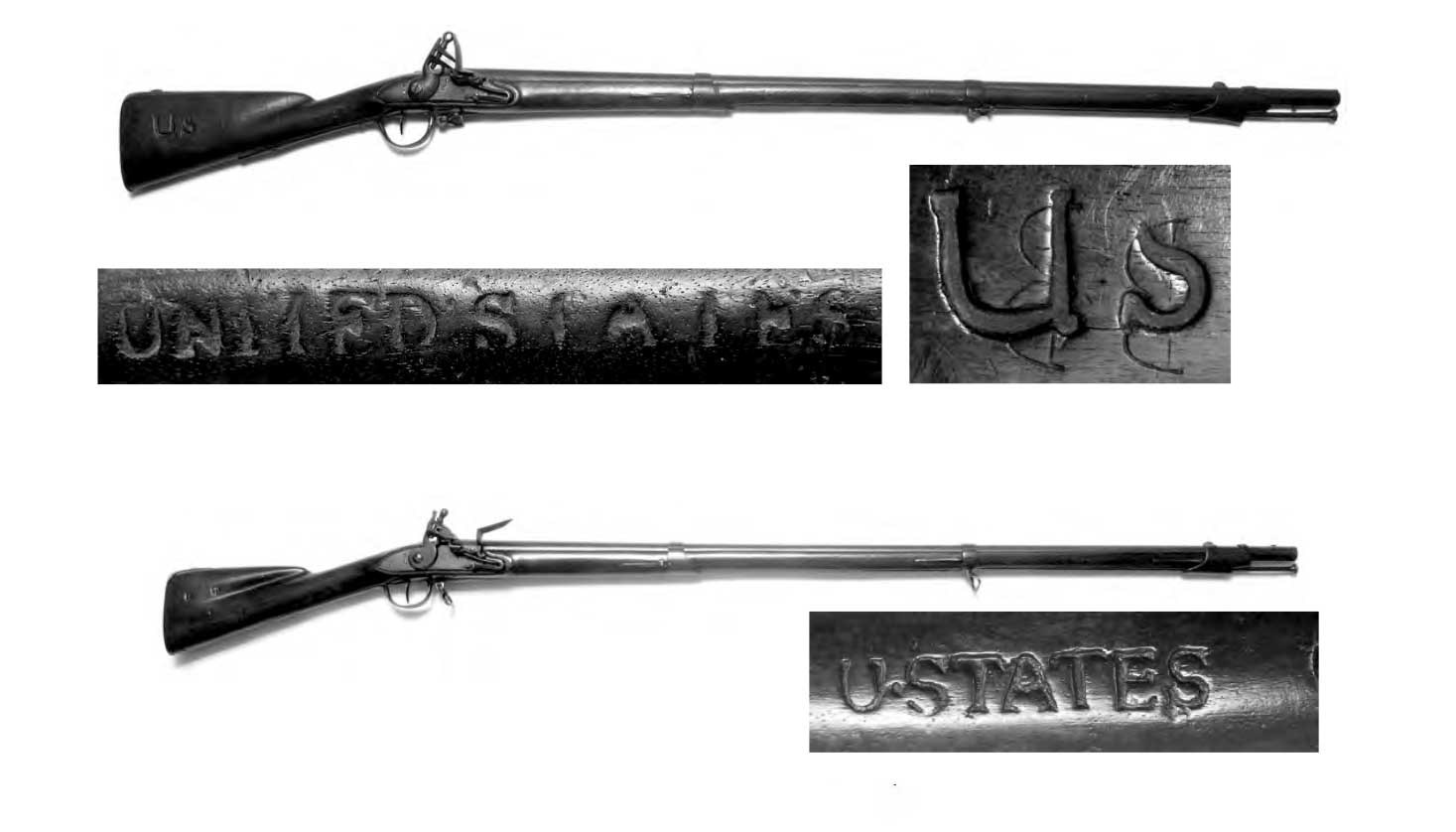
Image courtesy of the American Society of Arms Collectors.
The stamps hearken back to one of Gen. George Washington’s earliest orders, which mandated that muskets in Continental army service be marked “United States,” and at least one documented example highlighted by the American Society of Arms Collectors shows a U.S.-surcharged Charleville musket with faint military markings similar to those found on Virginia’s Rapahannock Forge guns. While the firearm’s provenance is unknown, it’s possible that the musket may be connected to a Virginia regiment and may have even been carried by one of Washington’s Life Guards. Possibly no better homage exists to the battle-tested Charleville than the fact that the first domestically produced martial musket from a U.S. armory, the Model 1795 Springfield, is nearly identical to the French-supplied Charleville flintlocks that armed Continental soldiers during the Revolution.
 The Lafayette/Washington Pistols
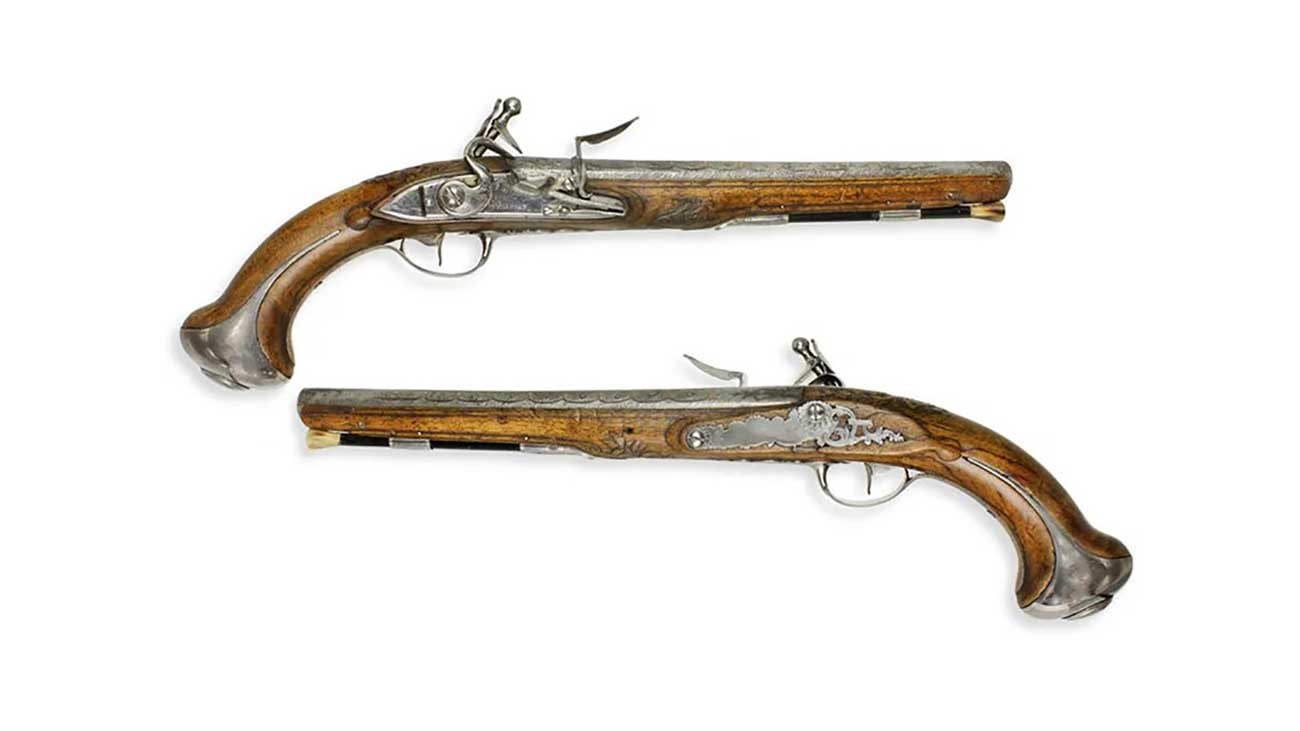
As well as muskets, rifles, fowling pieces and other small arms, pistols served a role in the Revolution as well, arming couriers, officers and the Continental Dragoons. However, possibly one of the most poignant sets of flintlock pistols to have served in the American Revolution rode with the man of the hour, Gen. George Washington. Known today as the Lafayette/Washington pistols, they are true American treasures, which were gifted to Washington by Gilbert du Motier, Marquis de Lafayette, one of the greatest advocates for American Independence and a critical player in obtaining foreign aid for the Continental army. Washington treasured Lafayette’s friendship and considered him an adopted son. The pistols reflect the appreciation and respect Lafayette held for Washington, as they’re some of the most exquisite arms surviving from the Revolution.
The pair of pistols is mounted in polished steel and stocked in beautiful European walnut, complete with rococo styling and gold and silver inlays. They measure 17.5” long and feature smoothbore barrels of approximately .57 caliber. The maker’s name, Walster, gives some insight into the origins of the guns, as Jacob Walster was a French gunsmith in the city of Saarbrücken, now in modern-day Germany, and made the guns sometime between 1775 and 1777. Washington is reputed to have carried the guns at Valley Forge, Monmouth, Yorktown and later in the Whiskey Rebellion during his presidency. Throughout their history, they’ve been owned by members of the Washington clan, the Marquis de Lafayette’s family and President Andrew Jackson. During Jackson’s ownership of the pistols in 1824, Lafayette was asked if he recognized the guns, whereupon he smiled and said that he did, having gifted them to his “paternal friend” George Washington in 1778. The pistols were purchased by a Pennsylvania foundation in 2002 for $1,986,000 and today, they reside in the Washington Collection at the Fort Ligonier Museum in Ligonier, Pa.
From the fowling pieces carried by militiamen on the Lexington village green to a finely finished pair of flintlocks tying together two of the greatest figures of the Revolution, the American story couldn’t have been written without the small arms that made it possible. These freedom fighters suffered through vicious campaigns and brutal winter quarters and faced hardships that are nearly impossible to imagine in modern times. Many of them remain unknown, unsung heroes who lie in unmarked graves on the battlefields where they fell. It is worth noting that arms carried by individuals on the wild American frontier weren’t that different from the arms resting on the shoulders of redcoats who came to subjugate them. In many cases, they were better and their users more practiced in the art of shooting. Ultimately, gaining our independence didn’t rely on skill or technological superiority. It took a dedication toward the ultimate ends of humanity. It was a fight to defend the self-evident truth that all men are created equal, that they are endowed by their Creator with certain unalienable Rights, that among these are Life, Liberty and the pursuit of Happiness.








By Lee Williams
SAF Investigative Journalism Project
(The Second Amendment Foundation’s Investigative Journalism Project wouldn’t be possible without you. Click here to make a tax-deductible donation to support pro-gun stories like this.)
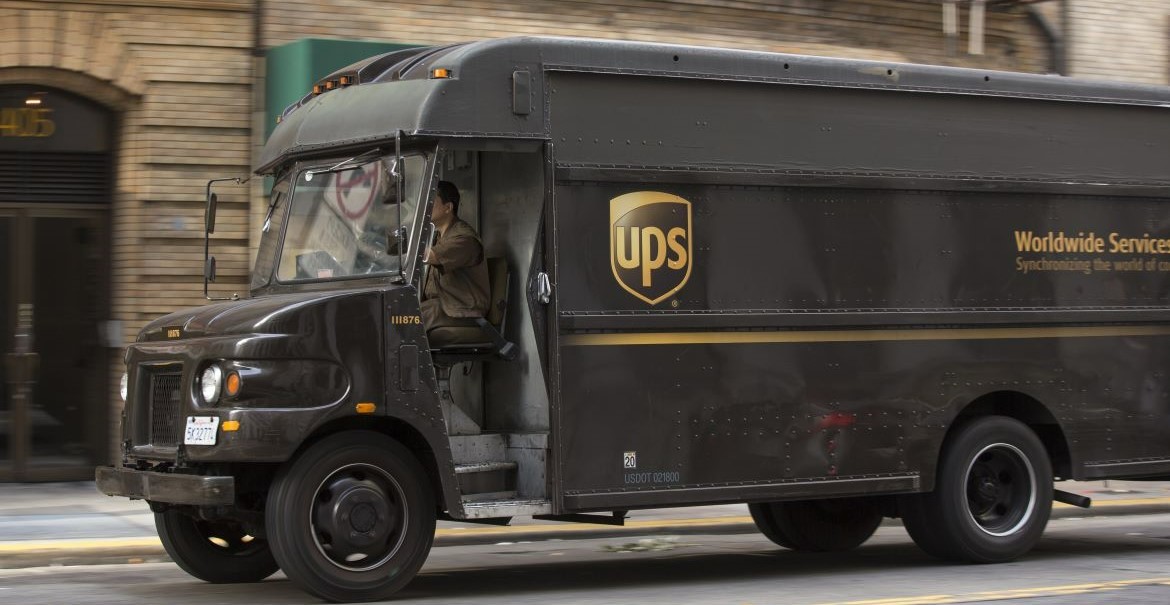
UPDATED, 7/1/22 @ 1:40 p.m. PDT — United Parcel Service is terminating the accounts of gun dealers across the country. Any packages currently in the UPS system may be “seized and destroyed.”
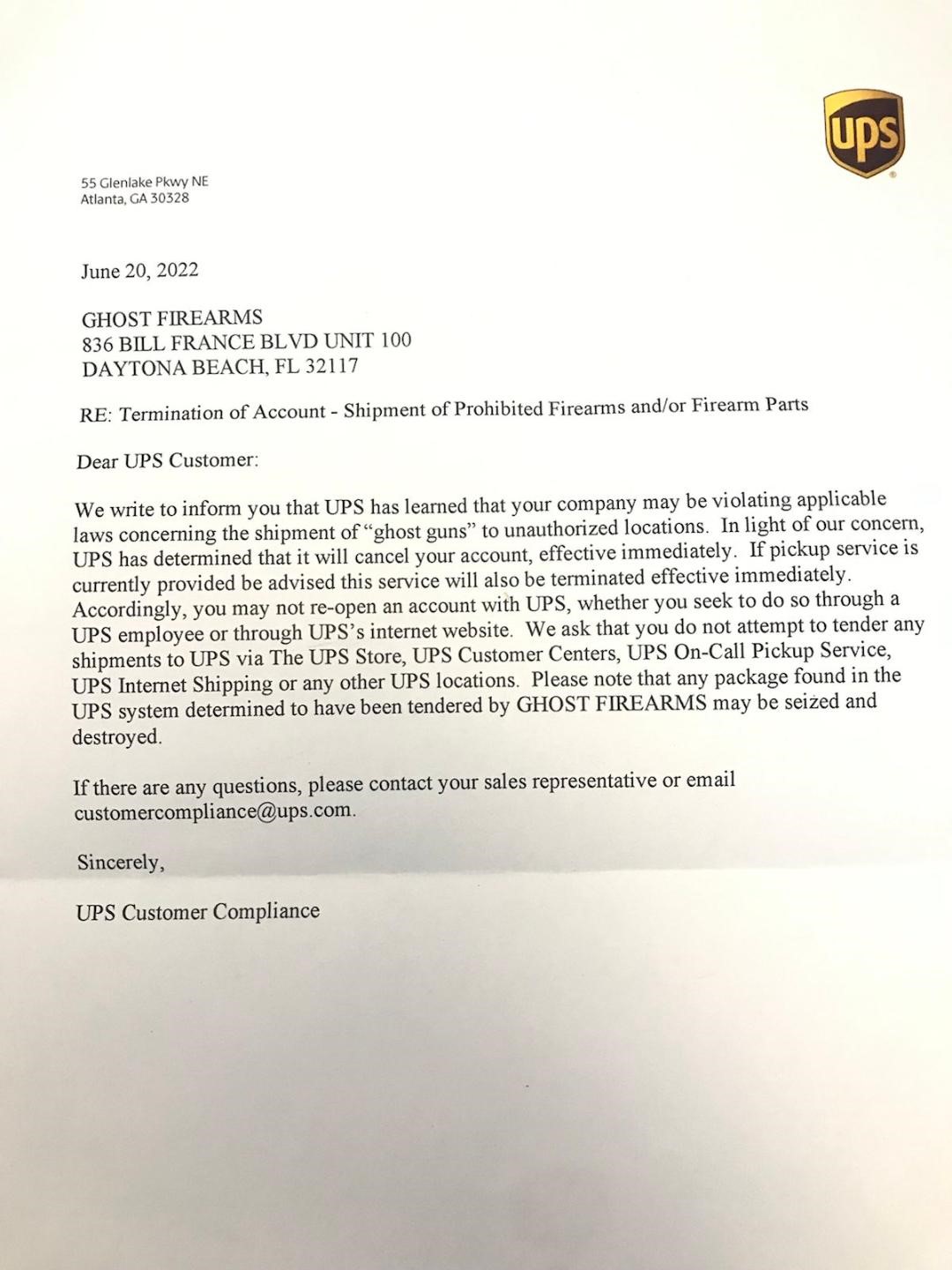
In a letter sent to one Florida gun dealer, Ghost Firearms, UPS said they were terminating the account because they “may be violating” laws concerning homemade firearm parts.
“We write to inform you that UPS has learned that your company may be violating applicable laws concerning the shipment of “ghost guns” to unauthorized locations,” the letter states. “In light of our concern, UPS has determined that it will cancel your account, effective immediately.
Ghost’s owner, Joe Zatar was told all scheduled pickups will be cancelled, and that he cannot reopen another UPS account or ship anything from a UPS store or website.
He is most concerned about the packages already in the UPS system, which he may have already lost.
“Please note that any package found in the UPS system determined to have been tendered by GHOST FIREARMS may be seized and destroyed,” the letter states.
“I just shipped more than $30,000 worth of products,” he said.
Zatar immediately called his UPS sales rep, who said he had no idea the account was terminated.
Ghost Firearms sells uppers, lowers, handguards and OEM parts for a number of manufacturers. They also sell 80% receivers.
“We do not ship to states where they’re not allowed,” Zatar said. “We are in total compliance. We had ATF in here just two weeks ago, and they told us we were completely legal.”
Initially, Retail giant Brownells told their customers in a Facebook post Friday that they too were terminated by UPS.
Brownells did not specify in their post the reason why UPS terminated their account, and the post was taken down several hours later.
UPS’ Media Relations personnel did not return calls or emails seeking comment for this story.
The Medal of Honor is the highest award for military valor bestowed by the United States of America, and has earned a rightful place in the popular culture of our nation. In a country where there is often a significant gap between the military community and civilian populace, the Medal of Honor reaches beyond the cultural gatekeeping of military service to the nation as a whole: Whether you have an affiliation with the United States military or not, we all recognize the award as representative of some of America’s most important ideals: bravery, courage, sacrifice, and integrity.
But beyond the basic premise of the award, many may not know much about the history of America’s greatest military honor.

James Grimes, a Whig and then Republican Senator our of Iowa, held office during America’s Civil War and beyond, working first to prevent the war and then as a part of reconstruction thereafter. In December of 1861, with the Civil War raging, Grimes submitted a bill authorizing the issuance of “medals of honor” to be presented to enlisted Seamen and Marines who “distinguish themselves by gallantry in action and other seamanlike qualities” during the conflict.
Today’s Medals of Honor have seen significant changes since Senator Grimes first proposed them, both aesthetic and legislative, but the intent behind the award remains unchanged. Since the very inception of this nation, service members have fought to defend their nation’s populace, and the freedom they hold so dear. This service warrants recognition in itself, but among these warriors are those who go even further, who risk greatly on behalf of others, who make sacrifices for their brothers and sisters in uniform, for their nation, and for us all. These pivotal characters deserve a higher distinction than more pervasive awards for valor. These heroes deserve the Medal of Honor.

On February 13, 1861, Bernard J. D. Irwin (later, Brigadier General Irwin) was the first person to earn a Medal of Honor in battle, though the award itself would not be proposed for nearly another year.
Irwin and 14 of his men pursued a group of Native Americans who had taken American troops hostage. Irwin and his men caught up with the group, and rather than immediately engaging, he quickly and quietly distributed his troops around the area, allowing him to act as though he had a far larger force with him than it seemed.
The ruse worked, and the Native Americans fled, leaving Irwin and his team to recover most of the hostages. They then pursued the captors until successfully recovering a kidnapped boy, the last hostage. Irwin wouldn’t be presented with the Medal of Honor for his heroism until more than three decades later.
With Medals of Honor established for the Navy and Marines, and another for the Army by 1863, it wasn’t until March of that year that Army officers became eligible for the award. Officers in the Navy and Marine Corps wouldn’t become eligible for nearly fifty more years.
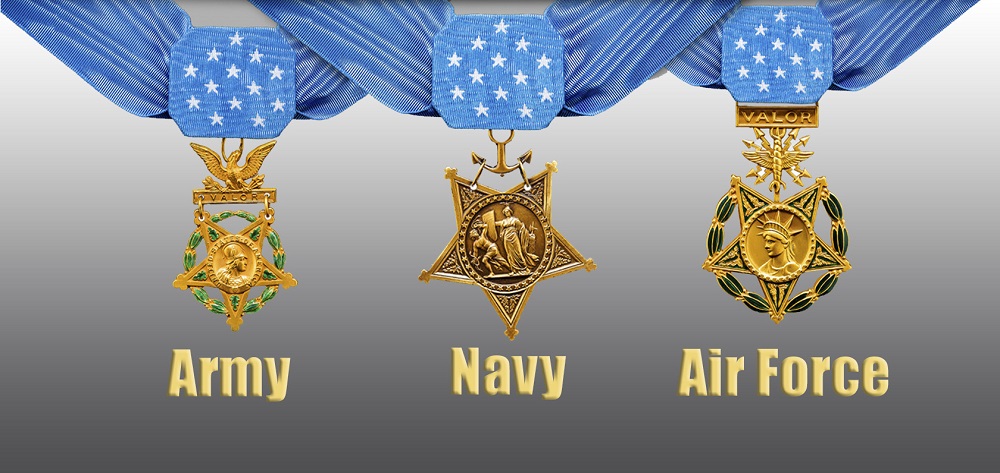
The first Medals of Honor, as proposed by Senator Grimes, were specifically for enlisted Sailors and Marines in 1861. The Army followed suit, establishing their own Medal of Honor in 1862. The U.S. Air Force would not have a Medal fo Honor for nearly another century, first introduced in 1965.
Today, there is one Medal of Honor for the Army, one for the Air Force, and one for the Navy, Marines, and Coast Guard.
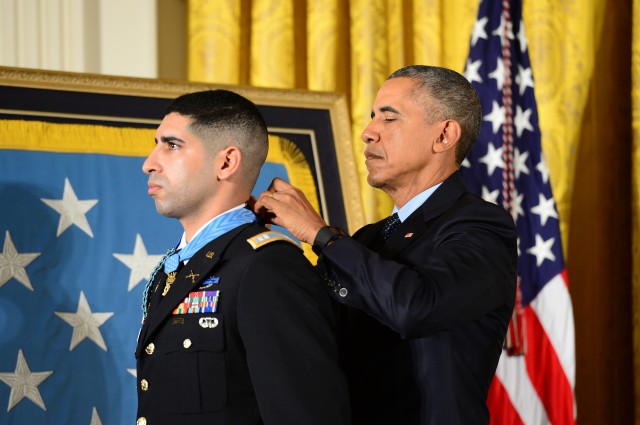
The short answer is, performing above and beyond the call of duty in the face of danger tends to be the sort of action that leads to receiving a Medal of Honor. The formal language established by Congress in 1963 says it can be awarded for heroism:
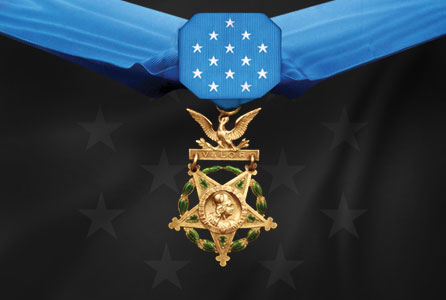
New designs and regulations pertaining to the Medal of Honor continued to find their way into the books, prompting the U.S. Army to revisit each of the Medals of Honor they had awarded in the past. An Army board was convened, tasked with pouring over the reports and associated documents relating to each Medal of Honor awarded to Soldiers in their branch.
By 1917, the audit was complete, and the U.S. Army had removed 911 Medals of Honor from Soldier’s service records, saying that they had been “erroneously bestowed.”
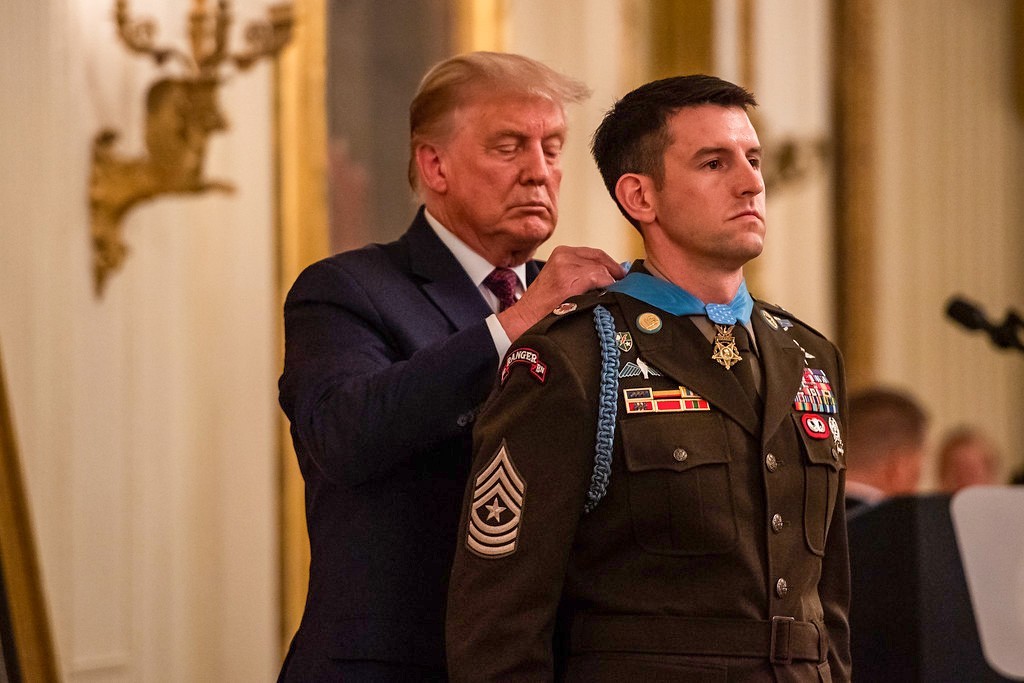
There are a number of military and civilian benefits associated with being awarded the Medal of Honor, and at least two come in the form of cold hard cash.
Living Medal of Honor recipients received a monthly pension of $1,406.73, as well as a supplemental clothing allowance of $841.36 once a year. Medal of Honor recipients also see a 10% increase in their retirement pay.

Rules and regulations pertaining to the Medal of Honor continued to mature over the decades. By 2013, Congress voted on new rules for how and when the award can be bestowed.
Today, a Medal of Honor recipient must be recommended for the award within just three years of the combat action prompting the recommendation, and the award must be presented within five. It’s important to note, however, that exceptions can be made through legislation, as may soon be the case with former U.S. Army Soldier Alwyn Cashe.

May God Bless this Great Republic of ours & all of its People!
Grumpy The Grateful to be an American!