Categories
Send it!

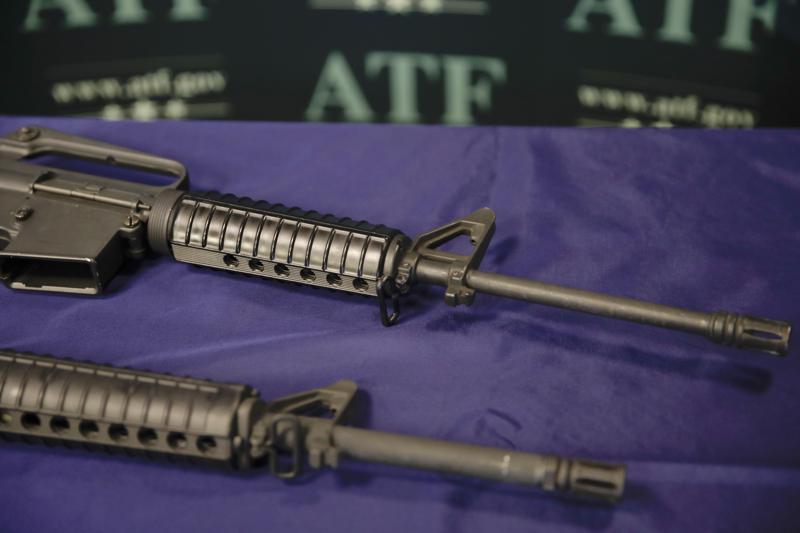
SACRAMENTO, Calif. (AP) — Gun makers and dealers in California will be required to block firearms sales to anyone they have “reasonable cause to believe is at substantial risk” of using a gun illegally or of harming themselves or others, under a new law that Gov. Gavin Newsom announced Tuesday that he had signed.
It’s a subjective requirement that goes farther than current background checks or prohibitions on selling guns to people prohibited from owning them.
The regulation is part of the new law creating a good conduct code for gun makers and dealers that also allows anyone who suffers harm from violations to sue.
The bill was one of more than a dozen adding to California’s already strict gun regulations that were sent to Newsom, a Democrat, by state lawmakers before they left for their monthlong summer recess.
The National Rifle Association said the requirements are vague and represent an attempt to hold gun dealers and makers liable for the actions of others. The new law, the group said, “seeks to frustrate law-abiding gun owners” with the goal of driving gun makers and dealers “out of business with frivolous litigation.”
The state’s firearm industry standard of conduct, starting in July 2023, will require those making, importing or selling guns to “take reasonable precautions” to make sure the weapons don’t fall into the wrong hands through sales or thefts.
That includes having “reasonable controls” to prevent sales to arms traffickers, straw buyers, those prohibited from owning guns, and anyone deemed to be at “substantial risk” of using the gun improperly.
The law is patterned after a New York measure that took effect last year to skirt a 2005 federal law blocking most liability lawsuits against gun-makers or dealers.
The New York measure declared such violations a “public nuisance,” taking advantage of a federal exemption that allows lawsuits when gun makers break state or local laws regulating the sale and marketing of firearms.
Delaware and New Jersey just enacted similar laws, and all contain provisions requiring firearms dealers to act responsibly, said Tanya Schardt, senior counsel and director of state and federal policy at the Brady gun control advocacy organization that sought the laws.
“There may be indicators or things that you see beyond just passing the background check that indicate to the dealer that they shouldn’t sell the gun,” she said.
“I would say the California law is more specific,” Schardt said. “But substantively I think it creates the same set of requirements, the same standards with regards to engaging in safe business practices.”
“It’s not asking someone to be psychic,” she added, but to take reasonable precautions in the same way that an automobile dealer could be liable for selling to a customer who is clearly drunk, for instance.
“It’s not creating liability, it’s not expanding liability beyond what’s reasonable … which is really the same standard that every other industry is measured against,” she said.
A federal judge in May rejected a challenge to the New York law by gun manufacturers and sellers.
Sam Paredes, executive director of Gun Owners of California, expects the California law will be challenged on the argument that it violates the federal law.
“The ability to be sued for doing something bad is already there,” he said, noting that gun makers and dealers are liable for any illegal activity. “This is the anti-gun side’s way of looking for a deep pocket.”
The law will allow the California attorney general, city and county attorneys and victims of gun code of conduct violations to sue gun retailers or manufacturers for civil damages.
“Nearly every industry is held liable when their products case harm or injury. All except one — the gun industry,” Newsom said in a video Tuesday announcing that he had signed the bill on Monday.
With the new law, he said, “gun makers will finally be held to account for their role in this crisis.”
California’s law allows gun makers and dealers to also be sued for alleged violations of other laws, including false advertising, unfair competition or deceptive acts or practices.
“Hitting their bottom line may finally compel them to step up to reduce gun violence by preventing illegal sales and theft,” said the bill’s author, Democratic Assemblyman Phil Ting.
The law will also prohibit manufacturers and retailers from making, importing or selling guns or related products that are “abnormally dangerous and likely to create an unreasonable risk of harm.”
That could include kits for building untraceable “ ghost guns,” “ bump stocks ” that increase the rate of fire for semi-automatic weapons, or “ bullet button ” assault weapons that allow for rapid reloading.

Unlike a traditional firearm, it’s difficult to recoup all of your money from a suppressor should you ever decide to sell it. If you sell, you immediately lose the $200 that you paid in the stamp tax to the ATF. It also takes a really long time to get through the purchasing process for a silencer should you choose one incorrectly.

Before you go lay your hard-earned money down for a suppressor, you should spend some time thinking about how you’ll use your suppressor. The way you use your suppressor should determine the features you’ll shop for in a suppressor. The features you decide are most important should be the determining factors in what suppressor you purchase.
What are the features that you should consider when buying a suppressor?
Caliber – Diameter of bullet that will fit through the baffles and endcap or that the suppressor is rated up to. Caliber is an important factor because it ultimately determines what caliber or bullet diameter size you can fire through the suppressor. If you buy a 9mm pistol suppressor, it won’t work on a 45 ACP. However, if you buy a 45 ACP pistol suppressor it will work on a 9mm, 40 S&W, 30 Super Carry, and any other caliber with a bullet diameter less than .454 caliber.

However, the 45 ACP suppressor will generally be larger, heavier, and longer, and it won’t be as quiet on smaller calibers like 9mm when compared to a dedicated 9mm suppressor.

For rifles, the same logic applies. If you buy a suppressor rated for 300 Win Mag, you can usually use it on your AR15 in 223/556, your 6.5 Creedmoor, your 308 Win, 7mm Mag, etc.

If you buy a dedicated 223/556 suppressor, you can’t use it on anything bigger. The dedicated 223/556 suppressor will likely be shorter and lighter and will probably be quieter on a 223/556 platform than a 300 Win Mag suppressor on a 223.

Size – It can matter. We’re talking about length and diameter. If it’s too long it may be unwieldy, won’t fit in a case, scabbard, or safe. If the diameter is too thick, it could obscure sight pictures, flashlights/lasers, may not fit in a holster or under the handguard, etc.
Suppressors Delivered to Your Door
One call, does it all. Select your suppressor, create your trust, fit your gun, deliver to your doorstep. Silencer Central – Simple, Smart, Easy! Call 888-781-8778 or visit https://www.silencercentral.com/about-us/
Weight – Literally how much the suppressor weighs. It’s on the very end of your barrel and it can make a big difference in how the rifle feels. You’ll see a greater zero shift between suppressed and unsuppressed with a heavier suppressor. Heavy suppressors can make guns feel muzzle heavy and not balanced when slung up on your shoulder.

Full Auto Rated – If you are going to put it on a full-auto firearm, don’t buy a suppressor that isn’t full-auto rated. If you are planning on doing mag dumps with semi-auto, get a full auto-rated suppressor.
What is it made out of? – Suppressors are made from aluminum, titanium, stainless steel, 3D printed metals, plastics, carbon fiber, Inconel, and other metals. Those all have positives and negatives. Generally, dedicated pistol suppressors are aluminum and lighter than rifle suppressors. Generally, you can’t fire rifle calibers or rounds through pistol-specific suppressors due to the rifle’s excessive pressure that they’re not designed to handle. There can be exceptions but you should do your homework.
Nielsen device – Sometimes called a booster. These are only for pistols. Generally, rifle-specific suppressors don’t work on pistols because most pistols require a Nielsen device or a booster to increase recoil so the pistol will function. To work on most pistols, it should come with a booster or have the ability to add it.

Quick detach – This is an option that many rifle suppressors come with. It usually requires you to buy a specific muzzle brake or flash hider that attaches to the suppressor.


Decibel reduction – Some manufacturers will publish dB numbers. They can give you a rough way to compare. The problem is that ammo, caliber, barrel length, action type, atmosphere, and other factors can all affect the published decibel levels. 140 dB or less at the shooter’s ear is considered hearing safe. The general rule is that every 3 decibels is a doubling or 100% greater sound intensity. An unsuppressed .308 at the muzzle is generally between 160-170 dB. Suppressed, anything below 140 is safe.
Minimum barrel length ratings – Many manufacturers will tell you in their specs that the suppressor is rated for up to a certain caliber, and they’ll include the minimum barrel length. If you go below that barrel length it could void your warranty or cause unsafe conditions.
Backpressure – Law enforcement and the military are all over this right now. Some suppressors create a lot of backpressure in the firearm. It’s not a big deal on a bolt action but on a semi-auto, it matters. Backpressure will cause toxic gases and small particles to blow back in the shooter’s eyes and face. Excessive back pressure can even cause malfunctions. Some backpressure is needed for subsonic calibers like 300 Blackout to function in semiautos.
Warranty – This is how the company will handle a problem. Don’t buy from a company that might not be around in two years. Should you have a problem like a baffle strike, you’ll need to send your suppressor to the manufacturer to have them fix it. Know ahead of time that you’ll be happy with that process and the turnaround time.
Ability to clean for rimfire – If you are going to be using it on a rimfire you should buy a dedicated rimfire suppressor. As a general rule, you should never shoot rimfire through a centerfire suppressor. They will fill up with lead and carbon and you can’t ever get it out. Dedicated rimfire suppressors are designed so that you can get them apart and clean them even when they’re full of lead and carbon.

Price & Availability – Figure out your budget and then add $200 for the ATF tax. Usually, titanium suppressors cost substantially more than stainless or aluminum suppressors and may not be worth the extra money if you’re only carrying the gun from the truck to the shooting line. Availability is another issue. If the manufacturer doesn’t have it in stock, you can’t buy it. There are some manufacturers that are back-ordered a year on certain models of suppressors. I wouldn’t wait. Find something else with similar features.
Multi-caliber Suppressors – There is a new breed of suppressors that will work on almost any centerfire firearm. Silencer Central’s new Banish 46 will work on both pistols and rifles up to 46 caliber. So it will handle 338 Lapua, 45-70, and work all the way down to 223/556. It will also work on all pistol calibers up to 46 and it comes with a booster that can be configured so that handguns will function when it’s attached. It’s probably not going to be the best at all of those calibers, but it should be hearing safe on any of them. There are negatives like weight and size (it’s kind of big), but it’s possible to own one suppressor that could do everything.

Hunting – If I were purchasing a suppressor for hunting, I would consider caliber, size, and weight above all else. For hunting, I personally want the shortest, lightest suppressor I can buy. I’m going to carry it for hundreds of miles and only shoot it once or twice a season. I want it hearing safe but being the quietest suppressor on the market isn’t at all important to me. I personally would only consider suppressors that weigh 13 oz or less for hunting and certainly no longer than 6 inches. Lighter and shorter would be better. The BANISH 30 in its smaller configuration is certainly a viable option for hunting and it would work pretty well for precision stuff in the longer config. If you were sitting in a tree stand then size and weight may not matter at all.


Range Suppressor – If I were going to put a suppressor on a gun that only ever got carried from the safe to the truck to the range, I wouldn’t care how big or how heavy it was at all. I would want it to be less expensive, reduce sound at a maximum level, and I don’t care if it weighs 18 ounces and is 9 inches long.
Shotgun suppressor – If you want to suppress a shotgun then you need to buy a dedicated shotgun suppressor.
Hidden Fees – Some suppressors don’t include the adapters you need to attach to your firearm. Those will cost you extra. Some companies don’t include muzzle brakes or flash hiders for their QD suppressors and will charge you another $125 for those items. Many of them do however include these items in the price of the suppressor. Check on this before buying. I was pleasantly surprised to see that Odin includes a muzzle device with the suppressor when you buy their QD.
Conclusion – As you can see, there is a lot to think about before purchasing your first suppressor. Almost all the features you consider are somehow a trade-off for something else. Generally speaking, the quietest suppressors are larger and have more volume inside them. That’s a tradeoff for length and weight. The shortest, lightest suppressors aren’t usually as quiet. The ones that do everything pretty well are usually more expensive. Do your homework!
 Why the Second Amendment Applies Especially to Travelers
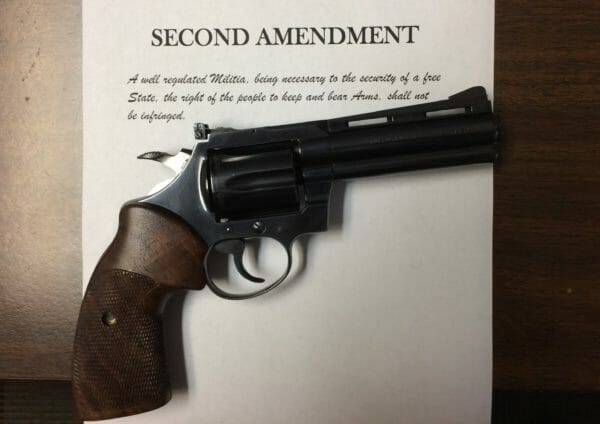
U.S.A. –-(AmmoLand.com)-– The United States Supreme Court has defended and restored the bear half of the right to keep and bear arms, in the recent Bruen decision.
Much work remains to be done. It is clear that the people have a right to bear arms outside the home. One of the major purposes is for the defense of self and others.
An area left undefined in Bruen is the right to bear arms in defense of self and others while traveling, particularly while traveling across state lines.
There was no prohibition on carrying arms at the time of ratification in 1791. Carrying arms for defense, while traveling, was common and accepted. Even the strictest colonial restrictions on the bearing of arms, the East New Jersey law, enacted in 1686, had an exception for people who were traveling. The colonial law, which was in effect for about six years, was cited by both sides in the Bruen decision: From P. 6 of amicus curiae briefs on Bruen.
In 1686, East New Jersey enacted a law providing that no person “shall presume privately to wear any pocket pistol, skeines, stilettoes, daggers or dirks, or other unusual or unlawful weapons,” and that “no planter shall ride or go armed with sword, pistol or dagger” except certain officials and “strangers, travelling upon their lawful occasions through this Province, behaving themselves peaceably.”3
An exception noted in the earliest and most extreme of the colonial “bear arms” laws should be given some weight.
As noted by an English traveler in the early Republic, traveling armed was common. From Isaac Weld, TRAVELS THROUGH THE STATES OF NORTH AMERICA 233-34 (2d ed. 1799) (1796, on the roads from Kentucky/Tennessee to and from Philadelphia/ Baltimore:
“the people all travel on horseback, with pistols and swords.”
There were, effectively, no other attempts to infringe on the right to bear arms until Kentucky enacted a law in 1813. The law was challenged in court, as a man was charged with carrying a sword cane. The law against carrying concealed weapons was struck down as unconstitutional under the Kentucky state constitution in 1822. Again, even this extreme, early law, relatively close to the ratification of the Bill of Rights in 1791, contained an exception for people who were traveling.
In the first Kentucky case outlawing concealed carry, there was an exception for carrying concealed while traveling. P. 25:
The first such law appears to have been enacted in Kentucky in 1813; it imposed a fine on anyone “who shall hereafter wear a pocket pistol, dirk, large knife, or sword in a cane, concealed as a weapon, unless when travelling on a journey.” Similar laws were en-acted in seven additional States or territories by 1860.
England was more restrictive than the United States, but even in England it was clear carrying weapons for self-defense while traveling, was common and accepted as a part of the right to keep and bear arms. From an 1870 English case from Kopel p. 15-16
(“A man has a clear right to protect himself when he is going singly or in a small party upon the road where he is travelling or going for the ordinary purposes of business” but not to carry arms in a manner “calculated to produce terror and alarm.”); Gun License Act, Act 33 & 34 Vict. c. 57 (1870) (10-shilling annual license from the post office to carry a firearm; postal clerks had no discretion to refuse a fee-paying applicant).
There was an upheaval in the law after the Civil War. Justice Thomas, in Bruen, says we should take into consideration what was considered to be the right to keep and bear arms in 1868 when the Fourteenth Amendment was ratified.
When the amendment was ratified, Texas had a reconstruction government that had imposed a new Constitution on the state. The new constitution had gutted the protection of the right to keep and bear arms which existed throughout Texas history to that point. The Fourteenth Amendment was clearly meant to insure freed slaves had the right to keep and bear arms.
In 1871, the Reconstruction government felt compelled to keep the right to bear arms while traveling:
..provided, that this section shall not be so contrued as to prohibit any person from keeping or bearing arms on his or her own premises, or at his or her own place of business, nor to prohibit sheriffs or other revenue officers, and other civil officers, from keeping or bearing arms while engaged in the discharge of their official duties, nor to prohibit persons traveling in the State from keeping or carrying arms with their baggage…
After the Fourteenth Amendment was passed, numerous other states passed restrictions on the carry of weapons. These restrictions primarily had the effect of disarming freed slaves and other disfavored groups. But even these laws made exceptions for the right to bear arms while traveling.
A Tennessee law made clear an exemption for traveling, in 1878, in State v. Callicutt, 1878. p. 579
The law at issue had made it “a misdemeanor to sell, give, or loan a minor a pistol, or other dangerous weapon, except a gun for hunting, or weapon for defense in traveling.”10
Missouri enacted a law on carrying concealed weapons in 1879. Even that late restriction on bearing arms had an exemption for people who were traveling:
Prior to 1909, the statutory exemption applied “to persons moving or traveling peaceably through this state.” § 1275, RSMo 1879.
The traveling exemption in Missouri was made more restrictive in 1909 to change the traveling exception to:
“is traveling in a continuous journey peaceably through this state”
1909 is much later in the game. It is clear carrying weapons, even concealed, was common and considered a right, before the statute in 1879 was enacted.
Arkansas law also made an exception for travelers, in 1881:
Provided, further, That nothing in this act be so construed as to prohibit any person from carrying any weapon when upon a journey, or upon his own premises.
Mississippi law had an exemption while traveling, Section 1027 as of 1888, although the exemption appears to be in place by 1880:
Prohibition on possession of concealed and prohibited weapons does not apply while traveling, or setting out on a journey:
(b) That he was traveling and was not a tramp, or was setting out on a journey and was not a tramp;
Thus, even in a period when legislatures were moving to restrict the right to keep and bear arms, they recognized the right to bear arms while traveling.
About Dean Weingarten:
Dean Weingarten has been a peace officer, a military officer, was on the University of Wisconsin Pistol Team for four years, and was first certified to teach firearms safety in 1973. He taught the Arizona concealed carry course for fifteen years until the goal of Constitutional Carry was attained. He has degrees in meteorology and mining engineering, and retired from the Department of Defense after a 30 year career in Army Research, Development, Testing, and Evaluation.

New Jersey Gov. Phil Murphy has signed seven new bills into law aimed at curtailing gun violence, including legislation to allow the state attorney general to sue the firearms industry.
HOBOKEN, N.J. – New Jersey Gov. Phil Murphy signed a package of gun safety bills into law on Tuesday as the country recovers after yet another mass shooting.
“There are those who think it this is all just the price of living in the United States. But we believe differently,” Murphy said. “We know that we can take on the epidemic of gun violence and win.”
These new laws will regulate ammunition sales, empower the state’s attorney general to prosecute gun manufacturers and retailers, require dealers to sell microstamping-enabled firearms, ban the sale of some .50-caliber rifles, and require gun owners who move to New Jersey to register their firearms and be trained to obtain a new firearms purchaser identification card, which must be renewed every 10 years.
Murphy proposed these bills back in April 2021 but the Legislature didn’t act until last week.
“There were those who said we would never get the gun safety bills we all supported through the Legislature,” Murphy stated. “There were those who said that we were being too ambitious, that the gun lobby was too strong and that our political system would not have the will to take on and win this fight. But again, we believed differently.”
The New York Legislature also took action last week after the U.S. Supreme Court struck down the state’s concealed carry law. Lawmakers met for an emergency session and designated gun-free zones including bars, schools, government buildings, mass transit, and Times Square.
Murphy signed an executive order directing state agencies to review current statutes with the same goal in mind. He also asked the New Jersey Legislature to expand the list of where firearms can be prohibited.
“We’re not going to just lay down and let our streets or houses of worship or supermarkets, shopping malls, sports arenas or bars or anywhere else to be overrun with hidden guns capable of unleashing a hail of bullets,” Murphy said. “I look forward to working with the Legislature.”
State lawmakers weren’t able to come to a deal on one measure – raising the age for those allowed to buy rifles and shotguns from 18 to 21. However, lawmakers could take this up over the summer.
Response from Association of New Jersey Rifle and Pistol Clubs
“Gov. Murphy’s bill package chooses to target law-abiding gun owners while ignoring criminals and those with dangerous behavioral issues who are responsible for most violence in New Jersey.” —Scott Bach, Executive Director, ANJRPC
Summary of Legislation Passed
- A1765/S1893: Allows the New Jersey attorney general to bring a cause of action for certain public nuisance violations arising from the sale or marketing of firearms.
- A1179/S1204: Requires firearms owners who move to New Jersey to obtain a firearms purchaser identification card and register any handguns they brought from out-of-state.
- A4367/S2846: Upgrades certain crimes related to manufacturing firearms from third degree to second degree.
- A4366/S2905: Revises the definition of “destructive device” to include certain .50-caliber rifles. (This is a de facto ban on new purchases of .50-caliber rifles; antique firearms are exempt.)
- A1302/S2903: Regulates the sale of handgun ammunition and develops an electronic registry to report and track sales of handgun ammo.
- A4370/S2906: Requires training for the issuance of a firearms purchaser identification card and the permit to purchase handgun under certain circumstances; provides that the firearms purchaser identification card includes the applicant’s photograph and thumbprint and remains valid for 10 years.
- A4368/S2907: Requires firearms retailers to sell microstamping-enabled firearms; these are not widely available yet so it will take effect when the New Jersey attorney general determines their availability.