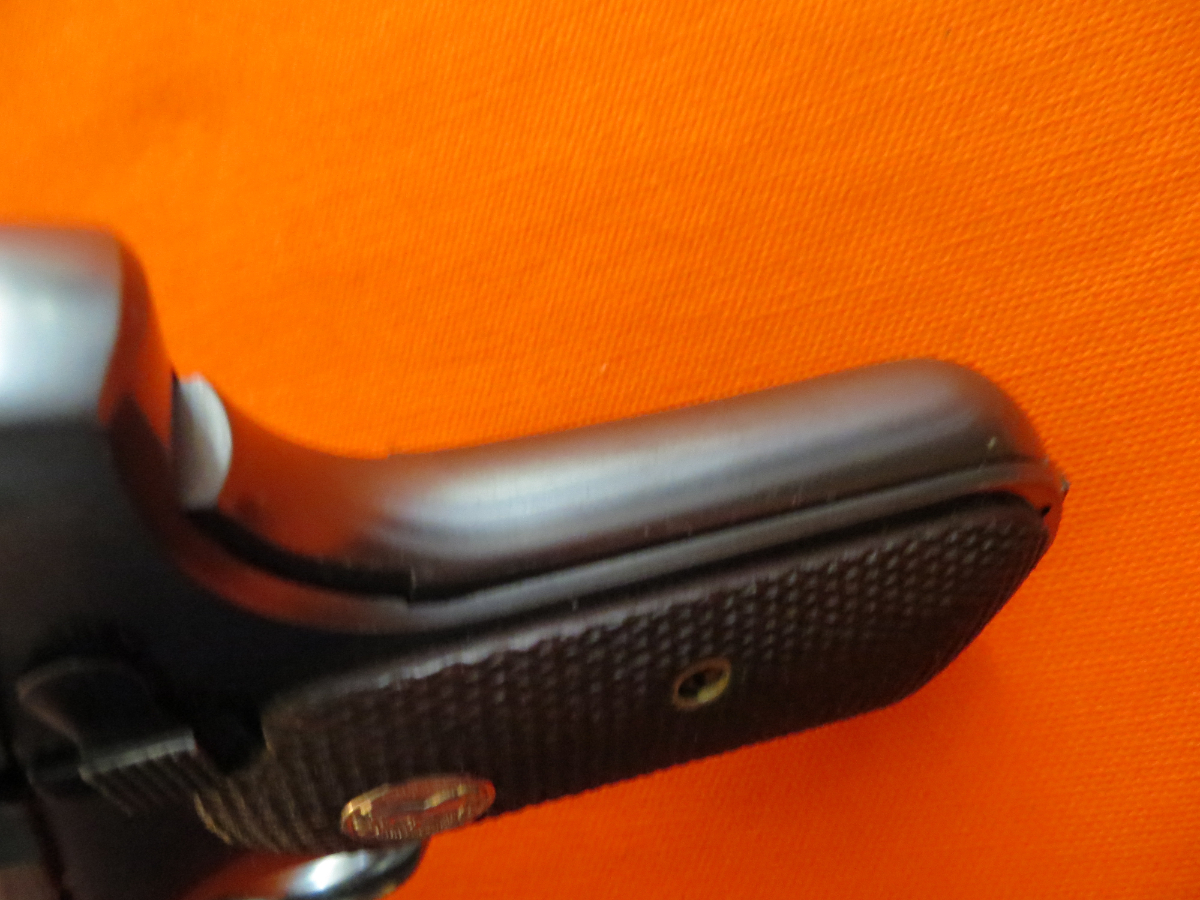
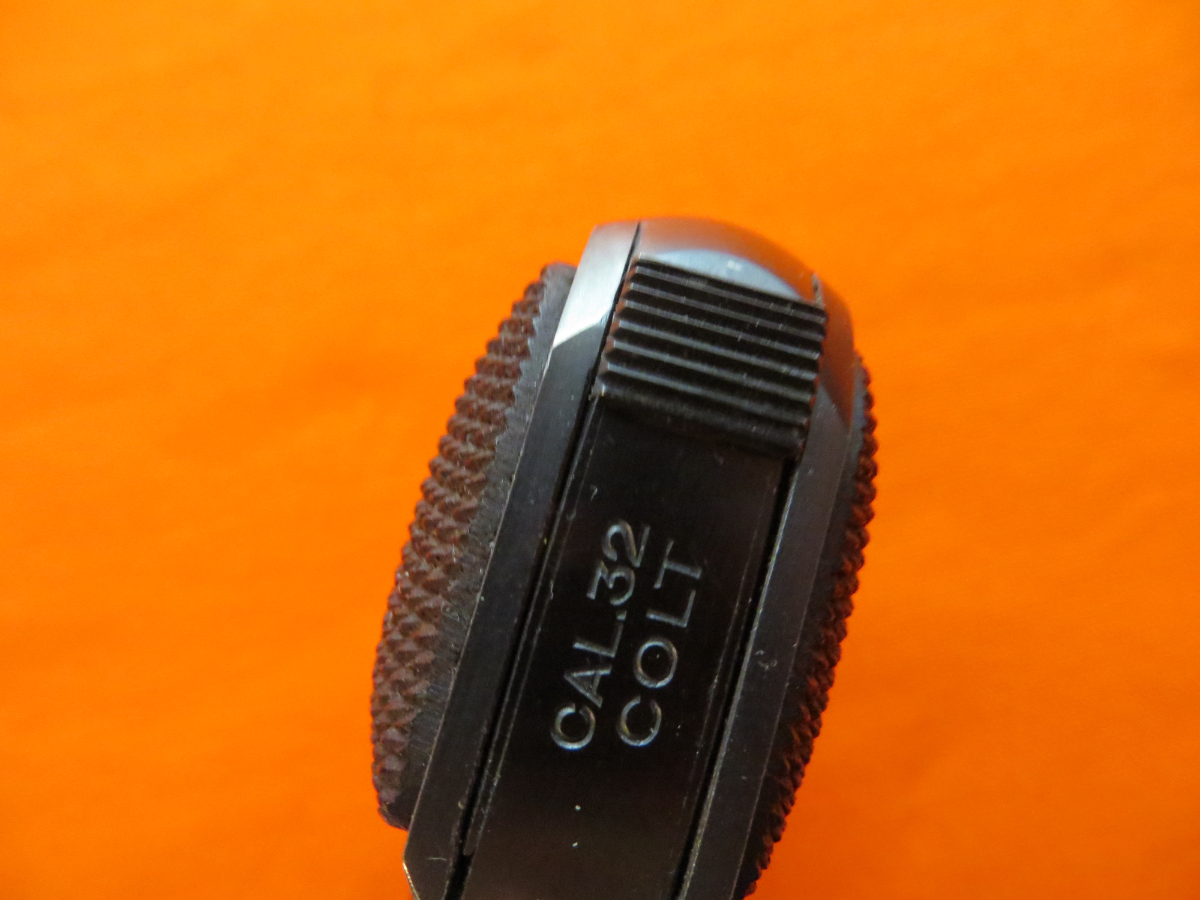
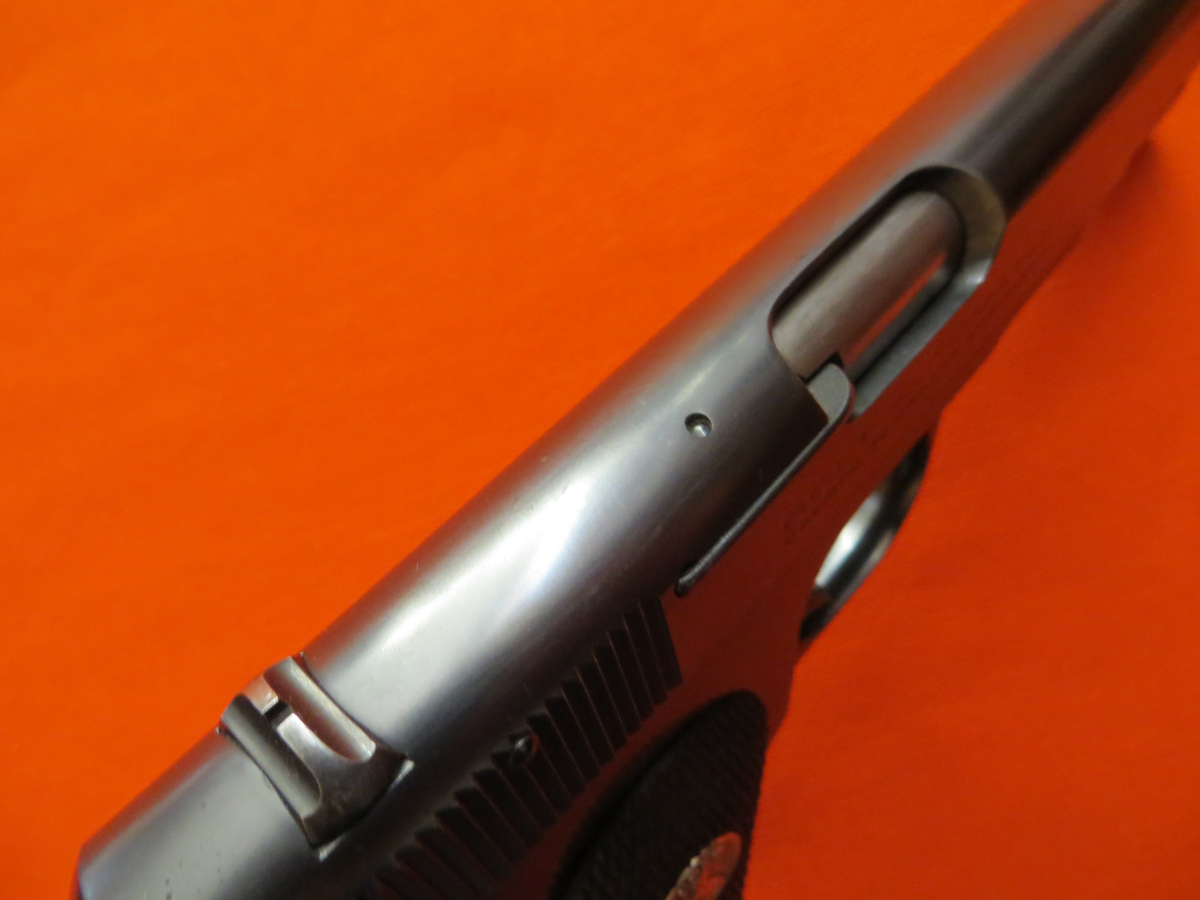
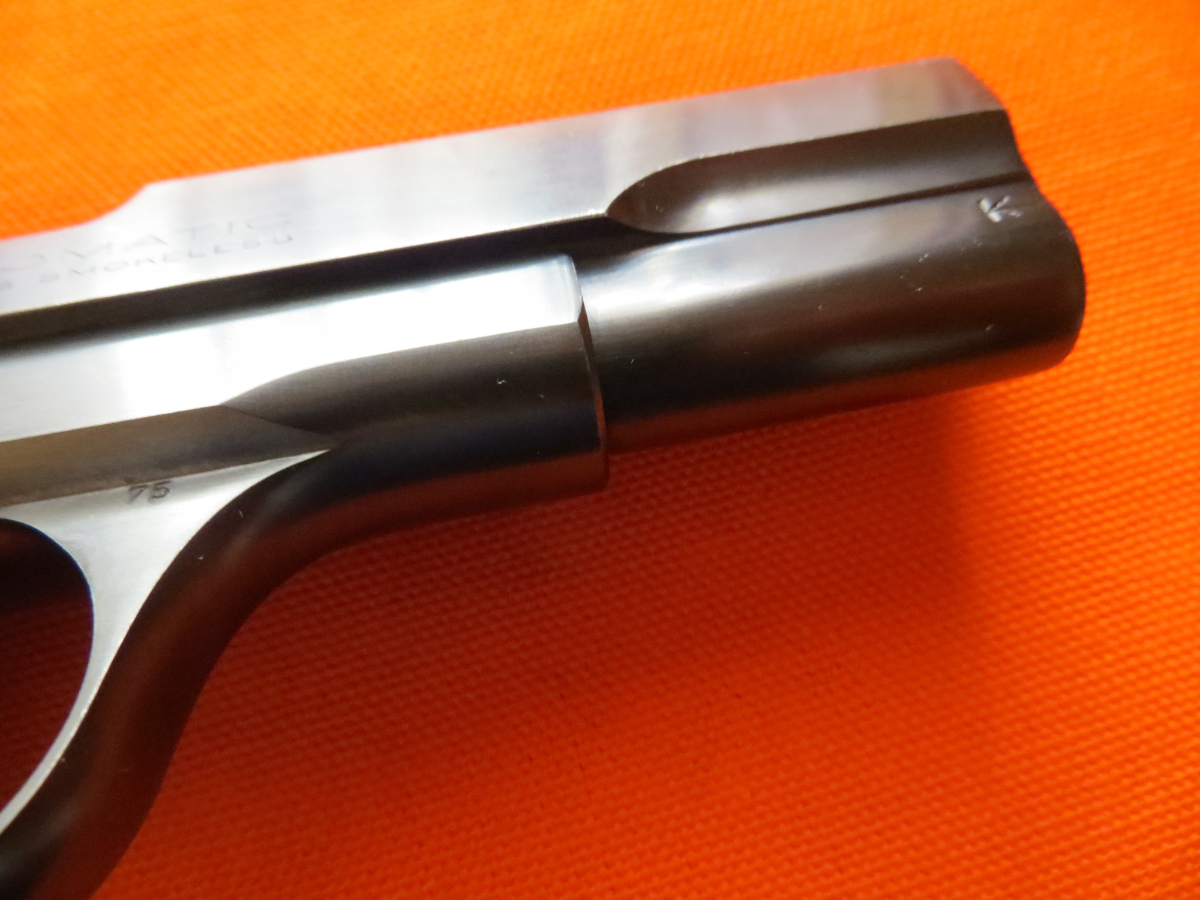
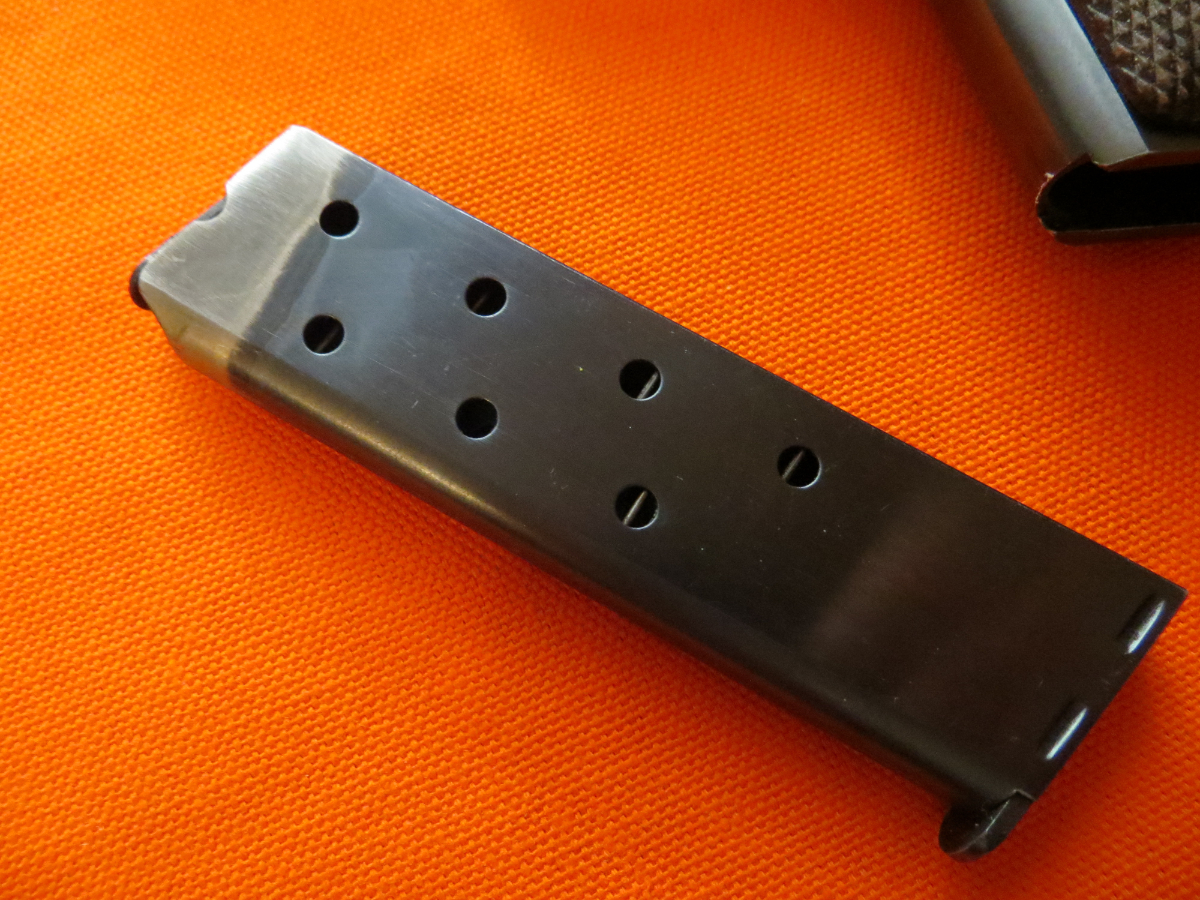
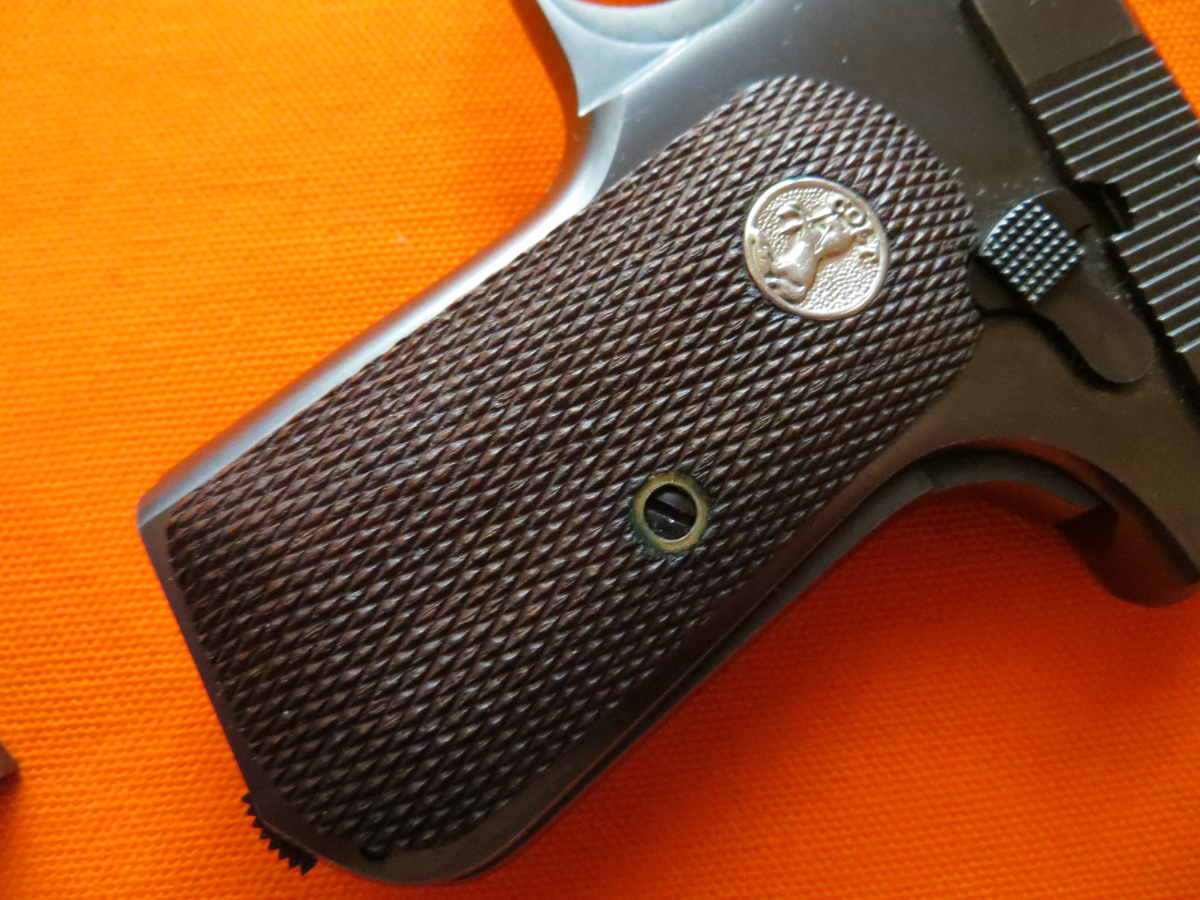
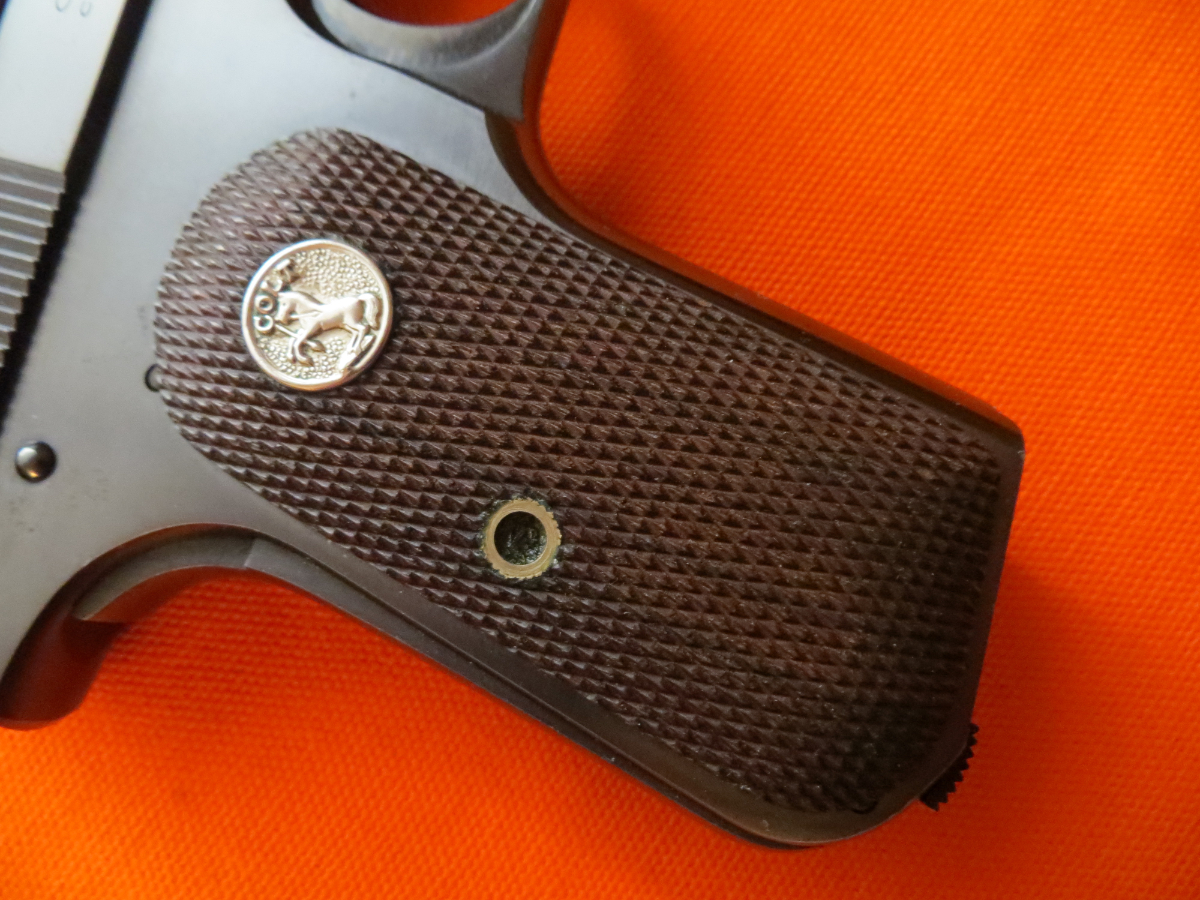
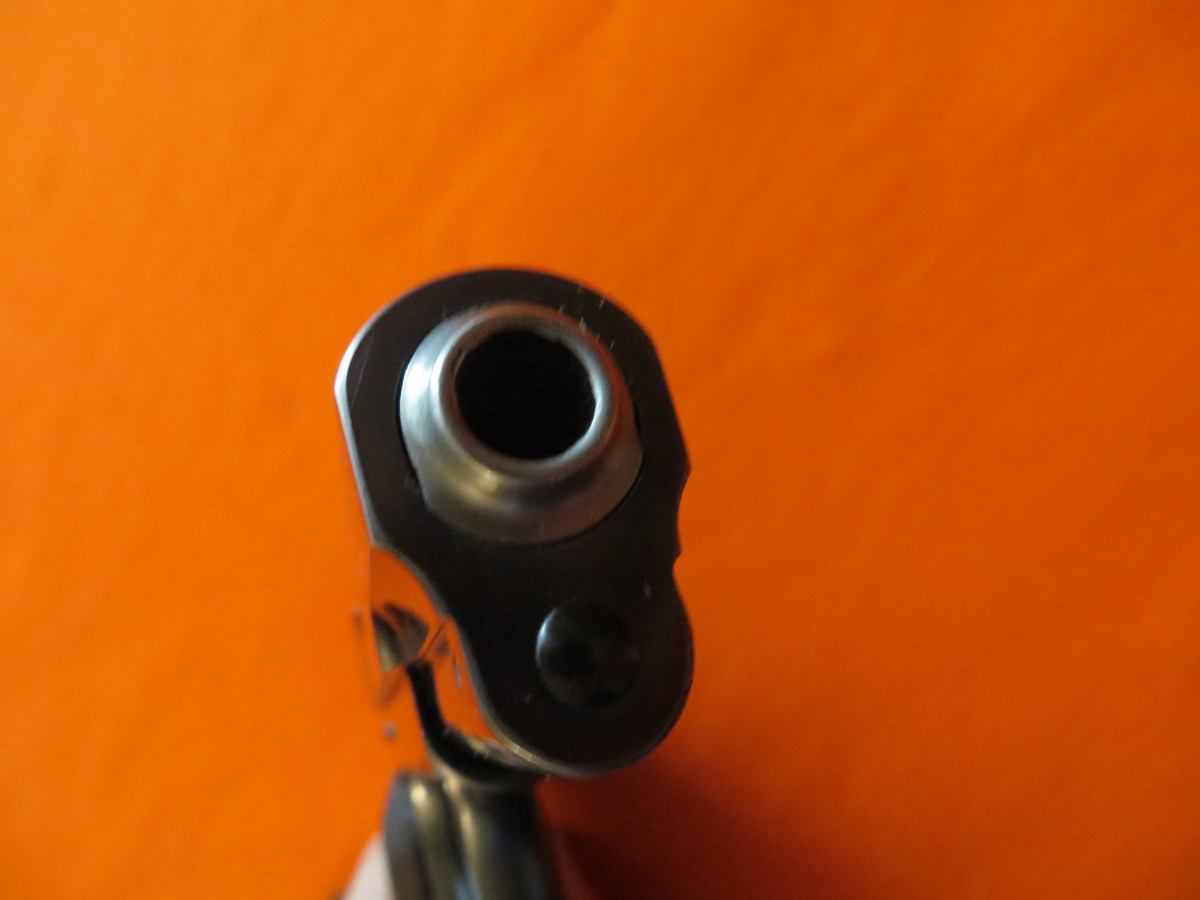
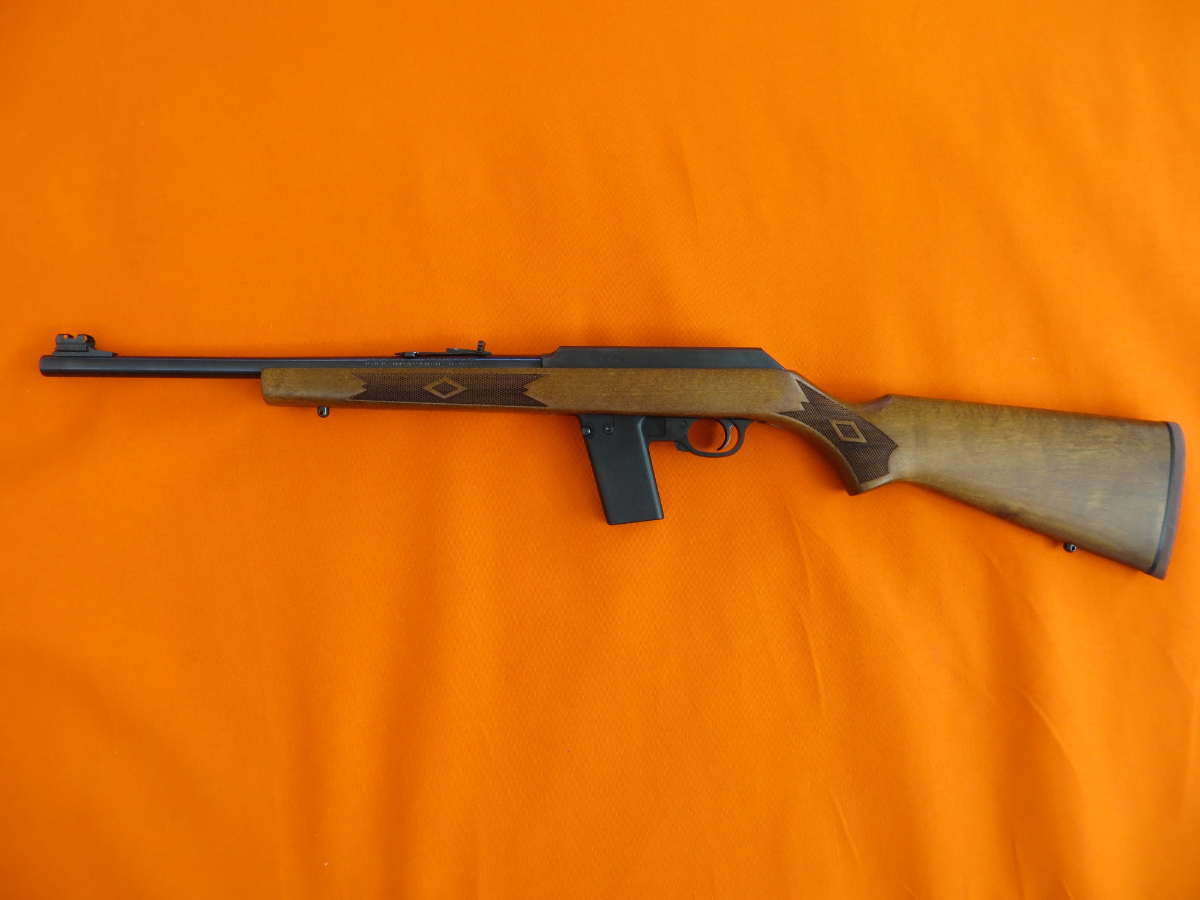


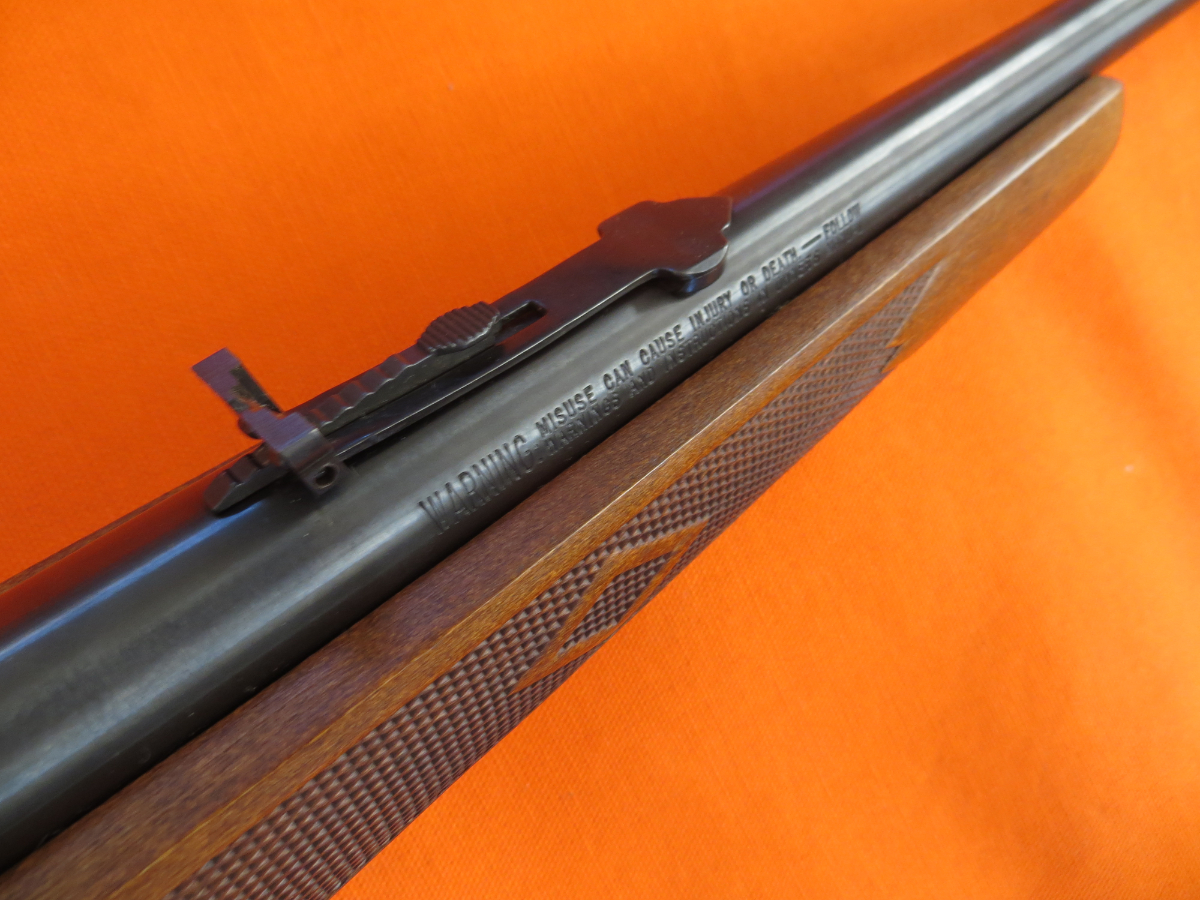
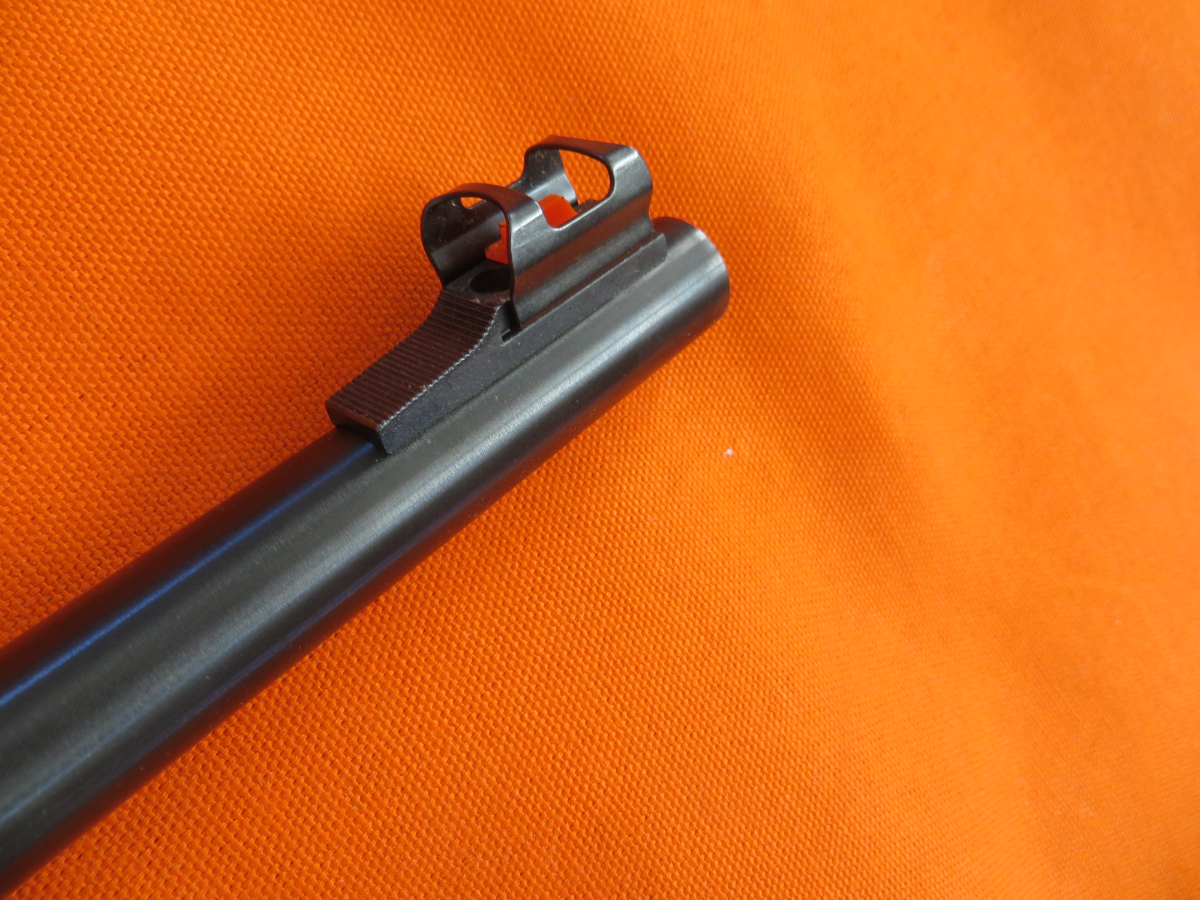
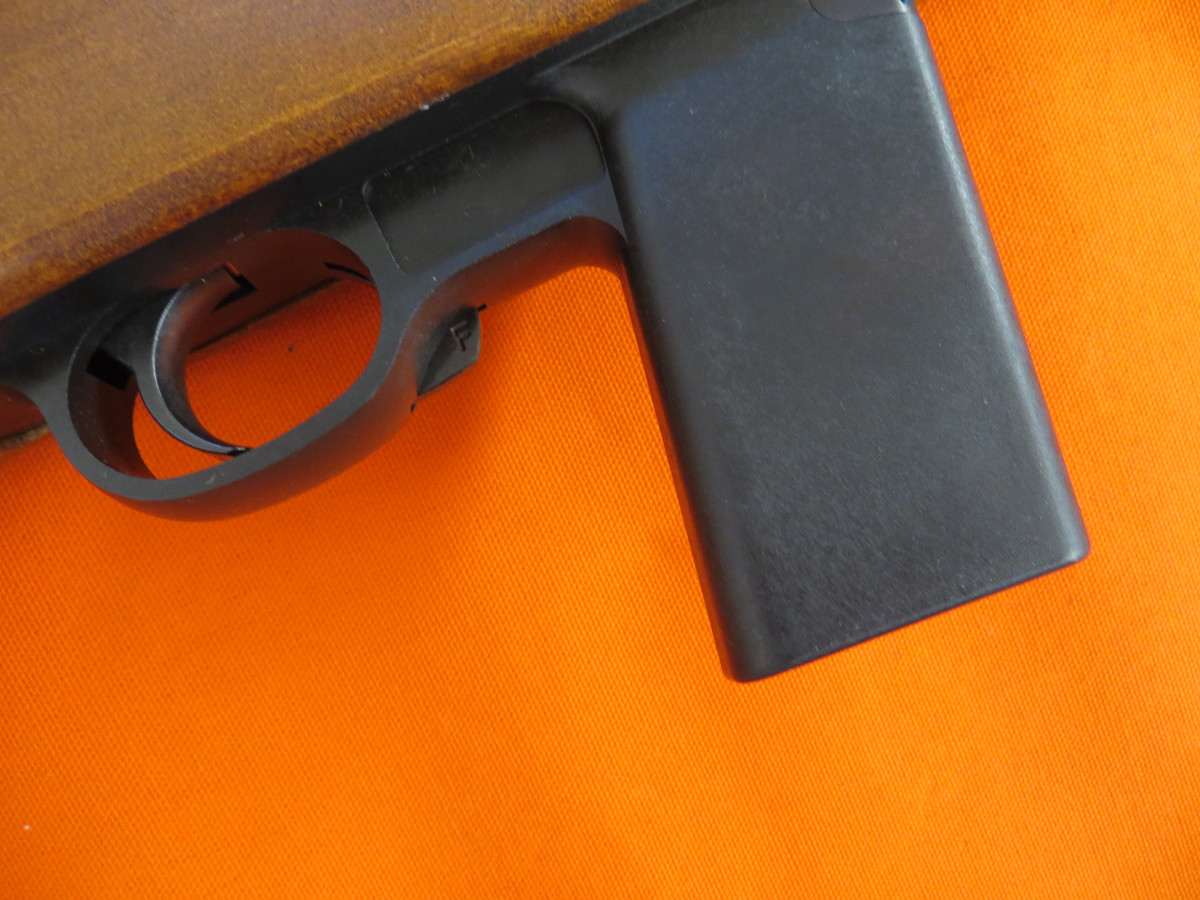
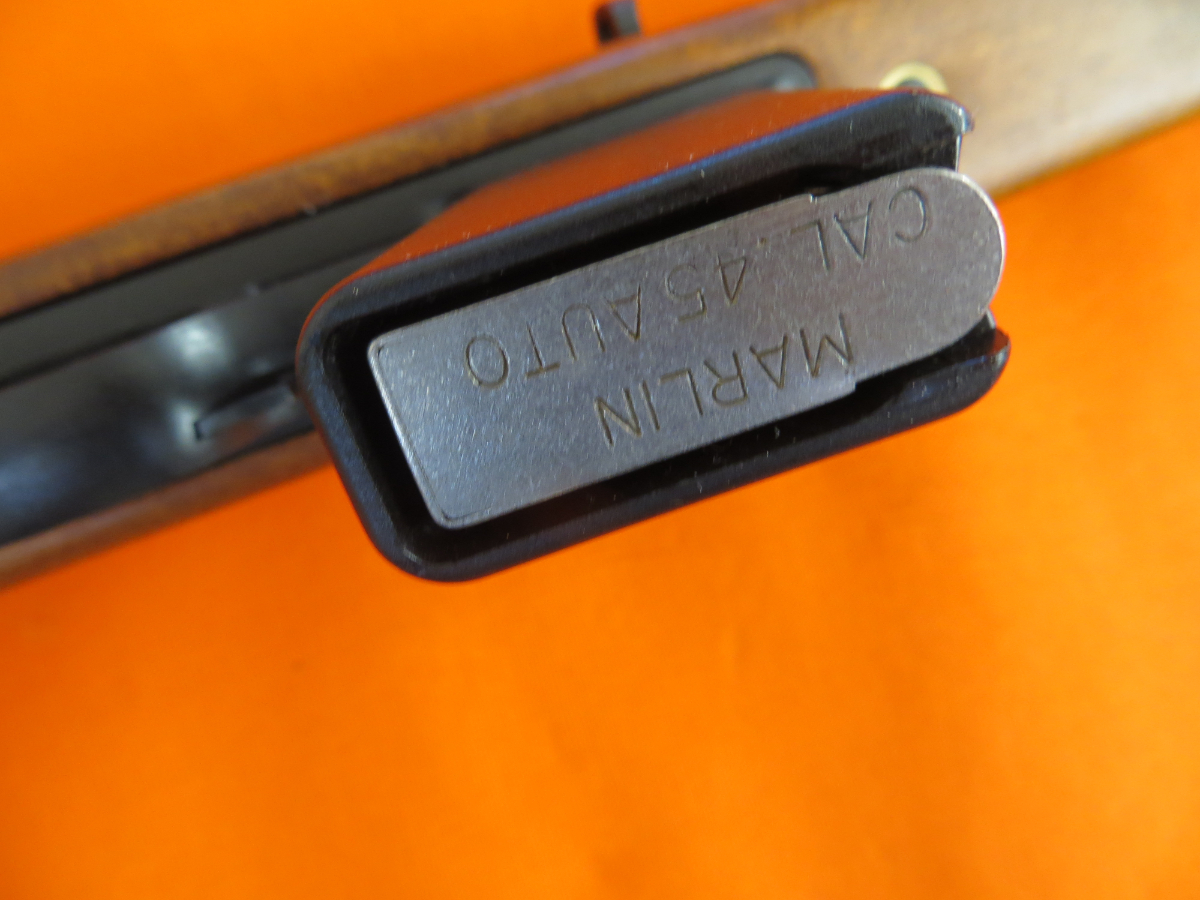
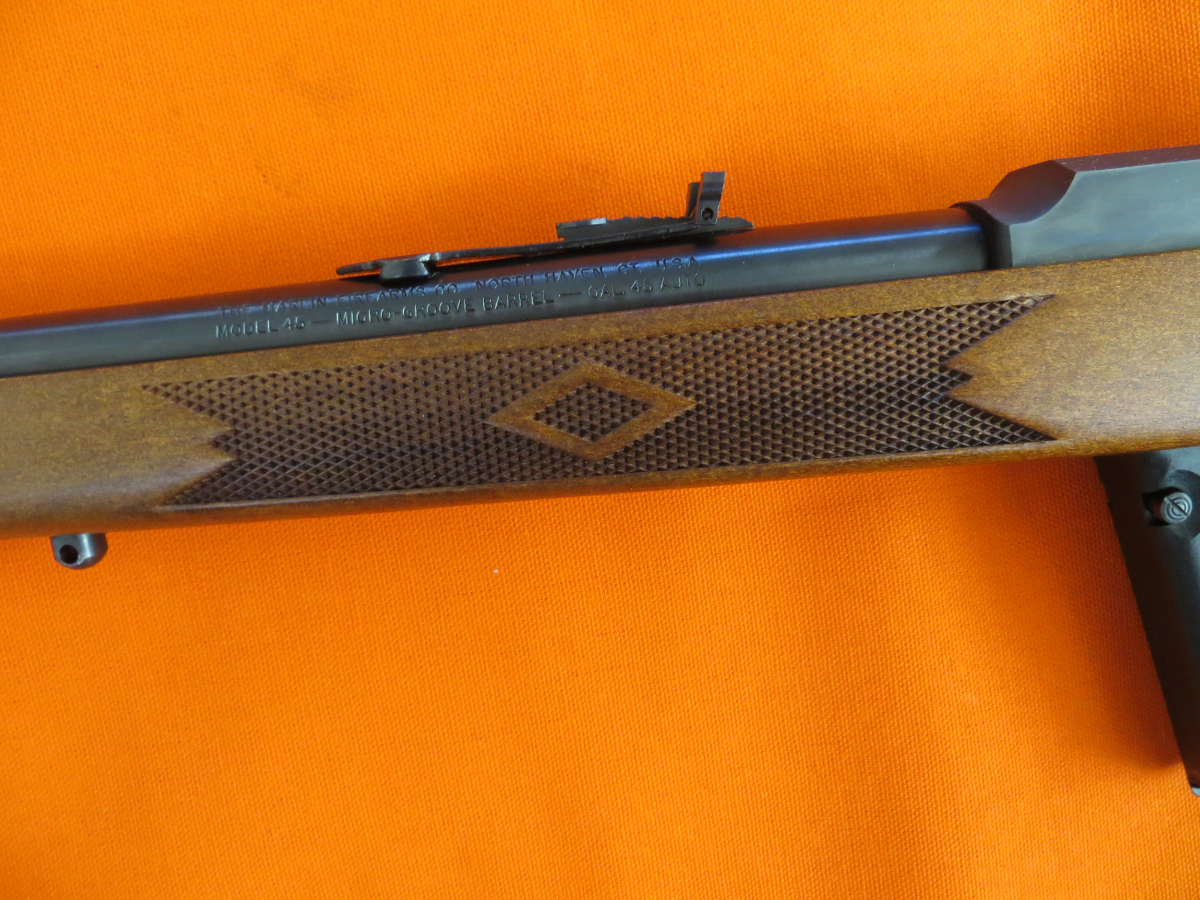
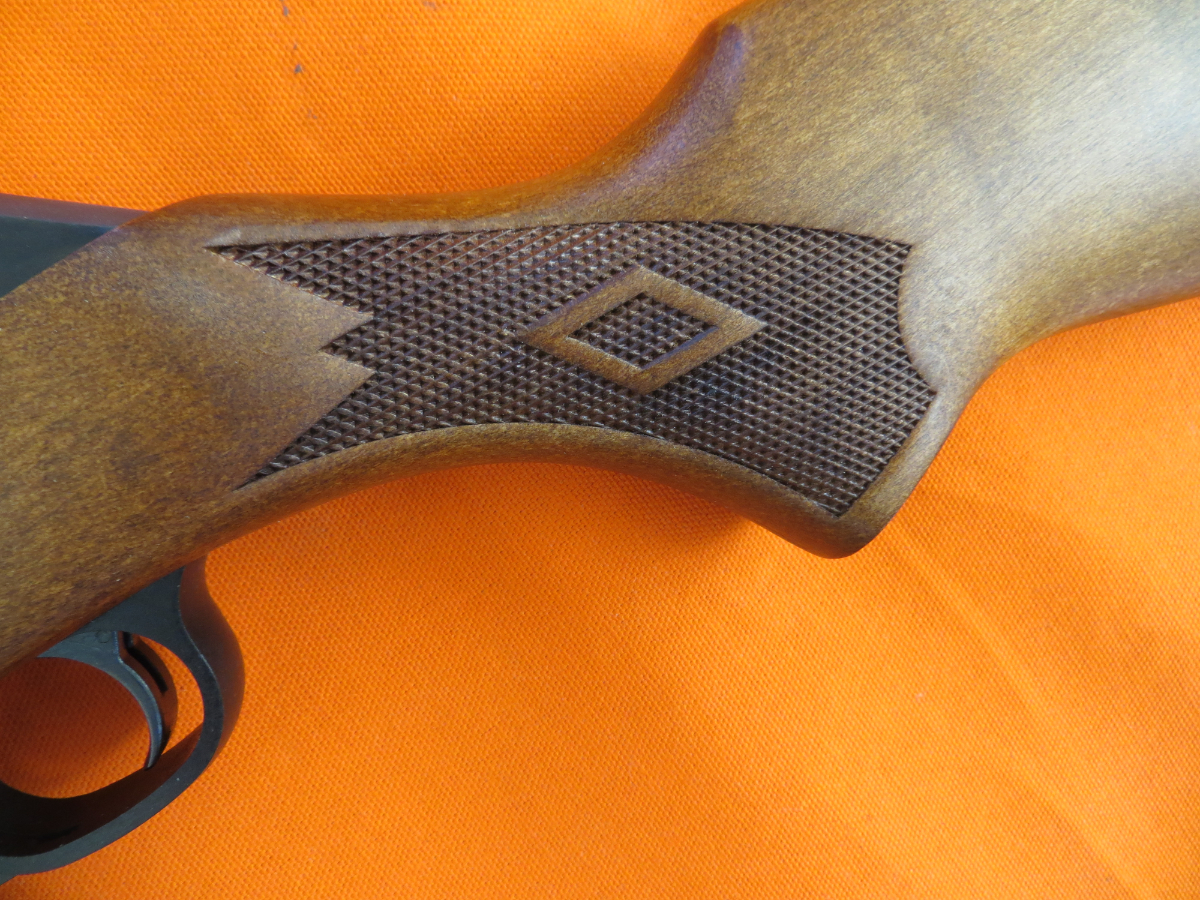
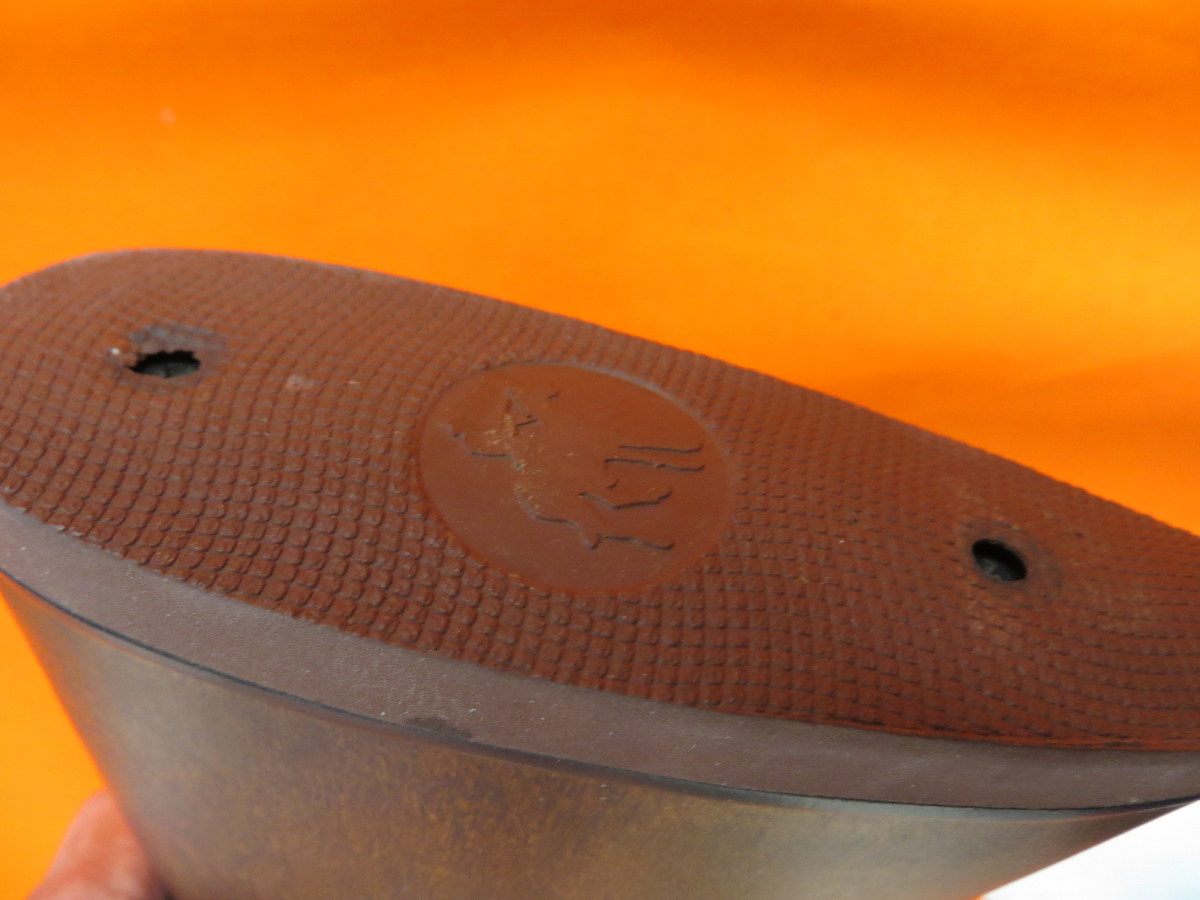
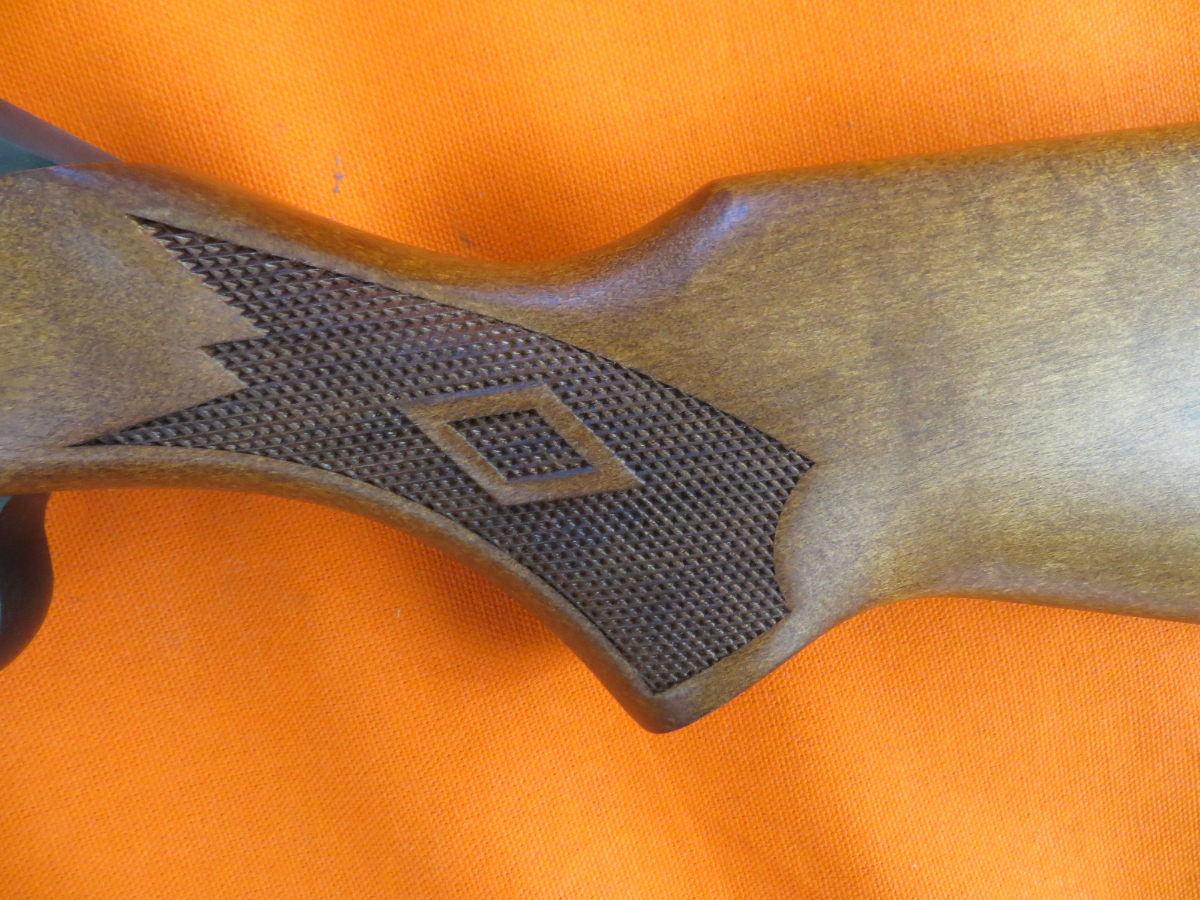
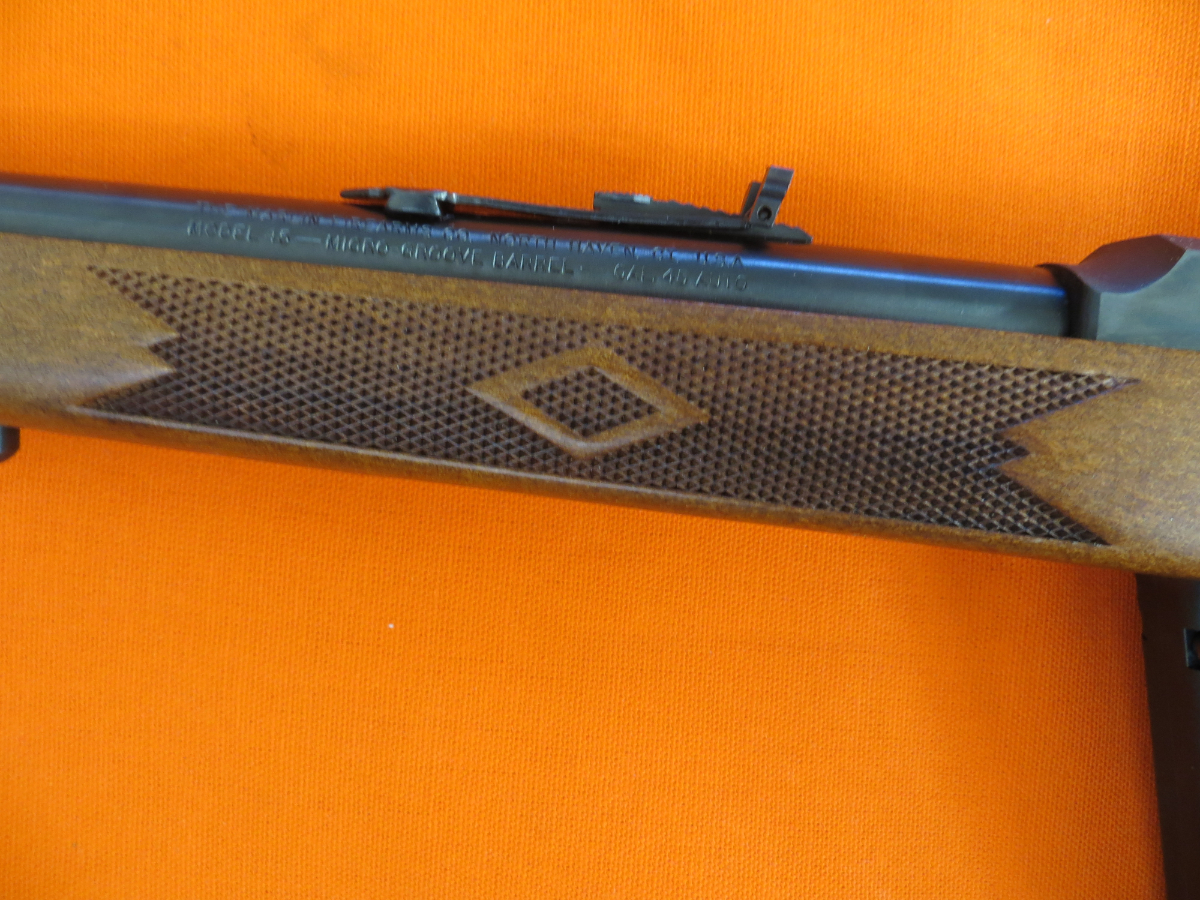
Jeremy’s Vaquero, customized by Hamilton Bowen and the star of many adventures.
I saw the two green points shining back at me in the beam of the headlamp I’d just turned on — but it wasn’t until I made out the dark bulk behind them I realized what was on the side of the trail ahead. Living and hiking in the mountains, I’d seen this shape before. “Bear,” I thought to myself. Not good, but not the end of the world.
Then, in the bluish light of the LED, I saw a black catlike form scramble up the tree behind her. I can see it now, still hear the scratching sound her cub’s claws made on the bark as it clambered up — whether it actually made such a sound in the moment or not. What I don’t remember is pulling out the big stainless sixgun or laying the wide Bisley hammer back over a cylinder-full of 335-grain hardcast solids.
A Rock And A Hard Place
It was my first time out bowhunting and when darkness caught me miles away from my car, I’d disassembled the takedown recurve and stowed it in my pack. I then walked down the closed gravel road in the dark, the gray of the road and the dark blue of the sky standing out enough from the black woods to keep me headed the right direction without a light. I’d hiked quite a bit in the dark and except for my family giving me a hard time, I’d never really given it much thought. At least until a little voice in the back of my head — you know, the one telling you you’re wrong — told me to turn on the light.
I backed off to give Mama Bear room and considered my options. There was a trail behind me splitting off to head north, the wrong direction, and dead-ended several miles away at a state road on the far side of a mountain. I looked at my phone: no service, no way to call for a ride even if I hiked the several miles uphill to get there.
Ahead of me, the ground fell off downhill to the left side of the road — where she was — and rose steeply, impassable, on the right. There was one way out and it went right past where Mama Bear had staked her claim.
The Gun
I bought the Old Model Vaquero almost 20 years ago when it was just a Vaquero, alongside my old college shooting buddy who bought its twin from a gunshop whose doors are now closed. Polished stainless steel, with 4¾” barrels, faux ivory grips and chambered in .45 Colt, the two sixguns were one digit off from being sequential serial numbers. Close to broke, we bought a single box of 20 cartridges and split them. I promptly took my new thumb buster — loaded with the last six rounds from the box — with me to Mississippi when I went to see my grandfather.
Grandad
Born in California to a veteran of the Spanish American War, my mother’s father was raised in a rambling way, growing up in Kentucky and Florida before settling in Mississippi, but he never lost his love of the West. His house — more specifically, his studio, where he painted and where my cot was usually stationed when we visited — was fascinating from the powder horn and barbed-wire collection on the wall, to his oil lamps and the Winchester I always begged him to show me. I don’t remember what he said about my Vaquero but I know he approved.
If I have any doubt about it, I can look around my own office at his Stetson up on the top of a bookshelf or the couple pairs of rattlesnake rattles and a foil-wrapped packet of .30/30 cartridges I inherited from him.
Nonetheless, the Vaquero remained a bit of a novelty for a few years while I mostly shot M1911s until I snagged a writing assignment on Bowen Classic Arms and dropped the Vaquero off with Hamilton. Returned with a fine, brushed finish, the newly lightweighted gun now had a 4″ barrel, useable front sight and a low, fast-cocking Bisley hammer. The grips were replaced with Persinger ebony grips made in El Paso and fitted to the newly decked frame. It was almost too pretty to shoot.
Almost. I put several hundred rounds of Black Hills and Hornady through it but never quite mastered the gun. What I didn’t understand at the time was how much grip consistency affects accuracy with a single-action, where the gun is recoiling through your hand as the bullet exits the barrel.
Grip it hard, the bullet goes low; loosely, it goes high. I finally learned this about 10 years ago, when I made the decision to put a thousand rounds each through three guns I didn’t shoot all that well. After enough weekly or twice-weekly trips to the range, depleting the large stock of ammo a friend had loaded for me on his Rock Chucker, I could finally hit consistently with the big Ruger, gleefully slamming 255-grain SWCs into my steel spinner until it cracked. At the insistence of another shooting friend, this one from law school days, I shot my first cowboy action match with it. I placed an enjoyable second to last, just ahead of him.
Loading Up
By then I wasn’t afraid to scuff the Vaq up anymore and after a couple less serious encounters of the ursine kind, I decided the extra power of +P .45 Colt rounds was preferable to the .45 ACP I usually carried in the woods. At Bowen’s advice, I stoked it with Grizzly Cartridge Company’s 335, which I chronographed at a freight-train like 1,089 fps.
And there it was, in my hand, cocked. I was the most scared I’ve been in my adult life, more scared than riding shotgun at Road Atlanta in a Porsche racecar dropping down Turn 12 at a buck-twenty, more scared than when I was serving legal papers on people, alone, in downtown Atlanta as a law student, more scared than walking down the stairs in the dark for the first time holding my newborn son.
Shaken But Not Stirred
Scared, but not shaking. With no other option, I breathed a prayer, short and packed with condensed intensity, and began my one-step-at-a-time trip past Mama Bear, now out of sight on the other side of the brush lining the road. Desperately not wanting to shoot this bear, I had decided if she charged I would fire a warning shot first to try to turn her. Considering the extremely short distances involved — 20 feet or less — the decision likely would have cost me a mauling, if not my life.
She let me pass, but followed me through the dark for a hundred yards. At some point I’m sure I gently lowered the hammer and re-holstered but it was no time soon. In the car on the way home, I called my mother who’d long been worried about my hiking habits. “I think it’s time to re-evaluate my decision-making paradigm,” I said drily.
Still Here
The old Vaq is still loaded with 335s, their big, broad meplats almost flush with the end of the cylinder — fresh ones, of course. There’s a little play in the cylinder now, which is striped with irregular lengthwise scratches from many trips in and out of its holster. There are some fine cracks in the grain of the ebony, too, and if you look closely I’m sure you can find a dull red speck or two in the crevices of the dovetailed front sight where it’s hard to wipe the moisture out. This after all the times it’s been rained on, alongside with me.
Sometimes when I pick it up, I think of my grandfather long since passed on to his reward, or my other friends — the one with its partner who moved to Texas and largely out of my life, the other who had lost his vision and with it his dreams of cowboy shooting.
And those two bright green eyes — I think about those a lot.
(Illustration by Matt Battaglia / Task & Purpose).
SHARE
For decades, U.S. military leaders have prohibited service members from growing beards, arguing that facial hair not only disrupts a clean, professional appearance, but also interferes with the seal of a gas mask, oxygen mask or other devices that service members wear to survive hazardous environments. While manymilitary leaders defending the beard prohibition have repeated the claim that beards break gas mask seals, one Air Force doctor has found no direct scientific evidence to support it.
“It’s an unsubstantiated claim,” said Lt. Col. Simon Ritchie, a dermatologist who last year published a study on the beard prohibition’s discriminatory effect on Black airmen. While supporters of current Air Force policy “may have anecdotal evidence of one to five people who they see fail the fit test,” he said, “that can’t be extrapolated to hundreds of thousands of airmen.”
Anecdotal evidence is useful, Ritchie said, but in his years of analyzing the issue he has yet to find an up-to-date, scientifically rigorous study showing that neatly trimmed facial hair impacts the seals of military gas masks.
“In the scientific community, anecdotes are the lowest level of evidence for making recommendations,” the doctor said. “A lot of the consensus papers and position papers on this rely on expert opinion, but none of it is based on an actual scientific study like ‘hey, let’s have people put a M-50 mask on and study that.’”
More scientific evidence is needed to inform the military’s grooming standards, Ritchie said, because the current policies have a discriminatory effect on service members of color. Adhering to the Air Force’s prohibition on beards is difficult for many Black airmen who have a medical condition called pseudofolliculitis barbae. Also known as razor bumps, PFB is a skin condition that makes shaving painful and can lead to permanent scarring if the skin is not allowed to heal. Men of any race can have PFB, but the condition is commonly found among Black men.
The Air Force issues shaving waivers to airmen who, for medical or religious reasons, are not able to shave in line with regulations, and many airmen with PFB receive waivers. However, those waivers might harm the airman’s career prospects due to a long-standing cultural aversion to facial hair in the military.
“Male beard growth beyond that allowed by USAF regulation can cast members in a negative light as it can be considered unprofessional,” wrote Ritchie and his fellow researchers in their study, which found an association between shaving waivers and a “significantly longer” time between promotions.
Tech. Sgt. Brandon Tatum, Air Warfare Center chief of joint terminal attack control training, works with Pakistani commandos to locate and coordinate various targets of opportunity during a training scenario at a Pakistan military range, March 1, 2022 (Master Sgt. Christopher Parr / U.S. Air Force)
The promotion system is not necessarily inherently racially biased, the authors cautioned. But it is biased against facial hair, “which will likely always affect the promotions of Blacks/African-Americans disproportionately because of the relatively higher need for shaving waivers in this population.”
You don’t have to suffer from PFB to hate the military’s current policies against facial hair. Unofficial Air Force social media pages are filled with posts written by airmen who are sick of shaving their faces every day and wonder why they have to keep doing it. Many are familiar with the argument that beards prevent a gas mask seal, making it even more odd that there is no direct evidence to back up the claim.
“I won’t speculate, but suffice to say I don’t know,” where the belief that facial hair interferes with a gas mask seal comes from, Ritchie said.
There are some clues out there. While Ritchie could not find an exact date for when beards were first prohibited in the military, he said those policies began to be implemented after World War I, when gas warfare and gas masks emerged on the battlefield. There have been some exceptions. For example, according to U.S. Naval Institute News, sailors were allowed to wear short, trimmed hair, beards and mustaches from the 1880s to the 1960s. The policy was loosened for sailors serving on submarines or in cold climates due to the shortage of freshwater for shaving and the cold temperature, respectively.
In the 1970s, then-Chief of Naval Operations Adm. Elmo Zumwalt loosened the Navy’s facial hair policy even further because he thought it would make the Navy seem less square, thereby improving recruiting and retention. But in 1984, then-CNO Adm. James Watkins banned beards entirely, claiming that they prevented proper seals with emergency breathing apparatuses, which is especially important given how sailors train extensively to fight fires aboard their ships.
“However, the blunt-speaking Secretary John Lehman said that it was simply due to aesthetics,” USNI News wrote. “Lehman said that master chiefs had been complaining that beards made the Navy look ‘extremely un-uniform’ so it was decided that having clean-shaven sailors would bring ‘a general sharpening of appearance.’”
Sailors take a group photo aboard the USS Pensacola, a cruiser that fought in the Pacific Theater in World War II.
This led to sailors shaving their heads in protest and threatening to send their whiskers to Watkins, USNI News wrote, but the policy remained. On the Army side, it is widelywritten that the service began prohibiting facial hair to fit with gas mask seals during and after World War I, though this reporter could not find official documents to support this. But more than a century later, there appears to be little direct evidence that links facial hair to poor gas mask fit. While there are plenty of studies that show the deleterious effect of facial hair on gas mask or respirator seals in the civilian world, there are no studies Ritchie could find that gauge how neatly trimmed beards hold up in modern-day M-50 military gas masks.
“These studies are for the civilian population, where there’s a range of thickness, curliness and length that may influence the results,” he said. “It’s tough to look at that and say ‘hey, case closed.’”
In contrast to the civilian world, airmen with shaving waivers are allowed a quarter-inch of facial hair at most, so a study would have to be limited to that length or below for it to be applicable in the Air Force, Ritchie explained.
Still, the United States military is not the only one with men in its ranks. In fact, several other NATO countries such as Canada, Germany and Norway permit service members to wear beards. Surely they must have studied the effect of facial hair on gas masks? Apparently not, said Ritchie, who is stationed at Ramstein Air Base, Germany and so has had plenty of chances to chat with NATO partners about their whisker policies.
“They also can’t point to actual studies,” Ritchie said, “but they can point to lived experience.”
The NATO officers who spoke with Ritchie reported seeing no negative impact of facial hair on oxygen masks for air crew, he said. The airman added that the Royal Canadian Air Force has also had zero physiological events related to beards since the Canadian military first allowed service members to sport them in 2018. Beards also have not been a problem for students from foreign militaries who go through the Euro-NATO Joint Jet Pilot Training program at Sheppard Air Force Base, Texas, Ritchie said.
“The Aircrew Flight Equipment folks at Sheppard we spoke to have had zero problems fitting a bearded pilot,” he said. “We’ve had Sikhs go through that program and people from NATO who have beards for personal preference.”
Danish Company Commander Karsten Falck talking to a Latvian soldier at Camp Grayling, Michigan, August 1, 2017 (Lt. Col. John Hall / U.S. National Guard)
These anecdotes all regard oxygen masks for aviators, so it would be too bold to extrapolate that the same rings true for gas masks, Ritchie explained. Still, it’s a start, and there is also a recent study from the civilian world that could indicate positive outcomes for beard-hopefuls in the U.S. military. The 2018 study showed that facial hair negatively influences the fit factor for half-face negative-pressure respirators as the hair gets longer and more dense. However, beard-wearers can still “achieve adequate fit factor scores even with substantial facial hair in the face seal area,” the study authors wrote. In fact, 98% of the study participants who had an eighth-inch of beard passed the fit test. Those results are encouraging because the respirators used in the study are pretty close to the M-50 gas masks used in the military today in terms of material and fit, Ritchie said.
“I would consider this to be the closest scientific evidence that we have to answer the relevant question we’re facing,” he explained.
Even some clean-shaven service members struggle with sealing a gas mask or oxygen mask. One Air Force C-130 aviator told Task & Purpose that aircrew flight equipment specialists have a machine that tests the aircrew’s oxygen masks “and it can be a huge pain making sure that thing is sealed up perfectly on your face,” he said.
“I have always been clean-shaven and it can be a challenge,” he added, and Ritchie has seen the same problem in his research.
“Not everyone with a shaved face has a good seal,” he said. “Different kinds of faces affect the seals.”
While no scientific study has established the minimum facial hair length that controls PFB, Ritchie has found through his clinical experience of having treated thousands of airmen with the condition that one-eighth inch is almost always sufficient. The Air Force can conduct studies testing that length’s effect on a gas mask seal. As it turns out, a study on facial hair and gas masks would be simple to execute.
A study of this nature would require only 100 to 150 service members, Ritchie said. Participants would be asked to grow facial hair to a given length, maybe a quarter of an inch. They would be fit-tested for a gas mask and given a detailed assessment on the exact amount of air passing through the seal. Then the participants would be given a clipper, trim down to an eighth-inch, repeat, and then do it all again one more time while clean-shaven. The good thing about the study is that it controls for differences in facial structure.
“If people have problems fit testing while clean-shaven, then that might mean facial hair is not the problem,” Ritchie explained.
A1C Rathour is the first Sikh Airman to receive religious accommodation and may grow his beard and wear his turban while in uniform. Rathour graduated from Security Forces technical training on September 26th, 2019. (Alexander Goad/US Air Force)
Now the only thing left to do is to get the Air Force to conduct a study. Ritchie said that his Air Force Times op-ed on the subject in October 2021 got the attention of the Air Force’s Barrier Analysis Working Group, which works to make the service more inclusive. Several senior leaders of the branch also support the work Ritchie is doing, he said. But it is not clear at this point when that support will translate into actually pulling off a study.
“We don’t have to hire RAND or Booz Allen Hamilton to do it, but the Air Force needs to want it to happen,” he said.
If the Air Force does follow through with a study, it could be the first service to do so: Ritchie said he was not aware of any other service conducting such a test. Still, even if the Air Force conducts a study; and if the study finds that trim eighth-inch beards do not affect gas mask seals; and if the Air Force abolishes its prohibition on beards, there would still be decades of institutional bias against beards standing in the way. Even one of the branch’s most beloved former senior leaders, retired Chief Master Sgt. of the Air Force Kaleth Wright, said he spent 29 of his nearly 32-year career opposed to facial hair in his service.
“I was the typical senior leader chief that didn’t think airmen with a shaving waiver belonged in the front office,” he said in April on a panel discussion on male grooming standards in the Air Force. “I had opportunities to hire all kinds of folks and I was adamant about not hiring somebody with a shaving waiver, just because I fell into that category of ‘this is Air Force policy, it’s not professional.’”
Wright said he took that position despite suffering from shaving irritation himself. He eventually learned how to shave in a way that would not irritate his skin, so he believed that if airmen with shaving waivers just did what he had done then they could be clean-shaven too.
“I was willfully ignorant about the impact it was having on young Black men,” he said. “Some of it was because I just ignored it, some of it was because I wanted these young men to do what I did: just suck it up and figure it out and you’ll be fine.”
Chief Master Sergeant of the Air Force Kaleth O. Wright speaks with members of the 188th Wing during an all-call at Fort Smith, Ark., Oct. 06, 2019. (Tech. Sgt. Daniel J. Condit / U.S. Air National Guard)
It was only until his time as the top enlisted leader of the Air Force that he realized how, for some airmen, being clean-shaven is impossible without immense pain and skin damage. That realization, along with new data from scientists like Ritchie, convinced Wright to make “a complete 180 on the issue,” he said. The tough part is that most people with power in the Air Force have not made that pivot.
Changing policy, “that actually is the easy part,” Wright said. “The real challenge is ‘how do you change the culture, not just in the Air Force but in the services period.’”
The leaders who are biased against beards in the Air Force are not going to figure out how to work with a new policy allowing beards, Wright cautioned. Instead, “they’re going to shake their heads and find a way to write people with beards off.”
A mere eight days after the panel, a White technical sergeant at Luke Air Force Base, Arizona allegedly texted a Black senior airman with a shaving waiver saying that he was not being considered for a position because “the Air Force is looking for somebody of white complexion,” according to a text exchange shared on the popular Facebook page Air Force amn/snco/nco.
“We personally do not feel as if you are a good choice for the squadron,” the technical sergeant said. “You currently have a shaving waiver which isn’t a professional image, and I think the air force is looking for somebody of white complexion and with the image that the air force needs.”
The matter is currently under investigation by base leadership, but it seems to underline Wright’s point that many people with power in the Air Force will find ways to oppose airmen with beards even if those beards are allowed in the service. That opposition may not always be because leadership is explicitly racist. Like Wright, they might just be working as they’ve been taught within an institution that was built and is still largely led by one group of people.
“The Air Force is run by old White men,” Wright said. “Even if we allow airmen to wear beards, it’s going to be mostly Black men who wear beards. And even if it’s within the policy, commanders will still find a reason to not hire them, to not select them for opportunities, for promotion.”
Staff Sgt. Gary Beals, left, 22nd Marine Expeditionary Unit’s chemical, biological, radiological and nuclear defense instructor and Metaric, La., native, ensures the M-50 field protective mask fits properly on a Marine before entering a gas chamber aboard Camp Lejeune, N.C., Aug. 27. (Lance Cpl. John M. Raufmann / U.S. Marine Corps)
Still, today’s military culture may not be tomorrow’s. One of those self-identified ‘old white guys,’ Maj. Gen. Kenneth Bibb, is proof of that. At the panel discussion, Bibb recalled saying that airmen with shaving waivers could not “be at the gate, you’re not going to represent my wing … I don’t want you on my Honor Guard.
“Man that hurts now that I think about the words that I said and the guidance that I gave,” said Bibb, who commands the 18th Air Force.
Making airmen feel welcome is a readiness issue, Bibb said: it opens the branch up so that more people can help accomplish the Air Force mission. The general has asked airmen with shaving waivers to share their stories and the anguish they’ve experienced, including one technical sergeant who tried so hard to shave in order to conform with regulations that he needed surgery because he had damaged his face.
“I’ll be the first airman to grow a beard,” if the Air Force drops its prohibition of them, Bibb said. “I think we have to take away the stigmatism that goes with this. Even if you change the rules, if we don’t see leaders that have beards,” then there will still be a stigma.
Wright agreed with the general.
“If generals and senior leaders are wearing beards and it becomes a normalized thing then maybe we weed out all of those folks who would find various ways to exclude folks anyway,” he said.
It’s a learning process, Ritchie said. The Air Force, and the modern military in general, was built a certain way around beards, and it might not have to be that way anymore.
“There’s a quote from Maya Angelou: do your best until you know better, and then do better,” he said. “Everybody should be able to change, to evolve positions and not feel like pride is in the way.”
David covers the Air Force, Space Force and anything Star Wars-related. He joined Task & Purpose in 2019, after covering local news in Maine and FDA policy in Washington D.C. David loves hearing the stories of individual airmen and their families and sharing the human side of America’s most tech-heavy military branch. Contact the author here.
She was & is one of my all time favorite Actresses. From The Avengers to her final performance in Game of Thrones. She was smart, classy and tough as nails. I will miss her! Grumpy
Hands down, the .45 Colt is my favorite handgun cartridge. You know this! Sure, I love other cartridges too, fickle as I am, but .45 caliber cartridges just grab my attention, mainly because of the way they grab the attention of anything shot with them. The “grand” father of .45 caliber metallic cartridges, the .45 Colt, started many love affairs with sixgunners, including me. We’re going to discuss how to make your .45 shooters more versatile, by shooting .45 ACP and/or .45 Auto Rim. Pretty nifty in a .45 caliber kind of way, eh?
Here’s Tank’s Ruger Redhawk. You can see the slight machining on his cylinder,
allowing the use of moon clipped .45 ACPs from TC Custom. Other feeding utensils
include a speed strip and speed loader with .45 Colt ammo.
Ruger’s Redhawk
I love my Ruger Redhawks almost as much as my Ruger single actions (SA) but love them I do. Double-Action (DA) advantages? They allow the use of speed loaders during hot tactical reloads, and of course double-action shooting, which is simply pressing the trigger as smooth and fast as possible. For precision work, you can cock your hammer and shoot SA, if it works for you. Pretty handy, I’d say.
I have a 4″ Redhawk originally chambered in .45 Colt. Wanting to make it more versatile, I had TC Customs alter the cylinder so I can shoot moon clipped .45 ACPs in my gun. I love the added ability of shooting more efficient .45 ACPs, while still being able to shoot heavy .45 Colt handloads. TC Custom simply mills the breech side of your cylinder a few thousandths to allow your moon clipped .45 ACPs to chamber in your cylinder.
Better yet, you only need to send your cylinder for the alteration, not your whole gun. TC even has videos on their website showing how easy removing your cylinder is. You can alter your S&W .45 Colt too, making it more versatile with moon clip .45 ACPs.
The S&W Model 25 shoots both moon clipped .45 ACPs and .45 AR splendidly!
S&W Model 25
You have two options for feeding your .45ACP wheelgun. Obviously, .45 ACP is the first, utilizing moon clips, or you can skip the “moonies” and use .45 Auto Rim (AR) brass, which is simply .45 ACP brass with a rim, so cases will extract when you pound your ejector rod. Moon clipped .45 ACPs will drop right in your cylinder, and you can use either a speed strip, or speed loader, with the .45 AR.
Comparison of moon clip and speed loader for size. Both work wonderfully.
Ruger Blackhawk .45 Colt/ACP Dual
Single actions chambered in .45 Colt sometimes come with auxiliary cylinders in .45 ACP, allowing you to swap cylinders, depending on what caliber you feel like shooting that particular day. But you need to swap cylinders to do it. You’d think our friend, the .45 AR, would be perfect for the .45 Colt cylinder, but you’d be WRONG. The .45AR will not fit in a .45 Colt single action cylinder! The rim is too thick! It’s too thick for the .45 ACP cylinder also.
If you wanted, you could have your .45 ACP cylinder milled, allowing the .45 AR, and it would also be able to shoot .45 ACP, since it headspaces on the rim. I just might do this alteration to allow full versatility with my .45 Colt/ACP dual’s one day.
When using your .45 ACP cylinder, a convenient way of carrying and loading your SA is to borrow your 1911’s magazine and feed your gun straight from the magazine. You and your gun will love it!
Hard to beat a dual cylindered sixgun for versatility. Chambered for both .45 Colt
and .45 ACP, you can handle many of your shooting needs confidently.
Loadin’ Moon Clips
TC Custom makes the slickest nutcracker type tool for loading your moon clips. You can load while watching TV or enjoying a beautiful day on your deck. Some hate those clips, but being a tinkering kind of guy, I like ’em! I even like removing spent brass from those thumb-cuttin’ SOBs, as long as I have the right tool. Yup, TC Custom makes those too and they’re a joy to use. I give them two “cut-free” thumbs up!
Keeping The .45 Alive
To keep anything alive, it needs to be fed. I hope I showed you a few different ways of feeding your .45 wheelguns, whichever one you have. After all, everyone enjoys a varied diet, and guns are no different.
Americans might not be buying guns at the dizzying pace we saw throughout much of 2020 and 2021, but for the 38th straight month gun sales topped 1-million, according to the latest figures from the National Shooting Sports Foundation.
The NSSF estimates based on numbers from the National Instant Check System that 1,265,311 firearms were sold at retail last month. That’s a decline of 11.3% compared to October 2021, but it’s also the third highest number ever reported for October sales, trailing only 2020 and last year. A closer look at the data going back to the year 2000 shows that while sales are off of their two-year highs they’re still far above the levels we saw between 2000 and 2012.
NSSF director of public affairs Mark Oliva says the NICS figures “continue to reflect a steady interest by law-abiding Americans to exercise their God-given Second Amendment rights,” adding that “despite the claims of some elected officials that crime is not a national concern, these figures reflect the true sentiment of America. These gun owners are choosing to protect themselves.”
Despite the best efforts of anti-gun activists, I might add. On Tuesday, voters in Oregon will have the chance to weigh in on a ballot measure that would create a “permit-to-purchase” system for all handguns; one that would allow law enforcement to deny someone the ability to buy or possess a pistol even if they’re able to pass a federal background check. San Jose, California’s city council wants all gun owners to pay a fee to own a gun as well as shell out the money for an insurance policy before they can legally possess a gun inside the city limits. And in towns across the country anti-gun activists are trying to block gun stores from opening, explicitly trying to interfere with an individual’s ability to exercise a fundamental constitutional right.
Those are just a few examples of a much broader attempt to curtail our Second Amendment rights through legislation, regulation, and even cultural indoctrination, and yet month after month we’re seeing hundreds of thousands of Americans embrace those rights; many for the first time in their lives. Michelle McGhee is one of those folks. The Arkansas teacher bought her first gun two years ago, and recently spoke to NPR’s Scott Simon about her decision.
MCGHEE: I originally bought a gun – I was recently divorced and a single mom to a 17-year-old. And I wanted it for peace of mind and protection for my family. And also, I live in the rural area of Arkansas, and I travel quite a bit where there is not always phone service or cell towers. That was the main reason why I purchased my first one.
…
SIMON: Michelle McGhee, would you rely on the police if something – God forbid, some kind of terrible shooting broke out into your school?
MCGHEE: I think I would want to be proactive. I would also support doing anything that we needed to do to keep our kids safe and our colleagues and our faculty safe until police can arrive. If there is a – you know, a well-trained staff member who volunteers and would want to carry and our board supported that, then I would be I would be for that.
SIMON: Do you – and if you don’t want to answer, I am prepared. Do you bring your gun to school?
MCGHEE: I actually do not. I live in town. I’m about four minutes from my house to the school building. So it’s a straight shot. So I do not carry mine. But if the board approved and I decided that that’s a responsibility that I wanted to take on and if I went through proper training, I don’t think I would hesitate.
Personally, I’m glad that someone like McGhee is a gun owner, but I know that gun control activists don’t feel the same way. According to them we have too many guns and too many gun owners, and the only way to protect the public from violent criminals is to prevent people like Michelle from being able to protect herself.
Americans have been voting with their wallets, and on Tuesday I have a feeling we’re going to see that same energy directed at the ballot box. Gun control activists are already trying to provide a pre-election spin on what could be a disastrous evening for their movement, proclaiming that it’s now “safe” for Democrats to tout their support for gun control because public polling shows Americans want more gun laws. That argument flies in the face of the latest poll out of Oregon, however, which shows majority opposition to the magazine ban and permit-to-purchase system that’s on the ballot. As it turns out, the more voters get to know the devil in the gun control details, the less likely they are to back supposedly innocuous “gun safety” proposals. And of course, the more gun owners there are, the more likely they are to care about these issues. A million guns sold every month doesn’t translate into a million new Second Amendment advocates every four weeks, of course, but there’s a sizable number of voters who’ve become personally invested in protecting the right to keep and bear arms and I think their presence will be felt in the midterms.
Petty Officer Michael Thornton was a highly decorated career Navy SEAL who distinguished himself in combat in Vietnam.
Michael Thornton was born in 1949 in South Carolina. He graduated from high school in 1966 and immediately enlisted in the US Navy.
SEAL training is legendarily grueling.
In 1968 Thornton was one of sixteen BUD/S (Basic Underwater Demolition/SEAL) graduates out of a starting class of 129.
The fictional war hero John Rambo had nothing on real-world Navy SEAL Mike Thornton.
Four years later on a bullet-swept beach in North Vietnam, Petty Officer Thornton made John Rambo look like a Sunday School teacher.
Naval Special Warfare soldiers were still pulling covert missions at the very end of the war in Vietnam. Mike Thornton is in the center. Note the blue jeans.
The war in Vietnam was winding down, and Michael Thornton was one of only a dozen Navy SEALs remaining in the country. On October 31, 1972, Thornton formed a team along with a SEAL officer named Thomas Norris and three South Vietnamese Special Forces operators.
Vietnam-era Navy SEALs were masters of unconventional warfare.
Their mission was to gather intelligence and capture prisoners for interrogation from the Cua Viet Naval Base north of Quang Tri. Thornton had worked with his three South Vietnamese counterparts before and trusted them as brothers.
SEAL stands for Sea/Air/Land. Waterborne insertions are their specialty.
The plan was to insert via rubber boat launched from a South Vietnamese junk. At dusk, they launched their small boat and then swam the last mile to reach their objective. In the darkness, they found that they had made a navigation error and landed well within North Vietnam. Advancing inland past numerous enemy positions they simply continued the mission.
Though the mission was a quiet reconnaissance and prisoner snatch, Thornton’s SEAL detachment was loaded for bear.
Their intelligence gathering complete, the small Naval Special Warfare team encountered a pair of North Vietnamese soldiers patrolling on the beach and attempted to capture them. When this operation went awry one of the NVA troops escaped and ran toward the jungle to alert his comrades. Thornton gave chase and was forced to shoot the man with a handgun, drawing the attention of some fifty NVA regulars located nearby. The result was a simply epic firefight.
Aggressive fire and maneuver kept the enemy confused concerning the size of Thornton’s small unit. The effective use of LAW (Light Antitank Weapon) rockets by the South Vietnamese SEALs helped slow down the attacking NVA troops.
Thornton picked up a load of shrapnel in his back from an NVA grenade early on but kept on fighting. The five allied warriors fired and moved constantly to keep the attacking NVA troops confused about the modest size of their small detachment.
Thornton attempted to call in friendly naval gunfire from American destroyers offshore but return fire from NVA shore batteries pushed the warships out of range. Over the next four hours, the five frogmen kept around 150 enemy troops at bay. With the coming dawn, however, things began to look bleak.
Only courage and implacable force of will got Mike Thornton and his team off that hostile beach.
The five sailors charged toward the water’s edge with Thornton in the lead and Norris taking up the rear. In the process, the unit commander took a round to the head and was presumed dead. When one of the South Vietnamese operators informed Thornton he ran back through blistering NVA fire to recover the body of his fallen friend. He arrived to find four NVA soldiers gathered around Norris’ inert form and killed them all.
As he lifted the limp man to his shoulders he observed that the whole side of his head seemed to be missing. Norris was, however, still breathing.
Thornton killed several of the pursuing NVA soldiers by firing his CAR15 assault rifle one-handed while carrying his severely injured commander to the water’s edge.
Running four hundred yards under fire carrying Norris on his shoulders, Thornton still managed to effectively engage the attacking NVA soldiers by firing his CAR15 assault rifle one-handed.
Mike Thornton’s extraordinary feat of heroism is memorialized in bronze outside the Navy UDT/SEAL Museum in Fort Pierce, Florida. Mike Thornton is on the left. Tommy Norris is on the right.
Tom Norris had previously called naval gunfire in on his position from a nearby heavy cruiser requesting a five-minute delay on the fire mission. When he was struck in the head and immobilized the timeline for the extraction fell apart. The supporting cruiser ultimately fired 104 five-inch high explosive rounds onto the beach.
When Naval gunfire support finally impacted, the two SEALs were blown fully twenty feet into the air. Petty Officer Thornton regained his senses, again hefted his buddy, and charged for the ocean. Once at the water’s edge Thornton found that one of his South Vietnamese comrades had been shot through the buttocks and was unable to swim.
Mike Thornton was not the sort of man to quit just because he was peppered with shrapnel and abandoned on a hostile Vietnamese beach.
Shoving both the severely wounded Norris and the South Vietnamese soldier into the surf, Thornton dragged them both out into open water. Once out of small arms range, Thornton bandaged Norris’ head wound as best he could. He subsequently trod water, keeping himself and his two injured comrades afloat for another three hours. The supporting vessels had presumed the patrol lost and retreated to safety.
Tommy Norris had an AK47 strapped to his body as Mike Thornton carried him into the surf. Thornton used this weapon to alert friendly troops in a South Vietnamese junk.
One of the South Vietnamese frogmen was eventually picked up by a friendly junk and reported both Americans killed. In desperation, Thornton fired Norris’ AK47 into the air and got the attention of an American SEAL onboard. Once taken aboard the South Vietnamese junk, the team was transported to the USS Newport News, the heavy cruiser that had recently fired in support of their extraction.
The heavy cruiser USS Newport News provided fire support to the beleaguered SEAL detachment. Surgeons onboard the vessel were the first to treat injured SEAL Thomas Norris.
Mike Thornton personally carried his friend Tom Norris into the big warship’s operating room only to be told that the severely injured man was beyond saving. Thornton insisted that the surgeon try his best regardless.
Mike Thornton was awarded the Medal of Honor roughly one year after his actions that saved his fellow operators.
A year later Michael Thornton was presented with the Medal of Honor by President Richard Nixon.
Thornton went on to a long and distinguished career in US Navy Special Operations.
Mike Thornton eventually served as an instructor at the BUD/S course in Coronado. He also did an exchange program with the elite British Special Boat Squadron and became a founding member of SEAL Team Six. Thornton was eventually commissioned and left the Navy as a Lieutenant in 1992.
Mike Thornton saved Tommy Norris’ life in 1972 on a beach in North Vietnam.
Tom Norris’ story did not end in the operating room of the Newport News in 1972. He survived his ordeal after a nineteen-hour emergency surgery. Multiple surgical procedures and many months of hospitalization later he was medically discharged from the Navy.
Tom Norris went on to complete training at the FBI academy despite the grievous nature of his injuries.
Not satisfied with medical retirement Norris applied for and received a waiver to attend the FBI academy at Quantico, Virginia. He went on to serve twenty years as a special agent in the FBI.
Tom Norris was eventually awarded the Medal of Honor for his actions on a previous mission. The details of his exploits were memorialized in the movie BAT21.
Tom Norris was himself awarded the Medal of Honor for an extraordinary mission to rescue downed American pilots some six months prior to his wounding on that North Vietnamese beach. His exploits were immortalized in the book and movie BAT21. Thornton and Norris were two of only three Navy SEALs to be awarded the Medal of Honor during the Vietnam War. Norris’s MOH mission was incredible in its own right and will likely be the focus of our efforts at some point in the future.
The Guns
Vietnam-era Navy SEALs carried a variety of unconventional weapons. Note the Stoner Light Machine Guns and AK 47 rifles in this team photo.
Vietnam-era Navy SEALs had great latitude in selecting their personal weapons.
Navy SEALs in Vietnam occasionally obtained their weapons from some unconventional sources.
A good friend who served as a SEAL in Vietnam in 1970 carried an M14, a Colt 1911A1, and a Browning pump 12-gauge shotgun stoked with buckshot whenever he went downrange. The shotgun carried a total of nine rounds onboard and was the product of a particularly successful night of poker soon after he arrived in the country. He cut the wooden buttstock down into a pistol grip and slung the gun over his shoulder on a makeshift single point sling.
The SEAL on the right is packing a Stoner 63 LMG. The one on the left has a highly modified M60 machine gun.
While the Stoner 63 light machinegun was a SEAL favorite, Michael Thornton carried a COLT CAR15 during his MOH mission.
The technical designation for the CAR15 was the XM177E2 Colt Commando. Issued with two slightly different barrel lengths, this stubby little carbine eventually evolved into today’s M4.
This compact carbine was a shortened version of the standard M16A1 that armed most of the conventional troops deployed during the war.
The CAR15 was popular for its modest weight and fast handling characteristics.
Sporting either a 10 or 11.5-inch barrel, a telescoping aluminum stock, and a sound moderator, the 5.56mm CAR15 was popular among aircrews, dog handlers, and Special Forces troops. By the end of the war, there were only about one thousand 30-round magazines available for these weapons in Vietnam. Special operators like Navy SEALs typically got first dibs.
The AK47 saw its first widespread use against American forces during the Vietnam War. American soldiers developed a healthy respect for the gun’s extraordinary reliability and exceptional firepower.
Tom Norris carried a captured AK47 during this mission. Special Forces troops frequently employed enemy weapons on clandestine operations. This practice would minimize the possibility of hostile troops distinguishing them by the sound of their gunfire. The AK47 was a rugged and effective assault rifle that was readily available in the latter stages of the war.
Mikhail Kalashnikov developed the most widely distributed combat rifle in human history as he recovered from wounds incurred fighting the Germans on the Eastern Front during World War 2.
Mikhail Timofeyevich Kalashnikov developed the gun that would become the AK47 during the waning months of the Second World War. Firing a true intermediate 7.62x39mm cartridge via an unnaturally reliable long-stroke gas-operated system, the AK47 found its way into the hands of communist soldiers and insurgents around the globe. With more than 100 million of these tough guns in service, these weapons will be found anyplace men kill each other for untold generations to come.
Denouement
Mike Thornton’s dedication to country, mission, and teammates was awe-inspiring. He is shown here along with Tommy Norris, the SEAL whose life he saved during his MOH operation. If that picture doesn’t move you then something about you is broken.
Michael Thornton’s superhuman display of courage and stamina eclipses anything depicted in a Hollywood epic. That the man he rescued did himself earn the Medal of Honor on an unrelated mission simply speaks to the caliber of the warriors that served with the US Navy SEALs during the protracted war in Southeast Asia.
Mike Thornton is a legendary American hero.
While the causes and prosecution of the war in Vietnam are certainly open for debate, none could dispute that Michael Thornton’s actions on that dark Vietnamese beach were the stuff of legend. Mike Thornton was and is a true American hero.
Navy SEALs in Vietnam pioneered unconventional warfare in an asymmetric battlefield.