Categories

Editor’s Note: For today’s #ThrowbackThursday, we’re examining the lessons the Allied powers learned in World War II from one of America’s most formidable enemies at the time.
Arguably the greatest general that Germany produced during WWII was Field Marshal Erwin Rommel (1891-1944), The Desert Fox. A career soldier, he fought during both World Wars, and became so revered for his tactical leadership skills and aggressive battlefield style that some Allied forces began to believe he was superhuman. To that point, the British Army Commander-in-Chief C.J. Auchinleck, issued the following order to his officers:
There exists a real danger that our friend Rommel is becoming a kind of magician or bogey-man to our troops, who are talking far too much about him. He is by no means a superman, although he is undoubtedly very energetic and able. Even if he were a superman, it would still be highly undesirable that our men should credit him with supernatural powers. I wish you to dispel by all possible means the idea that Rommel represents something more than an ordinary German general. The important thing now is to see that we do not always talk of Rommel when we mean the enemy in Libya. We must refer to “the Germans” or “the Axis powers” or “the enemy” and not always keep harping on Rommel. Please ensure that this order is put into immediate effect, and impress up all commanders that, from a psychological point of view, it is a matter of highest importance.
No, Rommel was not superhuman, but he did have what the Germans called (big-word warning) Fingerspitzengefuhl, an innate sixth sense of what the enemy was about to do. For instance, a German general, Fritz Bayerlein, Rommel’s Chief-of-Staff at the time, relates the following two anecdotes.
“We were at the headquarters of the Afrika Korps…when suddenly Rommel turned to me and said, ‘Bayerlein, I would advise you to get out of this [location]: I don’t like it.’ An hour later the headquarters were unexpectedly attacked and overrun.”
Bayerlein continues, “That same afternoon, we were standing together when he [Rommel] said, ‘Let’s move a couple of hundred yards to a flank, I think we are going to get shelled here.’ One bit of desert was just the same as another, but five minutes after we had moved, the shells were falling exactly where we had been standing. Everyone…who fought with Rommel in either war will tell you similar stories.”
Rommel also had the ability to quickly size up a battle in progress, and the decision-making skills to then seize the opportunity to attack when one presented itself. Consequently, he earned a reputation for, at times, making rash decisions, but those decisions seemed to pay off for him and his armies more times than not.
A trait that endeared Rommel to his vanguard troops was that he “led from the front,” spending nearly as much time with the frontline, everyday soldier as he did with his officers back at headquarters. As a result, his soldiers were willing to follow him anywhere.
Another characteristic that helped make Rommel the military legend he became was that he was constantly learning, not only from his victories, but also his defeats—especially his defeats, which seemed to haunt him. And he was open to new ideas, new equipment, new weapons, anything that would make his armies more efficient and in turn, more successful.
For example, Rommel did not invent blitzkrieg—a highly mobile style of warfare employing armored, motorized forces—but he and his 7th Panzer Division of tanks certainly perfected it in France during 1940. Later in the war, his Afrika Korps then continued using the technique in the deserts of North Africa to win battle after battle.
Rommel had always been a prolific writer, and following his time in Africa he authored a paper titled The Rules of Desert Warfare, the small portions below being just a few of the more interesting excerpts from the six-page document.
In the WWII movie Patton, released in 1970, actor George C. Scott portrays the brash and flamboyant American General George S. Patton. Near the end of the movie, after Patton and his army have defeated Rommel and his troops, Patton shouts loudly across the battlefield in victory, “Rommel, you magnificent b______, I read your book!”
The book he was referring to was Rommel’s Infanterie Greift An (Infantry Attacks). Published in 1937, it chronicles his experiences during World War I. If you’d care to read it, the treatise will give you a look into the mind of one of the greatest tactical military geniuses of the 20th Century. The Rommel Papers, edited by B. H. Liddell Hart and published in 1953, is also highly recommended, relating Rommel’s WWII experiences in his own words.


Big game hunting is a fantastic proposition, from deer to elk to moose to hippo to elephant, but the true rarities—the mythological beasts—that require a serious time investment to find, and an even more serious financial investment are the ultimate hunting adventure.
Now, I know what you’re thinking—that it’s possible to simply hire a Professional Hunter and book airfare to begin the pursuit of a dragon or the Loch Ness Monster; however, it isn’t that simple. Many of the Professional Hunters of today are well-trained, courteous and as stout as any man could be, but few have the experience with the arcane creatures of the wild places, so you need to choose your man wisely, as well as do your own homework.
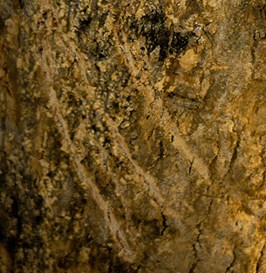
My first experience with the supernatural came from a trip to the Selous Reserve, to hunt Cape buffalo. I was following a pair of magnificent trackers—Andrea and Daniel, a Kikuyu and WaKamba, respectively—while they sorted out the path of a trio of dagga boys, when we saw a set of huge lion tracks; much larger than normal. It appeared this lion had killed an African porcupine; there were the marks of the huge, pointed quills.
The trackers immediately lost all color in their faces and backed away, to begin a heated, yet whispered exchange in Swahili. I can speak a fair amount of that language, and I caught the word ‘Mtosimba’—Lion-Man. I began to question them about it—I needed to know more. As we did our best to exchange facts through the language barrier, I understood that these brave men were quite afraid. “Uchawi hapana m’zuri hapa.” Bad magic.
My mind returned instantaneously to my youth—which was filled with mythological movies like Jason and The Argonauts, books from H.P. Lovecraft and J.R.R. Tolkien, as well as hours of Dungeons & Dragons—and I was filtering through the lists of monsters I’d read about as a younger man, when Andrea looked at me and uttered slowly “Mhan-Tee-Koh.”
My mouth went slightly agape, as I finally comprehended: a Manticore. This was no joke—a manticore has the body of the lion, the head of a man, a large spiked tail and a set of huge wings, not to mention a notoriously foul disposition. I tapped the Winchester 70, chambered in .416 Remington Magnum, and told them “Bunduki m’kubwa hapa.” Big rifle here.
“Ndio, twende haraka. Twende wa gharri.” They wanted to immediately return to the truck, though it was far away. Terry Calavrias—an excellent Professional Hunter—never did understand why we were forced to abandon the tracks. I’m not sure what his trackers told him, but I never said a word.
Years later, while hunting elephant in Matabeleland, Zimbabwe, I was able to work with yet another pair of talented trackers: M’Butha and Sylvester. We were trying to sort out the tracks of a large-footed bull leaving the dried-up waterhole, when ‘Butha and I saw a very strange set of tracks. They were buffalo tracks, sure enough, and looked to be from an old dagga bull, with well worn edges. However, there were two, not four. It was plain to see: this bull walked bipedal. ‘Butha began sweating profusely, though it was cool that morning, and when I offered him a cigarette, his hands were shaking while he lit it. “You are believing this, Bwana?”
I nodded in affirmation, and asked him to explain. He looked around to assure that we were alone—the rest of the party was on the far side of the waterhole examining a rather interesting specimen of dung—when ‘Butha explained what we saw, in his best English. “Qwatalii-Muna. It is a sorts of buffalo-man, he is walkings like a man, on two feets.” Minotaur, I knew, no doubt about it. “You will be needing the big rifle; give your bullets here, I am giving them blessings.” ‘Butha explained that in Botswana, the shenzi, the wild witch-doctor men, cursed the worst of criminals, and created these upright monsters that roam the desolate places. “The smaller rifles will not be working on Qwatalii-Muna, you need to break the spells with big m’futi.” M’Butha went on to explain that these ‘Cape Minotaurs’, if you will, are protected magically, and what I inferred from his tales was that the big elephant calibers—.404 Jeffery, .458 Lott, .470 Nitro Express and the like—were required for Qwatalii-Muna, and then with only the best of projectiles. After the blessing, we took a good bull elephant the next morning. Coincidence?
M’Butha also believes he had seen a chimera—a beast with the forelegs of a lion, hind legs of a goat, and three heads, dragon, lion and goat—once, deep in the mopane forests of Pandamatenga, but I can’t confirm that. He does, after all, enjoy his pombe.
Africa isn’t the only continent with strange, ancient beasts. Call him what you like—Yeti, Bigfoot, SamSquampch—but the fabled giant of the remote mountains has been a controversial topic for centuries. My own first exposure with this monster was in the wilds of northern Quebec, while pursuing caribou.
It was cold—dangerously cold—that December, and while crossing the hills that fill in the gaps between small ice-covered lakes, just at dusk, I heard a blood-curdling howl. Not the howl of a wolf, it was lower, guttural, tortured. I stopped in my tracks, and searching the ridgelines I saw, through the foggy binoculars, a creature—upright, huge, yet stooping—with the long stride of the ‘Squatch, slip over the horizon. I was carrying a .300 Winchester Magnum, and while that may be considered a little heavy for caribou, I’ll never carry a smaller caliber in a place like that again. I
’ve heard that howl in the Adirondacks as well—in the early bear season in September. At first I thought it was a pair of mating hipsters that had gotten lost and were making the best of the situation, but there was no mistaking it. From that day I’ve carried extra ammo loaded with Woodleigh Hydrostatically Stabilized solids, in both my .308 Winchester and .300 Winchester Magnum; I’m not taking any chances, nor do I wish to become a statistic. If you share your hunting area with a SamSquampch, look to the larger bore rifles: .35 Whelen, .338 Winchester Magnum, .45-70 Government, so you’ll return safely to your loved ones.
Years ago, in San Angelo, Texas, I was on a hunt with Federal Premium and Mossy Oak for trophy whitetail. My guide, Ben “Brother” Lawrence, and I had tagged out on the first evening, taking a tall seven-point buck. The next day we took a couple management does, and after that we were, well, bored. We took some game rides, trying to spot a huge buck that was reportedly on the ranch. The other gents on the hunt hadn’t been seeing much, despite their best efforts, and what they were seeing was skittish. While driving back to camp at dusk, Brother and I found out why. At the edge of the cedar thicket, three or four hundred yards out, it stood, broadside, while it’s blood-red eyes reflected the truck lights: Chupacabra.
“G-g-get the rifle!!” Brother stammered, as he fumbled for his binoculars for a better look. Despite my best efforts (I got hung up in the seatbelt in the rush) I couldn’t get to the Savage .243 Winchester in time. My last glimpse of the hairless, slavering, evil canine was an open mouthed growl-hiss, as it disappeared into the cedars. With a couple of flashlights, Brother grabbed his favorite .308, and I the little .243, and we tried to track it. Brother explained “These things are crafty; more often than not they’ll track you. With that little 6mm bullet, you need to place your shot carefully; this isn’t a coyote. I’ll watch ahead, you cover behind us.” We didn’t track it far when we’d found our own tracks in the dark cedar thicket; the Chupacabra had led us in a complete circle. Ben and I didn’t stay in there one moment longer, and we decided keep this experience to ourselves, but the story must be told now. After our encounter, the deer came back, and Brother and I were convinced the beast headed for greener pastures.
I consulted with an expert after that: a noted African Professional Hunter whom we’ll call “J.” who hunts in south Texas for half the year. “Phil, the Chupacabra is no stranger to me. While I don’t want to scare my clients, I see them on a regular basis during javelina hunts, and while I have yet to take one due to the legality of it all, they are here. Stick with the hotter 7mm and .30 caliber cartridges. I firmly believe these things are lycanthropes, and that’s why they are spotted at dawn and dusk. You’ll want to hammer them if you get a shot.” I know J. well, and I know he doesn’t lie. Is that the answer? Are they Werecoyotes? Does that legally confuse things if you hunt them in Chupacabra form? There’s no clarity in that law, but I’m taking no chances, and will follow J.’s advice.
If you prefer to stay with the confines of a traditional hunt, I wouldn’t blame you at all. There’s plenty of excitement, for sure, but if you seek the greatest adventure, pay strict attention, dig out your copy of the AD&D Monster Manual, and be ready to answer the call when opportunity knocks.
The Top 10
1. Minotaur
As stated above, you’ll want a large bore rifle—.375 H&H and larger—and a worthy guide who can differentiate the tracks from a normal bovine. Use the stiffest bullets available; solids are no handicap when dealing with Qwatalii-Muna.
2. Chimera
Though I’ve only heard tales of these creatures actually existing, I wouldn’t take them lightly. Three heads equals three times the ability to see you, and the capability of flight certainly changes the game. Were I serious about the pursuit of Chimerae, I’d opt for the hardest hitting double rifle I could handle effectively. The second shot may save your bacon.
3. Manticore
While the hunting of any lion—irrespective of whether or not it can fly, talk or kill you with a poisonous spiked tail—is a hotbed of media discussion, dealing with a manticore requires a large diameter expanding bullet, of good sectional density. Think Woodleigh Weldcore, Swift A-Frame and North Fork semi-spitzer, in a minimum of .40 caliber.
4. Chupacabra
Under this heading—though biologists have yet to affirm this fact—I’ll include all the lycanthropes: Werewolves, Werejackals, Werehyenae, and the like. They don’t require a large caliber (6.5mm and up is a good choice), but will require precise shot placement. Should you wound one, and have the misfortune to be bitten, well, I hope you like taste of Purina…
5. Sasquatch
Look, folks, people have been searching for the “Reigning Hide and Seek Champion” for decades, with little or no effect. It’s up to us hunters—we who can master the wild places of the world—to settle this debate. I like a rifle starting at a minimum of .30 caliber, and mated with a stout bullet. I see no handicap in carrying the big bore brush guns, like the .444 Marlin and .45-70 Government, as the SamSquampch likes the thick, heavily-forested places. I’d also carry a good revolver in .44 Magnum or .45 Colt as backup.
6. Rakshasa
Most common in India and Pakistan, I first heard tell of these evil spirits, wrapped in humanoid form with the outer appearance of a tiger, from the folks who spent time pursuing gaur, bear and tiger, when India was open to hunting. They inhabit the populated areas, living among us, and enjoy wearing the finest of fashion. I know hunting is closed in India, but Pakistan is open, and you’ll need a guide who is well versed in the magics of that region. This is the one hunt that I feel a handgun will work just fine, as the Rakshasa will more than likely be in the same room with you when it all goes down. A svelte .45 ACP—perhaps a quick-pointing 1911—would be my personal choice.
7. Naga
A hideous beast is the Naga, having a snake’s body and a female human head. They were encountered often in ancient, abandoned temples in Northern Africa and the Middle East, by archaeologists roaming the ancient ruins. I’d opt for a slower medium caliber, like .35 Whelen, .358 Winchester or .338 Federal, with a minimum of 225-grain slugs, with a low-power scope or peep sight. They are over 15 feet long, and quick as lightning, so a fast handling rifle is paramount. A good Jeff Cooper-style scout rifle would be perfect here.
8. Snarks
While Lewis Carroll made light-hearted poetry regarding the hunting of snarks, they are no joke at all. It was not by accident that George R.R. Martin included the snarks in his Song of Ice and Fire series—he understands the severity of a snark encounter. For these crafty little gremlins, I’d choose a good tactical 12-gauge shotgun, and the best 000-Buck loads you can find. And please, don’t take these home for taxidermy; they’re best left where they fall.
9. Vampire
If historical literature has proven one point concerning mythological creatures, it that Nos Feratu is one tough customer. While I’m no Professor Van Helsing, I have it on good authority that the Winchester SilverTip line was put into production especially for the vampire, and only later they discovered what a good general hunting bullet it was. The Ballistic Silver Tip line was brought to light for the Special Forces, who prefer to eradicate the living dead from a greater distance, and require the better Ballistic Coefficient. I’d also opt for a laminate stock comprised of holly…
10. Basilisk
While hunting hogs in Florida with the late Jay T. Carlson, who also happened to be a Professional Hunter in the Philippines, we discussed the komodo dragons of Southeast Asia, and how dangerous they could be. It was then that Jay T. related the dangers of a basilisk. “They differ from the komodo in that they have eight legs, and in that if you lock eyes with them, their gaze can turn your muscles to stone, and then they’ll have their way with you.” Jay routinely wore Serengeti sunglasses, the green-tint mirrored kind, to ward off the effect. “I can fake them out by staring at their feet, and while they try to do that gaze-thing, I let the 12-gauge sort them out.” Regrettably, Jay passed away before we had a chance to hunt basilisk together. I still wear green Serengeti’s in his honor.