
Bobby Dan Davis Blocker was born in 1928 in De Kalb, Texas, to Ora “Shack” and Mary Arizona Blocker. He attended military school as a child and excelled at football. Blocker played ball in college as well. The fact that he was 6’4” and weighed 320 pounds didn’t hurt his gridiron prospects.

While in college Blocker parlayed his immense size into jobs as both a rodeo performer and a bouncer in a bar. Despite his intimidating habitus, friends described him as good-natured and soft-hearted. Upon his graduation from college in 1950 Blocker received a letter from Uncle Sam.
Bobby Blocker Goes to War

Bobby Blocker was drafted in 1951. He took his basic training at Fort Polk, Louisiana, and was there molded into an infantryman. He spent another nine months honing his craft in Sapporo, Japan. In December of 1951, Blocker deployed to Korea with F Company, 2nd Battalion, 179th Infantry Regiment, 45th Infantry Division—the Thunderbirds. He served in-country through August of 1952.

Blocker landed at Inchon and by Christmas was in the thick of the fighting. In short order, he found himself near Chorwon in what is today North Korea. The series of fortifications that Blocker’s regiment manned was called the Jamestown Line. He remained in combat for 209 days.

The Jamestown Line was a series of trench systems. Where much of World War 2 had been a war of mobility, Korea frequently devolved into a bloody stalemate fought in foxholes and static trenches more akin to those of the First World War. Add to this the bitter cold and penetrating wind and you had a recipe for misery on a scale most modern folk cannot imagine.

Opposing units seesawed back and forth assaulting hills and taking fortifications in a war where success was measured in yards. Allied troops designated the dominating terrain feature Old Baldy, a distinctive promontory that held a commanding vantage over the entire area. The most critical piece of dirt in the area became known as Pork Chop Hill.

Bobby Blocker’s part in this sordid bloody production was simply the opening act. The Thunderbirds seized Pork Chop Hill, so named because of its geometric similarity to the familiar porcine comestible, in May of 1952. A seriously bloody fight took place between Allied troops and the Chinese the following year.

In April and July of 1953, some 347 Americans died against an estimated 1,500 Chinese dead. The two major battles for Pork Chop Hill gained notoriety due to their apparent utter pointlessness. Men bled out to hold terrain that had little significance in the real world. This fight unfolded while the UN Command was negotiating with the leadership of China and North Korea over the Korean Armistice Agreement. Both sides wanted the hill as a bargaining tool. Of all the reasons a man might have to die in battle, this was a really crappy one.

Back when Bobby Blocker called this desolate scrap of real estate home things were still plenty horrible. Blocker was acting First Sergeant on May 25, 1952, when his company manned positions on Hill 200 near Outpost Eerie. In the frenetic combat that followed six Americans were killed and a further 21 were wounded. At the same time, 132 Chinese soldiers fell.

Gordon Abts, an American grunt who earned the Silver Star for gallantry in May of that year, served under Sergeant Blocker. He later said, “(Blocker) was a great guy. He was very strong. He could take a beer can between two fingers and crush it. He was very athletic. He was loud, but very friendly and got along with everybody. He was a great leader.”

SGT Blocker was wounded rescuing his men under fire. He was credited with saving the lives of several members of his unit during combat. At a time when most Chinese attacks occurred at night, Blocker and his men fought gallantly against the infiltrating Communist hordes.

Blocker’s 179th Infantry Regiment was taken off the line in July of 1952. Only then was SGT Blocker finally evacuated to a hospital. The Thunderbirds went into reserve, and by the end of the summer Blocker was headed home. When he left the Army he had been awarded the Purple Heart, the National Defense Service Medal, the Korean Service Medal with two bronze campaign stars, the Republic of Korea Presidential Unit Citation, the United Nations Service Medal, the Korean War Service Medal, and the Combat Infantryman Badge.
Now What?

When he returned to the US the gigantic combat veteran taught high school English and drama before taking over a sixth-grade classroom at Eddy Elementary School in Carlsbad, New Mexico. Now married to his new wife Dolphia, the couple eventually moved to Los Angeles.

Blocker had a Master’s degree in drama and began pursuing his doctorate at UCLA. Blocker was from Texas and typically dressed the part. At one point he was standing in a phone booth arrayed in his typical Texan attire when the casting director for a television western spotted him. Things got busy from there.

One of his first credited roles was as the Goon in the Three Stooges short Outer Space Jitters in 1957. He made the playbill as Don Blocker for reasons that have been lost to history. At the same time, he was cast as the blacksmith in two episodes of Gunsmoke. Small parts in Colt .45, The Restless Gun, The Sheriff of Cochise, Cheyenne, The Rifleman, Cimarron City, Sergeant Preston of the Yukon, Wagon Train, and Have Gun Will Travel followed. This was the Golden Age of TV Westerns, and Bobby Blocker rode the wave. Throughout it all Blocker parlayed his impressive size into screen-filling characters alongside most of the major actors of the day.

In 1959 Bobby Blocker landed his dream job. He was cast as Eric “Hoss” Cartwright in the hit NBC Western series Bonanza. He by now marketed himself as Dan Blocker professionally. Blocker played the iconic role through 415 episodes.

When interviewed about the unique combination of power and compassion he poured into the character of Hoss Cartwright, Blocker said he tried to channel Stephen Grellet, the prominent 18th-century French-American Quaker missionary. Grellet once wrote, “We shall pass this way on Earth but once, if there is any kindness we can show, or good act we can do, let us do it now, for we will never pass this way again.” This was Hoss Cartwright’s mantra.
The Rest of the Story

While Hoss was by far Blocker’s most famous role, he logged a little time on the big screen as well. He starred alongside Frank Sinatra in the 1963 comedy Come Blow Your Horn and again five years later as a seasoned tough guy with Sinatra in Lady in Cement. Potentially his most thought-provoking Hollywood encounter involved the esteemed director Stanley Kubrick.

Kubrick was casting his bizarre anti-war film Dr. Strangelove and needed somebody large and menacing to play Major TJ “King” Kong. Peter Sellers carried the film playing multiple parts, but he felt that the role of Kong should be a standalone character. Blocker’s agent perused the script and refused to allow him to read for it. The iconic part subsequently went to Slim Pickens. Dr. Strangelove would have had an entirely different flavor had it been Hoss Cartwright riding that thermonuclear bomb while maniacally waving his cowboy hat.

Blocker worked regularly into the 1970s on projects as disparate as The Cockeyed Cowboys of Calico County and The Flip Wilson Show. Along the way, he was gifted partial ownership in several Bonanza Steakhouse restaurants in return for his service as the chain’s commercial spokesman while in character as Hoss.

Dan and his wife Dolphia had four children. One son, Dirk Blocker, became an actor of some renown in his own right. Dirk’s most familiar role was that of Marine pilot Jerry Bragg in the awesome 1970’s-era TV epic Black Sheep Squadron. Black Sheep Squadron was a staple of my childhood. Looking back on it I can see the family resemblance. Dan’s son David became an Emmy-winning TV producer. One of his twin daughters was a visual artist.

Dan Blocker was a great fan of high-performance automobiles. He maintained a 1965 Chevrolet Chevelle Z-16 as well as a 1965 Huffaker Genie Mk 10 racer he christened the Vinegaroon. The Vinegaroon raced for Chevrolet in 1965 and 1966 as part of the US Road Racing Championship series as well as the 1966 Can-Am championship.

In May of 1972 Blocker went into the Daniel Freeman Hospital in LA to have his gallbladder removed. A cholecystectomy is a common surgical procedure that should have been fairly routine. The hulking combat veteran who played the lovable Hoss Cartwright suffered a pulmonary embolus post-operatively and died both suddenly and unexpectedly. He was only 43.

In an unprecedented effort, the writers of Bonanza wrote Hoss Cartwright’s death into the show’s narrative. More commonly when a major character died during the production of a TV show the writers and producers would simply gloss over it. In the later series Bonanza: The Next Generation it is explained that Hoss drowned saving a man’s life.

Bonanza sputtered on for one more year without Hoss, but it never was quite the same. That 14thseason wrapped in January of 1973 and has been the least popular of the show’s protracted run. Dan Blocker–actor, war hero, father, and cowboy–is buried in the Woodmen Cemetery in De Kalb, Texas, alongside his father, mother, and sister. His is a fairly unassuming grave for a truly outsized guy.
- Assume nothing.
- Never go against your gut.
- Everyone is potentially under opposition control.
- Do not look back; you are never completely alone.
- Go with the flow, blend in.
- Vary your pattern and stay within your cover.
- Lull them into a sense of complacency.
- Do not harass the opposition.
- Pick the time and place for action.
- Keep your options open.

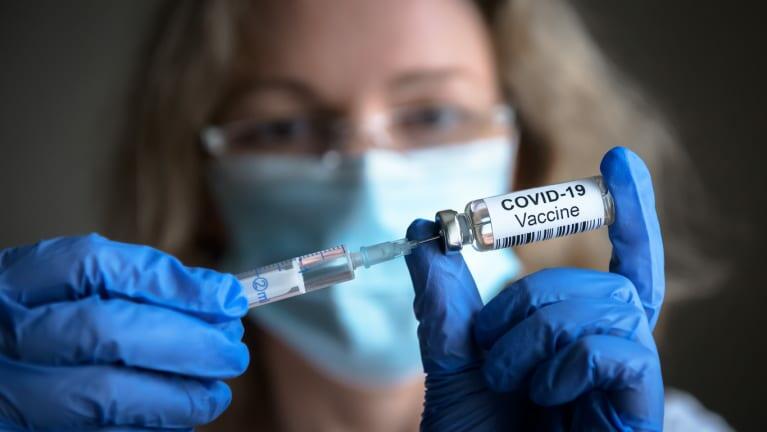
Australian police are using a brutal ambush on two cops to encourage residents to rat out neighbors who are skeptical of the Covid-10 vaccine, or harbor anti-government views.
On December 12, two Brisbane police officers were gunned down by a family of rural Australians, who opened fire as the two officers approached their home. Constables Rachel McCrow, 29, and Matthew Arnold, 26 died in the attack, while a third officer, Constable Randall Kirk, was shot in the leg but managed to escape. A fourth officer, Keely Brough, fled to safety in the bushes.
Later that evening, members of the rural family were killed in a shootout with tactical police.
In response to the incident, Deputy Commissioner Tracy Linford suggested that neighbors need to assume anyone who harbors non-mainstream views is clearly a threat.

“As I said before, if there’s anybody out there that knows of someone that might be showing concerning behavior around conspiracy theories, anti-government, anti-police, conspiracy theories around COVID-19 vaccination as what we’re seeing with [shooting perpetrators] the Train family, we’d want to know about it. We want to know about that. And you can either contact the police directly or go through Crime Stoppers,” she said.
In response, Rebel News‘ Avi Yemini replied: “Queensland Police appealing to the public to dob in their neighbours who “are anti-government or believe Covid-19 vaccine conspiracy theories.””
This has not sat well with many:
Categories
Fliegerfaust – Nazi MANPADS
MACOMB COUNTY, Mich. (FOX 2) – A federally licensed firearms dealer in Macomb County is accused of importing devices that convert semiautomatic guns into machine guns, commonly known as Glock switches.
According to the Department of Justice, Chase Farmer, 23, of St. Clair Shores, owns Clinton Township-based Shall Not Be Infringed LLC. From November 2020 until March 2021, authorities allege Farmer used a Russian website to order the switches and drop-in auto sears, which are also used to convert guns into automatic weapons.
READ: What is a Glock switch?
While ordering these items, authorities say Farmer used an alias and falsified details in his PayPal payments. Agents with the Bureau of Alcohol, Tobacco, Firearms, and Explosives found evidence of the crimes and evidence he did not keep proper records, authorities said.
Farmer was licensed to deal in firearms, but he was not licensed to import guns, federal authorities say.
He was charged in a federal indictment with illegally importing Glock conversion devices from Russia and failing to keep proper records. He faces up to 10 years in prison.

U.S.A. – -(Ammoland.com)- “A federal grand jury in Des Moines returned an indictment … charging Adair Chief of Police Bradley Wendt with unlawfully obtaining and possessing machine guns,” the United States Attorney’s Office for the Southern District of Idaho announced in a mid-December press release. “According to unsealed court documents, Wendt … exploited his position … to acquire 10 machine guns purportedly for the official duties and responsibilities of the Adair Police Department, but later resold several of those machine guns at a significant profit.”
He also, per the release, “acquired 13 machine guns for his Denison-based gun store, BW Outfitters, through false statements to the ATF that the machine guns were being demonstrated for future potential purchase by the Adair Police Department … sought to demonstrate or purchase approximately 90 machine guns for the Adair Police Department, which serves a town of less than 800 people [and, with an accomplice] hosted public machine gun shoots, where they charged patrons money…”
Nice work if you can get it. The problem is, without a badge, you can’t, and therein lies the crux of police as “Only Ones.”
That’s a term I started using (and trying to get others to adopt) after a DEA agent explained to a classroom full of school children that he was “the only one professional enough” to carry a Glock and then shot himself in the foot trying to re-holster it. As I explain to readers on my The War in Guns blog:
“[T]he purpose of this feature has never been to bash cops. The only reason I do this is to amass a credible body of evidence to present when those who would deny our right to keep and bear arms use the argument that only government enforcers are professional and trained enough to do so safely and responsibly. And it’s also used to illustrate when those of official status, rank, or privilege, both in law enforcement and in some other government position, get special breaks not available to we commoners, particularly (but not exclusively) when they’re involved in gun-related incidents.”
Over the years, and without particularly trying, that body of evidence just keeps growing, and growing, and growing. As the character Brant from the dystopian science fiction film Blade Runner noted:
“You know the score, pal. If you’re not cop, you’re little people.”
They sure do make it tough to “Back the Blue” sometimes, don’t they? For those gun owners who wave that flag and insist it’s just “a few bad apples,” what percent would not obey orders to confiscate your guns? Show your work.
The Adair indictment also illustrates another danger, particularly in jurisdictions where police officials are either enthusiastically on board (or even driving) the citizen disarmament bandwagon.
“What Would Happen if ‘Battle of Athens’ Round Two Ever Becomes Necessary?” I asked back in 2014. That article looked at the militarization of police departments with surplus equipment from the feds. It focused on recent acquisitions by the McMinn County Sheriff’s Department and speculated on how the World War Two veterans trying to ensure election integrity against a corrupt sheriff and deputies would have fared had they been greeted by full autos, grenade launchers, and MRAPs.
Let’s keep working for freedom to reduce the need to ever have to find out. Let’s not forget that things may come down to resistance or surrender.
While the charges against Chief Wendt are just that, while he is entitled to a presumption of innocence until proven guilty beyond a reasonable doubt, and while the Justice Department and ATF have given gun owners very little reason of late to trust any charges they bring as anything other than tyrannical overreach and/or in-your-face political rape, it’s not out of line to speculate that exploitation of the badge was going on.
There is one thing that is provable, and this one that I’m quoting from The Captain’s Journal is beyond the shadow of a doubt:
“There is a solution to all of this, of course. Undo the infringement of the NFA, GCA and Hughes Amendment. Then no one will be able to enrich themselves this way by selling machine guns.”
About David Codrea:
David Codrea is the winner of multiple journalist awards for investigating/defending the RKBA and a long-time gun owner rights advocate who defiantly challenges the folly of citizen disarmament. He blogs at “The War on Guns: Notes from the Resistance,” is a regularly featured contributor to Firearms News, and posts on Twitter: @dcodrea and Facebook.
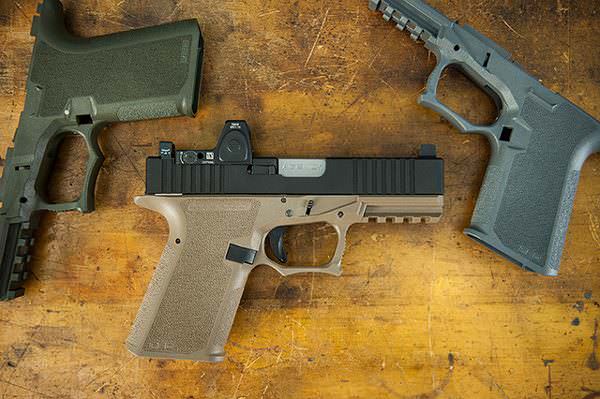
U.S.A. –-(AmmoLand.com)- The BATFE has released a letter to FFLs and the public, “clarifying” their new rules regarding so-called “80% receivers,” which were adopted earlier this year. The general understanding within the industry has been that the new regulation had the impact of requiring “unfinished receivers” to be treated as “firearms” if they were sold together with the parts and tools needed to turn them into functional firearms.
The industry responded by separating the “unfinished receivers” from the tools and parts kits and selling them separately, with no jigs, tools, or any other parts needed to finish them. The regulatory changes were not authorized by Congress and are currently being challenged in court as an unconstitutional overstep by the BATFE.
This new letter moves the goalposts yet again. Now they are claiming that, with regard to “unfinished receivers” for striker-fired handguns, they consider these “partially completed receivers” to be “readily convertible” into functional receivers, and therefore they must be treated exactly the same as completed receivers.
This means the manufacturers are now required to be licensed by the government to manufacture and sell guns and that each receiver be marked with a serial number and manufacturer information, sold only through licensed firearm dealers. Now purchasers will be subjected to identification and background checks.
The letter graciously invites anyone unsure whether the “unfinished receiver” they own or are manufacturing meets the nebulous criteria of being “readily convertible” into a firearm to send them a sample. They’ll be happy to let you know…eventually.
What they absolutely refuse to do, is publish a clear definition of exactly where the line is between a “receiver” and a “receiver-shaped object.” For several years they had a relatively clear standard, with people occasionally testing the borders of the standard.
It was understood that, as long as certain holes were not drilled, and certain sections weren’t machined to size and shape, the item was a paperweight, regardless of what tools, parts, or accessories might come along with it and regardless of how it might be advertised. Manufacturers who made “80% receivers” with drill hole positions marked were slapped down, as were those who manufactured their items with two separate colors and densities of polymer, which the BATFE said were too easy to finish. And some manufacturers loudly marketed their products as complete, do-it-yourself, “untraceable” gun kits, requiring no background checks or any registration – which really annoyed the control freaks.
The BATFE’s new regulations, adopted last April, threw much of the previously established understanding right out the window.
It cracked down on advertising that promoted the items as a way of avoiding gun control laws and required that “kits” be treated like guns, regardless of how complete or incomplete the receiver might be. But that wasn’t good enough for them, so now they have gone a step further, redefining “receiver” to include “unfinished receivers,” which they say are “readily convertible” into “receivers.”
The BATFE’s “reimagined” interpretations of the Gun Control Act of 1968 were already a serious overstep of their authority. The entire federal gun control regulatory scheme was unconstitutional from the get-go, not just for its violation of the Second Amendment, but for Congress’s failure to do their job of fleshing out the details of their legislation, instead delegating the lion’s share of that work to bureaucrats in the BATFE.
For the time being, this latest “clarification” of their regulations only applies to “unfinished receivers” for striker-fired handguns, like those made by Polymer 80 and Lone Wolf, but another “clarification” applying the same nebulous standards to “unfinished receivers” for other pistols and rifles, will almost certainly be forthcoming.
All of this nonsense is being challenged in court, but there’s no telling how long it might take for these matters to make their way to the Supreme Court for final resolution. Since the Bruen decision striking down New York’s arbitrary concealed carry requirements and establishing a clear standard for judging Second Amendment cases, it appears that some of the Circuit Courts of Appeal – particularly those that serve anti-rights-dominant areas like New York and California – are intentionally dragging their feet and doing their best to keep Second Amendment challenges from getting to the SCOTUS.
Are they hoping for Democrats to follow through on their threats to “stack the Court,” hoping for hard-line originalists like Justice Clarence Thomas to retire or kick the bucket, or just trying to allow the most damage possible before the eventual smackdown of their hubris? That’s all anyone’s guess, but while we wait for this BS to be rectified, companies like Polymer 80 and Lone Wolf are under the gun and at risk of being driven out of business, criminally prosecuted, or both.
Republican Representatives in Congress need to address this abusive, bureaucratic corruption as soon as the new Congress is seated in January, and not just with a strongly worded – and easily ignored – letter, but with real reform legislation. With Republicans holding a majority in the US House, they should be able to force a bill out of that body in pretty short order. Getting it through the Senate would be a challenge but not an impossibility, and even if they can’t get it through, the attempt would highlight the BATFE’s excesses and inconsistencies.
This type of bureaucratic overreach is a total violation of the process, ideals, and objectives of the founders and must be reined in by Congress. That’s not likely to happen unless your cowardly elected servants hear from you loud, long, and unequivocally. The Congressional Switchboard can be reached by calling 202-224-3121.
About Jeff Knox:
Jeff Knox is a second-generation political activist and director of The Firearms Coalition. His father, Neal Knox led many of the early gun rights battles for your right to keep and bear arms. Read Neal Knox – The Gun Rights War.
The Firearms Coalition is a loose-knit coalition of individual Second Amendment activists, clubs and civil rights organizations. Founded by Neal Knox in 1984, the organization provides support to grassroots activists in the form of education, analysis of current issues, and with a historical perspective of the gun rights movement. The Firearms Coalitio
Categories
Winchester 73 Movie By Joe Engesser
In 1950, Universal-International released Winchester ’73, a movie that helped revive both the classic Western genre and James Stewart’s post-war acting image. The film was praised by critics and moviegoers alike, winning an award for Best Written American Western by the Writers Guild of America. Today, Winchester ’73 is widely considered one of the top Golden Age Westerns and is remembered fondly by fans of the gun that inspired the iconic film.

Author Stuart Lake, best known for penning the fictionalized biography of Wyatt Earp, wrote the original story concept for Winchester ‘73. Lake claimed his manuscript was based on a historic Winchester 1873 that was won in a shooting match and later, after being “traded, pawned, lost as a gambling debt”, the rifle was taken to Caldwell, Kansas, and presented to Marshal Henry Brown. While Henry Brown’s rifle is real, Stuart’s account is highly embellished.
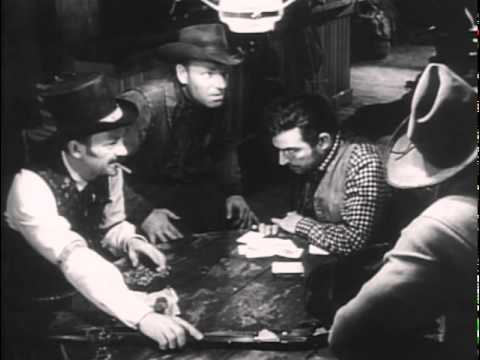
The Winchester ’73 movie’s central conflict (and arguably the film’s true star) is a Winchester 1 of 1000 rifle, a gun that takes an epic journey across the frontier as it passes between cowboys, outlaws, and Indians who seek to own the incredible weapon. We’ll take a look at some of the history and lore behind the film, and examine the guns portrayed on screen. Needless to say, there are numerous spoilers ahead. You’ve been warned!
Search for the Winchester 1 of 1000 Rifles
As part of the publicity campaign surrounding the release of the Winchester ’73 movie, Universal ran magazine ads before production seeking to find some surviving examples of the rare 1 of 1000 Model 1873 Winchester rifle and collect information on the guns. Universal wrote “Remember, we don’t want your “One of One Thousand” Model 73. We are only trying to find out how many of them are still in existence.”

The owner of a potential 1 of 1000 had to supply a photo of their rifle and a notarized letter of ownership, the serial number, and any additional information known about the gun, and the reward for the first 20 authentic respondents was a new Model 1894 rifle. The program was a success, bringing 22 previously unknown Winchester 1 of 1000s into the public eye and sparking a renewed interest in antique gun collecting that continues to persist today.

In a fall, 1950 press release, Universal wrote, “From obscurity these unique “One of One Thousand” Winchester Model 1873 rifles have graduated within only five months into one of the most sought after collector’s items in the country. Even garden variety Model 1873’s have doubled in price in the last few months.”
Winchester ‘73
The Winchester ’73 movie opens with a title card declaring, “This is the story of the Winchester Rifle Model 1873 “The gun that won the West” To cowman, outlaw, peace officer or soldier, the Winchester ’73 was a treasured possession.” The film’s assertion is largely accurate, as Oliver Winchester’s steel-framed Model 1873 was one of the bestselling guns of the era.

Lin McAdam (James Stewart) and his faithful sidekick ‘High-Spade’ (Millard Mitchell) ride into Dodge City searching for someone they suspect will be drawn into a shooting contest to commemorate the U.S. Centennial. The grand prize is a coveted Winchester 73 One of One Thousand rifle.

Lin decides to enter the shooting contest himself after admiring the engraved rifle in the window. The treasured Winchester has captured the attention of the entire town, including Marshall Wyatt Earp. “The finest gun in the world,” Earp states, holding up the prized 1 of 1000 before the competition and noting that every so often, a Winchester 1873 comes out “just perfect.”

The Winchester 1 of 1000 Rifle
Historically, the Winchester One of One Thousand rifles were announced in 1875 when Winchester Repeating Arms Company discovered during factory testing that a small fraction of their rifles shot with greater accuracy. The company decided to market these exceptional rifles as a premium model that could be obtained through special order.

As Winchester described in their catalogs, “The barrel of every sporting rifle we make will be proved and shot at a target, and the target will be numbered to correspond with the barrel and be attached to it. All of these barrels that are found to make targets of extra merit will be made up into guns with set-triggers and extra finish and marked as a designating name, “One of One Thousand,” and sold at $100.00.”
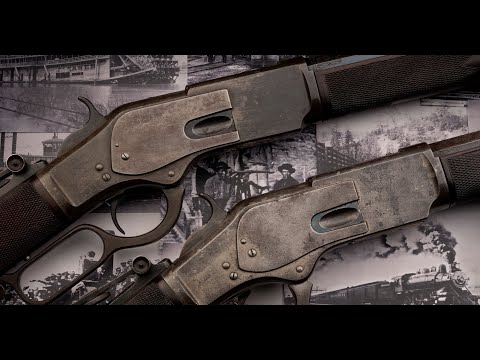
While a standard Winchester 1873 was priced around $50, a One of One Thousand rifle could cost a determined buyer up to $100 or more depending on the additional custom features requested. In an era where farmland could cost less than $15 an acre in some regions out west, these exceptional Winchesters were truly a luxury firearm for most frontiersmen. In the Winchester ’73 movie, Indian trader Lamont (John McIntire) offers $300 for the rifle, and Wyatt Earp declares he’d “give up my left hand” for it.

The Shooting Contest
In the Winchester ’73 movie, Lin and his rival, Dutch (Stephen McNally), enter the shooting competition that’s presided over by Wyatt Earp and Bat Masterson. Historically, Earp and Masterson did indeed serve as Dodge City law enforcement during the time period, and writer Stuart Lake was well acquainted with both men.

After tying in the first round, Lin and Dutch take turns landing shots on increasingly difficult targets, with Lin finally winning the contest by putting a bullet through the center of a stamp. Director Anthony Mann said that James Stewart practiced so hard with the Winchester rifle that his knuckles bled. Stewart did most of the shooting himself, only relying on renowned marksman Herb Parson to perform the final trick shot.

Lin is presented with the Winchester 1 of 1000 for his marksmanship, but his victory his short-lived when Dutch jumps him and flees town with the remarkable rifle in tow. Winchester ’73 then becomes a film about the rifle’s journey and how the desirable gun changes hands and impacts the colorful cast of Old West archetypes it encounters between Dodge City and Tascosa, Texas.

“Here you’ve got all these men… running around to get their hands on this goddam rifle, instead of going after a beautiful blonde like me.” – Actress Shelley Winters on ‘Winchester ’73’
The American Centennial
In the Winchester ’73 movie, the Dodge City shooting competition takes place on July 4, 1876, the 100th anniversary of the signing of the Declaration of Independence. True to the film, the American Centennial was one of the most culturally significant events of the 19th century and major gun manufacturers like Winchester used the celebration as an opportunity to display their latest offerings.

The 1876 Philadelphia Centennial Exposition was a showcase for American ingenuity, and Winchester spared no expense. The intrepid gunmaker exhibited nearly 200 firearms representing about 50 different styles and unveiled a variety of new ammunition for their rifles. Representatives from the frontier states and territories painted the West as a land of opportunity for the resourceful pioneer, but word of Custer’s defeat at the Little Bighorn cast a shadow over the celebration.

Young Bull’s Attack
In Winchester ’73, news of the Little Big Horn is starting to reach the far-flung corners of the frontier, and everyone is on edge, including a U.S. Cavalry camp that Lin and High-Spade encounter. Lin attributes the Lakota victory to their use of repeating rifles, commenting, “It seems they knew all about your Springfields being single-shot. They sent in the first wave light so it’d draw the fire! Then they sent in a heavy second wave before the Custer men had a chance to reload!”

Some Native Americans did use repeating rifles at the Little Bighorn, and settlers like Granville Stuart lamented that the 7th Cavalry weren’t equipped with Winchester 1873 rifles instead of the Springfield 1873 trapdoor carbine. In a letter to Winchester, Stewart wrote, “If poor Custer’s heroic band had been armed with these rifles, they would have covered the earth with dead Indians for 500 yards around.”

The shootout in Winchester ’73 between the U.S. Cavalry and Young Bull’s band is likely inspired by the Wagon Box Fight, a historic battle that occurred 9 years earlier near Fort Phil Kearny, Wyoming. Two of the guides in the Wagon Box Fight were equipped with Henry rifles and reportedly discharged over 100 rounds of .44 rimfire during the battle, helping fend off more than 1,000 Native Americans until reinforcements arrived. Crazy Horse participated in the battle and learned from his defeat, and by 1876 many Lakota Warriors were better armed than Custer’s men.
The Gun that Won the West
Only 132 One of One Thousand Winchester 1873 Model rifles were ever produced, making for a truly unique and desirable firearm. After Lin wins the shooting competition, the prized Winchester changes hands eight times throughout the movie, and the spotlight always stays on the film’s true star, the Winchester 73 rifle.

Even the final scene in Winchester ’73, a classic embrace between hero and leading lady, is punctuated by the presence of the famous firearm. As James Stewart clutches Shelley Winters in one arm, he gazes down at his treasured rifle as the camera zooms into the plate on the buttstock, the music swells to a crescendo, and the credits roll. Love can be fleeting, but a good Winchester is forever.
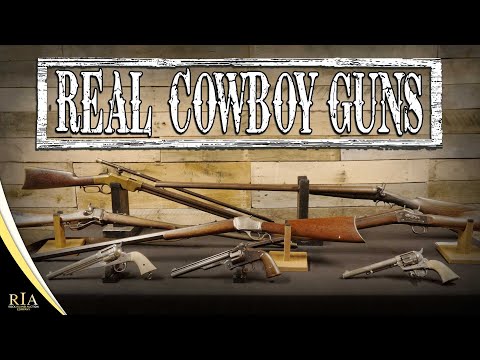
In 1950, the Winchester ’73 movie helped elevate its iconic namesake to one of the most sought-after collector guns in the world, and that trend continues as interest in historic arms collecting is hotter than ever at Rock Island Auction Company. Gun collecting and pop culture have always gone hand in hand, so subscribe to the weekly Rock Island Auction newsletter to receive new gun blogs and gun videos every week. From articles on the Old West guns of 1883, True Grit, and Quigley Down Under, to modern hits like the Walking Dead, Yellowstone, and Star Wars, we explore the most popular and intriguing guns of Hollywood.