


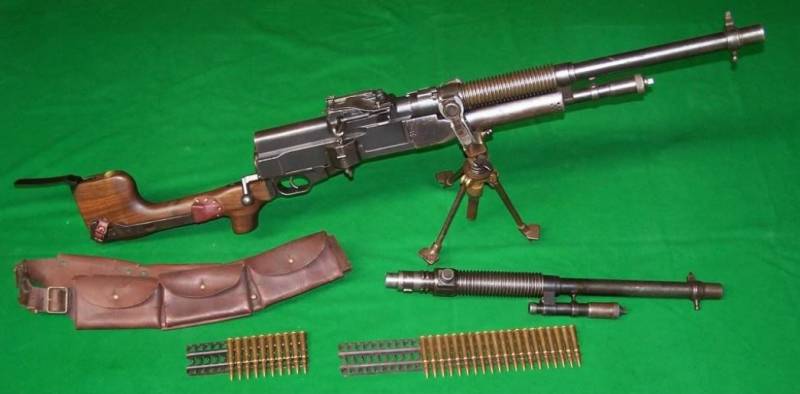
stories about weapons. Creation of an air-cooled machine gun arr. 1900 was a great achievement for both the Hotchkiss company and the French military, who were able to understand that in addition to Maxim machine guns, other systems have the right to exist, and they are in many ways no worse. However, having received this heavy machine gun on a tripod, they immediately realized something else, namely, that they would absolutely need another machine gun – lighter and more convenient for use in cavalry and infantry for fire support in conditions where heavy machine guns are used will be impossible. This is how the idea of a “gun-machine gun” arose, which, however, has already found its embodiment in the Madsen light machine gun. But the French army could not take it into service due to the need to unify weapons.
That is, the new machine gun had to copy the old one, but at the same time be lighter, more transportable and have the same cartridge supply system with the easel machine gun. To solve this problem was entrusted to the same designers of the Hotchkiss company – the American Lawrence Bennett (or, as he was called in the French manner – Benet) and his French assistant Henri Mercier. And they successfully coped with their task. So a machine gun was born with three names at once: “Hotchkiss” Mk I, “Hotchkiss portable” and the Bene-Mercier M1909 machine gun. In general, Adolf Odkolek could only rejoice, because it was his idea that was also embodied in this machine gun, which, by the way, was mentioned in all British instructions for firing from this machine gun.
The production of the machine gun began at the Hotchkiss factory in Saint-Denis in Paris in 1909, but in 1914, due to the threat of the capture of the city by the German army, it was transferred to Lyon along with the factory. The next year, the British government decided to produce this machine gun under license at a factory in Coventry. By the end of the war, more than 40 M000s had already been manufactured there.
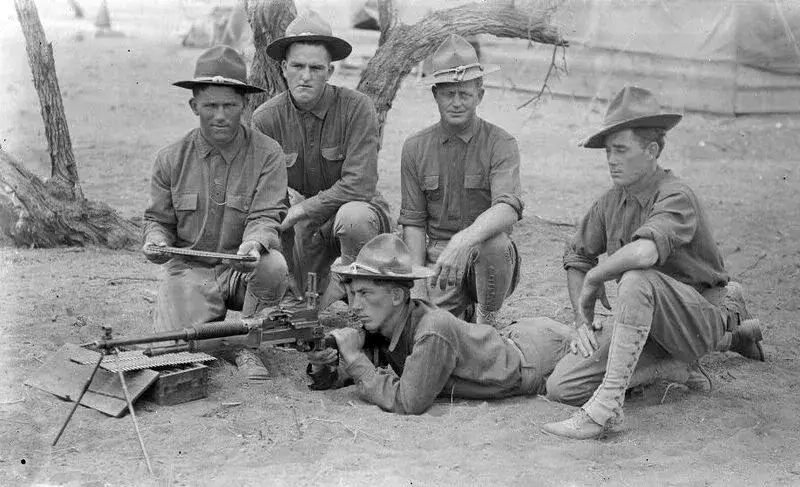
At the same time, the production of a machine gun was launched in the United States at the enterprises of the Springfield Arsenal and at the Colt company. However, total production in the United States was only 670 units. It may not seem like much, but for the US Army of that time it was a significant batch. Here it was named “Bene-Mercier machine gun, caliber .30, model USA 1909”. The American model differed from the British machine guns by the presence of a bipod on the barrel and an emphasis on the butt, as well as an optical sight. Well, he also had his own caliber, American. Also, for Colt machine guns, from the gas valve to the front sight, the barrel had an unusual very small faceted cut, reminiscent of the wall decoration at our Kremlin Chamber of Facets!
TTX English and American machine guns “Hotchkiss” М1909:
Hotchkiss Mk.I and Bennet-Mercier M1909
Caliber: .303 British (7.7x57R); .30-06 (7.62×63)
Weight: 12,8 kg; 15 kg
Length: 1190 mm; 1244 mm
Barrel length: 565 mm; 610 mm
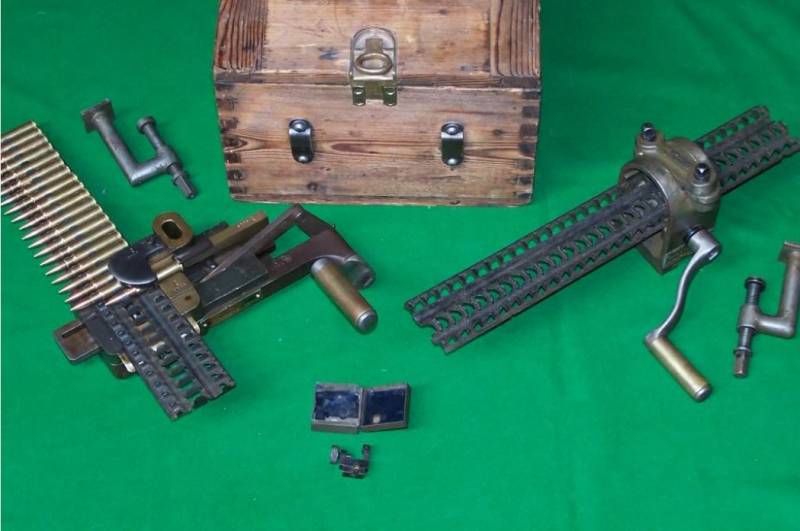
Feed: 9, 14, or 30-round rigid cassette tapes or 50-round semi-rigid tapes; hard cassettes for 30 rounds
Rate of fire: 500 rounds per minute; 550 rounds per minute
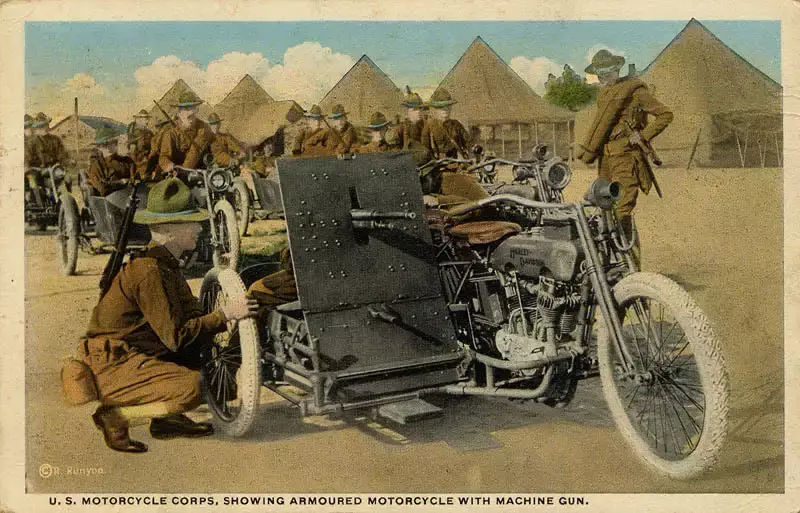
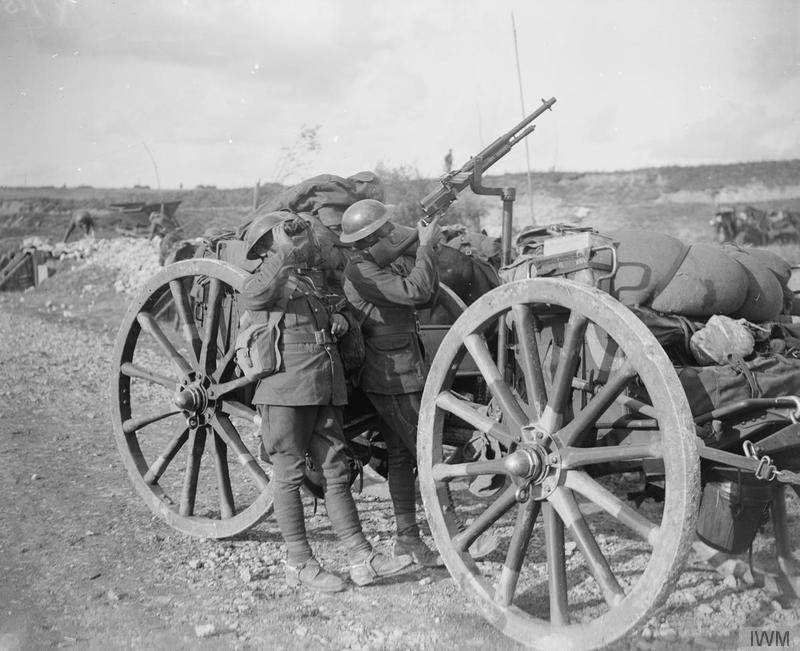
It is interesting that the Hotchkiss, adopted by the French military in 1909, for some reason, was not first used as an infantry weapon. 700 copies of the machine gun were handed over to the fortresses of Verdun, and after the start of the war they were used on some aircraft, and then … in tanks Mk V* purchased from the UK.
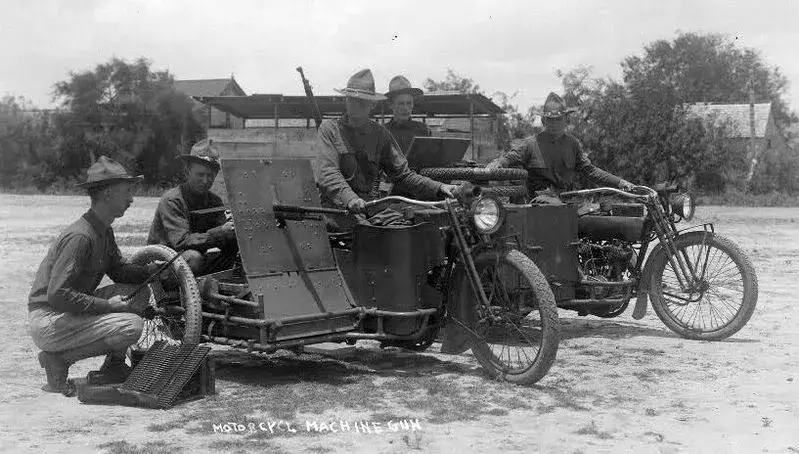
The British .303 Hotchkiss Mk I variant produced in the UK at the Coventry factory was issued to some cavalry regiments, while the Mk I*, with its wooden stock replaced by a pistol grip, was widely used on British tanks.
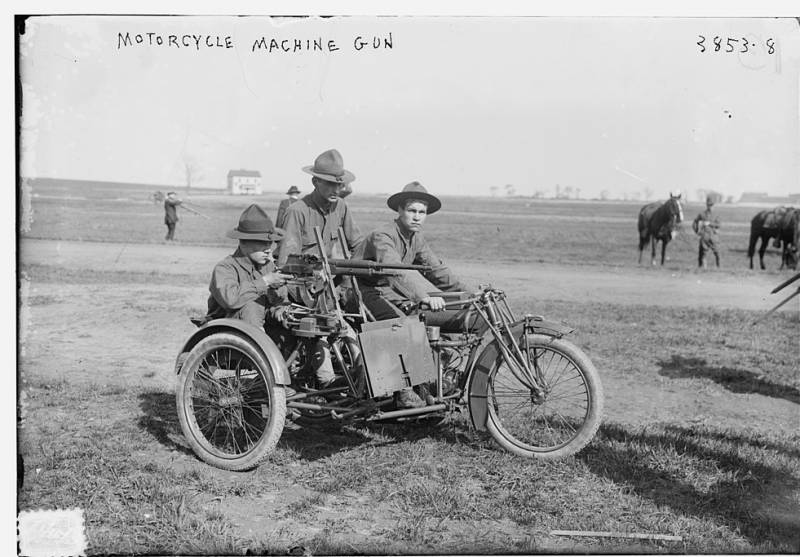
It was also used in the armies of Belgium, Sweden and Mexico. And in the armed forces of France and Great Britain, the M1909 machine gun was used not only during the First, but also during the Second World War. They armed the Australian Light Horse, the New Zealand Mounted Rifle Brigade, the Camel Corps and parts of the Duke of Lancaster’s Yeomanry. In 1915-1917. it was used in the Sinai and Palestine campaigns. And in the same 1916, the American army unsuccessfully tried to use four M1909 machine guns against Pancho Villa’s Mexican rebels during the latter’s raid on the city of Columbus, New Mexico. Initially, the press said that they refused to work due to design flaws, but later it turned out that the machine gun crews simply were not trained to handle them.
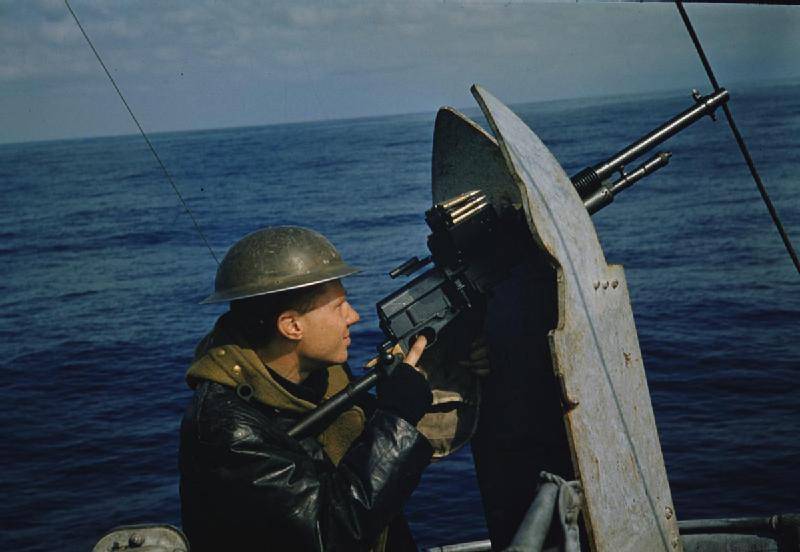
So, American machine guns often broke drummers and extractors. Due to the difficulty of replacing broken parts at night, the press began derisively calling the M1909 “daylight weapons”, because in the dark, soldiers often inserted one important detail upside down. Major Julian Hatcher was assigned to study the problem, and he found that almost all cases of delays in firing and machine gun failures were caused by … human error, that is, poor training of machine gunners.
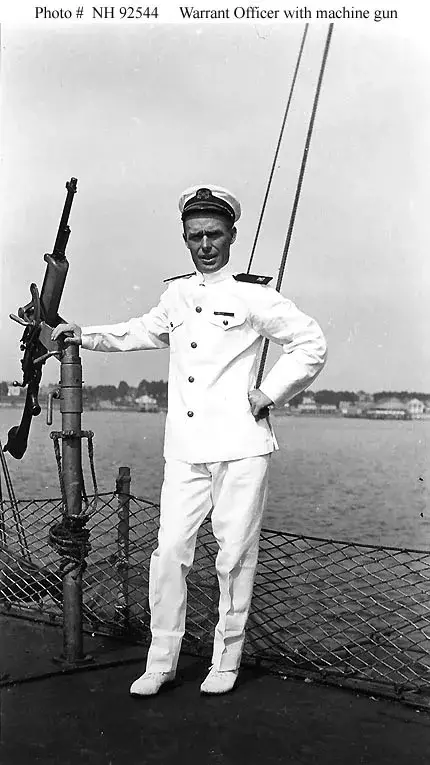
After the soldiers learned a little, the M1909 began to be considered a completely effective weapon. That’s just the production of this machine gun in the United States was discontinued before the First World War. Only a small part of them ended up in the army, because of which, after entering the war, their release had to be urgently resumed.
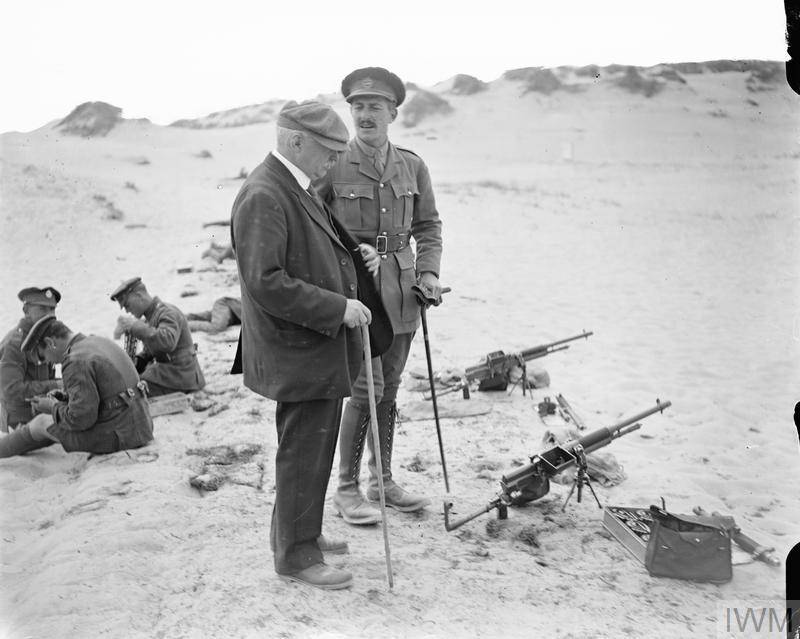
Experts note that, although, in general, Hotchkiss portable machine guns during the war years were in the shadow of other, more commercially successful systems (for example, the Lewis machine gun), they themselves were simple in design and fairly reliable samples. An important advantage of these machine guns was massive barrels, which allowed (in case of emergency) to conduct effective continuous fire up to 1000 shots without changing the barrel or cooling down (and usually the shooters were recommended to pause in firing after 200-300 shots).
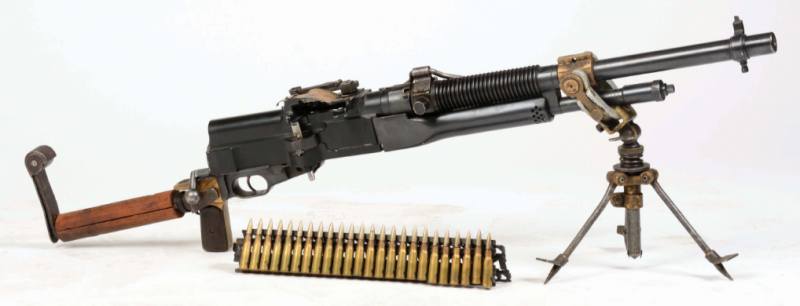
What were the design features of this machine gun, which, in fact, became a reduced copy of the Hotchkiss machine gun, but at the same time retained its high fire performance?
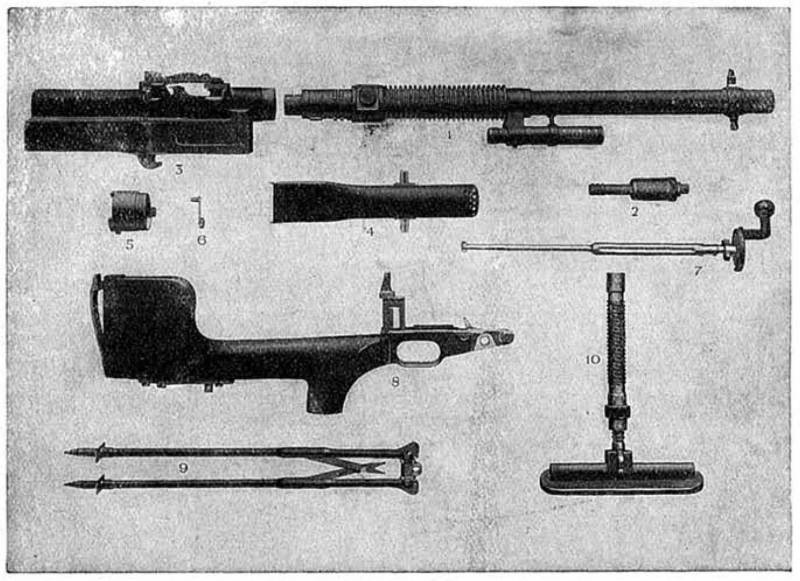
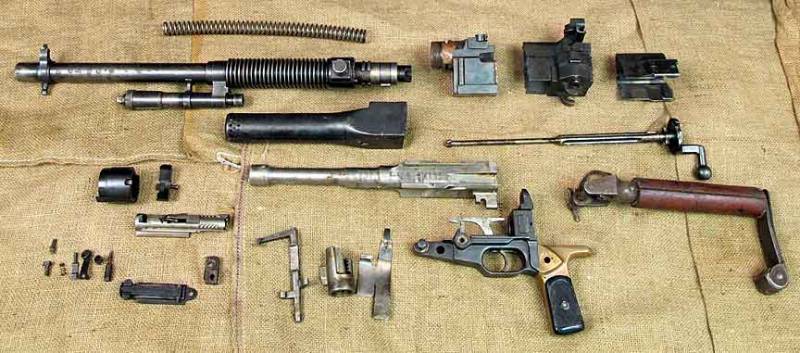
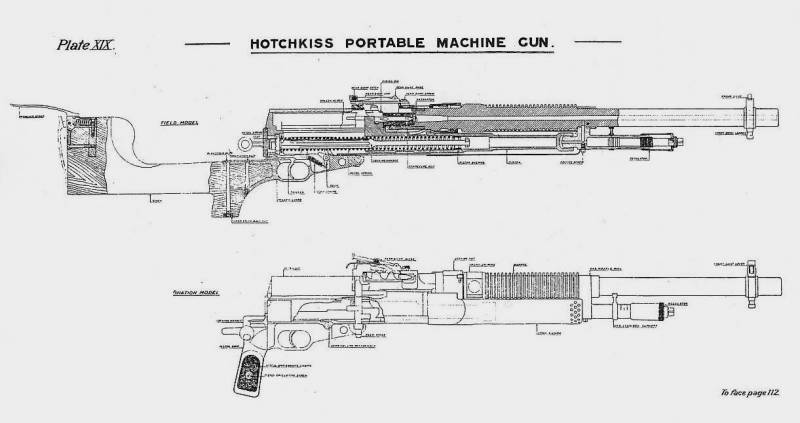
The machine gun had a fairly short, but at the same time, a massive barrel with fins up to the gas chamber, which consisted of twenty-five flanges that created a large cooling surface. Under the barrel was a T-shaped gas valve with two holes: front and rear. Through the rear hole, the powder gases from the barrel after the shot pressed on the cup-shaped piston head and threw it back, but the front one served to divert part of the gases into the regulator chamber. It was available with graduated positions of the piston screwed into the chamber, and the rule was this: more space inside, less gas pressure force; the enclosed space is smaller, the gas pressure force is greater.
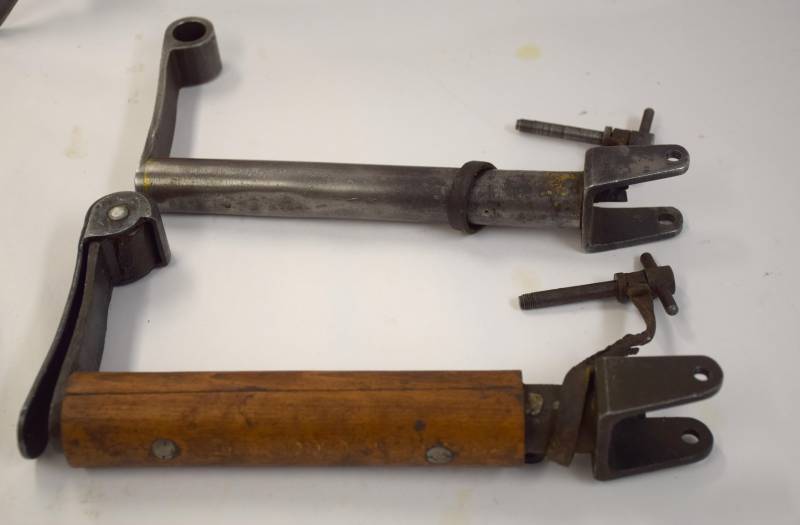
A barrel lock nut attaches to the front end of the receiver and screws onto the barrel to lock the barrel to the receiver. An external spring steel lug provided with undercuts or teeth that fit into the teeth or teeth on the receiver and prevent accidental rotation when fired. Front two recesses for dismantling key for disassembly and assembly. To the left of the indentations, you will find the arm guard that hooks onto the right shoulder of the arm guard and holds the arm guard in position. The barrel stop restricts the movement of the barrel in the lock nut. Inside the lock nut are three sets of interrupted flanges; they fit into matching flanges on the breech, and the deep threads on the inside fit into matching threads on the receiver.
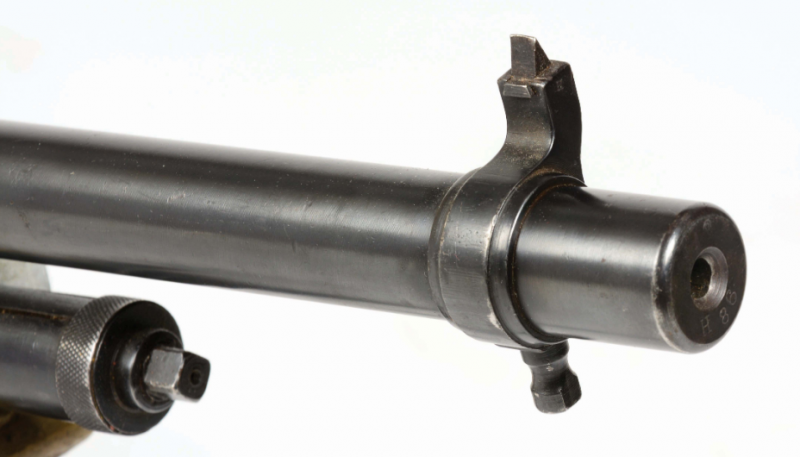
The barrel was locked by a rotating clutch, which was put on the breech of the barrel and could turn on it. On its inner surface there were three strips of intermittent threads, and exactly the same threaded strips were in front of the shutter. When the shutter moved, the protrusion on the coupling moved in the figured groove of the gas piston rod. At the same time, the clutch turned and, depending on the direction of movement of the piston and the bolt back and forth, either locked the barrel with the bolt or unlocked it. In the latter case, the barrel moved back, extracted the empty cartridge case and at the same time pulled out the next cartridge from the cassette for the next shot.
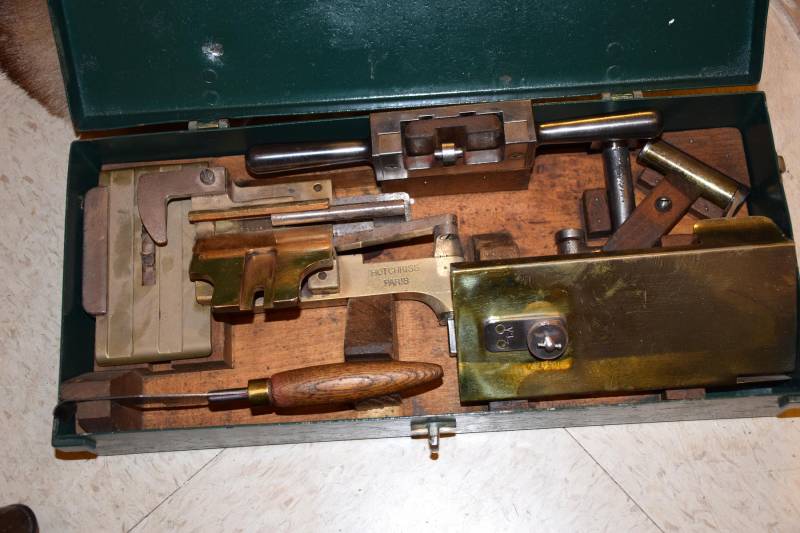
Shooting was carried out, like many other machine guns of that time, from an open bolt, single shots or bursts. The choice of fire mode is carried out in an unusual way: by turning the L-shaped cocking handle around its axis. At the same time, when shooting, she remained motionless, which, of course, was convenient.
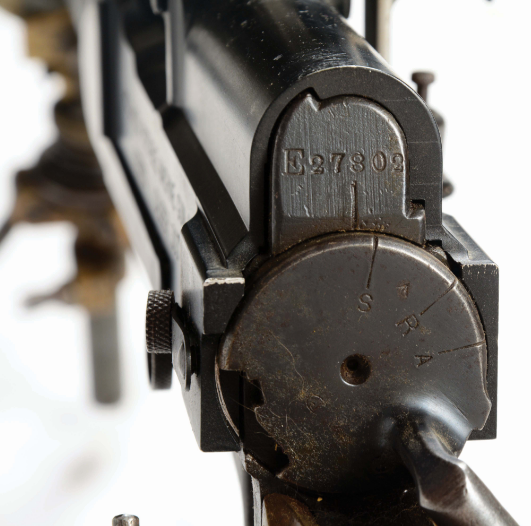
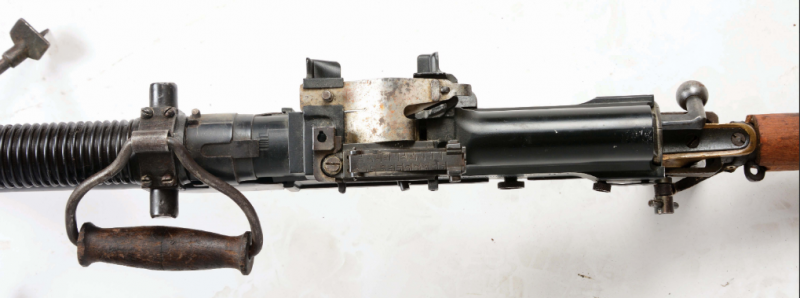
On the right side of the receiver is the housing of the cassette feeding mechanism with cartridges, which is closed from above with a lid on spring hinges; a flat spring keeps it closed. Its main detail was an L-shaped vertical rod with a “tooth” at the end and two V-shaped cams placed on it, which fit into the cutouts on the body and at the same time fall into the corresponding grooves of the bolt frame.
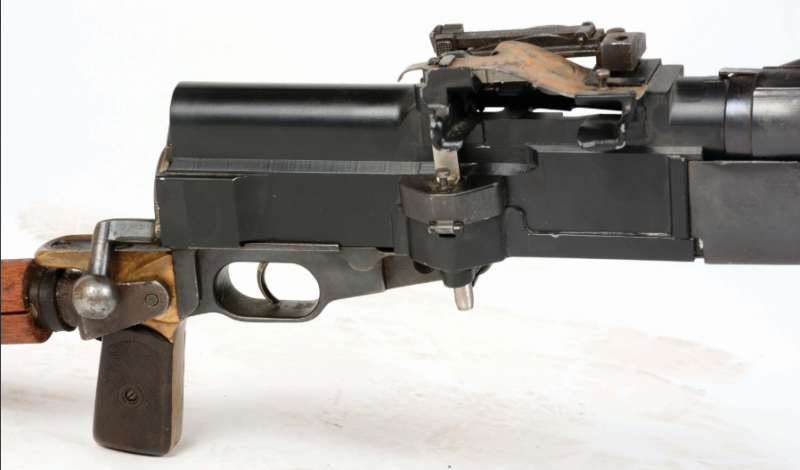
Due to this, when the frame moved back and forth, the vertically standing lever made movements perpendicular to the axis of the barrel and with its “tooth” (at the same time it fell into the cutout on the cassette with cartridges) shifted it in the direction from right to left. The lever is spring loaded. Therefore, in order to insert the cassette into the receiver, it was necessary to lift it by pressing on the protruding end from below so that it itself rose up. The cassette was inserted on the right. In this case, the cartridges should have been under the cassette.
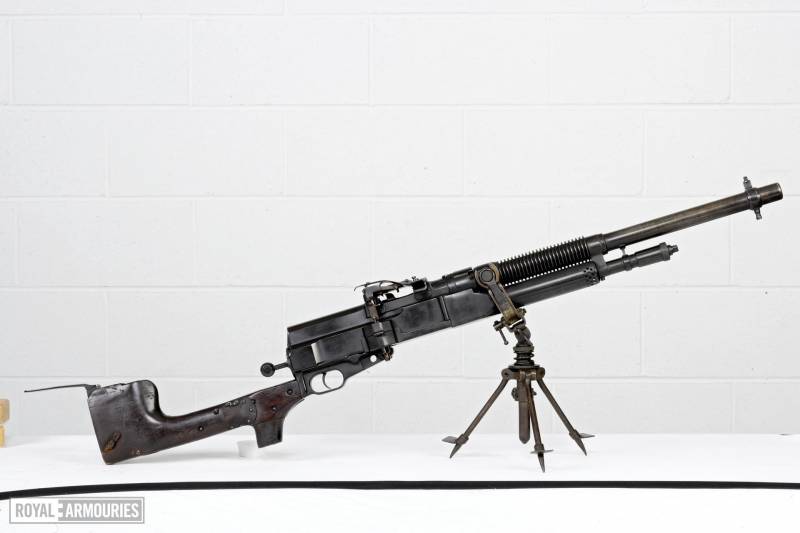
TTX machine gun “Hotchkiss” Mk I
Weight: 12 kg
Length: 1,23 m
Barrel length: 64 cm
Ammunition: .303 British (British), 8mm Lebel (French), .30-06 Springfield (USA), 7×57mm Mauser (Brazil and Spain)
Calibers: .303 (7,7mm), 8mm, .30 (7,62mm), 7mm
Firing Rate: 400-600 shots per minute
Maximum range: 3800 m
Power type: 30-shot cassette
PS This machine gun is more difficult to see in the cinema than the same “Lewis”, but there are still films where it is present. These are the following films: “La Bandera” (1935), “All is calm on the Western Front” (1979), “The Seventh Satellite” (1968), “Dauria” (1972), “My Destiny” (1974).


U.S.A. – -(Ammoland.com)- “According to their official platform, the California Republican Party believes the United States Constitution guarantees the right of its citizenry to keep and bear arms and that the state’s gun control laws only serve to disarm law-abiding citizens, not criminals,” Gun Owners of California notes in a blog post decrying the state GOP’s deliberate indifference to acting on its pledges. “They are on the record as opposing any further gun control legislation and support the right of all California citizens to own and bear guns and ammunition for any lawful purpose.”
“If this is the case, then why would the California Republican Party continue to snub the hundreds of thousands of gun owners in the state?” GOC asks. “Why does the political party – the one that supposedly is the champion of the Constitution – treat California’s gun owners like annoying flies to be swatted away?”
Probably because equivocal platitudes Golden State Republicans offer to establish their 2A bona fides with those who don’t look deeper than rah-rah sloganeering are just that. The late RNC Chair Lee Atwater is reputed to have asked “Who else are gun owners going to vote for?” when informed performance didn’t live up to the promise. Being allowed to continually get away with that by “lesser of two evils” gun voters means there’s no incentive to change and to walk the talk.
Those in it for personal and political advancement will say whatever it takes to win. When they perceive that no longer works to their advantage, they guiltlessly reverse polarity and do what they think will serve them best, and the hell with those who brought them to the dance in the first place. Besides, who else are gun owners going to vote for, right?
None of this is news to California’s activist gun owners, of which I was one when I lived there. And in many cases, the misinformation being fed to them comes from groups they look to for leadership.
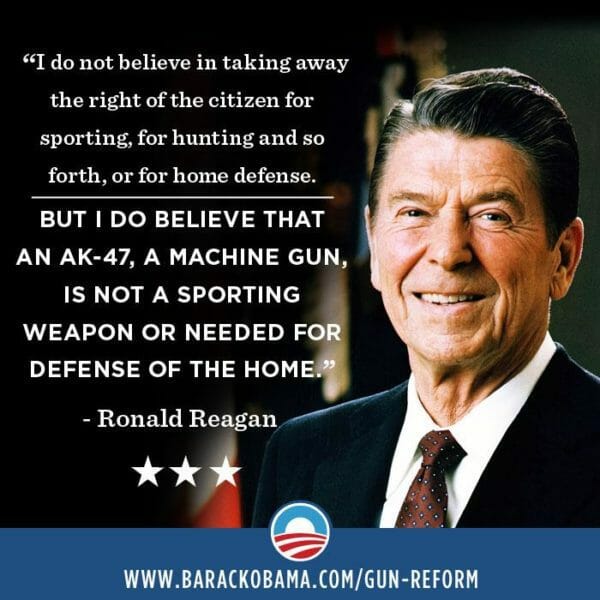
20 years ago, I created a poll asking gun owners what they thought of a certain politician, listing some of the anti-gun actions he’s taken when in power, but not identifying who he was.
“[N]early 80%…who voted based solely on his actions deemed them ‘traitorous,’ and the vast majority of the balance deemed them ‘misguided.’”
It was, of course, Reagan. And he hosed us on immigration, too, leading to the seismic demographic shift in California that has anti-gun “progressives” gloating (and “gun rights” groups hiding behind a hollow “single issue” excuse), and encourages remaining Republicans to act more and more like Democrats if they want to have any skin in the game at all.
So why should California Republicans (and those from other states where they think they can get away with it) do anything more than give lip service to gun owners, assuming they even need to do that? After all, they’ve been getting away with serial betrayals for years.
“Pete Wilson has been strong and reliable on gun laws,” said Bob Walker, president of Handgun Control Inc. in Washington. “I think Gov. Wilson has always had a reputation for moderation. We think this is a very moderate and sensible approach to the problem.”
“Many owners of the named firearms did not comply with the law, so Attorney General Dan Lundgren allowed persons to register them after the deadline. Fearing criminal penalties for possessing an illegal firearm, many owners reported their firearms under Lundren’s ‘amnesty’ program. In August 1998, however, a California appellate court held the Attorney General could not legally allow the gun owners to register their weapons after the March 1992 deadline. That ruling came after many owners had already identified themselves by registering late. The Attorney General had led the law-fearing lambs into a trap: citizens had voluntarily informed the state that they were felons.”
“We’re coming up on the 24th anniversary of Iron Duke’s outdrawing the gun lobby to enact the nation’s first assault weapons ban — an action hardly anyone could have predicted, given his political past. Deukmejian owed his gubernatorial election in 1982, in large part, to gun owners.”
And don’t forget Arnold Schwarzenegger with his predictable results. He was someone a handful of us warned California gun owners against before he was selected to represent the GOP, only to see our warnings ignored or overwhelmed by misdirecting “gun group” voices.
So, with Republicans like these, who needs Democrats? (Sorry, GOC, if you’re going to insist there are “many freedom-loving Democrats,” it’s on you to show us their votes don’t enable the tyranny-loving kind. If owning a gun was all it took, we’d have no better pals than Lon Horiuchi and David Chipman.
And before you say “Libertarians,” consider their amnesty/invite-all platform and then show your research on why you’re right on demographics and every top Democrat since 1965 has been wrong.
Meanwhile, the rest of us are left with the existential question “What do we do?”
The same thing every human being faced with a demand to surrender or resist has always had to do: Make an existential choice.
Anyone who tells you we need to empower a known betrayer or “we’ll lose our guns” is really only saying that when push comes to shove, they’ll lose theirs.
About David Codrea:
David Codrea is the winner of multiple journalist awards for investigating/defending the RKBA and a long-time gun owner rights advocate who defiantly challenges the folly of citizen disarmament. He blogs at “The War on Guns: Notes from the Resistance,” is a regularly featured contributor to Firearms News, and posts on Twitter: @dcodrea and Facebook.
.jpg)