Hey there, wait a minute Mister Postman. Is there value in that factory letter?
The debate over the value of a “factory letter” is one that seems to pop up from time to time in gun forums. So what is the answer?
What Is a Factory Letter?
Model, condition, finish, grips, engraving, where it was shipped, to whom it was shipped, and serial number range are all considered in determining an old gun’s value. A letter can help answer some of those questions.
In Rock Island Auction Company’s recently completed Premier Auction, factory letters from a number of gun manufacturers like Colt, Ruger, Smith & Wesson, and Browning were provided. Buffalo Bill Center of the West has records for a number of long gun makers like Winchester, Marlin, and Ithaca, and many of those factory letters were also provided at auction. Private authenticators like John Kopec also lend their expertise with documentation.
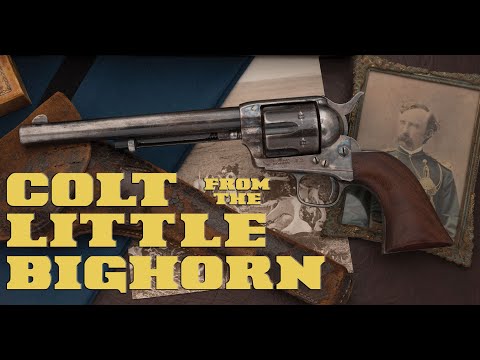
With a letter describing this Lot Five Colt Single Action Army revolver as a “very significant ‘Custer-Era’ revolver, and believe that it may be the finest representation of a ‘Lot-Five’ revolver we have ever had the privilege to examine,” it realized $763,750 in Rock Island Auction Company’s May 2022 Premier Auction.
What Information Is in a Factory Letter?
Those who don’t see the value likely aren’t concerned about the collectability of a gun or don’t want to get bad news. Those who do get letters see the value of an antique gun as a piece of history and want to know its heritage. How did it leave the factory and where did it go?
The cost of a letter — ranging from $10 to $350 — is often seen as adding value to an already valuable gun.
At the very least, a factory letter or an authentication letter from a respected researcher can provide basic shipping information on where it went, when it left the factory, a basic description of the gun, and any special features like grips and finish. A factory-lettered firearm likely will have the document displayed with it at a gun show.
Why Get a Factory Letter?
Not only does it help the owner in setting a price, but it can also lend confidence to a buyer by offering authenticating documents as to what they are buying.
In 2021, Rock Island Auction Company sold a Colt Single Action Army owned by gunslinger and sportswriter Bat Masterson. Documentation accompanying the revolver included a letter from Colt Manufacturing confirming it was shipped to Masterson with a higher front sight as requested. However, the gunfighter asked for nickel plating and the letter incorrectly states it was shipped with a blued finish. Follow-up documentation confirms the incorrect finish listed on the factory letter. The gun sold for $488,750.
This Colt Single Action Army included a factory letter stating it was sent to Wild West gunslinger Bat Masterson but listed the finish as blued. Followup documents showed that to be incorrect. The revolver realized $488,750 in Rock Island Auction Company’s May 2021 Premier Auction.
This May, RIAC offered a Colt Single Action Army that was reportedly recovered from the Little Bighorn battlefield. A letter from highly-respected Colt researcher John Kopec showed it was one digit away from the serial number of a Colt SAA recovered from the Little Bighorn battlefield in 1992. It also described the gun as a significant “Custer-Era” “Lot-Five” revolver while also noting the blemishes on the 150-year-old wheel gun. The revolver sold for $763,750.
Rock Island Auction sees a number of factory letters each year, especially with Colt Single Action Army revolvers. Not all of them are sent to Bat Masterson, but some collectors are interested in where guns were shipped, especially to the west, before territories like New Mexico, Arizona, and Alaska achieved statehood.
A commenter on the Colt forum wrote that anyone who owns a Single Action Army that was made before World War II should get a factory letter for it. First generation Single Action Army revolvers were made until 1941.
The first step for someone wanting to assess the true gun value is to check the “Blue Book of Gun Values,” which will provide an amount without consideration of its history.
Experts say that documentation can be helpful in assessing gun prices, but that sometimes there is no tangible evidence tying a gun to a historic person, place, or event.
Guns with a military or law enforcement pedigree may be attractive to some buyers, so a factory letter can often provide information on whether it was shipped for military or police use. Experts recommend always confirming a factory letter, saying “Paper is generally easier to forge than steel.”
The NRA Museum website reports that documentation — and especially the type of documentation — can make a difference in valuing a weapon. Masterson’s revolver is an example of that. The finish was recorded incorrectly in the factory letter, but follow-up documents confirm what Masterson requested.
Remember, the letter provides information on where and to whom it was shipped, and what features it had when it went out the door. Those things are of interest to collectors and can contribute to the value of a prized family heirloom or inherited gun.
This special order Winchester Deluxe Model 1876 lever action rifle was accompanied by a factory letter listing it as being 50-90 Express caliber with an octogon barrel and casehardened finish. It realized $88,125, more than $20,000 more than its estimated high value.
What ISN’T in a Factory Letter?
The history of a gun and who owned it can weigh heavily on its value. Historical significance and the credibility of the information are the biggest factors in historic attribution. Here is an example: A factory letter might show that a revolver was shipped to a certain western outlaw. It doesn’t confirm the current owner’s affidavit that years ago a deputy marshal gave the outlaw’s gun to the owner’s great great grandfather.
Skepticism must rule with historical attribution, but a factory letter can help bring ownership or chain of ownership into focus. On the other hand, it can also protect the potential buyer from ending up with a forgery.
Experts recommend being very detailed in a record request for a factory letter. The more information on what is being sought in a request, the more likely researchers can find something interesting ̶ if it’s there to be found.
Commenters on various forums acknowledge that a factory letter is at least a good starting point for research into a gun’s history.
Self-education is the best thing a collector can do to avoid getting hung with something that might not be what is professed. A serious gun seller might also consider a free gun assessment with Rock Island Auction Company if they are considering gun consignment. Talk to other collectors and learn about the gun type that interests you most.
This special order Winchester Deluxe 1886 takedown lever action rifle comes with a number of special features, but the accompanying factory letter lists the trigger incorrectly. The rifle realized $152,750, well above its high estimated value of $65,000.
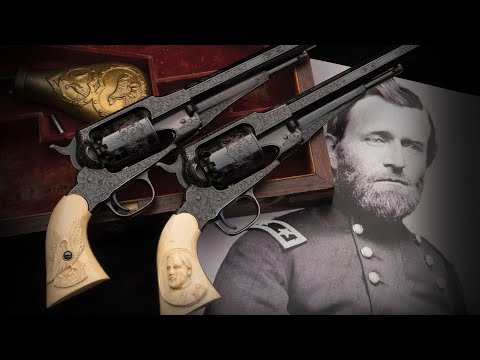
The recently-completed premier auction had more than 100 lots that included descriptions specifically stating that some type of authenticating letter or research was included. These are guns without the flash of Ulysses S. Grant’s revolvers (that came with plenty of authenticating documents, too), but just nice, collectible Colts, Winchesters, Marlins, and Smith & Wessons.
A factory letter or an authentication letter may not be necessary for the collector keeping a gun for themselves, but if you are curious about a weapon’s history or are planning on selling your gun, most commenters in the various forums recommend a factory letter. When a collectible firearm changes hands, documentation can provide value, but also offer peace of mind.
Excerpt from the 2002 book NRA: An American Legend by Jeffrey L. Rodengen.
After the Olympic Games of 1924, the International Olympic Committee had eliminated all sports not of major spectator interest and those that it called “mass athletics.” Among those events dropped under this ruling was shooting. The National Rifle Association and the International Shooting Union protested this decision and conducted an ongoing campaign to have rifle and pistol shooting reinstated, but their efforts remained unsuccessful until 1931, when the NRA Board of Directors appointed an Olympic Rifle Committee chaired by Milton Reckord and an Olympic Pistol Committee headed by Karl Frederick.
That same year, the International Olympic Committee ruled that it would bar from competition anyone who had accepted a cash prize or who had competed in a contest in which a cash prize had been offered. By the 1930s, cash prizes, though small, were still being issued for shooting competitions, and there was scarcely a single experienced target shooter in America or in the world who could meet the committee’s standards. Both of NRA’s Olympic committees were forced to draw upon unknown shooters of little competitive experience to build their teams.
The International Olympic Games Committee did not consult NRA’s Olympic committees on the arrangements of the shooting match or on the construction of the shooting facilities. This slight was further complicated when the International Olympic Games Committee announced that the Sergeant of the Los Angeles Police Department would be “in charge of shooting” at the Olympic Games in Los Angeles—despite the same committee having invited NRA and the United States Revolver Association (USRA) to assume some charge of the shooting facilities.
The result was a fiasco. Although fine for police practice, the Los Angeles Police range was neither designed nor built for formal competitive shooting. When NRA’s Olympic Rifle Committee reached Los Angeles, they found that the shooting house was several yards too near the 50-meter targets and out of parallel with the line of the targets. To attain 50 meters, the shooters had to press back against the rear wall so that men moving from one point to another did not interfere with those who were shooting. When the foreign teams arrived, most of them flatly refused to shoot until the range was rebuilt.
Although the Americans had bent over backwards to abide by the rules of amateurism, they soon found that their competitors had taken the rules more lightly. General Reckord and Karl Frederick had been associated with international shooting long enough to recognize men who had been shooting in international circles for years. Frederick had competed personally for cash prizes against a number of them. If they had protested, however, the entire shooting program would have been eliminated, so they decided to make the most of a bad situation.
The shooting events were a major disappointment. But at least to the shooting world, the events were better than no participation at all and they provided the basis on which future competition could be built.
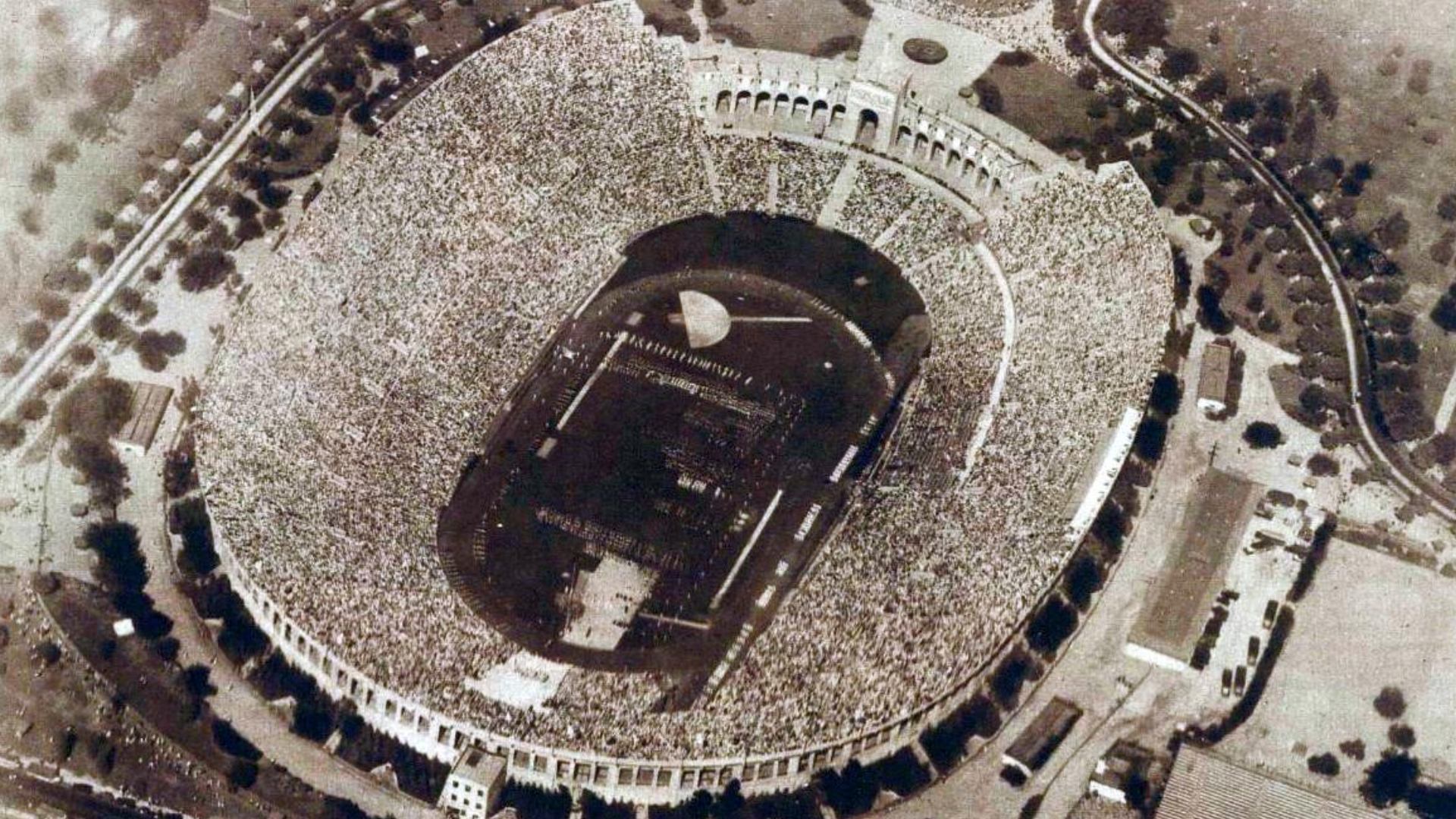
Photo: Aerial shot of the 1932 Summer Olympics at the Los Angeles Coliseum. Credit: Wikimedia Commons / Public Domain.
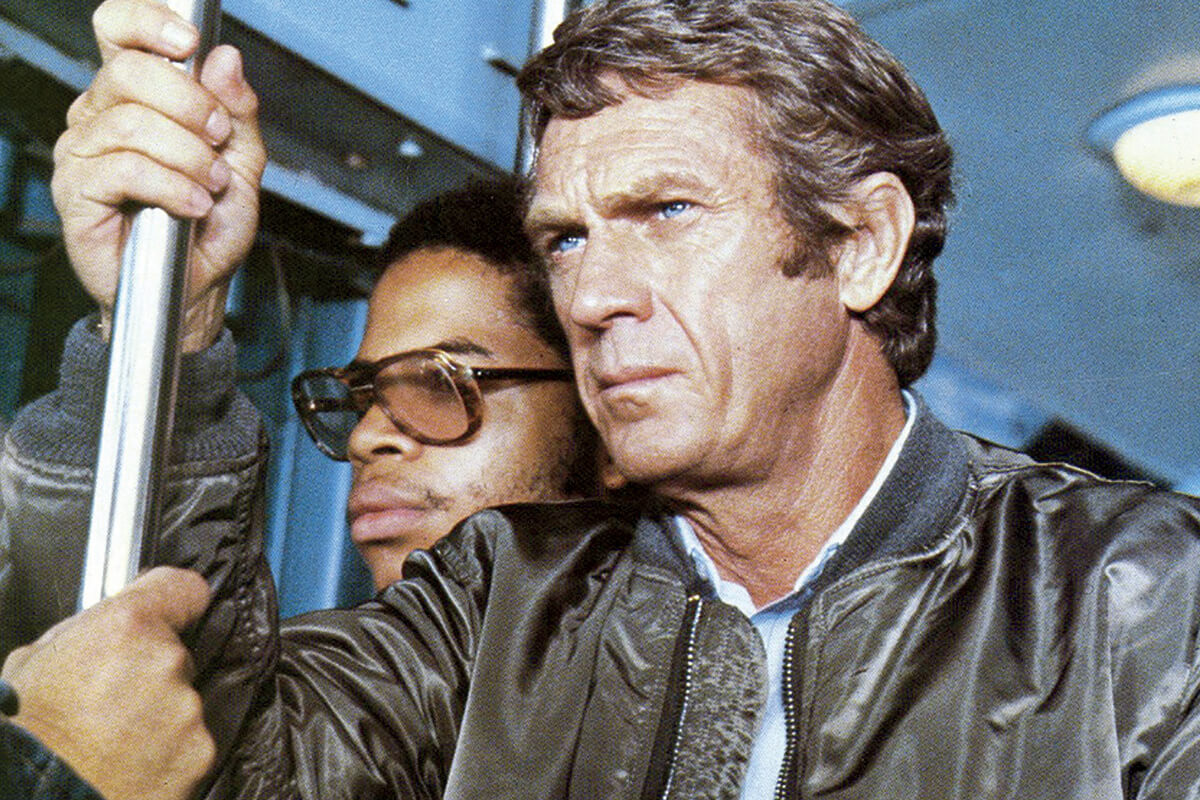
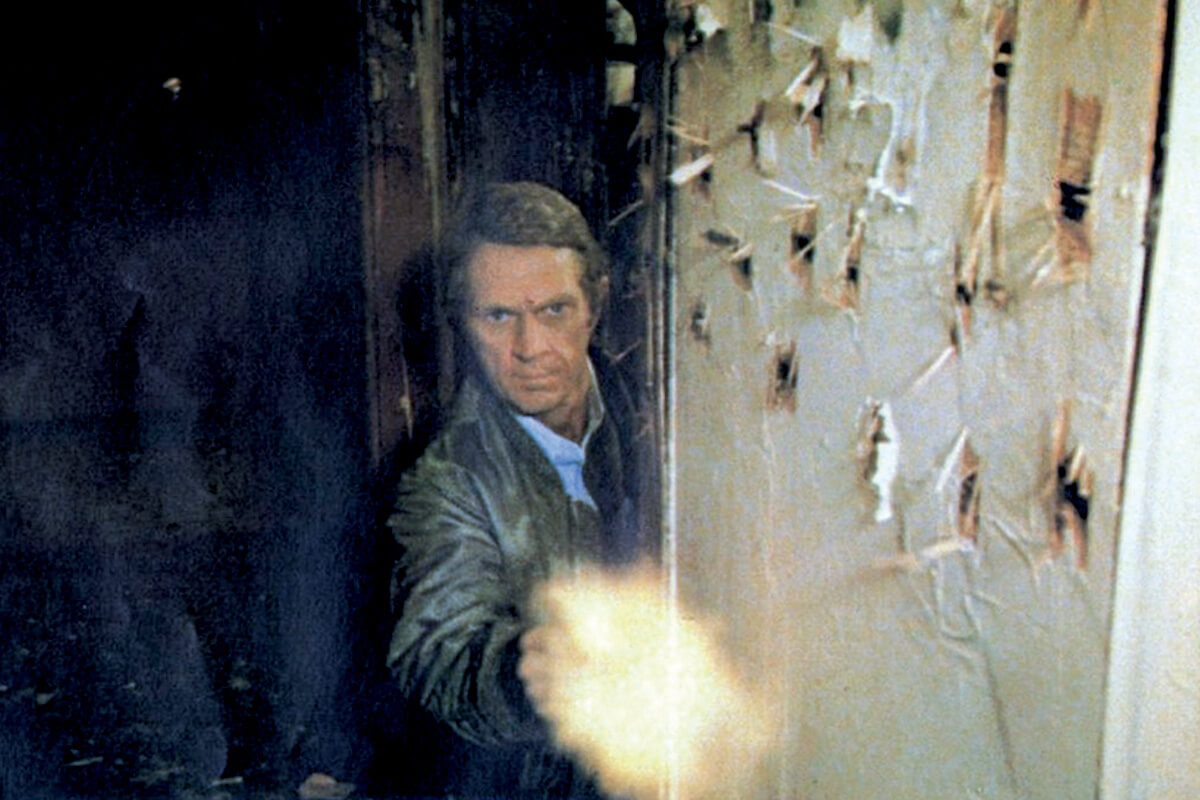
Though panned by critics, the author thought The Hunter was one of McQueen’s finest films. (MovieStillsDB.com photo)
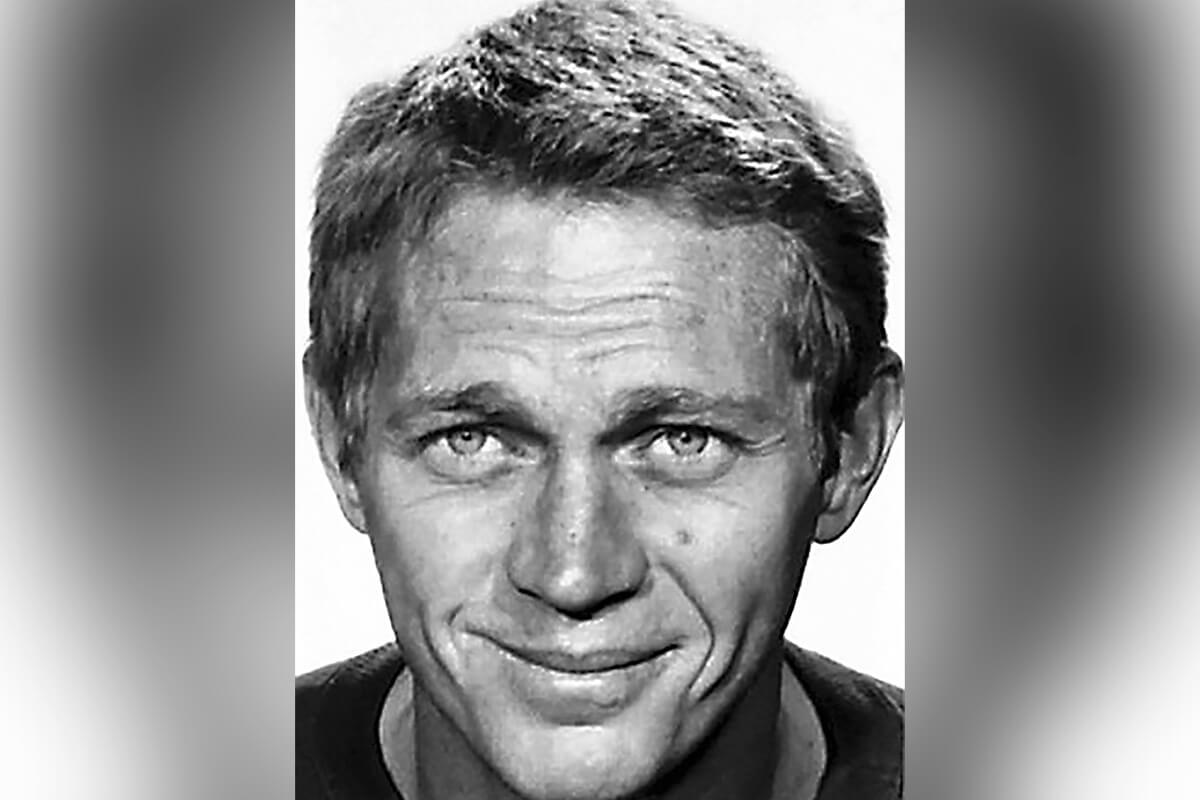
On August 1, 1980, Director Buzz Kulik premiered The Hunter starring Steve McQueen. In his heyday McQueen was the highest-paid actor in the world. His fans knew him as the King of Cool. Three months after the movie launched Steve McQueen died in Mexico of metastatic pleural mesothelioma. He was fifty years old.
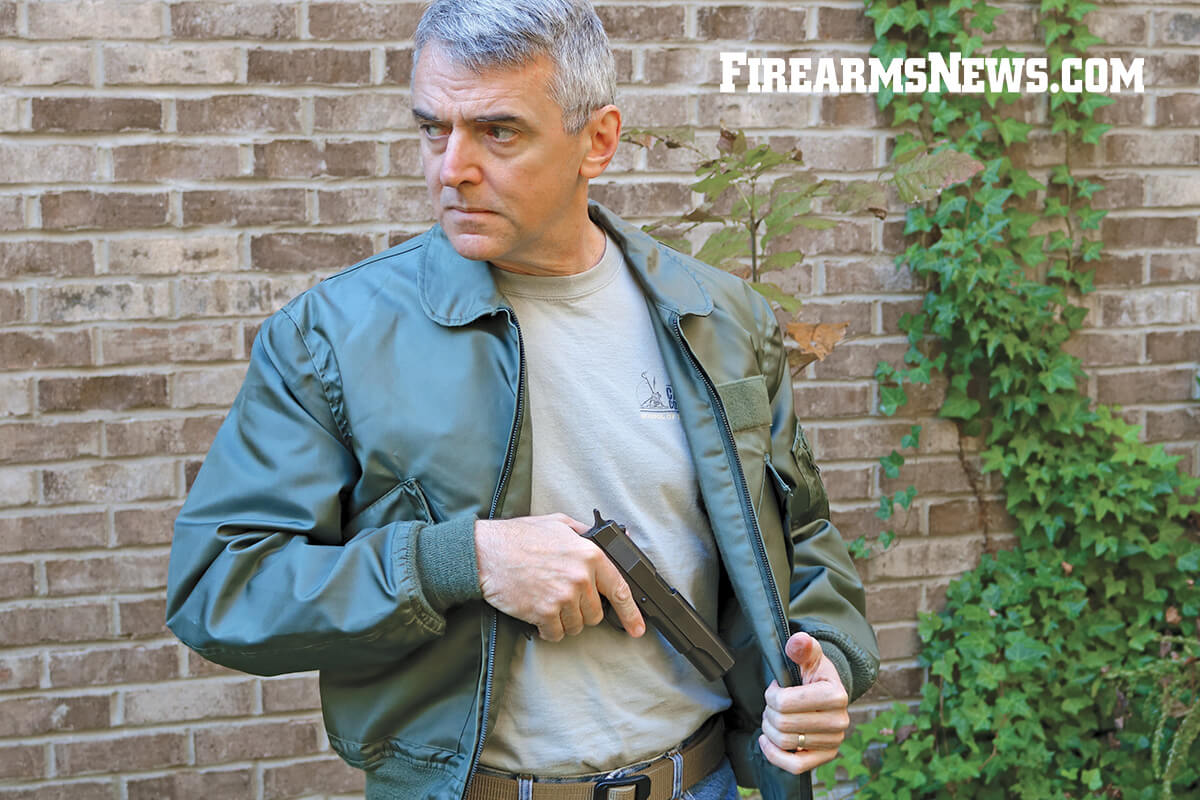
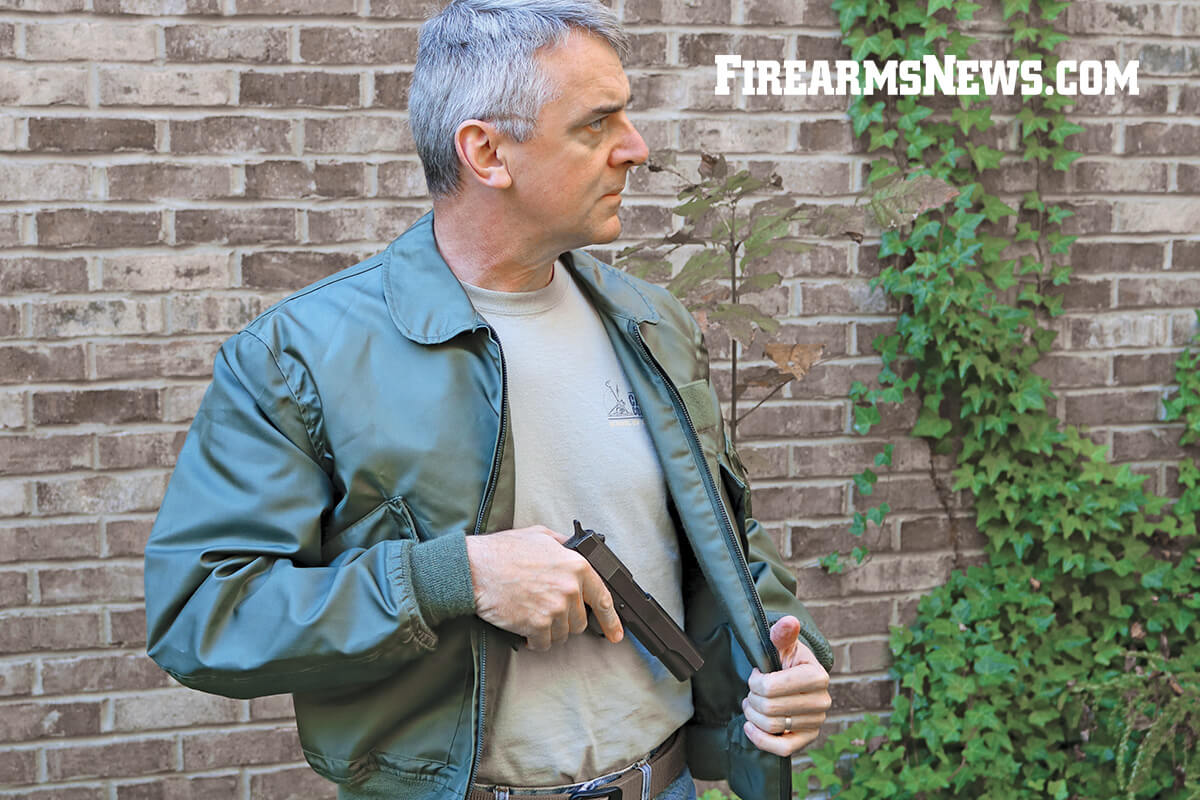
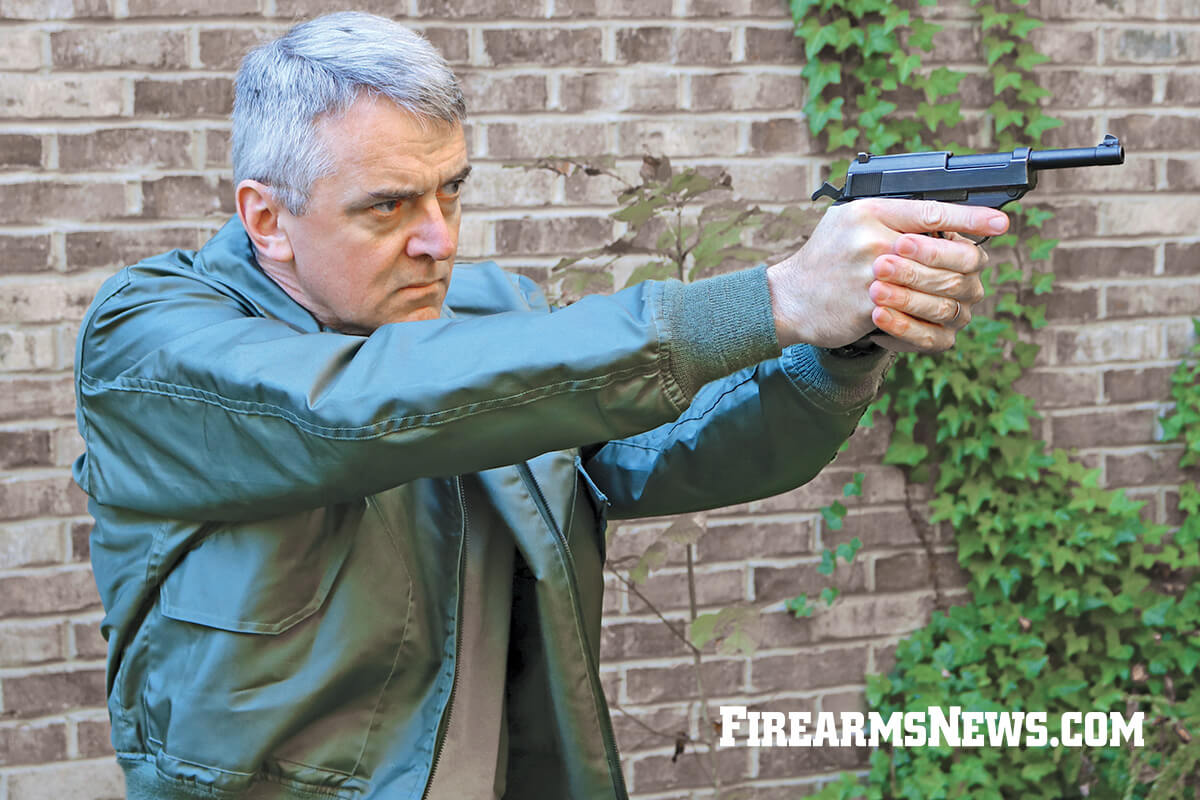
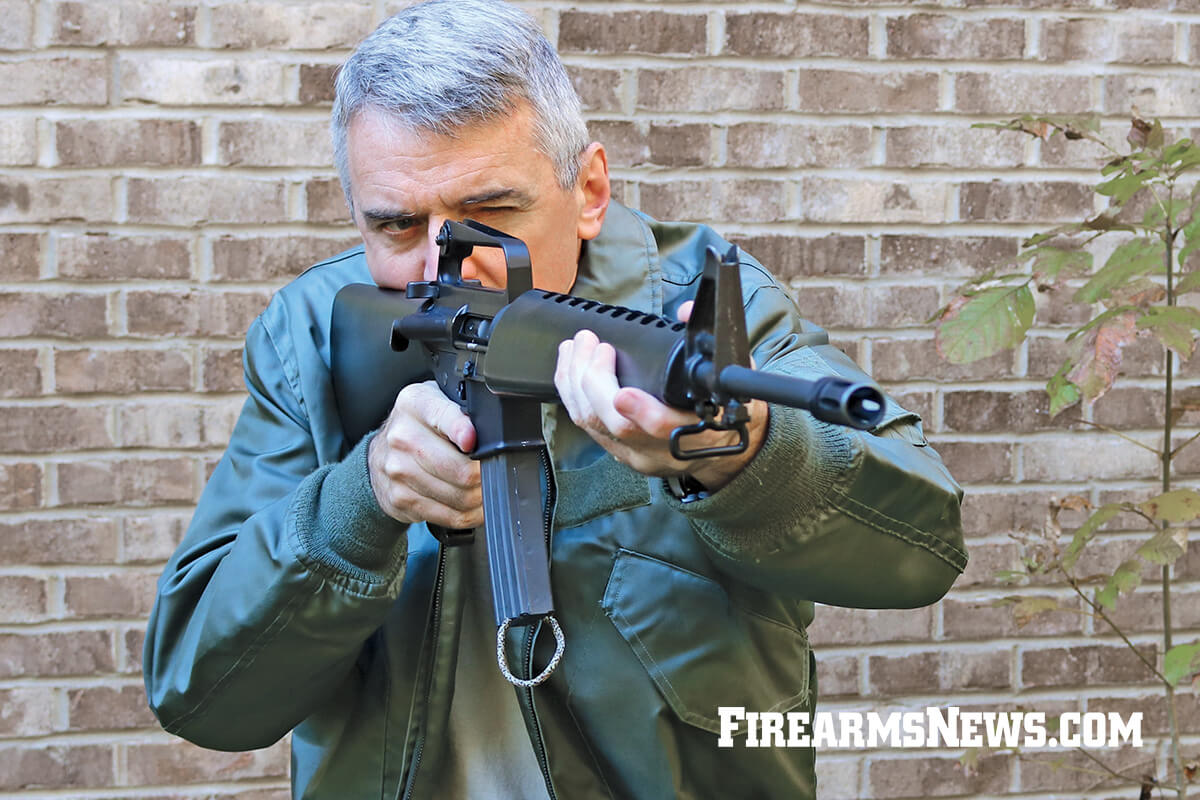
Contrary to appearances, this is not screen legend heartthrob Steve McQueen from the movie The Hunter. This is rather a maturity-challenged gun writer whose wife thinks is silly. (Photo courtesy of Will Dabbs, MD)
McQueen starred in twenty-nine feature films and fourteen television programs. He played cowboys, sailors, soldiers, cops, and criminals. He fought alien invaders in The Blob and chased Bad Guys in Bullitt. For all of his remarkable breadth of cinematic experience, I still feel that his final role was one of his best. In The Hunter Steve McQueen plays Ralph “Papa” Thorson, a modern-day bounty hunter.
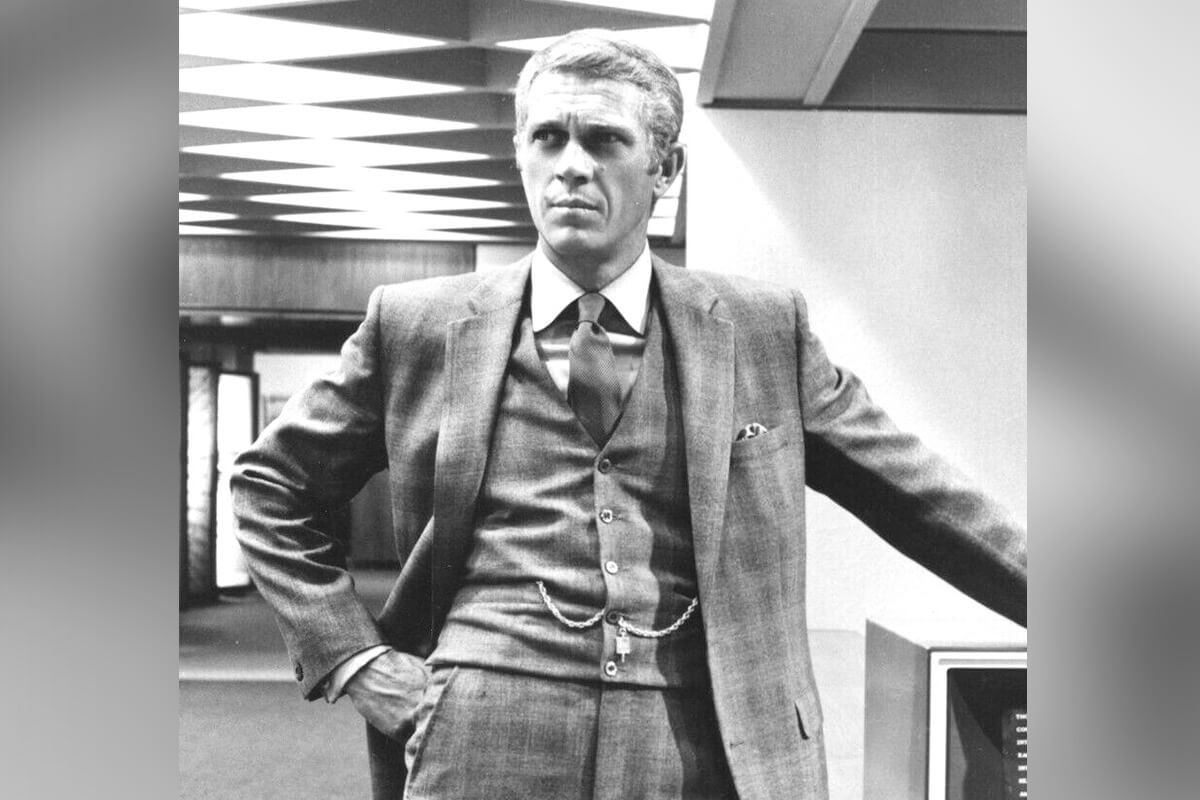
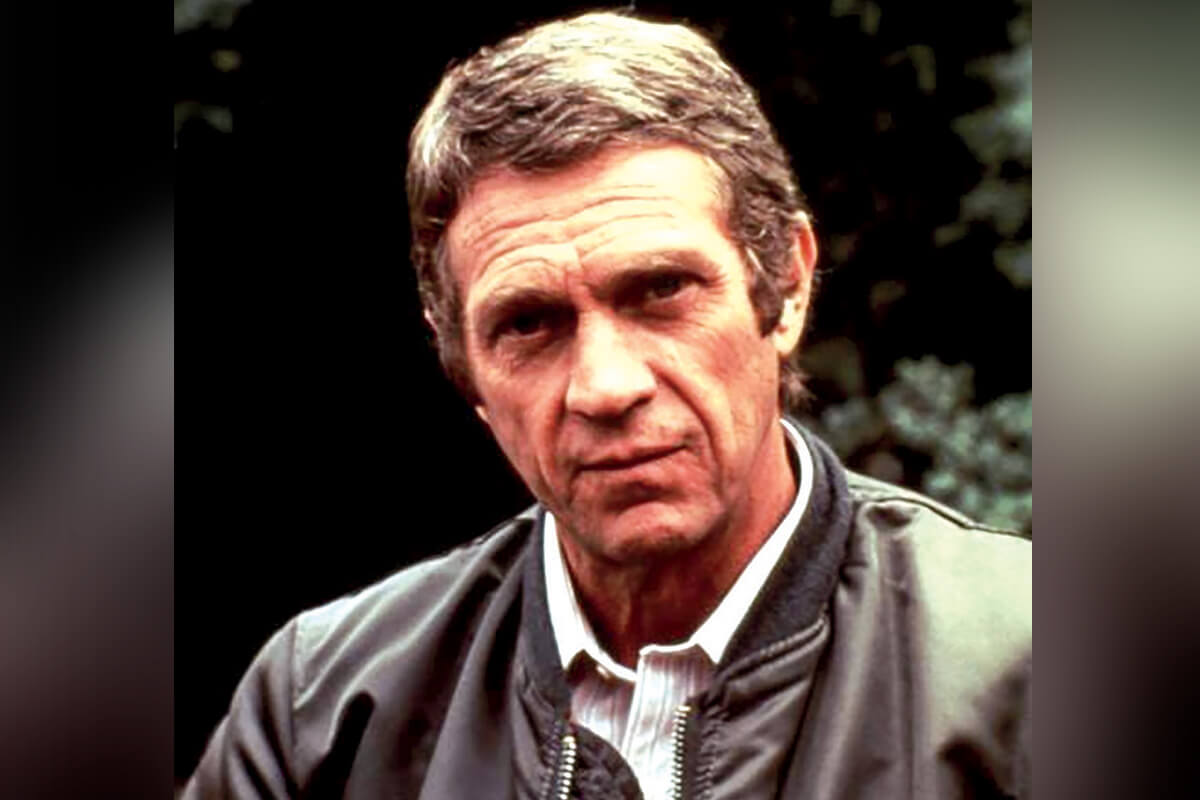
In his prime, Steve McQueen was the coolest man in Hollywood. The Hunter was his last movie. (MovieStillsDB.com photo)
Background
Spoilers ahead. You’ve been warned. The film critic Leonard Maltin described The Hunter as, “McQueen’s last picture and probably his worst.” I’m afraid Leonard and I will just have to disagree on that. As a card-carrying gun nerd, I thought The Hunter rocked.
Despite inauspicious beginnings, Steve McQueen went on to become the hottest commodity in the movie business. (Public domain photo)
Papa Thorson was an actual guy. He served as a creative consultant on the film and had a small part as a bartender in the movie. His extraordinary real-life adventures inspired the screenplay.
The real-live bounty hunter Papa Thorson inspired the screenplay of The Hunter. The writers claimed afterward that many of the events depicted in the film actually happened. (Photo courtesy of Will Dabbs, MD)
The 1872 US Supreme Court case Taylor vs Taintor established the basis for bounty hunting in the United States. The pertinent verbiage reads: “When bail is given, the principal is regarded as delivered to the custody of his sureties …They may exercise their rights in person or by agent. They may pursue him into another State; may arrest him on the Sabbath; and if necessary, may break and enter his house for that purpose … It is likened to the rearrest by the sheriff of an escaping prisoner.”
The real Papa Thorson frequently hired his bounties once they were released from prison to give them a chance at a new life. In the film, Levar Burton’s character ultimately becomes a fixture in Thorson’s home. (MovieStillsDB.com photo)
The role of the bounty hunter dates back to the Middle Ages. Kentucky, Illinois, Wisconsin, and Oregon have outlawed the practice, while Wyoming has essentially no regulations governing it. The US and the Philippines are the only countries in the world where bounty hunting remains legal.
Papa Thorsen’s life inspired a biographical book by Christopher Kean. Ted Leighton and Peter Hyams adapted the book into a screenplay. Much of the quirkiness of McQueen’s character in the film was drawn from the real-world personality and exploits of Papa Thorson.
In the movie, Papa Thorson’s day job involves tracking down bail jumpers and taking them to jail. Such things seldom go smoothly. (MovieStillsDB.com photo)
The Movie
The plot of The Hunter orbits around Papa Thorson’s efforts traveling the country and recovering fugitives on behalf of bail bondsmen. Papa is paid a percentage of the bond for each criminal apprehended and brought to justice. Along the way, we gain insights into Thorson’s unique personality.
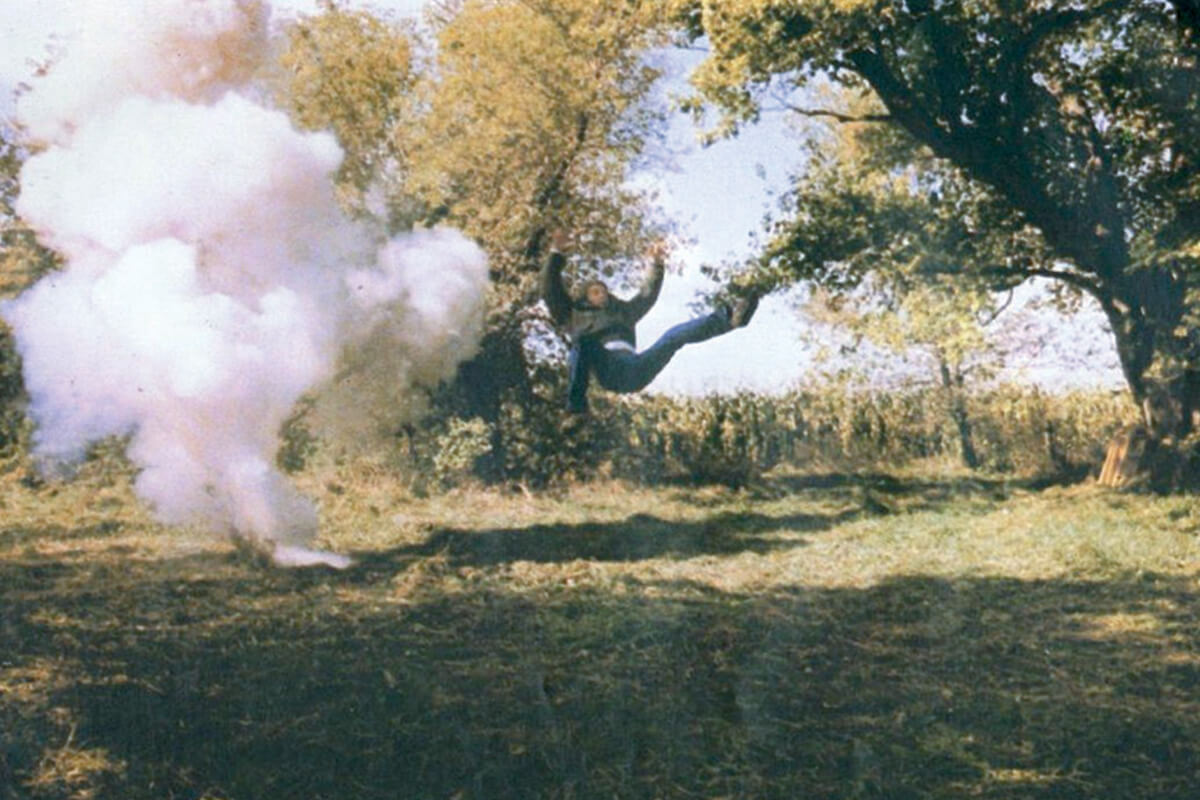
One of Thorson’s more memorable fugitive pursuits involves quite a lot of dynamite. (MovieStillsDB.com photo)
Papa lives with his severely pregnant younger girlfriend. His house is a hive of activity with friends and strangers over playing cards or just hanging out at all hours. Papa makes a sincere effort to be more careful so he can support his girlfriend and pending child. Despite his best intentions, however, Papa courts chaos at every turn.
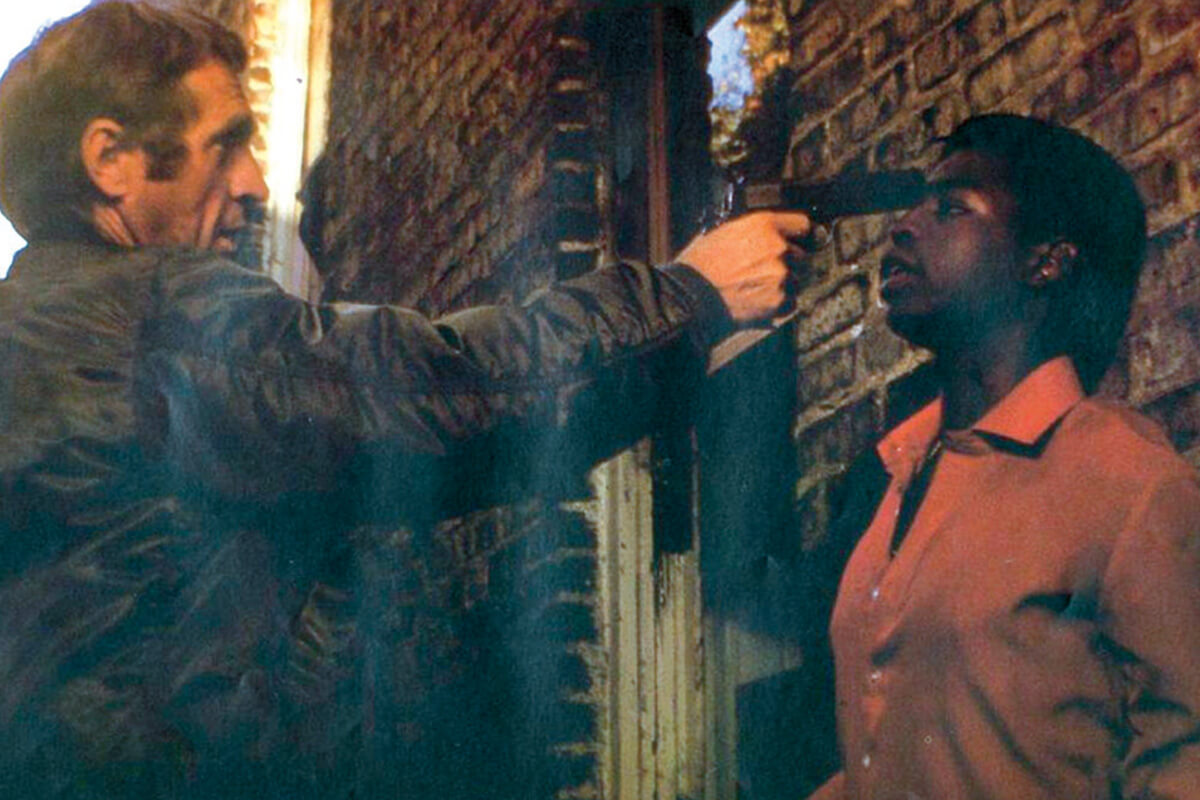
Papa engages in a sprawling shootout across Chicago with a bail jumper named Tony Bernardo. (MovieStillsDB.com photo)
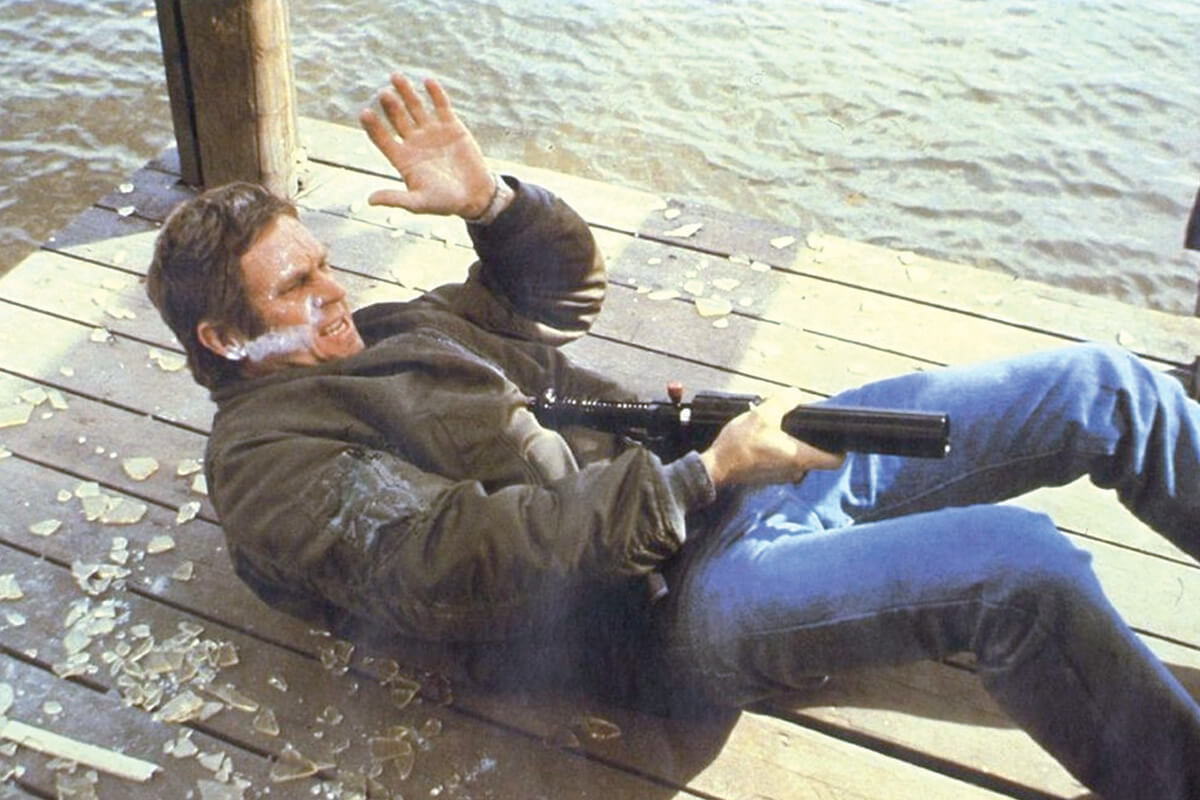
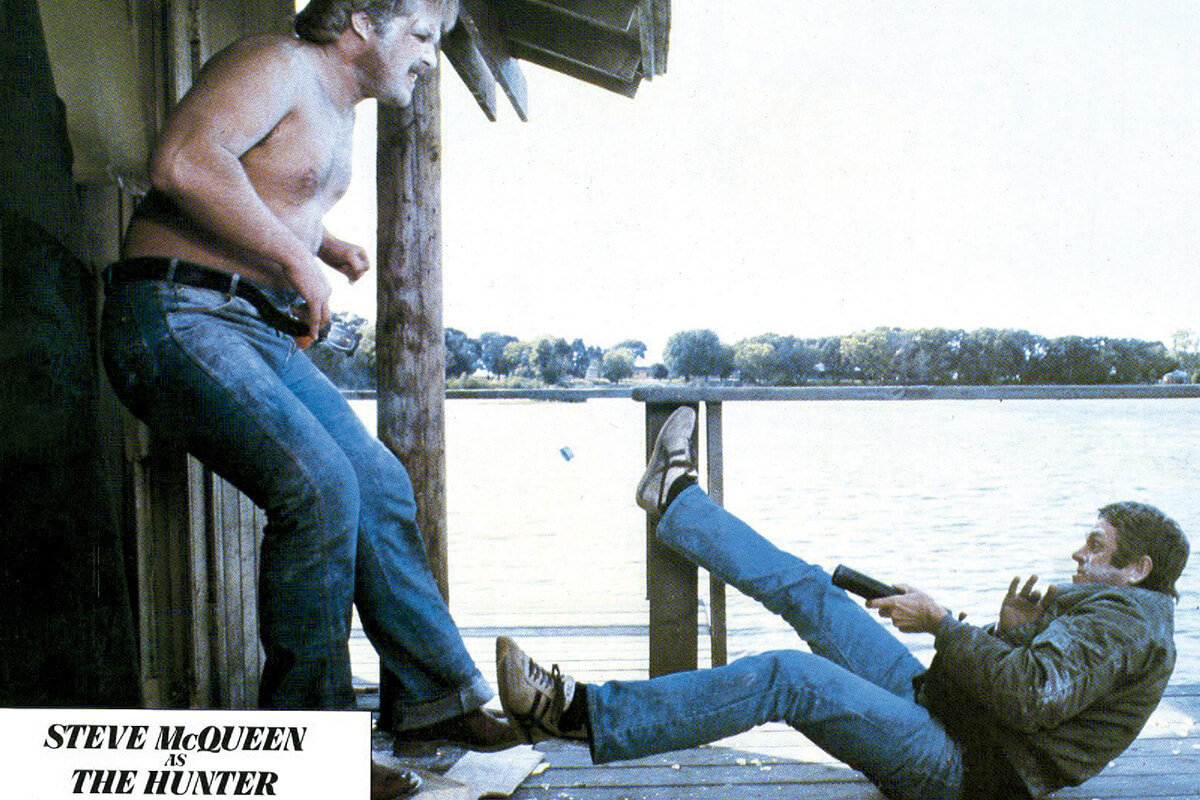
Thorson’s first two bounties set the stage. He captures a young black man played by Levar Burton and then invites the kid into his home and gives him a job. In the original screenplay, this part was to have been a dog. McQueen had been impressed with Burton as an actor and insisted on his being written into the script in this capacity. He also apprehends an enormous redneck Texan after a robust fight that destroys the interior of the big criminal’s houseboat. After the bail jumper gets the better of him physically, Thorson ends the fight with a most curious less-than-lethal beanbag gun.
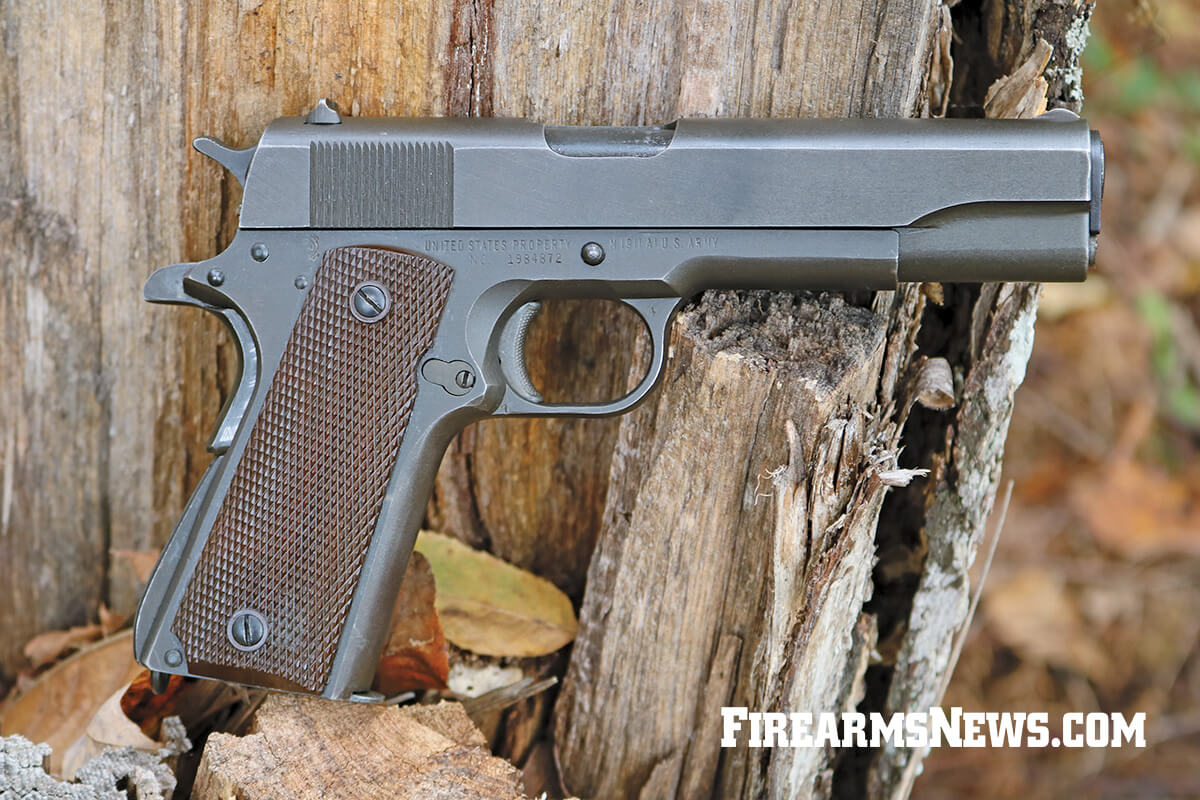
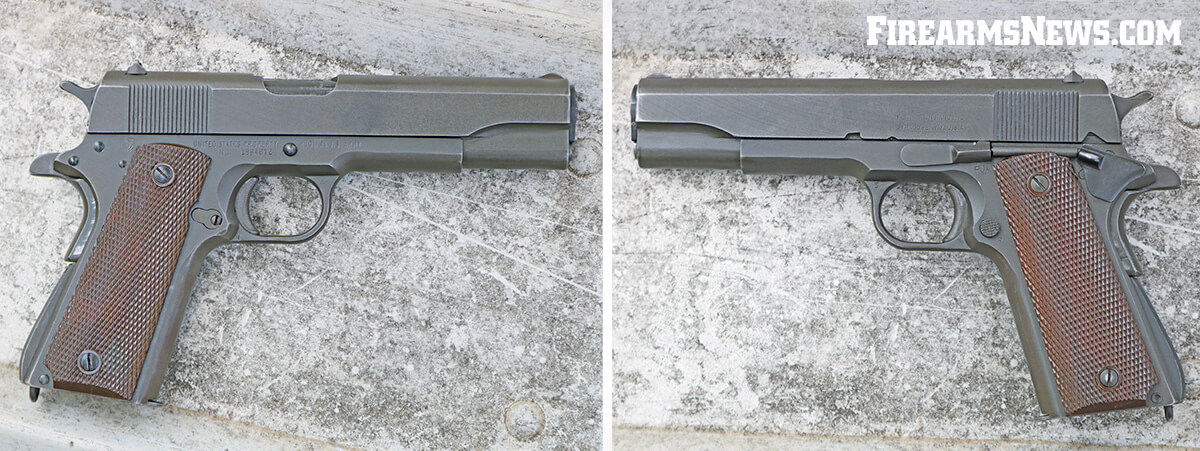
Thorson’s primary sidearm in the film is a GI-issue M1911A1 .45ACP pistol. (Photo courtesy of Will Dabbs, MD)
One of my favorite sequences has Papa pursuing a pair of unwashed pyromaniac brothers in Nebraska. A recurring theme in the movie is Thorson’s affection for old stuff — antique cars, aged toys, and quirky household décor. When renting a car in Nebraska, he is forced to accept an absolutely gorgeous brand new black Trans Am with 78 miles on the odometer. Once he confronts the two fugitive brothers they start throwing dynamite at him, steal his car, and tear off through a mature cornfield in it.
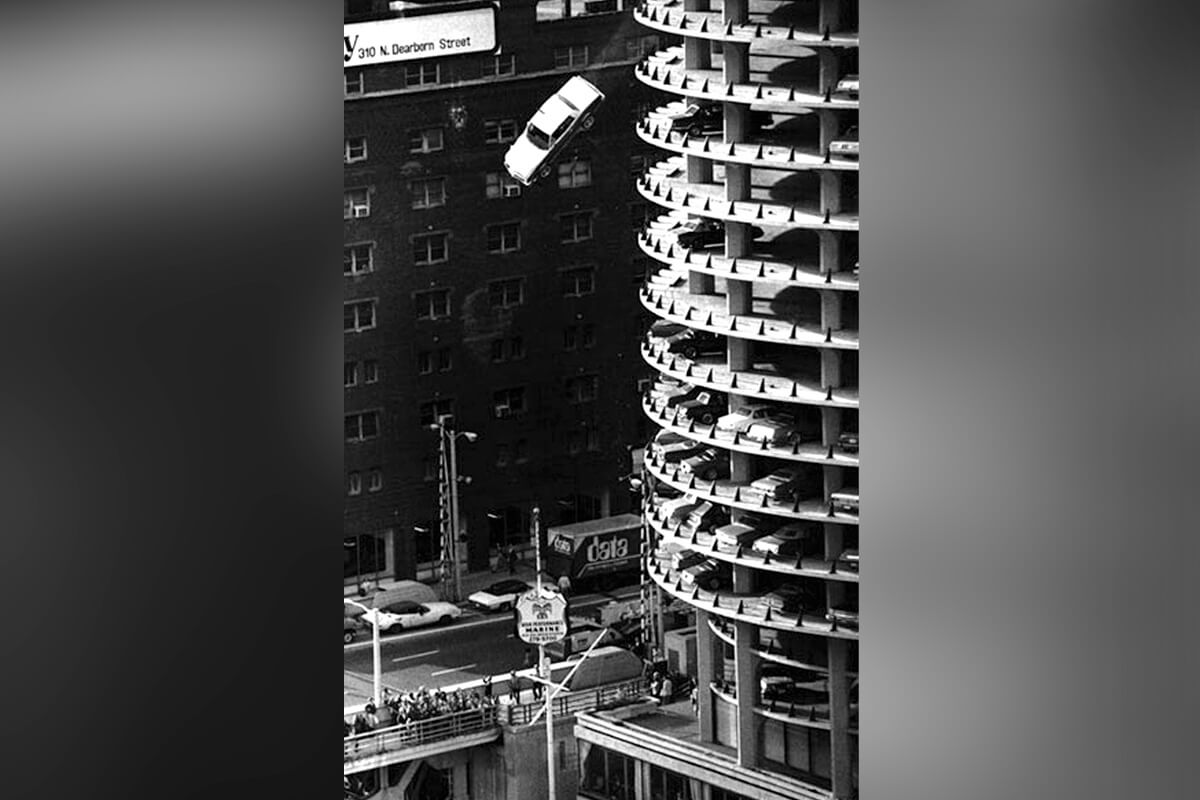
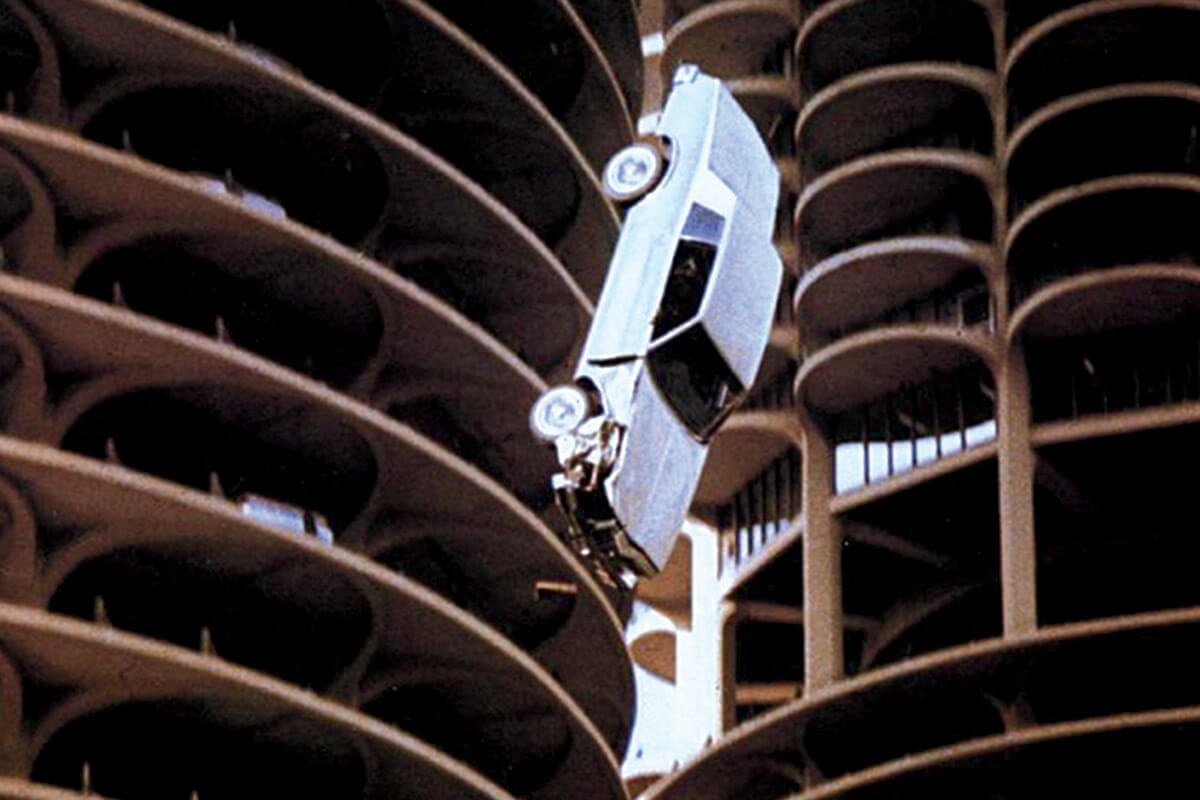
Now this was cool. The producers drove a car off of a building while making the movie. The smashed vehicle was later recovered from the river below. (MovieStillsDB.com photo)
Thorson responds by leaping into a nearby combine harvester and giving chase. The helicopter’s-eye view of the hulking harvester chasing the sports car through the cornfield punctuated by copious dynamite explosions is action movie gold. It breaks my heart to see that classic sports car blown to smithereens, but it makes for a truly epic chase sequence. As an aside, one of the primary Trans Am cars used in that scene was serendipitously discovered in an Illinois barn in 2018.
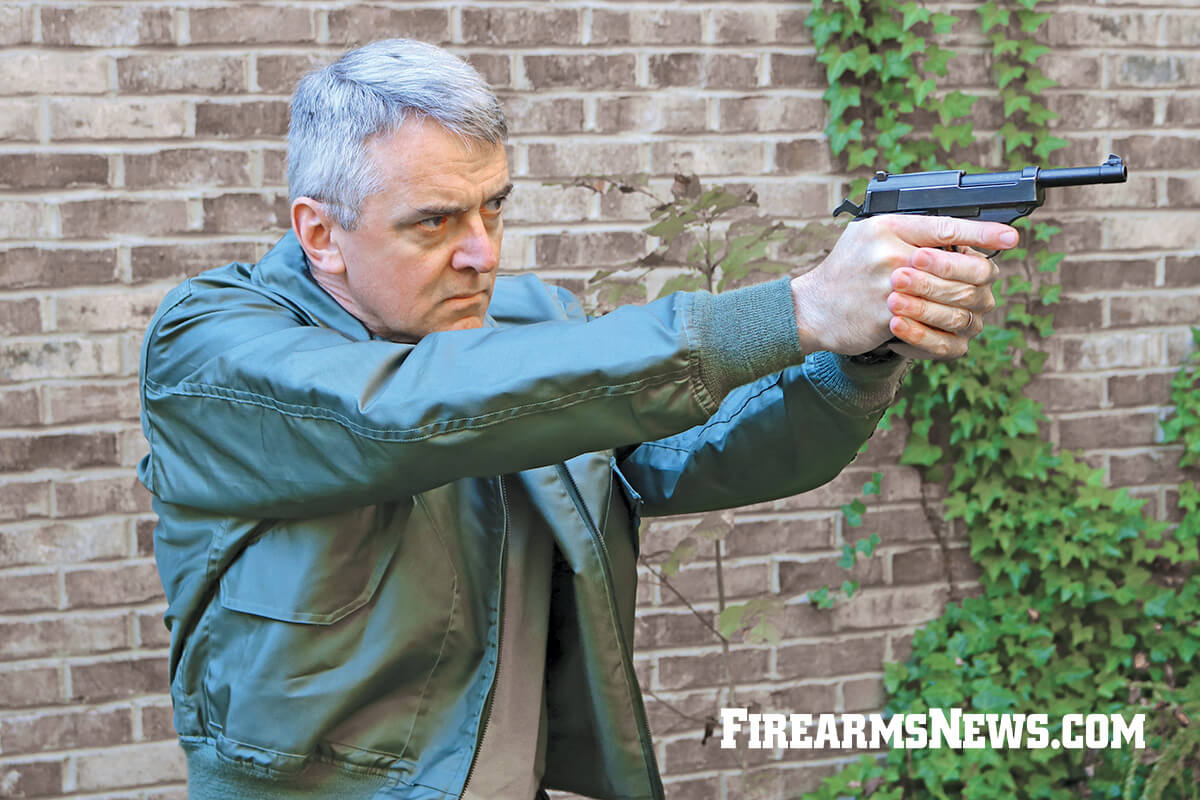
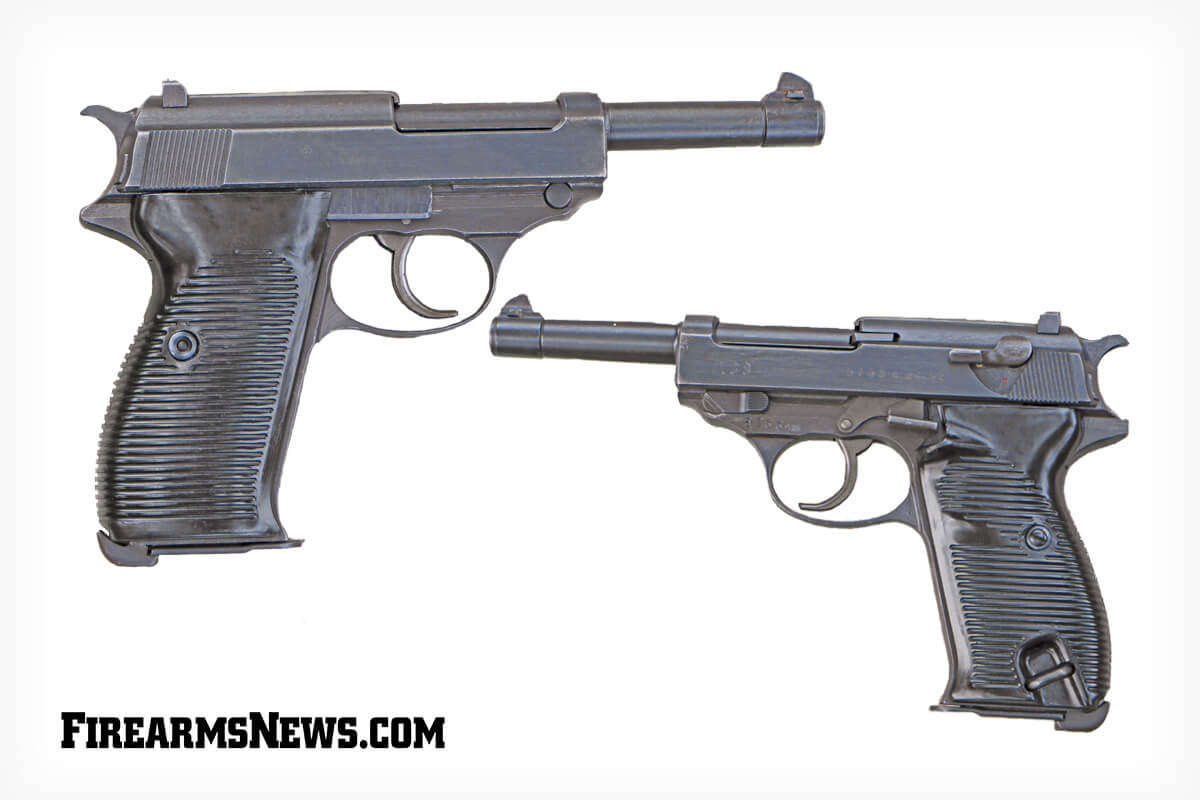
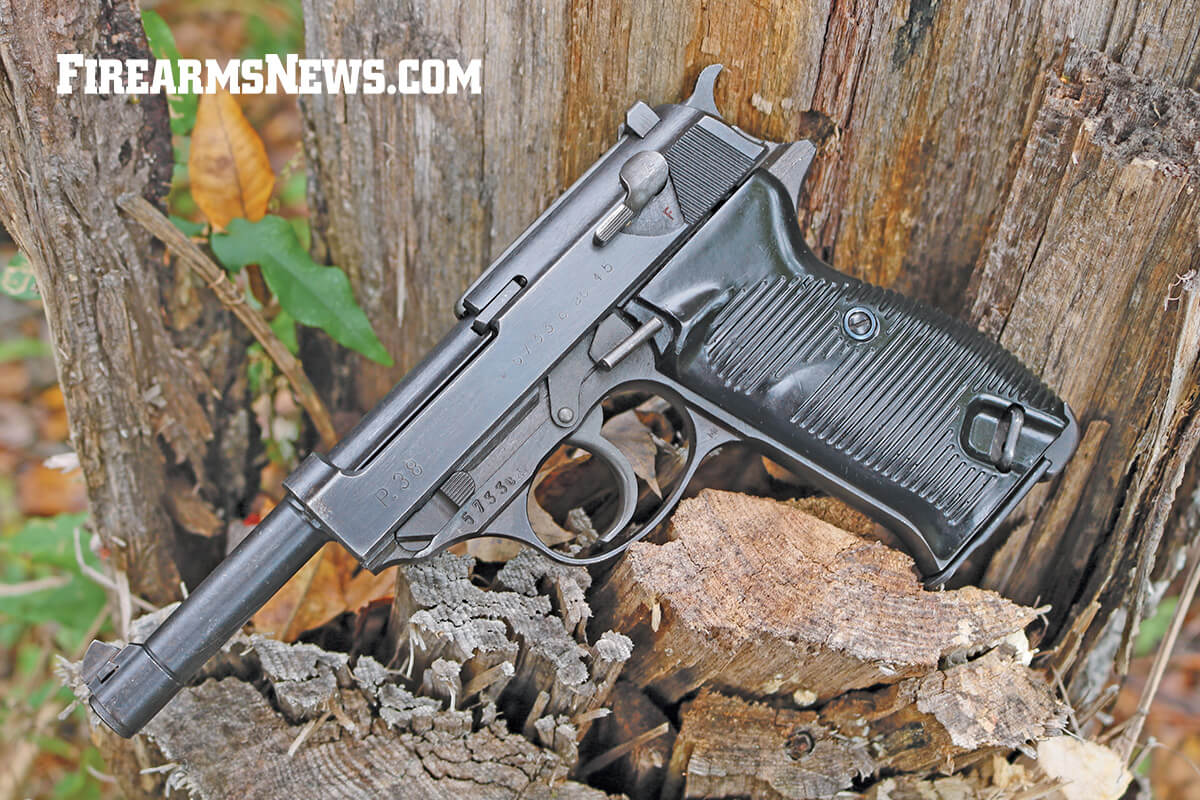
A Bad Guy named Tony Bernardo wields a Walther P38 pistol. (Photo courtesy Will Dabbs, MD)
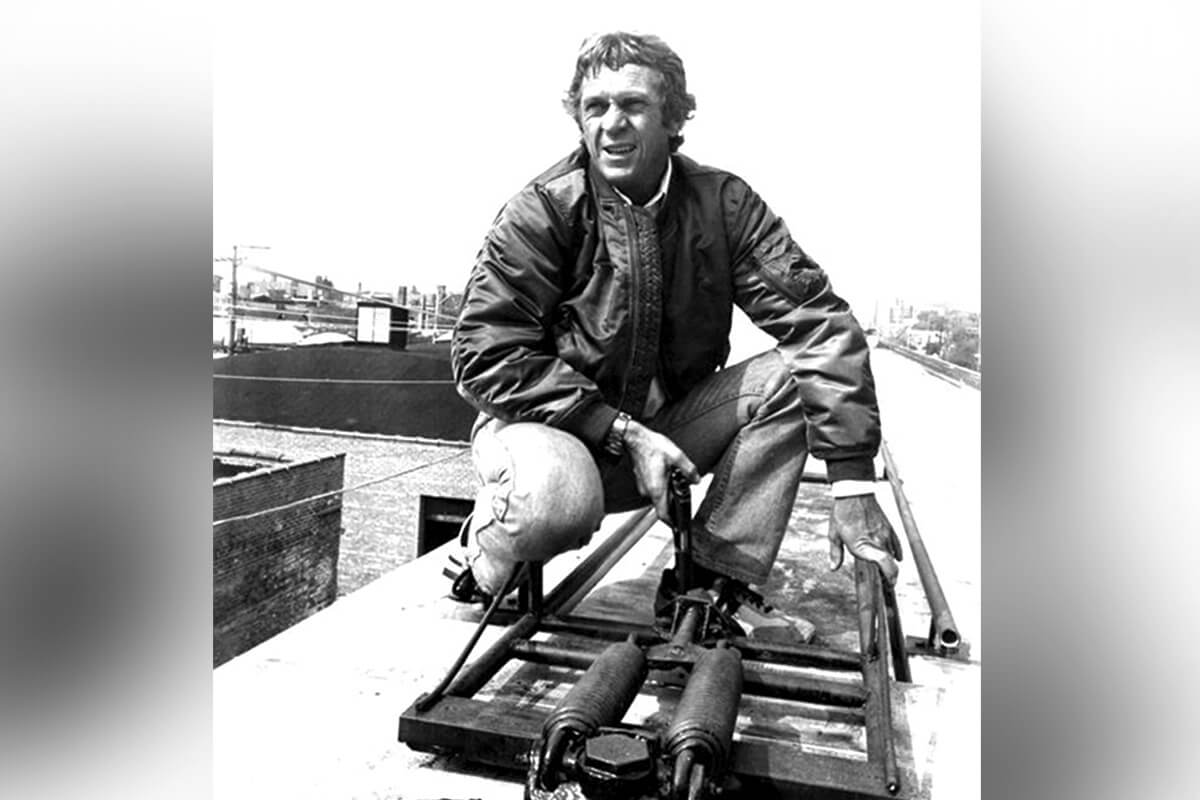
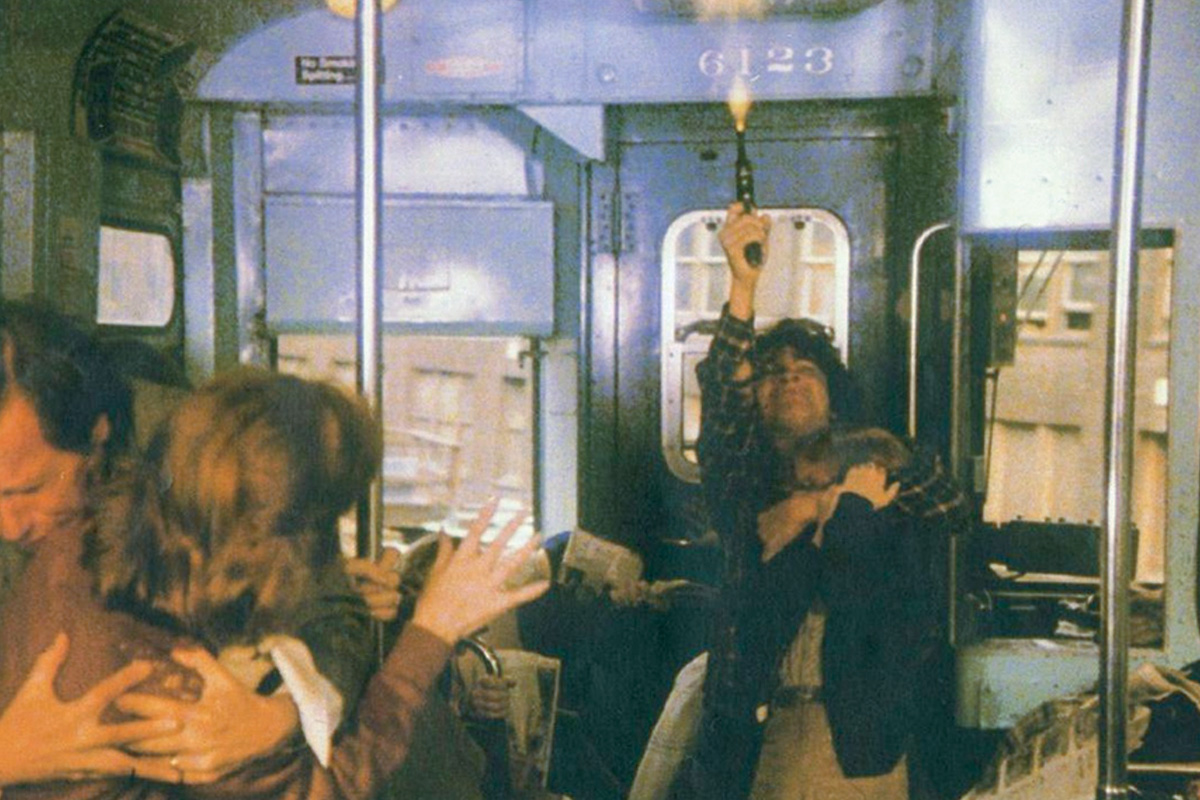
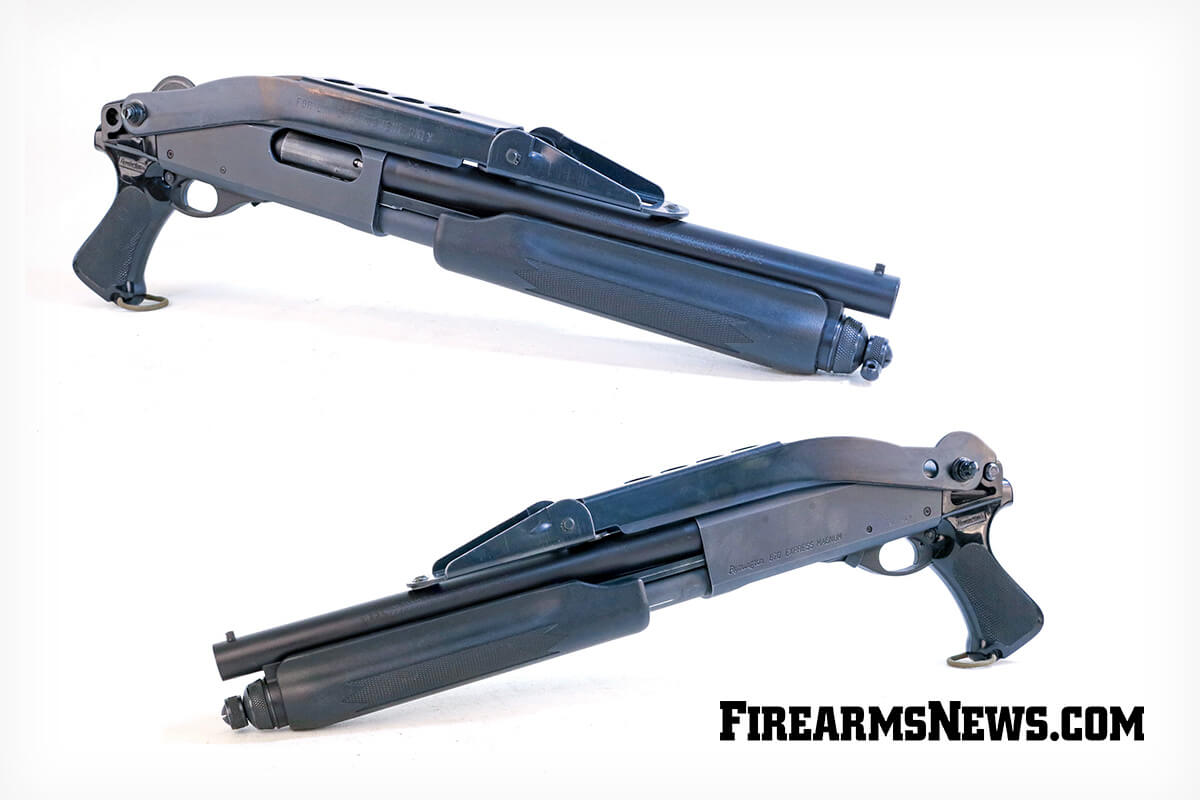
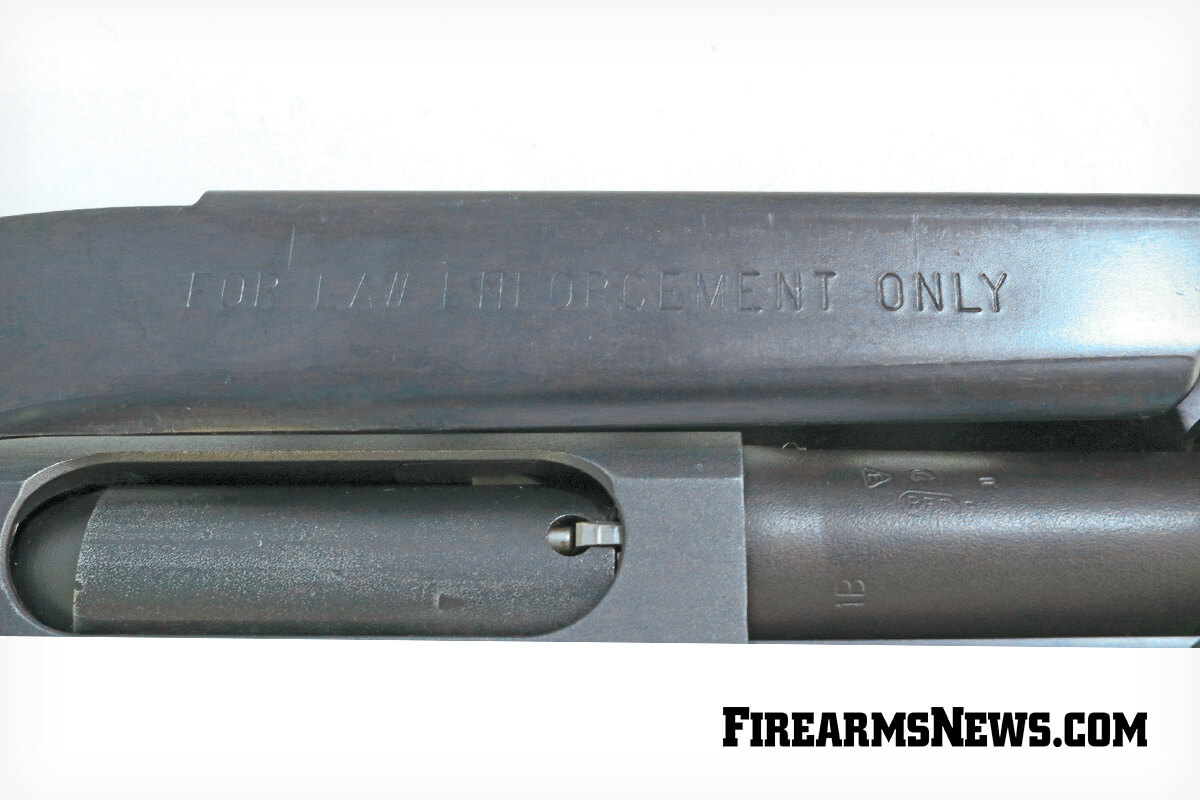
Thorson later gives chase to a gun-happy fugitive in Chicago. Thorson’s primary sidearm is a standard GI-issue M1911A1 automatic pistol. The Bad Guy initiates their exchange with a Remington 870 12-gauge equipped with a “Law Enforcement Only”-marked top-folding stock. He then leads Papa on a merry rooftop chase across Chicago and onto the El all the while shooting it out with a Walther P38 pistol. Papa prevails when he forces the fugitive to drive a stolen car off the top of a high-rise parking garage into the river below. This iconic scene was subsequently recreated some twenty-six years later for an Allstate Insurance commercial.
Tony Bernardo uses a folding stocked Remington 870 to blow the bejeebers out of his apartment when Papa Thorson comes to apprehend him. (Photo courtesy Will Dabbs, MD)
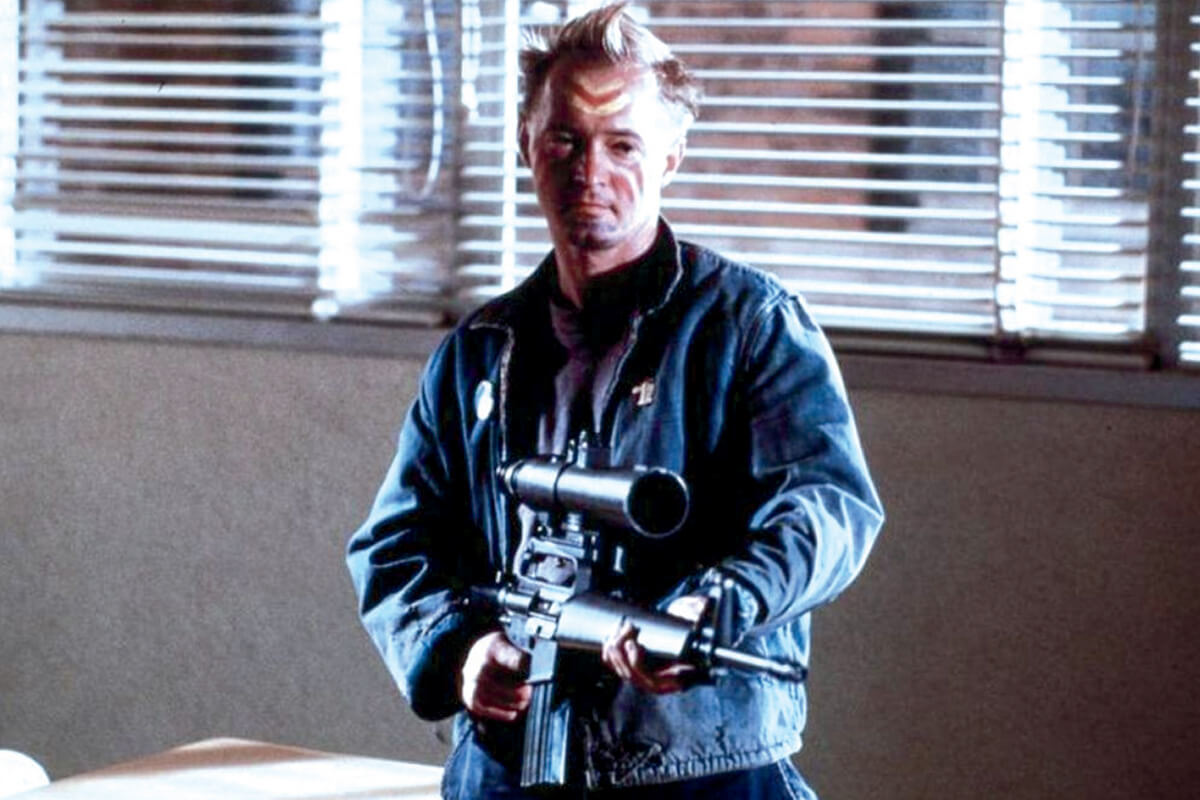
Throughout it all, Papa and his girlfriend are hounded by a creepy maniacal drug addict named Rocco Mason played masterfully by Tracey Walter. There is an intentionally vague backstory concerning Papa’s having taken Mason to jail at some point in the past. Mason is out for revenge and is inexplicably equipped with a full auto M16A1 rifle replete with an AN/PVS-2 starlight scope. Despite being as big as a generous loaf of French bread, the AN/PVS-2 represented the state of the art at the time.
The so-called “Law Enforcement Only” top-folding factory stock for the Remington 870 shotgun looks awesome but is brutal under recoil. (MovieStillsDB.com photo)
The climactic showdown finds Thorson’s pregnant girlfriend, Dotty, kidnapped and taken to the school where she teaches. Dotty is secured to a chair and used as bait to lure Papa close so Mason can kill him with his M16. Thorson claims to be unarmed but actually has a .25 ACP pocket pistol secured to his ankle. Mason discovers this weapon and forces Papa to discard it.
Tracey Walter’s lunatic character Rocco Mason stalks Papa and his girlfriend throughout most of the movie. (MovieStillsDB.com photo)
Mason machineguns a security guard and then chases Thorson through the school. Papa leads the lunatic into a chemistry lab after he turns on all the gas taps. The bounty hunter then rolls a laboratory skeleton toward the unsuspecting Mason, causing him to loose a long full-auto burst from the hip. The brilliant muzzle flash from the automatic rifle ignites the gas and blows him to smithereens allowing Thorson to rescue his girlfriend just in time to take her to the hospital so she can deliver her baby. Fade to black.
The MB Associates Stun-Bag gun used in the film is a curious thing. Similar less-than-lethal weapons are still for sale today. (MovieStillsDB.com photo)
The Guns
The beanbag gun shown early in the movie was an MB Associates Stun-Bag launcher. This thing looked a bit like a Japanese knee mortar, featured a rifled 36mm heavy plastic barrel, and fired via .22 Ramset blanks. A 12-gauge version was called the Prowlette. MB Associates were the same guys behind the Gyrojet rocket guns. A subsequent gas-powered version called the Trebor Prowler Fouler used high-pressure nitrogen cartridges for power. Standard 12-gram CO2 cartridges could be used for practice.
Papa Thorson’s beanbag gun takes out this hulking Bad Guy instantaneously. Reality is likely not quite so tidy. (MovieStillsDB.com photo)
Because it had a large bore, rifled barrel, and gunpowder charge the BATF classified these Law Enforcement tools as Destructive Devices requiring federal registration. The projectiles were pancake-shaped fabric bags filled with lead shot. As a darkly fascinating sidenote, these weapons were tested against baboons and pigs to assess their efficacy. They actually didn’t work terribly well. I can only imagine the poor slob whose job it was to chase angry baboons around trying to shoot them with beanbags.
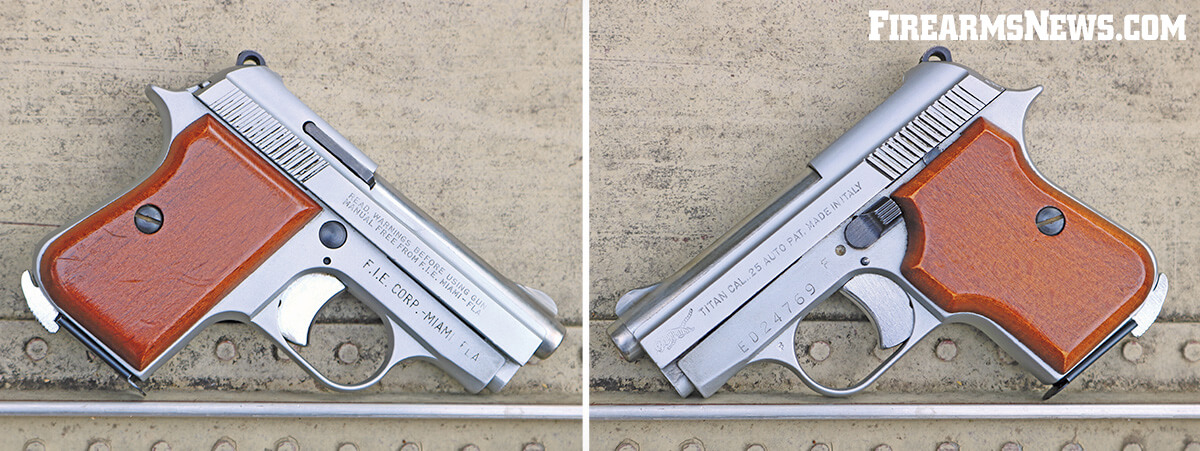
The world is covered in a thin patina of these little pocket pistols. They are typically chambered in either .22 or .25 and operate via an unlocked blowback action. (Photo courtesy of Will Dabbs, MD)
The Arma 100 Bean Bag gun is essentially the same thing marketed today that runs off of compressed gas. The gas-powered versions are not considered weapons in the eyes of the BATF and are sold through the mail. They run about $200 online.
The M1911A1 pistol helped save the planet from tyranny during World War 2. (Photo courtesy of Will Dabbs, MD)
Dotty’s pocket gun appeared to be a nickel-plated Beretta Jetfire or similar clone. She never fired the gun, but Papa did pop the magazine out and then back in to show her how it works. This little pocket gun utilized a classic Beretta-style slide architecture and carried seven rounds in the magazine. Similar single-action pistols were sold under a variety of trade names such as Targa, Titan, and GT27.
The Walther P38 was likely the most technologically advanced handgun of World War 2. Returning veterans brought countless thousands home from the war. (Photo courtesy of Will Dabbs, MD)
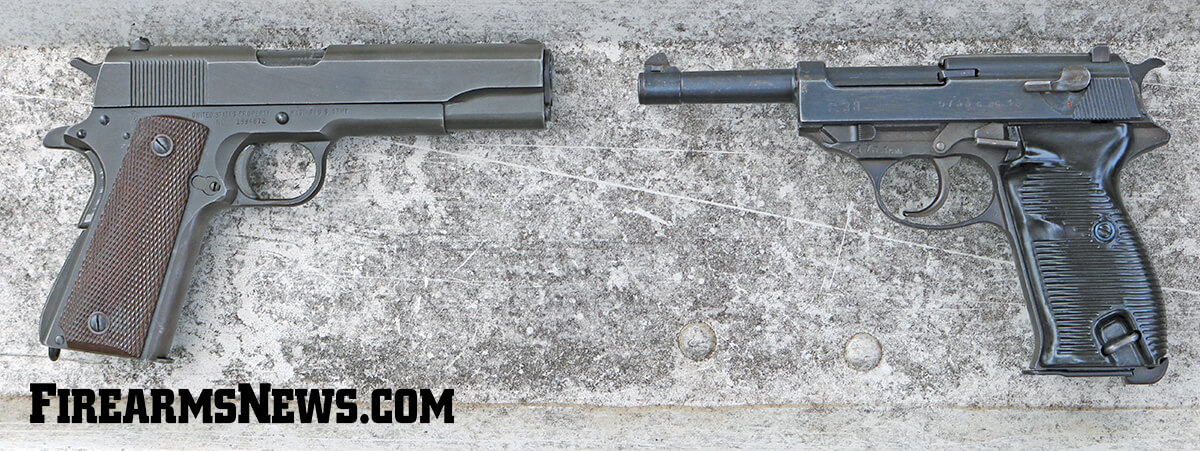
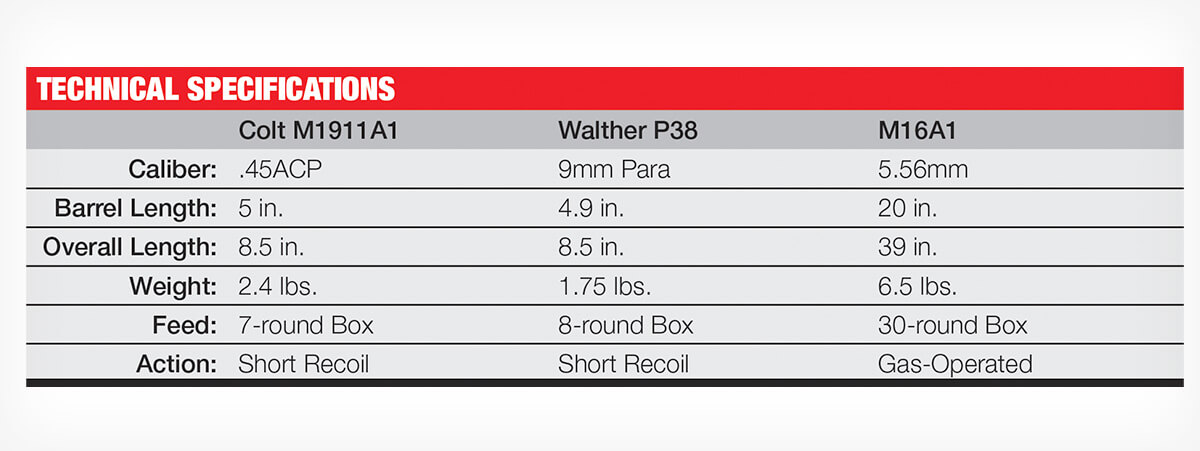
Papa’s M1911A1 was the most remarkable combat pistol of its age. The product of the inimitable mind of John Moses Browning, the M1911 and the .45ACP round it fired changed the way the world used handguns. Heavy, powerful, bulky, and loud, the M1911 reflected the ethos of the nation that birthed it.
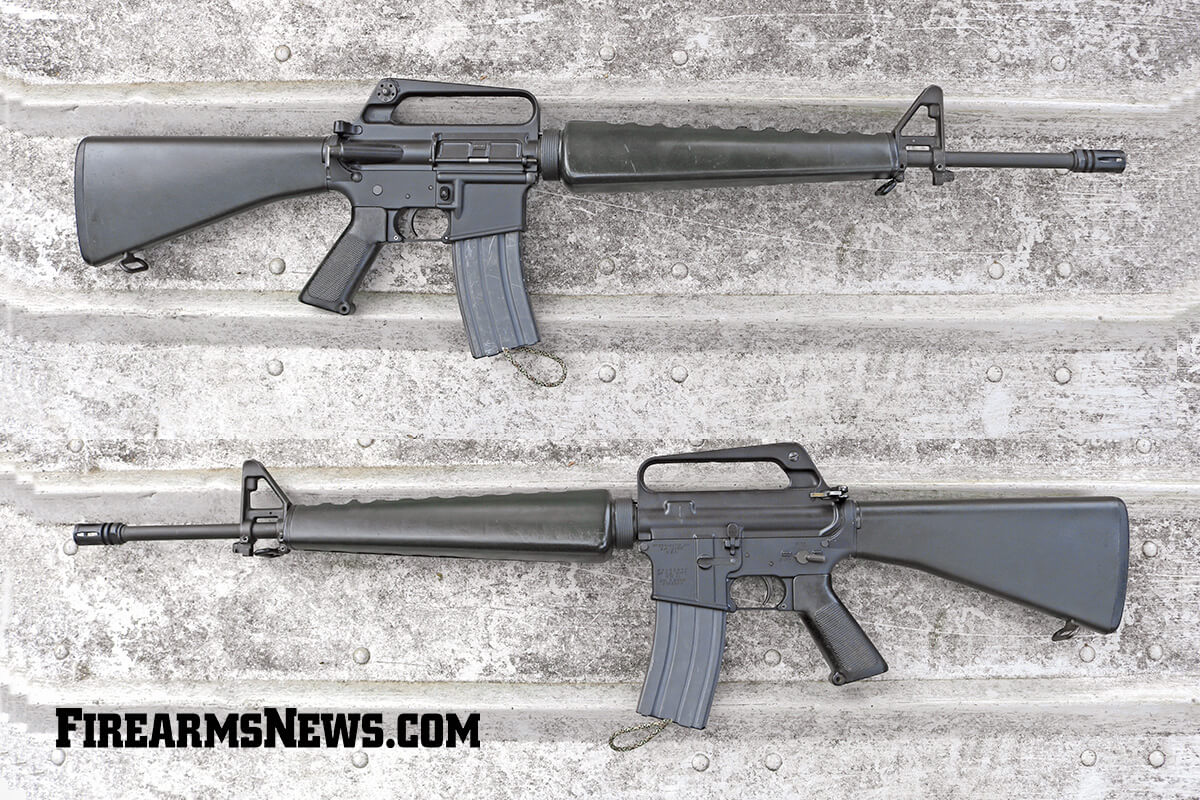
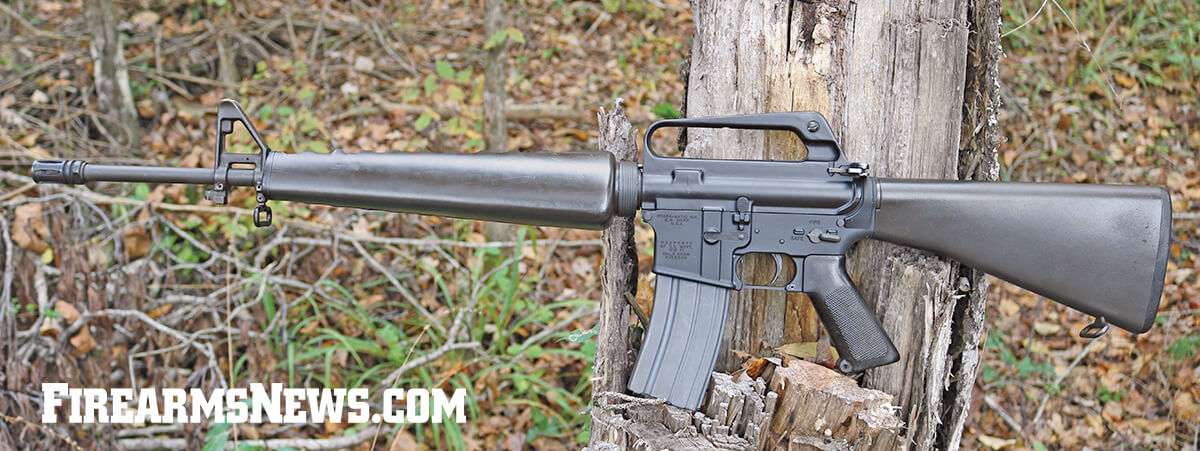
At the time of its introduction, the M16 was the most revolutionary military rifle ever conceived. The inspired melding of cutting-edge engineering and Space Age materials science into an infantry combat tool was without precedent. (Photo courtesy of Will Dabbs, MD)
The M1911 was a single-action autoloading handgun that fed from a seven-round single-stack box magazine. The gun was recoil-operated and optimized for right-handed operation. A few minor upgrades standardized in 1924 led to the redesignation M1911A1. These pistols served US forces throughout WW2 and into the 1980s. I was issued WW2-era M1911A1 pistols when first I donned the uniform.
I geek out over stuff like this. The folks who made The Hunter just nailed the muzzle flashes without the benefit of CGI. This is done by the cinematographer “over-cranking” the film speed to catch the muzzle flash in every frame. (MovieStillsDB.com photo)
The Walther P38 was introduced in, you guessed it, 1938, and pioneered any number of advanced features that are considered commonplace today. The gun fed from an eight-round single-stack box magazine and featured a novel single-action/double-action trigger most commonly found on the wheelguns of the era. The slide-mounted safety dropped the hammer safely over a loaded chamber. In this configuration the gun could be carried with the safety off and fired via a long, heavy double-action trigger pull. Subsequent rounds were fired single-action.
No digital effects here either! Real stunts, real cars, and real gravity! (MovieStillsDB.com photo)
The magazine catch was located on the heel of the grip in the European fashion, and the single-stack magazine limited the gun’s onboard capacity. However, the P38 was a trim and effective combat tool. The P38 is still found in many of your less well-funded war zones even today.
The M16 was originally developed in the late 1950s as a speculative effort by the ArmaLite Corporation. ArmaLite was a tiny little subsidiary of the Fairchild Aircraft Company. Eugene Stoner and a few others adapted state-of-the-art aerospace technology and materials science into a revolutionary combat rifle.
Before we started hanging so much bling on them, those old M16 rifles were quite trim, light, and svelte. A basic M16 only weighed about 6.5 pounds unloaded. These early guns were driven by a radical direct gas impingement system that was both simple and accurate. An M16A1 cycles at around 750 rounds per minute and in competent hands remains quite controllable on full auto.
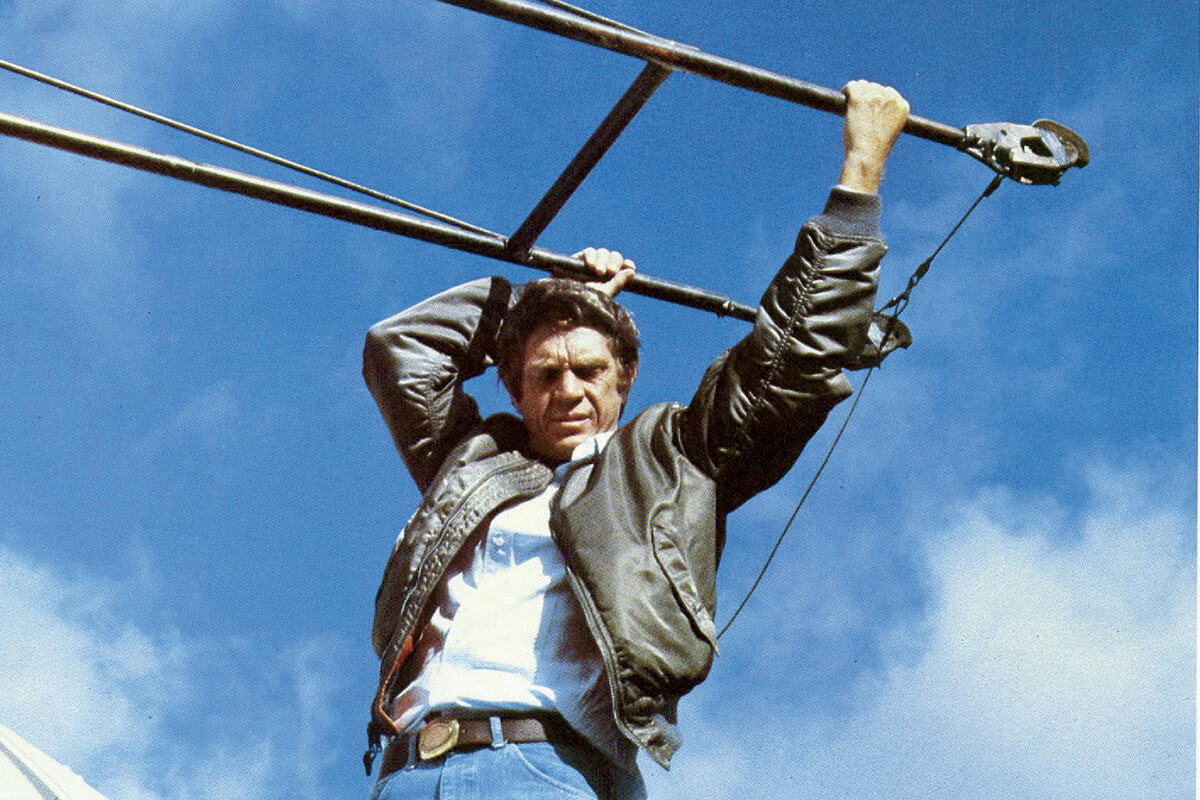
The GI-issue MA-1 flight jacket worn by Steve McQueen in the movie has a pistol pocket on the inside. However, the M1911A1 pistol is a fairly heavy piece of ordnance. In the real world the jacket sags a bit with a gun in place. (MovieStillsDB.com photo)
Hollywood Ordnance
In 1980, digital graphics were not a real thing, so all of the muzzle flashes and gun effects had to be undertaken in the real world. This is done by the cinematographer “over cranking” the film speed to catch the muzzle flash in every frame. When Papa unleashes his beanbag gun we get a slow-motion shot of the beanbag projectile slamming into the belly of a big fat shirtless guy. That looks like it likely hurt. The cinematic effect is to render the perp immediately unconscious.
Flight jackets are undeniably cool, even if those who wear them are not. (Photo courtesy of Will Dabbs, MD)
I am ever impressed with the screen presence of a simple unadorned M1911 pistol. Thorson carries his in the internal pocket of a GI MA-1 flight jacket. I’ve carried a gun this way before, and it invariably sags badly. For the scenes wherein he did not need a weapon McQueen’s character clearly was not packing one in his jacket.
The M1911A1 packs a good bit more downrange horsepower than does the German P38. (Photo courtesy of Will Dabbs, MD)
The foley sound effects used for Papa’s M1911 are deep and throaty, projecting a great deal of authority. In one scene, Thorson kneels around a corner and empties a magazine from the hip down a hallway. McQueen then executes a textbook magazine change, dumping the empty mag and slamming in a fresh one before dropping the slide via the slide release. McQueen runs his pistol like he knows it and reloads at the right times.
The Walther P38 pioneered a lot of the advanced tactical features found on the so-called “wondernines” of the 1980s. (Photo courtesy of Will Dabbs, MD)
The violent fugitive Anthony Bernardo burns a few rounds through his Remington 870 before abandoning it in favor of his Walther P38. The sound effects for the P38 are not as impressive as are those of the M1911, and he shoots this gun forever without reloading. In close-ups, sometimes the hammer is back and sometimes it’s not.
Tricked-out M4 carbines have spoiled us these days, but a standard unadorned M16A1 can still be an inspiring on-screen presence.
The real gun star of the movie is Mason’s M16A1. A previous non-firing shot involves an early SP1 AR15 with a three-prong flash suppressor. The later live-fire scenes are done with a real-deal full auto M16A1 with a birdcage flash suppressor. Normal people don’t care, but arcane stuff like that is the reason I get up in the morning.
Steve McQueen was a legend from the Golden Age of Hollywood. (Public domain photo)
When it is time to rock and roll Mason&rsquo’s M16 spews some simply epic muzzle flashes. The first real burst produces a single big ball of yellow fire. The final scene that touches off the gas in the chemistry lab involves the coolest multi-lobed starburst muzzle flash. Considering they shot that scene in real time I was duly impressed.
Ruminations
While not necessarily as pervasive a gun movie as some others, The Hunter nonetheless showcases some sweet firearms. McQueen was both a Marine and a gun guy (even was the owner of a transferable machinegun; an American 180 which fires .22 LR from a 177-round pan magazine), and his weapons handling skills were spot on. Rocco Mason’s muzzle flashes from his M16 fired on rock and roll warrant running the movie back and forth to appreciate them fully. If you’re looking for a great way to rewind after a hard day at the office or you need something to pass the time while you run your reloader pull it up on Amazon. The Hunter is a personal favorite.
In its original configuration the M16A1 rifle was easy to carry and fast in action. (Photo courtesy of Will Dabbs, MD)
The Remarkable Life of Papa Thorson
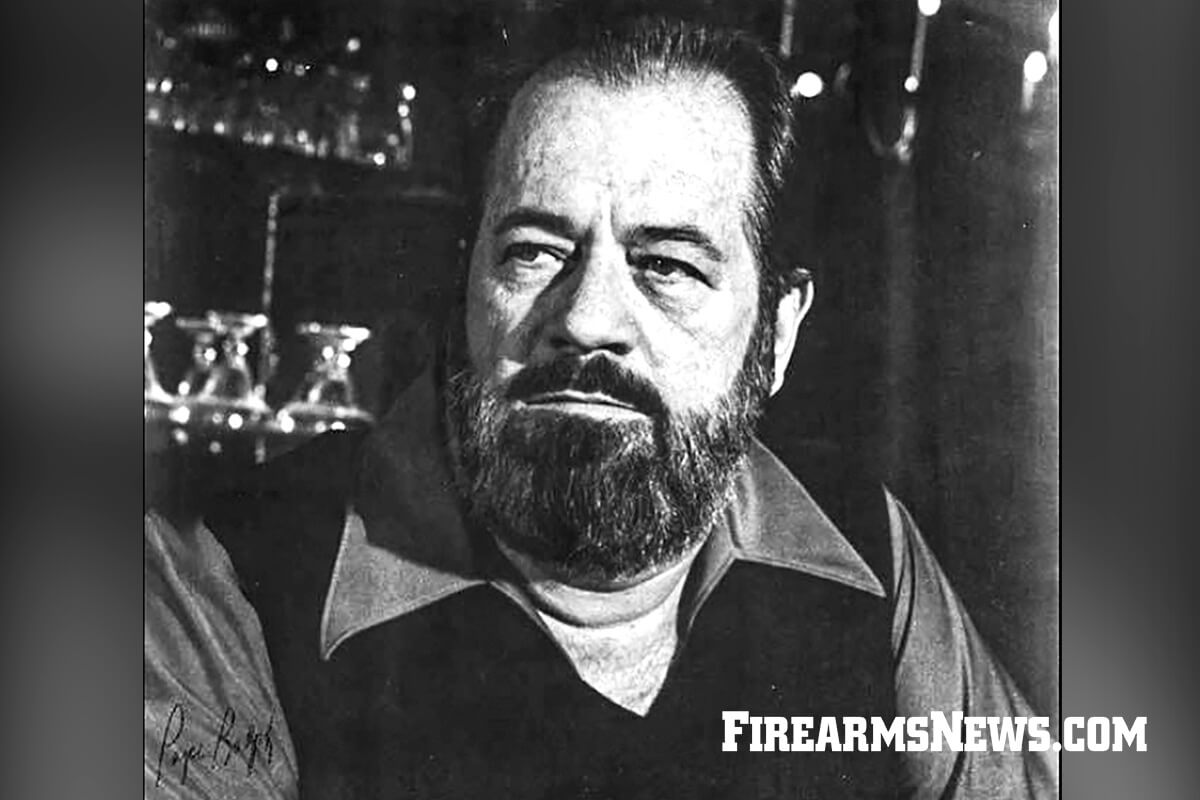
Papa Thorson was a larger-than-life character. (Photo courtesy of Will Dabbs, MD)
Ralph “Papa” Thorson was described by his biographer as, “The only man I know who can do a bastard’s job with taste and come off looking like a nice guy.” Standing 6’2″ and weighing 310 pounds, this rugged professional bounty hunter was also a champion bridge player, a church bishop, a recognized astrologer, a trained criminologist, a child nutritionist, and an inveterate consumer of classical music.
Thorson received flight training while in the Navy during World War 2 and did indeed live with a longsuffering woman named Dotty as was depicted in the movie. He took in stray people as a matter of course and officiated at weddings in his capacity as a church bishop. In 1968, he lived across the street from Jimmy Doohan, the actor who played Scotty on the original Star Trek. Over the course of his career Papa bagged some 5,000 bounties to include Squeaky Fromme, a member of the Manson Family who was later arrested for attempting to assassinate President Gerald Ford.
Of his peculiar profession Thorson had this to say, “I relied on … a condition … which happens when I confront a situation I’m not exactly sure of, a dream-like state where everything moves in slow motion. Fear is not permitted because the territory around me is my own. I control it. I expect to succeed. I’m sure of it. Not cocky, but convinced. It’s almost as if some secret force jacks up my perceptions. It’s a twilight zone. I enter it just moments before the confrontation. It might be the reason I’m still alive.”
Papa Thorsen was killed by a car bomb in 1991. The specific details were never clearly established.
Steve McQueen
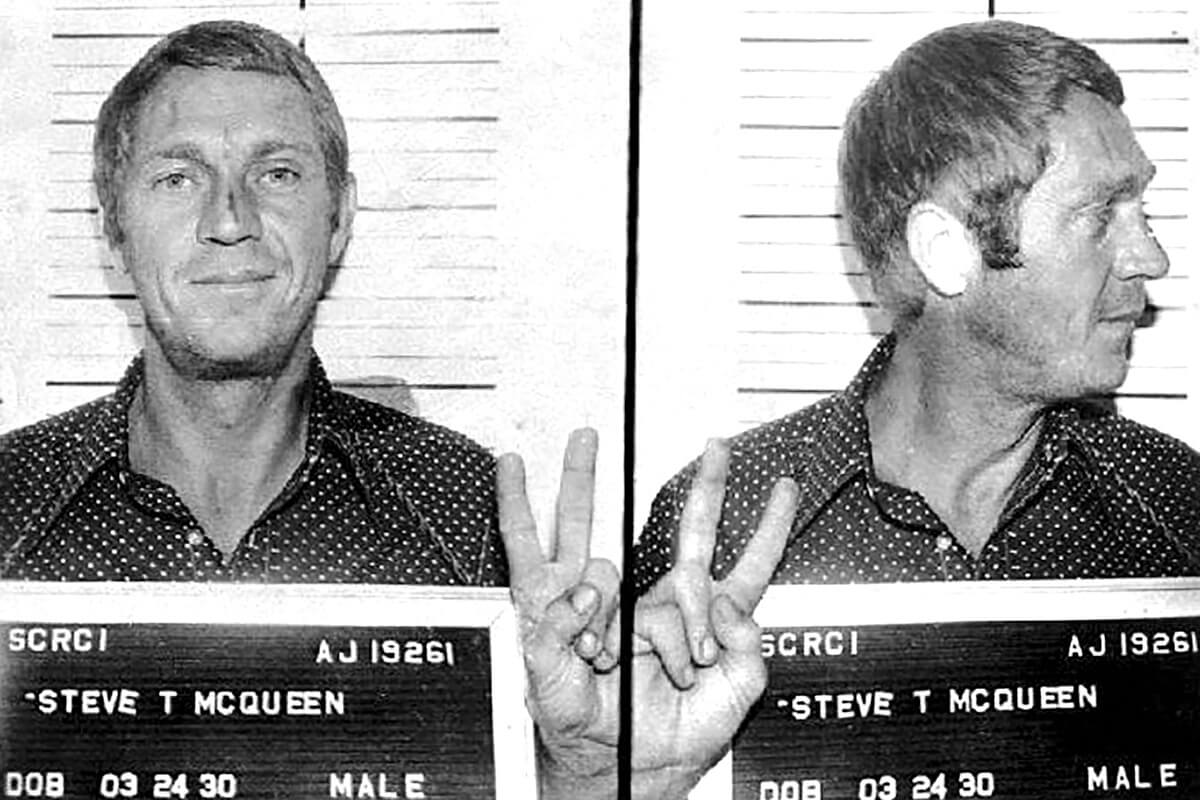
Steve McQueen’s was, to say the least, a checkered past. This mug shot was taken after his arrest in Anchorage, Alaska. (Public domain photo)
Steve McQueen’s mother was an alcoholic and his father a transient stunt pilot for a barnstorming flying circus. After being shuttled around among sundry family members McQueen became heavily involved in gang activities and petty theft. By age fourteen he was remanded to a California institution for incorrigible boys.
McQueen matured somewhat while there and returned many times after he found success to encourage the students and bring them gifts. He eventually signed on with the Merchant Marine but jumped ship in the Dominican Republic where he supported himself as a bouncer in a brothel. He subsequently drifted from job to job, working as both a carnival salesman and lumberjack in Canada. He was once arrested for vagrancy and spent thirty days on a chain gang.
McQueen enlisted in the Marine Corps at age seventeen and was demoted seven times for behavioral problems. He once went AWOL and subsequently resisted arrest, earning himself 41 days in the brig. After this experience, McQueen seemed to get his life in order, at least a bit. He saved a five-man tank crew during an arctic exercise after their tank broke through the ice and sank. He also served on the honor guard aboard Harry Truman’s Presidential yacht.
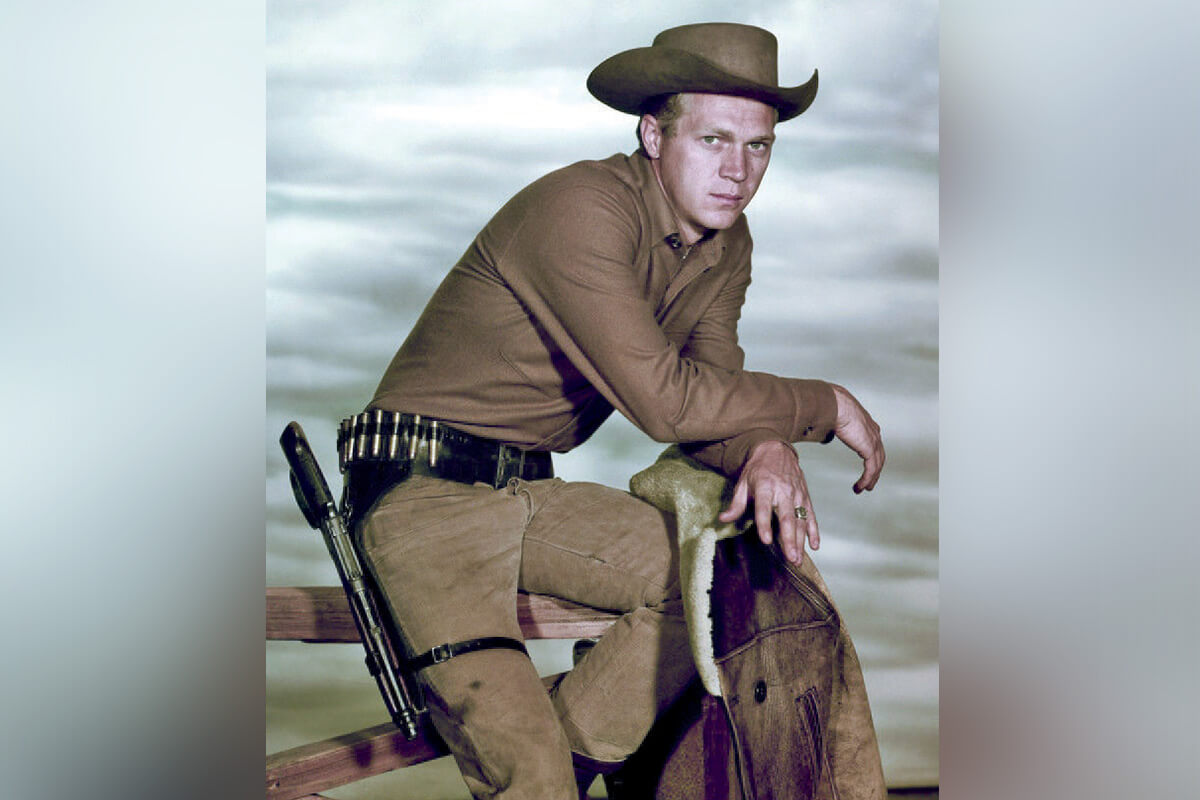
Wanted: Dead or Alive was McQueen’s big breakout role. (MovieStillsDB.com photo)
McQueen studied acting via the GI Bill after leaving the Marine Corps and supported himself as a car and motorcycle racer. He did his own stunt driving in his movies, some of which was quite audacious. Playing the lead on the popular TV Western Wanted: Dead or Alive was his breakout role.
The antique toys shown in the movie came from McQueen’s personal collection. McQueen kept the 1951 Chevrolet Skyline he drove in the movie. That car sold at auction in 2013 for $84,000.
After a lifetime spent in empty hedonism, Steve McQueen eventually found Jesus. During his final years, he came to know Billy Graham and was active in the Ventura Missionary Church. His spiritual journey was cataloged in a posthumous documentary titled, Steve McQueen — American Icon. Kenneth R. Morefield of Christianity Today said the film, “offers a timeless reminder that even those among us living the most celebrated lives often long for the peace and sense of purpose that only God can provide.”
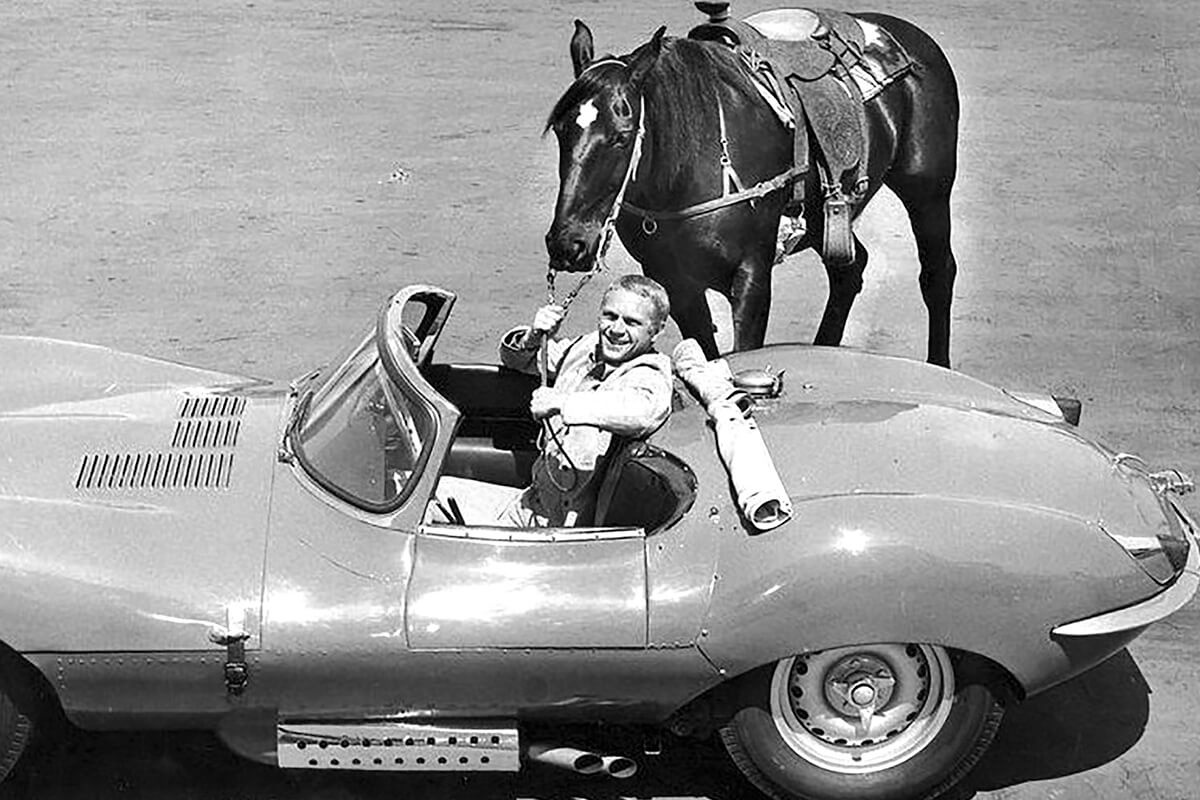
Steve McQueen was a competitive racecar driver who did his own automotive stunts. (Public domain photo)
About the Author
Movie Guns Editor Will Dabbs, MD is a mechanical engineer who flew UH1H, OH58A/C, CH47D and AH1S aircraft as an Army Aviator. He is airborne and scuba qualified and summited Mount McKinley, Alaska, six times…at the controls of an Army helicopter. After eight years in the Regular Army, Major Dabbs attended medical school. He works in his urgent care clinic, shares a business building precision rifles and sound suppressors, and has written for the gun press since 1989.