Categories
The Einstein of Guns!

Categories
10 Most Underrated Cartridges and Why?
Categories
Must be nice!


On, off, on again. That is the story, so far, with New York’s ill-concealed “Concealed Carry Improvement Act (CCIA).“
As one may recall, the CCIA was enacted this past summer by Gov. Kathy Hochul and her fellow gun controllers in the state legislature after the Supreme Court struck down New York’s “may-issue” licensing scheme as part of the landmark Bruen decision.
In that case, the high court affirmed that one’s right to keep and bear arms extends beyond one’s home into the public square.
Moreover, it found “may-issue” licensing schemes to be unconstitutional. That is to say, government officials cannot arbitrarily deny concealed-carry permits to law-abiding citizens on the grounds that they don’t have a sufficient “proper cause” to exercise this fundamental right.
Irate with the SCOTUS ruling, Gov. Hochul responded by pushing out the draconian CCIA that required applicants for concealed carry permits to do all of the following:
- Display “good moral character”
- Disclose their social media accounts for review
- Have in-person interviews with law enforcement
- Provide four “character references”
- Undergo 18 hours of combined training, a tremendous increase from the existing 4-hour requirement
The CCIA also banned firearms in a wide-ranging list of “sensitive locations,” which sought to, in effect, make the entire state a gun-free zone.
SEE ALSO: ‘Confusion’ Is the Word As NY Gov. Hochul’s Gun Laws Take Effect
Gun-rights groups immediately filed suit against the CCIA on the grounds that it violated the Bruen decision. A federal judge — Judge Glenn Suddaby — agreed, saying the CCIA imposed “unprecedented constitutional violations.”
And in November, Judge Suddaby enjoined the following provisions via a temporary restraining order (TRO):
- Requiring good moral character
- Requiring the names and contact info of spouses and other adults in the applicant’s home
- Requiring applicants to disclose social media accounts for review
- The restrictions on carrying in public parks, zoos, places of worship, locations where alcohol is served, theaters, banquet halls, conferences, airports and buses, lawful protests or assemblies, and the prohibition on carrying on private property without express consent from the owner
Gun Controllers fought back and appealed the case to the U.S. 2nd Circuit Court of Appeals. The 2nd Circuit decided in December that while it was deciding the matter it would put a stay on Judge Suddaby’s preliminary injunction (TRO).
Put quite simply, the CCIA would go back into effect. In short, it’s on again.
The Gun-rights groups that sued then asked the Supreme Court to intervene and block the 2nd Circuit’s stay on the original injunction granted by Judge Suddaby.
The high court this week declined to do so. But two justices on the bench — Justice Alito and Justice Thomas — made it very clear that this fight was far from over.
“I understand the Court’s denial today to reflect respect for the Second Circuit’s procedures in managing its own docket, rather than expressing any view on the merits of the case,” they wrote.
“Applicants should not be deterred by today’s order from again seeking relief if the Second Circuit does not, within a reasonable time, provide an explanation for its stay order or expedite consideration of the appeal,” they added.
SEE ALSO: What New York Gov. Kathy Hochul Is Doing to Put a De Facto Ban on Concealed Carry
The clock is ticking now for the 2nd Circuit. If it fails to come to a reasonable decision soon, the high court may step in, as Erich Pratt, the Senior Vice President for Gun Owners of America indicated in a press release obtained by GunsAmerica.
“While we would have hoped for immediate relief from the Court, this statement from Justice Alito is incredibly reassuring, in that the court is completely prepared to step in and re-assert the Bruen precedent should lower courts fail to properly, and in a timely manner, apply it in judicial cases where Second Amendment rights are being restricted,” said Pratt.
“We look forward to continuing the fight against New York’s draconian law,” he added.
As always, stay tuned for updates.
As both a prequel to Paramount’s hit ‘Yellowstone’ series and a sequel to the franchise origin story, 1883, the anticipation for 1923 has been high to say the least. 1923 explores the next two generations of the Dutton family tree and the perils they face in the early 20th century, including war, lawlessness, economic depression, and the encroachment of the modern world on their traditional way of life.

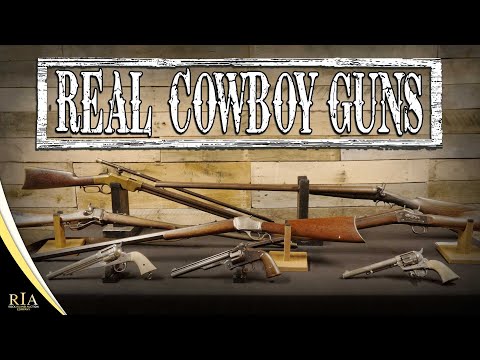
With land disputes and cattle theft an ever-looming threat, being well-armed was essential to the ranchers who tamed the remote valleys of western Montana. The historic accuracy of the series varies, but most of the guns of 1923 are real firearm models that are highly collectible today. Click on the photos throughout this article to find similar gun examples from past and upcoming auctions at RIAC.
If you haven’t watched the series yet and are hoping to remain spoiler free, read no further. You’ve been warned!
The Dutton Family Tree: James Dutton to John Dutton
The question of who is John Dutton’s grandfather has been on the mind of Yellowstone fans since the 1883 prequel series was first announced. The Yellowstone family tree starts with James Dutton (Tim McGraw) and Margaret Dutton (Faith Hill) as they travel west with their children, John I and Elsa. The Duttons build what becomes the Yellowstone Ranch near their daughter Elsa’s grave, and Margaret gives birth to Spencer several years later.

Ten years later, James Dutton is gunned down by horse thieves. Margaret writes to James’ brother, Jacob Dutton, begging for his assistance running the ranch. Tragically, Margaret passes away during a harsh winter before Jacob and his wife, Cara, arrive in Montana. Jacob and Cara take the two boys under their wing and raise them as their own. The 1923 series takes place almost three decades later, with Jacob serving as the Dutton family patriarch and John I as the heir apparent.

As shown in Yellowstone Season 5, Episode 6, James and Margaret are buried on the ranch on either side of their daughter Elsa. John Dutton III has pointed out numerous times throughout the Yellowstone series that the Dutton homestead is a seventh-generation ranch, with five generations Montana born. This places Jack Dutton, John Dutton I’s son, as the most likely link between past and present in the current Dutton family tree, with a 140-year line spanning from James Dutton in 1883 to Tate Dutton as the sole seventh-generation Dutton in the current Yellowstone series.

“My father had three children,” Elsa Dutton’s ghostly voice narrates as the 1923 series opens. “Only one would live to see their own children grown. Only one would carry the fate of this family through the depression and every other hell the 20th century hurled at them.”
The Winchester 1894: A Yellowstone Legacy Gun
While James Dutton favored the Winchester 1873 lever action rifle in 1883, his brother, son, and grandson are seen toting the Winchester 94 carbine. Invented by the prolific John Browning, the Winchester 94 was affordable, reliable, and frequently chambered in .30-30, a smokeless cartridge that quickly became one of the most wide-serving and prevalent types of ammunition available.

The Winchester 94 carbines carried by Jacob, John I, and Jack Dutton all appear to be the same model, possibly 1940s “flat band” carbines that share similar butt plates and front sights. Though this style of Model 94 is anachronistic to the 1923 time period, the Winchester 94 was certainly one of the most popular guns of the era.
The three Winchester carbines depicted in 1923 all appear to match the gun John Dutton owns in the present-day Yellowstone show, so the intention of the showrunners may be to illustrate that one of these guns was passed down through the Dutton family, a common practice with prized hunting arms like the Winchester 94.

John Dutton’s Yellowstone gun is also a real-life legacy firearm owned by Kevin Costner’s father. “My dad was a fistfighting, single-minded tough guy coming out of the Dust Bowl in the Great Depression,” Costner explained. “He wanted a job and never let it be taken away from him. The [Winchester] .30-30 gun I use in the show was his. When I put it up to my cheek, my dad’s right there. I know what it’s like to be a person that’s kind of a John Dutton—minus the murder.”
Cara Dutton’s Shotgun
The Dutton family tree has no shortage of strong women, and Cara Dutton is no exception. As the matriarch of the series, it’s only appropriate that Cara’s shotgun is the first gun featured on screen in 1923. Cara’s hammerless side-by-side shares a resemblance to an Ithaca Flues Field Grade shotgun, which were manufactured between 1908 and 1926. The model is named for Emil Flues, who designed and patterned the gun. Cara’s shotgun appears to have Damascus barrels, as evident by their twisted steel pattern.

A solid scattergun has served as a favored firearm for two other leading ladies of the Yellowstone franchise. Margaret Dutton handled a 12 gauge with skill in 1883, and her great-great-granddaughter, Beth Dutton, kept a Parker Brothers 1878 12 gauge close by after improbably surviving an explosive attack.

Who is Spencer Dutton?
Spencer Dutton’s lineage on the Dutton family tree seems like a potential dead end after Elsa’s ominous prediction, but things may not be that clear cut. Fans of ‘Legends of the Fall’ will find parallels between Tristan Ludlow and Spencer Dutton, both prodigal sons from Montana ranching families. Like many young men of his era, Spencer became caught up in WW1.

After the war, Spencer Dutton traveled to Africa and became a hunter employed by the British Protectorate of Kenya. In both instances, Spencer’s poise and aptitude with firearms have kept him alive. Spencer also seems to share his late sister Elsa’s wanderlust. Though he was born several years after Elsa’s passing, Spencer honors her memory by carrying his sister’s knife and sheath.

Guns of WW1
The Great War and its aftermath represented a dramatic change in both the world economy and the firearms industry. It also exposed a generation of young men to the horrors of modern warfare, as depicted in 1923. A variety of guns are seen on screen, from shotguns and bolt action rifles to the latest in belt-fed machine gun technology like the Browning 1917A1.

Just as James Dutton was traumatized by the Battle of Antietam during the Civil War, his son Spencer is haunted by his experiences in WW1. Given the forested terrain, the ferocity of fighting, and the late-war Browning machine gun depicted in Spencer’s nightmares, this battle may have occurred during the Meuse-Argonne offensive, the final major campaign of WW1, and the deadliest action in American military history.

Spencer Dutton’s Rifle
While Jack Dutton’s story is shot against the sweeping mountain landscapes of western Montana, Spencer’s adventures are filmed on location in South Africa and Tanzania. Spencer Dutton’s travels take him from the Nairobi municipality to the Tanganyika territory, tracking down man-eating leopards and lions. His firearm of choice has become one of the most talked about guns of 1923, with its exact make, model, and chambering debated by fans.

Though the production gun is almost certainly neither period-correct nor of British make, Spencer’s rifle is probably intended to represent a British dangerous game gun of the era, such as a Holland & Holland Royal. Some clues can be found in the comparisons the show draws between Spencer Dutton and Col. John Henry Patterson. One of the British tourists asks Spencer if he was the one who killed the man-eaters of Tsavo, and he points out how he was only a child during the incident.

The two lions of Tsavo were hunted and slain in 1898 by John Patterson, who later recounted the events in a book. Paramount’s Ghost in the Darkness film retold the famous tale using firearms similar to the guns Col. Patterson carried during his hunt, including a double rifle chambered in .450 Express. In 1923, the .450 Black Powder Express would have been long overtaken by John Rigby’s .450 Nitro Express and its competitors, such as Holland & Holland’s .500/450.

With Spencer’s tale in particular, 1923 embraces archetypical early 20th-century romantic adventure storytelling. As Jim Cornelius, writer and podcast host of ‘Frontier Partisans’ notes, “Part of our enjoyment is purely the visual feast from a period we have always found compelling. In terms of style, this era is right in the wheelhouse.”

Revolvers of 1923
In 1923, Harrison Ford has traded in his DL-44 blaster for a Smith & Wesson Military & Police revolver. Introduced as the “Smith & Wesson .38 Hand Ejector Model of 1899,” the double action Smith & Wesson Model 10 M&P has been offered in numerous variations and has been purchased by countless military and police departments across the globe.

The Colt Single Action Army is one of the most ubiquitous guns of 1923, carried by John Dutton I and his son Jack, as well as many other ranch hands throughout the series. By the 1920s, production numbers for Hollywood’s favorite cowboy gun had slowed down from its peak popularity. But with nearly 350,000 of the famous SAAs already in circulation, they would have been a widely available and proven sidearm.

In 1923’s opening scene, Cara Dutton trains her shotgun on a rival rancher, an Irish immigrant scrambling to reload his Webley & Scott top break revolver. These well-known wheelguns, familiar to fans of the Peaky Blinders series, were the primary sidearms of British military officers of the period and also a popular choice with police and civilians throughout the UK from the late 19th century through the early 20th century.

Sheriff William McDowell’s gun may be a Colt Officer’s Model Match Fifth or Sixth Issue. Both revolvers would have been too late for the era, though the gun’s predecessor, Colt’s first medium frame double action target revolver, was available starting in 1904. Though McDowell’s gun appears to possess an interesting mix of traits, its 6 inch barrel and front sights are consistent with a later issue Officer’s Model.

Heavy Firepower of 1923
One of the themes of 1923 is technology clashing with tradition, and nothing embodies that conflict more dramatically than the introduction of automatic weapons. The overwhelming firepower offered by machine guns like the Maxim, Vickers, the Lewis gun, and the Browning Model 1917 contributed to the trench warfare stalemates and high death tolls of WW1

While the heavy machine gun ruled the trenches of Europe, submachine guns like the Thompson found a market with civilians and law enforcement after the war. In the time period of the 1923 TV series, the Thompson 1921 AC would have been the likely candidate available. The ‘A’ stood for automatic, while the ‘C’ meant that the gun had been fitted with the Cutts Compensator, an attachment intended to reduce muzzle rise and recoil.

During the period following WW1, Auto-Ordnance found themselves with a submachine gun designed for war, but no war to ship it to. They instead turned their marketing efforts to anyone in need of security, including advertising the firearm to ranch owners as the “Thompson Anti-Bandit Gun.”

The Guns of 1923 and Beyond
As Cara Dutton writes to Spencer at the end of Episode 3, “War has descended upon this place and your family. Whatever war you fight within yourself must wait. You must come home and fight this one.” Foreboding words for the enemies of the Dutton family, as well as a promise of more action and firearms onscreen in the weeks to come, and we’ll update this page accordingly.

Rock Island Auction Company’s Premier and Sporting & Collector Auctions include a wide assortment of authentic lever guns, revolvers, sporting rifles, and military arms dating to the same period as the 1923 series, and there’s no better time to start or expand your gun collection. From affordable antique Colts and Winchesters to Tommy guns and Trench Sweepers, RIAC offers something for every collecting aspiration.

Gun collecting and pop culture have always gone hand in hand, so subscribe to the Rock Island Auction newsletter to receive new gun blogs and gun videos every week. From articles on popular period pieces like Winchester 73, True Grit, Quigley Down Under, and Outlander to movies and television featuring modern guns such as the Walking Dead, Star Wars, Tomb Raider, and Die Hard, we explore the most popular and intriguing guns of Hollywood.

Categories
Choices

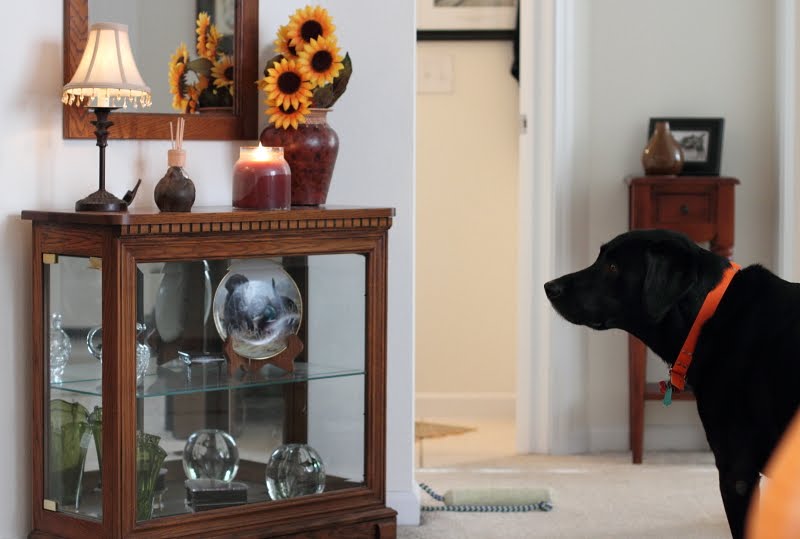
It was almost 10 years ago, one of those flawless winter afternoons, the sky crisp and heavy with thought. Coming back from work, I was hurrying to get home. Even though the day wasn’t late, it had started very early and I wanted to get home to my black lab before he was doing the Barkley Bladder Boogie.
So I took the shorter route on the freeway to get towards home, anticipating the glare of the setting sun when the sky turns to diamond brilliance for a few minutes, intensifying the sound of the truck engine bouncing off the cooling pavement. I was just below the speed limit, as speeds traps were rife through here, the windows up, YoYo-Ma playing Vivaldi quietly on the stereo. So many thoughts going through my head.
The scene I had just left was not a good one and knew I would be carrying the sights and smells of the day with me on the drive, perhaps hanging those thoughts of them up somewhere this evening so I could get some sleep. I needed to think about other, happier things. I needed to stop at the store and get some milk and paper towels on the way home. I needed to give a friend a call back. But I wasn’t thinking about my home and my Barkley home on the couch.
He’s the keeper of the sofa, guardian of the throw rugs, and something I never planned on getting, but I did, suckered in by the litter of black fur. The first night home, he slept on my chest as I lay on the couch next to his prepared little kennel of which he wanted no part. I felt the gentle thump against my chest, for he began to give me his heart that very first night, and he, mine.
Then the days became weeks, and then months, and before you knew it he was my protector, not the other way around. On those days, when the reality of another sanguinary day takes hold, I could escape into the loving affection of a simple game of fetch or a nap for two on the family room couch.
That safe spot buffered me, hid me, helped me distance myself from anything that troubled me, while he and I both left the past in bounding leaps of faith and joy. But, that night, as I drove along the freeway, I wasn’t thinking about the doggy greeting I would get when I got home, Barkley yipping for joy at the sound of my big black Chevy truck coming up the drive.
I used to have a VW Jetta, until I moved to where the drive to work involved two lane highways, head on traffic, and little to no plowing before getting to the main freeway into the city. Looking at oncoming traffic as I fought for traction on a road not always plowed, it hit me.
Not the subtle detection of nature’s wrath I’ve sensed in the woods when I’ve picked up my gun and moved quickly to shelter. It was something that had been lurking in my mind for some time, even as I made my way in haste through the dark. It was that perception of a large grill of a semi truck about to spring full clawed on me if it crossed the center line. I realized suddenly how tiny my little VW was and how little chance I had of living if I hit something bigger than I.
Then a couple days later I hit black ice. I was alone on the road, going pretty slow, but I still found myself suddenly facing 180 degrees from the direction I was headed but still in my lane. I’m really not sure how that happened. I know all the rules in a rear end skid, don’t brake, steering in the direction of the skid, so that the momentum of the vehicle will straight you out. I think though, in this case, I simply closed my eyes and muttered increasing loud four letter words as my hands did something with the steering wheel from muscle memory.
The next day I bought the bat truck. Four wheel drive isn’t my personal savior but I now looked down ON some of the other trucks. It had an extended cab and four doors and big tires. It’s as nimble as a Humpback whale. But I bought it to haul stuff and for protection around me, not to play Speed Racer on the interstate.
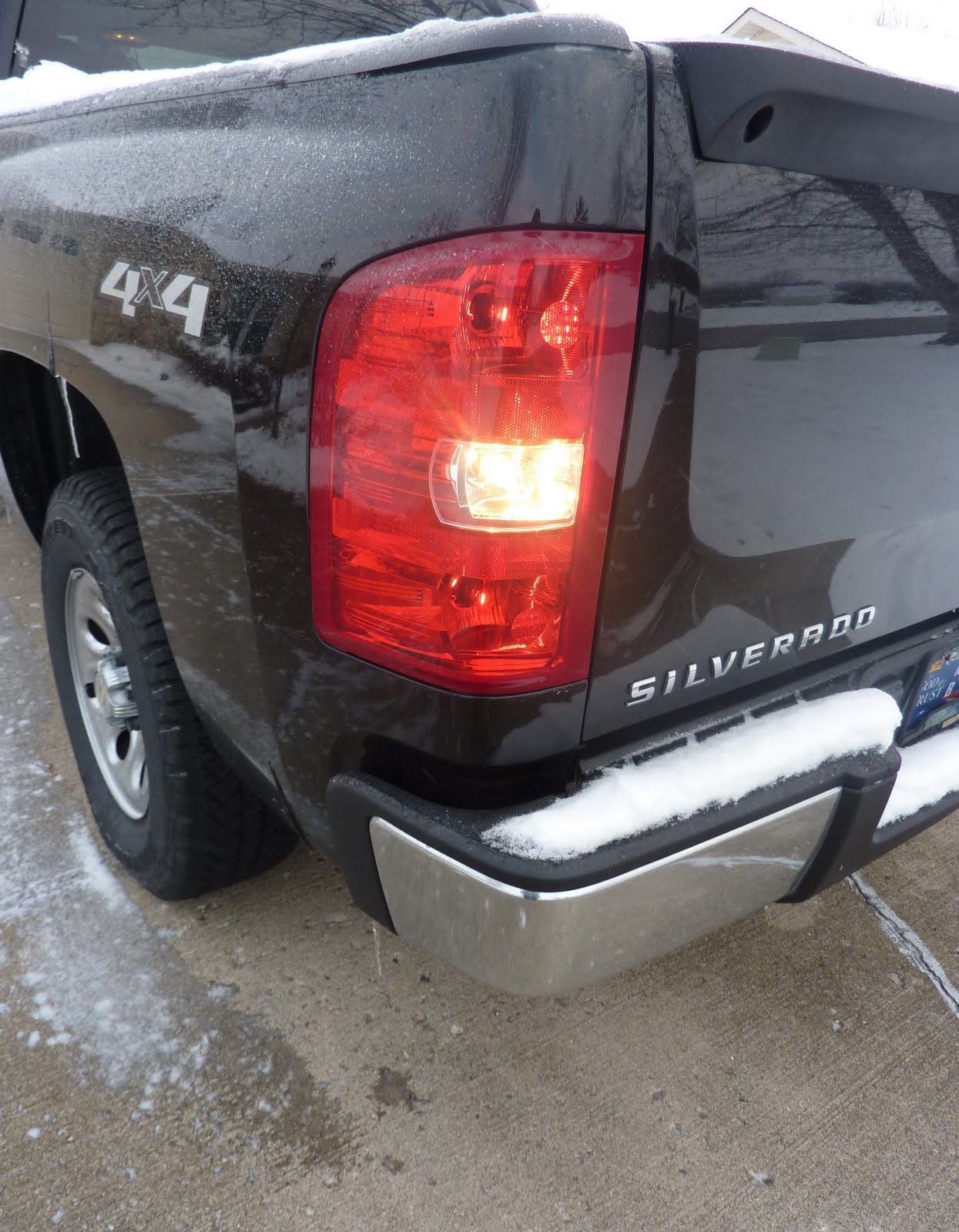
What we drive is a deeply personal thing. For some, a car is nothing more than transport, Point A to Point B. For some it’s a need to show off to the world some image of yourself that only you carry. For some it’s custom license plate with a useless Humming SUV that is no better at serious off road antics or warfare than the Smart Car.
I’ve a truck for squirrel usage when needed, also 4 wheel drive, to get into places that people just don’t want to go. I’ve gotten used to a big truck, and find myself feeling strangely small and vulnerable in anything else.
I feel the same way when I go out without a weapon on my hip. I notice how small I am compared to most men, and certainly most criminals. I’ve felt it in places where I could not legally carry, walking faster, head up, trying to look confident as I swim in a river filled with sharp toothed predators. Kick and stroke, kick and stroke, no fear of drowning, just a fear of the sharks out there as I move, vulnerable as a small minnow in a deep river.

There’s nothing worse than the feeling of being small prey, when you have nothing of tooth and claw to protect yourself. I was walking in the woods one night, unarmed before that day I fully understood just how far down on the food chain I was. As I walked down a trail towards my car, I got the sense of something following me. There were no big cats in this part of the Midwest, though I’d heard a coyote way off in the distance, but it set my feet on edge. I heard something behind me, sudden, soft, movements. I stopped. It stopped. It didn’t sound big, but still the hairs on my arms stood up. I moved, it moved. I stopped, it stopped. Coyote? Evil Penguin from Wallace and Gromit? Feral cat? Elf on meth?
I couldn’t help share the survival instincts of the coyote and a small rabbits quivering role in our precarious world. A world in which the soft and innocent can get snatched out of at any time, grabbed in an explosion of pain. I had no defense, nothing more to protect myself than a set of car keys.
How old is fear? How acquired? And when do we stop listening to it? Somethings running through me that defied predation. The night gathered, rabbits run away, and behind me something moved, a fuzzy harmless woodland creature, or something with eyes as flat as dried blood. It was not a good feeling. I may be college educated and a citizen of the most powerful nation on earth, but on that dark night, I was simply a young woman alone, flesh and blood.

I turned around and turned on my flashlight, scaring the absolute stuffing out of a tiny little porcupine. Hardly more than a baby, he was more afraid of my big form, than I was of his little one and quickly scurried away with a shrill squeaky noise. But after that, I didn’t walk the woods unarmed.
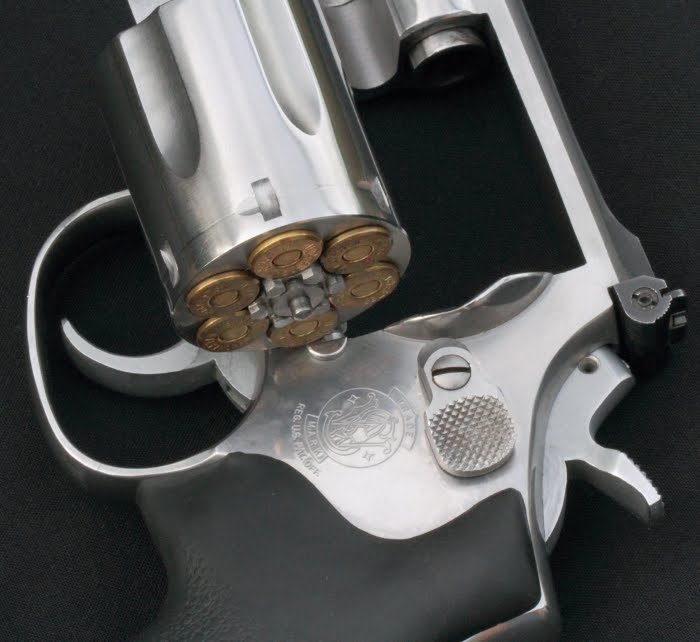
I do think I walk differently when I’m armed. I don’t open carry. That’s a deeply personal choice as well, but just as you don’t advertise a punch, I don’t like to advertise what my capabilities are. I don’t carry in my purse either. I’d probably find my gun in there as quickly as I do my keys and the perp would have already stepped over my body, pawned my gold necklace and had a beer, by the time I got my firearm free from the bowels of my oversized purse.
But I do walk differently, with more confidence, head held higher, hands as free as I can make them. I normally carry, even whether I have a large dog with me or not. More than one woman has disappeared with a dog by her side. All of my Labs are deeply protective, but I don’t know if the Labrador retriever, by general nature, would sink his teeth into someone trying to grab me. Should my attacker be asthmatic and have issues with pet dander, well, the bad guy would be toast, but I’m not willing to run an experiment to find out. So when I’m walking the dog in the early morning, when the neighbors aren’t out and about, I carry. On those early mornings, just before daylight, when that dark and solitary suspension of night shifts and brightens with the tentative wakings of both birds and men, we are out. He with his teeth, and I with mine.
But I wasn’t thinking about that on that drive home that day long ago, or Barkley. As I left a small road to get onto the freeway, as trees released the load of snow from sagging shoulders onto a road spotted with ice. Four wheel drive won’t help me with ice, but I was aware of the might of steel around me, should I end up in a ditch.
The freeway is busy, but not backed up, cars zipping past me at 70 mph. Then there, up ahead, half a mile or so, the flash of numerous red tail lights, and with them my pilot brain went into “master caution” mode. Less than a quarter mile ahead of me, a delivery truck swerved a bit, the car next to it did likewise as if trying to see what was happening up ahead. I eased off the accelerator. There was a young girl in a tiny car behind me, I’d noticed her as I’d passed her, twenty something, chatting on the phone, not a care in the world. I couldn’t see anything abnormal ahead either, only experience on the road caused me to take my foot off of the accelerator and tap the brake light, hoping she would see and get away from my bumper.
That phrase “it happened in a blink of an eye”, didn’t take into account how fast an eye could actually blink. Some one had lost a chair from the back of a truck, a recliner, laying there now in the middle of my lane up ahead. There was truck running just ahead and to the right of me in another lane. If I hit the brakes hard, I could tuck in behind him, but then the girl in the tiny car behind me would likely smash into me if she didn’t see the brake lights, or simply plow into the chair. I think the chair was bigger than her car. My only other choice, to hit the horn and swerve around the chair into the left lane, hoping she would see or hear and do the same; hoping I didn’t lose control on a slippery road. She was likely still on her phone, not paying the slightest attention to what was unfolding.

My truck was in tip top shape and the brakes are as reliable as they can be. After years as a pilot, my reflexes were developed to make instant movement, with my brain able to calculate time, speed and distance in a way honed by landing a large chunk of metal onto a tiny surface at 123 mph.
In that blink, I was not thinking about driving into my driveway, happy to be home. I was not thinking about where all these vehicles were headed, and so fast. I was thinking about the rest of my day, of fractured steel, and fragile lives, the structure of bone and skin and tears. I’ve seen fate dive down from the heavens and felt the disastrous beating of its wings. As a pilot, I myself have fought it off with the advance of a throttle, or the jamming of a brake, split second choices that result in clear sunny skies or shattered ruin.
I did not think of my beloved Barkley waiting for me there at home. I thought of blood and bone and tiny fragile vehicles that carried someones heart. I thought of nothing and everything, as simply and ungracefully, I swerved around the debris in the road.
Fortunately, the girl behind me did too, and it was just another bad day of driving in the Hoosier State. But there, in only instants, lives can change. The world may appear to go by as leisurely and randomly as cattle or clouds, but within it are moments in which one single decision may save or break us. It’s there in that moment where fear becomes action, as we gauge a threat as if there was nothing else in our vision or our future, save that.
As my heart slowed, I looked at a photo of a black dog in the visor of my big black truck. I pat the gun on my hip, small things, big choices, that keep the chance of being hurt from finding us.