This is the face of a monster. Martin Bryant was the most prolific mass murderer in modern Australian history. His horrific crimes changed the fabric of the country.
Martin John Bryant was born in May of 1967 in Hobart, Tasmania, Australia, the oldest son of Maurice and Carleen Bryant. Martin consistently broke his toys and once yanked the snorkel from another child while he was diving. He tortured animals, was obsessed with fire, and had an IQ of 66, about the equivalent of an 11-year-old.
Martin Bryant finally found a friend in the eccentric heiress Helen Harvey.
Bryant was unsuccessful in school and was too socially awkward to maintain normal friendships. However, in early 1987 at age 19 he met a 54-year-old woman named Helen Mary Elizabeth Harvey. Ms. Harvey had inherited a share of the Tattersall’s lottery fortune and was both eccentric and wealthy. Tattersall’s is a conglomerate that has a functional monopoly on the lottery system in Australia.
Martin Bryant encouraged Helen Harvey to spend large quantities of money. Martin was obsessed with bestiality and gory horror movies and frequently slept with his pet pig.
Harvey maintained 14 dogs and 30 cats in a run-down mansion owned by her ailing mother. She invited Bryant to move in with her, and the two of them bought some thirty new cars over a three-year period. They traveled widely together and spent money with wanton abandon. Throughout it all Martin Bryant was persistently both strange and violent.
Martin was nearly killed in a car wreck that took the life of his benefactor.
In 1992 Martin and Helen were driving on a rural road when Helen swerved the car into oncoming traffic and was killed. Martin Bryant suffered a severe back injury and required seven months in hospital to recover. Previously Bryant had been known to lunge for the steering wheel while a passenger in a car and had already precipitated three automobile accidents. Helen Harvey left the entirety of her estate, some $550,000, to Martin.
Maurice Bryant, shown here alongside his nutjob son Martin, was found drowned in a pond. This event precipitated a significant deterioration in Martin’s demeanor and behavior.
Two months later Martin’s father Maurice went missing. Divers eventually found him at the bottom of a pond with one of Martin’s scuba weight belts wrapped around his neck. The police declared the death a suicide. With the death of his father, Martin acquired another quarter-million dollar.
Martin Bryant planned his rampage weeks in advance.
Martin grew ever more despondent and began to drink heavily and daily. Soon after New Year in 1996, he began planning his bloody masterwork. He confided to a neighbor, “I’ll do something that will make everyone remember me.”
The Crime
Noelene and David Martin were Bryant’s first known victims. They were targeted because Martin Bryant’s father had become angry with them over a business deal.
Martin Bryant’s father had complained incessantly that a local couple, David and Noelene Martin, had somehow cheated the Bryant clan by buying a nearby bed and breakfast called Seascape. On April 28, 1996, Martin drove to David and Noelene’s home and killed them both.
The Port Arthur Historic Site is the best-preserved convict settlement in Australia and a popular tourist draw.
Bryant then proceeded to the Port Arthur Historic Site, a popular nearby tourist destination, interacting with several people along the way. Some of these witnesses later described him as rude, while others said he was friendly. Bryant parked his car near a café on the premises. He then entered the restaurant carrying a large black bag, bought lunch, and ate it in a leisurely fashion at an outdoor table.
Bryant enjoyed a pleasant meal before he produced a rifle like this one and opened fire on his fellow diners.
During his meal, Bryant made small talk with the other people in the cafe. He responsibly returned his tray and retrieved a Colt SP-1 AR-15 Carbine equipped with a 3x Colt scope and 30-round magazine from his bag. In the fifteen seconds that followed Martin Bryant fired seventeen rounds and killed twelve people, wounding another ten.
The attached gift shop was both congested and crowded. Bryant’s victims had no place to run.
Bryant then made his way into the gift shop where he fired a dozen rounds, killing another eight people and wounded two more. His victims were hemmed in and helpless. Many of the dead were shot at extremely close range. Bryant reloaded his rifle in the gift shop and left the empty magazine on the checkout counter.
This parking lot was the scene of a great deal of carnage. Martin Bryant targeted his victims randomly.
Bryant then moved to the car park. He fired at Ashley Law, a site employee, at a range of about 75 meters but missed. After sowing mayhem throughout the car lot he returned to his vehicle and exchanged his AR-15 for an L1A1 SLR rifle. By the time he grew weary of the car park, he had killed another six people and wounded the same number.
Bryant had inexplicably strapped a surfboard to the top of his Volvo the day of the massacre.
Bryant then mounted his car and headed down the drive away from the Historic Site.
Bryant shot this woman and her two young children randomly as he fled the scene of his crimes.
On the way, he encountered a young mother with two children aged 3 and 6. This stupid monster exited his car and shot the three of them at contact range.
When Bryant carjacked a new vehicle he abandoned his USAS-12 shotgun in his Volvo.
Once at the toll booth leading into the facility Bryant stopped a BMW, killing its four occupants. He loaded his weapons, a pair of handcuffs, and an extra fuel can from his own vehicle into the BMW before speeding off. He left behind a Daewoo USAS-12 shotgun. By now he had killed 33 and wounded 19.
This guy’s head is a bucket of snakes. It is impossible to establish any reason or order to his actions that fateful day. He claimed later not to remember any of it clearly.
Bryant stopped at a nearby gas station and confronted a couple there. For reasons unknown, he forced the male half of the pair into the boot of his stolen BMW and killed the man’s girlfriend. The service station attendant had a rifle, but Bryant was gone by the time he could retrieve ammunition and get it loaded.
Seascape was a beautiful place before Martin Bryant murdered the owners and burned it to the ground.
Bryant then returned to Seascape, shooting and injuring several bystanders along the way. Once back at the bed and breakfast he handcuffed his prisoner to a stair railing and incinerated the BMW. The following morning, having murdered his hostage and now surrounded by police, Martin Bryant set fire to the building. He taunted the cops to “come and get him.”
Never one to fully consider the ramifications of his actions, Bryant set fire to the building he was cowering within. He incurred some fairly significant burns as a result.
The police let the building burn around him. Bryant eventually fled the conflagration with his clothes alight. The cops found the remains of his two rifles in the burned out building.
The Weapons
The Colt AR-15 was produced in a semiautomatic civilian version alongside the Army-issue M16.
ArmaLite designed the original 5.56mm AR-15 in the mid-1950s. “AR” stands for “ArmaLite Rifle,” a designation that persists to the present. ArmaLite sold the manufacturing rights to the AR-15 to Colt’s Manufacturing Company in 1959. Colt sold the first semiautomatic AR-15 rifles to the public in 1964.
The Carbine version of the AR-15 rifle was shorter and handier.
Original AR-15 rifles featured a fixed polymer stock and a 20-inch barrel. Colt eventually offered a carbine version of the weapon with a collapsible aluminum buttstock and 16-inch thin-profile barrel. The stubby little 3X Colt scope featured a fixed magnification and built-in mechanical bullet drop compensator.
The SLR is a full-sized .30-caliber battle rifle. Martin Bryant had passed extensive background checks to purchase his weapons. Australian authorities never did quite determine how he pulled that off.
The SLR or “Self-Loading Rifle” was the British version of the Belgian-designed FN-FAL that saw military use from 1954 to the present. The SLR was also known at the C1A1 in Canadian parlance or the “Inch Pattern” FAL in the US. The FAL saw service with seventy different militaries to include the Australian Army.
The FN FAL saw extensive service around the globe during the Cold War. Here we see a US Marine undergoing familiarization training during the first Gulf War.
The SLR is a 7.62x51mm semiautomatic gas-operated autoloader that features a tilting breechblock and feeds from a twenty-round box magazine. The SLR is a large rifle at 45 inches long and 9.56 pounds empty. The SLR served in the British Army until it was replaced by the L85A1 in 1984. In 1989 the Australian military replaced the SLR with the F88 Austeyr, an Australian-produced version of the Steyr AUG.
Fallout
The shockingly brutal nature of Bryant’s crimes shook the Australian psyche on a visceral level.
The Port Arthur Massacre precipitated a nationwide transformation in the Australian public’s perceptions of firearms. Tasmania, where the massacre occurred, had previously been a predominantly rural bastion of gun ownership. Australian State governments passed laws to give effect to the sweeping National Firearms Agreement a mere twelve days after the massacre.
The Australian NFA placed tight restrictions on the ownership of semi and fully automatic weapons. As a result of the act, the Australian government bought back and destroyed 643,000 firearms for a total cost of $350 million. The money for this program came from a temporary increase in the Australian Medicare levy.
The Australian government bought back and destroyed hundreds of thousands of previously legally owned firearms. There are 4,500 guns in this bin awaiting the smelter.
As a result of the NFA, there is currently a nationwide firearms registry as well as a 28-day waiting period on the purchase of firearms. The law stipulates storage requirements and demands a “genuine reason” for ownership. Self-defense is not an acceptable justification. As of 2014, there were at least 260,000 unregistered illegal firearms in circulation in Australia. Scholarly works undertaken since then have been inconclusive regarding the law’s effect on crime.
The Australian NFA was a culture-shifting piece of legislation. The Australian soldiers with whom I served were sickened by it.
I was a soldier in 1997 and undertook a joint operation with the Australian Army soon after the NFA took effect. I recall passing Aussie gun shops that were boarded up and shuttered as a result of the legislation. The Australian soldiers with whom I worked, most of whom were politically conservative, deeply lamented the demise of their liberty. Today, some twenty-three years later, 85% of Australians feel that the NFA is either appropriate or too lenient. After two decades of acclimation, only 6% of citizens believe that the statutes are excessively restrictive.
Observations
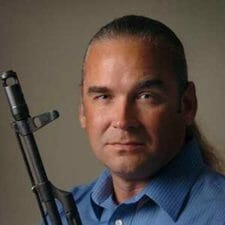
Martin Bryant was defective from the outset. His childhood and adolescence demonstrate textbook antisocial personality disorder. The Australian press was castigated for doctoring this photo to make Bryant look crazier than he was. Given the egregious nature of his real-life performance that seems superfluous to me.
Studying the dispassionate slaughter wrought by Martin Bryant was a tough read. His victims ranged in age from 72 down to 3. The most compelling aspect of the carnage to me, however, was the sheer helplessness of the victims. His targets fought back with foul language, profound bravery, and dinner trays, but they were all utterly helpless.
Gun ownership in America is on a whole different scale from that in Australia. If all firearms were outlawed in the US tomorrow criminals would still remain heavily armed a century from now.
There are nearly 400 million firearms in America. The Australian government bought back 643,000 guns after their NFA. At the apogee of the Obama Presidency, there were that many NICS checks in the US in nine days. An Australia-style gun buyback is a physical impossibility in the United States.
Martin Bryant will spend the rest of his natural life in solitary confinement inside this building.
Martin Bryant pled guilty and received 35 life sentences and 1,035 years in prison. He remains in solitary confinement in Hobart’s Risdon Prison today. The profound effects this one psychopath had on Australian culture will never be undone.
Today Martin Bryant is 52 years old and weighs 352 pounds. He has attempted suicide eight times and once broke a nurse’s jaw in prison. With more than a millennium on his sentence, he will never again breathe free air.
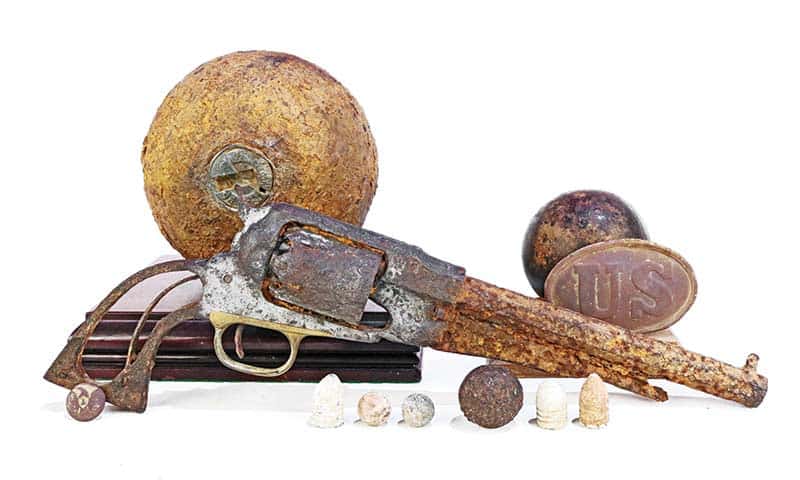
This U.S. Government-issued Remington New Army revolver was found near Will’s house while
out digging a drainage ditch. The other artifacts all came from the surrounding area as well.
First Lieutenant Theophilus Millhouse was most thoroughly miserable. He had been born and raised in Connecticut where the world was cool and brisk. This August day in Mississippi in 1864 the humidity was so thick you could rip off a chunk of air and gnaw on it.
Millhouse answered to Brigadier General Andrew Jackson Smith. They were pushing south from Holly Springs past Abbeville toward Oxford. The war criminal Nathan Bedford Forrest had been up to mischief and General Smith purposed to teach the rebels a lesson not soon forgotten.
They found the town of Oxford devoid of men of military age. Grant and Sherman had been here two years prior and used the university as a field hospital. Grant had ridden his horse through the front doors of the Lyceum, the administrative building anchoring the University of Mississippi.
This day Lt. Millhouse and his men were in a foul temper. Word had just arrived of a cavalry attack by Forrest’s troops on their base of supply in Memphis. Clearly outwitted, Smith and his men vented their frustrations on the pastoral little Southern town.
At Smith’s behest Millhouse had his rampaging bluecoats fire the courthouse, the square and the surrounding homes. The weeping of the rebel women could be heard above the crackling flames. Once the center of the town was fully involved the Federals retraced their steps north. When marching abreast in the little community of Abbeville near Hurricane Creek a symphony of shots rang out from the adjacent wood line.
A modest contingent of rebel Infantrymen got off several volleys supported by a pair of field pieces before melting into the dank surrounding swamps. When the smoke cleared Lt. Theophilus Millhouse lay in the hot Mississippi ooze, his glassy eyes staring lifelessly toward the blue heavens. His men pressed on for Holly Springs, further driven in their mission to find Forrest.
This old Remington combat pistol is in surprisingly good shape
considering how long it languished in the hot Mississippi soil.
Buried Treasure
A gun buddy named Jeff Houston was running a backhoe improving the drainage of a piece of Mississippi woodland. He took big scallops of earth and set them aside, cumulatively enhancing the local hydrology. One chunk of dirt seemed peculiar. Shutting down his machine he pulled the massive clod apart with his hands until it yielded a bounty.
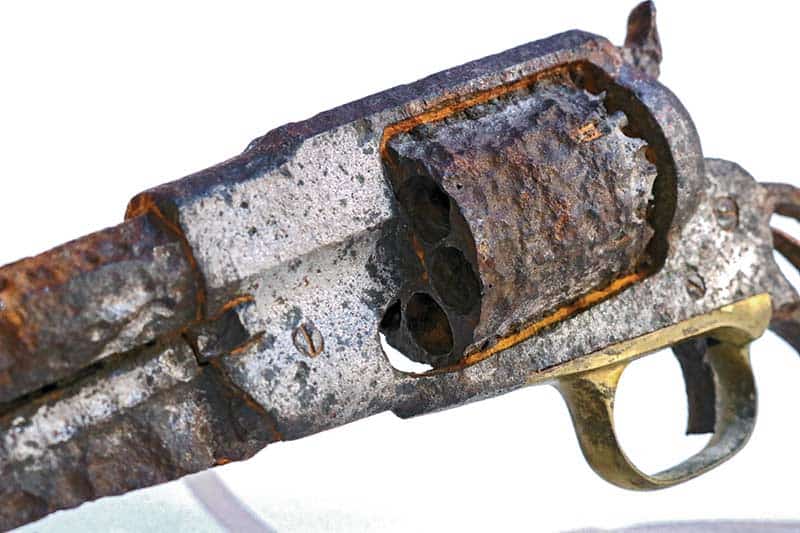
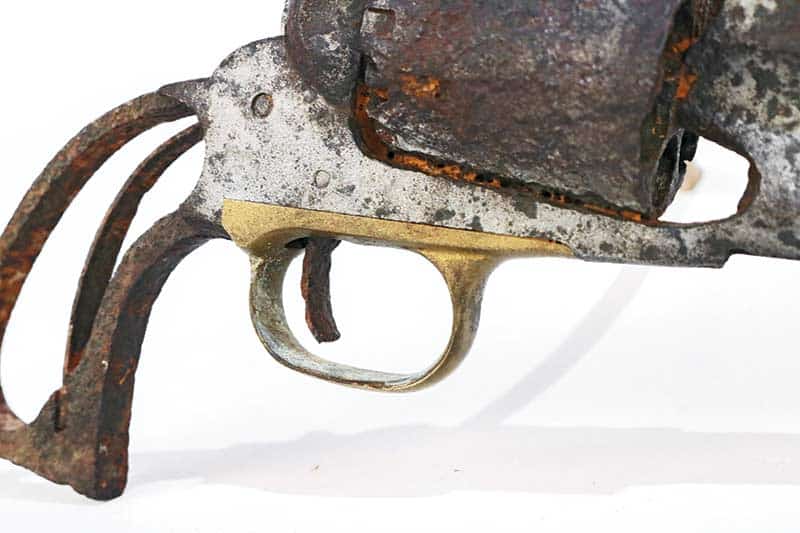
The pistol was clearly a .44-caliber Remington New Model Army, a common issue handgun among Federal troops during the American Civil War. The brass trigger guard is remarkably well-preserved. The barrel was trying to dissolve but the iron frame fared a bit better. The stocks are completely gone. Despite a cumulative 155 years hidden underground, this heavy Union combat pistol remained in surprisingly good shape.
Jeff cleaned the weapon but left it otherwise untouched as he dug it out of the ground. The gun now occupies the position of honor on the wall of his superb full-service Oxford gun shop titled, appropriately enough, Rebel Arms. When first I saw the gun hanging in the shop I sensed a story in need of telling.
The steel has suffered tremendously but the brass bits look almost new.
The Remington New Model Army
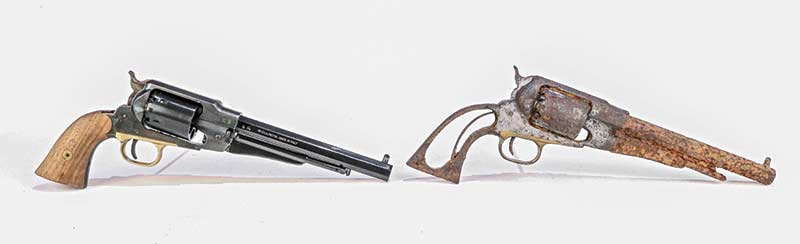
Remington-Beals Model Revolvers were 6-shot percussion pistols produced by Eliphalet Remington and Sons starting in 1861. These heavy .44-caliber handguns were typically, somewhat inaccurately, called 1858 Remingtons after the patent date stamped on the barrels. The Remington competed with the 1851 Colt Navy and cost some 50 cents more per copy, about eight bucks today. The top strap securing the upper portion of the frame made it a much more robust design.
Most of the New Model Army revolvers sported 8″ barrels. Trivial differences in hammers, cylinders and loading levers characterized various production runs but all of these guns were mechanically similar. While Jeff’s government-surplus pistol will never again burn powder, Dixie Gun Works will hook you up with a simply splendid facsimile that most certainly will.
This modern replica (above) from Dixie Gun Works is a spot-on reproduction of the 1864-era original.
Yet More Civil War Imagery
Dixie Gun Works offers a bewildering array of reproduction rifles and pistols all at reasonable prices. Such guns typically sell for less than their fixed ammunition counterparts and, in the free states at least, ship straight to your door without the hassle of a Federal Firearms License. I built my New Model Army from a kit.
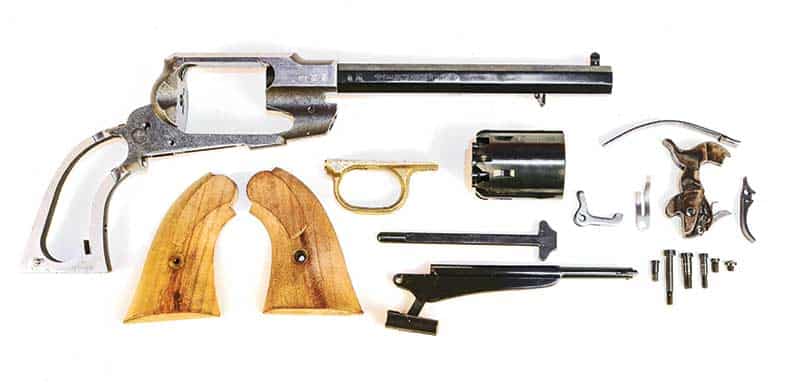
These kits require a modest modicum of mechanical aptitude to complete. The barrel and rammer assembly are polished and blued from the factory. However, the frame and trigger guard are left as rough castings. To finish out the gun, you smooth up the unfinished areas with a sanding drum and wire wheel on a Dremel tool and shape the furniture to fit. I used a fiber-reinforced cutoff wheel sparingly to knock down the major casting flashes and gnarly bits.
You could successfully undertake the whole project with hand tools and elbow grease, but a Dremel tool and bench sander make it much easier. Take your time and the end result is showroom gorgeous.
Once you have the build complete it is time to take the old girl out for a spin. The sights are typically set for 50 to 100 yards so most of these old guns shoot a bit high at 25. The built-in ramrod is effective and easy to use. Clean up everything when you’re done lest the corrosive nature of black powder reduce your spanking new smoke pole to scrap.
First step is to completely disassemble the pistol. Snapping a picture or two on your phone aids in reassembly.
Now Back to 1864 …
My corner of Mississippi is awash in military history. I live about 12 miles from Oxford. Local lore has it when General Smith was approaching, one of my then-neighbors hitched up his wagon and made the day-long trek behind a mule to the Oxford square. He loaded up the land records from the courthouse and relocated them back to his root cellar. Smith’s men subsequently burned the courthouse and surrounding area to the ground.
Despite being unable to carry the booty, drunken federal troops nevertheless ransacked the community. An inebriated Union cavalryman stole a skeleton from a local physician’s office and rode about town with the macabre thing held aloft in a terrifying display. The unbridled orgy of drunken violence earned BG Smith the sobriquet “Whiskey” Smith he carried with him for the rest of his days.
This local man who had secured the land records owned slaves. After the war his slaves killed both him and his wife and fled. Family members who later went through the home securing their possessions found the land records in the basement. This is purportedly the only reason land ownership in Lafayette County, Mississippi, can be traced before the Civil War.
Dixie Gun Works can hook you up with a splendid replica of the
Remington New Model Army. This one started out as a kit.
Ruminations
Right down the road from where I sit comfortably typing these words, Americans slaughtered Americans, each side believing their cause to be righteous and just. Thorny issues of slavery and states’ rights drove the carnage, and a generation was sacrificed to the cause. It is attributable solely to God’s Providence we not only survived but prevailed.
Oxford, Mississippi, is my little corner of heaven. We enjoy a deep, rich history, a storied Southern university, a thriving ammunition plant and the best food and friendliest people you’d ever want to meet. We also have a splendid gun shop called Rebel Arms.
If ever you’re passing through the area, Google Rebel Arms and go say hi to Jeff. The Remington New Model Army he found while out digging a drainage ditch is displayed prominently on the wall. Some 230,000 of these old guns rolled off the line during the Civil War.
Historical records document but a single Federal KIA during this minor skirmish near Hurricane Creek in 1864. Apparently my buddy Jeff found his pistol.*
While bolt-action .22 Rimfire rifles are commonplace today, it took quite a long time for that action type to arrive on the scene.
By Layne Simpson
Repeating rifles in .22 Rimfire of American design have been with us for a very long time, but it took a while for the bolt action to arrive. The first repeater on the scene was the Winchester Model 1873 lever action introduced during that year. At that time the .22 Long Rifle had yet to be introduced by J. Stevens Arms & Tool Co., so during the first 14 years of production, the ’73 was available only in .22 Short and .22 Long.
Winchester’s second repeater, the slide-action Model 1890, was available in .22 Short, .22 Long, .22 Long Rifle, and .22 WRF. It was followed by the Model 1903, a semiautomatic rifle chambered only for the “22 Winchester Automatic Rim Fire Smokeless” cartridge. During the first two decades of the 20th century, Winchester introduced several .22 Rimfires on turnbolt actions, but all were inexpensive single shots loved and cherished by farm boys all across America.
Winchester finally got around to offering a bolt-action repeater in 1920, and the company did it big time with the Model 52 target rifle. During the next 60 years, it was offered in many variations, including the Sporting Rifle, which still ranks as one of the all-time great small-game guns. The Model 52 was discontinued in 1980 and was followed by several less expensive bolt-action repeaters.
Remington introduced its first multiple-shot bolt action, the Model 34, in 1932. Many others followed, with the Model 40X (1955) and the Model 540/541 (1972) considered by many to be the cream of the crop out of the Ilion, New York, factory. The 40X was Remington’s rather belated target-rifle reply to the Winchester 52, and the 540/541 series was aimed at the Winchester Model 75. The Model 541-T was less expensive than the 40X, and while not as accurate, mine carves out extremely small groups when fed match ammo. One of the more interesting rifles from Remington was a member of the company’s “Nylon” family of rifles called the Model 11. It and its lever-action and semiautomatic mates came and went during the 1960s.
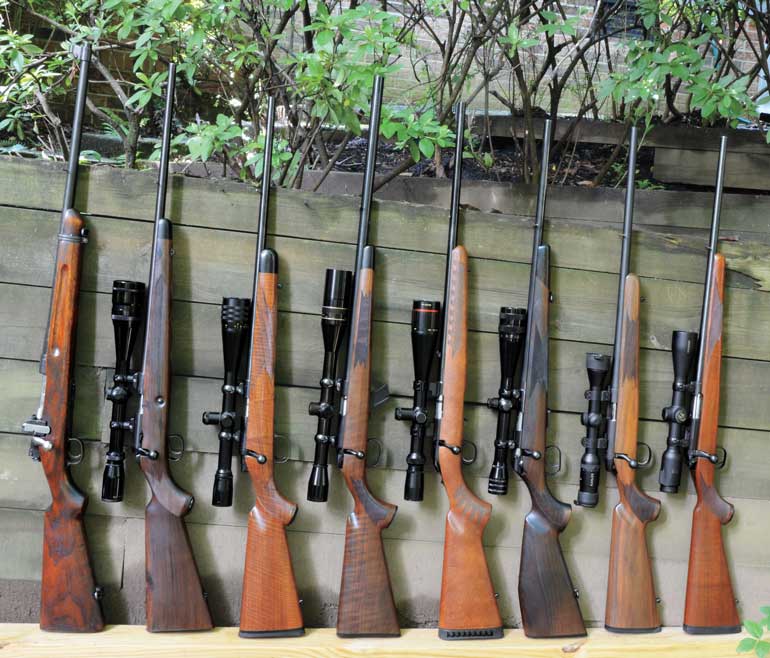
Bolt-action .22 Rimfire rifles are commonplace today and include some classic models, but in the beginning, it took a long time for that type of rimfire rifle to arrive on the scene.From left to right:1. 1922 Springfield2. Winchester M52 Sporter3. Kimber M824. Remington 541-T5. Ruger American Rimfire6. Kleinguenther K-227. Remington M5048. Ruger 77/22
Marlin’s first bolt-action repeater, the Model 80, was introduced in 1936, and that company went on to produce more rifles of the type than any other company in the United States. In those days, Harrington & Richardson, Mossberg, and Stevens were also big players in the game. When Daisy introduced its Legacy 2202, I looked into my crystal ball and saw immediate success. After all, many of us started out with BB guns built by Daisy, so it seemed only logical that everyone would want a .22 Rimfire built by the same company. Unfortunately, no.
The very first repeating rifles had detachable box magazines of single-column design, but later, the tubular magazine also had its time in the limelight. And while most tubular magazines were attached beneath the barrel, Winchester chose to place it inside the buttstock of the 1960’s Model 141. Like the classic Browning Autoloading Rifle of yesteryear, it was loaded from the rear. Some companies offered the same model with either type of magazine, and the one with a tubular magazine was usually a bit more expensive because it cost more to build.
In addition to having a huge capacity advantage, the tubular magazine won’t go astray in the field whereas the detachable design was fated to be lost. Filling that long tube with cartridges adds enough weight to deflect the muzzle of the barrel slightly downward, and while there may be some difference in bullet points of impact between the first shot and the last shot in that type of magazine, most rabbits, bushytails, chipmunks, and empty tin cans have failed to notice through the years. An exposed tubular magazine should be more easily damaged by hard knocks than the detachable magazine, but a few decades of exploring used-gun racks in gunshops have revealed very few that actually were.
Photo Gallery
Most rifles today have detachable magazines, and with the exception of the rotary magazine of Ruger’s Model 77/22 (and its imitators), most are of single-stack design. To my eyes, a rifle with a detachable magazine is a bit more pleasing to the eye than one with a tubular magazine hanging beneath its barrel. Another advantage of detachable magazines is quick reloading: simply replace the empty with the full and keep on shooting. On the negative side, with that little box magazine removed, its feed lips are subject to damage, although it is not a common event. When the capacity of a single-stacker exceeds five or six rounds, it extends below the belly of the rifle to interfere with one-hand comfortable carry. It also seems to vary more in reliability from maker to maker than a tubular magazine. Some are most definitely easier to load than others.
SEE PHOTO GALLERY
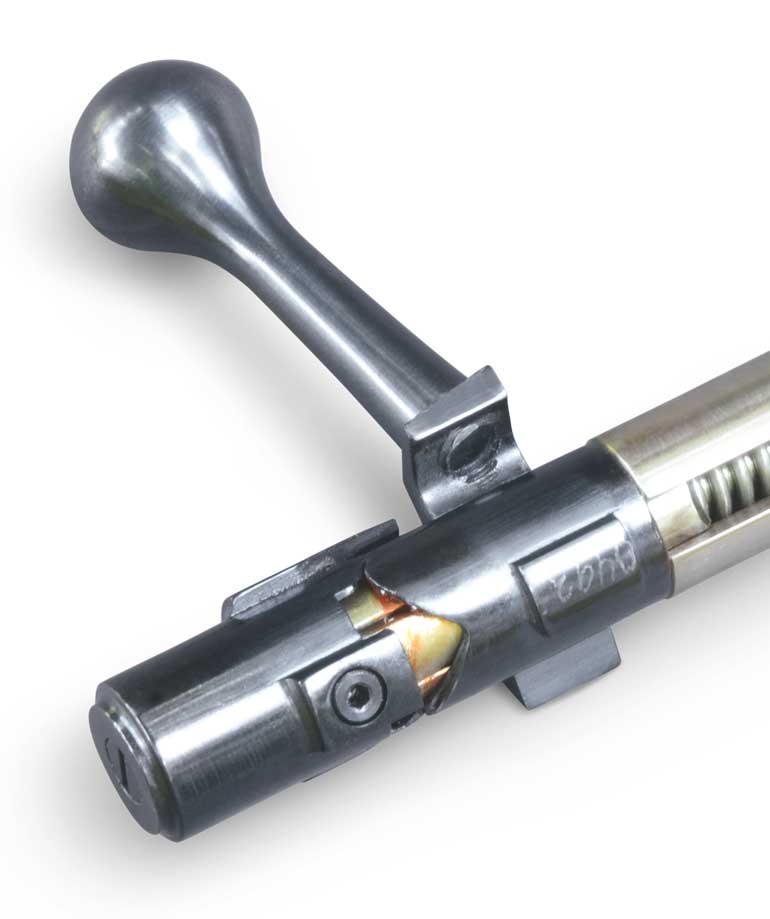
Breech lockup of many thousands of .22 Rimfire rifles built through the years has been accomplished by nothing more than the root of the bolt handle bearing on the front of the receiver bridge. While strength has proven to be more than adequate, the designers of some rifles added a locking lug on the bolt body opposite the bolt handle.
The All-Important Chamber
Most factory rifles have a sporting chamber dimensioned large enough to ensure trouble-free functioning even when the chamber becomes quite dirty. At the opposite extreme is the match chamber that has much tighter dimensions. In addition to having a diameter that more closely matches that of the .22 Long Rifle case, its shorter length causes the bullet of a chambered round to be engaged by the rifling. That along with the higher quality of match-grade barrels improves accuracy far beyond what is commonly achieved with a barrel of lesser quality having a sporting chamber.
Competition rifles made by Anschutz, Bleiker, and others have match chambers, and match-grade barrels with the same type of chamber are available from several sources. (Lilja is one of the most popular.) A couple of my small-game rifles have match chambers, but be aware of the fact that with the bullet of a chambered round wedged tightly into the rifling, the extractor of a rifle may slip over the rim of a chambered round should unloading become necessary when crossing a fence or for other reasons of safety.
The shorter the match-dimensioned chamber, the deeper the bullet seats into the rifling of the barrel. As you can see in the Pacific Tool & Gauge reamer chart shown on page 42, the chamber introduced by Winchester many years ago in the Model 52 is the shortest commonly available. When a cartridge is pushed into it, an additional 0.020 inch of its bullet is engaged by the rifling as compared to a standard match chamber.
Dimensions of the Bentz chamber are tighter than those for the sporting chamber but a bit more generous than for the match chamber. And while its length places the bullet of a chambered cartridge closer to the rifling than in a sporting chamber, it is not engaged by the rifling as in a match chamber. This is why it is often chosen when seeking the best accuracy possible from a semiautomatic rifle. As illustrated by the reamer chart, there are many options in chambers. Some are from firearms manufacturers and barrelmakers, while others are from gunsmiths who specialize in building extremely accurate rifles.
Before leaving the subject, I will add that due to their longer cases, Aguila Super Maximum as well as CCI Stinger and CCI Quik-Shok should be fired only in a chamber with sporting dimensions or in a custom chamber sized specifically for them. Chambering one of those cartridges in a match, Bentz, or other short chamber forces the mouth of the case hard into the rifling leade, and that increases the grip of the case on the bullet for a dramatic increase in chamber pressure.
SEE PHOTO GALLERY
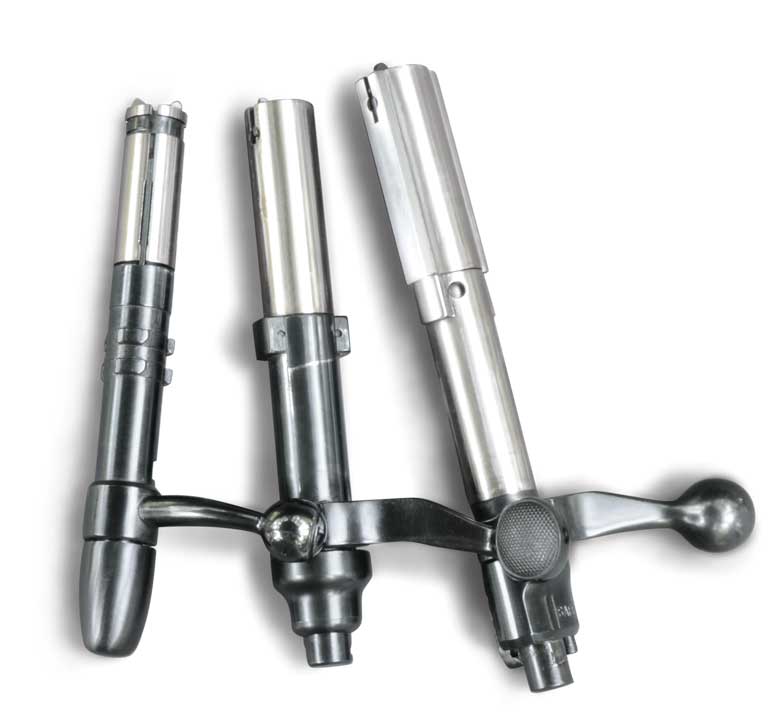
For various reasons explained in the text, the locking strengths of some bolts ended up being far greater than necessary for the .22 Rimfire. The bolt of the Remington 541-T (left) has nine locking lugs, while the bolts of the Remington 40X (center) and the Ruger 77/22 (right) have two massive lugs.
Lockup Variations
The maximum chamber pressure for the .22 Long Rifle cartridge is only 24,000 psi, so the strongest of actions is not required for containing it during firing. Breech lockup in thousands of rifles chambered for it through the decades is accomplished by nothing more than the root of the bolt handle bearing on the front of the receiver bridge, and it has proven to be quite satisfactory. The .22 WMR operates at the same pressure, but due to greater surface area of its case, it pushes against the bolt with a bit more force. The same goes for the .17 HMR at 26,000 psi.
Most centerfire cartridges operate at considerably higher pressures, so a front-locking bolt is best for them because it minimizes momentary receiver stretch and bolt compression. The use of lugs at the front of the bolt requires positioning a detachable magazine quite some distance from the breech end of the barrel, and coaxing the stubby .22 LR cartridge across that space and into the chamber is an engineering challenge commonly eliminated by positioning the locking lugs toward the rear of the bolt. Back thrust applied to the bolt by rimfire cartridges is much lower than for most centerfires, so rear-locking bolts have proven to be quite successful through the years.
While root-of-bolt-handle lockup alone works fine on plinking and hunting rifles, a rifle with opposed locking lugs does a better job of concentrically stabilizing a bolt during firing, and builders of upper-level rifles tend to utilize them. Winchester handled that very nicely with the Model 52 by adding a locking lug on the opposite side of the bolt, adjacent to the root of the bolt handle. Through the years that same style of lockup has been seen on quite a few other high-quality rifles from Cooper (Model 57M), Kimber (Model 82), Remington (Model 504), Anschutz, and others.
The rear locking lugs of some .22 Rimfire rifles were made more massive than they had to be for various reasons. When designing the Model 40X target rifle during the early 1950s, Mike Walker of Remington built it around the Model 722 centerfire action. He gave the rifle a two-piece bolt of the same diameter as the Model 722 with the front, non-rotating section containing twin extractors and the rear section having extremely large, dual-opposed locking lugs.
When designing the Model 77/22 during the early 1980s, engineers at Ruger envisioned a future centerfire version of the same rifle chambered for the .22 Hornet, .44 Remington, and others. To handle the additional strain, they utilized the design of the Model 40X bolt.
Back to Remington, the Model 788 centerfire introduced in 1967 has nine rear-positioned locking lugs. Remington introduced its 500 series of rifles during that same year, and the bolts of all of them, including those in 5mm Remington Magnum, were a scaled-down version of the Model 788 bolt except with six locking lugs rather than nine. This is why shooters often referred to those rifles as “baby 788s.” They were accurate.
SEE PHOTO GALLERY
The Kleinguenther K-22 has a couple of locking lugs at the front of its bolt, which is quite unusual for .22 Rimfire rifles.
Each time I shoot my 1922 Springfield with match ammo I am reminded that if a rear locking lug is quite large, just one will be enough for achieving excellent accuracy. There is something else unique about that wonderful rifle; mine is the M2 version with an adjustment screw resting parallel to the bolt body inside its locking lug. The armorer who assembled the rifle back in the 1930s used the screw to adjust headspace and then locked it in place. It is doubtful that the rifle will ever develop excessive headspace, but if it does, the adjustment screw can be used to correct it.
Not all .22s have had rear-locking bolts. One of the finest and most accurate small-game rifles in my battery was built by Robert Kleinguenther who founded Kleinguenther Distinctive Firearms of Seguin, Texas, in 1970. Called the K-22, its barreled action was made by the German firm Voere, and it is one of only two .22 Rimfire rifles I have shot that has dual locking lugs at the very front of the bolt. Cartridge feeding from its detachable magazine has always been smooth and trouble-free.
The Mauser Model 201 is pretty much the same rifle as the Kleinguenther K-22, including front locking lugs. During the 1990s it was being brought into the United States by Precision Imports. I used one of those rifles on a prairie dog shoot, and it was chambered for an experimental cartridge made by Federal by necking down the .22 WMR case to .17 caliber. The cartridge did not have an official name, so when writing about it in 1992, I called it the .17 FMR. I’m sure the folks at Hornady are glad Federal never got around to loading the cartridge because about 10 years later Hornady introduced it as the .17 HMR.
I would be remiss if I didn’t mention the bolt-action .22s made by CZ-USA. I have worked with several in the past, and in my experience, they were all excellent guns. The company’s Model 455 line has grown to include numerous versions, and its switch-barrel design allows the user to own one action and barrels in .22 LR, .22 WMR, and .17 HMR. I have found these rifles to be quite good.
Not long back, several fellow gun club members and I were discussing favorites when the question of which rifles of American design are the finest ever built. The Winchester Model 52, Kimber Model 82, Remington 40X, Ruger 77/22, and Cooper Model 57M got the most votes. Those of us who started out with .22s seem to never outgrow them.
How the Southern Poverty Law Center Quietly Pivoted to Gun Control
U.S.A. –-(AmmoLand.com)- For more than 50 years, the Southern Poverty Law Center, Inc. battled segregationists, challenged Jim Crow laws, and bankrupted the Ku Klux Klan and other violent extremist groups. But ever since 2019, when the SPLC fired its co-founder and media frontman, Morris Dees, after accusations of sexual harassment, gender discrimination, and racism surfaced, the nonprofit quietly shifted its focus. Now, rather than advocating for civil rights, the SPLC is fighting against civil rights, specifically those protected by the Second Amendment of the United States Constitution.
Today, SPLC’s press releases, position papers, and rhetoric make it nearly indistinguishable from any traditional gun control group, like Brady, Everytown or Giffords, with whom the SPLC has partnered on several occasions. But there are two major differences: The SPLC is flush with cash – far more than all other gun-control groups combined – and it still wields a powerful cudgel, its Hatewatch list, which it uses to publicly shame anyone – including members of the gun-rights community – who disagrees with its principles.
Although their numbers are dwindling, some members of the legacy media still regard the Hatewatch list as gospel, even though it is nearly always wielded against conservative groups rather than progressive ones like Antifa, which the SPLC defines as a “broad, community-based movement composed of individuals organizing against racial and economic injustice.”
It has become relatively easy for SPLC to marginalize gun owners and gun-rights advocates.
If someone opposes the government infringing upon their Second Amendment rights, they’re opposed to the government, which makes them antigovernment, in SPLC’s view. The nonprofit always adds extremist to any negative label like a dose of seasoning, so now the victim is transformed into an antigovernment extremist. Once labeled, SPLC quickly adds them to their Hatewatch list and publicly compares them to real antigovernment extremists. Within minutes the poor victim is associated with Klansman, Nazis, and actual terrorists, such as Timothy McVeigh. This process is lightyears worse than the tactics used by other gun control groups, which may call someone out on Twitter or in a position paper. This is professional character assassination, pure and simple, and it works. If you don’t think it can happen, ask Cody Wilson. The SPLC hit that poor young man like a freight train.
If you’ve ever wondered how the Biden-Harris administration can claim with a straight face that domestic terrorism and white supremacy are on the rise, take a look at the statements and testimony the SPLC provided them and their Jan. 6 Committee. The SPLC and the Biden-Harris administration have formed a symbiotic relationship. Each group buttresses the other’s spurious claims.
To be clear, SPLC’s newfound gun-control focus does not bode well for those who value their constitutional rights. The SPLC is the wealthiest civil rights charity in the country. Dees was well known as a wealth hoarder. In 2019, one nonprofit watchdog gave his group an “F” grade because it had amassed more than six years of assets, which were held in reserve. As a result, the nonprofit now has more than $800 million in net assets, offices in five southern states and approximately 250 employees, including 80 attorneys who have already started filing anti-gun litigation.
While SPLC dabbled a bit during Dees’ tenure, it did not fully embrace gun control until after he was fired. Why the group pivoted so quickly is not fully known. Some say it’s like any other progressive group that suddenly becomes leaderless, rudderless and in search of a purpose. When times are tough, default to guns. Others have speculated it is a carryover from Dees’ leadership style – he always sought sensational cases that would garner media attention, such as filing suit over a copy of the Ten Commandments displayed in a county courthouse, rather than using SPLC’s massive financial strength to combat more immediate problems such as homelessness, joblessness or crime, which are ravaging the minority communities the nonprofit claims to champion.
In addition, the group’s powerful lobbying arm, the SPLC Action Fund, spent more than $2 million last year lobbying in Washington, D.C. and state houses across the country.
As a result, SPLC has more financial and political power than all other gun-control groups combined, and it poses an extreme threat to Second Amendment rights.
Shadow mission
Officially, gun control is not part of the SPLC’s mission, which states that the group “is a catalyst for racial justice in the South and beyond, working in partnership with communities to dismantle white supremacy, strengthen intersectional movements, and advance the human rights of all people.” The term appears nowhere in SPLC’s most recent annual report, nor is it listed as a “program service accomplishment” on its 2021 IRS form 990.
Instead, the group has four “impact areas” and gun control is not among them: “protecting democracy, combating the incarceration and criminalization of communities of color, eradicating poverty and fighting extremism and white supremacy.”
Still, SPLC’s gun control platform mirrors that of most traditional gun control groups. In other words, they touch all the usual bases.
Stand Your Ground Laws
The SPLC partnered with the Giffords Law Center to produce a report condemning “Stand Your Ground” laws, which the two groups claim, “fuel racist, lethal violence” and cause “30-50 homicides every month.”
“Highlighting the systemic racism and sexism perpetuated by Stand Your Ground laws, the report calls for the repeal of Stand Your Ground laws in the 27 states where they are enacted and for laws to be passed overturning harmful court decisions that have imposed Stand Your Ground standards on eight other states,” the report states.
In reality, all Stand Your Ground laws do is eliminate a victim’s duty to retreat. The law allows the threat of deadly force to be met with deadly force, instead of legally requiring the victim to run away and possibly get shot in the back.
In Florida, rather than fueling “racist” violence, the law has been used more often by defendants of color than by white defendants.
Homemade Firearms
The SPLC has targeted homemade firearms and castigated Defense Distributed owner Cody Wilson, who released 3D printable gun files on his personal website. The group labeled Wilson an “antigovernment wunderkind.”
“Wilson stops short of direct incitement to violence, though he doesn’t voice opposition to mounting calls for violent reprisal against the state in antigovernment circles,” the report states.
The SPLC quickly added Wilson to its Hatewatch list, describing his ideology as “Antigovernment movement.”
UN Arms Control Treaty
Anyone opposed to the United Nation’s Arms treaty is a conspiracy theorist with twisted panties, the SPLC claims.
“Nothing spooks antigovernment conspiracy theorists like the United Nations and its international treaties – particularly when it comes to perceived threats to their right to bear arms,” the report states. “So naturally, far-right paranoiacs really have their panties in a twist over the proposed Arms Trade Treaty (ATT), which would establish standards for the international trade of weapons.”
Protection of Lawful Commerce in Arms Act
The PLCAA protects gun manufacturers and gun dealers by barring most lawsuits based on “the criminal or unlawful misuse of a [firearm] by [a] person or a third party, 15 U.S.C. § 7903(5)(A).” It is often misunderstood and mischaracterized. It does not bar a lawsuit if a product is defective.
In a 2009 story, the SPLC admitted that a recent appeals court ruling upheld the PLCAA but added: “When hate criminals and others who shouldn’t have guns get their hands on them, it puts everyone at risk.”
Second Amendment Sanctuaries
More than half of the counties in the United States are now Second Amendment Sanctuaries and the list is growing, according to SanctuaryCounties.com, which tracks the nationwide movement. The movement is growing so quickly that the website’s owner, Noah Davis, has trouble keeping it updated. More than a dozen states have declared themselves sanctuary states.
These counties and states are “legally problematic and threaten to override the very democratic systems upon which the country was built,” the SPLC claims, adding that the sanctuaries are popular among “antigovernment extremists.”
“This wave of proposals is the direct result of hysteria around potential new federal and state gun laws and age-old conspiracies about Democrats’ desire to confiscate guns,” the report states. “These are the same fears antigovernment extremists have used to fuel and unify their movement for decades.”
Even Joe Biden disagrees. Biden has never kept his confiscatory plans secret.
“Our work continues to limit the number of bullets that can be in a cartridge, the type of weapons that can be purchased and sold … attempt to ban assault weapons, a whole range of things,” Biden said last month.
Gun Shows
Dees himself castigated gun shows in a 1996 book. He claimed, “militia leaders use gun shows to disseminate their anti-government strategy. Dees also notes that in its efforts to take its anti-government and anti-law enforcement message to Middle America, the National Rifle Association utilized gun shows as a key communications conduit. Dees writes that “amid tables laden with Ruger Mini-14 semiautomatic rifles, Mossberg shotguns, and Beretta 9mm pistols, and piled high with holsters, military ponchos, and camouflage uniforms, they peddle the idea of militias as a defense against a tyrannical government.”
While the SPLC has checked all the boxes on the most common gun control issues, it reserves its most extreme vitriol for gun-rights rallies and armed teachers.
Opposed to Freedom of Assembly
All gun owners are racist, Nazis, militia members, violent antigovernment extremists or all of the above, the SPLC would have the public believe, because at pro-gun rallies attended by thousands of people, one or two individuals may have a pin, a patch or a tattoo from one of these groups. It is the ultimate in guilt by association and it defies belief. The SPLC never mentions the thousands of law-abiding Americans who peaceably assemble in support of their Second Amendment rights. If there’s a Confederate flag or a III-Percenter tattoo anywhere in the crowd, the SPLC labels the entire group as extremists.
“Recent nationwide gun rallies tied to far-right extremists and attract hate groups,” one SPLC headline screamed.
“Gun-rights activists and antigovernment extremists are planning a protest in Richmond, Virginia, on Monday fueled by antigovernment conspiracy theories and accompanied by online calls for violence,” read the secondary headline on another SPLC story.
Whenever the SPLC is actually able to identify an extremist group, it usually has only a mere handful of members and no one has ever heard of it, but that never stops the nonprofit from ramping up the group’s potential for violence. Overhype has always been SPLC’s mainstay.
Another tactic is to make bold claims without supporting evidence or attribution. “The Lobby Day event, organized by the Virginia Citizens Defense League (VCDL), has drawn the interest of at least 33 militia groups from across the country,” the Richmond protest story claimed. Not one of the militia groups was identified by name, nor was the source of the information cited.
In a follow-up story, an SPLC report claimed, “At least 18 militias and 34 hate and extremist groups tracked by Hatewatch turned out for the protests that day, with some pledging violence in the face of proposed gun regulation by the Virginia General Assembly.” Of course, no evidence or attribution to bolster these claims was provided. Readers were left wondering: How do they know this?
Opposed to safeguarding students
One of the recommendations of the multidisciplinary commission that investigated the 2018 Valentine’s Day massacre at Marjory Stoneman Douglas High School in Florida was to arm teachers.
The 16-member commission was comprised of sheriffs, a chief of police, educators, child advocates, school board members, mental health professionals, a state senator and the fathers of two of the shooting victims.
In its 439-page report, the commission recommended that the state legislature should expand Florida’s School Guardian program to allow teachers who volunteer to receive training from their local sheriff on how to carry concealed firearms. But evidently, the SPLC knew better.
“Some elected officials are proposing common-sense solutions to create safe and supportive school environments. But in multiple Southern states, spurred on by the most toxic voices of the National Rifle Association (NRA) and President Trump, legislators are recommending a misguided and harmful approach that would turn teachers into police forces by allowing or asking them to carry guns,” the statement reads. “Having teachers bring firearms into their schools would make classrooms more dangerous, and would increase the chance of more innocent lives being lost. There are many steps we must take to make our schools safer and stronger, but putting guns into classrooms is not a serious – or safe – solution. Our children deserve better.”
Instead of arming teachers, SPLC said in a report five months after the killings and before the commission’s 439-page report was released that “the commission should focus on evidence-based approaches to discipline like Positive Behavioral Interventions and Supports, restorative justice, and social and emotional learning.”
“Placing more counselors, nurses and mental health professionals in schools, and conducting school climate assessments and behavioral health interventions, are additional and essential measures school districts can take to create the kind of welcoming and safe schools that foster learning and growth,” SPLC said.
Three months later, the SPLC and Giffords Law Center sued the Trump administration for “records detailing how it has unlawfully permitted the use of federal funds to arm teachers with guns in classrooms across America.”
“Turning teachers into armed guards is both reckless and insulting to the millions of American children and parents who want to see their schools become more safe – not less,” Adam Skaggs, chief counsel for the Giffords Law Center is quoted as saying in an SPLC press release.
In November 2018, the SPLC and Giffords sued the Duval County (Florida) Public Schools and the Duval County School Board over their decision to arm staff. The lawsuit claimed Florida state law prohibits anyone from carrying firearms on school property unless they are a law enforcement officer. The suit also states that while state law “requires every school to hire a ‘safe-school officer,’ it does not require those officers to be armed with guns.”
Florida is not the only state to be sued by the SPLC over armed teachers. Just five months ago, the nonprofit sued the Cobb County (Georgia) School Board over their decision to allow select personnel to carry concealed firearms on campus, on school busses and at school events.
“These school board members routinely enact school policies that are ineffective for the stated goals. To be clear, more guns, more police, and more punishment do not make schools safer. The new policy is not rooted in data, community input, or evidence-based solutions. And, not surprisingly, it will endanger lives and disproportionately impact students of color and students with disabilities who are already subjected to discriminatory discipline and over-policing in the district,” Mike Tafelski, SPLC’s senior supervising attorney said in a press release announcing the lawsuit.
Suspicious financials
According to the charity watchdog Guidestar, SPLC has more than $801 million in assets. The assets of Everytown, Giffords and Brady – combined – total $31 million, or around 3% of what SPLC has amassed.
SPLC’s most recent IRS form 990 confirms that the nonprofit is swimming in money, but the form raises more questions than it answers. The names of the nonprofit’s donors and the amount of their contributions are “restricted.” And there are very suspicious investments.
“The Center has ownership in several foreign corporations. However, the Center’s ownership percentage in these corporations does not rise to the level of reporting on the Form 5471,” the document states.
The nonprofit’s endowment fund is staggering. It has total assets worth more than $731 million. It was started shortly after SPLC was founded to ensure “that the SPLC has the financial strength to address, over the long haul, the entrenched problems our country faces.” Its assets consist of $10 million in cash plus bonds and an assortment of public and private equity funds.
SPLC’s salary structure is massive. As its critics have said, the nonprofit’s senior staff is extremely well compensated. SPLC’s interim president/CEO Karen Baynes Dunning received a salary and benefits package worth more than $386,000. The man she replaced, outgoing president/CEO Richard Cohen, received more than $413,000 in salary and benefits. The nonprofits chief fundraiser was paid more than $260,000. Its “director of teaching tolerance” made more than $200,000.
The average household income in Montgomery, Alabama, where SPLC’s headquarters is located, is $68,149 with a poverty rate of 24.24%.
The salaries of the nonprofit’s support staff, who voted to form a union shortly after Dees’ firing and successfully unionized last month, are not addressed in the IRS form.
“The SPLC’s work is supported primarily through donor contributions. No government funds are received or used for its efforts,” the nonprofit’s website states. “The SPLC is proud of the stewardship of its resources.”
‘Plantation’ boss
Morris Seligman Dees Jr., 86, may be the only nonprofit chief whose life and career inspired two Hollywood movies.
Corbin Bernson played Dees in the 1991 made-for-TV movie “Line of Fire: The Morris Dees Story.” Wayne Rogers of M*A*S*H fame played Dees in “Ghosts of Mississippi,” which was released in 1996.
Dees has been described as charismatic and has received dozens of accolades and professional awards, but he has also been the subject of many serious complaints. For decades the legacy media ignored any criticism, even when the complaints came from members of Dees’ own staff. Things changed in the early 1990s, when his hometown newspaper, the Montgomery Advertiser, launched an investigation into SPLC’s finances and how Dees and other senior managers treated their predominantly Black support staff.
Jim Tharpe, the Advertiser’s former managing editor, recounted the details of his newspaper’s investigation in a column he wrote for the Washington Post, which was published shortly after Dees was fired.
“SPLC leaders threatened legal action on several occasions, and at one point openly attacked the newspaper’s investigation in a mass mailing to Montgomery lawyers and judges. Then they slammed the door,” Tharpe wrote.
After three years of investigative reporting, the Advertiser published an eight-part series titled: “Rising Fortunes: Morris Dees and the Southern Poverty Law Center.”
The journalists uncovered a plethora of problems inside the nonprofit, including “a deeply troubled history with its relatively few black employees, some of whom reported hearing the use of racial slurs by the organization’s staff and others who ‘likened the center to a plantation’; misleading donors with aggressive direct-mail tactics; exaggerating its accomplishments; spending most of its money not on programs but on raising more money; and paying its top lavish salaries.”
Dees and his staff denied all wrongdoing, launched an aggressive damage-control campaign and condemned the series. It’s an age-old tactic: when someone can’t handle the message, they attack the messenger. It didn’t work. In 1995, the series was named as a finalist for the Pulitzer Prize.
In his Washington Post column, Tharpe calls on the IRS and the U.S. Justice Department’s Civil Rights Division to investigate the SPLC.
“Any investigation should take a close look at the SPLC’s finances. It should look at what the center has told donors in its mail solicitations over the years. And it should take a close look at how that donor money has been spent. Investigators should also look at how SPLC staffers have been treated over the years. Where was the center’s board when this mistreatment was going on? And why did no one step up sooner?” Tharpe wrote.
Tharpe was not alone in his criticism of the nonprofit. Bob Moser, who worked as a staff writer at SPLC from 2001 to 2004, recounted similar concerns in a column he wrote for The New Yorker, which was published shortly after his former boss was shown the door.
“For those of us who’ve worked in the Poverty Palace, putting it all into perspective isn’t easy, even to ourselves. We were working with a group of dedicated and talented people, fighting all kinds of good fights, making life miserable for the bad guys,” Moser wrote. “And yet, all the time, dark shadows hung over everything: the racial and gender disparities, the whispers about sexual harassment, the abuses that stemmed from the top-down management, and the guilt you couldn’t help feeling about the legions of donors who believed that their money was being used, faithfully and well, to do the Lord’s work in the heart of Dixie. We were part of the con, and we knew it.
“It wasn’t funny then. At this moment, it seems even grimmer. The firing of Dees has flushed up all the uncomfortable questions again. Were we complicit, by taking our paychecks and staying silent, in ripping off donors on behalf of an organization that never lived up to the values it espoused? Did we enable racial discrimination and sexual harassment by failing to speak out? ‘Of course we did,’ a former colleague told me, as we parsed the news over the phone,” Moser wrote.
At the time, the SPLC did not publicly address the reasons for Dees’ firing. Then-president/CEO Richard Cohen issued a short statement shortly before Dee’s bio was scrubbed from the SPLC website.
“As a civil rights organization, the SPLC is committed to ensuring that the conduct of our staff reflects the mission of the organization and the values we hope to instill in the world,” Cohen’s statement reads. “When one of our own fails to meet those standards, no matter his or her role in the organization, we take it seriously and must take appropriate action.”
Shortly after Dees’ firing, the Alabama Political Reporter and several other local news sites obtained copies of an internal SPLC email, which was signed by numerous employees.
“Specifically, the employees’ email alleged multiple instances of sexual harassment by Dees, and it alleges that reports of his conduct were ignored or covered up by SPLC leadership. A subsequent letter from other SPLC employees demands an investigation into the alleged coverup of Dees’ alleged harassment,” the APR story states. “The emails noted that multiple female SPLC employees had resigned over the years due to the harassment and/or the subsequent retaliation by SPLC leadership when they reported the incidents.”
Dees, according to these news sources, denied any wrongdoing.
Anti-gun Democrat
The SPLC has never been able to achieve its stated goal of nonpartisanship. It is a far left-leaning organization from the top down.
According to his personal campaign donations, Dees has a long history of supporting Democratic candidates, including John Edwards, John Kerry and Bill Clinton. Earlier in his career, he served as finance director for George McGovern’s, Jimmy Carter’s and Edward Kennedy’s presidential campaigns.
Nine months after he was fired, Dees was linked to an anti-NRA group, which listed him as its founder on its now-defunct website, according to the Montgomery Advertiser.
Dees denied that he founded the group – The Association for Responsible Gun Ownership (TARGO) – but admitted he did support the group’s goals. He told the newspaper he joined another anti-gun group and was asked to help with TARGO.
Dees said he did not know what tactics the groups would use against the NRA. “We’ll fight them any way we can,” he told the newspaper. “We’ll work closely with other gun control groups.”
Inciting violence
On Aug.15, 2012, Jessica Prol Smith was working as a writer and editor at the Christian nonprofit Family Research Council in Washington, D.C., when her office was suddenly locked down because of a security threat.
An armed assailant, who was later convicted of terrorism and other crimes, entered the building with the intent to kill as many staffers as he could. He later admitted he brought 15 Chick-fil-A sandwiches, which he intended to smear on his victims’ faces as a political statement. He had chosen the Family Research Council because the SPLC listed it as a hate group.
Thankfully, an unarmed security guard managed to subdue the assailant and hold him until police arrived, but he was shot once in the arm during the takedown.
Ms. Prol Smith agreed to answer questions about the SPLC. Here is the exchange:
How dangerous is SPLC’s Hatewatch label?
“The SPLC’s Hatewatch label is deceptive and profoundly dangerous. The group did some good work decades ago, when it fought segregation in the South. But for years, now, the SPLC has chosen to smear its political opponents and lump mainstream conservatives together with violent neo-Nazis and the KKK.
That’s obviously an effective fundraising strategy but it destroys our ability to get along with neighbors, friends, or family who don’t share our identical beliefs.
The SPLC also doesn’t appear to show any remorse over the reality that their ‘hate’ label has inspired violence. Back in 2012, a troubled young man took a cue from the SPLC hate list, packed his backpack with ammo and Chick-fil-A sandwiches and decided to target the Christian nonprofit where I worked. He planned to shoot the place up and smear sandwiches on our lifeless faces.
When I reflected on the incident and told my story in 2019, the SPLC responded by repeating their smear and fundraising off of it.”
Do you have any advice for people who find themselves on the Hatewatch list?
“It’s uncomfortable to be smeared as a hater and a bigot, but I think it’s possible to care too much what others think of you and your convictions. My Christian faith has taught me that it’s possible to be thoroughly loving and meticulously civil—but still face irrational abuse for speaking truth. If you’re the praying sort of person, I’d suggest praying that the SPLC’s leaders benefit from a redemptive, Damascus-road experience.
It’s reassuring to know that federal courts, former SPLC employees, and even some reluctant progressive advocates have been dismissing the SPLC’s Hatewatch label as subjective and, in some cases, a total scam.
But while the ‘hate’ labels harm dialogue and hold far too much influence in politics and corporate America, I’m optimistic that the SPLC’s strategy of abuse and deception isn’t ultimately a winning one.”
What is your reaction that the SPLC has now shifted to gun control?
“The SPLC has shown an appetite for fundraising off of the fears of liberals so it’s hardly surprising that they’ve expanded their portfolio to include gun control. Passions understandably run high when American citizens debate gun policy and I have very little confidence that the SPLC will help this debate be more constructive.”
In your opinion, will Dees’ firing change the SPLC, or will it continue on unchanged?
“As long as they are alive, people and their organizations can change, but I’m hardly optimistic that the SPLC will improve because Dees is gone. Mr. Dees may have contributed to the corruption and discrimination, but the SPLC is making a financial killing by fanning the culture wars in an aggressive and uncivil manner. Just a brief glance over recent blog posts lead me to believe that—at least for now—they’re going to paint ‘HATE’ in big red letters over anyone and anything they don’t like.”
Uncertain future
Dees may be gone, but his legacy still permeates throughout the nonprofit he co-founded 51 years ago, because he hired many of SPLC’s senior staff. The nonprofit’s future is uncertain. Will the SPLC continue with Dees’ style of partisan attacks on Second Amendment supporters, or will it chart a new course or resume its original mandate? It’s not clear. The SPLC did not respond to requests seeking their comments for this story.
It is hoped that the once-vaunted nonprofit will return to its original mission.
“During its formative years, the Southern Poverty Law Center did some great work. They took on the Klan, Nazis and the Aryan Nation, but nowadays they seem hellbent on conflating law-abiding gun owners with these hate groups,” said Alan M. Gottlieb, founder and executive vice president of the Second Amendment Foundation. “This needs to stop, and quite frankly they should be ashamed. The SPLC should return to its roots and its original core values. This country can always use another true civil-rights watchdog. We don’t need another gun-control group. We’ve got more than enough of those already.”
This story is presented by the Second Amendment Foundation’s Investigative Journalism Project and wouldn’t be possible without you. Please click here to make a tax-deductible donation to support more pro-gun stories like this.
About Lee Williams
Lee Williams, who is also known as “The Gun Writer,” is the chief editor of the Second Amendment Foundation’s Investigative Journalism Project. Until recently, he was also an editor for a daily newspaper in Florida. Before becoming an editor, Lee was an investigative reporter at newspapers in three states and a U.S. Territory. Before becoming a journalist, he worked as a police officer. Before becoming a cop, Lee served in the Army. He’s earned more than a dozen national journalism awards as a reporter, and three medals of valor as a cop. Lee is an avid tactical shooter.








.JPG)