Categories
Soldiering War

The Pacific War

The Pacific War Just Got Intense : r/HistoryMemes

the pacific war - Imgflip

Categories
All About Guns

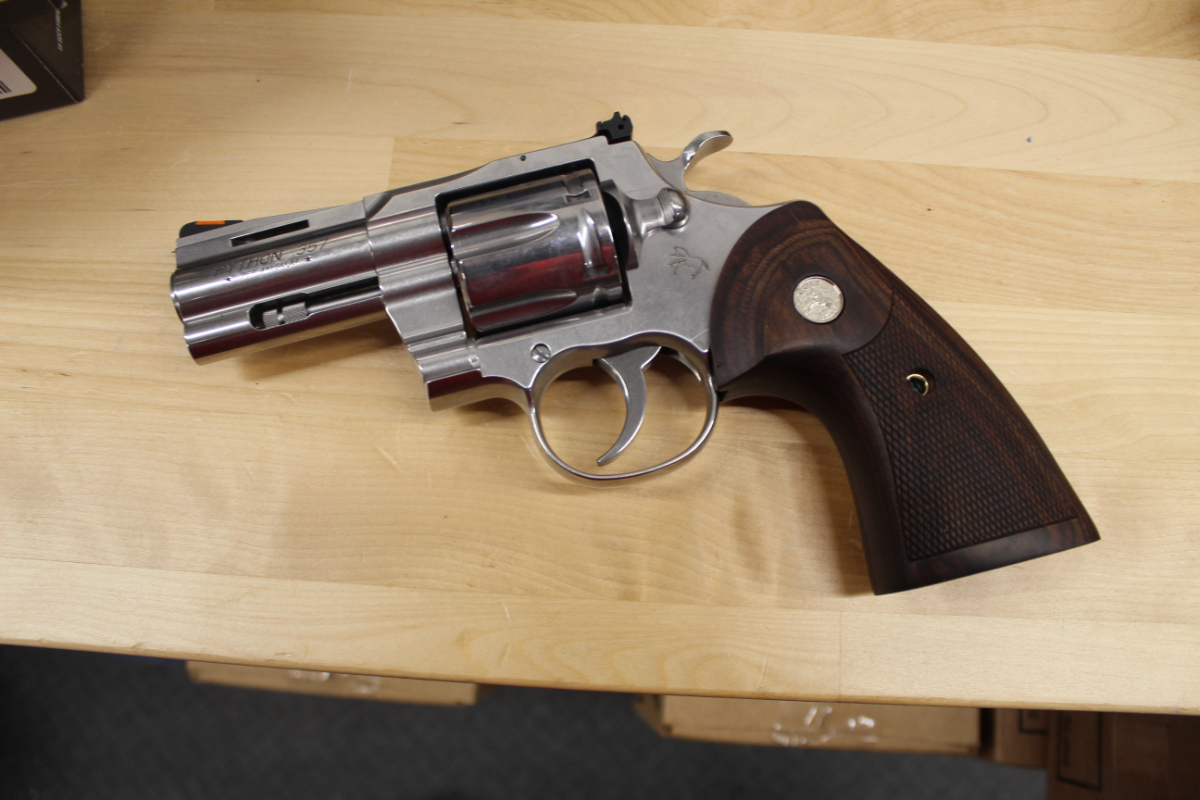
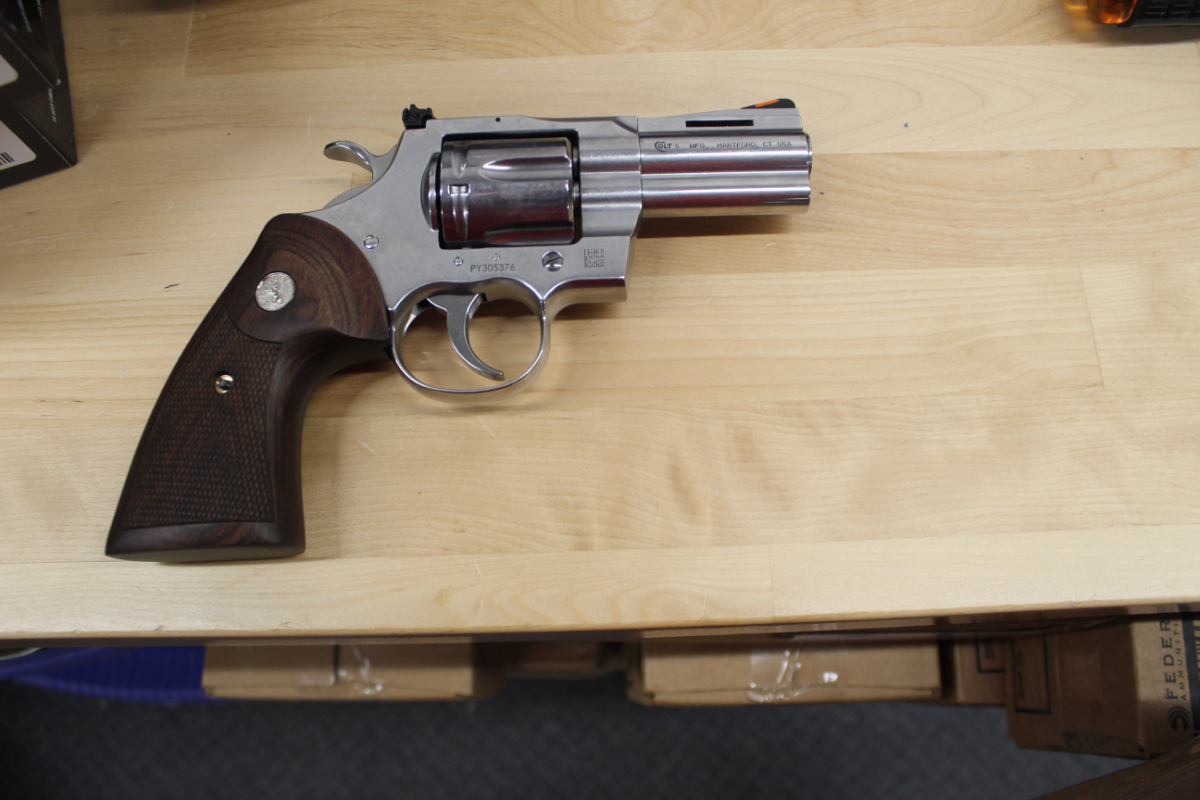
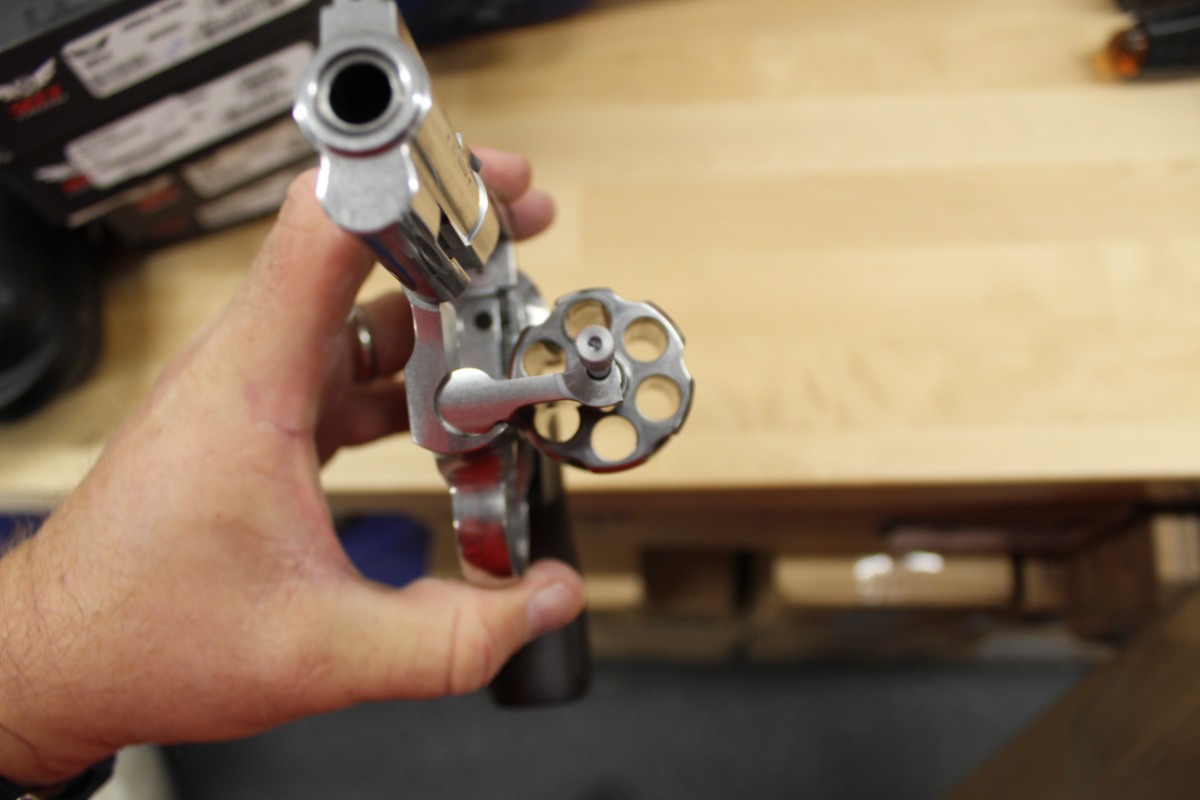
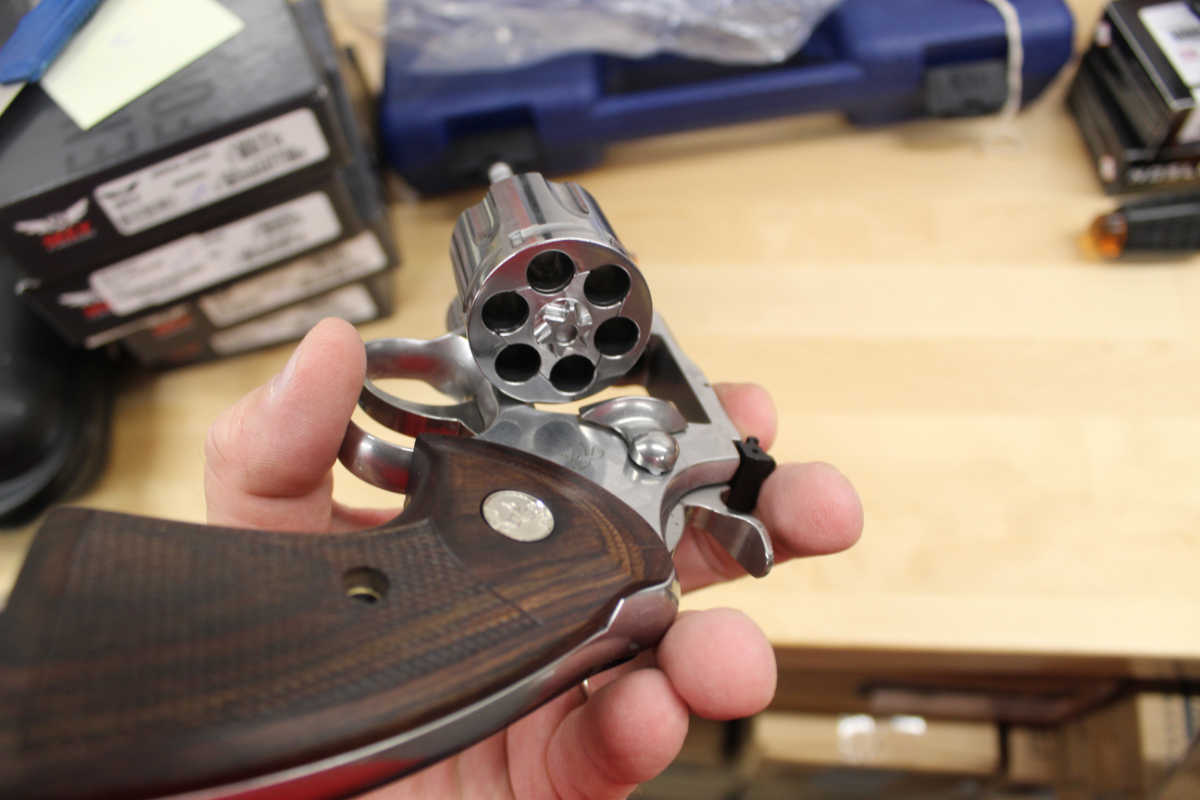
Gun Review: S&W .357 Revolver

Categories
Well I thought it was neat!

USAF F-15E versus Iraqi Mi-24: Can’t We All Just Be Friends? by WILL DABBS

If you were a fighter pilot what weapon might you choose to rid the skies of something like this?

Young men are stupid. I am certain of this because, back in the early Mesozoic era, I was one. Don’t believe me? Roughly 93% of America’s incarcerated population is male. We are imprisoned at a rate fourteen times higher than is the fairer sex. Testosterone is the world’s most potent poison.

I really, really wanted to fly one of these. Lamentably, I was born 45 years too late.

Back when dinosaurs roamed the plains I needed to figure out what I wanted to do with my life. I had grown up devouring everything I could find on World War 2 aviation. I knew I wanted to be a military aviator, but I wasn’t sure what sort. The Internet was but a gleam in the eye of a young Al Gore, so I just read books and talked to folks who had done it. Eventually, I settled upon Army helicopters.

This all just seems a bit tedious.

Driving jets was sexy and all, but those rascals were undeniably complicated. I wanted to really fly, not manage some hyper-complex technological system. Army helicopters seemed a bit closer to the Golden Age of aviation in my neophytic view. Additionally, if I didn’t pull it off there seemed to be plenty of other cool stuff I could do as an Army officer.

That’s me doing my old job. I picked it because it seemed cool.

So, there you have it. I sought out a career path based solely on how cool it would be. Not how amenable it might be to raising a family (hideous) or what sort of retirement it offered (decent, I guess), but rather simply because the job seemed like a rush and I thought I’d cut a dashing figure in a flight suit. You recall I mentioned young men are stupid.

When I reminisce about my time in the Army I recall being really tired and really dirty.

With the benefit of hindsight perhaps I should have worn blue instead of green. The Air Force is commanded by pilots, while the Army is commanded by grunts and tankers. That simple observation makes all the difference in the world as regards lifestyle. As a result of my skewed logic, I ultimately spent a year in the Infantry living like some kind of farm animal, feasted upon some of the most unspeakably vile stuff in survival school, and averaged eight months out of twelve away from home on a good year. However, at least I got to enjoy the inter-service collegiality that comes from being a military aviator.

Captains Bennett and Bakke were flying an F-15E Strike Eagle like this one.

I did plenty of joint operations wherein I worked with the Wing Nuts of the US Air Force and the Squids of the Navy. I always felt like we enjoyed a productive relationship based on mutual respect. Then on Valentine’s Day 1991, CPT Richard Bennett, flying a USAF F-15E Strike Eagle along with his Wizzo (Weapon Systems Operator) CPT Daniel Bakke, showed the world the insensate disdain in which they held Army aviation. Those guys pulverized an airborne Iraqi helicopter gunship with an enormous honking laser-guided bomb.

The Setting

Operation Desert Storm was designed to evict Saddam Hussein from Kuwait.

Operation Desert Shield ran from August 2, 1990, until January 17, 1991. This was the massive buildup of Allied forces in Saudi Arabia in response to Saddam Hussein’s unprovoked invasion of Kuwait. Desert Storm was the combat phase. It ran for forty-three days from January 17, 1991, until the conclusion of hostilities on February 28, 1991.

Scuds are intermediate-range ballistic missiles. They can carry conventional, chemical, or nuclear warheads.

Scud missiles were the regional scourge. Scuds had the range to reach Israel. Saddam was convinced that dragging Israel into the fray would splinter the Islamic nations from the Allied coalition. As a result, strike planners made taking out the Scuds a top priority.

This is Strike Eagle 89-0487. It remains in service to this day.

The area of operations ranged from Al Qaim near the Syrian border over to Baghdad. We had about a dozen Special Forces teams active on the ground hunting Scuds. The Air Force cycled strike assets in and out 24 hours a day in support of the SF guys destroying high-value targets as they came available. It was this mission that put Captains Bennett and Bakke in the cockpit of Strike Eagle Tail Number 89-0487 on this fateful day.

The Plane

The F-15E Strike Eagle was designed to be versatile, rugged, and mean.

The F-15E Strike Eagle was designed to replace the F-111 Aardvark. The F-15A and F-15C were the single-seat air superiority versions of the airplane. The Strike Eagle carried a crew of two and was a true multi-role platform. That meant that the F-15E was capable of all-weather ground attack, deep interdiction, and air-to-air missions. It was and is an immensely capable airplane.

The F-15E has seen widespread use around the globe.

Starting in 1985, we produced 523 of these magnificent machines. They have seen service in the Air Forces of Saudi Arabia, Israel, South Korea, and the US. The plane is 63 feet long and sports a max takeoff weight of 81,000 pounds. Its twin Pratt and Whitney F100-PW-220 turbofans each put out 29,160 pounds of thrust on the afterburner. The Strike Eagle tops out at 1,434 knots or 1,650 miles per hour.

In ground attack mode the Strike Eagle packs an enormous quantity of ordnance.

The F-15E features four wing pylons along with fuselage hardpoints and bomb racks that will carry an aggregate 23,000 pounds of ordnance. There is also the obligatory M61A1 20mm Vulcan six-barreled electric Gatling gun. The Vulcan packs 500 rounds onboard and cycles at 6,000 rounds per minute.

The Engagement

Scud CAPs are designed to prevent this.

Strike Eagle 487 was on a Scud CAP (Combat Air Patrol) along with a wingman. CPT Bennett was tuned up to AWACS for general control and coordination. Amidst some foul weather with multiple cloud layers between 4,000 and 18,000 feet, they got word that an SF team was in trouble.

These guys lived and died by stealth. Once they were compromised Uncle Sam moved heaven and earth to keep them safe.

The Iraqis had located the Green Berets and were closing in with both ground and air assets. With five enemy helicopters operating nap of the earth, the two Strike Eagles started hunting. The helos were apparently emplacing ground troops and then essentially herding the SF guys toward their inserted blocking force. If the Special Forces operators were not going to end up in an Iraqi prison or worse those enemy helicopters had to go.

Antiaircraft artillery used to be called flak. It is relatively crude but undeniably effective if you get any of it on you.

The Strike Eagles dropped to 2,500 feet to get under the weather and were burning along at around 600 knots. The Wizzo CPT Bakke had acquired the enemy aircraft on his organic targeting equipment. As they were deep in Indian Country the AAA (antiaircraft artillery) was hot and heavy. Things were rapidly getting squirrely.

The Mi-24 Hind was a product of the Cold War. It remains in widespread service today.

Using the high-resolution FLIR pod the Strike Eagle crew identified a pair of Iraqi helicopters moving sporadically. They would land briefly and then lift off, move a bit farther on, and land again. The American crew rightfully assumed they were inserting troops to corral the SF team. They visually identified the Iraqi aircraft as Mi-24 Hind gunships. The Hind is unique among dedicated gunships in that it also includes an ample cargo compartment that can carry extra ordnance or ground troops. With the two target aircraft moving abreast, CPT Bennett and his WSO planned their attack.

The primary strength of the modern combat helicopter is the capacity to fly comfortably within the ground clutter.

They carried four AIM-9 Sidewinder heat-seeking air-to-air missiles, but these weapons were not meant to be used amidst the rocky ground clutter of the Iraqi desert. As the Hinds were hugging the contours of the ground apparently the Sidewinders had a tough time locking on. However, CPT Bennet’s Strike Eagle also included four 14-foot GBU-10 Paveway II 2,000-pound laser-guided bombs.

The GBU-10 Paveway II is a beast of a thing.

The mission this day had not necessarily been to shoot down enemy helicopters, but rather to protect the SF team and kill Scuds. By using one of their 2,000-pound bombs the Air Force strike crew appreciated that they stood a good chance of neutralizing any ground troops the Iraqi helos might have inserted. With verification from AWACS that there were no friendly aircraft in the area, they moved in for the kill.

Captains Bennett and Bakke used the tools they had at hand.

CPT Bakke lased the lead Iraqi Hind while still four miles away. The Mi-24 was on the ground disgorging troops at the time. If my math is correct the time of flight for the big weapon would be about 20 seconds. Just as they pickled off the GBU-10 the Hind broke ground and accelerated to 100 knots. Presuming the guided bomb attack to be a wash, CPT Bennett then armed a Sidewinder and prepared to engage once the Mi-24 cleared the surrounding terrain. Meanwhile, CPT Bakke carefully maneuvered his targeting laser to keep it centered on the accelerating Iraqi gunship.

The F-15E Strike Eagle is ably equipped for air-to-air engagements. However, sometimes you just need to improvise.

Before CPT Bennett could loose his missile the massive bomb impacted the helicopter squarely. The resulting explosion simply vaporized the 26,000-pound gunship. The Special Forces team was eventually extracted and verified that the attack helicopter had been blown absolutely to smithereens. CPT Bennet resumed his Scud CAP and was actually vectored onto an active Scud TEL (Transporter Erector Launcher) about fifteen minutes later. Bennett and Bakke destroyed that Scud and headed home.

Ruminations

A ton of high explosive did a proper job on one unfortunate Iraqi Mi-24 Hind helicopter.

Now I wasn’t there, of course, but as an Army helicopter pilot myself I’m not completely certain that it was necessary to vaporize that enemy gunship with a 2,000-pound bomb. The Hind has a Vne (Velocity never-to-exceed) of 208 mph, roughly eight times slower than that of the Strike Eagle. Blowing the thing up with a massive bomb just seems a bit unnecessarily mean if not frankly bigoted.

This is the scoreboard on the side of the fuselage of Strike Eagle 89-0487. The green star commemorates the Iraqi Mi-24 obliterated by a Paveway II laser-guided bomb on Valentine’s Day, 1991.

Strike Eagle 487 remains in service today. Though it has been crewed by a succession of crew chiefs and flown by countless pilots and wizzos, it still sports the green star on the side signifying that it scored the F-15E’s first air-to-air kill. The fact that they dropped a bomb on a helicopter rather than shooting it down with guns or missiles just speaks to the curious nature of modern air combat and the sick sense of humor of Air Force fighter crews.

Categories
All About Guns

An Old Marine + Older Rifle = 650 yards

Categories
All About Guns

28 Guns Used the Most to Commit Crimes in America by Samuel Stebbins

Gun violence is a growing public health crisis in the United States. A record-high 45,222 people were killed by guns nationwide in 2020. This figure includes over 19,000 murder victims.

While homicides are the most extreme examples of gun violence, among all gun-related crimes, they are only the tip of the iceberg. According to the FBI, there were over 100,000 cases of aggravated assault and 43,000 robberies carried out with a firearm nationwide in 2020. (Here is a look at America’s most dangerous states). 

Every firearm is a lethal weapon and in the wrong hands can be used to unlawfully kill or coerce. However, certain types of guns are far more likely to be used by criminals than others.

Using gun tracing data from the Bureau of Alcohol, Tobacco, Firearms, and Explosives, 24/7 Wall St. identified the firearm calibers most commonly used for crime in 2020. Our list includes rifle, handgun, and shotgun calibers and gauges, which are standardized measurements for bullet and ammunition sizes.

Guns that are traced by the ATF are typically those found at crime scenes and either have been used, or are suspected to have been used, to commit a crime. Though it is important to note that not all firearms used in a crime are traced.

All told, the ATF traced neary 390,000 firearms nationwide in 2020. The vast majority of these firearms are chambered for rounds typically used by handguns, which are relatively easy to conceal. The handgun calibers on this list include .25, .35, and .380 – chambers commonly found in small, cheap firearms historically associated with criminality.

Other firearm types that rank highly on this list include those that are widely popular with law-abiding gun enthusiasts and sports men and women, such as 12 gauge shotguns, .223 rifles, and 9mm handguns. (Here is a look at the 50 most popular guns in the world).

Categories
All About Guns The Green Machine This great Nation & Its People War

Remember Pearl Harbor: The Men and the Guns by MARTIN K. A. MORGAN

pearl.jpg

The crew of the 4″/50-caliber deck gun on the Wickes-class destroyer U.S.S. Ward (DD-139) sank a Japanese two-man midget submarine at 6:45 a.m. on Dec. 7, 1941. This is the gun and these are the men who fired the first shots that day. U.S. Navy photo

In remembrance of the Japanese Attack on Pearl Harbor on Dec. 7, 1941, this poster was designed by Allen Sandburg and issued by the Office of War Information in 1942. The poster featured a quotation from Abraham Lincoln’s Gettysburg Address: “we here highly resolve that these dead shall not have died in vain….”

The standard, popularized narrative about Dec. 7, 1941, emphasizes the Japanese attack on the U.S. Navy base at Pearl Harbor. Because of the spectacular explosion of U.S.S. Arizona, and the extremely high loss of life on Battleship Row, it is understandable that so much attention continues to be directed toward that single part of the attack. But the Japanese also targeted every other military installation on Oahu that day. From Wheeler Army Air Field to the Naval Air Station at Kaneohe Bay to the Marine Corps Air Station at Ewa, Japanese aircraft bombed and strafed military facilities across the entire island. What happened at those other locations is every bit as important as what happened around the Pearl Harbor Navy Base because lives were lost there as well, and the face of history was changed forever. But at each of those locations, U.S. personnel also fought back. They did so in the air, on land and at sea, and they did so with some of the guns that would ultimately win the war against Japan.

The first shots of Dec. 7, 1941, were fired by Americans, not the Japanese. At 6:45 that morning, the Wickes-class destroyer U.S.S. Ward (DD-139) sighted a Japanese two-man midget submarine tailing the cargo ship Antares just a few miles south of the entrance to Pearl Harbor. Ward then brought the submarine under fire with one of its 4/50-caliber deck guns, scoring a direct hit on the starboard side of the sub’s tower that caused flooding and consequently, sinking. The Minnesota Naval Reservists manning that gun are remembered as the men who fired the opening shots on the “Day of Infamy.”

(l.) Marine Corps Tech./Sgt. Henry H. Anglin, the non-commissioned officer in charge of the Photography Section of Marine Corps Air Station Ewa, stands in front of the airfield’s dispensary on Dec. 8, 1941. Anglin is holding the Japanese 7.7 mm slug that wounded him during the attack the day before. Photo courtesy of Mike Wenger (r.) Sergeant Carlo A. Micheletto of Marine Utility Squadron (VMJ) 252 was delivering rifle fire with his M1903 Springfield when a Japanese fighter strafed him at Marine Corps Air Station Ewa on December 7th. He was 26 years old when he was killed in action.

Seventy minutes later, the first wave of the Japanese air raid started when bombs began to fall and torpedoes began to slice the waters of Pearl Harbor. Despite the early encounter between U.S.S. Ward and the Japanese midget submarine, soldiers, sailors and Marines were caught “flat-footed” by the attack when it began at 7:55 a.m. But even as explosions echoed across Oahu and combat aircraft roared overhead, some Americans on the ground began to fight back. Private First Class Melvin Thompson was on guard duty at the front gate at Marine Corps Air Station Ewa, seven miles west of Ford Island, when nine Japanese fighters, led by Lt. Cmdr. Shigeru Itaya from the aircraft carrier Akagai, began strafing the airfield. They had been given the mission of reducing Babasu Pointo Hikojo, the so-called “Barber’s Point Airdrome,” and so they came in low and fast over Ewa, attacking Marine aircraft on the ground there. Infuriated by this, Thompson walked out of the guard shack, drew his M1911A1 .45-cal. pistol, and opened fire on one of the passing fighters. At the same time, 27-year-old Lt. Yoshio Shiga’s section of nine fighters from Kaga came in over Ewa. From the cockpit of his A6M2 Zero, Shiga saw PFC Thompson facing off against him. The sight of the lone Marine shooting a handgun at a high performance combat aircraft strafing with 7.7 mm machine guns and 20 mm cannons left a powerful impression. Years later, Shiga remembered Thompson’s tenacity and fighting spirit and described the lone Marine as “the bravest American I ever met.”

U.S. M1903 Springfield Rifle


Melvin Thompson was not the only Marine returning fire at Ewa that morning. In a photograph that is now quite well-known, five enlisted Marines can be seen crouching near the foundation of a swimming pool under construction, each armed with a firearm that would do a great deal of fighting on December 7th—the M1903 Springfield bolt-action rifle. All over the field, Marines pumped fire into the air at the attacking enemy aircraft. One of those men was Sgt. Duane W. Shaw, the driver of the airfield’s fire truck. As the attack began, he attempted to drive the fire truck to the flight line to put out fires among the aircraft parked there, but the bright red vehicle attracted too much attention. All four of the fire truck’s tires were quickly shot out and the rest of the vehicle was punctured by holes from Japanese bullets before Sgt. Shaw could reach the burning flight line. Undeterred, he bailed out of the fire truck with his ’03 and started shooting. Nearby, Sgt. Carlo A. Micheletto of Marine Utility Squadron (VMJ) 252 was trying to put out fires among parked aircraft from his squadron when the final strafing attack commenced. With his ’03 Springfield in hand, the 26-year-old sergeant sought cover behind a pile of lumber and began directing rifle fire at passing enemy aircraft. One of the attackers soon thundered in toward the lumber pile firing its 7.7 mm machine guns, and a single bullet struck Micheletto in the head, killing him instantly. He was one of four Marines who made the ultimate sacrifice at Ewa Field on Dec. 7, 1941.

Two U.S. Marines who were part of the Ford Island Naval Air Station Police force are seen here on a motorcycle patrol in March 1942. They have parked on the quadrangle formed by the station’s Administration Building, Enlisted Barracks, Dispensary and the island’s shoreline. The aircraft carrier U.S.S. Enterprise (CV-6), which is moored at Ford Island’s Berth F-2, can be seen in the background. An ANM2 .30-cal. machine gun has been mounted to the motorcycle’s sidecar using the Mk. 9 Gun Mount Adaptor system.

From the swimming pool at Ewa, to emergency fighting positions that were hastily thrown together on Ford Island, the M1903 rifle put rounds into the air during both waves of the December 7th attack. For the Navy and the Marine Corps, the ’03 remained the standard-issue rifle, and it continued to serve in many of the Army units that were stationed in the Territory of Hawaii despite the standardization of the M1 Garand five years earlier. In fact, it was present on the morning of December 8th, when two Hawaii National Guardsmen walked down the beach near Bellows Army Airfield to investigate something that had washed ashore overnight. They were Lt. Paul C. Plybon and 20-year-old Cpl. David Akui from Company G, 298th Infantry Regiment. What the two soldiers found was one of the midget submarines that had participated in the attack on Pearl Harbor the day before. It had not managed to find its way into the harbor during the December 7th attack and, after depleting its batteries, drifted through the night, eventually washing up on the beach at Waimanalo Bay. By coincidence, the men of the 298th Infantry were nearby at Bellows Army Airfield, which is why Lt. Plybon and Cpl. Akui were sent to investigate. As they approached the derelict midget submarine, Akui noticed a Japanese man lying in the sand. It was 23-year-old Ens. Kazuo Sakamaki. Akui approached the Japanese submariner with his ’03 rifle at the ready and proceeded to take him into custody. Sakamaki was the first Japanese prisoner of war captured by the U.S. military during World War II.

Marine PFC Melvin Thompson drew his M1911A1 .45 ACP pistol and opened fire on Japanese fighter aircraft attacking Marine Corps Air Station Ewa. It made the Japanese after-action report.

While the M1911A1 pistol and the M1903 rifle fought effectively on December 7th, the big hero of U.S. small arms that day was the ANM2. This derivative of John M. Browning’s short-recoil-operated, belt-fed machine gun was specifically engineered for use in aircraft and came in .30-cal. and .50-cal. versions that were sometimes referred to with the nickname “Stinger.” The origin of the ANM2 dates back to a requirement issued shortly after the end of World War I. Springfield Armory produced the first version as the Model 1922, but after a series of interwar budget cuts ended government production, Colt Patent Firearms Co. began manufacturing it in 1931 as the M2. When it was standardized for “Army/Navy” use in 1933, the “ANM2” nomenclature took its final form. For the most part, the .30-cal. Stinger had the physical appearance of a downsized M1919 series .30-cal. machine gun because of the slightly smaller dimensions of its receiver, barrel and barrel shroud. This brought the ANM2’s weight down to a mere 23 lbs., compared to the 31-lb. weight of the M1919A4, but the similarities ended there. In addition to having a different receiver and barrel than the M1919, the ANM2 included a backplate equipped with spade grips and a different feed cover, extractor, barrel extension and bolt. These parts were specially engineered to allow the gun to feed from either the left or right side of the receiver, a feature that made the ANM2 .30-cal. particularly well-suited for use in aircraft. The gun’s 1,300 round-per-minute (r.p.m.) cyclic rate of fire made it an especially dangerous gun because it gave the operator the ability to deliver the highest possible volume of fire during the typically brief windows of opportunity presented during modern aerial combat scenarios. Although the modest dimensions of its lightweight barrel meant that it did not did not possess the same heat dissipating characteristics as the M1919A4’s heavy barrel, the ANM2 was intended to operate in flight at high altitudes where cooler temperatures and fast-moving airflow would prevent overheating.

By December 1941, the ANM2 .30-cal. machine gun was being supplemented in both Army and Navy service with the harder-hitting ANM2 .50-cal. machine gun. Like the smaller .30-cal. Stinger, the .50-cal. version, at 61 lbs., was still lighter than its ground combat counterpart, the 84-lb. M2 Heavy Barrel. The ANM2 .50-cal. aircraft machine gun also offered a significantly higher cyclic rate of fire (than the ground model) that approached 850 r.p.m., and it could also feed from either the left or right.

At several locations across Oahu, ANM2 machine guns were swiftly put to good use against the Japanese air raid. With enemy fighters and dive-bombers swarming Ewa Field, M/T/Sgt. Emil S. Peters rushed to a Douglas SBD-2 Dauntless dive-bomber belonging to VMSB-232, and climbed into the aircraft’s radio-operator/gunner position. The 47-year old Marine then proceeded to direct accurate machine gun fire at the enemy using the aircraft’s single, flexible mount ANM2 .30-cal. Stinger. Before it was all over, Sgt. Peters had brought down two Japanese D3A1 “Val” dive-bombers.

U.S. Marines and U.S. Navy sailors occupy an improvised fighting position that was thrown together on Ford Island in the aftermath of the Dec. 7, 1941, Japanese attack. In addition to four M1903 rifles, the position is armed with an ANM2 .50-cal. aircraft machine gun mounted on an instructional/training tripod. Based on earlier Browning machine gun designs, the ANM2 could be fed from either the left or right side and had a higher rate of fire than the infantry versions of the Browning.


On Ford Island, sailors and Marines retrieved .30-cal. and .50-cal. ANM2 machine guns from ordnance storage lockers for the three patrol squadrons stationed there, and they mounted them in expedient positions made of sandbags, wood and sometimes even tent canvas. Because both calibers of ANM2 were set up on flexible pintle yokes for use in hard mounts on aircraft like the PBY Catalina, the men also had to haul out special training tripods that allowed the guns to be set up at chest height. Photographic evidence showing these positions on Ford Island reveals that the ANM2 .30-cal. machine guns were equipped with spade grips and the Navy’s flash hider specifically designed for night firing. The ANM2 .50-cal. machine guns that appear in photographs from December 7th are all mounted using an adaptor system that was equipped with a rubberized buttpad fixed to the back end of the cradle assembly, a pistol grip/trigger mechanism on the side of the cradle and a tower for mounting a telescopic site. To supply these ANM2 fighting positions with ammunition, an ad hoc ammunition-loading station was established on the island where sailors went to work belting .30-cal. and .50-cal. cartridges.

Fourteen miles to the northeast, at Naval Air Station Kaneohe Bay, sailors were doing the same thing: setting up temporary fighting positions for ANM2 machine guns. In one area of the air station a ditch had been dug for the installation of a sewage line, and five sailors set up a .30-cal. Stinger and a .50-cal. Stinger in it. They did not have the training tripods, so they used some of the framing structures in the ditch as field-expedient platforms and tied sections of rope to secure the guns.

In one section of Naval Air Station Kaneohe Bay, a temporary fighting position was set up in a ditch that had been dug for the installation of a sewage line. Lacking training tripods for the .30-cal. and .50a-cal. Stinger machine guns, these five sailors improvised a way to secure the guns by tying sections of rope to framing structures that had been built in the ditch.

Nearby on the parking ramp for Patrol Squadron (VP) 11, C.P.O. John William Finn directed his sailors in setting up several ANM2 machine guns and their instructional/training tripods. As the squadron’s highest ranking aviation ordnanceman, he was not only familiar with the operation of the guns, he also had full access to them and the ammunition they needed. During the following two hours, Finn personally operated a .50-cal. Stinger, delivering effective machine gun fire against Japanese aircraft attacking Kaneohe. Because he was firing from an exposed position, the 32-year-old chief drew return fire and suffered painful wounds, but he kept on fighting. Then, after the raid was over and after he had received cursory medical attention, he supervised the rearming of returning PBY flying boats. Nine months later, Finn was awarded the Medal of Honor for his actions above and beyond the call of duty on Dec. 7, 1941.

Second Lieutenant Kenneth M. Taylor (l.) and 2nd Lt. George S. Welch of the 47th Pursuit Squadron both scored victories in aerial combat over Oahu while flying P-40B Warhawk fighters on Dec. 7, 1941, and they both received the Distinguished Service Cross in recognition for what they did that day.

The Army also put the ANM2 Stinger to good use that day—namely, the U.S. Army Air Corps. When the attack began, aircraft of the 47th Pursuit Squadron were temporarily based on the north shore of Oahu, at the auxiliary airfield near Haleiwa, to conduct remote field gunnery training. As bombs began to fall on Wheeler Army Airfield, a group of pilots from the squadron rushed the 10 miles to Haleiwa and took to the air to oppose the enemy, but they faced a unique challenge: only .30-cal. ammunition was available there. Second Lieutenant George S. Welch and 2nd Lt. Kenneth M. Taylor both took off in B model P-40 Warhawk fighters, which were each armed with two ANM2 .50-cal. machine guns in the cowling and two ANM2 .30-cal. machine guns in the wings. When they first joined the unfolding air battle above Oahu that morning, only their wing guns were loaded. Second Lieutenant Harry W. Brown also took to the sky, but in an A model P-36 Hawk, which was armed with two ANM2 machine guns mounted in the cowling—one .50-cal. and the other .30-cal. For Brown, only the .30-cal. ANM2 was loaded. Nevertheless, he scored two aerial victories with it that day.

(l.) Aviation Ordnanceman (AOM) Jesse Rhodes Waller boards a PBY Catalina at Corpus Christi Naval Air Station in August 1942. Waller is holding an ANM2 .30-cal. machine gun in a Mk. 9 Gun Mount Adaptor. This hard mounting system consisted of a pintle yoke, ammunition box holder, brass catcher and link catcher. (r.) Second Lieutenant Harry W. Brown of the 47th Pursuit Squadron would use an ANM2 .30-cal. machine gun in his P-36 Hawk fighter to score two aerial victories against Japanese aircraft on Dec. 7, 1941.

Once in the air, Taylor and Welch climbed to 8,000 ft. in their P-40s and flew south to Barber’s Point. There, they observed a formation of 12 Aichi D3A1 “Val” dive-bombers and, despite six-to-one odds, they both attacked. Although each man shot down one enemy dive-bomber, they quickly ran out of .30-cal. ammunition. Both pilots then flew 13 miles to the north, landed at Wheeler Army Airfield and taxied to an ammunition replenishing point. There, ground crewmen reloaded their wing-mounted ANM2 .30-cal. machine guns, and gave both P-40s a full load of .50 caliber. They did not take on fuel—just the .30-cal. and .50-cal. ammunition that let them get back into the fight. The two pilots then roared into the air again and began dogfighting over Wahiawa. By the end of the air battle, Welch had shot down four enemy aircraft, and Taylor had scored two confirmed kills with two probables. In recognition for their extraordinary heroism in action, and their coolness under fire against overwhelming odds, George Welch and Kenneth Taylor both received the Distinguished Service Cross. Harry Brown was awarded the Silver Star for the “expertness in battle” he demonstrated from the cockpit of his P-36.

These three young airmen proved that American fighting spirit was strong on the “Day of Infamy,” and that the ANM2 aircraft machine gun was a fearsome and dangerous arm. During the following 44 months, the Empire of Japan would encounter it, as well as the other guns of Pearl Harbor, over and over again during a campaign that would ultimately carry U.S. forces all the way to Tokyo Bay.

Categories
All About Guns Born again Cynic!

How to Convince Your Wife to Let You Buy as Many Guns as You Want by ARAM VON BENEDIKT

convince-your-wife-to-let-you-buy-guns_lead.jpg

Any discussion involving manipulation between the sexes—however harmless—must be approached with fear and trembling. Creating a humorous piece on the same subject is even more dangerous, so if you never see my name in print again, it will be apparent that someone significant took exception to these lines. Please bow your head and observe a moment of silence, should that become the case.

Wives and Firearms
One of life’s greatest tragedies comes to light when a person utters the words “I’d love to buy that new (insert firearm of your choice), but my wife doesn’t think I should. She thinks (insert any number between two and 2,000) guns is enough.” (Hold on, I need to grab my hankie… Okay, I can see the keyboard again. Thanks for waiting.)

Hunter and Bride Wedding Cake Topper

So, here’s the thing: the aforementioned tragedy is completely avoidable. It need not happen at all, to you or any of your buddies. Here’s how to prevent a firearm famine from bleeding your soul dry of the sweet scent of gun oil.

Step 1: You must establish the fact that “X” new firearm is not for you, it is for her (or for him, if you happen to be one of those incredible women who finds firearms fascinating, scintillating and therapeutic, but has a husband who is a cold fish). Here’s a simple example of how this might sound: “Honey, I’ve been thinking… Hey! You’ve done something different with… your hair looks awesome! Anyway, I was thinking we should get you a shotgun. What? Oh, something simple, like a Winchester SX4.”

Step 2: Now that you’ve planted the seed that this new toy–I mean—tool, is for her, you should introduce a need for it: “Yeah, that shotgun could work pretty well as a home-defense firearm, especially if we get it in 12-gauge. And it could double as a duck gun for me, if necessary.” (You’re appealing to her superior multi-tasking prowess here, as well as planting another seed—one that will establish the idea it’s okay for you to use it, too).

Step 3: Ask her how she would like the gun configured. It’s always flattering for a wife to be asked such a question, especially when she knows the biggest rival for her husband’s affection is his infatuation with firearms. Many of our better halves don’t know much about Winchester SX4s, so this is your chance to come gallantly to the rescue, explaining the various attributes and features, detailing why she should order her new gun configured just how you want it, and why pink is a terrible color for firearms. If you play your cards just right, there will soon be a shiny new shotgun resting in the corner. Best of all, for some unfathomable reason, most ladies seem to have about the same memory for guns as I do for designer handbags. Roughly ninety days later, the shotgun will be forgotten, and can be safely transferred to join your other treasures in the gun safe.

Yup, it’s time.

“Honey, I was thinking; a woman as good a shot as you are should have a good self-defense handgun around…”

Better Halves and Hunting
The best hunters I know have wives who send them off with a smile and a kiss for good luck anytime they want to go hunting (if they aren’t hunters themselves). No stern reprimands, withering accusations or invitations to sleep on the couch for these lucky blokes. Nope, their wives actually like their man going hunting. Did they love his hunting addiction from the beginning? Not likely. Usually it’s a learned behavior. For women, it’s a simple matter of logistics.

If you’re the kinda guy who leaves the grass uncut to go hunting, spends money you don’t have on new gear and leaves your dirty camo lying on the floor, you probably have a wife who is more deadly with her glances than you are with your bow or rifle. On the flip side, if you make sure your sweetheart’s “honey-do” list is taken care of, work a little overtime to cover hunting costs, and make a practice of leaving a rose on her pillow, sending love notes to her on the back of a Topo map or taking her out for a romantic date upon your return from a hunting trip, she probably has grown to appreciate your habit. Try it for a season. You might even tell her,  “Darlin’, I’m gonna spend some money on this hunt I’ve been dreaming about—why don’t you take a little money, too, and go spend it on yourself.”

She’ll be begging you to go hunting more often.

How to Protect Your Cave Man
A list of sage advice would be remiss if it didn’t include some recommendations for the wives. Here’s the thing, ladies; we guys may be all bluff and manliness on the exterior, but deep down we’re just a bunch of little boys. Things that go bump in the night can make us accidentally swallow our chew of Levi Garrett. In fact, it’s not uncommon for us to hang around the campfire late into the night, simply because there might be a monster hiding under our sleeping bag.

Now, if you’re one of those most awesome creatures on Earth (a girl who likes to hunt), but by some unfortunate twist of fate you fell in love with a man (Can I even call him that?) who doesn’t like to hunt or camp, don’t despair. Here’s what to do to convince your non-hunting husband that you can keep him safe in the woods.

Female Hunter with Mule Deer

First, demonstrate you can shoot better than him. Many guys are insecure about their ability to make a good shot on a monster, especially when it’s dark. If you prove to him that you can bust more clays, outshoot him with pistols on a dueling tree, and beat the socks off him in a friendly 3-gun match, he’ll feel a lot safer going camping and hunting with you. Especially if you draw little stick-figure monsters on the clays before you load them into the target launcher. Witnessing you blow monsters to bits (even stick figure ones) will calm his nerves considerably.

Second, demonstrate your mastery of the wilderness. As soon as you arrive in the woods, build a fire, start a pot of coffee and set up a tarp shelter for extra gear. Whip out a comfortable camp and get your hunting stuff ready. Be cognizant of the need to demonstrate to your guy that you’re more capable in all things bushcraft than he is, or he won’t feel safe and protected.

Lastly, let him hold your hand when you’re hiking, and cuddle up while you’re sitting around the campfire. He’ll try to make you believe this desire has roots in romanticism, and likely there’s some truth to that. But his primary, primal reasons for holding onto you are safety and protection. I know it’s inconvenient when you’d much rather polish your rifle with a clean, oiled cloth or put a tape on that big buck you just killed, but humor him. He needs you.

Conclusion
I hope you will benefit from the words of wisdom contained herein. It’s been hard-won on the front lines of feminine wiles and manly maneuvers. I’m one of those lucky guys whose wife wishes him good luck when he goes hunting. I’m also the fortunate fellow with a wife who can occasionally outshoot or out-hike him. Best of all, I’m that blessed man with a wife who buys him more new guns than he buys himself.

She even holds my hand and snuggles when we go camping.

Categories
Cops Gear & Stuff

From – A View from the Beach – Tests Reveal Body Armor “Skip Effect” Endangers Women

JTN, Capitol Police, FBI uncover new potential deadly risk to female officers from body armor “Memo reveals new lab testing detected “skip effect” in which bullet can ricochet toward neck, jugular vein.”


The U.S. Capitol Police alerted its rank-and-file this month that FBI lab testing of long-approved body armor has uncovered a previously unknown flaw that can subject female officers to deadly ricochets from bullets.

The advisory, obtained by Just the News, revealed that the FBI first detected the problem, known as the “skip effect,” when it “departed from legacy testing protocols in a desire to test body armor in an ‘as worn’ condition, and to account for various body shapes and sizes.”


“The testing revealed that when a projectile strikes the female body armor at an extreme angle on the upper chest area, the projectile does not penetrate the body armor, but rather, skips or deflects off the surface of the armor into the neck region,” the advisory explained. “Because of the angle at which female body armor lays when worn, projectiles may skip off the top center of the female armor and travel to the area of the jugular notch” in the neck where the jugular vein passes.

The advisory said the current body armor that had been utilized by the FBI, Capitol Police and other law enforcement had been certified by the National Institute of Justice (NIJ) for years, but the FBI decided to create new testing to take into effect among other things the curvature of women’s bodies on potential ricochet.


After the FBI tests unmasked the “skip effect,” Capitol Police sent its armor to the FBI Ballistic Research Facility and confirmed the same problem and has assembled a team of executives and union members to find a fix, the memo stated.

“The USCP is committed to maximizing officer safety,” the memo stated. “Therefore, although all Department body armor is certified by the NIJ, the Department is immediately undertaking steps to mitigate the risk outlined above for our female officers. To be clear, this is not an issue specific to USCP-issued body armor, or FBI body armor, but rather a newly discovered risk with all known commercial body armor. Body armor simply has not accounted for certain body shapes and ‘as worn’ conditions when being developed, tested, and certified.

Categories
All About Guns Hard Nosed Folks Both Good & Bad One Hell of a Good Fight

Pearl Harbor: Dorie Miller and his .50-caliber Browning Machinegun by WILL DABBS

Doris “Dorie” Miller was a patriot and a hero.

Doris “Dorie” Miller was supposed to have been a girl. Born October 12, 1919, to sharecroppers Connery and Henrietta Miller, he got the name Doris when the midwife assisting with his delivery became somehow convinced he would be female. Doris was the third of four sons accustomed to hard work on the family farm. Miller’s grandparents had been slaves.

After leaving school in the eighth grade Doris Miller studied to become a taxidermist.

Doris dropped out of school in the eighth grade and completed a correspondence course in taxidermy. Few ridiculed him over the effeminate nature of his name, however. By his 17th birthday, Doris was 6 foot 3 inches tall and weighed more than 200 pounds.

At age 20 Doris Miller enlisted as a mess steward in the US Navy.

Miller enlisted in the US Navy in 1939. At this point in history, there were few billets open to African-American sailors. As a result, Doris trained as a mess attendant and was assigned to the USS Pyro, an aptly named ammunition ship.

Heavyweight boxing was the alpha sport aboard WW2-era Navy war-ships.

In January of 1940, Miller transferred to the battlewagon USS West Virginia. There he found that he had a gift for boxing, a wildly popular sport among Navy personnel at the time. In short order, Miller had earned the coveted position of heavyweight champion of the ship, a vessel whose complement typically ran some 1,300 men.

This guy just didn’t look much like a Doris.

Nobody is really sure where the name Dorie originated. Some claimed it was a typographical error made by some nameless clerk who simply could not believe that a 200-pound musclebound black man might actually be called Doris. Others asserted it was a nickname bequeathed by loyal shipmates following his boxing exploits.

One Fateful Sunday…

The Pearl Harbor attack was justifiably reviled as one of the most treacherous acts in military history.

On Sunday morning, December 7th, 1941, Dorie Miller arose at 0600 to serve breakfast mess and begin collecting laundry. Two hours later his day was interrupted when Lieutenant Commander Shigeharu Murata, a Kate torpedo bomber pilot launched from the Japanese aircraft carrier Akagi, released the first of seven torpedoes to eventually strike the West Virginia.

This is a shot of the USS West Virginia taken during the Pearl Harbor attack.

West Virginia’s steel hull armor varied between 8 and 13.5 inches. One torpedo failed to explode. However, six is still a whole lot of torpedoes.

Aboard the West Virginia during those fateful hours on December 7th, all was confusion and chaos.

Miller’s battle station was an antiaircraft magazine amidships. He reported there only to find that it had been destroyed in a torpedo strike. Now looking for trouble, Dorie subsequently headed to “Times Square,” the confluence between fore-and-aft and starboard-to-port passageways. Lieutenant Commander Doir Johnson snatched up Miller and took him to the bridge to help move the injured Captain.

CPT Mervyn Bennion was grievously wounded on the bridge of the USS West Virginia, the capital ship he commanded during the Pearl Harbor attack.

Captain Mervyn Bennion had been essentially eviscerated by shrapnel while running the fight from the bridge. Captain Bennion was a Mormon from Salt Lake City who had graduated third in his 1910 class at Annapolis. Bennion used one arm to hold his entrails in place while he directed the fight against the attacking Japanese.

CPT Bennion earned the medal of Honor defending his ship from the attacking Japanese.

Dorie Miller and others attempted to evacuate Captain Bennion to a position of safety amidst the attack. Despite the pleading of his men, Bennion remained at his post and ultimately bled out. Captain Bennion was posthumously awarded the Medal of Honor for his actions.

A battleship like the West Virginia was festooned with antiaircraft weapons. The pair of fifties mounted on the aft aspect of the bridge were found to be unmanned.

Under constant attack by Japanese dive bombers, torpedo planes, and fighters, the situation on the West Virginia’s bridge was dire. There were two unmanned Browning M2 .50-caliber machineguns mounted on the aft aspect of the bridge structure. Lieutenant Frederic White grabbed Miller along with Ensign Victor Delano and moved to these two guns amidst sleeting fire from the attacking Japanese planes.

Despite never having touched a .50-caliber machinegun before, Dorie Miller chugged away at the attacking Japanese aircraft until he exhausted his ammunition.

Miller had never before seen a .50-caliber machinegun up close, so the two young Navy officers gave him a quick block of instruction under fire. They had expected Miller to feed ammunition, but he was manning the starboard gun and firing at the Japanese before they could intervene. Dorie Miller ran his gun until they had expended all available ammo.

Quick action on the part of the crew prevented further catastrophe. 106 sailors died onboard the ship on December 7, 1941. 25 sets of remains were never recovered.

By now the West Virginia had been struck by seven torpedoes and two armor-piercing bombs. Fast action on the part of damage control parties counter-flooded the ship such that she sank to the harbor bottom on an even keel. This maneuver saved countless lives.

Dorie Miller helped rescue injured sailors from the flaming oily water of the harbor once the Japanese attack abated.

His gun rendered useless by a lack of ammo, Dorie Miller then turned his attention to rescuing injured sailors. He helped move the wounded through the oily water to the quarterdeck and safety. Eventually, the crew abandoned the ship. Miller was among the last three to leave.

Dorie Miller’s Gun

The M2 .50-caliber machinegun is a WW1-era contrivance. It soldiers on today minimally unchanged.

The M2 .50-caliber machinegun was born on the blood-soaked battlefields of WW1. General John “Blackjack” Pershing commanded the American Expeditionary Forces in Europe and was alarmed over the introduction of armored aircraft like the German Junkers J.1 to the modern battlespace. Airplanes of this sort combined with observation balloons operating beyond conventional rifle range necessitated a new Infantry weapon. Pershing compiled the criteria for the new gun himself.

John Browning ultimately designed every major rifle-caliber automatic weapon used by American forces during WW2. What a stud. Here he is seen test-firing his .50-caliber prototype.

The weapon needed to be of at least .50-caliber and fire a 670-grain bullet at a minimum of 2,700 feet per second. The French 11mm was used as inspiration but was found to be too slow. Winchester designed the new cartridge, while the legendary John Moses Browning crafted the gun to fire it.

The .50 BMG cartridge is a monster. The original geometry was taken from the .30-06 service round of the day.

The end result was the .50BMG 12.7x99mm, itself essentially a scaled-up version of the standard .30-06 service round. After a bit of tweaking, this cartridge offered about the same performance as that fired by the German T Gewehr 1918 antitank rifle but in a rimless configuration. The rimless design made it much easier to cycle in an autoloading mechanism compared to previous rimmed designs.

The first versions of Browning’s .50-caliber machinegun were water-cooled weapons.

Browning’s M1921 heavy machinegun was a water-cooled beast of a thing that weighed 121 pounds and fed solely from the left. However, the recoil-operated action was a legitimate stroke of genius. Browning died in 1926 but purportedly delivered the prototype on November 11, 1918, the day of the armistice.

The M2 was one of the first truly modular weapons in US military service.

After the great man’s death, other engineers tweaked his design into the world’s seminal heavy machinegun. Using a single common receiver the gun could be configured into seven disparate weapons, each of which could feed from either the left or the right by reversing a few parts. Series production began in 1933.

American forces perched the M2 HB atop everything from supply trucks to tanks during WW2. The long-range and prodigious firepower of the M2 provided serious fire support against both airborne and terrestrial targets.

The air-cooled version was titled the M2 HB (Heavy Barrel) and tipped the scales at a more manageable 84 pounds. The M2HB sported a cyclic rate of around 500 rounds per minute. This gun sat atop most everything that rolled or crawled during WW2 and unleashed holy hades against the German and Japanese forces who faced it.

The AN/M2 was a war-winning weapon in aircraft mounts during the Second World War. This B25H gunship could carry as many as fourteen of the guns.
Versions of the AN/M2 aircraft fifty remain in service as heavy defensive armament aboard helicopters like this German CH53 today.

The AN/M2 was a “Light Barrel” aircraft version that weighed 60 pounds and cycled at a blistering 1,250 rpm. “AN” stands for “Army/Navy.” This gun armed just about every American combat aircraft of the war. Updated versions soldier on in aircraft mounts today.

Many of the newest Information Age JTLV’s rolling off the lines at Oshkosh today will still mount the venerable WW1-era Ma Deuce as primary armament.

There have been several concerted efforts to improve upon the design. However, the M2 sits minimally unchanged atop JTLV and MRAP vehicles currently serving downrange today. Trust me, running one of these puppies off of a military vehicle is the textbook definition of tactical overmatch.

Cuba Gooding Jr. played Dorie Miller in the over-the-top Michael Bay/Jerry Bruckheimer Hollywood epic Pearl Harbor. Note the crimped blanks feeding in from the right on the nearest gun.

I had always assumed that Dorie Miller’s gun was the water-cooled variant. However, a narrative I found concerning the Pearl Harbor defense of the USS Nevada, a sister ship to the West Virginia, described the bridge guns as air-cooled M2 HB’s. The Nevada burned through some 65,000 rounds of .50-caliber ammunition during the attack. One first-hand anecdote described changing out barrels when tracers began to veer off precipitously after protracted firing.

The Rest of the Story

In the early days of WW2 America needed heroes.

Two weeks after the attack Miller was transferred to the USS Indianapolis. The recommendation that made it to President Roosevelt’s desk was that the Distinguished Service Cross be awarded to an “Unnamed Black Sailor.” Miller was eventually positively identified and there resulted Congressional efforts to have Miller awarded the Medal of Honor. In 1942 America, this would have been an earth-shaking event.

Dorie Miller received his award from Admiral Chester Nimitz.

Secretary of the Navy Frank Knox ultimately recommended against the award and instead suggested the Navy Cross, then the third-highest commendation for valor in Naval service. Admiral Chester Nimitz decorated Doris Miller aboard the aircraft carrier USS Enterprise in May of 1942. Three months later Congress revised the ranking of medals for valor, placing the Navy Cross just below the Medal of Honor.

Miller toured the country telling his story and selling war bonds.

While white sailors were awarded officer’s commissions for similar valorous actions, Dorie Miller was promoted to Mess Attendant First Class in June of 1942. He continued his service aboard the Indianapolis before eventually being recalled to the states to help sell war bonds. His stocky visage ultimately graced a recruiting poster.

Dorie Miller gave his life for his country on November 24, 1943.

In 1943 Cook First Class Dorie Miller was assigned to the escort carrier USS Liscome Bay. During the Battle of Makin in June of that year the Liscome Bay caught a torpedo to the stern fired by the Japanese submarine I-175. The bomb magazine subsequently detonated, sinking the ship in 23 minutes. All but 272 of the 900-man ship’s complement were lost. Dorie Miller was among the dead.

This Destroyer Escort was named for Miller back in the 1970’s.
CVN-81, a state-of-the-art supercarrier featuring electromagnetic launch catapults, will be christened the USS Doris Miller when it launches in 2030.

In 1973 the US Navy launched the Destroyer Escort, USS Miller. The Gerald Ford-class supercarrier CVN-81 to be commissioned in 2030 will be named the USS Doris Miller. This will be the first aircraft carrier in American history named for an enlisted sailor.

The venerable .50-caliber machinegun helped win World War 2. Clark Gable flew combat missions aboard B17’s during the war.
John Browning’s Ma Deuce isn’t going away any time soon.
Categories
War

December 7th (1943)