Amish Farmer Targeted by Govt for Operating Outside Reach of USDA Regulations
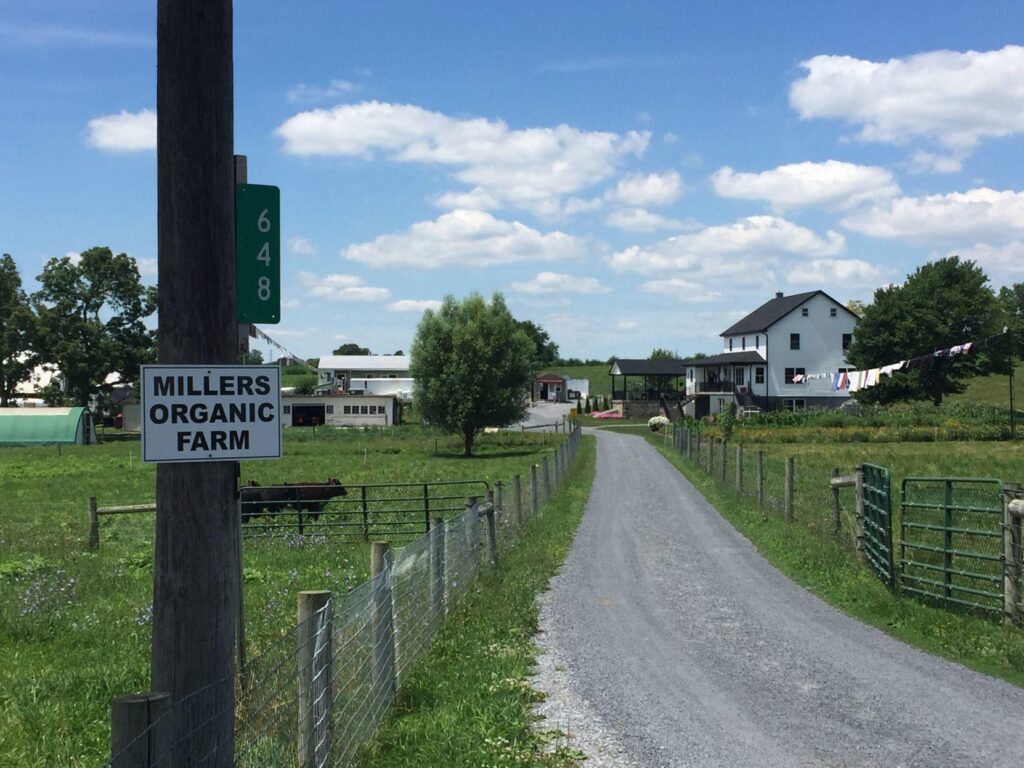 An interesting story promoted by
Rebel News, highlights the plight of an Amish farmer who operates a private market club for his products. Because his crops, dairy and beef are not sold to the ‘general public,’ and only to those who are members of the private food club, Amos Miller contends he should not be subject to USDA regulations.
Miller’s organic farm operates on century old farming practices. His farm uses no electricity, no tractors, no diesel, no gasoline, and he produces exceptional all natural yields which people are willing to pay top dollar to purchase.
Additionally, because Mr. Miller doesn’t use chemical fertilizer or fuel, his farm has not been impacted by the increased costs that have hit industrial farms. He and his customers are completely unaffected by outside influence.
However, a federal judge ruled that despite his closed members-only market, he must have USDA inspectors for his beef and cattle slaughter processes. Miller does not want to use the regulated and required pharmaceutical antibiotics, and other regulatory processes required by the USDA. He now faces jail time and a $300,000 fine. [Rebel News Article]
While CTH is completely on the side of the Miller farm, it’s not fair to share this story without providing the alternative perspective from the side of the regulatory agencies.
(Via Lancaster Online) – […] “The United States submits that Mr. Miller’s continuing recalcitrance and flouting of the court’s orders requires a robust, more-coercive civil contempt sanction than previously imposed,” government attorneys wrote in its request filed in late July. “Specifically … the court should order him to be incarcerated until he has paid these sums that are long overdue.”
U.S. District Judge Edward G. Smith scheduled a hearing for Sept. 26 at the federal courthouse in Easton for Miller to show why he should not be jailed.
And the government wants Miller’s wife, Rebecca Miller, added as a defendant in the case because she is a co-owner of Miller’s Organic Farm. That will also be addressed at the hearing.
Miller — who has an attorney, but has been filing paperwork on his own — filed a response on Aug. 5 suggesting Smith and the government are “working in concert” in supposedly violating his rights. The filing seeks a stay of the proceedings and indicates Miller plans to appeal issues in which he contends the judge is wrong.
[…] Miller first came to the attention of federal authorities in 2016, when the Food and Drug Administration said it identified Listeria in samples of Miller’s raw milk; the agency found the Listeria to be genetically similar to the bacteria found in two people who developed listeriosis — one of whom died — after consuming raw milk.. (read more)
It’s an interesting issue, specifically interesting because the members of the private food club are in a hold-harmless relationship with the Miller farm.
What do you think?


The Supreme Court Will Decide Whether You Have a Right to a Prompt Hearing After Cops Seize Your Property
The Supreme Court has agreed to hear two consolidated cases by Alabama women whose cars were both seized for more than a year before courts found they were innocent owners.

(Gary Blakeley | Dreamstime.com)
Do you have a right to a prompt hearing after the government seizes your property? The U.S. Supreme Court will consider the question in its upcoming term.
The Supreme Court has agreed to hear Culley v. Attorney General of Alabama, two consolidated cases concerning whether property owners have a due process right to a hearing to determine if police had probable cause to seize their property.
The issue may seem esoteric, but it’s hugely important to people who have their property seized by police under civil asset forfeiture laws. Under civil asset forfeiture laws, police can take property suspected of being connected to criminal activity even if the owner hasn’t been charged with a crime. Property owners then often have the burden of going to court and proving their innocence, a process that can take months and sometimes years.
Take the two cases at issue: In the first, Halima Culley’s son was pulled over by police in Satsuma, Alabama, while driving Culley’s car. He was arrested and charged with possession of marijuana and drug paraphernalia. The City of Satsuma also seized Culley’s car. It took 20 months, during all of which Culley was bereft of her vehicle, before a state court ruled that she was entitled to the return of her car under Alabama’s innocent-owner defense.
In the second case, a friend of Lena Sutton took her car to run an errand in 2019. He was pulled over by police in Leesburg, Alabama, who found methamphetamine in the car and seized it. Sutton also eventually was granted summary judgment on an innocent-owner defense, but not until more than a year after the initial seizure of her car.
These sorts of long delays have been documented elsewhere around the country. In 2018, three Detroit residents filed a class-action lawsuit alleging that Wayne County police and prosecutors seized their cars and forced them to wait months, sometimes years, for a hearing. Two years later, the Institute for Justice, a libertarian-leaning public interest law firm, filed another class-action lawsuit challenging Wayne County’s asset forfeiture program, including its practice of not providing defendants with prompt post-seizure hearings.
“The government should not be able to take your car without providing you with a prompt opportunity to challenge the seizure,” Dan Alban, a senior attorney at the Institute for Justice, said in a statement. “In criminal cases, after the government arrests you, it must hold a probable cause hearing shortly after the arrest so that a judge can make a preliminary determination about whether the arrest was legitimate. The government should provide the same kind of prompt hearing after it takes your property.”
The specific question before the Supreme Court is which test district courts should apply when determining if someone’s 14th Amendment right to due process was violated by being deprived of a prompt hearing.
The U.S. Court of Appeals for the 11th Circuit, which has jurisdiction over Alabama, has held that the “speedy trial” test, a particularly vague balancing test created to resolve allegations of Sixth Amendment violations, applies and that due process is satisfied by the civil forfeiture process itself. However, every other circuit that has weighed in on the issue uses a different balancing test established in the 1976 Supreme Court case Mathews v. Eldridge to determine due process violations.
Culley and Sutton both filed lawsuits claiming that the towns violated their Eighth and 14th Amendment rights by depriving them of their cars for months when a pretrial hearing to establish probable cause for the seizures could have quickly determined that they were innocent owners under Alabama law.
The 11th Circuit rejected their claims, finding the state’s civil forfeiture process satisfied the requirements for a timely hearing under the speedy trial test.
Alabama Attorney General Steven Marshall filed a brief opposing Culley and Sutton’s Supreme Court petition, arguing there is no circuit split on the issue and that the women had no constitutional right to an additional hearing.
“As an initial matter, petitioners’ ‘innocent owner’ status does not entitle them to special solicitude under either test,” Marshall wrote. “For centuries, this court has confirmed that in rem civil forfeitures need not inquire into the guilt or innocence of the property’s owner—only the use of the property itself in a prohibited act. That Alabama chose to enact statutory protections for innocent owners thus does not entitle those owners to heightened constitutional protections.”
Categories
When style was still important!

Categories
My Humble Thanks