Categories




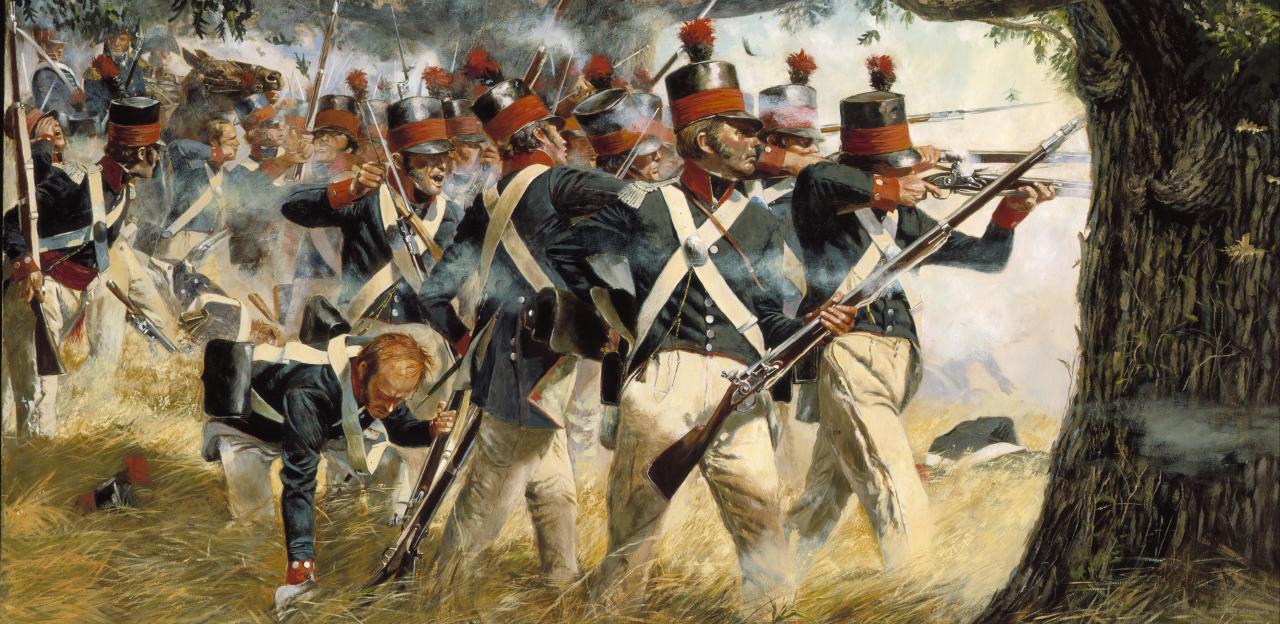
The equipment used during the War of 1812 was relatively similar to equipment used during the Revolutionary War. However, some technological advancements were made, and the War of 1812 was one of the first wars in which almost all items that were issued to soldiers were manufactured and created in the new nation.
Firearms, Weapons, and Related Equipment
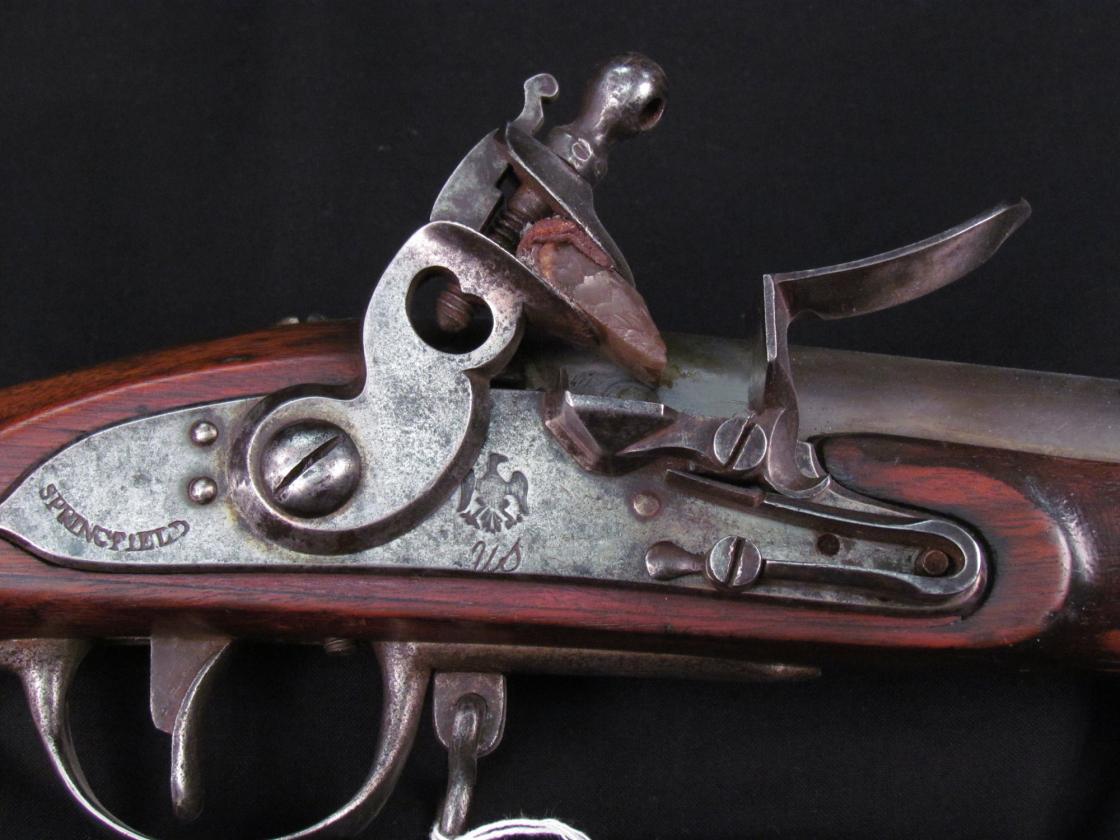
Most of the firearms used by soldiers in the War of 1812 were small arms weapons. Flintlock firearms were widespread, and the most common firearms used were the Springfield Model 1795 musket and Harper’s Ferry 1803 rifles. The Springfield Model 1795 musket was produced by inventor Eli Whitney, the creator of the cotton gin, based the design of the firearm heavily from the French Charleville Model 1763 musket that was used during the French and Indian War.
One of the newer technologies to be developed in firearms technology was the use of rifling as seen in the Harper’s Ferry 1803 rifles. Rifling was a feature within the barrel of the firearm that gave the projectile a spin, which led to greater accuracy at longer distances. However, these rifles could not have bayonets attached to them, which caused the 1795 Springfield musket to remain as the most prominent firearm of the War of 1812.
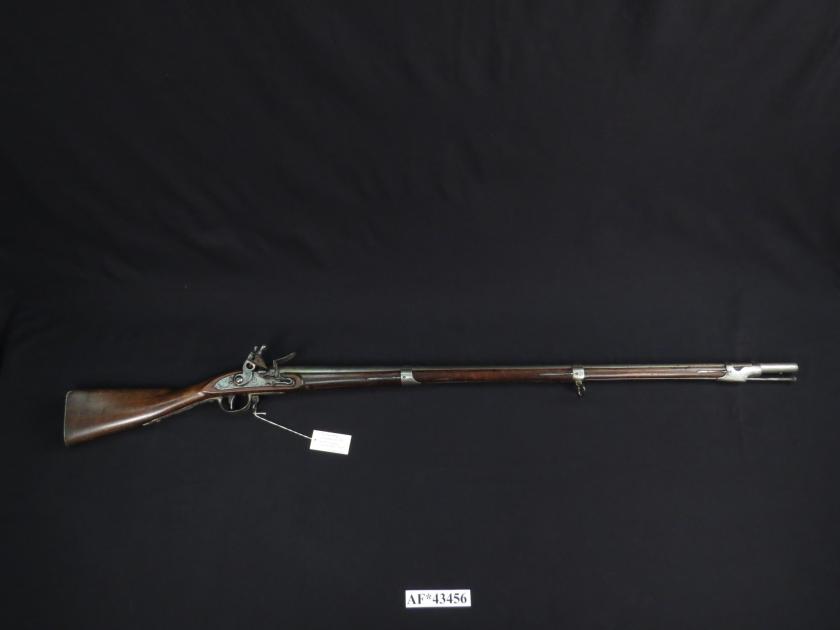
All firearms in the War of 1812 utilized a flint-lock system of firing. Flintlock firing mechanisms were firearms that used a shard of flint (a stone that can easily create fires) to light gunpowder in a pan, which then ignited the gunpowder poured inside of the firearm, which launched the projectile. Flintlock firing systems were first introduced in France in the late 1500s to early 1600s. They were later replaced in the United States by the percussion cap system in the Mexican War and were widespread in the Civil War.
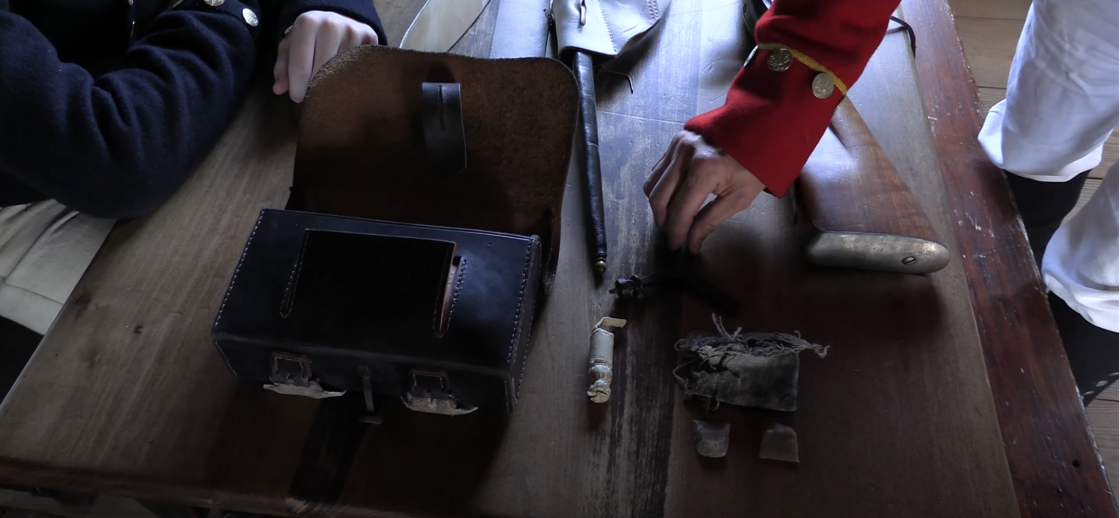
Besides the firearms themselves, soldiers carried items that helped them efficiently reload and maintain their firearms. These items included a leather cartridge box which contained the cartridges that were loaded into the firearm.
These cartridges were wrapped in paper, and had 125 grains of gunpowder, as well as the projectile itself. Extra pieces of flint were also stored in the cartridge box in the case of the flint wearing down too much. A cloth, as well as a musket tool were also included in the cartridge box to clean, maintain, or repair the firearm.
Other weapons that some soldiers carried were bayonets, swords, and pistols. Pistols were used for extremely short ranges of thirty feet or less. They used similar cartridges and utilized flint in their firing mechanisms. Bayonets were most commonly attached to the end of muskets and were used for close quarters engagements. Swords were often utilized by officers and cavalry soldiers.
Clothing and Personal Effects
U.S. soldiers were issued a knapsack that included all their personal effects. For clothing and cloth items, soldiers were issued a blanket, linen shirts, linen trousers, extra socks, fatigue blouse, and fatigue cap. Fatigue blouses and caps were used when not engaged in combat and mostly used for daily drilling and everyday wear.
These cloth items were also used primarily in the summertime. Fatigue blouses were also used for when weather conditions were poor, such as rain. Soldiers would wear the fatigue blouses over their uniforms to prevent rain from getting on their uniforms. Soldiers were also issued their helmets; a tall leather hat called a brain cooker. These hats were uncomfortable, but they made soldiers appear taller when facing the enemy.
U.S. soldiers were also issued wool items. Primarily, their uniforms were made of wool. However, soldiers also received wool trousers and a wool waistcoat. Mostly worn during the winter months, these items would keep soldiers warm while off duty and in the barracks.
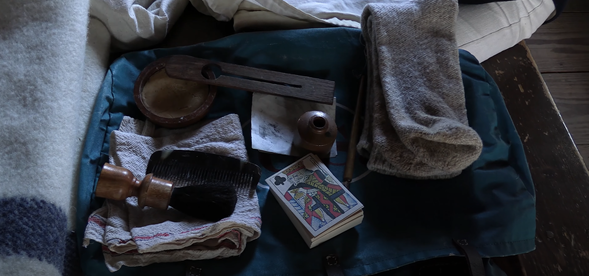
The soldiers also received a knapsack of items that were used as a personal locker. These items included items for shaving, such as a razer, shave brush, shave soap, and shaving bowl. There was also a comb, a deck of playing cards (despite gambling being illegal in the barracks), a quill pen, and ink well. These items were crucial in ensuring that the soldiers were well equipped to successfully carry out their duties as a soldier.

Categories
Colt SAA 1973 2nd Generation

Where the Answers are Made Up and the Second Amendment Doesn’t Matter
1600 Pennsylvania Avenue, we have a problem. The President is on the loose again, uttering nonsense about the Second Amendment.
President Joe Biden spoke to a collection of political donors as he’s gearing up his 2024 re-election campaign and used his gun control grindstone to churn out well-worn and discredited Second Amendment tropes. The problem is – it’s all malarky. No kidding, man.
President Joe Biden might just be the lying dog-face pony soldier he accuses others of being.
F-16s and AR-15s
The president belittled Americans who agree that the Second Amendment exists to prevent a tyrannical government from usurping power from the people.
“You know, I love these guys who say the Second Amendment is — you know, the tree of liberty is water with the blood of patriots. Well, if [you] want to do that, you want to work against the government, you need an F-16. You need something else than just an AR-15,” said President Biden, according to Fox News.
Aside from the veiled threat to use actual weapons of war against the American people, President Biden’s swipe at Americans who value their rights was intended to target the lawful ownership of Modern Sporting Rifles (MSRs). There are over 24.4 million MSRs in circulation today. They’re the most popular-selling centerfire rifle in America.
Second Amendment Second Thoughts
“We have to change,” President Biden said. “There’s a lot of things we can change because the American people, by and large, agree you don’t need a weapon of war. I’m a Second Amendment guy. I taught it for four years, six years in law school. And guess what? It doesn’t say that you can own any weapon you want. It says there are certain weapons that you just can’t own. Even when it was passed, you couldn’t own a cannon. You can’t own a machine gun.… No, I’m serious.”
First, he’s overselling his authority as a law professor. President Biden briefly served as Benjamin Franklin Presidential Professor of the Practice at the University of Pennsylvania for two years between his terms as vice president and his campaign for The White House, according to a fact check by the Austin American-Statesman. He was paid $900,000, and his duties “involved no regular classes and around a dozen public appearances on campus, mostly in big, ticketed events,” the Philadelphia Inquirer reported.
His description as a “Second Amendment guy” might come as a surprise to other “Second Amendment guys.” That doesn’t normally include ideas like universal background checks that would require a national firearm owner registry, restrictions that would ban entire classes of firearms, repealing the Protection of Lawful Commerce in Arms Act (PLCAA) to allow frivolous lawsuits against firearm manufacturers for the criminal misuse of lawfully sold firearms by remote third parties or – as the president points out here – a clear ignorance of the National Firearms Act.
Fox News reported correctly, that the Second Amendment makes no mention of firearm restrictions. Gun control laws at the federal level didn’t start until 1934, when the National Firearms Act was signed by President Franklin Roosevelt. That’s 143 years later.
Americans can legally own machine guns, although it is extremely restricted. No automatic firearm produced after May 1986 is available for commercial sale, but those produced before then can be – and are – legally owned. Owners have to pay a $200 tax stamp and register them with the Bureau of Alcohol, Tobacco, Firearms and Explosives (ATF).
When it comes to cannons, well, President Biden blasted that one too. It was legal to own a cannon when the Second Amendment was ratified in 1791. It’s still legal to own one today.
President Biden made the same erroneous claim in April 2022 and in June of 2021, when The Washington Post fact checked him on that one. He earned “Four Pinocchios,” writing, “Biden has already been fact-checked on this claim — and it’s been deemed false. We have no idea where he conjured up this notion about a ban on cannon ownership in the early days of the Republic, but he needs to stop making this claim.”
Rapid-Fire Falsehoods
None of this is new. President Biden, who claims to own two shotguns, is hardly the Second Amendment expert he presents himself to be. He once told his wife she should “fire two blasts” of a shotgun blindly into the air if she felt threatened. That’s terrible and dangerous legal advice. Among the four fundamental firearm safety rules is to know your target and what is beyond.
This advice was actually invoked in a court case, where the accused, Jeffrey Barton, was charged with aggravated assault. Prosecutors ended up dropping those charges and instead charged him with police obstruction, of which he was convicted.
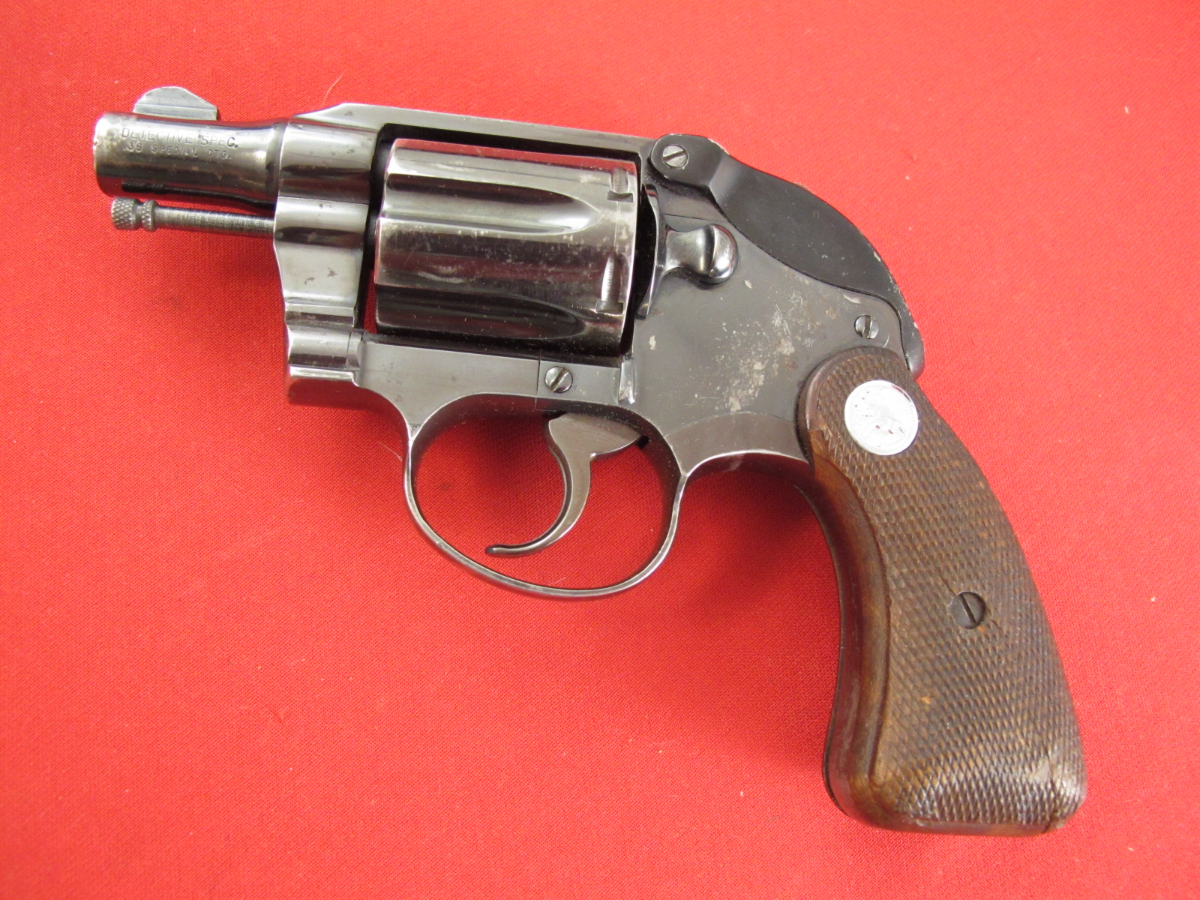
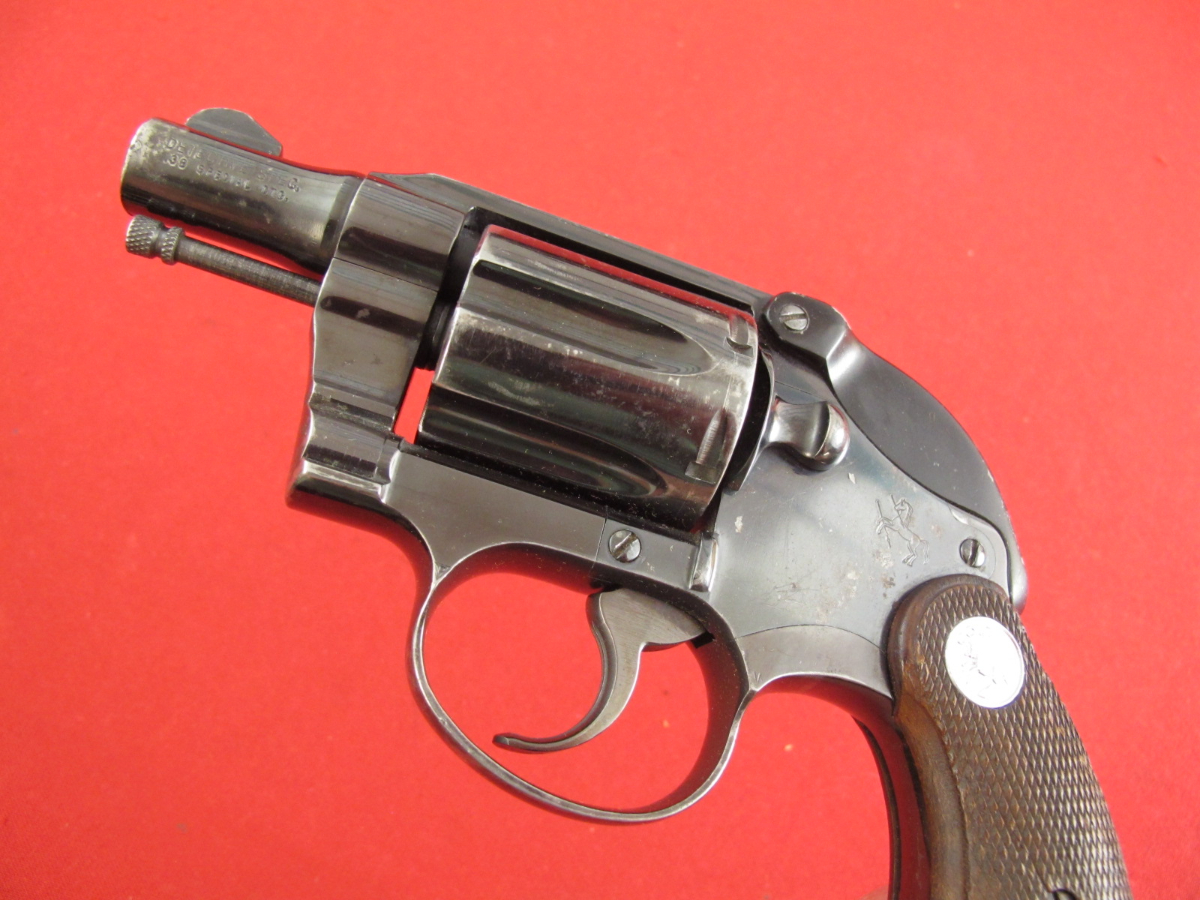
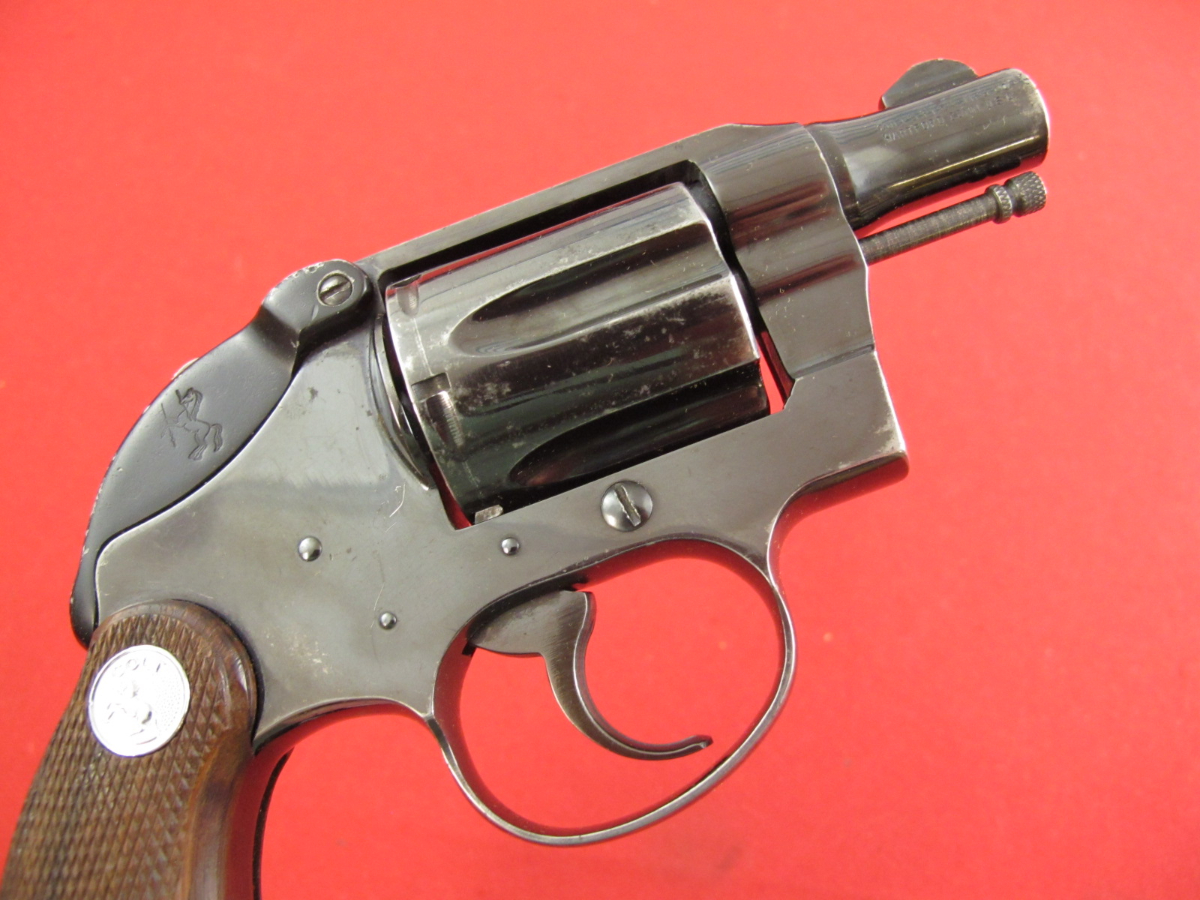
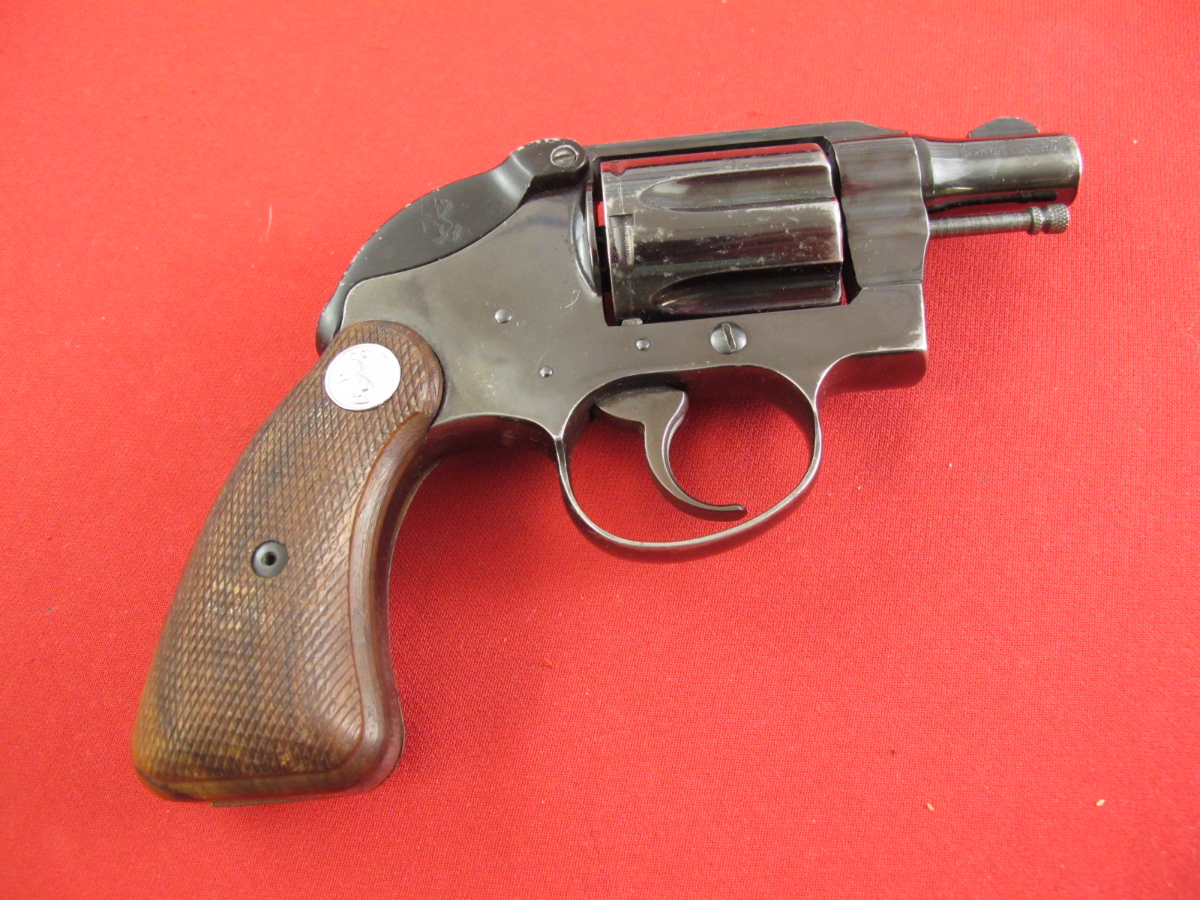
President Biden once argued to ban 9 mm Glocks, claiming in an interview with Charlie Rose that he could kill more people with a .38-caliber revolver. He also oddly told police they should shoot “unarmed” attacking criminals wielding knives “in the leg.” Police ripped that suggestion. Fox News reported the Fraternal Order of Police said it was “completely ridiculous,” “unrealistic” and a “pandering talking point.”
President Biden didn’t stop there. He believes that 9 mm handguns are especially dangerous.
“A 9 mm bullet blows the lung out of the body,” President Biden said. “The idea of a high caliber weapon, there is simply no rational basis for it in terms of self-protection, hunting.”
The president’s 9 mm claim was debunked as “bullsh*t,” by a federal agent with 15 years of service. Another with 20 years said, “Not possible.” A 21-year veteran of the U.S. Marshal fugitive recovery task force told Breitbart that President Biden’s claim is, “… not even in the realm of possibility.”
That’s the problem with President Biden. He’s living in a fantasy world of utter nonsense.
About The National Shooting Sports Foundation
NSSF is the trade association for the firearm industry. Its mission is to promote, protect and preserve hunting and shooting sports. Formed in 1961, NSSF has a membership of thousands of manufacturers, distributors, firearm retailers, shooting ranges, sportsmen’s organizations, and publishers nationwide. For more information, visit nssf.org