Categories
.gif)
.png)
.gif)
.webp)
.png)
.gif)
.gif)

Categories
Scumbag of the Century
US Army financial counselor admits to defrauding Gold Star families: DOJ
ByLeah Sarnoff
A former financial counselor for the United States Army pleaded guilty to defrauding the families of fallen servicemembers out of life insurance payments, the U.S. attorney’s office announced Tuesday.
Gold Star family members are the immediate beneficiaries of servicemembers who have died in active-duty military service and are entitled to a $100,000 payment and the servicemember’s life insurance of up to $400,000, according to the organization.
Caz Craffy, from Colts Neck, New Jersey, pleaded guilty to obtaining more than $9.9 million from several Gold Star families to invest in accounts managed by Craffy in his private capacity without the families’ authorization, according to prosecutors.
Craffy was a civilian employee of the U.S. Army, working as a financial counselor with the Casualty Assistance Office, but he was also a major in the U.S. Army Reserves, where he has been enlisted since 2003, prosecutors said.
From May 2018 to November 2022, the Gold Star family accounts suffered more than $3.7 million in losses and Craffy made more than $1.4 million in commissions, according to prosecutors.
“Those who target and steal from the families of fallen American servicemembers will be held accountable for their crimes,” Attorney General Merrick Garland said in the press release.
“Nothing can undo the enormous loss that Gold Star families have suffered, but the Justice Department is committed to doing everything in our power to protect them from further harm,” Garland said.
On Tuesday, Craffy pleaded guilty to 10 counts, including six counts of wire fraud and one count each of securities fraud, making false statements in a loan application, committing acts affecting a personal financial interest and making false statements to a federal agency, according to the New Jersey U.S. Attorney’s Office’s press release.
“Caz Craffy admitted today that he brazenly took advantage of his role as an Army financial counselor to prey upon families of our fallen service members, at their most vulnerable moment, using lies and deception,” U.S. Attorney Philip R. Sellinger said in the press release.
“These Gold Star families have laid the dearest sacrifice on the altar of freedom. And they deserve our utmost respect and compassion, as well as some small measure of financial security from a grateful nation,” Sellinger said.
Craffy entered his plea before U.S. District Judge Georgette Castner in Trenton, New Jersey and is scheduled for sentencing on Aug. 21.
Craffy’s plea agreement calls for a prison sentence of 8 to 10 years, according to prosecutors, and the restitution amount will be announced during his sentencing.
Categories
Buyer Beware – Used Gun Nightmare
Categories
Happy Earth Day !! NSFW










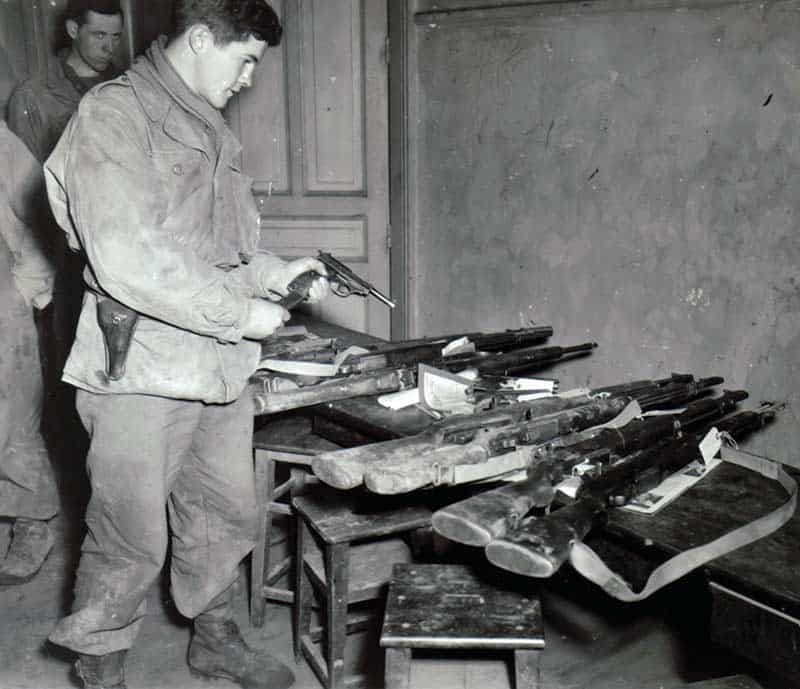
A little R&R: GIs check in their weapons, including a captured P38 pistol,
before a short leave in Nancy, France in December 1944. Photo: NARA

To the victors go the spoils: GIs inspect a war trophy bonanza of P08 Luger pistols at Berchtesgaden at the war’s end. Photo: Patton Museum
When American troops began to deploy to France in late 1917, they would soon realize the horrors of modern warfare. But they would also find one of the few pleasures for the combat soldier, and in WWI, that meant the beginning of a joyful harvest of German war trophy pistols.
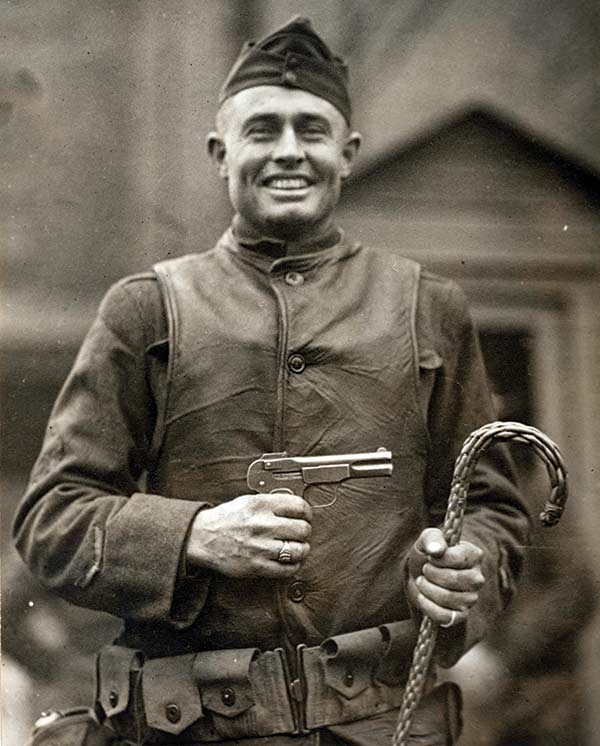
A Doughboy poses with a Langenhan pistol, officially known to German forces as the “F.L. Selbstlader Cal. 7,65.” Introduced in 1915, this is a German copy of the FN M1900. Photo: NARA
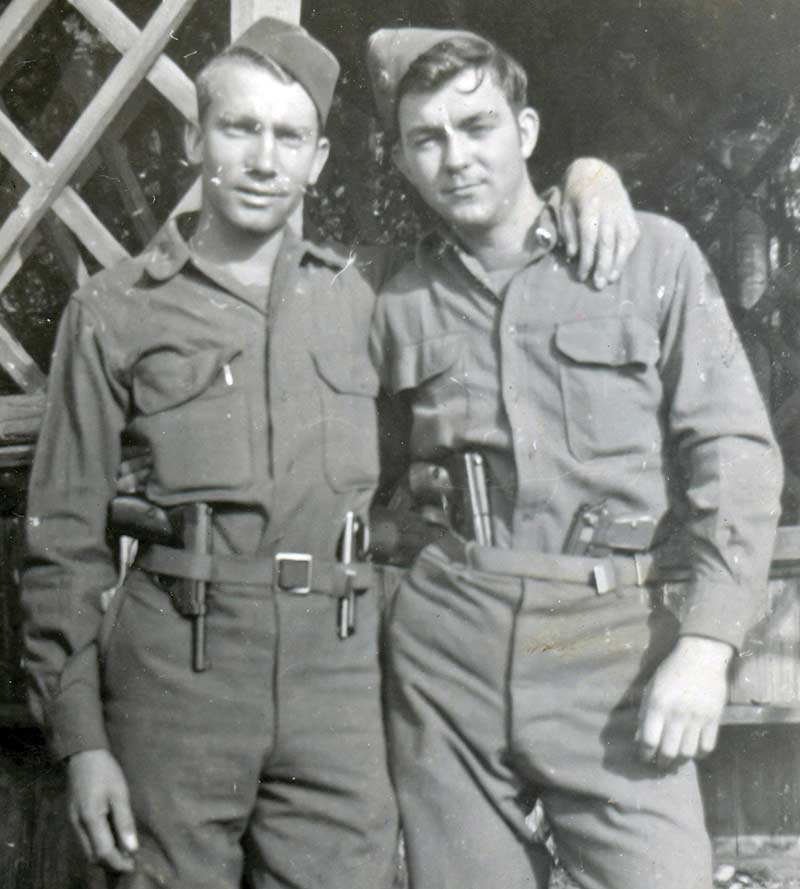
GIs show off their pistol trophies in Germany during the spring of 1945.
On the left: a Walther P38 and Mauser M1914; on the right, a Walther
P38 and Walther PPK. Photo: Author’s collection
WW I Trophy Hunting
By 1918, the German 9mm Pistole Parabellum, commonly known as the Luger pistol, became one of the most sought-after souvenirs of the Great War. The Luger and the Mauser C96 “Broom Handle” (chambered in 7.63x25mm) were not only prized trophies — the Doughboys found them quite useful and turned them against their former owners.
Even while there were plenty of U.S. .45 ACP pistols available (the M1911 auto pistol and the M1917 revolver), any red-blooded American boy will tell you two guns are better than one — particularly when your life depends on them. Even after the war was over, the American army of occupation in Germany continued its interest in war trophies, particularly the pistol variety.
The expression “The English fight for Honor, the French for Glory, but the Americans fight for Souvenirs!” is said to have originated in 1918. It is confirmed in multiple post-war assessments by German troops and civilians concerning American troops.
U.S. Intelligence officers conducted a series of interviews immediately after World War I. One letter from a German in Treves said: “The American discipline is excellent, but their thirst for souvenirs appears to be growing.” A shopkeeper from Bad Neuenahr quipped: “I alone have sold more Iron Crosses to American soldiers than the Kaiser ever awarded to his subjects.”
German pistols became scarce in the 1918–1919 era and unless you picked one up yourself (the hard way), their prices rose steeply. On the plus side, there were no gun laws in the U.S., so if a Doughboy could capture it, trade for it, or buy it, he could bring that pistol, rifle, or even machine gun home with him. After all, World War I was called “the war to end all wars” and nobody believed this world would be stupid enough to go to war again. But sadly, there would be another bigger and better chance for American troops to pick up German pistols on the battlefield just a quarter-century away.

GIs show off their pistol trophies in Germany during the spring of 1945.
On the left: a Walther P38 and Mauser M1914; on the right, a Walther
P38 and Walther PPK. Photo: Author’s collection
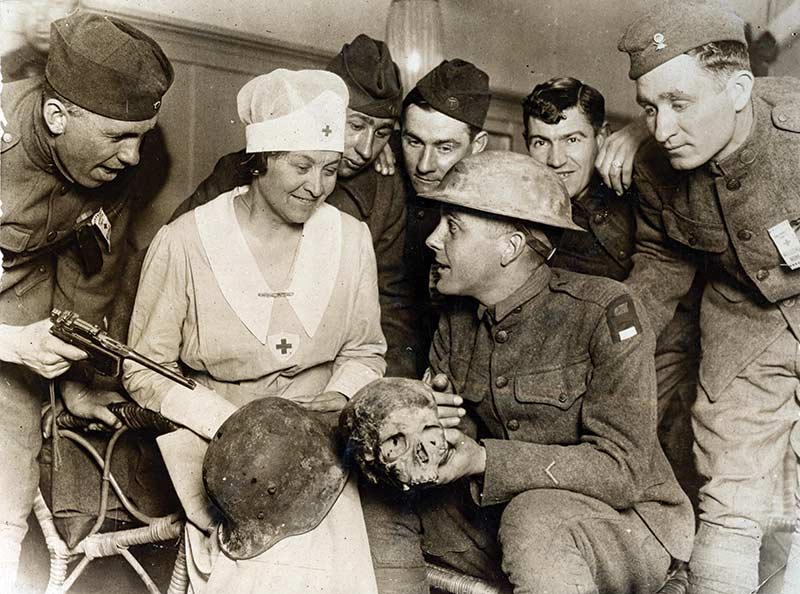
Impressing the girls with war trophies in 1918: These Doughboys show off
a German “coal-scuttle” helmet (M1916 Stahlhelm), a Mauser C96 pistol,
and presumably part of the original owner.
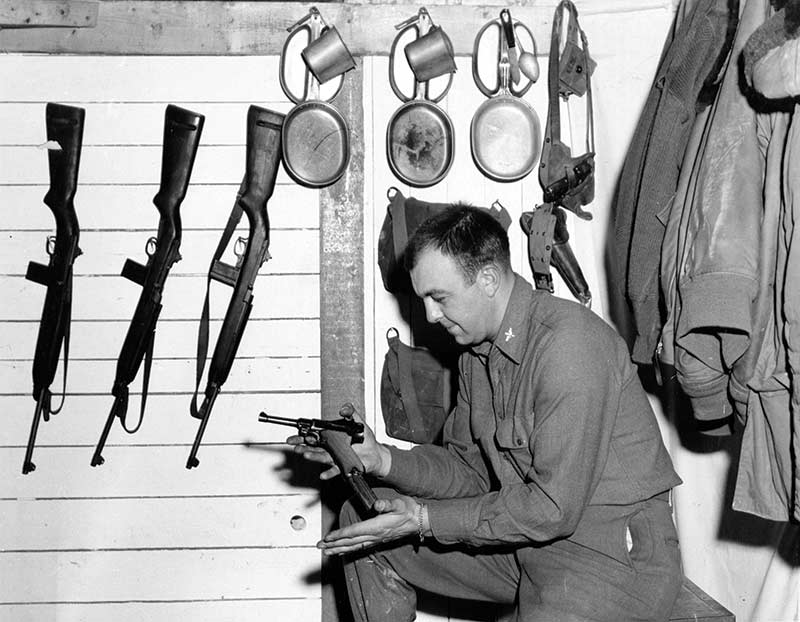
The Luger was a war trophy prized above all others. An airman of the 9th Air Force shows off his Luger at a forward airfield in France in the autumn of 1944. Photo: NARA
Act II: ETO War Trophies
When U.S. forces met German troops in combat in World War II, American interest in German pistols, particularly the Luger, was reinvigorated. The U.S. Military Intelligence publication German Infantry Weapons (May 1943) described the Luger in detail for troops in the field:
“The Luger Pistol: Since 1908, the Luger pistol has been an official German military sidearm. In Germany, Georg Luger of the DWM Arms Company developed this weapon, known officially as Pistole 08, from the American Borchart pistol invented in 1893. The Luger is a well-balanced, accurate pistol. It imparts a high muzzle velocity to a small-caliber bullet but develops only a relatively small amount of stopping power.
Unlike the comparatively slow U.S. 45-caliber bullet, the Luger small-caliber bullet does not often lodge itself in the target and thereby impart its shocking power to that which it hits. With its high speed and small caliber, it tends to pierce, inflicting a small, clean wound. When the Luger is kept clean, it functions well. However, the mechanism is rather exposed to dust and dirt.
“Ammunition: Rimless, straight-case ammunition is used. German ammunition boxes will read ‘Pistolenpatronen 08’ (pistol cartridges 08). These should be distinguished from ‘Exerzierpatronen 08’ (drill cartridges 08). The bullets in these cartridges have coated steel jackets and lead cores. The edge of the primer of the ball cartridge is painted black. British- and U.S.-made 9mm Parabellum ammunition will function well in this pistol; the German ammunition will, of course, give the best results.”
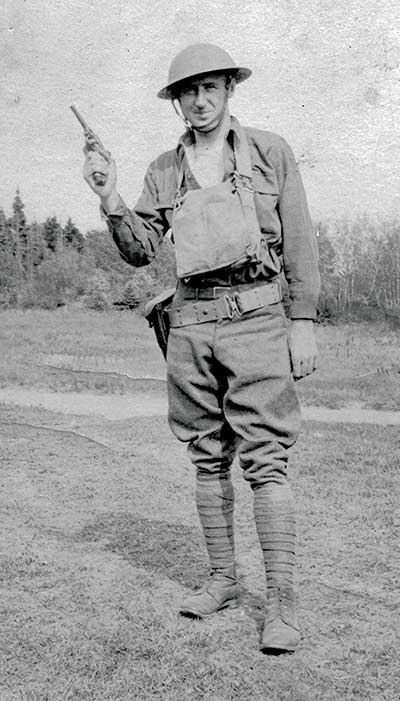
In the beginning: A Doughboy starts the American combat soldiers’ tradition of collecting the German P08 Luger in France, 1918. Photo: Author’s collection
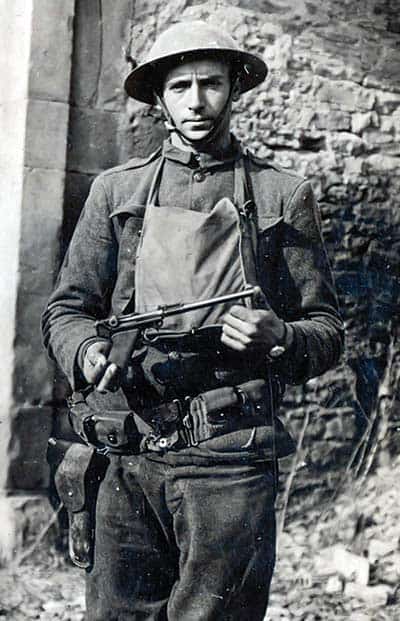
This Doughboy added an Artillery Luger to his holstered
M1911 pistol in France, 1918. Photo: NARA
Don’t Touch That …
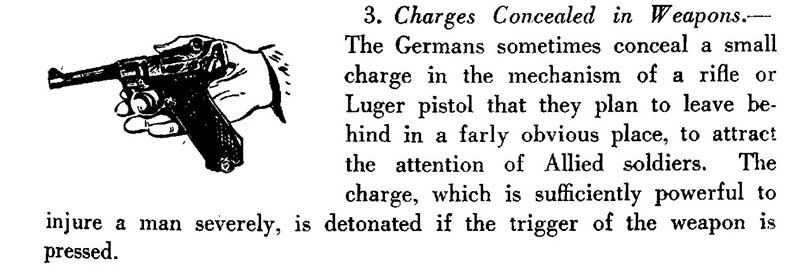
The Luger’s popularity among U.S. troops did not go unnoticed by the Germans. Several wartime cautionary tales emerged as the Luger was sometimes used as “bait” for a booby-trap, ready to catch an over-eager trophy hunter. Other claims were circulated that German troops executed Americans captured carrying German pistols, but this was never substantiated. The February 1945 edition of the U.S. Intelligence Bulletin contained this warning:
“Charges Concealed in Weapons. The Germans sometimes conceal a small charge in the mechanism of a rifle or Luger pistol that they plan to leave behind in a fairly obvious place, to attract the attention of Allied soldiers. The charge, which is sufficiently powerful to injure a man severely, is detonated if the trigger of the weapon is pressed.”
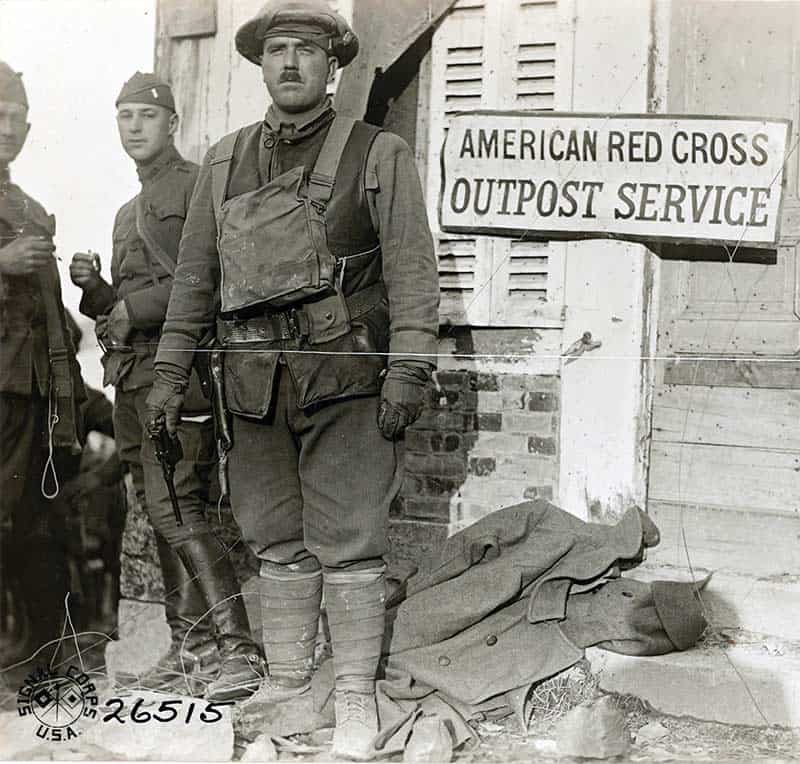
If looks could kill: Stern-faced Doughboy with a captured Mauser
C96 pistol in the Ardennes in October 1918. Photo: NARA
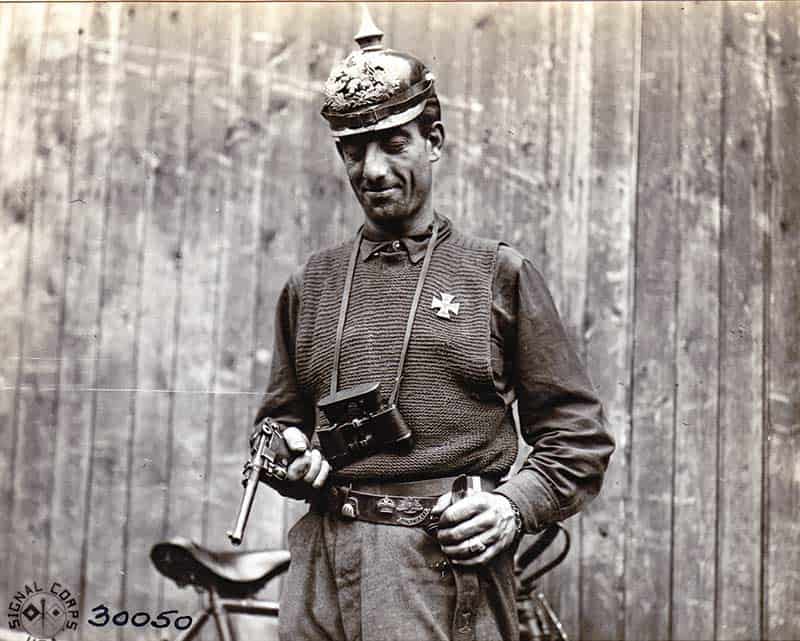
Souvenirs from the Hindenburg Line battle in October 1918: A member of the 27th Division displays his captured Pickelhaube, Iron Cross, binoculars, and Lange Pistole 08 “Artillery” Luger (7.9″ barrel). Photo: NARA

Sometimes, the trophy became a prime weapon. This GI clutches a fragmentation grenade in one hand and a captured Walther P38 pistol in the other during the bitter street fighting in Brest, France in September 1944. Photo: NARA
Bring-Backs & Send-Homes
Such was the mania among GI souvenir hunters to pick up German pistols (and any other German firearm) on the battlefield that the U.S. Army and the U.S. Customs Bureau went to great lengths to approve, then control, and then ultimately restrict American troops’ ability to bring or send the captured weapons home.
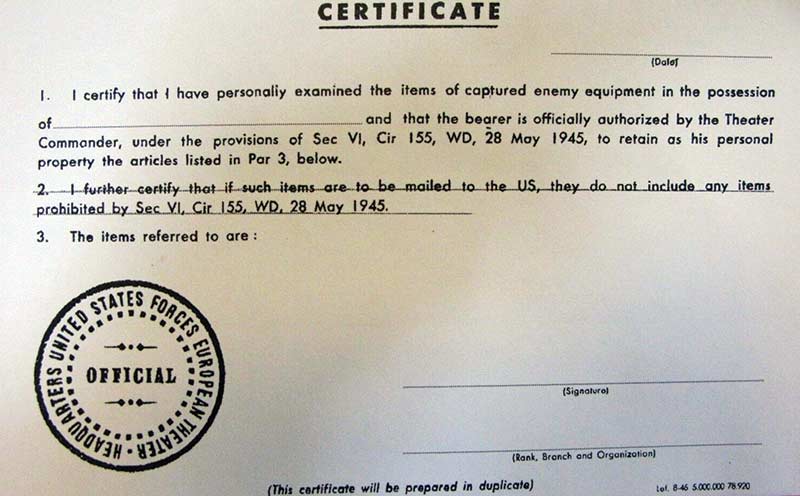
Beginning in 1944, a U.S. government certificate (often called “capture papers”) was provided to GIs that would allow them to send home or carry home a wide range of war trophies. Signed by their commanding officer, these rather vague certificates gave troops a near carte blanche to pass almost any captured firearm through U.S. customs, at least for a time.
Shortly after the war ended, a U.S. Army regulation effective May 28, 1945, limited War Trophy firearms to one per soldier and strictly enforced the prohibition of the importation of machine guns. It all looked good on paper anyway, but most GIs (and apparently their officers) ignored it. Your dad or grandpa put his captured pistol in his duffel bag and carried it home, or he packaged it up and mailed it to the states.
I’ve never seen any credible estimate on the number of German pistols brought home from the world wars. I’m not good at math, so I won’t guess at the total — other than to say, “a lot.” Even so, it is rare to find a WWII trophy pistol complete with its capture papers — the documentation doesn’t change much, but it is an interesting notch on a collector’s belt.
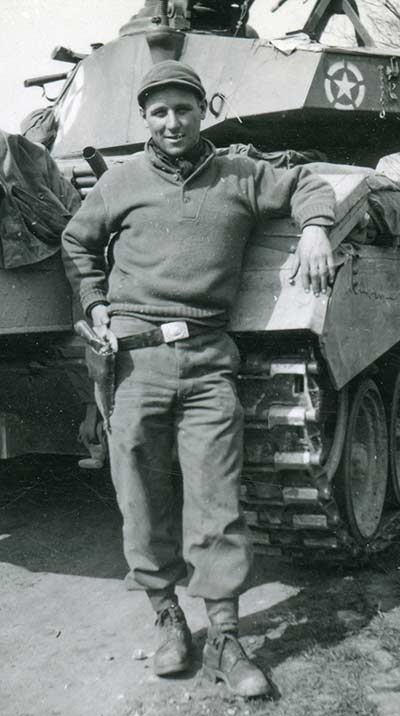
A tank crewman poses by his M24 Chaffee light tank with a captured
Mauser C96 pistol on his hip in Germany in the spring of 1945.
Photo: Author’s collection.

A captured Artillery Luger displayed for the camera, with
42nd Division in France, March 1918. Photo: NARA
Technicalities
I did a little digging and found how Uncle Sam defined “war trophies” and the guidelines of how they could be possessed and brought to the United States as personal property.
“War Trophy: In order to improve the morale of the forces in the theatres of operations, the retention of war trophies by military personnel and merchant seamen and other civilians serving with the United States Army overseas is authorized under the conditions set forth in the following instructions. Retention by individuals of captured equipment as war trophies in accordance with the instructions contained herein is considered to be for the service of the United States and not in violation of the 79th Article of War.
“All effects and objects of personal use — except arms, horses, military equipment, and military papers — shall remain in the possession of prisoners of war, as well as metal helmets and gas masks.
“When military personnel returning to the United States bring in trophies not prohibited, each person must have a certificate in duplicate, signed by his superior officer, stating that the bearer is officially authorized by the theatre commander, under the provisions of this circular, to retain as his personal property the items listed on the certificate. The signed duplicate certificate will be retained by the Customs Bureau; the original will be retained by the bearer.
“Military personnel in theaters of operations may be permitted to mail like articles to the United States, except that mailing of firearms capable of being concealed on the person is prohibited. Parts of firearms mailed in circumvention of this prohibition are subject to confiscation by postal authorities. Parcels mailed overseas which contain captured materiel must also contain a certificate in duplicate, signed by the sender’s superior officer, that the sender is officially authorized by the theater commander to mail the articles listed on the certificate. The Customs Bureau will take up the signed duplicate certificate and leave the original inside the parcel.
“By order of the Secretary of War: G.C. Marshall Chief of Staff August 21, 1944.”