
Categories
When you're a train nerd but you still have to get to places without a station pic.twitter.com/xSlVw6RhrK
— Sassy red socks (@Twitawoo8) February 20, 2024
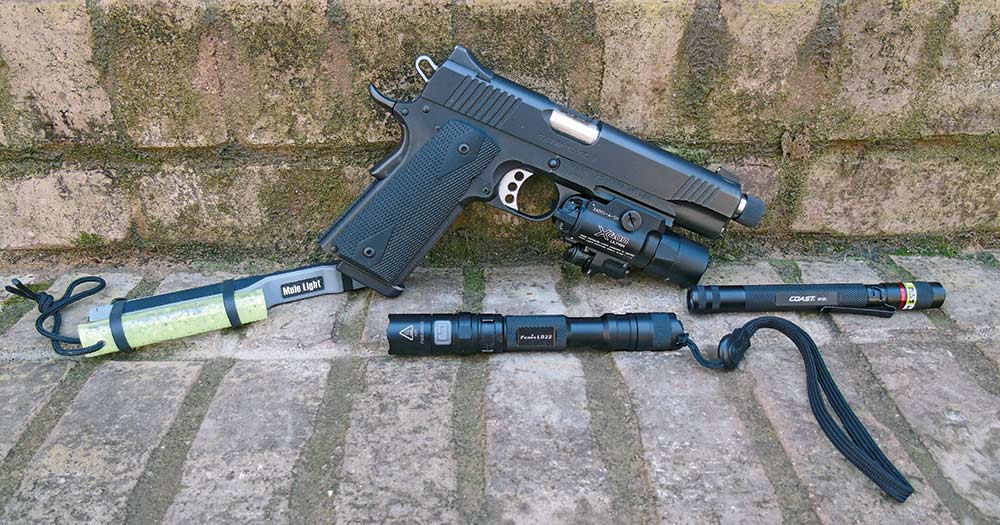
Odds are any legitimate threat will come out of the dark. A decent flashlight should be readily
accessible at night and your constant companion during the day. Options in this regard are extensive.
Chances are you will not be called upon to defend yourself as you are strolling up to the bench at your local range carrying your favorite tricked-out black rifle and 1/2-dozen loaded magazines.
It will more likely be in the middle of the night when you awaken suddenly to the sound of breaking glass. To maximize our probability of success in a social exchange of gunfire, it behooves us to understand our bodies—how these magnificent machines that transport us through life and work when tired, surprised, or both.
You have had a hard day at work on top of perhaps several hard days at work and you have not been sleeping well. You ate some greasy takeout garbage on the way home and your daughter announces when you arrive she wants to date some unworthy punk sporting a nose ring you wouldn’t trust to cut your grass. After a spirited discussion on the subject you finally collapse into the bed and sleep the sleep of the dead.
At three in the morning you are startled awake to the sound of glass breaking downstairs in the kitchen. Your heart rate jumps from 60 to three times that in a matter of seconds and you scramble for your glasses and weapon from the nightstand. You stand shivering in the dark, clad only in your underwear, clutching a deadly piece of tactical hardware while trying desperately to clear your head. Despite your lack of forewarning and innate disadvantage, it is indeed showtime.
Volumes have been penned on the effects of fatigue on fine motor skills, mostly in the context of Law Enforcement Officers, commercial airline pilots, and over-the-road truck drivers. In the face of chronic sleep deprivation reaction times slow predictably and otherwise sound judgment becomes routinely suspect.
On two occasions as a soldier I went four days without sleep. In both cases I actively hallucinated, later swearing I could have seen sounds and smelled colors.
The longest documented period any person has ever gone without sleep is 11 days. Though we really do not understand why sleep is such a critical commodity, the human animal dies from lack of it long before he dies from lack of food.
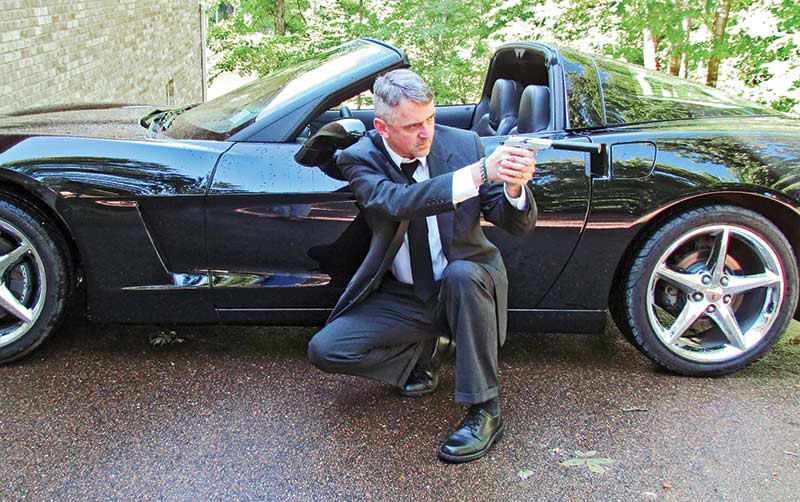
In our dreams, we think we will look like this when we are confronted with a deadly threat. Reality will likely be a little different.
Research on Law Enforcement Officers forced to make split second, life-or-death decisions in various states of fatigue has demonstrated some fascinating predictable phenomena.
By monitoring Event-Related Brain Potentials (ERPs) via non-invasive electrodes on the scalp, researchers are able to map the areas of the brain activated under stressful circumstances requiring quick but critical decision-making. One particular study I found focused on an ERP component called Event-Related Negativity (ERN) that originates from the anterior cingulate cortex. The anterior cingulate cortex is a part of the brain shown to play a critical role in conflict detection.
The working theory is there is a ying and yang sort of interplay occurring when the human brain is confronted with sudden conflict. Reactions to a threat are lightning fast, yet inhibitory functions serve to restrict, modulate or deflect behavior as needed in an attempt to control an instinctive and potentially catastrophic response.
A well-rested armed citizen who perceives a threat 50 meters away from a position of concealment is able to modulate his response in much greater depth than he might if he is sleep-deprived and the threat comes as a close-range shock.
A good example might be when you inadvertently trip over the family pet in the night. You have an initial urge to kick the animal reflexively but then, ideally, regain control in time to avoid this response. While this may seem intuitive, understanding the mechanism behind it can be useful.
It is a simple thing to induce fatigue-related deteriorations in performance. While most people will deny any degradation in cognitive function in early fatigue states, decreasing sleep by as little as one hour per night for a single week is sufficient to produce measurable deficits.
In addition to a quantifiable negative impact on cognitive function, symptoms of mild to moderate fatigue include a lack of energy, weakness, dullness and cognitive depletion.
Cognitive depletion is a temporary state wherein one has diminished capacity to exert control or volition over one’s affect, behavior and cognition.
Interruptions of circadian rhythms typically manifest when trying to acclimate to working night shifts in medical, law enforcement, or manufacturing jobs, and can produce comparable effects in the absence of actual sleep deprivation. Such conditions inevitably lead to cognitive shortcuts that can result in the employment of a firearm under circumstances that might be otherwise inappropriate with potentially catastrophic results.
The primary concern for the typical armed American involves showing appropriate restraint in a hostile environment concurrently populated with friendlies. However, this data has shown a propensity of law enforcement officers to employ deadly force more frequently based upon racial or environmental triggers that might otherwise be suppressed in the absence of fatigue and stress.

Keep your gun and your flashlight readily available should the need arise. The physiology of our response to a deadly threat shapes our performance and our subsequent survival. However, the best tactical hardware on the planet is nothing more than ballast if you aren’t in satisfactory physical condition to operate it.
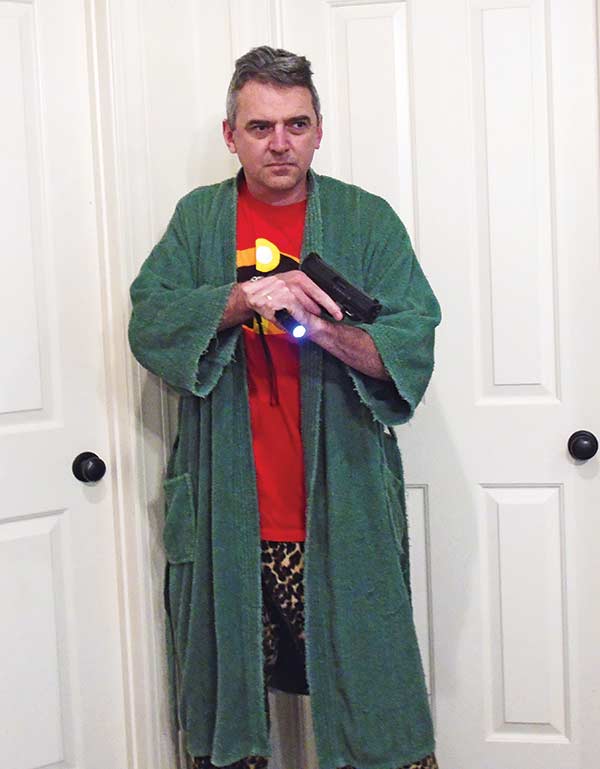
Typically, we will be girded thusly for combat when faced with a legitimate threat. Tired, surprised and groggy, our brains guide our actions under conditions of stress to shape and flavor our responses.
Degradations to our performance under these circumstances can be stark.
Adrenergic receptors are a class of G-protein-coupled cellular receptors targeted by catecholamines. The most pertinent catecholamines to our discussion are epinephrine and norepinephrine. More pedestrian terms would be noradrenaline and adrenaline. This extraordinary contrivance is responsible for the fight-or-flight response that kept our forbearers alive when confronted by saber-toothed tigers. This system offers comparable benefits against more modern threats as well.
A great many human cells are equipped with these receptors and binding and subsequent activation will stimulate the sympathetic nervous system. Manifestations include rapid mobilization of energy, the diversion of blood from non-essential organs to skeletal muscle, increased blood pressure, and the widening of the pupils.
Imagine how you felt the last time you hit the brakes to avoid a squirrel, and you’ll get a taste of this automatic threat management system in action. Feeling the hair stand up on your neck or losing control of your bowels or bladder in extreme circumstances are some of the more fascinating side effects.
The different subtypes and functions of these various proteins are labyrinthine, to say the least, and have been sufficient to drive many a young medical student to despair. The system itself has only been identified since the Second World War and manipulation of these receptors has produced some remarkably effective treatments for common maladies.
The family of anti-hypertensive drugs called Beta Blockers works by modulating the sympathetic nervous system. Lowering blood pressure is the function while potentially undesirable side effects like slowed heart rate and sexual dysfunction stem from the interrelated nature of this system. By contrast, Beta Agonists activate rather than suppress portions of the sympathetic nervous system and are used to treat maladies like asthma.
Let’s go back to our hero standing in the dark in his underwear clutching a handgun and trying desperately not to wet himself in the presence of his terrified wife. Will an understanding of the intricacies of the sympathetic nervous system and “event-related negativity” make him a more viable gunfighter in this circumstance? Likely not, but the nature of our design does maximize our innate tactical capabilities in the face of stress and danger.
Our pupils dilate so as to allow increased enhancement of our night vision capabilities and greater utilization of peripheral cues. Our heart rate increases to provide maximum fuel to our mechanical systems should the need arise to move or react quickly. Blood shunts from places not needed at the moment, like your liver and testicles, and instead moves to feed the skeletal muscle that can help you move quickly, jump farther and run your gun better in the face of an armed adversary.
At the same time, even modest fatigue, combined with the inevitable disorientation spawned by being awakened suddenly and unexpectedly, can disengage some of the inhibitory functions that might keep us from engaging were we better rested or emotionally prepared. Under such circumstances the possibility of shooting a no-shoot target goes up and it is in this case your having a family crisis plan can pay legitimate dividends.
Train in times of peace so as to be ready in times of war. Run through possible scenarios with your spouse and children so everybody knows what to do in the event of a crisis. Have a rally point a safe distance outside the house so you can get a quick headcount in the event of a fire or similar emergency. Place a few old blankets in the tool shed along with a flashlight or chem lights so your family won’t freeze to death waiting for the fire department. Plan and rehearse actions on enemy contact for everybody in the family in the event of a home invasion. Make it a game and practice with flashlights in the dark so the kids aren’t frightened. Ensure they know where to go, how to hide and what to do if the world goes sideways in the middle of the night.
Lastly, take care of yourself. Physical fitness and personal discipline are dying arts in America. Getting old may not be negotiable, but allowing yourself to get soft and fat are personal choices. If you smoke cigarettes and think you are in any way serious about survival, you are deluding yourself. Eat right, exercise and practice with your primary defensive weapon as often as you are able. In so doing you can better protect your family, impress your bride and defend your castle for those times when life really hands you lemons.