Categories
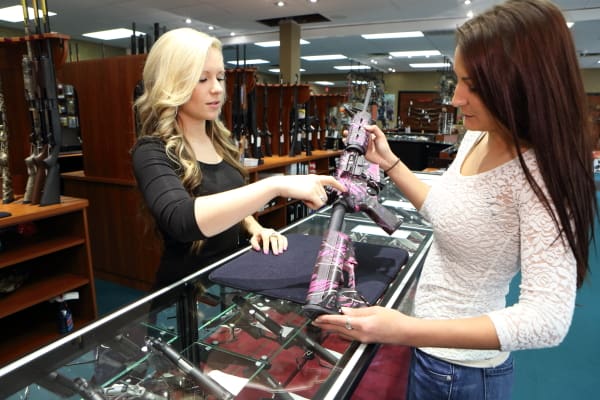
When American retailers sold more than 1 million new firearms in a single month nearly five years ago many considered it a milestone. Now it has become more of the norm, with April marking the fifty-seventh straight month of guns sales of a million or more.
According to a report from the National Shooting Sports Foundation, the April 2024 NSSF-adjusted National Instant Criminal Background Check System (NICS) figure was just over 1.2 million. That’s a slight decrease from the April 2023 figures of roughly 1.4 million.
Though not a direct correlation to firearms sales, the NSSF-adjusted NICS data provide an additional picture of current market conditions. In addition to other purposes, NICS is used to check transactions for sales or transfers of new or used firearms.
Mark Oliva, NSSF’s managing director for public affairs, said gun purchasers have once again made a statement on their freedom.
“Over 1.2 million Americans showed President Biden exactly where they are when it comes to his promises of increased gun control should he be elected for another term,” Oliva said. “President Biden has used every tool at his disposal to attack the firearm industry, from publishing Constitutionally-dubious and overreaching administrative rules that bypass Congress to create criminal law to weaponizing the Commerce Department’s Bureau of Industry and Security to throttle firearm and ammunition manufacturers and exporters.”
Oliva said that while the president has continued to attack lawful gun owners, he’s ignored the violent criminals preying on everyday Americans.
“Americans reject these misdirected and politically-motivated maneuvers to infringe on their Second Amendment freedoms and punish the industry that makes it possible to exercise the rights to keep and bear arms,” he said. “By the millions, for 57 months straight, Americans choose to lawfully purchase, keep and use the firearms of their choosing.”
It’s important to note that 24 statues have at least one qualified alternative permit, which under the Brady Act allows the permit-holder, who has undergone a background check to obtain the permit, to purchase a firearm from a licensed dealer without a separate additional background check. The number of NICS checks in those states does not include those legal transfers based on qualifying permits, and NSSF does not adjust for these transfers.
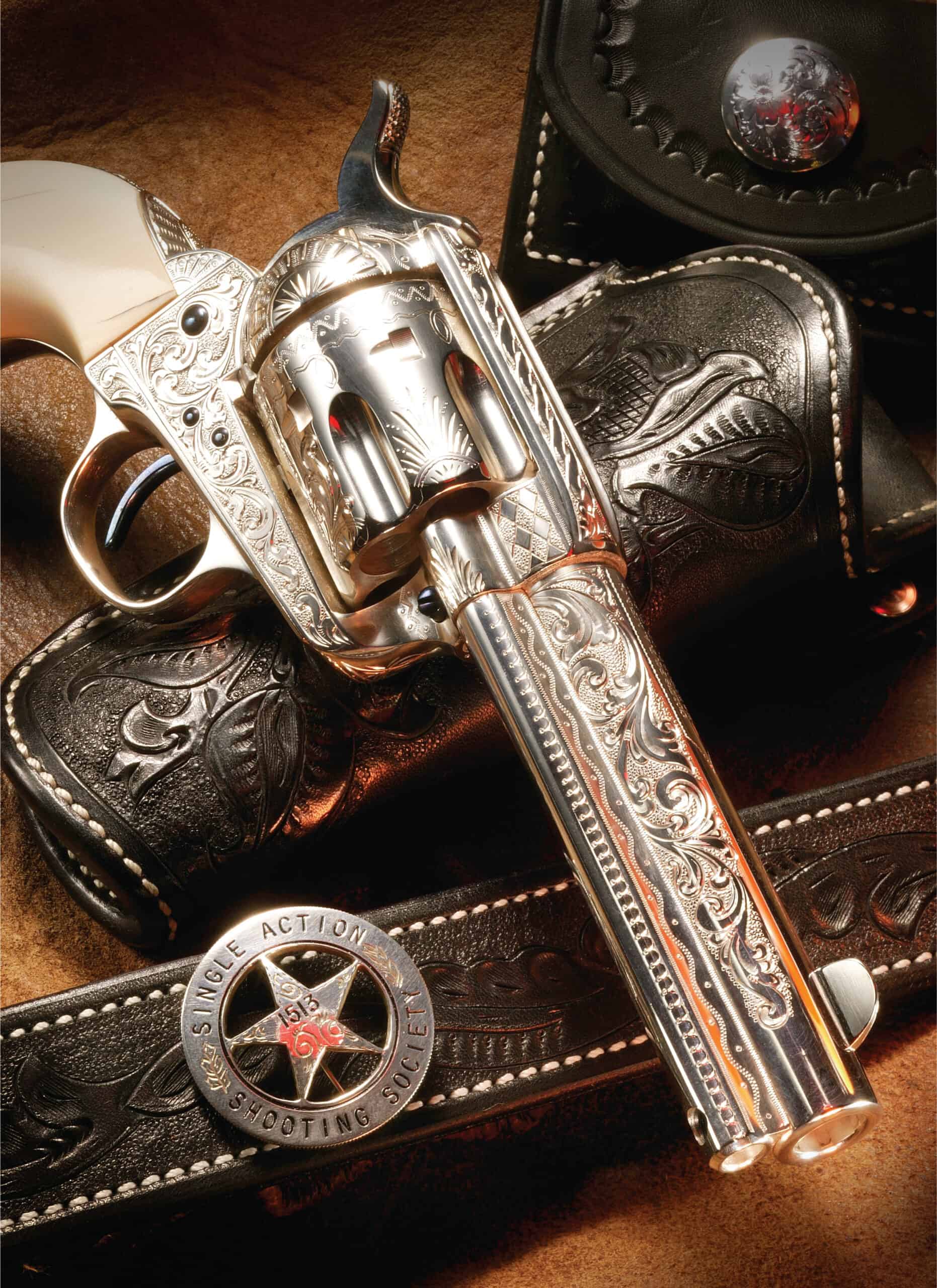
This is not a 1911. This is not a plastic pistol, a hi-cap anything or even a cutting-edge marvel. There’s no glowing sights, polymer-profoundness or even titanium. Not a lick. Batteries are non-existent here. There are no rails to clip lights to and yes, there’s only five shots. Maybe six, if you really need that last one. It’s old-fashioned, but still good. Dare we say, still great? And that’s why it’s here on our pages.
What you’re looking at is, indeed, the culmination of 150 years of technology, but ancient technology. It’s as if somebody found the hull of an original China Clipper sailing ship, and then lovingly restored it, taking the best ideas from her class of ship. Same ship, same hull, same idea, only she seems to cut the water cleaner, the blocks run quieter, the wheel responds faster and you can swear she knows it. Because, you know it.
So why do we celebrate this old technology when we have much “better” designs today? Just look, and you’ll know why. Put down that Glock and step away from it, then look at these rare few Ichiro photos with a new eye, unencumbered and unsoiled with lightweight thinking or plastic-prodding.
Think on those days when “good” meant “steel,” and “heft” was something men who had carried sixguns in lethal fights would weigh carefully in their hand, as their eyes looked into the distance — or the past? They would then snick the hammer down and hand it back with a nod. “That’ll do,” they might say quietly.
Peacemaker Specialists
Eddie Janis is an artist and a pistol-smith. And a father, husband, admirer of fine cars, good horses, good humor and daughters who behave like ladies. All of which are interconnected, with each one having an effect on all the others. Watch how a man treats a waitress and you’ll have a good idea of the cut of the man. If he’s polite and patient to a young, over-worked waitress, then he’ll probably make a good friend. If he’s rude and short-tem-pered, then take note. By the way, Eddie’s polite to waitresses and has a quick smile— or he wouldn’t be in these pages.
After shooting IPSC into the early 1980s, Eddie lost interest, but discovered the beginnings of cowboy shooting. After having his competition 1911s worked on by talented pistolsmiths, Eddie assumed the same would happen with his SAAs he sent off. But his eyes were rudely opened with the results.
“What I got back was a collection of badly-timed, out-of-balance guns that simply didn’t feel right in my hand,” he said. “My experiences with 1911 ‘smiths and the great work commonly encountered there, made me think there must be a better way when it came to the single action Colts,” he added.
But alas, Eddie was without luck in that department, so, as is the case with such things, Eddie decided he could do better himself. Peacemaker Specialists was born and since those early days, Eddie’s shop has become a Mecca for Colt shooters. From a series of parts care-fully crafted to match factory-original ones (Peacemaker Parts), to a cross-sec-tion of custom work the imagination can only touch upon, Peacemaker Specialists is indeed the “one-stop shop” for all good things when it comes to the Colt Single Action Army. By the way, don’t even mention any of the clones. Eddie doesn’t work on them, period. And that’s, that.

The Question at Hand
The creation on our pages began life in 1902 when it left the Colt factory. It led a mysterious life (if only we knew the adventures), until it was inherited by one of Eddie’s customers (from a great uncle, it seems), and Eddie ended-up with the old Colt in 1999. After languishing in his safe for several years while Eddie “thought on it some,” as he told me, he began a three-part project in May of 2002. He wanted to showcase just what Peacemaker Specialists could do, and offer the final result in steel and ivory.
Eddie calls the first step, “The accuracy phase” and lays it out for us. “A new 7.5″ second generation barrel allowed me to install the front sight authentically, instead of the latter second generation method,” said Eddie. Then, after cutting it to 4.75″ and crowning it, he installed the front sight with the proper solder joint and profiles to match the v-groove rear. Plus, the perfect bore of the new barrel would assure top-notch accuracy.
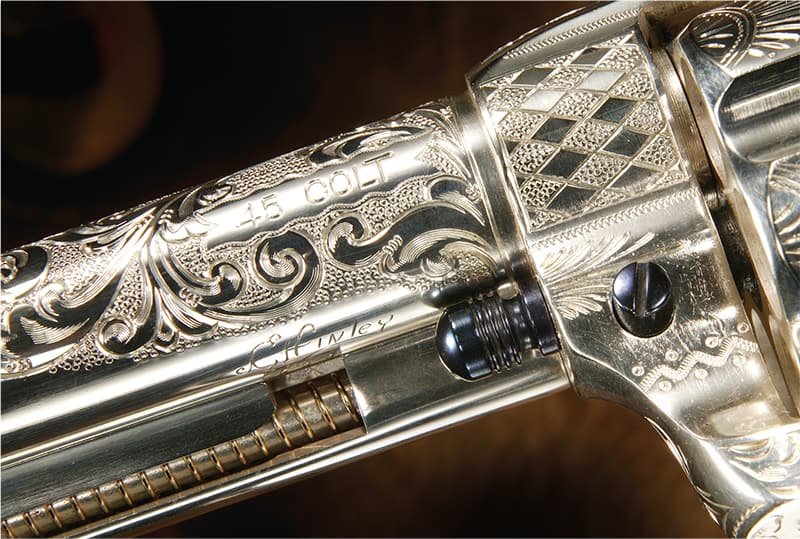
The second generation caliber mark-ings and address had to be polished off and the correct first generation two-line address and “45 Colt” markings were applied. The forcing cone was cut to 11-degrees for best accuracy with lead bul-lets, and fit to the frame with .002″ to .003″ of barrel to cylinder gap. A standard Colt can be upwards of .006 — or worse.
The cylinder was replaced with a new, second generation .357 Magnum one, re-chambered to .45 Colt with .452″ chamber throats for best accuracy. Eddie applied some hand-magic to the outside of the cylinder to achieve the proper first generation contours and appearance. When all was said and done, he then fit the cylinder with a new base pin and bushing to achieve zero end-shake.
Reliability Phase
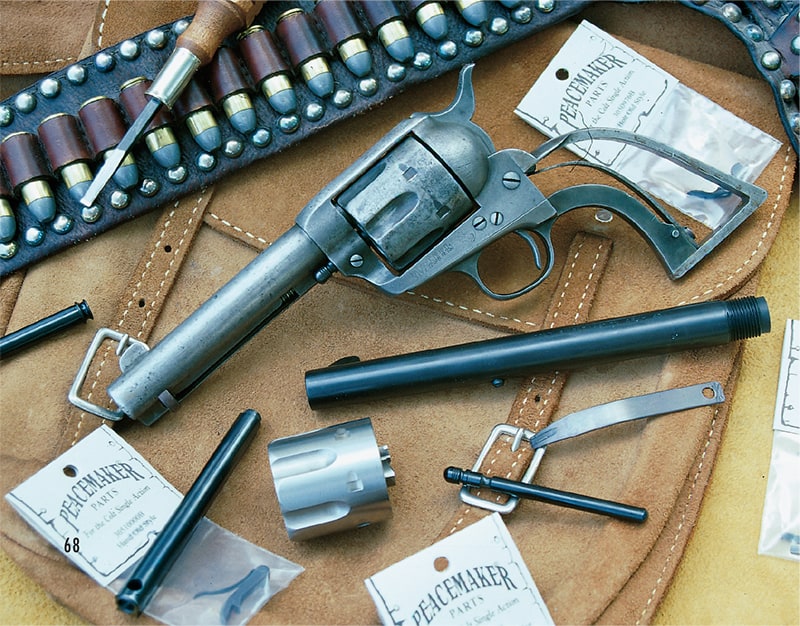
Since the innards of the old Colt were tired, Eddie replaced the entire array with new, Peacemaker Parts versions. Since they are virtually identical to original Colt parts (including finish, etc.) they are historically accurate — which is something to keep in mind if you’re restoring an original gun.
Eddie performed his “Gunslinger Deluxe Action Job” on the Royal Flush. This includes, but is certainly not limited to, fitting an oversized bolt and hand, allowing a perfect lock-up with zero side-play in the cylinder; and careful hand-fit-ting of the mainspring, sear and bolt spring, base pin bushing, trigger, ejector spring, latch unit, ejector tube and all screws.
“Hand-fitting” is lots different from “putting in some parts” in a SAA. Beware those “drop-in” spring kits, Eddie warns. “The interplay of parts is critical and simply replacing a spring without making sure the sear engagement is safe and reli-able, may make a gun unsafe,” he explained. The proof is in your hand when you feel a Janis action. Words like “but-tery smooth” come to mind. When I first felt one, I thought someone had taken the main-spring out of the gun. The degree of smoothness is, simply put, astounding.
As Eddie says, “Carefully fitting the parts will pay dividends in long-term reli-ability. If the various bits are working together, rather than clunking and fighting one another, smoothness and reliability are enhanced.” Not to mention the delight of watching your friend’s faces when they cock a Colt Eddie has worked his magic on. “No, really, it’s supposed to be that way,” you’ll have to say. Again and again.
Cosmetics
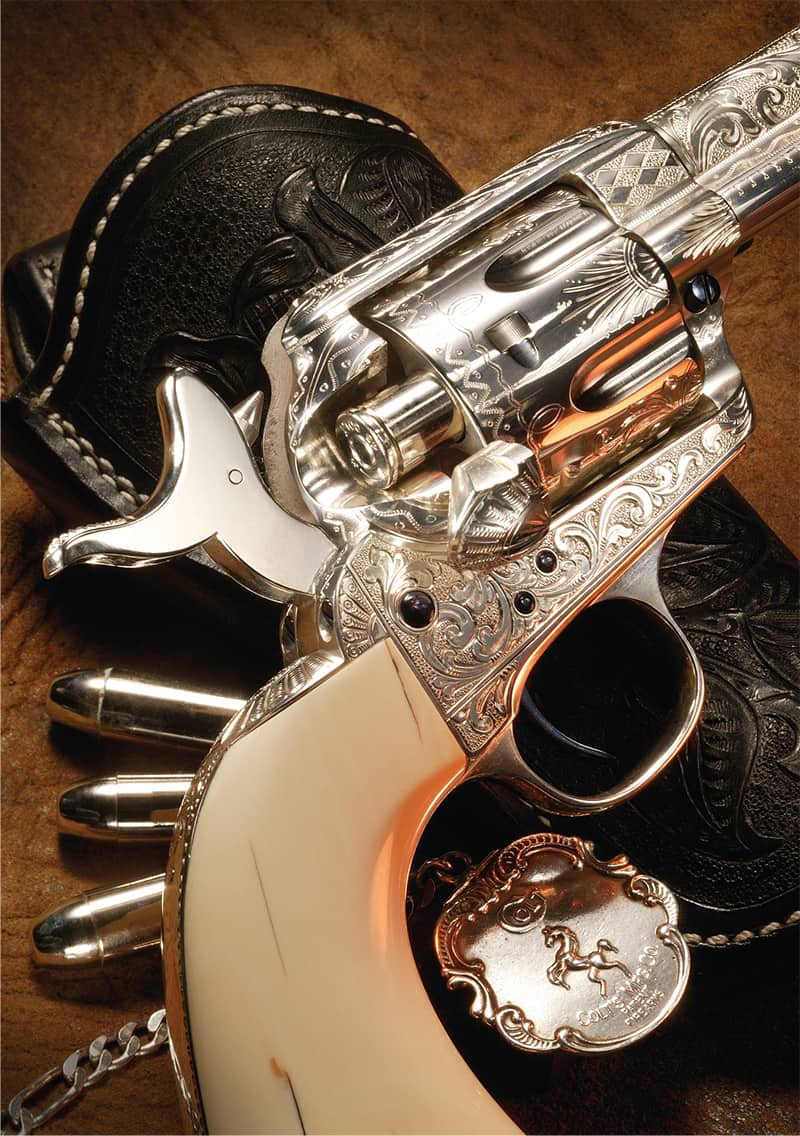
And we don’t mean eye shadow. This gun had to have ivory, so it does. Note how the “bark” is incorporated into the overall outside contours. It’s often the little things, and this is one of those little, “big” things.
At this point, Eddie test-fired the Royal Flush with Black Hills 250 gr. cowboy loads to center the group on the target. He was also able to maintain the proper front sight contour so it didn’t look “filed-on” when he was finished. So now, the Royal Flush was mechanically perfect but needed something else. How about engraving?
Eddie selected five Cuno Helfrict engraving patterns, circa 1871 to 1921. He was going for a true turn-of-the-century cowboy look, not too busy but not to plain, either. The engraving was impeccably accomplished by master engraver Clinton Finley, of Redding, California. Clinton spread the designs over the sixgun, blending the talents of Cuno with the lines of the Royal Flush. We think Cuno would have doffed his hat to Clinton’s work.
And, no, actually, that finish is not nickel — it’s silver. Silver has a softer finish and feel, like an antique gown, whose green velvet has attained a state of grace, and when touched makes anyone with any feelings at all pause and ask if they could touch it again, please? The silver delights the eye, without over-pow-ering the engraving or reflecting “too much,” as Eddie says.
The fire-blued screws set the Royal Flush off exactly the way the correct red lipstick (not too dark, not too light) can set off a beautiful woman’s lips as she looks— through you. Impossible to believe, but there, before you, nonetheless.
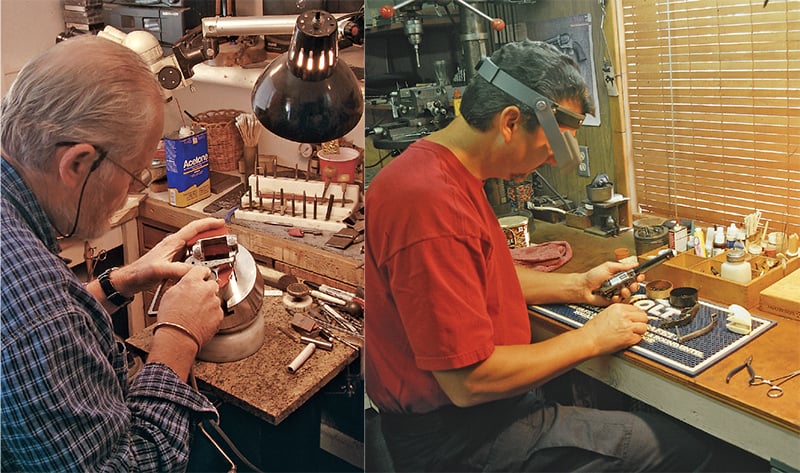
Clinton (left) supplies the artistic touch, while Eddie manages the fit, finish and mechanics. A dynamic duo, indeed.
But Why?
Simply to behold, we think. And yet, I was fortunate enough to handle this dream-gun. Don’t tell Eddie, but I cocked it. Honest. Sorry Eddie, I had to. The Royal Flush could hold its own with any of the classic masterpieces of the late 1800s, except for one very important dif-ference.
The Royal Flush shoots like hells-afire, with 100-percent reliability. All of which is no small feat with a single action army. And, I might add, the Royal Flush accomplishes it all in spades. Sorry, I had to say it.

Categories
COLT HBAR M2 BELT FED MACHINE GUN

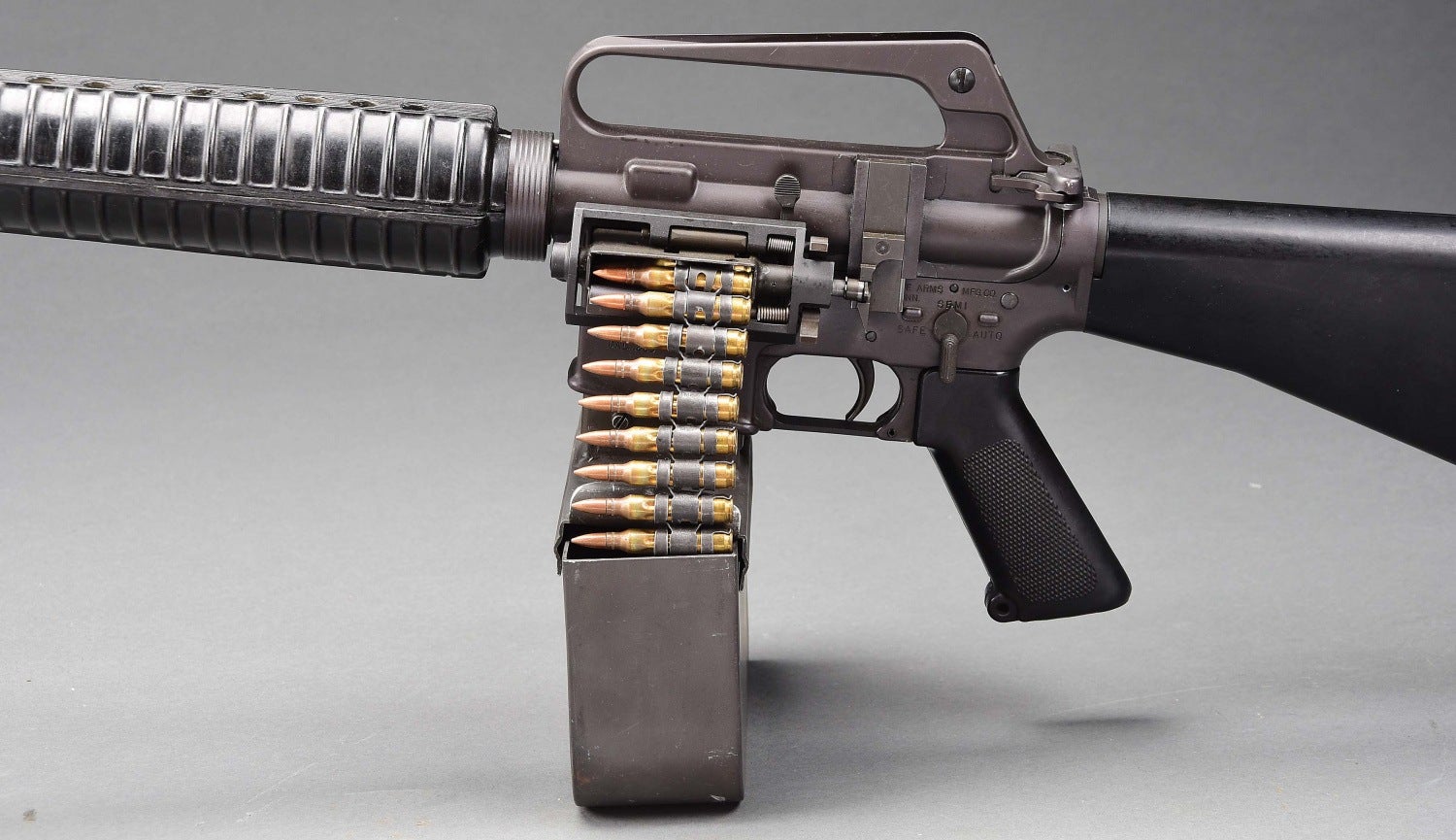
This belt-fed iteration of the M-16 was basically an experimental firearm. Only 20 of these guns were ever made before the project was canceled. Chambered in 5.56x45mm, this machine gun has a 21-3/4″ heavy profile barrel with a bipod attached right behind the three-prong flash hider. Here is how Morphy Auction describes the feeding mechanism of this gun:
Colt then added a very clever belt feed mechanism, that sits in the magazine well when the rifle is opened and locks in when the rifle is closed. The vertical actuator attaches to a special cut in the bolt carrier group to actuate, and a slot was added on the right side, where a feed chute would feed spent links into a separate compartment of the feed box.
.gif)

.png)
.gif)