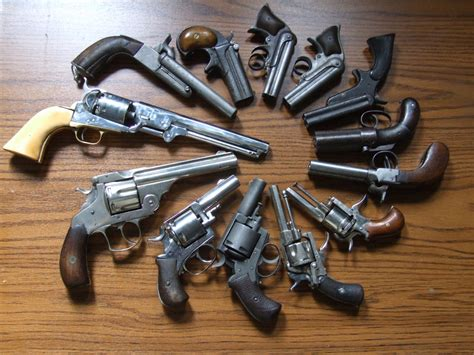
As many of the country’s police departments grapple with dips in funding, reputational crises, lack of morale and a struggle to keep numbers in most departments at approved levels—all as violent crime surges—many businesses and citizens are opting to hire their own private police forces of sorts: armed guards.
According to the Security Industry Association, there are around double the number of security guards employed across the country than there was two decades ago. As of 2021, there are two police officers for every one thousand civilians—and 3.1 guards for that same amount.
While “private policing” is hardly a new concept, it has gained significant traction across the United States since the 2020 riots. In and around 2020, more than 20 major cities slashed their police budgets, even as lawlessness swelled. Further, Left-leaning cities in recent years have introduced an abundance of criminal-friendly policies, such as “bail reform” and early prisoner releases.
With more criminals on the streets, those who can afford more security tap into the billion-dollar private security arena; meanwhile, the middle and lower classes—especially in cities mandated by gun control activism and anti-Second Amendment legislation—are left in even more desperate situations as law-enforcement resources are stretched thin and as these same officials also do all they can to prevent average citizens from obtaining the means to defend themselves.
Perhaps there is no more significant example than Beverly Hills, Calif. This uber-affluent, ultra-anti-gun enclave has reacted to rising crime by hiring even more private security. One private security firm was even hired to provide armed safety personnel at public schools in the city—schools frequented by the children of the rich and famous.
An ad on Jooble even reads: “Urgent! Armed security jobs in Beverly Hills, CA.”
Beverly Hills also contracted several other firms to patrol the area in cars and on foot to help the police safeguard the “luxury capital of the world.”
Meanwhile, well-off residents and business associations in upper-class communities spanning San Francisco and New York to Chicago, Portland and Seattle—all pockets saddled with hostile and restrictive private gun ownership laws—have also turned to independent companies to deter criminal activity.
Even in Washington, D.C., the national beacon for propelling an anti-firearm disposition, [what entity?] has turned to contract security officers out of concern for declining personnel numbers in the strained police resources. And next door in Maryland, the Downtown Annapolis Partnership has begrudgingly admitted they now need to use taxpayer funds to retain private guards to protect prominent areas—guards they cleverly call “safety ambassadors.”
In other words, the unspoken motto from most Left-leaning enclaves is, “We have the money to hire protection, but guns are bad, and if you aren’t rich like us, you are on your own.”
Moreover, wealthy sectors are already at an advantage, as these cities can generally entice more police officers because they have higher tax earnings, which generally means they can offer better wages and benefits.
Thus, if holding down crime is such a struggle for them, imagine the reality most of urban America now has to confront.
What is a better solution? How about enabling all Americans, regardless of social status or wealth, to have the same fighting chance to protect themselves and those they love?
The same political leaders who are quick to espouse “equality” and, in the next breath, champion hefty gun control legislation are the same ones hiring armed private guards. America is supposed to be a land of opportunity and equal rights, not a land where the elites are protected while the average citizens struggle to remain safe.


California likes to pat itself on the back for being a leader in protecting the environment.
Every year, California workers dig up hundreds of thousands of tons of soil contaminated with things like lead, petroleum hydrocarbons and chemicals like DDT. The waste is so toxic, California considers it to be hazardous and requires that it be disposed of at a facility specially designed to handle such dangerous material.
Or, at least, that would be the requirement if the waste stayed in California. It often doesn’t.
A CalMatters investigation found that, for decades, California businesses and government agencies have taken hazardous waste over the border and dumped it at regular landfills in states with weaker environmental regulations.
Among the findings:
CalMatters reporter Robert Lewis and photo editor Miguel Gutierrez traveled to Arizona and Utah, documenting where much of the Golden State’s toxic waste ends up. The Department of Toxic Substances Control said its decision to take the waste to Arizona is driven by cost and acknowledged the agency doesn’t really know how the out-of-state landfills are managed. Gov. Gavin Newsom’s office wouldn’t comment.
David Harper, a member of the Colorado River Indian Tribes, questioned why the Golden State would dump its toxic waste so close to the reservation, which straddles the border between California and Arizona.


What gets me is its name. Apparently it’s called the ALQ-167 Angry Kitten. Details at the link.
I’ve met lots of kittens during my life. I don’t know that I’ve ever considered an irritated, or angry, or PO’ed kitten to represent any real danger. Was this the best choice of name they could come up with?
Regardless, it made me smile. “Hey, enemy! MEEEEOOOW to you too!”