This rifle is being sold at Morphys on October 31, 2018.
The story of the USS Niagara is quite an odd little corner of history. It was a ship built in 1877 and acquired by the US Navy in 1898, fitted out as a water distillery and supply ship. That fitting out was not actually done by the Navy, though, but rather by a group of wealth private citizens in New York, headed by William Randolph Hearst. As an outburst of (allegedly) grassroots support for the US war effort against Spain, these men outfitted and donated the Niagara to the Navy. And the fitted it out like a private yacht, with porcelain china and silver flatware for all the officers and sailors, and much more. The arms and accouterments purchased were all finely stamped or engraved with the name of the ship, including 35 brand new Remington Rolling Block rifles in 7mm Mauser, with “NIAGARA” engraved in bold letters across the top of the receiver.
Once the outfitting was complete and the ship was in Navy service, she sailed down to Cube, stayed on station for about two months without participating in any action of note, and then sailed back to New York to be decommissioned and sold for scrap. Francis Bannerman was on hand at the scrap auction, and bought most of the small items form the ship (including the rifles). Bannerman’s catalog would list Niagara items until 1927…
Dave likes targets which immediately show where bullets impact,
even at a distance. In this test several years ago of a Ruger semi-auto,
he was shooting low, but that group isn’t too bad for a test pistol fired offhand at 25 yards.
From the moment Birchwood Casey introduced its line of Shoot-N-C targets, gun people were in big trouble, because this is a target that simply cannot tell a lie and won’t allow the user to stretch the truth even a little bit.
It ain’t fair! No more tales from Uncle Ned about shooting sub-MOA groups from his vintage Model 94 .30-30 at 100 yards using iron sights. Your best buddy “Dead-eye” suddenly became kind of scarce at the range every Saturday morning.
Then along came Champion’s VisiShot targets, also capable of showing bullet impact spots. The deck is stacked against braggarts.
This is why I loved such targets from the get-go. From the shooting bench, one needs only to view the target through a spotting scope or binoculars and viola!, there is no need for guesswork about where to shift one’s sights, or how many clicks need to be applied, either up or down, right or left.
Dave shot this group at 100 yards using his .308 Winchester. What’s next? Three clicks to the left will put his rounds 2 inches high, but dead on in terms of windage, so using his particular loads puts him on the bull’s eye, or in the vitals, at 200 yards.
I’ve used these targets almost exclusively over the past few decades to illustrate various gun reviews, because they don’t lie. They’re great teaching tools as well as a means to keep everybody honest about their shooting abilities.
Now and then, I may substitute a tin can or a playing card for a change of pace, but at the end of the day, these high-visibility targets, which consist of a couple of layers of material that instantly show bullet strikes, are tough to beat. I wish I’d have invented the things.
Several years ago, I drove to a meadow just east of Snoqualmie Pass with my pal Brian Lull a week before the deer season opener to check the zero on our rifles. With the targets set approximately 120 yards away and slightly uphill, we both confirmed where our rifles put bullets, out of cold barrels. As I recall, I was shooting 180-grain Nosler AccuBonds ahead of a full dose of H110 through my .30-06, and my bullets were striking about 2 inches high and were spot-on in terms of windage. The following weekend, we both notched tags on Snake River mule deer bucks at better than 200 yards.
Variety
There are so many variations of these targets it is impossible to list them all. You’ll find traditional round targets with bull’s eyes, 12×18-inch silhouettes, 7- and 9-inch oval silhouettes, square 8-inch sight-in targets with a grid of 1-inch squares, and so on, and so on.
The Ruger Blackhawk can be a very accurate sixgun, and Dave
has packed his along on fishing treks or just strolls off the
pavement. He’s anchored two deer with this revolver, and the
target illustrates how this was possible.
In my work, they make for some great photos. I’ve used them with different handguns to illustrate how accurate they might be with different loads, and on occasion with different rifles I may be shooting in preparation for a hunt.
Trust me, if you’re shooting poorly, these targets will shame you into additional practice!
The only downside I’ve experienced is that they sometimes seem prone to not sticking to the target backing as well as I might like. I’ve taken to stapling them down on cardboard after pressing them down. Thus anchored, they stay put through multiple hits.
VisiShot targets I’ve used don’t have the adhesive, so I simply stapled them to cardboard. In terms of performance, they did the same thing; each time a bullet punched through, a bright yellow or orange spot appeared, depending upon the target brand.
In the Cards
I mentioned playing cards before. Sure, I’ve used them as targets and so have many other people, for a variety of reasons in the beginning, but when the smoke clears, we all ended up with conversation pieces.
Playing cards make good alternative targets.
Can you do this at, say, 7 or 10 yards?
Of course, aces are the most popular cards, followed by the various face cards including Jokers, and then you work down the numbers. I saw an image of an Ace of Spades apparently punctured by Elmer Keith, using a .44-caliber revolver, and the body of the spade was pretty near shot completely out.
If you’re shooting a .22-caliber rifle or pistol, try a business card. They’re smaller and more challenging, and anybody who can consistently punch holes through one at 25 yards is one dead-eye sonofagun! Sometime between now and this fall’s grouse and cottontail rabbit seasons, I will have been to the range with my RugerMKIV pistol and 10/22 rifle brushing up my skills.
Be prepared to go through several decks of cards once you get into the habit. It really is addictive, and if you do it right — that is, concentrate on trigger squeeze, sight alignment and your breathing — by the time you’ve gone through the first deck, your marksmanship will definitely be improved. If not, well, there’s always Friday night bowling.
The importance of these exercises cannot be overstated. One never knows when an opportunity or emergency will arise, and you will need to shoot accurately, and maybe fast. (See below!)
Albuquerque ‘Crack Down’
Following a fatal triple homicide (“mass shooting”) in Farmington, New Mexico, Albuquerque Mayor Tim Keller announced this summer his administration will be “cracking down on guns.”
He said so in his “State of the City” address, according to KOB News.
“We are going to triangulate existing restrictions around schools to aggressively target any crime with a gun anywhere in downtown Albuquerque,” Keller, a Democrat, stated.
This could be interesting, because New Mexico has a state constitutional provision which says the following: “No law shall abridge the right of the citizen to keep and bear arms for security and defense, for lawful hunting and recreational use and for other lawful purposes, but nothing herein shall be held to permit the carrying of concealed weapons. No municipality or county shall regulate, in any way, an incident of the right to keep and bear arms.”
This is what we call a preemption law, but unlike other states, New Mexico’s provision is part of the state constitution. It is supposed to prevent politicians like Keller from doing what he’s just announced he will be doing. He may, or may not, be challenged, but the bottom line here is whether anything Albuquerque does this summer will have any effect on the violent crime rate.
Crime in Albuquerque is already down this year, according to KRQE News. Mayor Keller noted in his address that violent crime is down 8% from last year and property crime is down a whopping 140%. Over the previous 17 months, he said last month, 170 murder suspects had been arrested, which is a promising revelation. No rational person likes violent crime, particularly if he or she is a gun owner, since ultimately, it is gun owners who somehow wind up being penalized.
Keep Your Wits
Who’s heard a witty saying worth sharing? Wyatt Earp reportedly said, “Fast is fine, but accuracy is final,” along with “You must learn to be slow in a hurry.”
Dave never expected to use this Model 57 on game when he bought it
about 7 years ago. But as bad luck would have it, he had to finish off a
wounded, moving buck with this handgun, and he had to do it quickly.
The gun needed to shoot accurately, and it was definitely final.
There was a line of dialogue in an old Kirk Douglas western many years ago which has always made sense to me: “Get it out fast, and put it away slow.” People who disagree, or simply laugh at the concept, have probably never encountered a bear on the trail.
“Never holster an empty gun” was a tidbit that got my attention somewhere way back in the last century. Ever try to shoot small game only to hear an embarrassing “click?” It only needs to happen once. It’s a lesson that stays with you.
Anybody else? Send replies to insider@americanhandgunner.com
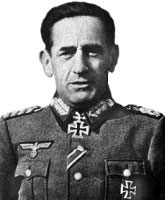
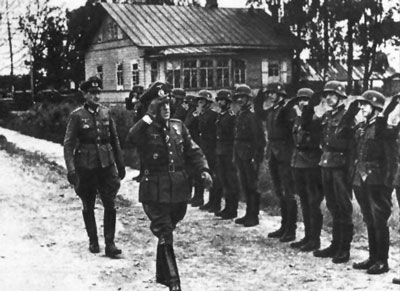
This is Heinz Guderian, the mastermind behind the German Blitzkrieg, or Lightning War. Once unleashed, war frequently takes on a life of its own.
War is like some kind of horrible sentient thing. Troops and units move back and forth across the battlefield engaging and killing under the direction of commanders ranging from squad leaders up to theater-level Generals. The result is the summation of literally countless little dramas. It is marginally-controlled chaos.
Amidst the chaos of combat, rumor can become dogma.
During expansive conflict, information flows like a river. Intelligence reports go up, and commands come down. Throughout it all, rumors and innuendo add seasoning. Eventually, information congeals into prevailing sentiment. Sometimes that sentiment is accurate. Sometimes it isn’t.
The German Tiger tank was one of the most feared weapons of World War 2.
During World War 2 the German Tiger tank earned an outsized reputation among those who faced it. German propaganda lit the fire, but somber tales whispered among warriors provided the kerosene. The result was a legend that, like most legends, was a synergistic combination of fact and imagination.
For those Allied troops who faced German armored formations in combat, almost every enemy tank became a Tiger.
Eventually, every German tank was a dreaded Tiger. I have tasted this myself in conversations with WW2 veterans. Even though the Tiger was relatively rare on the European battlefield, most every German tank was reported to be one of the big cats. That is actually fairly understandable.
The PzKpfw IV looks a bit like a Tiger. It’s easy to see how this tank could be misidentified in the heat of battle.
The most common German tank of the war was the Panzerkampfwagen Mk IV. 8,553 copies rolled off the lines against some 1,347 Tiger I’s. However, the PzKpfw IV looked a bit like a slightly miniaturized Tiger I in dim light. Considering any dismounted GI facing any German tank tended to find himself in stressful circumstances, such confusion is understandable.
This memorial includes a German Mk IV and a Russian T34. The tank-versus-tank combat during the Battle of Kursk was the most intense of the war.
What birthed the Tiger legend was a series of well-publicized engagements relatively early in the war. At a time when Allied tank technology had not kept pace with that of the Wehrmacht, the Tiger did indeed exact a prodigious butcher’s bill. One of those earliest one-sided engagements occurred on July 5, 1943. This was the first day of the Battle of Kursk. Kursk was the largest tank-on-tank engagement in human history and the turning point in the war on the Eastern Front.
The Setting
The Germans (red) planned a classic encirclement.
The Soviets had pressed deep into territory captured by the Germans and created a salient. The following year in the Ardennes we called it a bulge. Sensing an obvious opportunity, Hitler and his Generals planned a bold counterstroke.
With all of her able-bodied young men off at war, the Germans coveted Russian POWs for their free labor.
The plan was to launch simultaneous offensives in the north and south to pinch off the salient, capturing tens of thousands of Russian troops in the process. A bold victory would regain the initiative for the Wehrmacht, while the captured Russians would provide ample slave labor for the German war effort. However, the Russians saw this coming.
Franz Staudegger became a Nazi hero.
The Soviets had ample opportunity to prepare, so they dug countless miles of tank ditches, prepared innumerable defensive antitank positions, and planted nearly a million mines of various flavors. The result was a bloodbath. However, while the big picture is the purview of the policy-makers, today we concern ourselves with the soldier’s eye view. In this case, the star of the show is Oberscharführer (Staff Sergeant) Franz Staudegger.
Franz Staudegger took out his first T34 tank during the Battle of Kursk with a hand grenade.
Staudegger was an SS NCO commanding a PzKpfz Mk VI Tiger I. After a day of heavy combat, his Tiger was moving by night to rejoin his unit. Approaching another tank parked in the road, Staudegger saw its commander sitting in his hatch smoking a cigarette. The 20-year-old SS Sergeant dismounted to ask his fellow tank commander to move his vehicle so he could pass. Once he got close to the stationary track he heard Russian voices in the dark and realized it was a Soviet T34. Thinking quickly he primed a hand grenade, jumped up on the side of the enemy tank, and tossed the sputtering bomb down the open hatch.
Franz Staudegger singlehandedly destroyed two T34 tanks with hand grenades.
The grenade went off inside the tank, killing the crew. At that moment the crew of a second T34 parked nearby heard the muffled explosion and opened their hatches to investigate. Staudegger quickly ran over to the second T34, armed a grenade, and destroyed it in the same fashion. For singlehandedly destroying two T34’s while dismounted Franz Staudegger earned the Iron Cross First Class.
Taking It Up a Notch…
Despite the dark banner under which he served, Franz Staudegger was an undeniably brave soldier.
So now we should all be in agreement that Franz Staudegger had some simply epic stones. His performance on foot alone in the dark was nothing compared to the mayhem he wreaked from inside his Tiger. Three days later Staudegger helped birth the Tiger legend.
The Waffen SS became Hitler’s fire brigade, moving from one hot spot to another stabilizing lines and repulsing Russian attacks.
The 2d SS Panzer Corps consisted of the Leibstandarte, Das Reich, and Totenkopf, arguably the three premiere Panzer divisions in the German order of battle. On July 8, the Russian 10th Tank Corps launched a ferocious assault against the 1st SS Panzer Leibstandarte. At the time of the attack, many of the division’s tanks were deployed elsewhere. When the weight of the Soviet assault fell there were only two German tanks close enough to oppose it.
The Tiger could absorb a simply breathtaking amount of punishment. This pockmarked Tiger was still drivable despite its egregious damage.
These two Tigers were commanded by Franz Staudegger and Rolf Schamp. Both vehicles had been damaged in combat and were in the process of being repaired. The two tank crews patched up the tracks and running gear sufficiently to get them moving and headed toward the sounds of battle.
The Russian T34 was arguably the finest medium tank of the war. Head to head it was no match for the German Tiger, however.
With Schamp securing his flank, Staudegger directed his Tiger toward the point of the Soviet breakthrough. They arrived just as the lead Russian vanguard was overrunning the German Infantry’s fighting positions. Rapidly positioning behind cover, Staudegger’s gunner destroyed three Soviet T34’s in rapid succession with armor-piercing shots. Before they could reposition, another two Russian tanks rolled into view, firing as they bore. Staudegger destroyed those two enemy tanks as well.
Franz Staudegger picked off Russian T34’s like ducks in a shooting gallery.
By now all hell had broken loose, and chaos reigned. Using an embankment for cover, Staudegger maneuvered his heavy tank back and forth to obtain firing solutions as Russian tanks cleared the berm. One after another they ultimately destroyed some seventeen Russian tanks, expending their entire onboard store of armor-piercing rounds. However, the Russian tanks still kept coming.
Even using suboptimal ammo, the German 88mm gun made short work of attacking T34’s.
Staudegger switched to high-explosive rounds for the massive 88mm gun on the Tiger. While these shells lacked significant armor-piercing capability, the ample HE payload was still adequate to disable and destroy the rampaging T34’s. Now with his tank hit multiple times and his ammunition supply all but gone Staudegger pulled back. He left another five smoking Russian hulks in his wake.
The Tank
Tiger 131, seen here on display at the Bovington Tank Museum, is the last drivable Tiger left in the world. There are six other inoperable examples still remaining as well.
First deployed in North Africa in 1942, the Tiger I was Germany’s premiere heavy tank. The PzKpfz Mk VI was the first German armored vehicle to mount the KwK 36 8.8 cm gun derived from the feared Flak 36. This high-velocity weapon was originally designed as an antiaircraft gun but was found to be utterly devastating when turned toward more terrestrial targets. The 88mm KwK could penetrate the frontal armor of any tank in the world at the time of its introduction.
Fitting the Tiger I for rail transport required the removal of the outer layer of road wheels on both sides and the fitting of special narrow transport tracks. The tank was otherwise too wide for standard German rail cars and tunnels.
The Tiger I was a marvel of martial engineering prowess, but it was grossly over-designed. The wide tracks and interleaved roadwheels slaved to a complex torsion bar suspension offered a smooth ride over rough terrain but made transport by rail a time-consuming, cumbersome process. Additionally, the tank’s massive 63-ton combat weight made it difficult to find civilian bridges that could support its mass.
Both the Tiger I and the Panther used the same V12 Maybach engine.
The Tiger I carried a crew of five and also included a pair of MG34 machineguns, one mounted coaxially with the main gun and the other in a ball mount in the hull. The 690-horsepower Maybach HL230 P45 V12 powerplant was one of the most powerful in any armored vehicle at the time, but it still left the Tiger I somewhat underpowered. It also absolutely gulped fuel. Max speed was 28 mph on roads and 12-16 mph cross country. The operational range was 121 miles on roads, and 68 miles off. The Tiger I carried 92 rounds of main gun ammunition and 4,800 rounds of linked 7.92x57mm for the two machine guns.
At 77 short tons, the Mk VII King Tiger was ridiculously massive.
Ferdinand Porsche personally christened the Mk VI the Tiger. Production of the Tiger I was phased out in the summer of 1944 in favor of the even more massive Tiger II or King Tiger. Though 489 of these behemoths rolled off the lines by the end of the war, teething troubles kept them from reaching their full potential on the battlefield.
The Rest of the Story
Staudegger’s Tiger had absorbed an incredible amount of punishment.
By the time Staudegger pulled back the Russians had had enough. His tank had been hit an astounding 67 times by 76mm Russian rounds without significant penetration. In addition to singlehandedly destroying 22 enemy tanks, Staudegger had also broken the back of the Russian tank assault. In the aftermath, Staudegger was awarded the Knight’s Cross to the Iron Cross. He was the first Tiger crewman to be so decorated, but he certainly would not be the last.
Unlike many to most Nazi heroes, Franz Staudegger survived the war.
Despite the horrible twisted darkness of the Nazi regime, there were countless examples of laudable bravery on the part of individual German soldiers serving during World War 2. Michael Wittman gained more notoriety as a Tiger ace, and the exploits of Otto Carius were better documented. However, unlike Wittman, Franz Staudegger survived the war. He returned to Germany afterward and lived a modest, quiet life, ultimately dying in 1995 at age 72. Staudegger and his crew helped lay the foundation for the legend that was the Tiger tank.
I will say this about the current Czar. That Putin is never more dangerous or resourceful than when he is boxed in by events! That & he has been riding that Tiger for a long time. Which means that he is no dummy! Grumpy