Categories
All About Guns

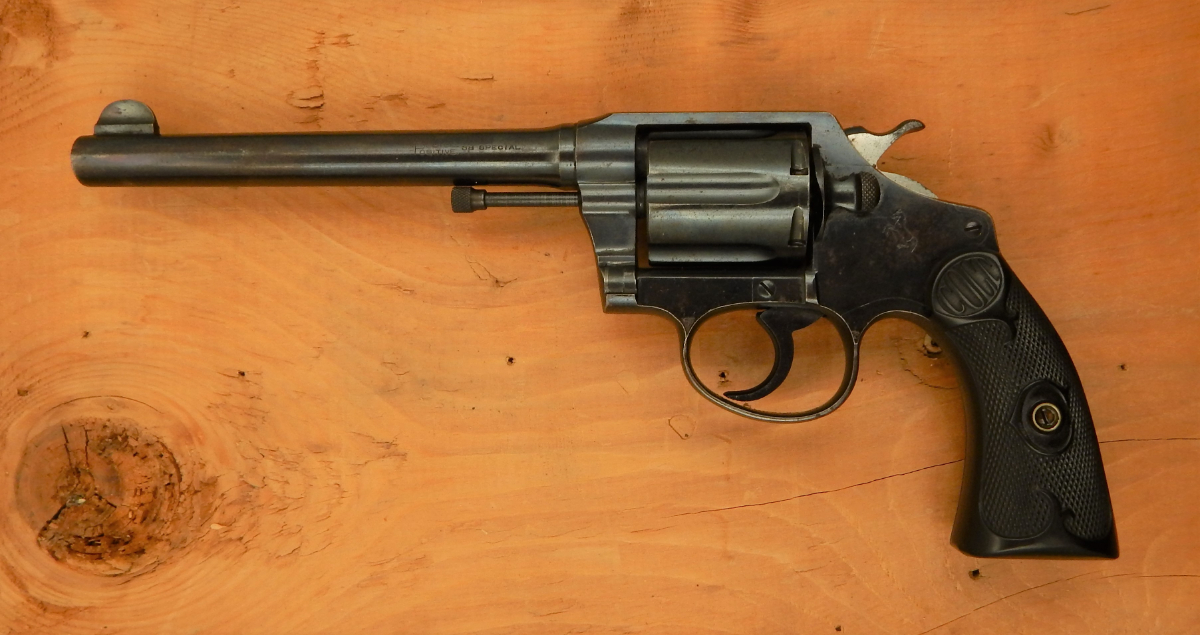
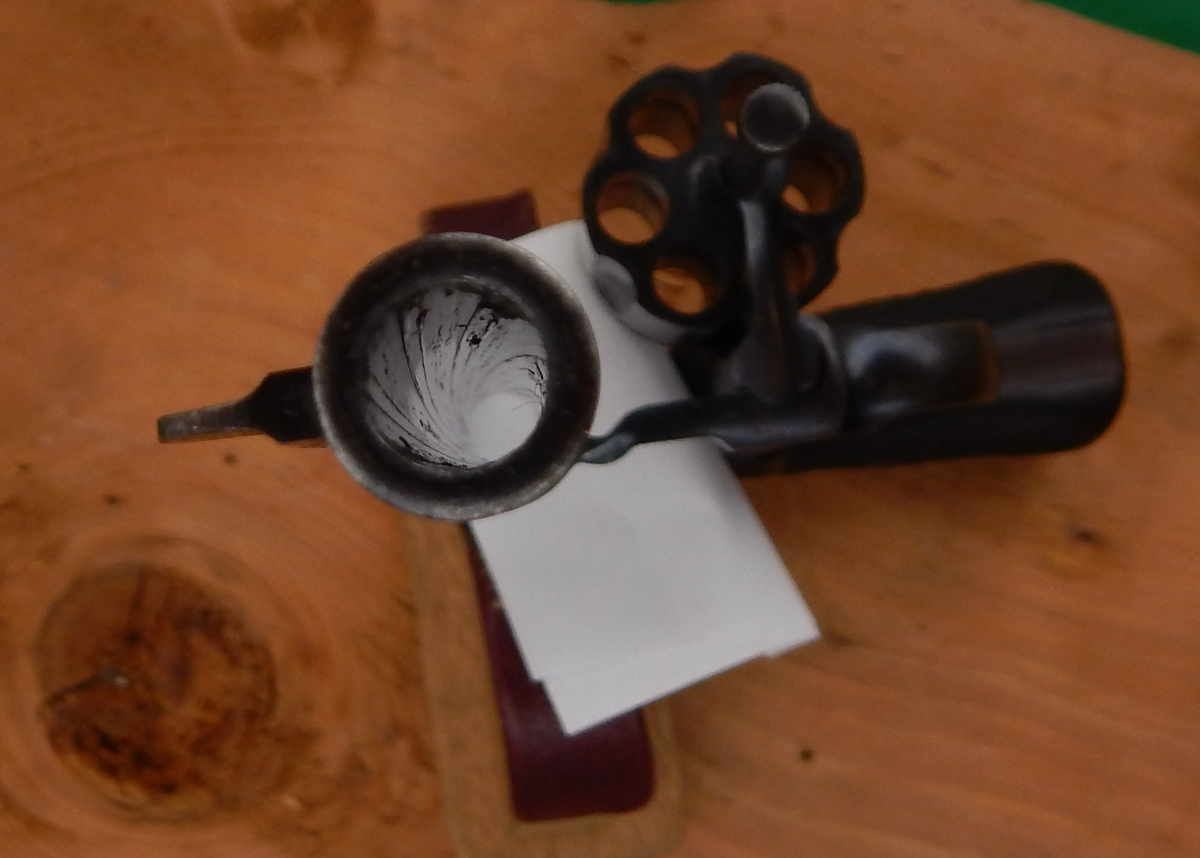
From the Vault: Colt Boa Revolver

Categories
California

Driving in Los Angeles 1950s in color (Its amazing on how little it really has’nt changed much)

Of course the The people of LA is another story. Grumpy

Categories
All About Guns Allies War

The British STEN: Desperation Submachine Gun by William Lawson

The British STEN submachine gun was born from desperation. Early June 1940 had seen the British Expeditionary Force ignominiously kicked off the European Continent. A herculean rescue effort pulled 340,000 men from the Dunkirk beaches, but all their equipment had to be left behind for the victorious Germans. France was two weeks away from total capitulation and it didn’t take a genius to figure out that Adolf Hitler would quickly turn his focus to the island nation across the English Channel.

In a June 4 speech before Parliament, Winston Churchill declared “We will never surrender!” His nation needed to hear that, but the truth was they had little with which to back it up. The threat of a German invasion was very real at the time (it wasn’t practical but that wasn’t evident just then). The British needed arms for those rescued soldiers and they needed them yesterday.

Desperately Seeking a Submachine Gun

The British Army entered World War II without a domestic submachine gun. The short campaign on the Continent showed the need for such a weapon, especially after seeing the German MP38 in action. They had some American Thompsons, but not nearly enough. Thanks to the isolationist sentiments of the United States, Congress stipulated that any war material sold to belligerents had to be paid for in hard currency, meaning actual gold. Thompsons were expensive to produce. In 1940, one Thompson cost about $200 to make. That’s a little over $4,000 in today’s money. For a nation that needed lots of everything, spending their limited gold reserves on submachine guns was more than impractical.

Dunkirk aftermath: the British rescued 340,000 men but had to leave all their equipment behind. (Express & Star)
STEN Mk II
Over two million STEN Mk IIs were produced by British factories during World War II. (Pinterest and Rock Island Auction House)

A couple of German submachine gun copies were tried after acquiring some examples from Ethiopia. Fifty thousand units of the Lanchester submachine gun, a direct copy of the German MP28, were produced, but they were heavy, complicated, and expensive. Most ended up with the Royal Navy and many served into the 1970s as an anti-boarding weapon. But that was not the answer. A cheap gun that could be mass produced quickly was needed.

The solution was provided by Major Reginald V. Shepherd and Mr. Harold J. Turpin. The new design was made of stamped sheet steel components welded together. The only machined parts were the bolt and the barrel. The gun was called the “STEN.” The “S” and “T”came from the first letters of the last names of the designers and the “EN” came from Enfield, the famed firearms manufacturer where the weapon was developed. It worked well enough, could be produced at a prodigious rate, and was affordable. Following the trend of copying German models, the STEN was chambered in 9mm Luger.

Soldiers of the Durham Light Infantry with a SEN Mark III
Soldiers of the Durham Light Infantry with a STEN Mark III. Note the monolithic receiver and barrel. (Imperial War Museum)

The most recognizable feature of the STEN series is the side-mounted magazine well. It made the gun easy to fire from the prone, but it made it difficult to grasp properly with the off hand. Soldiers often grasped the mag well from the top, though they had to be careful not to put pressure on the mag. The mags were not especially reliable to start with since they were double stack single feed models, which causes feeding issues. They held 32 rounds and the feeding problems were mitigated by downloading them to 30. Exerting pressure on the mag while in operation could easily cause a failure to feed. Soldiers were taught to grip the gun under the heat shield, like a regular rifle, with the mag resting on top of their arms. Some did that but many continued to grip the mag well from the top.

Different Versions of the STEN

Eventually, the STEN series yielded five official versions, Mk I through Mk VI. The Mk IV was a proposed airborne version that was never adopted, so there was never an actual Mk IV produced. There was also the Mk I* (read as “Mark I star”) which was a simplified Mk I and doesn’t count as its own version. The Mk I* served as the basis for the Mk II, which was the most produced version by far and is considered the “classic” STEN gun.

STEN Gun models
Many versions of the STEN. The Mk I* and Mark VI are not represented. (militaryimages.net)

The STEN underwent a series of evolutions that, somewhat ironically, seemed to go almost full circle in terms of the gun’s features. The Mk I had a sturdy skeletal stock, wood handguard and “pistol grip,” barrel-length heat shield, flash suppressor, and a folding vertical foregrip. The side mag well could be rotated down for storage and transport. The rotating mag well also served as a dust cover for the ejection port. A large barrel nut allowed the barrel to be easily removed for cleaning or storage.

STEN Mk II with magazine well rotated down

The Mk I* lost the wood, foregrip, and flash suppressor, creating the bare bones look of the eventual Mk II. As noted earlier, the key thing to remember with the STEN’s development is that the British needed lots of them at the cheapest price in the shortest time possible. There was little thought given to ergonomics other than basic functionality and aesthetics were not considered at all. Having a Nazi knife at the national throat will do that.

Gurkha soldier with STEN Mk II
A Gurkha soldier with a STEN Mk II in Burma. (National Army Museum, London)

The Mk I was adopted in March of 1941 and about 300,000 were made. 200,000 of those were Mk I*s. The development of the STEN was so fast that five months later, in August, the even simpler Mk II went into production. Keep in mind that Britain was still fighting Hitler alone until June 22 of that year, when the Nazi warlord stabbed his Russian allies in the back with Operation Barbarossa. Even then, the best estimates predicted a Soviet collapse by fall. The British kept producing weapons as fast as they could turn them out.

And turn them out they did. At the height of its production, a complete STEN Mk II required five and a half man hours to make. Factories could build 500 units in a single shift. They were cost effective too. Fifteen Mk II STENs could be produced for the cost of one American Thompson at the 1940 price. Over two million STEN Mk IIs were cranked out during the war. Even accounting for its two-year head start, STEN production dwarfed that of its American equivalent, the M3 “Grease Gun.”

British STEN factory
British factories often made as many as 500 STENs in a single shift. (Military History Now)

1943 saw the introduction of the Mk III, which simplified the Mk II by axing the removable barrel, making the gun a monolithic sheet metal tube. Mk III parts, however, were not always interchangeable with other STEN models and the one-piece gun made maintenance difficult.

French resistance fighter with STEN MK III liberation of Paris
A French resistance fighter and his STEN Mk III with a US officer during the liberation of Paris, 1944. (National Archives)

Even so, 876,000 Mk IIIs were made. To put that in perspective, the United States only manufactured 655,390 Grease Guns of all configurations, ever. The British Army was literally awash in STEN guns by the end of the war. Even the Germans used captured STENs. Their version of the Mk II was the MP 3008, and the Mk III was called the MP 750 (e).

The German MP 3008, a copy of the STEN Mk II.

The STEN Mk V came along in 1944, by which time the threat against Britain had eased considerably and the Germans were on the defensive. The Mk V reflected those changed conditions in that it was built more with quality and ergonomics in mind, though it was still a cheap submachine gun. The new gun had a proper wooden stock and pistol grip. Some had a wood vertical foregrip, hearkening back to the Mk I just a bit. The rear aperture sight was retained but instead of the crude triangle front sight, the Mk V sported a Lee Enfield Rifle front sight. The Mk V also had a lug for a Lee Enfield bayonet. 527,000 were made from February 1944 until the end of the war in 1945.

STEN at Arnhem
Private Joe Cunningham of the 1st Border’s anti-tank platoon at Arnhem in September 1944. The vertical foregrip and Enfield rifle front sight mark his STEN as a Mk V. (pegasusarchive.org)

In my research I saw several examples of what appeared to be STENs with parts from other models, mostly the Mk II and especially the stocks. I can’t say why that is, other than the number of models and the need to slap them together quickly may have led to some overlap of production or maybe they were modified later with available parts.

Not Always Reliable

The STEN had a reputation for jamming, in large part because of the poorly designed magazines. Even more alarming was the propensity of the open bolt guns to fire if they dropped and sometimes keep firing until the mag was empty. There are accounts of British soldiers cocking a STEN and chucking it into a roomful of enemy soldiers, knowing it would run itself in a circle until it was empty.

It sounds like Hollywood stuff, but the stories are out there. The most credible account that I saw was from a Canadian officer in Korea in 1953 who tells the story of one of his men dropping his STEN and he and others trying to avoid it:

At first we did some shy polka steps to avoid getting hit, but as the rotation speed increased so did our dance. With about 10 rounds to go the muzzle of the weapon started flipping up, as if looking for a larger target. It was then that the first primitive steps of what would later become known as break-dancing came into being… (Quote: Legion magazine, April 1994)

You can decide for yourself, but I tend to believe it based on seeing similar things in many different places.

Suppressed STENs for Special Ops

A suppressed version of the Mk II was developed for special operations, most notably the Special Operations Executive (SOE). The SOE was the British version of the OSS. They operated in occupied Europe assisting resistance fighters in every nation. The STEN Mk II (S) was intended not only for SOE operatives but was dropped by the hundreds, maybe thousands, to those freedom fighters. The “S” stands for “Special Purpose,” not “suppressed” or “silenced.”

Ian McCollum of Forgotten Weapons with a STEN Mk II (S)
Ian McCollum of Forgotten Weapons with a STEN Mk II (S) (Forgotten Weapons)

The suppressor system was fairly simple, with a 12.25-inch suppressor threaded onto a barrel shroud/expansion chamber. The suppressor had eighteen baffles separated by wire mesh rings. To allow the use of standard supersonic ammunition, six holes were cut in the barrel, directly in front of the chamber, to allow enough gas to escape that the bullet would stay subsonic. This, combined with the fortuitous decision to chamber the STEN in 9mm Luger, allowed SOE and resistance personnel to use captured German ammo.

STEN barrel and shroud
Left: The STEN barrel screwed into the receiver on all models except the Mk III. Right: The shroud/expansion chamber screwed onto the barrel and the suppressor itself. (Forgotten Weapons)

The baffle system wasn’t especially durable and the suppressed STENs were meant to be fired in single shots or, at most, small bursts. Even one magazine on full automatic could ruin the baffles, defeating the purpose of the suppressor. Since the suppressed guns were intended for missions like sentry elimination or assassinations, as opposed to hard front-line combat, this wasn’t usually a problem. Some were produced in semi-auto only. The guns came with a canvas handguard, over horsehair or asbestos string, on the suppressor.

The reduced energy from the cartridge meant the action needed attention as well. The danger was that the gun could short stroke and jam or, even worse, cycle just enough to pick up a round without engaging the sear, resulting in a runaway gun. This problem was solved by slicing off some of the bolt, reducing its weight from 600 grams to about 493. A coil was also taken from the recoil spring, making it a bit longer. Interestingly, each spring seems to have been tailored by the armorer at the factory to its particular bolt and suppressor. These were not precision parts by any stretch. So, the length of each spring may vary a bit, making the suppressor, bolt, and recoil spring a set that is not necessarily interchangeable with other guns.

STEN barrel ports and breakdown
Left: The barrels on the suppressed STENs were ported to reduce the energy of the bullet. Making it subsonic. Right: The suppressor and bolt assemblies of the STEN Mk II (S). (Forgotten Weapons)

Another interesting thing about suppressed STENs is that, despite the mostly standardized Mk II (S), there were numerous guns modified for suppression by the SOE and operatives in the field. If you run across a suppressed STEN that doesn’t match the description above, that doesn’t mean it’s not authentic. Very late in the war, a suppressed version of the Mk V was implemented but it saw little action in World War II. This was the Mk VI. It used the same suppressor system as the Mk II, just with Mk VI everything else.

There are also modern suppressed STENs out there.

The sheer number made, and their adaptability, make it easy if you know what you’re doing. SilencerCo haa a Mk II that is threaded at 1/2×28 and runs with the Omega 9K and Omega 36M on. I’d imagine this setup is more durable and reliable than the World War II versions. So, if you’re looking to suppress your STEN, I say go for it.

STEN Mk III
SilencerCo’s STEN Mk III without a suppressor installed. (Author’s photo)
The STEN with the SilencerCo Omega 36M in it's long configuration.
The STEN with the Omega 36M in it’s long configuration.
British STEN gun with Omega 9L suppressor.
And here it is with the Omega 9K.

Good Enough

The STEN gun, while not perfect by any means, was good where it had to be. Despite being officially replaced by the Sterling, it stayed in British Service, in one form or another, until 1971. The STEN’s cheap but ruggedly simple construction meant that it was easily produced and attractive outside Britain. It was copied by the Germans during the war and afterward by France, Norway, Denmark, Poland, Austria, Argentina, and Belgium. Many resistance units, most notably the Norwegians, produced their own STENs during the war. Hard post World War II service was seen in Korea, Vietnam, and the India-Pakistan Wars.

British soldiers with a STEN Mk II and a BREN light machine gun.
British soldiers with a STEN Mk II and a BREN light machine gun. (Pinterest)

Despite being a desperate wartime expedient, the basic soundness of the STEN design served Great Britain, and the Allied cause, admirably. It deserves to ranked among the great war weapons of World War II and the Twentieth Century.

Pegasus Bridge assault from the film The Longest Day
While I was writing this article, I was constantly reminded of the assault on Pegasus Bridge from the movie The Longest Day, so here you go.
Categories
All About Guns

Winchester Model 1876 Lever Action Rifle

Categories
All About Guns Cops

Why Do Democrats Think They Can ‘Win’ the Crime Issue? Media bias misinforms the public about “gun violence.” by ROBERT STACY MCCAIN

A possible New York gun crime scene (Steve Sanchez Photos/Shutterstock.com)

Crime is a people problem. If you understand nothing else about crime, you must understand this — crime is committed by people. It is not committed by inanimate objects, and while data on criminal activity can be charted as a trend over time, trends don’t commit crimes, people do. There is a word for people who commit crimes; we call these people “criminals” and, if anyone is interested in investigating trends, one trend is fairly consistent — most violent criminals are repeat offenders, and will not stop this behavioral pattern unless they are locked up in prison.

Keep all these facts in mind the next time you hear Democrats or the news media (but I repeat myself) discussing “gun violence” as an issue. Democrats do not want to discuss crime as a people problem, but rather as a gun problem, because (a) most gun owners are Republicans and (b) most criminals are Democrats. Or, that is to say, the violent crime problem in America is largely concentrated in urban areas where Democrats get the majority of the vote.

If Democrats don’t want to prosecute actual convicted felons for illegally possessing firearms, why do they expect their demands to ban “assault weapons” to be taken seriously?

Research by John R. Lott Jr. highlights just how geographically concentrated the murder problem is in the United States. Of the more than 3,000 counties in the country, 52 percent had zero murders in 2020, while the 31 counties with the highest murder rates (the worst 1 percent) had 42 percent of the nation’s murders. Expand the focus to the worst 2 percent (62 counties), and these accounted for more than half (56 percent) of U.S. murders in 2020. Lott concluded: “Murder isn’t a nationwide problem. It’s a problem in a small set of urban areas …”

Yes, but what about “gun violence”? What about the inflammatory rhetoric of Democrats demonizing the National Rifle Association (NRA) as somehow to blame for America’s crime problem? Among other things, Lott took into account rates of firearm ownership, and found an inverse relationship between the prevalence of murder and rates of gun ownership: “According to a 2021 Pew Research Center survey, the household gun ownership rate in rural areas was 79% higher than in urban areas. Suburban households are 37.9% more likely to own guns than urban households. Despite lower gun ownership, urban areas experience much higher murder rates.”

So much for the correlation between gun ownership and crime. What do we know about the correlation between politics and crime? The five U.S. cities with the highest per capita murder rates are St. Louis (69.4 per 100,000 population), Baltimore (51.1), New Orleans (40.6), Detroit (39.7), and Cleveland (33.7). In the 2020 presidential election, Joe Biden got 82 percent of the vote in St. Louis, 87 percent in Baltimore, 83 percent in New Orleans, 94 percent in Detroit and 80 percent in Cleveland. In other words, the most dangerous cities in America are all Democratic Party strongholds.

These facts are not difficult to discover, if anyone is willing to do a few Google searches, but you would probably have no idea about any of this if your source for news was ABC, NBC, CBS, CNN, PBS, the New York Times, the Washington Post or the Associated Press. The so-called “mainstream media” seem to operate as a cartel, doing everything in their power to prevent the public from learning the truth about crime in America. Consider the simple matter of what counts as a crime story of national interest. The cartel media love to go into 24/7 coverage mode on “mass shootings,” but are notably selective in their choices as to which ones deserve such attention.

For example, did you hear about the mass shooting in Philadelphia last week? One person was killed and four others were wounded in an incident in which more than 50 shots were fired in a garage in the city’s Kensington neighborhood. According to WPVI-TV, this was the 84th mass shooting in Philadelphia since 2020, but how many of those mass shootings got so much as one word of coverage on CNN? Pretty close to zero, I’m sure. The fact that Philadelphia has had more than 500 homicides in each of the past two years? CNN and other members of the media cartel ignore it, for the simple reason that the bloody carnage which has earned the city the nickname “Killadelphia” doesn’t help advance the preferred political narrative.

Most of the facts about crime in America don’t fit that narrative. According to the FBI, in 2021 there were about 23,000 homicides in the country and, based on data from 2019, about 54 percent of U.S. murder victims are black people, most of whom are killed by other black people. It is impossible to discuss violent crime in America without acknowledging that at least half of it involves black people, both as victims and perpetrators, despite the fact that blacks are only 14 percent of the U.S. population. The national media clearly doesn’t want to discuss this — for reasons that are fundamentally political — and so the picture of crime in America conveyed by the media is distorted beyond recognition. This political distortion produces a yawning chasm between the reality of crime and its portrayal in the news media.

Democrats are the intended beneficiaries of this warped coverage, and it is obvious that they never expect to be held accountable for their rhetoric about crime. Exhibit A is Joe Biden who, whenever any mass shooting attracts national attention, predictably repeats his call for banning so-called “assault weapons.” No reporter ever seems to question this response, as if it were self-evident that such a ban would eliminate mass shootings or, at least, reduce violent crime. However, this belief is not borne out by the data. According to the FBI, there were only 403 murders in 2017 in which the weapon used was a rifle of any kind, compared to 7,032 committed with handguns. In fact, more people were murdered with “blunt objects” (clubs, hammers, etc., accounting for 467 victims) and “personal weapons” (hands, fists, feet, etc., with 692 victims) than were killed by rifles. But because there is no simple legislative “solution” to such crimes, Biden has no pat response, and nobody in the press corps raises questions about the president’s formulaic demands for banning “assault weapons.”

We live in a nation where more than a thousand people a year are beaten to death with fists, hammers, etc., and you might imagine that at least one of these blunt-force murders would merit attention from the national media, but instead they are ignored, just like the 1,500 or so people stabbed to death in America every year. And why are these brutal crimes ignored? Because the media wish their audience to think of the crime problem as a gun problem, for which the solution is to elect Democrats who will enact stricter gun-control laws.

This simplistic attitude ignores the obvious question of why Democrats are against enforcing the gun-control laws already on the books. In New York City, where Manhattan District Attorney Alvin Bragg has been busy ginning up charges against former President Trump, his chief prosecutor sings the praises of her office’s “gun diversion” program that avoids sending criminals to prison on weapons charges. New York City saw a 22 percent increase in major crime last year, yet putting criminals behind bars is not a priority for Meg Reiss, Chief Assistant District Attorney in Bragg’s office, who has flatly asserted, “We know incarceration doesn’t really solve any problems.”

Joe Biden could order his Attorney General Merrick Garland to stop this turn-’em-loose approach to gun crimes in New York City. Under federal law (Section 922g), it is a felony punishable by up to 10 years in prison “for a person convicted of a felony to ship, transport, receive, or possess a firearm or ammunition.” Yet neither Biden nor Garland has shown any inclination to interfere in New York’s “gun diversion” program that sets such offenders free to commit further crimes, preferring instead to demonize law-abiding citizens for owning “assault weapons” — by which they mean, for example, AR-15 type rifles, of which an estimated 20 million are legally owned by Americans. If Democrats don’t want to prosecute actual convicted felons for illegally possessing firearms, why do they expect their demands to ban “assault weapons” to be taken seriously?

Rhetorical questions aside, however, America’s crime problem is not just the fault of Democratic politicians, but also of Democratic voters. In Chicago, where crime has risen nearly 50 percent since 2019, voters recently had the opportunity to replace their soft-on-crime mayor, who placed third in the election, but in the subsequent runoff, they chose an even softer-on-crime candidate, Brandon Johnson. In an interview with CBS News last week, Mayor-elect Johnson said addressing Chicago’s crime problem requires “more money toward the areas of needs”:

“What we’re going to have to do is to find the revenue from individuals who have the means to actually contribute to a safer city,” he said.

“Look, the bottom line is this: We have large corporations, 70 percent of large corporations in … the State of Illinois did not pay a corporate tax. …

“And it’s that type of restraint on our budget that has caused the type of disinvestment that has led to poverty, of course, that has led to violence.”

Got that? “Large corporations” are to blame for Chicago’s crime problem, which is the craziest excuse we’ve heard out of Chicago since Jussie Smollett claimed he was attacked by Trump supporters shouting, “This is MAGA country!”

Democrats, and the people who elect Democrats, have no interest in doing what is necessary to reduce violent crime in America, namely sending criminals to prison. Yet because the news media are so completely in the tank for Democrats, the truth about America’s crime problem is being suppressed.

Categories
All About Guns Ammo

Matt D. 2020 yards 7mm Dakota

The 7mm Dakota

By Chuck Hawks

7mm Dakota
Illustration courtesy of Dakota Arms
Dakota Arms offers a line of proprietary magnum hunting cartridges designed by Don Allen and based on the .404 Jeffery case shortened to function in standard (.30-06) length actions. These come in a variety of calibers including 7mm. Factory loaded ammunition is supplied only by Dakota.

The 7mm Dakota uses standard .284″ diameter bullets. It is based on a rimless, bottleneck case with a rim diameter of .545″. This case is 2.50″ long and has a sharp 30-degree shoulder. The cartridge overall length is 3.33″.

Because the 7mm Dakota has a larger rim diameter than the standard belted magnum cartridges, it requires a bolt specially manufactured or modified to match. No doubt this will continue to limit the cartridge’s popularity.

7mm Dakota factory loads are offered with a 140 grain and two 160 grain bullets. Dakota also offers unfired 7mm brass to reloaders, priced at $175/100 cases.

The 140 grain bullet has an advertised muzzle velocity (MV) of 3400 fps and muzzle energy (ME) of 3593 ft. lbs. The 160 grain bullets have an advertised MV of 3200 fps and ME of 3637 ft. lbs.

The handloader has many more bullet choices, of course. Projectiles from 100 to 175 grains are commonly available, but for a case the size of the 7mm Dakota the 139-140, 150-160 and 175 grain bullets probably make the most sense. Slow burning powders work best with these bullets in the 7mm Dakota.

The Sixth Edition of the Hornady Handbook of Cartridge Reloading shows 7mm Dakota loads for their various 154 grain bullets at MV’s from 2700 fps to 3200 fps with a number of powders. IMR 7828 seems like a reasonable choice for the 7mm Dakota. 66.7 grains of IMR 7828 behind a 154 grain Hornady Spire Point Interlock bullet gives a MV of 2700 fps. A maximum charge of 76.7 grains of the same powder gives a MV of 3200 fps and a ME of 3501 ft. lbs. with the 154 grain bullet.

The trajectory of that load looks like this: +2.4″ at 100 yards, +3″ at 150 yards, +2.4″ at 200 yards, +0.7″ at 250 yards, -2.1″ at 300 yards, and -6.3″ at 350 yards. The MPBR (+/- 3″) of that load is 311 yards. These Hornady loads used Dakota cases and Federal 215 primers and were chronographed in the 25″ barrel of a Dakota 76 rifle

Categories
Ammo

The Moving Sniper Bullet

https://youtu.be/fWtjZo0Ya5c

Categories
All About Guns

We Fired the Martini-Henry | Rifle of the Zulu War

Categories
Stupid Hit

Darwin is amused by this!

Categories
All About Guns War

The last thing a lot of folks will ever see on this Planet

May be an image of 1 person, aircraft and outdoors