Categories
All About Guns You have to be kidding, right!?!

MCX Rattler: Sig Sauer’s Plan To Make Old SOCOM Rifles Even Deadlier Time will tell how well it works.

Key point: A compact, easy-to-carry firearm.

U.S. Special Operations Command intends to transform some of its standard-issue M4 carbines into Sig Sauer MCX Rattler personal defense weapons, apparently satisfying the command’s year-long hunt for the daintiest little assault rifle on the market.

The contract with Sig Sauer, managed by U.S. Army Contracting Command (ACC) and released on Feb. 1, detailed SOCOM’s plan to purchase 10 MCX Personal Defense Weapons (PDW) conversion kits that, built on the lower receiver of an M4A1, can chamber both .300 Blackout cartridges and standard 5.56 mm rounds.

SOCOM had announced its intent to adopt a new PDW for close-quarters combat in March 2017, but the military took a direct contract with Sig Sauer over a bidding competition because “sample systems are needed quickly to be used in formal combat evaluations,” the ACC said. Both the initial request for information and subsequent award were first reported by The War Zone.

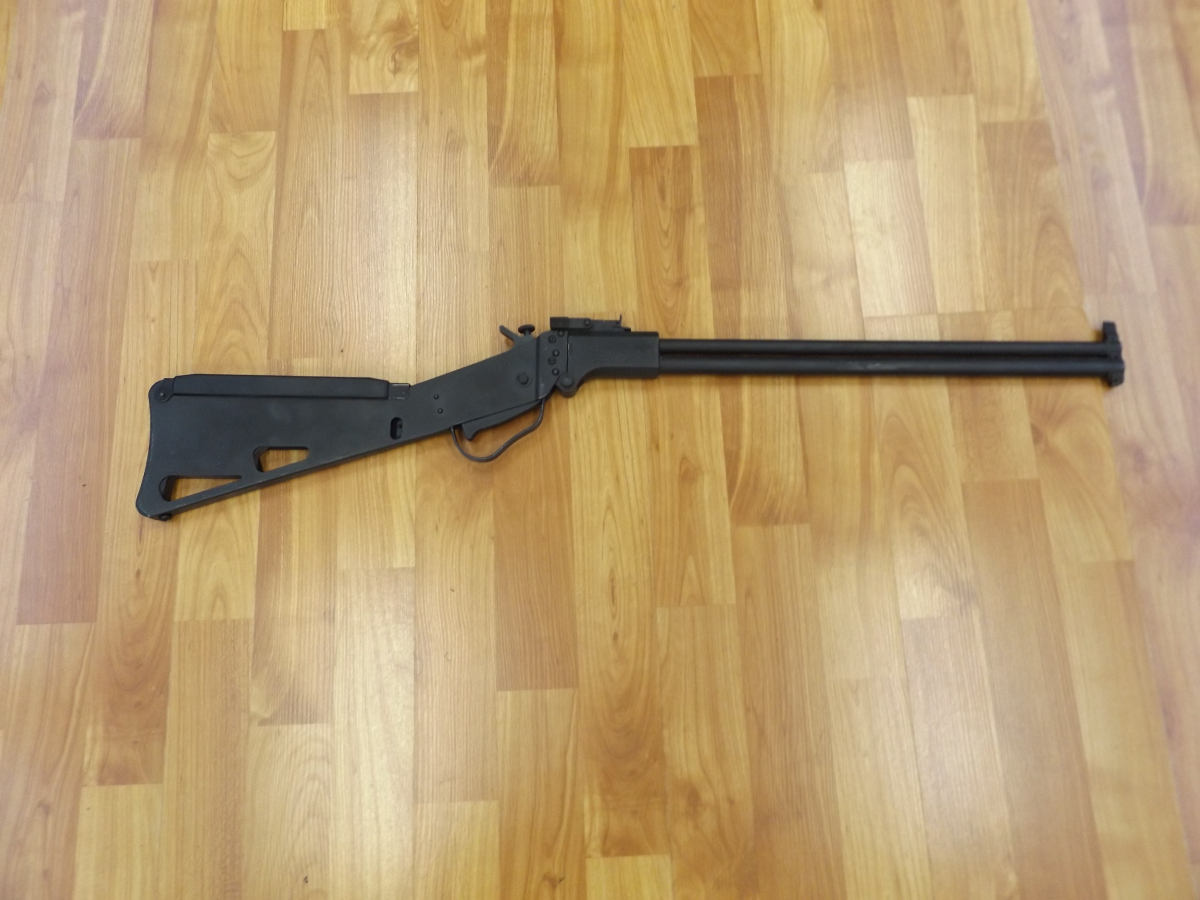
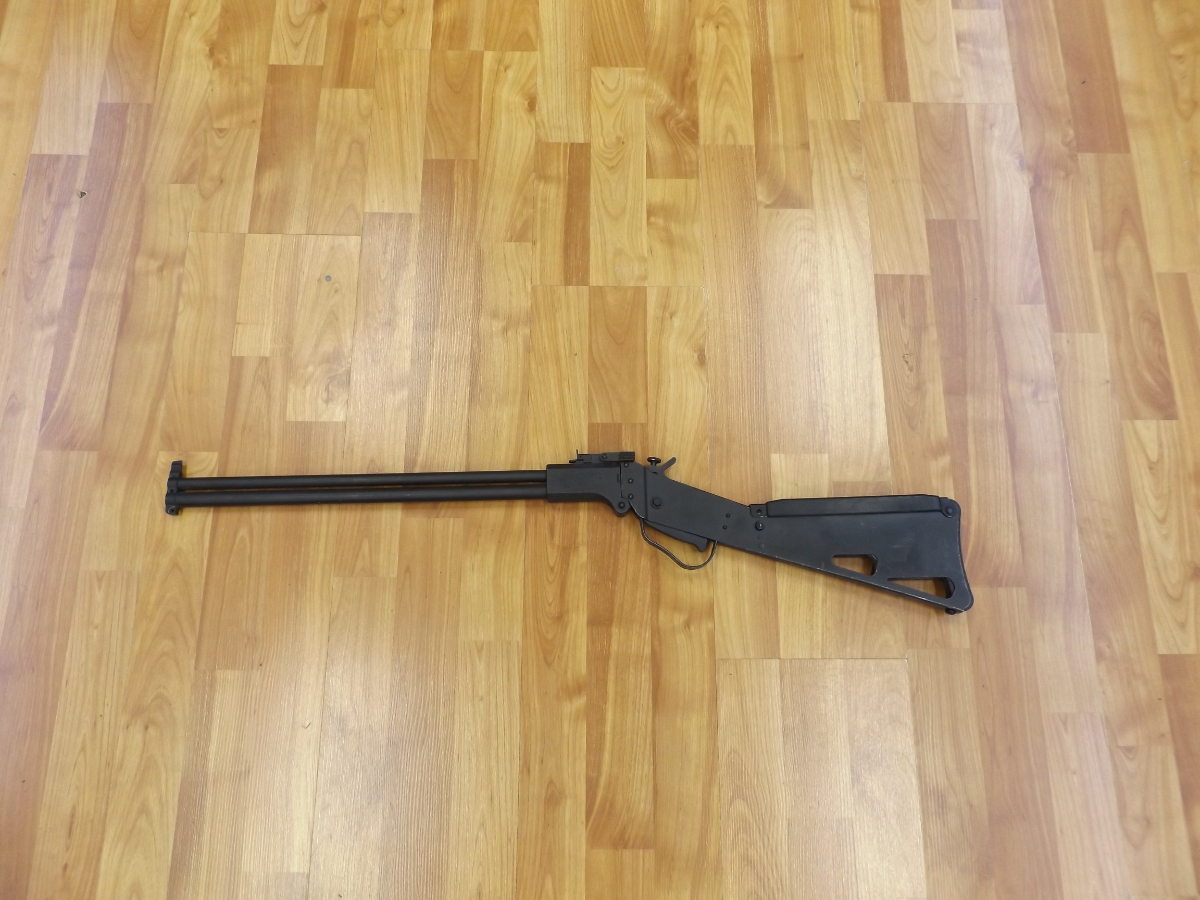
Although the MCX Rattler itself — billed by Sig Sauer as the most “discreet platform” ever built at the request of “elite military units” — doesn’t explicitly appear in the ACC’s Feb. 1 announcement, the weapon’s 5.5-inch barrel and “thin, side-folding ‘skeleton’ buttstock” are a “perfect match” for the compact MCX platform the firearms manufacturer showed off last month at the SHOT Show in Las Vegas, Nevada, according to the War Zone.

“This compact firearm can be had in short-barrel-rifle and pistol configurations and provides a rifle-caliber setup in as compact of a frame as possible,” the company announced during SHOT Show’s final day on Jan 26. “This short, compact size is a boon for members of law enforcement, the military and the shooting public who want a compact, easy-to-carry firearm.”

Fresh off a successful new contract for the Army’s Modular Handgun System, Sig Sauer was eager to showcase the MCX Rattler and sister MCX Virtus assault rifle at SHOT Show, touting the latter as the “ultimate modular platform” in the same vein as the P320 9mm handgun. But as The War Zone originally noted, the real appeal is in those .300 Blackout cartridges, developed by Advanced Armament Company in the early 2000s to minimize sound output without sacrificing accuracy or stopping power.

Time will tell how the MCX Rattler actually holds up during tests. And while the Army Contracting Command may have snapped up the Rattler due to Sig’s willingness to keep that sweet, sweet DoD moolah flowing, the ACC isn’t ruling out other contenders; according to the announcement, “any responsible source who believes to be capable of meeting the requirement may submit a capability statement, proposal, or quotation, which shall be considered by the agency.”

Jared Keller is a senior editor at Task & Purpose and contributing editor at Pacific Standard. Follow Jared Keller on Twitter @JaredBKeller.

Categories
All About Guns

Thanks to Ammo Backpacks, Russia’s PKM Will Never Stop Shooting by Task and Purpose

The backpack, known as the Scorpio, is a product of Front Tactical Systems and it was designed at the request of the Russian military as a method of increasing machine gun efficiency.

Here’s What You Need to Remember: You can buy a Russian Scorpio backpack today for 65,800 rubles, or roughly $1,000. Unfortunately, the MICO is a government-only item, and the National Firearms Act could rain on your parade if you try to import a Scorpio stateside.

Images have been circulating on Twitter of a Russian Spetsnaz soldier apparently testing out a PKM heavy machine gun with an unusual ammunition-feeding backpack that bears an uncanny resemblance to Jesse Ventura’s alien-perforating minigun from Predator. The backpack, known as the Scorpio, is a product of Front Tactical Systems — and according to The Firearm Blog, it was designed at the request of the Russian military as a method of increasing machine gun efficiency.

The United States previously developed a similar system when the inventive U.S. Army Staff Sgt. Vincent Winkowski threw together a backpack-fed machine gun on the battlefield during a firefight with the 1st Battalion, 133rd Infantry Regiment, 2nd Brigade Combat Team, 34th Infantry Division, Iowa National Guard in Afghanistan in October 2011, citing the M-134 backpack-fed minigun touted by Ventura’s Sgt. Blain Cooper in the 1987 action classic.

This first appeared earlier and is being republished due to reader interest.

Eventually, Army Research and Development Command took on Winkowski’s DIY system and fleshed it out from its humble roots as a ALICE pack modified with ammo cans and a MOLLE to the so-called ‘IronMan’ system (not to be confused with the much-hyped TALOS ‘Iron Man’ suit that U.S. Special Operations Command is looking to test by 2019). The system was under evaluation by the Army for over two years before they decided to purchase a small number; sadly, information has been scarce since 2014 (UPDATE BELOW).

Russian special operators must have been watching the U.S. Army tests from afar with jealousy, because the Scorpio is a much lighter-looking, more professionally-made version of the Army’s IronMan. The sporty looking pack has a sweet looking belt system designed to not jam despite heavy movement.

Both systems are spiritually related to that devastating stripped-down mini-gun that Ventura hauled through an unnamed jungle in Predator. It is also worth noting that Arnold Schwarzenegger, though restricted to paltry carbines and sharpened sticks in Predator, rocked a similar system in Terminator 2: Judgement Day as an effective anti-aircraft weapon.

Prior to, and after the demise of the Army designed IronMan system, commercial versions to popped up to fill the needs of special operations forces and contractors. The U.S. version of the backpack-belt fed machine gun accessory has since evolved into several off the shelf options, most notably the Huron™ MICO – Machine Gunners Assault Pack, but it hasn’t seen broad use in the U.S. military, likely due to the $4,000 price tag.

By contrast, you can buy a Russian Scorpio backpack today for 65,800 rubles, or roughly $1,000. Unfortunately, the MICO is a government only item, and the National Firearms Act could rain on your parade if you try to import a Scorpio stateside. One final problem could rain on your minigun parade; the system is designed to work with the PKM machine gun, which is a rather hard find in the American inventory — unless you are playing OpFor, that is.

UPDATE:

After being contacted by a source close to the situation, it was alleged that Russia did knock off the MICO pack made by Tyr Tactical. In an odd spy scenario, a MICO pack that was modified for use with PKM machine gun was used on the show ‘Sons of Guns’. During this period a Russian national allegedly got a hold of one of the packs and copied it down to the seams.

Also as mentioned above, information on the Ironman system became scarce after 2014. According to the source of the above information, this system was both designed after the MICO, making it unneeded, and it was also a worse product, with the 700 plus that were purchased eventually being decommissioned.

This article by Brad Howard originally appeared at Task & Purpose on May 25, 2018. Follow Task & Purpose on Twitter. This first appeared earlier and is being republished due to reader interest.

Categories
All About Guns

Nambu Type 96 & Type 99 LMGs

Categories
All About Guns

Visual Tour: Japanese WW2 Type 99 Light Machine Gun

Categories
All About Guns

Whitney-Scharf – The Last Rifle From Whitneyville

Categories
All About Guns Allies

Building my New Gun – Longthorne Gunmakers

Categories
All About Guns

Walther Model 6 | Collector’s Guide

Categories
Dear Grumpy Advice on Teaching in Today's Classroom

Somewhat useless knowledge

A SHOT OF WHISKEY

In the old west a .45 cartridge for a six-gun cost 12 cents and so did a glass of whiskey. If a cowhand was low on cash he would often give the bartender a cartridge in exchange for a drink. This became known as a “shot” of whiskey.‘

THE WHOLE NINE YARDS
American fighter planes in WW2 had machine guns that were fed by a belt of cartridges. The average plane held belts that were 27 feet (9 yards) long. If the pilot used up all his ammo he was said to have given it the whole nine yards.‘

BUYING THE FARM
This is synonymous with dying. During WW1 soldiers were given life insurance policies worth $5,000. This was about the price of an average farm so if you died you “bought the farm” for your survivors.

IRON-CLAD CONTRACT
This came about from the iron-clad ships of the Civil War. It meant something so strong it could not be broken.

PASSING THE BUCK / THE BUCK STOPS HERE
Most men in the early west carried a jackknife made by the Buck Knife company.  When playing poker it was common to place one of these Buck knives in front of the dealer so that everyone knew who he was. When it was time for a new dealer the deck of cards and the knife were given to the new dealer. If this person didn’t want to deal he would “pass the buck” to the next player. If that player accepted then “the buck stopped there”.

RIFF RAFF
The Mississippi River was the main way of traveling from north to south. Riverboats carried passengers and freight but they were expensive so most people used rafts. Everything had the right of way over rafts which were considered cheap. The steering oar on the rafts was called a “riff” and this transposed into riff-raft – or riff-raff, meaning low class.

COBWEB
The Old English word for “spider” was “cob”.

SHIP’S STATE ROOMS
Traveling by steamboat was considered the height of comfort. Passenger cabins on the boats were not numbered. Instead they were named after states. To this day cabins on ships are called staterooms.

SLEEP TIGHT
Early beds were made with a wooden frame. Ropes were tied across the frame in a criss-cross pattern. A straw mattress was then put on top of the ropes. Over time the ropes stretched, causing the bed to sag. The owner would then tighten the ropes to get a better night’s sleep.

SHOWBOAT
These were floating theaters built on a barge that was pushed by a steamboat. These played the small towns along the Mississippi River. Unlike the boat shown in the movie “Showboat” these did not have an engine. They were gaudy and attention- grabbing which is why we say someone who is being the life of the party is “showboating”.

OVER A BARREL
In the days before CPR a drowning victim would be placed face down over a barrel and the barrel would be rolled back and forth in a effort to empty the lungs of water. It was rarely effective. If you are over a barrel you are in deep trouble.

BARGE IN
Heavy freight was moved along the Mississippi in large barges pushed by steamboats. These were hard to control and would sometimes swing into piers or other boats. People would say they “barged in”.

HOGWASH
Steamboats carried both people and animals. Since pigs smelled so bad they would be washed before being put on board. The mud and other filth that was washed off was considered useless “hog wash”.

CURFEW
The word “curfew” comes from the French phrase “couvre-feu”, which means “cover the fire”. It was used to describe the time of blowing out all lamps and candles before sleeping for the night. It was later adopted into Middle English as “curfeu”, which later became the modern “curfew”. In the early American colonies homes had no real fireplaces so a fire was built in the center of the room. In order to make sure a fire did not get out of control during the night it was required that, by an agreed upon time, all fires would be covered with a clay pot called-a “curfew”.

BARRELS OF OIL
When the first oil wells were drilled they had made no provision for storing the liquid, so they used water barrels. That is why, to this day, we speak of barrels of oil, rather than gallons.

HOT OFF THE PRESS
As the paper goes through the rotary printing press, friction causes it to heat up.   …therefore, if you grab the paper right off the press, it’s hot. The expression means to get immediate information.

Categories
All About Guns

THE GREYHOUND RULES WRITTEN BY JOHN CONNOR


Okay, now you folks remember which page we’re on, right? If not, go back to previous posts here and here, then rejoin us. This is the only way I can tell this, so get yourself a refreshing beverage, relax, and we’ll play “let’s pretend,” okay?

Long, long ago in a galaxy far, far away, there was a fair and fertile land festooned with lotsa bananas, bunches of Bad Guys, and some buses. The bananas grew mostly out in the countryside, and the Bad Guys did too. These Bad Guys used to be armed, funded an’ fed by an Evil Empire, but when its wheels fell off like a flattened Flexy Flyer, the Bad Guys just dropped their political pretensions and became freelance murderers, bandits and killer-kidnappers. They ’specially liked killing and kidnapping BananaLand’s judges, mayors and Deputy Assistant Ministers of Thus-and-So, because it was both entertaining and profitable.

A group of “Hard Hombres” was formed to protect these officials. About half of ’em came from the state police, a quarter from BananaLand’s army, and the rest were just really tough dudes with shiny hair and shinier pistols. All of the Hombres could shoot, though they tended to get kinda festive with the fireworks, and all were either very brave or too proud to ever back down from a fight, which is almost the same thing. What they didn’t have was “consistent tactics,” so they couldn’t dance well together while fightin’ BadGuys.

Far to the North, a country called YanquiLand heard about this and offered to help. YanquiLand sent four guys to teach the Hombres how to fight BadGuys, and how not to shoot innocent bystanders. This training would happen at The Big Bus Farm, upcountry from the capitol, Santa Mañana, on the edge of a dark, damp forest called The Yongle.

The Big Bus Farm


The buses — lots of ’em! — and some assorted trucks lived on a not-quite-flat crazy-quilt expanse of asphalt, grass and concrete patches behind some charm-free but room-rich government buildings. The buildings housed a vehicle maintenance facility, some s’posed-to-be-secret treasury offices and not enough bathrooms.

Training was fun, though some Hombres questioned the value of learning to fight as “fire teams.” Everybody played nice, and the coffee was excellent and plentiful. So, during a break, the whole happy group kinda wandered out amongst the buses an’ trucks, to go pee on the bushes at the edge of The Yongle. As the Hombres and YanquiDudes wandered out, they encountered some other dudes wandering in, like maybe they’d hadda go pee too, you know? But they didn’t.

They were BadGuys, and they had picked the wrong day for whatever mischief they had planned. Actually, they looked kinda like the Hombres, except not so clean and neat, and they had pistols like the Hombres, and some rifles, too! Everybody sorta looked funny at each other, an’ then some eyes got really big and others got really squinty, and then there were some shots, and then things got really weird.

Everybody scattered like a good break on a pool table, scrambling in and around an’ over those big buses an’ trucks, all the while shooting at each other. One Yanqui described it as “a disorganized, chaotic, drawn-out string of vicious firefights involving two, three, up to 10 participants, which would then break up and form different firefights — a helluva mess.”


Window Weirdness


Several BGs clambered aboard buses, and that was dumb. They trapped themselves. Most of the bus windows were two-piece, so they could be opened from top or bottom. One BG stood up and fired over a window’s lowered panes, as though the glass was “cover.” It wasn’t even concealment. He was shot lotsa times. Another stood up at a closed window, holding a pistol in one hand and fumbling to lower the top pane with the other. He got punctured plenty, too. Another fired at some Hombres and then just ducked down below the window. Bus skin didn’t stop bullets. Neither did bus seats.

Some guys on both sides stood and fired over the decks of flat-bed trucks and semi-trailers. They got shot a lot in their hips, groins and legs. About a dozen guys from both sides fell flat on their beaks or butts while traversing the uneven seams of those asphalt, earth and concrete sections. Some of ’em didn’t get up. It’s like they were only thinking and fighting from their belts up.

At one point, a glass-rattling godlike voice commanded Stop shooting! — and amazingly, everybody did. Then the voice went on, Stop! You’re shooting my buses! PLEASE stop! It was the motor pool manager, screaming over a PA system. Firing resumed.

The BGs, who had some rifles, began fighting in cells, while the Hombres, with only handguns, fought as individuals, pairs and amoebae. The BGs started winning. Then some Hombres returned from their vehicles with M-1 carbines and Thompson submachine guns, and the tide turned — hard.

Pistol ammo ran low fast. A teenager wearing a Chicago Cubs cap appeared outta nowhere, passing out loaded Glock-17 and 1911 .45 magazines from cardboard boxes. That was nice. Afterward, nobody seemed to know who he was. Weird. The surviving BGs fled into The Yongle. Many lessons were learned, to be discussed later.

One YanquiDude wrote this in his book of “Evolved Practices”: “From touching distance to bus-bumper width, I’m gonna start shooting fast as soon as my muzzle covers meat — kneecaps, elbows, I don’t care, and I won’t worry about conserving ammo as long as an enemy is armed and upright. From front bumper to rear bumper distance I’m going for a straight point, a flash sight picture, a firm grip and trigger control. From there out to The Yongle, I want a crisp front sight and a rock-steady hold — or I’ll move closer, or get further away.” He called these “The Greyhound Rules.”

Connor OUT

Categories
N.S.F.W.

Dear Readers, Have a Great Weekend! Grumpy NSFW