

.jpg)
.GIF)
.gif)
.jpg)
.jpg)
.jpg)
.GIF)
.gif)
.jpg)
.gif)
.jpg)
.jpeg)
.gif)
.jpg)
The AR-15 market has never given buyers more choices than it does now. The number of companies making them is virtually countless. Price points are equally plentiful, which means that anyone and everyone can afford to own one.
With so many options out there, how does one get started without spending a fortune? There are plenty of “budget” options on the market for first-time buyers, but budget doesn’t have to mean poor quality. It sometimes does, but this is not one of those times.
I was feeling patriotic on Independence Day 2016, so I stopped by my local gun shop, wanting to know what they had in terms of a budget-friendly AR. I was pointed towards a literal stack of boxes containing complete ARs selling for just $425.
At that price, I’d have been a fool not to pick one up – especially with the then-near-certain victory by Hillary just a few months away.
The rifle in those boxes was a Del-Ton DT Sport Lite. It has a 16-inch lightweight, Melonite barrel with 1:9 twist, a six-position M4 stock, CAR handguards with single heat shields, an enhanced trigger guard, and an A2 front sight post and flash hider.
What you didn’t see in that list was a rear sight, forward assist, or a dust cover. The rear sight was an easy fix. I picked up a Ruger Rapid Deploy rear sight off the rack and bingo-bango, good to go. Is a dust cover necessary? No. It’d be nice, but it isn’t essential. As for a forward assist: the bolt has a scallop in it for your thumb to do the work, should the need ever arise.
The DT Sport Lite is well-made and shows no visual signs of it being a “cheap” rifle. The fit and finish was as good as you’d expect for a basic AR-15 rifle. The upper and lower receivers mate well and there was no wobble between the two. Additionally, there were no visible finish blemishes, tool marks, etc.
Before I get into the review, you’ll notice from the photos that the gun is no longer stock as described above. After all, easy modification is one of the appeals of the AR platform. I replaced the hand guard and buttstock with Magpul furniture, the standard pistol grip with a rubber grooved one from Rock River Arms, and stuck a subdued flag over the Del-Ton logo on the right side of the receiver.
Range Time
I visually inspected the gun inside and out to ensure that there were no issues or obstructions, but I did not clean or oil it before getting in some trigger time. I ran it just as it came out of the box: bone dry.
Using the A2 front sight and the aftermarket Ruger rear sight, I had no issues getting the gun sighted in. A little tweaking with the rear sight windage and a couple turns of the front sight post and my shots were grouping nicely. The standard mil-spec trigger is nothing to write home about and won’t win any matches, but it’s more than serviceable on a rifle in this price range.
When using PMC Bronze 55-grain FMJ rounds, I was able to print groups that were all within my 3-inch red circle at 100 yards. That may not seem like much to you, but it’s pretty good for me when shot with open sights at 100 yards while standing. I’m no professional marksman, I’ve had no formal training, and this isn’t a competition gun, so your mileage may differ.
My use of this gun would be for self-defense, so I wasn’t looking for groups under an inch. These results prove that all of the rounds can hit center mass at a distance.
Some rifles can be picky about ammo and magazine reliability. The Sport Lite came with one 30-round metal magazine. I used said magazine as well as some Magpul PMAGs I had lying around for this review.
I fired 250 rounds of various ammo through the gun with no problems. Some were brass, some were steel. The bullet weights varied, but it didn’t matter to the Sport Lite. Same for the mags. Some rifles don’t like certain brands, or they have problems if you load a full 30 rounds. Not so with this gun
Summary
For the price and for what it is, this rifle is hard to beat. Del-Ton recently upgraded this model to the “DT Sport – Mod 2” and added a couple of features to the gun. That version ships with a rear sight, forward assist, and a dust cover. Still, it can’t be beat.
Specifications: Del-Ton DT Sport Lite AR-15
Caliber: 5.56 Nato
Barrel: 4140 Steel, 16″ Length, 1:9 Twist, Threaded Muzzle, A2 Flash Hider
Bolt & Carrier: Phosphated 8620 Steel Carrier Assembly
Handguard: Carbine Length Aluminum Delta Ring
Upper Receiver: Forged 7075 T6 Aluminum Hard Coat Anodized
Lower Receiver: Forged 7075 T6 Aluminum Hard Coat Anodized
Buttstock: M4 6-Position, Commercial Buffer Tube, Carbine Buffer
Weight:5.9 lbs. Empty
Length: 36.375” Fully Extended, 32.625” Collapsed
MSRP: $649 (about $425 retail)
Ratings (out of five stars):
Reliability * * * * *
It’s an AR-15. Some ARs are finicky, this one was not. I had no failures to feed or eject, or any issues with different magazine brands or ammo. I also didn’t find myself wanting for a forward assist and did not need to utilize the bolt scallop.
Ergonomics * * * *
It’s an AR-15. If you don’t like a certain aspect of the gun, change it out like I did. Now, if you’re someone who finds the whole AR platform uncomfortable, well, that’s another story.
Customize This * * * * *
It’s an AR-15. There’s a reason people call them “adult LEGOs.”
Aesthetics * * * *
It’s an AR-15. They won’t win any awards in a beauty contest where the judging is weighted on design, but the Sport Lite is far from an ugly gun. The fit and finish are good and the gun had no internal or external blemishes.
Overall * * * * *
If you’re looking to buy your first AR-15, I’d heartily recommend the Del-Ton DT Sport. It’s a no-frills, reliable gun and it’s affordable. Mine was $425.
Logan Metesh is a firearms historian and consultant who runs High Caliber History LLC. Click here for a free 3-page download with tips about caring for your antique and collectible firearms.
All photos by Logan Metesh for TTAG
And why it wins the wars it fights.  The technology that binds all of these other systems together is the Israeli soldier. Since 1948 (and even before) Israel has committed the best of its human capital to the armed forces. The creation of fantastic soldiers, sailors, and airmen doesn’t happen by accident, and doesn’t result simply from the enthusiasm and competence of the recruits.
The IDF has developed systems of recruitment, training, and retention that allow it to field some of the most competent, capable soldiers in the world. None of the technologies above work unless they have smart, dedicated, well-trained operators to make them function at their fullest potential.
Since 1948, the state of Israel has fielded a frighteningly effective military machine. Built on a foundation of pre-independence militias, supplied with cast-off World War II weapons, the Israel Defense Forces (IDF) have enjoyed remarkable success in the field. In the 1960s and 1970s, both because of its unique needs and because of international boycotts, Israel began developing its own military technologies, as well as augmenting the best foreign tech. Today, Israel boasts one of the most technologically advanced military stockpiles in the world, and one of the world’s most effective workforces.
Here are five of the most deadly systems that the Israeli Defense Forces currently employ–the foundation of why Israel is a military power no one wants to mess with.
Merkava:

The Merkava tank joined the IDF in 1979, replacing the modified foreign tanks (most recently of British and American vintage) that the Israelis had used since 1948. Domestic design and construction avoided problems of unsteady foreign supply, while also allowing the Israelis to focus on designs optimized for their environment, rather than for Central Europe. Around 1,600 Merkavas of various types have entered service, with several hundred more still on the way.
The Merkava entered service after the great tank battles of the Middle East had ended (at least for Israel). Consequently, the Merkavas have often seen combat in different contexts that their designers expected. The United States took major steps forward with the employment of armor in Iraq and Afghanistan (particularly in the former) in a counter-insurgency context, but the Israelis have gone even farther. After mixed results during the Hezbollah war, the IDF, using updated Merkava IVs, has worked hard to integrate the tanks into urban fighting. In both of the recent Gaza wars, the IDF has used Merkavas to penetrate Palestinian positions while active defense systems keep crews safe. Israel has also developed modifications that enhance the Merkavas’ capabilities in urban and low-intensity combat.
Indeed, the Merkavas have proved so useful in this regard that Israel has cancelled plans to stop line production, despite a lack of significant foreign orders.
F-15I Thunder: 
The Israeli Air Force has flown variants of the F-15 since the 1970s, and has become the world’s most versatile and effective user of the Eagle. As Tyler Rogoway’s recent story on the IAF fleet makes clear, the Israelis have perfected the F-15 both for air supremacy and for strike purposes. Flown by elite pilots, the F-15Is (nicknamed “thunder”) of the IAF remain the most lethal squadron of aircraft in the Middle East.
The F-15I provides Israel with several core capabilities. It remains an effective air-to-air combat platform, superior to the aircraft available to Israel’s most plausible foes (although the Eurofighter Typhoons and Dassault Rafales entering service in the Gulf, not to mention Saudi Arabia’s own force of F-15SAs, undoubtedly would provide some competition.
But as Rogoway suggests, the Israelis have worked long and hard at turning the F-15 into an extraordinarily effective strike platform, one capable of hitting targets with precision at long range. Most analysts expect that the F-15I would play a key role in any Israeli strike against Iran, along with some of its older brethren.
Jericho III: 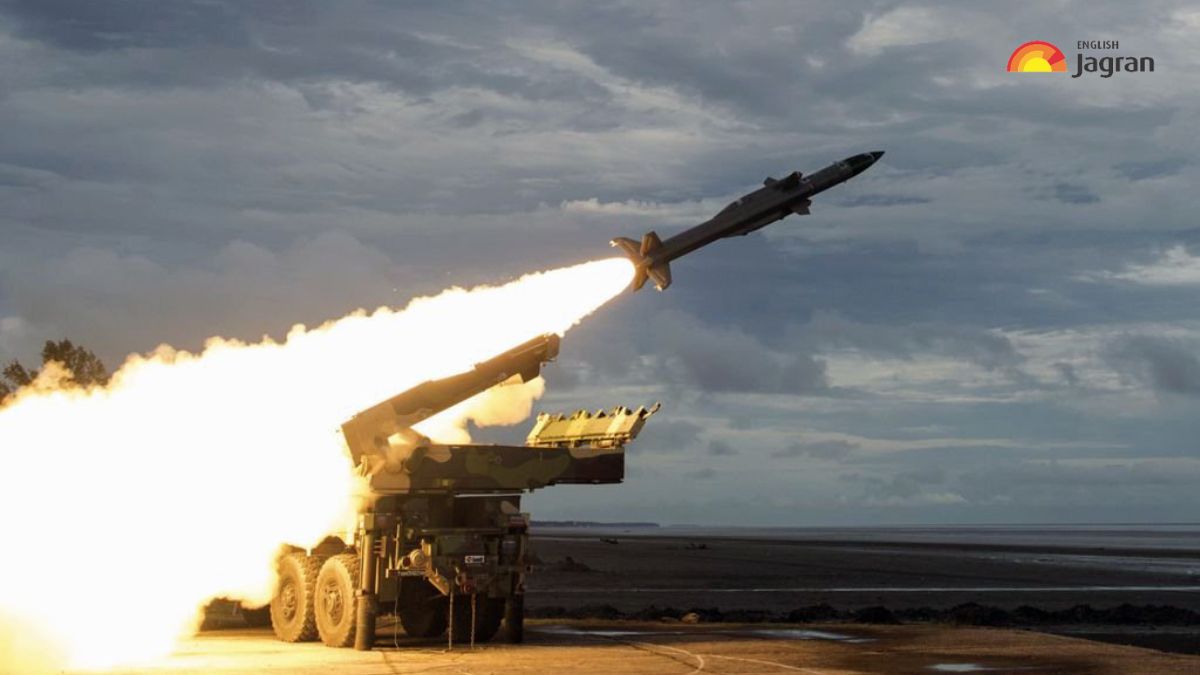
The earliest Israeli nuclear deterrent came in the form of the F-4 Phantom fighter-bombers that the IAF used to such great effect in conventional missions in the War of Attrition and the Yom Kippur War. Soon, however, Israel determined that it required a more effective and secure deterrent, and began to invest heavily in ballistic missiles. The Jericho I ballistic missile entered service in the early 1970s, to eventually be replaced by the Jericho II and Jericho III.
The Jericho III is the most advanced ballistic missile in the region, presumably (Israel does not offer much data on its operation) capable of striking targets not only in the Middle East, but also across Europe, Asia, and potentially North America. The Jericho III ensures that any nuclear attack against Israel would be met with devastating retaliation, especially as it is unlikely that Israel could be disarmed by a first strike. Of course, given that no potential Israeli foe has nuclear weapons (or will have them in the next decade, at least), the missiles give Jerusalem presumptive nuclear superiority across the region.
Dolphin: 
Israel acquired its first submarine, a former British “S” class, in 1958. That submarine and others acquired in the 1960s played several important military roles, including defense of the Israeli coastline, offensive operations against Egyptian and Syrian shipping, and the delivery of commando teams in war and peace. These early boats were superseded by the Gal class, and finally by the German Dolphin class (really two separate classes related to the Type 212) boats, which are state-of-the-art diesel-electric subs.
The role of the Dolphin class in Israel’s nuclear deterrent has almost certainly been wildly overstated. The ability of a diesel electric submarine to carry out deterrent patrols is starkly limited, no matter what ordnance they carry. However, the Dolphin remains an effective platform for all sorts of other missions required by the IDF. Capable of maritime reconnaissance, of sinking or otherwise interdicting enemy ships, and also of delivering special forces to unfriendly coastlines, the Dolphins represent a major Israeli security investment, and one of the most potentially lethal undersea forces in the region.
The Israeli Soldier: 
The technology that binds all of these other systems together is the Israeli soldier. Since 1948 (and even before) Israel has committed the best of its human capital to the armed forces. The creation of fantastic soldiers, sailors, and airmen doesn’t happen by accident, and doesn’t result simply from the enthusiasm and competence of the recruits. The IDF has developed systems of recruitment, training, and retention that allow it to field some of the most competent, capable soldiers in the world. None of the technologies above work unless they have smart, dedicated, well-trained operators to make them function at their fullest potential.
Conclusion:
When considering the effectiveness of Israeli weapons, and the expertise of the men and women who wield them, it’s worth noting that for all the tactical and operational success the IDF has enjoyed, Israel remains in a strategically perilous position. The inability of Israel to develop long-term, stable, positive relationships with its immediate neighbors, regional powers, and the subject populations of the West Bank and the Gaza Strip means that Jerusalem continues to feel insecure, its dominance on land, air, and sea notwithstanding. Tactics and technologies, however effective and impressive, cannot solve these problems; only politics can.
Robert Farley is a senior lecturer at the Patterson School of Diplomacy and International Commerce. His work includes military doctrine, national security, and maritime affairs.He blogs at Lawyers, Guns and Money and Information Dissemination and The Diplomat. Follow him on Twitter:@drfarls.
This first appeared in May 2015 and is being reposted due to reader interest.
Image Credit: Creative Commons 2.0.