When the British Empire adopted the Pattern 1853 Enfield rifle-musket, the design became one of the more significant military small arms of the mid-19th century. This was largely due to the fact that it was one of the first broadly produced muzzle-loading percussion rifles made. The industrial capacity and worldwide empire of Great Britain at the time also meant that large numbers of them were used around the world.
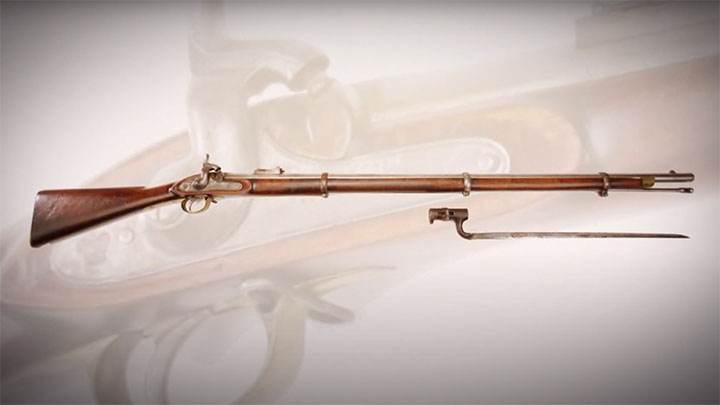
The fullsize Pattern 1853 Enfield rifle musket.
Yet, when the British infantry adopted the Pattern 1853, it meant that the British cavalry needed their own version as well. Prior to this point, the British cavalry were using the Pattern 1851 Victoria Percussion Carbine which had a large bore and reportedly strong recoil due to the size. Three years after the adoption of the Pattern 1853, British cavalry finally received their own shortened version, the Pattern 1856 Cavalry Carbine.

A view of the shortened 21″ barrel, two bands and captive ramrod on the Pattern 1856 Cavalry Carbine.
The Pattern 1856 Cavalry Carbine is a percussion-fired, muzzle-loaded short rifle musket with a .577-cal. bore. It was much shorter and lighter than the fullsize Pattern 1853, with the latter sporting a 39″ barrel while the carbine has a 21″ barrel. The Pattern 1856 also has two bands connecting the barrel to the wood fore-end instead of three as found on the fullsize Pattern 1853. The lock design was essentially unchanged between the Pattern 1853 and Pattern 1856.
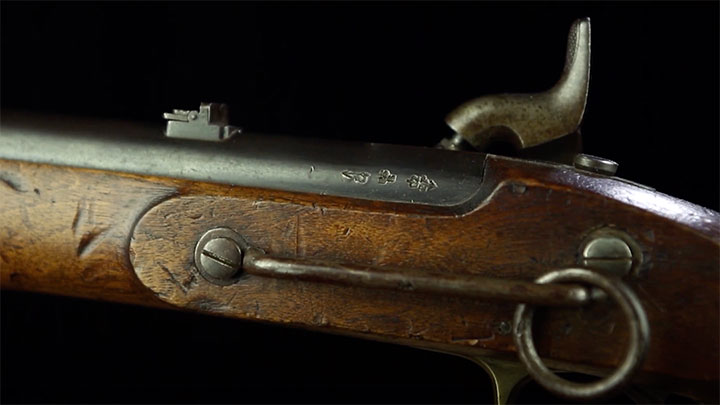
The saddle ring on the left side of the Pattern 1856 Cavalry Carbine.
Being a carbine intended for use on horseback, the Pattern 1856 features a saddle rig and carrying bar attached to the left side opposite of the lock. One of the most interesting and utilitarian features on the Pattern 1856 is the captive ramrod. A swivel attached to the ramrod allows the ramrod to be pulled out of the fore-end and positioned over the muzzle to load, but does not allow the ramrod to fall free of the carbine. This is a handy feature for a muzzle-loading carbine intended for use on horseback where it would otherwise be easy to lose the ramrod.
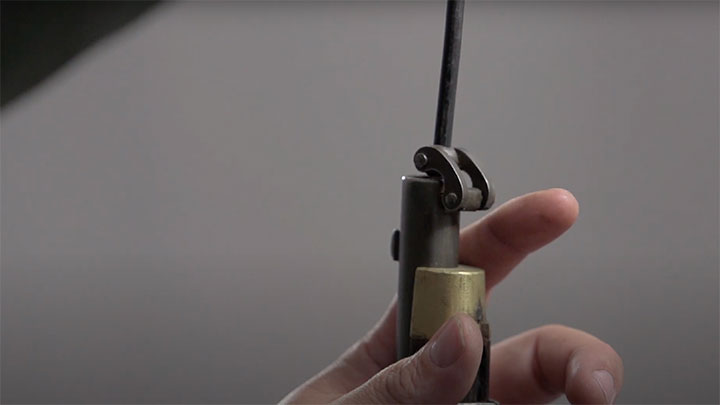
The captive ram rod and connecting swivel in use.
The Pattern 1856 also features a front sight in the form of a subdued blade and a rear sight with adjustable folding leaves for different set ranges. The Pattern 1856 Cavalry Carbine was adopted at a time when the British were beginning to consider transitioning to cartridge and breech-loading arms, and thus did not end up having a very long service life in the British Army. It was also produced in fewer numbers than the fullsize Pattern 1853 rifle musket, given its niche role as a cavalry carbine.
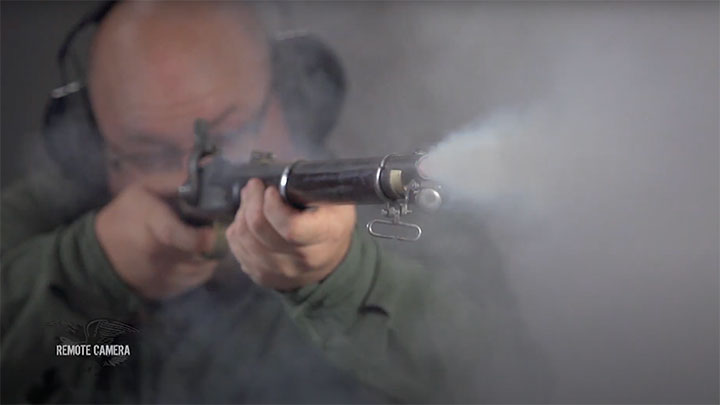
Firing the Pattern 1856 Cavalry Carbine.
Despite this, The Pattern 1856 did catch the attention of purchasing agents in the rebelling Confederate states in America, who purchased more than thousand of them for import between 1861 and 1865. Confederate blockade runners brought the carbines to the Confederacy all the way into the last year of the war. These imported Pattern 1856 carbines for Confederate use are typically have a Birmingham Small Arms trade stamp on the stock, as well as a “J”, “S” and anchor stamping.
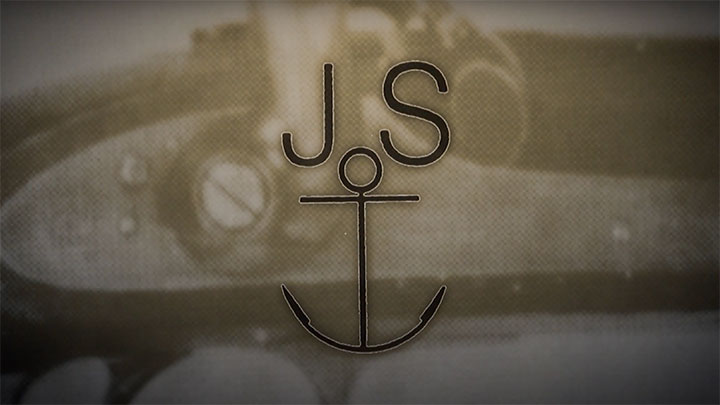
The “J”, “S” and anchor mark found on Pattern 1856 Cavalry Carbines imported to the Confederate states.
Actual Confederate-use Pattern 1856 Cavalry Carbines are fairly scarce in the U.S. collecting market today, with a large number of fakes being possible as is the case with many Civil War collectables. One explanation for the shortage of these Pattern 1856 carbines stems from a report from the 7th Indiana Cavalry. On Dec. 28, 1864, the 7th Indiana Cavalry surprised and overran a Confederate dismounted cavalry camp in Miss. and destroyed their stores in the process, which included 4,000 carbines.
To watch complete segments of past episodes of American Rifleman TV, go to americanrifleman.org/artv. For all-new episodes of ARTV, tune in Wednesday nights to Outdoor Channel 8:30 p.m. and 11:30 p.m. EST.
 But somebody should decock that 1911 ASAP! Grumpy

Beware, there’s a new gun writer in town, and he/she/it/they/them is kinda dangerous.
If you’ve been paying attention to the news, you’ve probably heard some of the fuss about artificial intelligence (AI). As a long-suffering tech industry guy, while there is truth to computers getting smarter, a lot is being blown out of proportion.
Doing math and “thinking,” as you and I understand the “thought” term, are very different things. Since day one, computers have mystified us because they can do math really, really fast on a scale our feeble brains can’t even dream of. So all the “computer smarts” are really just a result of encoding everyday problems like sorting a list of words or comparing whatever I write here against a big list of all known words in the language — and calling it some kind of intelligent smart grammar checking.
But to be fair, smart programmers are creating hardware and software that can “learn” to some degree, but the word “artificial intelligence” is still kind of a stretch. We’re still quite a ways from a sentient computer that thinks like a human. A lot of current AI is still just a big math problem. Computers suck up all known information on the internet and try to put it to good use when we ask questions like, “Write a story for me about the time Mr. Ed partied with My Favorite Martian, and they both got arrested for drunk and disorderly.”
All this does have something to do with writing about guns, really. You see, millions of journalists and writers are fretting about being replaced by AI because it can technically write stories about all kinds of stuff automatically in just seconds.
For example, I’ll ask one of the popular AI programs to write a gun magazine story about the classic Colt Single Action Army revolver. I’ll try this with a couple of “computer gun writers” to see what happens…
What could possibly go wrong?
AI Buddy 1
“In the quiet, dusty town of Tombstone, the sun beat down relentlessly, casting long shadows on the wooden boardwalks. Jesse, a seasoned gunslinger, strolled into the local saloon, his eyes scanning the room for trouble. Strapped to his hip was his trusted companion, the Colt Single Action Army revolver.
The bartender wiped the counter, eyes glancing nervously at Jesse’s iconic weapon. The town knew better than to tangle with a man who wielded the legendary “Peacemaker.” Its reputation for accuracy and reliability spread like wildfire across the Wild West.
As the evening wore on, tensions rose. A gang of outlaws burst through the saloon doors, their guns drawn. The room fell silent. Jesse’s hand instinctively reached for his Colt. With lightning speed, he drew his revolver, the distinct click of the hammer filling the air.
Time seemed to stand still as the Colt’s deadly precision unleashed a symphony of gunfire. Shots rang out, filling the room with swirling smoke and chaos. When the dust settled, the outlaws lay defeated, and Jesse stood tall, his Colt Single Action Army revolver holstered once more, its legacy as the ultimate symbol of frontier justice reaffirmed.”
Well, I did ask for a story, but even still, it’s a bit light on the details of the famous sixgun.
Just for variety, I tasked a different AI assistant with the exact same instructions. I’m not naming either specifically because we both know these machines are smart enough to raise a hit squad of minion appliances to come after me in my own home. Ever been attacked by a blender? Me neither, but I don’t want to start now.
AI Buddy 2
Here goes round two…
“He had always wanted a Colt Single Action Army revolver, ever since he was a kid. He loved the way it looked, the way it felt, the way it sounded. He saved up for years, working odd jobs and selling his old stuff, until he finally had enough to buy one.
He went to the gun store, his eyes shining with excitement. He asked for the Colt, and the clerk handed him one. He checked the serial number, and his heart skipped a beat. It was 1873, the same year the Colt was first produced. He felt like he was holding a piece of history.
He paid for the gun, and walked out of the store, feeling like he had just won the lottery. He couldn’t wait to try it out at the shooting range. He got in his car, and drove away, humming a tune.
He never saw the truck that ran the red light and hit him.”
I have to offer up the gun writer award to AI number two on this one, purely for the completely random ending—it did entertain me. I didn’t edit a word in either story, not even punctuation, so I guess this reflects the twisted way computers “think.”
I don’t know about you, but I’m not going to suggest all our fabulous writers update their resumes just yet. But I guarantee you’re already seeing AI-generated content on some of the less reputable blogs and newsletters out there. If you spot any suspicious ones, feel free to share them with us!
Categories
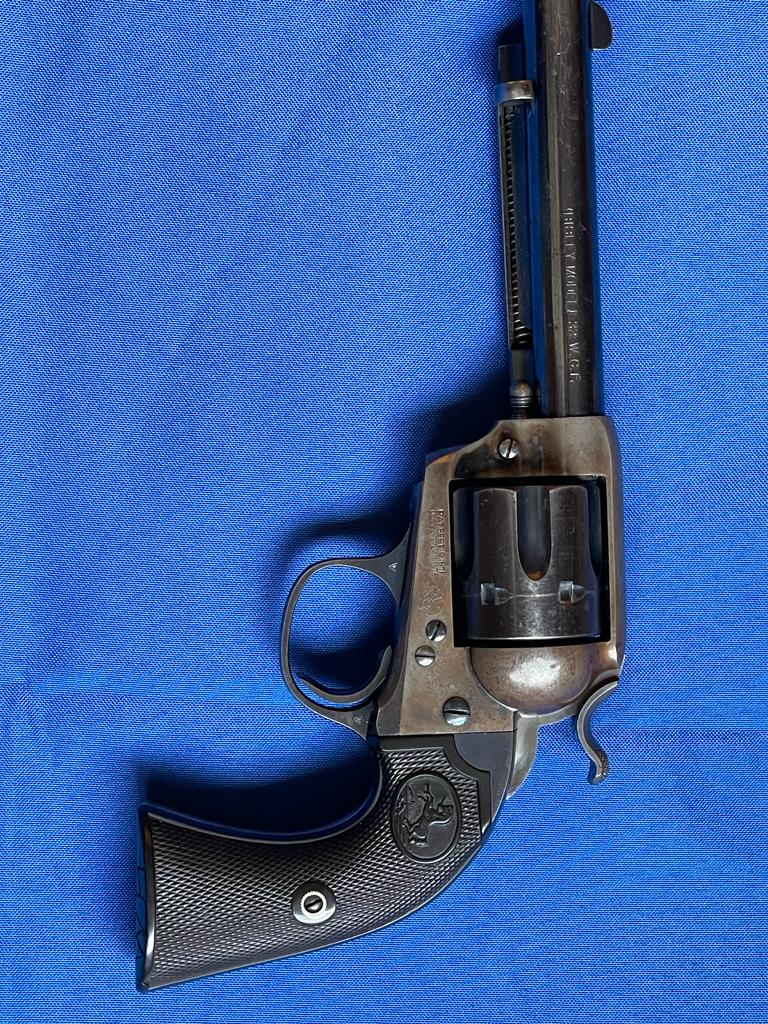
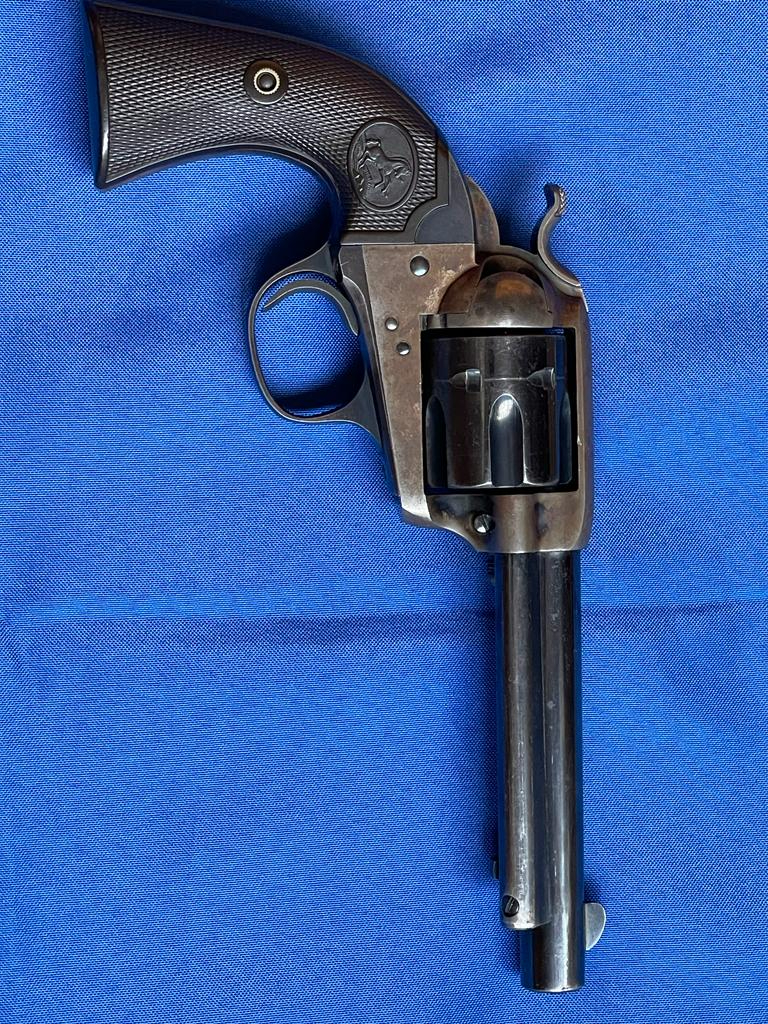
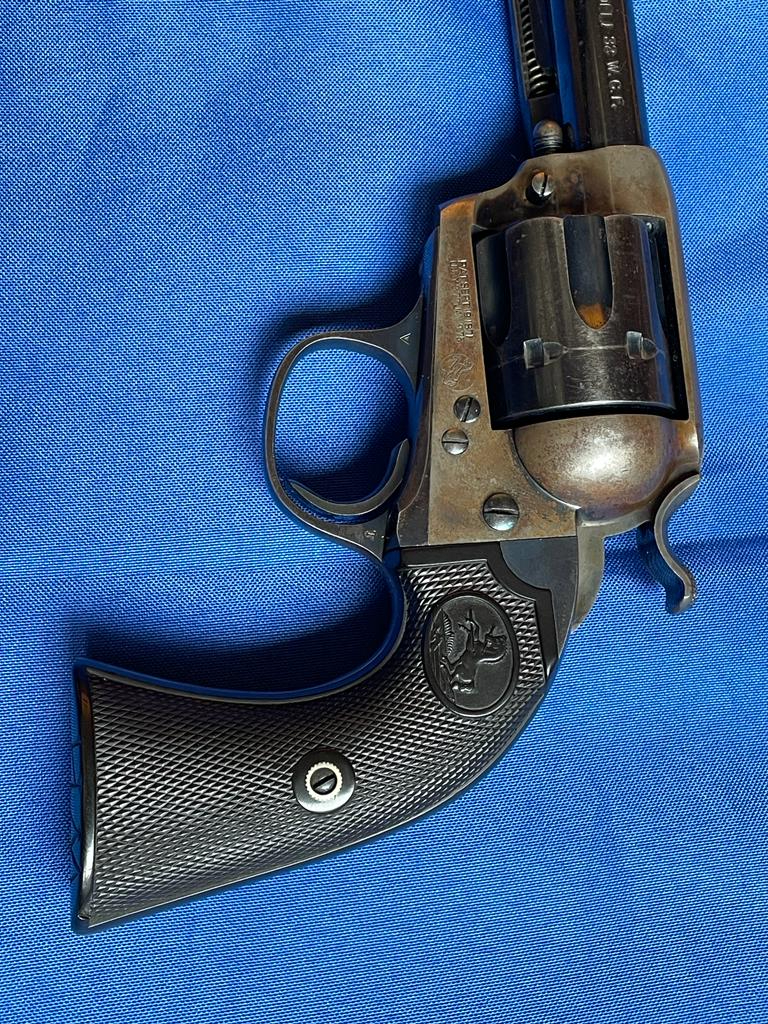
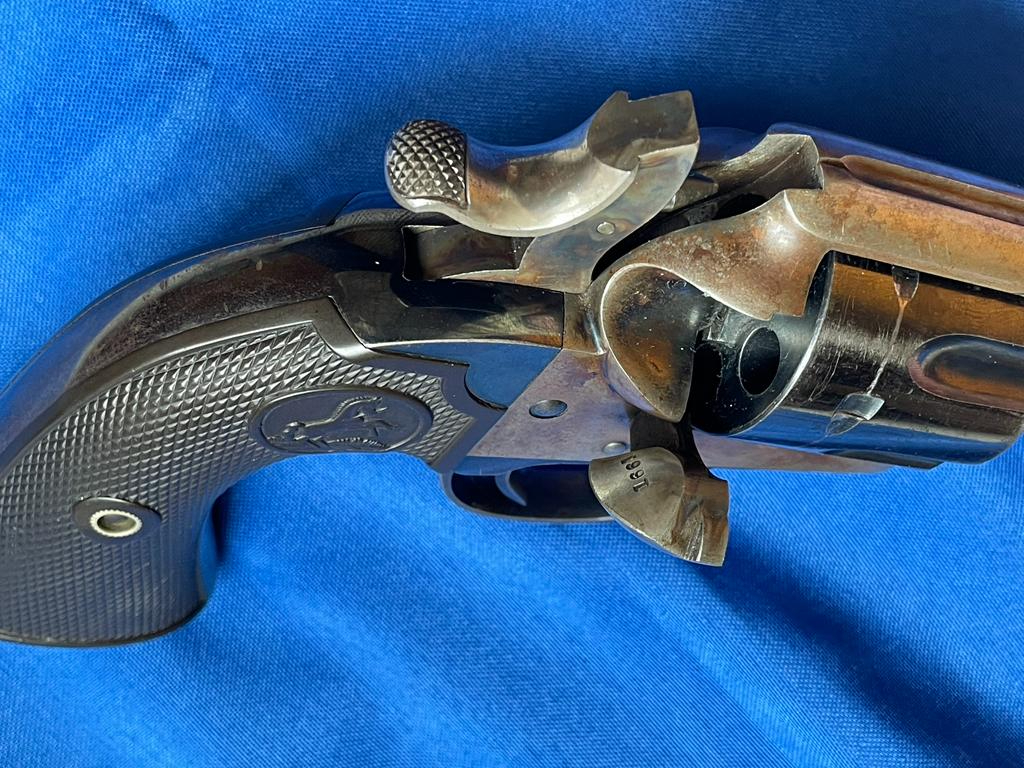
A Colt Bisley in .32 WCF
Categories
Well I thought it was neat!
Categories