Back to Buffalo
As said above, the .50-70 was a popular sporting rifle cartridge in Sharps, Remington, Ballard and other single shots through the 1870s. After bison were near exterminated, .50-70 popularity died also. The original military loading consisted of a 450-grain conical lead alloy bullet over 70 grains of black powder. Velocity was rated at 1,250 fps. I’ve owned Springfield Model 1868, Sharps Model 1874 and Remington No. 1 (rolling block) “Big Fifty” rifles. They ranged from reasonably accurate (Springfield Model 1868) to finely accurate (Sharps & Remington). A load of 65 grains of Swiss 1½ Fg black powder in new Starline brass propelled Lyman’s 450-grain bullet (mold #515141) to 1,190 fps from my rolling block’s 28″ barrel.
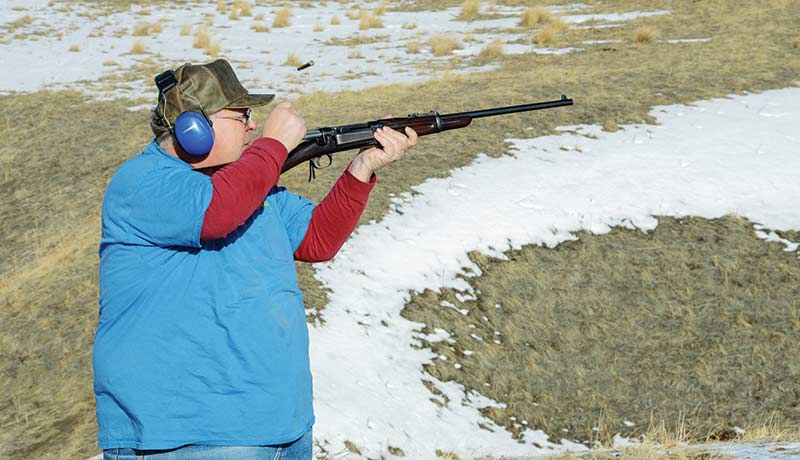
My rifle racks hold infantry rifle and cavalry carbine Model 1896 Springfield “Krags.” Both are capable of groups equaling most off-the-shelf modern sporting rifles considering they wore equal sights. The U.S. Army’s standard service load carried 220-grain RN jacketed bullets rated at 2,200 fps muzzle velocity. My handload to duplicate that is 40 grains of Hodgdon H4350 powder under 220-grain Sierra or Hornady RN bullets.
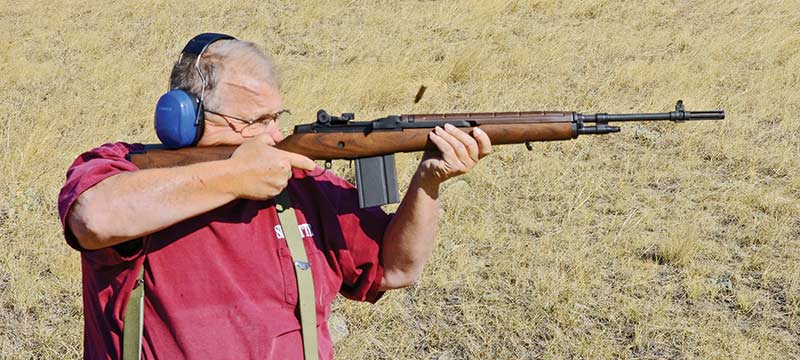
And finally there’s the 7.62mm NATO, aka .308 Winchester. It has been my favorite hunting round in a Model 70 Winchester since 1980 and I also have a Springfield Armory M1A. For hunting, my Model 70 is fed 150-grain Sierra spitzer bullets over 44 grains of IMR3030 for 2,750 fps from its 22″ barrel. The M1A gives 2,640 fps with 168-grain Hornady A-Max bullets over 44.5 grains of Vihtavouri N150.
Service life of the three short-timers was brief but still their place in American military history is assured.




.jpg)