Category: Well I thought it was neat!

One would say that picking the day before the anniversary of D-Day in World War II is an odd time to talk about the first world war, yet, here we are. Because the more that I look at the war in Ukraine, the more I am drawn back to World War I. And no, not because of trenches and massed artillery bombardments.
Those have been staples of modern war and are hardly unique to the fighting going on now. Hell, earthen protective positions have been around as long as someone realized that you could put a big mound of dirt between you and the person trying to kill you. Instead, I look at it from the American perspective and context of the Great War. Now, since the U.S. perspective is mostly overlooked, this will require a lot of explaining. So, let’s get to it.
As the war in Ukraine continues in its second year, there are many in the U.S. Army who look towards it with great interest. Indeed, I would hazard to say that there have been few contemporary conflicts that have captured the attention of the U.S. military as has Russia’s invasion of Ukraine. From the doctrinal standpoint, an Army that is attempting to extricate itself from decades of low intensity conflict can watch large scale combat operations play out in real time. And it’s not like it takes a lot of imagination to see ourselves in this conflict, given that we can watch our equipment and technology as used by the Ukrainian military.
Nor are we lacking accounts of Americans to follow as U.S. veterans travel to Ukraine to fight – for some, hoping to find a “good” war, to counterbalance their own years in Iraq or Afghanistan. In all of this, there are ties back to the American experience in World War I.
When the U.S. entered World War I in April of 1917, it could hardly be described as a dominant land power. The Army was small and lacked the new technology of the day – machine guns, heavy artillery, tanks, airplanes – in any large numbers. Nor did we have doctrine to take into account what all this new tech did to the essentially fragile human soldiers who would fight with it. These same soldiers would somehow have to be drawn from all parts of the U.S. population. It is not too far a stretch to say that the U.S. Army of 1916 was closer to the Army of 1865 than the Army of 1918. Change, therefore, was in the air.
Of course, change is the evil “c” word for the Army. It is highly resistant to organizational and institutional change. And yet, between 1917-1918, the Army underwent a radical transformation shaped by the new realities of war and technology. As we today struggle to figure out how unmanned aerial systems and the space and cyber domains will change warfare, the Army of 1917 struggled with how the machine gun and pneumatic recoil artillery had changed the battlefield.
They asked the same questions that we do today: is new technology best used at the lowest level, where it can provide direct support to the ground pounder? Or is it best used en masse, in a formation commanded by someone who is intricately familiar with its capabilities?
The Army of 1917 eventually determined that machine guns should be grouped into machine gun battalions, which could be broken up by companies and platoons, if needed, to support the infantry. Artillery was grouped into divisions, with two regiments of light artillery and one of heavy – too few, as it turned out in the end.
But because General John J. Pershing believed the rifle was still the dominant weapon in war, all force structure changes due to technology were based around supporting the infantryman. Pershing designed massive divisions of 28,000 soldiers each, all based around supporting the advance – and attrition – of the division’s four infantry regiments. Technology and doctrine – albeit misguided doctrine – shaped force structure. Flawed doctrine resulted in flawed force structure that turned out to be too unwieldy and cumbersome for the modern battlefield. Nor did that doctrine account for aircraft, tanks, and other emerging technologies.

From George T. Skinner Papers, WWI 59, WWI Papers, Military Collection, State Archives of North Carolina, Raleigh, N.C.
This adaptation of force structure to fit technology was not an easy change. Old, established units were broken up and turned into entirely different units. Cavalry troops in the National Guard traded their sabers for machine guns. Coast artillery soldiers picked up rifles or manned field guns. Infantry platoons now carried such things as automatic rifles and grenade launchers, while other infantrymen trained on 37mm guns and Stokes mortars.
The old ways of doing business – almost unchanged for 50 years – were going by the wayside. Modern war required adaptation and moving away from the “Well that’s how we’ve always done it,” approach. The Army was rapidly changing. Just as it must today to adapt to the needs and hazards of the modern battlefield.
Who was serving was changing as well. In order to man this massive force, the War Department had requested Congress to authorize conscription. Soon, millions of people found themselves in uniform. Women were in service, granted official military status for the first time although having served in every war since the founding.
In a war fought between ethnic groups in Europe, the U.S. was unique in fielding units that seemed to boast every ethnicity in its ranks – with the glaring absence of African Americans, who were segregated in separate units. Despite the wishes of many racists in the War Department, the American Expeditionary Force fielded two divisions of Black combat troops who acquitted themselves incredibly well in dehumanizing circumstances. The Army was changing, because modern war doesn’t care what color you are – or what your sexuality or gender identities are, either, I might add.
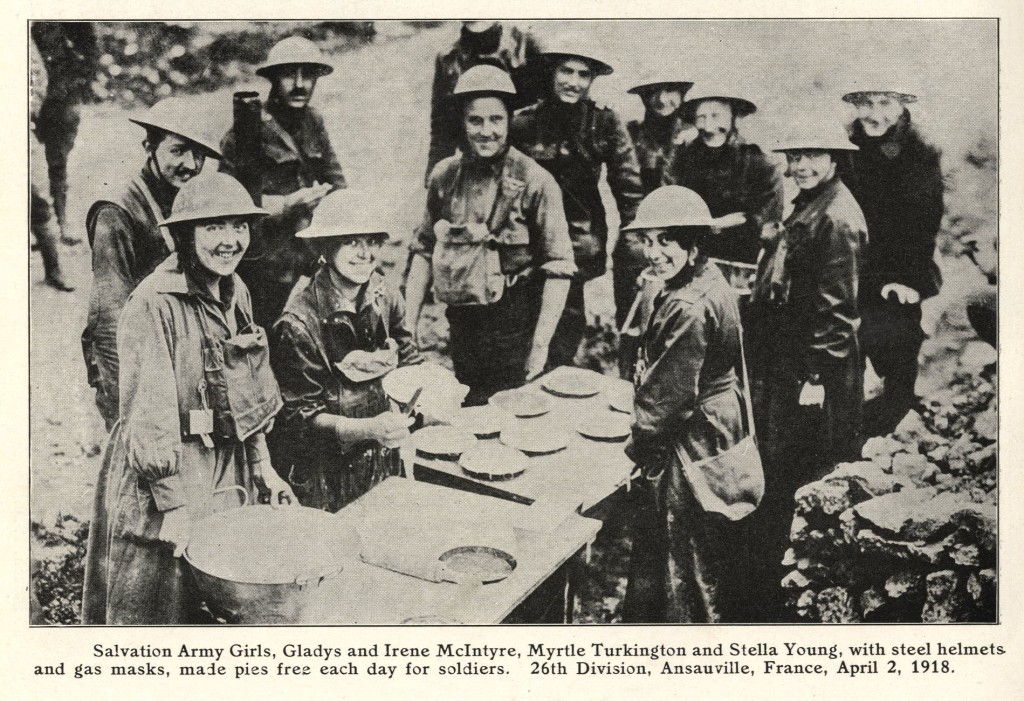
In a matter of months, the American Expeditionary Force (A.E.F.) ballooned to several hundred thousand troops in France between the fall of 1917 and the spring of 1918. By the late summer, there were over a million Americans in the theater of operations.
By the fall – and the Armistice – over two million. Casualties, too, were exponentially high: over 50,000 dead and 200,000 wounded, in about six months of sustained combat operations. Misguided doctrine, abbreviated training, and inexperienced leaders caused many casualties. However, as the rest of the combatants of that war demonstrated, most of those casualties came because modern war – modern large scale combat operations – comes with a staggering price tag. A nation that will go to war must be prepared to give up her young people.
And World War I taught the United States that it must be the entire nation which goes to war. War – as we see it in Ukraine – must be a whole of government endeavor. One part of the nation cannot go to war while the other goes to the mall, as has been the experience of the U.S. for the last two decades as laid out by military and political leaders alike.
Large scale wars, where entire cities are obliterated, are so horrendous that you must leverage all of a nation’s resources to end the war as soon as possible. And that nation must be willing to pay the requisite price in blood and treasure.
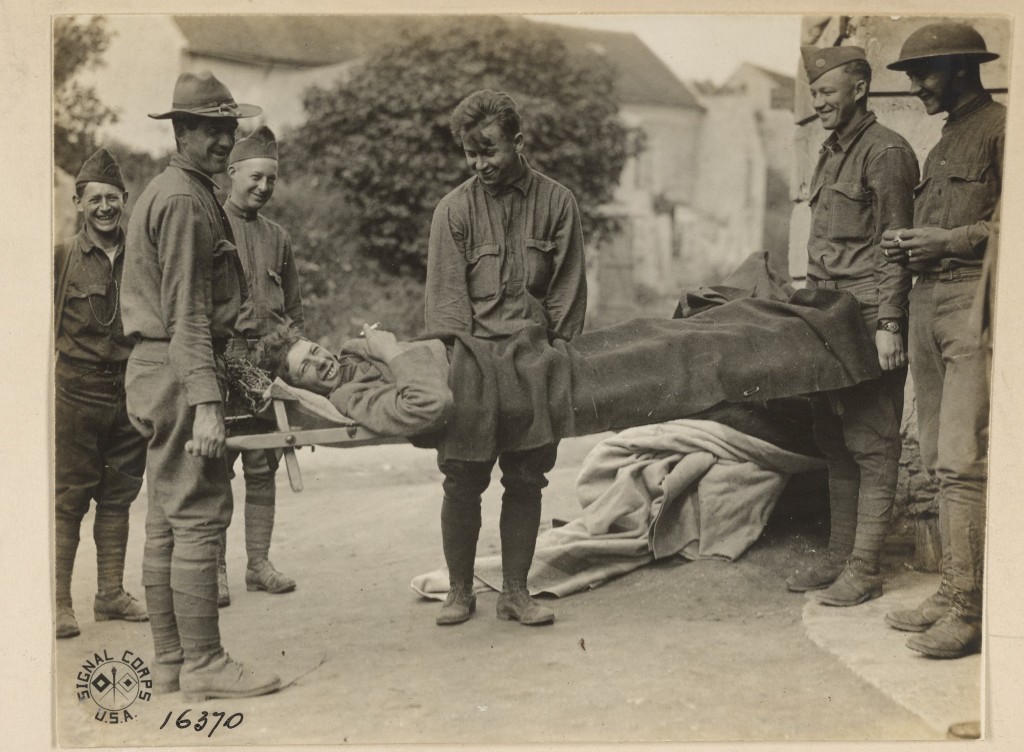
For the U.S. of 1918-1919, that price was too high. The nation turned away from international affairs and stepped back from the world stage. Veterans, however, remained incredibly proud of their service. They formed organizations like the American Legion and dedicated memorials to their fallen comrades in towns and cities across the U.S. and France.
They went back to France in mass numbers to visit their comrades buried there and to visit the places they had been during the war. In 1927, 30,000 veterans and their spouses travelled France in what was called the “Second A.E.F.” By 1937, their numbers had diminished to fewer than 10,000 but the pilgrims still came. There would be no more. Between 1939 and 1945, the veterans of World War I watched as everything they fought and bled for was washed away in a tide of bloodshed and fury.
Like the veterans of Iraq and Afghanistan today, they watched as familiar towns and cities fell to a conquering enemy. It was surely hard to find a good answer to the question, “What was it all for?” One veteran in the 1980s answered the question, “Was your service during World War I of any specific benefit (or detriment) when you returned to civil life?” with, “No, just the loss of about 2 years that the world didn’t seem to feel was of any value to the country.”1 Many today could echo that sentiment.
Today, many veterans of the Global War on Terror find themselves asking that same question. Moral injury in the U.S. military and veteran community is not something that has been significantly addressed in any large way. People deal with it in many ways. Many have chosen to go back to war, to take the skills they acquired and use them in what is thought of as a “good” war, to help preserve Ukraine as a nation and as a people. Many World War I veterans sought to find “good” wars as well, some serving in the Abraham Lincoln Brigade in the Spanish Civil War. Many served in the Allied forces in World War II. Moral injury takes a strong toll.
No war changed the U.S. Army in the way that World War I did. And very few wars have been forgotten so quickly. As much as those who follow the combat operations in Ukraine want to look at maneuver operations from World War II for comparisons, I would invite them to reexamine World War I. The paradigm shifts in technology and manpower were extreme. They might look very familiar for those today interested in how armies adapt to new technology and new ways of fighting war. Most importantly, studying World War I can help today’s veterans of the war on terror find a linkage to another group of veterans who struggled to make sense of their service and sacrifice.
.gif)
 I really had a good time there when I took a vacation there back in the 1990’s! Grumpy
Categories
Cool ad!

