Categories
War Well I thought it was neat!

General Hans Cramer The Accidental Spy By Will Dabbs, MD

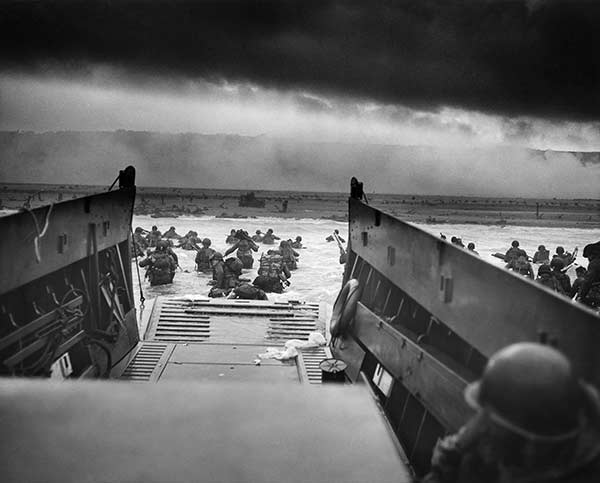
Operation Overlord was the official title for the D-Day assault. This was the largest amphibious invasion in human history. Public domain.

Operation Overlord, the 1944 Allied invasion of mainland Europe, was one of the most audacious military enterprises in human history. 160,000 Allied troops drawn mostly from the US, Great Britain, and Canada plowed inland against some 50,000 Axis defenders. The end result was a lodgment from which the Allies eventually pressed all the way to Germany.

The Germans knew we were coming. They just didn’t know exactly when or where. Calais was the obvious spot. It is less than twenty miles across the English Channel from Dover to France near Calais. As a result, the Germans staged a great deal of their defensive effort in this area. However, as we all know, that’s not what Ike had in mind.

The invasion forces moved between 80 and 100 miles by sea to reach the actual landing beaches in Normandy. While the landings were a gory mess, particularly at Omaha, they would have been far worse had the Allies not spoofed the Germans into believing that Calais was their primary landing zone. In addition to a great deal of good old-fashioned subterfuge, a decorated German General named Hans Cramer unwittingly did his part to help the Allies.
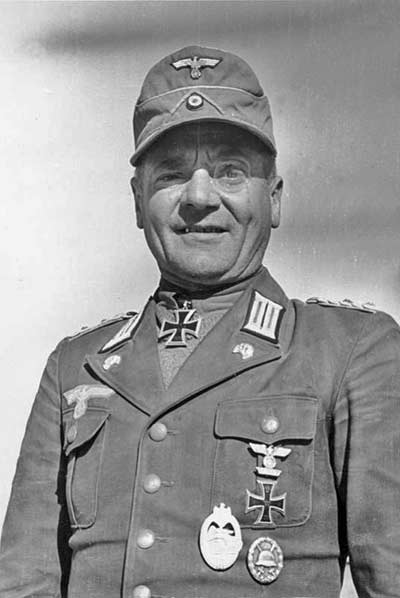
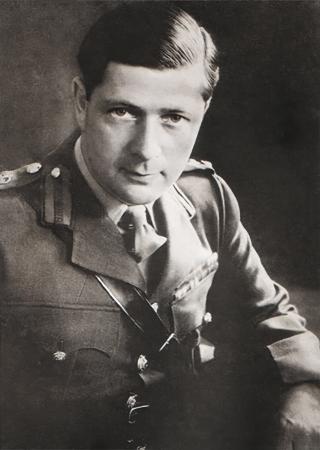
This is Hans Cramer, last commanding officer of the
German Afrika Korps. He unwittingly helped dupe Hitler
into believing that the D-Day force was landing in Calais.
Bundesarchiv.

The Guy

Hans Cramer was the last commander of the DAK, the famed German Afrika Korps. He was captured in North Africa in May of 1943 and held in a POW camp in Wales. In 1944, Cramer was 48 years old. That seems pretty spry by my current standards, but that’s actually fairly antiquated for a soldier. Once established in his POW camp, General Cramer got seriously sick.

On 23 May 1944, General Cramer was transported across England to be repatriated to Germany courtesy of the Swedish Red Cross. Despite the global hemoclysm that engulfed the world, there was still the occasional humanitarian release between the Allies and the Axis. Cramer’s Allied handlers carefully orchestrated his trek across the UK.

First, he processed through London. Then they motored across the English countryside so Cramer could see the massive buildup of troops, tanks, and military equipment being staged for the invasion. However, his driver led him to believe he was in southeastern England, the perfect place to stage an invasion of Calais.

Once he returned safely to Berlin, Cramer was aggressively debriefed. German intelligence officers mined him for information. Everything he reported was consistent with an objective in Calais.
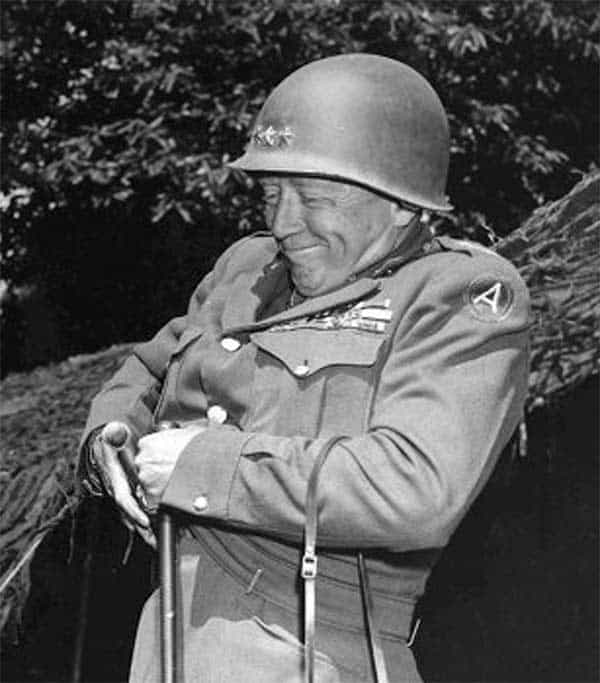
Everyone knew that George Patton was the Allies’ most effective combat general. In the lead-up to D-Day, his job was to command an enormous fake army. Public domain.

Operation Fortitude

This was but a tiny part of the overall deception plan. They called this overarching enterprise Operation Fortitude. The British officer tasked with putting it all together was named, no kidding, LTC David Strangeways.
At the Tehran Conference in November of 1943, Stalin, Churchill, and Roosevelt met to hammer out the details of the coming invasion. It was there that Winston Churchill coined the phrase, “In wartime, truth is so precious that it should always be attended by a bodyguard of lies.” LTC Strangeways took that mandate to heart.

FUSAG, the giant fake army designed to mislead the
Germans about D-Day, even had its own unique unit insignia. Public domain.

Details

General Bernard Law Montgomery’s 21st Army Group was the invasion’s major effort. However, the Allies desperately needed to keep the German 15th Army occupied in the Calais region. To do so, they created a 300,000-man army that did not technically exist.

This giant fake army was technically deployed around Kent, Essex, and Suffolk. Great effort was invested in creating radio traffic that mimicked such a gargantuan military organization. Squadrons of imaginary aircraft and flotillas of nonexistent ships were folded into the tactical organization. Double agents captured and turned by British MI5 fed carefully-screened information back to their handlers in Germany.

This massive diaphanous unit was called the First US Army Group. They were known by the acronym FUSAG, which obviously sounds pretty cool. They even had their own unit patches and insignia.

A big part of Operation Fortitude was manning it with some proper talent. They chose America’s most flamboyant general to lead this theoretical mob. With the largest amphibious invasion in human history staging to the south, General George S. Patton was put in command of FUSAG. Patton clearly would have preferred commanding real troops. However, he absolutely owned the role.

Patton made speeches and inspected imaginary combat units. A bevy of photographers followed the flamboyant general everywhere he went, documenting his sundry inspections and presentations. The Germans rightfully thought Patton to be one of the best generals in the Allied stable. They fully expected him to command the pending invasion of Europe.

Success…

The ruse was fabulously successful. Even after the Normandy landings, Hitler and his generals still suspected it was a feint to draw attention away from Calais. This misperception of the tactical situation bought the assault troops precious time to create a foothold in Normandy.

The Germans eventually figured out that they had been duped and moved their reinforcements to Normandy right sharpish. However, by then, the Allies had established air supremacy. That made tactical troop movements in daylight tantamount to suicide.

We all know how it ultimately turned out. Less than a year after the D-Day invasion, Hitler debrained himself in his bunker in Berlin while victorious Russian troops slagged the countryside above. However, all of that might have been very different had it not been for LTC Strangeways’ Operation Fortitude and one unwitting German general.

Categories
All About Guns Well I thought it was neat!

Vintage BB Gun Restoration – New 2024

Categories
Well I thought it was neat!

INDIA:HUNT FOR MAN-EATING TIGER

Categories
Well I thought it was neat!

Visit To La Viña

When I was a kid growing up in southwest New Mexico, I was required to exercise my old pony every evening after school, which I didn’t really consider a chore, though the palomino tended to be a little salty at times.

It was a great plan. We were to spend the weekend in the heart of Webb County, Texas, at a rustic old spot called La Viña, located on the famous Shipp Ranch. I’d been to the place before and figured it would be perfect for a few days of hunting, fishing, and just hanging out with my dad. The Shipp was owned by Col. Evan Quiros, who’d graciously given us permission to set up camp at La Viña, which was just an old adobe line shack turned into a deer camp. To me, an outdoor-loving eight-year-old kid, it might as well have been a palace.

Friday after school, I had my gear packed. Dad had come home a little early and put together our needed accoutrement, which consisted of biscuit makings, some venison, and other odds and ends for a pot of stew; his Ruger Flattop .44 Magnum and ammo; and my old Winchester Model 62A and a brick of .22 ammo. Lastly, he threw in a couple of yellow legal pads. I stared at the pads a minute, then looked at him questioningly.

“Yep, I’m planning on getting a little writing done at La Viña,” he said. “At least there’ll be plenty of peace and quiet there. I’ve got a short deadline on a story for Shooting Times.”

One thing was for sure, when the old man was writing, he demanded peace and quiet. Around the house when his deadlines neared, it was required that my presence be limited to quiet excursions to the kitchen for a drink or snack followed by an immediate exit. TV was out of the question. At least I’d be able to get out and shoot and fish at La Viña.

We arrived at the remote little camp well after dark. Dad made a cursory check of the place to clear out any loitering rattlers, tarantulas, or vinegaroons, which were generally in abundance. We stowed our gear, had a bite to eat, and set in for a little reading before bed. I had a hard time sleeping, thinking of the small-game hunting and bass fishing in Col. Quiros’s well-stocked tanks the coming two days would bring about.

I woke up to the sound of a crackling fire that Dad had just stoked up. He was scraping up fixings for an omelet, which he was planning to make in a cast iron skillet over the fire. La Viña’s fireplace was about all there was for a kitchen. Along with the aromatic smell of the burning mesquite, there was another odor about. I lay in my bunk a moment before recognizing the smell of rain and the sound of the steady pour on the old tin roof. I jumped out of the bunk and ran to the door to look outside, hoping to see just a passing rain cloud. That wasn’t the case.

“Yep, pretty well socked in, I’m afraid,” Dad said without looking up from the omelet makings. “Looks like we’ll be stuck inside a while.”

Rain in South Texas is a precious commodity, and I’m sure Col. Quiros was ecstatic about having a good soaker, but my own mood was far from delightful. After breakfast I wandered out into the downpour for a moment. The caliche entrance to La Viña had turned into a slippery goo about 3 inches deep.

There wouldn’t be much hunting. Even if I’d elected to give it a go, the old man likely wouldn’t let me get my nice Winchester soaked. Part of the problem of course was the fact that Dad wasn’t going to like being cooped up in the adobe shack trying to write with me hanging around with nothing to do. I left my mud-caked boots at the door and went on in to dry off. He was sitting next to the fireplace, concentrating on his legal pad. I quietly grabbed a magazine and went to my bunk.

As we both knew would be the case, the situation didn’t work. After a while Dad tossed the yellow pad aside and picked up his old Rolleicord camera. If he couldn’t get his writing going with me lurking about, he figured to get some pictures taken for the article.

After the photography session, the rain let up slightly. Dad tossed me his old army poncho and pointed at a fishing rod.

“Take a walk on over to the tank and see if you can’t catch us a bass for lunch,” he said.

It had eased into a steady drizzle, which didn’t bother me a bit. Before arriving at the camp, Col. Quiros had outfitted me with one of his special bass lures, sure to land a lunker. He’d warned me sternly not to lose it since it was the last one he had. The fishing turned out to be pretty good, and I pulled in one pretty good large-mouth of perfect lunch size. After losing the lure, I headed on back to camp, the rain getting heavy again. Dad had written about two paragraphs in my absence.

After shedding my soggy clothes, we lunched on the bass, which Dad doused in cornmeal and fried in bacon grease.

“We may never get outta here if this keeps up,” Dad said after lunch. “Might as well pack your gear and we’ll head home.”

I was pretty disappointed as we got in the truck and slid our way out to the highway back to Laredo, but Dad assured me we’d return to La Viña in better weather. We stopped by the Shipp headquarters to see Col. Quiros on the way out. I was afraid he might not allow me back over the fishing lure, but thankfully he didn’t immediately remember it.

“Get your article finished Skeet?” the Colonel asked.

“Naw. That damned Shooting Times editor’ll just have to wait,” Dad replied.

“You’ve never paid any attention to deadlines anyway,” the Colonel added with a chuckle.

Editors and deadlines weren’t things I paid much attention to back in those days. I could have cared less about them, but I knew they were of importance to Dad. All I knew on the way back home was that even though our trip had pretty much been rained out, it was a great time.

These sort of memories contribute greatly to the honor of now having my own column at Shooting Times. It is a real privilege to follow in my dad’s footsteps, and I’m thankful to all the great folks, even the editors, who have allowed me to do so.

I’m a little nervous about having to follow great writers like my dad and Sheriff Jim Wilson, but hopefully I’ve found a good home. And yeah, I inherited the old man’s requirement of serenity while working.

(Bart died last month July 2023)

Categories
Well I thought it was funny! Well I thought it was neat!

Do they have one for a Toyota Highlander? Asking for a friend

Categories
Well I thought it was neat!

The Rise & Fall of the Radial Airplane Engine – History & Technical

Categories
Well I thought it was neat!

Heroes, Scoundrels, and General Patton Family Gravesite: Exploring San Gabriel Cemetery

Categories
This great Nation & Its People Well I thought it was neat!

I beg to differ on this issue

Categories
Fieldcraft Our Great Kids Stand & Deliver Well I thought it was neat!

Now there is a real, smart, tough woman

Categories
Well I thought it was neat!

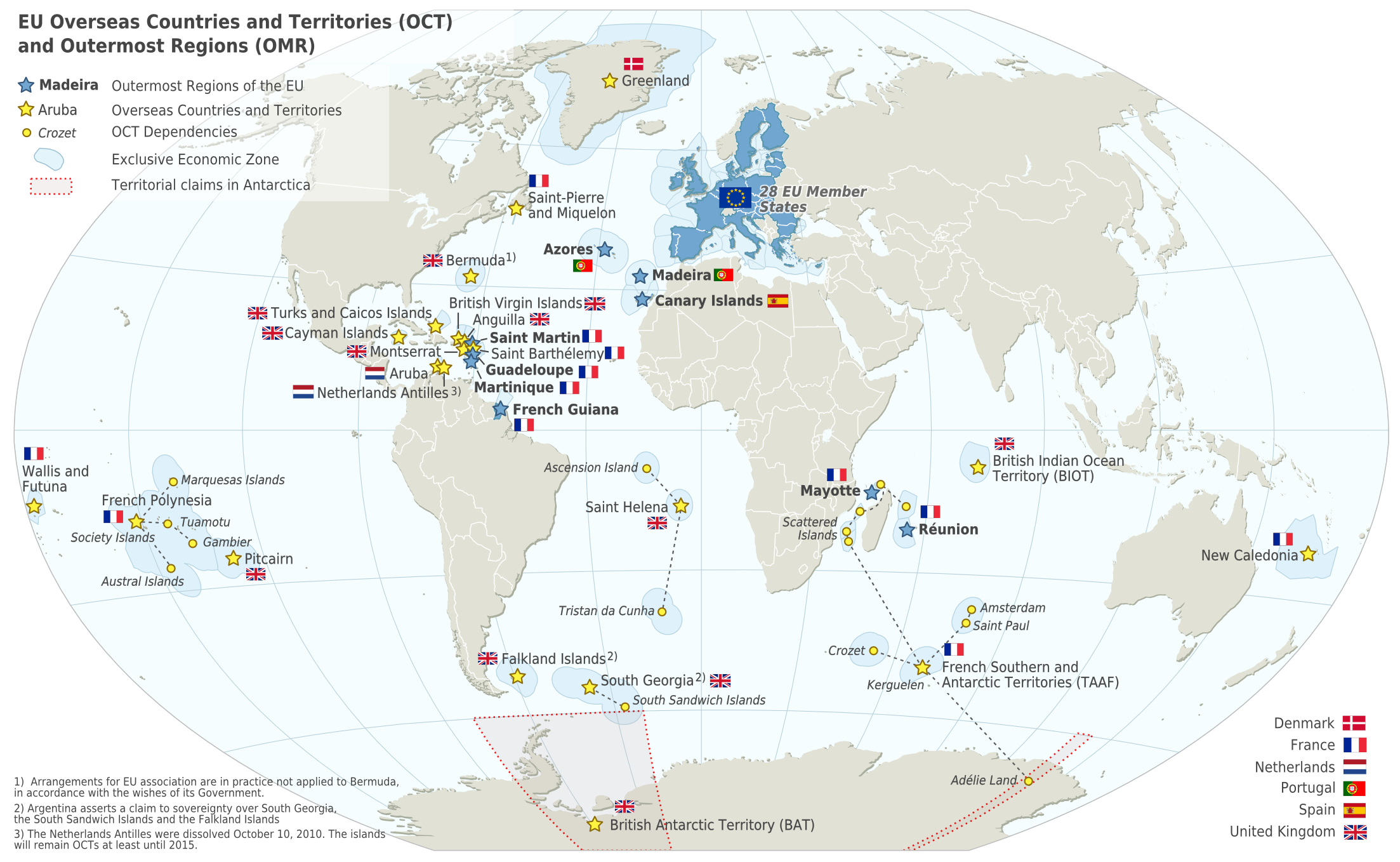
Current EU Colonies of the world