Category: War
The Bell UH-1 Iroquois, better known as the Huey, is one of the most recognizable helicopters in the world. In many ways, the helo is synonymous with the U.S. involvement in the Vietnam War. From troop transport to medical evacuation to air assault, these airborne utility helicopters proved invaluable to America and her allies. In this article, former Army aviator Dr. Will Dabbs tells the story of these ubiquitous helicopters.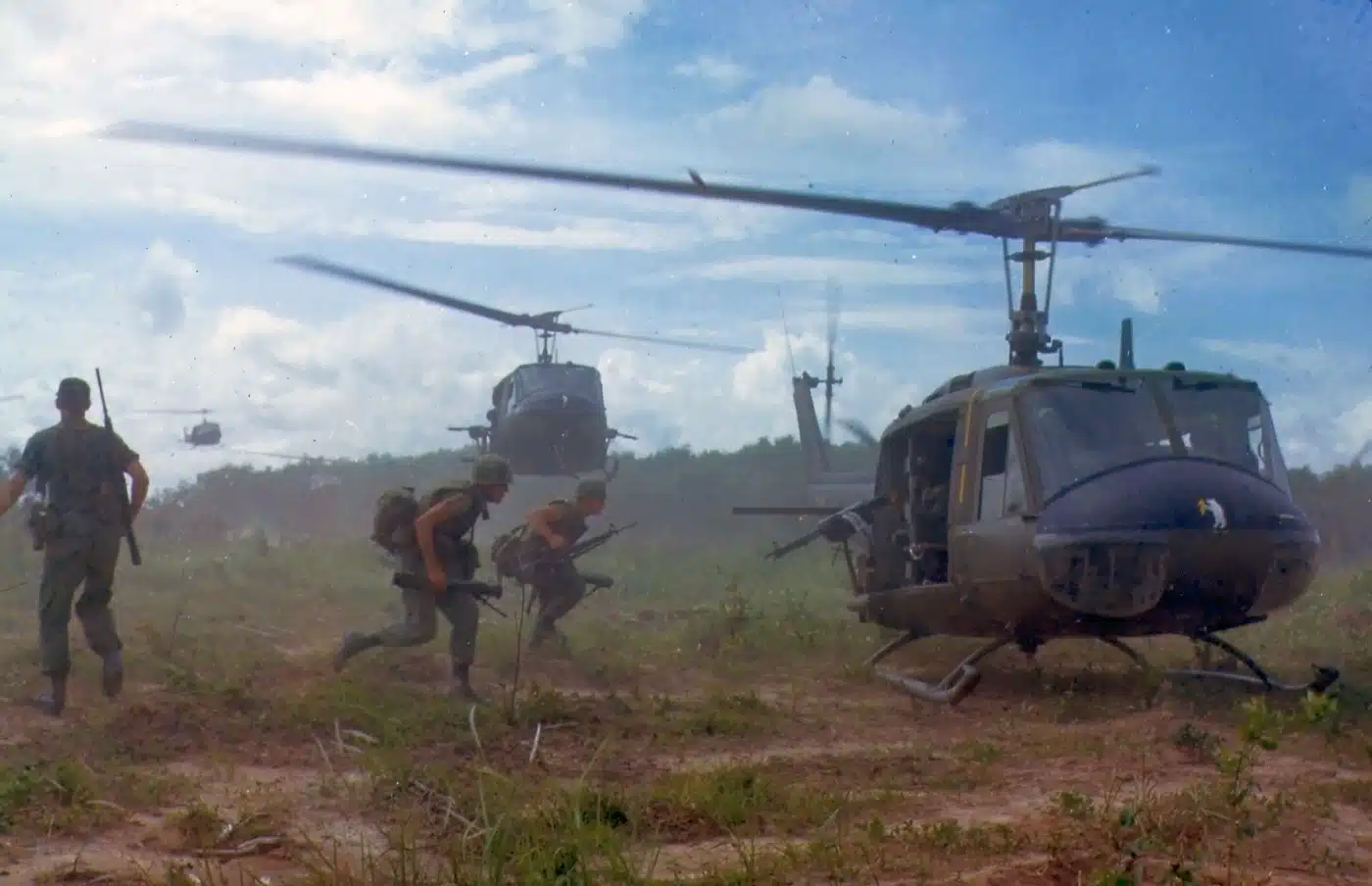
Ihave a friend named Tom who flew Hueys in Vietnam. Like most of the older aviators with whom I flew, this guy mastered his craft in Southeast Asia. In addition to being an invaluable source of combat experience, these veterans also had some epic stories.
Flying Naked in the Vietnam War
Tom was assigned to a lift unit fairly deep in Indian country. No place in Vietnam was truly safe, but this particular hellhole was subjected to regular mortar and rocket attacks. On this particular day, Tom was taking a shower.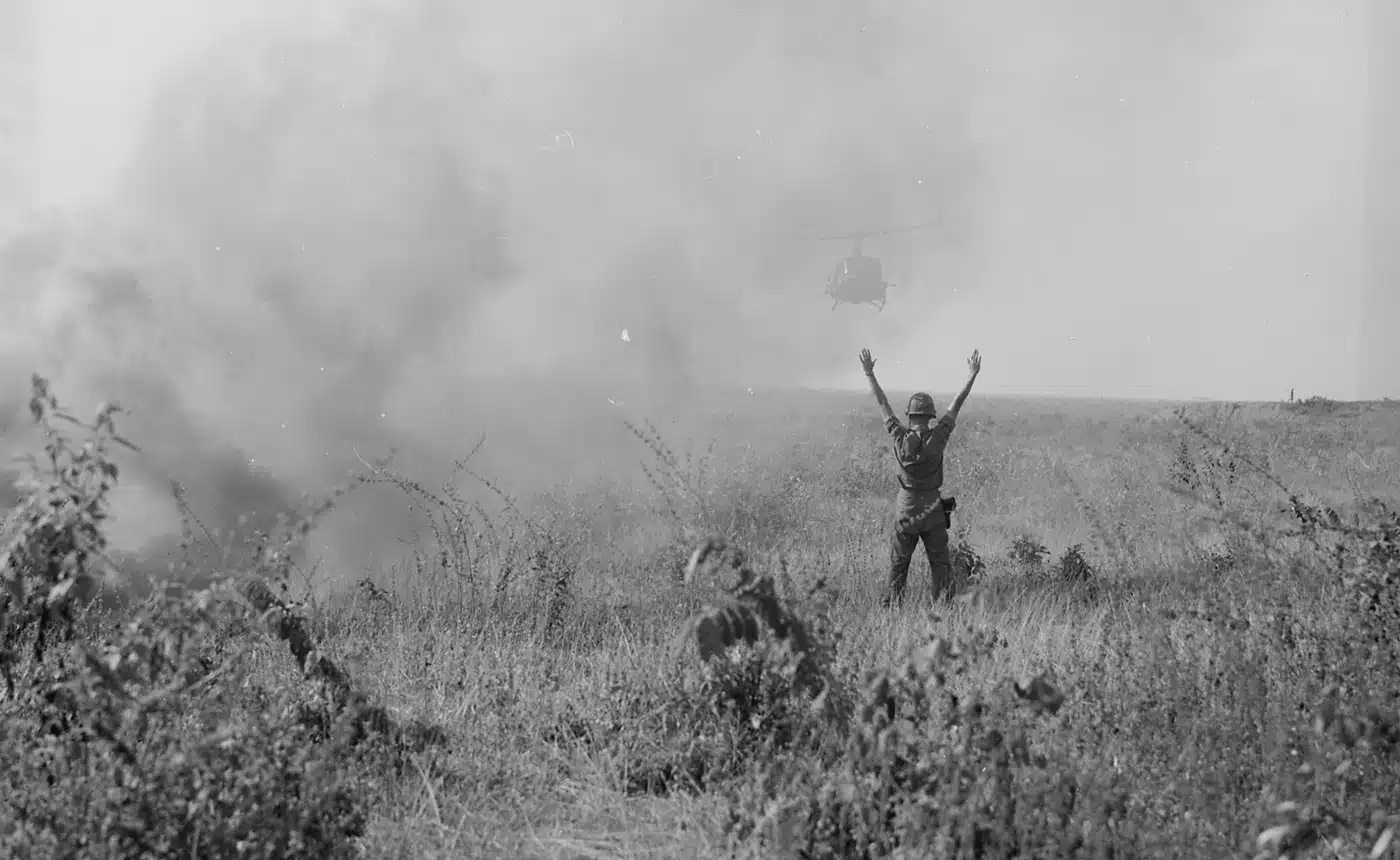
Shower facilities were typically nothing more than a tent with a wooden floor made from ammo crates and some kind of gravity-fed water system that sprinkled cold water on you long enough to remove a little soap.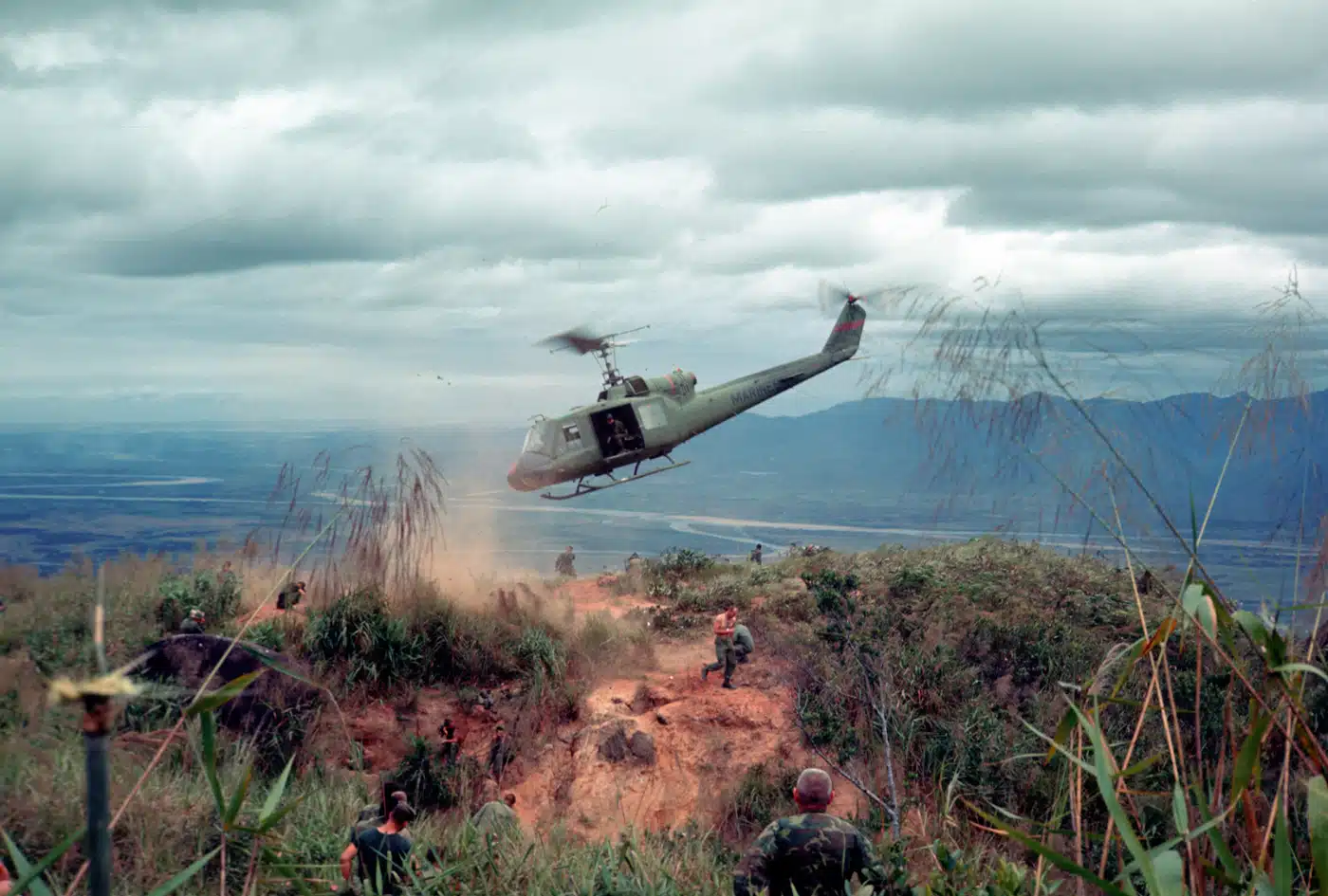
Tom was vigorously engaged in his ablutions when Charlie decided to drop a few mortar rounds on his little corner of heaven. SOP under those circumstances was to jump into the first aircraft you came to and fly it off someplace safe while the grunts and Redlegs attended to the mortar threat. Tom tore out of the shower tent and did just that.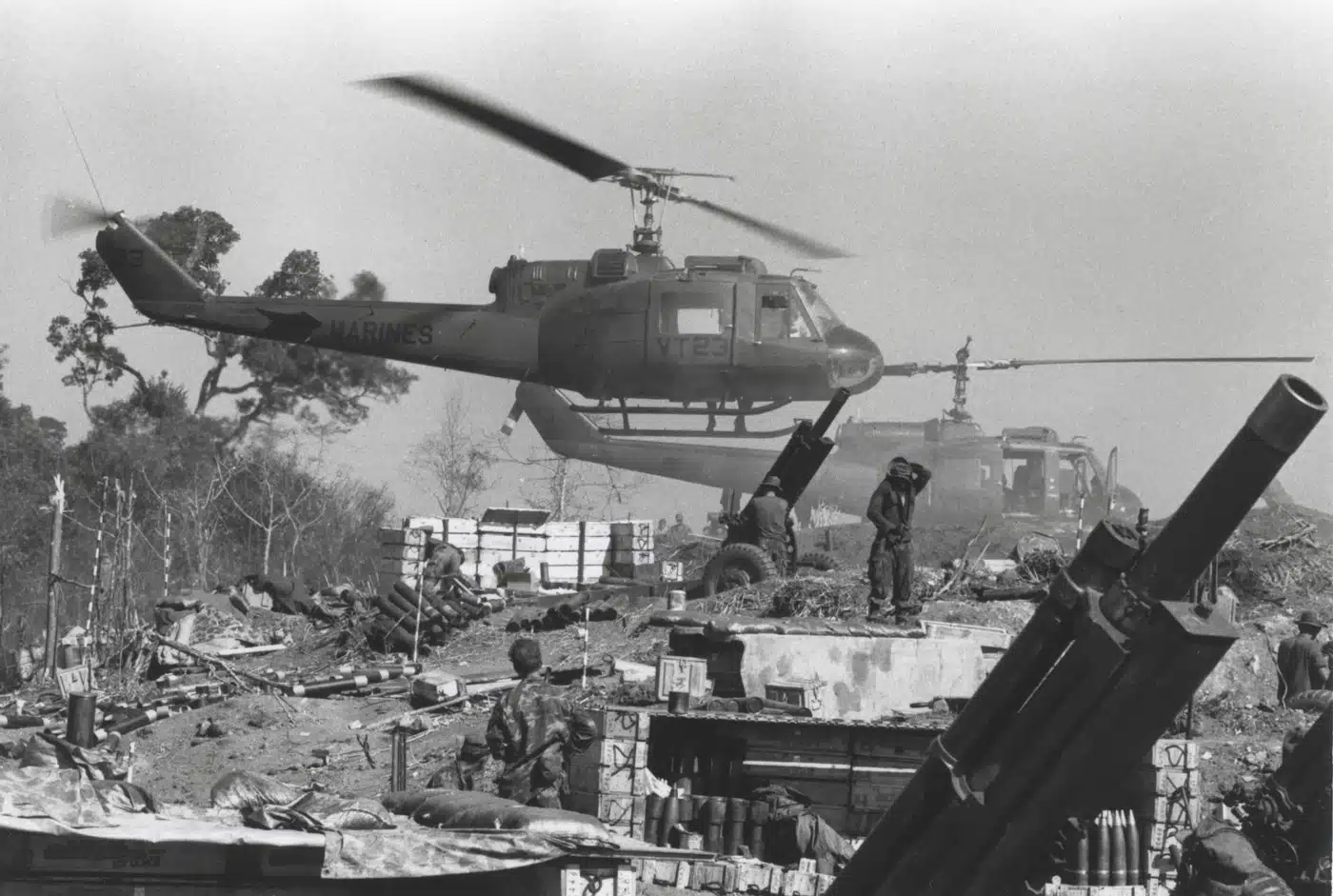
Tom landed soon thereafter at a nearby firebase adorned solely in a pair of shower shoes and a flight helmet. Somebody was kind enough to gift him some clothes for the subsequent trip back home. My buddy proved once and for all that it was indeed possible to fly an Army helicopter naked. I don’t know what first drew me to military service, but it certainly wasn’t the five-star accommodations.
UH-1H Huey Helicopter
The aircraft that my streaker buddy Tom was flying that fateful day in Vietnam was the UH-1H Iroquois. Army helicopters, with a single isolated exception (the AH-1 Cobra gunship), are named after American Indian tribes. However, everybody everywhere refers to the UH-1 as the Huey.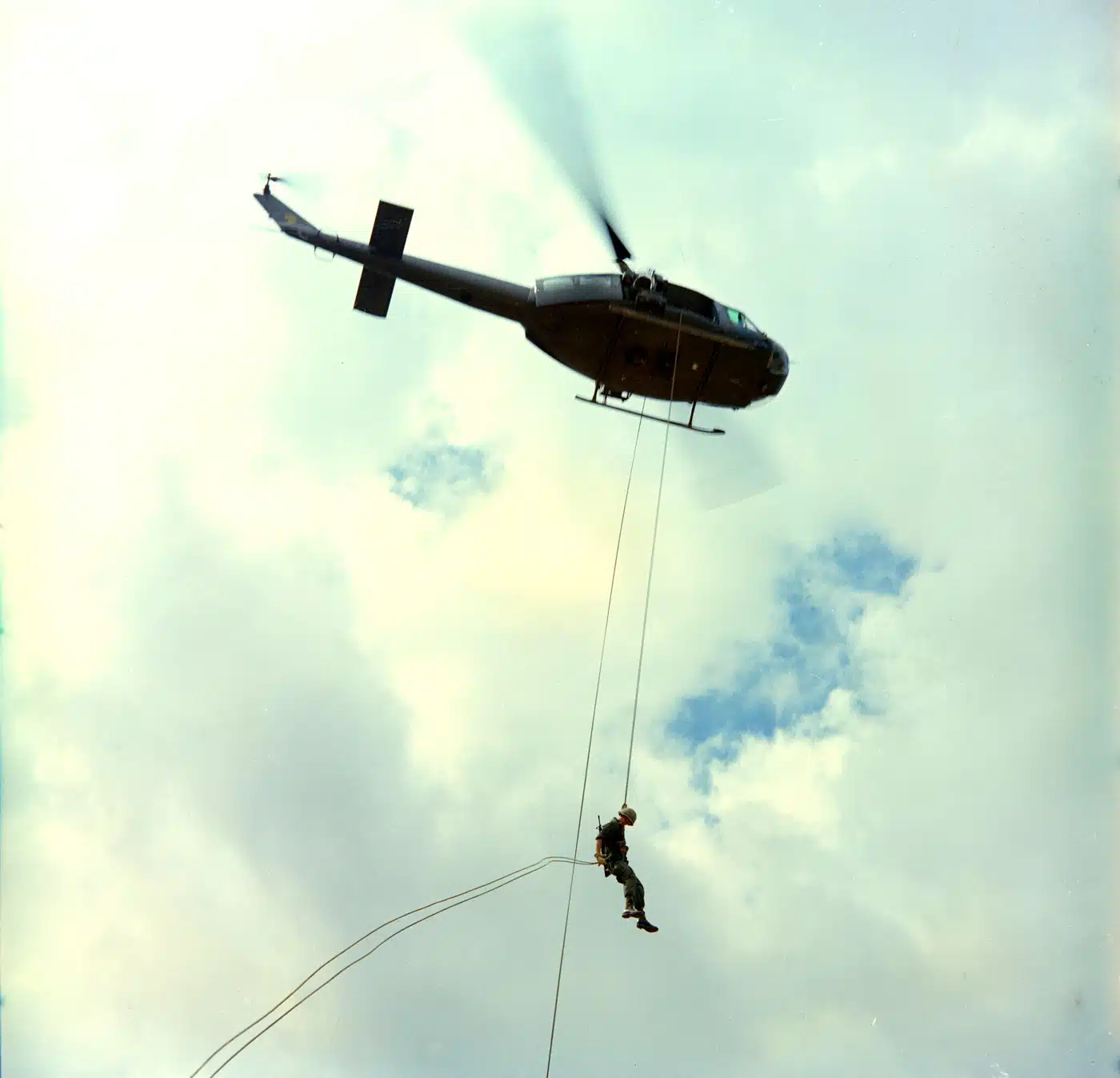
The original service designation was actually HU-1. That’s where the “Huey” came from. The first Hueys to see combat service were Dustoff medevac birds serving with the 57th Medical Detachment in Vietnam in 1962.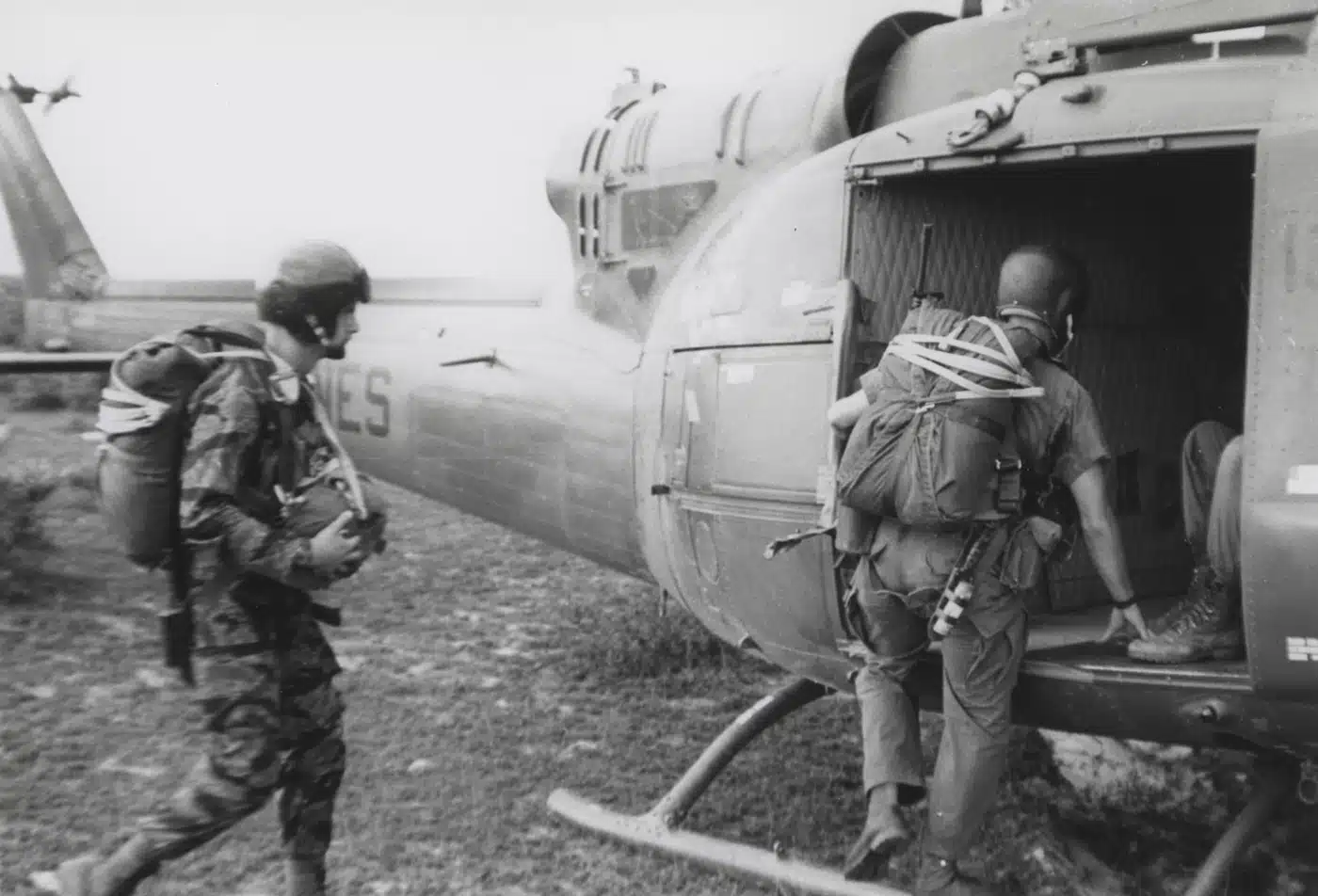
More-so than any other single weapon system, the Huey came to exemplify the war in Vietnam. The unique sound that it made and the iconic visual image it struck combined to create something visceral in the souls of those who flew, serviced and rode in them. Everybody who ever wiggled the sticks in a UH-1 loved the thing.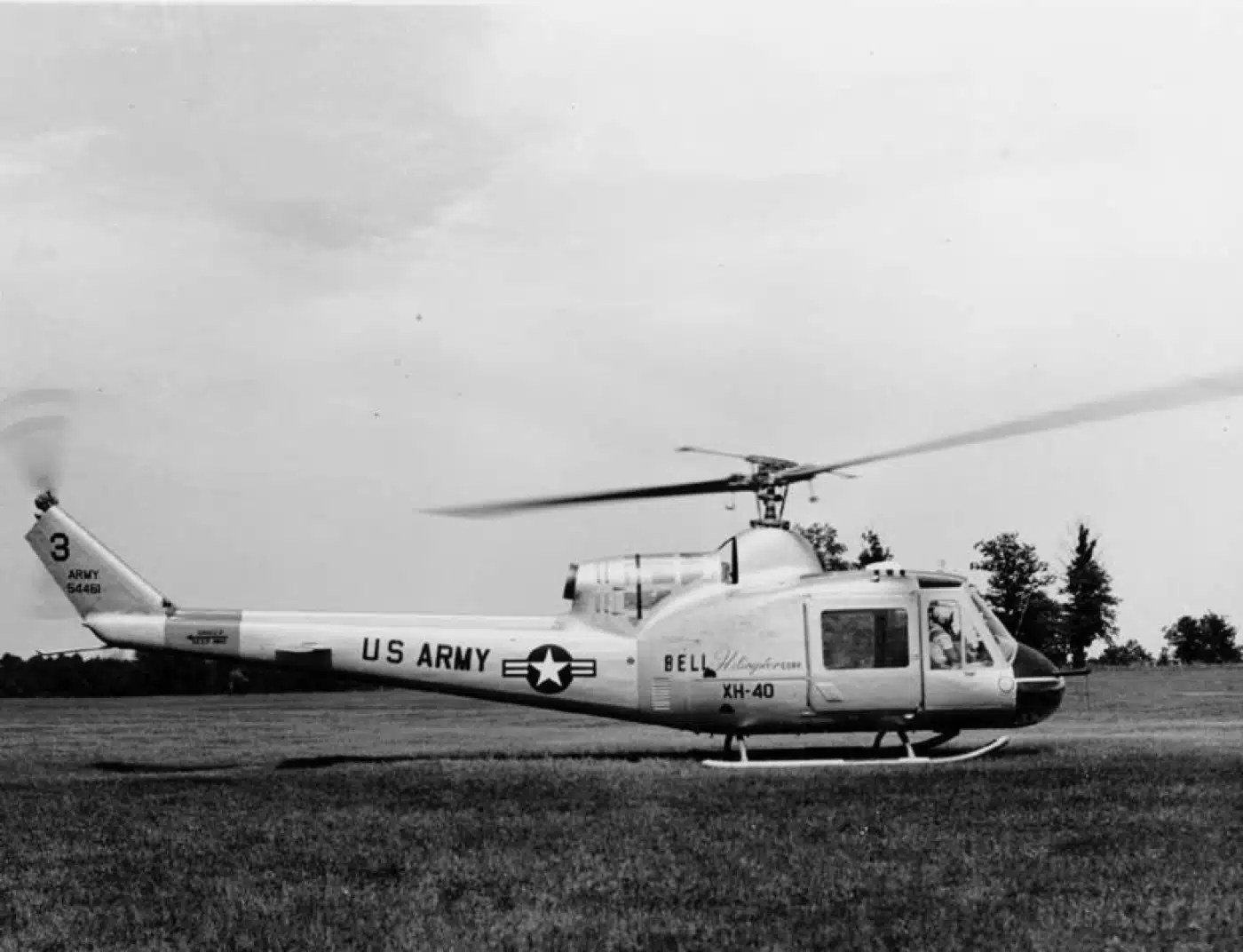
The prototype XH-40 that went on to become the iconic Huey first flew on 20 October 1956. The UH-1 represented the transition from piston-driven rotorcraft to those powered by turboshaft engines. The Lycoming YT53-L-1 powerplant of the XH-40 put out some 700 shaft horsepower. A more powerful engine, the Lycoming T53-L-13 that powered Tom’s bird, did exactly twice that. 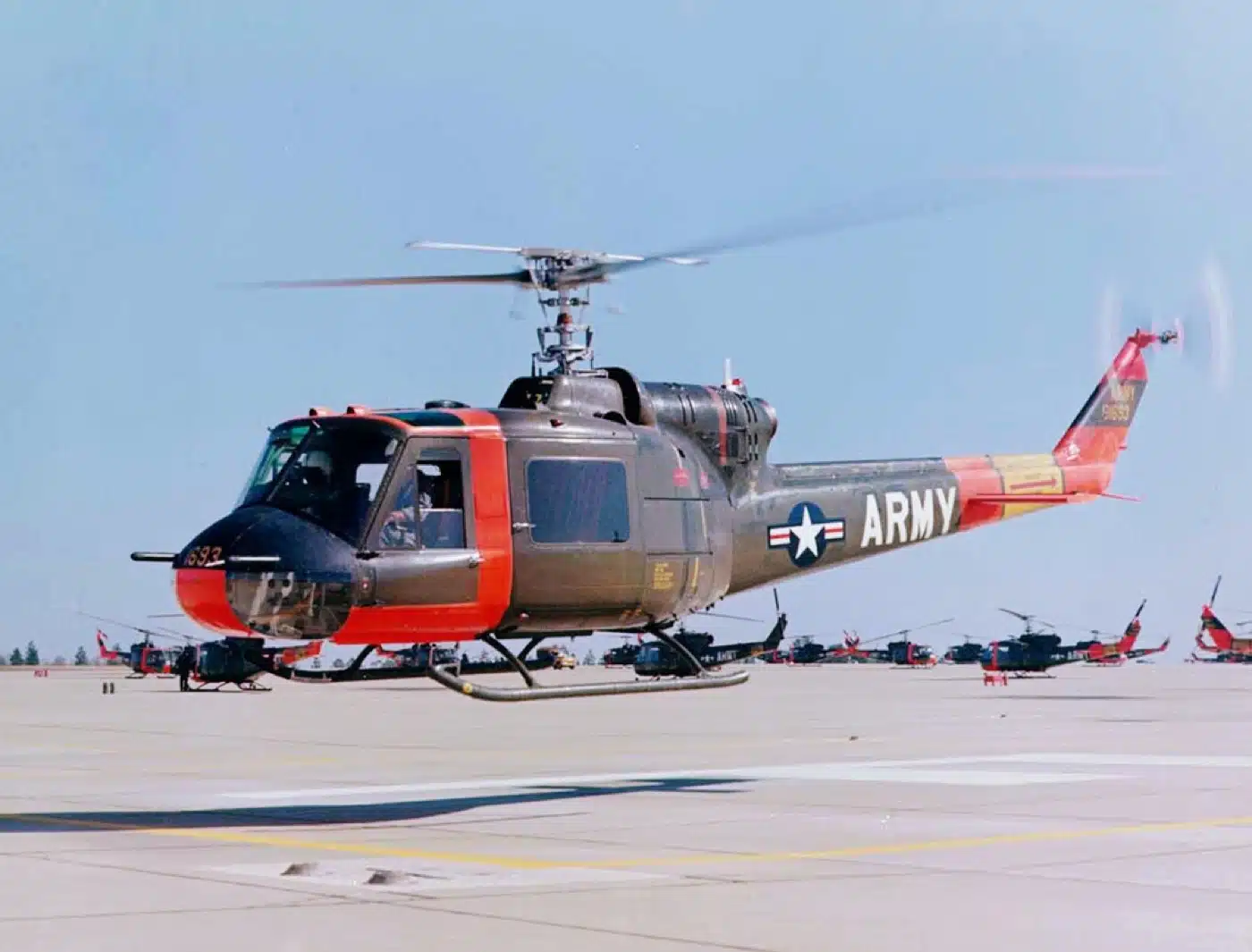
The A, B, and C-models sported a fairly short, stubby fuselage. The UH-1D model was a derivative of the Bell Model 205 and featured a longer fuselage design. The UH-1H combined the lengthened D-model architecture with the later 1,400-horsepower engine. It was the most common service variant.
More than 16,000 copies of all sorts were ultimately manufactured. UH-1N and UH-1Y twin-engined Hueys remain in service with the USAF and USMC today.
The UH-1H had a total dimensional footprint of 58 feet and a max gross weight of 9,500 pounds. Vne (velocity never-to-exceed) was 124 knots, or 143 miles per hour. The Huey typically flew operationally with two pilots and either one or two crewmembers. Cargo capacity was about 3,880 pounds. The most common defensive armament for the UH-1H was an M60 pintle-mounted machine gun mounted to each side of the aircraft. The men operating these machine guns were known as door gunners.
Flying the Huey
I attended the U.S. Army rotary-wing flight school in the sweet spot between the piston-driven TH-55 and the turbine-powered TH-67. Primary flight training in my day was undertaken in vintage UH-1H’s. The first time I broke ground in a helicopter was at the controls of a Huey.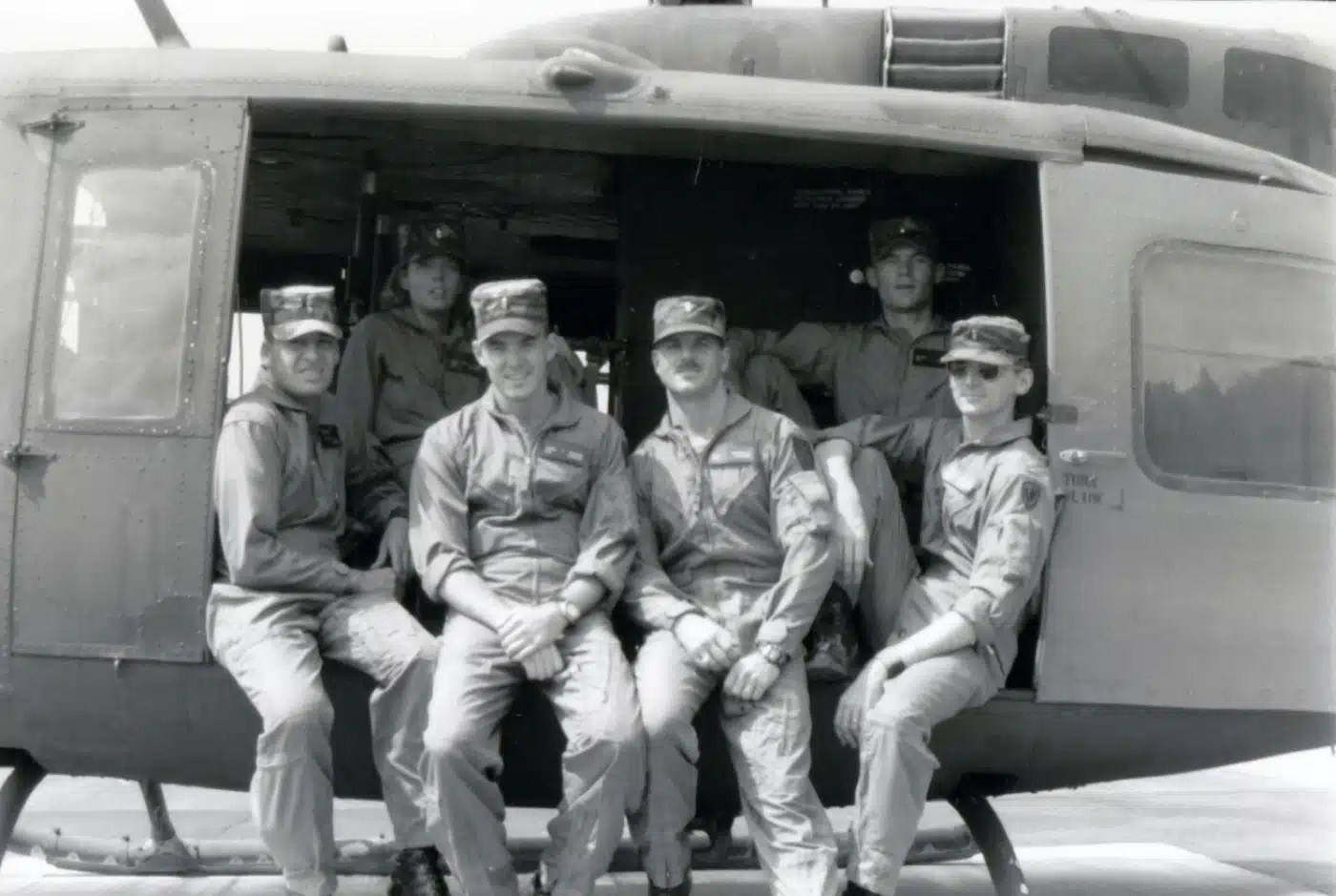
Reviewing the startup procedure gets my blood pumping even today some 33 years later. Here’s a brief video:
There’s really nothing in the world quite like that sound.
As the engine and rotors spool up, the aircraft runs through an interesting harmonic range. You can feel the airframe vibrate at different frequencies dependent upon how fast the main rotor is turning. Once the aircraft is up to speed it is smooth and responsive.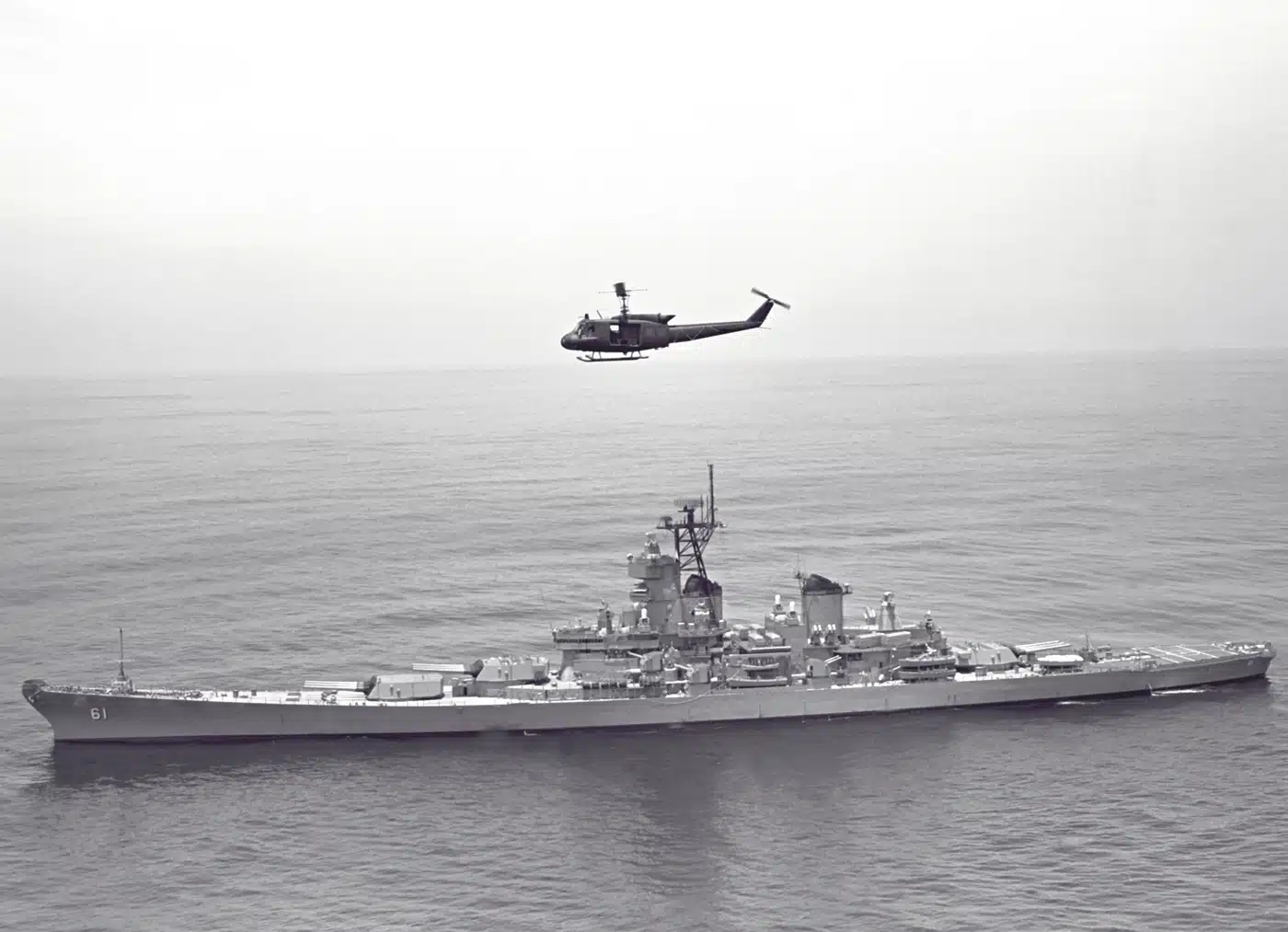
Though we did derisively refer to the UH-1H as the “Hueybago,” it was a sports car in the air. The Huey struck a nice balance between size and performance. In the hands of a competent pilot, a Huey will reliably induce airsickness in the uninitiated. 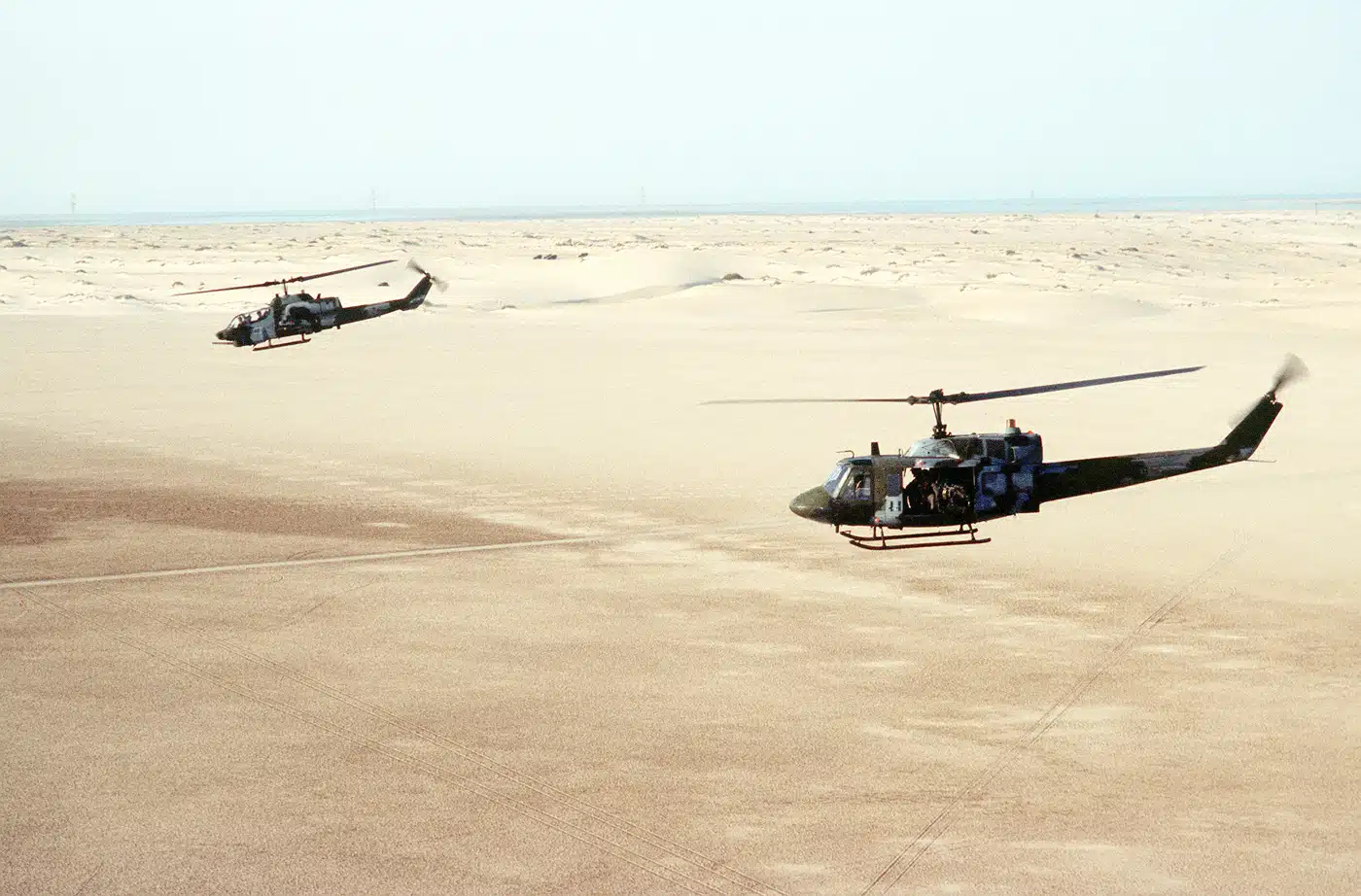
As you break ground and air taxi, the Huey feels like it is sliding on greased glass. Like most helicopters, control inputs, particularly at a hover, are extremely nuanced. You nudge rather than push. Over-controlling is a ubiquitous problem with fledgling helicopter drivers. Once you accelerate through ETL (Effective Translational Lift — essentially the point where a helicopter starts flying like an airplane) everything changes.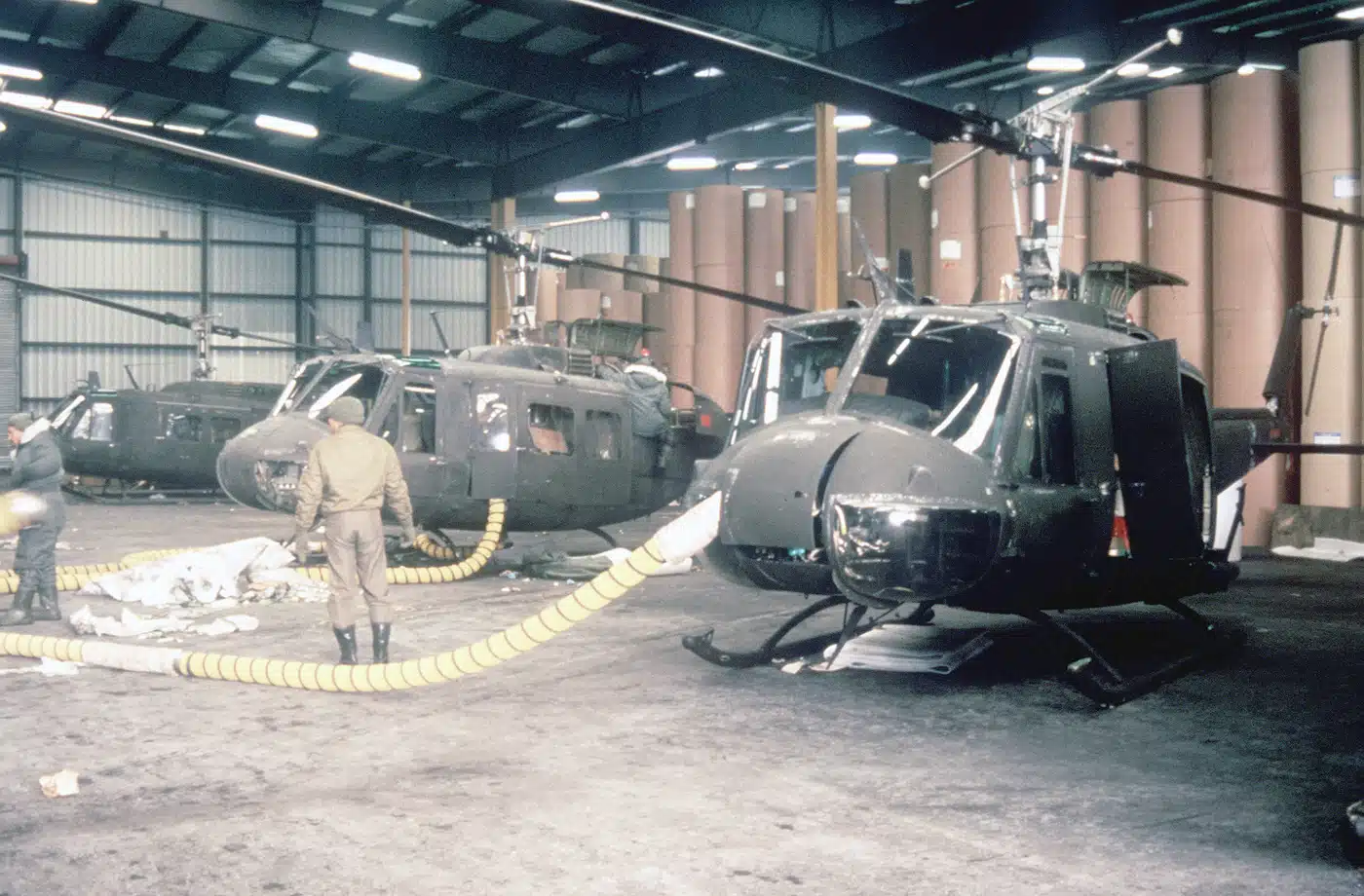
Maneuvering limits were +/- 30 degrees in pitch, 60 degrees in roll, and less than 0.5 positive G. However, a great deal of fun can be found inside of those numbers. Tearing along at 120 knots flying nap of the earth at the controls of a UH-1H is a rush like none other. The same experience while strapped into the gunner’s well is almost as cool. The world’s best roller coasters pale in comparison.
Ruminations on the UH-1 Iroquois
While flying a Huey tactically is an undeniable blast, the reason so many old Vietnam vets wax so nostalgic at the characteristic flop-flop-flop sound of those big rotors is because of what that sound represents. For American grunts deep in the suck running low on ammunition and knee deep in gore, the sound of incoming Hueys literally meant life.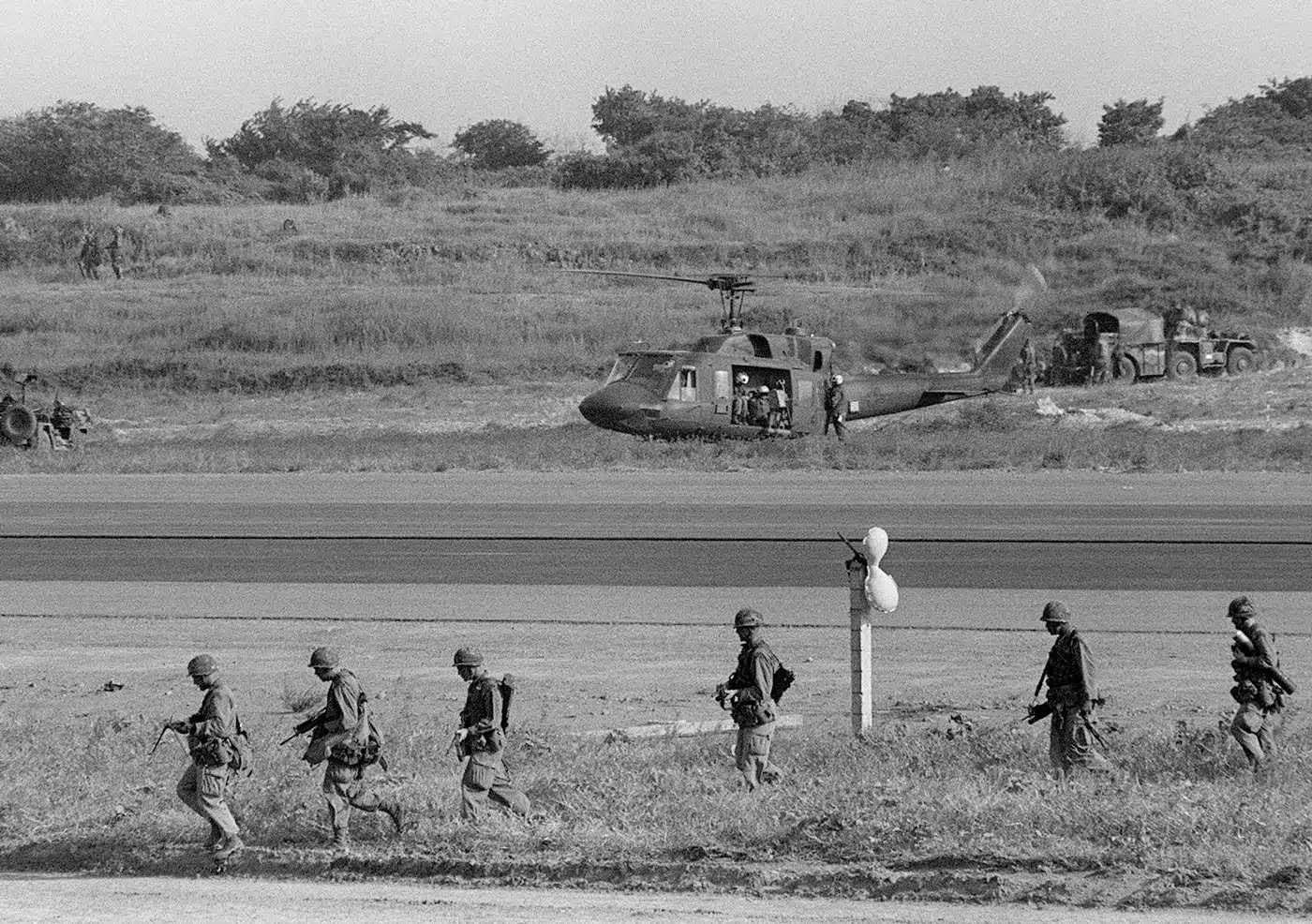
Whether these big green machines were bringing in ammo, taking out the wounded, or extracting them for a well-deserved ride back to someplace less horrible, the sights and sounds of the remarkable Bell helicopter are forever burned into the psyche of American fighting men of a certain age. The UH-1H Huey is indeed America’s helicopter.
Over the years, I’ve often heard the question, “What was the best Christmas gift you ever received?” Usually, this is qualified by the following: “Maybe not the most expensive or the biggest surprise, but the most memorable; the one you’ll always remember as the best.” For me, the answer is easy. I’ve known exactly what it was since I was 19 years old. It was a pair of socks.
They weren’t just any socks. They were new, never worn, clean, dry military-issue boot socks, and they were perhaps the only such pair within 100 miles. They were a gift from my best friend and “roommate” in our 2-man fighting hole on Christmas Eve. He had bartered who-knows-what for them over a month before and kept them secretly hidden away in a plastic bag.
It was hardly possible for us to hide anything from each other. We were closer than brothers and lived out of each other’s rucksacks. I knew how difficult hiding things could be because I had done the same with something he highly prized: a can of fruit cocktail, almost as rare as clean, dry socks.
We decided to exchange gifts on Christmas Eve because the odds were against us seeing another dawn. He opened the fruit cocktail and offered me a spoonful. Grinning, he announced he wasn’t going to die and leave an unopened can for someone else to enjoy. I put on the socks right away, reveling in their luxury, and he smiled like the proud poppa he would never get the chance to be. He was killed in action the following July. One lone surviving photo of him, smiling in the sun on a shell-cratered hilltop, is a cherished memento. Does anyone wonder why that pair of socks has always been my “best Christmas gift”?
Giving IS Getting
I suspect a lot of you folks are like me; uncomfortable receiving gifts but really tickled with giving appreciated gifts. One of the most rewarding things I’ve ever done is giving Christmas gifts the recipients named as their “best ever.” I’ll tell you about just one — and admit I have an ulterior motive.
Years ago, I knew a kid in his early 20s who had never held a firearm, much less shot one — but he was interested in a girl who was an avid rifle shooter, and he wanted to learn gun handling.
I taught him the basics — safety, nomenclature, shooting and maintenance, slipping in mini-lectures about the history of free, armed Americans and the rights and responsibilities of armed citizens. It was all new to him, but he hungrily devoured it.
I had him shooting a variety of rifles and carbines, but there was one he truly loved: a Swedish Mauser Model 96, in 6.5x55mm, made in 1916.
Adding to the appeal of that long, exceptionally accurate rifle was the date on its receiver—to him, ancient history. I told him about the cataclysmic events of that momentous year, including the 11-month battle of Verdun. I told him to save his money, and I could find him one like it. Then I gave it to him for Christmas, with 400 rounds of ammo. He was stunned.
It made him a rifleman. I watched as he became an informed, confident, proud, armed citizen — a fully-realized American. Possession of a rifle, some skills, and a sense of history gave him identity; for the first time, a worthwhile self-image. The gift of that gun changed his life—and enriched mine.
I know lots of you have more old but serviceable shooters than you’ll ever have real need for again. You’re experienced hunters, trap and skeet shooters and competitive marksmen.
You have both things and skills. Maybe this isn’t something you could do this Christmas, but perhaps a project you could fulfill over 2011, culminating in the same kind of Christmas surprise. There are worthy candidates out there waiting for a mentor. It would be good for you, for them, for the nation—and for me too. Sneaky of me, huh? Think about it, OK?

The 1999-issue New Jersey statehood 25¢ piece shows Washington crossing the Delaware on Christmas night, 1776—but how many people know the story?
The Gift Of Trenton
This Christmas, if you can capture some grandkids or miscellaneous munchkins, I urge you to give them Trenton. It’s highly unlikely they’ll ever hear of it in school. Get a book or two with colorful illustrations; maybe make a crude map yourself. Kids need visual aids to capture their attention. Keep it brief or you’ll lose ’em. But tell it with humor and passion, and you might just change a world-view, and a life.
You remember the story: In November of 1776, the Continental Army numbered 30,000 men. After the disastrous battles for New York and New Jersey, only about 2,500 remained strong enough to fight.
Washington’s army barely escaped across the freezing Delaware into Pennsylvania. They were so short of supplies that only 1/3 had shoes or boots; the rest wrapped their feet in rags and burlap.
The British-led Hessian troops decided to wait in Trenton until the river froze over, then march across and wipe out the ragged band of Americans. Washington’s men were hungry, exhausted and demoralized.
But on December 19, something extraordinary happened. Thomas Paine, the author of Common Sense, which inspired so many colonials to revolt against the English crown, published another pamphlet titled The American Crisis.
It began with the once-famous words, “These are the times that try men’s souls.” Paine spoke of the “summer soldiers and sunshine patriots” who would fold when times got tough, but for the true patriots, “the harder the conflict, the more glorious the triumph.” Washington read it to his men. It wasn’t food or medicine, but it filled and invigorated them. They were ready to fight again.
In the teeth of a storm on Christmas night, against all odds, they crossed the ice-filled Delaware to Trenton, where they surprised and defeated the Hessians. More victories followed, and with them, freedom.
There are so many stories within the saga. A spy came to the Hessians’ headquarters to warn them of Washington’s attack. Why did their commander, Colonel Johan Rall, refuse to admit him—and shove the note in his pocket?
Who was “Fat Henry Knox,” the 26-year-old bookworm, and why might the operation have failed without him? Emanuel Leutze’s 1851 painting “Washington Crossing the Delaware” contains several silly inaccuracies—what are they? Point ’em out, tell the true tale; breathe life into it.
The story is waiting, online and in libraries, almost forgotten. It needs telling; it needs giving on Christmas. If one kid in a thousand is inspired, will your efforts be rewarded? It could be your best Christmas gift ever. Merry Christmas, friends.
Connor OUT