Category: War

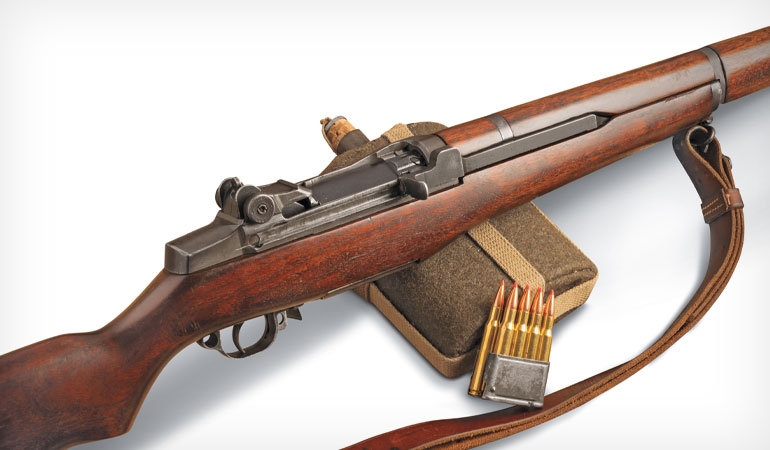
The M1 “Garand” rifle is objectively heavier than bolt-action rifles and specifically all those that fought in the war. But when you have the rifle in your hand, that weight translates into sturdiness. That is the feeling it conveys, that of a strong and robust weapon, not a heavy weapon. That perception is accentuated when shooting with it.
Then everything fits, because that weight and that robustness, which is a perception that you have a lot to do with the forceful design of the weapon and especially the shape of its butt/handle, is perfect to prevent recoil from dislodging you. You get the feeling of shooting a very balanced rifle and then the weight factor is diluted. I say all this by stating that I am by no means a regular shooter, nor an expert on the subject.
Regarding breakdowns, the M1 had some during the war. The biggest was in the design of the gas intake cylinder, which caused the firing cycle to be interrupted and forced it to be completely redesigned. In addition to that and others that I described in the article, which were solved very early on, there were others that came to light during the conflict and were solved along the way.
One of them was that the mounting lever, being integral with the piston, could break at a certain point after too much use. It was not serious at all, but it did mean that almost at the end of the war all field workshops received the order to make a small circular cut at the point where the piston rod joins the lever in all rifles. Received for any type of repair, in order to relieve the tension of the lever. This is why rifles where that cut is not present are somewhat rarer to find.
Another “illness” was that the firing cycle would sometimes stop when exposed to long periods in the rain. The solution was to give the soldiers very small bottles of a special oil called “Lubriplate” that had to be poured around the bolt to lubricate it and that completely solved the problem. The canisters were designed to be stored inside the buttplate of the rifle.
Another relatively notable “failure” was in the finish of the gas cylinder, located in the muzzle of the rifle. Being made of stainless steel, it could not be parked, but a special paint had to be applied. With use in combat conditions, the paint would peel off and the shine on the metal could give the soldier away. The solution was to create a new paint mix that was more durable than the old one.
Regarding the last question, the truth is that the feeling that I have after reading a lot of literature on the rifle is that there was never a very enthusiastic attempt to turn the M1 into a sniper rifle. I get the feeling that this position was well filled by the Springfield M1903 and that the Ordnance Department never made much of an effort to make the M1 its replacement.
Keep in mind that the power system of the M1 prevented putting a scope “as God intended”. I imagine that the sight that was placed on the M1C would not be very pleasing to an elite shooter due to its forced position and surely he had to make some additional correction to compensate for such a strange position. Consider that no M1 modified as a sniper rifle was shipped to Europe during the war. On the other hand, the standard M1 rifle was actually pretty accurate overall if it was in the right hands. No soldier complained that it was inaccurate in combat.
Johnson’s rifle was mechanically just as good as Garand’s, and had even more capacity. However, from what I’ve read, it was somewhat more complicated to mass-produce than the M1, which is another reason it was scrapped. It was also unclear whether it would have been reliable enough in the hands of an infantryman, as only elite troops used it in the war. There is no doubt about the behavior of the M1 Garand, which fulfilled perfectly and demonstrated its qualities and quality during two wars.
It is curious that, like other weapons of its time, the old M1 has continued in the gap, hitting shots to this day, as if it refused to die. That says a lot about its robustness and reliability. As an example, this photo of an M1 captured in Iraq, in the last war.
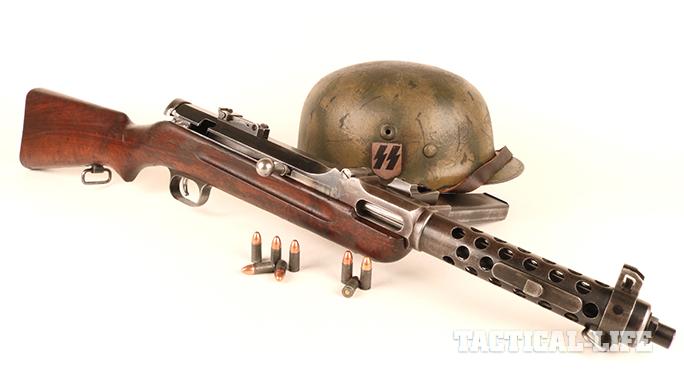
With its graceful curves and meticulous machining, the Steyr MP34 represents a perfect blend of old-world craftsmanship and state-of-the-art technology before WWII broke out across Europe.
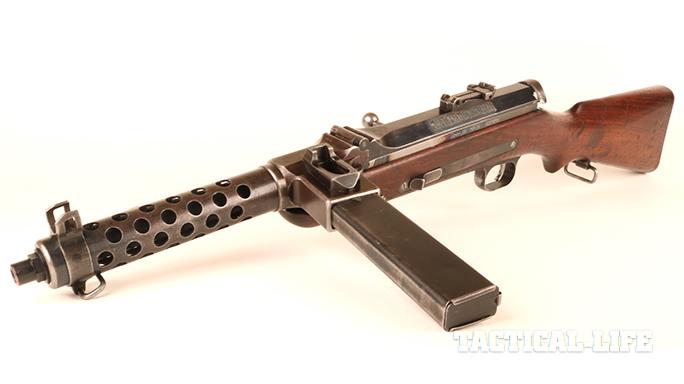
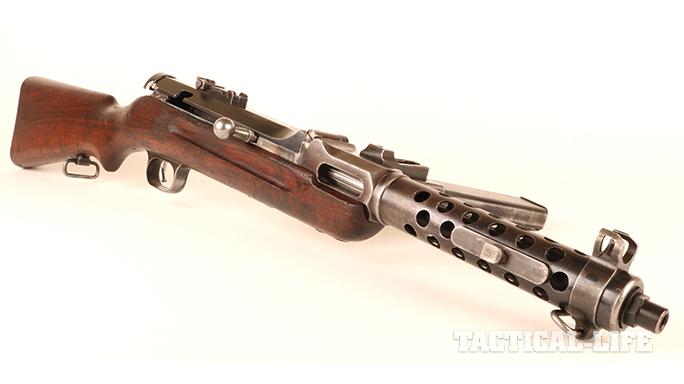
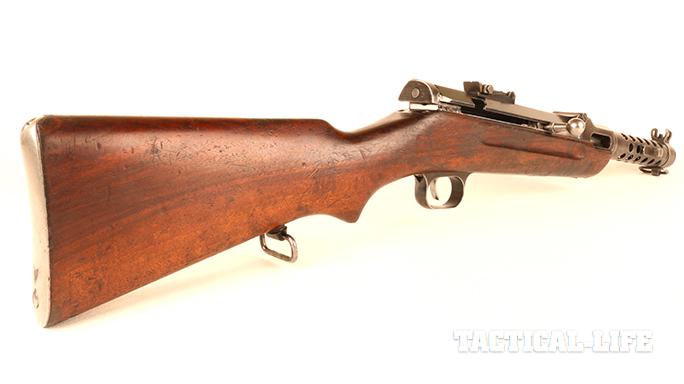
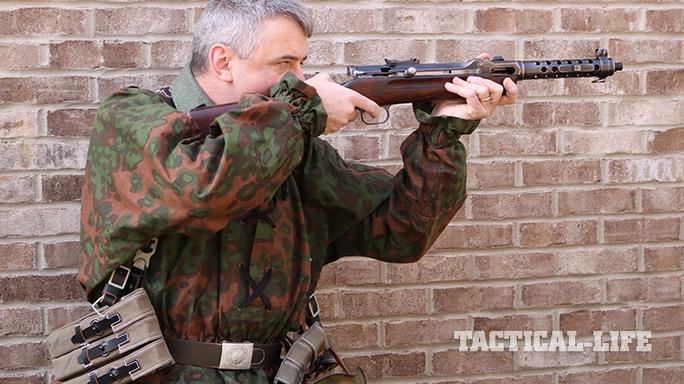
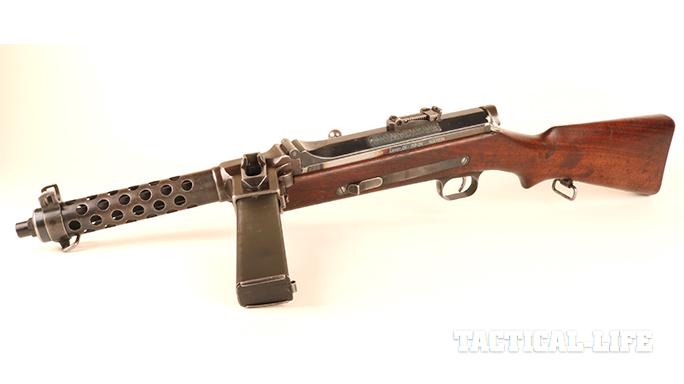
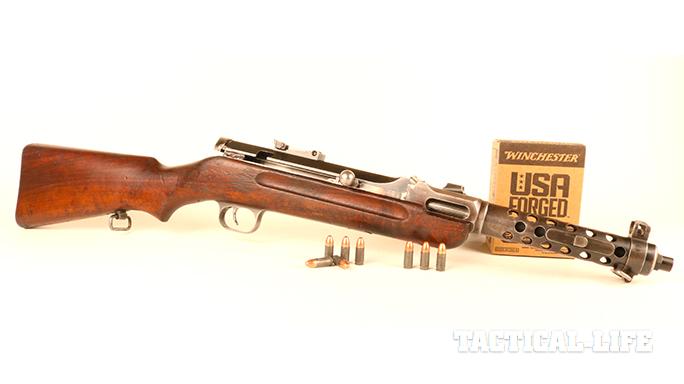
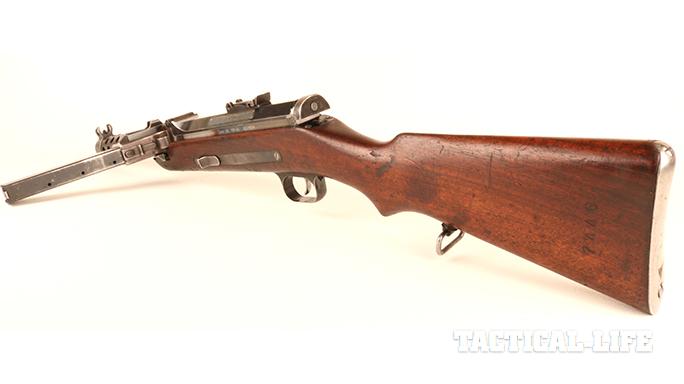
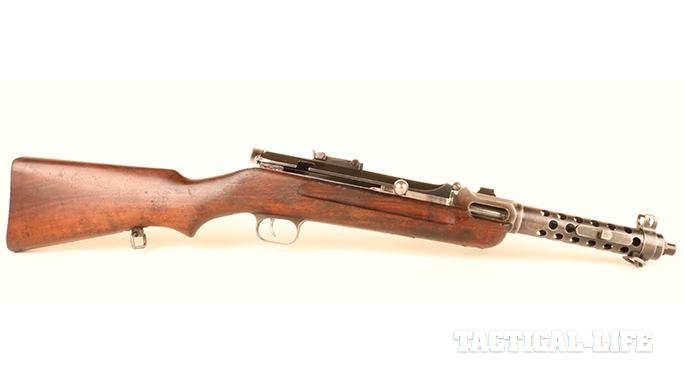


Weapons manufacturing is high art in the Information Age.
Advances in automation and computer-controlled machinery sees produced in breathtaking quantities while maintaining meticulous standards of quality. When combined with modern polymer science, the result is the likes of the M4, Steyr AUG, IWI Tavor and FN F2000. However, the modern state of the art was attained only after generations of mechanical evolution. Hold that thought.
Killer Technology
Historians debate the onset and duration of the Industrial Revolution. Most agree that it occurred between 1760 and 1840. However, the limits of the era were, of their nature, fairly nebulous. The Industrial Revolution was the most seminal cultural event in history since the domestication of animals and the development of agriculture. By harnessing steam and water power, scientists and engineers used this energy to build things en masse.
Although textiles predominantly drove economies, the industrialization of chemistry, metallurgy and machine tools sparked unprecedented advances in engineering technology. And when technology progressed to the point where we might manufacture mechanical contrivances precisely and in quantity, we began building implements with which to kill each other. As measured by sheer volume of blood spilled, World War I was the planet’s sordid introduction to war on an industrial scale.
WWI claimed the lives of 9 million soldiers and another 6 million civilians. During two weeks of the Ludendorff Offensive in 1918, the Germans lost 303,450 casualties. In April of 1918, the Kaiser’s army lost 120,000 troops in less than a month. For the first time in history, man really perfected the art of killing in quantity.
Although small arms and airplanes carry the sex appeal, the cannon was the true killer on the WWI battlefield. About 70 percent of combat deaths in WWI were the result of artillery or bombs. Almost 30 percent came from bullets. About 1 percent died on the cold steel of the bayonet. However, because a soldier’s individual weapon is such an emotionally critical aspect of the combat experience, all of the nations involved strained to produce the best small arms they could afford. And here is where the Germans led the way.
Birth Of The SMG
The Italians first broke ground with their Villar Perosa. However, they typically mounted these tidy little magazine-fed 9mm submachine guns in tandem and used them as air-to-air weapons. The Germans fielded the first practical man-portable submachine gun with the MP18, a product of the Rheinmetall, based in Dusseldorf.
The MP18 fired from the open bolt and fed from the 32-round snail-drum magazine of the P08 Artillery Luger. This handy little machine gun gave German Sturmtruppen unprecedented firepower during the extremely close fighting that characterized the fetid trench warfare of the Western Front during WWI. The MP18 was built around a tubular steel receiver that was meticulously machined into its final form using machines that were likely driven by steam.
The MP18 eventually evolved into the improved MP28. There were other differences. The primary among them was the MP28’s use of double-column box magazines in place of the overly complicated snail drum. During the interwar years of the 1920s and 1930s, military gun building really reached a new apogee.
Meet The MP34
“Apogee” is an astronomical term that means the highest point along a continuous trajectory. As it relates to mechanical contrivances, it implies the upper limit of industrial refinement. With submachine guns, the general consensus is that the Steyr MP34 occupies this rarefied position.
Restrictions in the 1919 Treaty of Versailles precluded the Germans from developing man-portable automatic weapons. Specifically, German martial firearms could not possess a barrel longer than 4 inches or a magazine capacity of more than eight rounds. This pretty much restricted the Germans of the Weimar Republic to P08 Parabellum pistols and little else.
Eager to expand the state of the art while perhaps preparing for the coming next World War, Rheinmetall acquired the Swiss Solothurn weapons factory in 1929 and began developing the S1-100, which would later become the MP34.
Although ill-suited for mass production, Solothurn did a crack job of developing and prototyping the gun. Rheinmetall subsequently bought a controlling interest in Steyr in Austria. At the outset of WWI, Steyr employed 15,000 workers and produced 4,000 rifles per day. And, unlike Solothurn, Steyr used the most advanced tooling and techniques of the time. This made perfectly situated to produce military weapons en masse.
The MP34 fell into the sweet spot. At the time of its production, old-world craftsmanship still drove gun building, though modern mass-production techniques ensured a prodigious output. The result is arguably the most meticulously well-built military weapon in history.
What Makes It So Great?
The MP34 was a blowback-operated, select-fire submachine gun. It was alternately chambered for the 9x19mm Parabellum, 9x23mm Steyr and 9x25mm Mauser cartridges. A smattering intended predominantly for South American markets even fired John Browning’s .45 ACP round. Most of the guns fired Georg Luger’s 9x19mm round, however.
The MP34 fed from the left side via 20- or 32-round magazines that canted slightly forward for optimal feeding geometry. A sliding switch on the left side of the receiver served as a selector. The generously perforated heavy steel barrel shroud sported a bayonet lug. The magazine housing incorporated a novel device where an empty magazine could be locked in place 90 degrees out from the typical feeding geometry. So oriented, ammunition could be quickly loaded into an empty magazine by way of eight-round stripper clips from above.
The bolt of the MP34 sprouted a generous rattail out its back, which telescoped into a recoil spring assembly in the buttstock. A beautifully machined top cover pivoted upward to grant access to the gun’s entrails. Big chunks of forged steel accounted for the exhaustive machining. That machining included everything about the gun, even the magazine well and buttplate.
The rigid cocking handle reciprocated with the bolt and locked into a safety slot in the manner of the later MP40 when necessary. The sights were fully hooded or otherwise well protected up front, and the rear sight was meticulously adjustable for elevation. The gun cycled at about 600 rpm on full-auto and weighed 9.9 pounds fully loaded. Turning the barrel out with a wrench facilitated easy replacement or caliber changes.
Infamous Users
From the outset of World War II, the Germans never had enough weapons to go around, especially when it came to submachine guns. The Nazis embraced the concept of the pistol-caliber automatic weapon while drawing guns from various eclectic sources. Nowhere was that more overtly manifest than with the Waffen SS.
Meaning “armed SS,” the Waffen SS was the military wing of the party’s Schutzstaffel organization. Developed as an offshoot of Adolf Hitler’s personal bodyguard detail, the SS was expected, at least early in the war, to be racially pure and physically near perfect—or perfect in the eyes of Hitler and the Nazis. As the war took a downturn for the Nazis, they eventually accepted some “non-Aryan” groups of people into their ranks. By war’s end, the SS was almost completely unrecognizable from its pre-war origins.
Before the Waffen SS proved itself on the battlefield, its members had to scramble for small arms. As a result, the SS was the most prolific user of the MP34 during WWII. The gun figured prominently in the early blitzkrieg campaign across France and the Low Countries. As the war ground on, it became obvious that the exigencies of total war were incompatible with the lofty standards of workmanship demanded of the MP34. By 1945, the MP34 was no longer found in frontline units, having been supplanted by the MP40 submachine gun and the truly advanced MP44 (or StG 44) assault rifle.
How It Shoots
The MP34 is heavy, but its mass means the gun is remarkably controllable. It’s pretty easy to keep the gun on target even during long bursts of fire. Firing single shots, the gun remains delightfully accurate out to the effective range of the 9mm Parabellum cartridge. So long as I did my part with a test sample, I could keep my rounds on a man-sized target while firing in semi-auto until I got tired of it.
The Steyr MP34 is also more maneuverable at close ranges and indoors than almost any modern rifle-caliber assault rifle. Magazines last a long time as well, given the gun’s sedate rate of fire. Singles and doubles are easy with a disciplined trigger finger. While the gun fires from an open bolt, the bolt closes after the last round fires, so the manual of arms involves manually locking the bolt to the rear before swapping out the 20- or 32-round magazines.
State Of The Art
The Nazis make the world’s best cinematic villains for good reason. Amidst a sea of morally corrupt scoundrels populating Earth’s long, sordid and bloody history, few can compete with Hitler’s henchmen for unfiltered racist impiety. For all of their depravity, however, German engineers contrived some of the most interesting and effective weapons in World War II.
Some scholar lost to history once opined that art was where you found it. As it relates to small arms, it’s not a great logical leap to consider the MP34 a seminal form of mechanical art. Sporting graceful curves and a design philosophy of using three parts when one might otherwise suffice, the MP34 is remarkably gorgeous and darkly effective. In the hands of the worst bad guys in modern history, this classic Steyr submachine gun earns its top spot in military weapons history.
Finally, I’d like to give special thanks to World War Supply for the period replica gear used in the production of this article. It wouldn’t have been the same without it.
MP34 Specs
Caliber: 9x19mm, 9x23mm Steyr, 9x25mm Mauser
Barrel: 7.9 inches
OA Length: 33.5 inches
Weight: 9.4-9.9 pounds (empty)
Stock: Wood
Sights: Hooded or open front, adjustable rear
Action: Select-fire
Finish: Blued
Capacity: 20+1, 32+1
The Ruchnoi Pulemet Degtyarev light machine gun first drew breath in 1943. It was the most advanced light machine gun in the world at the time. The RPD was actually built around a radical new cartridge. The Combloc 7.62x39mm intermediate round changed the way the world made combat weapons.

The design committee tasked to develop this new round began with 314 unique cartridge designs that were then winnowed down to eight. The subsequent Soviet M43 7.62x39mm round sported a 122-gr. bimetal Spitzer bullet atop an abbreviated, tapered case. The result was compact, lightweight, powerful, and revolutionary for its era. One of the first operational infantry weapons that fired this new round was the RPD light machine gun. The more-familiar Kalashnikov assault rifle first saw service a few years later.
Before the AK: The RPD Machine Gun
The RPD was a belt-fed 7.62x39mm adaptation of the basic Degtyarev action that drove the WWII-vintage Soviet DP pan-fed machine gun. The RPD fed from a pair of non-disintegrating 50-round belts that linked together to provide 100 rounds of onboard firepower, all packed into a sheet steel drum. Particularly when compared to the BAR, the M-14A1 and eventually the M-60, the RPD was a lighter and markedly more efficient design.

The RPD is an elegant, compact and streamlined weapon. The bolt locks in place via a pair of steel flaps that are cammed outward to engage recesses milled into the interior of the receiver. The gas system incorporates three different positions, but adjustments are tedious and require a special tool.

The RPD’s reusable non-disintegrating belts are philosophically similar to those used on the WWII-vintage German MG34 and MG42 machine guns. Each link is affixed to its neighbor via a short spiral of stiff wire. Belts are loaded “brass to the grass” with the links on the top. The RPD drums have no internal moving parts and are simply used to keep the belts clean and untangled.

Changing drums involves throwing a latch at the back of the drum, sliding the empty drum off of its dovetail to the rear, remounting a fresh drum, and then securing the latch. The first belt in the drum incorporates a starter tab. The RPD fires from the open bolt and is full-auto-only. Pressure on the trigger releases the bolt assembly, and the gun runs. After fifty rounds the first spent belt falls free while the following belt feeds automatically.
The RPD is a superb design, but it isn’t perfect. The gun heats up quickly, particularly when fired in generous bursts. Its lack of a quick-change barrel limits the weapon’s utility in the sustained fire role. However, the RPD weighs just over half what the M60 General Purpose Machine Gun does. When every important item in your world rides on your back, this makes a huge difference.

The RPD is designed to be loaded from the left side using the starter tab. Just lock the bolt to the rear, thread the tab through, and give it a sharp tug. The top cover can be opened to access the gun’s entrails, but the release latch is a smooth steel sleeve that is tough to manage if sweaty or gloved. There is also a stop built into the top cover mechanism that limits it at about the 45-degree point. In my experience, the RPD has been supremely reliable.
LMG Trigger Time
The RPD is an exceptional light machine gun. The intermediate cartridge keeps recoil in check and ensures that the weapon is controllable. Reloads are structurally slower than the same chore with a magazine-fed gun like the RPK. However, 100 rounds on tap can be mighty reassuring in a serious scrap.

The fixed barrel limits operations to two or three drums’ worth of ammunition fired in rapid succession. Even then, the forearm becomes intolerably hot. The gun runs well from the hip, and the clubfoot buttstock design makes for a comfortable platform when fired from the prone off the bipod. The modest weight of the gun allows it to be fired in short bursts off the shoulder.
Ruminations
When first introduced, the RPD was well ahead of its time. Most comparable weapons are heavier and bulkier even today. The gun has seen action all over the world for three quarters of a century. Its modest weight, reliability and human engineering have kept it popular.

I once met a guy in the VA who got shot in the chest by an NVA soldier armed with an RPD. He obviously survived, but also held the gun in justifiably high regard. An acquaintance carried a chopped version while serving as a security contractor in Iraq after the 2003 invasion. Captured RPD’s were indeed popular with aviators and special operations forces in Vietnam whenever they could be found. The RPD is an exceptionally effective SAW that has stood the test of time.