
Category: Uncategorized







There’s no denying that semi-automatics pistols rule the roost nowadays.
But this hasn’t always been the case. For nearly two centuries, the sidearm of choice has been the revolver, and for good reason.
Boasting one of the most reliable designs, capable of shooting some of the most powerful handgun cartridges, and deadly accurate, the style of firearm just plain delivers.
And there have been some downright incredible examples of these rock-solid handguns to roll down the pike over the years. With this in mind, here are 7 classic revolvers you’ve got to have, or your gun safe just won’t be complete.
What are some of the most classic revolvers:
- Colt Single Action Army
- Colt Detective Special
- Smith & Wesson Model 19
- Ruger Blackhawk
- Colt Python
- Smith & Wesson Model 29
- Freedom Arms Model 83
Colt Single Action Army
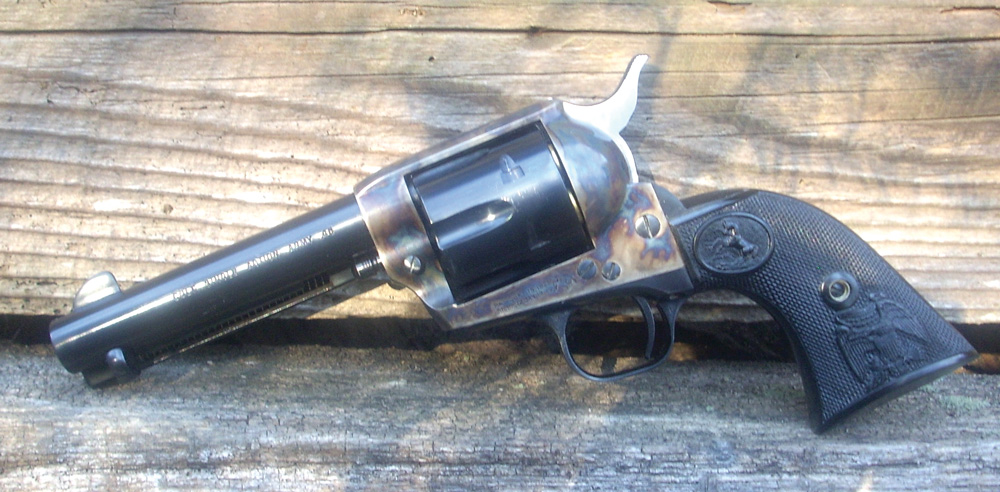
Arguably the king of all handguns, this prince of the prairie helped tame the American West and is still lionized by shooters today. The legendary gun was among the first commercially successful revolvers to utilize metallic cartridges. And when married with the potent .45 Colt, it provided soldiers, lawmen and outlaws enough firepower to get their jobs done.
Today, the SAA lives on as a movie icon, with the likes of John Wayne, Clint Eastwood and Val Klimer all dropping the hammer on the six-shooter. The original historic revolvers, especially those with any providence, can border on the insane when it comes to price. Luckily, Colt still has the Single Action Army running off its assembly line, as does Uberti — true to form and ornery as ever.
Colt Detective Special
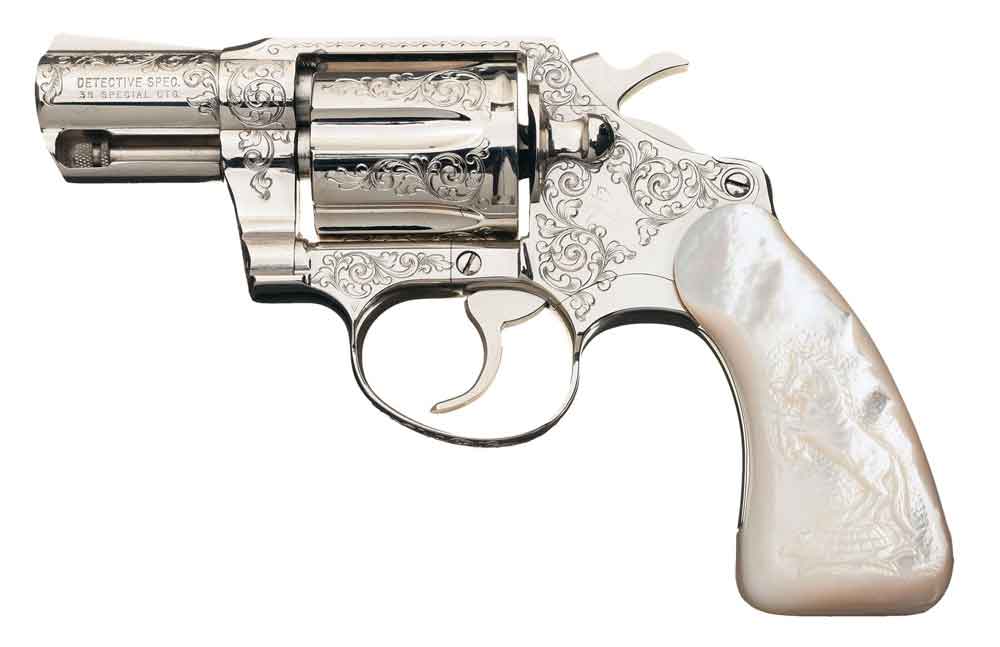
Like any tough-as-leather gumshoe will tell you, a solid snubnosed revolver can allot a great deal of peace of mind. And snubbies‘ enduring popularity is due, in part, to this slick little pocket pistol.
The Detective Special made its appearance in the Roaring ‘20s, and like its name suggests, the revolver was intended for carry by plain-clothes officers. But G-Men weren’t the only ones to recognize the advantage of the clandestine .38 Special, with more than one of these Colts making it into the hands of mobsters and bootleggers over the years.
In addition to its petite size, the Detective Special embraces a design point new to revolvers of the time. It was among the first double actions to utilize a swing-out cylinder. As revolver fans know, this tweak made wheelguns that much faster on the reload, a particularly important feature for a defensive arm.
The Detective Special is still popular today, a keen addition to any gun collection. And in a pinch, ready to roar into action.
Smith & Wesson Model 19
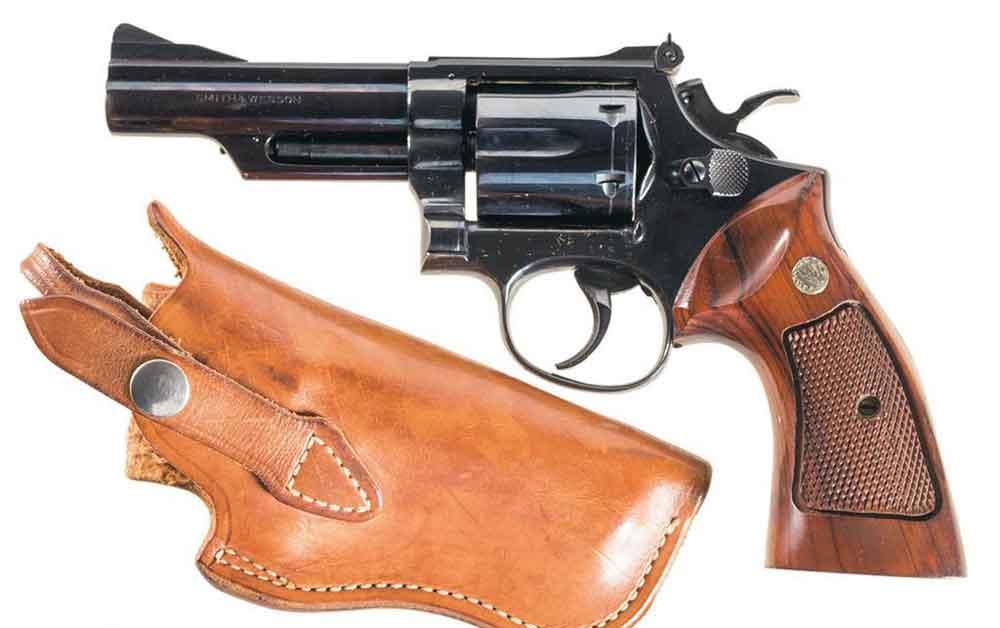
Coming up with a classic doesn’t necessarily mean reinventing the wheel. The Model 19 is a case in point.
In collaboration with a lawman and one of the best marksmen of his day, Bill Jordan, Smith & Wesson married the powerful .357 Magnum cartridge with its trim medium-sized K-Frame. While it required some mechanical and metallurgical tinkering to get right, what resulted was magic
The Model 19 boasted supreme stopping power, yet came in a manageable package. It’s latter point was one of its greatest assets; it could be worn all day without becoming burdensome. No understatement, it became the finest duty revolver of the 20th Century, and an absolute treasure to revolver fans.
Ruger Blackhawk
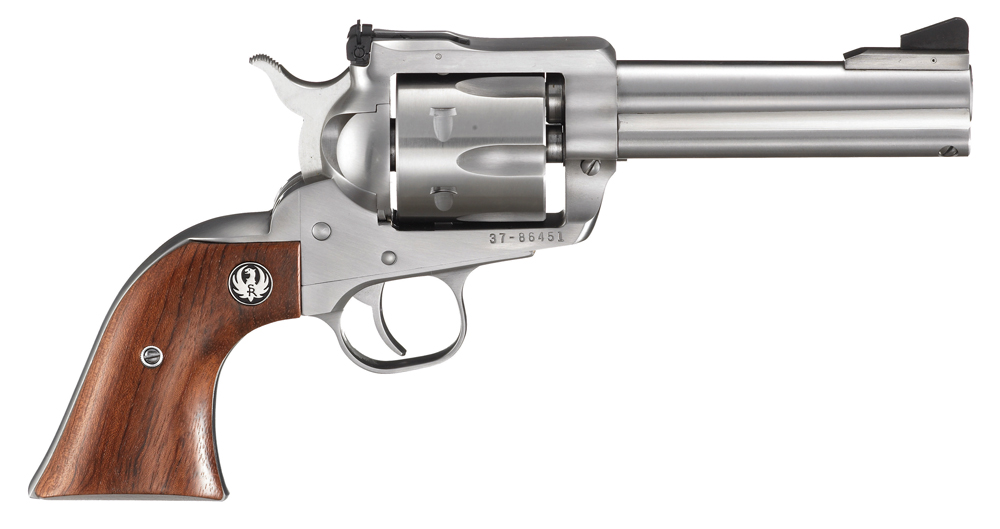
It’s hard to think how the Single Action Army could be improved, but Ruger found a way to do it. Shooters, in turn, more than responded.
The Blackhawk was and is one of the all-time most popular guns to roll off the company’s assembly line. What made it such a hit, aside from the Western movies of the day, was the single action’s ability to digest magnum rounds. Given America’s love affair with the .357 Magnum in the early 1950s, it made sense the Blackhawk was originally chambered for the round, then soon after the .44 Magnum.
The new models, and there are many of them, are just as fun and rock solid as the Blackhawks that rolled off the line nearly more than 60 years ago. But it’s difficult to argue that there is just something to the old, original “Flattop” models that are the apples of collectors’ eyes.
Colt Python
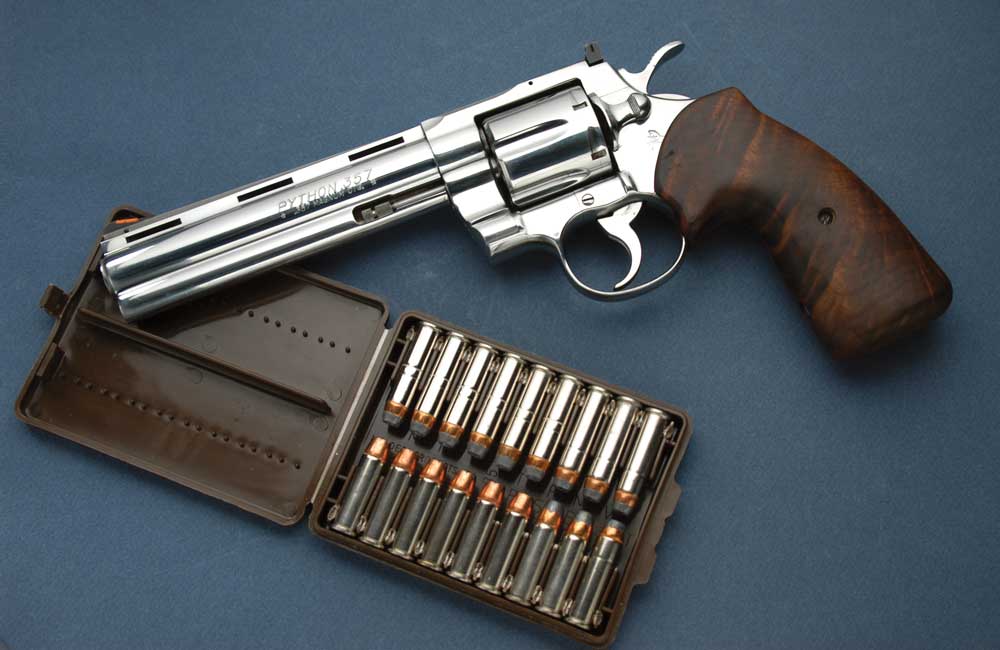
Along with hand-rolled cigars and small-batch whiskey, this revolver is truly one of the finer things in life. The hand fitted and hand polished Python offered shooters an unparalleled experience behind the trigger, and head-turning looks that seldom come down the pike.
To the latter point, the .357 Magnum is unmistakable in silhouette, boasting a vented rib and a full-length underlug running on a bull. But the Python offered more than serpentine good-looks; it also performed. The revolver could beat the snot out of the bullseye, aided by superior hand fit, a trigger pull as smooth a glass and a cylinder locking mechanism that milked every bit of accuracy out of each cartridge. It is no wonder gun writers and handgun enthusiasts in general consider the Python among the best mass-produced revolvers of all time.
Smith & Wesson Model 29
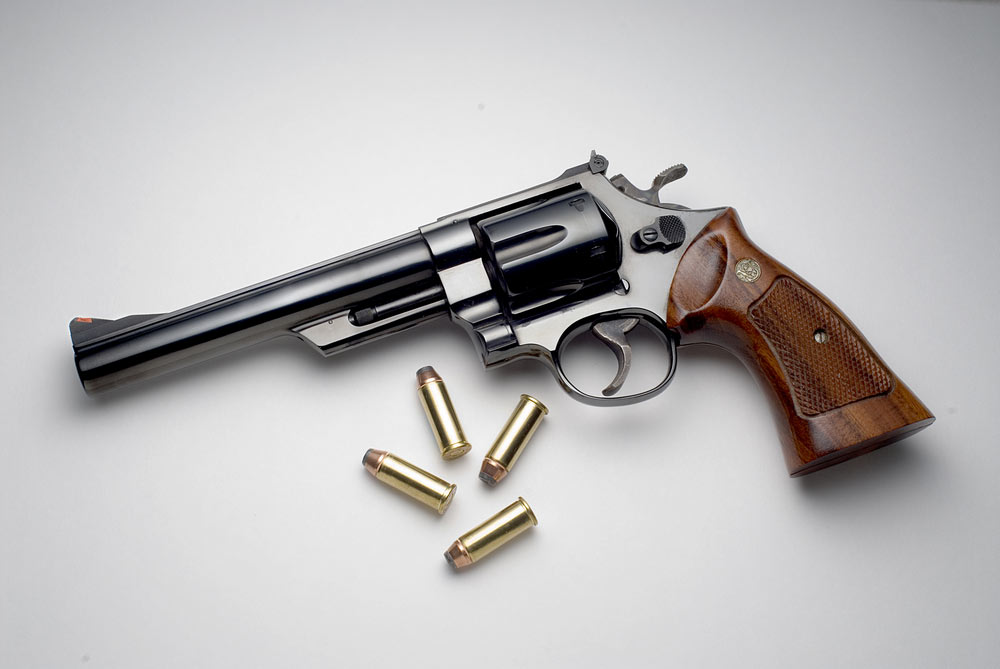
The revolver that makes anyone’s day, shooters have had an up-and-down relationship with the .44 Magnum. Popularized by Clint Eastwood’s use of it in the “Dirty Harry” movies, the Model 29 was for a time the must-have revolver.
But similar to when it was originally introduced in the 1950s, there were plenty of barely-shot 29s returned to gun stores around the country. While shootable for caliber, the Smith & Wesson N-frame still packed more punch than the general shooting public was willing to endure.
The emerging niche of handgun hunting in the 1970s kept the large-bore revolver relevant, given, short of a blue whale, it could perforate and permanently put down nearly any beasty on God’s green earth. And it is still among the top choices of handgun hunters today, especially those with a yen for the classics.
Freedom Arms Model 83
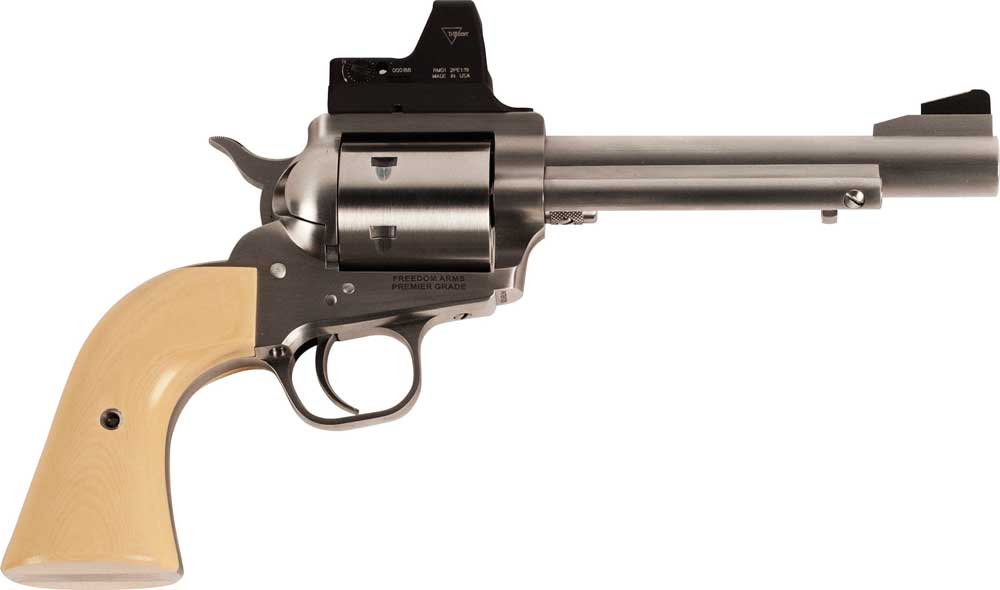
Finely built, with power to spare, this single-action monster is just the ticket for tackling any game North America can throw at you.
The first commercially revolver offered in .454 Casull, the Model 83 gained notoriety for more than its ability to pitch one of the most potent rounds on the planet. The wheelgun was also one of the most meticulously engineered firearms to hit the market, despite its old-timey look. One such example is Freedom Arms line boring the cylinder, a process rarely seen outside custom shops and which ensures absolutely dead-on bore-to-chamber alignment.
Despite its premium price, the Model 83 has grown in popularity with the upsurge of handgun hunting, and it is now available in a slew of game-stopping calibers from .357 Magnum to .500 Wyoming Express. Freedom Arms has even kept the recoil-sensitive, yet performance-driven shooters in mind, offering the legendary Model 83 in .22 LR.
Categories
Great War Sniper by Mark Freburg
 America was late in entering the Great War, not getting any troops “over there” until June 1917, and not any real numbers until October of 1917. Yet by May of 1918 there were over a million American troops in France, at least 500,000 on the front lines. While it had taken the French and British a long time to get up to snuff in the sniping game–something the Germans had been prepared for from the very beginning, the Americans took advantage of their Allies’ experience and fielded snipers right away.
The downside was that they had delayed and delayed on getting proper sniping rifles into the field. (In point of fact, the final American solution was a Winchester A5 mounted on an M1903, but the final rifle wasn’t even approved until two months or so after the Armistice.)
The upside with the Americans was that many soldiers were highly experienced riflemen. I should interject here that, unlike the modern belief that all Americans of the time could shoot, that simply wasn’t the case. Read writings of the time and you’ll find authors of the day bemoaning the fact that riflemen simply were no longer to be commonly found among young men of that day. A good example of this can be found in Townsend Whelen’s The American Rifle, written and published in 1917.* Yet there were some fine rifle shots among the men from many of the rural states, where city life had not spoiled riflry as a natural art to be learned by young men coming of age in the new 20th Century.
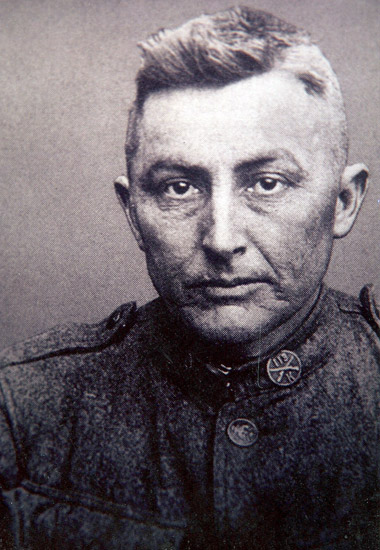
A splendid example of such men was of course Alvin York of Tennessee, but let me tell you about another young soldier named Herman Davis of Arkansas. Davis was not a sniper by training or assignment, and darn near missed the war altogether. At age thirty, the Army initially rejected Davis for service because he was considered too old, and because he was only 5’3″ tall, but eventually was able to convince the authorities to let him join up. It turned out to be good for the Army as Davis was a good soldier.
Davis’ claim to fame came while he was in the line and serving as a regular infantryman. A German machinegun nest was particularly troublesome. Davis asked his fellow soldiers why no one was doing anything about the gun. He was told that the gun was 1000 yards distant, far to distant to deal with. Davis replied “That’s jest a good shooting’ distance.” Taking aim, he proceeded to shoot four German gunners with his rifle. Davis’ amazing shooting skills earned him a permanent position as company scout/sniper, and he began a solo campaign to eliminate all the Germans he came across.
It isn’t known all what Davis accomplished after that as he worked mostly solo and most his record was never recorded, much like many Americans in that long ago war, but a few incidents he mentioned privately to friends after the war were quite remarkable. In one advance Davis moved through the lines to within fifty yards of the German lines and managed to shoot eleven Germans as they came out of their dugout to man their machine guns.
In another battle at Verdun, Davis’ company came under heavy fire. Davis crawled into No Man’s Land until he could find a point where he was able to find a firing position overlooking the Germans, then carefully shot every member of the German gun crew. Unlike the majority of Davis’ shooting feats, this one was witnessed by an American officer, and Davis was subsequently awarded the Distinguished Service Cross. Later during that same advance Davis managed to shoot another 26 Germans, mostly machine gunners.
It seems machine gunners were a favorite target of this soldier. Over the course of his career he managed to also pick up the Medaille Militaire and Croix de Guerre with the Palm Leaf and Silver Star, so Herman Davis ended up being well rewarded for his work as a sniper in the Great War–yet few have ever heard his story, however short. It is one well worth telling.
* It is dead common to hear modern gun people talk about young male citizens of the WWI era as all fine shooters, but I’ve read multiple books written during that era and am convinced that this belief is pure and unadulterated horse puckey.
Sources: Sniping in The Great War, Martin Fegler; The Armerican Rifle, Townsend Whelen; various articles for background found in Wikipedia.


Categories
Oh why not? NSFW




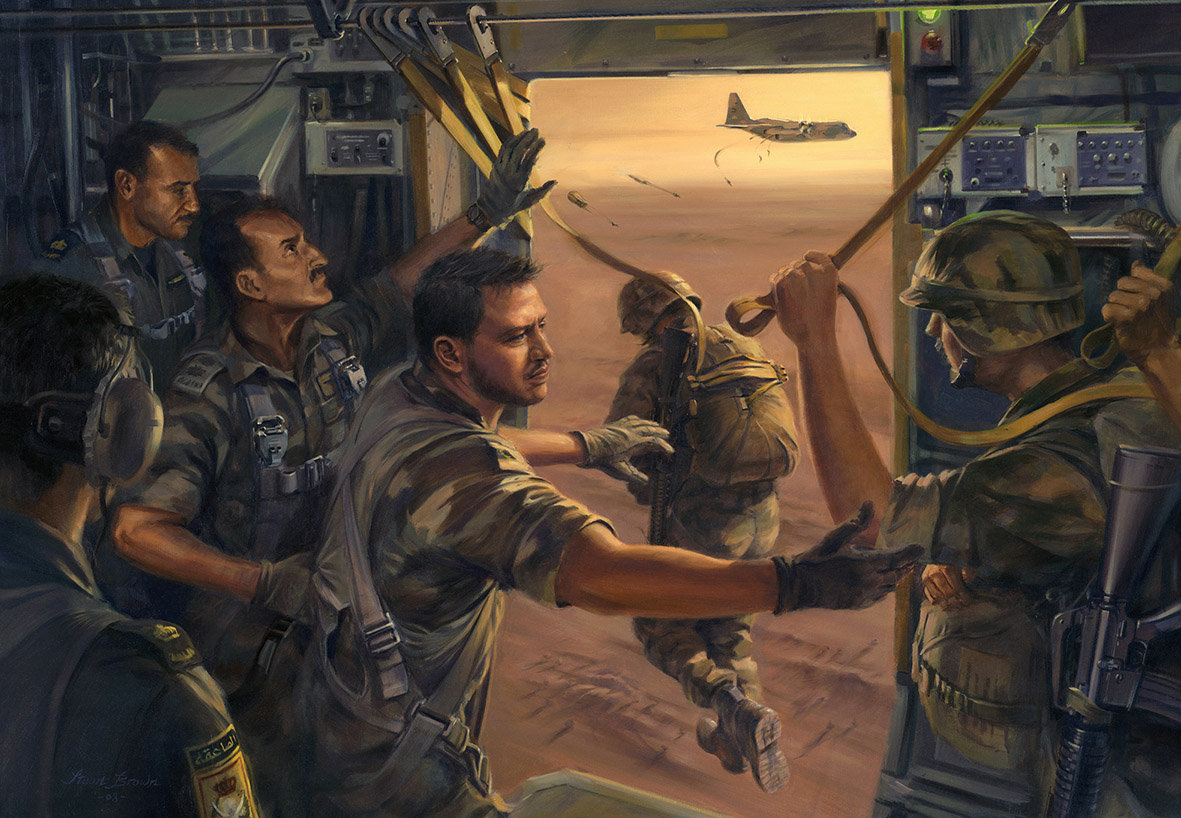
H.M. King Abdullah II entered the Royal Military Academy Sandhurst (U.K.) in 1980 and was commissioned as second Lieutenant in spring of 1981. He then served as a Reconnaissance Troop Leader in the 13/18th Royal Hussars Regiment (British Army) in the U.K. (and West Germany).
From 1985 to 1993 he served mainly in the Armoured Corps (3rd Division) in all related command appointments at platoon, company and as battalion second in command positions, until finally commanding the Second Armoured Battalion, 40th Armoured Brigade with the rank of lieutenant Colonel from January 1992 to January 1993. During this period he attended several military courses in the U.S. and the U.K. including Staff College Camberley (U.K.) 1990-1991.
He also has several attachments to the Special Forces and a year as a tactics instructor with Jordan Army’s Anti-Tank, Cobra Helicopter Wing.
The beginning of 1993 saw him as Deputy Commander of Jordanian Special Forces till he took full command in November 1993. He commanded these forces till October 1996, when he was instructed to re-organize this and other elite units into the Special Operations Command (SOCCOM).
In 1998, as SOCCOM Commander, he was promoted to the rank of Major General and continued this command until the passing away of His Majesty King Hussein in February 1999.