Category: Uncategorized

Categories
Remington Model 24, 22LR
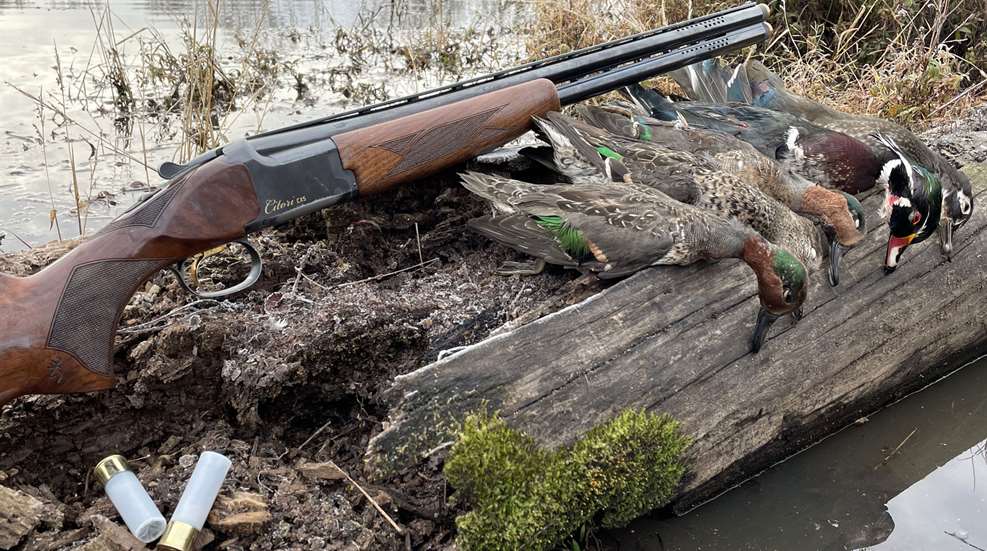
Peruse the shotguns at your local brick-and-mortar gunshop, or the websites of large-scale online retailers, and you’ll be overwhelmed by the untold options.
As an ardent hunter of nearly four decades and competitive clay target shooter, even I am stunned, so I can only imagine what a first-time buyer feels. It’s for that very reason that I wrote this article. Simply stated, I sought to help you narrow the field to the one.
In the subsequent sections, I detail the key characteristics of shotguns and what advantages and drawbacks exist for each. Using this knowledge, you’ll be able to make an informed purchase. Let’s begin with the various action types.
Single-Shots
Shotguns are available as single-shots, doubles (side-by-sides and over-unders), tri-barrels (rare), bolt-actions, pump-actions and semi-automatics. Tri-barrels (or triple-barreled), drillings and bolt-action shotguns are relics from a bygone era, and are best left there; there are simply far better options.
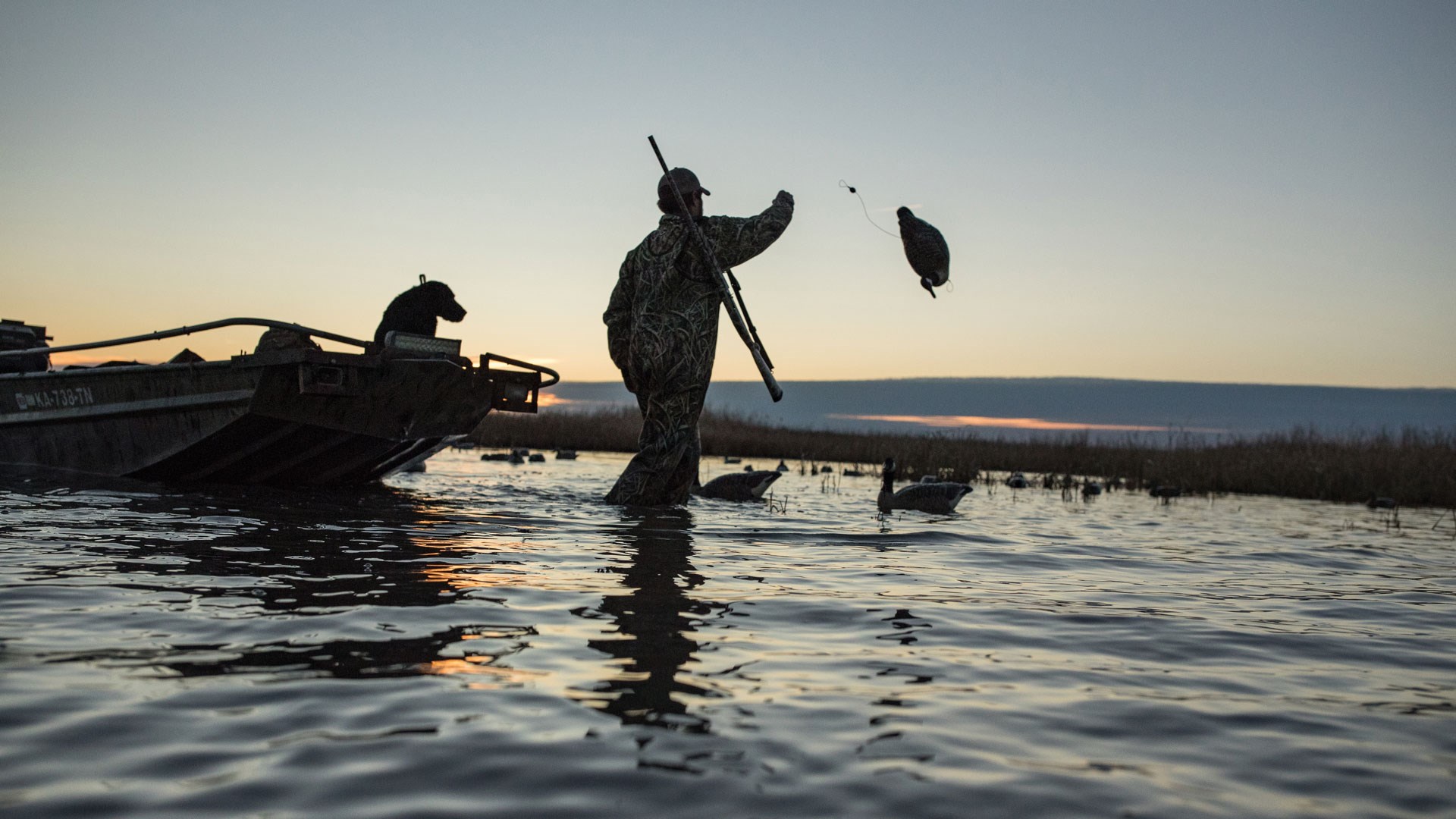
Single-shots, as the name suggests, offer hunters access to a solitary shell. Often selected by newcomers to hunting (think low price and thus minimal investment), youth and those primarily pursuing smaller species. Big-game hunters—whitetail deer, feral hogs and turkey—comfortable with a lone shell and slow reloading can experience equal success to those using repeaters. In fact, though far from ideal, my first wingshooting shotgun was a no frills New England Firearms Pardner single-shot with a fixed, modified choke. It worked well, though recoil was stout.
As long as all goes according to plan, single-shots are practical firearms. However, hunting is rife with “beyond-belief” occurrences, such as a well-hit sea duck diving into the abyss, and a once-flopping gobbler suddenly on its feet and darting like an all-star athlete or soaring off to the distance. And, when wingshooting in particular, multiple birds can flush or buzz the decoys simultaneously, thereby offering extra opportunities which you cannot exploit with a single shot.
What’s more, on single-shots featuring an exposed hammer, once cocked, safely lowering it to the pre-firing position requires tact. More than once I’ve witnessed the hammer slip while the trigger remained pulled, and on each occasion it resulted in an accidental discharge. Fortunately, no one was hurt.
For that reason, I don’t recommend single-shots for the very people who would benefit most from them. Perceived recoil, too, can be heavy due to their lightweight design. An alternative fixed recoil pad or slip-on variant can help lessen the discomfort.
Doubles
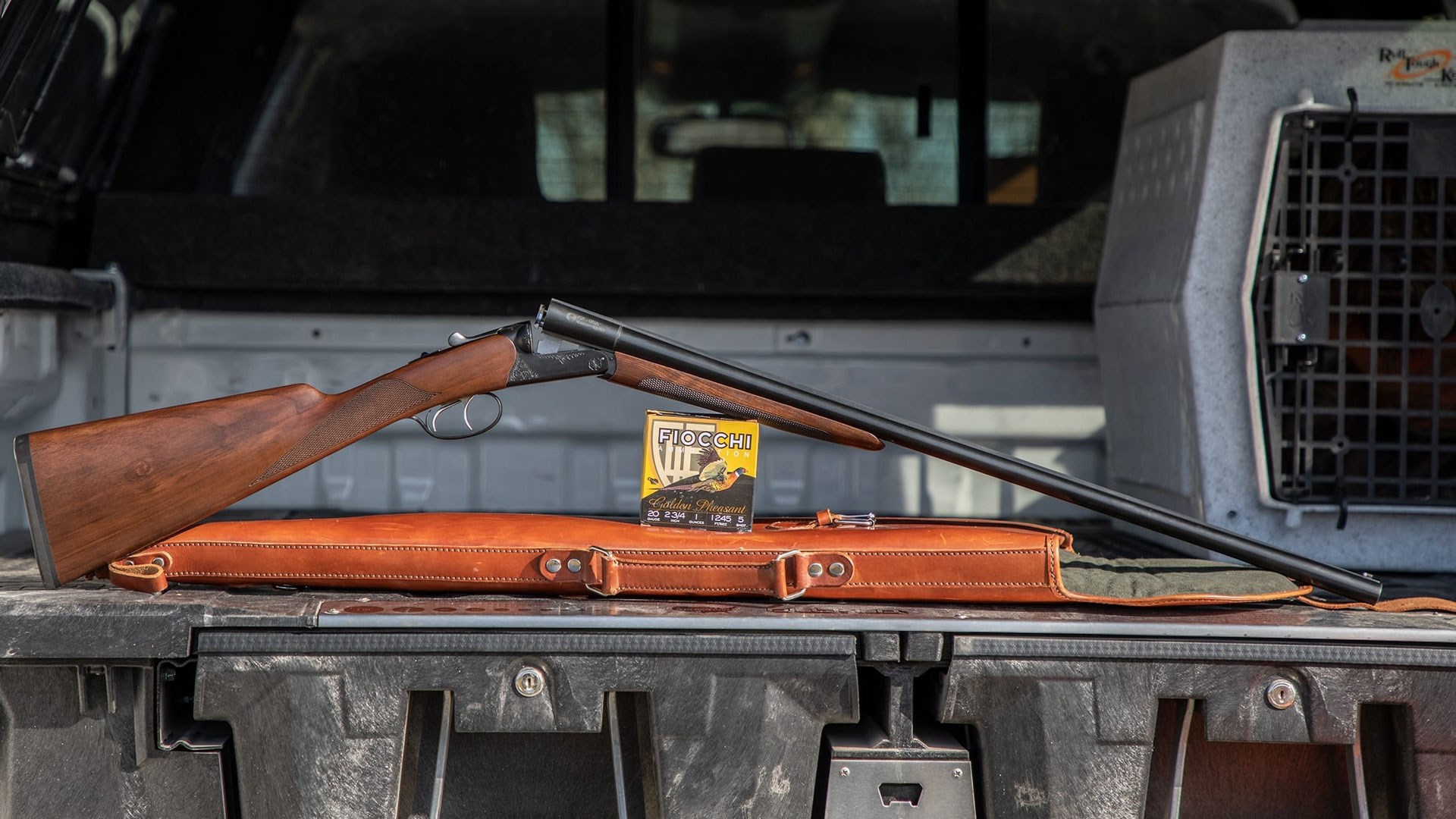
Side-by-sides (double-barrels) were the original repeaters. The benefit of having immediate access to a second shot should be obvious. But, how that follow-up is achieved varies by gun. Older double-barrels generally had dual triggers, and learning their location and firing sequence took time.
Why did it matter which trigger was pulled first? One word: the choke. Rare is the period-piece side-by-side that doesn’t have a tighter choke constriction in the left barrel, which fires second. That makes sense, as in most circumstances the quarry is fleeing while the second shot is taken, and thus it’s further away. Modern side-by-sides are offered with a single trigger that fires both barrels, not unlike over-unders. They’re not traditional but are more practical. For the old guard, dual triggers can still be had.
Double-barrel shotguns are wide, and it takes practice to become proficient with pointing (not aiming) them without being distracted by the horizontal twin tubes. Additionally, said guns typically having smallish forearms, thereby requiring the support hand to wrap around the barrels. If the shooting is hot, the tubes will be as well. Wear a glove.
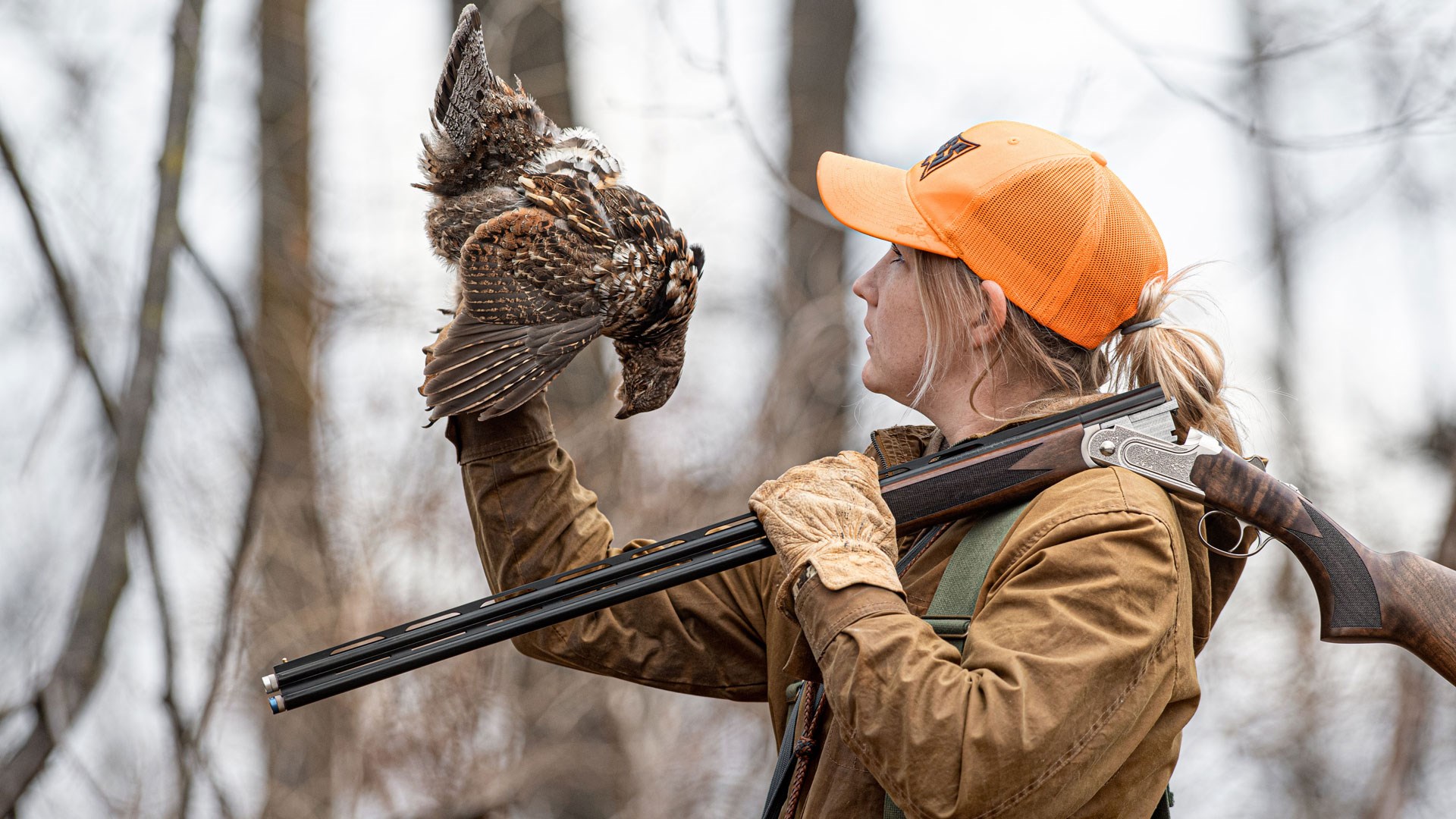
If you don’t like the sight picture and width of a side-by-side, the over-under, which dates to at least the early part of the early 20th Century, is an alternative. An inverted side-by-side, the over-under has the fast-follow-up capability of the double-barrel with an accustomed-to sight-picture and feel.
Over-unders, or “stacked barrels,” have one of two trigger designs: inertia or mechanical. The former uses the recoil from the first shot to reset for the second shot, while mechanical triggers reset automatically. The benefit of the latter is that, should a low-recoil round be fired, a dud be encountered, or the gun not be held tightly, the trigger is still ready to fire the second barrel. Smart.
Some doubles have extractors and ejectors, while others are extractor-only models. Those foregoing extractors simplify the gathering of spent hulls, but at the expense of slower reloading—not an issue, until it is. Crippled waterfowl in open water; need I say more? I prefer models with ejectors.
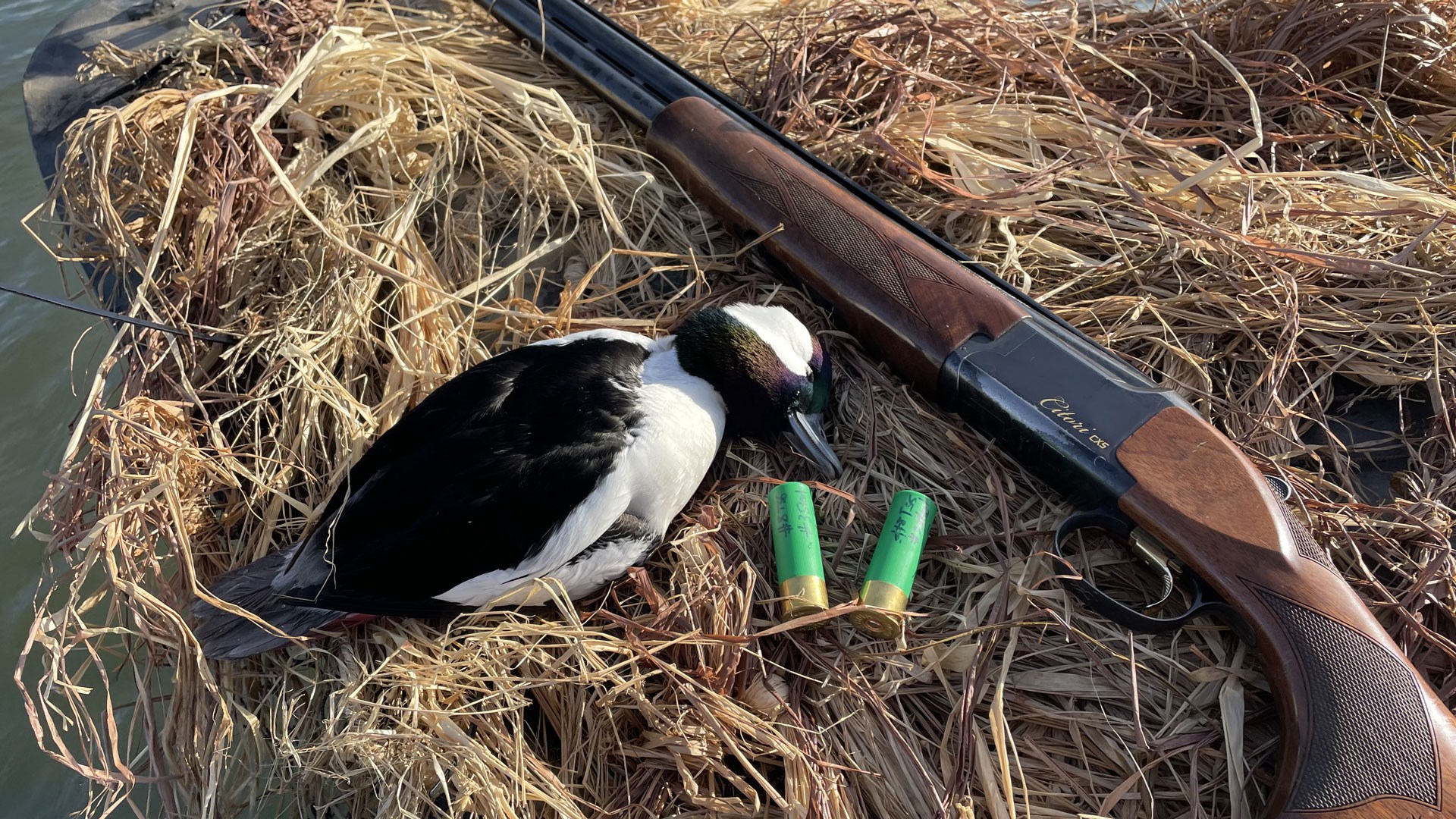
Since doubles are absent a long action (think pump-action or semi-automatic), they have short overall length—even when fitted with longish barrels, making them perfect for hunting in tight quarters, such as pop-up and layout blinds, sneak boats, and thick cover.
Contemporary doubles are normally fitted by barrels that are threaded to accept screw-in choke tubes, and thus you, the hunter, can determine what combination of constrictions is best suited for the situation. This, along with the traditional feel and sighting picture of a single-barreled shotgun, are why over-unders are increasingly dominating sporting clays competitions and popular for hunting, too.
As an example, my 28-inch-barreled Browning CXS over-under has won many individual clays competitions and leagues, and has likewise collected limits of ducks, geese, and other small game. While side-by-sides are still encountered afield (and used in competition), over-unders are dominant.
If there’s a weakness to doubles, it’s their weight; the metal necessary to add an extra barrel and secure the duo in place naturally increases heft, so they’re more taxing on long jaunts across CRP and crop fields or while side-hilling. Moreover, quality doubles are pricey, and I don’t suggest skimping; “cheap” over-unders are often plagued with problems when used for high-volume shooting. Although it could happen to any double, shotguns with barrels that don’t hit near the same point of aim or have reliability issues are those with attractive prices. The adage “buy once cry once” applies here.
Pump-Actions
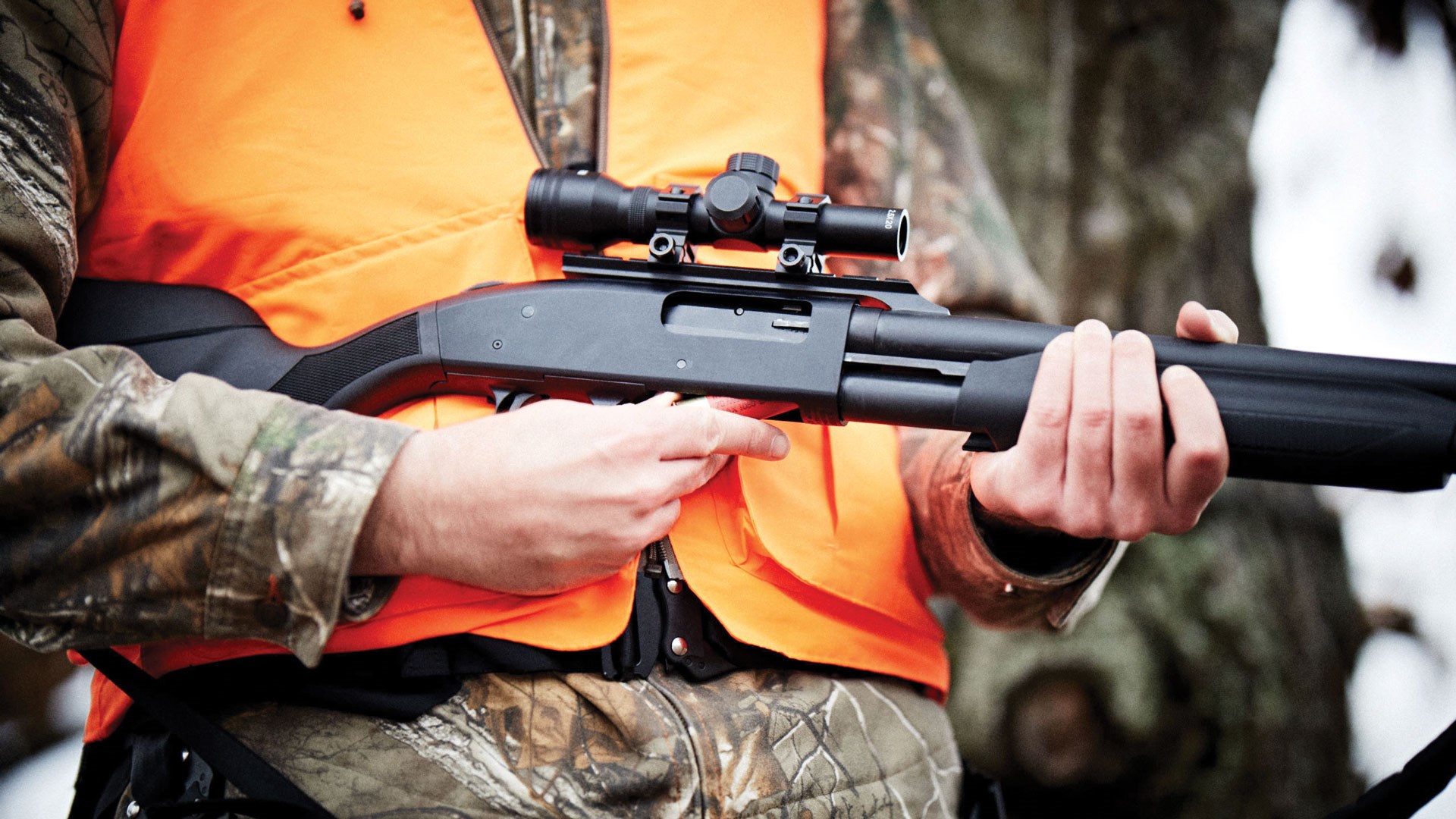
Single-barreled pump-actions—not dual-barreled “defense” shotguns—remain popular options for hunting, though they’ve lost ground in recent decades to autoloaders. Many early autoloaders were infamously unreliable, especially when paired with paper-hulled shells, which were prone to swelling when exposed to moisture.
For that reason, and economical ones, too, many hunters opted for pump-actions. And, given their barebones designs, there’s little to go wrong. Best of all, you have access to a fair number of rounds (excluding migratory birds, which is limited to three).
Practiced shell-shuckers (count me among them) are exceedingly fast; in fact, they can outrun those with autoloaders. Don’t believe me? I’ve experienced this on multiple occasions.
Most recently, when completing the Defensive Shotgun course at Thunder Ranch, outside of the Lakeview, Ore., I was pitted with shooter after shooter (including the instructors) in head-to-head competition for multiple rotations, and I cleaned house. I could fire, load, fire and repeat faster with a Mossberg Thunder Ranch 590 pump-action than those armed with the Mossberg Thunder Ranch 940 Pro autoloader.
For me, it’s muscle memory. But, when shooting from an awkward position, such as seated in my Barnegat Bay boat, a pump-action is slow and awkward.
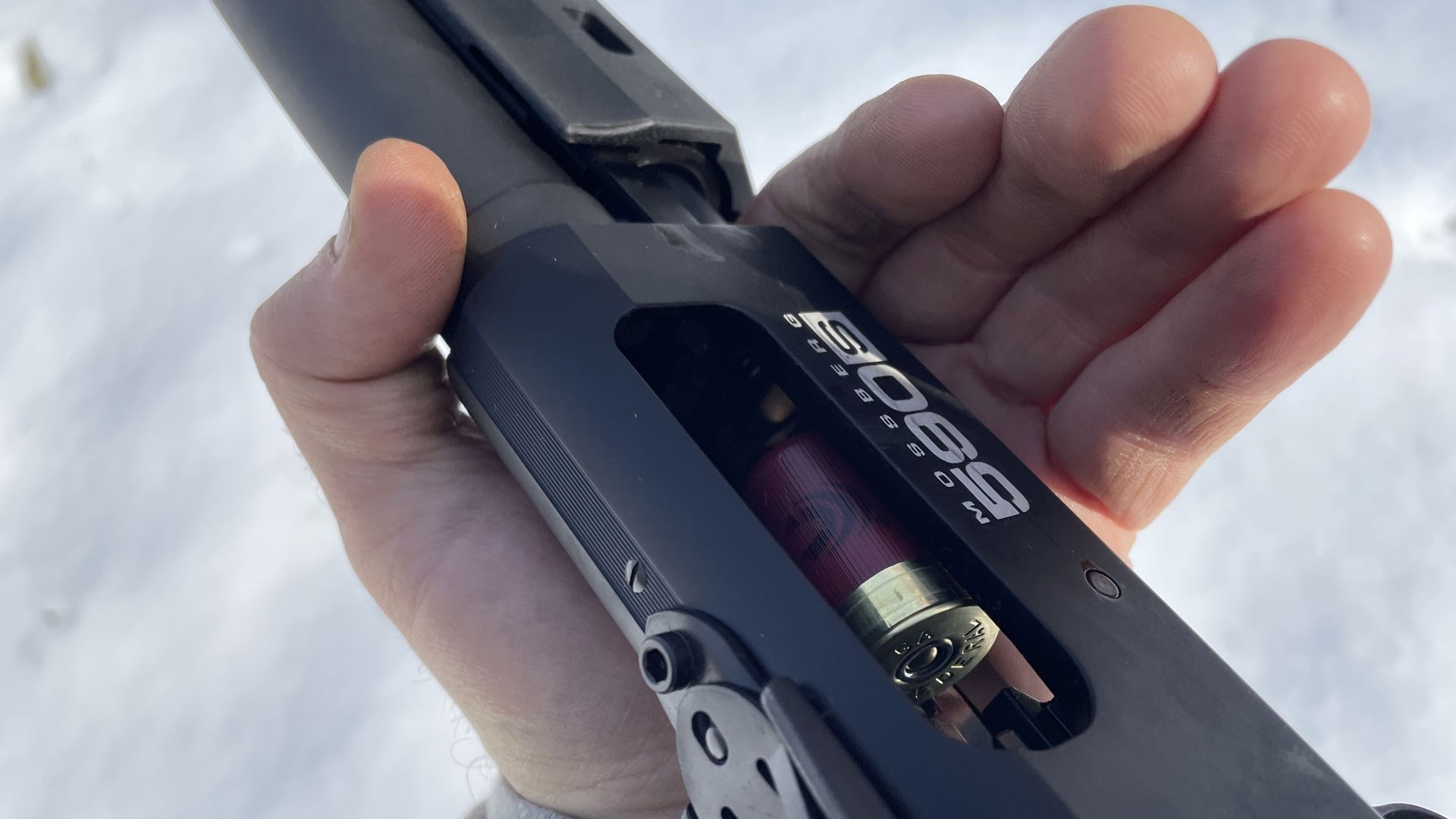
Older pump-actions often had steel receivers, and the Remington Model 870, for example, still does. Others, including the Mossberg Model 500 and its kin, feature aluminum receivers designed to save weight but sacrifice nothing with regard to safety, as lock-up is achieved via a steel barrel extension.
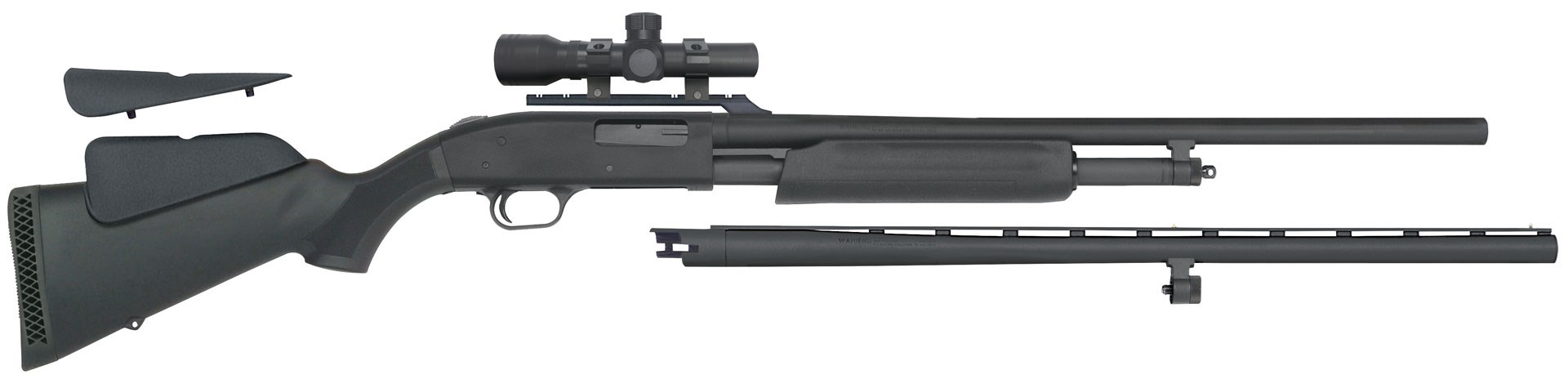
Due to their design, the barrel of a pump-action can quickly and easily be removed for transport or exchanged for one better suited for a specific hunt. For instance, my Mossberg 500 is currently fitted with a rifled slug barrel topped with a low-magnification Leupold scope on a cantilever mount for a slug-only deer hunt, and a 28-inch smooth bore barrel is kept for everything else.
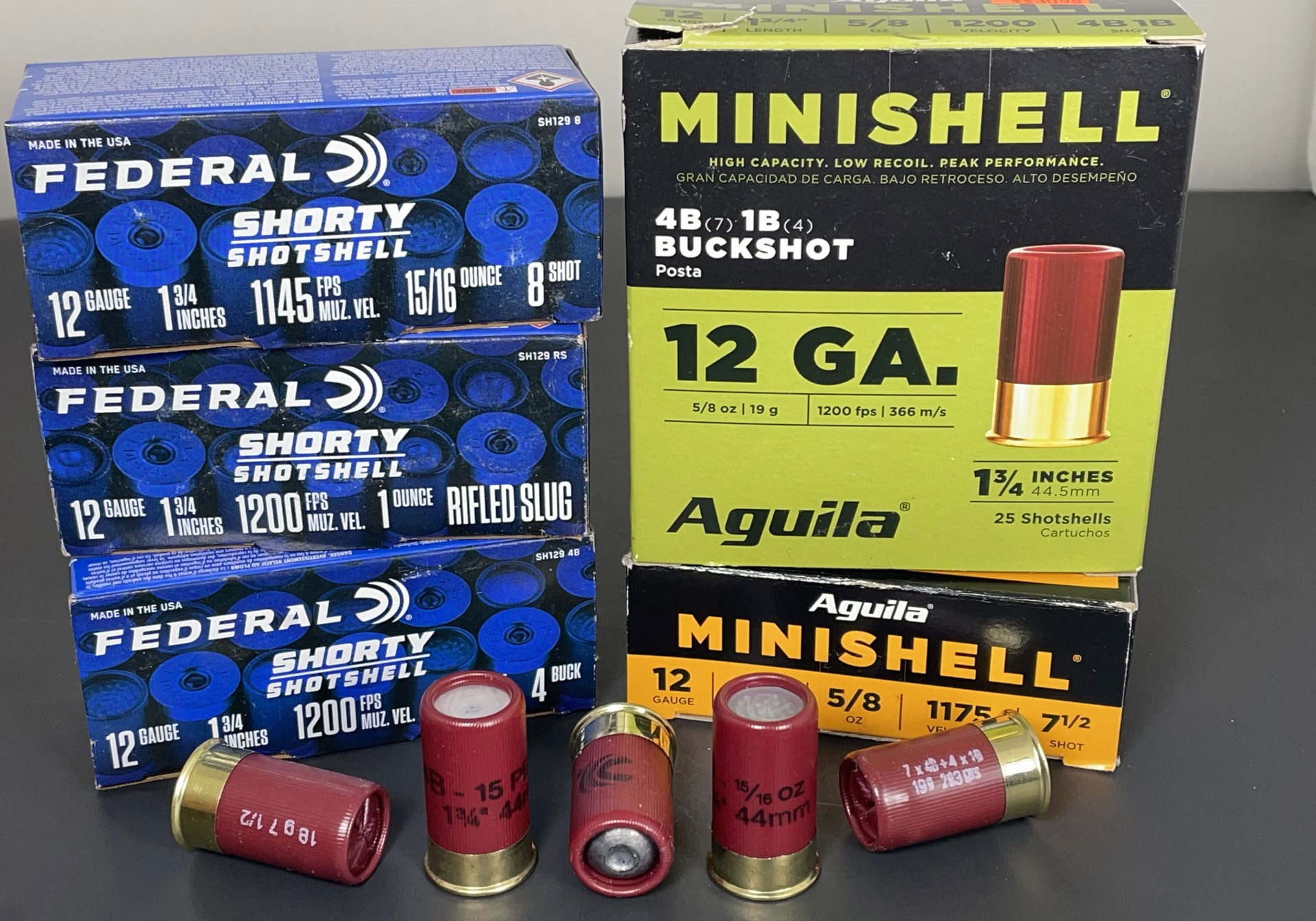
Perhaps the best attributes to pump-actions, besides having extra shells on-tap, is their low cost. Found in high quantity on the used market, and even at a fair price when new, they are the best choice for someone dabbling in hunting or desiring a reliable, low-maintenance shotgun that can handle everything from camp defense and deer to calling coyotes and wingshooting. They’re not finicky concerning ammunition, either; in fact, the 3-inch-chambered Mossberg 590S can even use the 12-gauge, 1¾-inch shells.
Autoloaders (Semi-Automatics)
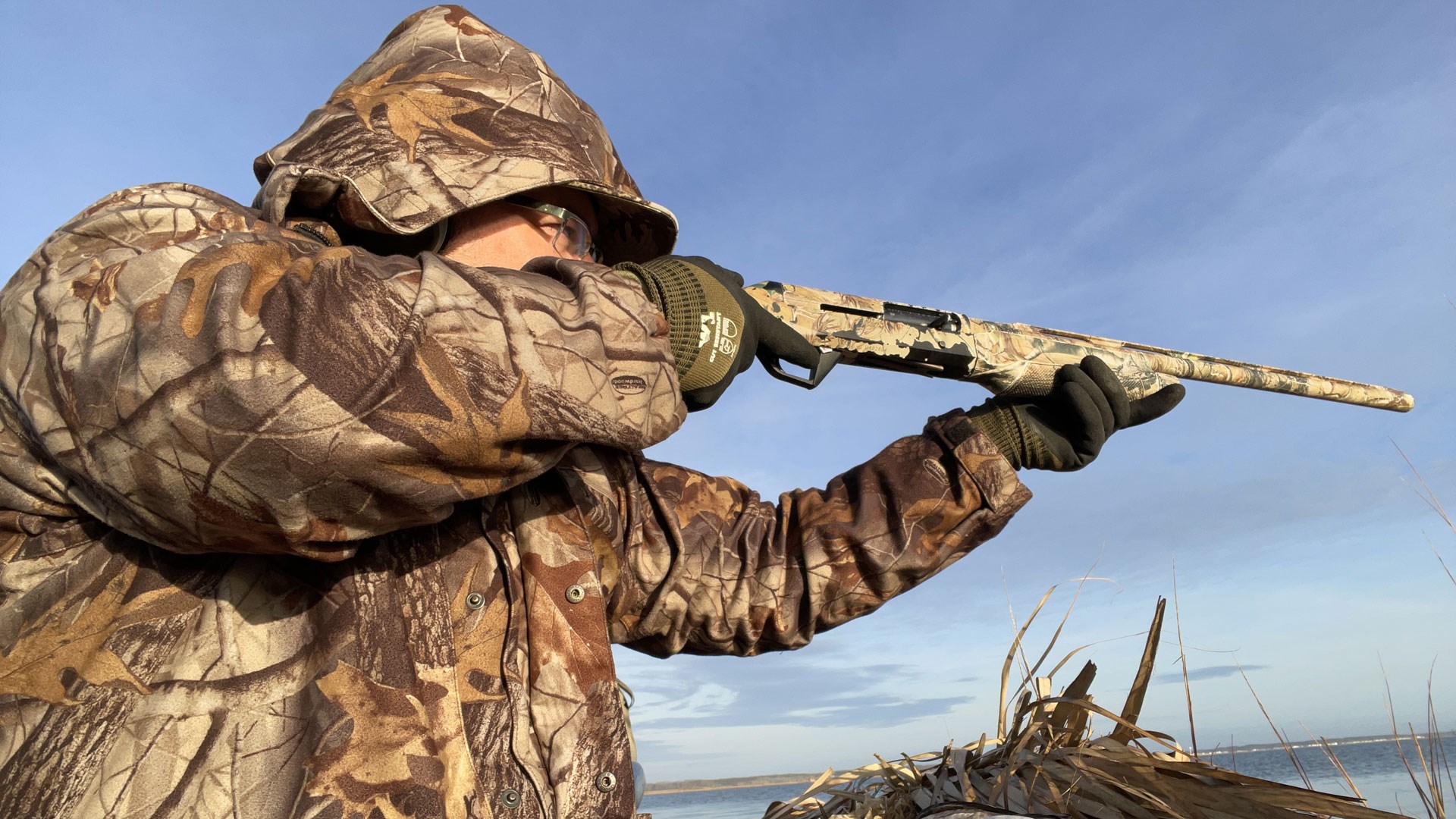
The last option is autoloaders. Despite early hiccups due to their design (and shotshell configurations at the time), semi-automatics are increasingly the go-to for hunting—especially wingshooting. This is for good reason. Like pumps, autoloaders offer instant access to shells. What’s more, because manual operation is unnecessary for operation, most hunters can deliver faster follow-up shots than had they been using a pump-action.
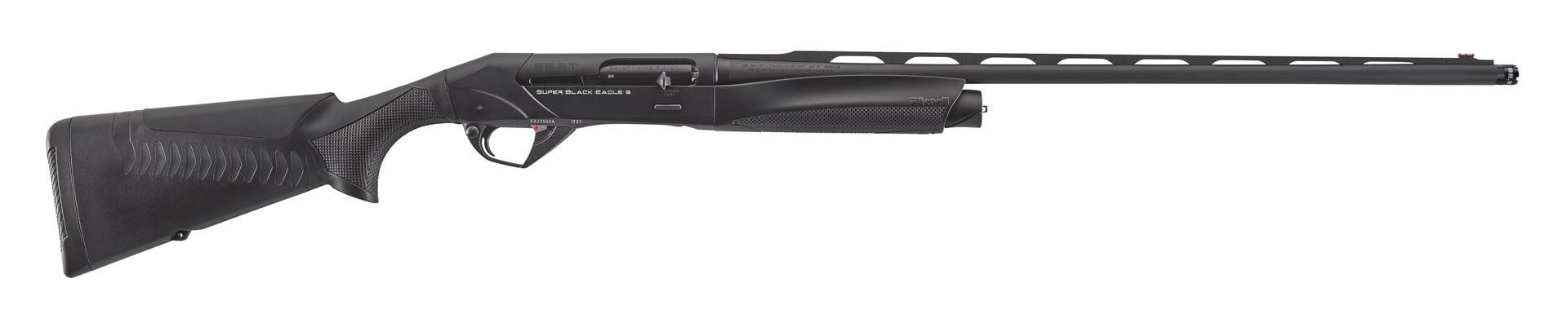
Modern autoloaders use one of two types of operation: inertia or gas. There are advantages and drawbacks to both. Let’s begin with inertia. Inertia operated shotguns—think Benelli Super Black Eagle series, Franchi Affinity series, and Stoeger M3000 series, to name but a couple—use the gun’s recoil for operation.
Since gas (and fouling) isn’t bled from the barrel into the action, cleaning inertia-operated shotguns is uncomplicated and quick, and that’s the reason I favor them. That being said, they must be held securely for reliable functioning, and felt recoil is greater than with gas-operated shotguns—hence why most competition clays shooters prefer gas-operated models.
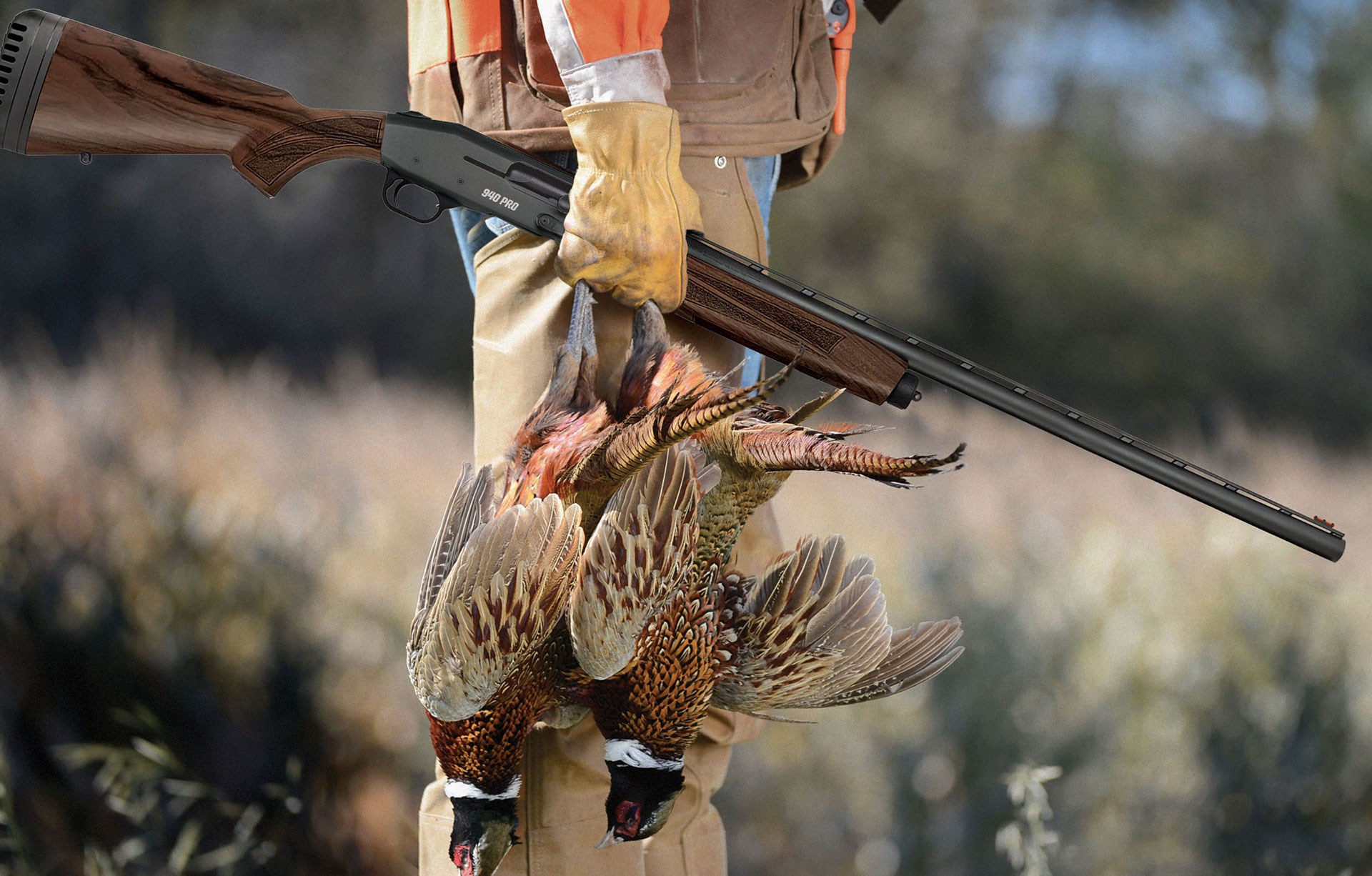
Gas-operated shotguns, such as the Beretta A400, A300 and new AX800 series, bleed gas from the barrel via ports to cycle the action. Along with the gas is fouling/debris, which accumulate on the piston and surrounding area, and which finds its way into the action.
The result is a dirtier gun and lengthier cleaning session. Advancements in gun design (for Beretta, at least) enable it to run longer, even when dirty. But, upkeep isn’t optional, and when you do commit to the task, expect to spend considerable time. Plus, parts on autoloaders wear faster—par for the course.
A considerable benefit of gas-operated shotguns is less perceived recoil—particularly when paired with a supplemental recoil-reduction system, such as Beretta’ s Kick-Off. The ability to mitigate felt recoil when using magnum-type loads for waterfowl, turkey, predators, and big-game is a real blessing.
Gas-operated shotguns used to greatly outnumber those with inertia operation; however, the latter’s popularity (thanks to the Benelli design) has changed that.
The Benelli design is extensively used, even within its sister companies under the Beretta umbrella, and value-priced clones are increasingly capturing consumer’s eyes. Generally speaking, though, Turkish-made, gas-operated shotguns are perhaps the least costly autoloaders, and many of them have proven to be quite serviceable and durable.
Barrels
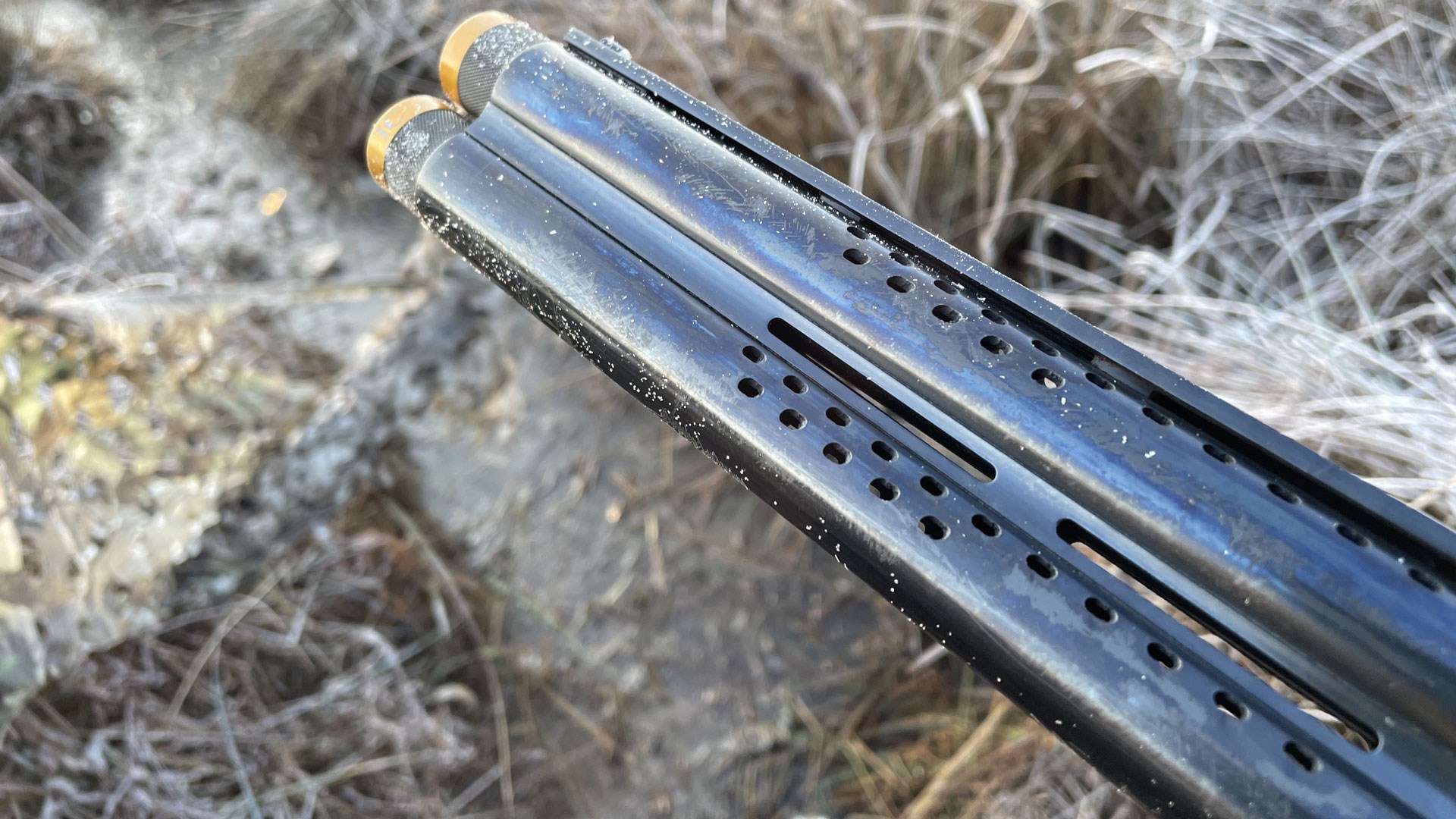
Barrel configuration should match the gun’s intended use. Whereas in the past, when barrels were long to accommodate powder burn (at least that’s what were told), it’s more likely that the longer sighting plain was sought for shooting distant, darting fowl. Tubes reaching 34 inches are still encountered on competition-specific shotguns, but those meant for hunting are largely 24- to 28-inches, with 26- and 28-inch being the most prevalent—and they’re perfect.
Frankly, in all but a few situations, long barrels are merely a burden; they’re prone to snagging, and the extra metal adds to the gun’s heft. In fact, outside of my Browning CXS (still short due to absence of lengthy action) and secondhand Franchi Affinity, both of which have 28-inch barrels, no other shotgun I own has tubes longer than 26 inches. That’s a good, all-around length. For turkeys and whitetails, 24 inches or shorter is even better.
Outside of length, ensure that the barrel(s) is/are threaded for choke tubes for enhanced versatility. I prefer a ventilated rib and 50/50 or 60/40 point of impact. Some hunters like a two-bead system, but a single gold or silver bead works for me.
I don’t like overly large, fiber-optic strands. Camo on the barrel and other steel parts will help with corrosion resistance, especially if hunting where sea spray is likely. Want extra assurance? Benelli parts that receive its BE.S.T. (Benelli Surface Treatment) come with a 25-year warranty against rust and corrosion.
The internal design of a shotgun barrel can drastically change the results downrange. In the past, short, steep forcing cones, were a mainstay; however, long ones common to competition guns are increasingly being cut into the barrels of autoloaders. The Beretta AX800, for instance, has the same forcing cone length—450 mm—as does its DT11 over-under shotguns, which was without peer at multiple events during the 2024 Summer Olympics in Paris, France.
Lengthened forcing cones are known to create tighter, more consistent patterns and are also advertised as increasing on-target energy. Outside of top-end models, you won’t see such forcing cones from the factory. Back-boring, or increasing the internal diameter of the bore (in some cases to the maximum permitted) can increase velocities, improve patterns, and supposedly, decrease felt recoil, too. Back-boring has become commonplace. Porting (such as that completed aftermarket Mag-na-port International, Inc. or similar, as well as from the factory) can help with perceived recoil and muzzle flip, but at the cost of a sharp increase in noise.
Stocks
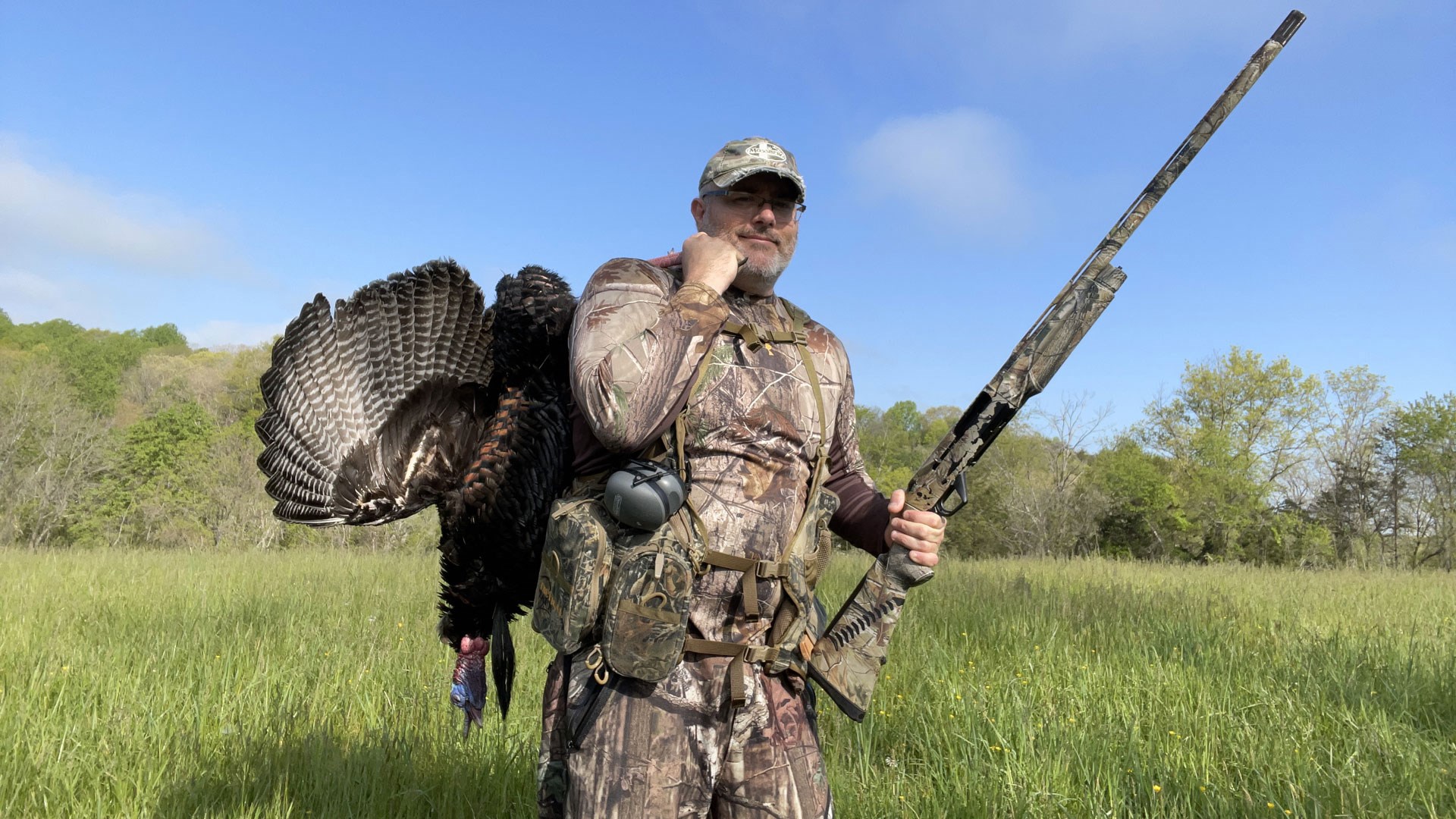
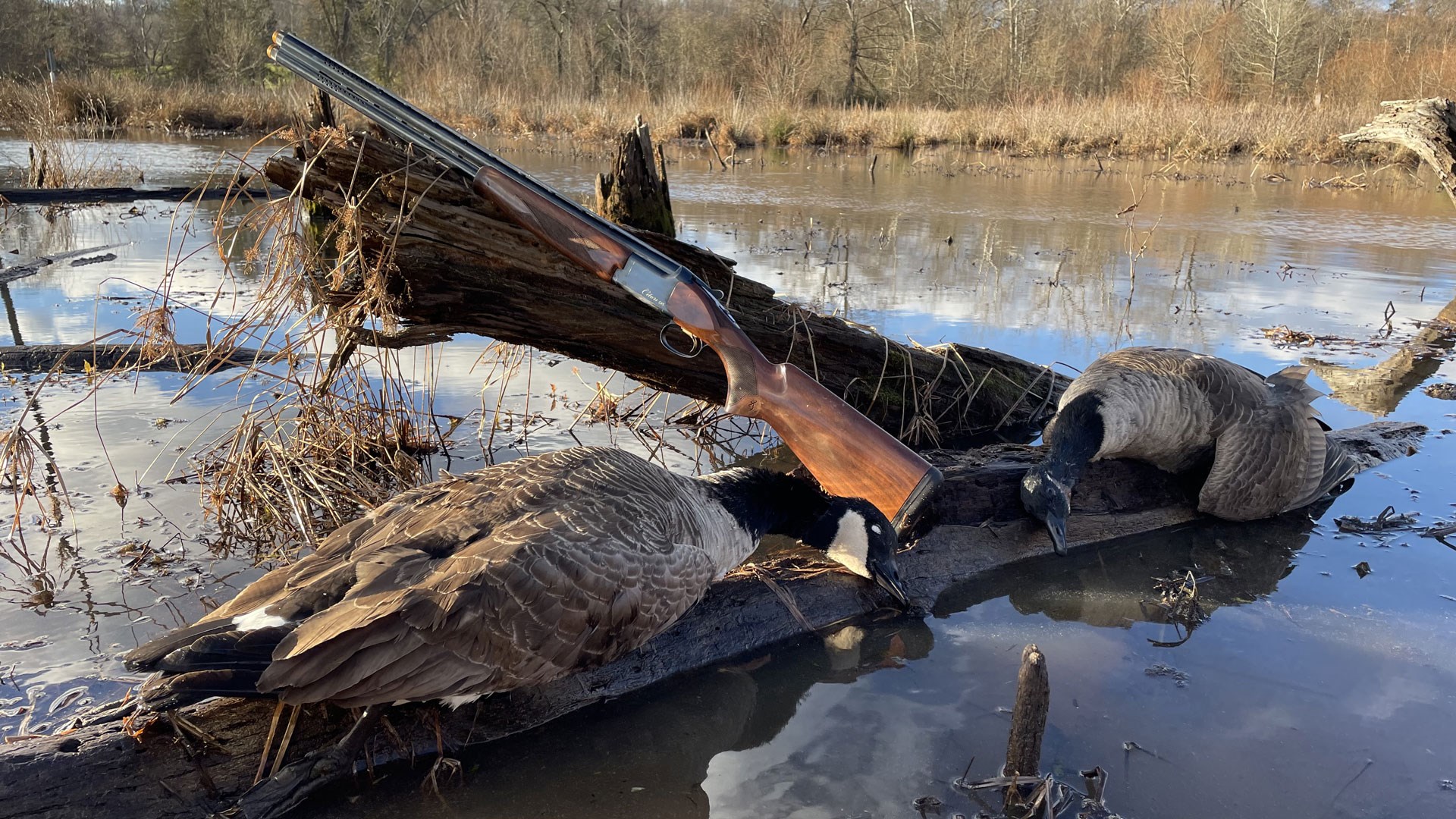
Outside of cool camo patterns, synthetic stocks are ugly—no matter the configuration. Straight facts. Nothing is as beautiful on a gun as is highly figured hardwood. Unless you’re going to consign it to an occasional bramble- or brush-free jaunt on uncluttered, flat ground, or time on the range, it’s a bad choice. In fact, if you’re looking to preserve the aesthetics of finest-quality wood on a shotgun while hunting, either you’ll need to senselessly baby it when afield or leave it at home. It’s for this reason, I opt for synthetic furniture on my hunting shotguns. My dual-purpose Browning CXS over-under wears wood, and it’s time afield is recorded by countless scratches and dents. Oh well. It’s a tool and will be used accordingly.
Synthetic stocks are consistent, though. They don’t swell when exposed to moisture, are practically undestroyable, and can lower a gun’s overall weight. In sum, a plastic gunstock’s unattractiveness is more than offset by the perks. Therefore, when seeking out a shotgun, consider its use and the likelihood of it being subjected to unintentional abuse when afield. If you’re clumsy or a driven hunter, opt for synthetic. Just forego “tactical” versions.
Gauge and Shell length
According to Cartridges of the World, 13th Ed., “If there is one shotshell that holds all titles as most versatile, most popular, and most varied in loading, the 12-gauge is it. Except for the .22 rimfire, by almost any measure the 12-gauge is the most popular sporting chambering ever offered.”
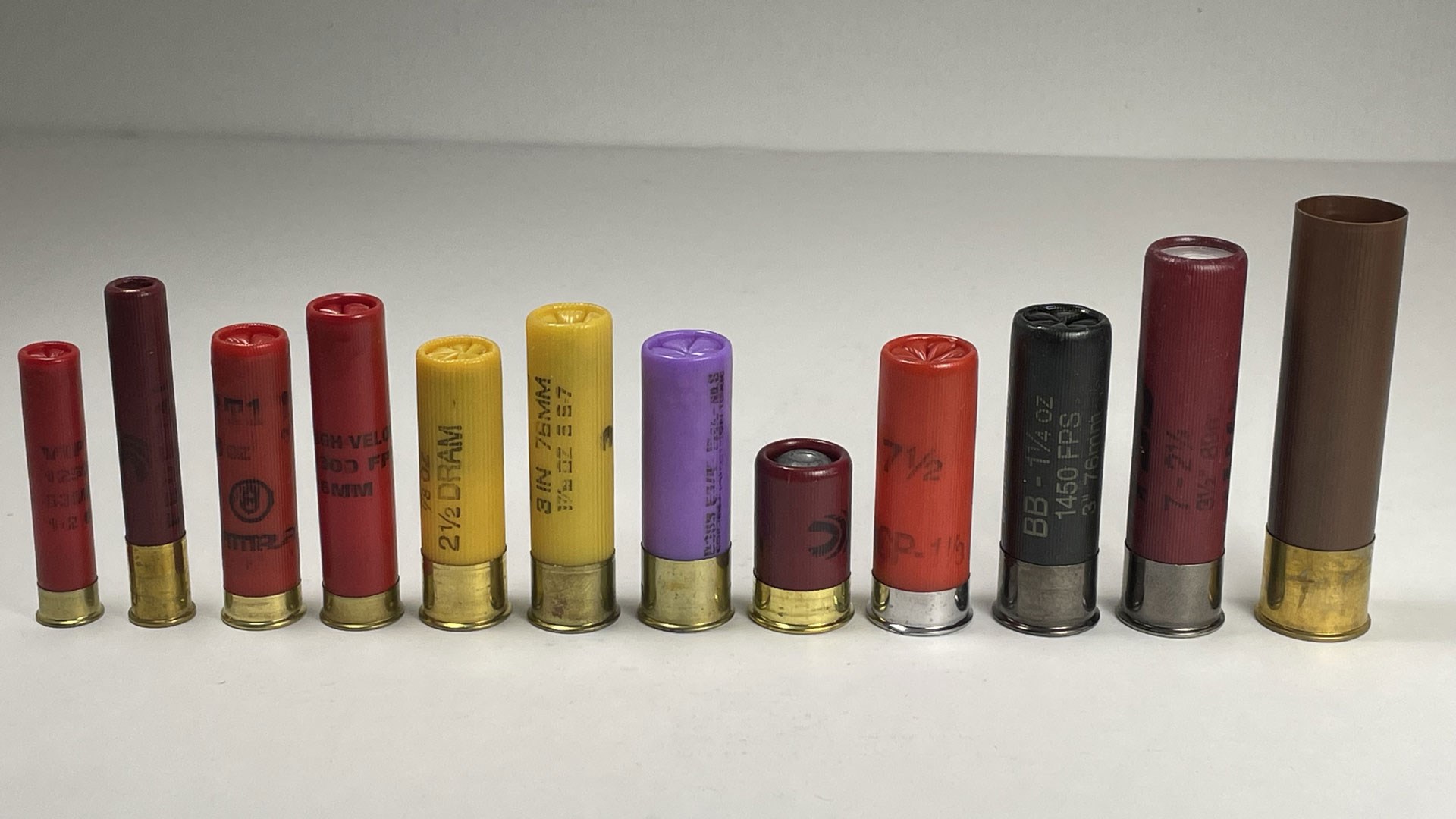
The 12 gauge isn’t ideal for all situations, but it’s as utilitarian as it gets. There are loads available to pursue nigh any huntable species, and ammunition for it is incomparable in assortment and cost. So, as long as recoil isn’t an issue, a 3-inch-chambered 12 gauge is a good all-around option. Why? Such shotguns can fire 2¾- and 3-inch shells interchangeably (unless of insufficient power in semi-automatics), and the advantage that 3½-inch shells once had has diminished greatly thanks to technological advancements in newer wad systems and shot metallurgy, including TSS.
It can be successfully argued, however, that the Roman Candle-sized 3½-inch shells’ extra capacity—for propellant and payload—improves performance with large steel shot and lead-alloy buckshot. Additionally, the extra pellets sent downrange only serve to improve patterns when pursing spring gobblers.. But it comes at a significant jump in recoil, even in gas-operated shotguns. Unless you like punishment, avoid 3½-inch shells in other shotgun types.
Similarly, a 3-inch, 20-gauge shotgun is nigh perfect for most pursuits due to the same advancements in ammunition. In fact, the 20 gauge is, in most cases, now as capable as the 12 gauge, but can be had in lighter, faster-handling guns. Recoil is more tolerable, too.
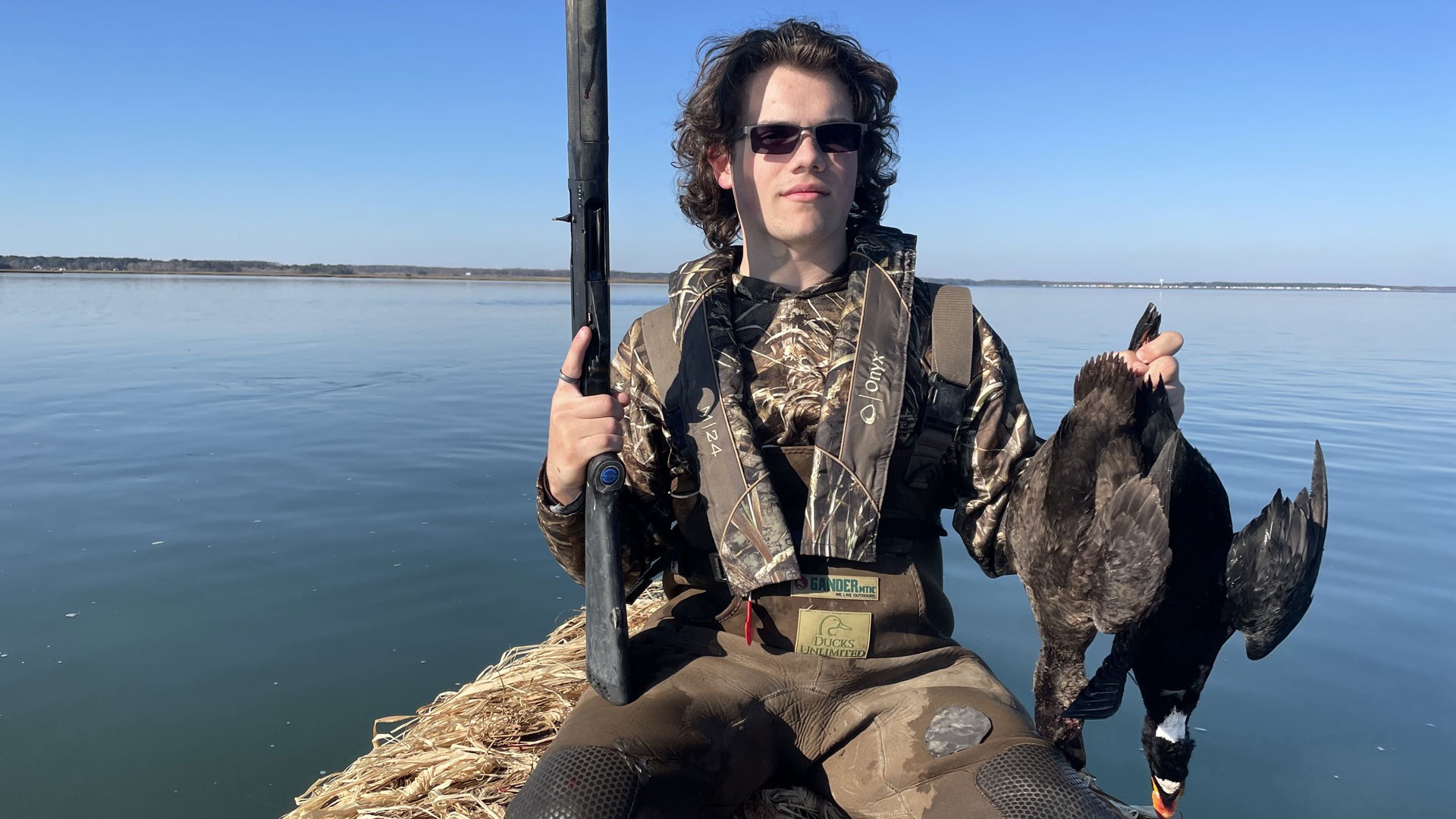
Still questioning its capabilities? You needn’t worry; last year I used a 26-inch-barreled Benelli M2 to take long tailed ducks, buffleheads, Canada geese, and my three-bird limit of spring gobblers. Concerning the latter, 1½ ounces of No. 7 TSS from a Browning 3-inch load was all that was needed to bag three birds ranging from 15 yards to a distance that I refuse to mention here due to a grossly underestimated range. And yet the bird was killed stone dead. With such performance, why lug a hefty 12 gauge afield? Ammunition is similar in cost and approaching the 12 in variety.
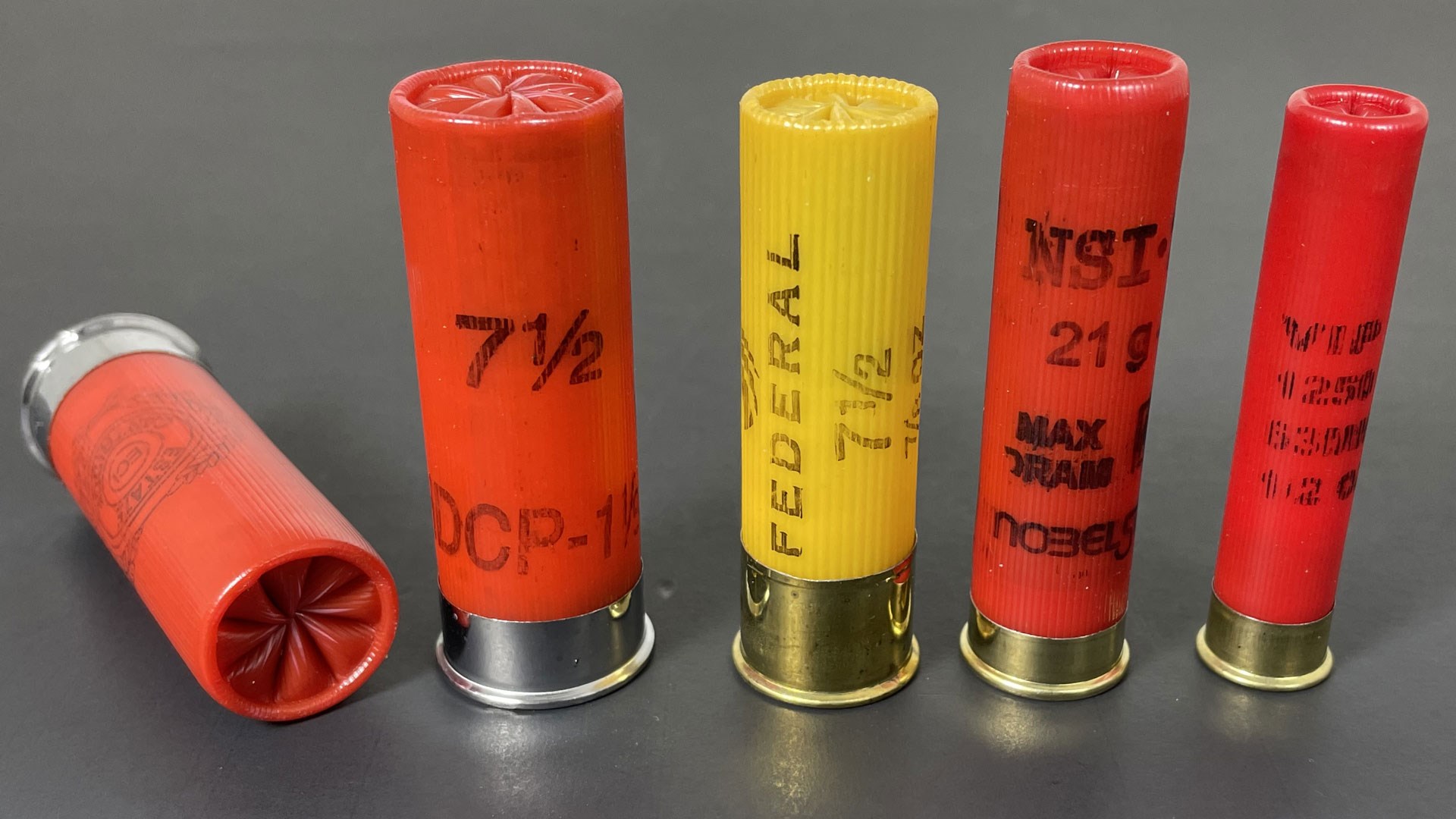
The 16- and 28-gauge, as well as the .410 bore, are wonderful options, too. However, they don’t have the breadth of capability of the 12 or 20 gauge, though the former two certainly have overlapping performance with the 20. Problem is, the 16 gauge (only in 2¾ inch) is a superb chambering, but its ammunition selection is rather limited. Quality 16-gauge shotguns are few in number, too. Browning is keeping it alive with multiple versions of its A5 and the Citori Gran Lightning, though the latter wears fine walnut.
The 28 gauge, which recently debuted in a 3-inch version, is encountered more frequently than the 16. It’s a great option for upland hunting, as well as turkeys when loaded with TSS. With the right loads, it can meet the needs of most waterfowlers as well. Additionally, 28-gauge shotguns are generally scaled down and thus lightweight, as well as quick in the hands and smooth-swinging. Frankly outside of ammunition cost, the 28 gauge is a superb choice for the budding hunter who isn’t keen on collecting big game or large waterfowl at distance.
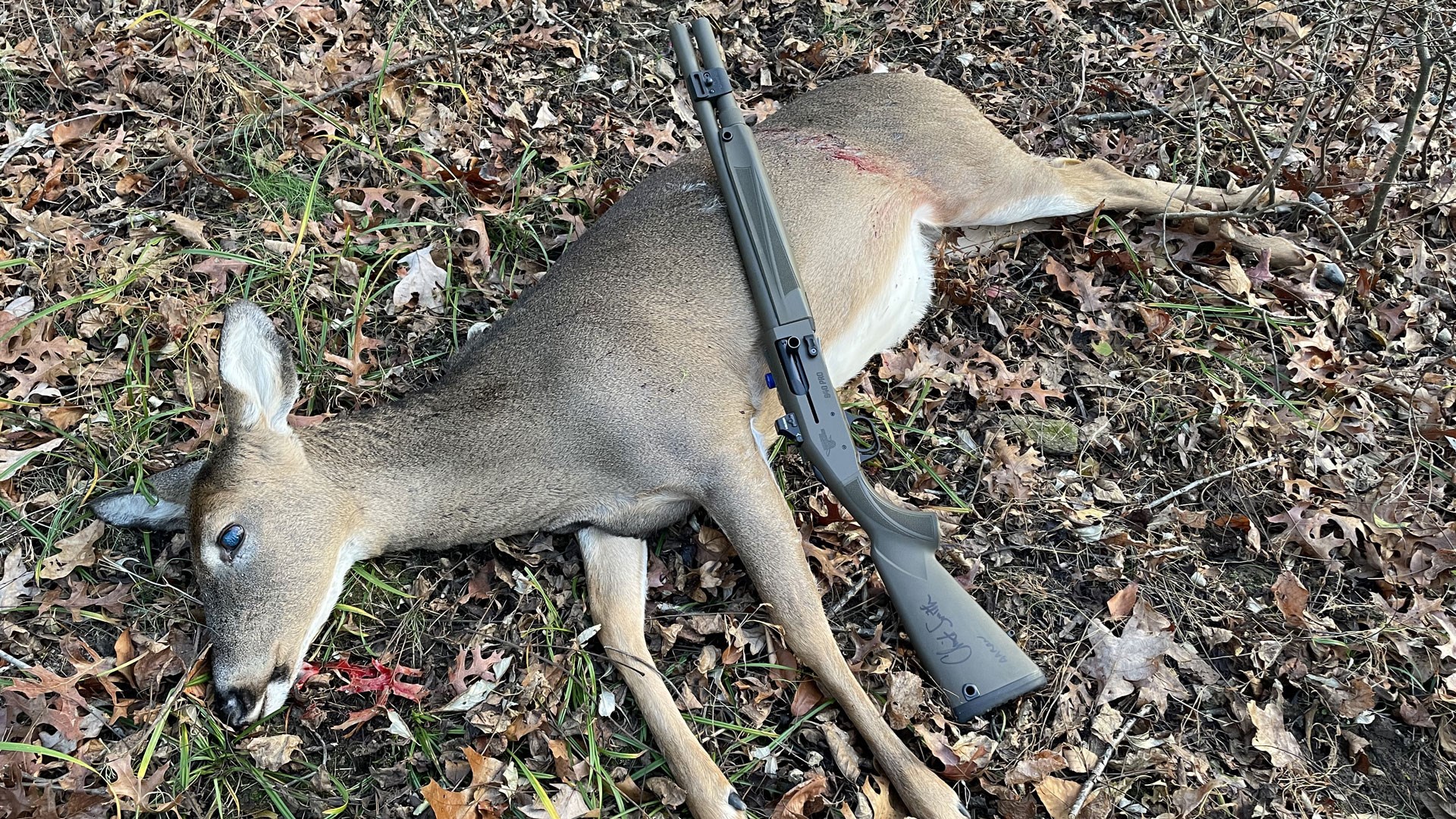
The .410 is often selected as a beginner’s shotgun, and though it has minimal recoil, it’s far from a great choice for that role. With a minimalist payload, it’s more of an expert’s round than one for the novice. Overall, it’ll serve well for small upland species, including quail, dove and squirrels, to name a few. Three-inch shells are preferred, but all .410s are pricey.
As much as it pains me to say this, the 10 gauge is too specialized for most hunters, and between its weight, recoil and ammunition cost, it’s a bad decision. I’ve owned several through the years, and though they’re a boon for high-flying, oversized waterfowl, big game and boisterous toms, in reality the 10 gauge offers no real advantage over the 3½-inch 12 gauge—especially when high-density leadless shot is employed in the 12.
Selecting a shotgun well-suited for your style of hunting and intended quarry can seem daunting. Using what you learned in this article can help you narrow the field. But, until you handle the gun in-person and are comfortable with its feel and operation, you shouldn’t close the deal. Good luck on the hunt for your scattergun.
 by
by In June 1966, a significant portion of the 1st Marine Division’s Area of Operations (AO) included the provinces of Quang Ngai and Quang Tin, in the southern portion of the I Corps Military Region. Straddling the two are the hills of Que Son Valley, including Nui Vu: also known as Hill 488..
Reports of North Vietnamese forces moving into the strategically important valley in mid-June necessitated a response. General Lewis Walt, III, Amphibious Force and 3rd Marine Division commander, deployed elements of 1st Recon Battalion, including a team led by SSgt Jimmie Howard, to the valley.
Initial intelligence pointed to the main-force 620th NVA Division, consisting of two NVA regiments and one VC, gathering in multiple small units numbering in the thousands in the vicinity of the Que Son Valley. These formations were reportedly crossing the boundary between Quang Tim and Quang Nam, northwest of Chu Lai. General Walt launched Operation Kansas to counteract them. A fertile, rice-rich and populous farming area, the Que Son Valley was the strategic lynchpin of I Corps. The Battle of Hill 488 would soon become the most intense action of this efforthttps://www.breachbangclear.com/wp-
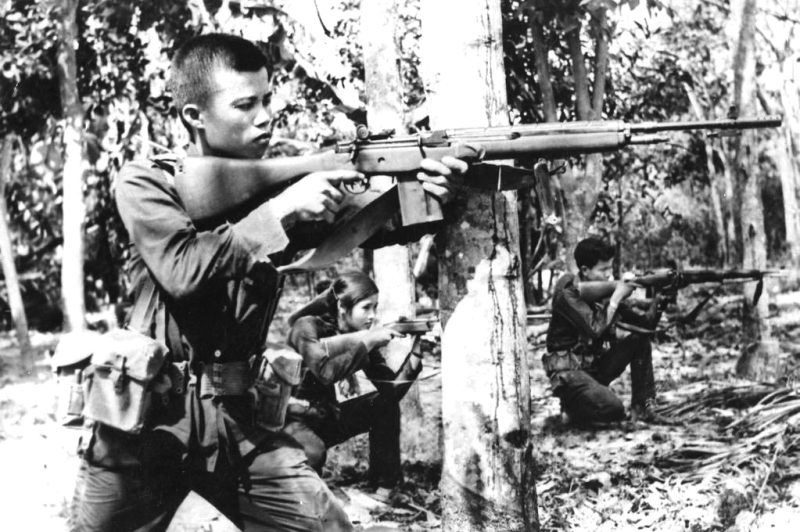
Since the North Vietnamese weren’t using large base areas, Walt decided on a strategy somewhat different from a large unit sweep.
Instead, Marine Reconnaissance was tasked with inserting small teams to scout the hills. Were they to find small units of Communists, they had PRC-25 radios to call in air and artillery. Should they find one of the larger concentrations of North Vietnamese troops, they would report back and bring in Marine infantry by helicopter.
1st Reconnaissance Battalion Gets the Duty
On the evening of the 13th of June, 1966, Lt. Col. Sullivan, 1st Recon Battalion’s commanding officer, inserted at Nui Loc Son and set up his command post. That same evening, Team 2, an 18-man recon platoon of C Company, 1st Recon Battalion, led by SSgt Jimmie Howard, inserted on Nui Vu (Hill 488).
They were not alone. That same night, a team from 1st Force Reconnaissance Company parachuted onto Hill 555, to set up their own observation post. One man was injured on landing, but the insertion went without incident otherwise.
The following night, two more teams from 1st Recon Battalion also inserted on other surrounding hills.
The Force team was extracted first, as a woodcutter had found one of their parachutes and alerted the North Vietnamese. The Force Recon Marines observed the woodcutter talking to the leaders of a 40-man unit that appeared to be conducting tactical training within the team’s line of sight.
All of the teams were spotting enemy movement. For the next two days, Jimmie Howard and his Team 2 called in artillery strikes from an ARVN (Army of the Republic of VietNam) 105mm artillery battery.
The top of Hill 488 was relatively barren, with only low scrub to provide any concealment, and it was an obvious observation point. Lt. Col. Sullivan was concerned that it was a little too obvious, and so not all of the fire missions the Marines called in were approved. This was an attempt to make it less obvious that the North Vietnamese were under constant observation. Howard made an effort to time his calls for fire for when there were observation planes or helicopters overhead, potentially leading the enemy to think that they were being spotted from the air, rather than from the hill.
Even so, Lt. Col. Sullivan and his X.O. worried about the team being in place for two days—ordinarily a deadly sin in Reconnaissance. However, because the OP was so perfect and was giving an abundance of intelligence and fire on targets of opportunity, Jimmie Howard and Sullivan agreed to keep the team in place for one more day.
However, the game was up, as the North Vietnamese recognized the hill’s commanding position, the clear fields of view, and, in Lt. Col. Sullivan’s theory, they knew that Recon was out there, and wanted to destroy a Recon team, to demoralize the others.
On the afternoon of June 15, a two-man Special Forces team leading a Civilian Irregular Defense Forces platoon detected hundreds of North Vietnamese troops climbing Hill 488.
They radioed in, alerting not only their own command but also SSgt Howard, whose radio was set to the same frequency. The two Special Forces soldiers, Sergeant 1st Class Donald Reed and Specialist 5 Hardey Drande, wanted to engage, but found themselves dealing with a platoon of local militia who most definitely would not rush the North Vietnamese.
Howard called in his team leaders, set a central rally point, and gave instructions to fall back to it when they made contact with the enemy. With the teams alert and ready, they waited.
The Battle of Hill 488 Begins
The first attack hit at just around 2200. The attacking forces were later identified as elemtnts of the 3rd and 21st Regiments of the 2nd NVA Division
Lance Corporal Ricardo Binns fired his rifle at a seemingly random bush, and the North Vietnamese soldier crawling forward using that bush as cover was killed, falling back down the hill. The Marines of Binns’s team threw grenades and fell back toward the central rally point.
The rest of the team fell back to the central outcrop, which had formed their assembly point. Howard quickly got them into a tight, 20-meter-wide perimeter, setting each Marine into his firing position.
When the enemy attacked the rocky knoll on Hill 488, they were within twenty feet of the Recon Marines’ positions.
The North Vietnamese led with a volley of grenades, some of them bouncing off the rocks, some failing to detonate, but others falling on Marines and exploding. Three 12.7mm machine guns and 60mm mortars provided further fire support for the assaulting North Vietnamese.
Every man wonders how he’ll react the first time he sees combat. Similarly, SSgt Howard wondered how his Marines, many of whom were young and inexperienced, would react.
As the North Vietnamese rose up and charged the knoll at the top of Hill 488, firing their AK-47s, throwing grenades, and screaming, they found out.
The Marines responded with a fusillade of M14 fire that cut down the assaulting North Vietnamese in short order, forcing the rest behind them to go to ground, dropping to find cover.
As the night wore on, small groups of North Vietnamese troops crawled forward to probe the Marines’ perimeter, tossing grenades at the Recondos’ redoubt. They were often answered with grenades in turn, and the US grenades were much more effective than the ChiCom stick grenades. Furthermore, the Marines were better at throwing them, often gauging the enemy’s location by sound and throwing a frag, answered by screams.
The Communists pulled back, and Howard got on the PRC-25 back to Lt. Col. Sullivan’s command post. “You’ve got to get us out of here. There are too many of them for my people.”
Sullivan called the 1st Marine Division Direct Air Support Center and demanded flare ships, gunships, and fixed-wing attack aircraft to provide fire support for the men fighting the Battle of Hill 488.
Yet by just before midnight, the aircraft still had not arrived. And the North Vietnamese attacked in force again.
The Marines threw the last of their hand grenades and fired their rifles on semiautomatic, conserving ammunition and hoping for accuracy to trump numbers and volume of fire. They beat back the assault, but at the cost of every Marine being wounded.
As they redistributed the ammunition from the dead, Howard considered their situation. They were unlikely to be able to repel another massed assault. He could hear the enemy calling out their taunts, warning the Marines that they were soon going to die, down in the dark below the hill.
In response, he got his Recon Marines to taunt the enemy back, yelling every bit of invective and profanity out into the night they knew. And then, he got them to laugh at the enemy, just to show the North Vietnamese that they weren’t demoralized or broken—and therefore were not a good prospect for a third assault.
At 0100, an Air Force flare ship arrived on station and started dropping illumination. As they looked out into the valley, the Marines saw that North Vietnamese reinforcements outnumbered them by hundreds to one. “There were so many, it was just like an anthill ripped apart. They were all over the place,” said Lance Corporal Joseph Kosoglow.
With illum overhead, the jets and helicopter gunships that had been circling overhead without being able to see the enemy, on the radio with Howard but unable to help, descended on the North Vietnamese.
“There were so many, it was just like an anthill ripped apart.”
Rockets, bombs, napalm, and machine gun fire raked the enemy force, with gunships (including Marine assets of VMO-2 and VMO-6) dropping to 20 feet on their strafing runs. Napalm was dropped within 100 yards of the Marine positions, trying to keep the North Vietnamese off them.
Two Hueys stayed overhead all night, directing air support, though at least one was struck by ground fire in the process. With Howard marking their position with a filtered flashlight, gunships strafed as close as 25 yards to the rocky knoll.
The enemy had learned to “hug” US forces to avoid air support, though, and the fight continued at close range, often at ranges of less than 30 feet. The North Vietnamese would crawl toward the Marine positions, and the Marines would throw rocks, since they were out of grenades, hoping to smoke the enemy out of cover, then either engage them on the move, or identify the position they’d moved to, shift and aim in, and kill the enemy soldier when he got up to move. With ammunition critical, they kept to single shots, making every round count.
In the dark, when the flares faded, each man found himself alone. How some of the Marines died will never be known. One was found propped up against a rock, a dead Communist soldier in front of him, their muzzles touching each other’s chests. Some Marines fought with their entrenching tools.
At 0300, H34 helicopters came in to extract the Recon Marines, but were forced off by heavy fire, and Howard was informed he would have to fight on until dawn. Shortly thereafter, he was hit in the back by a ricochet, losing the use of his legs. He came back strong on the radio, and for the rest of the night, he crawled from position to position, keeping his remaining Marines alert and encouraged.
The fire became more sporadic as the night waned. But the enemy was still out there, despite the litter of bodies and equipment all over the slopes of Nui Vu, Hill 488. They were dug in and gone to ground, still determined to wipe out Team 2.
Early that morning, Major William J. Goodsell attempted to fly in a medevac Huey, lured in by the lack of fire until his bird was hit by a storm of machine gun fire. His copilot, 1st Lt. Stephen Butler, was able to get the Huey under control, but Maj. Goodsell died of his wounds before he could reach the hospital.
Air support, unfettered by darkness now, swooped down in revenge. Another Huey was lost, but the air support destroyed the heavy machine guns that the North Vietnamese had been battering the hill with.
While they had been delayed by heavy fire, forced to circle for 45 minutes as jets cleared a landing zone, Charlie Company, 5th Marines, was en route, and as soon as they landed, they moved up the hill, clearing out resistance as they went. Howard and his men met them at the top, Howard warning 2nd Lt. Meyer to stay down because there were snipers still taking them under fire.
The surviving Recon Marines asked their brother Marines if they’d brought cigarettes.
Howard, despite his wounds, took charge, directing the defense of the hill. The fire on the slopes was still intense, and Charlie Company lost two Marines as they slowly secured the slopes. Howard’s Team 2 had lost six, and of the remaining 12, all were wounded. The North Vietnamese had left behind 42 dead and 19 weapons.
The six dead 1st Recon Battalion Team 2, Battle of Hill 488
- Cpl Jerrald R Thompson, Navy Cross
- LCpl John T Adams, Navy Cross
- LCpl Alcadio N Mascarenas, Silver Star
- PFC Ignatius Carlisi, Silver Star
- PFC James O McKinney, Silver Star
- PFC Thomas D Glawe, Silver Star
Other Casualties, Battle of Hill 488
The two dead of Charlie Company, 5th Marines:
- 2nd Lt Ronald W Meyer, Silver Star
- LCpl Terry P Redi
VMO-2 and VMO-6 each lost one:
- Major William J Goodsell, VMO-6, Navy Cross
- PFC Leo B Buckholdt, VMO-2
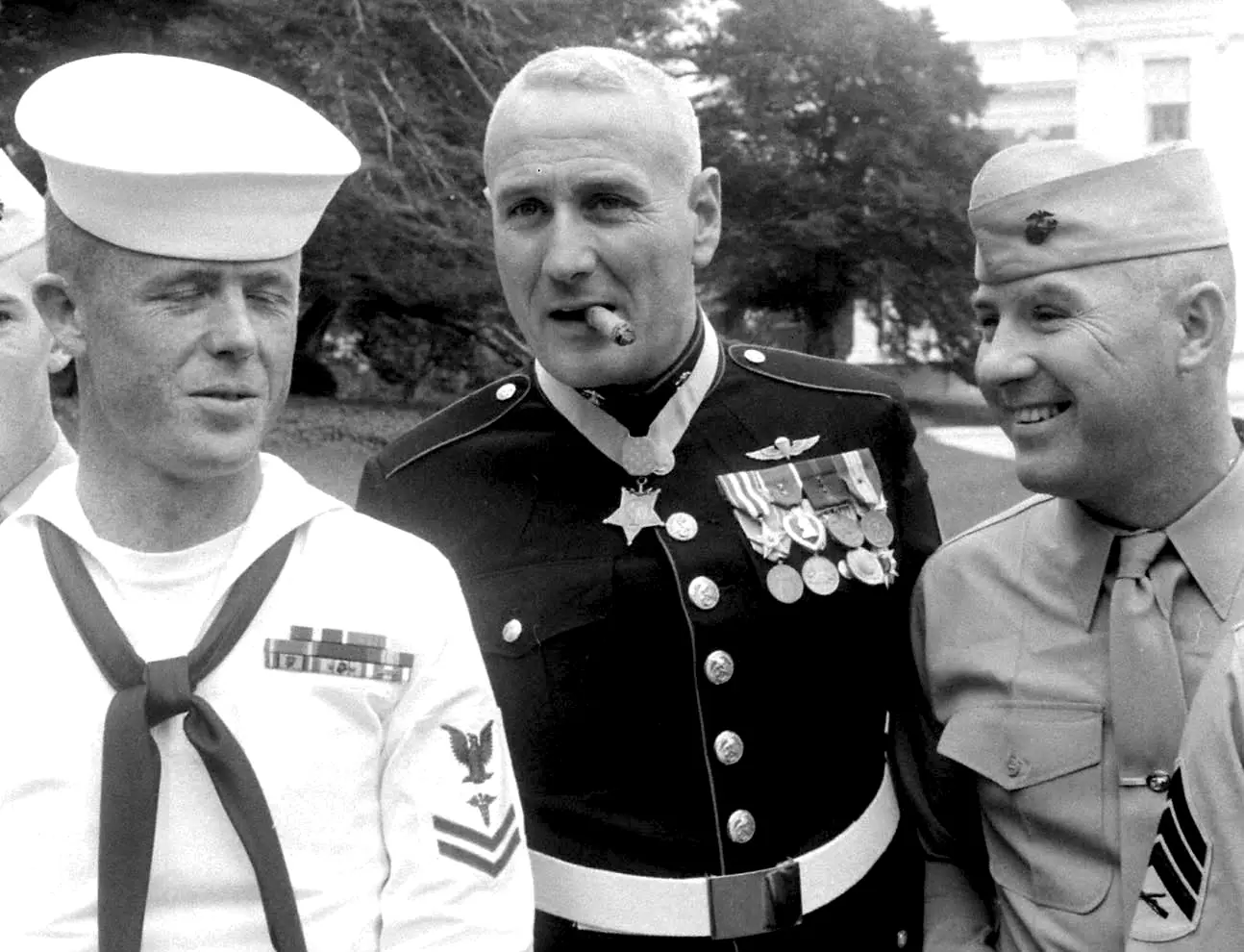
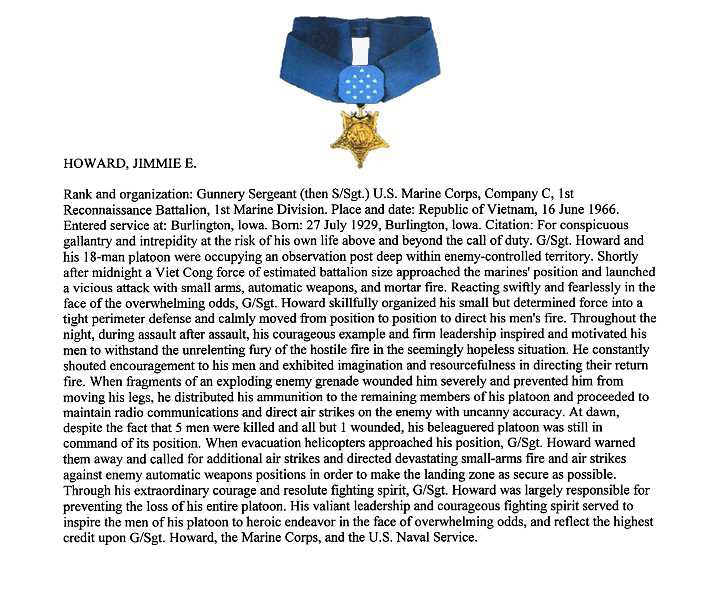
SSgt Jimmie Howard was subsequently awarded the Medal of Honor.

Post-Vietnam War and retirement
Upon his return to the United States, he was assigned duty as Battalion Training Non-commissioned Officer, Service Company, Headquarters and Service Battalion, Marine Corps Recruit Depot, San Diego, California.
Howard retired from the Marine Corps on March 31, 1977, with the rank of first sergeant.
Following his retirement, Howard lived in San Diego, California and worked for the local Veterans Affairs office.
Howard became involved in coaching/volunteering for Point Loma High School. He was a coach for the Point Loma High School football team which went undefeated in 1987 and won the San Diego Section CIF championship.
He was also a coach for the Point Loma High School football team which won the CIF championship again in 1991.
When asked why he liked coaching, Coach Howard stated the men he lost in combat were relatively the same age as the high school football players and it reminded him of them.
Jimmie E. Howard died on November 12, 1993, at his home in San Diego, California. He was buried in the Fort Rosecrans National Cemetery in San Diego.
Categories
The M1 Carbine – In The Movies
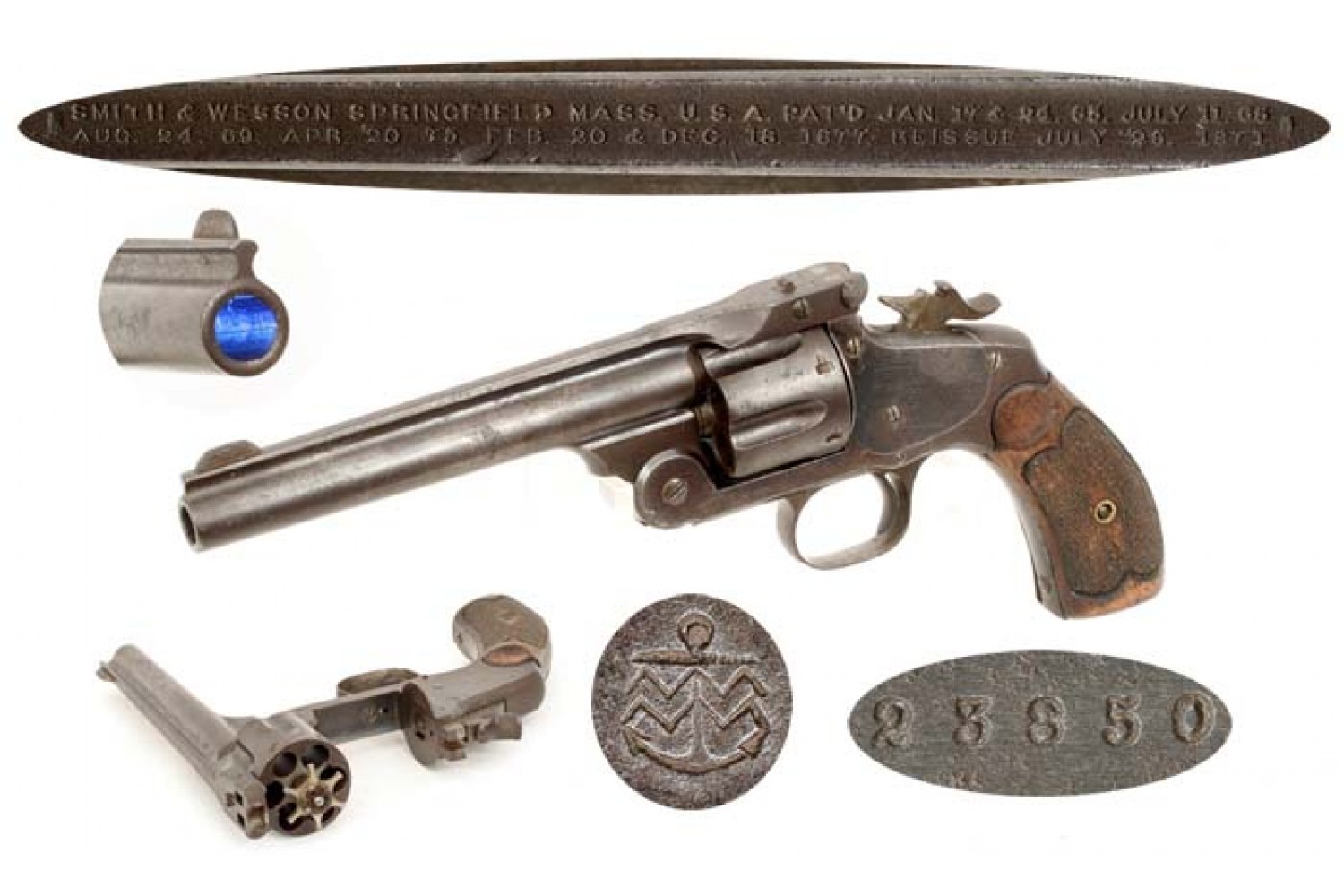
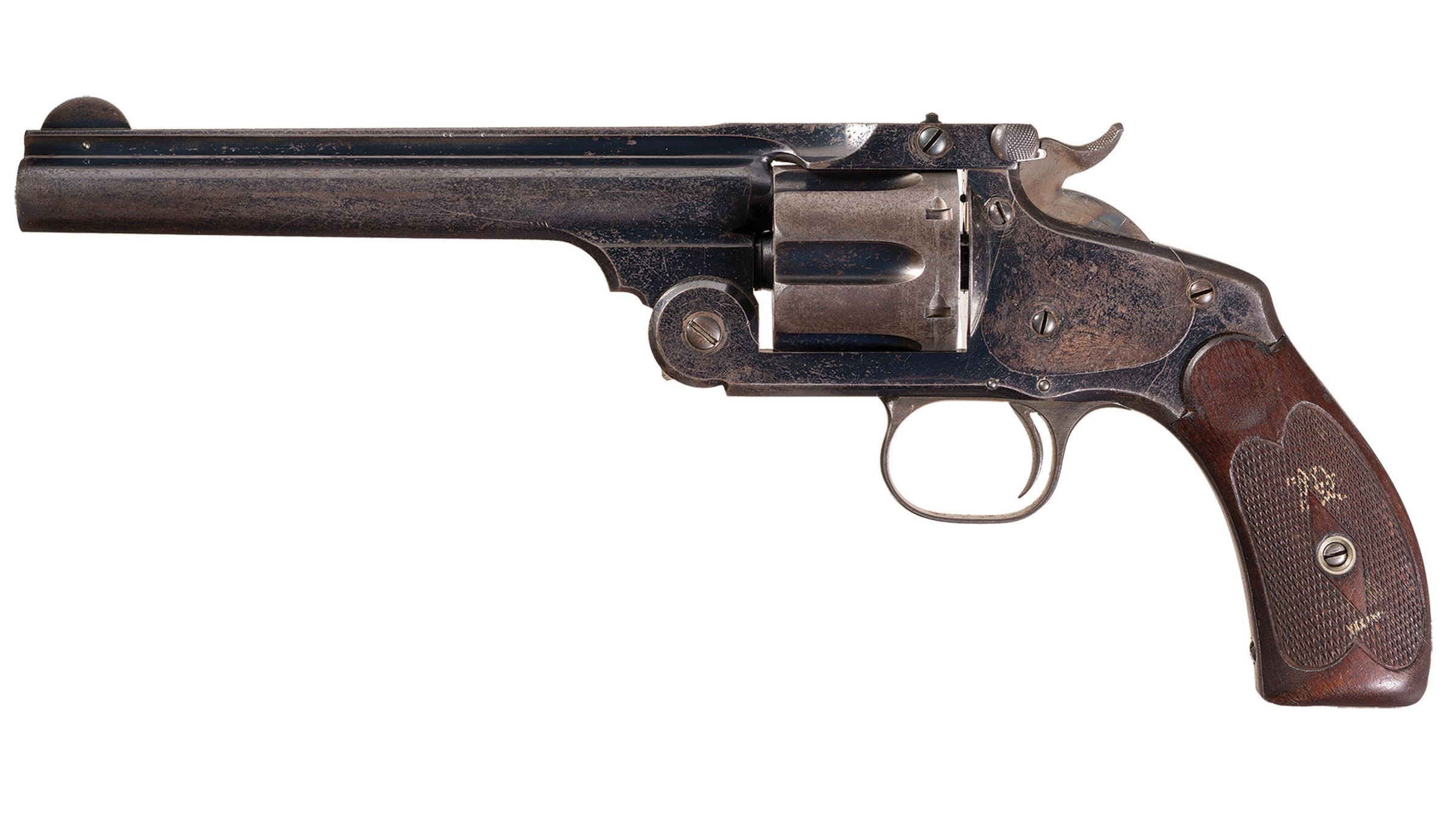


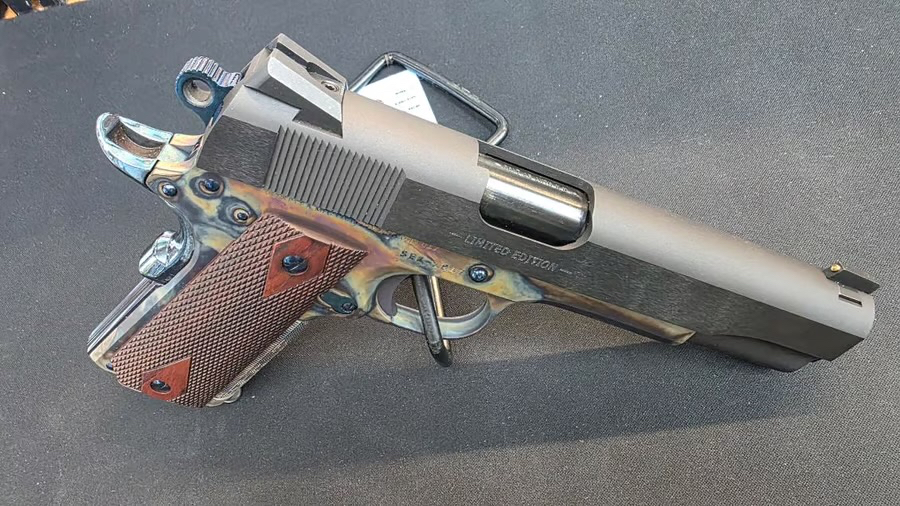
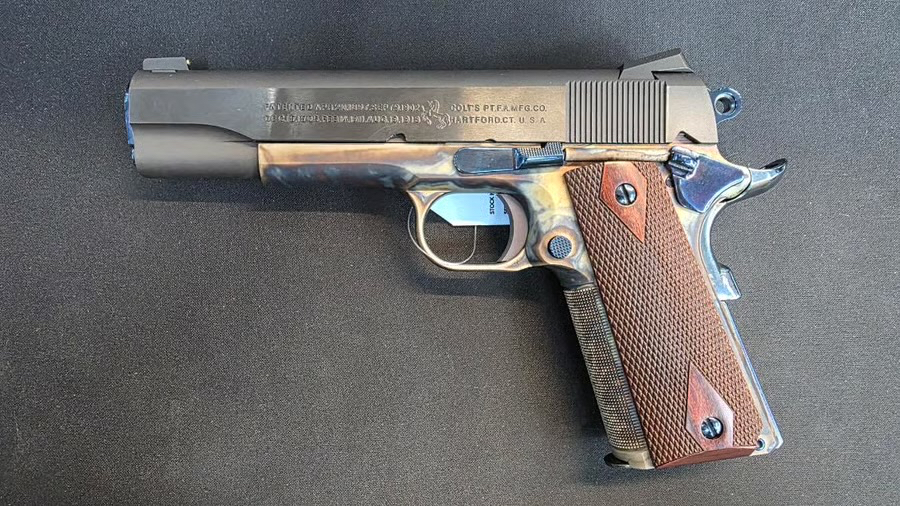
Now I am the first to admit that I am NOT a fan of the 1911’s. In that I could never get a consistent shot pattern. That & they are a pain in the ass to field strip. I won’t mention all the springs that I have lost over the years.
Now having said all that. Here is another grip of mine about this piece. Notice the checkering on the grip? We, yours truly got the “privilege” of shooting one.
Well after firing off 5 rounds. I had found that this checkering was like holding a course file. That took off any calluses I had on my hands and I was actually bleeding from shooting the beast.
So take this advice for what it’s worth.For myself, well I do so love my Sig P220! Grumpy