Category: This great Nation & Its People

This is the USS Squalus prior to her sinking in the Atlantic. Public domain
Most normal guys are fascinated by submarines. Had my life been just a little bit different, I might have aspired to service on a nuclear sub. I wanted to be a pilot, so I went into Army aviation.
However, had I just wanted to taste life in uniform, an enlistment as a submariner would have been an exceptionally cool way to do it. The very idea of a nuclear-powered machine that can cruise underwater indefinitely is mesmerizing. However, that’s really only if everything is going well.
Slowly dying of suffocation or hypothermia while trapped in a giant steel tube on the floor of the ocean is the stuff of nightmares. The Confederate CSS Hunley, the first military submarine to destroy a ship in combat, sank three times in its short period of service. Twenty-one men perished in those sinkings. Those practicalities are horrifying.

This is the Squalus during her rebuild prior to recommissioning as the USS Sailfish. Public domain.
USS Squalus
On May 23, 1939, the new submarine USS Squalus undertook her 19th test dive. The first 18 had been unremarkable. However, 60 feet below the surface at a point 12 miles off the coast of New Hampshire, an air induction valve failed to close completely during a high-speed dive. Water flowed into the 310-foot vessel with terrifying rapidity.
Lt. Oliver Naquin, the skipper of the boat, directed that the watertight doors be dogged and sealed, but it was too late. The engine room and rear portions of the sub had already flooded, killing 26 of the 59-man crew almost instantly. The remaining 33 were saved because of the quick action of L. Naquin. Now dead in the water, the Squalus descended to the seabed at a depth of 240 feet.
Submarining was still in its relative infancy, and rescue equipment was rudimentary at best. There had never been a successful crew transfer below 60 feet prior to this time. The survivors of the Squalus knew this. However, Lt. Naquin remained upbeat and hopeful. His encouragement was later credited as being key to the men’s ultimate survival.
Hope
Submarines of the day had deployable buoys that could be released to produce a cloud of smoke and fire signal rockets. Naquin ordered these measures to be deployed emergently. The very last rocket was miraculously spotted by a sister sub, the USS Sculpin. The U.S. Navy then came alive.
These guys were figuring this out as they went along. The USS Falcon was one of the first ships on the scene. The Falcon carried an experimental rescue chamber designed by Lt. Cmdr. Charles Momsen. Momsen was a legendary submariner who also developed the Momsen Lung, an emergency breathing device used to help sailors escape a stricken boat. However, at 240 feet, this was far too deep for an unassisted ascent.
This steel chamber was 10 feet tall and 8 feet wide. It was designed to descend as deep as 300 feet on a cable and then seal on the deck of a stricken submarine by means of a rubber gasket. This exercise was dependent upon the sunken boat remaining upright. Fortunately, Lt. Naquin had landed his dead sub conning tower up.
Hard hat divers descended to the inert boat and affixed a cable to the railing alongside the sub’s forward hatch. As they walked across the submerged decking, they could hear the trapped crewmen banging with tools on the hull.
Two sailors named John Milakowski and Walter Harman crewed the experimental chamber down to the sunken submarine and effected a seal. The chamber could carry nine sailors in addition to the two operators.
The Rescue
This was the Atlantic, and the water was cold. With the sub’s systems disabled, there was no heat. By the time they got to the sunken vessel, the surviving crewmembers were suffering mightily from hypothermia. Harman and Milakowski distributed hot coffee and pea soup before loading up the first nine survivors for the long trek to the surface.
Each trip took at least two hours. Rescuing all 33 survivors required four cycles. The entire operation spanned two days, but Momsen and Company successfully rescued all the sub’s survivors.
A Grateful Nation
In recognition of their heroic, revolutionary accomplishment, four Navy divers were awarded the Medal of Honor. Forty-six other sailors earned the Navy Cross. Lt. Naquin eventually retired as a rear admiral. Of his crew, he said, “My officers and men acted instinctively and calmly. There were no expressions of fear and no complaints of the bitter cold. Never in my remaining life do I expect to witness so true an exemplification of comradeship and brotherly love. No fuller meaning could possibly be given the word ‘shipmate’ than was reflected by their acts.”

The conning tower of the USS Sailfish is on display today at Portsmouth Naval Shipyard. Public domain.
The Rest of the Story
The Squalus represented a $100 million investment in today’s money, and the Navy was slow to write her off. Miraculously, they raised the vessel over the course of four months. It took 628 deep dives to pull that off.
After a complete refit, the Squalus was recommissioned as the USS Sailfish. The Sailfish served throughout World War II, earned nine battle stars, sank 12 Japanese ships, and received a Presidential Unit Citation. Some of the original Squalus sailors remained on the boat during the war.
One of those 12 Japanese ships was the escort carrier Chūyō. At the time of its sinking, this carrier had 21 American sailors onboard who had been recovered from the sinking in combat of the USS Sculpin, the sub that had originally been so instrumental in the Squalus’ recovery.
Tragically, only one of these American submariners survived. The Sailfish was decommissioned after the war, the only American submarine to have been sunk, raised, recommissioned, and fought in combat during WWII.
Categories
Welcome Home!
Video: WWII soldier missing since Bataan Death March identified, finally returning home



 10 / 10
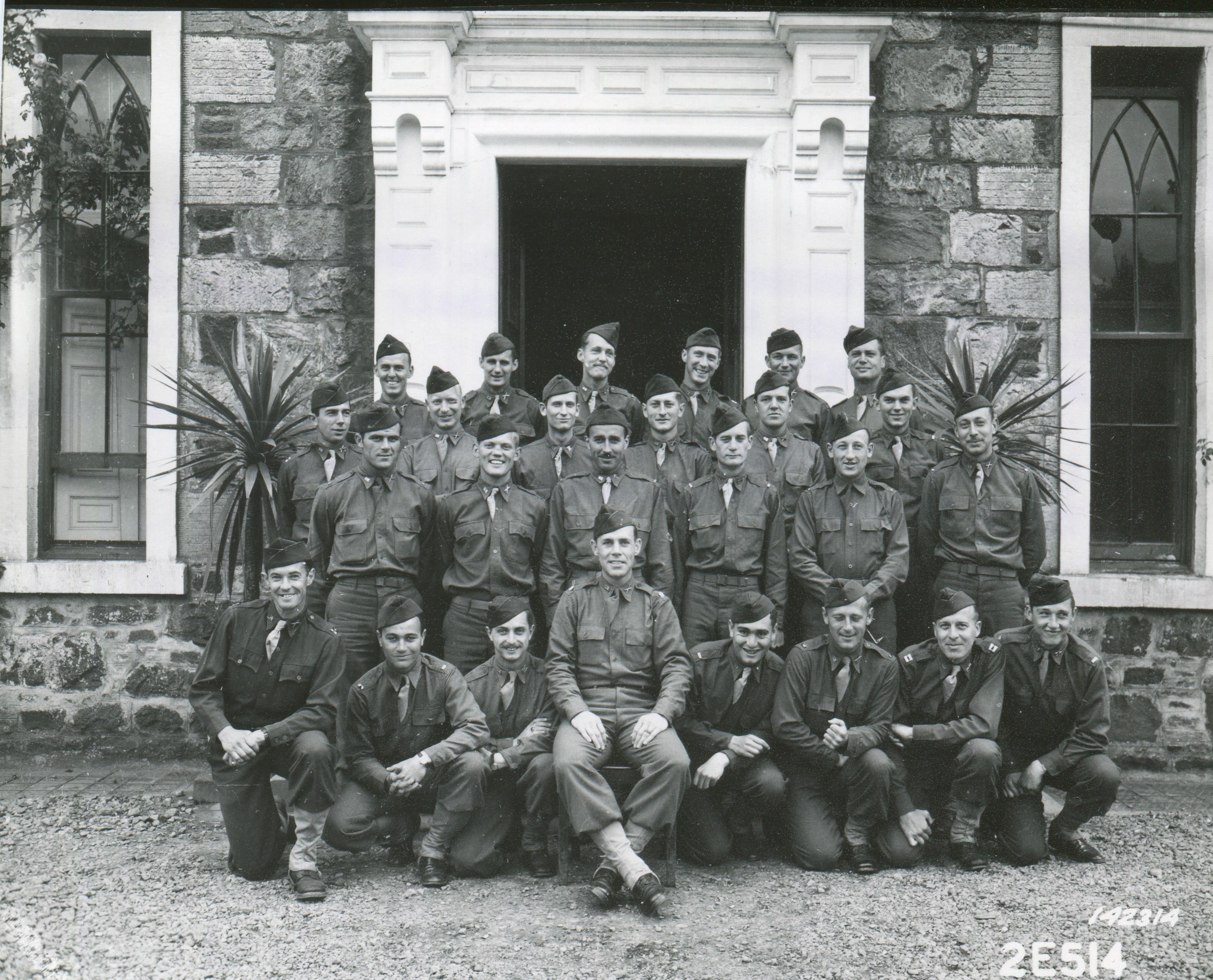
FORT BRAGG, N.C. – From Europe to North Africa to the Pacific, U.S. Army Rangers played a crucial role in many of World War II’s most pivotal moments, laying down roots for today’s 75th Ranger Regiment. At the onset of the war, the Army had no units capable of performing specialized commando missions. By the end of the war, the Army had fielded seven Ranger battalions, beginning with the activation of the 1st Ranger Battalion in Northern Ireland on June 19, 1942.
Major William O. Darby, an artillery officer, was hand-picked to recruit volunteers for the battalion, designed to replicate the capability of British commandos. The volunteers underwent a strenuous selection program to identify and train the best candidates. On Aug. 19, 1942, 50 of these specially selected soldiers participated in Operation Jubilee, a Canadian-led amphibious assault on the English Channel port of Dieppe, France. The Rangers helped destroy one of the enemy batteries, at the cost of three of their own. Following the raid, the 1st Ranger Battalion participated in the U.S.-led invasion of North Africa.
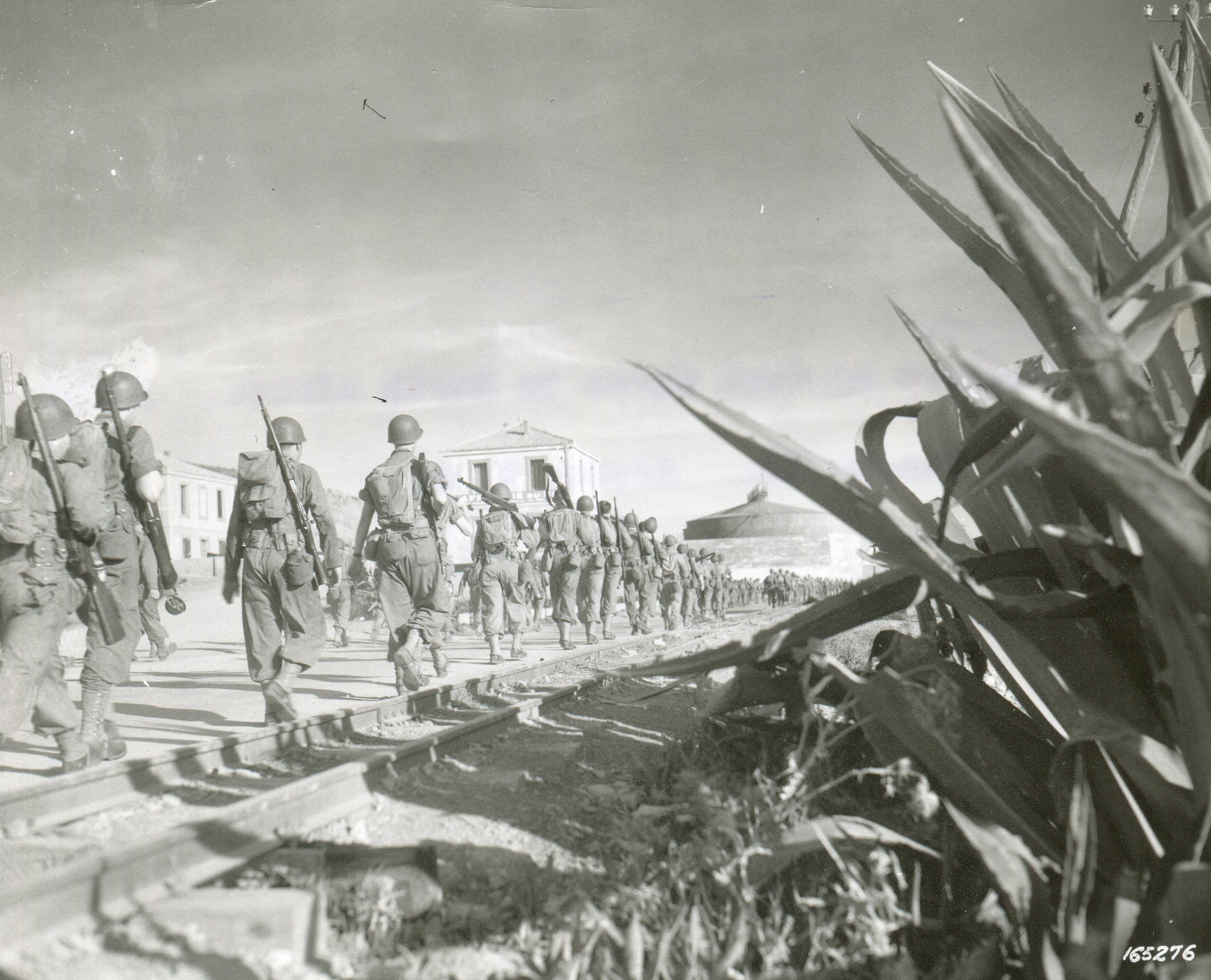
In the early morning hours of Nov. 8, 1942, Operation Torch commenced with attacks on the Algerian port in Arzew. As two Ranger companies led by Maj. Herman Dammer assaulted the port, three others led by Darby assaulted enemy cannons overlooking the harbor, capturing them within 15 minutes. Two Rangers died and eight were wounded during the action, but the Rangers’ success helped the Allies secure a foothold on the continent.
The 29th Ranger Battalion (Provisional) was formed on Dec. 20, 1942 in England. The volunteers came from the 29th Infantry Division. Attached to British commandos for additional training, several of the Rangers from the 29th participated in combat raids and reconnaissance missions into Norway before being disbanded on Oct. 15, 1943.
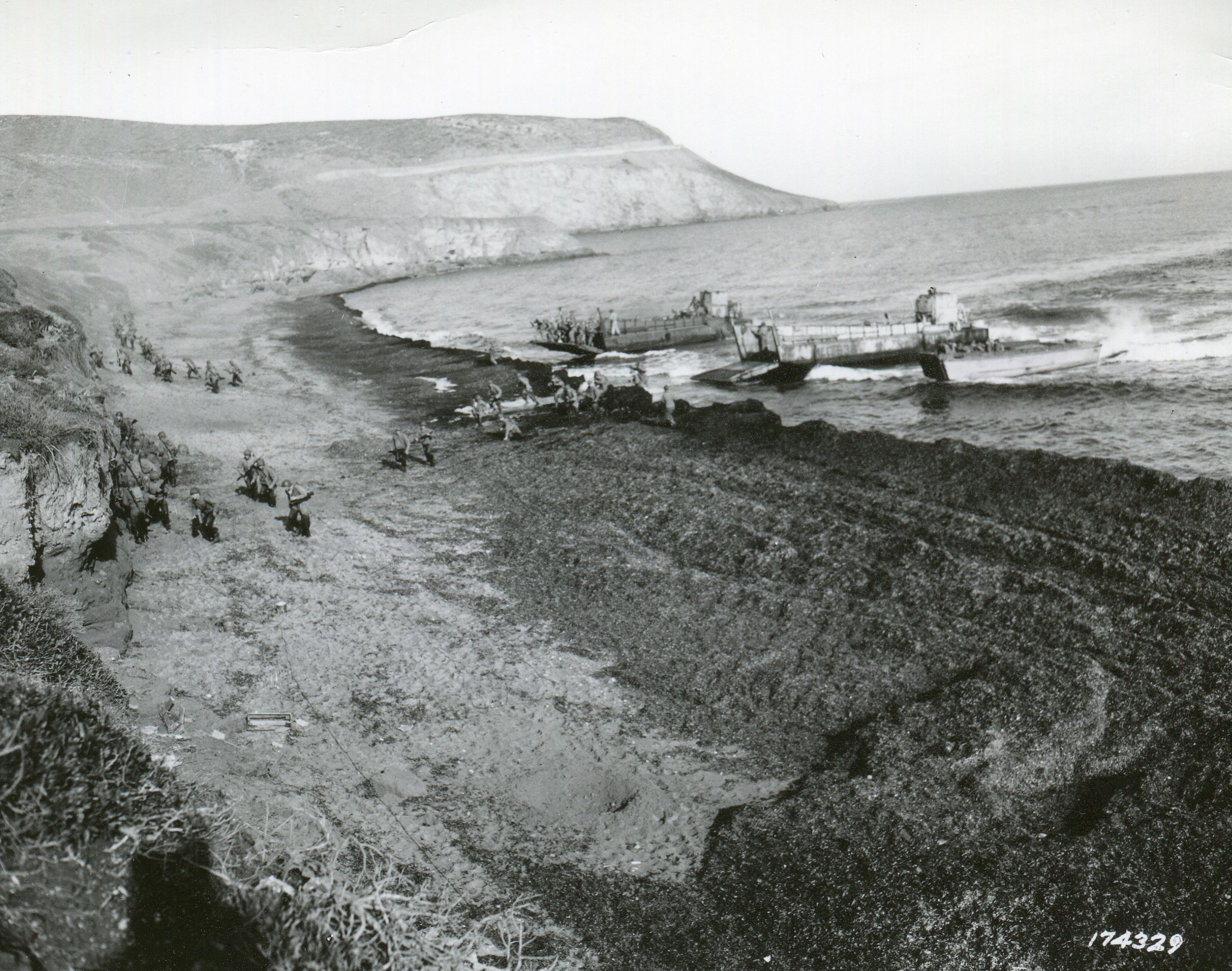
The 1st Ranger Battalion’s encouraging performance in Africa led the Army in 1943 to activate four more Ranger Battalions – the 2nd, 3rd, 4th, and 5th. Attached to the 1st Infantry Division of Lt. Gen. George S. Patton’s U.S. Seventh Army, Darby led a Ranger Force consisting of the 1st, 3rd, and 4th Ranger battalions that spearheaded Operation Husky, the American landings in Sicily on July 10, 1943.
With Sicily secured, the Rangers turned their attention to mainland Italy and Operation Avalanche. Before daylight on Sept. 9, 1943, the Ranger Force hit the beach west of Salerno on the far-left flank of the Allied landing. The 4th Battalion, led by Maj. Roy Murray, quickly secured the beach, and cleared the way for the 1st and 3rd battalions to move inland. The Rangers rapidly gained their objectives by midmorning of the first day. The Ranger Force later participated in the Anzio operation, where they conducted a daring but ill-fated raid into the Italian town of Cisterna on January 30, 1944.
The 2nd and 5th entered the war on June 6, 1944, on the beaches of Normandy, France, during Operation Overlord. Three companies of 2nd Battalion Rangers, led by Lt. Col. James E. Rudder, daringly scaled the cliffs of Pointe du Hoc, overlooking Omaha Beach, to destroy German gun emplacements targeting troops landing on the beachhead. Meanwhile, the remainder of 2nd Battalion and the entirety of 5th Ranger Battalion fought their way ashore Omaha Beach alongside the 1st and 29th Infantry Division. The D-Day missions earned the Rangers their motto, “Rangers, lead the way!” The 2nd and 5th Rangers fought in the Allied campaign in western Europe until the end of the war.
In the China-Burma-India Theater of Operations, another legendary Ranger lineage unit was organized on Oct. 3, 1943: the 5307th Composite Unit (Provisional). Better known as “Merrill’s Marauders” after its commander, Brig. Gen. Frank D. Merrill, the 5307th, a Long-Range Penetration Group, fought a grueling campaign in the mountainous jungles of Burma that lasted until mid-1944. Following the capture of Myitkyina, Burma, the remnants of the 5307th were consolidated with the 475th Infantry Regiment on Aug. 10, 1944. The 475th was part the second Long Range Penetration Group formed for service in Burma, the 5332nd Brigade (Provisional). Better known as the MARS Task Force, the 5332nd helped secure the last stretches of the Burma Road remaining in Japanese hands, before moving on to service in China.
In mid-1944, one more Ranger Battalion was activated, with the mission of supporting U.S. Sixth Army operations in the Southwest Pacific. Lieutenant Colonel Henry A. Mucci was selected to organize, train, and command the 6th Ranger Battalion, which was formed out of the 98th Field Artillery Battalion, the 6th Rangers played a prominent role in the recapture of the Philippines, starting with the amphibious assault on Leyte in October 1944. On neighboring Luzon, in January 1945, Company A, 6th Rangers, supported by the Sixth Army Special Reconnaissance Unit, also known as the “Alamo Scouts,” and Philippine guerrillas, executed its most famous action when it raided a Japanese Prisoner-of-War camp near Cabanatuan, Philippines. Against overwhelming odds, the operation freed more than five hundred Allied prisoners.
It’s for these and many other actions that the Ranger units of World War II would go on to earn multiple unit citations prior to being disbanded in 1945. Their legacy endured long beyond the war, with their courage and audacity setting the example for future generations of U.S. Army Rangers.
To learn more about the U.S. Army Rangers of World War II, go to arsof-history.org.
 This painting depicts the attack of the
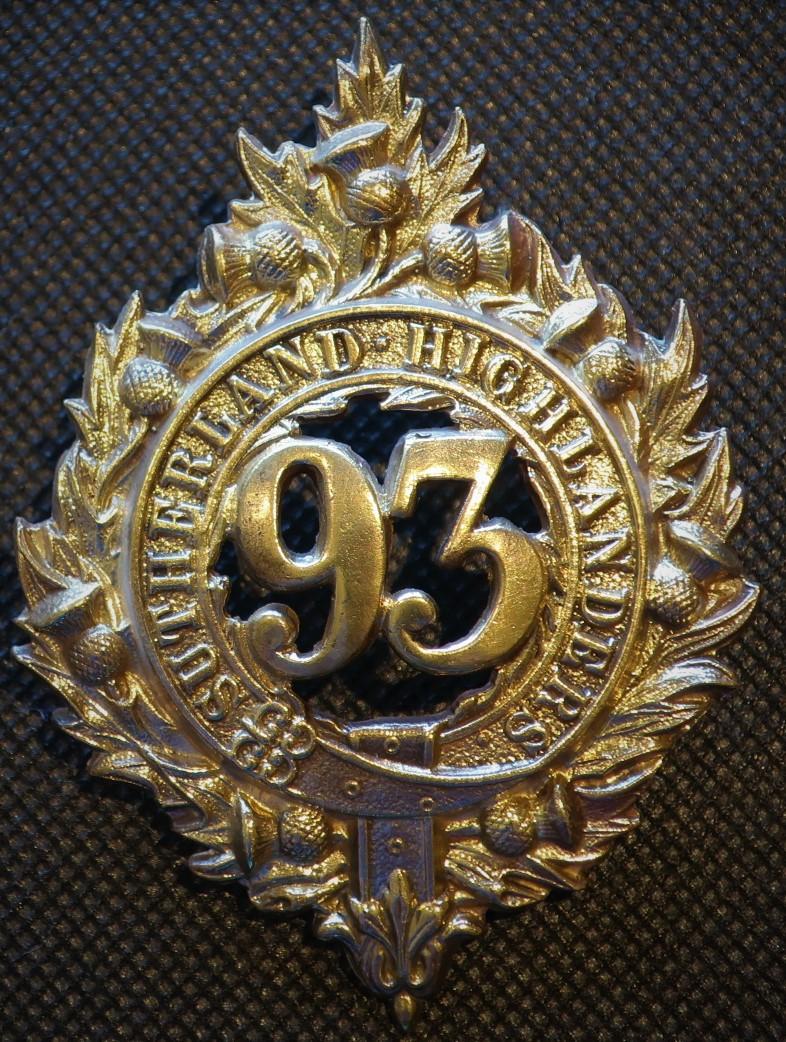
 and the 93rd Sutherland Highlanders against the Levee Redoubt defended by the US 7th Infantry.