Category: Some Red Hot Gospel there!

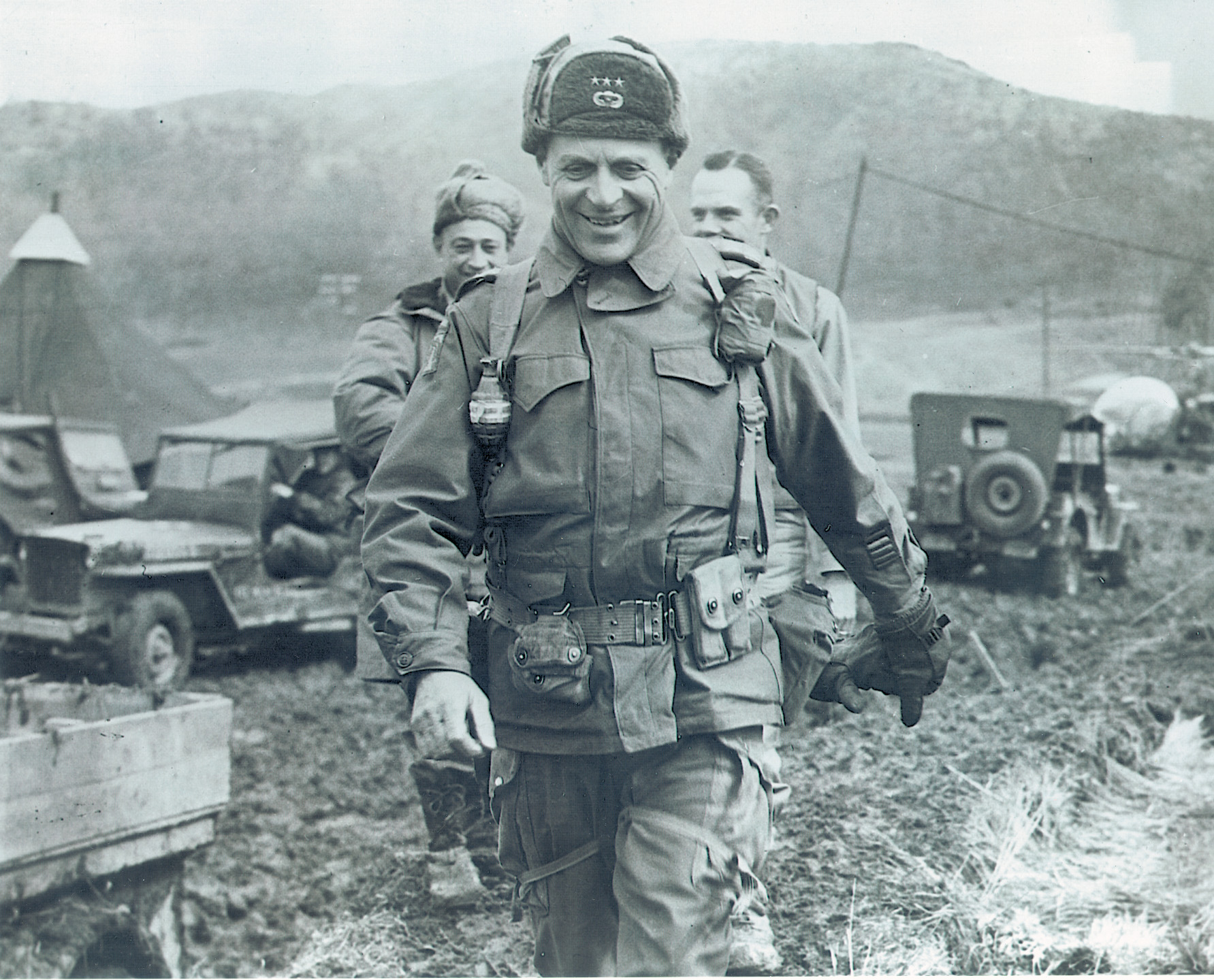 Matthew B. Ridgway stepped into a freezing Korean command bunker in January 1951, looked at a wall map covered in retreat arrows, and made a decision that stunned every officer in the room. The United Nations forces were outnumbered, outmaneuvered, and collapsing, yet Ridgway calmly said the collapse would end tonight. Then he clipped a grenade to his chest harness and walked toward the front.
When he took command of the Eighth Army, morale was broken and casualties were rising.
Officers whispered that the war was already lost.
Ridgway refused to accept it.
He visited wounded soldiers at field stations and asked what went wrong.
They told him leadership had vanished from the battlefield.
He promised to fix it.And he did it the only way he believed in: by showing up under fire.
Ridgeway traveled to front line foxholes where temperatures dropped below zero and Chinese forces attacked at night with overwhelming numbers.
He carried no illusions.He carried grenades, a Bible, and the belief that soldiers follow example, not slogans.
Men said the sound of his boots in the snow changed entire units.If Ridgway appeared at dawn, it meant the line would hold.
He reorganized divisions, replaced timid commanders, and restored the offensive mindset.
When the Chinese launched their Fourth Phase Offensive in early 1951, Ridgway countered with precision.
He ordered tactical withdrawals to stretch enemy supply lines, then struck with concentrated artillery and air power.
His decisions stabilized the front and forced Chinese forces back north, reversing weeks of panic.
President Harry Truman took notice.When General Douglas MacArthur openly challenged civilian authority, Truman relieved him and appointed Ridgway to command United Nations forces.Ridgway accepted without theatrics.
He viewed the job as duty, not spotlight.
Under his leadership, defensive collapse turned into a balanced stalemate that prevented a wider war and saved thousands of lives.
He refused pressure to escalate into China because he understood the cost.
He believed in victory, but never in reckless victory.
After Korea, Ridgway became Army Chief of Staff in 1953, where he argued against expanding conflicts without clear purpose.
He kept a framed note in his office.It read: “No soldier’s life is expendable. No mission justifies waste.”
Matthew B. Ridgway never chased headlines.He chased responsibility.
He took broken armies, broken plans, and broken morale and rebuilt them with presence, clarity, and courage.
Some generals win battles with strategy.
Ridgway won them by showing up where a commander was least expected and most needed.
So let me start off with the great news! Seeing as that the overwhelming number of folks that love and use guns. Are some of the kindest, friendliest and helpful folks that I have ever had the privilege to know.
As they are almost always open to having helped and encourage this old fart to become a better man and shot. To them I want to say thank you and it has been an honor to have been around you. As to those other folks, well the least said the better I guess.So where to start?
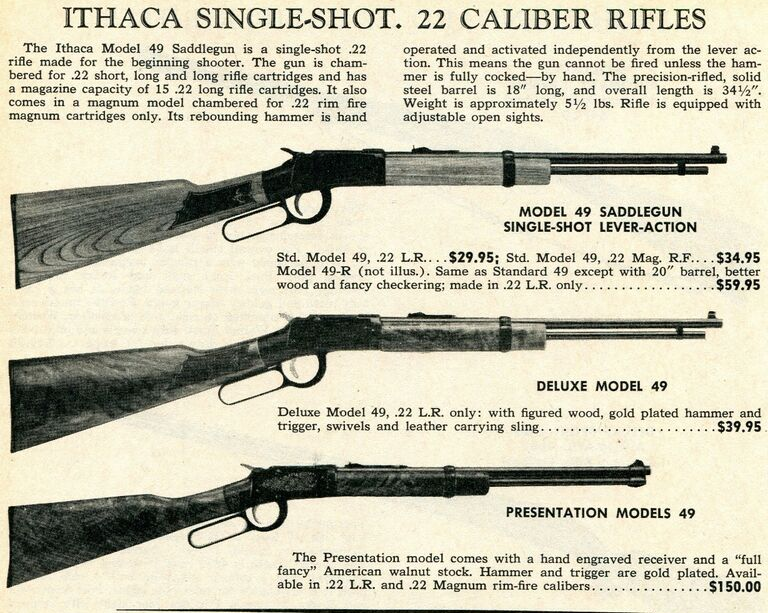
I guess that I should mention my Father and my Mom’s Dad. As they were the ones to infect me with a long slow burning love of guns and shooting. Seeing that I really did not have any hobbies besides reading. Plus my Dad was afraid that I might get into drugs or some nonsense.So one day back in the mid 1960’s. As my folks were driving me home from school. And yes there were schools back then even in California! I noticed a long brown cardboard box in the back of our Volks Wagon Bug. With the large printed word of Ithaca on it.And so started my saga. Now I won’t lie about how I was able to hit the target at 300 yards with this single shot 22.Because frankly I was a really rotten shot to tell the truth. But like all things worthwhile in life with a lot of practice, some good coaching from Dad and my Grandfather. I very slowly started to get the hang of things. But it took a very long time to get my shit together,But let us leave that and move along smartly. My first experience with a pistol was with an Italian reproduction of a Colt Navy that fired a 36 caliber chunk of lead.With a lot of smoke, fire thrown on for good measure. Again I was not very good at first, Seeing that I could not have hit the broad side of the Pacific Ocean on a good day.But not let us belabor the fact. Anyways during this time was the tail end of the really Golden Age of Guns here in California. Seeing that there were a lot of gun shows and a LOT of well stocked Gun Shops. The only problem being that it seemed that I was always broke.But I was able to get some nice toys. One that stuck in my mind was a Winchester Model 94 that my dad & I “bought” together from now get this Sears! Yes back in the bad old days of Politically Incorrect. That Sears actually sold guns!And this is what happens when you do stupid stuff!
The thing about this rifle was for a 8 year old boy was the stout recoil. Which frankly was a huge surprise to me and my Grandfather.For him at least he was a shotgun and 22 rifle man. Which because he owned a nursery in Northern San Diego County came in mighty handy. As the place was just over running with Rabbits, hares and grey squirrels. That and it was a really rural area around the small town called Rainbow.Anyways I was dumped down there as I think my folks wanted some down time from me. So I was allowed to use Grandpa’s single shot 410 shotgun. If my mind is still working right now as I write this weird story. It had the words New England on it and the rest had worn off.





Anyways I am still amazed that they actually trusted me enough for a 14 year old boy to wander around the place after it closed at 5. The only rules being were to not shoot toward Highway 395 or waste ammo.
Otherwise it was a free fire zone for me and I like to think that I put a fair dent in the varmint population over the years down there. But Grandpa sadly died and then my so-called Uncle* ran the business into the ground and that closed that chapter of my life.
* I think he was dropped on his head when he was born. That or Grandpa had tied one on before he was conceived. That & I refuse to acknowledge him as my Uncle. Yes I hold some grudges.
BUT LET US MOVE ON!!!
It was also at the Nursery that I got two of the best presents that a boy like me would’ve gotten. One was a Copy of the book Mr. Rifleman by Colonel Townsend Whelen USA. From my favorite, Uncle Max and my lovely Aunt Doris during Christmas 1969. 
If you do get a chance to get a copy of this book. I most highly recommend getting it, As the Colonel is a master wordsmith.That and every time I reread it I learn something new. Which might tell you it’s either a great book or that I am still mighty slow in learning things.
The other gift was when my Dad and his father Morris bought me a Winchester Model 121 in 22 Long Rifle.
Because that rifle taught me more about getting a good sight pattern and how to squeeze the trigger than any other rifle has. If one has a chance to buy one. I can tell you it will be money well spent. But let us move on.
Now most of my life at the time was my struggle to get thru school and hopefully go to college. But my Dad did his best for me and would take me to the Pasadena Police range and crank off a few rounds.
It is a pity that the city closed it down in the late 70’s. As it was a well thought out and run range. Where I learned a lot about attention to detail and self discipline.Plus I got to spend some serious time with my Dad who was suffering thru a lot of health problems.
Now I am going to skip over College and the Army. Seeing that it was all a big blur to me. But do have to say this about the Green Machine.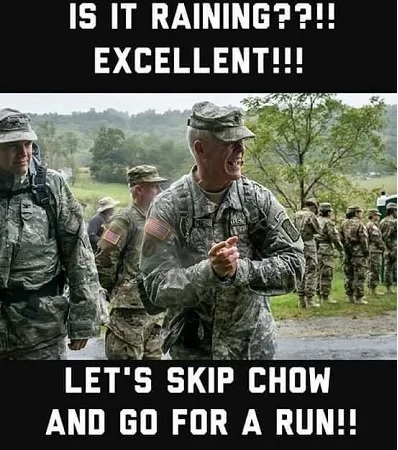
In that it knocked most of the shit out of my head. I also found that I had muscles that I didn’t even know existed. Also your hair can hurt if you are properly motivated. But I was never as good in shape as I was when I was in.
I also got to meet some great folks that I never would’ve met otherwise. I also got to see what real leadership looked like. That and I go to see how the real world works.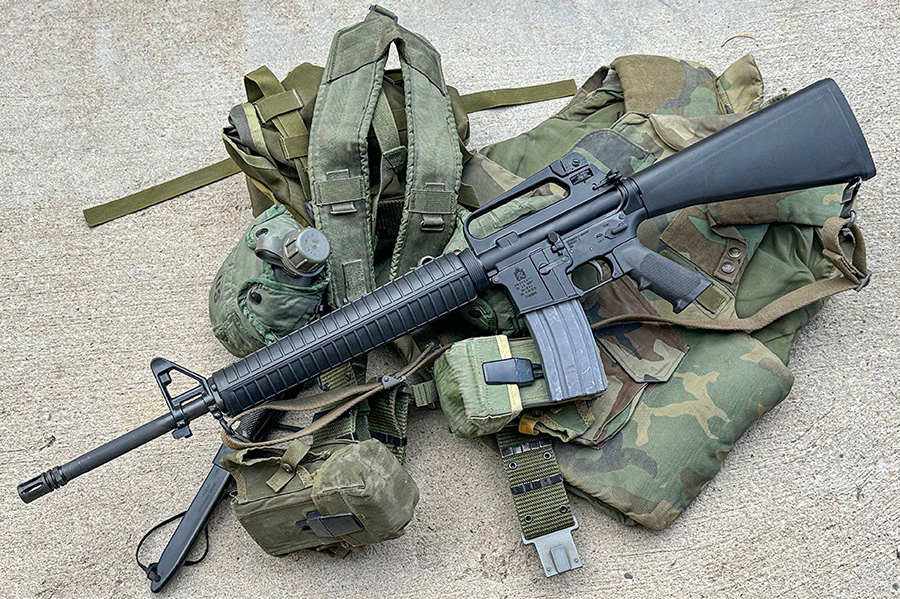
I also found that I really liked the M-16, The Pig (The M-60).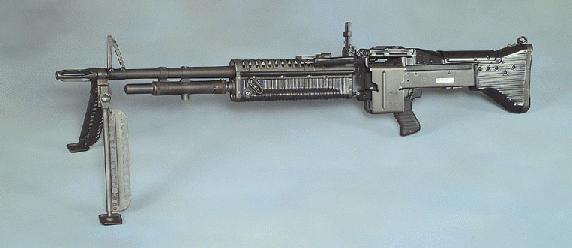 Ma Deuce (M2, HMG)
 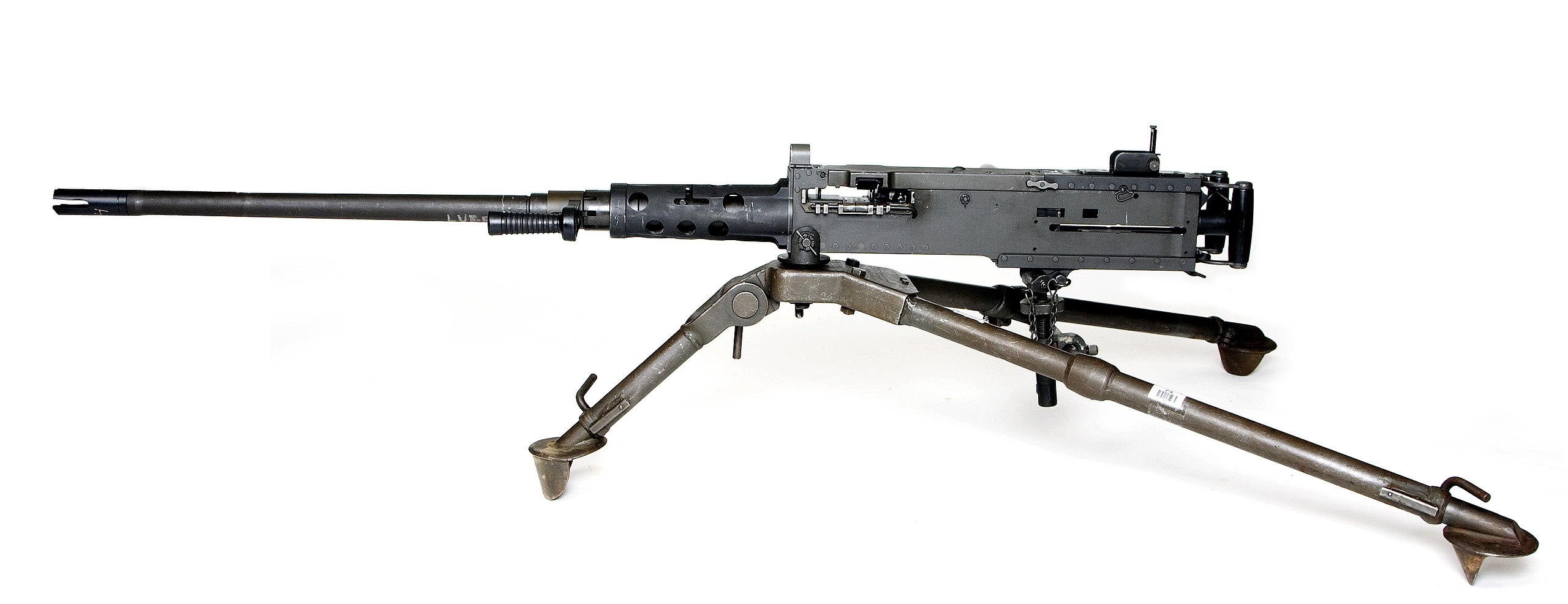 and the Grease gun.
  All in all, my Wise Dad was right about a few things about the service. In that the more you put into it the more you get out of it. Also the Army will make a good man better and a bad man worse.
Ma Deuce (M2, HMG) and the Grease gun. All in all, my Wise Dad was right about a few things about the service. In that the more you put into it the more you get out of it. Also the Army will make a good man better and a bad man worse.But then that man pissed out more brains than I ever will have!! So I could not have asked for a better man for the job of being my Father.
Then I had to get a job and somehow fell into Teaching in the Juvenile Hall Court Schools in Los Angeles. “Yes just because your in jail does not mean you get out of going to school”
Where frankly I had a ball there. Now I don’t know if I taught my thugs anything but I sure had fun! Strangely enough, I still miss my students. Seeing that I never had a bad class while serving there for some reason.
Now for the great news in that the pay was really good and I finally could go out and start building my Gun collection.
One of the first guns that I picked up was a S&W Model 29 with a 6 inch Barrel. 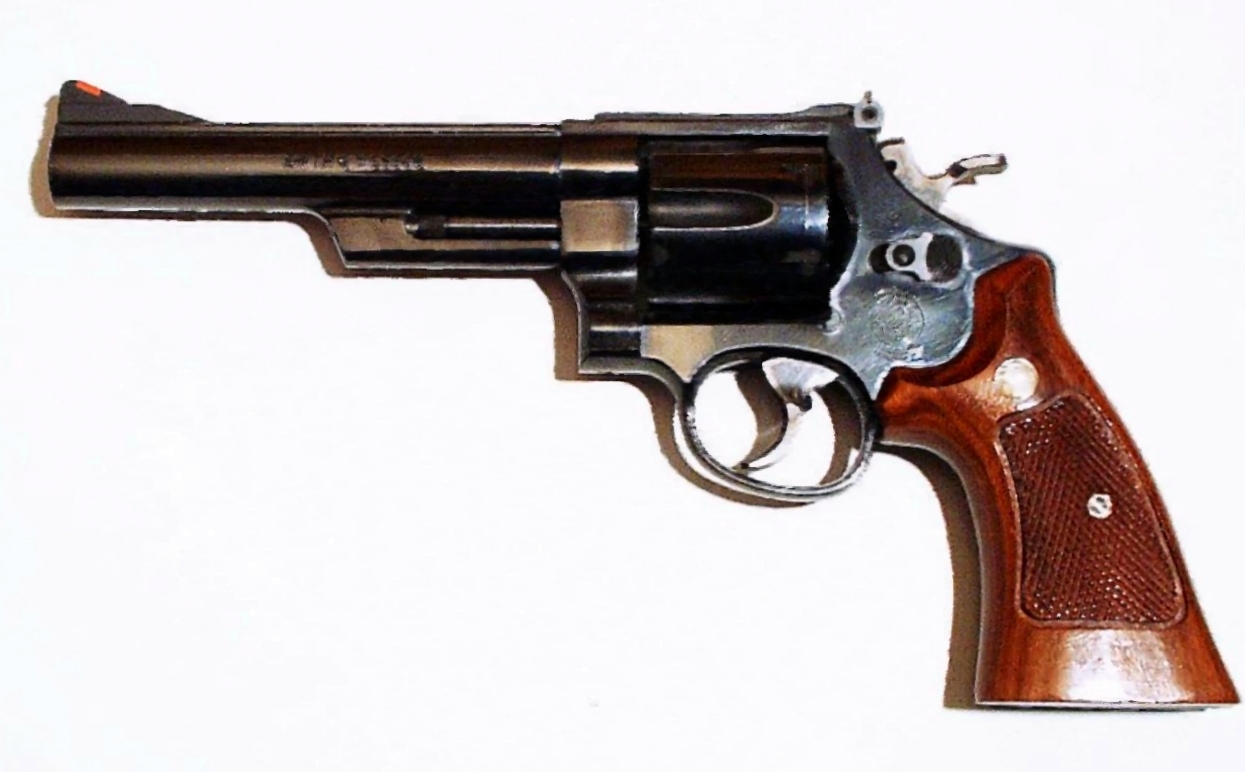 Now like most red blooded men of my generation. I had seen all of the Dirty Harry films and was convinced that it would kick like a mule.
Now like most red blooded men of my generation. I had seen all of the Dirty Harry films and was convinced that it would kick like a mule.Now for me at least that turned out to be a pile of whale manure. Seeing that if one had a good solid grip with it. I would have no real problem cranking off a couple of rounds and have a decent pattern too. I am just really sorry that I had to sell it because of a marital problem.
Which I won’t bore you with. (As I now have the World’s Greatest Wife and I am amazed that we have been married now for over 16 years. God REALLY does move in strange and mysterious ways!!) But let us move on and talk about guns!
But let us move on and talk about guns!I also discovered that I must be cursed or something. As I began to buy quite a few Colt 1911’s and found that they were nothing but trouble for me. And I mean every one of them were a pain in the ass for me. Starting from WWII Surplus 1911’s , a Colt Combat Commander then a mid 1960’s 1911 and even a Colt Gold Cup. Every one of them gave me nothing but trouble.
Even when folks let me try their 1911’s that worked great from them but the curse would follow me.
What with stove piping, failure to cycle, new barrels quickly becoming s smooth bore etc etc. Yeah I know !! But I generally used some better ammo like the Sellier & Bellot , Federal and even CCI with these clunkers.
That and I am convinced that I sent my Gunsmiths kid thru college. What with all the times that I came to see if a miracle could be produced with all the 1911’s that I turned in to be fixed.
(Also I should mention that I earned my Expert Pistol Badge with the Army too. But it took 3 different pistols to earn it at Camp Roberts during one very long hot day.)
So I was on the verge of giving up on the 45 ACP. But the Big Guy upstairs decided to cut me some slack. For some reason a brand new Sig Sauer P220 was up for sale at Lock Stock & Barrel over on Rosemead Blvd in Pasadena. Somehow & I don’t remember how but the really nasty owner was willing to do a lay a way with me.
After 2 months and having gone through the purgatory of California gun requirements / rigmarole. I was the proud owner of a P220. Where upon it & I promptly after school ended that we roared over to the local indoor pistol range in Monrovia.
Now I would not blame you if you cast doubt on what I am going to say. But here goes! After setting things up. I sent the target out about 25 feet away. Pulled the slide back and released it. Then I let fly a round at it.
Frankly, I could not believe what I saw. As I had hit the x in the x ring squarely which I had almost never had before for me. Okay I thought it was a lucky shot right? Nope. As I then proceeded to literally put the entire magazine inside the 10 ring.
As you can guess by now. I REALLY fell in love with this Swiss/German bullet projector!! Then things got better as I took it home and began to field strip it and give it a well earned cleaning.
Now if you have had the misfortune of never dealing with a P220. Let me tell you compared to, oh say, the 1911. It is just a wonderful pistol to clean. None of this messing with the barrel bushing, watching the recoil spring disappear into the twilight zone or pulling the slide release out.
There is none of this my friends. All one has to do is clear the action, pull the slide back in the locked position, take out the magazine. Then you just have to move the switch on the side of the lower receiver. Then just pull the slide off.
Then just tap the barrel and out it comes. Carefully compress the spring and out come with the barrel guide. Then wipe everything down with break free cleaning fluid and then just do everything I just told you in reverse.
Bottom line – I can get the whole pistol done with no rush in about say 10 minutes?
My Son Willie b.t.w. can do it even faster but he is such a show off. But what can one expect with a kid that’s a Lawyer with an MBA & who has only 3 jobs. He is such a lazy kid!
But let us move on!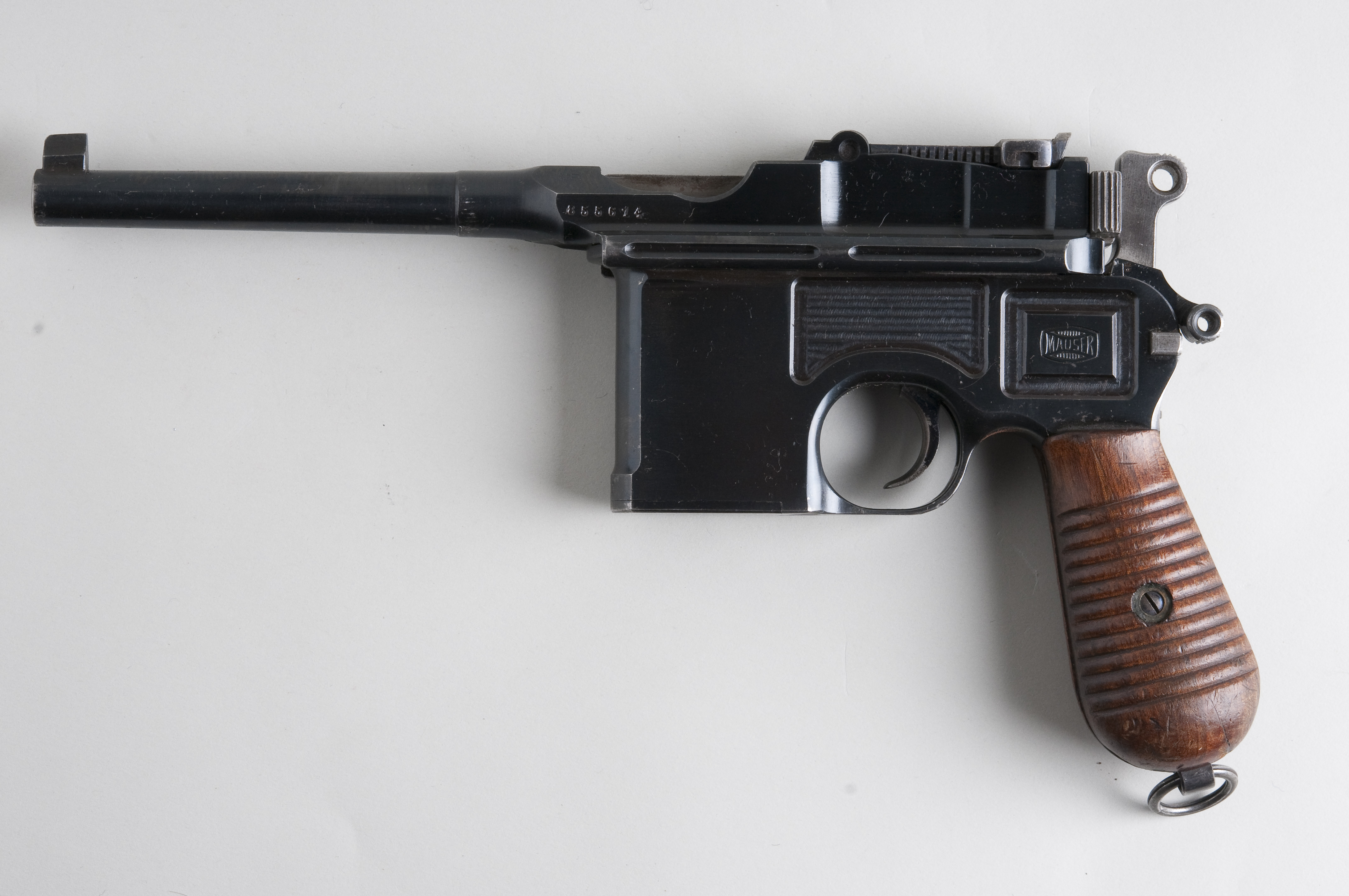
Now try cleaning in that amount of time with say, a Broomhandle Mauser or a P08 Luger. Which can be a real nightmare if the gun does not like you!  Yes guns have feelings and God help you if your firearm decides that it does not like you in a firefight.
Yes guns have feelings and God help you if your firearm decides that it does not like you in a firefight.But I still think that both of these pistols are REALLY neat and very evil looking.  But I also found that they are also very temperamental and not very accurate. However both are great safe queens and investments.
But I also found that they are also very temperamental and not very accurate. However both are great safe queens and investments.Think I am kidding? Just go look thru oh say Guns America and check out the prices. As you will be looking at a price tag of thousands of dollars just for a beat up shooter.
Machine Guns
Thanks to the Green Machine / 1/18th US Cavalry.
I was able to fire a M-16 several times on full auto and was able to hit almost nothing with it. Big surprise huh? Since the gun was not really designed by Mr Stoner to do that.
Unless of course a horde of barbarians are rushing your position and your claymore mines did not go off in time. Then switching your M 16 to fun mode i.e. full auto / Rock & Roll will come in mighty handy.
I was also able to fire St John of Browning’s masterpiece. The Ma Deuce, which is an awesome weapon IF you have it properly mounted on a tripod. As it is extremely heavy and if you try and do a Rambo with it.
Since in my experience you are not going to hit squat from what I learned about it at Camp Ripley. (Where the Army failed in trying to teach me on how to ski.) I give it an A++ Grade
The M-60 MG – Now this weapon also is really heavy & I still don’t know how those guys in Vietnam were able to hump this beast in that heat and humidity. BUT if you keep it and your ammo belts clean. You are really going to clean somebody’s clock!!! I give it a B++ grade!
The only problem is the barrel as one can really heat it up when you fire long bursts. So you have to swap barrels fairly often. But if you don’t have that Asbestos Glove on your person. Then get ready for some serious burns.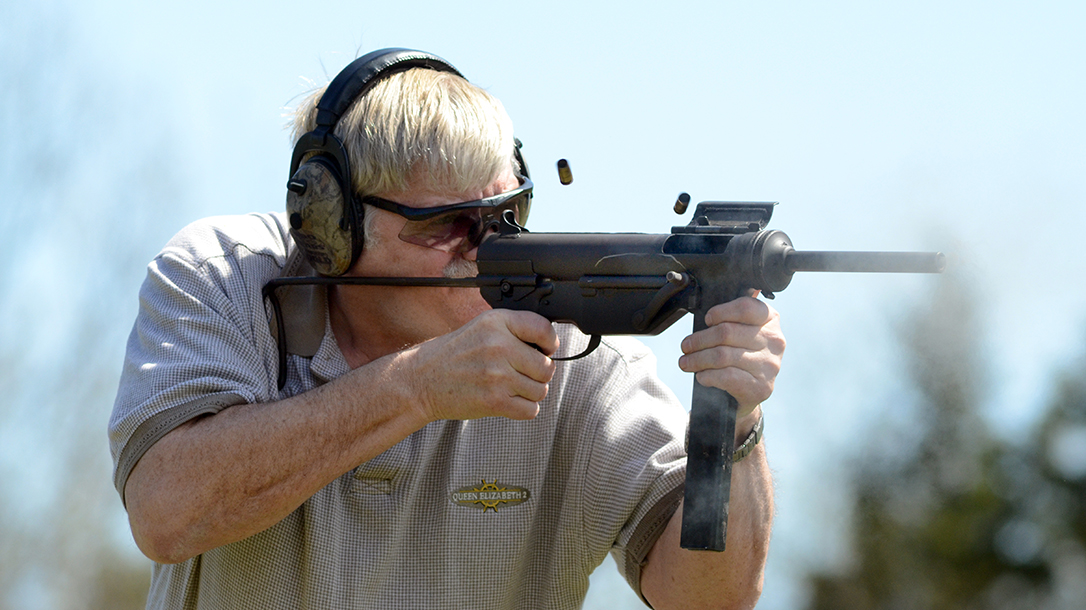
The M-3 “Grease Gun” Now I was really lucky as our Squadron was going to turn in theirs. So of course we took them up to the National Training Center and shot off all the 45 A.C.P. ammo that we had squirreled away over the years.
Granted it is not a very impressive weapon to gaze upon. BUT do not be fooled!! As I found this WWII Veteran to be a gun of beauty. As it was light, simple, rugged, accurate and VERY reliable!!
In other words if God forbid I had to go into a gunfight tomorrow. I would be just delighted to be issued one of these great weapons. I would give it a grade of A++ The Thompson Sub Machine Gun If one is ever in Las Vegas and have some spare time. There are several indoor ranges that rents Machine Guns to shoot. So care to guess who went to one? Yep, Where I was allowed for about $100 to fire off a full magazine of 45 A.C.P.
The Thompson Sub Machine Gun If one is ever in Las Vegas and have some spare time. There are several indoor ranges that rents Machine Guns to shoot. So care to guess who went to one? Yep, Where I was allowed for about $100 to fire off a full magazine of 45 A.C.P.Now the first thing I noticed is how HEAVY this S.M.G. was. Seeing as that almost everything about it was made out of machined steel. Which frankly this makes for one mighty tough gun. As you could probably drove a tank over it and it would still function.
Also when you fire it off, I was really surprised by how much fire came out of the barrel. The other thing that was at least for me was that it shot up and to the right.
So I did the trick that my Dad the former Army Drill Sgt / Survivor of the Korean War told me. I.E. One tickles the trigger so that one will have short bursts. If you do that then you can get some fairly impressive patterns for a machine gun.
So I would have to give this weapon a B- due to its weight. Seeing that I would hate to have to carry one on a route march. But I would be very happy with it if somebody is trying to harm me or my loved ones!
Move later Grumpy

Categories
No kidding!

I have yet met any dog that I did not like. Even the local junkyard mutt! (Hey he was just doing his job!) Grumpy
