Combat is never what you expect it to be! Grumpy
Category: Soldiering
The Medal of Honor is the highest award for military valor bestowed by the United States of America, and has earned a rightful place in the popular culture of our nation. In a country where there is often a significant gap between the military community and civilian populace, the Medal of Honor reaches beyond the cultural gatekeeping of military service to the nation as a whole: Whether you have an affiliation with the United States military or not, we all recognize the award as representative of some of America’s most important ideals: bravery, courage, sacrifice, and integrity.
But beyond the basic premise of the award, many may not know much about the history of America’s greatest military honor.
It was invented by an Iowa Senator

James Grimes, a Whig and then Republican Senator our of Iowa, held office during America’s Civil War and beyond, working first to prevent the war and then as a part of reconstruction thereafter. In December of 1861, with the Civil War raging, Grimes submitted a bill authorizing the issuance of “medals of honor” to be presented to enlisted Seamen and Marines who “distinguish themselves by gallantry in action and other seamanlike qualities” during the conflict.
Today’s Medals of Honor have seen significant changes since Senator Grimes first proposed them, both aesthetic and legislative, but the intent behind the award remains unchanged. Since the very inception of this nation, service members have fought to defend their nation’s populace, and the freedom they hold so dear. This service warrants recognition in itself, but among these warriors are those who go even further, who risk greatly on behalf of others, who make sacrifices for their brothers and sisters in uniform, for their nation, and for us all. These pivotal characters deserve a higher distinction than more pervasive awards for valor. These heroes deserve the Medal of Honor.
The first battle that earned a Medal of Honor happened before the medal existed

On February 13, 1861, Bernard J. D. Irwin (later, Brigadier General Irwin) was the first person to earn a Medal of Honor in battle, though the award itself would not be proposed for nearly another year.
Irwin and 14 of his men pursued a group of Native Americans who had taken American troops hostage. Irwin and his men caught up with the group, and rather than immediately engaging, he quickly and quietly distributed his troops around the area, allowing him to act as though he had a far larger force with him than it seemed.
The ruse worked, and the Native Americans fled, leaving Irwin and his team to recover most of the hostages. They then pursued the captors until successfully recovering a kidnapped boy, the last hostage. Irwin wouldn’t be presented with the Medal of Honor for his heroism until more than three decades later.
Officers were not eligible
With Medals of Honor established for the Navy and Marines, and another for the Army by 1863, it wasn’t until March of that year that Army officers became eligible for the award. Officers in the Navy and Marine Corps wouldn’t become eligible for nearly fifty more years.
There are actually three different Medals of Honor
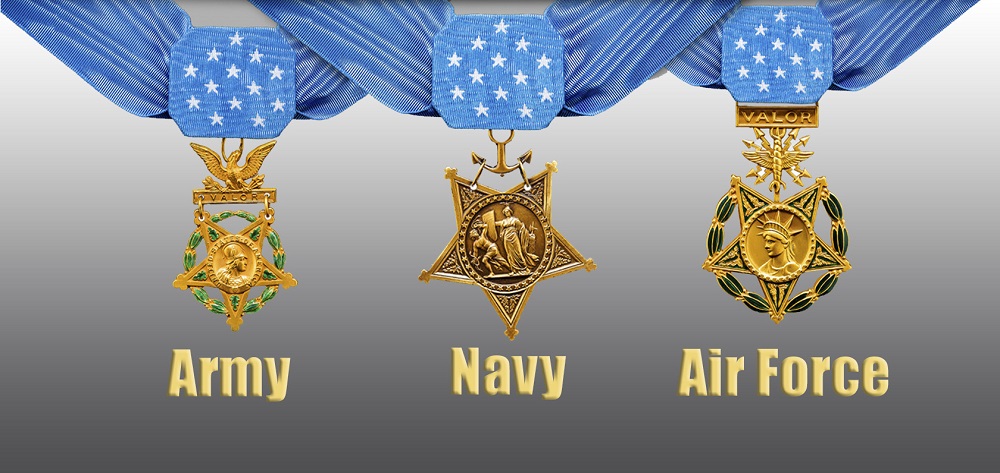
The first Medals of Honor, as proposed by Senator Grimes, were specifically for enlisted Sailors and Marines in 1861. The Army followed suit, establishing their own Medal of Honor in 1862. The U.S. Air Force would not have a Medal fo Honor for nearly another century, first introduced in 1965.
Today, there is one Medal of Honor for the Army, one for the Air Force, and one for the Navy, Marines, and Coast Guard.
What does it take to earn a Medal of Honor?
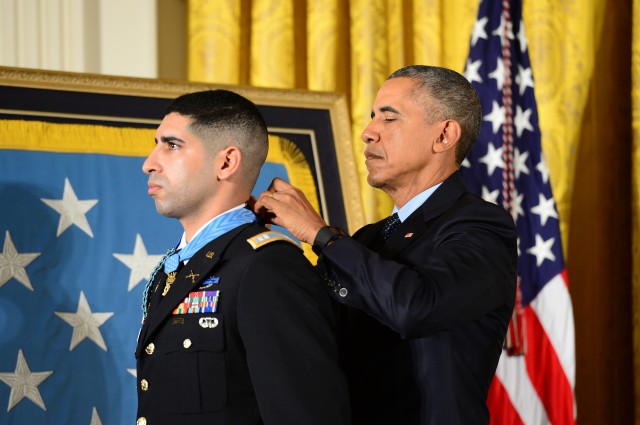
The short answer is, performing above and beyond the call of duty in the face of danger tends to be the sort of action that leads to receiving a Medal of Honor. The formal language established by Congress in 1963 says it can be awarded for heroism:
- While engaged in an action against an enemy of the United States
- While engaged in military operations involving conflict with an opposing foreign force
- While serving with friendly forces engaged in armed conflict against an opposing armed force in which the United States is not a belligerent party
The U.S. Army took back 911 Medals of Honor
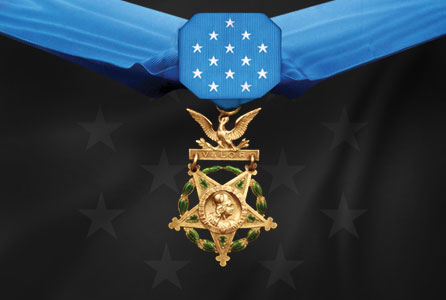
New designs and regulations pertaining to the Medal of Honor continued to find their way into the books, prompting the U.S. Army to revisit each of the Medals of Honor they had awarded in the past. An Army board was convened, tasked with pouring over the reports and associated documents relating to each Medal of Honor awarded to Soldiers in their branch.
By 1917, the audit was complete, and the U.S. Army had removed 911 Medals of Honor from Soldier’s service records, saying that they had been “erroneously bestowed.”
It comes with a paycheck
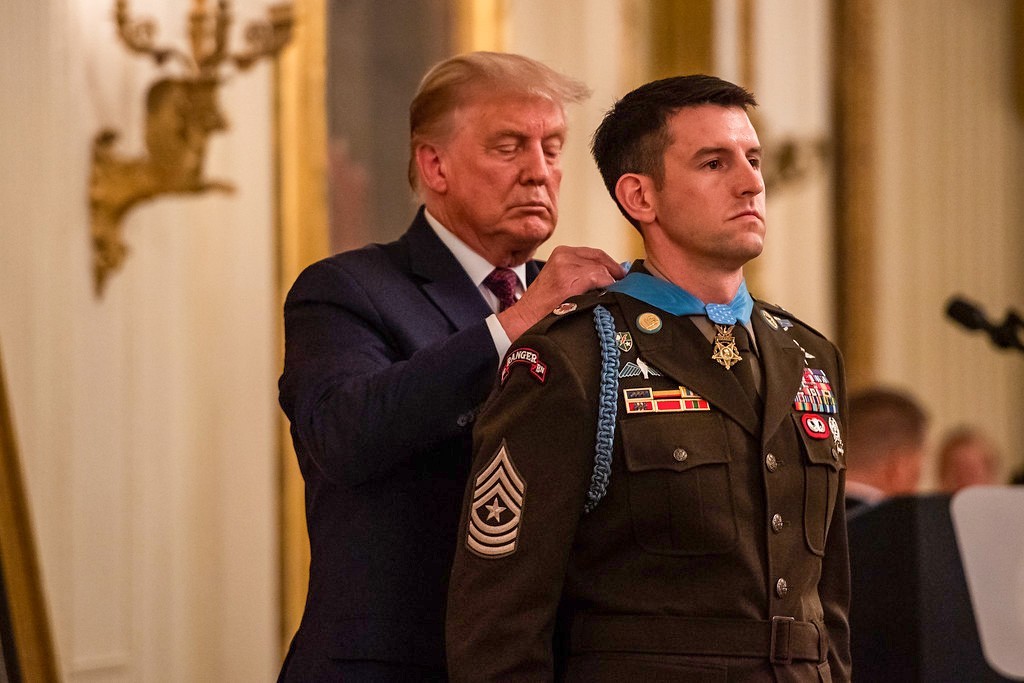
There are a number of military and civilian benefits associated with being awarded the Medal of Honor, and at least two come in the form of cold hard cash.
Living Medal of Honor recipients received a monthly pension of $1,406.73, as well as a supplemental clothing allowance of $841.36 once a year. Medal of Honor recipients also see a 10% increase in their retirement pay.
In 2013, timeliness became a factor

Rules and regulations pertaining to the Medal of Honor continued to mature over the decades. By 2013, Congress voted on new rules for how and when the award can be bestowed.
Today, a Medal of Honor recipient must be recommended for the award within just three years of the combat action prompting the recommendation, and the award must be presented within five. It’s important to note, however, that exceptions can be made through legislation, as may soon be the case with former U.S. Army Soldier Alwyn Cashe.

Alex Hollings
:max_bytes(150000):strip_icc():format(webp)/TeddyRoosevelt-56a48dd55f9b58b7d0d782fc.jpg)
Theodore Roosevelt was the 26th president of the United States, ascending to the office following the assassination of President William McKinley in 1901.
At 42, Theodore Roosevelt became the youngest president in the nation’s history and was subsequently elected to a second term. Dynamic in personality and filled with enthusiasm and vigor, Roosevelt was more than a successful politician. He was also an accomplished writer, a fearless soldier and war hero, and a dedicated naturalist.
At 42, Theodore Roosevelt became the youngest president in the nation’s history and was subsequently elected to a second term. Dynamic in personality and filled with enthusiasm and vigor, Roosevelt was more than a successful politician. He was also an accomplished writer, a fearless soldier and war hero, and a dedicated naturalist.
Considered by many historians to be one of our greatest presidents, Theodore Roosevelt is one of the four whose faces are depicted on Mount Rushmore. Theodore Roosevelt was also the uncle of Eleanor Roosevelt and the fifth cousin of the 32nd president of the United States, Franklin D. Roosevelt.
Dates: October 27, 1858 – January 6, 1919
Presidential Term: 1901-1909
Also Known As: “Teddy,” TR, “The Rough Rider, “The Old Lion,” “Trust Buster”
Famous Quote: “Speak softly and carry a big stick—you will go far.”
Childhood
Theodore Roosevelt was born the second of four children to Theodore Roosevelt, Sr. and Martha Bulloch Roosevelt on October 27, 1858 in New York City. Descended from 17th-century Dutch immigrants who made their fortune in real estate, the elder Roosevelt also owned a prosperous glass-importing business.
Theodore, known as “Teedie” to his family, was an especially sickly child who suffered from severe asthma and digestive problems his entire childhood.
As he grew older, Theodore gradually had fewer and fewer bouts of asthma. Encouraged by his father, he worked to become physically stronger through a regimen of hiking, boxing, and weightlifting.
Young Theodore developed a passion for natural science at an early age and collected specimens of various animals.
He referred to his collection as “The Roosevelt Museum of Natural History.”
Life at Harvard
In 1876, at the age of 18, Roosevelt entered Harvard University, where he quickly earned a reputation as an eccentric young man with a toothy grin and a tendency to chatter constantly. Roosevelt would interrupt professors’ lectures, injecting his opinion in a voice that has been described as a high-pitched stammer.
Roosevelt lived off campus in a room that his older sister Bamie had chosen and furnished for him. There, he continued his study of animals, sharing quarters with live snakes, lizards, and even a large tortoise. Roosevelt also began work on his first book, The Naval War of 1812.
During the Christmas holiday of 1877, Theodore Sr. became seriously ill. Later diagnosed with stomach cancer, he died on February 9, 1878. Young Theodore was devastated at the loss of the man he had so admired.
Marriage to Alice Lee
In the fall of 1879, while visiting the home of one of his college friends, Roosevelt met Alice Lee, a beautiful young woman from a wealthy Boston family. He was immediately smitten. They courted for a year and became engaged in January 1880.
Roosevelt graduated from Harvard in June 1880.
He entered Columbia Law School in New York City in the fall, reasoning that a married man should have a respectable career.
On October 27, 1880, Alice and Theodore were married. It was Roosevelt’s 22nd birthday; Alice was 19 years old. They moved in with Roosevelt’s mother in Manhattan, as Alice’s parents had insisted they do.
Roosevelt soon tired of his law studies. He found a calling that interested him far more than the law—politics.
Elected to the New York State Assembly
Roosevelt began to attend local meetings of the Republican Party while still in school. When approached by party leaders—who believed his famous name might help him win—Roosevelt agreed to run for the New York State Assembly in 1881. Twenty-three-year-old Roosevelt won his first political race, becoming the youngest man ever elected to the New York State Assembly.
Brimming with confidence, Roosevelt burst upon the scene at the state capitol in Albany. Many of the more seasoned assemblymen derided him for his dandified apparel and upper class accent. They ridiculed Roosevelt, referring to him as the “young squirt,” “his Lordship,” or simply “that fool.”
Roosevelt quickly made a reputation as a reformer, supporting bills that would improve working conditions in factories. Re-elected the following year, Roosevelt was appointed by Governor Grover Cleveland to head a new commission on civil service reform.
In 1882, Roosevelt’s book, The Naval War of 1812, was published, receiving high praise for its scholarship. (Roosevelt would go on to publish 45 books in his lifetime, including several biographies, historical books, and an autobiography. He was also a proponent of “simplified spelling,” a movement in support of phonetic spelling.)
Double Tragedy
In the summer of 1883, Roosevelt and his wife purchased land at Oyster Bay, Long Island in New York and made plans to build a new home. They also discovered that Alice was pregnant with their first child.
On February 12, 1884, Roosevelt, working in Albany, received word that his wife had delivered a healthy baby girl in New York City. He was thrilled by the news, but learned the following day that Alice was ill. He quickly boarded a train.
Roosevelt was greeted at the door by his brother Elliott, who informed him that not only was his wife dying, his mother was as well. Roosevelt was stunned beyond words.
His mother, suffering from typhoid fever, died early on the morning of February 14. Alice, stricken with Bright’s disease, a kidney ailment, died later that same day. The baby was named Alice Lee Roosevelt, in honor of her mother.
Consumed with grief, Roosevelt coped the only way he knew how—by burying himself in his work. When his term in the assembly was completed, he left New York for the Dakota Territory, determined to make a life as a cattle rancher.
Little Alice was left in the care of Roosevelt’s sister Bamie.
Roosevelt in the Wild West
Sporting pince-nez glasses and an upper class East-Coast accent, Roosevelt didn’t seem to belong in so rugged a place as the Dakota Territory. But those who doubted him would soon learn that Theodore Roosevelt could hold his own.
Famous stories of his time in the Dakotas reveal Roosevelt’s true character. In one instance, a barroom bully—drunk and brandishing a loaded pistol in each hand—called Roosevelt “four eyes.” To the surprise of bystanders, Roosevelt—the former boxer—slugged the man in the jaw, knocking him to the floor.
Another story involves the theft of a small boat owned by Roosevelt. The boat wasn’t worth a lot, but Roosevelt insisted that the thieves be brought to justice. Although it was the dead of winter, Roosevelt and his cohorts tracked the two men into Indian Territory and brought them back to face trial.
Roosevelt stayed out West for about two years, but after two harsh winters, he lost most of his cattle, along with his investment.
He returned to New York for good in the summer of 1886. While Roosevelt had been away, his sister Bamie had overseen the construction of his new home.
Marriage to Edith Carow
During Roosevelt’s time out West, he had taken occasional trips back East to visit family. During one of those visits, he began seeing his childhood friend, Edith Kermit Carow. They became engaged in November 1885.
Edith Carow and Theodore Roosevelt were married on December 2, 1886. He was 28 years old, and Edith was 25. They moved into their newly-built home in Oyster Bay, which Roosevelt had christened “Sagamore Hill.” Little Alice came to live with her father and his new wife.
In September 1887, Edith gave birth to Theodore, Jr., the first of the couple’s five children. He was followed by Kermit in 1889, Ethel in 1891, Archie in 1894, and Quentin in 1897.
Commissioner Roosevelt
Following the 1888 election of Republican President Benjamin Harrison, Roosevelt was appointed Civil Service commissioner. He moved to Washington D.C. in May 1889. Roosevelt held the position for six years, earning a reputation as a man of integrity.
Roosevelt returned to New York City in 1895, when he was appointed city police commissioner. There, he declared war on corruption in the police department, firing the corrupt chief of police, among others. Roosevelt also took the unusual step of patrolling the streets at night to see for himself if his patrolmen were doing their jobs.
He often brought a member of the press with him to document his excursions. (This marked the beginning of a healthy relationship with the press that Roosevelt maintained—some would say exploited—throughout his public life.)
Assistant Secretary of the Navy
In 1896, newly-elected Republican President William McKinley appointed Roosevelt assistant secretary of the Navy. The two men differed in their views toward foreign affairs. Roosevelt, in contrast to McKinley, favored an aggressive foreign policy. He quickly took up the cause of expanding and strengthening the U.S. Navy.
In 1898, the island nation of Cuba, a Spanish possession, was the scene of a native rebellion against Spanish rule. Reports described rioting by rebels in Havana, a scenario which was seen as a threat to American citizens and businesses in Cuba.
Urged on by Roosevelt, President McKinley sent the battleship Maine to Havana in January 1898 as protection for American interests there. Following a suspicious explosion on board the ship a month later, in which 250 American sailors were killed, McKinley asked Congress for a declaration of war in April 1898.
The Spanish-American War and TR’s Rough Riders
Roosevelt, who, at the age of 39 had waited his entire life to engage in actual battle, immediately resigned his position as assistant secretary of the Navy. He secured for himself a commission as a lieutenant colonel in a volunteer army, dubbed by the press “The Rough Riders.”
The men landed in Cuba in June 1898, and soon suffered some losses as they battled Spanish forces. Traveling both by foot and on horseback, the Rough Riders helped to capture Kettle Hill and San Juan Hill. Both charges succeeded at running off the Spanish, and the U.S. Navy finished the job by destroying the Spanish fleet at Santiago in southern Cuba in July.
From Governor of NY to Vice President
The Spanish-American War had not only established the United States as a world power; it had also made Roosevelt a national hero. When he returned to New York, he was chosen as the Republican nominee for governor of New York. Roosevelt won the gubernatorial election in 1899 at the age of 40.
As governor, Roosevelt set his sights on reforming business practices, enacting tougher civil service laws, and the protection of state forests.
Although he was popular with voters, some politicians were anxious to get the reform-minded Roosevelt out of the governor’s mansion. Republican Senator Thomas Platt came up with a plan for getting rid of Governor Roosevelt.
He convinced President McKinley, who was running for re-election (and whose vice president had died in office) to select Roosevelt as his running mate in the 1900 election. After some hesitation—fearing he would have no real work to do as vice president—Roosevelt accepted.
The McKinley-Roosevelt ticket sailed to an easy victory in 1900.
Assassination of McKinley; Roosevelt Becomes President
Roosevelt had only been in office six months when President McKinley was shot by anarchist Leon Czolgosz on September 5, 1901 in Buffalo, New York. McKinley succumbed to his wounds on September 14. Roosevelt was summoned to Buffalo, where he took the oath of office that same day. At 42 years old, Theodore Roosevelt became the youngest president in America’s history.
Mindful of the need for stability, Roosevelt kept the same cabinet members McKinley had appointed. Nonetheless, Theodore Roosevelt was about to put his own stamp upon the presidency.
He insisted the public must be protected from unfair business practices. Roosevelt was especially opposed to “trusts,” businesses that allowed no competition, which were therefore able to charge whatever they chose.
Despite the passage of the Sherman Anti-Trust Act in 1890, previous presidents had not made it a priority to enforce the act. Roosevelt did enforce it, by suing the Northern Securities Company—which was run by J.P. Morgan and controlled three major railroads—for violating the Sherman Act.
The U.S. Supreme Court later ruled that the company had indeed violated the law, and the monopoly was dissolved.
Roosevelt then took on the coal industry in May 1902 when Pennsylvania coal miners went on strike. The strike dragged on for several months, with mine owners refusing to negotiate.
As the nation faced the prospect of a cold winter without coal to keep people warm, Roosevelt intervened. He threatened to bring in federal troops to work the coal mines if a settlement was not reached. Faced with such a threat, mine owners agreed to negotiate.
In order to regulate businesses and help prevent further abuses of power by large corporations, Roosevelt created the Department of Commerce and Labor in 1903.
Theodore Roosevelt is also responsible for changing the name of the “executive mansion” to “the White House” by signing an executive order in 1902 that officially changed the iconic building’s name.
The Square Deal and Conservationism
During his re-election campaign, Theodore Roosevelt expressed his commitment to a platform he called “The Square Deal.”
This group of progressive policies aimed to improve the lives of all Americans in three ways: limiting the power of large corporations, protecting consumers from unsafe products, and promoting the conservation of natural resources.
Roosevelt succeeded in each of these areas, from his trust-busting and safe food legislation to his involvement in protecting the environment.
In an era when natural resources were consumed without regard to conservation, Roosevelt sounded the alarm. In 1905, he created the U.S. Forest Service, which would employ rangers to oversee the nation’s forests.
Roosevelt also created five national parks, 51 wildlife refuges, and 18 national monuments. He played a role in the formation of the National Conservation Commission, which documented all of the nation’s natural resources.
Although he loved wildlife, Roosevelt was an avid hunter. In one instance, he was unsuccessful during a bear hunt. To appease him, his aides caught an old bear and tied it to a tree for him to shoot.
Roosevelt refused, saying he couldn’t shoot an animal in such a way. Once the story went to press, a toy manufacturer began producing stuffed bears, named “teddy bears” after the president.
In part because of Roosevelt’s commitment to conservation, his is one of four presidents’ faces carved on Mount Rushmore.
The Panama Canal
In 1903, Roosevelt took on a project that many others had failed to accomplish—the creation of a canal through Central America that would link the Atlantic and Pacific oceans. Roosevelt’s main obstacle was the problem of obtaining land rights from Colombia, which held control of Panama.
For decades, Panamanians had been trying to break free from Colombia and become an independent nation. In November 1903, Panamanians staged a rebellion, backed by President Roosevelt. He sent the USS Nashville and other cruisers to the coast of Panama to stand by during the revolution.
Within days, the revolution was over, and Panama had gained its independence. Roosevelt could now make a deal with the newly-liberated nation. The Panama Canal, a marvel of engineering, was completed in 1914.
The events leading up to the construction of the canal exemplified Roosevelt’s foreign policy motto: “Speak softly and carry a big stick—you will go far.” When his attempts to negotiate a deal with the Colombians failed, Roosevelt resorted to force, by sending military assistance to the Panamanians.
Roosevelt’s Second Term
Roosevelt was easily re-elected to a second term in 1904 but vowed he would not seek re-election after he completed his term. He continued to push for reform, advocating for the Pure Food and Drug Act and the Meat Inspection Act, both enacted in 1906.
In the summer of 1905, Roosevelt hosted diplomats from Russia and Japan at Portsmouth, New Hampshire, in an effort to negotiate a peace treaty between the two nations, who had been at war since February 1904.
Thanks to Roosevelt’s efforts in brokering an agreement, Russia and Japan finally signed the Treaty of Portsmouth in September 1905, ending the Russo-Japanese War. Roosevelt was awarded the Nobel Peace Prize in 1906 for his role in the negotiations.
The Russo-Japanese War had also resulted in a mass exodus of unwelcome Japanese citizens to San Francisco. The San Francisco school board issued an order that would force Japanese children to attend separate schools.
Roosevelt intervened, convincing the school board to rescind its order, and the Japanese to limit the number of laborers they allowed to immigrate to San Francisco. The 1907 compromise was known as the “Gentlemen’s Agreement.”
Roosevelt came under harsh criticism by the black community for his actions following an incident in Brownsville, Texas in August 1906.
A regiment of black soldiers stationed nearby was blamed for a series of shootings in the town. Although there was no proof of the soldiers’ involvement and none of them was ever tried in a court of law, Roosevelt saw to it that all 167 soldiers were given dishonorable discharges. Men who had been soldiers for decades lost all of their benefits and pensions.
In a show of American might before he left office, Roosevelt sent all 16 of America’s battleships on a worldwide tour in December 1907.Although the move was a controversial one, the “Great White Fleet” was well-received by most nations.
In 1908, Roosevelt, a man of his word, declined to run for re-election. Republican William Howard Taft, his hand-picked successor, won the election. With great reluctance, Roosevelt left the White House in March 1909. He was 50 years old.
Another Run for President
Following Taft’s inauguration, Roosevelt went on a 12-month African safari, and later toured Europe with his wife. Upon his return to the U.S. in June 1910, Roosevelt found that he disapproved of many of Taft’s policies. He regretted not having run for re-election in 1908.
By January 1912, Roosevelt had decided he would run again for president, and began his campaign for the Republican nomination. When Taft was re-nominated by the Republican Party, however, a disappointed Roosevelt refused to give up.
He formed the Progressive Party, also known as “The Bull Moose Party,” so named after Roosevelt’s exclamation during a speech that he was “feeling like a bull moose.” Theodore Roosevelt ran as the party’s candidate against Taft and Democratic challenger Woodrow Wilson.
During one campaign speech, Roosevelt was shot in the chest, sustaining a minor wound. He insisted on finishing his hour-long speech before seeking medical attention.
Neither Taft nor Roosevelt would prevail in the end. Because the Republican vote was split between them, Wilson emerged as the victor.
Final Years
Ever the adventurer, Roosevelt embarked upon an expedition to South America with his son Kermit and a group of explorers in 1913. The perilous voyage down Brazil’s River of Doubt nearly cost Roosevelt his life.
Where He contracted yellow fever and suffered a severe leg injury; as a result, he needed to be carried through the jungle for much of the journey. Roosevelt returned home a changed man, much frailer and thinner than before. He never again enjoyed his former robust state of health.
Back home, Roosevelt criticized President Wilson for his policies of neutrality during the First World War. When Wilson finally declared war on Germany in April 1917, all four of Roosevelt’s sons volunteered to serve. (Roosevelt also offered to serve, but his offer was politely declined.)
In July 1918, his youngest son Quentin was killed when his plane was shot down by the Germans. The tremendous loss appeared to age Roosevelt even more than his disastrous trip to Brazil.
In his final years, Roosevelt contemplated running again for president in 1920, having gained a good deal of support from progressive Republicans. But he never had the chance to run. Roosevelt died in his sleep of a coronary embolism on January 6, 1919 at the age of 60.

George S. Patton was one of the most flamboyant soldiers the United States has ever produced.

Patton stated that there was not anything he would not have given to earn the Medal of Honor.
Some men are born to greatness. George Smith Patton actively cultivated it. A man of truly breathtaking ambition, Patton’s stated lifelong quest for the Medal of Honor was destined for frustration.

Patton was the most feared Allied General Officer of the Second World War.
A marginal student but a rapacious reader, Patton enjoyed an almost pathological drive to succeed. In the final analysis, George Patton became arguably the most effective fighting general in American military history. His combat career, however, was nearly cut short during a vicious engagement with Mexican bandits as part of the 1916 Punitive Expedition to defeat Pancho Villa.
The Setting

Pancho Villa was a murderous bandit whose bloody antics sparked a war.
In March of 1916 a mob of paramilitary cutthroats under the command of Jose Doroteo Arango Arambula, more commonly known as Francisco “Pancho” Villa, attacked and burned the small town of Columbus, New Mexico.

Villa’s followers were marauding thugs.
In the process, Villa killed eight American Cavalrymen stationed there along with another eight to ten civilians. He made off with three hundred captured rifles and shotguns but lost a quarter of his force in the process. He also incurred the fulminant wrath of both President Woodrow Wilson and the American people.

Woodrow Wilson’s response to Villa’s raids was overwhelming combat power.
Five months later there were 100,000 American troops poised on the border.

General John J. “Blackjack” Pershing commanded both the Punitive Expedition into Mexico as well as American forces in Europe during World War 1.
The Punitive Expedition was led by John “Blackjack” Pershing and was tasked with capturing Villa.

In 1916 a large portion of the United States military still relied on horses for mobility.
This military operation was the first in US history to employ motorized ground transport as well as airplanes in a reconnaissance role.
A Hero’s Beginnings

A young George Patton struggled with certain academic subjects but was a born leader.
By 1916 Second Lieutenant George Patton had already etched a deep mark. He attended the Virginia Military Institute for a year before entering the US Military Academy in New York. His academic failure in mathematics necessitated his repeating a year at West Point.

The Patton sword was designed for thrusting rather than slashing.
An avid swordsman, Patton studied experts in the US and Europe and designed the M1913 Cavalry Saber that became known as the “Patton Sword.”

George Patton, shown on the right, was a master swordsman.
He was granted the title “Master of the Sword” for his efforts. I’m not sure exactly what that means, but it sounds awesome.

An accomplished equestrian, Patton competed in the 1912 Stockholm Olympics.
Lieutenant Patton represented the United States in the pentathlon at the 1912 Olympics in Stockholm, Sweden. While the other Olympians ran .22-caliber pistols for the shooting component of the event, Patton elected to wield a .38-caliber Colt target revolver.

Where most pentathlon competitors used a .22-caliber pistol, Patton preferred more serious iron.
The young officer was docked a shot as having missed the target altogether with his final round. Patton claimed that the bullet passed through the ragged hole left by the preceding shots. As he had fired a perfect score the previous day this is not an unreasonable claim.

One man actually died during the 2.5-mile cross-country run that defined the 1912 Olympic pentathlon. This is George Patton during the run.
When the pentathlon was complete, several competitors had fallen away and one actually died. Patton came in fifth overall. Had he gotten credit for shooting up to his typical standard he would have taken the gold.

General Pershing was engaged to George Patton’s younger sister Nita. They eventually broke off the engagement.
Concerned that he might miss the pending military action in Mexico, Patton appealed directly to Pershing. Blackjack agreed and made Patton his personal aide. The fact that Pershing was engaged to Patton’s younger sister Nita likely did not harm his prospects.
The Mission

Patton requested and received a posting to a combat Cavalry command.
Eager to command troops in combat, 2LT Patton requested and received a billet to Troop C of the 13th Cavalry hunting Pancho Villa. Julio Cardenas was a Captain in Villa’s band of rogues and his overall 2IC. Cardenas also commanded Villa’s personal bodyguard.

The US military’s reliance on horses demanded a constant search for fodder.
While out scavenging for corn for the unit’s horses, a small party of ten American cavalrymen along with a pair of civilian guides under Patton’s command came to a ranch near the town of Rubio, Mexico. Realizing that Cardenas had family at the ranch, Patton undertook a detailed recon of the area from a variety of vantages. Lieutenant Patton subsequently identified Cardenas and a pair of his henchmen at the facility.

Patton used Dodge touring cars in the first mechanized assault in US military history.
On May 14, 1916, Patton led his small attack force in three Dodge touring cars cross country in the first motorized assault in US Army history. At around noon, Patton staged two of his vehicles as a blocking force, dismounted, and approached the compound by stealth along with two members of his party. He carried a rifle in his left hand and his ivory-handled engraved Colt Single Action Army revolver in his right.

Patton had a bad experience with John Browning’s classic military automatic that drove him to wheelguns.
Some weeks before, Patton was at a local watering hole enjoying the nightlife with his issue Colt 1911 automatic pistol shoved into his belt. The weapon discharged unexpectedly and soured the young officer to a degree.

Patton’s customized Single Action Army became part of his mythos. The original is on the top. The gun used in the 1970 biographical movie is shown on the bottom.
As a result, he privately purchased his famous Colt SAA revolver for $50 and had it customized with ivory grips and extensive engraving. Patton loaded his wheelgun with five rounds, leaving the chamber underneath the hammer empty. This was the state of the weapon he carried as he approached the San Miguelito Ranch.
Patton’s First Gunfight

The three Mexican bandits rode for their lives trying to escape the encircling Americans.
Patton and his subordinates made their way around the low wall that surrounded the ranch and was eventually spotted by the three bandits. Just as planned, the mounted Mexicans fled the small team only to run into Patton’s well-sited blocking force.

The shootout between 2LT George Patton and the Mexican bandit Julio Cardenas showed the young American officer to be calm and professional under fire.
Wheeling their mounts around, the three charged back at Lieutenant Patton and his soldiers, their guns blazing. George Patton leveled his Colt and emptied all five rounds.

Little quarter was given.
One round struck Cardenas in the arm, shattering it. Another felled his horse. Having recharged his sixgun Patton shot the horse of one of Cardenas’ companions as it galloped by, dropping the animal and spilling its rider. Once the bandit disentangled himself from the wounded animal, Patton and his men gunned him down.

The Winchester lever action rifle was legendarily reliable.
The story goes that this man was armed with a lever action rifle that jammed just as he was about to shoot. The young Lieutenant kept the gun and left it in its choked state, insisting that it never be cleared. The gun with its action locked open was on display at the Patton Museum at Fort Knox for decades. Given the remarkable reliability of lever action rifles, Patton saw this fortuitous failure as an example of divine providence.
The third bandit escaped the compound and galloped away as fast as his mount could run. Patton transitioned to his bolt-action Springfield rifle and, along with his men, blew the retreating Mexican out of his saddle. Meanwhile, the wounded Cardenas was attempting to escape on foot.

Julio Cardenas feigned surrender and died as a result of his subterfuge.
One of Patton’s guides, a turncoat Villa soldier named E.L. Holmdahl, pursued the wounded man into a nearby field. Cardenas feigned surrender only to draw his pistol, fire, and miss. For his trouble, Holmdahl put a bullet through the Mexican bandit’s brain.
The Rest of the Story

General Pershing had no interest in the three dead Mexicans but was mightily impressed with his aide George Patton.
Patton strapped the bodies of the three dead bandits to the hoods of his cars and returned to his encampment forthwith leaving around fifty pursuing Mexican bandits on horseback in his dust. The baking Mexican sun did not improve the state of the three dead men by the time he presented them as spoils of war to his commander, General Pershing. Blackjack wanted little to do with the demised and rapidly ripening Mexicans and had them buried on the spot.

Patton’s ego and refined tactical acumen drove him to rarefied heights of military command.
Pershing was, however, quite impressed with the performance of the firebrand Patton, referring to him as “Bandit” informally from then on and promoting him to First Lieutenant nine days later. The engagement found its way into newspapers the world over and poured kerosene on the smoldering flame that was George Patton’s ego. All these things conspired to secure for Patton a billet alongside Pershing when he deployed to France the following year to join the hemoclysm that was World War 1.

Patton led armored assaults during World War 1 and was shot through the butt in the process.
Patton’s combat acumen as a tank commander in the First World War and his mastery of the art of maneuver warfare in the Second is well-documented.
Tactical Lessons

The pair of custom wheelguns Patton carried during World War 2 became some of the most recognizable firearms ever made.
George Patton carved a pair of notches in the grip of his Single Action Army to commemorate the two Mexican bandits he helped dispatch. While the inimitable reliability of the venerable Colt revolver clearly left a mark, Patton had not enjoyed having to laboriously reload his weapon under fire.

Patton’s frustration with the limited capacity of his SAA led him to pack a pair of six guns when in a combat zone.
For this reason, he typically carried a pair of wheelguns in combat later during World War 2.

Patton’s .357 Smith and Wesson Registered Magnum later became known as the Model 27. He bought the gun directly from S&W in 1935 for $60.
Patton packed a matched pair of Colts for a time but gifted one to a famous USO performer. He replaced the single action .45 with a Smith and Wesson .357 Registered Magnum sporting a 3.5-inch barrel.

Patton carried a variety of backup guns. He once fired at attacking German aircraft with a Remington R51 .380 like this one.
He was also known to carry a Remington R51 .380 as well as a snub-nosed revolver and the occasional M1903 Colt hammerless. During one particularly harrowing engagement, Patton stood in his staff car and fired at attacking Luftwaffe planes with his R51 pocket pistol. What a stud.

Whenever at the front Patton kept this M1A1 Thompson submachine gun handy.
The M1A1 Thompson submachine gun that was his constant companion on trips to the front is on display at West Point today.

General George S. Patton was an enigmatic individual and a skilled combat leader.
George Smith Patton broke the mold. A peculiar man of devout faith and spectacular profanity, it was his strange dichotomy combined with a straight-for-the-throat command philosophy that made him the most feared General Officer in the Allied stable. I had a friend who met him twice. He once told me that Patton was every bit the flamboyant character in person that the history books depict. While he likely would not have made it past Lieutenant in today’s woke Army, General George Patton was clearly the stuff of heroes.

Patton’s grave in Luxembourg is fairly nondescript. It was his wish that he simply be interred among his men.
Its 1917, you’re a German Stoßtruppen one of the finest soldiers of the Kaiser, you have been fighting in the Great War since the beginning, you have been assigned to this elite unit due to your extreme experience.
You wait for your commander to order you and your fellow soldiers to advance on a British trench under the cover of the night, suddenly just before you’re about to jump over the trench you hear a scream.
It only takes a few seconds, when you turn your head to look at where the screams came from you see two shinny objects that dance around in the darkness reflecting the light of the candles you had lit up minutes ago, and before you know what’s going on, you feel the cold steel enter your chest and for a moment you see the face of your enemy and realise that you’ve never seen such facial features. That’s when it hits you, you’re looking into the eyes of one of the Mad Dogs of the British Empire.
A Gurkha Warrior.
A Gurkha unit capturing a German position in 1916

A Gurkha soldier chargin a axis position in Tunisia 1943

Gurkha soldiers applying camouflage before going into battle, Falklands 1982

Gurkha soldier protecting US troops getting into a helicopter
“If a man says he is not afraid of dying, he is either lying or he is a Gurkha.” – Field Marshal Sam Manekshaw.
In my opinion the scariest soldiers are the ones that have been fighting for the last 2 centuries with no fear using Kukri knives against guns.
 |
| Soldiers of The 3rd (East Kent) Regiment of Foot (The Buffs) defending the Colours at Albuera, 1811 (Source) |
When humans first took up arms against other humans, the infantry were there. They weren’t known as infantry then, that term came later, but nevertheless, they were infantry. Equipped with rocks, sticks, clubs, whatever was to hand. The mission was simple: close with the enemy and drive them off, or kill them, whichever came first.
With the current war in Ukraine I’ve seen a number of references to the obsolescence of various combat arms. Is the tank obsolete? Are surface warships obsolete? One thing to always bear in mind is that a war isn’t over until the infantry have seized the ground, and held it against all comers.
Tanks cannot seize and hold ground, in fact, as the Russo-Ukrainian War of 2022 demonstrates, tanks are virtually helpless against steadfast infantry. Tanks need their own infantry to protect them. So why bother with tanks?
Well, they are far more mobile than a man on foot, they are heavily armed and armored. It takes a set of brass ones to go up against a tank if you’re an infantryman. But they do and with the proper training tanks lose much of their mystery.
The tanker is blind inside his buttoned up machine, to expose yourself leaves you open to all the nasty things flying through the air in a combat environment. But with the right support, the tank can punch holes in an enemy line and roll it up from within. As long as the infantry supports are nearby, the tank is a formidable foe.
Combined arms – infantry, armor, and artillery working together are an absolute must in modern warfare. Artillery is the man-killer extraordinaire, it’s how an army reaches out and touches someone.
Aircraft are important, both fixed wing and rotary wing, to control the air above your own forces. Let the enemy control the air and your soldiers are just so many targets burrowing into the soil. Rooted in place, they will soon starve as enemy air deprives them of food, fuel, and ammunition.
The only weapon of war which will never be obsolete is the infantryman. The infantryman is the guy you have to beat on the ground to win battles and eventually the war. Everything else is support for that person on the ground with his personal weapon. All are important, but the infantry is indeed, the queen of battle.
 |
| Follow me! The Infantry School Fort Benning, GA |
Categories
Yankees


We live in a curiously black and white world. The Information Age has given us unprecedented insight into people’s private lives. If something is ever published on the Internet it is there forever. This allows those who don’t actually accomplish a great deal to sit back in a position of comfort and pick apart the actions of those who do.

Cancel culture is the woke term. Like texting, sexting, dope, Gucci, sick, lit, or the term woke itself, these are words that meant something totally different a generation ago. This deep into the Information Age all it takes is a single errant comment online to disqualify a person from a position of prestige or responsibility. This is based on the flawed assumption that folks are all either innately good or innately bad.

Reality is rarely that clear cut. Not all nuns are angels, and not all Nazis were bloodthirsty psychopaths. We are all of us broken. It is simply that some strive for the light, while others embrace the darkness. However, there does yet remain some weird intangible that attracts certain personalities to certain camps. That ethereal stuff tends to drive some of the most extraordinary behavior.

In some rare quarters you can indeed find a few moral absolutes. I think we can all agree that ISIS, al Qaeda, and the Taliban are reliably bad people. Their sick oppressive ideology attracts aberrant abusive personalities and then cultivates the worst in them. In the West, an errant online comment can be an unforgivable sin. Meanwhile in Afghanistan people have been executed for listening to music. If anybody cares about my opinion, I think we could use a little perspective over on this side of the pond.

Regardless, in the aftermath of 9-11 the free countries of the world banded together to battle the forces of darkness. This was an old school righteous fight. The egregious behavior of our radical Islamist enemies served as the catalyst to unite free peoples in a common cause against tyranny, oppression, and rank terrorism. That single shared mission brought out the very best in some. One of the finest examples extant was that of a young British paratrooper named Joshua Leakey.
Origin Story

Joshua Leakey was born in 1988 in England. His father is a retired RAF officer, while his mom is an Occupational Therapist. He has one younger brother. Leakey attended school in Horsham, West Sussex, before starting a military history program at the University of Kent. Dissatisfied with his studies, Leakey dropped out of school to join the British Army.

There is a certain brotherhood among those of us soldiers stupid enough to jump out of perfectly good airplanes. We are typically somewhat full of ourselves and more than a wee bit arrogant. Joshua Leakey was cut from similar stuff. He ended up with the 1st Battalion of the British Parachute Regiment.

Joshua Leakey did three combat tours with the Paras in Afghanistan and was promoted to Lance Corporal. In August of 2013, Leakey was part of a joint multinational operation in Helmand Province. Fighting alongside US Marines as well as Afghan soldiers, Leakey and his mates were moving into a village to search for illegal weapons. Leakey’s team inserted via CH47 Chinook helicopters and immediately found themselves deep in the suck.
The Fight

Leakey’s element was tasked to provide fire support for the troops assaulting into the village. As such, they set up on the reverse slope of a nearby hill protected from the bulk of the enemy fire. Despite their position of relative safety, they soon found themselves subject to withering automatic weapons and RPG fire.

The command group was pinned down on the exposed front slope of the hill by around 20 heavily-armed Taliban fighters. American Marine Captain Brandon Bocian was subsequently hit and badly wounded. The Taliban insurgents were so close and so ferocious as to negate the effectiveness of the two friendly machineguns as well as the organic mortar section that was collocated with the command group.

Despite being the most junior NCO present, LCPL Leakey rightly assessed the situation as dire and took action. He ran some 100 meters down the hill under heavy enemy fire to get to the command group and render aid to the downed US Marine officer. LCPL Leakey then took charge of the chaotic situation and initiated casualty evacuation procedures.

All the while Taliban forces were suppressing the two automatic weapons in overwatch positions at the top of the hill. LCPL Leakey then ran back up the hill across rugged terrain and under heavy fire to retrieve one of the guns and get it back in action. In the process, the machinegun he was carrying was itself struck by enemy fire though not disabled. LCPL Leakey got the gun working and began pouring fire back onto the attacking insurgents.

While this helped it still did not tip the balance of the engagement in the favor of friendly forces. As such LCPL ran the gauntlet a third time, this time carrying more than 60 pounds’ worth of ammunition and equipment. He retrieved a second machinegun from the pinned down command group and sprinted to a more advantageous position with it, siting it against the enemy before turning its operation over to a subordinate.

With two belt-fed MGs finally working on the enemy, LCPL Leakey returned to the downed Marine and coordinated his evacuation under fire. Along the way, friendly forces killed eleven insurgents and wounded another four. The entire battle lasted some 45 interminable minutes. The fighting did not stop until friendly close air support rolled hot to teach the Taliban a stark lesson in the salient aspects of tactical overmatch.
The Guns

British forces in action in Southwest Asia most frequently carried the SA80 bullpup assault rifle. The SA80 was a thoroughly inspired but badly flawed design when introduced in 1985. Since then the SA80 has undergone several product improvements. In 2000 HK redesigned the weapon into the SA80A2, rectifying many to most of the rifle’s documented deficits. The subsequent SA80A3 first saw issue in 2016 and focused primarily on making the weapon more modular and adaptable. Today the SA80A3 enjoys reliability rates comparable to other modern assault rifles.

I could not find a specific reference to the machineguns LCPL Leakey humped up and down that godforsaken hill in Afghanistan. However, balance of probability these were L7A2 GPMGs (General Purpose Machineguns). The British soldiers I have known all referred to the L7 guns as “Gimpy’s.”

The L7A2 is an evolved version of the original Belgian MAG (Miltrailleuse d’Appui General) gun. Designed in the early 1950s by Ernest Vervier, the MAG gun has subsequently seen service with more than 80 nations and has been license-produced in ten countries to include Argentina, Canada, Egypt, India, Singapore, Turkey, the US, and the UK. The Chinese naturally make an unlicensed copy of the gun they call the CS/LM1. In US service the MAG gun is designated the M240.

The US military first adopted the M240 in 1977 as a coaxial machinegun for main battle tanks. With the well-documented shortcomings of the M60 being made ever more painfully manifest as the guns began to age, some legit rocket scientist realized that we had perfectly good M240’s in storage. Uncle Sam bought the buttstocks and fire controls to convert those early coax guns into ground weapons and fell in love with them. The M240B weighed 28 pounds while the lightened M240G tipped the scales at 24.2 pounds. The more recent M240L dropped the weight to 22.3 pounds by using titanium in certain critical components along with a short barrel, polymer fire control unit, and collapsible stock.
The Rest of the Story

Though LCPL Leakey likely did not know CPT Bocian well, he risked his life multiple times to save the man. LCPL Leakey fully appreciated the desperate nature of the engagement. He selflessly took action to get the injured American to safety and ultimately defeat the Taliban fighters who were so intent upon killing them all. His courageous actions under fire are a study in combat leadership and reflect that weird secret sauce that separates heroes from normal folk on the modern battlefield.

In February 2015, LCPL Joshua Leakey received the Victoria Cross directly from the hand of Queen Elizabeth II. The Victoria Cross is Great Britain’s highest award for bravery in combat. Like most true heroes, LCPL Leakey was humbled by the honor. He had this to say to the BBC, “In that particular incident I was in the best position to do that. If it had been any of my mates they would be in this position now…I don’t look at it about being about me in particular, I look at this as representing everyone from my unit, from my battalion, who was involved in the campaign in Afghanistan.”

LCPL Leakey comes by it honestly. His second cousin, Sergeant Nigel Gray Leakey, earned the Victoria Cross himself in 1941. The elder SGT Leakey was awarded the decoration posthumously for valor while fighting the Italians in North Africa. LCPL Leakey is only the third British soldier to be awarded the Victoria Cross for combat action in Afghanistan. He is the only one of the three who lived to tell the tale.

The Victoria Cross was introduced by Queen Victoria in 1856 to recognize acts of exceptional valor during the Crimean war. Since then it has been awarded 1,356 times. LCPL Leakey is only the fifteenth soldier so recognized since the end of WW2. Each physical medal is formed from the bronze of Russian guns captured at the Siege of Sevastopol during the Crimean War. In military circles, it’s quite the big deal.