Categories
All About Guns Allies Soldiering War

LCPL Amarjit Pun and the Sterling Submachine Gun by WILL DABBS

The early 1960s saw a smoldering border dispute between East Malaysia and Indonesia bubble over into violent armed conflict. Note the Sterling submachine gun carried by the soldier in the foreground.

In the early 1960s, a tidy little war broke out along the border between Indonesia and East Malaysia on the island of Borneo. European colonialism had subdivided the planet into a bewildering amalgam of fiefdoms and protectorates, and the sundry peoples involved yearned to define themselves in the aftermath of the Second World War. On August 29, 1964, this tidy little war got quite messy.

Though typically small of stature, the Gurkhas are legendarily hard warriors.

Lance Corporal Amarjit Pun was the second-in-command for the point section of 10 Platoon, C Company, 2d Gurkha Rifles, on a company-strength patrol along the border south of Kumpang Langir. A company-sized element can be unwieldy on a protracted combat patrol, and all involved were looking forward to getting back to base for some rack time. However, as the patrol headed for home, they unwittingly walked into a kill zone.

 On the tail end of an extensive combat patrol, LCPL Amarjit Pun and his men were tired and ready to get home.

The ambush was of the classic sort. Indonesian infantry well concealed in the jungle underbrush allowed the Gurkhas to walk deep into their killing ground before initiating the ambush with a murderous rain of small arms fire. In the first salvo, Lance Corporal Amarjit’s section commander was grievously wounded, while one of his NCOs was killed outright. The light machinegun team was also taken out of action. The Number 1 gunner was killed and his Number 2 badly hurt. Another rifleman was hit as well. The situation for LCPL Amarjit’s Gurkhas looked grave.

The ambush is a staple of Infantry warfare. An enemy unit launches a surprise attack from a position of stealthy advantage. The defending troops have only moments to respond.

It is the most basic tenet of Infantry training to instinctively assault through an ambush. This goes against every natural urge a man might have in combat. When faced with murderous fire from an unexpected quarter, the natural response is to drop or hide. However, hesitating inside a kill zone equals violent gory death.

A buddy who was there once told me that mobility was life on Omaha Beach during the D-Day invasion.

A friend who landed on Omaha Beach on June 6, 1944, once told me that stagnation meant dying. He said the fire coming from the German pillboxes was indeed overwhelming, but that combat leaders on the ground pushed their men forward into the chaos. He explained that he charged across the beach to cover, but that every member of his small unit that hesitated on that beach died.

 To survive a proper ambush an attacked unit must respond quickly and instinctively with overwhelming violence of action.

Infantry soldiers are therefore trained on immediate action drills in response to an ambush. They are expected to react instinctively without a great deal of conscious thought. Sometimes that works, and sometimes it doesn’t. In the case of LCPL Amarjit Pun, this compact little man seized the initiative and took charge.

Turning the Tide

The magazine-fed Bren light machinegun was the unit’s most effective weapon. Getting the Bren back into action was therefore the top priority.

LCPL Amarjit charged forward and retrieved the fallen L4 Bren gun intending on using the discarded weapon on the attackers to help break the ambush. As he hefted the heavy gun another burst of fire raked over him, striking the Bren and putting it out of action. A lesser man might at this point have run or broken. LCPL Amarjit, however, was a Gurkha.

LCPL Amarjit Pun’s primary weapon was the compact Sterling submachine gun. The young Gurkha put his SMG to good use this day.

Amarjit Pun stood his ground in the center of the worn jungle track and unlimbered his British-issue L2A3 Sterling submachinegun. Fire poured in from Indonesian troops concealed a mere ten yards away. LCPL Amarjit thumbed his selector to full auto and squeezed the trigger, raking the jungle with 9mm rounds.

Aggressively run, the Sterling submachine gun produces a prodigious volume of fire.

Amarjit emptied his Sterling at its cyclic rate and dropped the empty magazine. All the while he shouted encouragement to his comrades. He fished out a second 34-round mag, shoved it into the gun, jacked the bolt back, and emptied it at the nearby Indonesians as well. Throughout it all, heavy fire from the ambushing soldiers ripped the jungle and tore Amarjit’s patrol to ribbons. LCPL Amarjit burned through magazines as fast as he could cycle the gun.

The Weapons

The Bren gun was a staple among Commonwealth forces for decades. The rimmed .303 cartridge fired by the original versions demanded the sharply curved magazine.

While the Bren light machinegun has become irrevocably associated with British and Commonwealth troops fighting everywhere from North Africa in World War 2 to the Falklands, the gun was actually a Czech design. A license-produced version of the Czech ZGB 33 light machinegun, the ZGB 33 was itself a modified variant of the ZB vz. 26. Vaclav Holek was the primary designer. The name Bren is a portmanteau derived from Brno, the Czech city in Moravia where the gun was designed, and Enfield, the site of the Royal Small Arms Factory.

The L4A4 Bren was the center of mass of LCPL Amarjit’s Infantry section. 

The earliest Bren gun weighed about 25 pounds and fed from a sharply curved magazine located atop the weapon to accommodate the rimmed .303 British round. The L4A4 Bren used by LCPL Amarjit’s men was the later version rechambered to accept the rimless 7.62x51mm cartridge. This variant can be identified at a glance by its straighter magazine. This 30-round box magazine was intentionally designed such that it would be interchangeable with that of the L1A1 SLR FAL rifles used by British forces at the time.

During the earlier Malay Emergency (spuriously named because British insurers wouldn’t pay claims incurred during a declared war) there was a $1,000 bounty offered for every Bren gun surrendered by Malayan insurgents.

The Bren is indeed heavy in action, but its sedate 500-rpm rate of fire renders it thoroughly controllable. The Bren served in a similar role as the American BAR. Unlike the BAR, the Bren enjoyed a quick change barrel capability. The reliable tilting bolt, gas-operated action rendered splendid service in dirty environments. Additionally, while the gun was limited by its magazine feed system, the top-mounted design made mag changes fast. Each man in a British Infantry squad typically carried spare magazines for the Bren.

The Sterling submachine gun (right) was a thoroughly civilized and generally improved version of the previous Sten gun.

The Sterling submachine gun was an evolutionary improvement on the Sten that helped the British win World War 2. Developed in 1944, the Sterling was the brainchild of George William Patchett, the principal designer at the Sterling Armaments Company of Dagenham. Trial versions of the Sterling actually saw limited action in the closing months of World War 2, specifically with British Commando forces and at Arnhem with the British 1st Parachute Division during Operation Market Garden.

The Sterling was one of the most advanced open-bolt SMGs ever produced. More than 400,000 copies saw service.

The Sterling generally favored the Sten that inspired it but represented an improvement across the board. The pistol grip was set at the rough center of balance of the gun, and the weapon fed from a superb side-mounted 34-round curved magazine. The Sterling was designed from the outset to feed from either Sterling or Sten magazines.

The Sterling represents a balance between ease of manufacture and tactical effectiveness.

The Sterling is built around a drawn steel tube milled out and perforated as needed. It is finished out in a peculiar bake-on crinkle finish. This finish seems strangely similar to pickup truck bed liner. While early Sterlings featured a charging handle slot milled in line with the ejection port, production models were moved slightly higher.

A skilled gunsmith can combine a demilled Sterling parts kit with a transferable Sten tube to form a hybrid Stenling.

One curious aspect of the Sterling design as it relates to American shooters is that the gun can be legally constructed from a registered transferable Sten tube. The BATF has allowed enterprising gunsmiths to adapt Sten tubes to accept demilled Sterling parts kits. The final product is referred to as a Stenling in the vernacular. As the Sterling is a markedly more pleasant and effective weapon than the Sten, this is a popular conversion.

The Sterling saw extensive service with the Indian armed forces.

The Sterling’s delightful balance and sedate 550-rpm rate of fire make it unusually controllable. The gun fires from the open bolt and is selective fire via a thumb-operated selector level oriented above the trigger. The collapsible stock on the Sterling is a bit complex but remains nonetheless rigid and effective.

The bloke shown here in the foreground is packing a Sterling SMG.

The Sterling is one of the most controllable open-bolt subguns I have ever run. The telescoping recoil system of the German MP40 is perhaps incrementally smoother, but the Sterling still runs like a champ. The Sterling is also unusually compact and handy. This makes it the ideal weapon for combat leaders and second-line support troops who might need their hands free for other tasks.

The Rest of the Story

 Jungle combat is frequently close range and pitiless. Note the early .303 Bren carried by the Number 2 man in this patrol.  The last three troopers are packing Australian Owen guns.

LCPL Amarjit stood his ground on that tiny jungle trail, dumping magazine after magazine of full auto 9mm fire into the Indonesian troops. His furious close-range assault broke the back of the ambush and bought enough time for the rest of the company to maneuver in place and displace the enemy. The Indonesians subsequently retreated into the jungle. Amarjit’s Gurkhas gathered up their casualties and returned to their base camp.

Despite the furious exchange of fire, LCPL Amarjit Pun was miraculously unhurt.

LCPL Amarjit was unhurt during the chaotic exchange. However, his uniform and equipment had been pierced by Indonesian bullets in three different places. The combination of LCPL Amarjit’s unswerving bravery in the face of the withering enemy attack and the heavy volume of automatic fire from his Sterling submachine gun broke the Indonesian ambush and prevented further casualties to his Gurkha unit.

LCPL Amarjit Pun was awarded the Military Medal for his bravery during this exchange. This is a 1918-vintage version of the decoration.

LCPL Amarjit Pun earned the Military Medal for his actions on that jungle trail back in 1964. The Military Medal was established in 1918 and was used to recognize acts of valor among other ranks such as NCOs and Warrant Officers. Recipients were granted a modest stipend and entitled to include the post-nominal letters “MM” after their names in official correspondence. Though the award was discontinued in 1993 in favor of the Military Cross which is granted to all ranks, the Military Medal still recognizes exceptional bravery in combat.

Soldiers throughout the centuries fight for their comrades on either side. Vapid slogans and lofty ideals don’t count for much amidst the fury of a dank jungle ambush.

Wars are fought for territory, greed, and all manner of lofty nationalistic motivations. However, men invariably fight for their buddies. When the incoming fire seemed overwhelming and his comrades were falling LCPL Amarjit Pun unlimbered his Sterling submachine gun and won the day. Sometimes big things do indeed come in small packages.

The L4A4 Bren gun soldiered on all the way through the First Gulf War.
The Sterling SMG was ultimately supplanted in British service by the L85 assault rifle.


 The Indonesian-Malaysian Confrontation fought in Borneo was one of the world’s first conflicts to see relatively widespread use of airmobile helicopter assets. 
Categories
Paint me surprised by this Soldiering The Green Machine

The Forgotten Heroes Of The War On Terror by Paul Szoldra

marine fallujah iraq

Joe Raedle/Getty Images

On Tuesday, President Obama awarded 24 soldiers with the Medal of Honor who had been overlooked, or rather, discriminated against, for heroic actions they took in wars going back to Vietnam, Korea, and World War II.

That these men were not given the honor they deserved when they should have is a terrible injustice.

But a new form of discrimination in awarding medals appears to be forming.

The Global War on Terror encompassing both wars in Iraq and Afghanistan is the longest engagement in our nation’s history, and yet it has yielded the lowest number of Medal of Honor awards of all wars. And while racial discrimination is being fixed when it comes to awarding medals, “discrimination by rank” seems to have taken its place, according to a number of military veterans I spoke with.

“Awards are watered down and often handed out based on rank,” said Matthew Bell, a former Marine staff sergeant who served in Iraq. Officers and senior enlisted tend to get higher awards, he said, while a “junior Marine who exposes himself to incoming fire while killing 20 insurgents with an E-tool gets a Certificate of Commendation.”

While an exaggeration, this is sadly not far from what others told me.

“One of my fellow team leaders shot and killed the driver of a dump truck full of explosives driving into our patrol base, ultimately saving the lives of my entire platoon,” said Christopher Brown, a former Marine corporal who served in both Iraq and Afghanistan. “The [suicide vehicle bomb] still detonated, but rather than detonating on impact with the house it came to a rolling stop in the driveway.”

The bomb wounded twenty but no Marines were killed. “The lance corporal who saved our lives received no award, while our Lieutenant who was calling in to higher on a disconnected radio handset received a Bronze Star.”

Now of course, the nature of warfare is certainly changing. There are less battlefield deaths, better gear to protect soldiers, and improved tactics in place. But there definitely “is a military awards problem,” according to one Army captain I spoke with.

When asked if there were “quotas” in place for military awards — or caps for certain ranks to receive specific decorations — the captain couldn’t say.

“Quotas are highly illegal, and even harder to prove,” the captain told me. “You have to have an email from a commander stating he is using a quota system.”

“My unit(RCT-1 Security Platoon ’04) were/was all put up for [Navy Achievement Medals] for running 112 missions in a month,” said Joe Schacht, a Marine veteran of Iraq. “Not a big deal, but it was downgraded to a [Certificate of Commendation] because they ‘couldn’t justify giving 30 Marines in the same platoon a NAM.’ Our lieutenant and platoon sergeant, of course, got their Bronze Star.”

This uneven distribution of awards is a common complaint, as an article in Stars and Stripes from June 2000 shows:

A recent review by the Stars and Stripes of the way the Bronze Star was awarded to U.S. personnel involved in the airstrikes on Yugoslavia found that the Air Force awarded 185 of the medals, the vast majority going to officers and top commanders. Only 25 enlisted Air Force troops got the nod. Of all the medals awarded, only one in 10 actually was in the combat zone.

One lieutenant colonel received the medal, for example, “for responding to supply requests at a moment’s notice” at Aviano Air Base in Italy. Another senior officer got a Bronze Star for presenting his “bed-down briefing” to top brass, such as then-NATO commander Gen. Wesley K. Clark, on where troops and aircraft were being positioned at Ramstein Air Base in Germany. Others got it for helping to plan strike missions.

And what of the Medal of Honor? The nation’s highest honor should be reserved for only the most incredible battlefield heroics, but the difference from previous wars is rather striking when looked at side-by-side with wars of the past decade.

Just look at this chart, which shows the number of Medal of Honors awarded (prior to the 24 Tuesday), via Leo Shane of Military Times:

medal of honor distribution

Leo Shane/Twitter

Of the 249 awarded for action in Vietnam, three were earned for actions in a city known as Huế. The besieged city saw some of the bloodiest and worst fighting of the war, and while there are distinctions, there was a similar battle during the Iraq War in Fallujah.

The difference: Not a single Medal of Honor to emerge from the 2004 battle there.

It’s certainly not due to lack of heroics. One of the most famous and controversial cases is that of Sgt. Rafael Peralta, who was submitted for the Medal of Honor after jumping on a grenade inside a house, saving the lives of four Marines. He was instead awarded the Navy Cross.

And then there is the less-known case of Lance Cpl. Christopher Adlesberger, who upon entering an insurgent-infested house as a private first class, pushed forward despite the death of his point man and the wounding of two others.

Christopher Adlesberger
Christopher Adlesberger 
US Marine Corps

Adlesberger, wounded in the face by grenade fragments, then single handedly cleared a stairway and a rooftop, throwing grenades and shooting at insurgents while under blistering fire. “Adlesberger was killing insurgents so they couldn’t make it up the roof,” said platoon corpsman Alonso Rogero, in his written statement of events. “The insurgents tried to run up the ladder well, but PFC Adlesberger kept shooting them and throwing grenades on top of them.”

He died a month after his heroics in that Fallujah house, but Adlesberger was posthumously recommended for the Medal of Honor. The award recommendation from 3rd Battalion 5th Marines originated with 1st Lt. Dong Yi and moved up the chain of command, with concurrence from Adlesberger’s battalion commander, regimental commander, and division commander.

Two years later, when his recommendation reached the MEF Commander, Lt. Gen. John Sattler, it was downgraded to the Navy Cross, the nation’s second highest award. The document examined by Business Insider did not include any comments or reasoning as to why.

(Sattler did not respond to multiple emails from Business Insider).

“The simple fact is, nobody even knew how to write up any of that stuff, and it never crossed anybody’s mind,” Sgt. Maj. Justin LeHew told Marine Corps Times Dan Lamothe last November. “ … If I’m writing, and I look back at what I wrote in my hip-pocket notebook in the middle of combat on some of these guys, my guys are wearing [Navy and Marine Corps Commendation medals with “V”] for what some guys got Silver Stars for that were out there.”

———————————————————————————       So paint me shocked by this! The awarding of medals has always been an act of luck, favoritism and rank in my brief experience in the Army. I am also sure that it is true of every other Army since day one. Grumpy

Categories
All About Guns Allies Soldiering War

Stolen rom Historical Firearms (A Great Blog by the Way!)

THE MAD MINUTE

Marksmanship training in the British Army involved an exercise known as the ‘Mad Minute’ in which a soldier was expected to fire at, and hit, a Second Class figure target 300 yards out at least 15 times.   A trained rifleman could hit the target 30+ times with his Short Magazine Lee-Enfield Rifle.   At the turn of the century the British Army was the most professional in the world with each soldier trained to be an expert marksman.   The Mad Minute itself is arguably a myth surrounded by myth, its proper name was Serial 22, Table B of the Musketry Regulations classification course of fire. Which instructed a soldier to fire rapidly into a distant target with 15 rounds being a target.

However, this was not a requirement as the rifleman’s scores were calculated by aggregate with the other stages of the classification. The exercise of firing as many rounds as possible was probably a challenge set for fun to encourage pride in marksmanship and to see just how many rounds it was possible to fire in a minute. During the musketry classifications shoots of recruits and again shot each year by all infantrymen, engineers and cavalrymen to gauge how good of a shot they were.

The classification shoot was shot in several stages shot out to 600 yards, the various stages or serials were laid out in Table B, Appendix II in the Musketry Regulations Pt.1,  these included grouping with 5 rounds at 100 yards, snap shooting with 5 rounds out at 200 yards, two 5 round stages fired slowly with the first at 400 yards from the prone position and another at 300 yards from kneeling.   Then came the so called ‘Mad Minute’ stage fired from prone at a target 300 yards out.

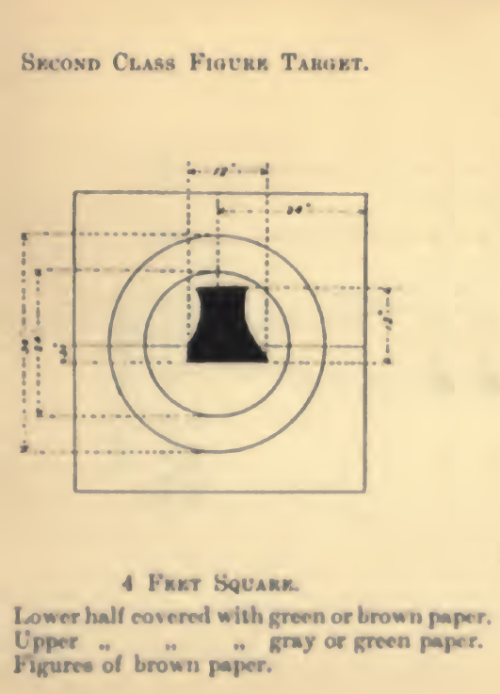
This was to be fired with 5 rounds loaded – 1 in the chamber and 4 in the magazine, the rifleman would then reload with 5-round chargers firing until 60 seconds had elapsed.  The target used for this stage was the Second Class figure target which was a 4 foot screen with a 12 inch high figure silhouette at the centre surrounded by two rings, a 23 inch inner ring and a 36 inch outer ring.   This stage was then followed by three final stages fired from prone out to 500 and 600 yards.

image

The Second Class figure target as shown in the 1910 Musketry Regulations

If the classification was completed with a high enough score the soldier would be classified as a Marksman and given a crossed rifles badge and a 6 pence a day increase in pay – so it paid to be a good shot.  The rapid fire of the ‘Mad Minute’ was accomplished by used a ‘palming’ method where the rifleman used the palm of his hand to work the belt, and not his thumb and fore finger.  Each man to shoot the classification course was allotted points for where each round hit – 4 points for a ‘bull’ figure hit, 3 for a hit in the inner ring and 2 points for an outer ring hit.

Troops could be classified as follows: Marksman (with at least 130 points out of 200 across the classification), 1st Class (105-130 points), 2nd Class and 3rd Class (sub-standard).  The majority of British troops, even cavalry, were excellent marksman with 50% of troops in some battalions scored as Marksman with the rest being 1st and 2nd class shots.

As such when the First World War began the average British rifleman could out shoot his German and French counterparts.  At the Battle of Mons it was well documented that German infantry believed they were facing British battalions heavily equipped with machine guns rather than riflemen.

The first and confirmed record for the most hits on target during a ’Mad Minute’  was set by Sgt-Major Jesse Wallingford – 36 hits at 300 yards in 1 minute in 1908.  However, this was allegedly bettered in 1914, by Sergeant-Instructor Alfred Snoxall with 38 hits within the 24 inch inner ring in 60 seconds.  It has not been beaten since although there is little documentary evidence of the feat readily available. Hitting the target 38 times would require him to fire his first 5 rounds pre-loaded in the SMLE’s magazine and then reload 7 times with 5 round chargers.

Add onto this that the rifle was a single shot, bolt action rifle which required the user to push up and retract the bolt and then return it forward pushing a new round into the chamber, then aiming and fire.  All while maintaining his cheek weld and line of sight.  This means Snoxall must have averaged around 1.5 seconds per shot to hit the target 38 times in a minute. Quite a feat.

Here is a short video of a SMLE owner attempting a very fast ’Mad Minute’, he managed to fire 10 rounds in under 10 seconds.  It certainly gives you some idea of what Snoxall and other professionals could achieve.  

Sources:

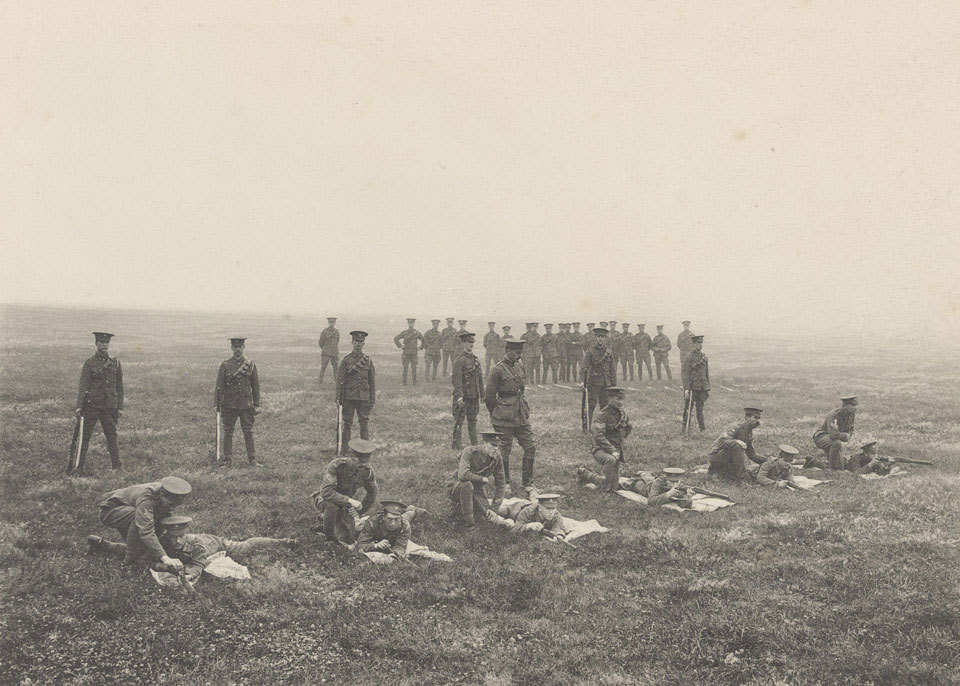
Image One Source – British Infantry firing at targets at 500 yards

Image Two Source – Recruits of the 5th (Royal Irish) Lancers at musketry training at Aldershot, August 1907

Image Three Source – Troops training on a miniature range at the School of Musketry c.1915

‘Mad Minute’, bbc.co.uk (source)

Tommy, R. Holmes (2004)

British Army Musketry Regulations pt.1 1909/1914

Thank you to Rob from Britishmuzzleloaders for his invaluable help

Categories
A Victory! Hard Nosed Folks Both Good & Bad Manly Stuff Soldiering War

Roy Benavidez: The Lazarus Soldier

Categories
Soldiering The Green Machine War

Bert Waldron: Nature versus Nurture, A Sniper’s Story by WILL DABBS

On the surface, this just looks like some GI with a really nice Vietnam-era sniper rifle. To the VC in the Mekong Delta, however, SSG Bert Waldron was so much more.

“Many GIs in Vietnam thought the night belonged to the enemy, but in the Mekong Delta, darkness belonged to Bert Waldron.” –Major John Plaster

Fear in wartime is a profoundly powerful weapon. It invariably shapes the affairs of men.

Think back to the last time you felt truly frustrated and helpless. At some point in their lives, everybody finds themselves in circumstances utterly beyond their control. It’s a terrifying sensation.

These guys were some extraordinarily effective fighters until it got dark and SSG Bert Waldron went out hunting with his night vision-enabled M21 sniper rifle.

Perhaps you were the subject of bullying. Maybe you were a little kid and got lost. For the Vietcong in the Mekong Delta in 1969, the engine behind their nightmares was SSG Bert Waldron.

What began as a source of refuge and solitude from chaos eventually became a home of sorts for a young Bert Waldron.

SSG Waldron was a broken man imbued with a dark gift. Born in Syracuse, New York, in 1933, Waldron came of age amidst chaos and despair. The product of a dysfunctional home, young Bert despised his stepfather. This antipathy drove the kid into the nearby forest in search of peace and solitude. There Bert Waldron came to think of the wilderness as home.

The most successful sniper of the Vietnam War got his introduction to military service in a place like this.

Bert Waldron’s life could be a case study of the effects of nature versus nurture. By his 23rd birthday, the man had been married three times. His unique emotional milieu apparently made him all but impossible to live with. Waldron enlisted in the US Navy and served during the Korean War. He left the Navy in 1965 after twelve years to try his hand at civilian life.

Don’t let the youthful demeanor fool you. These guys were stone-cold killers.

With the country embroiled in an increasingly bitter land war in Southeast Asia and life out of uniform not to his liking, Waldron enlisted again, this time in the Army. He completed Basic Training at Fort Benning and five months later was in Vietnam.

The most successful US sniper in Vietnam had a mere eighteen days in a place like this to learn the rudiments of his craft.

Waldron’s prior service in the Navy earned him Staff Sergeant’s stripes, but he still had very little experience with practical soldiering. Once in country, SSG Waldron attended a brief eighteen-day sniper course taught by members of the Army Marksmanship Unit. I don’t know exactly what they taught during those two and one-half weeks, but it took. In short order, SSG Bert Waldron became a holy terror behind a sniper rifle.

These hulking Tango Boats also served as proper mobile sniping platforms.

SSG Waldron was assigned to the 3d Battalion, 60th Infantry, Regiment, 9th Infantry Division under LTG Julian Ewell. Operating in close conjunction with the Navy’s Mobile Riverine Force, SSG Waldron and his fellow snipers cruised the murky waterways of the Mekong looking for trouble. Waldron’s prior service as a sailor made him a perfect fit for this joint operation with the Brown Water Navy. More often than not Waldron staged onboard ATC’s or Armored Troop Carriers. These heavily armed and armored riverine vessels were called Tango Boats and offered US forces a prickly platform for operations throughout the myriad shallow waterways of the Mekong Delta.

Tourists pay money to visit the Mekong Delta today. Back in the 1960s, this idyllic piece of jungle was a killing ground.

The Mekong was heavily populated and teeming with VC. Charlie typically played to his own strengths, conducting many operations under cover of darkness when American air power and artillery support could not be readily brought to bear. Then Bert Waldrop and his snipers hit the battlefield with high-tech sniper rifles equipped with starlight scopes. The result was unfettered carnage.

War Stories

In addition to a few basic technical skills, a successful sniper needs courage, patience, and audacity. Bert Waldron had these gifts in spades.

It takes unimaginable courage to strike out alone into the jungle in the middle of a firefight, but that was exactly Bert Waldron’s forte. In January of 1969, Waldron and his unit came under intense night attack by a force of forty well-armed VC. When his unit found itself in danger of being overrun SSG Waldron pressed out into the jungle alone to hunt. Using his accurized M21 sniper rifle and AN-PVS-2 starlight scope he could spot the enemy maneuvering in the deep foliage and pick them off as opportunity allowed. During the course of the engagement, SSG Waldron savaged the attacking force and broke the back of the assault. This fight earned him a Bronze Star with “V” device.

The accurized M21 sniper rifle fitted with the AN/PVS-2 starlight scope represented the absolute state of the art in precision night sniper systems during the Vietnam War.

Three nights later SSG Waldron discovered a large VC force moving tactically. He tracked the enemy unit using his night vision system until he gained an advantageous position to attack. SSG Waldron then sniped and maneuvered, engaging from various angles to convince the VC they were facing a larger, more organized force. Three hours later he had killed eleven of the Cong and forced them to leave the field. This night’s work earned him the Silver Star.

Thanks to SSG Waldron and his fellow snipers the VC no longer owned the night.

Eight days later SSG Waldron and his spotter were set up near Ben Tre scanning the darkness around their rice paddy with their starlight equipment. They encountered a seventeen-man VC patrol and took out their lead scout as he emerged from the treeline. Calls for artillery support were denied because of a nearby friendly village. At a range of more than 500 meters and under cover of darkness SSG Waldron killed eight VC with eight rounds from his sniper rifle. The surviving members of the VC combat patrol melted back into the jungle to safety.

This skinny little guy was a holy terror on the VC.

Four days after that SSG Waldron was deployed in support of an ARVN unit in contact. He discovered a group of six VC attempting to outflank the ARVNs and gain a position of advantage. SSG Waldron then meticulously killed all six of the insurgents, picking them off one by one in the darkness with his sniper rifle and night vision gear.

The Distinguished Service Cross is the Army’s second highest award for gallantry. SSG Bert Waldron earned one twice.

In one nineteen-day period, SSG Bert Waldron conducted fourteen successful nocturnal sniper operations. For his dedication, valor, and ruthlessness he was awarded his first Distinguished Service Cross. By now the VC were beginning to appreciate that horrible feeling of helplessness. Where previously they could move and operate in the darkness with relative impunity, now SSG Waldron and his snipers brought death from unexpected quarters. Their efforts began to take a toll.

SSG Bert Waldron just had a gift for the dark art of military sniping.

SSG Waldron’s effectiveness as a sniper clearly spawned from some innate skill. He had only had eighteen days’ worth of formal sniper training. During one engagement a VC sniper was peppering a passing Tango Boat from the top of a coconut tree some 900 meters distant. While the boat’s crew struggled to find the hidden sniper with their heavy crew-served weapons, SSG Waldron killed the man with a single round from his M21 rifle…while the boat was in motion. The Physics behind making a one-round kill from a moving boat against a camouflaged adversary nearly a kilometer distant strains credulity. However, the details were verified.

SSG Waldron’s combat record stood until it was broken during the Global War on Terror by Navy SEAL sniper Chris Kyle.

For these and similar actions SSG Waldron was awarded his second Distinguished Service Cross. Waldron’s reputation exploded among both Allied forces and the Cong, earning him the respectful nickname Daniel Boone. After eight months in country, the 9th ID rotated home and SSG Waldron with them. By the time he left Vietnam Bert Waldron had 109 confirmed kills, fully 12% of all the kills logged by all of the division’s snipers. Until Navy SEAL sniper Chris Kyle broke his record in 2006, SSG Bert Waldron was the deadliest American sniper in history.

The Weapon

The M14 would have been earth-shattering in WW2. By Vietnam the design was already badly dated.

The Army adopted the M14 rifle as a replacement for the WW2-era M1 Garand in 1959. A gas-operated, magazine-fed design, the M14 really reflected the previous generation’s technology. At 44 inches long the M14 was found to be unduly bulky for the bitter close-range jungle fighting that characterized the war in Vietnam. By the mid-1960’s the M14 was being replaced in SE Asia by the lighter, more maneuverable M16.

The M21 began life as an accurized National Match version of the M14 service rifle.

The US Army is indeed a majestically cumbersome beast. In 1955 the US Army Marksmanship Training Unit (USAMTU) embarked on a quest to incorporate snipers into the Infantry squad. In the malaise of the early 1960s, this initiative was discontinued. However, the exigencies of combat in Vietnam renewed interest in the art. That exposed the need for a dedicated precision sniper rifle.

The approaches to sniper rifles by the Army and Marine Corps were fairly disparate. The Army’s M21 offered 20 rounds of on-demand semiautomatic firepower.

While the Marines were using modified bolt-action hunting rifles, the Army contracted with Rock Island Armory to build up 1,435 National Match M14 rifles with Redfield 3-9x Adjustable Ranging Telescope (ART) sights. The ART was the brainchild of 2LT James Leatherwood and included both range finding and bullet drop compensation in its mechanism. This new rifle was formally designated the XM21 and first issued in 1969. An improved version with a fiberglass stock was classified the M21 in 1975 and served until 1988 when it was replaced by the bolt-action M24.

The AN/PVS-2 starlight scope offered unprecedented capabilities to the sniper hunting at night.

The AN/PVS-2 starlight scope was the first truly successful man-portable passive night vision weapon sight fielded by the US Army. This device amplified ambient starlight to produce a usable image in the absence of an active IR emitter. While such stuff is commonplace today, it was radical indeed in 1967 when it was first deployed to Vietnam. When combined with the early SIONICS suppressors fielded in 1969 the AN/PVS-2 offered American snipers a literally unprecedented capacity to own the night in Vietnam.

The Rest of the Story

Bert Waldron struggled to find his niche in civilian life. Here he is seen on the left instructing at Mitch WerBell’s paramilitary training school in Georgia.

Like so many true professional warriors, Bert Waldron found himself ill-suited to peacetime life at home. He served as a senior instructor for the US Army Marksmanship Training Unit (USAMTU) until his discharge in 1970. Along the way he met Mitch WerBell III through the commander of the USAMTU, COL Robert Bayard. and accepted a position as a counter-sniper advisor with Cobray International, WerBell’s weird creepy paramilitary training school in Georgia.

Mitch WerBell was one serious piece of work. We have explored his story here at GunsAmerica before.

Mitch WerBell dabbled in overthrowing third world governments for a time and made quite a few enemies along the way. In 1975 COL Bayard was found murdered outside an Atlanta shopping mall. His killer was never apprehended. Throughout it all Bert Waldron’s name was a persistent fixture.

Bert Waldron was by all accounts a profoundly committed patriot and a truly exceptional soldier.

For the next two decades, Waldron worked in the shadows, plying the dark skills he mastered in Vietnam into a livelihood. Along the way his final marriage self-destructed and he was investigated by the FBI. In October of 1995, Bert Waldron died of a heart attack at age 62. His ex-wife Betty said this of him, “Bert was a wonderful soldier. He loved his country, he would have died for his country, but he had a lot of problems as a human being.”

Our great republic cannot prevail without such men as Bert Waldron.

Bert Waldron was a “Break Glass in Case of War” type of soldier. America desperately needs such men. It is simply figuring out what to do with them when the bullets aren’t flying that seems to be the perennial challenge.

Categories
Soldiering War

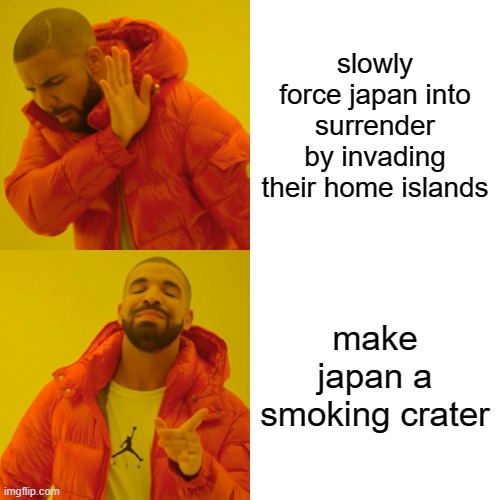
The Pacific War

The Pacific War Just Got Intense : r/HistoryMemes

the pacific war - Imgflip

Categories
Manly Stuff Our Great Kids Soldiering The Green Machine This great Nation & Its People War

Audie Murphy: The Most Decorated US Soldier Ever… Who Later Became a Movie Star

Categories
Allies Hard Nosed Folks Both Good & Bad Soldiering War

Adrian Carton de Wiart: The Most Badass Soldier of All Time and a Real Life Action Hero

Categories
All About Guns Soldiering

10 Most Powerful Sniper Rifles In The World

Categories
Soldiering The Horror! War

Bronze Age total war that is well told! Grumpy

https://youtu.be/9eYdMZGrsu4