Category: Soldiering
Categories
Been there, done that!


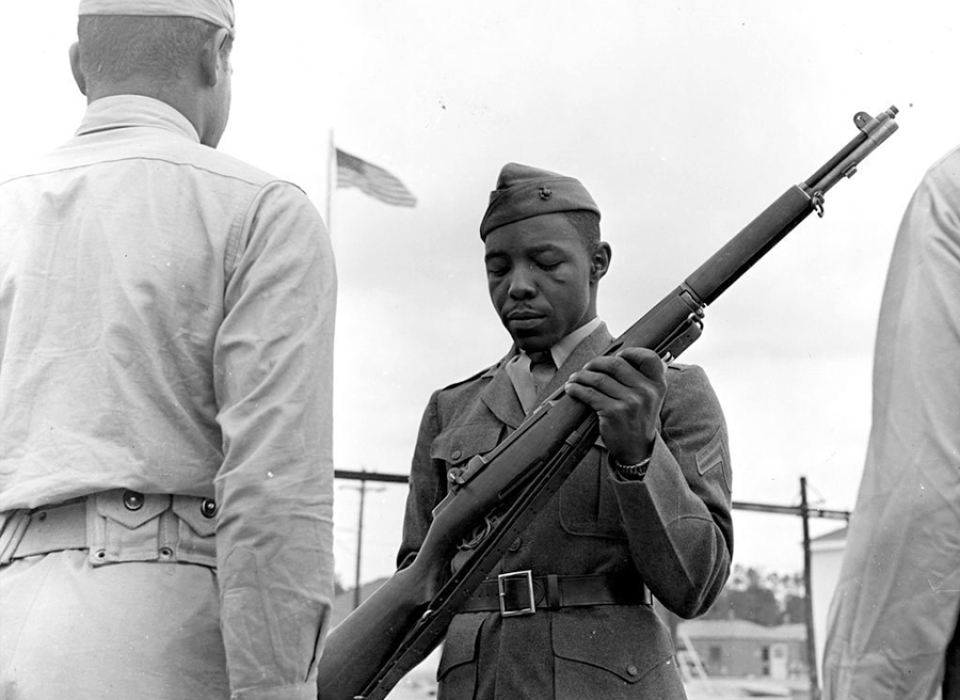
Top Photo: US Marine Corps Corporal Edgar R. Huff inspects a weapon at Montford Point Camp, Camp Lejeune, North Carolina. He enlisted in the Marine Corps in June 1942. Huff became a legend among the Marines who were trained there by earning the rank of First Sergeant in less than two years. He retired in 1972 as a Sergeant Major. Photo: National Archives
On January 23, 1942, the 17th Commandant of the Marine Corps, Major General Thomas Holcomb, testified to the General Board of the United States Navy:
There would be a definite loss of efficiency in the Marine Corps if we have to take Negroes. [The] Negro race has every opportunity now to satisfy its aspirations for combat, in the Army—a very much larger organization than the Navy or Marine Corps—and their desire to enter the naval service is largely, I think, to break into a club that doesn’t want them.
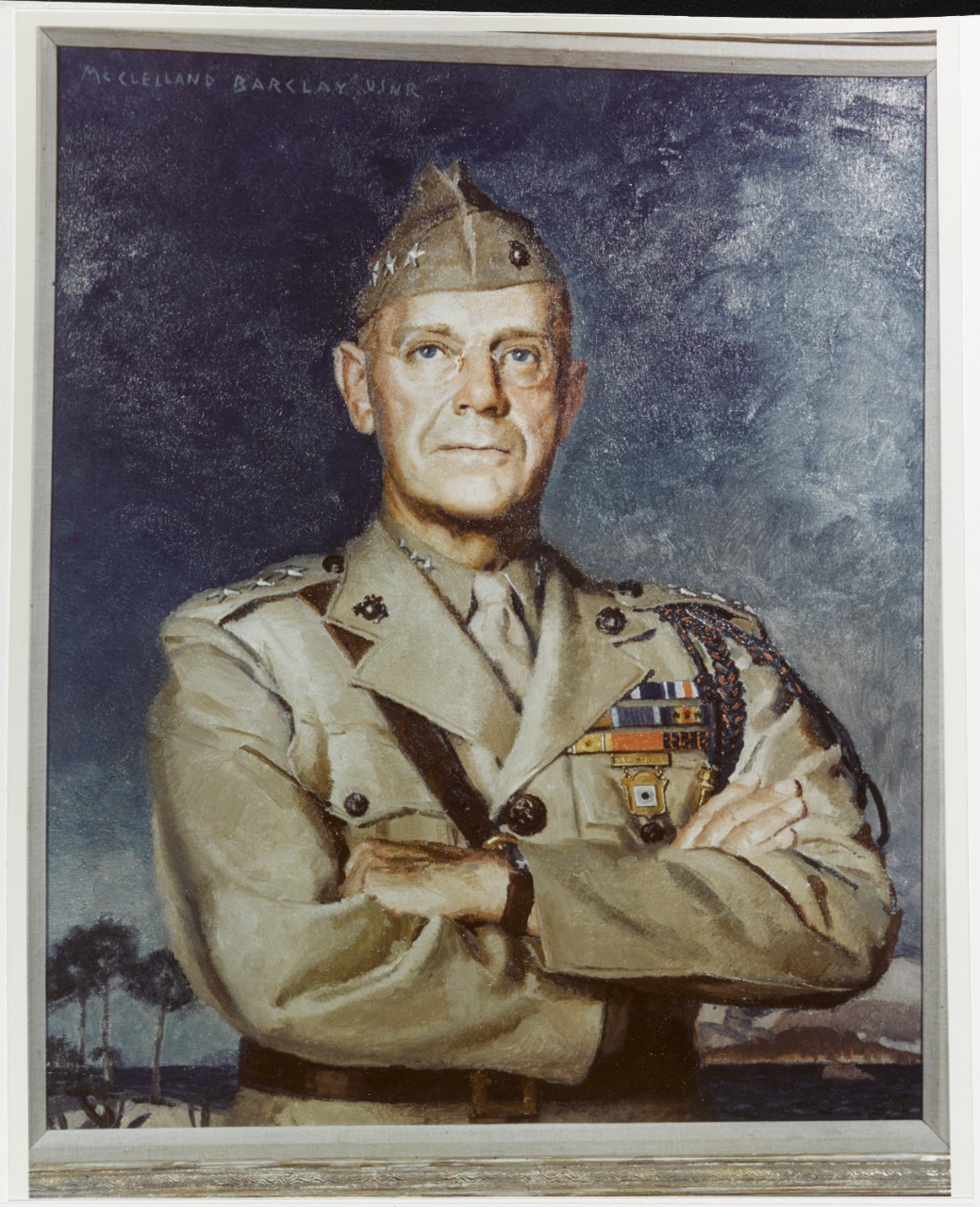
Unwilling to step beyond the significant fact of having Black men in fighting units, the US Army and Marine Corps took the position that their respective organizations should not be laboratories for “social experimentation.” The common belief among senior military officials in both services was that integration would be detrimental to unit effectiveness, combat efficiency, and preparedness and create unnecessary racial friction. This reassertion of white supremacy corresponded to a broader ideological campaign to preserve whiteness and exclusivity.
After he made this statement, Holcomb soon had to adjust his notions: Four months later, Howard P. Perry became the first Black man officially listed on a duty roster at Camp Montford Point and recorded as “Montford Point Recruit #1.” After more than 80 years of tracing the significance of the Marines of Montford Point as military pioneers of courage and bravery, these men of legend remain largely unknown.
In the fall of 1944, during the Battle of Peleliu, in one of the most bitter battles of World War II for the Marines, a platoon of African American Marines fought their way to capture an airstrip and save a company of embattled white Marines. This company of white Marines knew that their time on the small coral island would be painful and short without the support of reinforcements.
Despite being saved by a platoon of Black Marines, leaders of the company of white Marines refused to recognize these Montford Pointers for saving their lives: It would have been an embarrassment if word had gotten back to the company’s senior officers of this incident. This level of prejudice and discrimination had a crippling ripple effect on the combat service of Black Marines for the rest of the war.
After Peleliu, no one heard about the African American unit’s heroic deeds. Like in so many other wars, these Black heroes received no medals, no front-page news stories covering the events on the tiny coral island; there weren’t even any rumors or tales of their actions.
After World War II, these men returned to the United States only to have the merits of their wartime achievements vigorously questioned. Unlike white Marines, these men were suspects. To many, the audacity these men had in donning the Marine Corps uniform and emblems was a direct affront to the sacredness of those who earned the title “Marine” in a bygone era.
Moments like the Battle of Peleliu and the institutional and social opposition these men experienced were rampant. Consequently, Black Marines’ humanity, manhood, and rights to full citizenship were always under intense scrutiny by white commanders. The efforts of senior military officials to undermine their service compromised their right to be counted among the elite, sidelining their story to the fringes of Marine Corps and American history.
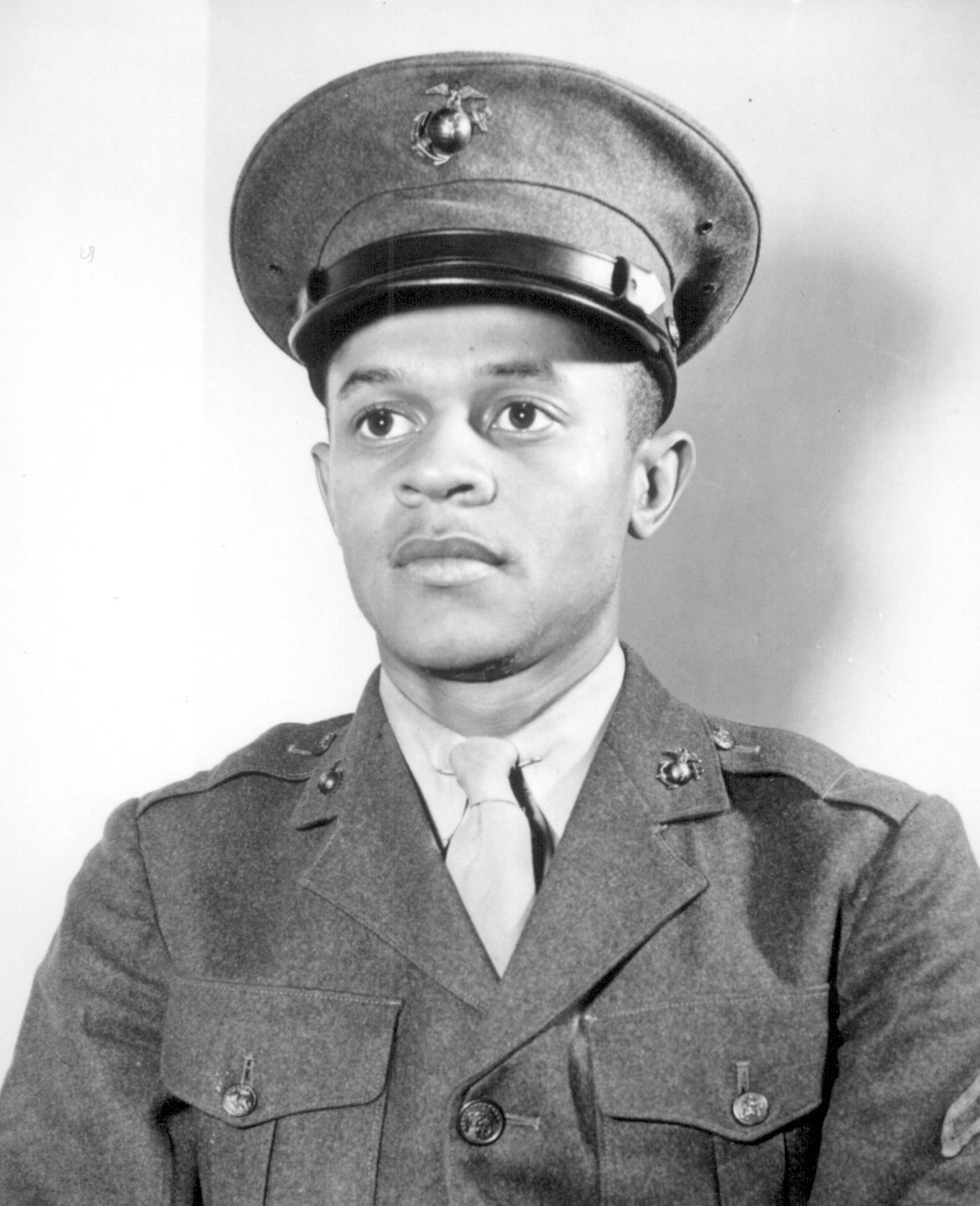
Howard P. Perry. Photo: Roger Smith
The opportunity for Black Marines to rightfully cement their legacy as decorated American heroes and icons of the Pacific war like John Basilone and Lewis “Chesty” Puller was such an embarrassment to the Marine Corps that its high character leaders quickly compromised their integrity to protect a false image of unified bravery and combat valor.
Firsthand accounts of the Battle of Peleliu disproved white racist assumptions about Black servicemembers’ tactical abilities in the crucible of war. However, the lack of genuine and unbiased leadership subjected Black valor to historical scrutiny and subsequent erasure.
Hence, the dearth of accurate accounts such as these only served to reinforce popular notions and biased studies that Black men were unable to withstand the rigors of intense warfare. In a sense, this made it implausible for war planners and government officials to believe in the prospect of Black bravery during combat. As a result, the figure and image of the Black Marine remained in the shadows.
Despite their commendable service during World War II, the Marines of Montford Point would regularly contend with societal forces that vehemently resisted all measures taken toward racial integration.
Hence, their legacy and contributions to a country that would not accept them as equals remained in question, minimizing their public profile. As a result, the harshest eyes scrutinized their combat service with agendas based on dubious science, arguing that Black men were innate cowards.
What their legacy means today is still difficult to appreciate because it is mixed with distinct emotions, motivations, and poignant reactions. For activists, their legacy has not received enough attention; for some senior Marine officials, the reaction typically manifests in the question: “What else are we supposed to do?” The history of the first Black Marines walks a painful path to validation and legitimacy.
Before Congress had to intervene in recognizing the Marines of Montford Point, did the Marine Corps miss an opportunity? Did the Marine Corps genuinely want to herald a group of young Black men who could have left a legacy defined by immense courage, discipline, and bravery? Maybe.
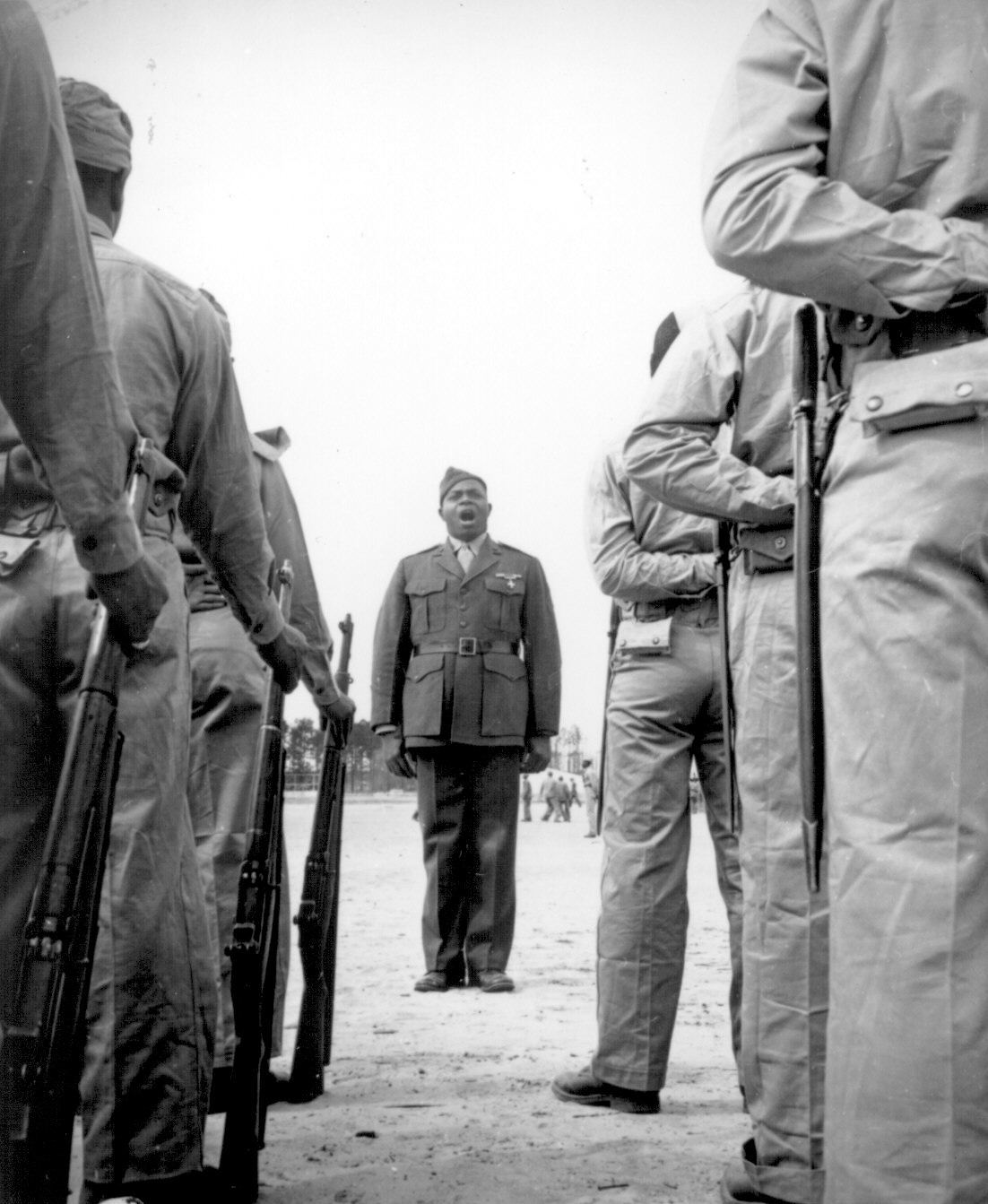
Unfortunately, the measures civilian and Marine officials took to restore organizational integrity based on a foundation of white supremacy harmed the Marine Corps across two more wars. Because of institutionalized racism, the Marines of Montford Point would be subject to comments like, “I did not realize that a war was going on until I returned to the States. [But when] I saw you people wearing our uniform, [the] globe and anchor, [I knew we were in trouble].”
Incredulous of the sight of Black Marines in uniform, Brigadier General Henry L. Larsen continued: “[I’ve now] seen dog Marines, women Marines, and you people [as a result of the war].” This remark by Larsen at Camp Montford Point in the summer of 1943 was not only insulting and insensitive, but it made Montford Pointers question their very existence in an institution that took pride in being the first to fight.
The legacy of the Marines of Montford Point is tremendous. These men are finally viewed as royalty, heroes, icons, and trailblazers of the highest class. Their military achievements are recognized as groundbreaking and a testament to their long suffering during an era of extraordinary racial and social tension.
After Congress passed legislation in 2011 for them to receive the Congressional Gold Medal, America’s first Black Marines were awarded the nation’s highest civilian honor during the summer of 2012. The Congressional Gold Medal is only awarded to persons “who have performed an achievement that has an impact on American history and culture that is likely to be recognized as a major achievement in the recipient’s field long after the achievement.”
For the men of Montford Point, flags waved, bands played, and their status was VIP at every event. This long overdue recognition has led Marine Corps officials to begin reevaluating earlier military decorations awarded to African American Marines, which prejudiced eyes may have colored.
For their outstanding perseverance and courage that inspired change in the Marine Corps, an accompanying cover story for USA Today read: “At last, honors for the first black Marines: Montford Point Marines to become part of Corps’ story.” Since June 1, 1942, Black Marines had officially been part of the Marine Corps story—69 years later, they had moved from footnote to front page.
Despite this appalling historical oversight, the Senate had now recognized them as “liberators of the people of the Pacific,” proclaiming them members of the inner circle of America’s Greatest Generation.
This belated validation, however, has done little to compensate for the Marine Corps’ past behaviors, during which the organization—a branch that believed in its own initiative and pioneering spirit—missed opportunity after opportunity to lead by example in validating these pathbreakers for the world to see.
The legacy of these men of legend brings up hard feelings primarily because the Marine Corps recognizes how its historical treatment of the Marines of Montford Point has had residual effects on the 21st-century Marine Corps. Many Black Marines, especially those serving as Marine officers, point to Frederick C. Branch, the Marine Corps’ first Black officer, commissioned on November 10, 1945, as a benchmark for a lack of progress in the officer ranks. Instead, the Marine Corps successfully denied its Black trailblazers multiple opportunities to be recognized as members of America’s publicly acclaimed Greatest Generation when it mattered most.
Despite this flagrant negligence, no longer would the past be contested for the first Black Marines. Quite the opposite is occurring as institutional doors open to more significant opportunities to recognize the legacy of the Marines of Montford. And while the intense sting of bigotry may be fading, and their numbers dwindling in their ultimate post-military life, many Montford Pointers have never felt the “mission was accomplished.” Their battle continues today.
On August 6, 2022, however, General David H. Berger, the 38th Commandant of the Marine Corps, promoted Michael Langley, who became the Marine Corps’ first Black four-star general in the military service’s 246-year history.
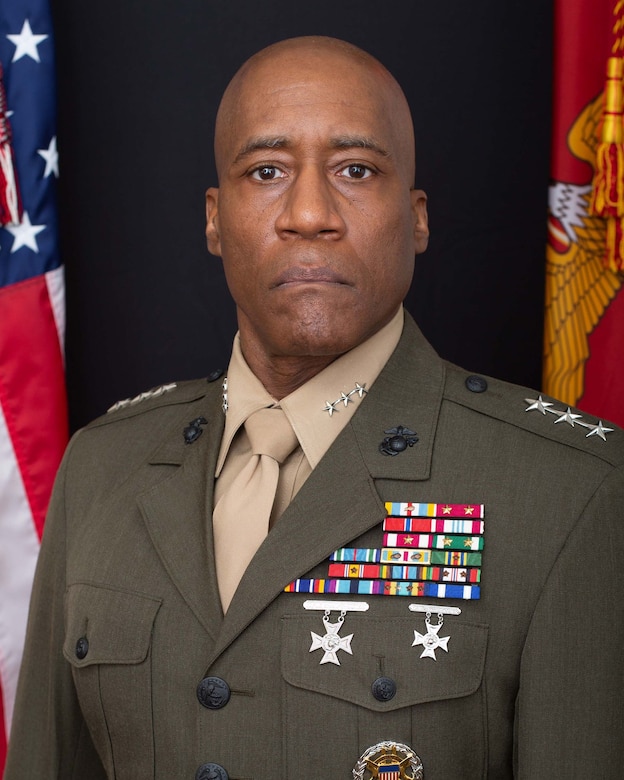 Langley paid homage to the men of Montford Point and Frederick C. Branch, adding that this “milestone and what it means to the Corps is quite essential. Not just because [of] the mark in history, but what it will affect going forward, especially for those younger across society that want to aspire and look to the Marine Corps as an opportunity.”
During the promotion ceremony at the Marine Corps Barracks Washington, Berger made a powerful statement in honoring the late Lieutenant General Frank E. Peterson—the first Black Marine three-star general and aviator—while recognizing Langley’s historic accomplishment: “43 years we go from our first African American general to now our first—I think leading to many more—four-star African American generals.” Langley’s achievement of four stars is monumental, but it is a stark reminder of the astonishingly slow evolution of Marine Corps leader’s management of Black Marines since their inception in 1942.
Categories
One on the way!
Categories
British Mounted Infantry in Egypt

The British conquest of Egypt (1882), also known as the Anglo-Egyptian War

Categories
M120 Mortar
You really don’t want to be on the receiving end of these bad boys. Or Rizzo here, is going to sing a song about your death! Grumpy
The 26th Cavalry Regiment, consisting mostly of Philippine Scouts, was the last US cavalry regiment to engage in horse-mounted warfare. When Troop G encountered Japanese forces at the village of Morong on 16 January 1942, Lieutenant Edwin P. Ramsey ordered the last cavalry charge in American history.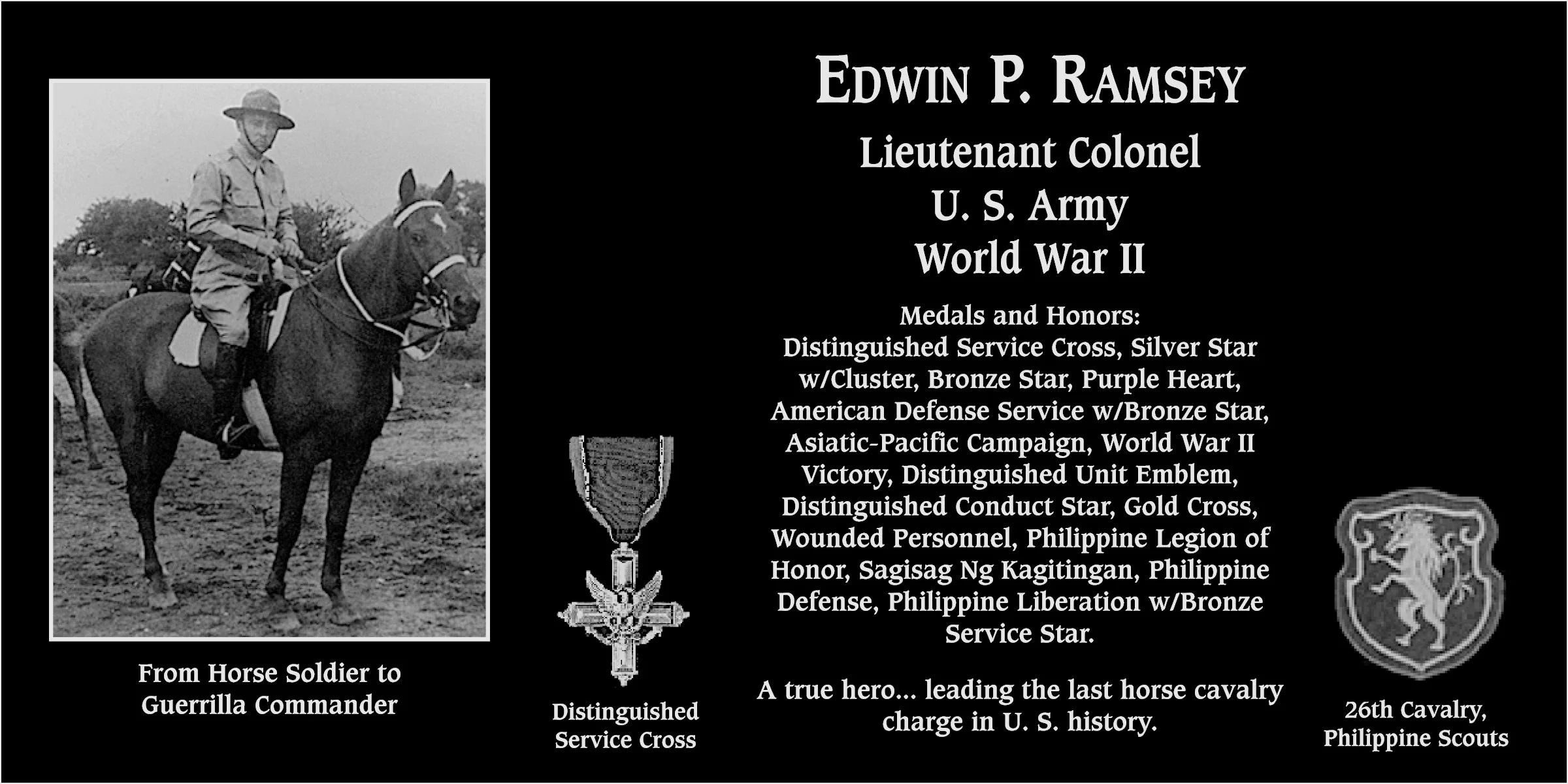 Ramsey quickly signaled his men to deploy into forager formation. Then he raised his pistol and shouted, “Charge!” With troops firing their pistols, the galloping cavalry horses smashed into the surprised enemy soldiers, routing them.
Categories