Categories
Leadership of the highest kind Real men Soldiering The Green Machine

ARCHIVE: A WARRIOR SPEAKS

Thanks to Skip –

From his text – “Senior officers and NCOs, I am telling you right now if things if don’t change you will have the blood of your soldiers on your hands.”

“There is an enemy out there who is determined, and he is not concerned about individual feelings, or time out. If you don’t train them hard now, and demand from them now what in the hell do you think the enemy is going to do to them. If they can’t take the heat in training how are they going to take it on the battlefield? Technology my ass, soldiers win wars.”

Before you read this…Command Sergeant Major (CSM) Purdy is quite possible one of the most legendary warriors in recent Army history. This guy redefines hard-ass, and I am sure that some of you have heard of him. He survived 3 tours in Vietnam in LRP / Ranger Units (on the wrong side of a few near ambushes and Purple Hearts), served as a Son Tay Raider, was at Desert One, ……

He retired after serving as the CSM of the 75th (after, most notably, serving as the CSM of the 187th (Rakkasans!) He is a fixture at Fort Benning, and as a recently retired CSM, was hazing students in my Ranger class when he decided to stop by the camp in Jan 1996 to make sure that standards hadn’t slipped.

TO: Whom it May Concern
FROM: CSM Don Purdy, Retired, USA
SUBJECT: WARRIORS

I would like to give an (Army) NCO perspective on this issue. I am a retired CSM with 27 years of service. Most of it in Ranger companies, and the Ranger Regiment. I am a Vietnam Veteran, and a veteran of special operations. I retired in 1995 but have done mostly contract work out of Fort Benning involving experimentation on MOUT Operations. I got to work around a lot of soldiers, and had to keep up with current trends and tactics. I am currently working in Saudi Arabia training Saudi paratroopers and Rangers.

1. Some senior NCOs are nothing more than boot lickers who sing the Army of One song to their superior officers every day. Commanders need to hear the good, bad and the ugly, and then be given good solid recommendations. They need their senior NCOs to be TRAINERS. LEAD BY EXAMPLE. DO as the troops do. LEAD FROM THE FRONT. GET IN THE DIRT.

This bullshit of “I have done that” is garbage. What you are doing now is what counts. Quit worrying about your next assignment. Focus on your mission now. Your mission is to train soldiers for war, and it’s damned hard work. If you do it right, you will leave the Army in worse shape physically than when you came in. BE HARD BUT BE FAIR. You must have MORAL COURAGE.

2. Training is a word they can’t spell. Chief trainer means chief boot licker. TICKET PUNCHERS.

3. “Moral courage” means telling your commander what he wants to hear these days. I was condemned by my peers and superiors for speaking up and telling it like it was. I was called a relic from the past that should be put in a glass case. I was focused on training for war, not peace. Discipline was my watchword, and the soldiers did not decide what punishment was right or wrong where I served as CSM. I was the Chief Trainer. The buck stopped with me. I participated in all training and lead by example. I was told by a Division CSM that I would never serve above BN level because I was too intrusive. That means I scared commanders with the truth. The next thing he asked was why do you train with your soldiers? The question was shocking, but the answer was simple. When I speak everyone listens. That went over his head like a tent. I carried a rifle, not a pistol, and I damned well knew how to use that weapon and my soldiers knew how to use their weapons as well.

4. Combatives are important. Boxing, wrestling and bayonet fighting are not antiquated. CQB is just what that means. Close Quarters Battle. MOUT, trench systems and bunkers must be cleared, and you had better be aggressive and prepared to do bayonet or hand to hand fighting. When others were laughing at my unit for doing this, my soldiers were prepared and understood what fix bayonets meant. They were aggressive and well disciplined. Sub standard performers were put out immediately. My First Sergeants were not mail men or chow deliverers, they were the Chief Trainers of their companies.

5. We trained for war, not peace. Live fires were a priority, and were not canned. Leaders, and soldiers had to react. Maneuver elements maneuvered, and had to rely on the SBF not to shoot them but only the enemy. Bayonets were fixed and there were dummy targets for the soldiers to engage with those bayonets. Resupply mission were planned and executed. The battlefield had to be policed of casualties, and equipment by any means available, even if it meant driving vehicle cross country or physically carrying the wounded. Reload drills, dead gunner drills, and crew drills were executed over and over and over again. These were executed night and day. NODS went on your face when the sun went down. They weren’t hanging around your neck. We executed live fires at night with NODS in the woods, and the live fires were not canned. Raids, ambushes, search and attack were all executed at night up to company size. This took us over one year to get to that level. Mortars could hit their targets. Units could move silently day or night and didn’t get lost. We did not rely on GPS. WE USED MAP AND COMPASSES. We lived out of our rucksacks, slept on the ground in all types of weather from the BN CDR on down. We did not look like bums. We shaved everyday, wore our equipment properly, camouflaged our face, and hands when necessary, soldiers knew how to maintain themselves and their equipment in the field and uniformity was important. Soldiers knew what a cat hole was, and that trash was carried in the rucks not thrown on the ground or buried for the hogs to dig up. Uniforms were worn properly. The companies received one hot meal a day and understood how to conduct tactical feeding. Our cooks knew how to function in the environment. The combat trains did not live in tents. Their perimeter was secure, weapons were clean, and noise and light discipline was maintained. Cooks, clerks and all other support personnel knew how to use their weapons and were trained in the basic infantry skills. Misfires were damned well rare, and punishment was swift when it did happen. We suffered no live fire deaths because we trained properly, and used good old-fashioned common sense. We never had the soldiers execute missions they were not properly trained for. The NCOs trained the soldiers, the officers commanded. Our motto was what ever you do, do it right. Rate of sick call in the field was almost zero. Moral was high because of good hard leadership from the front, and realistic tough training. We even executed a day of live fire training during support cycles. You need a strong CSM who understands discipline and training. He can talk it and walk it.

6. There is no such thing as a good field soldier. You are either a soldier or not a soldier. Everything from appearance to police call is important. This bull shit about my space and my rights is just that BULL SHIT. Barracks are not his or her home it’s a place for them to live. For saying this I was told I had a mess kit mentality. This individuality BS of “I need my own room” is garbage. We waste more money building these condos so soldiers can feel good, and not be part of a team is sickening. They should live in fire team bays. It builds cohesion. Key control alone is a nightmare. Of course don’t bother the poor soldier just let him live like a pig, and when he gets sick or you find out he or she is a drug dealer then blame it on the NCO Corps even though you the illustrious BN CDR, BDE CDR said leave the soldiers alone in their precious rooms. Soldiers are owed a place to sleep, their pay and the best leadership and training that can be provided.

7. DISCIPLINE is the key. DRILL AND CEREMONY is the foundation of discipline. When I say fall in I want to hear your heels coming together. When I speak you jump. All ceremonies should be executed with weapons so each unit can execute the 15-count manual of arms. Carrying a card around in your pocket does not develop good morals. Morals are developed through solid leadership not gimmicks and headgear.

8. You want to be politically correct stay on the block. You want to be different or an individual looking to be a victim stay on the block. If you’re a pervert and proud of it stay on the block. You want to be a soldier then become part of a disciplined team. This is not a job it’s a profession. You’re here to fight our countries war not be a gut eating self-serving individual. Senior officers and NCOs I am telling you right now if things don’t change you will have the blood of your soldiers on your hands. There is an enemy out there who is determined, and he is not concerned about individual feelings, or time out. If you don’t train them hard now, and demand from them now what in the hell do you think the enemy is going to do to them. If they can’t take the heat in training how are they going to take it on the battlefield? Technology my ass, soldiers win wars. Be hard on them now or watch them die, or worse break and run. BE HARD BUT BE FAIR! Being fair does not mean they dictate punishment or babying them. A Russian General said “Hard on the training field, easy on the battlefield.” General Patton said “Leading from the rear is like trying to push spaghetti uphill.” You want you soldiers to respect you not love you. When they look at you they should see a competent leader.

The best compliment I ever received was from a soldier who was PCSing. I was a PLT Sergeant in the First Ranger BN. He said “Sergeant Purdy I hated to hear you come in, in the morning, and sometimes I just hated you, but I would follow you to hell with gasoline drawers on.”

Signed,

CSM Don Purdy, Retired, USA

Categories
Soldiering The Green Machine

Report: Army Staff ‘Baffled’ by Sharp Decline in White Recruits in Last Five Years by KRISTINA WONG

The Army’s recruiting of white soldiers in 2023 had dropped almost by half in the last five years, according to a report.

That dramatic decline has coincided with a push by the service to increase recruitment of a more diverse population, according to a report.

The decline of white recruits has also coincided with the Army missing its target of 65,000 recruits in 2023 by 10,000.Military.com reported Wednesday that Army internal data showed that a total of 44,042 new Army recruits were categorized by the service as white in 2018, but that number has fallen consistently each year to a “low” or 25,070 in 2023. The outlet reported a six percent dip from 2022 to 2023 was the most significant drop. No other demographic group has seen such a precipitous decline, it added.

There has been largely “flat” recruitment of black and Hispanic recruits, according to the report. However, due to the decline of white recruits during that time — 56.4 to 44 percent — the percentage of those demographic groups went up by four and seven percent, respectively.

At least some Army officials appeared to blame Republicans and conservative media for calling out wokeness in the military, as well as obesity and the public education system.

The article recalled the Army’s campaign to recruit Gen Z, which featured a soldier with two moms, as well as other minority populations, that attracted flak from Republicans.

“There’s a level of prestige in parts of conservative America with service that has degraded,” one Army official told Military.com. “Now, you can say you don’t want to join, for whatever reason, or bad-mouth the service without any cultural guilt associated for the first time in those areas.”

However, it said the drop in white recruitment has “baffled Army staff and isn’t easily explained by any one particular factor.”

Military.com cited statistics of white men declining in the labor force and at civilian universities as well, quoting an economist from the American Enterprise Institute.

“Men have been in trouble in the workforce for two generations. The greatest risk of being a labor dropout is being a native-born, low education, unmarried guy,” said economist Nicholas Eberstadt. “Like with any other big historic change, it’s kind of hard to attribute to a single magic bullet.”
Categories
Our Great Kids Soldiering The Green Machine War

Angels of Bataan – US Army Nurses in Japanese Captivity

Categories
Soldiering This great Nation & Its People War

Green Beret’s RARE Footage & Photos From Vietnam

Categories
All About Guns Soldiering War You have to be kidding, right!?!

How 18th Century Armies Shot At Each Other

Categories
Soldiering War Well I thought it was neat!

When the War Came to Cowra

Categories
Related Topics Soldiering

What Can These Military Antiques Teach Us About The Past? | History Hunters | War Stories

Categories
Soldiering

The Old and the Bold: The Forces’ Sweetheart

Categories
Our Great Kids Real men Soldiering The Green Machine The Horror! War

Next time somebody goes rah rah for another stupid war, remember Guckenberger

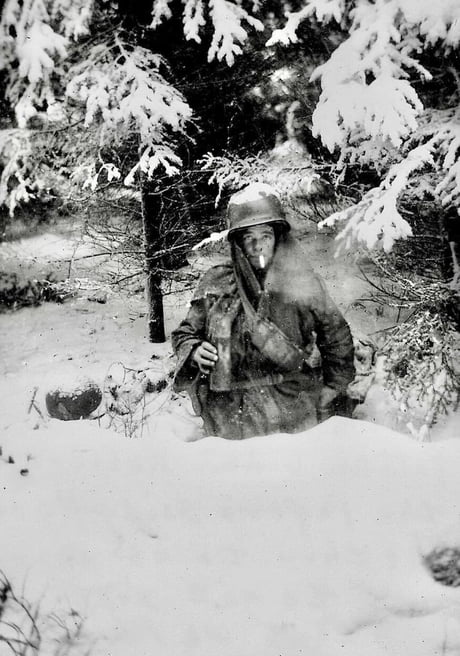
Pfc George A Guckenberger, D Company, 2nd Battalion, 506 Parachute Infantry Regiment, 101st Airborne Division in his foxhole near Bastogne. Circa January 1945, He was killed in action on January 14th 1945, aged 22

Pfc George A Guckenberger, D Company, 2nd Battalion, 506 Parachute Infantry Regiment, 101st Airborne Division in his foxhole near Bastogne. Circa January 1945, He was killed in action on January 14th 1945, aged 22

Categories
Soldiering This great Nation & Its People War

Clyde Childress: WWII Guerrilla in the Philippines

Papers of Colonel Clyde C. Childress, USA

click on image to enlarge

Papers of Colonel Clyde C. Childress, USA - Record Group 109 Opens in new window
Colonel Clyde C. Childress served as commander of the 107th Division, 10th Military District, during World War II. Serving in the prewar Philippines with the American 31st Infantry Regiment, Childress was chosen to help train the new Philippine Army when it was called into service under Douglas MacArthur’s new United States Army Forces Far East (USAFFE) command in July 1941.  Shipped to Panay, where he became a battalion commander in the 61st Philippine Infantry, Childress was there when war erupted with the bombing of Pearl Harbor and Clark Field on December 7-8, 1941.

Though still green and untrained, the 61st infantry was shipped to the southernmost island of the Philippines; Mindanao.  Positioned on the south coast of the island, the unit was to guard the air field and coastal region near the town of Malabang.  The 61st was quickly overrun with the Japanese invasion of the Cotabato region in April of 1942.  Childress was cut off from his command being on the right wing of the defenses when the Japanese routed the 61st.  Along with his men Childress retreated by jungle trail to the north coast of Mindanao.  During their eight day trek north, the Philippines were surrendered.  Childress and his men were now unsurrendered fugitives.  Most of his men came from Panay Island and that is where they were headed.  Childress, on the other hand, needed to hide.

Clyde Childress’s rare 1909 Colt revolver that he carried in the guerrilla war on Mindanao Opens in new window
Physically destroyed by his jungle trek, Childress took refuge with American expatriates on the Zamboanga Coast and recuperated.  Like all the Americans that went into the jungle, Childress would not have survived had it not been for the hospitality and complete selflessness of the Filipinos and Americans that helped them.  Not all Filipinos, however, were friendly.  At one point during his recuperation Childress got word that the local Philippine Constabulary officer was going to come with his men and disarm him.  Childress was not one to wait for trouble and instead went looking for it.  He showed up at the Filipino’s headquarters.  As he approached he noticed the constabulary soldiers smiling at him and knew they were on his side.  Childress walked right up to the officer and basically told him to make a move.  The officer balked and Childress disarmed him.  He would have no trouble from anyone else.

After four months, the “bamboo telegraph” brought word that an American General had arrived in Mindanao by submarine.  Childress made the trek by foot along the north coast of Mindanao from Zamboanga to Misamis Occidental.  Upon arrival in Jimenez, Childress found the “General.”  It was a reserve U.S. Army engineer officer, Lt. Colonel Wendell W. Fertig.  Fertig made up the ruse of being a general to gain the support of the local populace and set up his own guerrilla kingdom.  Looking like the “wild man from Borneo,” Childress was taken in and cleaned up by the Ozamis sisters of Jimenez, women who risked everything to give support to the guerrillas of Mindanao.  Given a shave, bath, and a new uniform, Childress met in conference with Fertig on 20 November 1942.

Much to Childress’s surprise, he was meeting with Fertig and Major Ernest McLish, who had been a fellow battalion commander in the 61st regiment.  Childress and McLish had not seen each other since being overrun at Malabang in May 1942.  At Jimenez the agreement was made with Fertig that McLish and Childress would go east and organize the eastern areas of Mindanao.  McLish, who had already started a guerrilla in the Bukidnon region, was designated as commander of the 110th Division of Fertig’s 10th Military District command on Mindanao with Childress as his Chief of Staff.  Fertig felt he could use the two to further his end of being the top guerrilla of not only Mindanao by all the Philippine Islands.  He thought Childress the stronger of the two, and would never see eye to eye with McLish.  McLish and Childress left by sailboat for the two day trip to Balingasag and the Misamis Oriental region of Mindanao.  They wondered “what was the story” with the guy who was calling himself a General.

click on image to enlarge

A map Mindanao Island showing all the different regions of the island Opens in new window
The 110th Division encompassed a wide area of western Mindanao encompassing the Misamis Oriental, Agusan, Surigao and Davao regions.  It was populated with bands of guerrillas all acting on their own initiative and in many cases as bandits.  McLish and Childress, with the help of a host of unsurrendered Filipino and American fighters brought order to these areas by supporting legitimate guerrillas and suppressing the bandits.  By March 1943, most groups in the Misamis Oriental and Agusan regions were under the control of the 110th Division.  The question became, “What do we do now?” It didn’t take long to come up with an idea.

In March 1943, Major Luis Morgan, Chief of Staff of the 10th Military District and the real muscle behind the establishment of Fertig’s guerrilla organization, arrived in the 110th Division area.  At odds with Fertig, Morgan had been sent on a tour of Mindanao and the Visayan Islands trying to bring all guerrillas together in purpose.  Morgan was a former constabulary officer from the Lanao region of Mindanao.  After the American surrender, Moslem bandits began raiding the Christian coastal areas of Lanao.  In a brutal campaign of bloodletting, Morgan put a stop to it.  He liberated the north coast of Mindanao for Fertig, and was always up for a fight.  Going into conference with McLish and Childress, who were just itching for some payback against the Japanese, they came up with a plan to attack the Japanese garrison at Butuan at the head of the Agusan River.

The attack on Butuan was a lesson in working with untrained guerrilla fighters, most of who were unarmed and ran at the first shot.  Initially the town was taken, but the Japanese garrison took defensive positions in a concrete schoolhouse.  Lacking any heavy weapons to assault the schoolhouse, the attack became a stand off and the guerrillas had to retreat before Japanese reinforcements could arrive.  The guerrillas captured a number of ocean going boats and freed future Leyte guerrilla leader Ruperto Kangleon from the Butuan prison, and though they could not take the town, the Japanese garrison was removed a short time later.

March 1943 was when everything changed in the guerrilla war on Mindanao, for this is when the first submarine from Australia arrived on the south coast of Mindanao.  Carrying Lt. Commander Charles “Chick” Parsons and Captain Charles M. Smith, a dozen radio sets with generators and a few tons of supplies, the arrival of the submarine USS Tambor on 5 March was the first sign to Filipinos and Americans on Mindanao that they had not been forgotten and “the Aid” was finally going to come.  The “bamboo telegraph” was again active and it didn’t take long for word to reach the 110th Division.  Childress set out for Fertig’s headquarters at Jimenez to find out what was going on and what supplies might be available for the 110th.  Childress arrived only to be volunteered to accompany Parsons on his trip across Mindanao and up to the island of Leyte.

click on image to enlarge

Major Clyde Childress sits with the Ozamis sisters and Lt. Cmdr. Charles “Chick” Parsons  Opens in new window
Parsons and Smith had not just come to Mindanao to bring supplies.  They had come to assess Fertig and his organization and to establish coast watcher stations on the islands of Mindanao and Leyte.  Lt. Colonel Charlie Smith knew Fertig fairly well, having hid in the jungles of Mindanao with him after the surrender, and he was convinced of his ability.  (See New Acquisitions, RG-106, Papers of Lt. Col. Charles M. Smith) MacArthur’s headquarters, however, was staffed with career U.S. Army soldiers who were disgusted at someone promoting himself to General.  They needed reassurance that Fertig was stable.  Parsons, like Smith, had no problem with Fertig and found him most capable.  That established they began the next leg of their journey.  Smith went to Davao, Mindanao to set up a coast watcher station and Parsons travelled to Leyte to do the same.  Childress and a few of his men acted as Parsons’ guide and muscle.

click on image to enlarge

Papers of Colonel Clyde C. Childress, USA Opens in new window
Up until June 1943, 10th Military District guerrillas roamed at will right out in the open.  Once the Philippines had surrendered, most of the Japanese forces moved on to the Southwest Pacific fighting in the Solomon Islands and New Guinea.  Mindanao became a backwater and the Japanese did not have the forces to put large garrisons in the towns.  Once a submarine from Australia landed, however, that changed the whole dynamic and the Japanese decided to move against Fertig’s organization.  On June 30th they moved into the Misamis Occidental region in force and Fertig’s men scattered before the onslaught.  Fertig had to move his headquarters to the area of Lanao that was to the east of Misamis Occidental.  By November 1943, however, the Japanese pressure on Lanao was growing and Fertig again moved his headquarters.  This time he moved to the Agusan region of Mindanao, which was the area controlled by McLish and Childress.

click on image to enlarge

Papers of Colonel Clyde C. Childress, USA - USS Narwhal Opens in new window
After the success of the USS Tambor mission that brought Lt. Cmdr. Parsons and Captain Smith to Mindanao, submarine supply missions became more frequent to the Philippine islands.  Once the U.S. Navy saw the benefit of the coast watcher stations set up by Parsons and Smith, they were more than willing to provide more submarines for guerrilla supply.  Two of the biggest submarines in the U.S. Navy, the USS Narwhal and USS Nautilus, began regular missions to the Philippines and it was in the Agusan region of the 110th Division that they made most of their runs in late 1943 and early 1944.  McLish and Childress, therefore, became the supply quartermasters for Mindanao.  They would receive the supplies, store them in safety, and then make sure they got to the other guerrillas on the island.

By early 1944 the area controlled by the 110th Division became too great and it was decided to create a new command to oversee the southern regions of Mindanao surrounding Davao.  The new command was to be the 107th Division and Clyde Childress, now a Lt. Colonel, was given command.  His main objective was the protection of Fertig’s new headquarters deep in the interior of Mindanao at the town of Waloe on the Agusan River. It was in this pursuit that Clyde Childress won the Silver Star Medal for gallantry in action.

click on image to enlarge

Clyde Childress stands in the bow holding a rifle on “Admiral” Vincente Zapanta’s  banca Athena on t Opens in new window
In March 1944 the Japanese forces made a huge push into the Agusan region of Mindanao.  They had learned that supply submarines had been arriving there and also that Fertig had moved his headquarters to that area.  Pushing up the west bank of the Agusan River they were met by the forces of Major Khalil Khodr, a regimental commander of the 110th Division.  On March 17th, Lt. Col. Childress arrived with some forces of his 107th Division.  There at the battle of Vitos Hill, Childress singlehandedly manned a 37mm artillery piece and drove off the Japanese as his and Khodr’s men captured the hill.  Childress was awarded the Silver Star for this action.

Throughout the guerrilla war on Mindanao, Colonel Wendell Fertig leaned heavily upon the talents of Childress and McLish, but as the war progressed he developed a deep distrust of them.  It was a process he would repeat with many of the men he led on Mindanao.  His reports on the two men were always glowing, yet in his diary he would gripe or demean things they did.  Face to face, Fertig was friendly, but behind their backs he “bad mouthed” them to headquarters and other guerrillas.  After MacArthur’s return to the Philippines with the landing on the island of Leyte in October, 1944, many of the guerrillas wanted to rejoin the American forces and leave the stress filled life of a guerrilla; always looking over your shoulder, eating next to nothing, and always suffering from some tropical ailment.  McLish and Childress both opted to leave Mindanao shortly after the return of the Americans.  In December 1944, both Childress and McLish left Mindanao by PT boat for American headquarters at Leyte.  Both arrived on Leyte to find that Fertig had stabbed them in the back.  He had sent reports saying they were disloyal, incompetent, and had done little for the effort in Mindanao.  It was a bitter pill to swallow for the two men who had done more for the guerrilla effort on Mindanao than perhaps any other soldiers.

click on image to enlarge

Certificate of Membership In The American Guerrilas of Mindano Opens in new window
Clyde Childress was a long time friend of the MacArthur Memorial.  His death in 2007 was a great loss for the MacArthur Archives and America.  He was the last surviving officer of the prewar 31st United States Infantry.  We are proud to be the repository for his artifacts and papers from his time in the guerrilla war on Mindanao.