Category: Soldiering
Categories
How M18A1 CLAYMORE Works
Categories
Interesting stuff
Categories
WW1 and Self-Inflicted Wounds
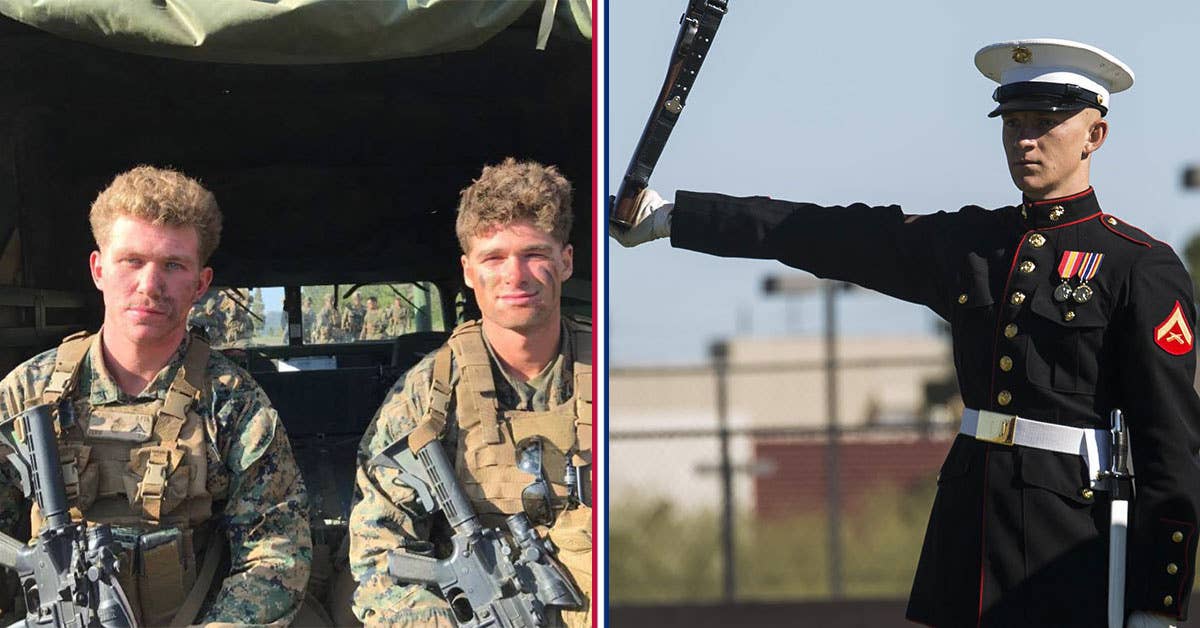
Lance corporal is the most common rank in the Marine Corps. It’s the upper-most junior-enlisted Marine; the last step before becoming an NCO. It’s at this rank that you truly learn the responsibilities that come with being an NCO — and it’s when you start to shoulder those responsibilities. But Marines can be lance corporals straight out of boot camp. But how can someone with no experience possibly be ready to lead others Marines? This is why we created an unofficial rank — “senior lance corporal.”
Lifers everywhere will tell you that there’s no such thing. They’ll say something along the lines of, “being a senior was a high school thing and it ought to remain there.” But the truth is that there are very valid reasons for the distinctive title.
No matter your reason for stating otherwise, one thing’s for sure: senior lance corporals exist. This is why.
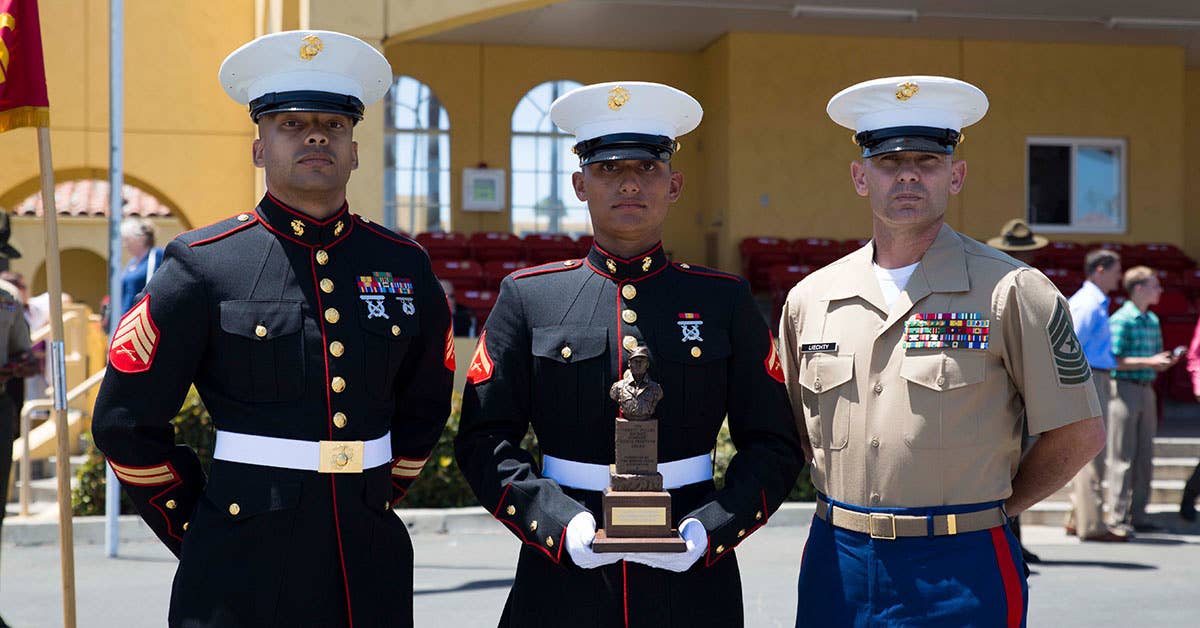
This Lance Corporal still has a lot to learn.
(U.S. Marine Corps photo by Cpl. Catie Massey)
The “junior” lance corporal
The “junior” lance corporal is the guy who picked up rank during boot camp because they were an Eagle Scout or some sh*t. Regardless, they didn’t earn real Marine Corps experience while waiting for that rank. Hell, the only experience they have in the Marine Corps is with marching — which is important, sure, but there’s a lot more to being a Marine than marching.
There are exceptions, of course. You could have spent time in the service prior to deciding that whatever branch you were in was a group of weaklings compared to the Marines. In that case, you do have experience, but this is pretty rare. The majority of “junior” lance corporals haven’t led Marines yet — not really, anyway — nor have they been to any leadership courses.
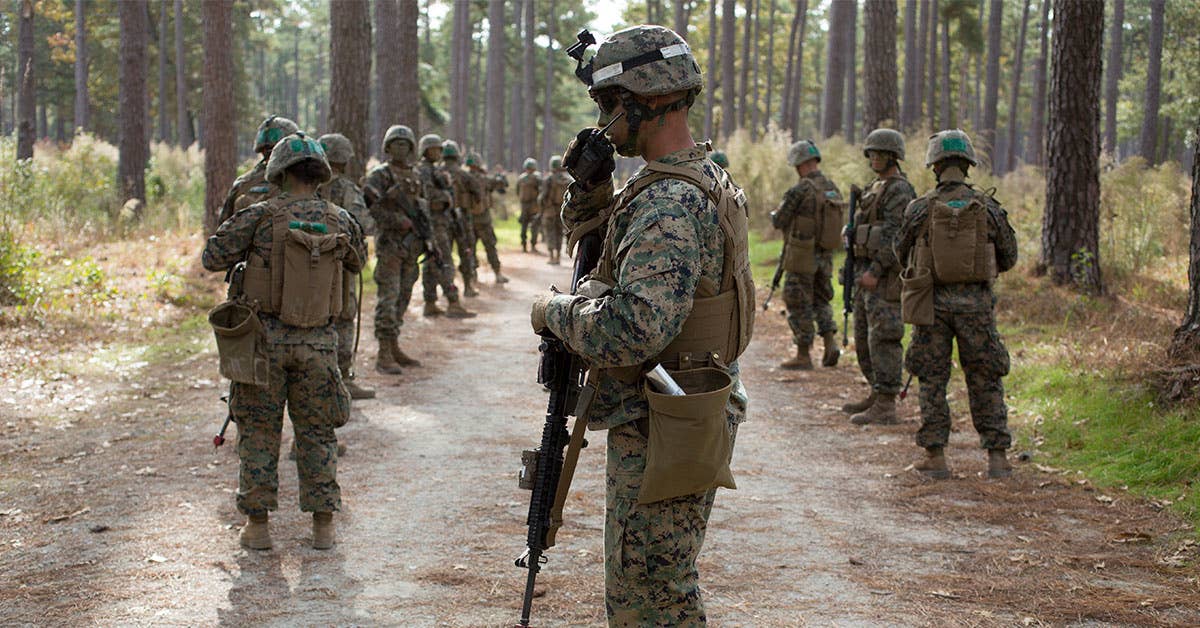
They spent a lot of time doing things by the book, which isn’t typically how things go in a real unit.
(U.S. Marine Corps photo)
They spent their time learning the basics which, if we’re being honest, are great building blocks, but your unit’s standard operating procedure may render a lot of what you learned basically useless.
Anyone who’s reached NCO before their first term and has led Marines knows that you can’t trust a junior lance corporal to clean their room the right way on their first attempt. How could that lance corporal possibly be the same as the one who went through leadership and/or advanced schools and has a deployment under their belt? Hint: It’s not.
Enter the “senior” lance corporal.
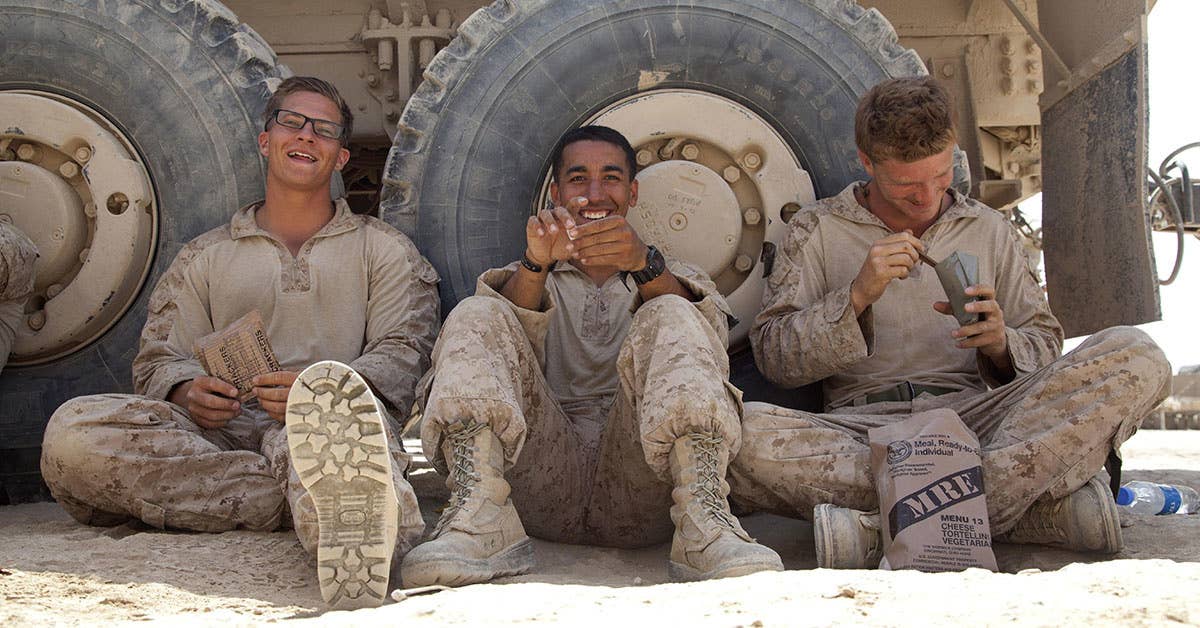
These guys have been around a minute.
(U.S. Marine Corps)
The “senior” lance corporal
When a junior Marine gets to their unit, even if they’re a lance corporal, this is the guy they refer to as “lance corporal.” The junior will quickly come to understand that, while they may hold the same rank, they are not the same. The difference, in fact, is rather large.
A senior lance corporal has been on a deployment. Regardless of whether that deployment was into combat or not, that lance corporal has real leadership experience. They went to a foreign country and they were responsible for leading Marines to success. Then, before you got to the unit, they went to leadership schools. These Marines have a lot more experience than a greenhorn fresh out of boot camp.
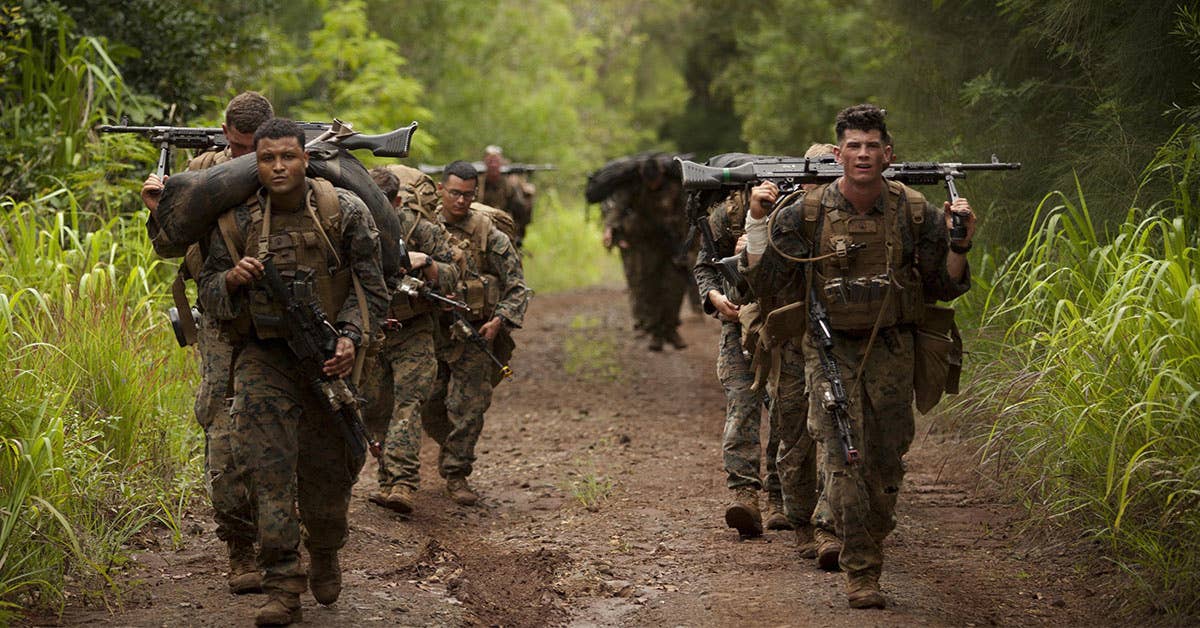
So ask yourself, are you treating your Marines a certain way based on experience — or rank?
(U.S. Marine Corps photo Cpl. Aaron Patterson)
Realistically, there are plenty of senior lance corporals that don’t give a f*ck anymore. But for every one of those, there are ten who strive to be good Marines and great leaders. To diminish their hard work and reduce them to the same level as some fresh boot does nothing but destroy their spirit.
The fact is, a “senior” lance corporal could be a squad leader — a job that is meant to be held by a sergeant, but is more commonly held by a corporal. You could not take a “junior” lance corporal and say the same. The difference is clear.
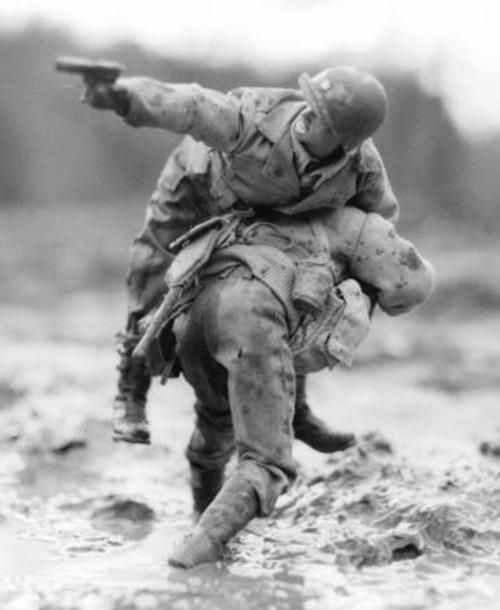
“Leave No Man Behind” is a creed and ethos often repeated and adhered to by various units and soldiers. The interpretation of the phrase is applied to the treatment and extraction of the seriously wounded, the recovery of the body of military members killed in action, and the attempts to rescue or trade for prisoners of war.
Despite being widely known and repeated in the U.S. Military, “leave no man behind” is not represented in any official military doctrine or publication. It is a culture of the armed services, which carries significant risk.
A recent article reported the Air Force’s recommended upgrade of Tech. Sergeant John Chapman’s Air Force Cross to the Medal of Honor for his actions during Operation Anaconda, an attempt to rescue Neil Roberts, a SEAL who had fallen from a helicopter after being struck by enemy fire.
The article highlights the decision of a Navy SEAL Chief, serving as the leader of the team that Sergeant Chapman was supporting, to withdraw from the mountain top position while under heavy enemy fire. The Chief believed that Sergeant Chapman had been killed, and made the decision to withdraw his team, which already had multiple wounded members.
The basis for this upgrade is drone imagery, improved by new technology to show a clearer feed of the actions occurring on the ground. The Air Force reports that Sergeant Chapman, despite being left behind and seriously wounded, can be seen continuing to provide suppressive fires for a helicopter attempting to insert a quick reaction force of Rangers, as well as engaging in close quarters combat with Al Qaeda fighters before ultimately being killed in action.
In total, seven troops were killed in this engagement, now referred to as the Battle of Roberts Ridge. Much of the criticism of this decision revolves around the principle of “leave no man behind.” Should troops go to such lengths to rescue fallen comrades, pulling additional resources and risking additional casualties?
The X’s and O’s Perspective – Rescue Mission with Strategic Implications
“Leave No Man Behind” is not based on the tactical necessity to recover the wounded or missing. It is a dangerous task to those troops undertaking it, potentially exposing themselves to ambush from an enemy who understands our cultural necessity to recover a comrade.
Once that soldier is wounded or missing, he is no longer an asset to accomplishing a mission. In fact, he or she is a significant hindrance that takes combat power away from mission. Even more so, the decision to conduct a rescue or recovery mission can change policy and the face of a conflict.
There are numerous examples of the dangers associated in following “Leave No Man Behind.”
The Battle of Mogadishu is a well-known engagement, in which a Task Force was directed to capture an associate of the warlord Mohamed Farrah Aidid. The shoot down of a task force helicopter and ensuing recovery efforts led to the death of eighteen U.S. soldiers, seventy-three wounded, and the capture of Warrant Officer Michael Durant following the crash landing of his helicopter. The loss of life led to a policy change by the Clinton administration and the ultimate withdrawal of U.S. forces in Somalia.
In 1972, Captain Roger Locher was shot down over North Vietnamese territory during a major aerial operation to slow the transport of North Vietnamese Army troops and supplies into the south. Captain Locher was able to escape and evade capture for twenty-three days despite being far behind enemy lines.
All units under the command of General John Vogt were ordered to stop operations (to include major bombing campaigns of Hanoi,) and focus on the rescue effort. Captain Locher was successfully recovered, after approximately 150 U.S. aircraft were redirected to find and rescue him
From a foreign military perspective, the Israeli Defense Force (IDF) once utilized the “Hannibal Directive” as a policy for units and commanders when IDF soldiers have been captured or abducted. It consisted of a massive procedure to bomb all possible escape routes, assuming the risk of killing the abducted soldier. Reports of the use of “Hannibal Directive” are controversial due to the high probability of collateral damage and IDF assumption that a soldier should rather be killed than captured.
The last use of the directive is reported during the 2014 Israeli-Gaza incursion, when Lieutenant Hadar Goldin was believed to be captured, pulled into a Hamas tunnel system in the Gaza Strip. The use of the directive was criticized by the Israeli public and international community, and was heavily publicized by media outlets.
The implications of these examples have been significant in foreign policy (Somalia), operational objectives (aborted Hanoi bombing strike), and media coverage (Hannibal Directive) leading to public criticism. They all stem from the reallocation of combat forces to aid in the rescue or recovery of personnel, despite the costs, under the culture of no man left behind.
Why It Matters
It is important to note what “Leave No Man Behind” means to those in uniform.
While not captured in doctrine, there are few things more reassuring to a soldier about to enter combat that his brothers and sisters in arms would spare nothing in attempts to get him back. To the families of those fallen, the catharsis of being able to bury their own cannot be overstated or even understood by those who have not been in that sad and unfortunate position.
As found by a study by the U.S. Army War College, “Combat Motivation in Today’s Soldiers,” the motivations have not changed in war over time. They fight for one another, built through the bond of shared misery, loyalty, and love. It is not surprising then that soldiers would go to such lengths to never leave a man behind, despite the risks and possible failure.
In the case of the Navy SEAL Chief who made the decision to withdraw after believing Sergeant Chapman had succumbed to his wounds, his decision should not be controversial or criticized. He made a decision in the heat of intense enemy fire, with the knowledge at hand. Gaining a birds eye view from a drone feed can be a significant asset, but it is a shameful prospect to criticize when enabled through replayed footage taken from thousands of feet overhead, many years after.
Ultimately, the responsibility lies with the commander on what he is willing to risk to ensure no man is left behind. It is a heavy burden, and may not be worth the loss of others in terms of mission accomplishment. These are decisions made in seconds, and will not be perfect. It is an unenviable position, and one he or she will undoubtedly debate for a lifetime.
Sources:
http://www.strategicstudiesinstitute.army.mil/pdffiles/pub179.pdf
http://archive.palmcenter.org/files/active/0/2006_0925-Wong_critique.pdf
www.dtic.mil/cgi-bin/GetTRDoc?AD=ADA622819
http://www.newyorker.com/news/news-desk/hadar-goldin-hannibal-directive
http://www.haaretz.com/israel-news/.premium-1.608693
https://www.rand.org/content/dam/rand/pubs/monograph_reports/MR1173/MR1173.chap2.pdf
http://www.nytimes.com/2016/08/28/world/asia/seal-team-6-afghanistan-man-left-for-dead.html?emc=edit_th_20160828&nl=todaysheadlines&nlid=50217936&_r=0
Categories
Some more hard men at war art