** When you buy products through the links on our site, we may earn a commission that supports NRA’s mission to protect, preserve and defend the Second Amendment. **
The U.S. Military’s Naval Surface Warfare Center, Crane Division (NSWC Crane), has designed and developed the Drone Killer Cartridge (DKC). The cost-effective family of ammunition is designed to increase a warfighter’s probability of a hit and kill against drone threats.
DKC is designed for use in rifles, automatic rifles and machine guns, but it disperses a cluster of projectiles upon firing with an effective range far greater than a conventional shotgun’s capabilities.
The effect increases probability hits and kills against Unmanned Aerial System (UAS) threats in a way that also minimizes risk of collateral damage from projectiles that don’t impact the target.
The DKC family of loads includes both pelletized and segmented designs. The segmented version includes a one-piece projectile that mechanically self-separates into discrete, spin-stabilized sub-projectiles prior to muzzle exit. Pelletized DKC includes a projectile assembly containing a stack of high-density, spherical buckshot-sized pellets mechanically disbursed at muzzle exit.
“We’re enabling extended range, shotgun-style effects through automatic rifles and machine guns with nothing more than an ammunition change,” said Brian Hoffman, man-portable weapons chief engineer at NSWC Crane. During a recent demonstration at Camp Atterbury in Edinburgh, Ind., DKC achieved a 92 percent success rate against drones.
Colonel Andrew Konicki, program manager of Ground Based Air Defense for Program Executive Officer Land Systems, said the Marine Corps plans to broadly implement the cartridges at the operator level.
“The Drone Killer Cartridge represents a pivotal shift in countering the pervasive threat of enemy drones,” Col. Konicki said. “This type of ammunition provides an immediate and significant improvement to our kinetic kill capabilities by using standard-issued weapons that are already in the hands of Marines.
The collaborative work between NSWC Crane and the Marine Corps has positive impacts across the ecosystem of Homeland Defense as well as self-protection for our forward deployed troops in harm’s way. With DKC, we are adding capability well beyond conventional options, while also bending the cost curve for neutralizing drone threats, particularly to the individual Marine.”
Unmanned systems are reshaping military tactics, challenging established operations and creating life-threatening threats for warfighters. To counter the critical threat, the Department is aiming to improve overall defense capabilities.
“By design, DKC provides broader terminal coverage on and around the intended target, which increases effectiveness against stationary and moving drones by helping offset imperfect aim,” said Hoffman. “There’s a good reason why bird hunters use shotguns. We’ve applied a similar philosophy to killing drones while amplifying overall performance. DKC sub-projectiles exit the barrel at velocities typical of centerfire rifle ammunition. Those velocities, and associated energies, far exceed shotgun capabilities and serve to extend effective range while offering more devastating effects on target.”
DKC was developed from internal NSWC Crane Naval Innovative Science and Engineering (NISE) funding and investments from the Department of Homeland Security and Marine Corps. The load involves only an ammunition change, eliminating new-weapon qualification requirements and accelerates initial fielding. It also removes any requirement that warfighters carry an additional weapon dedicated to countering drones.
“When you compare the cost it takes to kill a drone using DKC versus some other solutions that are being employed, it’s a night-and-day difference,” said Hoffman. “The projectiles used in segmented DKC and pelletized DKC are both inert, meaning there is no energetic material in the projectile itself. The separation mechanisms are purely mechanical, and the cartridge case, primer, and propellant are common to other ammunition types already in production. These attributes combine to help keep it elegantly simple yet effective while ensuring low-cost producibility.”
The United States Marine Corps’ marksmanship has long set it apart from other branches. This focus has created a culture in which every Marine is primarily a rifleman. Rifle accuracy has often been the deciding factor in battles in American military history.
The Marine Corps marksmanship badges program is one of the toughest and most respected ways to learn how to use a rifle in the world. It has created generations of expert sharpshooters who live by the warrior spirit of America’s expeditionary force.
Marine Corps Marksmanship Badges & Their Meanings
The Marine Corps gives marksmanship qualification badges to people who are good at shooting. They wear these badges with pride on their dress uniforms. Marksmanship badges, on the other hand, must be earned again every year, ensuring that Marines keep their skills sharp throughout their careers.
Three Levels of Marine Corps Marksmanship Qualification
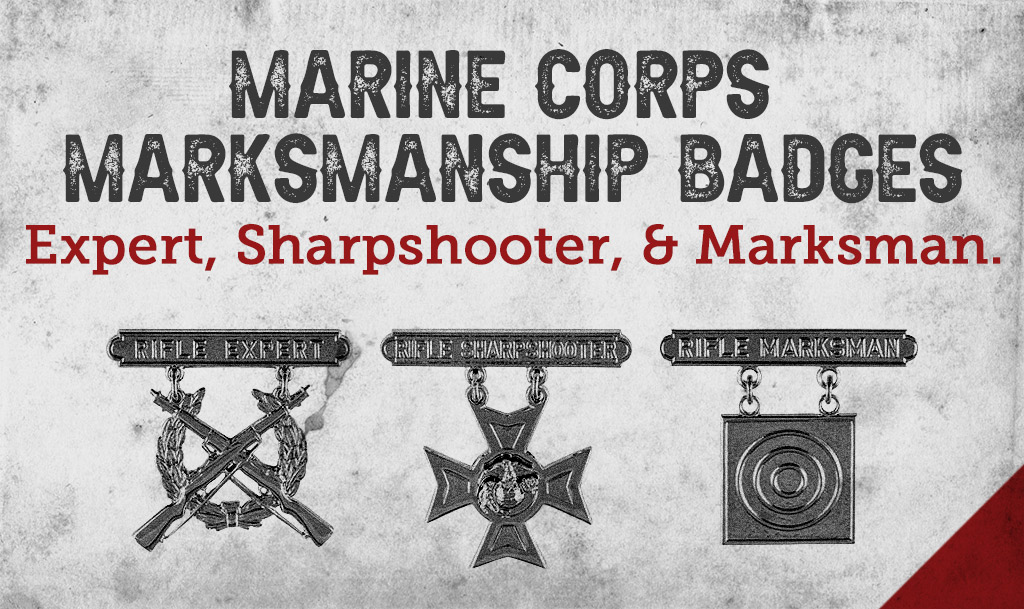
Expert: This is the highest level of qualification. To become an Expert, Marines must get 220 to 250 points out of a possible 250 on the annual qualification course. The Expert badge features a wreath design with two crossed rifles in the center, and people who earn it can wear special badges.
Expert shooters can hit targets with precision from any shooting position and at any distance, often within a set time limit. Getting an Expert qualification is a big deal and something that Marines are proud of for the rest of their careers.
Sharpshooter: To get the intermediate qualification level, Sharpshooter, you need to score between 210 and 219 points. The Maltese cross design on the Sharpshooter badge stands for good, reliable shooting. Sharpshooter Marines have shown above-average skill and consistency with their service rifles, even though they haven’t reached the highest level.
Marksman: To be a Marksman, you need to get at least 190–209 points. The Marksman badge is the lowest level of qualification, but it still shows that you passed a challenging course of fire. For a Marine to be considered good with their service weapon, they must at least pass the Marksman test.
Badge Components & Re-qualification Bars
Marksmanship badges have hanging bars that show that the person requalified at the same level. Every time a Marine re-qualifies at their current level, they get another bar. Depending on the time period and the rules in place, these bars indicate the score or whether someone is qualified. Some Marines rack up a lot of bars over their careers, creating a visual record of how well they shoot.
The badges are made of metal and go on the left side of dress uniforms, below ribbons and medals. The weight and arrangement of several qualification bars can create a unique look. Senior Marines with long careers often have impressive collections of re-qualification bars under their badges.
Distinguished Badges in Marine Corps Marksmanship
The Marine Corps gives special badges for outstanding performance in competitions, in addition to basic qualification levels. The Distinguished Rifleman Badge and the Distinguished Pistol Shot Badge are two of the highest honors for marksmanship. These badges go to Marines who have performed very well in formal shooting competitions and earned scores that place them among the Corps’ best shooters. Distinguished badges are rare and indicate that someone has been practicing for years and has a natural talent for shooting.
Historical Foundations
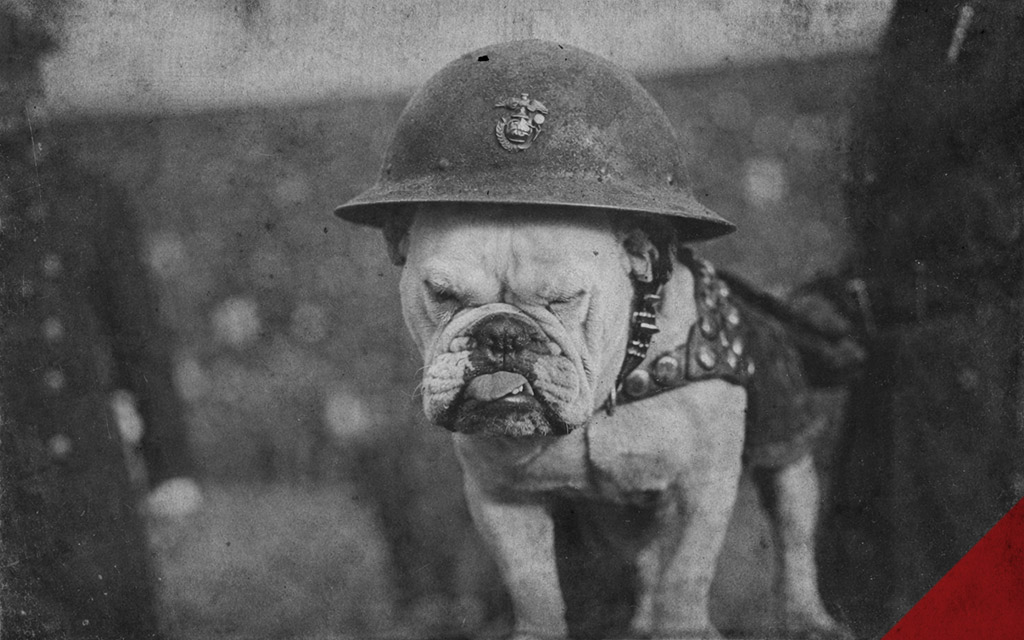
The “Devil Dogs” of the U.S. Marine Corps have used an English Bulldog as their mascot since 1922.
The Marine Corps has always placed great emphasis on marksmanship, but it wasn’t until the early 1900s that it became official and organized. During the Spanish-American War and the Philippine Insurrection that followed, Marine leaders knew that better shooting skills could make up for having fewer troops and give them an edge in battle. But the modern marksmanship program didn’t start to take shape until the years before World War I.
The Marine Corps set up its first official marksmanship qualification standards in 1908. Doing so made it possible to judge and reward Marines fairly for their shooting skills. This groundbreaking move made Marines different from other branches of the military. The program focused not only on accuracy but also on quickly and effectively engaging targets in a variety of situations. This early training would be beneficial for Marines in World War I, when being a good shot could mean the difference between life and death in the trenches of France.
Timeline Of Notable Events
Early 20th Century (1900-1920)
During the early years of Marine Corps marksmanship, they created qualification courses and standardized training methods. The Corps officially adopted the qualification badges in 1911. These badges would later become famous symbols of Marine shooting skill.
During World War I, Marine snipers became renowned for their accurate rifle fire at battles like Belleau Wood in 1918. Here, they shocked German troops, earning the Marines the nickname “Devil Dogs.” The Corps’ stories of Marines fighting enemy soldiers at ranges of more than 500 yards became part of its history and underscored the importance of marksmanship training.
Interwar Period (1920-1941)
The Marine Corps continued to develop its marksmanship program between the two World Wars. The Corps competed in national shooting competitions and always came out on top, further building its reputation. Training ranges got better, and the Known Distance (KD) course became the standard at all Marine bases.
The M1903 Springfield rifle remained the Marines’ primary weapon, and they learned a great deal about how it worked. During this time, the Marine Corps also formed the Rifle Team. They competed at Camp Perry and other national venues, which brought honor to the service.
World War II (1941-1945)
World War II‘s island-hopping campaigns put marine marksmanship to the test across the Pacific. The marksmanship program also taught basic skills and discipline. These secondary skills were instrumental, even though combat conditions often made it impossible to employ the long-range precision shooting stressed in peacetime training.
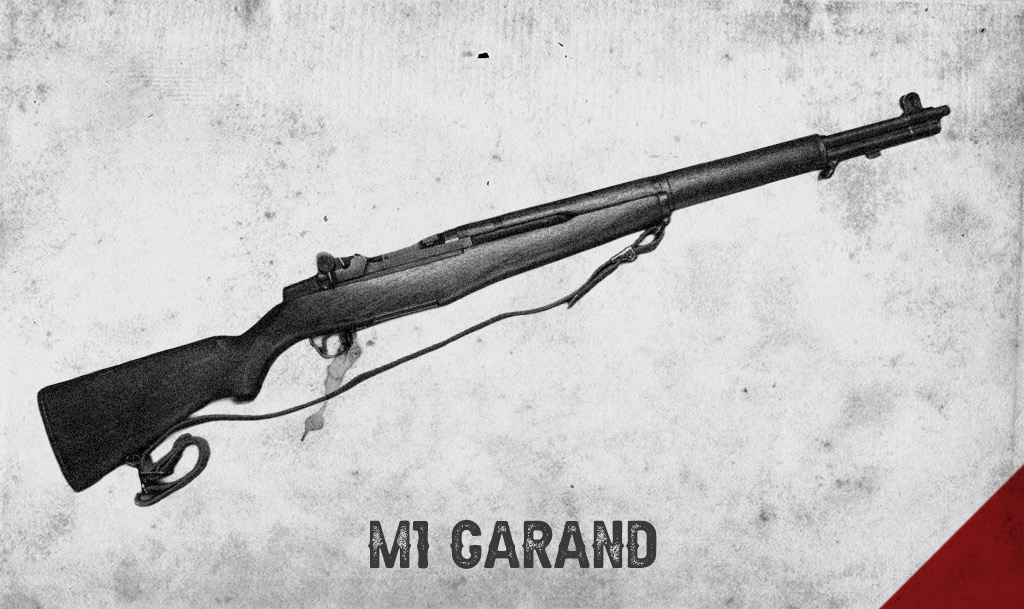
Marines had to change their training when they switched from the M1903 Springfield to the M1 Garand semi-automatic rifle, but they did so quickly. Even though they used a variety of weapons in close-quarters combat, legendary snipers like John Basilone showed the warrior spirit that comes from training to shoot.
Cold War Era (1945-1991)
There were significant changes to the marksmanship program after World War II. The Marines adopted the M14 rifle in the 1950s, and the M16 in the 1960s. This change required updating training protocols. The Vietnam War showed both the strengths and weaknesses of marksmanship training in jungle warfare. In response, the Corps changed its program to focus on quickly finding targets and shooting from different positions. The Rifle Qualification Course, as we know it today, was created during this time. It included more realistic combat scenarios while still focusing on the basics.
Modern Era (1991-Present)
The Gulf War, operations in Iraq and Afghanistan, and evolving combat needs led to ongoing changes in Marine Corps marksmanship. The M16A4 service rifle and, later, the M4 carbine, as well as advanced optics such as the Advanced Combat Optical Gunsight (ACOG), were significant technological advances.
The Annual Rifle Training (ART) program replaced older programs. It included more realistic combat situations, stress shoots, and engagements at unknown distances. In recent decades, there has also been more focus on combat marksmanship skills. These include shooting from behind barriers, quickly engaging multiple targets, and switching between weapons systems.
The Rifleman’s Creed
Marines switched from the M1903 Springfield to the M1 Garand semi-automatic rifle during the defense of the Philippines.
The Rifleman’s Creed, also known as “My Rifle” or the Creed of the United States Marine, is essential to the culture of marksmanship in the Marine Corps. Major General William H. Rupertus wrote this powerful statement during World War II. It sums up the Marines’ relationship with their weapons and their dedication to being the best in arms.
This is my rifle. There are many like it, but this one is mine.” -Major General William H. Rupertus, USMC
The Creed starts with the simple statement, “This is my rifle.” This one is mine, but there are many others like it. This opening makes it clear that every Marine is responsible for their weapon and how well they use it. The Creed goes on to say that the rifle is the Marine’s best friend and the only way to stay alive, and that they must learn to use it as well as they learn to live their own lives.
The most important thing the Creed says is, “My rifle and I know that what matters in war is not the rounds we fire, the noise of our burst, or the smoke we make.” We know that the hits matter. We will hit. This passage stresses accuracy over volume of fire, a key difference between Marine Corps marksmanship training and simply getting used to guns.
Marine Corps Marksmanship Badges: The Ultimate Military Skill?
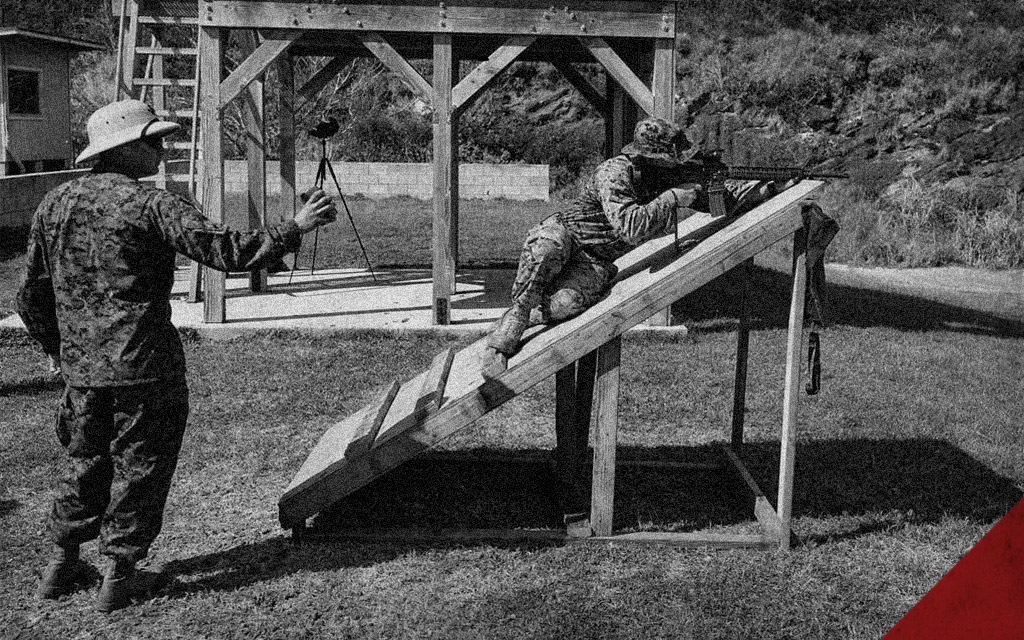
All Marines, regardless of MOS, must qualify annually in marksmanship using iron sights and optics. (Credit: U.S. Marine Corps photo by Sgt. Jesus Sepulveda Torres) The appearance of U.S. Department of Defense (DoW) VI does not imply or constitute DoW endorsement.
Marine Corps marksmanship is more than just a military skill. It’s a part of Marine culture that defines what it means to be a Marine. The focus on accurate, effective rifle fire has stayed the same from the first days of formal training to modern combat operations, even though weapons and tactics have changed. The Rifleman’s Creed is the philosophical basis of this culture, and qualification badges are a way to show that someone has done well and continues to do well.
Every Marine, whether they are a foot soldier, an aviator, or work in administration, must show that they can use a rifle every year. This rule reinforces the basic idea that there are no rear-echelon Marines; everyone may have to fight with a rifle in hand. The marksmanship program builds the Marine Corps’ unique warrior ethos, discipline, and confidence while ensuring they are always ready.
The Marine Corps marksmanship badges program will evolve as warfare evolves. It always emphasizes accuracy, discipline, and the rifleman’s duty to make every shot count. Marine Corps marksmanship has been a part of the Corps for more than a hundred years, and it’s still a source of pride for everyone who earns the title of Marine.
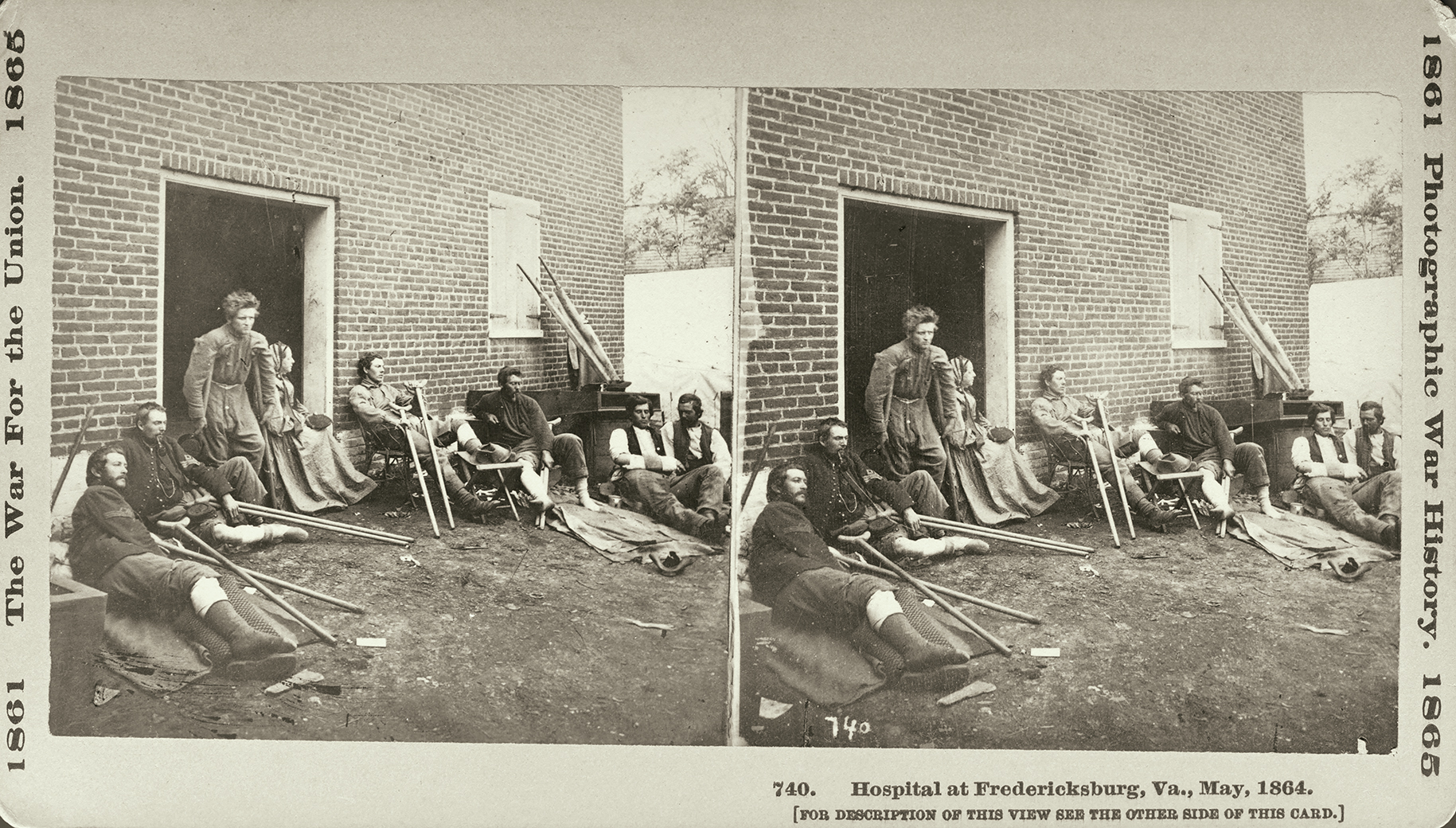
Stereocard,“Hospital at Fredericksburg, Va., May, 1864” War Photograph Exhibition Company. (VMHC 2002.460.123)
In the Civil War’s wake, thousands of veterans became addicted to morphine and opium, medicines used to treat painful injuries and lingering sicknesses sustained during the war. Veterans’ families looked on in horror as opioid addiction destroyed old soldiers’ health and damaged their self-esteem, relationships, and reputations.
Opiates were some of the most widely used medicines in 19th-century America. During the Civil War, surgeons administered morphine injections and opium pills to soldiers who had endured gunshot wounds and amputations.
Opium was also a major remedy for diarrhea and other diseases that spread through army camps during the war. The medicines worked well—too well, in fact. Countless veterans became addicted to opium and morphine, which they continued to take after leaving the army.
Veterans dubbed opioid addiction “opium slavery” and “morphine mania,” among other names. As these monikers imply, addiction had severe consequences for veterans’ lives. Drug addiction, although it was widespread, was deeply stigmatized in the Civil War era.
From many Americans’ point-of-views, veterans who struggled with opioid addiction were immoral and unmanly. They deserved to be punished, not helped, according to this line of thinking. Consequently, addicted veterans struggled to find sympathy or medical care, and they often died of accidental drug overdoses.
The experience of Confederate artillerist John Tackett Goolrick and Frances Bernard Goolrick, his wife, illustrates the wide-ranging health, emotional, and social consequences of opioid addiction for Civil War veterans and their families.
The Goolricks wrote scores of letters describing the staggering costs of John’s morphine addiction, which stalked the family for nearly a half-century after the Civil War. The letters are housed in the Goolrick Family Papers collection at the VMHC. Most Americans were reticent to discuss opioid addiction openly. But the Goolricks were frank about their struggles, and their letters provide an unparalleled window into the broader phenomenon of opioid addiction among Civil War veterans.
John enlisted in the Fredericksburg Artillery as a young man. He was an ardent supporter of the proslavery Confederate cause, remaining with Robert E. Lee’s army until the surrender at Appomattox Courthouse in April 1865, the bitter end to the war in Virginia. Many of Lee’s men had deserted by that point. John suffered a severe gunshot wound in the left leg at the siege of Petersburg in August 1864.
He was transported behind the lines to Richmond’s massive Chimborazo hospital, where surgeons apparently prescribed morphine for the pain before patching John up and sending him back to the frontlines. At Chimborazo, or some point in the ensuing years, John became addicted to morphine.
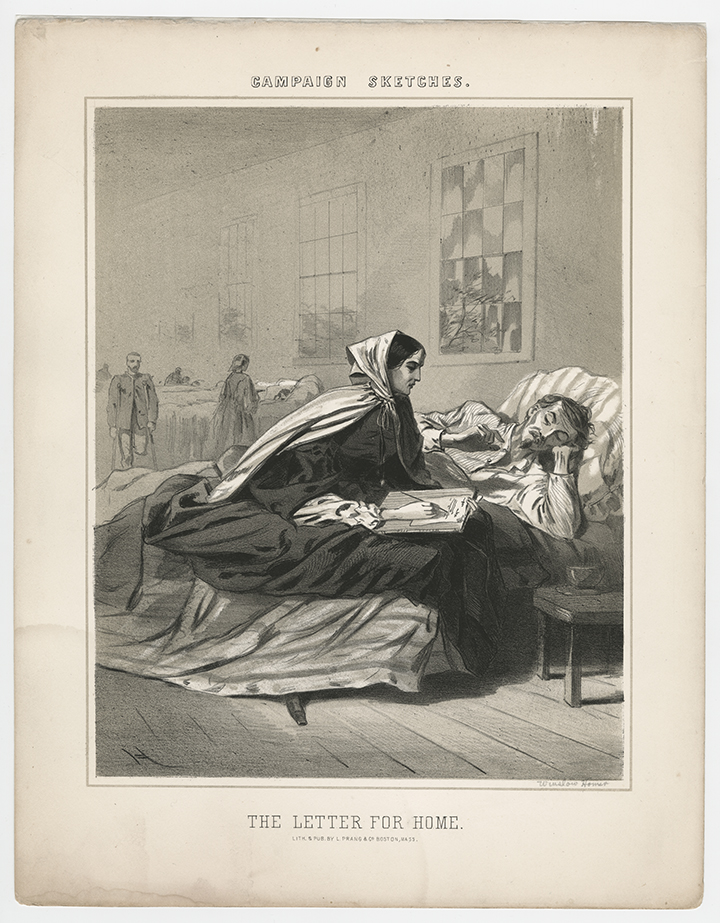
Lithograph, “Campaign Sketches: The Letter for Home” by Homer, Winslow L. Prang & Company. (VMHC 2000.165.6.5)
John and Frances cared deeply for one another, but his morphine addiction took a serious toll on their marriage. The Goolricks were a fixture of the social scene of Fredericksburg, where they built a life in the decades after the Civil War.
But all the while, John consumed ever-higher doses of morphine. As his addiction grew worse, it debilitated his body and mind. Finally, in 1896, John suffered a morphine-induced breakdown, some 30 years after leaving the army. This was not uncommon, as many veterans lived with chronic addiction for decades. But John’s breakdown imploded his relationship with Frances.
Morphine abuse clouded John’s mind and judgment, leaving him unable to practice law, his postwar occupation. The family’s finances dwindled, and, with little hope that John’s state would improve on its own, Frances demanded that he submit to harsh medical care for addiction.
In the 19th century, medical care for addiction often entailed having one’s morphine dose abruptly discontinued, triggering agonizing withdrawal symptoms. John most assuredly did not want to undertake this grueling medical ordeal. But Frances insisted, threatening divorce if he did not comply. As Frances explained to her brother in a February 5, 1896, letter, John “will beg and implore me not to do this. But I must, I must, I can bear neither for myself or the children, this life any longer.” “I am obliged to leave him,” she added, for “I can see nothing else to do…. His mind and brain [are] clouded by” morphine, and “there is no dependence to be put in him.”
John and Frances’s family took the news of John’s addiction hard. Extended family members appear to have known about the veteran’s morphine addiction before his 1896 breakdown, but almost certainly did not realize the severity of the situation. Because morphine addiction was stigmatized, it threatened the upper-class Goolricks’ social standing. So, the family had to deal with John’s addiction swiftly and quietly.
One option was institutionalization. Virginia’s public mental asylums, like Eastern State Hospital in Williamsburg, often admitted Civil War veterans and other Virginians suffering from drug addiction.
But, as John’s brother warned in a March 7, 1896, letter, this measure would bring great shame to the entire family because asylums were, like addiction, stigmatized. If word got out that John had been committed to an asylum, it “would be commented upon and asked about” in the newspapers.
Fearing damage to the family’s reputation, Frances, along with John’s brother and sister-in-law, settled on a more private solution. Within a few days of his collapse, Frances sent John away to his brother’s farmhouse, just outside of Fredericksburg. The family ultimately restrained John by locking him in a room, where hired nurses prevented escape while John endured the agony of opioid withdrawal over the course of several weeks.
John’s ordeal was heartbreaking for his family to witness. As Nora, John’s sister-in-law, explained to Fannie in a March 10, 1896, letter, “my heart aches to look at him.” Eventually, John’s body and mind recovered, and he returned home to Frances. But the family’s letters hint that John relapsed several times before his death in 1925.
The Goolricks’ saga illustrates several aspects of addiction commonly experienced by Civil War veterans who struggled with opioid addiction.
First, the Civil War, despite ending in 1865, caused health complications for John that lasted for decades. This facet of the Goolricks’ story, which was not unique to John and Frances, complicates the persistent myth that most Civil War veterans simply returned to normal after leaving the army.
In reality, many veterans dealt with challenging, war-related disabilities for the rest of their lives. Additionally, like other couples of the era, the Goolricks based much of their self-esteem on their ability to fulfill certain social roles.
Men like John were supposed to act as breadwinners, while women like Frances were supposed to manage the “domestic sphere” of life. Yet, addiction inverted these roles, leaving John unable to work, while Frances stepped in and managed the family’s public and financial affairs—an inversion of gender roles that neither Goolrick relished.
The couple also experienced great shame at the public airing of John’s addiction, demonstrating how opioid addiction was not merely a health problem, but one that affected from all other aspects of life, as well. Finally, the Goolricks’ story reminds us that Americans of generations past struggled with opioid addiction, much like the millions of Americans grappling with addiction amid today’s ongoing opioid crisis. Opioid addiction has a long history dating back to the Civil War.
This article was written by Jonathan S. Jones for Virginia History & Culture Magazine, Spring/Summer 2020. Jonathan received his PhD in History from Binghamton University, Spring 2020. The George and Ann Richards Civil War Center at Pennsylvania State University awarded Jones a postdoctoral fellowship, and he accepted an assistant professorship in the history department at Virginia Military Institute, which he began in the fall of 2021.
Johnathan’s book project, “‘A Mind Prostrate’: Opiate Addiction in the Civil War’s Aftermath,” chronicles the Civil War–era opioid addiction epidemic—America’s original opioid crisis. The project uncovers the traumatic experiences and harsh consequences of opioid addiction for Civil War veterans and their families. The project also reveals America’s long, but largely forgotten, history of opioid crises. The book project stems from his PhD dissertation (Binghamton University, 2020), and his research was enhanced by an Andrew W. Mellon Research Fellowship at the VMHC in 2019.
Army marksmanship has always played a key role in American military readiness, starting with musket drills in the Revolutionary War and continuing through today’s precision rifle competitions.
The Army’s firearms training has evolved from a basic battlefield skill into a comprehensive program that encompasses training, competition, and recognition. Understanding this history shows how Army marksmanship badges maintain strong combat skills and set a standard that also shapes civilian shooting sports.
Historical Foundations: Army Marksmanship Badges
The American military has valued marksmanship since its earliest wars. During the Revolutionary War, frontier riflemen demonstrated the importance of accurate shooting, but formal training was not always consistent.
During the Civil War, many soldiers lacked strong marksmanship skills. Studies showed that thousands of rounds were fired for each casualty. This led military leaders to recognize that winning in battle required more than just giving soldiers weapons.
The Army began to focus more on marksmanship after the Spanish-American War, when it was clear that American soldiers often did not shoot as well as their opponents. In response, the Army set higher training standards and started keeping records of who qualified. In the early 1900s, the Army introduced standardized courses in which soldiers demonstrated their skills at various distances and in different positions.
World War I accelerated these changes. The Army realized that good marksmanship required organized training, not merely prior hunting or shooting experience.
Training camps added rifle ranges, and marksmanship became an essential part of basic training. This was also when qualification badges were introduced to recognize shooting skill, a tradition that continues today.
Timeline Of Notable Developments
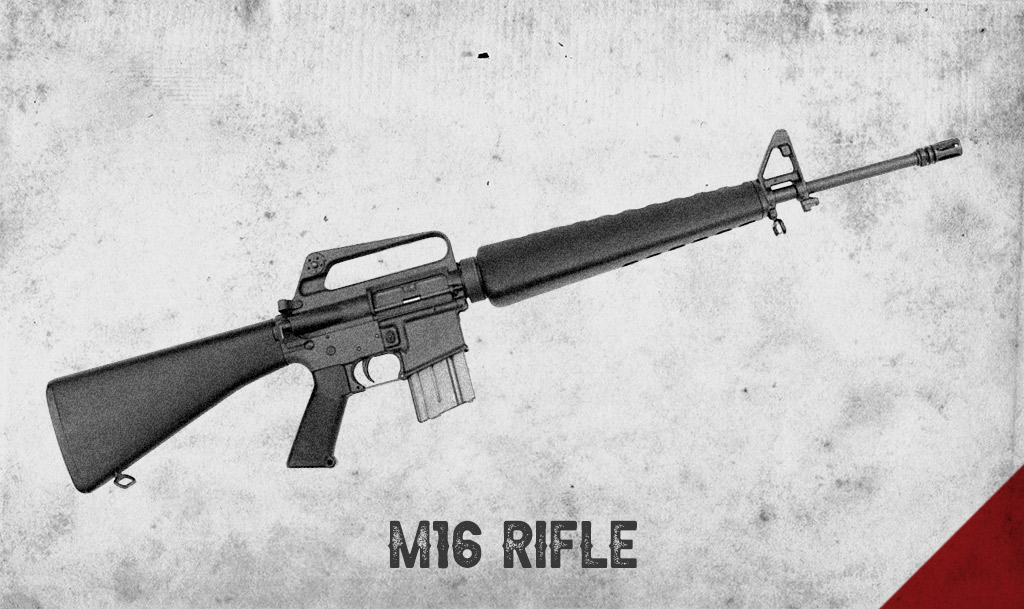
Developed by Eugene Stoner at Armalite in 1957, the M16 replaced heavier weapons and became the military’s standard-issue battle rifle.
World War II
This era saw large-scale mobilization, so the Army made marksmanship training uniform across all bases. The M1 Garand became the primary infantry rifle, and training courses focused on its use. Training also became more realistic, with time limits and added stress to better prepare soldiers for combat.
1956
The Army started the United States Army Marksmanship Unit (USAMU) at Fort Benning, Georgia. This unit was created to improve marksmanship throughout the Army and to compete in shooting competitions both in the U.S. and internationally. The USAMU has produced numerous Olympic medalists and world champions, thereby establishing a strong reputation among military shooters worldwide.
During The Vietnam War
The Army adopted the M16 rifle, which was lighter and had less recoil than the M14. This change meant soldiers had to learn new shooting techniques. Training began to focus more on combat skills, such as moving while shooting, engaging multiple targets, and practicing in realistic scenarios. The Army stopped training exclusively with stationary targets and then adopted more active methods.
Since The 1980s
The army’s marksmanship programs have continued to improve. New equipment, such as better rifle optics, night vision, and laser sights, led to changes in training.
The wars in Iraq and Afghanistan made combat marksmanship even more important, as soldiers had to hit targets at different distances in both cities and rural areas. Today’s training includes practicing under stress, making quick decisions, and combining shooting with other combat skills.
The USAMU remains a leader in American competitive shooting. Its Service Rifle, Action Shooting, and International Rifle and Pistol Teams have won many national championships and Olympic medals. In addition to competing, the USAMU is the Army’s primary center for marksmanship, developing training methods and equipment that support soldiers across the Army.
Civilian Marksmanship Program Connection
Sgt. 1st Class Brandon Green, Bogalusa, with the U.S. Army Marksmanship Unit’s Service Rifle Team. (Credit: Defense Visual Information Distribution Service)
The Army’s link to civilian shooting sports is managed through the Civilian Marksmanship Program (CMP). Congress started the CMP’s earlier version in 1903, believing that citizens who could shoot well would help national defense. The Army initially operated the program but transferred it to a federally chartered nonprofit organization in 1996.
The CMP’s mission remains closely linked to military readiness. It provides firearms safety training and rifle practice for citizens, especially young people. Through the CMP, civilians can purchase surplus military rifles, participate in shooting competitions, and receive marksmanship training. Many CMP matches use courses similar to those in the Army, directly linking civilian practice to military skills.
Army marksmanship teams often compete with civilian shooters at CMP events. The National Matches at Camp Perry, Ohio, bring both groups together in what some call the “World Series of Shooting.” These events allow Army shooters to compete with top civilians and help spread marksmanship culture across the country. Many soldiers continue to compete in civilian matches after leaving the Army, so skills and experience are shared both ways.
The CMP also runs programs in schools and shooting clubs across the country, often with help from Army marksmanship experts. Because of this community approach, many recruits already possess basic shooting skills when they begin basic training, so qualification takes less time and effort.
Marksmanship Qualification Badges
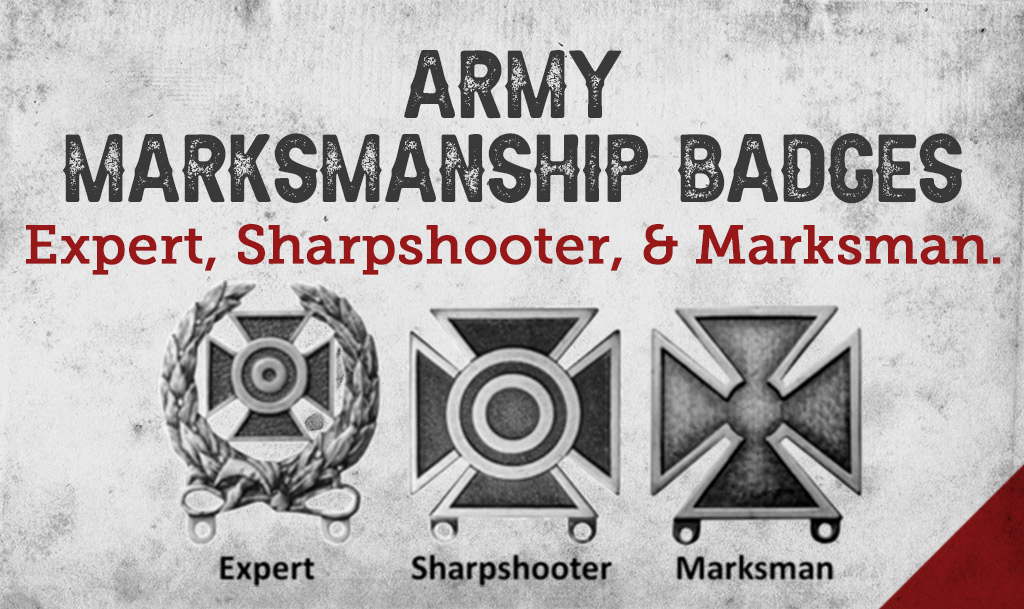
The Army displays shooting skill with qualification badges worn on uniforms. These badges recognize individual achievement, encourage soldiers to improve their performance, and set clear standards for marksmanship.
Marksman Badge
The basic qualification level is awarded to soldiers who meet the minimum standards on the Army’s weapons course. It still requires safe handling and the ability to hit targets at different distances. This badge’s design is a squared-off cross.
Sharpshooter Badge
This award is the middle level and requires better performance on the qualification course. Soldiers who earn it demonstrate consistent accuracy and strong foundational skills. The badge resembles the Marksman badge but adds a set of target rings to the center. Many soldiers see the Sharpshooter badge as a true mark of skill, not just the minimum standard.
Expert Badge
The highest regular level, indicating exceptional marksmanship. To earn it, soldiers must hit targets at long range, do well under time limits, and show strong shooting skills. The Expert badge is a source of pride, and many units hold friendly competitions to see who can earn and keep it. This badge takes the sharpshooter design and adds a laurel wreath around it to indicate its highest status.
Each badge can be awarded for different types of weapons. The Army gives badges for rifles, pistols, machine guns, and more. Bars hanging below the badge show which weapon the soldier qualified with. For example, a soldier might wear an Expert Rifle badge with several bars for different rifle types.
Distinguished Badges
These are above the regular qualification levels and honor outstanding marksmanship. The Distinguished Rifleman and Distinguished Pistol Shot badges are the highest awards outside of competition teams. To earn one, a soldier must collect points by placing high in several matches over time. These badges are rare and highly respected in the Army.
Soldiers who earn Distinguished badges often become marksmanship instructors for their units and share their skills with others. The selection process ensures that only those who demonstrate consistent excellence, not merely a single exceptional performance, receive this honor.
Army Marksmanship Badges: Heritage & Prospects
Army Marksmanship Badges: Soldiers earn marksmanship badges to recognize achievement and encourage excellence.
The program continues to change to meet new challenges. Today’s training draws on lessons from recent wars and focuses on integrating shooting with movement, communication, and decision-making. Advanced simulators enable soldiers to practice scenarios that are difficult or impossible to reproduce on conventional ranges.
The connection between military marksmanship and civilian shooting sports remains strong. The CMP continues to help Americans improve their shooting skills. Army shooters who compete internationally continue a tradition of excellence that is over a hundred years old, representing both their service and the wider American shooting community.
The badge system is updated periodically to reflect new weapons and training, but its primary goal remains the same: to recognize achievement and encourage excellence. Whether a soldier earns a Marksman badge through hard work or a Distinguished badge after years of competition, these awards show the Army’s ongoing commitment to marksmanship as a key military skill.
Even as technology and warfare change, the basics of Army marksmanship remain the same: disciplined training, standard testing, and recognizing achievement. These principles help American soldiers keep the shooting skills they need to succeed and set a high standard that extends across the Army and into civilian life.