Category: Soldiering
 Just after midnight on June 13, 2025, an Israeli operation codenamed Rising Lion unfolded in two distinct but mutually reinforcing acts. First came swarms of small explosive drones that Israeli commandos had reportedly pre-positioned inside Iran months earlier, striking air-defense radars and communications nodes, while decoying attention toward Tehran’s western approaches. Minutes later, over 200 Israeli fighter aircraft—many of them F-35 Adirs carrying standoff munitions—conducted precision strikes against more than 100 nuclear and military targets across Iran, including senior military leaders.
The result was operational dislocation: Iranian early-warning networks were saturated by low-observable drones, senior commanders were killed or forced into hardened shelters, and decisionmaking channels fractured just as long-range penetrating fires arrived. This shock-and-awe approach by Israel explains the limited initial Iranian response, firing only 100 drones compared to the mixture of over 200 drones and ballistic and cruise missiles fired during Operation True Promise in April 2024.
The attack illustrates how combinations of conventional long-range strikes and unconventional operations have a unique role in modern war, reminiscent of the dawn of modern special operations and the “ungentlemanly warriors” of the British Special Operations Executive (SOE) and U.S. Office of Strategic Services (OSS).
Advantage in battle, when each side can see the other side using even commercial satellite images, goes to the side more able to generate asymmetries that produce shock and dislocation. That effect requires more than a standoff precision strike: It requires the ability to pair airpower with special operations to generate effects across the depth of the battlespace simultaneously.
As a result, Operational Rising Lion is a blueprint for future joint campaigns and suggests key investments the U.S. military will need to make to adapt to the changing character of war. These include accelerating efforts to integrate special forces with low-cost drones—similar to the foundational work with Project Replicator—with long-range precision strike campaigns, alongside rethinking defense in depth to protect critical assets.
Relative Superiority in the Drone Age
Admiral William McRaven defined relative superiority as the moment a smaller attacking force gains a decisive advantage over a larger, better-defended adversary through a combination of training, speed, and surprise. Israel’s strike, like Ukraine’s earlier Operation Spider’s Web, validates how small, autonomous systems—when staged forward and synchronized with long-range fires—compresses the timeline to relative superiority.
In both cases, drone swarms exploited gaps in air defenses, sowed confusion, and set the conditions for follow-on strikes. Modern war combines scale and precision. Autonomous navigation, low-cost attritable designs, and cross-domain intelligence networks enable planners to choreograph hundreds of aim-points across massive distances.
This combination extends the depth of the battlespace and the relationship between strategy, operations, and tactics. It creates a new form of campaigning in which a series of audacious raids, defined by relative superiority, create operational-level effects, which in this case shocked Iran sufficiently to conduct strikes in depth across the country targeting leadership, nuclear facilities, air defense, and ballistic missiles.
“Ungentlemanly” Warfare, Then and Now
While drones, stealth fighters, and global intelligence networks are new, combining conventional and unconventional warfare are not. During World War II the British SOE and U.S. OSS pioneered sabotage, special reconnaissance, and raids—described during World War II as “ungentlemanly warfare”—and integrated them with larger conventional campaigns.
The mandate of these agencies was to soften deep targets so conventional forces could attack at decisive points, whether by air, land, or sea. Israel’s Rising Lion resurrects that model, substituting pre-positioned drones and fifth-generation strike packages for Jedburgh teams and Royal Air Force bombers.
Seen in historical context, Israel’s Operation Rising Lion offers three takeaways about joint military campaigns in the twenty-first century. First, deep integration of special operations forces (SOF), autonomous drones, and AI-enabled intelligence, surveillance, and reconnaissance is now the baseline for theater entry because these “ungentlemanly robots” overwhelm air defenses and disrupt command loops faster than any single strike package.
Second, layered defenses must also assume insider threats, as pre-staging shows that distance is largely psychological and physical depth becomes porous when loitering munitions can hide inside something as ordinary as a commercial truck.
Finally, the fusion of covert emplacement with long-range fires erodes strategic warning, compressing decision timelines for defenders and allies and shrinking crisis-management windows from hours or days to mere minutes, paralyzing the adversary.
Preparing for the Next War
While the operation is still ongoing, Rising Lion is a harbinger of how the U.S. Department of Defense needs to adapt to the changing character of war:
- Adapt to the new blueprint of offensive strike campaigns. To increase its ability to generate asymmetries in the emerging battlespace, U.S. policymakers should expand SOF-autonomy experimentation by formalizing tactics for covertly planting autonomous sensors and munitions that can cue conventional long-range fires. In many respects, this drive should build on prior efforts like Mosaic Warfare and Replicator to create entirely new campaign designs and even prototypes.
- Rethink the old idea of defense for the new era. Adversaries can now conduct strategic-level attacks next to major targets like bomber airbases (Operation Spider’s Web) and military command and control facilities (Operation Rising Lion).
- The United States should make investments in defenses that envelop critical infrastructure—not just military bases—in layered security umbrellas that combine counter–unmanned aircraft systems radars, patrol drones, and behavior analytics used to detect deep-cover operatives.
- This deliberate approach to twenty-first century defense in depth needs to be packaged with U.S. exports to its partners and allies. If democracies adopt these measures, they will be far better positioned to survive waves of “ungentlemanly robots” and missile salvos in the next fight.
- Reevaluate deterrence signaling at the strategic level. Attacks launched from inside an opponent’s borders render traditional red-line messaging far less credible. There is no sanctuary, meaning for low costs, adversaries can jump up the escalation ladder to conduct no notice demonstration attacks on interior zones (e.g. Furthermore, using low-cost drones to strike high-value nuclear targets changes the costs and benefits of coercion, allowing states to gamble without exposing themselves to high sunk costs.
Benjamin Jensen is director of the Futures Lab and a senior fellow for the Defense and Security Department at the Center for Strategic and International Studies (CSIS) in Washington, D.C.
Categories
The French Paratrooper Subculture
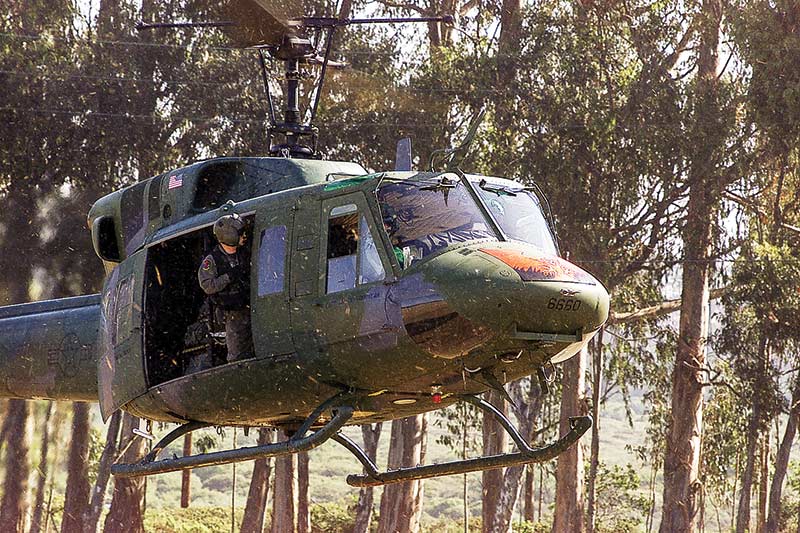
Helicopters offer military commanders unprecedented capabilities. In the down
and dirty places where they operate, however, they can be fairly dangerous.
Every military aviator is the best military aviator since Wilbur and Orville first slipped Earth’s surly bonds back in 1903. We typically have very attractive, exceptionally long-suffering spouses. Personally, I wouldn’t trust a 22-year-old unsupervised with glue, much less a $26 million combat aircraft. Alas, Uncle Sam felt otherwise.
All man-children are bulletproof and immortal until about age 25. That’s why 19-year-olds make the best soldiers. We’re never going to die. This curious affliction untethers the human male to do some of the most remarkable stuff.
I was out turning and burning with a friend in the jump seat. My buddy was a veteran of numerous real-world special operations missions. He and I had worked together for nearly a year. On this particular day we were in the desert. I planted my sleek expensive machine after an hour or so of transforming jet fuel into chaos, and we all disembarked. My pal promptly threw up all over the place. I felt genuinely terrible.
As a pilot, making someone sick who is a jerk is darkly satisfying. By contrast, this was just the nicest guy in the world. If nothing else I didn’t want him embarrassed in front of his troops. I made my way to his side and quietly apologized. He smiled and explained no apologies were necessary. He simply had a fear of flying — once he swished a little water from his Camelbak around to clean out his piehole — he explained
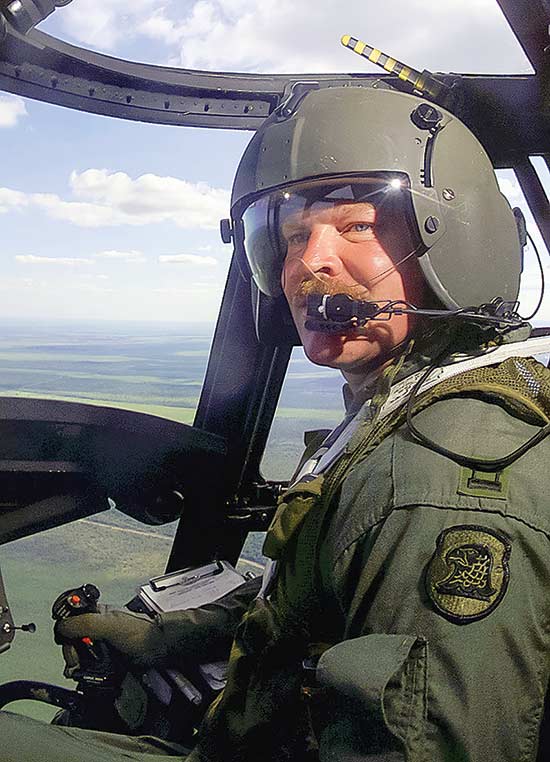
All military aviators are confident — making complex machines do amazing things is just part of the job.
Almost Always Do As You’re Told
When my friend was an ROTC cadet, he attended Air Assault school. Air Assault is a miserable two-week course teaching one what is required to work in and around combat helicopters. The Air Assault graduate in my day developed proficiency rigging sling loads and rappelling out of helicopters. He also did a great deal of forced marching, running and pushups.
My buddy was about to board a UH-1H Huey for some rappelling training. The crew chief rendered the requisite safety briefing. My friend and his comrade were going to sit in the gunner’s well on the side of the aircraft. With the doors pinned back, this offered an unparalleled view. However, it was critically important they not unfasten their seatbelts until directed specifically to do so at the other end of the trip. Failure to do this could result in a long drop followed by a sudden stop. The two young soldiers strapped in while the crew spooled up the airplane.
With everything shipshape, the pilot lifted the 9,000-lb. aircraft to a tidy three-foot hover and executed a quick pedal turn in anticipation of takeoff. In so doing he inadvertently pushed the tail rotor into a tree. The tail rotor assembly exploded and separated from the aircraft along with its 90-degree gearbox.
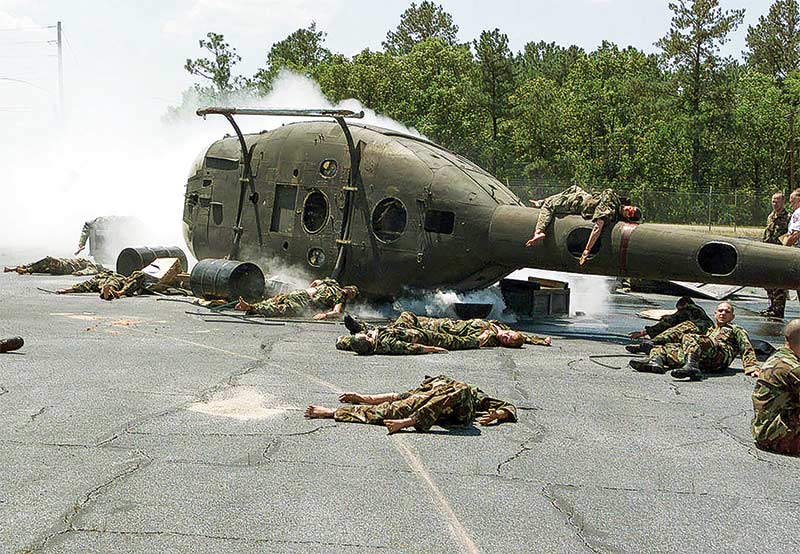
With all those rotating parts, helicopters can be fairly unforgiving of inattention.
Fortunately, this horrific scene was just a training exercise.
Everything Is Physics
The sudden loss of tail rotor authority would itself have been a fairly big deal. However, the loss of the associated mass of these components turned out to be far worse. Now the center of gravity of the aircraft shifted catastrophically forward.
The pilot did what he was trained to do and initiated a hovering autorotation by dropping power precipitously. This caused the aircraft to settle hard as the center-of-gravity shift now also translated the aircraft forward in an uncommanded fashion. The helicopter settled heavily and rolled frontward on its skids from butt to nose. It hit with sufficient vigor to splay the skids out.
All this happened very quickly. My pal could tell something was amiss as the aircraft was now shaking badly. The violent loss of the tail rotor assembly had also been fairly loud. My buddy could feel the aircraft pitching forward. For one tiny pregnant moment the Huey was motionless on the ground.
My friend looked at his battle buddy sitting next to him, and the guy looked back. They spoke not a word, but both of them yanked open their seatbelts and just stepped out of the aircraft as though they were strolling through a park. The doomed Huey then rolled forward and bounced back into the air. The helicopter went butt over nose and came down inverted onto its own rotor system. The aircraft proceeded to eat itself, killing everybody else onboard.
Denouement
My pal had actually been in three helicopter crashes. You’ll likely hear about the other two eventually someday as well. His willful failure to follow instructions that fateful day at Air Assault school was the sole reason he still drew breath.
God’s will is crystal clear in the rearview mirror. It’s just frequently a bit fuzzier through the windshield. My friend was hardly a coward. Quite the contrary, he was one of the bravest men I ever knew. It was simple — he was justifiably afraid of flying.
The views are that of the Author (Not Me, lol) but it does track with my experiences, and what I have seen of 3rd world armies it does track.
by
Roland Bartetzko
I’ll probably make some enemies with this answer, but who cares?
Let’s start with the worst foreign fighters (and why they perform so poorly):
Colombians. It’s not that they lack experience or knowledge, but every foreigner who comes here needs to learn additional skills their home country’s military likely didn’t teach them.
These skills are mostly in the areas of drone and electronic warfare, adaptation to the battlefield environment, and TCCC (Tactical Combat Casualty Care). Even training from “richer” Western armies isn’t enough to survive on the Ukrainian frontlines.
Even if you’been serving in your home country’s best army unit before you came to Ukraine, there’s some machinery here you haven’t learned to operate. (Picture: all rights by the author of this post)
Fortunately, the Armed Forces of Ukraine will teach you most of this—if (and that’s a big “if”) you’re willing to learn.
Unfortunately, with the Colombians (and other South Americans as well), the motivation to train and acquire new skills is rather low. Some might say they’re a bit lazy. As a result, they suffer a high number of casualties.
That said, this problem isn’t limited to South Americans. Some combat veterans from Afghanistan and Iraq came here thinking they were untouchable—that their sh*t didn’t stink and they didn’t need any “stupid” training. They quickly learned otherwise—the hard way.
On the other hand, there are many professional soldiers who recognize their limitations and are eager to learn. These individuals make up the majority of foreign volunteer fighters.
Especially among the Americans (many of them former Marines) and the Brits, the mantra is always: “Training, training, training!”
That’s the right attitude. It doesn’t matter where you’re from—an enemy artillery shell or drone doesn’t care about your passport. If you’re too lazy or too arrogant to learn new things, you’ll quickly perish.
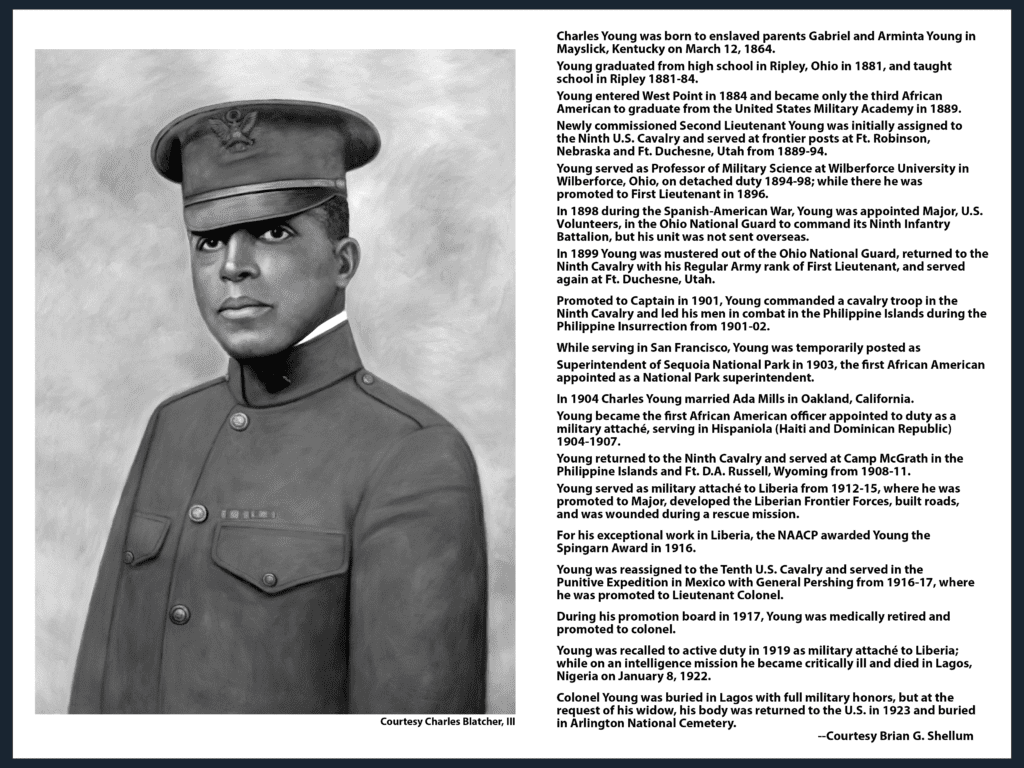
Colonel Charles Young – Soldier, Educator, Diplomat, & Civil Rights Advocate
“An unheralded military hero, Charles Young (1864–1922) was the third black graduate of West Point, the first African American national park superintendent, the first black U.S. military attaché, the first African American officer to command a Regular Army regiment, and the highest-ranking black officer in the Regular Army until his death.
Black Officer in a Buffalo Soldier Regiment tells the story of the man who—willingly or not—served as a standard-bearer for his race in the officer corps for nearly thirty years, and who, if not for racial prejudice, would have become the first African American general.” — Brian G. Shellum, Author of Black Officer in a Buffalo Soldier Regiment: The Military Career of Charles Young.
 The 4th British Hussars around 1820