Categories
Soldiering

I met a lot of guys like this in the Army

During World War 2, U.S. Army Air Forces Staff Sergeant Maynard “Snuffy” Smith was so undisciplined as a soldier that he was late for his own Medal of Honor ceremony…..
Smith was known to be cantankerous, attitudinal, and did not take well to military discipline, so he was in trouble a lot.
But then during a bombing raid over France in 1943, Smith’s B-17 (on which he served as ball-turret gunner, so, maybe part of the reason for his attitude, or vice-versa) took several direct hits that ruptured the fuel tanks and cause a massive fireball that blew out pieces of the fuselage. Two crewmen were seriously wounded, and three bailed out of the crippled aircraft (they were never found).
While the pilot struggled to keep the plane in the air, Smith was everywhere at once: he tended the badly wounded men WHILE fighting off enemy fighters with the waist-guns WHILE trying to put out the fire.
And when all the fire extinguishers on board were empty, Smith finally got the fire under control by “relieving” himself on it.
When the battered B-17 finally touched down on the runway in England, it broke completely in half. The plane had been shot to bits, but it brought its crew home.
A few months later, U.S. Secretary of War Henry Stimson showed up at the base to present Smith the Medal of Honor. The unit was assembled, the band was ready, and everyone was in place, but no one seemed to know where Smith was.
They finally found him at the kitchen scraping breakfast leftovers off the food trays into the garbage – he had been put on KP Duty for yet another infraction of military discipline: he’d missed a mandatory briefing.
Categories
Soldiering

What I call a Great Knife Fight

https://youtu.be/tCoAdQAfKJk

Categories
Soldiering

My Ancestors – It sure scared the hell out of the Yankees

Categories
All About Guns Soldiering War

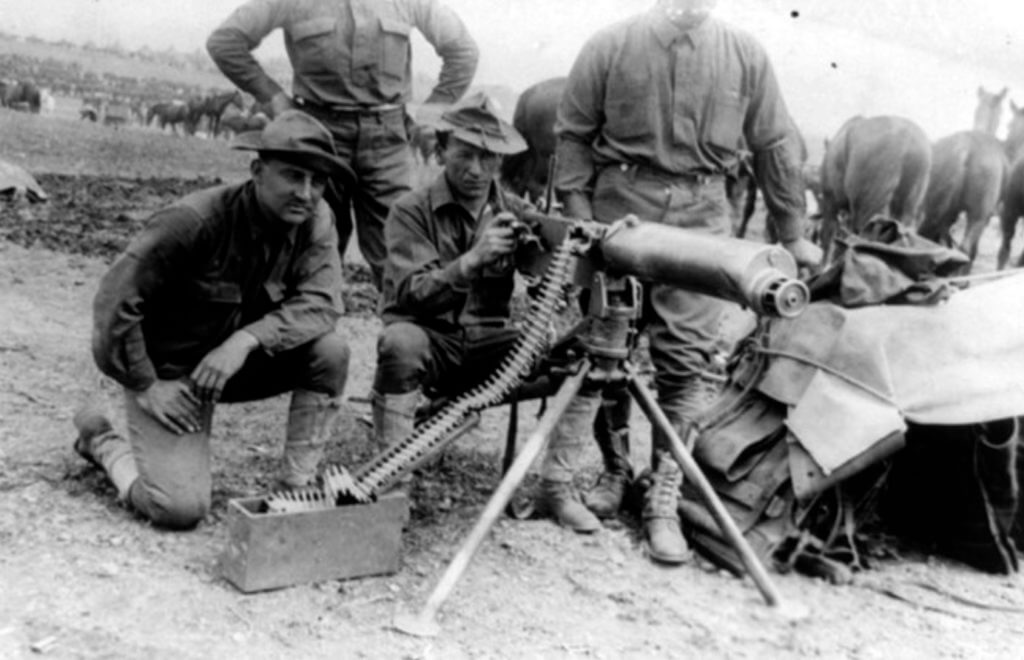
Ukrainian DShK as Infantry Support Weapon

Categories
Good News for a change! Leadership of the highest kind Our Great Kids Soldiering Stand & Deliver This great Nation & Its People War

Pat Tillman: Portrait of an American Hero by WILL DABBS

Behold the face of the real Captain America. Pat Tillman was a genuine hero.

Politicians refer to themselves as public servants. Swamp creatures like Joe Biden will extol their many decades of employment in Washington DC as though they had been some kind of galley slave toiling away on an Athenian man o’ war. I have actually met a couple of those guys. Their idea of selfless service does not quite match my own.

I wouldn’t pee on these guys if they were on fire.

American legislators spend money like drunken sailors. Actually, that’s not true. Drunken sailors couldn’t even begin to burn cash in as profligate a manner as might your typical freshman congressman. They’ve raised wasting money to an art form.

Hanging with a group of US Congressmen for a week back in the 1990s soured me on the American political system forever.

You think I’m kidding. Back when I was a soldier I spent a week as a local liaison officer for a group of congressmen on a fact-finding mission after the First Gulf War. It was amazing just watching them eat. They’d go to the nicest restaurant in town and order one of anything they might be curious about. Then they swapped plates around so everybody got a taste. One of my several duties was to scurry back and forth to the Officers’ Club cashing $500 government traveler’s checks to pay for it all. It was surreal.

I willingly voted for both of these people. However, I don’t trust anybody in Washington DC. If you weren’t broken before you got there, you were after you’ve been there a while.

Everybody in DC has sold their soul to somebody. I’ll champion the folks on my side of the aisle in the vain hope that they might someday just leave me the heck alone, but they are all irredeemably corrupt. The system perpetuates itself. It will never get better.

This is Pat and Kevin Tillman. They were both real public servants.

On May 31, 2002, Pat Tillman and his brother Kevin walked into a local recruiting office and enlisted in the US Army. Pat walked away from a $3.6 million professional football contract and Lord knows what else so he could serve his country in the immediate aftermath of 911. Pat Tillman’s story is that of a conflicted man and a horribly flawed system. However, his is a tale of epic sacrifice and genuine selfless service.

Origin Story

Pat Tillman excelled at everything he touched.

Pat Tillman was the eldest of three sons born to Patrick and Mary Tillman in Fremont, California. By NFL standards, Tillman was not a terribly big man. He stood 5’11” and weighed 202 pounds when dressed out as a safety for the Arizona Cardinals. Pat personified the axiom, “It’s not the size of the dog in the fight, it’s the size of the fight in the dog.”

That is one seriously intense guidon bearer.

In high school Tillman preferred baseball, but he failed to make the team as a freshman. At that point, he turned his attention to the gridiron. Throughout his childhood and adolescence, Pat was powerfully close to his friends and family. He married his childhood sweetheart just before he enlisted in the Army. He and his brother Kevin enlisted together, trained together, and were eventually both assigned to the 2d Ranger Battalion based at Fort Lewis, Washington.

Pat Tillman really came into his own as a college football player.

Pat Tillman attended Arizona State University on a football scholarship and excelled as a linebacker. An exceptionally deep young man, Tillman was well read and made good grades. He maintained a 3.85 GPA in marketing and graduated in 3.5 years despite the rigors of starting on his college football team.

Pat Tillman had everything the world could offer, yet he gave it all up to serve his country.

Pat thrived in the NFL. Sports Illustrated writer Paul Zimmerman named Tillman to the 2000 NFL All-Pro team based upon his stellar performance as a defensive player. He turned down a $9 million offer to move to the St. Louis Rams out of loyalty to his Arizona team.

Once he completed his 2001 NFL contract Pat Tillman enlisted in the US Army.

Eight months after the 911 attacks and with the remainder of his 15 games completed from his 2001 contract, Pat Tillman left $3.6 million on the table to go to Army basic training alongside his brother. Pat’s brother Kevin gave up a burgeoning career in minor league baseball for the same path. These two men put their love of country ahead of the sorts of things the rest of us would just about kill for.

There’s really no telling how far Pat Tillman might have gone in life.

Appreciate the details here. I’m a happily married hetero man, and even I admit that Pat Tillman was an exceptionally good-looking guy. Intelligent, articulate, and well-educated, Tillman had the world by the tail. Once his time in the NFL was complete Pat Tillman could have easily parlayed his gifts and experiences into a career on television or in Hollywood. Instead, he opted for the Ranger Regiment.

The Rangers have an undeniably sexy cool mission. However, life in a Ranger Battalion is unimaginably grueling. The Ranger Regiment is the only unit in the Army to have been deployed continuously throughout the Global War on Terror.

I was an Army aviator, but I worked with those guys on occasion. Theirs was an absolutely miserable life. Junior enlisted soldiers don’t get paid beans, and the optempo in the Ranger Battalions is utterly grueling. In less than two years on active duty, Pat Tillman completed basic training and AIT as well as the Ranger Assessment and Selection Program. He was deployed to Iraq as part of Operation Iraqi Freedom in September of 2003 after which he attended Ranger School at Fort Benning. Once a fully tabbed Ranger, he returned to Second Bat at Lewis and deployed to Afghanistan where he was based at FOB Salerno.

It’s easy to sit back in the comfort of our living rooms and lose track of exactly what this stuff costs.

Up until this point, Pat Tillman was the US Army’s poster child. An American superhero with a face right out of central casting, Tillman’s story could not have been any more compelling had it been drafted by an action novelist. Then Something Truly Horrible happened.

The Incident

Combat is not the clean sanitary thing Call of Duty might have us believe. The reality is vicious, messy, and sad.

Combat is an ugly, filthy, chaotic thing. It is seldom as tidy or predictable as the movies and sand table exercises depict it to be. On April 22, 2004, the fog of war claimed a genuine American hero.

Even today nobody really knows exactly what happened to Pat Tillman’s mounted patrol.

On a forgotten road leading from the Afghan village of Sperah about 40 klicks outside of Khost, Pat Tillman’s small HUMVEE-mounted patrol ran into trouble. Their mission that day was to retrieve a disabled HUMVEE. This tale is made all the more tragic in that we abandoned tens of thousands of these vehicles when we fled Afghanistan recently. The details are fiercely debated to this day, but here is the official description.

Pat and his fellow Rangers moved on foot to support the element they thought was in contact.

Tillman was in the lead vehicle designated Serial 1. Serial 1 passed through a mountainous pass and was roughly one kilometer ahead of Serial 2, the following HUMVEE. At that point, Serial 2 was purportedly engaged by hostile forces.

It was chaotic, and the situation was confusing. The end result was a tragedy.

Upon hearing of the ambush, the Rangers in Serial 1 dismounted and made their way on foot back toward an overwatch position where they could provide supporting fires for Serial 2. In the resulting chaos, the Rangers of Serial 2 lost touch with the specific location of the lead Rangers. In the violent exchange of fire that followed Tillman’s Platoon Leader and his RTO (Radio Telephone Operator) were wounded. An allied member of the Afghan Militia Force was killed. Pat Tillman caught three 5.56mm rounds from an M249 SAW to the face from a range of 10 meters and died instantly.

The Weapon

M249 Squad Automatic Weapon | Military.com
The original FN Minimi was a fairly revolutionary weapon.

First introduced in 1984, the Belgian-designed M249 Squad Automatic Weapon was an Americanized version of the FN Minimi. An open-bolt, gas-operated design, the M249 was conceived to provide the Infantry squad with a portable source of high-volume, belt-fed automatic fire. The M249 has seen action in every major military engagement since the US invasion of Panama in 1989.

The M249 weighs 17 pounds empty and 22 pounds with a basic load of 200 linked rounds. The weapon fires from an open bolt and features a quick-change barrel system. The gun will feed on either disintegrating linked belts or standard STANAG M4 magazines. In my experience, the magazine feed system was never terribly reliable.

Army Ranger Automatic Rifleman

USSOCOM adopted a lighter, more streamlined version of the M249 titled the Mk46 for use with special operations forces. The M4 magazine well, vehicle mounting lugs, and barrel change handle were all removed on the Mk 46 to save weight. The USMC has aggressively supplemented their rifle squads with the HK M27 Infantry Automatic Rifle in lieu of many of their SAWs. These weapons are currently issued at a ratio of 27 IARs and 6 SAWs per rifle company. The Next Generation Squad Weapon-Automatic Rifle program is tasked with finding a suitable replacement for the aging M249’s in the Army inventory.

The Rest of the Story

What happened next was a blight on the US Army. To have Pat Tillman, the real live Captain America killed due to friendly fire in a botched combat operation was not the story the Army wanted pushed. As a result, several senior Army officers moved to massage the narrative and outright suppress the story to both the media and the Tillman family. The end result was an absolutely ghastly mess.

                             Silver Star - WikipediaPurple Heart - Wikipedia
Pat Tillman earned a posthumous Silver Star for his actions in Afghanistan. He has been rightfully revered as an American hero.

There were allegations that Tillman, by now disillusioned with the war in Iraq, was about to offer an interview with controversial activist Noam Chomsky upon his return from his Afghanistan deployment that would be critical of the Bush Administration. As Tillman’s death occurred in a crucial time leading up to the 2004 Presidential elections conspiracy theorists even proposed that he had been intentionally murdered. However, interviews with his fellow Rangers verified that Tillman was a popular and selfless member of the team. In the final analysis, it all seems to have been a truly horrible mistake. After several investigations undertaken by the military, three mid-level Army leaders purportedly received administrative punishment as a result.

A word on the conspiracies. Soldiers don’t fight for mom, apple pie, and America. They fight for each other. There’s just no way you could get a Ranger to intentionally shoot another Ranger to protect the reputation of a sitting President. This was simply a horrible accident.

Pat Tillman - Wife, Death & Facts - Biography
Pat Tillman gave his life for his country at age 27.

The sordid circumstances surrounding the death of Pat Tillman in no way diminish the truly breathtaking scope of the man’s patriotism and sacrifice. Tillman was an avowed atheist throughout his life. After his funeral, his youngest brother Richard asserted, “Just make no mistake, he’d want me to say this: He’s not with God, he’s f&%ing dead, he’s not religious.” Richard added, “Thanks for your thoughts, but he’s f&%in’ dead.” It was an undeniably strange end for a genuine American hero.

Soldiers in combat will often pen a “just in case” letter to be opened in the event of their death. Pat’s note to his wife Marie said, “Through the years I’ve asked a great deal of you, therefore it should surprise you little that I have another favor to ask. I ask that you live.”

And live she did. Marie Tillman today is Chairman and Co-Founder of The Pat Tillman Foundation. This non-profit works to “unite and empower remarkable military service members, veterans, and spouses as the next generation of public and private sector leaders committed to service beyond self.” The Foundation has sponsored 635 Tillman Scholars and invested some $18 million in philanthropy. Marie has since remarried and is the mother of five children.

***Buy and Sell on GunsAmerica! All Local Sales are FREE!***


About the author: Will Dabbs A native of the Mississippi Delta, Will is a mechanical engineer who flew UH1H, OH58A/C, CH47D, and AH1S aircraft as an Army Aviator. He has parachuted out of perfectly good airplanes at 3 o’clock in the morning and summited Mount McKinley, Alaska, six times…always at the controls of an Army helicopter, which is the only way sensible folk climb mountains.

Major Dabbs eventually resigned his commission in favor of medical school where he delivered 60 babies and occasionally wrung human blood out of his socks. Will works in his own urgent care clinic, shares a business build-ing precision rifles and sound suppressors, and has written for the gun press since 1989.

He is married to his high school sweetheart, has three awesome adult children, and teaches Sunday School. Turn-ons include vintage German machineguns, flying his sexy-cool RV6A airplane, Count Chocula cereal, and the movie “Aliens.”

Categories
A Victory! Soldiering War

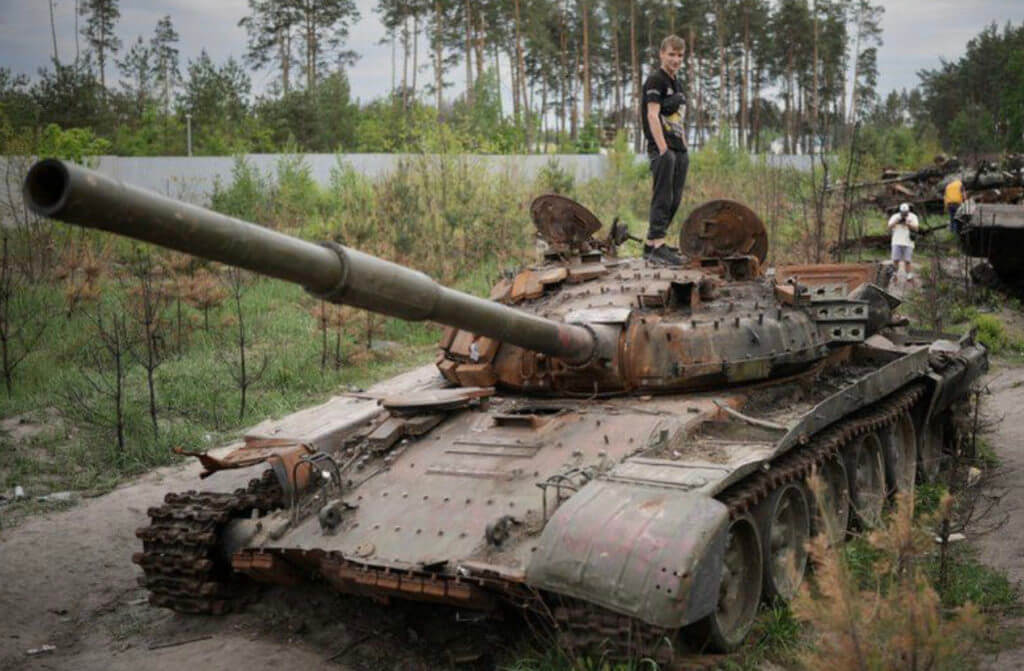
How not to make a Tankers Day! Ukraine

Tankers really hate to go into built up areas for just this reason. Especially when they don’t have proper Air Support & Dismounted infantry around. Time to call in the Arty and blow the place apart! Oh Well! Grumpy

Categories
All About Guns Soldiering

Civil War – Musket Loading Drill “In-Nine-Times” HD

Categories
Soldiering Well I thought it was funny!

How Countries Fight Their Wars – Mitsi Studio

Categories
Soldiering

The Legion (One mighty tough outfit)

He is a pioneer (The Guys who clear the way for everyone else), so he is allowed by Regulation and Tradition to have such a many & soldiery Beard. Grumpy

Categories
Hard Nosed Folks Both Good & Bad Soldiering The Green Machine

Why Upper Management gets paid for making unpopular orders

safety, power belt, eye protection

POWER BELTS, EYE PROTECTION, AND HAND GRENADES — LEADERSHIP LESSONS FROM THE FRONT

Power belts, eye protection, and hand grenades — oh my! And all the sergeants major said, “Hell yeah!” While the staff sergeants rolled their eyes.

Let me explain.

In the Army, the senior enlisted service member of any (battalion-level or above) unit is the command sergeant major (CSM), the “Smaj” (rhymes with badge). But never call a CSM “Smaj” to their face.

The CSM has the most experience, has been around the longest, and is typically the oldest and most likely the crabbiest of all the soldiers in the unit. The CSM is typically around 40 with 20 to 22 years in service. They’ve seen it all. As top adviser and “Ranger buddy” to the commanding officer, they are big difference makers.power belts

Sgt. Maj. of the Army Dan Dailey speaks during a panel hosted by US Army Command Sgt. Maj. John W. Troxell, senior enlisted adviser to the chairman of the Joint Chiefs of Staff, at the Pentagon, March 13, 2018. DOD photo by US Army Sgt. James K. McCann, courtesy of DVIDS.

But why is the CSM crabby all the time? Well, because the CSM is typically roaming the unit area spot-checking for compliance to unit standards, which inevitably drives the staff sergeants (SSGs) bananas. They typically lead nine-soldier squads, composed of the SSG, two sergeants, and six soldiers. Squad leaders are the closest “leader of leaders” to the fight. They are tactically maneuvering fighting elements, are typically focused on the mission at hand, and tend to care little about the “rules” they feel don’t apply to them. The mean age is 25 with four to seven years in service.

The credo of the SSG is “Follow the rules you agree with.” If you don’t agree with it, change the standard when you’re out of sight, or claim “shooter preference” or “non-mission essential” when you’re caught outside of the standard. Better to ask forgiveness than permission.

This is the part that really chafes CSMs because “shooter preference” is typically soldier code for “I don’t wanna.”

But “shooter preference” conflicts with a standard if (and only if) someone is monitoring for compliance to the prescribed standard. And in the Army, someone is always watching for the standards because you cannot expect what you do not inspect. Any prescribed expectation left unmonitored is merely a suggestion, not a standard.power belts

Blacksheep, A Company 2/75 Ranger 1999 — the typical response to power belts. This photo basically captures my 20s. The guy in the back walking between the platoons is most likely the CSM. Photo courtesy of Brandon Young.

A lot of people don’t like being told what to do, even in the Army, which is why monitoring standards — especially safety standards — is important. Here are three examples that highlight three common categories of negative responses to prescribed safety standards:

Power Belts (Negative Response Category: “I don’t like” the safety standard)

Power belts are night reflectors that soldiers wear when running or ruck marching on the road. They are often part of the standard physical training (PT) uniform. Soldiers hate them.

I hated my power belt. Some of the more common affronts against the power belt are to claim “It’s not tactical,” or “It’s not like it’s car repellent,” or the ever famous “If I’m going to get hit by a car, I’m going to get hit by a car! This power belt is stupid!”

Looking back in my 40s, I know that as a young soldier I didn’t want to wear a power belt for two simple reasons: because someone told me to and because they look dorky.

I thought power belts were dumb until a Ranger on a tactical march got hit on a highway at night by a speeding car and was injured so badly it ended his military career. Turns out CSM was right about the power belts. Looking lame is a small price to pay for not getting run over. svg%3E

First Lt. Anthony Aguilar wears the ballistic protective eyewear that prevented a bomb fragment from possibly damaging his eyes when an IED detonated near his Stryker vehicle while on patrol in Mosul, Iraq, February 2006. Photo by Company C, Task Force 2-1, courtesy of DVIDS.

EYE PROTECTION (NEGATIVE RESPONSE CATEGORY: THE SAFETY STANDARD “IMPEDES MY ABILITY TO WORK”)

Ballistic eyewear that protects the eyes from debris and shrapnel — eye protection — is also infamous for capturing the heat and sweat coming off your face and fogging up to obstruct your vision. Typically, it happens right during the decisive point of the operation when you’re most amped up and your need to see the target is the most critical. It’s also typically the moment when you are most likely to encounter debris and shrapnel.

It’s not that eye pro is really hated, especially if you’re rocking Oakleys. In fact, though it was cool to rag on eye pro before the war, all of us got really happy about wearing our glasses once the GWOT started. Especially after that “wear your eye pro” photo with the 2-inch piece of shrapnel sticking out of the dude’s lens started circulating circa 2006.

I hate that photo because it made me love eye pro, and I had one less thing to drive the CSM crazy about.power belts, safety glasses

Ugh … gross. This one! The worst! Composite courtesy of Brandon Young.

Though I had good reason to pull off my eye pro from time to time to see the battlefield, my Oakleys saved my vision more times than I care to recollect, and I’m thankful to have my sight today.

CSM was also right about eye pro, but don’t tell him I said that. I have a reputation as a Ranger to uphold. Which leads me to hand grenades. (You’re welcome.)

Hand Grenades (Negative Response Category: “I don’t agree with” the safety standard)

This may be the trickiest category of all because it’s genuinely founded in a disagreement about right versus wrong. This is where thoughtful perspectives actually collide with one another creating friction if an idea becomes an ideology — a thought that becomes the fixation of the whole.

In 2002, Bagram, Afghanistan, was a tent city on an abandoned Soviet airfield surrounded by Hesco barriers and soldiers on guard. Down the center of the base, paralleling the airfield, was a long, hard-packed dirt road that we were authorized to run on when we left our corner compound.

When we ran on that road, we were required to have a weapon in hand. A weapon to run on a road surrounded by barriers and well-trained American soldiers guarding those of us inside the barriers.

I thought it was dumb, and I was willing to share my rationale.

safety glasses, masks
Bagram 2002. Photo courtesy of Brandon Young.

Why would I need to shoot if we have soldiers on guard? Who am I going to shoot at on the inside of the base? If we are so overrun by the enemy that the guards have been eliminated, I’ll pick up an M4 and get to the fight. And most important, who the hell wants to run while carrying a gun?!?

Ultimately, the CSM was not persuaded by SSG Young’s thoughtful argument, and the safety standard remained in effect. So in one of my finest acts of smartassery, my squad and I complied — kind of.

After the weapons were issued, the boys and I went on a run, as prescribed, with one LAW (Light Anti-tank Weapon, a collapsible rocket launcher) tied up with a piece of 550 cord to one man’s back and eight M67 fragmentation grenades. Every hand had a weapon — a hand grenade.

We were pretty proud of ourselves. The CSMs on Bagram were not amused.

During the next rotation to Afghanistan, sometime in the middle of the night, we got attacked and a Hesco barrier saved many Rangers’ lives (including mine) by taking the full blast of the 107 mm rocket fired at us. I was pleased to have my rifle to return fire from the barrier, especially since none of the guards were reacting to contact. About two squads of Rangers were happy to oblige instead.

Obviously, being armed in the middle of a war is valuable, even if you’re surrounded by well-trained American soldiers. Someone (probably a CSM) made a decision — an unpopular one — about running with weapons that was founded in the best interests of all soldiers.safety, masks, power belts, eye protection

Lt. Col. Jacob White, commander of 2nd Battalion, 58th Infantry Regiment, talks with E Company soldiers after they received cloth face coverings from Combat Capabilities Development Command Soldier Center in Natick, Mass., April 27, 2020. Photo by Markeith Horace/Fort Benning Public Affairs Office, courtesy of DVIDS.

That’s the challenge with many safety standards, rules, and expectations that create some level of discomfort or disagreement. Many times safety standards feel ridiculous until the moment you need them and you discover why they exist in the first place.

It’s typically in those moments that SSGs and CSMs stop shaking their heads at each other and start thanking the Lord that one of their soldiers is still alive.

Today, I’m a little older, a little wiser, and a little less inclined to fight over something that someone else made a thoughtful decision about in the interest of others’ safety. I still may not “wanna.” It still might “impede my ability to work,” and I still “may not agree with it.” But these days I’m far more likely to just do it for a few reasons. It’s most likely not that big of a deal, it probably doesn’t really disrupt my life (or infringe upon my freedoms), and because I assume the person who made the decision most likely has more information than I do.

I’m still happy to submit a thoughtful response to rules that don’t seem to make sense, but I am more likely to comply with a safety standard because enduring a minor discomfort or inconvenience demonstrates more about my character than it does about anything else.

Namely, that I value discipline more than opinion, and compassion more than comfort.

In doing so, I’ve learned that it’s far better to be known for my character and my actions than for my attitude or opinions. And I’ve learned that showing respect for the governing authorities over minor inconveniences is a simple way to love others through my deeds, not my words.

Read Next: ‘Keep It Between the Ditches’ — Effective Leaders Are Peacemakers

svg%3E

BRANDON YOUNG

CONTRIBUTING WRITER

Brandon Young is a former US Army Ranger and co-founder/principal at Applied Leadership Partners, helping leaders create tightly knit, high-performing teams through executive coaching, speaking, and workshops. He has spent more than 20 years building and leading teams in the military, corporate healthcare, and nonprofit sectors. He’s been published in various peer-reviewed academic journals for his work as a co-developer of the Enriched Life Scale and is currently pursuing a Masters of Divinity in Leadership at Denver Seminary (2023). His passion is faith, family, community, people, and family adventures!

Follow Brandon Young: Instagram Linkedin