Categories
Leadership of the highest kind One Hell of a Good Fight Our Great Kids Real men This great Nation & Its People War Well I thought it was neat! You have to be kidding, right!?!

This U.S. Sub Launched an Attack on a Japanese Train

Categories
Our Great Kids Real men Soldiering This great Nation & Its People War

Artifacts of Union and Confederate Generals and Presidents

Categories
Real men Soldiering This great Nation & Its People War

Tulagi: The Baptism of Fire for the Marine Raiders

Categories
Allies Real men Soldiering

Englands might during Victoria

Armed Forces
In many ways it is surprising that the British armed forces were so small considering how much of the world they would have to cover in order to acquire, police and defend its Empire. Discipline, professionalism and the bravery of her personnel usually (but not always) allowed Britain to punch above its military weight. When it came to fighting indigenous peoples, technology would invariably prove to be the decisive element. It was a different matter when it came to fighting their fellow Europeans – although leadership and bravado seemed to offer surprisingly consistent advantages. But in the case of major, prolonged wars against European rivals, systematic advantages such as industrial and financial muscle would generally allow Britain to stay the course and deal with multiple adversaries. Over time, the Empire itself would become a source of strength as more personnel and resources would come on stream from the colonies as they developed and matured economically. By the time of the First World War, the Empire would supply a major proportion of the fighting capability of the British forces.
Royal Navy
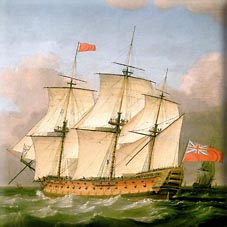
Being an island nation, the Royal Navy was (and still is) the Senior Service for a very real reason. Control of the seas would be crucial in defending Britain and in allowing Britain to secure such a vast Empire. Domination of the seas was not definitively achieved until the Battle of Trafalgar in 1805, although Britain had been challenging for supremacy since the Seven Years War. During the Nineteenth Century, the Royal Navy was supreme and could deliver soldiers or marines pretty much anywhere on the planet and also deny rivals the ability to do so themselves. The floating gun vessels could be equally intimidating to indigenous leaders who might have contemplated resisting British encroachment or denying access to commercial opportunities. The Royal Navy would ensure the flow of trade vessels and goods to supply Britain’s factories or deliver her products overseas. The Laissez Faire economic model that would enrich Britain could not have existed without the power of the Royal Navy. They controlled the communications and supply lines that made the Empire viable in any meaningful way.
Army
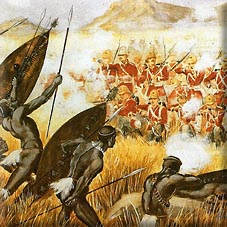
By European standards, the British Army was a tiny army. But what it lacked in numbers it made up for in professionalism and confidence. There was an odd combination of a public school educated officer corps bred to lead and a pool of hardy labourers forced off their land and/or workers attempting to avoid the harsh conditions of the new industrial cities. It is interesting that the Scots and Irish supplied such a high proportion of the British armed forces. This was probably due to the lack of economic opportunities in their respective home countries. Whatever the reason, they served the British army extremely ably.It should be remembered that the army was never given the title ‘Royal’ unlike the other two services. This was due to its perceived unreliability by the monarch – with very good reason to assume so. It dates back to the time of the English Civil War and the defeat of King Charles by the ‘New Model Army’ of Oliver Cromwell. Subsequent British monarchs never forgot this and so have never bestowed the ‘Royal’ sobriquet. This is despite the fact that it was the army that allowed the Restoration of the Monarchy in 1660. The element of trust (or lack of it) was also why so many members of the Royal Family were made in to the Colonels in Chief of so many regiments. It was a way of ensuring loyalty.

It should be noted that the army has always been a constitutionally interesting organisation. Ever since the Seventeenth Century troubles, Britain has never really appreciated having a large standing army on its soil. Most of the barracks were either overseas in the colonies or closer to home in Ireland – but not so often in England itself. Another hangover of the Seventeenth Century problems is still evident in the constitutional division of responsibilites of the army even to today. All soldiers must pledge allegiance to the monarch, who is the Commander in Chief and yet the purse strings for pay and equipment are firmly in the hands of parliament. It was hoped that this constitutional arrangement would keep the army out of political squabbles and prevent future coups – which it has done remarkably successfully for over 300 years.

Royal Air Force
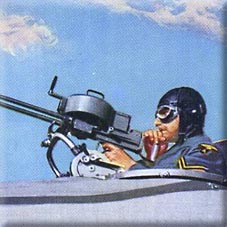
The Royal Air Force grew out of the Royal Flying Corps of World War One. It was formed in 1918 and so is very much the ‘baby’ of the military establishment. However, the projection of power provided by its weapons allowed it to grow rapidly from the 1920s onwards. Initially hopes were high that air power would be a ‘cheap’ military option that would tie the empire together and police its wide, open spaces. Operations in Somalia, Afghanistan and Iraq would, however, show its limitations. It was one thing flying the flag by buzzing the locals on the ground – but once the plane had disappeared, power and influence often went with it. Soldiers or police on the ground would prove far more durable in sustaining a presence over a period of time. Air power would complement but not replace land and sea forces.
Imperial War Graves and Cemeteries
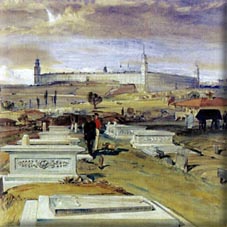
Over the years, countless thousands have died fighting for or on behalf of Britain and its empire. The way that the soldiers were treated have changed dramatically over the years – for the living, for the wounded but also for the dead. I have added a section which details this changing relationship between the British Empire and those who have died on active service.
Sections to Visit
British Empire: Naval Forces or Royal Navy
Royal Navy
British Empire: Land Forces or Army
Army
British Empire: Air Forces or RAF
Royal Air Force
Imperial War Graves and Cemeteries
Audio
The Army Saul David discusses the role of the Army in the extension of British power up until 1815The Navy Sam Willis discusses the role of the Navy in the extension of British power up until 1815.
Categories
Art Manly Stuff Real men Soldiering Well I thought it was funny!

Jeremy Clarkson Gets Stuck In a Window During SAS Training | The Grand Tour | Prime Video

Categories
All About Guns Allies Real men Well I thought it was neat!

Lt. Col. Evan B. Quiros By Bart Skelton

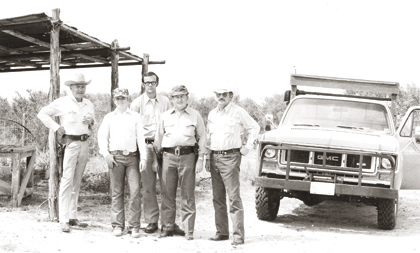
The author with Col. Quiros on a Shipp-ranch hunt in the mid-1970s. From left: Col. Quiros, the author, Walter Gleason (then-president of Colt), Bill Blankenship, and Skeeter Skelton.

My suspicions are that it doesn’t happen to many people in their lifetimes, and if so, perhaps only once. In my case good fortune has permitted me to know more than one hero during my life, and I’m particularly fortunate to have had the opportunity to spend quality time with them.

The first time I met Colonel Evan B. Quiros, I was engulfed by several different feelings — admiration and vast respect for him, appreciation for his warm South Texas humor, and maybe a little fear. None of those feelings ever dissipated in me, even after 40 years. It was during the latter part of the 1960s that my dad met Col. Quiros. My dad was a special agent narcotics investigator for the U.S. Customs Service in Laredo, Texas. He’d met the Colonel someplace in Laredo — a gunshop as I recall — and they immediately took a liking to each other.

Col. Quiros and his family ranched in Webb County, Texas, and his outfit was rich with game. The Colonel was also a firearms aficionado to the maximum degree. He loved all sorts of guns, handloading, and hunting, which was one of the many reasons he and my old man got along so well. On top of the firearms and hunting thing, they both also had an astute ability to spot charismatic characteristics in a person, and they both took advantage of it.

I’m not sure how long Dad and Col. Quiros were friends before I was allowed on the Shipp, Quiros’s beautiful Webb County ranch, but when it finally happened I was surely taken by it. We spent a lot of time on the Shipp, shooting, hunting, and generally knocking around. Col. Quiros hosted numerous get-togethers at the Shipp, which included several fascinating characters Dad had known and introduced to the Colonel.

Among them were Colonel Charles Askins, master gunsmith Jimmy Clark, U.S. Customs Agent Jack Compton, and champion pistol shot Bill Blankenship, along with many other gun writers and gun industry bigwigs. Fortunately, I was invited to many of these pachangas. The stories told during them would fill volumes. Nights in front of the Shipp’s mighty fireplace were more educational than any university. The tales flowed freely. After my dad passed on in 1988, the pachangas continued with the old gang.

As I grew older, my informal education continued at the Shipp, and over the years I learned more about the captivating Col. Quiros. I had always had many questions about the Colonel’s life, but was too shy to ask him directly. As time passed it became evident to me that much of Col. Quiros’s personality had been created through the intriguing events of his life.

Born in New York, New York, on the 5th of May, 1918 (the Colonel and all of Mexico celebrated his birthday every year), Evan Belisario Quiros was destined to live a long, fulfilling life. At the age of 14, his mother and father moved the family to Monterrey, Nuevo Leon, Mexico. It was during the Great Depression, and Evan was given many responsibilities during this time, including moving the family’s belongings to Mexico.

Once in Mexico, Evan’s father, Jose Belisario Antonio Quiros, from Spain, wanted Evan to perfect his skills in the Spanish language. Evan was sent to live with a priest who traveled to multiple villages around Monterrey. Part of Evan’s responsibilities while with the priest was to harvest game using an old 1917 Enfield rifle his dad had set him up with. He took to the task with great reverence. Not only did he perfect his Spanish, he also developed an insatiable and lifelong interest in guns and hunting.

The Quiros family later left Monterrey, moving to the Texas bordertown of Laredo, in Webb County. Evan joined the United States Army in August of 1941, completed officer candidate’s school, and quickly earned his officer’s rank. He was deployed to Africa, where he participated in the campaign raging there.

He was later reassigned to Puerto Rico, where he was second in command of training for the infantry force scheduled to make an invasion of Japan. He was enroute to Japan when the war ended. Quiros retired from the Army in 1947 as a Lt. Colonel, after receiving a number of decorations. He was just 27 years old.

After entering the Army in 1941, Evan had met and married the beautiful Mary Elizabeth Walker, whose family ranched in Webb County. After leaving the Army, the Quiroses moved back to Laredo, and Evan was asked to work for his father-in-law, J.O. Walker. This was a move that none of the family would ever regret. The Colonel was to oversee the accounting and oil and gas leasing for the ranches. Along with his two brothers-in-law, he was able to establish the esteemed ranching operation known as Vaquillas Cattle Company.

It is widely known among ranchers who are also involved in the oil and gas business that large oil companies can have a tendency to take advantage of their ranching “partners.” Not the case with Col. Quiros, however. It turned out that the Colonel possessed an uncanny skill when it came to negotiating with big oil. It was a skill that he practiced and perfected, resulting in mammoth gains for the family business and a great deal of heartache for big oil companies. When the Colonel was at the negotiating table, oil companies quivered.

During his hard work with the family ranching business, the Colonel also found time for his passions, guns and hunting. He assembled a fabulous collection of firearms of all kinds, along with a vast supply of reloading dies and equipment. He made many hunting expeditions to various places in the world, including many African safaris, during which he harvested a fine collection of species.

I was very fortunate to have hunted with Col. Quiros on the Shipp over the years. I shot my first buck there, along with javelina, quail, and varmints of all sorts. I’ll always remember the Colonel and his constant companion, an 8-inch S&W Model 29 .44 Magnum in a fine belt and holster outfit–he could shoot it, too.

Our last hunt on the Shipp was a few years ago. It was a fine time, and it brought back many old memories of my younger days running around the Shipp.

The Colonel passed away on December 13, 2009. He was buried with full military honors in his beloved Laredo. It was a cool, misty morning, and after the service the clouds burned off and the day turned into one of those glorious South Texas winter days.

I wish I’d had the chance to hear the Colonel’s booming voice and great humor just once more. Webb County lost a legend, and many people lost a hero.

Adios, Colonel.
Categories
A Victory! Leadership of the highest kind One Hell of a Good Fight Our Great Kids Paint me surprised by this Real men Soldiering War

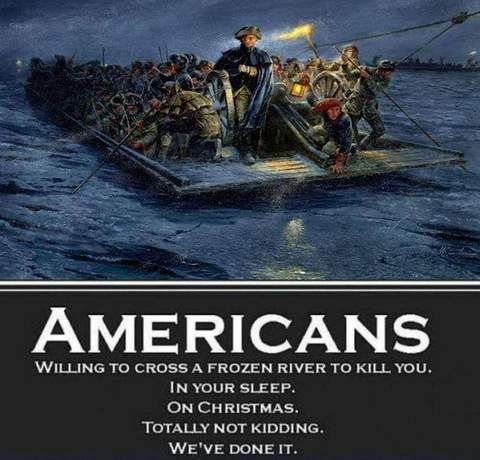
Just a reminder to the Folks who don’t like us…..

Categories
All About Guns Allies Hard Nosed Folks Both Good & Bad Real men

Browning Auto-5 segment

Categories
Real men This great Nation & Its People War

“Away He Went” theme from The Gallant Hours (1960) A good film that is worth watching

Categories
Real men Soldiering The Green Machine War

Hold to the last round –

79 years ago – The 28th Infantry Division at the Battle of the Bulge