Category: Real men

When I first became involved with the U.S. Army’s High Altitude Rescue Team (HART) back in the 1990s, there was a steep learning curve. The mission was to retrieve injured climbers from Mount McKinley and support the National Park Service (NPS) in their mountain operations. At 20,310 feet, Mt. McKinley is the highest point in North America. They call it Denali now. This was quite an unnatural space for a helicopter.

The National Park Service owned the mountain, and they had a contracted civilian helicopter that was based in Talkeetna, Alaska, during the climbing season. This single-engine French Aerospatiale Lama was stripped down to its bare essentials to give it maximum performance at extreme altitudes. When first I crawled aboard this aircraft, I noticed that the copilot’s seat and flight controls had been removed. Needless to say, I was impressed by the bravery required to be a pilot of this helicopter.

For routine trips up the mountain, if ever that was a real thing, the NPS used the Lama. For those times when the Lama was broken, or a bit more horsepower was required, they called us. I can honestly say that flying a helicopter over the top of Mount McKinley was the most extraordinary thing I did as a U.S. Army Aviator.
The Aircraft
For the HART mission, we utilized otherwise unremarkable Boeing CH-47D heavy-lift helicopters. We gutted our Chinooks of any unnecessary kit and fitted them with auxiliary internal fuel tanks and an onboard oxygen system for the crew due to the altitudes in which we would be flying. This labyrinthine thing included plumbing that ran oxygen lines to each crew station to support the flight crew while operating these unpressurized aircraft at extreme altitudes. Our crewmembers also had walkaround bottles that would keep them conscious while moving about the cargo compartment.

The max gross weight for a CH-47D is 50,000 pounds. Its twin Lycoming turboshaft engines put out an aggregate 9,000 shaft horsepower. It is an immensely powerful machine. However, at 21,000 feet the Chinook becomes a big fat pig. Great care had to be taken to plan maneuvers well in advance when the air was that thin. Those sorts of altitudes are terribly unforgiving. However, thusly configured the big Chinook would reliably get us there and back.
The Mission
Denali is actually the tallest mountain on earth, as measured from the base to the summit, even taller than Everest. While the peak of Everest is higher, you don’t have to climb as far to get there. Each year about 1,200 climbers attempt the ascent. Roughly half of them make it. Folks die on that rock all the time. There have been 96 fatalities on the mountain since the first successful ascent in 1913.

The NPS maintains a presence at both the high and low base camps on Denali throughout the approximate three-month climbing season. The low base camp is at 7,200 feet on the Kahiltna glacier. The high base camp is at 14,200 feet.

At the beginning of the climbing season, the HART team is responsible for emplacing the equipment to support these base camps. This consists of tents, food, fuel, radios and the sundry stuff required to keep people alive in such an austere environment. The HART team also retrieves everything at the end. These Army Chinooks also cover the gaps that the small civilian helicopter cannot.
Denali makes its own weather. As many a tourist has discovered to their disappointment, oftentimes the mountain is socked in while the rest of the surrounding area is clear and pretty. As the CH-47 is fully instrument capable, it can sometimes reach the mountain when the Lama cannot. The Chinook is also equipped with a rescue hoist that offers capabilities not available to the smaller machine. In 1988, the HART team set the world record for a helicopter hoist rescue at 18,200 feet. In 1995, the HART team performed a live rescue at 19,600 feet, setting a record for the CH-47 airframe.
War Story
On 3 June 1996, we were on a training mission to get our aircrews qualified for the climbing season. We always ascended the mountain in pairs. The weather had been sketchy and getting to high altitudes had been a challenge.

Two days before, a Spanish climber named Juanjo Garra lost a crampon and fell at the 18,000-foot level at Denali Pass, breaking his leg. At these sorts of altitudes, this is a catastrophic injury. NPS rescue personnel laboriously carried the man to the 14,000-foot base camp, but by then, he was in dire straits.
As we shot a careful approach into the high base camp, we knew nothing of Mr. Garra or his injury. Once we touched down, an Air Force pararescueman who was climbing the mountain as part of a training exercise flashed us with a signal mirror. He explained that Garra had to be removed from the mountain or he could die.

The formal approval process for rescue support was laborious. Each live mission had to be approved by the first General Officer in the chain of command. However, they claimed we Army officers were supposed to show initiative. Mr. Garra was soon strapped in alongside his climbing partner, a Spanish cardiologist. Incidentally, I think that was the closest I have ever come to being kissed by a man. That guy was pretty stoked to be getting off that mountain.
We flew the two Spaniards to the low base camp where they were loaded onboard a ski-equipped airplane for the trip to the Anchorage hospital. I flew home that afternoon assuming I had done a good thing. My boss felt otherwise.

Once we got the aircraft shut down I was dragged into my commander’s office for a proper butt chewing. My on-the-spot decision had completely circumvented the chain of command. I had allowed two foreign nationals onboard a U.S. Army aircraft without proper authorization. The liability had been astronomical. What if the aircraft had crashed? What if there had been an in-flight emergency? What if, what if, what if…

While I was getting reamed out, the phone rang. It was the U.S. Coast Guard congratulating us for the rescue. They wanted the names of the crew for the press release. My boss hung up the phone and sighed. He reluctantly congratulated me for saving a man’s life but then directed me never to do it again.
It has been 27 years since that weird afternoon on Mt. McKinley. I left the Army soon thereafter and went to medical school. Along the way I bought a laptop and tried my hand at writing. Until I was researching this article I had never known Juanjo Garra’s name. I sincerely hope he is well.
——————————————————
A side note from Grumpy
MAY 2013 Spanish mountaineer Juanjo Garra has died on Dhaulagiri (8167m).
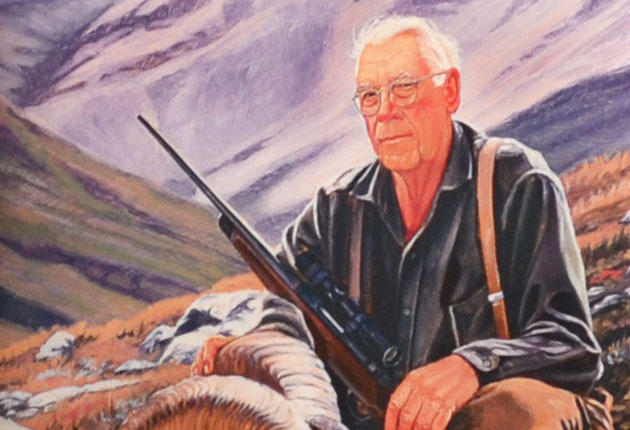
This list offers an introduction to the great gun gurus throughout American history. After all, “There’s no nut like a gun nut.”
If you join a gathering of firearm enthusiasts at a hunting camp, shooting range or gun club, rest assured that, if the topic turns to great gun writers, you’ll find opinions as plentiful as scratches in a briar thicket. Everyone has a favorite and will defend that individual with breathless passion and persuasiveness against all comers. You’ll not need to listen long to realize the truth inherent in what a good friend of mine who writes about guns and ammunition once said: “There’s no nut like a gun nut.”
Consider that an acknowledgment that I’m fully aware this list won’t be met with universal approval. All I can offer is that, while I’m no expert on firearms, I’ve done a great deal of reading and study on the subject. That exposure has, over time, given me considerable familiarity with the literature of the field. So, if nothing else, this list offers an introduction to the great gun gurus. However, note that I’ve included only deceased writers, as I don’t need a verbal shooting match with any living expert, self-ordained or otherwise (there are plenty of both). Likewise, for no reason other than the United States has produced most of the finest gun writers, all those listed are Americans.
Jack O’Connor
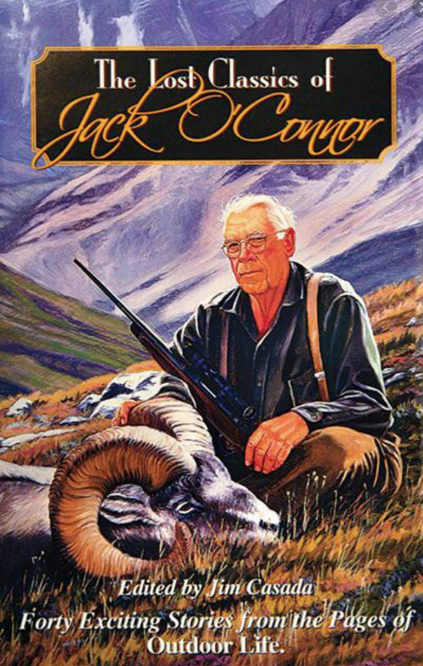 Other writers have had greater technical knowledge, hunted more, and helped develop new calibers and loads, but, when it comes to writing for the average shooter, O’Connor ranks first. Literate, a masterful storyteller, and unabashedly independent (he never sold his soul to any gunmaker or ammunition company, though he had his favorites), he remains immensely enjoyable. The Rifle Book is the place to start, followed by The Shotgun Book. You can find a full bibliography of his writings in The Lost Classics of Jack O’Connor, which I edited.
Elmer Keith
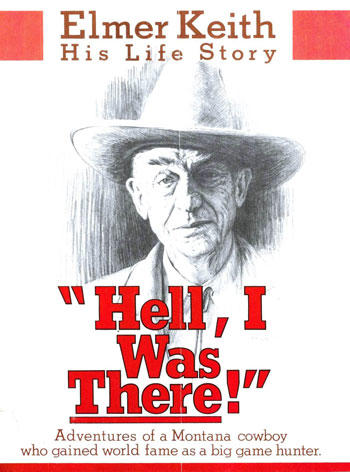 Keith both despised and was the antithesis of O’Connor. He liked guns that had punch and produced lots of noise and recoil. While only marginally literate, he told gripping tales; shot a lot; and, with the help of excellent editors, garnered a huge following. The title of his autobiography, Hell, I Was There!, offers a window into his personality, while Sixguns and Big Game Rifles and Cartridges also merit attention. The little man in the big cowboy hat could be obstinate and ornery, but there’s no denying that he could entertain.
Warren Page
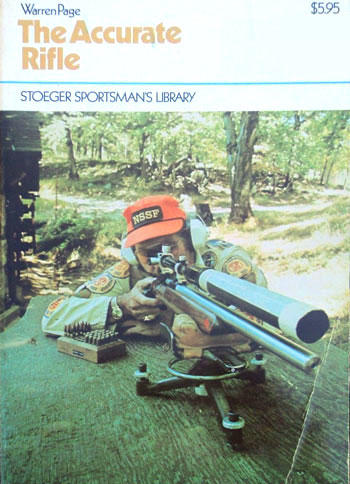 Likeable in print and the ultimate curmudgeon in person (the latter is by no means unique to Page among gun writers), he served as the shooting editor for Field & Stream for a quarter of a century, beginning in 1947, and helped develop the .243 Winchester. His two key books, One Man’s Wilderness and The Accurate Rifle, should be more widely read than they are today.
Townsend Whelen
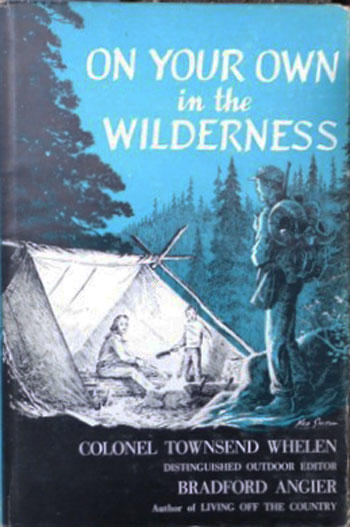 If you asked me which of the old-time gun writers I’d most like to have spent time with, “Townie” Whelen would win, hands down. He was the master of practicality, and every avid outdoorsman should read his On Your Own in The Wilderness (with Bradford Angier) and Mister Rifleman, an autobiographical work that Angier also helped complete. Whelen’s other books of note include The American Rifle, Big Game Hunting, Why Not Load Your Own!, The Best of Colonel Townsend Whelen, The Ultimate in Rifle Precision, and Amateur Gunsmithing. Perhaps no quotation by a gun writer has been repeated more frequently than his suggestion that “only accurate rifles are interesting.”
Paul Curtis
 This name will likely be unfamiliar to many sportsmen, but, in the golden era of gun and hunting writers, Curtis was one of the best. For two decades, from the end of World War I until he committed suicide (an all-too-common occurrence among gun writers), Curtis was a major presence in national magazines. He wrote five books, but Guns and Gunning and Sporting Firearms of Today in Use are of the greatest interest.
Charles Askins, Jr.
 Since Charles Askins, Sr. was a gun writer, as well, the two Askins are easily and often confused. However, the younger was more prolific than his father, though the latter wrote a first-rate book about shotguns. The best place to start with Askins, Jr. is Unrepentant Sinner, his autobiography. By all accounts he was a highly temperamental man, involved in shenanigans that would result in hard time today, but there’s no doubting his expertise in works such as The Art of Handgun Shooting, The Gunfighters, and The African Hunt.
William H. “Bill” Jordan
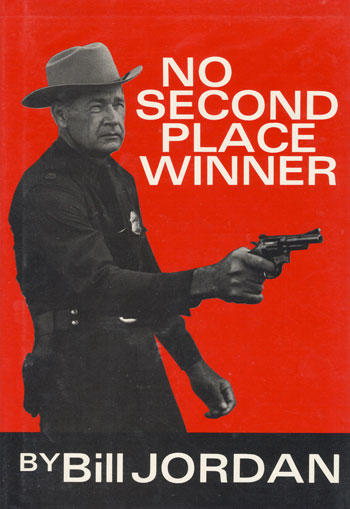 Jordan was nowhere as prolific as the other writers on this list, but his first-hand experiences were in a class of their own; there may never have been a man faster with a handgun. His book, No Second Place Winner, has become a must-read for police-handgun enthusiasts, but you’ll need to dig up his magazine writings to really gain an appreciation for him. Someone could do his legacy and the shooting world a favor by anthologizing these pieces.
Michael McIntosh
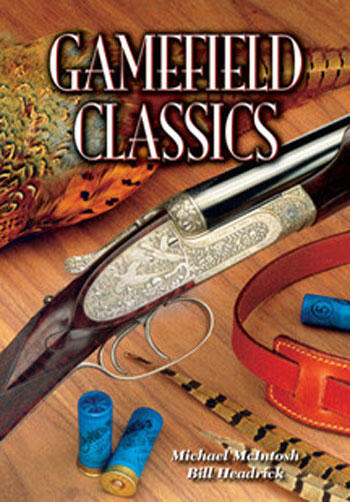 McIntosh is the only writer listed here whom I knew personally, as we were both longtime columnists for Sporting Classics. McIntosh wrote with grace and a distinctive style, and he really knew shotguns. Mind you, his interests and knowledge ranged widely, but posterity will likely remember him, first and foremost, as a shotgun writer. His major works include Best Guns, Shotguns & Shooting, Shotgun Technicana, A. H. Fox: The Finest Gun in the World, The Big-Bore Rifle, and Gamefield Classics.
I can already hear readers muttering, Where are George Nonte, Skeeter Skelton, Jim Carmichael, David Petzal, Sam Fadala, Bryce Towsley, “Pondoro” Taylor, Jeff Cooper, Terry Wieland, Wayne Van Zwoll and countless others? These writers are all of note but many are still living, while others are just not at the top of my preferences.
 And then the Brigade Commander showed up!