Categories
All About Guns Real men

American Original: Townsend Whelen By Kurt Allemeie

Townsend Whelen loved the outdoors and lived guns.

An avid outdoorsman, marksman, hunter, soldier, and author, Whelen wrote for numerous sporting magazines and penned several books on topics ranging from gunsmithing to rifle scopes to big game hunting, shooting, and weapon cleaning. A career U.S. Army officer, he served as the commander of the Frankford Arsenal in Philadelphia before retiring as a full colonel after 34 years of active duty. He was 84 when he died in 1961.

Whelen-1Townsend Whelen in his element.

These are Townsend Whelen’s thoughts on whether or not to hire an outfitter for a hunting expedition that would provide cooks, guides, necessary equipment, and sleeping accommodations:

“The western dude, or the eastern sport, who starts under these present comparatively luxurious conditions does not long remain a tenderfoot,” Townsend Whelen wrote in `On Your Own in the Wilderness,’ published in 1958. “Either he quits the game when he has a few heads to hang on his wall, or he becomes a real hunter, fisherman, and woodsman in his own right.

“If you have red blood in your veins, a love for the beautiful, and a deep-down yearning for freedom and peace, you soon learn to do things for yourself,” Whelen wrote. “You take a more and more justifiable pride in your increasing competence. Perhaps you start out hardly able to step over a picket rope and end by hurdling the mountains.”

An Experimental Springfield 1901 Carbine

An experimental U.S. Springfield Model 1901 bolt action carbine inscribed to Townsend Whelen when he was a lieutenant in the Army will be on auction at Rock Island Auction Company’s Feb. 16-18 Sporting and Collector Firearms Auction. It’s serial number 11. The rifle gauge is .30-03, not the .30-06 he recommended in `On Your Own in the Wilderness’ and throughout his life.

Whelen-rifle-1wA view of an experimental Springfield Model 1901 bolt action carbine in Rock Island Auction Company’s Sporting and Collector Auction, Feb. 16-18.

The experimental 1901 wasn’t adopted by the U.S. Army but served as a precursor to the M1903 that proved to be a mainstay for doughboys and GIs through two world wars. In limited production, more tests were done to the 1901, leading to several changes. The rear gunsight was moved back and the barrel was shortened from 30 to 24 inches as it evolved toward the M1903.

The .25 Whelen, .35 Whelen, .375 Whelen, and .400 Whelen cartridges bear his name from when he commanded the Frankford Arsenal.

Townsend Whelen: Tentmaker

He designed a lean-to tent he called, appropriately, the `hunter’s lean-to tent’ in 1925 and David Abercrombie, of Abercrombie & Fitch, manufactured and marketed it as a `Whelen lean-to.” Various versions can still be found for order on the Internet.

Whelen-lean-toTownsend Whelen’s lean-to tent.

Born of blue blood in Philadelphia in 1877, as a child, Townsend Whelen was gawky and withdrawn, seemingly not cut out for the life of the military nor outdoor adventure. The gift of a Remington rolling block .22 at age 13 changed that. He taught himself to shoot and by 15 he was winning rifle matches.

At 18, Whelen began exercising seriously and gained 30 lbs. of muscle, and joined the Pennsylvania National Guard as a private. Three years later, his unit was called up for the Spanish-American War but didn’t see action. He quickly rose to sergeant, then to lieutenant. As he was promoted, he saw his future as a career military officer and applied for a commission.

Townsend Whelen in British Columbia and Panama

Officer testing wouldn’t be for a year, so Townsend Whelen resigned from his reserve unit, quit his job, and headed for the wilderness of British Columbia, taking little more than the essentials with him. Among the items was a tarp to create his lean-to tent. He spent several months roaming the wilds and hunting game before returning to Philadelphia and the officer exam.

Among Whelen’s assignments as a regular Army officer was the garrison force to protect the Panama Canal as it neared completion. The area his unit was assigned was thick jungle that Whelen traipsed into on weekends. He explored carrying little more than his rifle and what could fit in a rucksack. With his experiences, he trained his men on jungle survival and set the standard for the U.S. Army.

Townsend-Whelen-4Townsend Whelen

Townsend Whelen: Top Marksman

Whelen, known as Mister Rifleman, was a superior marksman and served on several Army teams competing against the other branches.  He wrote `Suggestions to Military Riflemen” in 1909 and is listed as the winner of the Army Competitions in 1903, Coach of the U.S. Army Infantry Team in 1905, and as a member of the U.S. Infantry National Team in 1903, 1906, and 1907.

Pedersen-Device-and-1903-rifleU.S. Springfield Armory 1903 Mark I rifle rig with an original Mark I Pedersen Device.

As the United States entered World War I, Townsend Whelen found himself assigned to the Army General Staff, inspecting camps and creating training regimens.

Whelen found an interest in ordnance after the war, commanding the Frankford Arsenal and serving as director of research and development at the Springfield Armory, working with highly-trained gunsmiths and learning from them.

Whelen-with-rifle-and-scopeTownsend Whelen later in life holds a rifle with a scope.

In his books, Townsend Whelen writes about the proper ammunition and rifle for hunting, to achieve humane kills and preserve pelts. He long promoted the Springfield .30-06 and the .22 long rifle. In the `American Rifleman,’ he wrote: “The .30-06 is never a mistake.”

Whelen explored Canada, the Rocky Mountains, and the Adirondacks, and bagged 110 head of big game during his career. He was a regular contributor for Field & StreamSports AfieldOutdoor LifeThe American Rifleman, and Guns & Ammo, according to an article about him in Field & Stream.

Whelen-book-coversBook covers to three of Townsend Whelen’s books. He penned dozens of books and thousands of articles.

Townsend Whelen: Advice for Riflemen

In his voluminous writing, Townsend Whelen offered mountains of advice. Here are just a few nuggets:

First and foremost, clean your firearm. “A firearm is a piece of fine machinery. Like any other machine, if it be treated with the proper care at the proper time it will last a lifetime and always give satisfaction. Fail to give it this care, and it will soon deteriorate.

“In some respects, the care of a firearm is more complicated and difficult than the care of other machinery. It is often exposed outdoors to very severe weather. The firing of the cartridge introduces into the bore a fouling which will most certainly cause rust and deterioration unless it is quickly and completely removed.”

Use the sling. “The advantages of using the gun-sling are: absolute steadiness in the prone position; distribution of the recoil to the entire body; quickening return of the rifle to the target in magazine fire; preventing the rifle recoiling off the target; and minimizing the effect of the wind, fatigue, and breathlessness on holding.”

Whelen-rifle-3wThe experimental Springfield M1901 bolt action carbine has a leather sling.

Fitness is important in shooting. “A strong, muscular man will always have an advantage over a weak man in military shooting. The weak man may be able to shoot a score or two as well as his stronger brother, but the latter can hold so hard that the recoil is scarcely felt, while the former will be so kicked around that as the shooting progresses his work will fall off.

In competitions like those in the regular Army, where the competitor has to compete at his post for top score and then go through two severe competitions of six days’ duration each, strength becomes an enormous factor. So, too, in a strong wind the powerful man can hold his rifle more firmly against the wind than the weaker one.”

Keep a record. “The score-book is not, as its name implies, a record of the score made in points. It is intended as an exact record of the rifle, ammunition, and man under the exact weather conditions existing at the instant the shot is fired, with also a record of these weather conditions. Any score-book which does not contain all this data is useless from the expert’s point of view.”

Your eyes are important. “It well behooves even those with good strong eyes to take extra care of them during the target season. The eyes should never be used any more than is absolutely necessary, and then never for long-continued intervals.”

Clean from the breech, not from the bore. “The only safe way of cleaning is from the breech with a long cleaning-rod. The muzzle cannot be guarded too carefully.”

Aim for the ‘boiler room’ to make humane kills. “The chest, containing the heart and lungs, presents the largest mark. A modern bullet at modern velocity penetrating into this boiler room disrupts so much tissue, and so fills the cavity with blood that the animal either succumbs on the spot or drops after a wild race of perhaps twenty-five to a hundred yards, as soon as the supply of blood to the brain ceases.

“This critical area is not a difficult target. Any hunter who cannot be fairly sure of striking it with the majority of his shots has no moral right to hunt with the rifle, for he will cause too much suffering.”

Whelen-inscription-1The inscription on the top of the receiver of the Springfield M1901 bolt action carbine. It reads “11/LT./TOWNSEND WHELEN/30-03/1901” on the top of the receiver.

Townsend Whelen: A Hunter’s Hunter

The wilderness called to Townsend Whelen and he answered it countless times. He hunted big game and lived off the land. As a soldier, he put his wilderness knowledge to use. As a writer he shared that knowledge.

In the Feb. 16-18 Sporting and Collector Firearms Auction, a seldom seen U.S. Springfield Model 1901 bolt action carbine, inscribed to then-lieutenant Whelen will be on offer. More than just a rare long gun, this Model 1901 is a piece of outdoor writing history and honors a man who lived life to the fullest.

Sources:

`On Your Own in the Wilderness,’ by Townsend Whelen and Bradford Angier

`Suggestions to Military Riflemen,’ by Townsend Whelen

`Rifles and Cartridges,’ by Wayne Van Zwoll, Rocky Mountain Elk Foundation

Historicalfirearms.info

`Great American Hunters: Townsend Whelen,’ by David E. Petzal, Field and Stream

`Colonel Townsend Whelen – American Rifleman and Soldier – Part 1,” frontierpartisans.com
Categories
Hard Nosed Folks Both Good & Bad Paint me surprised by this Real men Soldiering This great Nation & Its People War

One American vs 250 Germans (WW2 Documentary)

Categories
Darwin would of approved of this! Good News for a change! Hard Nosed Folks Both Good & Bad Karma can be a bitch! One Hell of a Good Fight Real men

FUFO Teen shot, killed by store manager during armed robbery identified by New Orleans coroner

Categories
Real men Soldiering

The 28th Māori Battalion

Categories
All About Guns Real men Soldiering War

SAS Airfield Raid 1942

Categories
All About Guns Hard Nosed Folks Both Good & Bad Real men

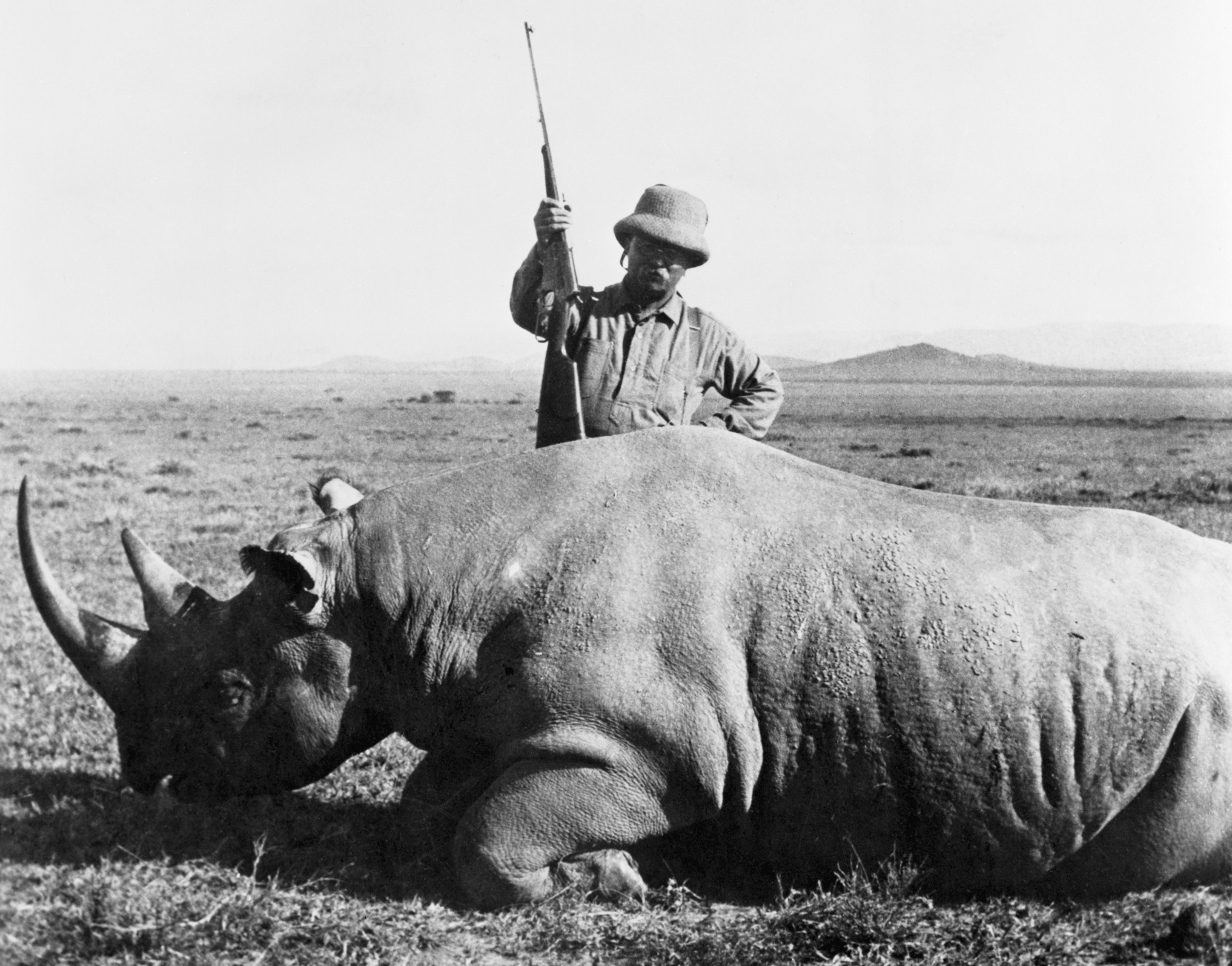
TR & his Winchester Model 1895 in 405 Win.

Categories
All About Guns Real men Soldiering War

Why was the Greatest B-17 Gunner Erased From History?

Categories
All About Guns Allies Real men

Skeeter Skelton’s Favorite Sixgun

Categories
All About Guns COOL!!!!!!!!!!!!!!!!! Dear Grumpy Advice on Teaching in Today's Classroom Hard Nosed Folks Both Good & Bad Interesting stuff One Hell of a Good Fight Real men Soldiering War

Rare War Footage from The Boer War (1899) | War Archives Grumpy says amazing!!!!!!!

Categories
California Leadership of the highest kind Manly Stuff Our Great Kids Paint me surprised by this Real men Soldiering This great Nation & Its People War You have to be kidding, right!?!

Major William Gail White: The Frag Magnet by Will Dabbs

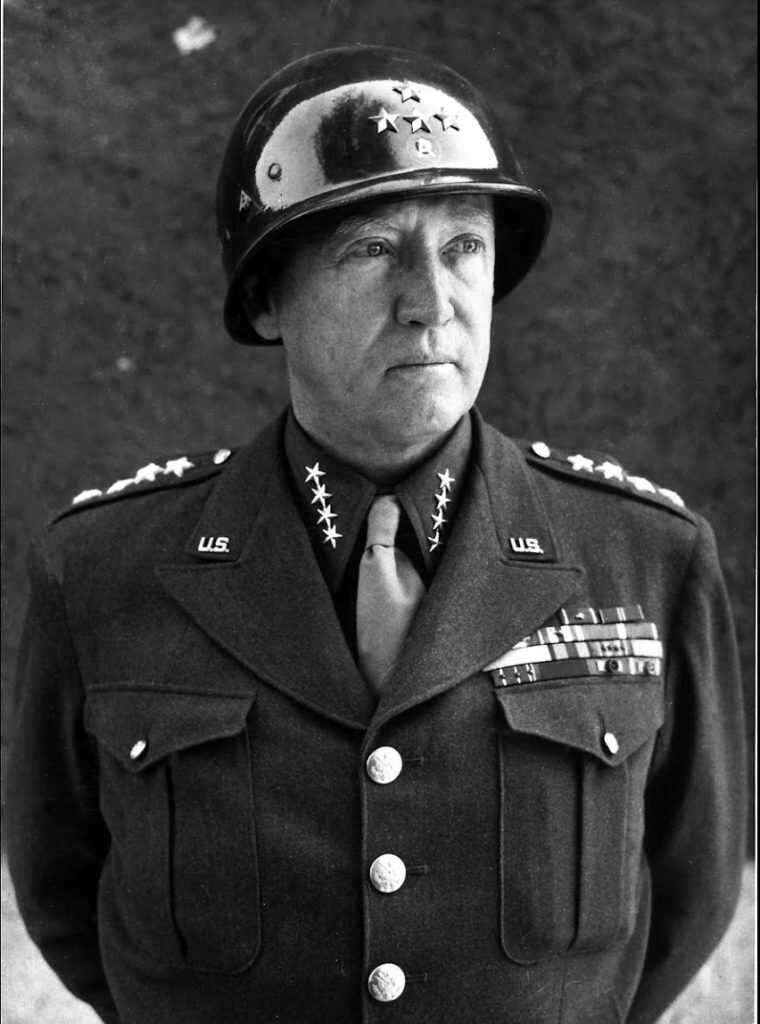
George Patton was arguably the most audacious general the United States has ever produced. However, that guy was a bit nuts. He was not of the same caliber as Major White.

Soldiers do curious things for some of the dumbest reasons. Referring to the Medal of Honor, General George Patton once opined, “I’d give my immortal soul for that little blue ribbon.” That is objectively insane.

Medals and Awards

I never met an inspiring soldier who chased awards. The true heroes I have encountered were, to a man, humble. Jack Lucas threw himself on two grenades at once in the opening salvoes of the invasion of Iwo Jima, rightfully earning the Medal of Honor in the process. When this indestructible Marine found out I was a veteran, he thanked me for my service. I wasn’t worthy to polish that man’s boots.

Like others of his rarefied caliber, Jack deferred the glory to those who did not come home. I am ever amazed that, as a people, we can create such men as these. Of all the silly baubles that drive soldiers to ridiculous heights, be they funny hats, uniform patches, or scraps of colored ribbon, none should be so dreaded as the Purple Heart. To earn that medal, you’ve got to bleed.

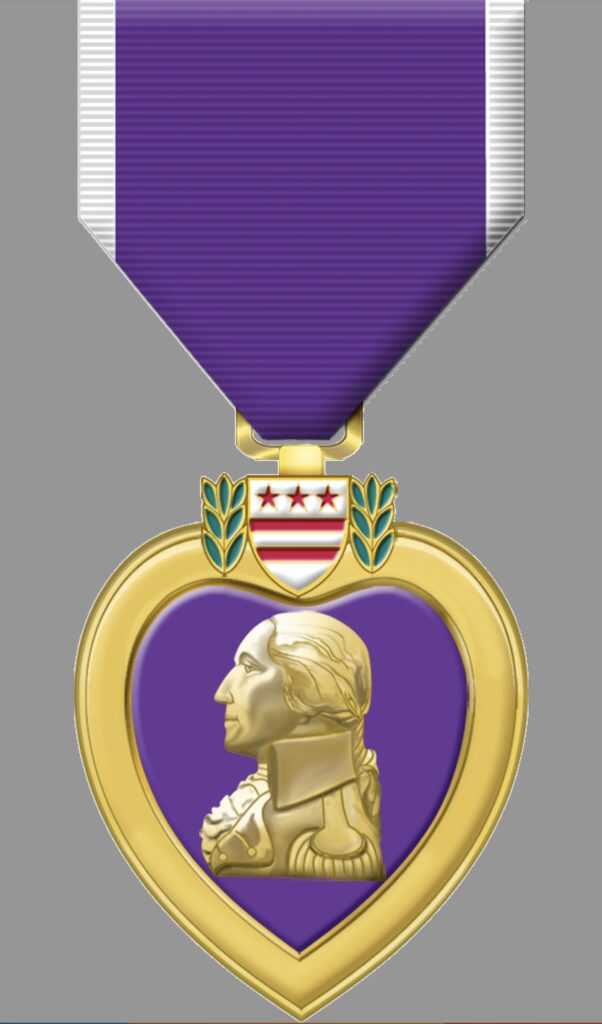
George Washington instituted the first Purple Heart back in the 18th century.

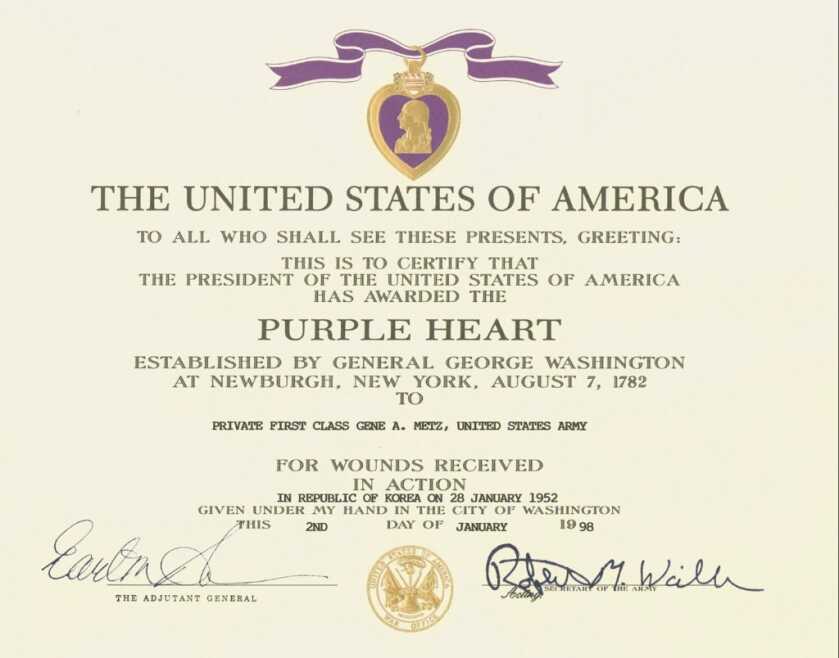
The Purple Heart

George Washington thought that one up. The award was first called the Badge of Military Merit, and it was established on 7 August 1782. The medal bears Washington’s likeness even today. Washington only presented three of the awards, though he empowered his subordinates to deliver more. The Badge of Military Merit then languished unused until 1927.

While several military men worked on the project, it finally came to fruition under the leadership of Douglas MacArthur. The specific details of the modern Purple Heart were designed by an Army heraldic specialist named Elizabeth Will. The finalized award was formally resurrected on 22 February 1932, the 200th anniversary of Washington’s birth.

Douglas MacArthur was the US military’s first recipient of the Purple Heart medal.

The Purple Heart was awarded retroactively for wounds received during World War 1. MacArthur himself was the first recipient. It was standardized across all services in December of 1942. However, the Purple Heart is a military award no sensible person covets.

A Circuitous Path

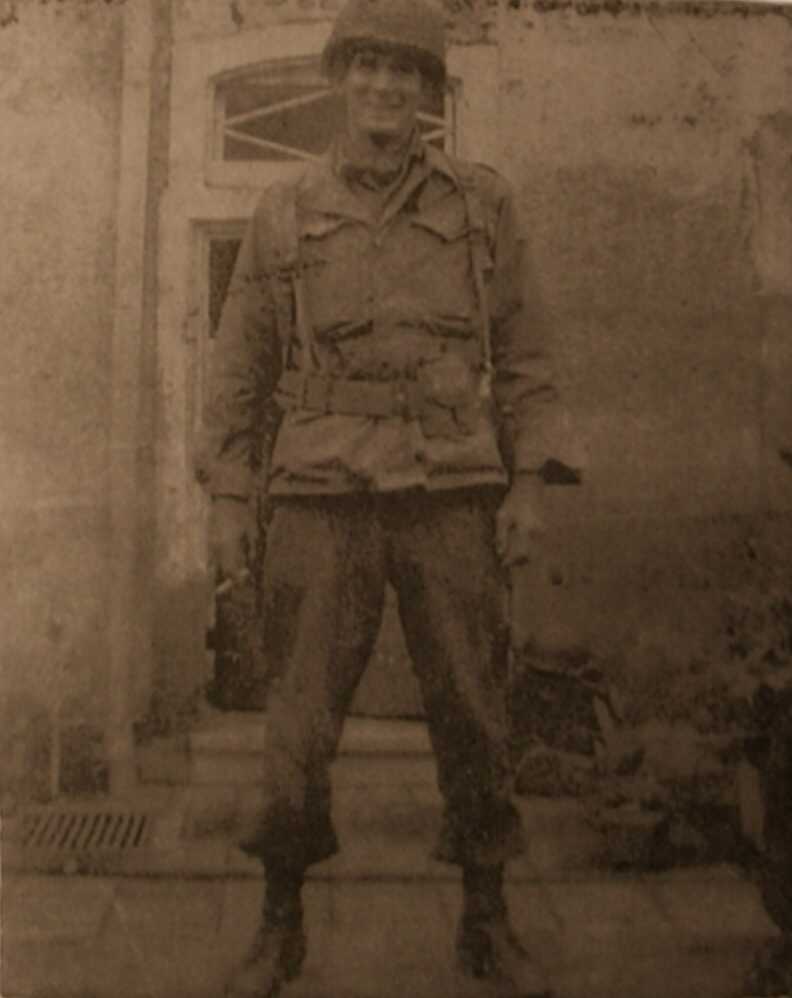
Born on October 27, 1910, William Gail White was the youngest of three children born to a Presbyterian minister and his schoolteacher wife. White attended High School in Bakersfield, California. From the very beginning, he wanted to be a soldier. White volunteered for a summer training program called the Citizens Military Training Camp (CMTG) and was designated honor trainee. Upon graduating in 1929, White began competing as part of the Ninth Corps Area CMTG Rifle team.

A superb marksman, White was recommended for a commission as a Second Lieutenant, but he was too young. He enrolled in the San Jose Teachers College in 1930 but dropped out and enlisted in the US Marine Corps. In the summer of 1930, White was assigned to the USS West Virginia as part of its Marine detachment.

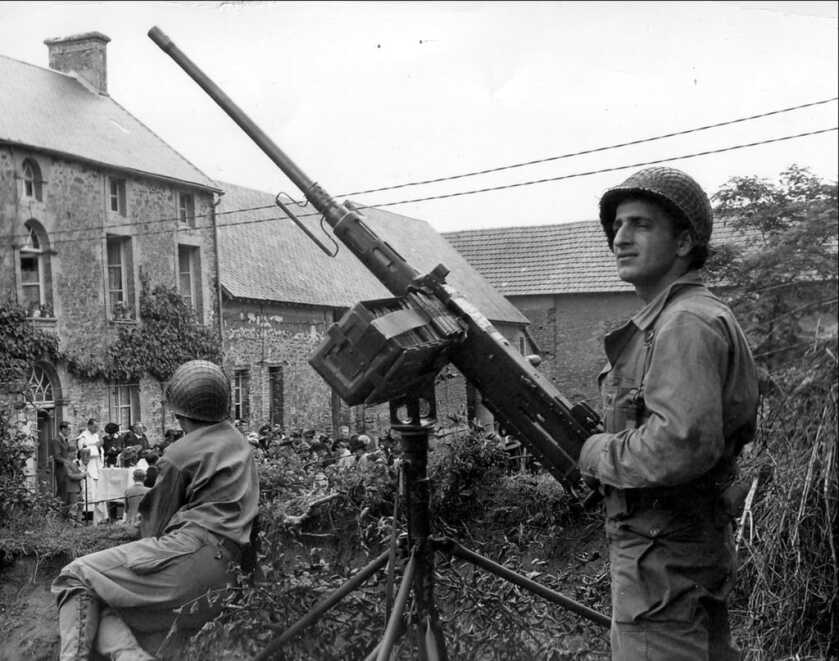
William White was a gifted marksman. He set a Marine Corps record with the M-2 .50-caliber machine gun.

Exactly The Right Type of Person

White excelled as a Marine. He set the Marine Corps record with the Browning M2 machinegun, scoring 396 out of 400 on the 1,000-inch range. After eleven years as a Jarhead, William White left the Marines for civilian life. He worked for Shell Oil until 1941. However, with war approaching, White enlisted again, this time as an Army Private at age 31. He was assigned to the 32nd Infantry Regiment of the 7th Division stationed at Fort Ord, California. During one training mission in California, White crossed the Salinas River alone on an inflatable air mattress to gather intelligence on enemy dispositions. This earned him the nickname, “The Salinas River Sea Serpent.”

By the summer of 1944, White had indeed become a commissioned officer. Now 34, he was assigned as the Executive Officer for the 3rd Battalion, 330th Infantry Regiment, 83d Infantry Division. He later commanded his own battalion. White made Major 25 months to the day after enlisting as a Private. Suffice to say, it takes considerably longer than that today. By late June, White was moving into Carentan, France, to relieve the 101st Airborne after they assaulted Normandy.

William Gail White Attracted Pain

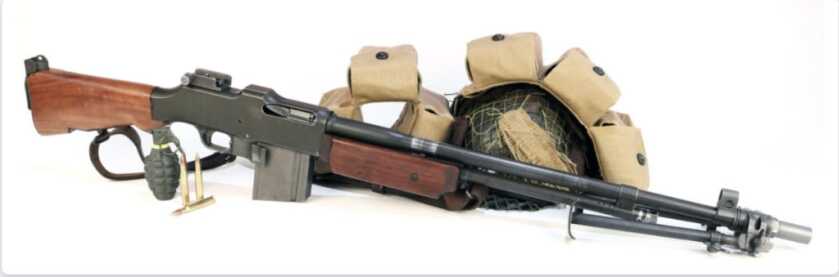
The Browning Automatic Rifle was a boat anchor to hump. When Major White snatched one up during the hedgerow fighting in Normandy, its owner was a bit irked.

Major William Gail White was utterly fearless in combat. While advancing through the accursed Norman hedgerows, White struck out at a run, rallying his men to follow. Throwing himself onto the far berm, he spotted a pair of German machinegun positions sited to produce a crossfire in the next open field. The next American to arrive was a BAR man. White did not feel that he had time to direct the man’s fire, so he snatched up the BAR himself.

He then neutralized both positions before swapping magazines and striking out with the heavy gun for the next berm. Meanwhile, the poor BAR gunner who had lugged the massive weapon throughout training and the landings in France scurried behind shouting, “But Major, when do I get to use it?” White responded, “Never mind when you get to use it. Throw me another damn magazine…”

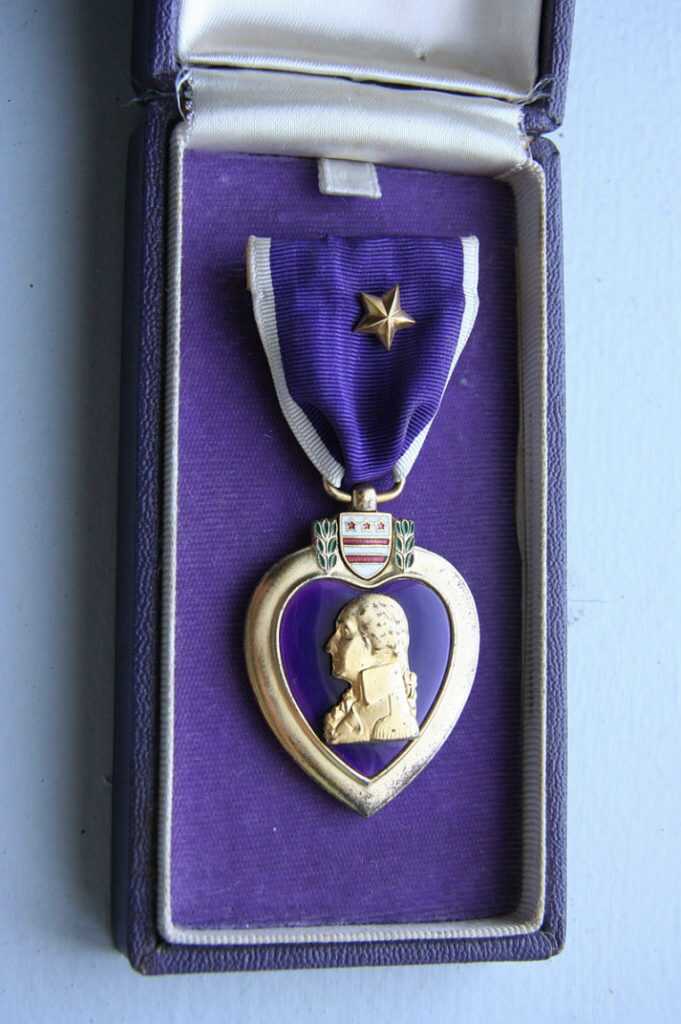
Normandy in the summer of 1944 was a dangerous place. White and his unit were facing the 17th SS Panzergrenadiers along with elements of the 5th and 6th Fallschirmjager Regiments. These elite troops fought fanatically for every yard of French dirt. On 5 July, Major White was hit in the chest by a 9mm round fired from a German MP40 submachinegun. This bullet struck him a glancing blow, blooding him badly without penetrating anything vital. Later that same day he caught a grenade fragment to his forehead. Those two injuries bought him two Purple Hearts in a single day.

William White became known as the Mad Major for his tenacity in combat.

Major White Kept Collecting Bullets

In the next forty-eight hours, Major White was wounded three more times. He was first struck in the shoulder by a piece of shrapnel from an artillery round. What put him down, however, was a bullet along with grenade fragments that synergistically shredded his forearm.

These wounds, his fifth and sixth, physically removed a substantial portion of his forearm and rendered him unconscious. Three inches’ worth of bone was visible when they evacuated him. He awoke to, “The face of the most beautiful blonde angel he had ever seen.” The exhausted Army nurse did her best to clean his battered body and brought him something to eat. Despite his being declared a critical surgical case, White still had to wait three days for space in a crowded operating theater.

Army surgeons reconstructed his forearm as best they could and covered the wound with a skin graft from his thigh. White later joked,  “Every time my leg itches I have to scratch my arm.” However, the damage to his forearm muscles was severe, preventing him from using a weapon. This should have been his ticket back to the Z.I. (Zone of the Interior—Stateside).

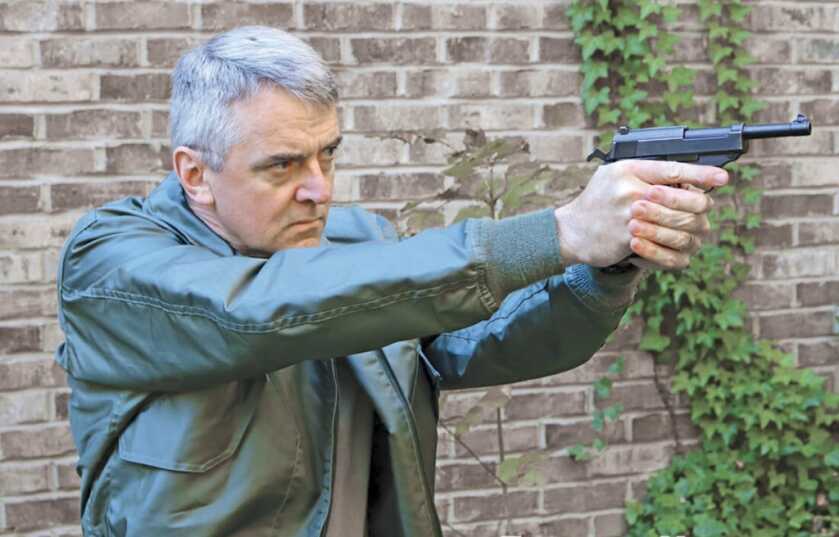
The German Walther P38 was a radically advanced combat handgun for its day. Operating the long stiff double-action trigger on the gun gave Major William White a goal as he recovered from a fearsome arm injury.

Not Done Fighting

Major William Gail White still felt he had more war left to fight. When evacuated he had stashed a captured Walther P38 pistol in his gear. The hospital staff had stored the German weapon in their supply room. White retrieved it and spent hours trying to squeeze the double-action trigger. When finally he could reliably activate the weapon, White felt he could return to his unit. He subsequently went AWOL and caught a ride back to the continent from England.

White tried to find his old unit, but this was a chaotic time. While fighting as a replacement in Luxembourg he was showered in fragments from yet another German hand grenade. That was Purple Heart number seven.

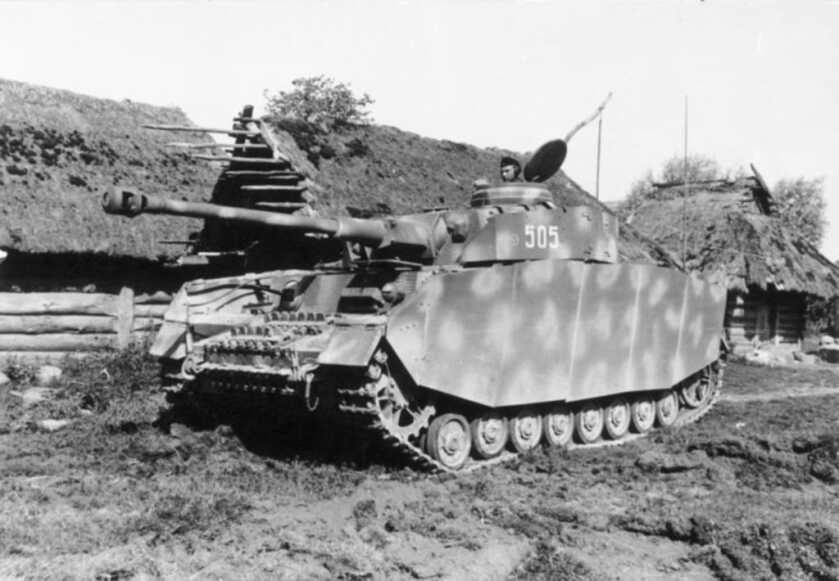
This is a German Panzerkampfwagen Mk IV. Major William White took out two of these tanks himself toward the end of World War 2.

As Tough As They Come

We lack the space to do this man justice. White was captured by the Germans but escaped, liberating another fourteen Americans in the process. This earned him the Silver Star. On 10 December 1944, White earned his second Silver Star during combat in Strauss, Germany. This action saw him eliminate three enemy machine gun positions, two Pzkfpw Mk IV tanks, and two self-propelled guns while capturing 31 German prisoners. Along the way, he caught a burst of machine gun fire to the belly. That was his eighth Purple Heart.

As a physician, this is tough to imagine. White was evacuated to England for a major belly surgery and colostomy. He subsequently crashed on the operating table. The surgeons had the chaplain administer the last rites, yet he miraculously recovered.

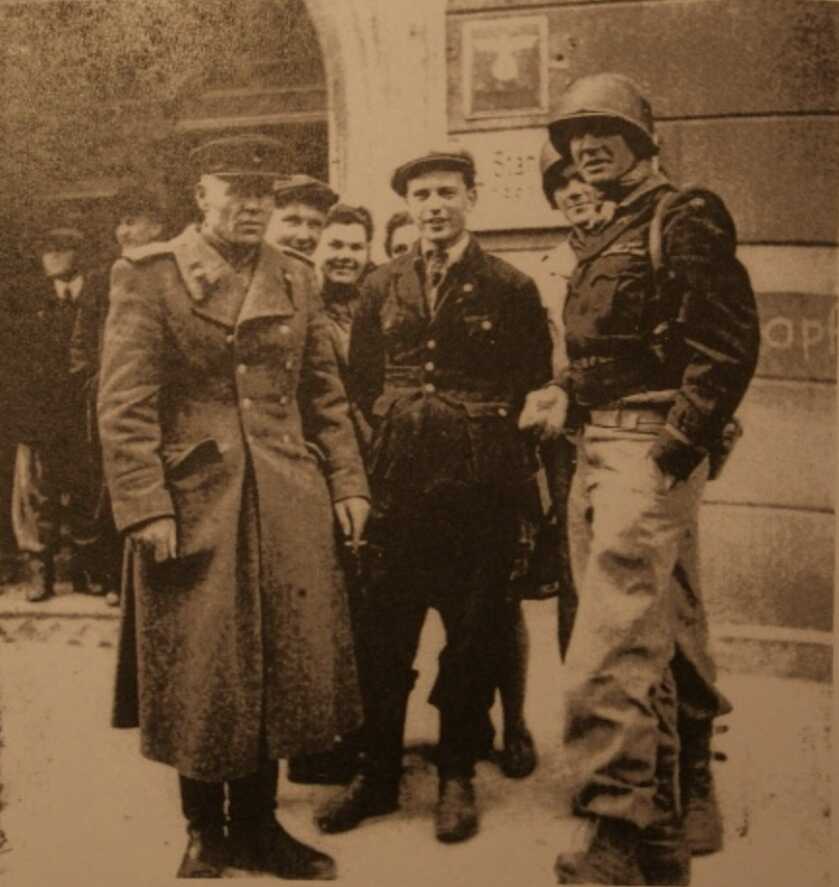
At the end of the war, Major William White, shown here on the right, struck out alone into enemy territory and made contact with Russian units advancing from the east.

Major William Gail White: Back At It

After less than a month, White had his colostomy reversed. Two days after that he slipped out of the hospital and caught a C47 back to the war zone yet again. 48 hours before he had been pooping in a bag. Good Lord, what a man.

While fighting around the Elbe River, Major White was wounded a ninth time, his last before the German capitulation. However, this shot-up old hero wasn’t quite done. He later deployed yet again for the war in Korea.

By now White was more than 40 years old. During one engagement in Korea, communist forces shot the antenna off of the radio he was carrying. Another bullet also took off his cap. He later counted six bullet holes in his parka. Soon after, while serving as an advisor to a South Korean special forces unit, White made a one-round confirmed kill on a running North Korean soldier at 900 yards over open sights using an M1 Garand rifle.

William White earned the Purple Heart medal ten times.

White was eventually shot through the right chest with a Chicom rifle round. This was his tenth and final wound. Despite lots of surgery and a laborious recovery, the man still would not die. He subsequently went on to complete Airborne school and serve as a Ranger instructor. William White eventually retired as a Lieutenant Colonel.

The Rest of the Story

The morality of employing two atomic bombs to end the war in the Pacific has been debated ever since the bomb bay doors opened on the Enola Gay back in August 1945. However, it is a historical fact that these two bombs ultimately saved countless lives on both sides by negating the need for an amphibious invasion of the Japanese home islands.

The Purple Hearts that are awarded today were all produced during World War 2.

During WW2, the US government manufactured 1,506,000 Purple Heart medals. Most of these were planned for use in the aftermath of Operation Downfall, the invasion of Japan. After the war, nearly 500,000 remained in storage. Even accounting for those that were lost, stolen, or wasted, as of 2000, the national stockpile still stood at around 120,000. The Purple Heart medals that are awarded to service personnel today are all more than 75 years old.

Lieutenant Colonel William Gail White, the frag magnet, finally died of natural causes on 6 April 1985. He was 74 years old. White was interred at Maplewood Cemetery in Kinston, North Carolina. Eventually, old age did what the Wehrmacht and the communist Chinese could not. Wow, what a stud.