Category: Paint me surprised by this

A record share of voters in NBC News’ latest poll say that they or someone in their household owns a gun.
More than half of American voters — 52% — say they or someone in their household owns a gun, per the latest NBC News national poll.
That’s the highest share of voters who say that they or someone in their household owns a gun in the history of the NBC News poll, on a question dating back to 1999.
In 2019, 46% of Americans said that they or someone in their household owned a gun, per an NBC News/Wall Street Journal poll. And in February 2013, that share was 42%.
“In the last ten years, we’ve grown [10 points] in gun ownership. That’s a very stunning number,” said Micah Roberts of Public Opinion Strategies, a Republican polling firm that co-conducted the poll with members of the Democratic polling firm Hart Research.
“By and large, things don’t change that dramatically that quickly when it comes to something as fundamental as whether you own a gun,” Roberts added.
Gun ownership does fall along partisan lines, as it has for years, the poll finds.
This month, 66% of Republican voters surveyed say that they or someone in their household owns a gun, while just 45% of independents and 41% of Democrats say the same.
In 2004, a March NBC News/Wall Street Journal poll found that 57% of Republicans said that they or someone in their household owned a gun, while just 41% of independents and 33% of Democrats said the same.
White voters tend to own guns at higher rates than Black or Latino voters, but gun ownership rates among Black voters have jumped in recent years.
In August 2019, 53% of white voters said that they or someone in their household owned a gun, and 24% of Black voters said the same.
This month, 56% of white voters report that they or someone in their household owns a gun and 41% of Black voters say the same, – a 17-point increase among that group in just four years.
The NBC News poll also measures voters’ attitudes about gun rights.
Almost half — 48% — say they’re more concerned that the government will not do enough to regulate access to firearms, versus 47% who believe the government will go too far in restricting gun rights.
That one-point difference is consistent with past results on this question over the past decade.
The NBC News poll was conducted Nov. 10-14 and surveyed 1,000 registered voters — 833 by cellphone — and it has an overall margin of error of plus or minus 3.1 percentage points.
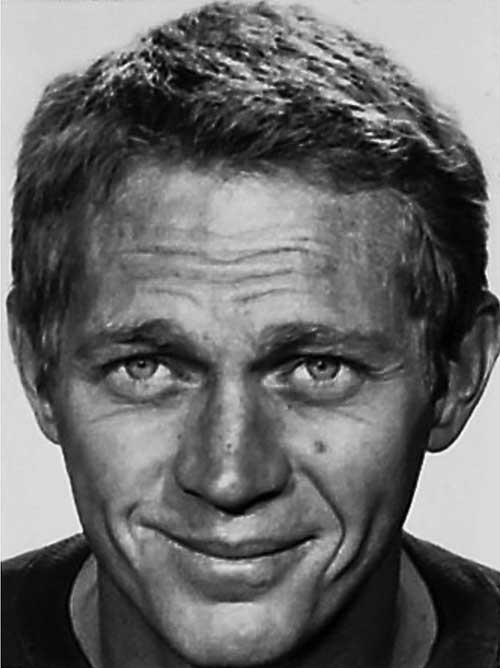
Steve McQueen was undeniably cool.
What exactly does it mean to be cool? Though difficult to define, you know it when you see it. Guns are cool. So was Steve McQueen. You get kind of a gestalt about such stuff.
Some of us spend our entire lives striving mightily to be cool yet fail quite to get there. However, many’s the young man’s unscheduled trip across the river Styx ’twas precipitated by a poorly reasoned effort to be cool.
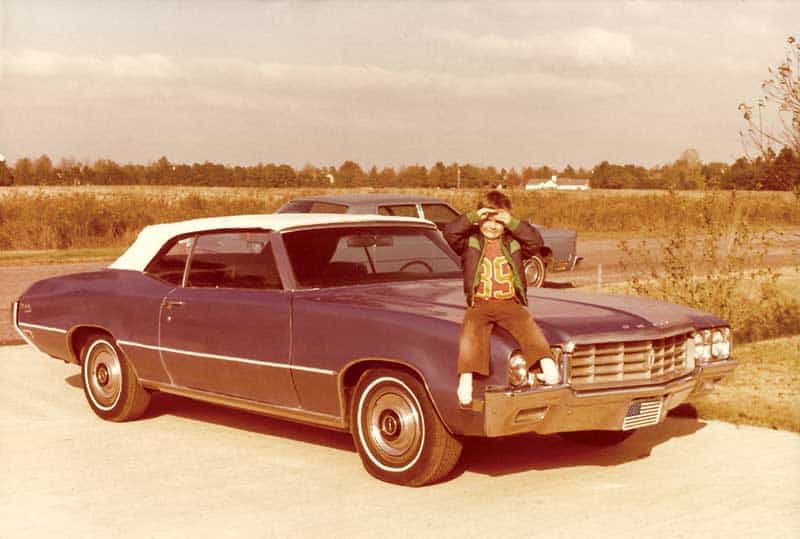
Behold, the world’s coolest teenager-mobile. Will’s little brother perched
so adorably on the hood is 6’3″ and a federal prosecutor today.
The Perfect Day
It was one of those torrid Mississippi summer afternoons when the sun burned like a furnace and the air was so humid you could rip off a chunk and gnaw it. School was out; I had not a care in the world.
In my day you got your driver’s license at 15. I wouldn’t trust today’s 15-year-old males unsupervised with gum, much less an automobile. However, this was a different time.
While I have indeed never been mistaken for cool, my dad did see to it I rolled in a cool car. A young man’s ride is so much more than transportation. It is style, personality, character and status all packaged up on four spinning wheels. My car was pure unfiltered awesome.
The year was 1981 and the car was a 1970 Buick Skylark convertible. The sole ragtop in my small Mississippi Delta community, it was metallic blue and immensely, nay ludicrously, powerful. I would frequently go sit in the back seat and read science fiction tomes with the top down while parked in the driveway. As I said, being cool was more a journey than a destination with me.
On this particular day I was sporting cheap, mirrored aviator shades while tearing down a preternaturally straight stretch of Lee Drive, so named for the esteemed General. Like all adolescent males I was young, bulletproof and immortal. Harm could never befall me.
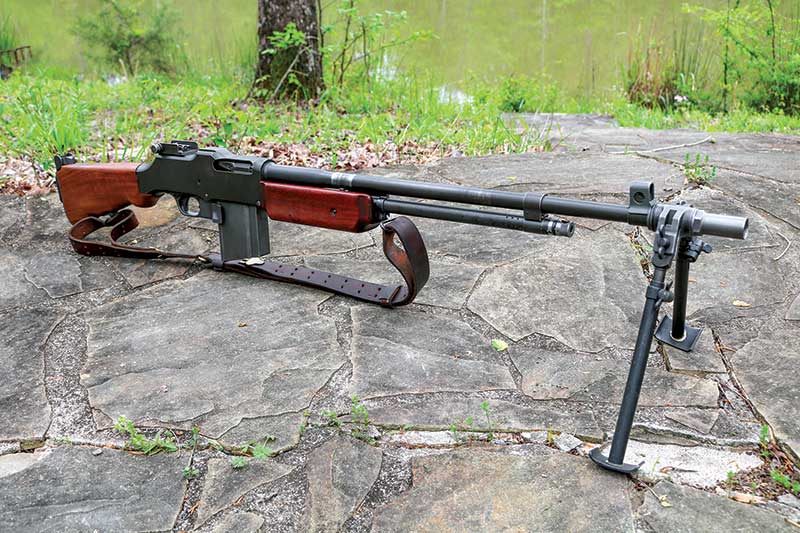
Classic machineguns are undeniably cool.
The Power Of Stupid
Overcome by the moment, I pushed myself up such that I was sitting atop the headrest. A gangly, long-legged lad, I manipulated the accelerator with my right great toe and kept the wheel nominally managed with my fingertips. My face was fully in the slipstream above the windshield.
Seatbelts were not the religious sacraments they are today, so mine were tucked down out of the way behind the seat so as not to interfere with my signature dynamic entry into the vehicle — vaulting over the door to land gracefully in the driver’s seat, ready to rock. During such a maneuver, one does not desire the painful inconvenience of seatbelt buckles. As a result, I perched atop my charging metallic blue steed, restrained not one whit.
My nemesis lurked anonymously within the tall Johnson grass that lined the rural road, happily munching his mid-afternoon snack. Whether driven by boredom, hunger, or love will never now be known, but he did for some reason then spontaneously take flight. Spreading his broad green wings, this massive 4″ Delta grasshopper flexed his powerful legs and leapt into the ether.
I perceived a scant flurry in the periphery of my vision and my entire world exploded. The gargantuan insect caught me squarely in the forehead and detonated like an antitank grenade, knocking me bodily back into the rear seat and leaving my legs draped limply astride the headrest. At this point my trusty Skylark was still making some 70 miles per hour, though now charging randomly sans pilot.
I clawed violently back over the seat and dropped in behind the steering wheel again, seizing the appendage in an involuntary rictus. By some miracle throughout it all the car remained within the two white lines of its own accord. No doubt the vehicle was guided solely by my guardian angel, himself a both overworked and underappreciated spook.
Denouement
I carefully coasted to a stop on the side of the deserted road and took stock. My sunglasses were gone, never to be seen again. A not insubstantial gash tracked rakishly across my forehead, now most liberally adorned with splintered chunks of chitin and copious pureed pest. I wiped away the gore with an oily towel and puttered meekly back home.
I crept stealthily into the house and retired to the bathroom to attend my wounds. My dad inquired concerning my injuries over dinner, and I not untruthfully explained I had been struck by a grasshopper while out driving with the top down. All involved thought it comical.
The truth has remained suppressed to this very day, and now, my friends, I share it with you.

New Speaker of the House Mike Johnson (R) has passed his first Second Amendment test. He immediately and forcefully stated that mass murder does not override the Constitution, and contrary to Democratic policy, emotion should not be used to enact laws that would never be acceptable in a quiet and reasoned debate. The statement was made in an interview with Sean Hannity on Fox.
“The end of the day, the problem is the human heart,” Johnson replied. “It’s not guns, it’s not the weapons. At the end of the day, we have to protect the right of the citizens to protect themselves and that’s the Second Amendment. And that’s why our party stands so strongly for that.”
He added, “This is not the time to be talking about legislation. We’re in the middle of that crisis right now.”
Just after a mass murder is committed with a firearm, politicians are most vulnerable to manipulation by pressure from the old dominant media. At this point, the old dominant media and the Democratic administration are parts of the same leftist ideology. They immediately push the false narrative that the cause of mass murder is the Second Amendment and firearms ownership in the USA. House Speaker Johnson did not accept the false assumptions. He gently corrected them:
“The end of the day, the problem is the human heart,” Johnson replied. “It’s not guns, it’s not the weapons.
The Biden administration immediately struck back with a false representation of what Speaker Johnson said. From politico.com:
In a statement, White House spokesman Andrew Bates said the administration “absolutely” rejected “the offensive accusation that gun crime is uniquely high in the United States because of Americans’ ‘hearts.’”
There are at least three lies in the White House statement.
- Lie #1. Speaker Johnson talked about “gun crime”. He did not. In fact, he said it was not about weapons.
- Lie #2. “gun crime” is uniquely high in the USA. It isn’t. Many countries in the world have far higher rates of crime committed with firearms than the United States. Brazil has a homicide rate with guns, which is over four times as high as the United States. Brazil has about 1/16th as many firearms per person as the USA.
- Lie #3. Speaker Johnson did not single out “Americans’ hearts. He spoke of “the human heart”. This is an important philosophical difference between the left and conservatives. Conservatives believe there is a basic human nature. Leftists, generally, since Marx, do not.
- Read more: https://www.ammoland.com/2023/11/speaker-johnson-passes-first-difficult-test-on-second-amendment/#ixzz8I4ffdCup
Under Creative Commons License: Attribution
Follow us: @Ammoland on Twitter | Ammoland on FacebookSpeaker Johnson stands in contrast to former Speaker Paul Ryan. Here is a statement made by former Speaker Paul Ryan a few days after the Las Vegas mass murder on October 1, 2017. Ryan’s comments were made on October 7th. From the jsonline.com:
In the wake of the Las Vegas mass shooting, U.S. House Speaker Paul Ryan says he’s open to a vote in Congress on what is known as a “bump stock,” a device that can be attached to a semi-automatic rifle that allows it to mimic a fully automatic one.
The Janesville Republican made his remarks on MSNBC’s Hugh Hewitt talk show, which aired Saturday.
“I didn’t even know what they were until this week, and I’m an avid sportsman,” Ryan said of bump stocks. He added: “Fully automatic weapons have been banned for a long time. Apparently, this allows you to take a semiautomatic, turn it into a fully automatic, so clearly that’s something we need to look into.”
Speaker Paul Ryan killed the Hearing Protection Act on October 3rd, two days after the mass murder in Las Vegas. Earlier, it appeared the act had an excellent chance of passage. Ryan had delayed the act when the dedicated leftist had attacked Congressional Republicans and almost killed Representative Scalise. It appeared to this correspondent as an excuse at the time.
Time will tell how effective Mike Johnson will be as House Speaker.
- About Dean Weingarten:
Dean Weingarten has been a peace officer, a military officer, was on the University of Wisconsin Pistol Team for four years, and was first certified to teach firearms safety in 1973. He taught the Arizona concealed carry course for fifteen years until the goal of Constitutional Carry was attained. He has degrees in meteorology and mining engineering, and retired from the Department of Defense after a 30 year career in Army Research, Development, Testing, and Evaluatio

Iranian-backed Houthi rebels fired missiles Wednesday at the U.S.S. Carney off the coast of Yemen, according to news reports.
ABC News reported:
A U.S. Navy destroyer has been involved in a security incident in the Red Sea, a U.S. official said Thursday.
The USS Carney encountered multiple missiles launched by Houthis in Yemen and fired missiles in response, the official said.
…
The Houthi missiles were not thought to have been fired at the ship.
CNN added:
A US Navy warship operating in the Middle East intercepted multiple projectiles near the coast of Yemen on Thursday, two US officials told CNN.
One of the officials said the missiles were fired by Iranian-backed Houthi militants, who are engaged in an ongoing conflict in Yemen. Approximately 2-3 missiles were intercepted, according to the second official.
The officials said it was unclear what the missiles were targeting. It’s possible the missiles were fired at the USS Carney or launched towards another target.
A Pentagon briefing is expected Thursday afternoon.
This story is developing.
—————————————————————————————–I am getting the feeling that A. Not a lot of Folks are scared of us. & B. That somebody is just spoiling for a serious fight. God help us all!! Grumpy

May 4, 1970, was a Monday. The Vietnam War was ripping Southeast Asia apart, while an altogether different war raged across and throughout the American heartland. On the campus of Kent State University in Kent, Ohio, forces representing the Establishment were arrayed against a motley mob of some 2,000 students, hippies, stoners, bikers, and sundry anti-war protestors.
Fertile Ground for Chaos
 Student-led protests against the Vietnam War arose on college campuses across the country.
Richard Nixon was two years into a term brought about by his promises to end American involvement in Vietnam. The My Lai Massacre in November of 1969 put an exceptionally ugly face on the conflict, while the pressure of a national draft kept the war personal for American young people. By 1970, student protests at colleges across the country were becoming overtly violent.
 Jerry Rubin led the Yippie movement. I listened to a couple of his period interviews. This guy was a massive turd.
On April 10, Jerry Rubin, the leader of the Youth International Party, announced, “The first part of the Yippie program is to kill your parents. They are the first oppressors.”
On April 30, President Nixon announced the invasion of Cambodia, a move widely seen as an unwelcome expansion of the conflict in Vietnam. By the first of May, demonstrations were being held both formally and otherwise across the country.

On Friday, May 1 in Kent, Ohio, protesters began vandalizing the downtown area by breaking windows and pelting police cars with beer bottles. Kent Mayor LeRoy Satrom declared a state of emergency and reached out to Ohio Governor Jim Rhodes for support. Governor Rhodes authorized the deployment of two Infantry companies and an Armored Cavalry troop. On the evening of Saturday, May 2, protesters burned the Kent State ROTC building to the ground.

For much of that weekend, chaos reigned across the Kent State campus. Law Enforcement, firefighters, National Guardsmen, and anyone else viewed as being an authority figure were pelted with rocks and bottles. The Guardsmen responded with tear gas. Protesters were commanded to disperse at the point of the bayonet. Though there were a few minor injuries most of the damage was thus far confined to property.
Unleashing Hell

By noon there were violent running encounters between the roughly 2,000 protesters and some 77 National Guard troops armed predominantly with M1 rifles. Windy conditions minimized the effectiveness of tear gas, and protesting students lobbed volleys of rocks at the Guardsmen. The crowds of protesters dispersed and then coalesced fairly randomly in response to the movements of the National Guard troops. Some protesters departed the area, but a great many pursued the main body of troops verbally taunting them and throwing stones.

The soldiers moved back toward the campus Commons area. The main body of protesters followed them shouting and throwing rocks. Some of the Guardsmen then stopped, knelt, and trained their rifles on the rowdy mob. Sergeant Myron Pryor then purportedly drew his M1911A1 .45ACP pistol and fired at the crowd. There followed a ragged volley of rifle fire lasting 13 seconds.
The Forensics of the Tragedy

When SGT Pryor first fired his weapon the nearest student to the National Guard formation was 71 feet away. 29 of the 77 Ohio National Guard soldiers later reported having discharged their weapons. Over the course of thirteen seconds, they fired a total of 67 rounds.

Four students were killed and another nine injured. Two of the students, Jeffrey Miller and Allison Krause, were participants in the protest. The other two, William Schroeder and Sandra Scheuer, were walking between classes and not actively involved. Schroeder was actually a member of the Kent State ROTC unit.

Scheuer was shot through the neck at 120 meters. Schroeder was shot in the chest from a range of 116 meters. Krause was hit in the chest from 105 meters, and Miller was shot in the head at 81 meters.

Of the nine protesters who were injured, all were male. Distances ranged from 22 to 230 meters. Dean Kahler was left permanently paralyzed with a spinal cord injury. James Russell was struck in the forehead with birdshot.
 This photo was taken immediately after the Guardsmen stopped firing.
There were allegations that the exchange was precipitated by gunfire against the Guardsmen. The Ohio National Guard commander, General Robert Canterbury, had personally given the order to lock and load rifles prior to the push to disperse the crowds.
The Weapons

SGT Pryor’s M1911A1 was an evolutionary development of John Moses Browning’s extraordinary M1911. Developed around the beginning of the 20th century, the M1911 was a radically advanced sidearm for its day.
The M1911 saw active service with American forces during WW1. In 1924 the basic design was slightly tweaked into the definitive model that carried US forces through WW2, Korea, and Vietnam. These changes included a longer grip safety spur, simplified grips, a shorter trigger, frame cutouts behind the trigger, an arched mainspring housing, and a handful of lesser adjustments. The resulting pistol was and is reliable, relatively accurate, and undeniably powerful.
The M1 rifle entered service in 1936 and soldiered on as the standard Infantry rifle for the US Army until it was supplanted by the M14 in 1958. A semiautomatic gas-operated design, the M1 was an integral part of the Allied victory during WW2. The weapon obviously remained in service with Army Reserve and National Guard units until the 1970s.
Though bulky and heavy by modern standards, the M1 was a generation more advanced when compared to the bolt-action weapons used by every other major combatant during the Second World War. Given the weapon’s length and rugged construction, it also made for a proper close-quarter tool when equipped with a bayonet. The M1 is rightfully revered by military history enthusiasts as well as those who carried the weapon operationally.
At least one of the Guardsmen involved in the Kent State shooting was carrying a pump-action 12-gauge shotgun. I’ve pored over the period pictures and cannot definitively pick out a shotgun. However, the US Army has used a wide variety of scatterguns operationally over the years. The Remington 870 was in common use at the time. The Winchester 1897 Trench Gun saw service all the way from WW1 up to the 1991 Gulf War.
The Ohio National Guardsmen used M79 grenade launchers to throw tear gas canisters. In use from 1961 to the present, the M79 has been variously known as the “Thumper,” the “Bloop Tube,” the “Elephant Gun,” and “Big Ed” by the American troops who wielded it. Australians referred to this beloved weapon as the “Wombat Gun.”
 The M79 is exceptionally accurate in experienced hands.
The M79 utilizes the High-Low Propulsion System that minimizes recoil from its 40x46mm grenades. The Mk19 automatic grenade launcher fires 40x53mm grenades that are not interchangeable with those for the M79.
 The HK M320 is gradually replacing both the M79 and M203 grenade launchers in US service. I realize this in an effective weapon, but that thing is just bug ugly.
The M79 was largely replaced by the under-barrel M203 which has itself been largely supplanted in US service by the HK M320.
Aftermath

More than anything else a single photograph was taken by John Filo defined the horror of the Kent State shootings. Filo was a photojournalism student at the time and snapped the picture spontaneously. He won the Pulitzer Prize for the image.

The young lady in the photo is a 14-year-old runaway named Mary Ann Vechio. Vechio was an Italian immigrant who left her home and Westview Junior High School in Opa-Locka, Florida, to illicitly visit the Kent State campus. In the aftermath of the shooting and the photo, Vechio traded her story to a local reporter for a bus ticket to California. Police apprehended her before she could get on the bus and returned the girl to her family. She later sued T-shirt companies for 40% of the profits from shirts featuring her likeness.

As is the case with all such chaotic public events, controversy swirls to this day over the details. Terry Norman was a junior at Kent State at the time of the shootings and was surveilling students and demonstrators at the behest of the campus police and the FBI. He was equipped with a gas mask and was carrying a concealed .38 revolver at the time. Though the details are certainly murky, it has been alleged that Norman discharged his handgun as many as four times some 70 seconds prior to the Guardsmen opening fire with their rifles.

Eyewitness accounts have been conflicting as has been forensic analysis of the scant audio tapes available from the event. However, had Norman actually discharged his weapon in self-defense as has been alleged it would lend credence to the National Guard version of events that they fired in response to gunfire they perceived to be directed at them. The moment was certainly violent and chaotic enough to have been confusing.

The Kent State shootings ultimately helped catalyze the US withdrawal from Vietnam as well as the downfall of President Richard Nixon. This event also transformed crowd control tactics, tools, and techniques around the world. However, as I researched this sordid event I was inexorably drawn back to a single timeless truth. No matter the righteousness of your cause, whether you are on a college campus, an energized public square, or the Gaza strip, it is seldom wise to throw rocks at guys with guns.
 The Kent State shootings resulted in massive student protests across the country that ultimately helped end US involvement in Vietnam.


By Dave Workman
Editor-in-Chief
Violent crime is continuing to surge in the city of Seattle and surrounding King County, where the number of homicides in the city this year has already surpassed last year’s body count, and with three months remaining in 2024, a new record could be reached.
According to the Seattle Times, there have been 114 killings in King County as of Sept. 29, which brings the total to 114, just shy of the 119 investigated in both 2021 and 2022. Half of those murders have been inside the Seattle city limits, which carries no small amount of irony since the city is headquarters to the billionaire-backed gun prohibition lobby responsible for two restrictive statewide gun control initiatives in 2014 and 2018, both of which were sold to the public as mechanisms to reduce violent crime.
Perhaps one result of this has been a rebound over the past two months of concealed pistol license numbers in the county. The Department of Licensing says there are now 696,540 active CPLs in Washington, of which 111,332 are held by King County residents. Roughly 25 percent of those licenses are held by women. Last month at this time, there were 693,551 active CPLs statewide, including 110,627 in King County.
The numbers represent a rebound from a six-month decline in the number of active licenses, which hit 698,147 back on March 31.
KOMO News, the local ABC affiliate, is reporting September was a “deadly” month with 10 homicides, more than double the number of murders during the same month in 2022 (4) and 2021 (3).
Why are the number of active CPLs moving back up? It could be related to the loss of some 600 commissioned police officers in Seattle over the past three years, since the COVID-19 pandemic erupted.
And reports about rising violent crime, coupled with police manpower losses, could be factors as well. Washington has been nudging the 700,000 mark for carry licenses for the past year. It might meet that threshold by year’s end if the rebound continues.
KOMO is reporting comments from people who say they “don’t feel safe around the city,” and the station quoted one individual specifically citing reports of “shootings and stabbings.”
But with this news, Seattle-based gun prohibitionists are mute. Their gun control restrictions have been, according to Second Amendment activists, total failures. Only law-abiding citizens have been inconvenienced, while criminals have continued hurting and killing people.
Here’s a look back at the history of gun control in Washington since 2014:
2014 – Voters approve anti-gun Initiative 594 after proponents spent more than $10 million in a lopsided campaign to pass the measure. It requires so-called “universal background checks” on all firearm transfers, with certain exemptions for family members.
2015 – The Seattle City Council adopts a Chicago-style tax on retail firearm and ammunition sales. Proponents project annual revenue between $300,000 and $500,000, which has never come close. The money would ostensibly go to anti-violence programs. Since 2016, the first full year of tax collection, the number of homicides in the city has more than doubled.
2018 – Washington voters again approve a gun control initiative (I-1639), this one inventing a definition for a “semi-automatic assault weapon” and prohibiting young adults ages 18-20 from buying them. It also requires proof of training within the previous five years in order to complete the purchase.
2022 – The Washington Legislature passes the magazine ban and is immediately sued by the Second Amendment Foundation and several others.
2023 – The Legislature passes a ban on so-called “assault weapons” and is immediately sued in federal court, again by the Second Amendment Foundation and others. Another bill signed by Democrat Gov. Jay Inslee requires proof of safety training for any firearm purchase and expands the waiting period on gun purchases to ten days.
Looking back to 2018 when I-1639 was on the ballot, gun right activists predicted anti-gunners would eventually move to ban the firearms they had taken so much trouble to define. Their concerns were largely dismissed or ignored by the media, and that remains the case today.
