Categories
All About Guns Other Stuff

Transporting Guns in California

What we have to put up with in California

Department of Justice (DOJ)

Approved Gun Safe Requirements for Transporting Firearms in California


“How do I legally carry firearms in my car, truck or motor home in the state of California?”
  1. Under California law a concealed handgun can legally be transported with a motor vehicle without a permit only by carrying it:
    • Unloaded
    • Locked in the vehicle’s trunk or in a separate locked container other than the utility or glove compartment
    • If the vehicle does not have a trunk, it must be carried in a “locked container” separate from the utility or glove compartment.
  2. Penal Code Section 12026.1 defines “locked container” as a secure container that is fully enclosed and locked by a padlock, key lock, combination lock, or similar locking device. Locked container does not include the glove compartment or utility compartment.
  3. Ammunition cannot be attached to the handgun in any manner. Under most circumstances, a firearm is considered loaded when there is a live round of ammunition “…in, or attached in any manner to, the firearm, including, but not limited to: in the firing chamber, magazine or clip thereof attached to the firearm…” For example, a semi-automatic handgun with an empty firing chamber and a loaded magazine inserted in the magazine well is considered loaded. There is no prohibition in the state codes against also carrying ammunition within the same motor vehicle or compartment in the vehicle, as long as the firearms are not loaded and ammunition is not attached in any manner to the firearm. – Penal Code Sections 12025, 12026, 12031.
  4. “Utility compartment” is not defined in the Penal Code. A handgun should not be transported in the center console (even if locked) or in the storage area present behind the rear seat in most hatchback type automobiles. Because of the uncertainty in current California law, it is inadvisable to use the various storage compartments found in sport utility vehicles.
  5. While it is legal in California to carry an unloaded handgun in plain sight in the passenger compartment, it is not advised. It can lead to unfavorable attention and an encounter with the police. If the gun slips between the seats or otherwise out of sight, it is no longer “in plain sight” and therefore illegal.
  6. Penal Code Section 12026.2 states that carrying a handgun in your car even in a locked container is only for the purpose of transporting from one specific location to another (going to the range, going hunting, etc.). It is illegal to carry a firearm without a permit, even in a locked container in your car, for general purposes such as self-defense.
  7. These requirements for handguns also apply to the transportation of “assault weapons” and .50 BMG rifles.
  8. When driving a motor home, it is treated as a motor vehicle and all requirements listed above apply.

This information was obtained from the California Rifle and Pistol Association’s Summary of California Gun Laws and Basic Safety Rules, 38th Revision – 2010, and from Attorney Bruce Colodny, GunLaw.com. Be prepared with transporting a firearm in California. It’s serious business, and misunderstanding or not knowing the laws can land you in a spot you’d rather not be.

Categories
Dear Grumpy Advice on Teaching in Today's Classroom Other Stuff

Me too!

Image result for teacher memes funny

Categories
Other Stuff

Then & Now a days

Categories
All About Guns Gear & Stuff Other Stuff

Some stuff about Rubber Bullets

RUBBER BULLETS & CROWD CONTROL

Or as some folks call them your Personal Wake Up Call!Related image
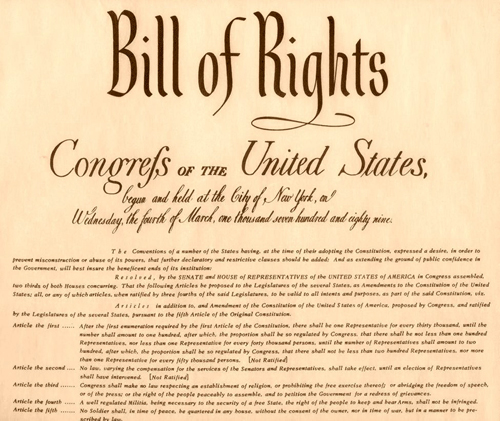
Now I am a strong supporter of the Right to Protest and to seek redress from the Powers that Be.
Image result for The US Bill of Rights
But when they break out these nasties. I am out of there! As they can really change your life & Not for the better!
Here is some more information about this nasty puppies!Image result for Rubber bullets
Image result for Rubber bullets
 
Image result for Rubber bullets
Image result for Rubber bullet funny meme

Rubber bullet

From Wikipedia, the free encyclopedia

37 mm British Army rubber bullet, as used in Northern Ireland

Rubber bullets (also called rubber baton rounds) are rubber or rubber-coated projectiles that can be fired from either standard firearms or dedicated riot guns. They are intended to be a non-lethal alternative to metal projectiles. Like other similar projectiles made from plasticwax, and wood, rubber bullets may be used for short range practice and animal control, but are most commonly associated with use in riot control and to disperse protests.[1][2][3] These types of projectiles are sometimes called baton rounds.[4] Rubber projectiles have largely been replaced by other materials as rubber tends to bounce uncontrollably.[5]
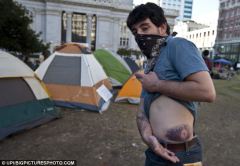
Such “kinetic impact munitions” are meant to cause pain but not serious injury. They are expected to produce contusions, abrasions, and hematomas.[6]However, they may cause bone fractures, injuries to internal organs, or death. In a study of injuries in 90 patients injured by rubber bullets, 2 died, 18 suffered permanent disabilities or deformities and 44 required hospital treatment after being fired upon with rubber bullets.[7]
Rubber bullets were invented by the British Ministry of Defence for use against rioters in Northern Ireland during The Troubles,[8] and were first used there in 1970.[9]

Riot control use[edit]

Two rounds of Fiocchi 12 gauge rubber buckshot

The rubber riot control bullet is part of a long line of development of non-lethal riot control cartridges that dates back to the use of short sections of broom handle fired at rioters in Singapore in the 1880s.[1] The Hong Kong police developed wooden baton rounds, but they were liable to splinter and cause wounds.
The British developed rubber rounds—the “Round, Anti-Riot, 1.5in Baton”—in 1970 for use against rioters in Northern Ireland.[10][11] A low power propelling charge gave them a muzzle velocity of about 60 m/s (200 ft/s) and maximum range of about 100 m (110 yd). The intended use is to fire at the ground so that the round bounces up and hits the target on the legs, causing pain but not injury.[12] From 1970 to 1975, about 55,000 rubber bullets were fired by the British Army in Northern Ireland.[9] Often they were fired directly at people from close range, which resulted in three people being killed and many more badly injured.[9]In 1975, they were replaced by plastic bullets. In Northern Ireland over 35 years (1970–2005), about 125,000 rubber and plastic bullets were fired—an average of ten per day—causing 17 deaths.[13]
The baton round was made available to British police forces outside Northern Ireland from 2001. In 2013 however, Ministry of Defence papers declassified from 1977 revealed it was aware rubber bullets were more dangerous than was publicly disclosed. The documents contained legal advice for the MoD to seek a settlement over a child who had been blinded in 1972, rather than go to court which would expose problems with the bullets and make it harder to fight future related cases. The papers stated that further tests would reveal serious problems with the bullets, including that they were tested “in a shorter time than was ideal”, that they “could be lethal” and that they “could and did cause serious injuries”.[14]
Israeli rubber bullets are produced in two main types. The older type, the standard rubber bullet, is a steel sphere coated in a thin layer of rubber, weighing 14 grams, while the new improved rubber bullet, introduced in 1989, is a rubber-coated metal cylinder 1.7 cm in diameter, weighing 15.4 grams.[15] Of the lethal injuries from this projectile, most are suffered to the head.[15]

Rubber-coated bullets used against protesters in Ni’lin, August 2013

Smaller rubber bullets are used in riot shotguns, and are available in a variety of types. One company, for example, makes both rubber buckshot rounds, containing 15 8.3mm diameter rubber balls per cartridge, and rubber baton rounds, containing a single 4.75 gram projectile.[16]

Self-defense use[edit]

In some countries non-lethal guns firing rubber projectiles may be used by civilians for self-defence.

  •  Kazakhstan – non-lethal gas pistols with the ability to fire ammunition with rubber bullets are permitted to civil population, and they are also allowed for private security guards
  •  Romania– rubber bullet guns are one of the few firearms that can be owned in the country by private individuals.
  •  Russia – since 1999, the use of non-lethal weapons in Russia is permitted to civil population, and it is also used by private security[17] and law control forces.[18] A variety of handguns (OSA, “Makarych“, HORHE, etc.) are carried with specially weakened construction and barrel with internal lugs, making use of full-power loads and/or firing hard projectiles impossible, while rubber bullets just compress when passing the lug and so may be fired. Most common calibers are 9 mm and 10 mm with muzzle velocity sometimes almost matching normal handguns and bullets as light as 0.7 g.
  •  Ukraine – non-lethal gas pistols with the ability to fire ammunition with rubber bullets are allowed for private security guards[19][20]

Recreational use[edit]

Rubber bullets, powered by only a primer, are usually used for short-range indoor target practice or training, generally with handguns. They are intended for only target shooting, unlike paintballs or airsoft pellets, which are intended for use on suitably protected live targets. Rubber bullets, if used with a suitable backstop, can be recovered undamaged after firing, and reused numerous times.[2][21]

Categories
Other Stuff

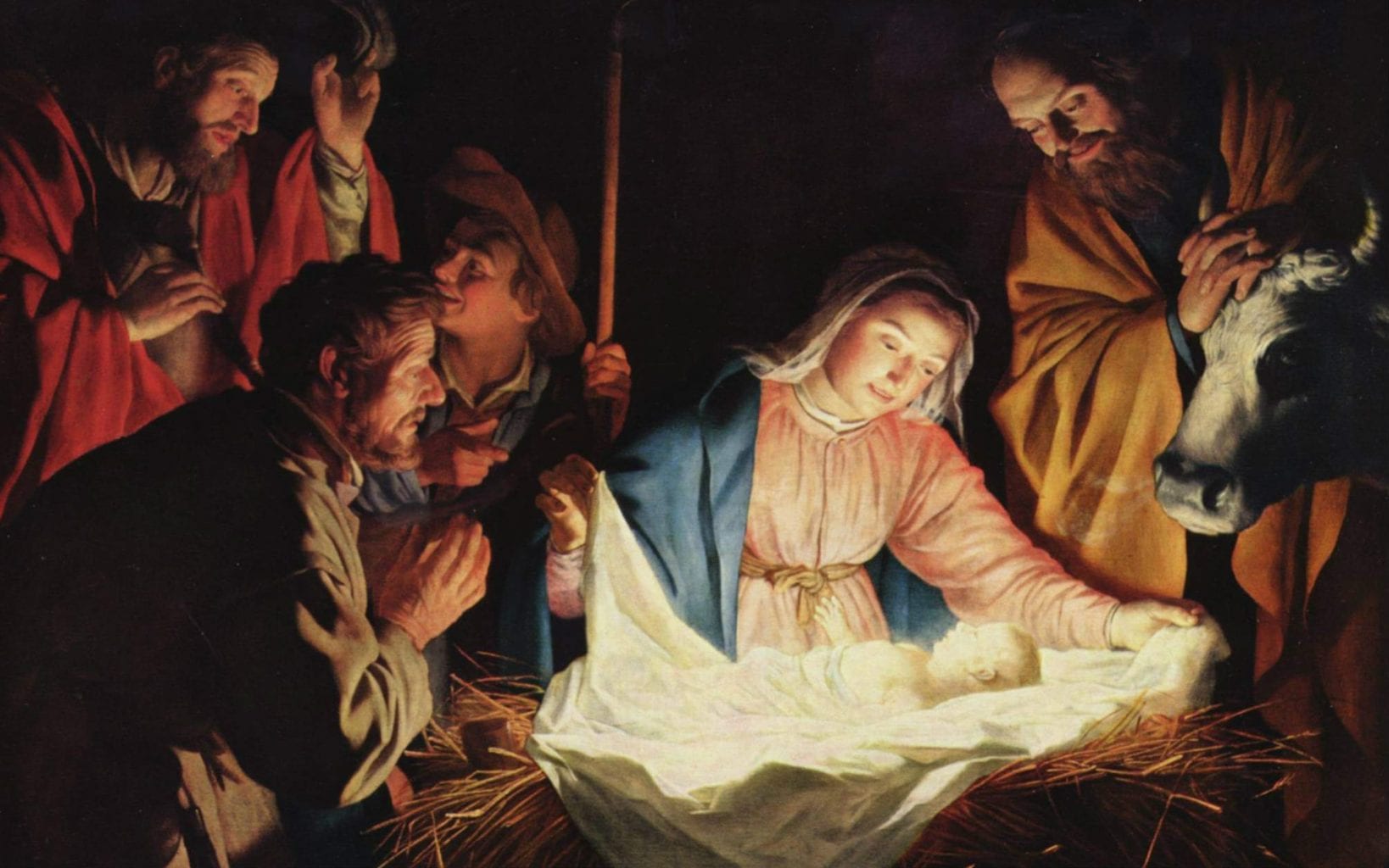
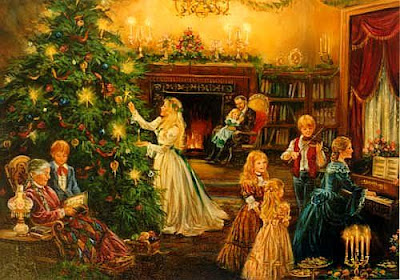
Merry Christmas & May God Bless you All!

Image result for merry christmas
Image result for nativity scene
 
Image result for merry christmas
Related image
Image result for merry christmas

Categories
Other Stuff Well I thought it was funny!

Got the Blues or Stressed out? Here is something to look at ! No Its not Porn!


Attachments area
Preview YouTube video Zorba The Greek – Sirtaki (HQ Music)


Zorba the Greek (film)

From Wikipedia, the free encyclopedia
Zorba the Greek
Zorba the Greek poster.jpg

Original film poster
Directed by Michael Cacoyannis
Produced by Michael Cacoyannis
Screenplay by Michael Cacoyannis
Based on Zorba the Greek
by Nikos Kazantzakis
Starring
Music by Mikis Theodorakis
Cinematography Walter Lassally
Edited by Michael Cacoyannis
Distributed by Twentieth Century-Fox
Release date
  • 14 December 1964(Greece)
  • 17 December 1964(United States)
Running time
142 minutes[1]
Country
  • United Kingdom
  • Greece
Language
  • English
  • Greek
Budget $783,000[2]
Box office $23.5 million

Zorba the Greek (GreekΑλέξης ΖορμπάςAlexis Zorba(s)) is a 1964 British-Greek comedy-drama film written, produced, edited, and directed by Cypriot Michael Cacoyannis and starring Anthony Quinn as the title character. Based on the 1946 novel of the same name by Nikos Kazantzakis, the film’s cast includes Alan BatesLila KedrovaIrene Papas, and Sotiris Moustakas.

Plot[edit]

Basil is a half-English, half-Greek writer raised in Britain who bears the hallmarks of an uptight, middle-class Englishman. He is waiting at the Athens port of Piraeus on mainland Greece to catch a boat to Crete when he meets a gruff, yet enthusiastic Greek Macedonian peasant and musician named Zorba. Basil explains to Zorba that he is traveling to a rural Cretanvillage where his father owns some land, with the intention of reopening a lignite mine and perhaps curing his writer’s block. Zorba relates his experience with mining and convinces Basil to take him along.
When they arrive at Crete, they take a car to the village where they are greeted enthusiastically by the town’s impoverished peasant community. They stay with an old French war widow and courtesan named Madame Hortense in her self-styled “Hotel Ritz”. The audacious Zorba tries to persuade Basil into making a move on the much older Madame Hortense, but when he is understandably reluctant, Zorba seizes the opportunity, and they form a relationship.
Over the next few days, Basil and Zorba attempt to work the old lignite mine, but find it unsafe and shut it down. Zorba then has an idea to use the forest in the nearby mountains for logging (although his specific plan is left ambiguous), however the land is owned by a powerful monastery, so Zorba visits and befriends the monks, getting them drunk. Afterwards, he comes home to Basil and begins to dance in a way that mesmerizes Basil.
Meanwhile, Basil and Zorba get their first introduction to “the Widow”, a young and attractive widowed woman, who is incessantly teased by the townspeople for not remarrying, especially to a young, local boy who is madly in love with her, but whom she has spurned repeatedly. One rainy afternoon, Basil offers her his umbrella, which she reluctantly takes. Zorba suggests that she is attracted to him, but Basil, ever shy, denies this and refuses to pursue the widow.
Basil hands Zorba some money, and sends him off to the large town of Chania, where Zorba is to buy cable and other supplies for the implementation of his grand plan. Zorba says goodbye to Basil and Madame Hortense, who is by now madly in love with him. In Chania, Zorba entertains himself at a cabaret and strikes up a brief romance with a much younger dancer. In a letter to Basil, he details his exploits and indicates that he has found love. Angered by Zorba’s apparent irresponsibility and the squandering of his money, Basil untruthfully tells Madame Hortense that Zorba has declared his love to her and intends to marry her upon his return – to which she is ecstatic to the point of tears. Meanwhile, the Widow returns Basil’s umbrella by way of Mimithos, the village idiot.
When Zorba eventually returns with supplies and gifts, he is surprised and angered to hear of Basil’s lie to Madame Hortense. He also asks Basil about his whereabouts the night before. That night, Basil had gone to the Widow’s house, made love to her and spent the night. The brief encounter comes at great cost. A villager catches sight of them, and word spreads, and the young, local boy who is in love with the Widow is taunted mercilessly about it. The next morning, the villagers find his body by the sea, where he has drowned himself out of shame.
The boy’s father holds a funeral which the villagers attend. The widow attempts to come inconspicuously, but is blocked from entering the church. She is eventually trapped in the courtyard, then beaten and stoned by the villagers, who hold her responsible for the boy’s suicide. Basil, meek and fearful of intervening, tells Mimithos to quickly fetch Zorba. Zorba arrives just as a villager, a friend of the boy, tries to pull a knife and kill the widow. Zorba overpowers the much younger man and disarms him. Thinking that the situation is under control, Zorba asks the Widow to follow him and turns his back. At that moment, the dead boy’s father pulls his knife and cuts the widow’s throat. She dies at once, as the villagers shuffle away apathetically, whisking the father away. Only Basil, Zorba and Mimithos show any emotion over her murder. Basil proclaims his inability to intervene whereupon Zorba laments the futility of death.
On a rainy day, Basil and Zorba come home and find Madame Hortense waiting. She expresses anger at Zorba for making no progress on the wedding. Zorba conjures up a story that he had ordered a white satin wedding dress, lined with pearls and adorned with real gold. Madame Hortense presents two golden rings she had made and proposes their immediate engagement. Zorba tries to stall, but eventually agrees with gusto, to Basil’s surprise.
Some time later, Madame Hortense has contracted pneumonia, and is seen on her deathbed. Zorba stays by her side, along with Basil. Meanwhile, word has spread that “the foreigner” is dying, and since she has no heirs, the State will take her possessions and money. The desperately poor villagers crowd around her hotel, impatiently waiting for her demise so they can steal her belongings. As two old ladies enter her room and gaze expectantly at her, other women try to enter, but Zorba manages to fight them off. At the instant of her death, the women re-enter Madame Hortense’s bedroom en masseto steal her valued possessions. Zorba leaves with a sigh, as the hotel is ransacked and stripped bare by the shrieking and excited villagers. When Zorba returns to Madame Hortense’s bedroom, the room is barren apart from her bed (where she lies) and the bird in her cage. Zorba takes the birdcage with him.
Finally, Zorba’s elaborate contraption to transport timber down the hill is complete. A festive ceremony, including lamb on a spit is held, and all the villagers turned out. After a blessing from the priests, Zorba signals the start by firing a rifle in the air. A log comes hurtling down the zip line at a worrying pace, destroying the log itself and slightly damaging part of the contraption. Zorba remains unconcerned and gives orders for a second log. This one also speeds down and shoots straight into the sea. By now the villagers and priests have grown fearful and head for cover. Zorba remains unfazed and orders a third log, which accelerates downhill with such violence that it dislodges the entire contraption, destroying everything. The villagers flee, leaving Basil and Zorba behind.
Basil and Zorba sit by the shore to eat roasted lamb for lunch. Zorba pretends to tell the future from the lamb shank, saying that he foresees a great journey to a big city. He then asks Basil directly when he plans to leave, and Basil replies that he will leave in a few days. Zorba declares his sadness about Basil’s imminent departure to England and tells Basil that he is missing madness. Basil asks Zorba to teach him to dance. Zorba teaches him the sirtaki and Basil begins to laugh hysterically at the catastrophic outcome. The story ends with both men enthusiastically dancing the sirtaki on the beach.

Cast[edit]

Categories
Other Stuff Related Topics

The Birth of the American Fighting Man

The First Muster By Don Troiani
 

Salem, Massachusetts, 1637 – The history of the National Guard began on December 13, 1636, when the General Court of the Massachusetts Bay Colony ordered the organization of the colony’s militia companies into three regiments: the North, South and East Regiments.
The colonists had adopted the English militia system which obligated all males, between the ages of 16 and 60, to possess arms and participate in the defense of the community.
The early colonial militia drilled once a week and provided guard details each evening to sound the alarm in case of attack.
The growing threat of the Pequot Indians to the Massachusetts Bay Colony required that the militia be in a high state of readiness.
The organization of the North, South and East Regiments increased the efficiency and responsiveness of the militia. Although the exact date is not known, the first muster of the East Regiment took place in Salem, Massachusetts.
The National Guard continues its historic mission of providing units for the first-line defense of the nation. The 101st Engineer Battalion, Massachusetts Army National Guard, continues the East Regiment’s proud heritage of 350 years of service.
Here is some more about this Old Outfit
The 101st Engineer Battalion is a branch of the Massachusetts National Guard and one of the oldest serving regiments of the United States Army. The 101st Engineer Battalion was originally established as the East Regiment. As the first muster was held on the green in Salem, Massachusetts, Salem is seen as the birthplace of the National Guard.

History[edit]

On 13 December 1636, the Massachusetts General Court ordered the organization of three militia regiments designated as the North, South, and East regiments. The East Regiment (later the Essex Regiment) provided protection and support to the Settlers of the Massachusetts Bay Colony for 139 years. It also fought in the Pequot Indian Wars, King Philip’s War, and the French and Indian War.
The 101st played a key role in the Revolutionary War. Elements fought the British Regulars on 19 April 1775, that started the battle for independence and an active duty regiment saved General George Washington’s Army after the Battle of Long Island in August of 1776. The same element helped the American cause to remain alive in December of 1776 during the Battle of Trenton. They manned the boats for General Washington to cross the Delaware.
During the Civil War, three separate Regiments were established in Essex County. The 8th Massachusetts Volunteer Militia sailed to Annapolis, Maryland, in April of 1861; boarded the USS Constitution; and sailed her to New York Harbor so she would not fall into the hands of the Confederates. The 19th Massachusetts Volunteer Militia fought with the Army of the Potomac and had seven Medal of Honor Recipients. The 50th Massachusetts Volunteer Militia had port duty in Louisiana and had one Medal of Honor recipient.
Although the Battalion did not fight in the War with Spain, the Headquarters Company did. The Battalion was mobilized for World War I. However the Second and Eighth Massachusetts Militia were consolidated to form the 104th Infantry Regiment under the 26th Infantry Division. The remaining cadres were reorganized as the Fifth Pioneer Infantry, but was not deployed overseas.
In 1920, the 5th Pioneer Infantry (Engineers) was re-designated the 101st Engineer Battalion and realigned under the 26th Yankee Division, where it would remain until the division was deactivated in 1993.
The 101st Engineer Battalion fought with the 26th Infantry Division under Patton’s Third Army, and provided the maps to the Third Army for the relief of the 101st Airborne Division during the Battle of the Bulge.
From 1993 to 2006 the 101st Engineer Battalion was aligned under the 42nd Infantry Division.
In 2006, HHC deployed to Kosovo as part of Task Force Falcon.
In October 2008, the Battalion was placed under the new 26th Maneuver Enhancement Brigade, and placed the “YD” patch back on its left shoulder.
In June 2009 the Battalion mobilized for Operation Iraqi Freedom, providing Construction and Combat Engineer support to the Multi-National Division Baghdad/United States Division-Central area. For this, the Battalion earned a Meritorious Unit Commendation ribbon.

Active units within the battalion[edit]

  • Battalion Headquarters and Headquarters Company
  • Forward Support Company
  • 181st Engineer Company (Vertical)
  • 182nd Engineer Company (Sapper)
  • 183rd Engineer Team (Survey & Design)
  • 188th Facilities Engineer Detachment
  • 189th Engineer Team (Asphalt)
  • 195th Engineer Team (Survey & Design)
  • 379th Engineer Company (Horizontal)

Campaign participation credit[edit]

Revolutionary War

  • Lexington, Boston, Long Island, Princeton, Saratoga, Monmouth, Trenton, New York 1776, New York 1777, Rhode Island 1777, Rhode Island 1778, Rhode Island, 1779, New Jersey 1780

Civil War

  • Peninsula, Manassas, Antietam, Mississippi River, Fredericksburg, Chancellorsville, Gettysburg, Wilderness, Spotsylvania, Cold Harbor, Petersburg, Appomattox, Virginia 1861, North Carolina 1863, Virginia 1863, Virginia 1864

World War I (Bn units were organized under the 104th IN)
World War II

  • Northern France, Rhineland, Ardennes-Alsace, Central Europe

Operation Joint Guardian, Battle of the Bulge

  • Kosovo (2006-2007)

Global War on Terror (12 Combat Deployments since 11 September 2001)

  • Operation Iraqi Freedom
  • Operation Enduring Freedom
Categories
Other Stuff

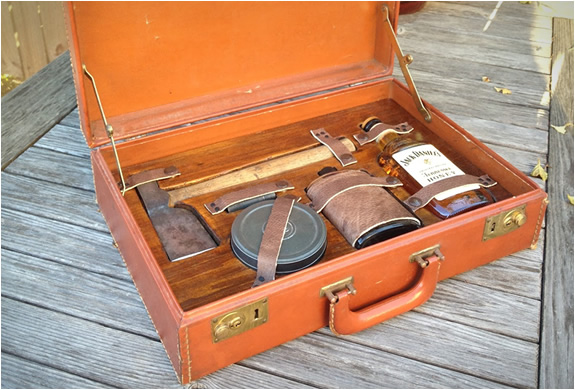
A Gentleman's Bug Out Kits

First Kit
Related image
Second part
Image result for gentleman's survival kit

Categories
Other Stuff

A Fool & His money are STILL soon parted!

I can not believe that Somebody spent some serious money on this Item! It just goes to show. That It takes all Kind!
 

THE REICH FIT

Adolf Hitler’s underpants have been sold for £5,000 at an auction in the US

The infamous leader left his pants in the laundry after staying at an Austrian hotel in 1938

THE ‘pristine’ underpants of fearsome führer Adolf Hitler have sold for £5,000 at an auction in the US.

The brutal dictator’s briefs, which have a ‘surprisingly large’ 39-inch waist and are initialled ‘A.H.’, were left behind in a suite at the luxury Parkhotel Graz in Austria after he stayed there in April 1938.

 Rear view... The Nazi leader's linen drawers were described as being in 'pristine' condition

ALEXANDER HISTORICAL AUCTIONS/RAYMONDS
4
Rear view… The Nazi leader’s linen drawers were described as being in ‘pristine’ condition
 Just the Reich fit... The pants were embroidered with Hitler's initials

ALEXANDER HISTORICAL AUCTIONS/RAYMONDS
4
Just the Reich fit… The pants were embroidered with Hitler’s initials

The country had been annexed by Nazi Germany less than a month before Hitler and his henchmen’s stay.
Auctioneer Bill Panagopulos said he believed the underwear was sent to the hotel’s laundry department and were only returned after Hitler and his entourage had check

 The label inside reveals Hitler wore 'Schüler' undercrackers

The seller was the grandson of the hotel’s owners at the time. (Personal opinion of Grumpy.The only smart person in this affair)
Bill, who owns Alexander Historical Auctions in Chesapeake City, Maryland, where the 19-inch long white linen shorts sold for $6,737 (£4,991) to a private buyer, said they were in ‘pristine’ condition.
He added: “People tend to either buy fearsome Hitler memorabilia, or things that make him look like a buffoon. such as this.
“To minimise a monster, you make people laugh at him. We’ve sold underwear belonging to Eva Braun, who was Hitler’s wife, before, but never any belonging to Hitler himself. I think this is the first pair to come to market.
“They were retained in the family who owned the hotel, which is very prestigious, for almost 80 years, and when we got them they were wrapped in tissue paper in a box. They were as clean as if they had just come back from the cleaners.

 History in Briefs... The front view of Hitler's underpants

ALEXANDER HISTORICAL AUCTIONS/RAYMONDS
4
History in Briefs… The front view of Hitler’s underpants
 The label inside reveals Hitler wore 'Schüler' undercrackers

ALEXANDER HISTORICAL AUCTIONS/RAYMONDS
4
The label inside reveals Hitler wore ‘Schüler’ undercrackers

“It’s a fascinating thing. It’s as close as you can get to Adolf Hitler, literally.”
Bill, 58, who ruled out selling the shorts to any member of the political far right before the auction, added: “I imagine the buyer would probably frame the shorts. It would be the most talked about relic in the house.”
Hitler stayed in the hotel a week before Germany’s annexation of Austria was put to the Austrian people for ratification – 99.7% supported the move – and Bill believes Hitler was touring the country ahead of the vote.
The item’s description read: “A monogrammed pair of Adolf Hitler’s striped white linen under shorts. The shorts are surprisingly large – 19-inches long, with a waist of about 39 inches.

Categories
Other Stuff

Happy Birthday for the United States Army Cavalry

Image result for birthday of the us cavalry

The Official Birthday of the US Cavalry / Armor is
                     12 December 1776
The Armor branch traces its origin to the Cavalry. A Regiment of Cavalry was authorized to be raised by the Continental Congress Resolve of 12 December 1776.

Related image
Related image
Image result for US Cavalry Historical GearImage result for US Cavalry Historical Gear
Related image
Related image