Categories
| July 1, 2008
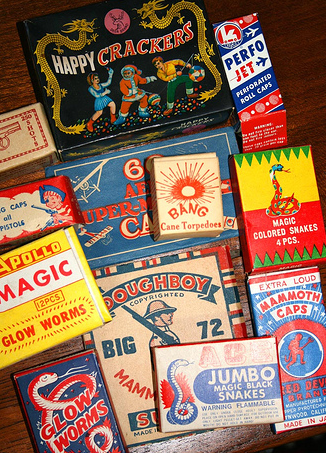
Photo by ggmossgirl
I am apt to believe that it will be celebrated by succeeding generations as the great anniversary festival. It ought to be commemorated as the day of deliverance, by solemn acts of devotion to God Almighty. It ought to be solemnized with pomp and parade, with shows, games, sports, guns, bells, bonfires, and illuminations from one end of this continent to the other, from this time forward forever more.-John Adams, 1776
Ever since colonial times, fireworks have been an important part of celebrating American Independence. On the very first 4th of July in 1777, fireworks made of black ash were shot off. 12 years later, fireworks accompanied George Washington’s Inauguration celebration.
Most men in the United States probably have fond memories of lighting Black Cats or waving a colorful sparkler in the warm Fourth of July air. The operative word in fireworks is fire, the basic element to which all men experience a primal attraction. Even when you’re grown and have kids of your own, nothing can kill your boyish desire to make a racket with fireworks.
So in honor of the 4th of July and the little boy in all of us who still gets a kick out of celebrating American Independence with noise and light, the Art of Manliness presents the Man’s Guide to Fireworks:
Fireworks laws vary state by state and city by city. While consumer fireworks are legal in many states, many cities have strict laws governing their use within city limits. While I was growing up, the laws weren’t that strict (or maybe I just never bothered to look them up), but I’ve noticed that many communities these days are requiring the purchase of a permit to set off fireworks. Permits run anywhere from $20-$40. They’re generally only good for a certain period of time, so make sure to shoot off all the fireworks you want before your permit expires.
For a rundown of the laws governing fireworks in your state, check out Fireworks.com. To find out your local city laws, check your local newspaper. They usually print the laws in the paper around the 4th of July.
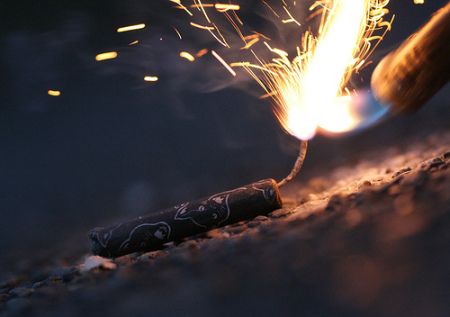
Photo by tedknudsen
Firecrackers. Black Cats, M-80, Lady Fingers. The variety of firecrackers is immense. The whole point of firecrackers is to explode and make loud noises. They generally come in strings that number from a measly 12 to a gargantuan 10,000. Firecrackers by themselves are fun. Firecrackers + old action figures/stuffed animals = mega-fun. What boy has not wrapped a string of Black Cats around an old Sergeant Slaughter action figure or taped an M-80 to a Ninja Turtle? It’s some sort of weird rite of passage that every red blooded American boy must go through.
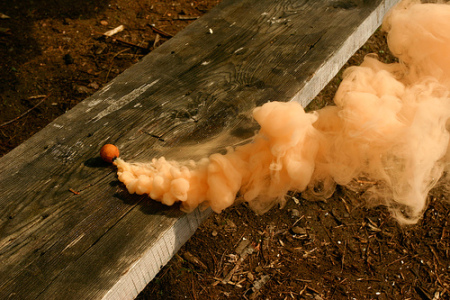
Photo by suckamc
Smoke Bombs. Smoke bombs can provide hours of entertainment to children with wild imaginations. Most smoke bombs don’t explode, they just, well, smoke. Some smoke bombs are best if used during the daytime because it’s hard to see smoke at night. Generally, two types of smokers exist: color smoke balls or cylindrical smoke grenades. The smoke balls come in a variety of colors. As a kid, I’d use these as my ninja smoke screen. The smoke grenades are a kid’s dream toy. They look like little hand grenades. When lit, they emit a thick cloud of white smoke. My friends and I would try to recreate battle themes with smoke grenades. They’re good for ninja smoke screens, too.
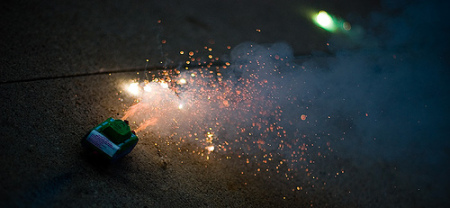
Photo by lencioni
Novelty. When you’re 8 years old, the novelty fireworks are where it is at. There’s a variety of devices that range from chickens that lay colorful eggs made of sparks to tanks that shoot a rainbow of patriotic spark missiles. After the tank has emitted its sparks, there’s often a small firecracker explosion. You can extend the fun of tanks by wrapping Black Cats around them and blowing them to smithereens.
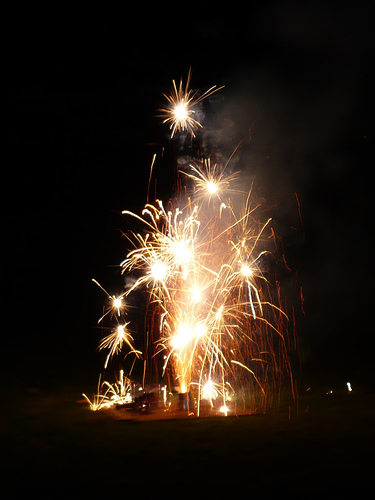
Photo by jeffyoungstrom
Fountains. Fountains are usually cone shaped devices that sit on the ground and shoot off a shower of colorful sparks. I’ll be honest, as a kid, I always thought fountains were pretty boring. The sparks don’t go up very high and it doesn’t really last that long. If you’re looking for a mild, yet pretty firework to shoot off with the kiddos, this is a good one. And girls really gravitate toward them. My wife says these were her fave.
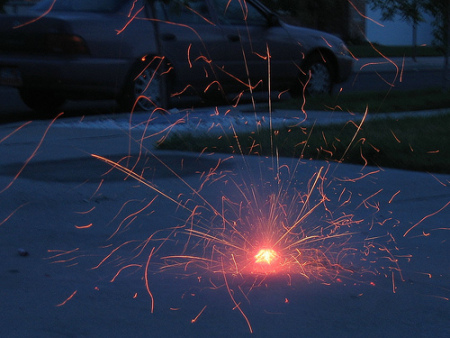
Photo by jpstanley
Ground Spinners. The name of this firework sums it up pretty well. After you ignite a ground spinner, it will spin around randomly on the ground. A variety of ground spinners exist. The small version of ground spinners are often called “jumping jacks.” A larger version of a ground spinner is the “Blooming Flower.” This firework spins and shoots off colored sparks so that it looks like a colorful flower is blooming from the ground.
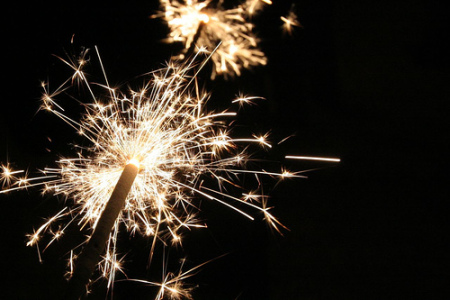
Photo by bigfez
Sparklers. Sparklers are another great firework for kids to play with. Sparklers are sticks that give off colored sparks when lit. You can wave them around and create a light show. Kids get a hoot out of writing their name with them. There are two types of sparklers. The first are ones made from metal. The second are made of paper and are often called Morning Glories. Morning Glories are a bit safer because they don’t leave a red hot metal stick when done burning.
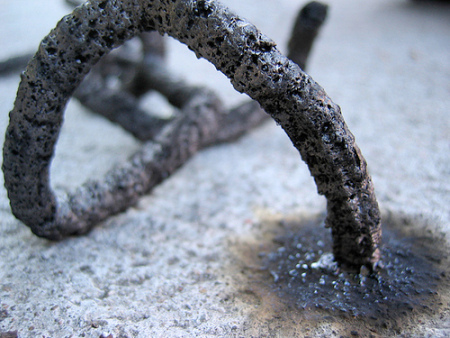
Photo by nicknada
Poppers, Snaps, and Snakes. These are the kiddy fireworks. Poppers are little bottle shaped devices that have a string that when pulled, shoot confetti out. Snaps or “pop-pops” are little paper packets that contain minerals that ignite on impact with the ground. They make a small popping noise. Snakes are small pellets that when lit, emit a long brittle carbon ash that looks like a snake coming from the ground. Despite their tameness, the real youngins will find them endlessly interesting.
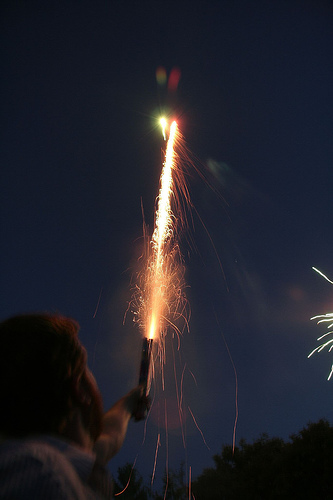
Photo by Joey Shev
Roman Candles. Roman candles are long tubes that when lighted at one end shoot off colorful balls. Some of the shots crackle, flash, or explode. You can actually hold these in your hand while they fire off (it’s not recommended, but many people do it). Because of this ability, many young nincompoops use Roman Candles to engage in a mini firearms battle. Don’t do this.
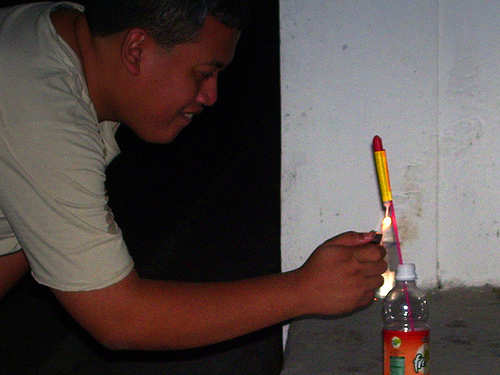
Photo by chandramarsono
Missiles and Rockets. Bottle rockets are probably the most famous of this genre of fireworks. They’re small rockets that whistle while blasting off into the sky and explode when they reach their peak. Bottle rockets are illegal in many states, so check your local fireworks ordinances before shooting them off.
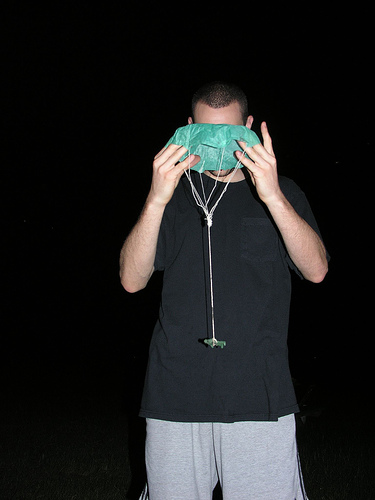
Photo by judybaxter
Parachutes. I loved me some parachutes. The idea is pretty simple. Stuff a green plastic army man with a parachute attached to it down a tube packed with mild explosives. Ignite and watch said green army man float down to the ground. Shoot these off and have fun watching the kiddos try to catch the parachute as it makes its way back to earth.
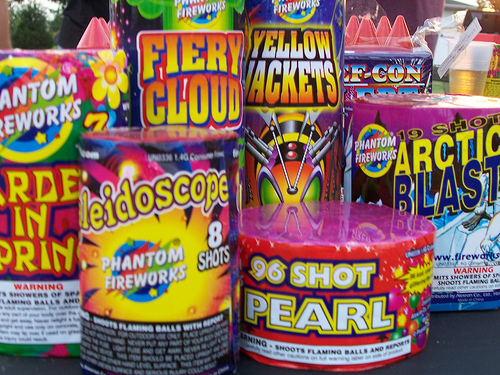
Aerial Repeaters. Aerial repeaters let you put on a fireworks display right in your backyard. They consist of multiple tubes bundled together to form a “cake” looking device. Each tube has a small aerial shell that explodes in a colorful crackling display in the sky. What’s great about the aerial repeater is you just have to light one fuse. The rest takes care of itself.
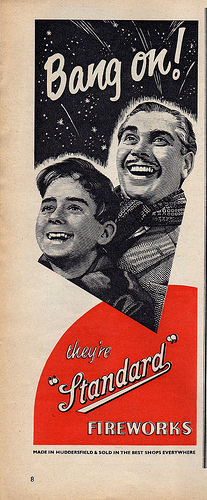 The National Council on Fireworks Safety estimate that there was over 9,200 fireworks related injuries in 2006. That’s a lot. But if people use a bit of common sense and follow some simple safety precautions, you can enjoy a fun and safe 4th of July Celebration. Here’s a run down of safety guidelines to take into consideration when shooting off fireworks this holiday.
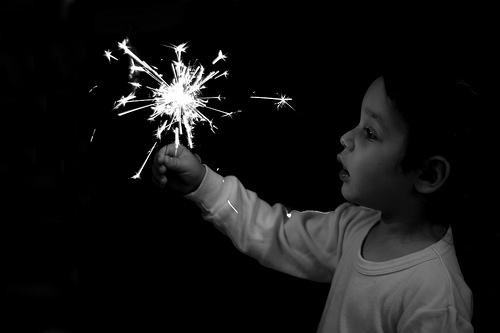
Photo by yanivg
Letting kids play with fireworks is definitely frowned upon by the priggish busy bodies of the Nanny State. But we here at AoM don’t believe in coddling kids. So, while fireworks are dangerous, if kids are taught how to respect them and use them properly, they can easily go through childhood without suffering any fireworks related injuries. I started playing with fireworks when I was about 7. The only injury I ever suffered was that I stepped on a flaming egg laid by one of those chickens. I got a bad blister and a chewing out by my dad to be more careful.
Here’s a rough guide on teaching your kids to enjoy fireworks safely.
Ages 5-6: Let kids play with “pop-pops.” – those things you throw on the ground and make a snapping noise. These things are pretty safe and the kids can have fun with them without injuring themselves or anybody else. Start teaching your kids the importance of firework safety by telling them not to throw them at other people or using them in the house.
Ages 7-8: By this time, kids are probably ready to graduate to fireworks that actually require ignition by fire. Sparklers, snakes, and smoking fireworks are probably good for kids in this age group to use. They don’t explode, so you don’t have to worry about them blowing their face off. However, they’ll be learning how to light fuses and to be aware of other people as they use fireworks- skills that are necessary in safe firework practice.
Ages 9 and up: Alright, by now I think kids are good to go with most fireworks you can find at the fireworks stand. Just watch them carefully and make sure they don’t do anything stupid.



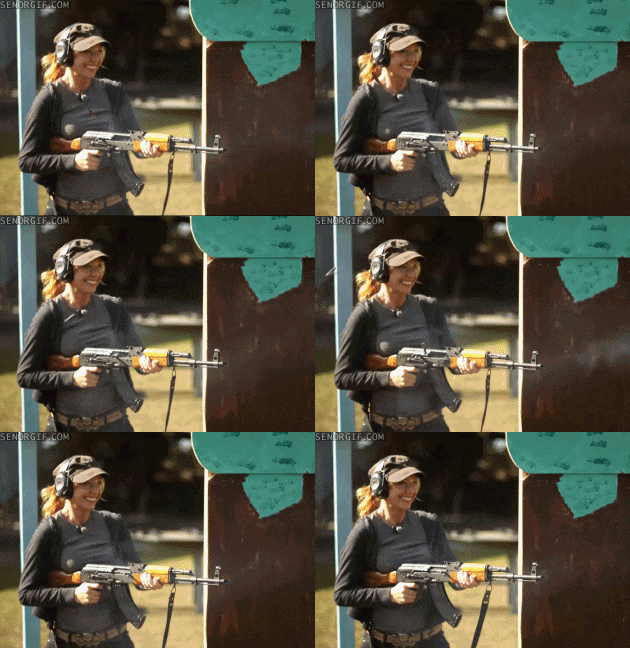
This is from scenes from the Movie “War & Peace”. It is based on the Napoleonic Wars period. When the up to now brilliant Nappy stupidly invade Russia.
Frankly it was the only part worth seeing! Enjoy Grumpy

Today is the 203rd anniversary. Of when The Duke of Wellington finally put the French under Napoleon in their rightful place.
So to our British Friend out there, Well Done!!!

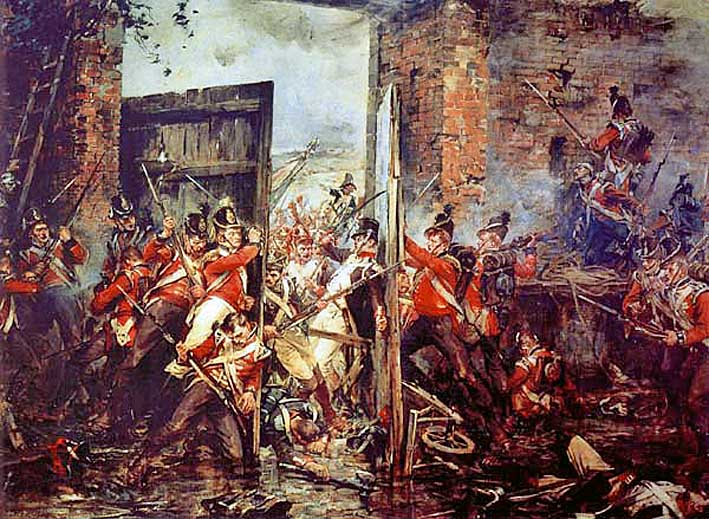
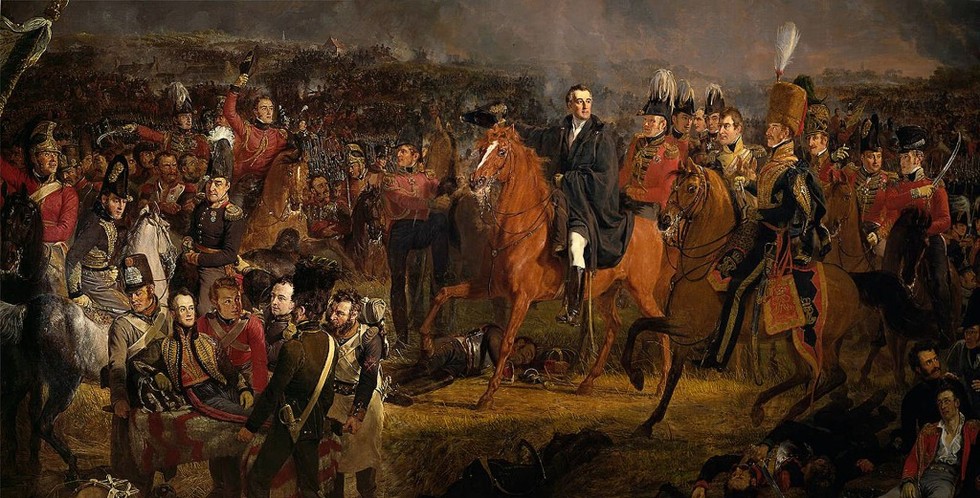


The Last Stand of Napoleon’s OLD Guard at the end of the Battle
I could not imagine fighting in some of those uniforms they
wore back then.


Ten companies of riflemen were authorized by a resolution of the Continental Congress on 14 June 1775. However, the oldest Regular Army infantry regiment, the 3d, was constituted on 3 June 1784, as the First American Regiment.
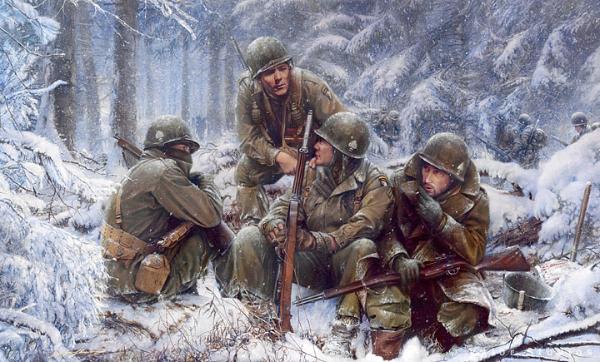


Happy Birthday Green Machine!
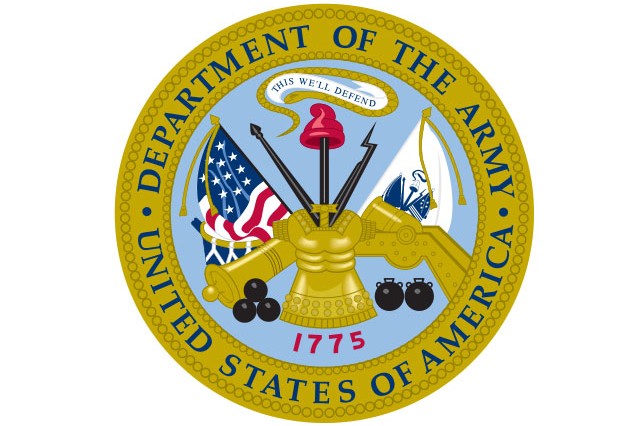
The U.S. Army was founded on June 14, 1775, when the Continental Congress authorized enlistment of riflemen to serve the United Colonies for one year. The 14 June date is when Congress adopted “the American continental army” after reaching a consensus position in The Committee of the Whole.
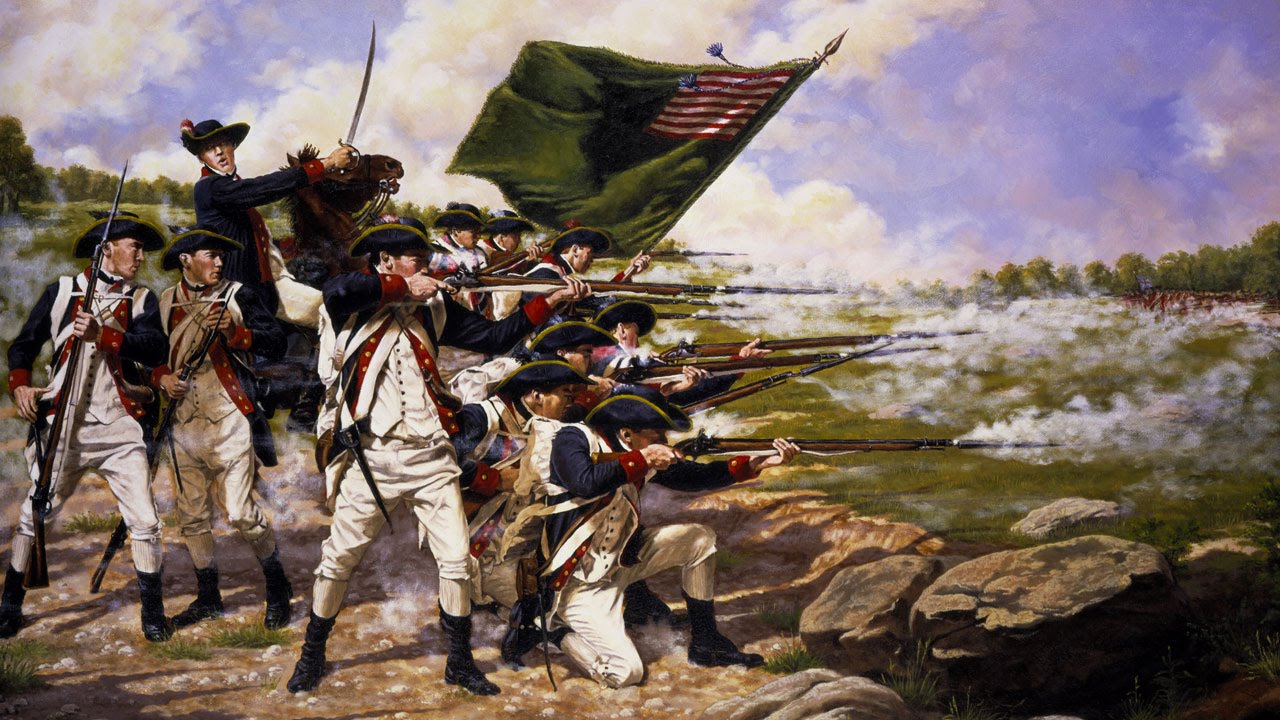
The Revolutionary War


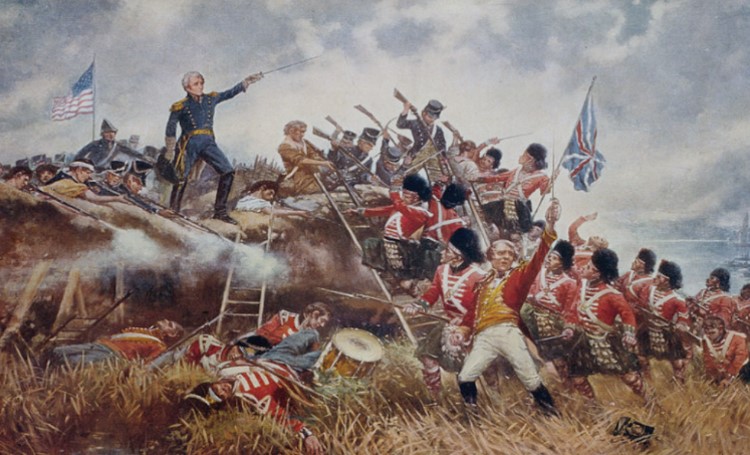
The War of 1812

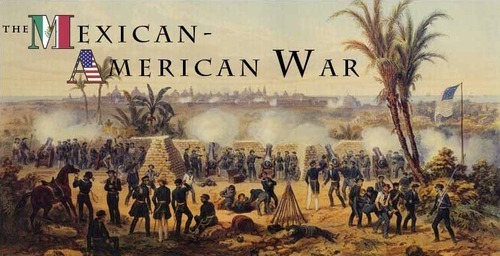
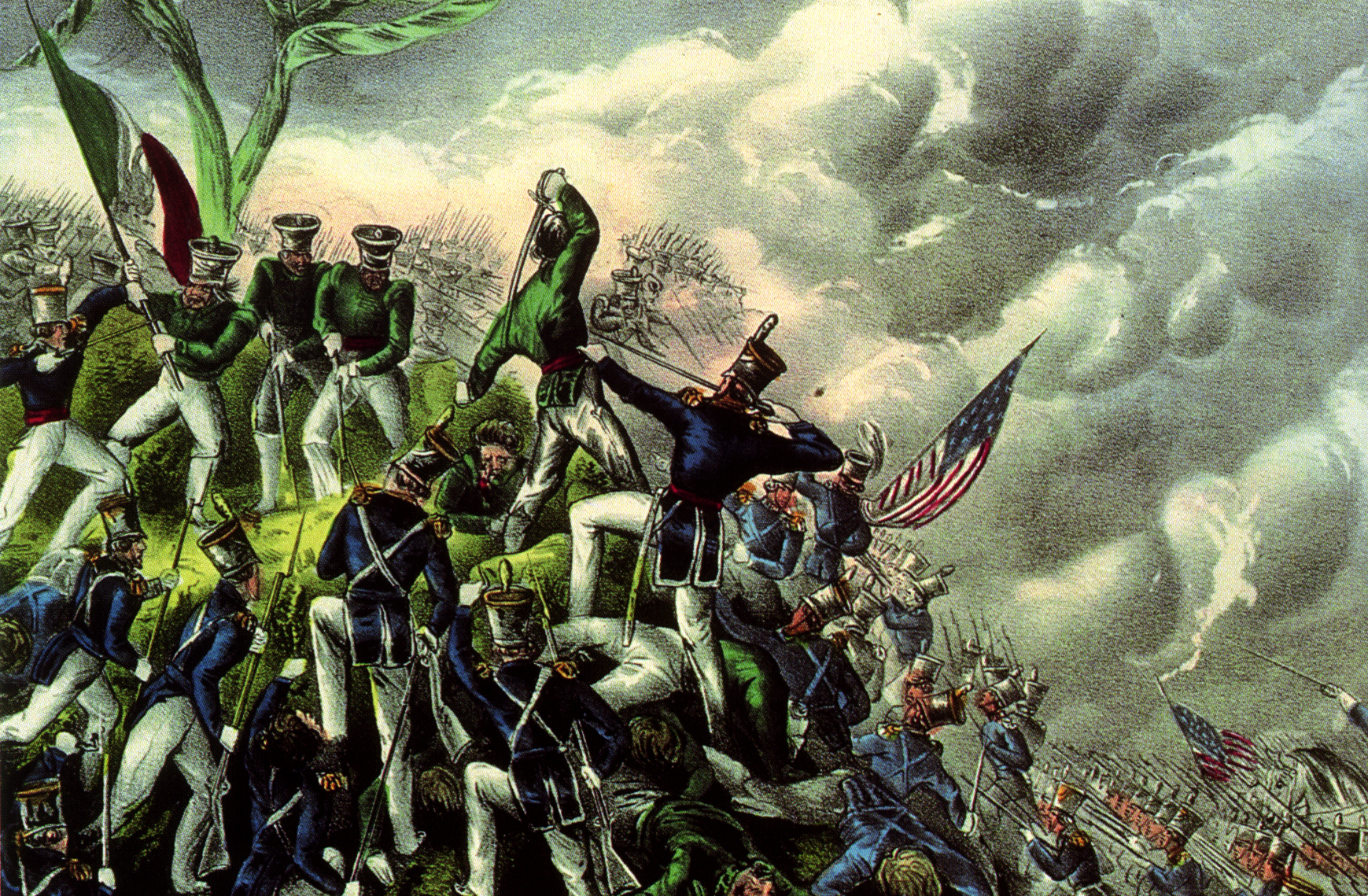
The War with Mexico


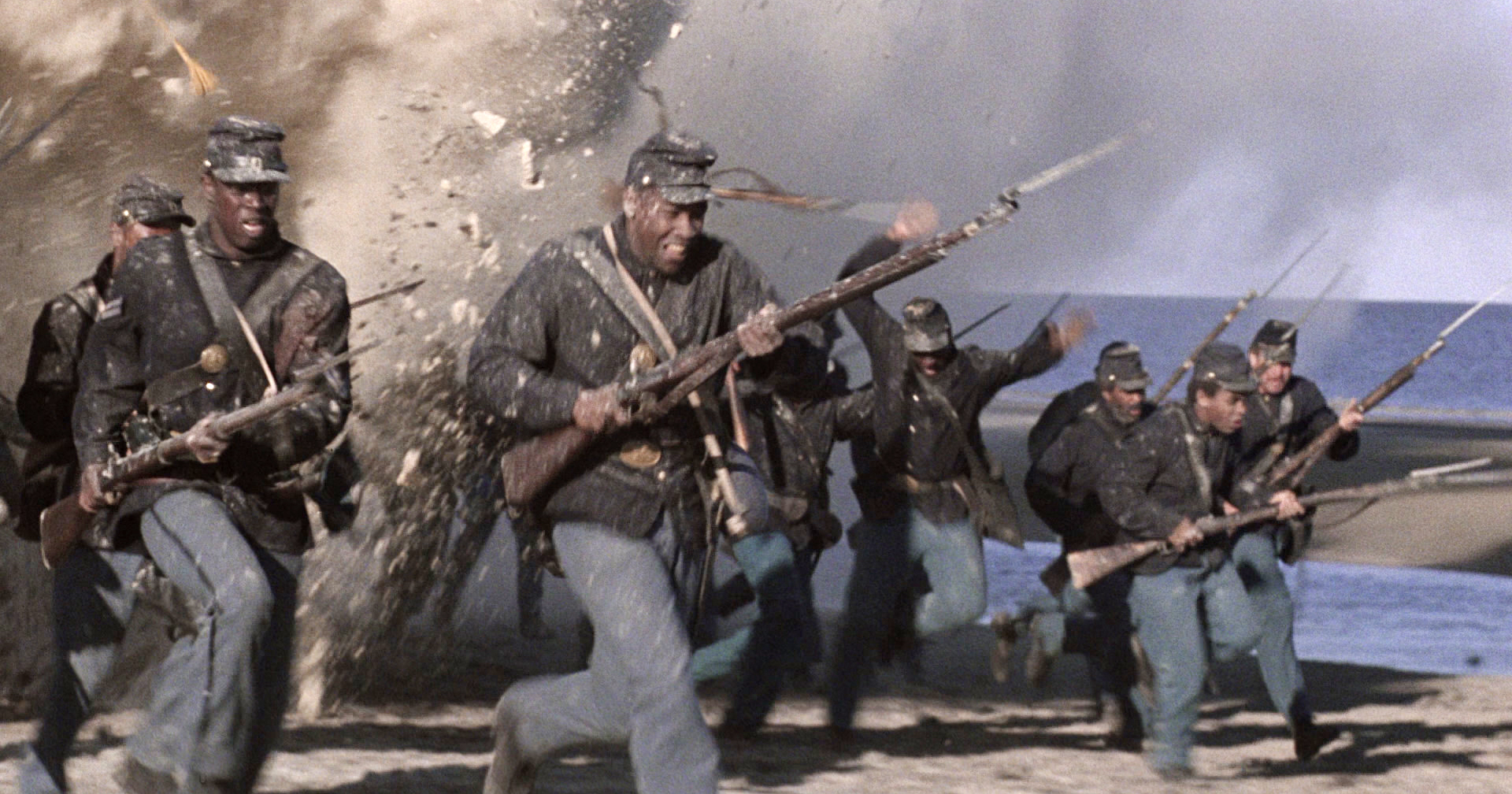
The War Between The States


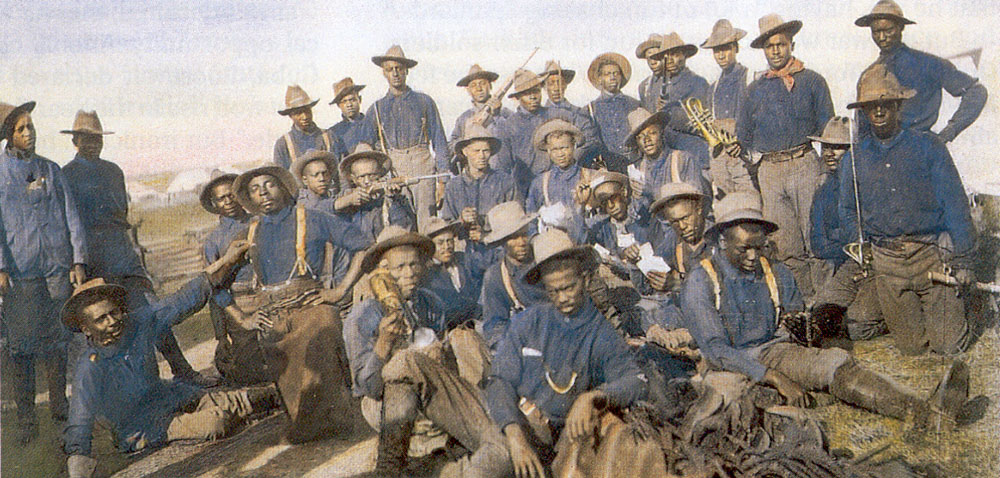
The Indian Wars

The War with Spain 1898

WWI

The Rock of the Marne -The 3rd Infantry Division WWI
WWII
 “Go for Broke!” The 442nd RCT in WWII

The 4th Infantry in WWII France
The Korean War


 The Puerto Ricans Bayonet Charge

The Wyoming Army National Guard
The War with Vietnam


Grenada
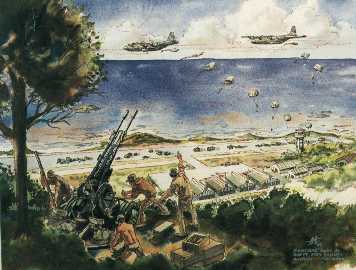


El Salvador

The Sandbox Wars


I like to make my own soaps and in the past I already wrote about how to make your own fragrant homemade lavender soap. Due to the popularity of my other post I decided to write another post about how to make your own antiseptic soap.
This is an easy to make antiseptic soap that makes a fantastic hand and body wash because it contains tea tree and thyme essential oils, that have anti fungal and anti bacterial properties.
It is also excellent to treat or prevent fungal infections like vaginal yeast infections, athlete’s foot and ringworm. If you are interested to learn more about the amazing health benefits of tea tree oil, read my other post about the top 5 medicinal uses for tea tree oil.
So why don’t you give it a try and make your own antiseptic soap? You can buy soap molds online and they come in various shapes and sizes such as this beautiful flower mold.
300 g olive oil based soap (Castile soap)
500 ml water
5 tbsp almond oil (or olive/jojoba/avocado oil)
2 tsp. tea tree essential oil
30 drops thyme essential oil
4 tbsp. dried marigold (calendula) flowers (optional)
Preparation
Grate the soap into a glass bowl and add the water. Place the bowl over a pan of boiling water on a low heat (bain-marie) and stir until the soap melts.
Add the almond oil, the two essential oils and the dried flowers, and mix thoroughly. Pour the mixture into a soap mold and leave to cool and set. Once set, wrap the soap in greaseproof paper and leave to dry in a cool place.
How to use the soap? Wash the affected skin areas with the soap once or twice a day, or as required. Rinse off well.
Storage – store in a cool dark place wrapped in greaseproof paper. Keeps for up to 1 year.
If you love using essential oils, you can find useful information in my e-book Magical Aromatherapy. This e-book will help you to discover the power of essential oils and the most effective ways to use them: Magical Aromatherapy.
This recipe includes lavender which is a calming and soothing herb that was brought to Europe by the Romans. It was one of the most favored aromatic herbs used by the Romans in their daily bathing rituals.
A lot of people like to carry a bottle of lavender essential oil with them as their personal first aid kit. And I’ve already mentioned that the many reasons why you should consider adding lavender essential oil to your daily life.
This easy lavender soap recipe has the great aroma of lavender flowers. These purple flowers have a powerful aroma which relaxes us into a state of well-being.
2 tablespoons of fresh lavender flowers, chopped
2 tablespoons of glycerine, warmed
12 tablespoons of olive oil based soap (Castile soap), grated.
1 tablespoon of clear honey
For decoration: a ribbon and extra sprigs of lavender flowers
Preparation
Place the chopped lavender flowers in the warmed glycerine and leave to infuse in a warm place for 2 hours – this softens the flowers and allows the aroma and healing properties of lavender mix into the glycerine.
Place a heatproof bowl over a saucepan of boiling water and melt the grated soap. Remove from the heat and add the glycerine and lavender flowers mixture. Add the honey. Grease soap mold with glycerine and pour the soap. Leave to set and then remove from the mold.
If you want to give it as a gift, you can decorate the soap by wrapping a ribbon around the soap and tie on a sprig of lavender flowers.
Here is a great use for Castile soap: a natural antiseptic Castile bar soap that you can easily make at home. Castile soap (often called pure Castile soap) is soap that is made purely from vegetable oil, water and lye. This recipe is taken from my article about the most ingenious uses of castile soap.
This Castile soap makes a fantastic hand and body wash because it contains tea tree and thyme essential oils. These essential oil have anti fungal and anti bacterial properties and they are also some of the best essential oils for skincare.
300 g Castile bar soap
500 ml water
5 tbsp. sweet almond oil (or olive/jojoba/avocado oil)
2 tsp. tea tree essential oil
30 drops thyme essential oil
Preparation
Grate the Castile soap into a glass bowl and add the water. Place the bowl over a pan of boiling water on a low heat (bain-marie) and stir until the soap melts. Add the almond oil, the essential oils, and mix thoroughly.
Pour the mixture into a soap mold and leave to cool and set. Once set, wrap the soap in greaseproof paper and leave to dry in a cool place.
Read these related articles:
1. How to Use Baking Soda for Gorgeous Face and Skin
2. 8 Ingenious Ways to Use Coconut Oil on Your Hair
3. How to Easily Remove Pesticides From Your Fruits and Vegetables
As far as I am concerned. Anybody that was there on that day was & is one Hell of a Man.
That & this should be posted outside of all of our Embassies as a subtle warning. I.E. Don’t Fuck with us or Else.


